




Abstract
Can international tourist arrivals change residents’ attitudes towards immigrants and immigration? We discuss possible underlying mechanisms and provide the first evidence on this question using data from the European Social Survey (2002–2019; n=333,505). We find that, as tourist arrivals grow, residents become more positive towards immigration in Eastern Europe. In Western Europe, the relationship tends to turn from positive to negative at relatively high levels of tourism. The instrumental variable analysis suggests that incoming tourism has a positive causal effect on attitudes towards immigration in both Western and Eastern Europe. Overall, our study reveals an overlooked dimension of the tourism-migration nexus and highlights the role that international tourism may play in shaping attitudes towards immigration and, through these attitudes, immigration policy and flows, immigrant integration and more open and inclusive societies in tourism-receiving countries.
Introduction
It is well documented that tourism and migration reinforce each other. On the one hand, migration stimulates tourism: migrants’ friends and relatives visit migrant-receiving and migrant-sending countries (Dwyer et al., 2014; Etzo et al., 2014; Griffin and Dimanche, 2017; Santana-Gallego and Paniagua, 2020; Seetaram, 2012) and migrants, as well as their descendants born in the host country, engage in diaspora tourism (Adams, 2020; Li and Chan, 2020; Otoo et al., 2021). On the other hand, tourism stimulates migration: growth in tourism creates labour shortages that businesses fill with migrant labour (Gössling and Schulz, 2005; Janta et al., 2011; Joppe, 2012; Williams and Hall, 2000) and people travelling for holidays, study or business settle in the country they visit and, thus, become immigrants (Gheasi et al., 2011; Haug et al., 2007; Oigenblick and Kirschenbaum, 2002; Williams and Hall, 2000). Furthermore, migration and travel are closely related through their contribution to international trade and foreign direct investment (Genç, 2014; Gheasi and Nijkamp, 2017; Poot, 2015). While these contributions paint a complex picture of the links between tourism and migration, one aspect of the nexus has remained overlooked: the relationship between tourist arrivals and residents’ attitudes towards immigrants and immigration. The objective of our study is to fill this knowledge gap and address the following question: Do international tourist arrivals make people in host countries more or less favourable towards immigrants coming to live and work there?
There are several reasons why it is important to answer this question. First, attitudes towards immigration are a key ingredient of immigration policy formation, as people vote for political parties that represent their views on immigration and adopt corresponding immigration policies (Facchini and Mayda, 2008). For example, popular anti-immigration sentiment has been closely related to the rise of the political far-right (Allen, 2017) and the 2016 vote of the British people to leave the European Union (Ivlevs and Veliziotis, 2018). Attitudes towards immigration have also been shown to affect actual immigration flows (Gorinas and Pytliková, 2017), as well as immigrant integration in host societies (Fussell, 2014). For all these reasons, it is important to understand whether tourist inflows affect people’s attitudes towards immigration and, through these attitudes, provide ground for populist parties, shape immigration policies, affect migrant flows, foster immigrants’ integration and, more generally, contribute to more open, inclusive and cohesive societies in tourist destination countries.
Conceptually, there are at least two ways in which tourist inflows may affect immigration attitudes of people in tourist receiving countries. First, tourism may lead to the growth of local and national economies, opportunities for entrepreneurs, and also shortages of labour in sectors catering to tourist demand. If local people are unable or unwilling to fill these labour shortages – and rather prefer to take advantage of the entrepreneurial opportunities brought about by tourism – they may become more open to immigration. Second, encounters with tourists can make residents more open to other cultures which, among other things, could contribute to more positive attitudes towards immigration. We discuss these theoretical channels and then test for the net effect of international tourist arrival rate (TAR)s on residents’ immigration preferences, using data from the European Social Survey (ESS) for 2002–2019. Specifically, we undertake a panel-data, country-fixed-effects analysis to find out if hosts’ attitudes towards immigration change over time with the intensity of international tourist arrivals. Furthermore, we delve into the causal effects of international tourist arrivals on attitudes towards immigration by performing the instrumental variable analysis, where tourist arrivals are predicted with seasonal climate conditions in the destination countries and the occurrence of international sporting events.
Our results show that international tourist arrivals have a statistically significant and positive association with hosts’ attitudes towards immigration in Eastern Europe. In Western Europe, the relationship tends to take an inverted U-shape: attitudes towards immigration improve with tourist arrivals up to a certain – relatively high – level of tourism, and decrease thereafter. The instrumental variable analysis reveals a positive causal effect of international tourist arrivals on attitudes towards immigration in both Western and Eastern Europe.
Our paper contributes to the large body of knowledge on the links between tourism and migration. So far, this literature has focused on actual tourist and migrant flows (see, e.g., Provenzano (2020), Poot (2015), Santana-Gallego and Paniagua (2022) and Seetaram (2012)). By focusing on attitudes towards immigration, we provide novel – both correlational and causal – evidence on a so far overlooked dimension in the tourism-migration nexus.
The remainder of the paper is organised as follows. Theoretical Framework Section outlines theoretical channels through which tourist arrivals might affect hosts’ attitudes towards immigration. Methods Section presents the data, variables and estimation strategy. Results Section presents the results, followed by a discussion and conclusion.
Theoretical framework
One can conceive of two mechanisms – stemming from the fields of political economy and social/political psychology – through which tourist arrivals may affect hosts’ attitudes towards immigration. They are related to (1) local economic development, business opportunities, the need for labour, and competition for jobs; and (2) contact with tourists and emotions, and their projection onto immigrants. In this section, we outline the theoretical underpinnings and intuition behind the two channels and discuss how the intensity of tourist flows may affect their strength.
Economic development, labour shortage, business opportunities, and competition for jobs
One of the key theoretical approaches explaining attitudes towards immigration stems from the broad field of political economy and posits that labour market competition – real or perceived – drives attitudes towards immigration (see e.g. Mayda, 2006; Hainmueller and Hopkins, 2014; Kunovich, 2017). Emphasising material self-interest, this theoretical framework predicts that people competing with immigrants on the labour market will be more anti-immigration, while people who benefit from immigration (i.e, people whose skills are complementary to those of immigrants) will be more pro-immigration. If tourism generates a need for immigrants, it will potentially expose ‘winners’ and ‘losers’ from immigration within the host society and, consequently, shape their attitudes towards immigration.
Does tourism increase a demand for immigrants? It is widely acknowledged that the growth of tourism generates opportunities for businesses and economic growth (Ateljevic and Page, 2009; Croes et al., 2021; Mayer and Vogt, 2016). The hospitality sector is a primary beneficiary, but other industries directly or indirectly catering to tourist demand also benefit (Cai et al., 2006; Lin et al., 2019). To grasp profitable opportunities, people in host countries must set up new businesses or expand existing ones: open hotels and restaurants, produce more local food, provide more transportation services etc. Entrepreneurs and managers in charge of these tasks will soon realise the need for more labour, such as hotel staff, waiters, and agricultural workers. In many developed countries, the supply of workers willing to do such jobs is scarce and employers may find it difficult to fill these jobs with local workers. Raising wages may be a solution but few employers would embrace such a measure. An easier solution is to recruit immigrants, who represent a source of relatively cheap labour and are ready to take up jobs that are often considered undesirable or low-status by locals. Migrants indeed play an important role in supporting tourism-related industries in many countries (Janta et al., 2011; Joppe, 2012; Kim et al., 2016; Williams and Hall, 2000; Zopiatis et al., 2014).
From this perspective, people who are ready and able to take advantage of profitable opportunities (existing and aspiring entrepreneurs, Airbnb owners etc.) should become more favourable to immigration as tourist arrivals grow. At the same time, there may exist a category of residents who think that wages in industries supporting tourism would be higher, and the corresponding jobs more attractive, if immigrants were not there. These people – migrant competitors – could become less favourable to immigration as tourist numbers grow.
Contact with tourists, psycho-emotional wellbeing and attitudes towards immigration
A growing literature in social and political psychology offers a theoretical framework and evidence that emotions and psychological well-being shape political tolerance, open-mindedness and attitudes towards outgroups, such as immigrants and refugees (Hainmueller and Hopkins, 2014; Tenenbaum et al., 2018; Korol and Bevelander, 2021; Welsch et al., 2021.) This approach argues that negative life experiences worsen attitudes toward outgroups, while positive experiences and greater psychological wellbeing have an opposite effect (Korol and Bevelander, 2021). The underlying mechanisms include affect misattribution, whereby our judgements, beliefs and orientations, especially when they concern unfamiliar groups, are informed by unrelated feelings (Tenenbaum et al., 2018). Experimental evidence shows that incidental emotions, such as happiness and fear, affect attitudes towards asylum seekers (Tenenbaum et al., 2018), and a growing literature suggests that greater life satisfaction – a key manifestation of subjective/psychological well-being – goes hand in hand with more positive stance towards immigrants (Korol and Bevelander, 2021; Welsch et al., 2021).
How does this discussion relate to tourism? There exists a strong argument, and accompanying evidence, that tourist arrivals affect hosts’ psychological wellbeing. The feelings are likely to range from euphoria and excitement to apathy, annoyance and antagonism (Okulicz-Kozaryn and Strzelecka, 2017). Contact with tourists is one of the key underlying mechanisms for such emotional responses. For residents, the contact can be direct (helping tourists with directions, taking photos, welcoming tourists to an Airbnb, working in tourism industries) or indirect/unintentional (observing tourists, learning about tourists from the news and media). Crucially, the contact can also be positive (feeling good about being able to help and using foreign language skills; feeling proud that tourists show interest in local landmarks) or negative (seeing/learning about drunk tourists misbehaving) (Cheng and Zhang, 2019; Fan et al., 2020; Kim et al., 2020; Luo et al., 2015; Nikjoo and Bakhshi, 2019; Tait, 2019; BBC, 2009). Ivlevs (2017) and Okulicz-Kozaryn and Strzelecka (2017) argue that such encounters with tourists affect hosts’ life satisfaction and show – for European countries and regions, respectively – that excessive tourist arrivals leave hosts less satisfied with life. 1
Taken together, these literatures suggest that tourist arrivals affect hosts’ attitudes towards immigration through changes in psychological well-being. In essence, emotional responses from positive and negative contact with tourists are projected onto immigrants. Having a positive contact may thus contribute to a more open, cosmopolitan worldview of residents 2 and they may start seeing immigrants – or anyone/anything foreign – in a more positive light; the opposite will be true if the contact is negative.
In addition, in some contexts, residents may be well aware that today’s tourists are tomorrow’s immigrants. In this case, contact with tourists can be directly projected onto perceptions of immigrants. For example, contact with British tourists at a Spanish holiday resort may affect Spaniards’ attitudes towards British immigrants – people buying houses and settling in Spain. Furthermore, some tourists may come to a country to visit their friends and relatives who immigrated there earlier (Dwyer et al., 2014; Etzo et al., 2014; Griffin and Dimanche, 2017). Besides staying in the area where immigrants live, such tourists may take the opportunity to visit landmarks of the country further afield. Even if residents do not live in the same areas as immigrants, residents can still come into contact with tourists from the same country and project that contact onto immigrants. Tourists can thus inform residents about immigrants, and contact with tourists will be directly projected onto immigrants and help shape attitudes toward them.
Intensity of tourist flows
Consistently with the tourism development cycle hypothesis (Butler, 1980), it is possible that the strength of both the labour-market competition and the contact/psycho-emotional channels varies according to the intensity of tourist inflows. Consider the employment channel. In countries with incipient tourist inflows entrepreneurs may still be able to employ local labour to take advantage of the emerging business opportunities. As tourist arrivals grow and the supply of local labour dries up, the interest in, and the acceptance of, foreign labour may increase. However, at very high levels of tourist inflows, business opportunities may be exhausted and the appeal of employing immigrants might go down. Following this reasoning, attitudes towards immigration should be growing with the TAR up to a certain point and decrease thereafter – at least among people ready and able to take advantage of the business opportunities associated with tourism. By the same token, local workers competing with immigrants should develop a greater anti-immigrant sentiment as tourist inflows grow, but also up to a point.
A similar non-linear relationship can be conceived for the contact channel. When tourist arrivals are low, the locals may be enjoying contact with tourists. When tourism intensity grows, the problems associated with tourism may come to the fore, outweighing any positive impressions, as manifested by hosts’ complaints in areas with excessive tourist numbers (Lowrey, 2019). Ivlevs (2017) and Okulicz-Kozaryn and Strzelecka (2017) use similar reasoning to explain why hosts’ life satisfaction decreases when the intensity of tourist arrivals is particularly high. If feelings about tourists are projected onto immigrants, we may expect that attitudes towards immigration improve with tourist arrivals up to a certain point and worsen thereafter.
Based on the discussion above, we want to test whether hosts’ attitudes towards immigration changes as tourist arrivals grow. Furthermore, we want to test if the relationship between attitudes towards immigration and tourist arrivals depends on the intensity of tourist arrivals. Note that, due to data limitations, we are only able to provide a test for the net effect of tourist arrivals on attitudes immigration; we elaborate on ways in which future research could disentangle individual theoretical channels in the discussion section.
Methods
General model specification
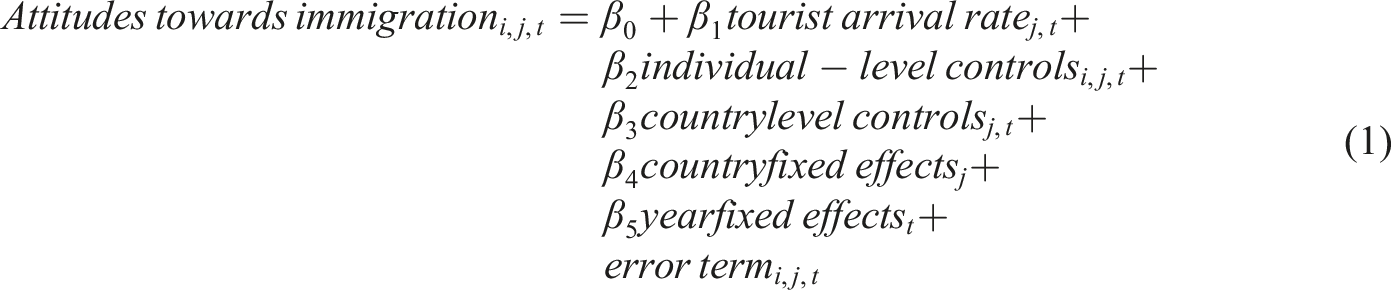
Our aim is to estimate the net effect of country-level tourist arrivals on individual attitudes towards immigration in tourist receiving countries. The general model can be expressed as follows:
Data sources
To estimate the models, we need data at both the individual and country level. Individual-level data come from the publicly available ESS, which is a cross-national survey of social values, norms, behaviours and attitudes conducted biannually in a range of European countries since 2002. Altogether 38 European countries participated in the first eight rounds (2002/03, 2004/05, … 2018/19) of the survey. Of these, 36 countries participated in at least two rounds, and 15 countries participated in all nine. The number of respondents varies from 579 to 3045 in each country-round and the total sample size is 421,075.
In each ESS country-round, respondents were selected using strict random sampling techniques, and the national samples are representative of the participating countries’ resident populations aged 15 and older (with no upper age limit). Face-to-face interviews lasting approximately 1 hour were based on the ESS source questionnaire, which was designed in English and then translated into each language that is used as a first language by at least 5% of a participating country’s population. All methods and procedures related to data collection and processing were standardised across the participating countries, to ensure the comparability of the resulting data. More information on the ESS design methodology, as well as the dataset itself, are available on the ESS project website http://www.europeansocialsurvey.org/.
The data on international tourist arrivals were sourced from the World Tourism Organization data repository. 3 The data on country-level control variables (unemployment, GDP growth etc.) were sourced from the World Bank World Development Indicators dataset. Finally, the data on immigration – another crucial country-level control variable – were sourced from Eurostat.
Variables
Dependent variable(s): Attitudes towards immigration
All ESS waves contain six standardised questions that we use to capture attitudes towards immigration. These questions are (emphasis added): 1) To what extent do you think [country] should allow people of 2) To what extent do you think [country] should allow people of 3) To what extent do you think [country] should allow people from the
Possible answers to questions 1–3 are: “Allow none”, “Allow a few”, “Allow some” and “Allow many” and are coded with values 1, 2, 3 and 4, respectively. 4) Would you say it is generally bad or good for [country]’s 5) Would you say that [country]’s 6) Is [country] made
The six questions allow the capture of different aspects of attitudes towards immigration (preference for different types of immigrants, perceptions of immigration effects on different life domains). We use all six questions in the analysis and, as they are correlated (Cronbach’s α = 0.83), also create an index of pro-immigration attitudes using the first factor of the principal component analysis (the Eigenvalue of which is 3.802; the Eigenvalue of the second component is 0.921). Higher values of the index correspond to more positive attitudes towards immigration.
Main regressor: Tourist arrivals
Tourist inflows are captured by the annual arrivals of international tourists, defined as those “who travel to a country other than that in which they usually reside, for a period not exceeding 12 months and whose main purpose in visiting is other than an activity remunerated from within the country visited.” The data are sourced from the United Nations World Tourism Organization, and to ensure comparability between countries, tourist arrivals are expressed as a percentage of the host country population in the same year (population data from World Development Indicators). The average TARs and their range (maximum and minimum) for the countries included in the analysis can be found in Table S1 of Supplementary Information.
Individual-level controls
Following the empirical literature on the micro-determinants of attitudes towards immigration (see e.g. Mayda, 2006, and Ivlevs, 2012), all estimations include the following individual-level controls: age (in years), years of completed education, indicator variables for gender, four household income levels (low, medium and high – corresponding to the three within-country household income tertiles – and an indicator variable for non-reported income), four subjective evaluations of household income (living comfortably on present income, coping on present income, difficult on present income, and very difficult on present income), being unemployed and actively looking for a job, being unemployed and not looking for a job, political affiliation (left, centre, right, no answer), degree of religiousness, being an immigrant (not born in the country), having immigrant parent(s), and five degrees of urbanisation (living in a big city, suburbs or outskirts of a big city, town or small city, country village, and farm or home in the countryside). The summary statistics of all the variables included in the analysis, as well as the survey questions used to construct them, are reported in Table S2 of Supplementary Information.
Country-level controls
Controls are included for several country-level variables and major events that may have affected residents’ attitudes towards immigration (Hainmueller and Hopkins, 2014), tourist arrivals (Martins et al., 2017), or both. These variables are: the GDP growth rate and GDP per capita, 4 the unemployment rate, the immigration rate and its square, and the occurrence of a terrorist attack in the year of the interview or the year before.
Estimation strategy
Given the categorical and ordered nature of the six questions capturing attitudes towards immigration, we estimate Equation (1) with ordered logit. Where the dependent variable is the pro-immigration attitudes index, we use OLS.
Concerning the temporal structure of the data, the ESS is conducted biannually, with each round taking place over a 2-year span. It is possible to identify in which year a particular interview was conducted, and this information reveals that within several country-rounds the interviews were conducted in both years of the round. For example, looking at the respondents from Belgium in ESS Round 5 (2010/11), 47% were interviewed in 2010 and 53% in 2011. This effectively increases the temporal variation of the data, which is why we relate residents’ attitudes towards immigration to international tourist arrivals in a particular year (rather than over the span of 2 years).
To test whether the effect of tourism depends of the intensity of tourist arrivals, we add to the baseline model the square of the TAR:
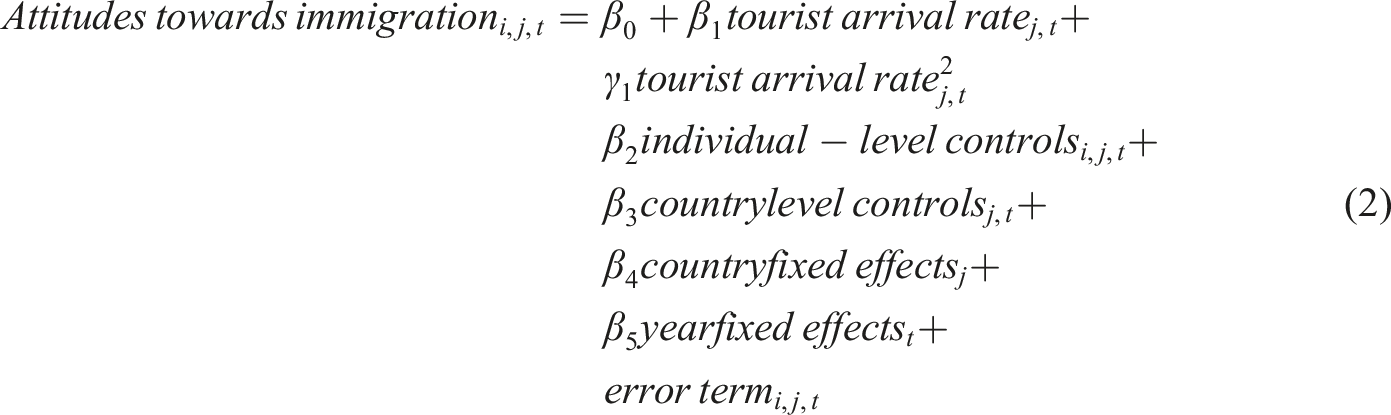
All estimations include both the design weight and the population weight, as recommended by the ESS architects. Given that individual-level outcomes are explained by country-level variables, we always cluster the standard errors at the country level. Finally, given that the ESS survey includes both Western and Eastern European countries, we will estimate our main models for the whole sample as well as separately for the two groups. Western European countries have a long history of both tourist and immigrant inflows, while the post-Socialist countries of Central and Eastern Europe opened in the early 1990s and have since witnessed relatively smaller, albeit growing, inflows of tourists and immigrants. We therefore want to see if there are differences in the relationships of interest between the two. Our Eastern European group includes only the countries of the former Socialist bloc that joined the EU in or after 2004 (Bulgaria, Croatia, Czech Republic, Estonia, Hungary, Latvia, Lithuania, Poland, Slovenia, Slovakia); we therefore exclude Israel, Russia, Turkey and Ukraine from the analysis.
Estimating causal effects
It is important to note that, when estimated with ordered logit or OLS, the coefficient of interest (β 1 in Model 1) should be interpreted as a conditional correlation rather than causal effect. While we include a broad range of potential country-level confounding variables as controls, there may still be some omitted variables driving both attitudes towards immigration and tourist arrivals. To mitigate possible endogeneity issues and move closer to causal effects, we use the instrumental variable approach (for the application of this method in tourism studies see, e.g., Ivlevs, 2017). This method relies on the availability of instruments – variables that are highly correlated with the endogenous regressor (tourist arrival rate) and that affects the outcome variable (residents’ attitudes towards immigration) only through this endogenous regressor. If satisfactory instruments can be found, the instrumental variable estimation consists of two stages: (1) in the first stage, the TAR is regressed on the instruments and all the control variables, and (2) in the second stage, the predicted values of the first stage dependent variable are used as a regressor, alongside all the control variables. The standard F test of the excluded instruments is used to test their relevance.
We use climatic conditions of the tourist destination countries as instruments for the international TAR. Specifically, we use the cumulative seasonal (spring, summer, autumn, winter) temperature and precipitation in the year of the interview to predict tourist arrivals (December of year t-1 is part of winter of year t). Consistently with the literature (Amelung and Viner, 2006; Becken and Wilson, 2013; Denstadli et al., 2011; Otrachshenko and Nunes, 2021; Wilkins and De Urioste-Stone, 2018), we expect that the climatic conditions of a country – hotter, colder, rainier, drier seasons – will be good predictors of the number of international tourists going there (instrument relevance). At the same time, one can reasonably assume that climatic conditions have no direct influence on residents’ attitudes towards immigration (instrument exogeneity). As an additional instrument, we use some major international sporting events: the Olympic Games as well as the World and European Football Championships. Theoretically, such events can either increase or reduce international tourist arrivals (event-specific tourism vs displacement/crowding-out effect, see e.g. Fourie and Santana-Gallego (2011)), but we have no particular expectation that they will have a direct effect on attitudes towards immigration.
Results
Correlational results
Figure 1 shows the evolution, across the ESS waves, of the means of the variables of interest – the TAR and attitudes towards immigration – for the whole sample of Western and Western European countries. Both variables have an upward trend, albeit with a noticeable reduction in the aftermath of the global economic crisis. This very simple descriptive analysis would suggest that there is a positive association between TARs and more favourable attitudes towards immigration, although the relationship could be driven by a time trend. Whole-sample average of tourist arrival rate and index of pro-immigration attitudes by ESS wave. Source: Authors’ calculations and presentation based on ESS data. The graph shows weighted averages of the two variables.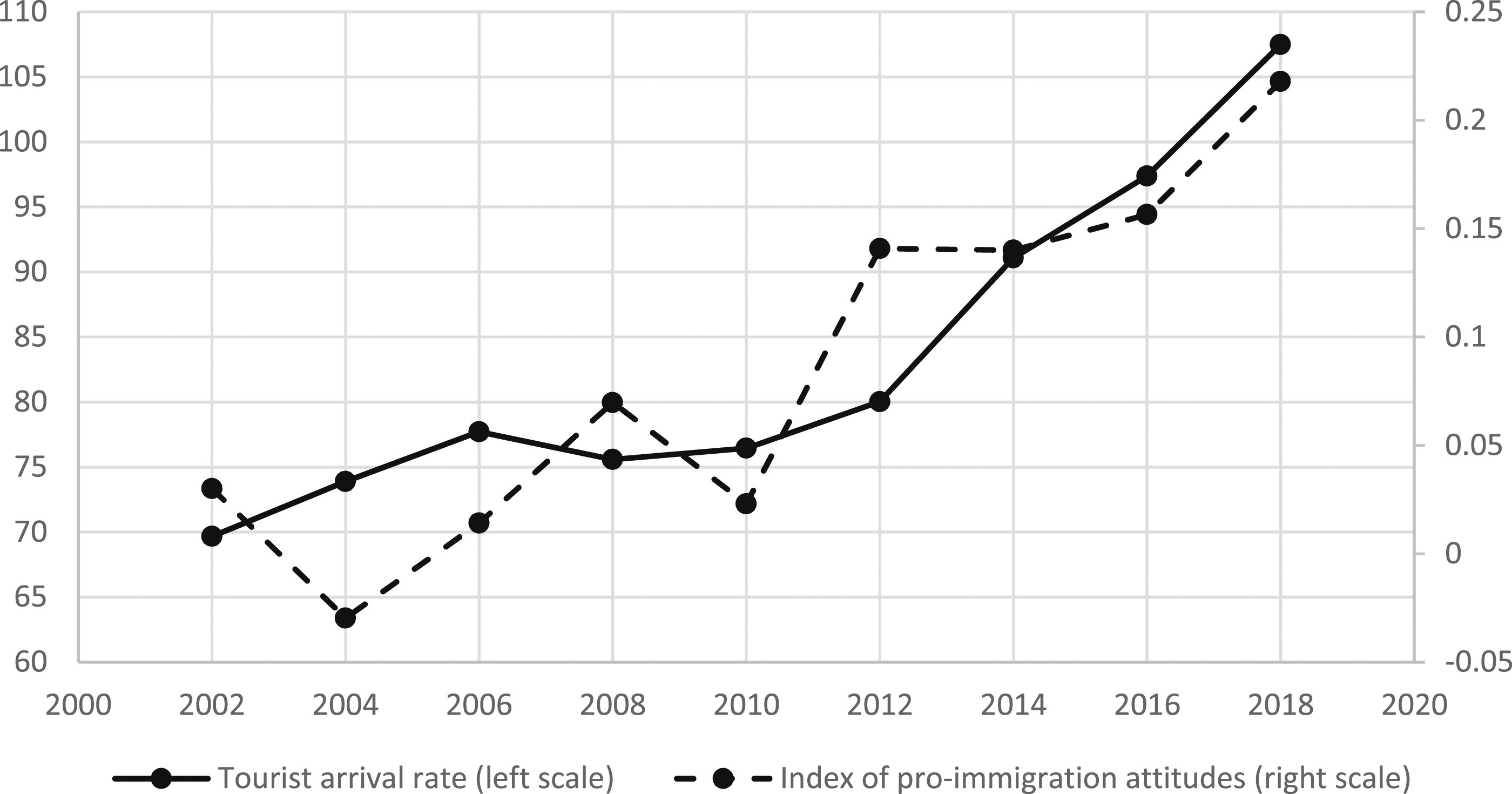
International tourist arrivals and attitudes towards immigration in Europe, 2002–2019.
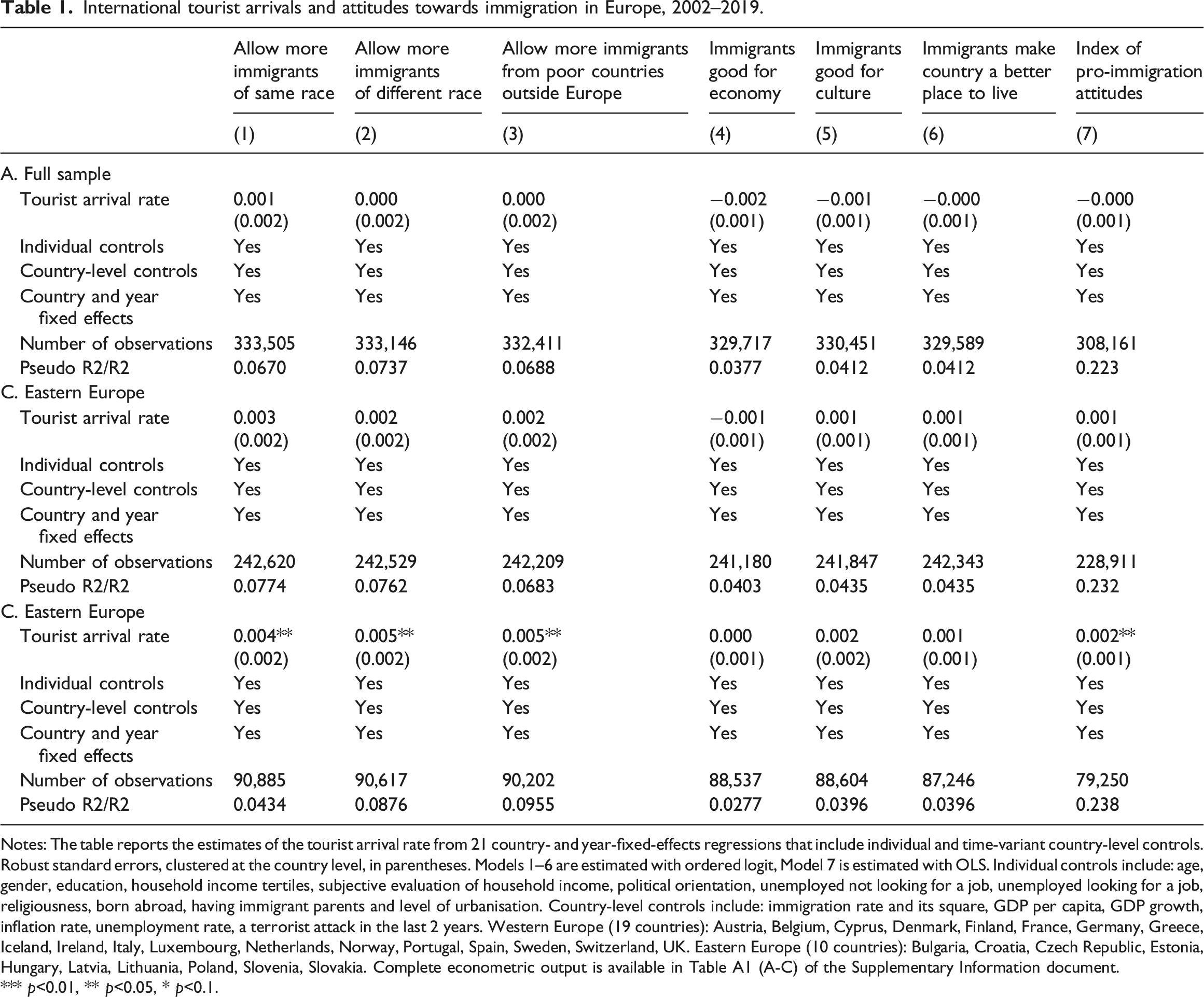
Notes: The table reports the estimates of the tourist arrival rate from 21 country- and year-fixed-effects regressions that include individual and time-variant country-level controls. Robust standard errors, clustered at the country level, in parentheses. Models 1–6 are estimated with ordered logit, Model 7 is estimated with OLS. Individual controls include: age, gender, education, household income tertiles, subjective evaluation of household income, political orientation, unemployed not looking for a job, unemployed looking for a job, religiousness, born abroad, having immigrant parents and level of urbanisation. Country-level controls include: immigration rate and its square, GDP per capita, GDP growth, inflation rate, unemployment rate, a terrorist attack in the last 2 years. Western Europe (19 countries): Austria, Belgium, Cyprus, Denmark, Finland, France, Germany, Greece, Iceland, Ireland, Italy, Luxembourg, Netherlands, Norway, Portugal, Spain, Sweden, Switzerland, UK. Eastern Europe (10 countries): Bulgaria, Croatia, Czech Republic, Estonia, Hungary, Latvia, Lithuania, Poland, Slovenia, Slovakia. Complete econometric output is available in Table A1 (A-C) of the Supplementary Information document.
*** p<0.01, ** p<0.05, * p<0.1.
The picture is similar for Western European countries (Panel B of Table 1): all the estimated coefficients of the TAR are statistically insignificant. In the sample of Eastern European countries (Panel C of Table 1), the estimates are larger, both in terms of magnitude and statistical significance. In this group, greater international TARs are positively and significantly (at the 95% level) correlated with the respondents’ willingness to allow immigrants of various backgrounds to live and work in their country (Columns 1–3), as well as with the index of pro-immigration attitudes (Column 7). The association between the TAR and the perceived effects of immigration on economy, culture and life a whole is statistically non-significant (Columns 4–6).
International tourist arrivals and attitudes towards immigration: quadratic relationship.
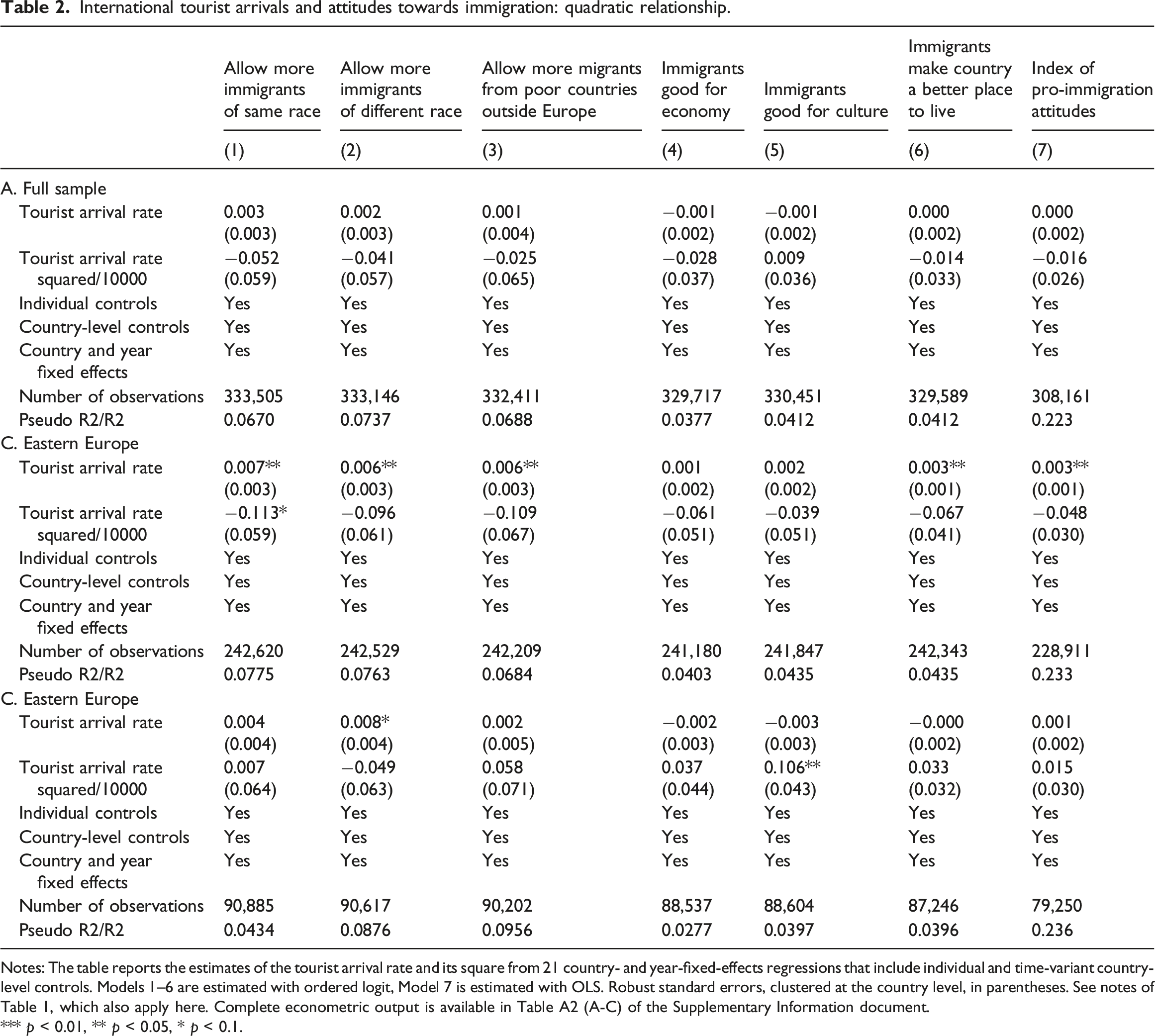
Notes: The table reports the estimates of the tourist arrival rate and its square from 21 country- and year-fixed-effects regressions that include individual and time-variant country-level controls. Models 1–6 are estimated with ordered logit, Model 7 is estimated with OLS. Robust standard errors, clustered at the country level, in parentheses. See notes of Table 1, which also apply here. Complete econometric output is available in Table A2 (A-C) of the Supplementary Information document.
*** p < 0.01, ** p < 0.05, * p < 0.1.
As for Eastern Europe (Panel C of Table 2), the TAR and its square are never jointly statistically significant in the same specification, meaning that there is no non-linear relationship between the two variables.
All in all, the correlational results suggest that, other things being equal, higher inbound tourism rates are associated with more positive attitudes towards immigration in Eastern Europe. In Western Europe, the relationship takes an inverted U-shape for attitudes towards immigrants of the same race/ethnicity: they become more positive with tourist arrivals up to a point, and more negative thereafter; the inflection point, however, corresponds to very high levels of tourist arrivals (316 tourist arrivals per 100 residents) and the downward-sloping segment would only be observed in three countries in our sample.
Correlational results: Robustness and sensitivity checks
Before moving to instrumental variable results, we checked how robust and sensitive the results, reported in Tables 1 and 2 (henceforth, benchmark results), are different estimation methods and sub-samples. First, we estimated the models explaining different types of attitudes towards immigration with ordered probit and OLS, and the model explaining the index of immigration attitudes with the linear multilevel (mixed effects) approach. The results, presented in Tables A3a and A3b of the Supplementary Information are consistent with the benchmark results. Notably, the ordered probit results of the quadratic model for Western Europe provides additional support for the inverted U-shaped relationship between TAR and attitudes towards immigration (both the TAR and its square are statistically significant for three outcomes capturing attitudes towards different types of immigrants, as well as in the model explaining the statement “Immigrants make our country a better place to live”). The inflection points in these regressions remain relatively high, ranging from 250 to 303 tourist arrivals per 100 residents.
Second, we used the TAR of the previous year instead of its contemporaneous value; this exercise, among other things, could mitigate some of the endogeneity concerns. The results, presented in Table A4 of the Supplementary Information, are in line with the benchmark. Notably, we still find a statistically significant, positive association between the tourist arrival rate (at t-1) and attitudes towards different types of immigrants (at t) in Eastern Europe.
Third, we estimated our models on the sub-sample of countries that were included in all nine waves of the ESS, i.e. a balanced panel of countries (Table A5 of the Supplementary Information). The linear model suggests a positive relationship between attitudes towards immigration and the TAR in both Eastern and Western Europe. In Eastern Europe, where the results should be interpreted with caution as only three countries were included in the balanced-panel analysis, a U-shaped relationship between the variables of interest was obtained for the outcomes capturing attitudes towards different types of immigrants as well as for the immigration attitudes index (implying that attitudes worsen with tourist arrivals up to a certain point and improve thereafter); at the same time, the relationship is an inverted U-shape for the outcome capturing the assessment of immigration on country’s economy.
Fourth, we estimated the models separately for high- and low-tourism intensity countries (i.e., for above and below the whole-sample median of 94 tourist arrivals per 100 residents). The results, reported in Table A6 of the Supplementary Information, reveal a negative association between the TAR and all outcomes capturing attitudes toward immigration in high-tourism intensity countries, echoing the downward-sloping segment of the inverted U-shaped relationship for Western Europe, while the estimates for the low-tourism-intensity countries tend to be statistically non-significant. Fifth, we checked if the relationship between the variables of interested is the same in Eurozone countries and non-Eurozone countries. The results, reported in Table A7 of the Supplementary Information, reveal an inverted U-shaped relationship between the TAR and all immigration attitudes outcomes, except the assessment of immigration for country’s culture, in the Eurozone countries. With the inflection points ranging from 170 to 320, and given the fact that the majority of the Eurozone countries in the sample are West European, the results provide further support for the negative association between the TAR and immigration attitudes when tourist intensity is high, especially in Western Europe.
Attitudes towards immigration and tourist arrival rate: generalised ordered logit estimations for Western and Eastern Europe.
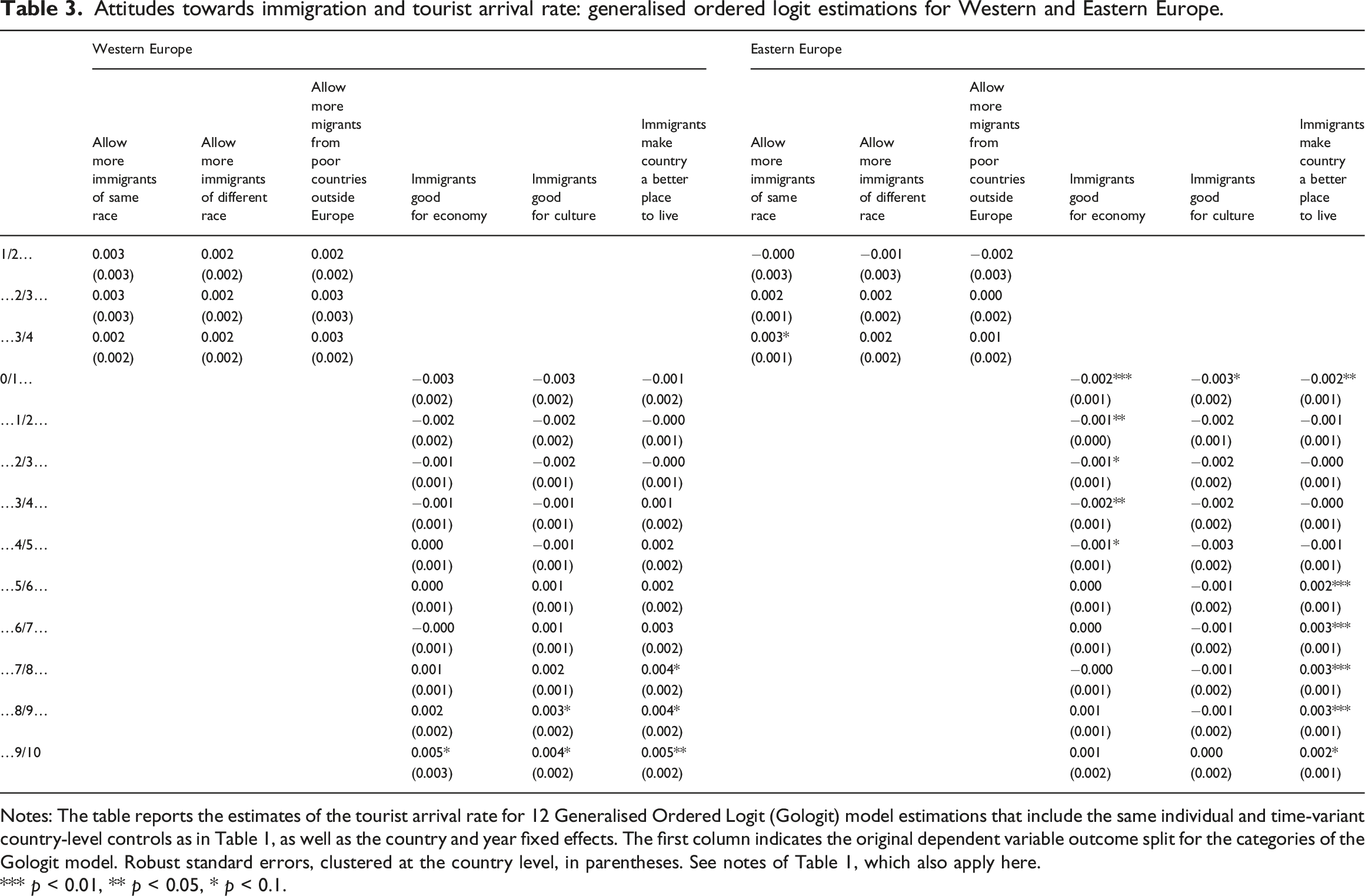
Notes: The table reports the estimates of the tourist arrival rate for 12 Generalised Ordered Logit (Gologit) model estimations that include the same individual and time-variant country-level controls as in Table 1, as well as the country and year fixed effects. The first column indicates the original dependent variable outcome split for the categories of the Gologit model. Robust standard errors, clustered at the country level, in parentheses. See notes of Table 1, which also apply here.
*** p < 0.01, ** p < 0.05, * p < 0.1.
Attitudes towards immigration, tourist arrival rate and its square: generalised ordered logit estimations for Western and Eastern Europe.
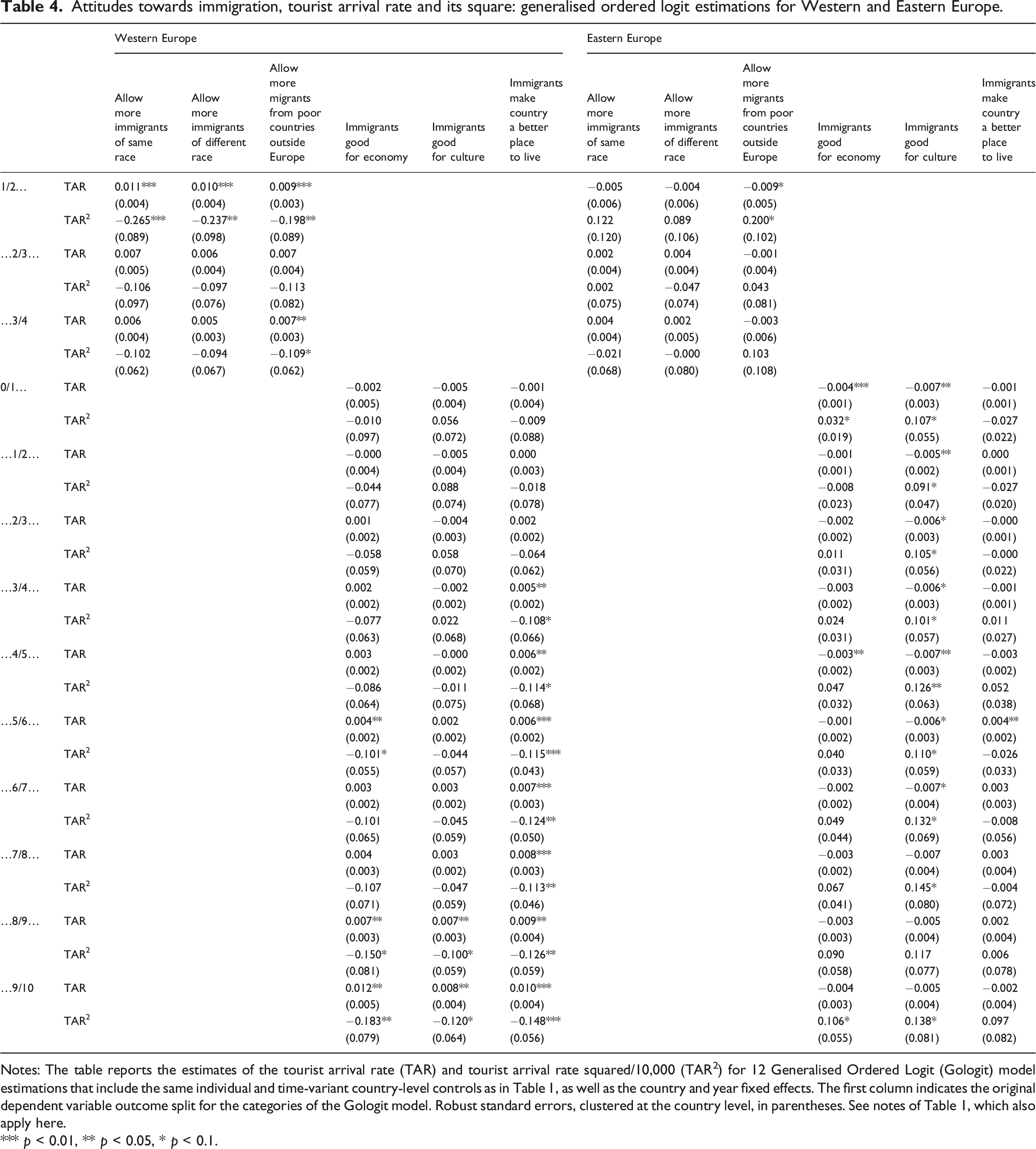
Notes: The table reports the estimates of the tourist arrival rate (TAR) and tourist arrival rate squared/10,000 (TAR 2 ) for 12 Generalised Ordered Logit (Gologit) model estimations that include the same individual and time-variant country-level controls as in Table 1, as well as the country and year fixed effects. The first column indicates the original dependent variable outcome split for the categories of the Gologit model. Robust standard errors, clustered at the country level, in parentheses. See notes of Table 1, which also apply here.
*** p < 0.01, ** p < 0.05, * p < 0.1.
Instrumental variable results
Instrumental variable results: Western Europe.
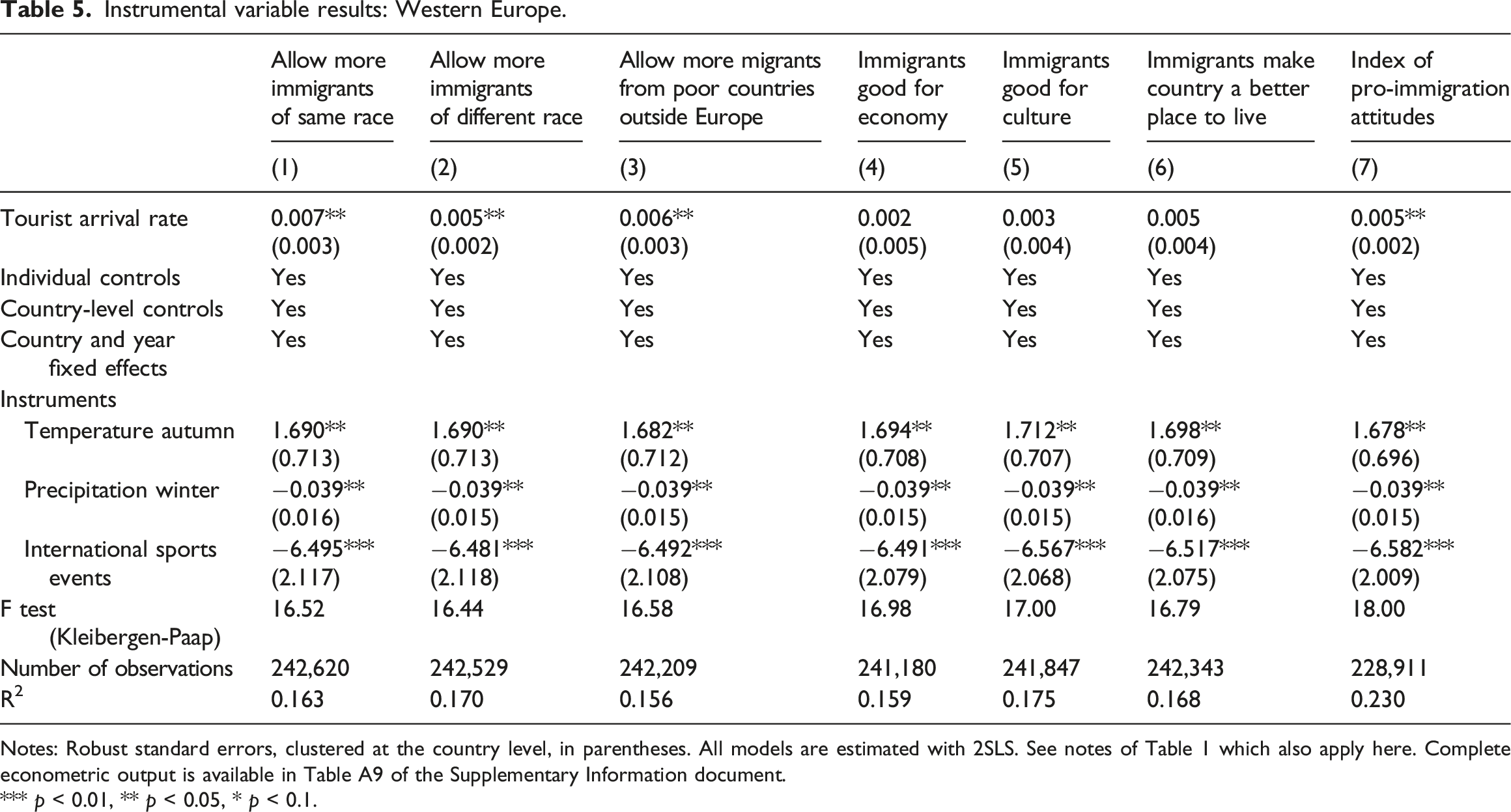
Notes: Robust standard errors, clustered at the country level, in parentheses. All models are estimated with 2SLS. See notes of Table 1 which also apply here. Complete econometric output is available in Table A9 of the Supplementary Information document.
*** p < 0.01, ** p < 0.05, * p < 0.1.
Instrumental variable results: Eastern Europe.
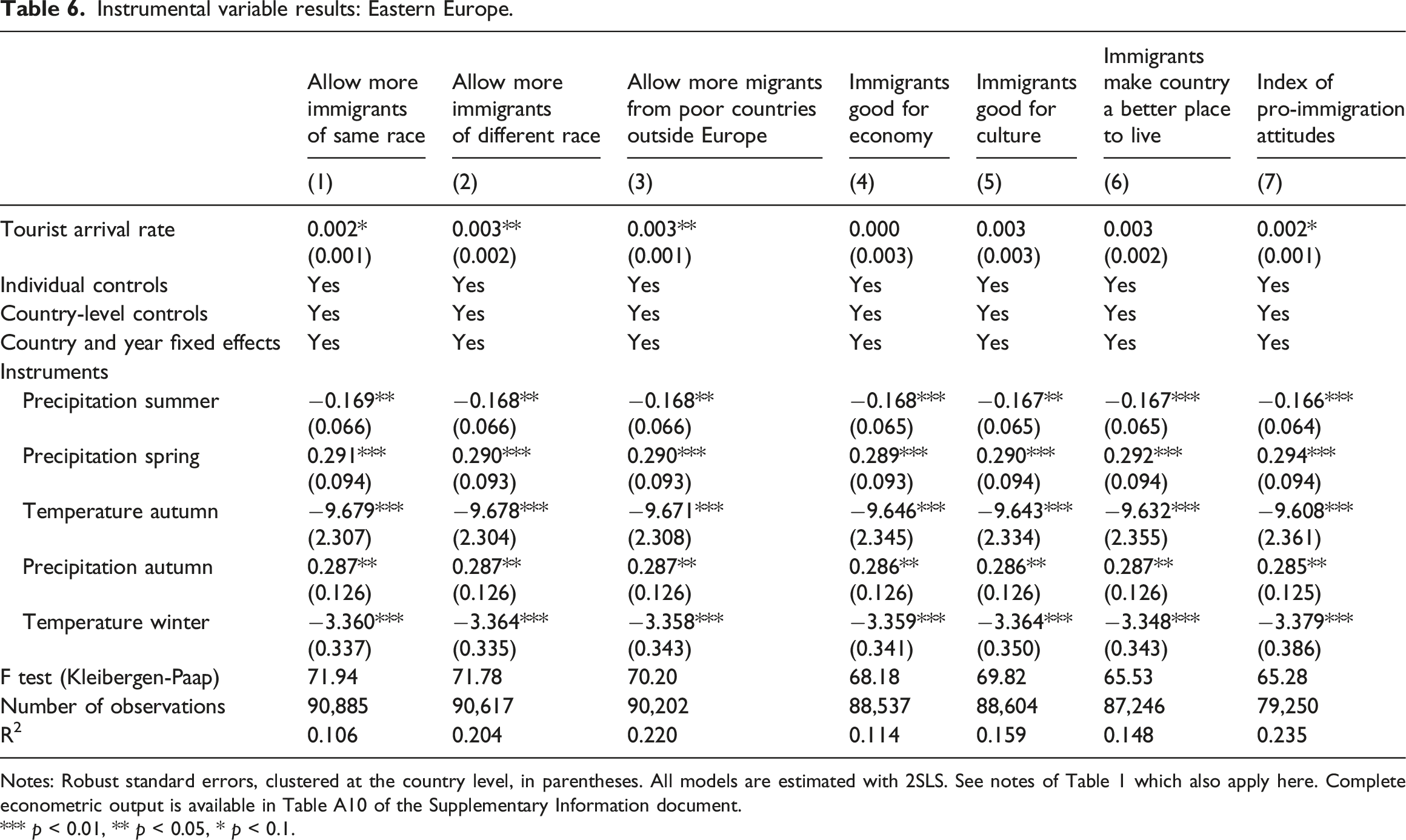
Notes: Robust standard errors, clustered at the country level, in parentheses. All models are estimated with 2SLS. See notes of Table 1 which also apply here. Complete econometric output is available in Table A10 of the Supplementary Information document.
*** p < 0.01, ** p < 0.05, * p < 0.1.
The lower panel of Table 5 shows the set of instruments and their coefficients in first stage regression that we found to be most successful in predicting the TAR in Western Europe. Specifically, warmer autumns increase tourist arrivals while rainier winters reduce them; the negative coefficient of international sporting events likely reflects the displacement/crowding-out effect (Fourie and Santana-Gallego, 2011). 6 The instruments are jointly statistically significant; the value of the F test of excluded instruments, ranging between 16.44 and 18, exceeds the commonly accepted threshold of 10, confirming that the instruments are relevant.
The second stage results, reported in the upper panel of Table 5, indicate that, in Western Europe, the international tourist arrival rate (as predicted by climatic conditions and international sporting events) has a positive effect on the willingness to allow immigrants of the same and different race/ethnicity and immigrants from poorer countries outside Europe (Columns 1–3), as well as on the immigration attitudes index variable (Column 7). The coefficients of the TAR are not statistically significant in specifications capturing residents’ perceived effects of immigration on the economy and culture as well as their views on whether immigration makes the country a better or worse place to live.
Table 6 shows the instrumental variable results for the sub-samples of Eastern European countries. We first note that a different combination of instruments works best at predicting the TAR: colder autumns and winters and rainier summers reduce tourist arrivals, while more precipitation in spring and autumn increase them. 7 These instruments are jointly significant in the first stage regression, with the value of the F test of excluded instruments exceeding 65 in all specifications. The second stage results suggest that, similarly to Western Europe, international tourist arrivals in Eastern Europe have a positive effect on the willingness to allow immigrants of the same and different race/ethnicity and immigrants from poorer countries outside Europe (Columns 1–3), as well as on the immigration attitudes index variable (Column 7); the coefficient of the TAR is statistically insignificant in specifications capturing perceived effects on economy, culture and country as a whole.
As mentioned earlier, a direct comparison of the correlational and instrumental variable results is only possible for the specification explaining the index of immigration attitudes (Column 7 in Tables 1, 5 and 6). For Western Europe, the estimate of the TAR is statistically insignificant in the correlational model, but positive and significant at the 95% level in the instrumental variable estimation. This comparison suggests that the correlational result is subject to a downward bias, which could be explained either by unobserved factors that at the same time increase tourist arrivals and worsen attitudes towards immigration (omitted variable bias), or by tourist arrivals being driven by worsening attitudes towards immigration (reverse causality). For Eastern Europe, the estimated coefficients of the TAR are positive and statistically significant in both the correlational and instrumental variable models. In terms of magnitude, the estimate of the instrumental variable model (0.00235) is 20% higher than its correlational model counterpart (0.00196), implying a similar direction of the bias as in Western Europe.
Overall, the instrumental variable results suggest that international tourist arrivals have a positive effect on attitudes towards immigration in both Western and Eastern Europe. The effect is present only for the variables capturing willingness to allow various types of immigrants, and zero for the perceived effects of immigration.
Discussion and conclusion
This paper set out to determine the effect of international tourist arrivals on attitudes towards immigrants and immigration in tourist-receiving societies. Using data from nine waves of the European Social Survey (2002–2019), we found that greater tourist arrivals are associated with more positive attitudes in Eastern Europe, while in Western Europe the relationship tends to take an inverted U-shape: attitudes towards immigration grow with tourist arrivals up to a certain threshold and decrease thereafter. The instrumental variable analysis, whereby tourist arrivals are predicted with weather conditions and international sporting events, suggests that tourist arrivals have a positive causal effect on attitudes towards immigration in both Eastern and Western Europe.
These findings hold societal and policy relevance as they imply that tourism may foster a greater acceptance of immigrants, which in turn affects the formation of immigration policies (Facchini and Mayda, 2008), actual migration flows (Gorinas and Pytliková, 2017), and integration of immigrants (Fussell, 2014), potentially contributing to more open and inclusive societies in tourist receiving countries and sustainable development. The issue is particularly important for Eastern Europe: in recent years, the region has witnessed not only growing numbers of international tourists and immigrants but also levels of ethnic nationalism, prejudice, xenophobia and anti-immigration sentiment that have been higher than in Western Europe (Buštíková, 2018; Minkenberg, 2017). Our findings from both the correlational and causal analyses suggest that international tourism has fostered a more positive outlook towards immigrants in Eastern Europe and the anti-immigration attitudes gap between the Eastern and Western Europe would have been higher without tourism.
The picture is somewhat different for Western Europe. While international tourist arrivals there have a positive causal effect on attitudes towards immigration, we also find that at a very high intensity of tourism further tourist arrivals in Western Europe are associated with more negative attitudes towards immigration. This finding is consistent with the theoretical approach highlighting the role of emotions and psychological well-being in explaining attitudes towards immigration: as excessive tourism is likely to lower the psychological well-being of residents (Ivlevs, 2017; Okulicz-Kozaryn and Strzelecka, 2017) and lower psychological wellbeing likely to lead to anti-immigration sentiment (Korol and Bevelander, 2021; Welsch et al., 2021), excessive tourist arrivals may make hosts less favourable to immigration. While it is yet to be established if this finding represents a causal effect, 8 it sends an alarming message for practitioners and policymakers: excessive tourism potentially lower residents’ tolerance and acceptance of outgroups, such as immigrants, slowing up the development of inclusive and open societies.
Notably, the negative association between the TAR and pro-immigration sentiment that we observe at high levels of tourism intensity is present in Western – and not Eastern – Europe. A possible explanation for this discrepancy is the relatively more mature and established flows of both incoming tourists and immigrants in Western than Eastern Europe. In the latter, restriction-free international tourism has only become possible after the fall of the Socialist Bloc, and most Eastern European countries find themselves in the early stages of the tourism development cycle, even if the TARs in some parts of the region are relatively high. In such contexts, positive emotions from contact with tourists would be dominant (Okulicz-Kozaryn and Strzelecka, 2017), increasing openness and tolerance toward outgroups, such as immigrants. It is also important to note that, for the most of the period of study, Eastern European countries have been migration-sending rather than migration-receiving. Many people in these countries would therefore have had more contact with tourists than immigrants, and tourists in such contexts could be even more likely to help shape attitudes towards outgroups. 9
While our work provides novel evidence on the effect of international tourist arrivals on residents’ attitudes towards immigration, it has several limitations which open directions for future research. First, we have discussed two theoretical channels, related to labour markets and emotions/contact with tourists, through which tourist arrivals may be affecting attitudes towards immigration, but the data at hand do not allow us to test for their relative strength or the role of potential mediators. Future research could seek to disentangle these channels by tailoring surveys which would include questions on whether respondents are likely to benefit or lose out from tourism-induced immigration, on how often they come into contact (direct or indirect) with tourists and whether this contact is positive or negative etc. 10
The geographical level (European countries) of the empirical analysis could be considered another limitation of our study. While country-level evidence represents an important first step, one could rightly argue that, within a country, tourist arrivals have a greater impact on attitudes toward immigration in high-tourism-intensity areas. A promising research avenue would therefore be conducting the analysis at the regional level – within one or several countries – checking, in-particular, if the inverted U-shaped relationship holds also at the region level. Other ways to understand the mechanisms behind our results would be to relate the arrivals of tourists from specific countries to the attitudes towards immigration from these countries as well as delve into the effects on attitudes towards immigration of various types of tourism: international, domestic, visiting, business, leisure etc.
Supplemental Material
Supplemental Material - Do international tourist arrivals change residents’ attitudes towards immigration? A longitudinal study of 28 European countries
Supplemental Material for Do international tourist arrivals change residents’ attitudes towards immigration? A longitudinal study of 28 European countries by Artjoms Ivlevs and Ian Smith in Tourism Economics
Footnotes
Acknowledgements
We thank two anonymous referees and seminar participants at the Universities of Bournemouth, Swansea, West of England and the University College London for many helpful comments and suggestions on earlier drafts of the paper.
Declaration of conflicting interests
The author(s) declared no potential conflicts of interest with respect to the research, authorship, and/or publication of this article.
Funding
The author(s) received no financial support for the research, authorship, and/or publication of this article.

Supplemental Material
Supplemental material for this article is available online.
Notes
Author biographies
Artjoms Ivlevs is Professor of Economics at the Bristol Business School (UWE Bristol) and a Research Fellow at the Institute for the Study of Labor (IZA). His research interests include migration, tourism, subjective well-being and corruption. Artjoms is an applied microeconomist working with large-scale survey data; much of his work focuses on the post-socialist countries of Central and Eastern Europe. His research has appeared in leading tourism, migration, economics, and cross-disciplinary journals, such as the Journal of Travel Research, International Migration Review, Journal of Population Economics, and Environment and Planning A.
Dr Ian Smith is Senior Lecturer in Economics at the at the Bristol Business School (UWE Bristol). His research interests lie in regional economics and the production of public policy at different territorial levels. Ian has worked on inter-regional mobility within Europe, urban regeneration, climate change adaptation, and self-organising environmental groups. Ian has published in the International Journal of Sustainable Society, Handbook of New Urban Studies, and Tijdschrift voor economische en sociale geografie.
References
Supplementary Material
Please find the following supplemental material available below.
For Open Access articles published under a Creative Commons License, all supplemental material carries the same license as the article it is associated with.
For non-Open Access articles published, all supplemental material carries a non-exclusive license, and permission requests for re-use of supplemental material or any part of supplemental material shall be sent directly to the copyright owner as specified in the copyright notice associated with the article.
