




Abstract
The aim of this study is to examine whether the introduction of stricter rules on short-term rentals (STRs) in some European cities will have an impact on hotel overnight stays. The treatment group consists of cities with the strictest regulations in Europe (Amsterdam, Barcelona, Berlin, Paris and London). The coarsened exact matching method is used to select an appropriate control group consisting of cities where there are no similar regulations but which are of a similar size in relation to population and relevant tourist space. Weighted fixed-effect models are used to estimate the average treatment effect on the treated. The specification also includes variables controlling for accommodation prices, value-added tax (VAT) rate on accommodation, terrorist attacks, real income of the destination country and time. Results show that stricter regulations for STRs in the five cities lead to an average increase in overnight stays of around 9%. This suggests that STRs such as Airbnb are substitutes for hotel accommodations and thus strong competitors. In addition, terrorist attacks lead to a decline in overnight stays, while an increase in VAT on accommodation reduces hotel overnight stays.
Keywords
Introduction
Airbnb and other short-term rental (STR) providers operating under the flag of the sharing economy have restructured the accommodation market and recorded strong growth in recent years (Gutiérrez et al., 2017). As a result, traditional providers of accommodation such as hotels feel threatened and their associations have lobbied for implementation of laws that restrict this type of supply (Belk, 2014). There are also protests by the inhabitants of the affected cities, who are trying to stop the further growth of STRs (Hughes, 2018). Several European cities (e.g. Amsterdam, Barcelona, Berlin, London and Paris) have introduced various types of regulations for these STRs from 2015 onwards (Nieuwland and van Melik, 2020). These rules cover different aspects, including reporting obligations, a limit on the number of STRs (in days), tax issues, health and safety aspects as well as monitoring and fines (ReformBnB Barcelona, 2019). Stricter regulations may lead to a slowdown in supply of STRs, an increase in Airbnb accommodation prices and ultimately a surge in demand for hotel overnight stays. Recent empirical evidence shows that Airbnb accommodation is a strong competitor to traditional hotels (Zervas et al., 2017), with the low-price segment of hotels being particularly affected.
The aim of this study is to investigate whether the stricter regulations on STRs affect overnight stays in traditional accommodation establishments. A difference-in-differences (DID) model combined with the coarsened exact matching method (CEM) is used to estimate the treatment effect of stricter regulations. The CEM method helps to reduce the imbalance between the treated and the control groups. Among the conditioning variables are the size of the city (population) and the extent of tourism-relevant space in a city (measured in square kilometres). Data are based on total overnight stays in about 80 cities in Europe with at least one United Nations Educational, Scientific and Cultural Organization (UNESCO) world heritage site (WHS) for the period 2010–2017. Knowledge of the impact of regulations is important as several other European cities are planning to introduce STR schemes.
Little is known about the presumptive impact of tightened rules on STRs on the performance of the traditional accommodation sector. Yang and Mao (2019) examine the impact of regulation on Airbnb supply in US cities and find that regulation plays a role. Similarly, Hsi (2017) documents that regulations have a negative impact on Airbnb supply in selected cities. Zervas et al. (2017) show that Airbnb accommodations and hotels compete primarily in the low-cost segment but not for upscale hotels. Based on data for the United States, Dogru et al. (2019) find that increasing Airbnb supply, regardless of category, has a negative impact on the performance of the hotel industry. Fang et al. (2016) conclude that the entry of the sharing economy will have a positive but non-linear effect on the entire tourism industry. The positive marginal effect decreases as the size of the sharing economy increases.
This study is novel in its attempt to investigate whether and to what extent hotels in European cities benefit from STR arrangements. In contrast to previous studies, the analysis uses a matching approach to define the control group of cities and use information on regulations on STRs to identify the impact of STRs on the performance of the hotel sector measured as overnight stays. The other contribution is a broader set of control variables than usual in the literature (hotel prices, value-added tax (VAT) rates on accommodation, terrorist attacks and real income of the destination country).
The structure of this article is as follows: The second section outlines the conceptual background; the third section describes the empirical approach, while the fourth section introduces the data set and the descriptive statistics. The results are presented and discussed in the fifth section and the sixth section concludes.
Conceptual background
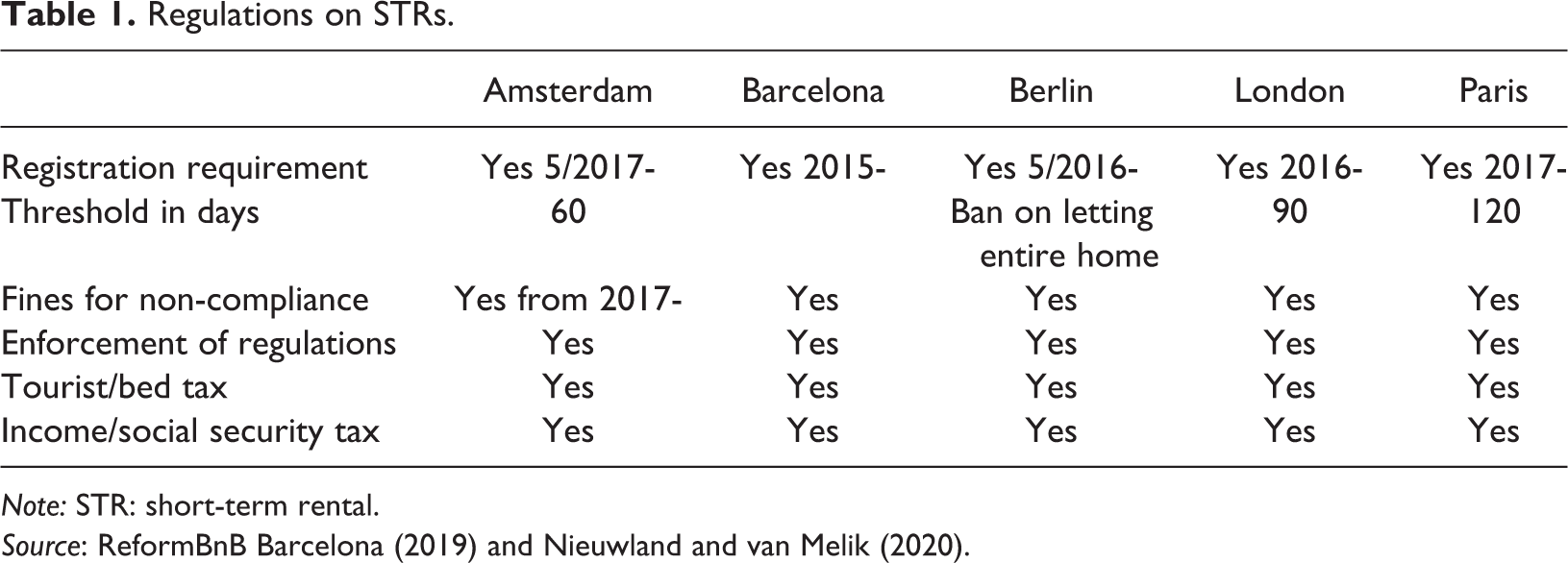
Barcelona was the first city in Europe introducing a strict limit on short-term booking platforms such as Airbnb. Providers of such accommodation must register and there are official control and compliance functions (ReformBnB Barcelona, 2019). Other European cities following stricter regulations are most notably London from 2016, Berlin in April 2016 as well as Amsterdam and Paris from 2017 (Table 1). According to Nieuwland and Van Melik (2020), these five cities are the ones with the strictest regulations for short-term accommodations. Cities that introduce stricter STR rules have a number of features in common. They are among the most important cultural cities in Europe with numerous attractions, historical sites and are large in terms of both population and tourism areas (see Table 2). In addition, all these cities have at least one UNESCO WHS (e.g. Tower of London, Sagrada Família – Works of Antoni Gaudi in Barcelona, Canal Ring area of Amsterdam and museum island in Berlin) or the entire city is a WHS (Paris; Source: https://whc.unesco.org/). These cities also belong to the European Premier League of city destinations (Zekan et al., 2019).
Regulations on STRs.
Note: STR: short-term rental.
Source: ReformBnB Barcelona (2019) and Nieuwland and van Melik (2020).
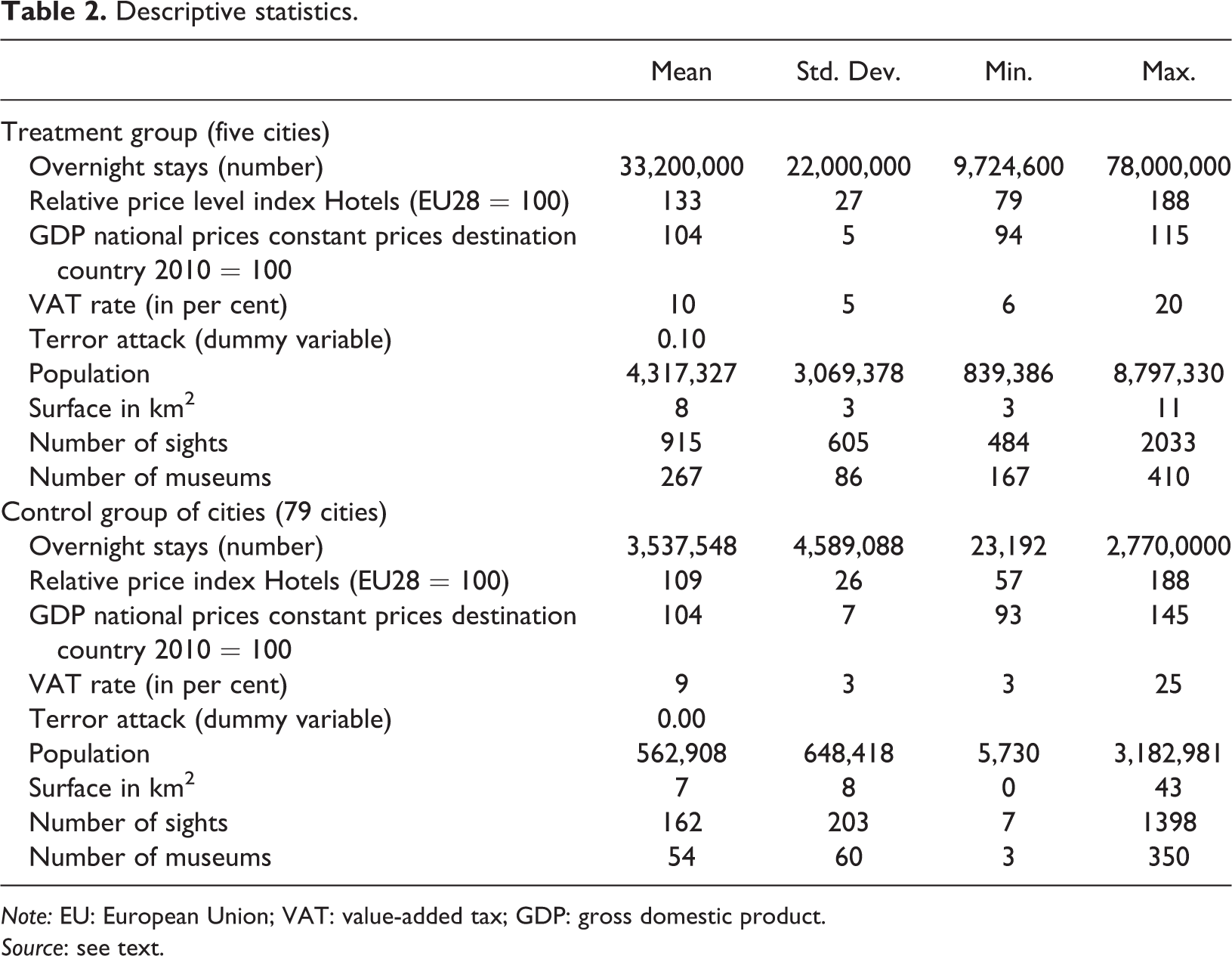
Descriptive statistics.
Note: EU: European Union; VAT: value-added tax; GDP: gross domestic product.
Source: see text.
The vast majority of European cities have no agreement with short-term booking platforms and de facto no monitoring facilities at the end of 2017. The stricter rules on STRs are complex and consist of several aspects including mandatory registrations, tax issues, thresholds for the number of STRs (maximum number of days per year), health and safety aspects, landlord and neighbour consent, legal responsibility and liability, and enforcement and control (ReformBnB Barcelona, 2019). The day limit on the sharing activity is an important element of the regulation on STRs (Frenken and Schor, 2017). For the sample of cities with restrictions, the day limit ranges from 60 days in Amsterdam and 120 days in London, with Paris in the middle at 90 days (Table 1).
Legislative rights in these matters lie with the Federal Governments or the municipalities. A crucial aspect is the registration of STRs with the local authorities and the obligation for the platforms to include the registration on their websites. In all five cities with stronger legislation, a registration for STRs is mandatory (see Table 1). An example of this is Barcelona, where the owner must register the property and pay a fee; however, no new licences are offered by the local authorities. The City of Paris has a website that shows the locations of legally registered properties with the aim of encouraging voluntary registering (ReformBnB Barcelona, 2019). The extent to which municipalities actively enforce the laws on short-term leases is also crucial. This often requires the introduction of permanent systems to monitor the STR industry. All the five cities impose fines for non-compliance with the laws on STRs.
Several studies investigate the impact of STR supply on the traditional hospitality industry. The studies are difficult to compare since the methods, the selection of the control group, aggregation levels and locations vary widely. It is therefore not surprising that the results differ across studies. At the city level, it is also difficult to quantify the relationship between the increased supply of STRs and the performance of the hotel industry, as both segments show high growth rates. This could lead to a spurious positive correlation. Furthermore, research shows that STRs are concentrated in cities and the pattern and structure of Airbnb differ between urban and non-urban area (Moreno-Izquierdo et al., 2019). Thus, rural areas with a low supply of STRs are not suitable as a control group.
The majority of studies investigate the relationship between supply or performance of STRs and the performance of the accommodation sector. For instance, Zervas et al. (2017) find that hotel earnings in Texas decline in places where Airbnb is growing. On average, an increase of 1% in Airbnb’s offerings results in a decrease of 0.05% in quarterly hotel revenues. In addition, the authors show that hotels in the lower price range are affected, but not upscale hotels. Dogru et al. (2019) document that increasing Airbnb supply has a negative impact on the performance of the hotel industry. This applies regardless of the indicator considered: room turnover (RevPAR), average daily rates (ADR) and occupancy figures. The data are based on 10 major US hotel markets for the period July 2008 to June 2017, suggesting that Airbnb has a negative impact on the hotel industry in all class segments. Similarly, for the US market, Dogru et al. (2017) find that using a DID regression analysis and controlling for a variety of hotel characteristics and revenue drivers, a 10% rise in Airbnb supply reduces Hotel RevPAR by 0.25% and ADR by 0.2%. Studies for Europe (Barcelona) come to similar findings (Benítez-Aurioles, 2019a, 2019b). Using Airbnb data for New York, Gunter et al. (2020) also suggest that the traditional accommodation industry and Airbnb listings are substitutes.
There are also studies that find that Airbnb listings and the hospitality industry are complements. For instance, Dogru et al. (2020) demonstrate that a 1% increase in Airbnb supply increases employment by between 0.02% and 0.04%, which is larger than the impact on the restaurant sector and overall employment. However, Blal et al. (2018) come to the conclusion that there is no relationship between hotel performance and Airbnb supply based on data for San Francisco.
Using a different approach, Farronato and Fradkin (2018) conclude that the impact of Airbnb on the hospitality sector is modest. Accordingly, without Airbnb accommodations, revenues would be 1.5% higher. Between 43% and 63% of Airbnb nights would not have been generated without the presence of STRs. This means that the degree of substitution between Airbnb bookings and registered hotel bookings is low.
Some studies explicitly use information on STRs regulations to study the relationship between Airbnb supply and regulations. For instance, Yang and Mao (2019) find that regulations matter for Airbnb supply in US cities. Using a DID analysis, Hsi (2017) documents that regulations have a negative impact on Airbnb supply in selected cities.
In this study, information on the introduction of regulations on STRs in cities is used to identify the impact on accommodation performance. Since STRs are geographically concentrated in the city centres of the major tourist cities, they can be regarded as a direct competitor to city hotels (Gutiérrez et al., 2017). STRs are expected to pose a particular threat to hotels in urban agglomerations, as many hosts of STRs are willing to let their flat for short and weekend trips. In cities, the average length of stays is typically low, ranging 2–2.5 nights (data based on the major tourism cities in Europe). Regulations lead to a reduction in the supply of STRs. Mandatory registration and tax issues lead to higher prices for STRs and thus increase the demand for tourism in hotels. Thus, bookings via short-term online platforms like Airbnb are expected to be substitutes rather than a complement to hotel bookings. The main hypothesis is that the traditional accommodation industry benefits from the regulation of STRs via online platforms. An alternative hypothesis is that hotel accommodation and STRs are complementary. Gunter and Önder (2018) suggest that Airbnb short-term accommodation complements the traditional hotel sector because it offers larger, cheaper and more central accommodation.
Empirical strategy
The identification strategy in this study is to compare the impact of regulations on STRs on the registered overnight stays in cities with and without regulations before and after the regulation. Previous studies have mainly investigated the impact of regulations on the supply of STRs (Yang and Mao, 2019). The identification strategy of Zervas et al. (2017) is to compare the performance of the hospitality sector in areas with an Airbnb presence with areas without an Airbnb presence. This study uses information on regulation on STRs to identify the impact of STRs on overnight stays. In typical DID studies, the treatment is a one-time change in government policy applied equally to all members of the treatment group (Angrist and Pischke, 2009, 2015). The one-time nature of the change makes it easy to select specific pre- and posttreatment points in time, whereby the latter it is assumed that the full treatment effect has been realized.
Policy endogeneity, that is, the possibility that STR arrangements may be influenced by unobserved factors at the city level, is the greatest challenge for estimating the DID model. The introduction of regulations for STRs is not a random process. Cities that introduce restrictions on STRs differ from others. They are larger in terms of population, offer a broader tourism-relevant area and have more cultural attractions (see Table 2). Hong and Lee (2018) show that the attitude to online marketplaces for STRs differs across cities. A solution is to model the likelihood of introducing regulations on STRs and to use the propensity score-matching model combined with the DID. However, the probit model to calculate the propensity score requires a large number of significant covariates.
Another solution is to use the CEM method developed by Iacus et al. (2012) which requires fewer conditioning variables. With this method, the imbalance between the group of cities with regulations and the control group of cities without regulations can be reduced. The idea of the CEM method is to group values of continuous variables so that the main characteristics do not differ significantly within groups (Iacus et al., 2012). The advantage of the CEM method is that a relatively small set of covariates can be used to match the treatment with an appropriate control group (Iacus et al., 2012). The authors show that the CEM dominates commonly used existing matching methods in its ability to reduce imbalance, model dependence, estimation error, bias, variance, mean square error and other criteria. The CEM method in combination with the DID technique is used by Zervas et al. (2017) who model the impact of Airbnb adoption on hotel performance. Aroca et al. (2017) use the CEM technique to link different tourism statistics.
In this study, the CEM method is used in combination with the DID estimator. To eliminate the selection bias, the development of overnight stays in hotels for cities with short-term letting regulations is compared with that of observation-identical, non-affected cities. In the first stage, covariates must be selected to establish the balance between the treatment and the control groups. Both the population and the tourism-relevant area formed by the major attractions are used as conditioning variables. The surface area of the tourism-relevant area is an additional size variable that more accurately represents the tourist area or the relevant size than the population of the city. Major cultural attractions, government offices, corporate headquarters and universities are usually concentrated in the city centre. Travellers and tourists seldom visit the suburbs and are concentrated in the city centre. For both variables, 11 different categories are constructed that are used to calculate the CEM weights. The matching procedure generates weights that are used in the subsequent weighted fixed-effects panel regression where the observations are weighted according to the size of their strata. Since panel data models are used, the CEM weights are averaged over time as suggested by Nilsson (2017).
The empirical specification is motivated by the demand model for travel and tourism (Song and Witt, 2012). According to the theory of tourism demand, overnight stays depend negatively on prices in the destination country and positively on the real income in the country of origin. The prices can be approximated by hotel, restaurant and transport prices. In addition, reductions in the VAT rate on accommodation may have an impact. Studies widely agree that tourism taxes have a negative impact on tourism demand (Aguiló et al., 2005). As a push factor, real income of the destination can also play a role. In addition, tourism demand depends on external factors such as terrorist attacks (Araña and León, 2008; Corbet et al., 2019; Fourie et al., 2020). Using STRs data for Barcelona and a control group consisting of Paris and London, Benítez-Aurioles (2019a) shows that revenues decline in the last quarter of 2017 until the second quarter of the following year, despite notable efforts to lower prices in the same period.
The empirical model is specified as follows:

where Y denotes total overnight stays in city i in year t.
In the following, the standard model is augmented by allowing that the coefficient of the regulation dummy can vary over time:

where ln() denotes the natural logarithm,
Equation (2) is estimated by the FEs model using CEM weights and a matched sample. The CEM weights are created using population and surface of the tourist space. The coefficients
Data and descriptive statistics
According to Eurostat, there are over 800 cities with more than 50,000 inhabitants in the European Union (EU). Since all cities with strict regulations on STRs are cities with a WHS, the analysis is limited to cities in Europe with at least one UNESCO WHS (https://whc.unesco.org/en/list/). This reduces the sample to about 90 cities. The restriction of cities with WHS status is appropriate, as WHS has the status of a ‘top brand’, which provides a competitive advantage in attracting tourists over competing unlisted destinations (Yang et al., 2019). The selection of cities with at least one UNESCO WHS also ensures that the control group has similar characteristics (e.g. cultural attractions) as the group of cities with STR regulations.
The data are drawn from several sources and are collected for the period 2010–2017. The dependent variable is registered total nights spent in hotels and similar establishments. These consist of overnight stays in hotels and hostels, as holiday flats do not play a role in cities. The main data source is Eurostat Culture and tourism – cities and greater cities [urb_ctour] database with information on total nights spent in tourist accommodation establishments. Since the Eurostat data on total overnight stays have many missing values and gaps, the series are complemented using information on overnight stays obtained from the national statistical offices and the tourmis database (https://www.tourmis.info/index_e.html). Overnight stays for some world heritage cities is missing (for instance, for all UK cities except for London, St. Petersburg and Urbino; see Table S1 in the Online Appendix for a list of the cities used for the empirical analysis). Registered official overnight stays in hotels do not include overnight stays of short-term accommodation. For example, the Statistical Office of the Netherlands notes that ‘overnight stays do not include visitors staying in accommodation with fewer than five guests’ (https://www.cbs.nl/). This means the considerable number of Airbnb travellers and those booking through other online platforms are not included in the official accommodation data.
Two variables are used as conditioning variables to select the control group in the first step. The first one is city population, which is drawn the Eurostat database. In addition population surface is used, which is measured by the space formed by the top 10 attractions listed on TripAdvisor (defined as ‘Traveller favourites: things to do using TripAdvisor data including reviews, ratings, photos and popularity’; https://www.tripadvisor.com/Attractions). Geographical information systems based on the location of the attractions are used to calculate the surface of the tourist relevant area in the city (Falk and Hagsten, 2019). Among the cities with regulations on STRs, the surface of tourism relevant area ranges between 3.2 km2 in Amsterdam and 10.9 km2 in Barcelona. The corresponding areas for Paris, London and Berlin are 7.1 km2, 8.5 km2 and 10.6 km2, respectively. Lisbon has the largest areas based on the most favourite top 10 Tripadvisor attractions with 42.5 km2, while the WHS cities Cáceres, Salamanca, Regensburg and Bruges (Brugge) have the lowest with less than 0.2 km2.
Hotel prices measured as the price level index are provided by Eurostat and are measured as relative prices of holiday centres, campsites, youth hostels and similar accommodation establishments to the average of the EU-28 countries. The price level index expresses the price level of a given country relative to another (or relative to a group of countries like the EU), by dividing the purchasing power parities by the current nominal exchange rate (Source: https://ec.europa.eu/eurostat/statistics-explained/index.php/Glossary:Price_level_index_%28PLI%29). Information on terror attacks is drawn from the Global terror database (https://www.start.umd.edu/gtd/). Information on the VAT rate on hotels is provided by the European Commission (European Commission, 2019). Real GDP is extracted from the Eurostat database.
The estimation sample consists of an unbalanced panel data set for about 90 cultural cities in Europe for the period 2010–2017 with about 630 observations. Table 2 reports the descriptive statistics for the main variables for the treatment and control groups. Cities with strict regulations on STRs are larger in both surface and population.
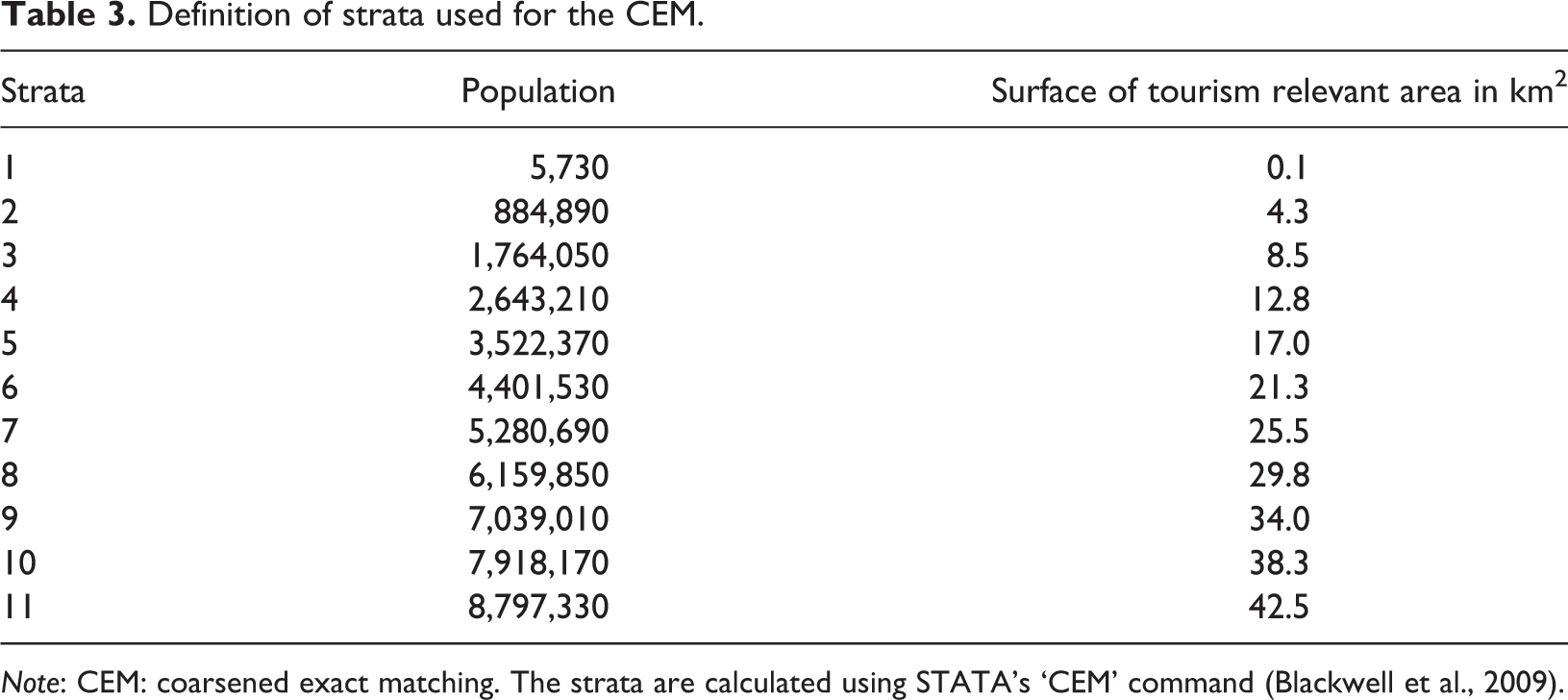
Table 3 contains the strata that are used to create the CEM weights. There are 11 strata calculated ranging from a population of 5730 to 8.8 million. Space of tourism relevant area ranges from stratum 1 with 0.1–42.5 km2.
Definition of strata used for the CEM.
Note: CEM: coarsened exact matching. The strata are calculated using STATA’s ‘CEM’ command (Blackwell et al., 2009).
Figure 1 shows the evolution of overnight stays of cities with and without strict regulations on STRs. Cities with regulations on STRs have a lower growth rate of overnight stays after the introduction. However, the comparison is misleading, as the cities treated are large and therefore have a lower growth potential and suffer from special events such as terrorist attacks.
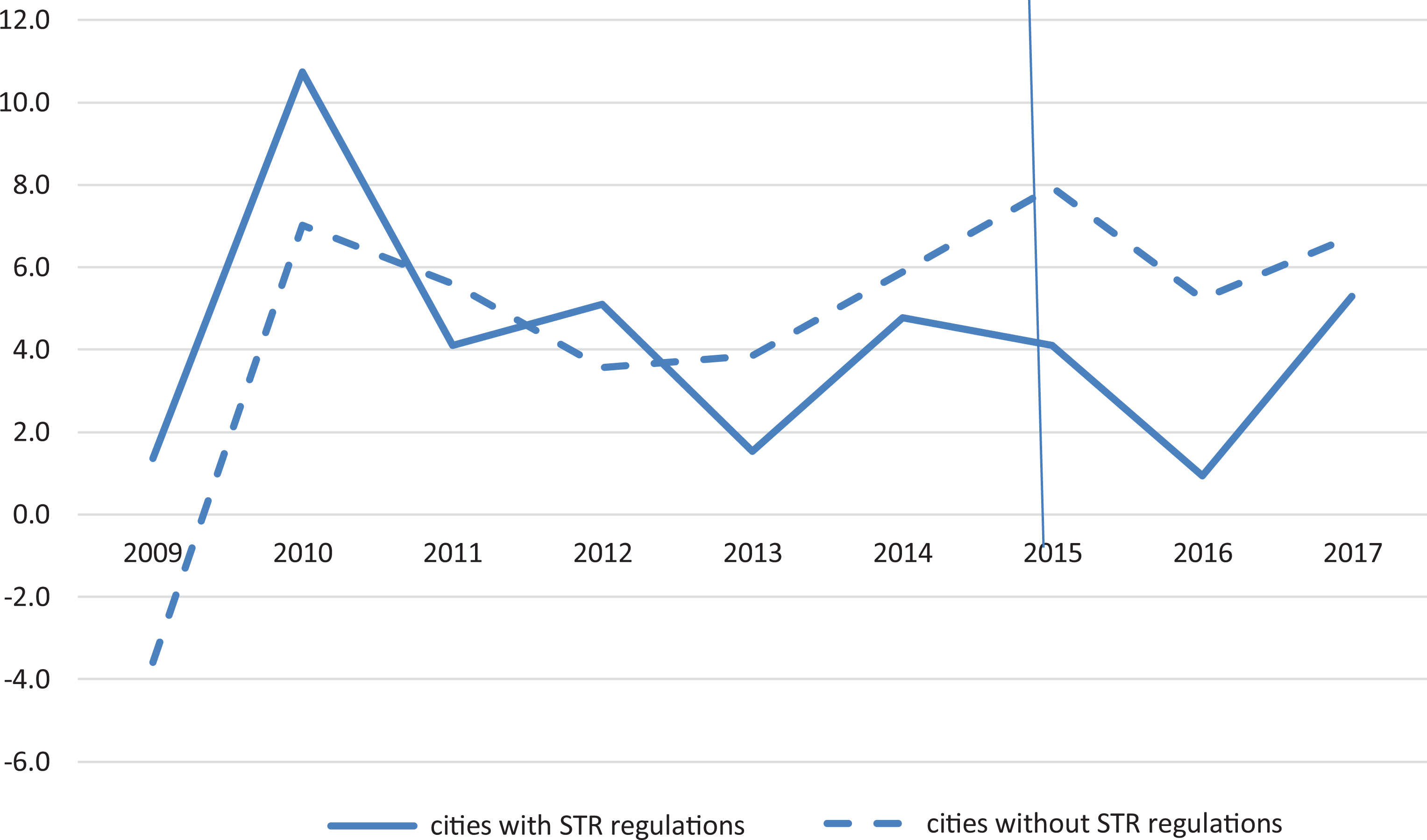
Evolution of overnight stays for cities with and without strict regulations on STRs. STR: short-term rental. Source: Eurostat, National Statistical Offices, Tourmis.
Empirical results
Regulations on STRs lead to a significant increase in registered overnight stays in hotels and similar accommodations. Evidence based on the FEs estimator with CEM weights shows that strict regulations on STRs in the affected cities lead to a surge in overnight stays of about 9% on average (Table 4, specification ii). The effects of the regulations on STRs are larger in 2016 and in 2017 with 11% and 10%, respectively (Table 4, specification i). Of the 79 UNESCO world heritage cities in the control group, 40 cities do not fulfil the size criteria and are therefore excluded from the weighted regressions.
Impact of regulations on STRs on overnight stays (FEs estimations).
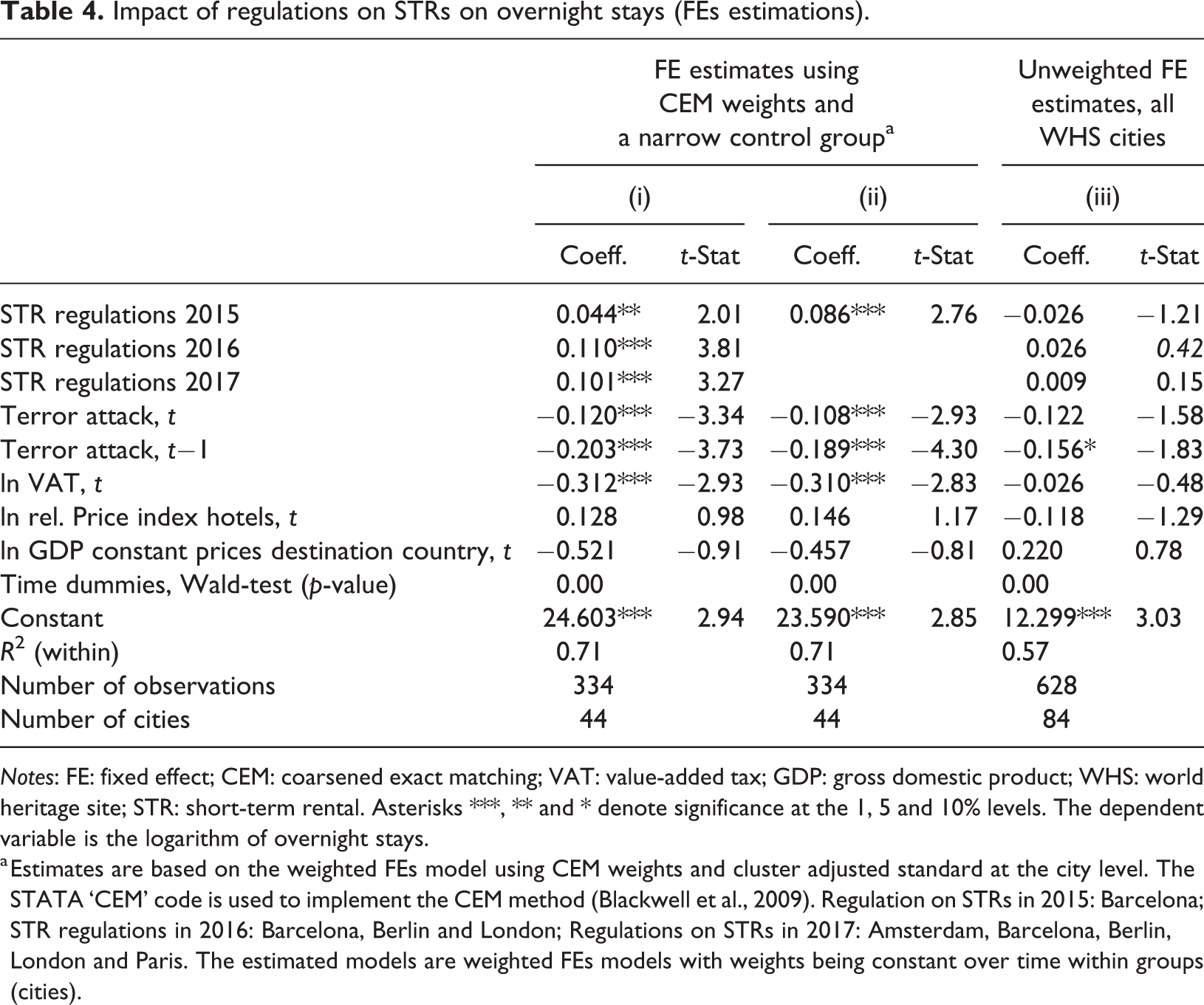
Notes: FE: fixed effect; CEM: coarsened exact matching; VAT: value-added tax; GDP: gross domestic product; WHS: world heritage site; STR: short-term rental. Asterisks ***, ** and * denote significance at the 1, 5 and 10% levels. The dependent variable is the logarithm of overnight stays.
a Estimates are based on the weighted FEs model using CEM weights and cluster adjusted standard at the city level. The STATA ‘CEM’ code is used to implement the CEM method (Blackwell et al., 2009). Regulation on STRs in 2015: Barcelona; STR regulations in 2016: Barcelona, Berlin and London; Regulations on STRs in 2017: Amsterdam, Barcelona, Berlin, London and Paris. The estimated models are weighted FEs models with weights being constant over time within groups (cities).
Unweighted FEs estimations based on the whole sample of UNESCO world heritage cities for which overnight stays data are available show that the tourism effect of the stricter regulations is not significant. This clearly shows that the unweighted FEs regressions are significantly downward biased. This also indicates that careful design of the control group using matching methods is essential when estimating the effects of regulations on STRs on the performance of the traditional hotel industry.
Overall, the results indicate a positive mean difference between the treated and the untreated cities, for example, that cities with regulations on STRs have a higher growth of overnight stays compared with the untreated. This implies that regulations on STRs like Airbnb listings and traditional hotel accommodations are substitutes. These effects are not negligible and correspond to additional 2.7 million overnight stays in Berlin in 2016 and additional 1.8 million in Barcelona in 2016 (based on 19.2 million overnight stays in Barcelona and 30.3 million in Berlin and the average treatment effect on the treated of 9%). The findings confirm the view of the hospitality industry that STRs such as AIRBNB are a direct competitor.
The results are in line with Benítez-Aurioles (2019b), who, for Barcelona, finds that the growth of the peer-to-peer tourist accommodation market has had a negative impact on hotel occupancy and performance, regardless of category, from August 2010 to October 2018.
The control variables show the expected sign. Terror attacks lead to a decline in overnight stays of 12% in the current year and 20% in the following year. The VAT rate is significant at 1% with an elasticity of −0.31 indicating that an increase in the VAT rate by 10% leads to a decrease in overnight stays of 3.1%. The other control variables, the price level of hotels and real GDP of the destination country, are not significantly related to overnight stays. Note that sign and significance of the control variables in a DID design should be interpreted with caution.
Several robustness tests have been carried out. First, a dummy variable for mega-events is considered. However, the dummy variable for the Olympic Games in London is not significant. Second, different numbers of strata are used and different covariates such as the number of museums and number of sights based on Tripadvisor. Fewer strata will result in more diverse observations within the same strata and, thus, a higher imbalance (Blackwell et al., 2009). Unreported results show that the results are robust with the number of strata used. Third, foreign overnight stays are used to calculate the treatment effect of regulations on STRs. Unreported results give similar treatment effects (results are available upon request). Fourth, a longer panel data set ranging from 2008 to 2017 is used to estimate the effects of regulations on STRs. The results show that the average treatment effect on the treated is 0.1 and significant at the 1% level, which is similar to the shorter time period. Fifth, the parallel trend assumption is checked. This cannot be tested directly, but a non-significance of the pre-event effect 1 year before the introduction could indicate that there is a common evolution of overnight stays before the introduction of the regulation on STRs. If the pre-event tourism effects are significant, the common trend assumption is violated. Re-estimating the equation using the dummy variable for STR regulations 1 year before the introduction leads to a coefficient of 0.025 and a t-value of 1.2, indicating that the common trend assumption might not be violated.
Conclusions
This study contributes to the current discussion on whether STRs such as Airbnb and the hotel industry complement or replace or are substitutes. The DID methodology combined with specific matching methods are used to investigate the impact of STRs on the performance of the hotel industry in a group of European cities. In contrast to previous studies that examine the relationship between the performance and the supply of STR accommodations on hotel demand, this study uses information on the regulation of STRs to identify the impact on the performance of the hospitality industry measured as overnight stays. If hotel overnight stays and short-term accommodations are substitutes, registered overnight stays in hotels should increase after the introduction of the regulation on STRs. The CEM method is used to match cities with similar characteristics as the treatment group. Since all cites with strict regulations on STRs are large, both the population and the area of the tourist space formed by the most popular attractions, according to Tripadvisor, are used as variables for the matching analysis.
Weighted FEs regressions based on the matched sample show that the hotel industry benefits from the regulations on STRs. The effects are relatively large with an average treatment effect on the treated of 9% per year on average. This is equal to an increase of between 2 million and 3 million additional overnight stays in some affected cities like Berlin and Barcelona.
The results support the view of the hotel industry that increasing supply of STRs is stealing the market share from hotel companies. The introduction of regulations for STRs in other cities without regulations so far will strengthen the hotel industry. However, the nature of the regulations for STRs varies greatly from city to city and country to country. A complete ban on STRs, as in Japan, will have a greater impact than limitations such as a time-limited rental.
The main limitation of the study is that the number of cities that have introduced regulations on STRs with five cities is quite small. Furthermore, the level of aggregation in this study with data on overnight stays at the city level is very high and does not take into account the heterogeneity of hotels by different price segments and locations.
There are several possibilities for future work. Firstly, it is promising to extend the sample period so that more cities with regulations on STRs can be included. In 2018 and 2019, several other cities have introduced STR regulations, including Brussels, Copenhagen, Geneva, Munich and Reykjavik. This would also make it possible to examine the impact of different types of regulations on the performance of the hotel industry. Some cities have introduced rather soft rules, others rather hard rules. As an example for the former, some cities have cooperation agreements with online booking platforms and charge only the tourist tax (Florence, Rome and some cities in Switzerland; ReformBnB Barcelona, 2019). Another possible extension relates to the geographical coverage of the study. Short-term lettings are also booming in Asia and North America. A promising field of research is therefore the extension of the sample to cities on other continents. A further research area for future work is the investigation of the effects of STRs on overnight stays for different hotel categories. However, this will require new data, as these data are not systematically collected in this form in all cities. Finally, another research idea is to investigate the effects of regulations on the traditional accommodation sector in rural areas such as sun and beach destinations. Moreno-Izquierdo et al. (2019) show that the presence of online STRs differs between urban and non-urban areas. So far, however, there are few regulations for STRs in non-urban areas.
Supplemental material
Supplemental Material, Table_5 - Hotels benefit from stricter regulations on short-term rentals in European cities
Supplemental Material, Table_5 for Hotels benefit from stricter regulations on short-term rentals in European cities by Martin Thomas Falk and Yang Yang in Tourism Economics
Footnotes
Acknowledgement
The authors would like to thank the participants of The Geoff Hewing’s regional economics seminar in September 2018, the winter seminar of the Society for Regional Research in Matrei in 2019 and the 10th Workshop ‘Tourism: Economics and Management. Tourists as Consumers, Visitors and Travellers’ in Siena May 2019, the ETSG conference in Berne September 2019, the CERS conference in Sopron October 2019 as well as Roberto Cellini and María Jesús Such Devesa for helpful comments on earlier versions of the study. We would like to thank Noomi Falk for calculating the relevant urban tourism areas. In addition, the authors are indebted to proofreader Caroline Wigerstad.
Declaration of conflicting interests
The author(s) declared no potential conflicts of interest with respect to the research, authorship, and/or publication of this article.
Funding
The author(s) received no financial support for the research, authorship, and/or publication of this article.
Supplemental material
Supplemental material for this article is available online.
Author biographies
References
Supplementary Material
Please find the following supplemental material available below.
For Open Access articles published under a Creative Commons License, all supplemental material carries the same license as the article it is associated with.
For non-Open Access articles published, all supplemental material carries a non-exclusive license, and permission requests for re-use of supplemental material or any part of supplemental material shall be sent directly to the copyright owner as specified in the copyright notice associated with the article.
