




Abstract
The book profits of 220 ski lift operators in Austria are analysed in order to identify the determinants relevant for business success. The median ratio of accounting profits to total assets was zero in 2013, while 43% had negative ‘book’ profits and another 12% had zero profits. Results using quantile regressions show that the ratio of book profits to total assets depends significantly on total length of ski slopes (size), maximum altitude of ski lifts, presence of a neighbour close by, the availability of nearby accommodation and the share of foreign overnight stays. Size usually has the greatest effect, which is even more pronounced in the lower part of the conditional distribution of the book profit ratio. Since size is the most important driver of the profit ratio, it can be expected that the pressure on, so far, untapped high alpine terrain will increase in the future.
Introduction
The hospitality industry, together with airlines, is generally characterized by low profitability (Porter, 2008). Tourism is often an important economic activity in structurally weak and rural regions and is used as a strategy for regional development, especially where there are few economic alternatives to agriculture or forestry (Briedenhann and Wickens, 2004). Snow-based tourism has become an important form of tourism in the mountainous regions in industrialized countries all over the globe; ski tourism boomed in the second half of the 20th century (Hudson and Hudson, 2015).
As the main product of winter tourism, ski lift operators offer easy and comfortable access to the mountain top and are the backbone of the winter tourism industry in many mountainous regions. Demand changes in ski areas have a direct impact on hotel overnight stays and vice versa, as well as on equipment rental, and so on (Lohmann and Crasselt, 2012). The future economic development of entire valleys is therefore heavily dependent on this important infrastructure provider.
The leading markets such as the United States, France or Austria are characterized by stable or even declining demand, which leads to intensified competition (Steiger et al., 2019). In a survey among 125 Austrian and Swiss ski lift operators, 66% of the respondents state that market consolidation is indispensable (PwC, 2018). The increasing market consolidation is increasingly reflected in the profit ratios. In a sample of 42 Swiss ski lift operators, 57% exhibit 5-year earnings before interest, taxes, depreciation and amortization (EBITDA) margin that was insufficient to ensure long-term economic sustainability (OTC-X Research, 2017). While low profitability or slightly negative profits may be manageable due to the significant positive links of the ski business to the local industry (hospitality, retail trade, transportation), excessive losses hamper future investments and are a heavy burden on owners who have to provide new capital, often affecting the local or state government.
The aim of this article is to provide novel information on factors that influence the profitability of ski lift operators in Austria. Such specifics of the ski lift operators include size and location of the ski area together with village characteristics (local accommodation). Since the determinants of profitability are likely to be different between low and highly profitable companies, quantile regressions are used. The analysis is based on balance sheet data for approximately 250 ski lift companies in the year 2013 (balance sheet period 2012–2013).
A new aspect of the analysis is the consideration of the location and geographic factors for the profit rate. A detailed empirical analysis of the profitability of ski lift operators including small and medium-sized operators has not yet been carried out. Recently, Moreno-Gené et al. (2018) investigate the determinants of return on assets of ski lift operators. However, small and medium-sized operators are under-represented due to data limitations.
Several studies have investigated the determinants of profitability for hotels using firm or establishment data (Aissa and Goaied, 2016; Chen and Lin, 2012; Kang et al., 2010; Lado-Sestayo et al., 2016, 2018; Menicucci, 2018; Pan, 2005). Literature shows that profitability of hotels is influenced by many factors including size, age, location, brand affiliation and ownership characteristics. Size is commonly found as the most important factor, followed by location. Menicucci (2018) documents that hotel profitability depends on size, internationalization, location, accommodation as the first activity and chain membership.
Few studies of the ski industry investigate the determinants of profitability based on balance sheet information. Exceptions to this are the analyses on technical efficiency (Brida et al., 2014), the debt to equity ratio (Falk and Steiger, 2018) and the return on assets (Moreno-Gené et al., 2018). Brida et al. (2014) show that the level of technical efficiency of ski lift operators varies widely across location, with companies in the most efficient administrative districts being twice as efficient as the least efficient ones. Using data for large ski lift operators in three countries, Moreno-Gené et al. (2018) find a positive relationship between economic profitability and size of the companies, while maximum elevation of the ski area is not relevant. Using data for the universe of Austrian ski lift operators, Falk and Steiger (2018) demonstrate that the debt to equity ratio depends on a bundle of factors including size, elevation, presence of a neighbour, share of foreign overnight stays and local supply of accommodations.
Profitability is equally important as efficiency or productivity as an indicator of firm performance. It is to be expected that there will be enormous differences in profitability between small and large operators, and also by altitude and other characteristics.
Knowledge of these determinants is relevant for decision makers in the tourism industry for several reasons. On the one hand, high losses are early indicators of bankruptcy (Agarwal and Taffler, 2008) and shareholders are likely to be confronted with high costs in case of business failure. On the other hand, knowledge about the level of profits and its determinants is important for public authorities, as they often provide financial support for ski lift companies or even own and operate ski areas.
The structure of this article is as follows: The second section outlines the conceptual background while the third section contains the empirical model. The fourth section presents data and descriptive statistics. The empirical results are revealed in the fifth section, and the sixth section concludes.
Conceptual background
The strategic management literature highlights the role of company-specific internal resources as determinants of fluctuations in profitability (Barney, 1991). Internal resources include tangible or intangible factors. In the ski industry, tangible factors such as the size of the terrain and snowmaking equipment are likely to be important. The earlier empirical literature confirms that firm-level characteristics explain a major part of the variation of profitability (Mueller, 1990; Rumelt, 1991).
Studies for the ski industry show that size, elevation and location are significant factors explaining performance measured as skier visits or lift transports (Pickering, 2011; Steiger, 2011) or survival of the operators (Beaudin and Huang, 2014; Falk, 2013). These key performance factors are also likely to have an impact on profitability.
Other studies have investigated the relationship between company size and profitability for manufacturing and service firms and found a positive relationship (e.g. Hall and Weiss, 1967; Panzar and Willig, 1981), while studies for hospitality show that the return on assets is higher for larger firms (Menicucci, 2018). According to surveys, the size of a ski area measured in total length of slopes is the most important factor for visitor choice of destinations (Partel, 2016), thereby allowing higher lift ticket prices. Given economies of scale, large ski lift operators are expected to perform better than small ones.
Moreover, small ski lift operators also face more challenges compared to bigger ones in unfavourable weather conditions. Steiger (2011) finds that small ski resorts in North Tyrol (Austria) suffer most in extremely mild winter seasons, such as the 2006–2007 season being 3°C above the climatic mean. While small ski areas experience skier visit losses of 44%, compared to a 3-year mean, total skier visits in the province are 11% lower than usual. Studies for the New England states (United States) and Austria show that smaller ski areas exhibit a significantly higher risk of failure (Beaudin and Huang, 2014; Falk, 2013). Recently, Rutty et al. (2017) provide evidence that smaller ski areas experience greater losses in the length of the winter season in mild winter season. For a selected group of predominantly large ski lift operators in Austria, Italy and France, Moreno-Gené et al. (2018) find that size of ski lift operators is still significant even in a group of large ski lift operators. When analysing the relationship between profitability and size of ski lift operators, however, it is important to use a wider definition of ski area size including not only the terrain of establishment but the total ski slope length of interconnected ski areas. Thus, the following hypothesis can be formulated:
Elevation of ski areas is another important factor when considering the success of ski lift operators. Snow reliability and conditions relevant for snowmaking become more favourable with increasing elevation (Steiger and Abegg, 2013). Customers’ willingness to pay is lowest when only 50% or less of ski slopes are open due to a lack of snow (Malasevska et al., 2017b). Falk (2015) and Falk and Lin (2018) find a significant positive relationship between snow depth and ski lift revenues or skier visits. Interestingly, in Sweden, this relationship turned insignificant at the end of the 1980s, which is associated with the widespread use of snowmaking (Falk and Lin, 2018). Nevertheless, as snowmaking is dependent on sufficiently cool temperatures (Steiger and Mayer, 2008), higher elevation is thus commonly regarded as an advantageous factor for business performance, especially in anomalously warm and snow-deficient winter seasons (Abegg et al., 2007; Bark et al., 2010; Gonseth, 2013; Scott et al., 2006). In an extraordinarily warm winter in Australia, low-elevation ski resorts experience losses of 69%, while the highest altitude resorts experience increased demand (Pickering, 2011). Similarly, Steiger (2011) finds that ski resorts in North Tyrol (Austria) at low elevations suffer losses of 33% in an extremely mild winter season. Since a negative book profit ratio is a retrospective measure of losses in the past, it can be expected that low-elevation ski areas have a lower profitability than ski areas located at higher elevations:
In addition to these internal variables of the ski lift operator, some external variables of the associated tourism resort are also likely to be relevant for profitability. This includes the guest mix, international atmosphere and presence of accommodation supply. A wide range of tourist beds near the ski resort is advantageous as winter tourists prefer to choose from a variety of hotels and other accommodations. In addition, ski resorts with a high number of beds have an advantage as compared to those with many day visitors. Another important characteristic of ski resorts that could be relevant for company results is the proportion of foreign tourists. A high percentage of foreign tourists is an advantage as the destination is less dependent on the domestic markets and foreign guests typically stay longer. Firgo and Fritz (2017) show that the local structure of guests is related to higher tourism inflows. Destinations popular with foreign guests may have particular advantages that reflect greater competitiveness due to better reputation.
An important stylized fact is the large variation in profitability between ski lift operators. A considerable proportion of ski lift operators have either zero profit or profit loss, however at the top end of the profitability distribution there are ski lift operators with high profits. It is unlikely that the significance and strength of profitability determinants are similar for under- and over-performers. Quantile regression makes it possible to investigate whether the determinants differ across the conditional distribution of profitability (Koenker and Bassett, 1978). These methods are widely used in profitability studies at the firm level (e.g. Love et al., 2009) and in hospitality research in general (Assaf and Tsionas, 2018). For example, size could be more relevant for loss-making operators, as a sufficient minimum size is a necessary condition for good operating results, while high elevation plays a larger role for highly profitable operators. This leads to following hypothesis:
The control variables include presence of neighbouring ski resorts and location of the operators. Agglomeration often has a positive effect on performance in the hospitality industry (Marco-Lajara et al., 2016; Peiró-Signes et al., 2015). In our case, ski areas nearby may be an advantage because often operators cooperate and offer joint lift tickets, thereby increasing benefits (e.g. more slopes, more variety) for the customer. Thus, co-location can be interpreted as agglomeration advantage, potentially having a positive effect on profitability.
In hospitality literature, profitability is commonly measured as net profit margins or profit ratios such as return on sales or return on capital (Menicucci, 2018). Moreno-Gené et al. (2018) employ economic profitability measured as return to assets. However, this measure is often only available for large firms that provide a profit and loss account. This study employs an accounting-based measure of profitability. This measure is widely used in the hospitality (Kang et al., 2010) and management literature (McGahan and Porter, 2002). The use of accounting profitability makes it possible to include all operators regardless of size, since smaller ones do not have to provide information on cash flow or net income. Agarwal and Taffler (2008) suggest that accounting statements reflect a company’s past performance and may not be informative in predicting the future. In addition, the use of historical cost accounting can result in actual assets being very different from recorded amounts and accounting numbers can be manipulated by management. Commonly used accounting practices are releases of reserves and accumulation of retained earnings. Thus, the accounting profit rate is backward-looking because it is usually highly determined by losses and profits in the past (Nicolau and Santa-María, 2013). Fisher and McGowan (1983) state that there is no way in which one can look at accounting rates of return and infer anything about relative economic profitability. In contrast, Mueller (1990) concludes that accounting-oriented ratios are not clearly inferior to economic return ratios (see also Long and Ravenscraft, 1984). However, the accounting ratios are quite noisy, and a low goodness of fit is to be expected. Empirical evidence for US firms shows that the difference between the different measures is small (Danielson and Press, 2003). Similarly, Agarwal and Taffler (2008) find that there are little differences in the use of market-based and accounting-based profitability measures in determining bankruptcy.
Empirical model
The empirical model relates the profit rate to elevation of the ski area, size, presence of a neighbouring ski area, share of foreign overnight stays, the ratio of tourist beds to the length of slopes as a measure of supply of accommodation establishments and regional dummy variables. The profitability equation can be specified as follows

where i denotes the ski lift operator, t denotes the year and ln() the natural logarithm. The dependent variable is defined as book profit divided by total assets of the previous year. SIZECAT covers four size categories of slope length (see Table 1) with less than 10 km as the reference category. The slope length includes the terrain of the neighbouring ski lift operator if connected by a ski lift or slope. Ski areas are also divided among four elevation categories (see Table 1), based on elevation of its highest lift station (ELEVATIONCAT) with the lowest elevation category as reference. The presence of a neighbouring ski area (NEIGHBOUR) is a dummy variable that is equal to one if there is another ski area, not connected by ski lift or slope, within the road distance of 15 km, otherwise zero. BEDS/SIZE is the number of tourist beds in the resort relative to size of the ski area, SHFOREIGN denotes the share of foreign overnight stays and EAST_AT is a dummy variable for ski lift operators in East and South Austria in order to account for observable differences across regions, for example, ski lift comfort or snowmaking capacity (Steiger and Abegg, 2018).
Descriptive statistics.
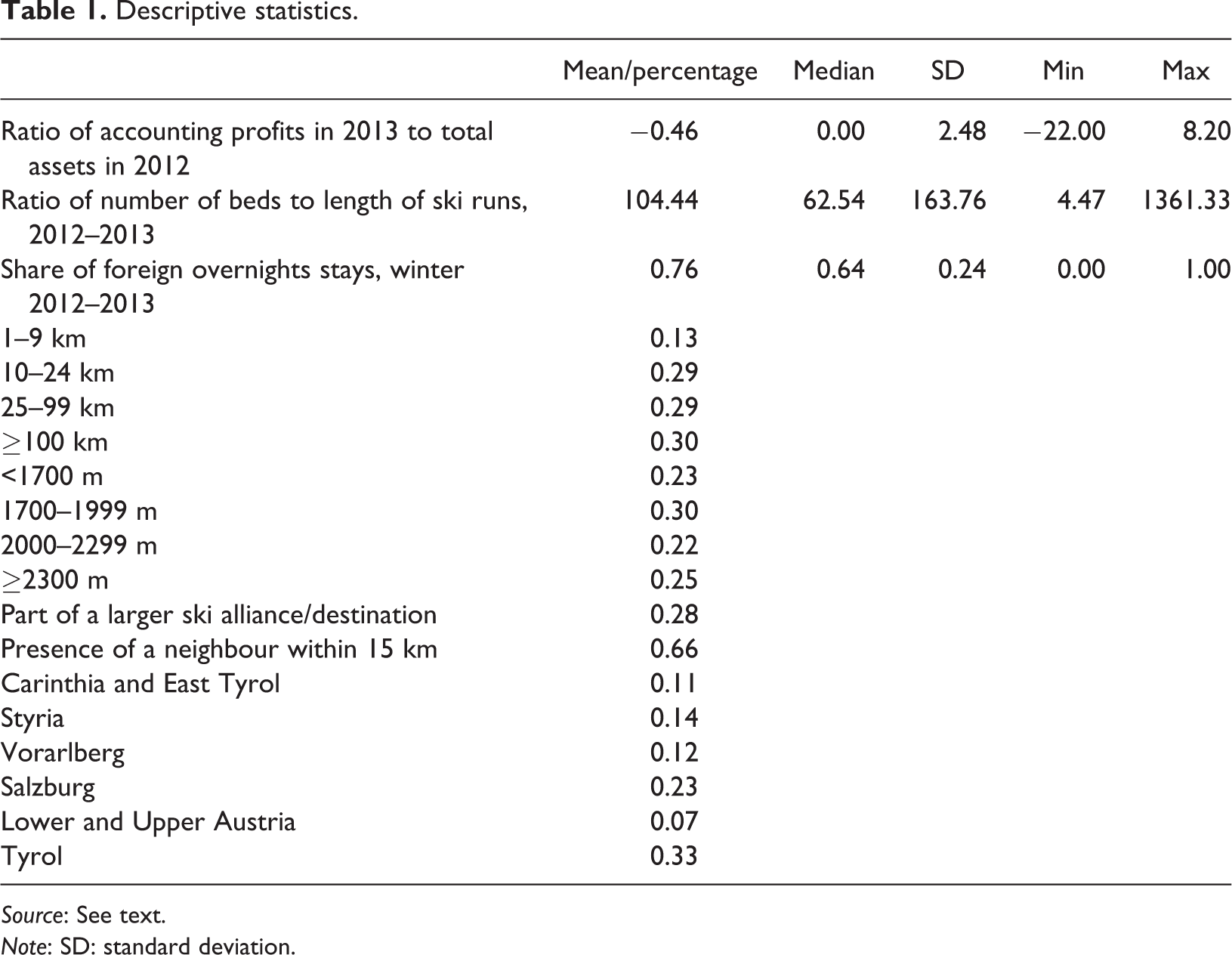
Source: See text.
Note: SD: standard deviation.
The empirical model can be estimated by ordinary least squares (OLS). However, OLS only measures the mean relationships for the average ski lift operator. In our case, the profit determinants are likely to be different between loss-making firms and highly profitable firms as well as operators in the middle part of the profitability distribution. Therefore, the quantile regression technique is used, which allows the importance of the firm- and location-specific factors at different parts of the distribution of the profit rate to be studied. Given that the estimation sample is not large we use the QR 0.25, QR 0.5 and QR 0.75 regressions. Quantile regressions are also not sensitive to influential observations and outliers, which is the case of some operators showing either very high profit rates or losses (Figure 1). Another important feature of ski industry is that a ski destination consists of several, often smaller, ski lift operators (see Table 1 in the Online Appendix). In addition, accommodation supply and share of foreign overnight stays are measured at the level of the ski destination rather than that of the village belonging to ski lift operator leading to biased standard errors. Therefore, the cluster-adjusted approach developed by Parente and Santos Silva (2016) is used to account for the correlation of the error terms across ski lift operators within a given ski destination.
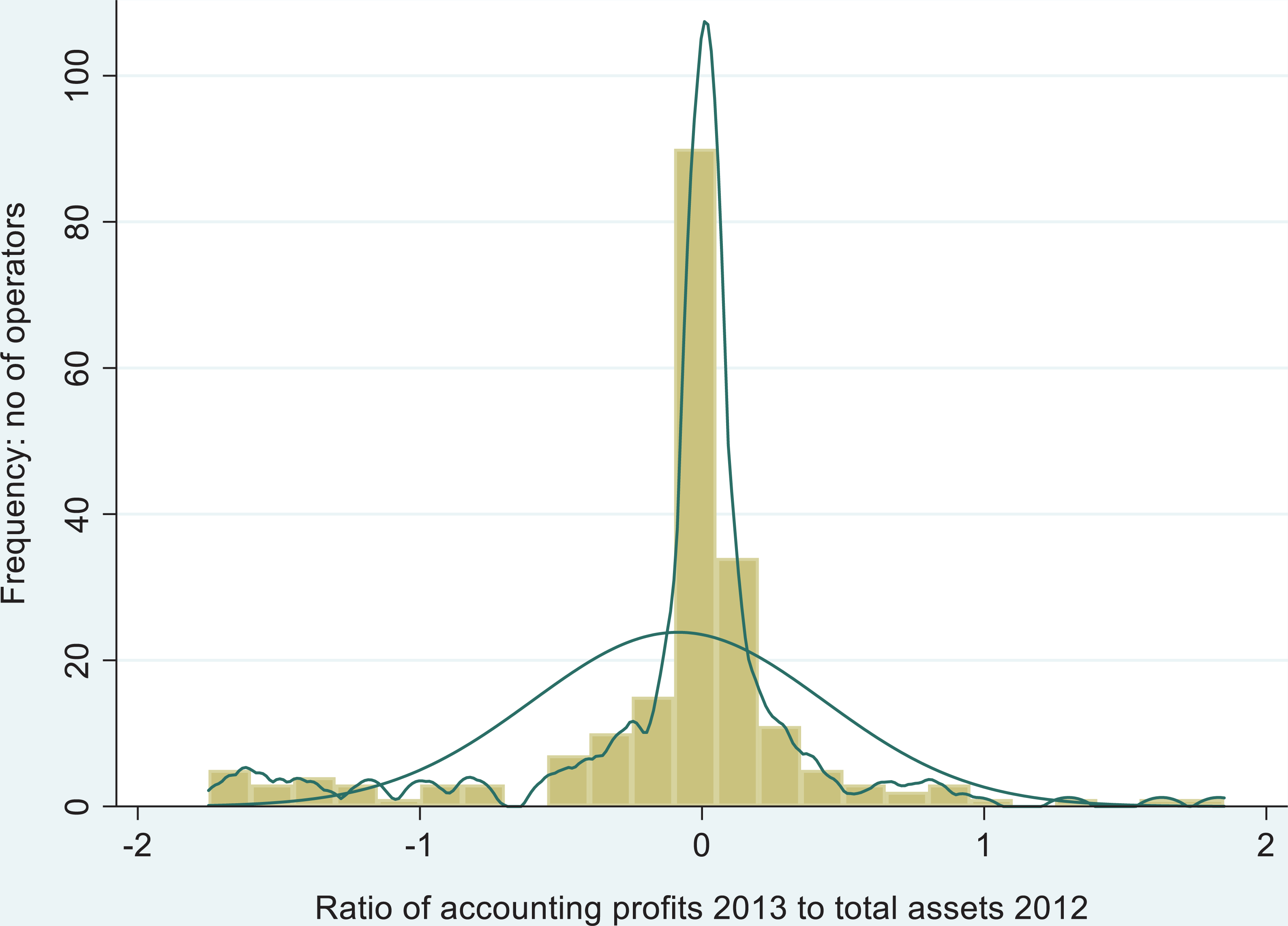
Profit ratio in 2013. Note: Ski lift operators with a profit share below −2 and above 2 are excluded here for reasons of presentation. Source: Annual reports 2012–2013.
A special feature of the balance sheet data is that some companies do not report information on their book profits. A probit model is used to determine whether this is a systematic non-response behaviour. The hypothesis is that small firms and those located at low elevations are less likely to provide information on book profits.
The probability of not providing any information about book profits is modelled as
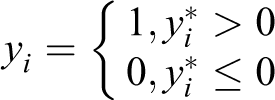
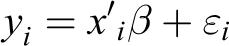
where
Data and descriptive statistics
Data on accounting profits and total assets originate from annual financial accounts of ski lift operators in Austria with three or more lifts for the balance sheet year 2012–2013. Lift station elevations are drawn from statistics provided by the Austrian Federal Ministry for Transport, Innovation, and Technology (BMVIT). Total ski slope length is obtained from the website of the ski lift operators. Capacity of accommodation (in beds) and number of overnight stays of the ski destination originate from Statistics Austria. These village characteristics are matched to the ski lift operator database by means of the postal code.
In contrast to France or Northern America, there are only a few multi-establishment firms, thus it can be assumed that each operator represents an establishment. The winter season 2012–2013 is used for the empirical analysis, as weather conditions (average snow conditions and temperatures) in the preceding winter season 2011–2012 correspond to the climate average (Source: ZAMG, 2019).
The total number of ski lift operators is 250. However, around 29 operators do not provide any information about their profits and thus cannot be included in the empirical analysis. 1 These operators are likely to be small at low locations and barely profitable. Probit estimations on the likelihood of non-reporting of accounting profitability show that medium-sized ski lift operators in Salzburg, Upper Austria and Lower Austria are less likely to refuse to provide information on profitability, yet at the same time, elevation is not significant. Given the small number of operators with no information on profitability, the expected bias of the regression analysis is likely to be small.
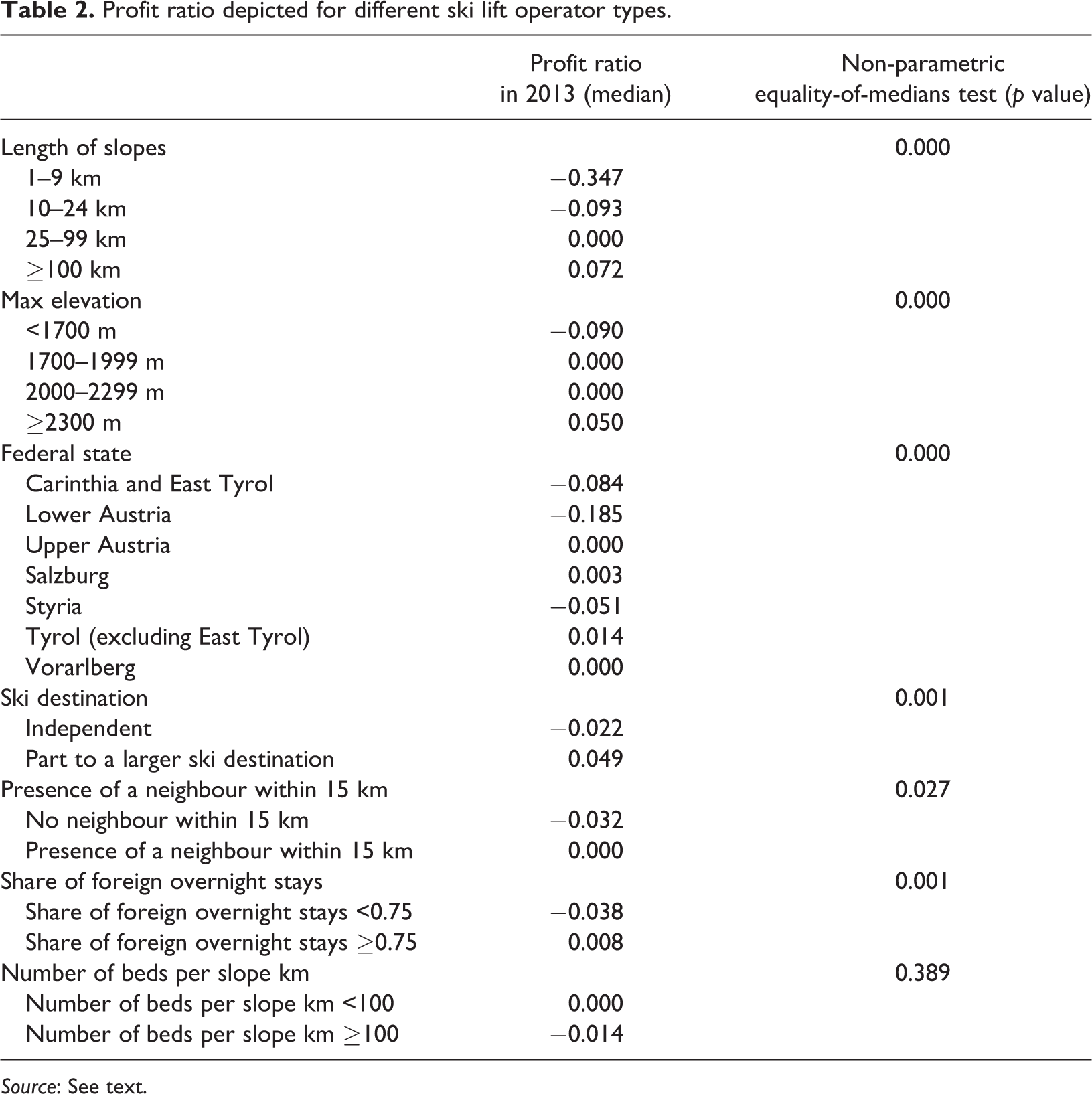
Descriptive statistics show a median accounting profit ratio of zero (Table 1). Around 43% of the ski lift operators report negative profitability and another 12% reported zero profits. The remaining 45% of the ski lift operators make profits. Table 2 shows that the profit ratio differs widely across characteristics. The differences in profitability by size are very pronounced while the differences in profitability by elevation are less pronounced (see also Figure 1 in the Online Appendix). The profit ratio is also higher for ski businesses located in a larger ski destination and those having a neighbour close by. In addition, the profit ratio is lowest in Carinthia (including East Tyrol) and for the province of Lower Austria. Non-parametric equality-of-medians test shows the medians differ significantly across the different characteristics except for accommodation supply. Figure 2 in the Online Appendix shows the geographical pattern of the profit ratio. Clusters of highly profitable firms can be found in all parts of Austria.
Profit ratio depicted for different ski lift operator types.
Source: See text.
Empirical results
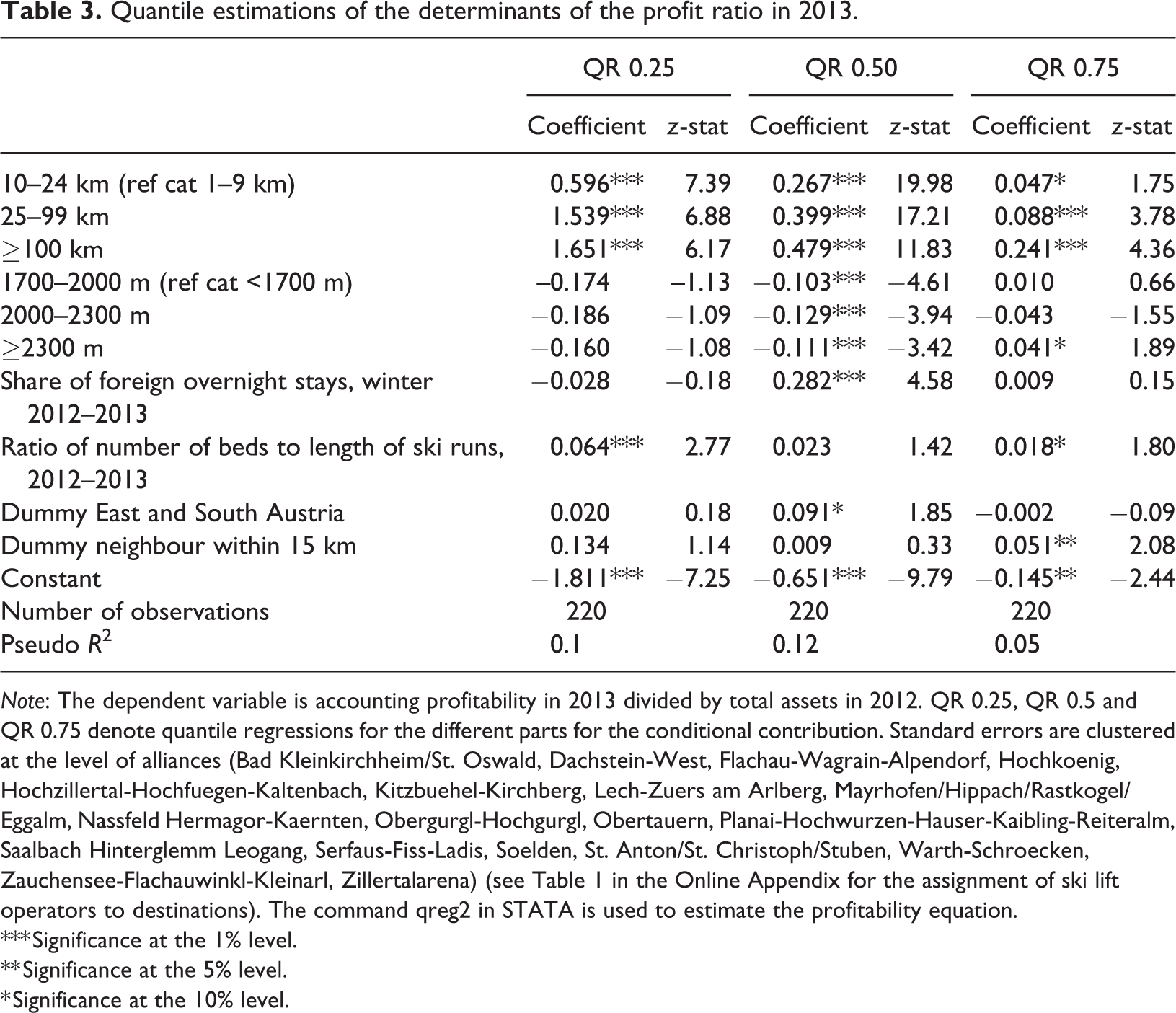
Results obtained from the median regression (QR 0.50) show that accounting profitability depends significantly on ski area size, elevation of the ski area, presence of a neighbouring ski area, number of tourist beds in the associated resort relative to ski area size and share of foreign overnight stays (Table 3). Size has the greatest influence on profitability, with the profit rate increasing continuously with the size of the ski resort. Ski areas offering 100 km or more have a profit ratio that is almost 50 percentage points higher than very small operators. Thus, the first hypothesis cannot be rejected. Attractiveness on foreign markets is positive and significant at the 1% level and also has a sizeable effect: a 10 percentage point increase in its share is associated with a 2.8 percentage point increase in the profit ratio. This indicates that a high share of foreigners make the ski lift operator more profitable.
Quantile estimations of the determinants of the profit ratio in 2013.
Note: The dependent variable is accounting profitability in 2013 divided by total assets in 2012. QR 0.25, QR 0.5 and QR 0.75 denote quantile regressions for the different parts for the conditional contribution. Standard errors are clustered at the level of alliances (Bad Kleinkirchheim/St. Oswald, Dachstein-West, Flachau-Wagrain-Alpendorf, Hochkoenig, Hochzillertal-Hochfuegen-Kaltenbach, Kitzbuehel-Kirchberg, Lech-Zuers am Arlberg, Mayrhofen/Hippach/Rastkogel/Eggalm, Nassfeld Hermagor-Kaernten, Obergurgl-Hochgurgl, Obertauern, Planai-Hochwurzen-Hauser-Kaibling-Reiteralm, Saalbach Hinterglemm Leogang, Serfaus-Fiss-Ladis, Soelden, St. Anton/St. Christoph/Stuben, Warth-Schroecken, Zauchensee-Flachauwinkl-Kleinarl, Zillertalarena) (see Table 1 in the Online Appendix for the assignment of ski lift operators to destinations). The command qreg2 in STATA is used to estimate the profitability equation.
*** Significance at the 1% level.
** Significance at the 5% level.
* Significance at the 10% level.
Ratio of number of tourist beds to length of ski runs is not significant at the 5% level using the median regression model. Surprisingly, the profit ratios do not vary much across elevation. Specifically, ski areas at lower elevations do not have a lower profit ratio when size, location and the other control variables are controlled for. Thus, based on the median regression model the second hypothesis can be rejected.
An important result is that the significance and magnitude of the factors differ between low and highly profitable ski lift operators, as indicated by the 0.25 and 0.75 quantile regressions. The magnitude of size is much more pronounced at the lower part of the conditional contribution of the profit rate (QR 0.25) that targets loss-making firms than in the upper part of the distribution that focuses on profitable ski lift operators. Presence of a neighbouring ski area is significant at the upper part of the profitability distribution. Ski lift operators that have a neighbour close by have a five percentage point higher profit ratio. Accommodation supply becomes significant at the lower part of the distribution. Doubling the number of accommodation beds is associated with a 6.4 percentage point increase in the profit ratio.
Maximum elevation is weakly significant and positive for the upper part of the conditional distribution. Ski businesses located in a larger ski destination with a maximum elevation of the slopes of 2300 m or above have a four percentage point higher profit rate. However, elevation is not relevant for the lower part of the conditional profitability distribution. Overall, size is not much more relevant than elevation in determining the profit ratio. The finding that size plays a major role in determining performance confirms studies investigating their importance in determining survival (Beaudin and Huang, 2014; Falk, 2013) or performance measured as lift transports (Steiger, 2011) or season length (Rutty et al., 2017).
In summary, since the main determinants size, share of foreign visitors and accommodation supply are all significant and both the effects of size and elevation vary across the profitability distribution, three out of four hypotheses stated in the conceptual background cannot be rejected. The hypothesis about the relationship between elevation and profit share can only be weakly confirmed by the QR 0.75 regressions.
Several robustness checks have been performed. First, in order to investigate whether the determinants of profit ratio differ across regions, the profit equation is re-estimated distinguishing between ski resorts in Western and Eastern/Southern Austria. Unreported results based on the median regression show again that size, share of foreign visitors and accommodation supply are significant determinants of the profit ratio in both regions. However, the sample size for East Austria is too small to perform quantile regressions. In addition, a robust regression method is used that underweights influential observations. Estimates confirm that profitability depends significantly on size, local accommodation supply and, to a lesser extent, the presence of a neighbour and the proportion of foreign overnight stays (see Table 2 in the Online Appendix). Also, the R 2 doubles to around 0.20.
Discussion and conclusions
This study provided a first empirical investigation of the determinants for the profit rate of ski lift operators in Austria for the balance sheet year 2013. A focus was put on ski area and tourist resort characteristics such as size and elevation, attractiveness for foreign tourists and accommodation capacity close by. Another novelty of the study is that we distinguish between operators with low and high profitability in estimating the determinants by using quantile regressions. Descriptive statistics show that the ski industry is a low-profit industry with a median profit rate of 0% and only 45% of the operators making profits. In addition, 10% of the operators do not provide information on the profit ratio. Probit estimates show that there is no systematic dependence on non-reporting of information on book profits.
Quantile regressions show that the profit ratio is significantly lower for smaller ski areas. The positive impact of size can be observed in the lower and upper parts of the conditional distribution of the profit ratio but is most pronounced in the lower quantile, which targets loss-making firms. Based on the median regression, ski lift operators that have access to 100 or more kilometres of slopes have a 50 percentage point higher profit ratio as compared to the smallest size classification. The positive link between the profit ratio and elevation can only be observed in the upper part of the conditional profitability distribution. However, even among profitable operators the elevation effect is much less pronounced than that of size.
In addition to the classical determinants of size and height, several other destination characteristics are significant, but their relevance varies depending on the conditional distribution of the profit rate. The share of foreign overnight stays is relevant in the middle part of the distribution, while the ratio of tourist beds to size plays a significant role in the lower part (loss-making enterprises). The presence of a neighbour is relevant in the upper part of the distribution.
Several business implications can be derived from the results. The results show that an increase in profitability is necessary to maintain the current level and structure of ski lift infrastructure. Size, foreign share and accommodation supply are important predictors of profitability with size having the largest effect. The dominance of size might explain the increasing trend towards lift linkages in the last 10 years. Since size is an important driver of the profit ratio, it can be expected that the pressure to expand into untapped high alpine terrain will increase in the future. A rising number of lift linkages connecting neighbouring ski areas (Falk, 2017) since the early 2000s and many similar projects being discussed at the moment also point in this direction.
Apart from the possible expansion of the ski resort through lift linkages to increase profitability, another strategy to raise profitability could be to introduce dynamic pricing strategies (Haugom and Malasevska, 2018). For Norway, Malasevska et al. (2017a) identify a high intra-week seasonality and conclude that there is potential to improve utilization rate on weekdays. In the case study of three ski areas in Norway with price reductions between 43% and 52% during the week, a willingness-to-pay survey reveals a substantial increase of weekday revenues leading to a net gain of total demand (Malasevska and Haugom, 2018).
Apart from the political implications for managers and stakeholders, there are also some broader policy conclusions that can be derived from the findings. Future climate change could possibly alter profitability as well: the ski season length will be shortened and the need for snowmaking will increase as a result of climate change (Scott et al., 2019). The former will reduce the potential number of days with revenues, the latter will increase the costs for ski operation. Furthermore, the high seasonality of demand and dependence of the probability of making a skiing trip on weather and snow conditions lead to few days of high demand and many of low demand days.
Climate change could postpone the occurrence of optimal skiing days from the earlier part of the ski season (e.g. December, including the Christmas holidays) to spring where demand is already weakening (Berghammer and Schmude, 2014). For Switzerland, Gonseth and Vielle (2018) find that ski areas that are more dependent on day tourists and who are also smaller and at lower altitudes may be exposed to higher pressures through climate change than larger ski areas usually located at higher altitude. Again, it needs to be considered that impacts on profitability of ski area operators have broader impacts on the regional economy (Soboll et al., 2012).
Despite the empirical evidence of some determinants of the profit ratio of ski lift businesses, some limitations need to be addressed. First, the analysis is limited using accounting profitability as the measure of performance. Second, the goodness of fit is quite low which is expected when accounting-based profitability measures are used (Mueller, 1990). Third, another limitation is the cross-sectional approach, as longitudinal data would allow changes over time as well as assess year-to-year variability of the profit ratio to be detected. However, the factors such as size, elevation and presence of neighbouring ski resorts are time-invariant or barely change over time. In addition, accounting-based profitability has a higher correlation over time because of its backward-looking characteristic.
The study results also provide several starting points for future research. An important finding of the study is that there is a high variability of profits among ski lift operators when the analysis is based on the population of companies in this industry. Size is the most important criterion. Thus, future studies that investigate determinants of performance of ski lift operators should not limit the sample in terms of company size because then there is a risk of selection bias. In order to shed more light on the impact of climate variability and climate change on the profit ratio, panel data would be helpful. The increase of snow-deficient winter seasons in the last two decades could have led to a decrease in the profit ratio of ski lift operators.
Supplemental material
Supplement_material - Size facilitates profitable ski lift operations
Supplement_material for Size facilitates profitable ski lift operations by Martin Falk and Robert Steiger in Tourism Economics
Footnotes
Declaration of conflicting interests
The author(s) declared no potential conflicts of interest with respect to the research, authorship and/or publication of this article.
Funding
The author(s) received no financial support for the research, authorship and/or publication of this article.

Supplemental material
Supplemental material for this article is available online.
Note
References
Supplementary Material
Please find the following supplemental material available below.
For Open Access articles published under a Creative Commons License, all supplemental material carries the same license as the article it is associated with.
For non-Open Access articles published, all supplemental material carries a non-exclusive license, and permission requests for re-use of supplemental material or any part of supplemental material shall be sent directly to the copyright owner as specified in the copyright notice associated with the article.
