




Abstract
Despite international commitments to phase out fossil fuel subsidies, OECD countries exhibit substantial variation in subsidy levels. This study examines how governing party preferences and institutional context jointly shape subsidy policy across 28 OECD countries from 2010 to 2022. Integrating party manifesto data with fossil fuel subsidy levels in cabinet-year panels, the analysis reveals conditional relationships between governing party preferences and policy outcomes. Pro-environmental governments reduce subsidies primarily when holding parliamentary majorities, while market-liberal preferences show positive associations with subsidies under minority governance. Critically, the combination of environmental and market-liberal commitments produces the strongest subsidy reductions—but only within majority governments. This three-way interaction suggests that ‘green’ coalitions require institutional leverage to overcome entrenched fossil fuel interests and phase out fossil fuel subsidies. The findings demonstrate that neither ideology nor institutional capacity alone drives reform; both are necessary. These results help explain why OECD subsidy levels vary despite similar climate pledges, highlighting that translating electoral mandates into climate policy is contingent on both programmatic commitments and legislative control.
Introduction
Fossil fuel subsidies, totalling USD 1.1 trillion globally in 2023 (IISD and OECD, 2024), not only undermine climate mitigation efforts but also contribute to severe environmental and public health risks (Coady et al., 2019). The 2021-23 global energy crisis spurred by the Russian invasion of Ukraine and the post-pandemic economic rebound moved global subsidy levels from hundreds of USD billions in the preceding decade to breaching the trillion-dollar mark for the first time (IEA, 2023). The removal of these subsidies, which incentivise the consumption and production of fossil fuels, have been estimated to reduce global greenhouse gas emissions by up to 10% by 2030 (IPCC, 2023). By shifting away from these ‘anti-climate' policies (Compston and Bailey, 2013), governments have the potential to not only improve public welfare but also accelerate the transition to a more sustainable and resilient economy (Whitley and Van der Burg, 2018).
Several studies have highlighted the prevalence of organised opposition from vested economic interests to reduce fossil fuel subsidies as a common obstacle to successfully phasing out the subsidies (see e.g. Victor, 2009; Benes et al., 2015; Inchauste and Victor, 2017; Skovgaard, 2018). Mahdavi et al. (2022) claim that fossil fuel subsidies are driven by slow-moving macro-level economic factors and shifting political conditions in the short run. Examining some of these short-run political conditions, Martinez-Alvarez et al. (2022) found that political leaders (e.g. presidents, prime ministers, and monarchs) have minimal influence over gasoline subsidies across 155 countries from 1990 to 2015. In contrast, this study adopts a different focus to political leadership by concentrating on the role of the political programmes of parties in government among wealthier democracies and considers the extent to which their positions impact fossil fuel subsidy reform (FFSR) 1 .
Despite these governments committing to phase out fossil fuel subsidies in international forums such as the G7, OECD, and UN, these pledges are often not clearly reflected in domestic political agendas. However, while many countries continue to subsidise fossil fuels, some have successfully reduced their subsidy levels (Drake and Skovgaard, 2024). The discrepancy between international commitments and domestic outcomes, and between country performances on FFSR, warrants a closer examination into the short-run political conditions driving FFSR.
Political parties in government play a crucial role in shaping domestic policy, with voters holding them accountable for fulfilling the commitments outlined in their election manifestos. Recent scholarship has explored the connection between party political programmes and policy outputs, particularly in the realm of environmental policy (see e.g. Knill et al., 2010; Lundquist, 2024; Thomson et al., 2012; Thomson et al., 2017; Ward and Cao, 2012). Our analysis extends this line of research by investigating whether the programme-to-policy link is evident in the context of fossil fuel subsidies and their reform. Specifically, it asks: To what extent are political preferences of governing parties associated with the reduction or expansion of fossil fuel subsidies?
Political parties in government have a vested interest in achieving policy objectives and maximising their chances of gaining or retaining power. To do so, they must follow through on the policies they prioritised and be perceived to further their voters’ interests, as failure could lead to voter dissatisfaction and electoral defeat (Strøm, 1990; Strøm and Müller, 1999). By focusing on party programmes, this paper seeks to address a gap in the literature regarding the role of party platforms—particularly those in government—in shaping policies that are of lower political salience. Since there are few elections promises on FFSR, it will be necessary to examine empirically derived measures that may reveal governing parties’ policy orientations towards the reduction or expansion of fossil fuel subsidies. At the same time, to ensure that the programme to policy link is as tenable as possible, this study considers the relative power of governing parties with regards to their legislative power in parliament (i.e. whether they command a majority in their primary legislature). Doing so allows for a more comprehensive understanding of how political agendas and coalition dynamics impact policy decisions, offering new insights into policy reform processes that leader-centric approaches overlook (Martinez-Alvarez et al., 2022).
Moreover, existing research on FFSR has concentrated on economically less developed countries (Skovgaard, 2018), leaving a gap in our understanding of government follow-through in more economically developed and democratic countries to phase out fossil fuel subsidies. This research therefore shifts attention to governments in OECD countries, characterised by their relative homogeneity as industrialised democratic countries with market economies and where fossil fuel subsidies increased from USD 118 billion in 2010 to USD 429 billion in 2023 (IISD and OECD, 2024).
OECD member states have committed to FFSR at the international level and possess greater political stability and capacity for such reforms at the domestic level. Moreover, in terms of climate justice and historical responsibility, wealthier countries are often viewed as having a moral imperative to take the lead in decarbonisation efforts (van Asselt and Skovgaard, 2021). Unlike in less economically developed countries, where FFSR is often driven by vulnerability to international fossil fuel price fluctuations, OECD countries are less susceptible to these external shocks, suggesting that the more significant obstacle to reform is to be found within country contexts.
This study examines how the policy positions of governing parties in 28 OECD countries between 2010 and 2022 influence fossil fuel subsidy levels, using a balanced panel dataset combining data from MARPOR, ParlGov, and the Fossil Fuel Subsidy Tracker. Moving beyond the traditional left-right political spectrum (Jahn, 2016), this research posits that governments with majority control over their primary legislatures prioritising environmental protection are more likely to reduce fossil fuel subsidies, while those emphasising market liberalism tend to increase them. This is based on the precedence that environmentally concerned governments are likely to support policies that raise the costs of activities that are harmful to the environment and thus expected to phase out subsidies, whereas governments supportive of market liberalism may be ideologically opposed to market distorting subsidies but might also encourage carbon-intensive economic activity. However, whether these ideological commitments translate into actual subsidy policy depends on institutional capacity. Governments holding parliamentary majorities can implement their policy agendas more efficiently, as they face fewer veto points and reduced dependence on coalition partners. The findings reveal that the relationship between government policy preferences and subsidy levels is conditional on institutional context. Pro-environmental governments reduce subsidies primarily when holding parliamentary majorities, whereas market-liberal governments show a positive association with subsidies under minority governance, though this effect is attenuated when they hold majorities. Critically, the study reveals a three-way interaction: governments that simultaneously emphasise both environmental protection and market liberalism achieve substantial subsidy reductions—but only when controlling parliamentary majorities.
Fossil fuel subsidies
Fossil fuel subsidies are government policy instruments designed to reduce the cost of consuming or producing fossil fuels (Skovgaard and Drake, 2024). These subsidies can take various forms, including direct financial support, tax breaks, price controls, and other incentives (UNEP, OECD and IISD, 2019, p. 32). Production subsidies are directed at the extraction and supply of fossil fuels and include tax rebates and loans for the construction of pipelines, financial and technical support for exploring new oil or gas fields, and direct financial transfers for loss-incurring coal mines. Consumption subsidies include provision of fossil fuel generated electricity at a reduced price, reductions in VAT and other taxes on fossil fuels such as diesel and petrol at the pump.
Between 2010 and 2020, about three-quarters of fossil fuel subsidies in OECD countries were provided as tax concessions. These typically took the form of lower tax rates, exemptions, rebates, or other measures aimed at reducing the cost of fossil fuel production or consumption. It is worth noting that the post-pandemic economic rebound and Russia’s invasion of Ukraine resulted in a substantial increase in direct financial support to fossil fuel consumption in 2022 (USD 162 billion) and 2023 (USD 220 billion), from about USD 27 billion a decade earlier (IISD and OECD, 2024). These estimates do not account for the influence of carbon-intensive interests that resist transitioning away from fossil fuel-based production and consumption systems (Erickson et al., 2020; Newell and Johnstone, 2018), nor do they include “implicit” subsidies, such as the failure to charge for environmental costs and consumption taxes.
Fossil fuel subsidies persist for various reasons, despite their environmental and economic costs. The primary beneficiaries—fossil fuel companies and carbon-intensive sectors—wield significant political and economic power, which they use to resist reform. These actors often lobby for lower taxes and rebates or run public campaigns to highlight the costs of subsidy removal (Blankenship and Urpelainen, 2019; Newell and Johnstone, 2018). Industries such as transportation and agriculture, which often rely on cheap fuel, have actively opposed subsidy cuts, as fuel costs are a major operating expense. Trade unions, particularly in coal-dependent industries, have also mobilised against subsidy reform. Political pushback against subsidy cuts has been common, as seen in Poland in 2015, when coal miners’ protests led to the retraction of subsidy reduction plans (Associated Press, 2015). Similarly, in Mexico, a 20% fuel price increase in 2017, driven by subsidy reform, sparked violent protests and economic disruption (Agren, 2017). Politicians linked to subsidised sectors further complicate reforms by presenting fossil fuels as crucial to economic growth and public welfare (Skovgaard, 2018).
On the other hand, fiscal actors, including finance ministries, often push for subsidy reform to reduce government expenditures, especially during fiscal crises (Skovgaard, 2018, 2021). International organisations like the IMF and World Bank also advocate for reform, seeing subsidies as market distortions (Skovgaard, 2021). In OECD countries, environmental groups call for subsidy cuts due to their adverse environmental and climate impacts (Gençsü et al., 2017; Thunberg et al., 2020). These groups generally agree that subsidies are costly and environmentally harmful, though their motivations differ, from environmental protection to fiscal constraints (Rentschler and Bazilian, 2016).
Closely related to this study, Martinez-Alvarez et al. (2022) investigate the role of individual political leaders in enacting and sustaining changes to fossil fuel taxes and subsidies, specifically focusing on gasoline prices. The study uses data from 155 countries between 1990 and 2015 to analyse how leader characteristics, tenure timing, and economic factors influence gasoline tax and subsidy policies. The authors discuss that the impact of leadership on these policies is surprisingly limited, often ephemeral, and usually reversed within a short timeframe. The study further finds that personal characteristics like gender, age, education, and political ideology have minimal effect on leaders’ actions. However, while Martinez-Alvarez et al. (2022) provide valuable insights, they do not fully address the broader role of political parties in democratic governments and their policy positions on FFSR.
Analytical framework
Government type and fossil fuel subsidy reform
Coalition governments are a common feature in parliamentary democracies (Hobolt and Karp, 2010). Parties matter in coalition governance as they represent voter interests and bring their distinct ideological stances and policy preferences to coalition negotiations. These positions shape coalition agreements and subsequent policy decisions (Bergman et al., 2021). Several models explain how coalition partners interact and influence policymaking, including the Ministerial Government, Prime Ministerial Government, and Coalition Compromise models (ibid.). Although the Ministerial Government and Prime Ministerial Government models are likely to generate important insights in the context of FFSR, I focus on the Coalition Compromise model which some scholars argue provides the greatest analytical leverage (Martin and Vanberg, 2014). In this model, decision-making is characterised by continuous negotiations and compromises between coalition partners. Crucially, no single party or ministry holds unilateral control over the policy agenda; instead, policy outcomes typically emerge from negotiated trade-offs. These trade-offs reflect the relative negotiating power of each coalition partner, with more electorally successful parties possessing greater influence over policy outcomes.
It is therefore important to consider the relative power of coalition partners and their respective policy positions, as these factors shape the bargaining dynamics and ultimately influence the scope of policy changes. However, this arrangement can also impede policymaking as each coalition member usually holds the potential to veto policy proposals from other parties. This logic is equally applicable to the distinction between majority and minority governments: in the case of a minority government, the need for support from additional parties—who may also possess veto power—further reduces policymaking efficiency and can constrain the government’s ability to implement reforms. The necessity of seeking consent from multiple parties before making policy decisions can slow down or halt the pace of reform, including the number of substantial modifications to existing fossil fuel subsidy policy (Thomson et al., 2017; Tsebelis, 2002). The link between programme and policy is weaker if a government does not have control over their respective legislature, therefore, a government supportive of FFSR while holding a majority in its primary legislature is more likely to implement these reforms (Bergman et al., 2021; Tsebelis, 2002). Minority governments will have a harder time enacting or modifying existing subsidy policies as they will require support from additional collective veto players who may not support FFSR. Opposition parties may choose to withhold support for government proposals even if they align with their policy preferences, due to strategic considerations like credit-claiming opportunities or the desire to trigger new elections.
Compared to minority governments, majority governments will experience less reliance on external support and benefit more from the guiding framework of coalition agreements (Angelova et al., 2018; Bergman et al., 2024). Accordingly, a government with control over a majority of seats in parliament will be in a stronger position to convert their programmes into policy.
Government policy positions and fossil fuel subsidy reform
Political parties inform and mobilise voters, they aggregate and articulate political interests, they form governments and implement policy objectives as set out in their political programmes (Dalton and Wattenberg, 2002). Scholars studying whether “parties matter” have devoted considerable attention to examining the linkages between political party programmes and policy outputs and outcomes (Thomson, 2001). Traditionally, these linkages have been explored by analysing how the left–right composition of governments influence policy outputs and outcomes. However, more recent studies (e.g., Brouard et al., 2018; Thomson, 2017) have taken a broader approach, investigating the extent to which party programmes affect policy outcomes across a range of issue areas.
Parties are expected to align their policy positions with public opinion, a core assumption of the responsible party model (McDonald and Budge, 2005; McDonald et al., 2004) and the mandate theory of democracy (Downs, 1957). The drive to maximise political influence, secure electoral support, and achieve re-election provides strong incentives for parties to act in line with their articulated policy platforms (Strøm and Müller, 1999). To assess the significance of political programmes, I focus on governing parties, as they are better positioned to implement their policy agendas (Brouard et al., 2018; Thomson et al., 2017) and aim to identify which policy positions are most influential in this context. Among OECD countries, commitments to reduce fossil fuel subsidies are largely absent in party programmes. This absence may be attributed to the fact that political parties, aiming to maximise voter support, tend to avoid campaigning on unpopular policies that could trigger backlash, possibly confining the subject to the realm of ‘quiet politics’ (Culpepper, 2021). However, since fossil fuel subsidies have been successfully reformed within advanced democracies, parties may not be explicitly articulating their intention to reform subsidies in their programmes but nevertheless do so because of their broader ideological commitments or to strategically align themselves with the interests of particular constituents (Budge and Laver, 1992).
In lieu of the left-right division used in Martinez-Alvarez et al. (2022), I focus on environmental and market liberal positions to evaluate government programs on FFSR. Several studies have suggested that environmental concerns cut across the traditional left-right political spectrum, with some arguing that these issues run orthogonally to this dimension (e.g., Dalton, 2009; Knill et al., 2010). Political parties have a significant capacity to influence environmental policy outcomes (Jensen and Spoon, 2011; Leinaweaver and Thomson, 2016) and are central to the promotion of more stringent environmental policies (Båtstrand, 2014; Carter et al., 2018; Farstad, 2018). Environmentally concerned governments tend to adopt a greater number of environmental policies (Knill et al., 2010), are more likely to ratify international environmental agreements (Schulze, 2014) and are more likely to impose higher environmental taxes (Ward and Cao, 2012).
The threat of climate change has introduced new policy divides, shifting traditional political alignments (Mildenberger, 2020). Historically, left-wing coalitions have prioritised labour interests, while right-wing parties have represented business interests. However, a new ‘green’ vs ‘brown’ cleavage has emerged in high-income democracies, intersecting both left and right blocs. This divide reflects differing responses to climate change from parties representing labour and capital interests, distinguishing between carbon-intensive ‘brown’ interests and low-carbon ‘green’ interests. ‘Brown’ labour and capital may resist climate policies and oppose the reduction of fossil fuel subsidies, while ‘green’ labour and capital are more likely to support or at least accept such measures. Given this emerging cleavage, it is essential to focus explicitly on governments with ‘green’ policy positions as they more directly align with the policy goals of reducing fossil fuel subsidies.
Aside from being ideologically opposed to the production and consumption of fossil fuels, parties in government with a ‘green’ policy platform are more likely to appeal to low-carbon interests and moderate the influence of parties representing high-carbon interests within coalition governments. Governments committed to environmental protection or climate action are likely to recognise the role of fossil fuel subsidies and be more inclined to phase them out. Thus, I hypothesise that:
Most fossil fuel subsidies in high-income countries take the form of tax concessions (IISD and OECD, 2024) and right-wing parties, which often represent the material interests of carbon-intensive industries, may support these subsidies by offering lower tax rates, exemptions, or rebates to those sectors. Governing parties that favour pro-market liberal policies—policies that prioritise reducing the role of the state in the economy, lowering taxes, and promoting market-driven solutions—are particularly relevant in this context. Such parties typically advocate for policies that aim to stimulate economic growth by cutting taxes and emphasise a need for unhampered individual enterprises, which, in turn, subsidise carbon-intensive economic activities by reducing their operational costs. While market-liberal parties advocate for reducing state intervention in principle, they sometimes selectively apply these principles, supporting tax concessions and subsidies that benefit key constituencies—particularly carbon-intensive industries that have historically formed part of their electoral and financial base (MacNeil, 2016). While some pro-liberal market parties may have close ties with high-carbon sectors (Tienhaara and Walker, 2021), others may increasingly align with low-carbon industries, especially given the evolving political landscape and the growing pressure to respond to the threats of climate change. Although less clear, on balance, I hypothesise that:
However, the moderating effect between market liberalism and environmental protection suggests several possible mechanisms. First, when governing alongside pro-environmental parties, market-liberal parties may shift their policy focus toward emerging low-carbon ‘green’ capital interests rather than traditional carbon-intensive ‘brown’ sectors. Second, this interaction may reflect intra-party evolution, where market-liberal parties themselves adopt environmental commitments—integrating rather than abandoning their core economic ideology.
The UK’s Conservative-Liberal Democrat coalition (2010-2015) illustrates both dynamics. Fossil fuel tax concessions dropped from USD 27 billion in 2013 to USD 15 billion in 2016 (IISD and OECD, 2024). The Liberal Democrats devoted almost 10% of their manifesto to environmental protection versus only 0.5% to market liberalism, while the Conservatives emphasised market liberalism more heavily (1.3%) but still committed over 4% of their platform to environmental issues (Lehmann et al., 2023). Critically, Prime Minister Cameron actively sought to embed environmentalism within conservative market-liberal values (Carter and Clements, 2015), suggesting ideological adaptation rather than mere coalition compromise. Thus, the interaction effect may capture either coalition bargaining between parties with divergent priorities or the emergence of “liberal environmentalism” within market-liberal parties themselves (Bernstein, 2001)—or both. Lastly, I hypothesise that:
Methods and data
To test whether the policy positions of governing parties impact fossil fuel subsidy levels, fossil fuel subsidy levels per capita (dependent variable) is regressed on governing party positions (explanatory variables) on environmental protection and market liberalism. The dataset used herein was compiled by first integrating the government and opposition status of political parties from the Parliaments and governments database (ParlGov – Döring et al., 2022) with the Manifesto Project Dataset (MARPOR – Lehmann et al., 2023) which provides information on the content of party programmes. This data was then merged with annual country-level fossil fuel subsidies in nominal USD from Fossil Fuel Subsidy Tracker (IISD and OECD, 2024) which has comparative data on fossil fuel subsidy levels from 2010 onwards. The process resulted in a balanced panel dataset covering 28 OECD countries between 2010 and 2022, coded at the cabinet-year level. Figure 1 below shows the variation in the dependent variable across countries and over time.
The MARPOR database is well-suited for programme-to-policy analyses, as it captures statements that reflect party concern and intentionality (Farstad, 2018: 701). MARPOR provides data obtained through comprehensive quantitative content analysis of manifestos released by major parties before elections. Of relevance to this study are the variables in MARPOR that measure the percentage of a party’s manifesto that addresses environmental protection (per501) and pro-market liberalism (per401). Environmental protection ranges from 0 to 18.5% of manifesto content with a mean of 4.2%, whereas market liberalism ranges from 0 to 10% of manifesto content with a mean of 1.5%. It is worth noting that the MARPOR dataset provides only a single aggregated variable measuring support for environmental protection, alongside multiple variables capturing economic policy positions.
To assess the government’s policy position, parties identified as members of the governing coalition in ParlGov were matched with their positions on environmental protection and market liberalism. Following the approach outlined by Bergman et al. (2024), policy positions were weighted by the proportion of parliamentary seats held by each party within the governing coalition. This produced a composite measure of the government’s overall policy stance. Governments were then classified as either majority or minority, depending on whether the coalition collectively controlled more than 50% of the seats in parliament. Of the cabinets in our dataset, about two-thirds of governments held a majority in parliament. A weighted mean for each cabinet was then calculated for each policy area, reflecting the relative support for environmental protection and market liberalism. Higher values for each of these government policy positions indicate greater support for environmental protection and market liberalism, respectively.
By measuring annual total subsidies on a per capita basis, the impact of policy reforms can be better isolated, allowing for an assessment of whether changes in subsidy levels are occurring at a comparable rate across countries, regardless of population size. Fossil fuel subsidy levels reflect the scale and scope of government intervention in supporting the consumption or production of fossil fuels. These subsidies represent significant fiscal commitments, and changes in subsidy levels can indicate important shifts in government policy, including decisions toward phasing them out. Fossil fuel subsidies per capita range from USD 2 in the Netherlands to USD 874 in Luxembourg, with a mean value of USD 158 for the 28 OECD countries within the dataset.
Several control variables are included to account for factors that may influence the relationship between policy positions and fossil fuel subsidy levels. First, government effectiveness is considered, as it reflects a government’s capacity to effectively implement reforms and has been previously associated with higher subsidies per capita (Droste et al., 2024). Second, GDP and population are included, as wealthier and more populous countries demand more energy which is likely to increase the supply or demand of subsidies. The study also controls for international oil prices, as fluctuations in the international market price of oil can significantly affect subsidy levels. Including this variable allows for the consideration of external variations in oil prices that may influence domestic subsidy policies (Skovgaard, 2018). I also control for the share of fossil fuels in the energy mix, as countries with a high dependence on fossil fuels will face higher costs of reducing subsidy levels. Government debt was added as a control given that a high degree of fiscal constraints could pressure governments to prioritise reducing those debts and thus decrease subsidies. Finally, fossil fuel production is also included, specifically the per capita production of coal, oil, and natural gas, as an indicator of the influence of the fossil fuel industry over the policymaking process (Harrison, 2015; Hughes and Urpelainen, 2015; Ward and Cao, 2012).
To address potential endogeneity and mitigate the risk of reverse causality, the study introduces 1-year lags for the energy mix, oil price, government debt, and fossil fuel production control variables. Additionally, GDP and population have been log-transformed to linearise relationships, reduce skewness, and mitigate heteroscedasticity. By using 1-year lags, I effectively account for the fact that policy changes typically require some implementation period after government formation. The coding conventions employed further strengthen this temporal structure, where a cabinet’s first year corresponds to the year of taking office and the final year represents the year before losing power. This approach reduces late-year transition effects since, for example, a December government transition would only affect the subsequent year’s lagged values, while the “final year rule” prevents over-attribution of policies to outgoing governments.
To assess the effect of government positions on fossil fuel subsidy levels, government positions are also transformed using the natural logarithm to address non-linear relationships and to capture the proportional impact of policy preference changes on subsidy levels. To address zero values which would create negative values after log transformation, a constant of 1 was added before transformation. This analysis employs a panel data regression with country-specific fixed effects and year dummies. The two-way fixed effects model controls for unobserved heterogeneity in two ways. First, country fixed effects account for time-invariant characteristics that differ across countries, such as geographic location, institutional settings, or historical factors that might influence subsidy levels but remain constant over time. Second, year fixed effects capture general temporal shifts affecting all countries, including international climate commitments (e.g., Sustainable Development Goals Target 12.c, the Glasgow Climate Pact, and the Convention on Biological Diversity’s Target 18), rising public awareness of climate issues, and shared energy and economic shocks. All models are estimated using Driscoll-Kraay robust standard errors to account for potential autocorrelation and heteroscedasticity in the error terms. Variation of fossil fuel subsidies per capita in 28 OECD countries between 2010 and 2022.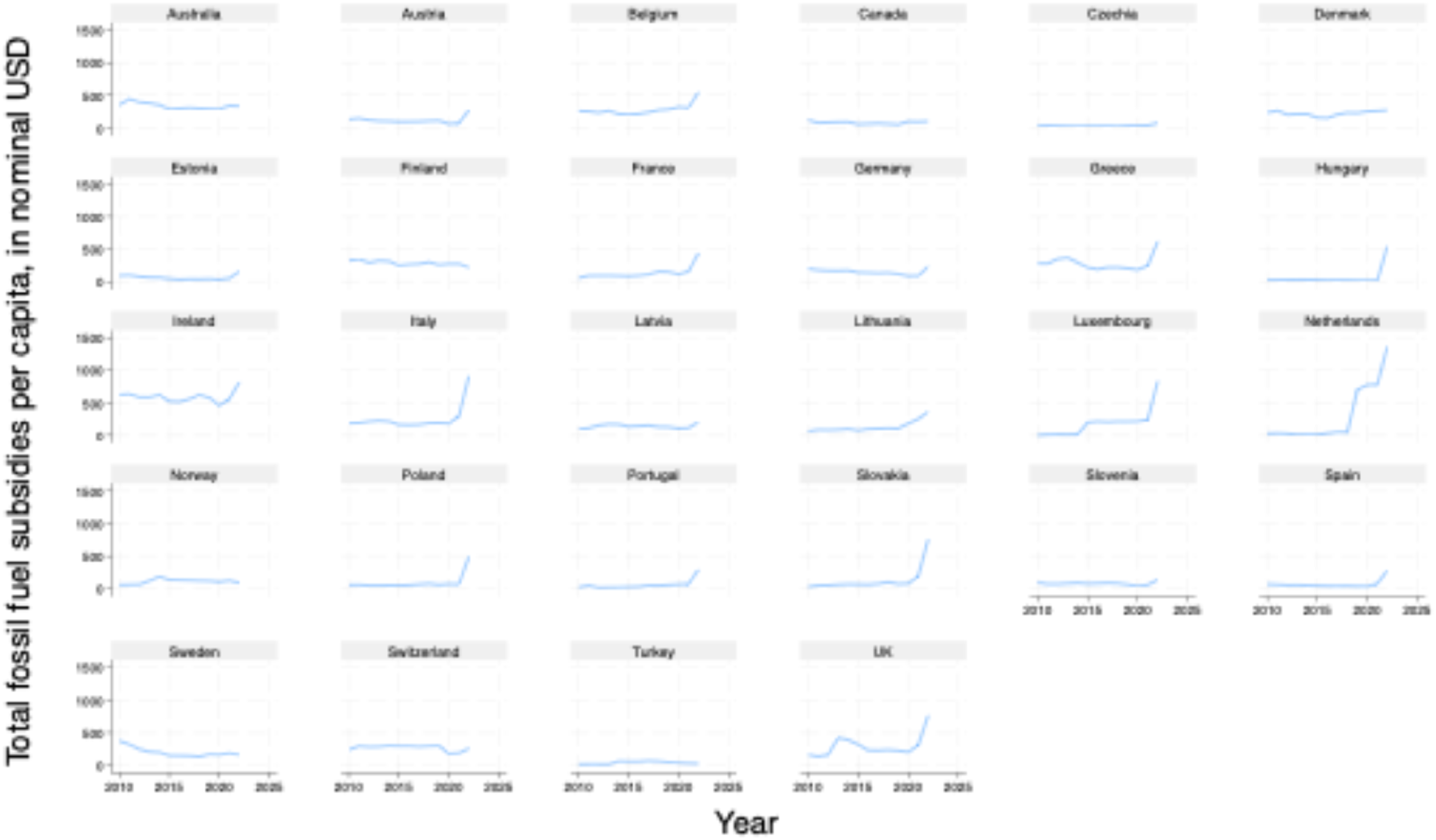
Results
Regression results, including majority/minority and policy preference interactions.
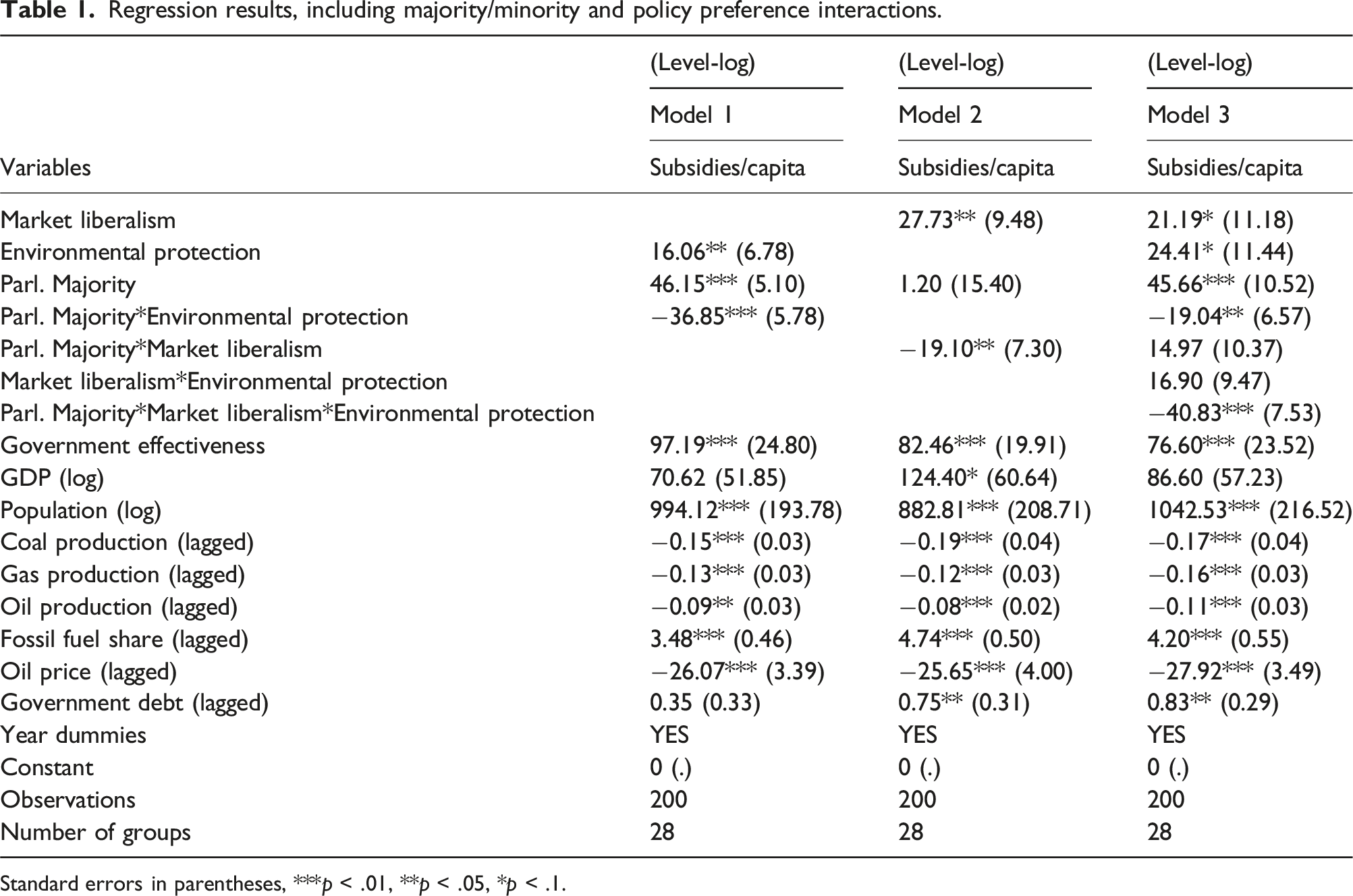
Standard errors in parentheses, ***p < .01, **p < .05, *p < .1.
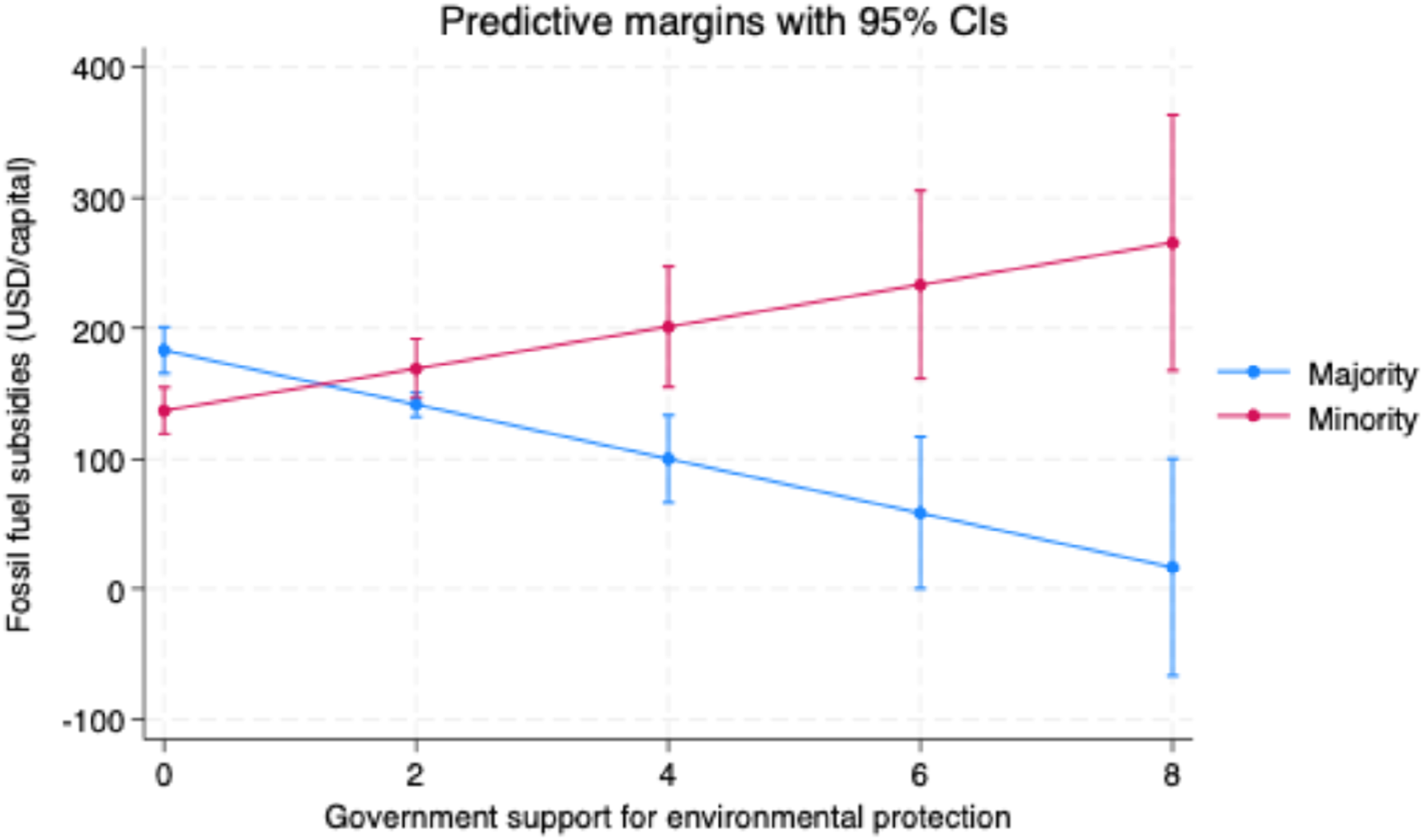
Marginal effects of the interaction between government support for environmental protection and majority/minority parliamentary support on fossil fuel subsidy levels (Model 1).
The results from Model 5 do not support H2. While market liberalism is positively associated with fossil fuel subsidies (β = 27.73, p < .05), the negative interaction with parliamentary majority (β = −19.10, p < .05) contradicts the hypothesis that majorities amplify this relationship. As Figure 3 illustrates, although both minority and majority governments increase subsidies as market liberalism rises, the effect is substantially weaker for majorities—approximately USD 19.10 less per capita per unit increase in market liberalism. This suggests that contrary to H2’s expectation that legislative control would enable market-liberal governments to more effectively implement pro-subsidy policies, parliamentary majorities actually constrain the rate of subsidy expansion. Nevertheless, the net effect remains positive: market-liberal majority governments still increase subsidies, just less steeply than their minority counterparts. Marginal effects of the interaction between government support for market liberalism and majority/minority parliamentary support on fossil fuel subsidy levels (Model 2).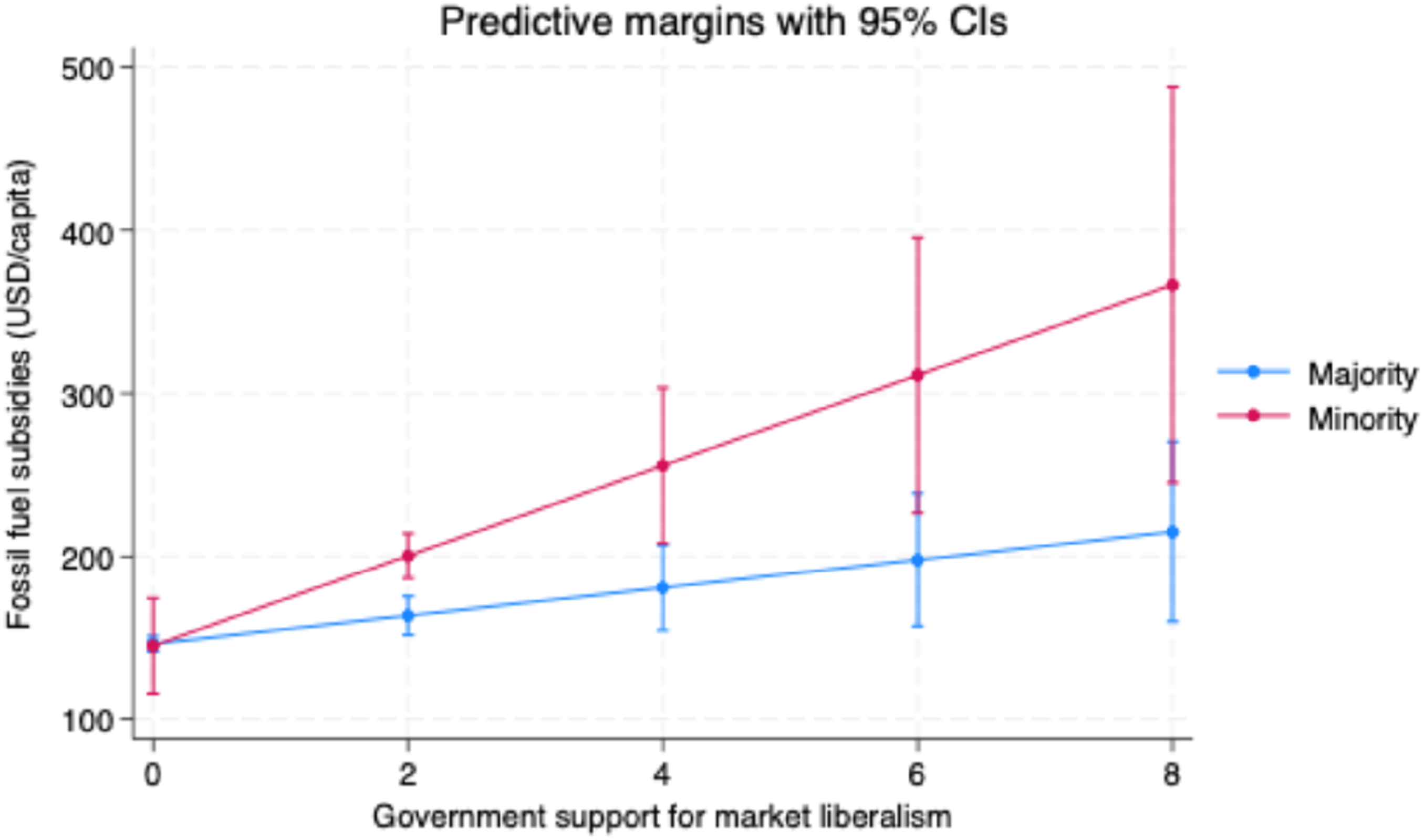
Model 3 introduces a three-way interaction between environmental protection, market liberalism, and parliamentary majority. To interpret this complex relationship, I first examine the constituent two-way interactions. The interaction between environmental protection and parliamentary majority is negative and significant (β = −19.04, p < .05), indicating that pro-environmental governments are more effective at reducing subsidies when they hold legislative majorities. This suggests that secure parliamentary control enables governments to translate environmental commitments into policy without the constraints imposed by coalition bargaining or legislative fragmentation. The interaction between market liberalism and parliamentary majority, however, is positive but not statistically significant (β = 14.97, p > .05), suggesting that majority status alone does not consistently moderate the relationship between market-liberal ideology and subsidy levels when environmental protection is held constant.
Critically, the three-way interaction term (β = −40.83, p < .05) reveals that these conditional relationships depend on the presence of both ideological commitments simultaneously. As illustrated in Figure 4, majority governments that strongly emphasise both environmental protection and market liberalism exhibit substantially lower subsidy levels—approximately USD 40.83 less per capita than would be predicted from the two-way interactions alone. This supports H3: when governments combine pro-environmental and market-liberal platforms while holding legislative majorities, they are better positioned to achieve significant subsidy reductions. This pattern suggests that the ‘green capitalism’ coalition effect hypothesised earlier requires institutional leverage to manifest. Several mechanisms may explain this finding. First, majority governments with both commitments may face reduced dependence on carbon-intensive industries for political support, enabling them to resist pressure for tax concessions that constitute the bulk of fossil fuel subsidies in OECD countries. Second, the combination of market-liberal and environmental platforms may signal a strategic pivot toward emerging low-carbon economic sectors—governments may be responding to or cultivating ‘green’ capital interests rather than traditional ‘brown’ industries. Third, parliamentary majorities provide the legislative autonomy necessary to restructure tax expenditures without requiring compromises with coalition partners tied to fossil fuel constituencies. The data cannot definitively distinguish between these mechanisms, though the strength of the three-way interaction suggests that a parliamentary majority is essential for translating ideological alignment into policy outcomes. Conditional marginal effects of market liberalism and environmental protection on fossil fuel subsidies, with governments holding majority parliamentary support (Model 3).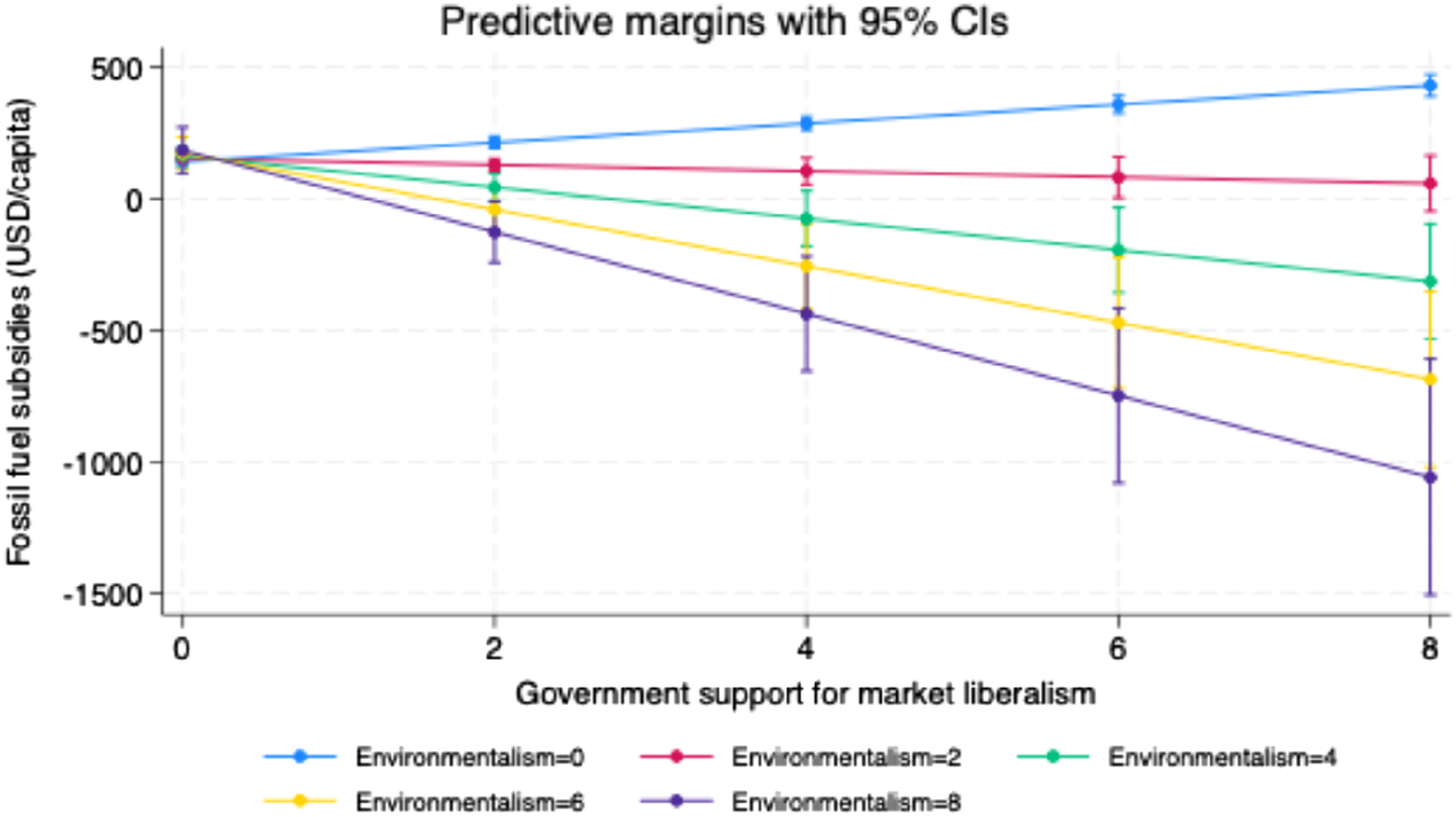
Among control variables, government effectiveness emerges as one of the strongest predictors of fossil fuel subsidy levels per capita, with statistically significant marginal increases at the 1% level across all three models (USD 97.19 per capita in Model 1, USD 82.46 per capita in Model 2, and USD 76.60 per capita in Model 3). Higher government effectiveness does not guarantee fossil fuel subsidy reductions and in this instance could reflect a degree of regulatory capture (Droste et al., 2024) or the capacity of more effective governments to design and implement more complex subsidy regimes (World Bank, 2025). Population size exhibits a consistently positive association with fossil fuel subsidies across all models (p < .01). A 1% increase in population is associated with an increase of USD 9.94 per capita in subsidies in Model 1, USD 8.82 in Model 2, and USD 10.42 in Model 3. This relationship may reflect both the scaled energy demands of larger economies and the greater fiscal capacity of more populous countries. Fossil fuel dependency, measured as the share of primary energy consumption derived from fossil fuels, demonstrates a consistently positive association with subsidy levels at the 1% significance level (coefficients: USD 3.48 in Model 1, USD 4.74 in Model 2, and USD 4.20 in Model 3). Government debt shows a modest positive relationship with subsidies, significant at the 5% level in Models 2 and 3 (USD 0.75 and USD 0.83 per capita, respectively). Both the international price of oil and fossil fuel production exhibit a negative correlation with fossil fuel subsidy levels across all models, significant at the 1% and 5% levels. Domestic fossil fuel production exhibits a small negative association with per capita subsidies. This counterintuitive pattern may reflect that net-importing OECD countries face greater political pressure to subsidise energy, however, the trivial magnitude of this effect warrants caution against over-interpretation. Net-importing OECD nations more commonly provide consumption subsidies to shield citizens from high international energy prices, while producer nations benefit from relatively lower and more stable domestic energy costs. Higher oil prices may be driving increased investment in energy efficiency and alternative energy projects, while prompting a shift in public spending from subsidies to targeted social transfers aimed at mitigating the impact of price increases on vulnerable populations (IEA, 2024).
Notably, both environmental protection and market liberalism exhibit positive main effects across Models 1-3, indicating that when examined in isolation or under baseline conditions (minority governments without the moderating influence of the other ideology), both are associated with higher subsidy levels. For environmental protection, this counterintuitive finding suggests that pro-environmental governments without secure legislative majorities or market-liberal coalition partners may struggle to translate environmental commitments into subsidy reductions, potentially due to the need for political compromise or the absence of institutional capacity to overcome entrenched interests. For market liberalism, the positive main effect suggests that market-oriented governments do not uniformly oppose subsidies; rather, absent pro-environmental commitments or majority control, they tend to preserve or expand subsidies for fossil fuels—suggesting selective rather than principled application of market-liberal ideology.
However, the negative interaction terms reveal that these baseline relationships are fundamentally altered under specific conditions. The combination of environmental and market-liberal commitments, particularly within majority governments, reverses the positive main effects and results in substantial subsidy reductions. This pattern suggests that neither environmental commitment nor market liberalism alone is sufficient to reduce subsidies; rather, it is the combination within favourable institutional contexts (parliamentary majorities) that enables governments to overcome organised opposition and redirect policy toward low-carbon transitions.
Discussion
This study has used cabinet-year panel data to demonstrate that government preferences for market liberalism and environmental protection are systematically associated with fossil fuel subsidy levels in OECD countries, but that these relationships are contingent on institutional context. The analysis reveals that programmatic priorities—derived from party manifestos—translate into policy outcomes only under specific conditions: environmental commitments reduce subsidies primarily when governments hold parliamentary majorities, while the combination of environmental and market-liberal platforms produces the strongest subsidy reductions exclusively within majority governments. These findings carry important implications for democratic representation: while electoral choices shape policy outcomes, institutional configurations influence whether governing parties can implement their stated preferences.
Majority governments with strong environmental commitments reduce fossil fuel subsidies (H1), consistent with the environmental programme-to-policy literature (Knill et al., 2010). However, contrary to H2, market-liberal majority governments do not amplify subsidy expansion; instead, majorities attenuate the positive relationship between market liberalism and subsidies, though the net effect remains positive. A critical finding emerges from the three-way interaction (H3): when majority governments simultaneously emphasise both environmental protection and market liberalism, subsidies decline substantially—an effect neither ideology produces alone, nor their combination without majority control. This pattern suggests that secure legislative power enables governments to reform fossil fuel subsidies in ways that reconcile market-oriented and environmental objectives. Several mechanisms may underlie this dynamic: majority governments combining both commitments may face reduced dependence on carbon-intensive industries for political support, enabling them to resist pressure for increased fossil fuel subsidies; they may be strategically pivoting toward emerging low-carbon sectors, reflecting either the growing influence of ‘green’ capital or the rising political salience of climate issues (McBride, 2022); or they may possess the legislative autonomy to implement politically contentious subsidy reforms with minimal compromise. While these data cannot definitively isolate which mechanism dominates, the findings clearly demonstrate that translating policy preferences into subsidy reform requires both ideological alignment and institutional capacity.
Several research directions emerge from these findings. First, this study examines aggregate subsidy levels, but governments may differentiate strategically between subsidy types and beneficiaries. Disaggregated analyses could reveal whether ideological conflicts concern subsidy composition rather than total expenditure. Second, the mechanisms enabling majority governments with combined environmental and market-liberal commitments to reduce subsidies require closer investigation. Case studies examining coalition negotiations, ministerial portfolio allocation (particularly environment, energy, and finance ministries), and the sequencing of reform initiatives could illuminate how legislative autonomy translates into subsidy restructuring against industry resistance. Third, political narratives justifying reform or subsidy persistence warrant attention. Market-liberal governments may frame cuts as eliminating distortions, while environmental governments emphasise climate imperatives—yet both face opposition from affected constituencies. Understanding which frames mobilise reform coalitions, and under what institutional conditions, would clarify why some governments implement stated preferences while others do not. The shifting political landscape of advanced democracies presents additional challenges. Rising polarisation and populist party influence are reshaping climate policy debates, potentially intensifying backlash against subsidy reform. Moreover, minority governments—which this study finds less effective at translating preferences into outcomes—merit closer scrutiny: through what mechanisms do supporting parties outside formal coalitions constrain or enable reform?
Finally, methodological refinements would strengthen future research. More precise indicators of party preferences specific to fossil fuel subsidies would sharpen causal inference. Time-weighted measures when integrating MARPOR and ParlGov data would improve temporal precision, particularly for capturing mid-term government composition changes. Extending the analysis beyond OECD countries, while challenging given data limitations, would test whether these institutional dynamics operate similarly in contexts with weaker state capacity or different party system configurations.
Supplemental Material
Supplemental Material - From party programmes to climate policy: A comparative analysis of fossil fuel subsidy reform in OECD countries
Supplemental Material for From party programmes to climate policy: A comparative analysis of fossil fuel subsidy reform in OECD countries by Evan Drake in Party Politics
Footnotes
Declaration of conflicting interests
The author declared no potential conflicts of interest with respect to the research, authorship, and/or publication of this article.
Funding
The authors disclosed receipt of the following financial support for the research, authorship, and/or publication of this article: This work was supported by the Swedish Energy Agency.

Supplemental Material
Supplemental material for this article is available online
Note
Author biography
References
Supplementary Material
Please find the following supplemental material available below.
For Open Access articles published under a Creative Commons License, all supplemental material carries the same license as the article it is associated with.
For non-Open Access articles published, all supplemental material carries a non-exclusive license, and permission requests for re-use of supplemental material or any part of supplemental material shall be sent directly to the copyright owner as specified in the copyright notice associated with the article.
