




Abstract
Party youth wings are generally said to be more ideologically extreme than their mother parties. Youth wing elites, however, can have career reasons to align with mother party elites and voters. Although there is a growing body of literature focusing on party youth wings and an established literature on issue congruence, few studies have compared the opinions of youth wing elites with those of their mother party elites and the electorate. We ask, in what ways and to what extent do youth wing elites align ideologically with party elites and the electorate? We draw on surveys to youth wing members in leading positions, voters and parliamentary candidates, and explore congruences on the ideological left–right scale as well as on the climate, immigration and centre–periphery issues. Youth wing elites are indeed more extreme than voters and party elites, but there are clear differences across issues and parties, suggesting that all youth wings have the potential to be clear correctives to their mother parties.
Introduction
Political parties are essential for democratic politics in terms of both political representation and policy development (Allern et al., 2016; Dalton et al., 2011). Youth wings, found in most Western democracies, are central aspects of many political parties (Allern and Verge, 2017). They are crucial in integrating young people into established political parties as new members are recruited, trained and socialised into becoming future political leaders (Bolin et al., 2022; Bruter and Harrison, 2009; de Roon, 2019; Hooghe and Stolle, 2005; Rainsford, 2018). Youth wings are also considered important alternative voices inside political parties. In popular parlance, party youth wings are often said to be more radical than their mother parties, acting as correctives on party policies. However, youth party elites could also have reasons to align with party elites and party voters. Alignment in attitudes will arguably make it easier for them to come through the ranks and climb the political career ladder in the future. Opinions on policy issues between youth party elites and elites in the mother party might, therefore, be congruent (Bruter and Harrison, 2009a).
Perceptions of youth party extremism can be rooted in anecdotes and general impressions of young people being more ideologically extreme than their older peers, as there are few empirical studies on the opinion patterns of youth politicians and how they align or deviate from the other branches of the party. However, there is rich and well-established literature on issue congruence between politicians and those they represent, such as voters and party elites (Valen and Narud, 2007) and citizens and European Parliament candidates (Dalton, 2017). Several studies have also focused on different party strata (Allern et al., 2016; Kölln and Polk, 2017; Narud and Skare, 1999; Van Holsteyn et al., 2017). Few, if any, studies of issue congruence have directly compared the political opinions of youth politicians with those of their mother party or the electorate.
This is a significant oversight, as such opinion patterns are vital to understanding the role of youth wings in party politics and democratic representation. As party membership has declined significantly across established parliamentary democracies (Van Biezen et al., 2012), we share the argument voiced by Ammassari and colleagues (2022) that we need to study political parties’ youth wings if we want to better understand the future political class and trends in political representation that will shape tomorrow’s democracies. In this article, we contribute to the growing literature on the role of party youth wings with a study of congruence between youth party elites on the one hand and parliamentary candidates and voters on the other and ask: in what ways and to what extent do youth-wing elites align ideologically with party elites, and how does their ideological positioning compare to that of the broader electorate?
The data comprise surveys of three different party strata in Norway – youth wing politicians in leading positions, party voters and parliamentary candidates. Most existing studies on issue congruence focus on the rather abstract left–right dimension. Building on recent research (Bäckersten, 2022; Dageförde, 2023), the present study relies on a multidimensional approach and investigates not only the ideological left–right scale but also three other highly salient issue dimensions in contemporary politics – climate, immigration and centre-periphery. This approach also made it possible to investigate whether youth wing elites have certain types of attitudes related to their generation, more specifically, if they are more concerned about climate.
Overall, we found that youth wing elites were somewhat more extreme than both party elites and voters. However, incongruences are clearly more articulated in some policy dimensions than in others, and further on, we found important differences across parties. On the left–right dimension, youth party elites from parties on the left block are strongly misaligned with both voters and candidates. In contrast, youth party elites from the Conservative Party strongly aligned with both voters and candidates. However, among all studied parties, there are marked incongruences on some dimensions, either compared to voters or party elites. This suggests that all Norwegian youth parties can function as political labs where radical policies exist. When it comes to opinions on climate change, youth wing elites from most parties, together with young voters, are clearly more worried about climate change than are parliamentary candidates and older voters, suggesting a generational concern.
The findings provide systematic documentation and nuanced interpretation of the long-established truism that party youth wings are more ideologically extreme than their mother parties. To apprehend such incongruences should be of interest to party scholars trying to understand how youth wings in some countries can affect the policy views of their mother parties. In Scandinavia, for instance, where youth wings have autonomous roles and members see it as an important task to influence the mother party’s policies (Bolin and Backlund, 2021; Kosiara-Pedersen and Harre, 2015).
In the following section, we review the literature on youth wings and elaborate three different arguments related to issue congruence or incongruence among youth wing elites, party elites and voters. After presenting the Norwegian case and the survey data, we first assess the general overlap between youth wing elites, voters and candidates on four issue dimensions, before we now turn to differences across parties. In the concluding section we discuss our findings and their implications.
Issue congruence between youth wing elites, party elites and voters
The literature on political parties shows that youth wings in some countries are independent organisations formally detached from the mother party, while they in other countries are sub-organisations under the party organisation (Biezen and Poguntke, 2014). More than three-quarters of all political parties included in the Political Party Database (PPDB) have youth organisations, making them more common than women’s organisations within parties (Allern and Verge, 2017: 119). They are called youth wings, youth parties, youth clubs, youth branches, etc. In some countries (such as Norway), youth wings are represented in the mother parties’ bodies, and their policy views on certain issues are sometimes adopted as the mother party’s official policy. In other countries (such as the UK), youth wings are less powerful and unable to make much meaningful impact; they are largely ignored by mother parties, keeping them at a safe distance (Pickard, 2019: 212).
There is a small but growing body of literature on youth wings (Bruter and Harrison, 2009a, 2009b; Cross and Young, 2008; de Roon, 2019; Hooghe et al., 2004; Weber, 2018), but these party sub-organisations have long been overlooked in the literature on political parties (Ammassari et al., 2022). Much of the emerging scholarship on youth wings has focused on motivations and why young people join (Bolin et al., 2022; Cross and Young, 2008; Fjellman and Rosén Sundström, 2021; Lisi and Cancela, 2019; Rainsford, 2018), their activities and forms of activism (Bruter and Harrison, 2009b), and their future ambitions (Ammassari et al., 2022; Kolltveit, 2022). Less focus has been put on youth wing politician’s opinions on certain policy issues (but see Rainsford (2018) on youth wing politicians’ attitudes towards the political system). In their study of motivations to join youth wings across six European democracies, Bruter and Harrison (2009a: 1279) found that that professional-minded members of youth wings, i.e. future leaders, dispute the claim that party members would favour more radical policies than their leaders. In contrast, morally minded youth wing members, driven by a desire to do good, support this claim. To our knowledge, few studies directly compare the political opinions of youth wing elites with those of their mother party and the electorate. 1 There is, however, a well-established literature on issue congruence between politicians and those they represent, such as voters and party elites (Valen and Narud, 2007) and citizens and European Parliament candidates (Dalton, 2017). Several studies have also focused on different party strata (Allern et al., 2016; Kölln and Polk, 2017; Narud and Skare, 1999; van Haute and Carty, 2012; Van Holsteyn et al., 2017).
May’s famous law on the opinion structure of political parties suggests that mid-level leaders and ideological activists in political parties are more extreme than the top leaders and voters (May, 1973); in other words, there is a curvilinear disparity. Activists enter politics to fight for certain causes, and they can propose radical policies that are less constrained by voters. Leaders, on the other hand, need to take a middle position and respond to moderate voters in order to win elections (Allern et al., 2016). Empirical support for this law, however, is somewhat mixed (Kölln and Polk, 2017; Norris, 1995; Van Holsteyn et al., 2015). While some studies claim that May’s law may prevail (Bäckersten, 2022), others proclaim its death (Wager et al., 2022; see also Van Holsteyn et al., 2017). In what follows, we elaborate on arguments related to issue congruence or incongruence among youth party elites, party elites and voters.
Hypothesizing the radical youth, the aligned elites and the climate anxious generation
As mentioned above, youth wings are often perceived as more ideologically extreme than their mother parties. They can attract people who consider the mother party’s political position too moderate (Poguntke, 2002). Young members are more strongly committed to ideologies and are proponents of radical policy ideas (Bennie and Russel, 2012). Thus, youth wings provide counterpoints to dominant views in the mother parties and in political debate (Kimberlee, 2002; Mycock and Tonge, 2012; Rainsford, 2018; Weber, 2017). They promote this more extreme profile or concern about certain policy problems to have an ideological or policy impact on their mother party (Hooghe et al., 2004).
Theoretically, this youthful extremism can be explained by May’s argument about different incentives to participate in politics. Youth wing politicians, elites and rank and file members alike, are not dependent on voters for re-election and are, therefore, not constrained by their attitudes. Just like ideological activists, principles, not political careers, are their main motivation, and they can base their policy views on purely ideological considerations (Narud and Skare, 1999; Norris, 1995). 2 Along this line of argumentation, the incongruence is seen as driven by their personal convictions, and position in youth wings and the organizational context allowing them to dissent. We should note, that being a clear corrective can also have strategic reasons: when youth wing politicians publicly oppose the views of their mother party, they will gain media coverage, and this visibility can be electoral capital in later elections.
In their study of four British political parties (Conservatives, Labour, Liberal Democrats and SNP), Bennie and Russel (2012) found traces of youthful extremism in the sense that young members held somewhat different opinions compared to older members. For instance, young members from the Labour and Conservative parties were more supportive of environmental measures, and young members from the Conservatives and the Liberal Democrats were markedly more in favour of immigration. According to Mycock and Tonge (2012), UK parties are concerned that potentially radical policy proposals can alienate older voters, although more recent studies conclude that contemporary UK youth wings are less extreme and now tend to obediently tow the party line (Pickard, 2019: 212). Further, several studies have shown that young voters tend to be more ideologically extreme, while with age, voters tend to move towards the centre (Rekker et al., 2015). Based on the above, we hypothesise the following:
Congruence might, however, differ between parties. For example, a distinction is often made between mainstream and niche parties (Adams et al., 2006; Meguid, 2005; Meyer and Miller, 2015). Definitions vary, but mainstream parties are often said to compete on the classic left–right dimension, while niche parties compete on a social-cultural dimension where questions evolve around identity and culture (Meyer and Miller, 2015; Van Ditmars and De Lange, 2019: 298). Since these different types of parties’ representatives and voters differ in their attribution of issue saliency, scholars expect different representational performance across types of parties: Mainstream parties should represent their voters better on socio-economic questions, while niche parties should represent their voters better on socio-cultural questions (Van Ditmars and De Lange, 2019). In their study of Dutch voters and parties, Van Ditmars and De Lange (2019) finds that on some issues, mainstream parties represent their electorate better than niche parties, although the overlap does not only occur related to the socio-economic dimension. Based on this, we hypothesise:
May’s law has been criticised for not considering specific groups below the top leader level (Narud and Skare, 1999). As with the mother parties, there are also different strata or layers in the youth wings. Most are ordinary grassroots members, while some are local branch leaders, and a few have positions in regional or national branches. For the latter youth wing elites, a career in politics can be tempting, and youth wings play a role in preparing and grooming future candidates and legislators (Rehmert, 2021: 11). In the upper echelons of youth wings, views on policy issues might resemble those of party elites and voters, because this will make it easier for them to come through the ranks and climb the political career ladder sometime in the future. Either through socialisation or disciplinary mechanisms, there might be a homogenisation of policy views, as youth wing careerists can develop a programmatic stance towards policy issues (Rehmert, 2021; Wenzelburger and Zohlnhöfer, 2020). Along this line of argumentation, mother party dissent has either been moderated over the course of their youth wing careers, or youth wing elites are unwilling to offer criticism as congruence is driven by their personal ambitions for future careers in the party. Consequently, the most ambitious among the youth wing elites should be most similar to the party elite and voters. However, we should note that the possible similarities between youth wing elites and party elites do not necessarily stem from such strategic career adjustments. Rather, there might be high policy congruence simply because youth wing elites and mother party elites resemble each other when it comes to important social and political variables (Allern et al., 2016). We hypothesise the following:
Finally, it is plausible that youth-wing elites, similar to youth in general, depart from their older peers in their evaluation of certain policy issues conditioned by the salience of the issue in their time. The presence of climate anxiety and climate grief among children and young adults has been documented in several studies (Hickman et al., 2021). Young people consider climate change a global emergency and are more worried about global warming than older people. Today’s youth have spent their whole lives in a world affected by global warming, either experiencing the climate changes themselves or hearing about the effects. According to Clayton (2020), 17%–27% of US citizens reported experiencing climate anxiety, which had some impact on their ability to function. In general, younger adults show higher levels of anxiety (Clayton and Karazsia, 2020). Based on this, we hypothesise the following:
We test these hypotheses drawing on surveys of three different types of actors in Norway: youth wing elites, parliamentary candidates and voters.
Research context
Youth wings have existed in Norway since the early 1900s. They have a similar structure as their mother party, with local branches, regional boards and central secretariats. In youth wings, young people interested in politics develop political views and are trained in political work. Among other things, Norwegian youth wing members hand out party material in election campaigns and go from door to door; they visit schools, participate in debates and write op eds in local newspapers. In addition to being arenas for young politicians, youth wings also have formal roles and real influence on mother parties in the sense that leaders in youth wings are represented in the mother parties’ local, regional and central bodies (Ødegård, 2014). Norwegian youth wings are also often represented in the parties’ nomination committees and thus can help influence the selection of parliamentary candidates. This may have contributed to the fact that the proportion of young representatives in Storting is comparatively quite high (Sundström and Stockemer, 2021). In the 2011 election campaign for municipal and county elections, the national broadcaster (Norwegian Broadcastong Corporation) arranged the first televised party leader debate among the leaders of the youth wings (Saglie et al., 2015). Policy proposals emanating from youth wings sometimes receive a majority of votes at the different parties’ national conventions. The formal links, media visibility and substantive policy impact make Norwegian youth wings comparatively important and powerful. In 2015, the Norwegian youth wings had around 15,000 members. Membership numbers rose markedly after the terrorist attacks on 22 July 2011 and have remained quite stable since then (Ødegård and Fladmoe, 2017: 30–31). Youth wings are important recruitment arenas in Norway, and one-third of Norwegian members of parliament have a background in youth wings (Eilertsen, 2014).
Since the 2017 national election, nine parties have been represented in the Norwegian Storting. On the left, the Reds is a small Radical Left party, while the Socialist Left has a New Left stance, supporting environmentalism and multiculturalism (Langsæther, 2024). On the right, the Progress Party is the Norwegian version of the populist right party. Other Norwegian parties include Labour, Liberals, the Greens (from 2013), the Christian People’s Party, Conservatives and the Centre Party, the leading representative of farmers and the peripheries (Langsæther, 2024).
Regarding policy issues, there has traditionally been a strong emphasis on left–right issues in all parties, and the centre–periphery conflict has long been present in Norway (Rokkan, 1967). Over the last decades, issues such as immigration, environment and climate have become more salient (Bergh et al., 2022; Bergh and Karlsen, 2019).
Policy congruence between voters, party members and MPs is relatively high in Norway. Party members resemble voters the most, while MPs resemble voters somewhat less (Allern et al., 2016). According to Allern et al. (2016), the high and stable policy congruence in Norway is because party members and mid-level activists resemble voters on important social and political variables.
Data
The data comprised surveys of voters, youth party elites and parliamentary candidates. The voter data was drawn from the 2017 Norwegian National Election Study. For the study, 3200 people between the ages of 18 and 79 were selected from public registers. The survey was conducted as a combined telephone, visit and online survey. A response rate of 62% was obtained (n = 1996 respondents).
The youth wing data was drawn from a 2019 online survey (see Kolltveit, 2022). Within the youth wings of the nine Norwegian parties represented in Parliament, leaders of the local branches, members of the regional boards and representatives from the central organisations were approached. In this article, we define all these actors as youth wing elites.
Of all the regional boards (nine parties in 19 counties), only three failed to respond and provide emails. As a result, the 933 email addresses received closely represented the full universe of Norwegian youth wing elites. After three reminders, a response rate of 51% was obtained (n = 478).
The parliamentary candidate data was obtained from an online survey of candidates who ran for election in the 2017 Norwegian parliamentary elections. This survey was part of the Comparative Candidate Survey (CCS) (De Winter et al., 2021). A total of 1869 candidates from seven of the nine Norwegian parties were approached and a response rate of 38 was obtained (n = 715). 3 A few youth wing politicians could have been parliamentary candidates. Thus, there was a risk that some respondents would appear in both datasets. Unfortunately, it is not possible to detect such double listings due to the anonymisation requirements of the survey data.
Overall, our data was based on 3159 respondents. In all three surveys, similar questions were posed. One on the general ideological left–right scale and three more contested issue dimensions – climate, immigration and centre–periphery (see Appendix for exact wording). The respondents were asked to place themselves on a scale from 0 to 10, with the outer answer categories having explanations (e.g. ‘Where would you place yourself on a scale from 0 to 10, where 0 means that climate change is not a problem, while 10 means that climate change is a very big problem?’). The variables age, gender and party were all drawn from the surveys.
To measure congruence (H1a and H2a), we first compared the distribution of preferences (many-to-many congruence) (Golder and Stramski, 2010). Here, congruence was the overlap—the common area—in the frequency distribution of all answer categories of each issue dimension of the different groups. The higher the number reported, the higher the congruence between the different groups: 0 denoted no congruence, while 100 denoted perfect congruence. Regarding the Greens and Liberals, parliamentary candidates were too few to report congruence (ref. Table A1 below).
To test if congruence is driven by other variables, we ran ordinary OLS regressions with issue dimensions as dependent variables and groups as main independent variables (youth wing elites, candidates, voters). To capture that youth wing elites can be extreme in both ‘directions’ (i.e. left party youth wings more leftist, right party youth wings more right), the 11-point scale dependent variables ‘left–right’, ‘immigration’, and ‘centre–periphery’ were all recoded (scale 0–5, mid category = 0; and both extremes = 5). As controls, we included party, age and gender (1 = female). To control for the elite among candidates having different opinion patterns than other candidates, we use a variable that measures if candidates stood a good chance of being elected to parliament.
From the radical youth perspective, we expect all youth wing elite respondents (local branch leaders, regional board members and central organisations representatives) to be more ideologically extreme than mother-party elites and voters (H1a). Contrary, from the aligned elites perspective, we expect all youth wing elite respondents, mother party elites and voters to hold congruent ideological positions because of youth wing elites’ career considerations (H2a). Among the youth wing respondents, however, the wish to pursue a career in politics will vary. To check how concrete political ambitions, and not just being a youth wing elite, can drive issue congruence (H2b), we included an additive (mean) index (0-4) of six items about ambitions for political positions (“Sometime in the future, to what extent could you want the following positions (5-point scale): PM, minister, MP, state secretary, political adviser, party employee).
To investigate whether youth wing elites and young voters are more concerned about climate change compared to mother-party elites and older voters (H3), the voters were separated into different groups, below 25 years (13.3%) and above 25 years (86.3%). This made the voter group comparable to the youth wing elites in terms of age. Here, the 11-point dependent variable was 0–10, as youth wing elites and young voters across all parties are potentially more concerned about climate compared to their mother party and older voters (in other words, they potentially pull in the same ‘direction’).
Results
Political representation can be studied by political parties in sum or by individual parties. Hence, in this section, we first study issue congruence as the sum of parties, i.e. the congruence between all youth wing elites on the one hand and all voters and party candidates on the other. We focus on distinct parties in the second section.
In this analysis we weighed each group by party, and each party was treated as 1/9 within each group (we excluded the Greens and the Liberals from the youth-candidate analysis, as the parties did not participate in the candidate study). 4
In the first part of the analysis, we begin by assessing the general overlap between youth wing elites and voters and between youth wing elites and candidates on the four issue dimensions. Figure 1 shows the distribution on the left–right dimension. Overlap on left–right dimension: youth wing elites, voters, candidates.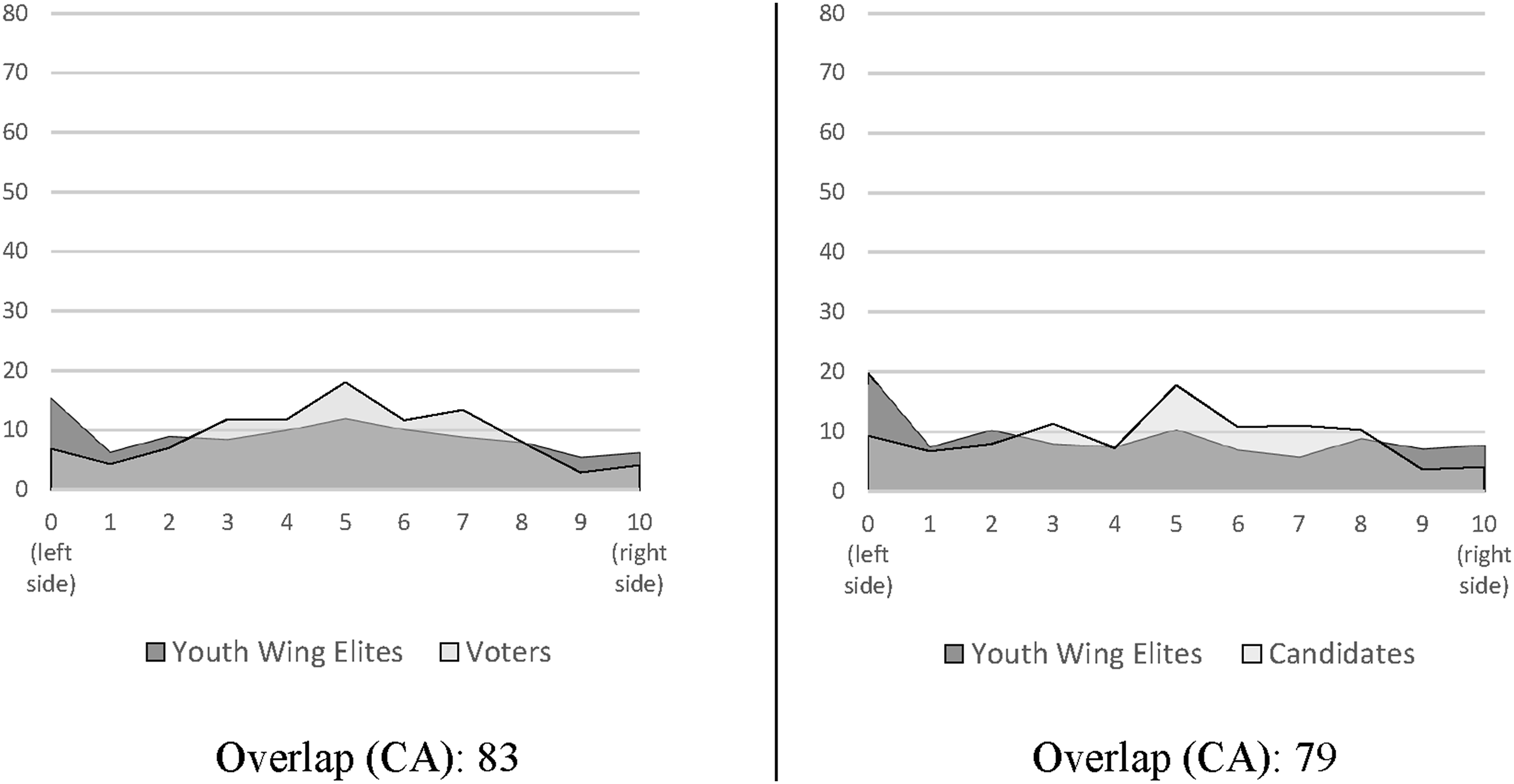
Across the nine parties, the left–right orientation of youth wing elites was quite similar to those of the parliamentary candidates. The overlap was 79%. In other words, across all 11 answer categories, 79% of youth wing elites and voters placed themselves in the same categories. The overlap between youth wing elites and voters was even larger. Here, 83% of the distribution of preferences overlapped. Although the overlaps were clear, the distributions shown in Figure 1 still indicate that youth wing elites are more extreme than voters and candidates (H1a). More youth wing elites placed themselves at both extremes, while more voters and candidates placed themselves in the middle category.
Concerning the immigration dimension, the incongruence was clearer for the youth wing elites and voter relationships (Figure 2). Youth wing elites were clearly more liberal than the electorate (65% overlap). Youth wing elites were, however, quite aligned with candidates on immigration; the overlap was 85%. In this dimension, the congruence patterns were somewhat different from the left–right dimension. Regarding immigration, both the youth wing elite distributions were more right-skewed, showing that youth wing elites are more inclined than both voters and candidates to be positive towards immigration. Overlap on immigration dimension: youth wing elites, voters, candidates.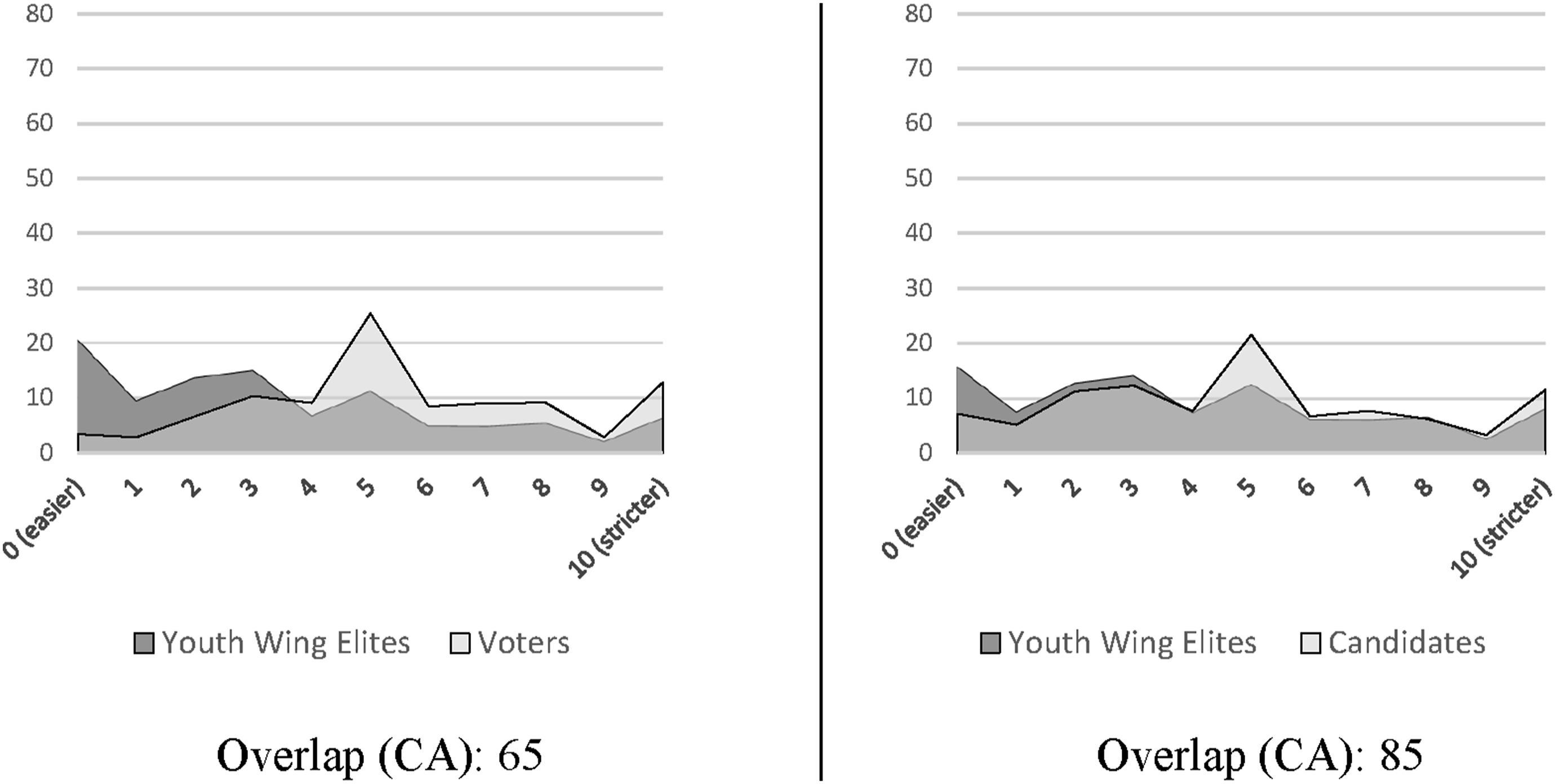
The incongruences were somewhat smaller on the centre–periphery dimension (Figure 3) compared to the more contested policy issue of immigration. On centre–periphery, the overlap between youth wing elites and voters was 72%, and youth wing elites and candidates was 88%. Again, youth wing elite distributions were skewed to the right, while voters and candidates were centred around the middle categories. This indicates that youth wing elites are more inclined than both voters and candidates to be positive towards the periphery. Overlap on centre–periphery dimension: youth wing elites, voters, candidates.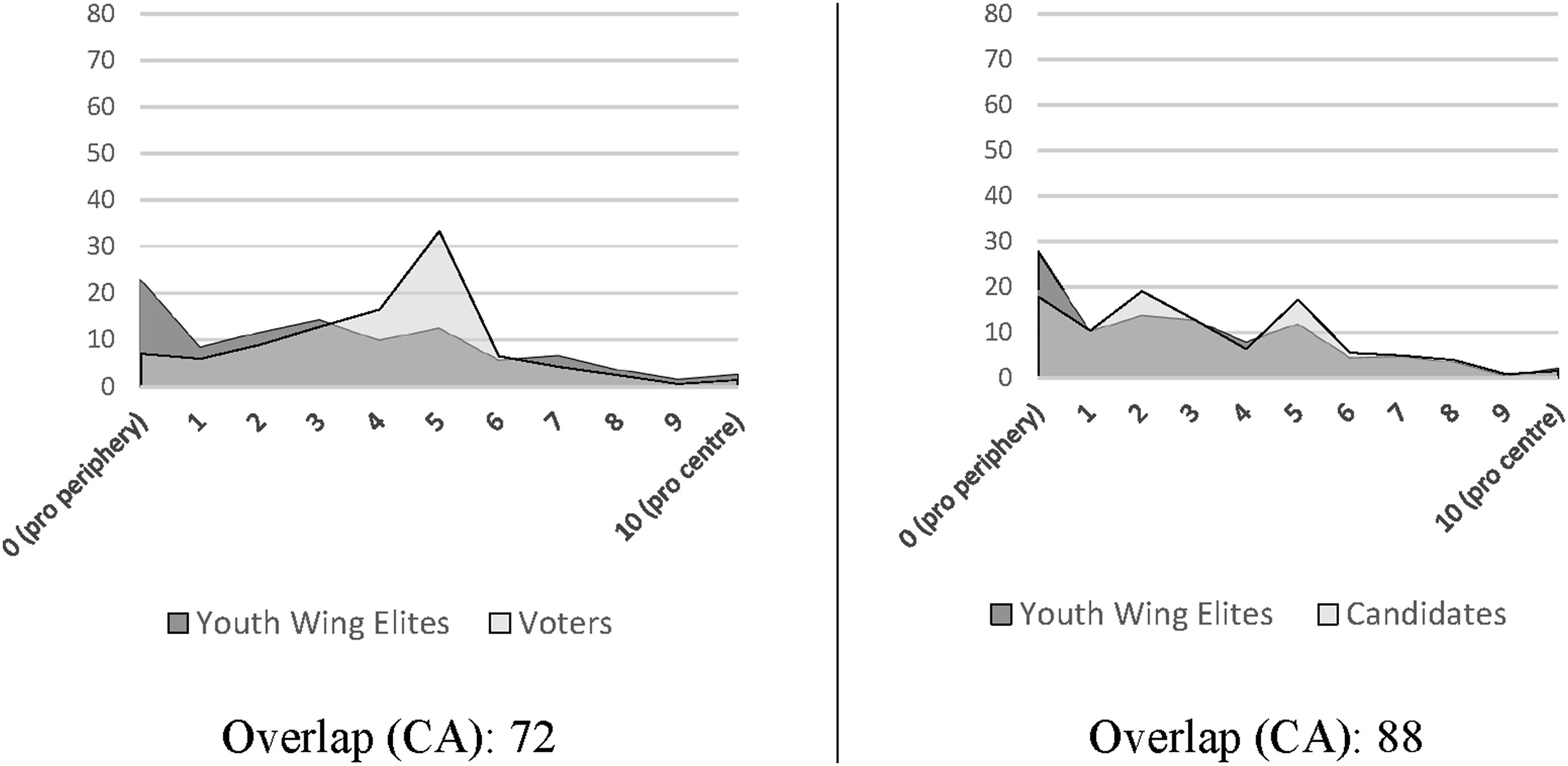
Figure 4 shows that youth wing elites are quite aligned with voters on climate; the overlap was 79%. However, youth wing elites are clearly more concerned about climate change than parliamentary candidates. In this dimension, the overlap between youth wing elites and candidates was only 66%. Overlap on climate dimension: youth wing elites, voters, candidates.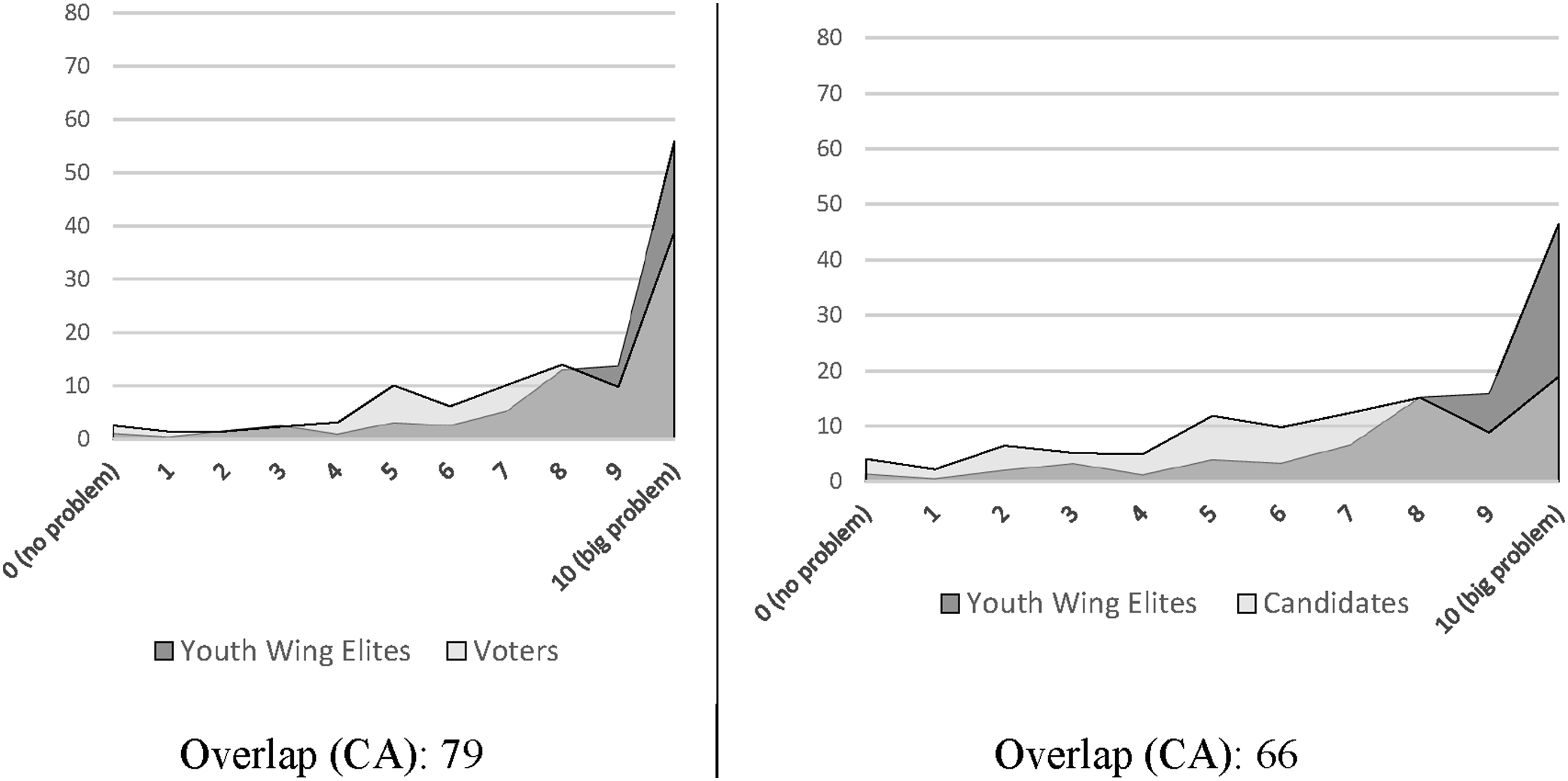
In the climate dimension, youth wing elite distributions were skewed more to the left compared to voters and, especially, candidates. This indicates that youth wing elites were more inclined than established politicians to consider climate change a severe problem. Overall, youth wing elites were somewhat more aligned with candidates than with voters, but the differences were small, and they varied clearly across policy dimensions.
In the second part of the analysis, we turn to differences across parties. Figure 5 report the mean of overlaps (CA – the common area under the graph) between youth wing elites and voters and between youth wing elites and parliamentary candidates on all dimensions combined. Mean overlap (the common area under the graph) by party on all dimensions combined.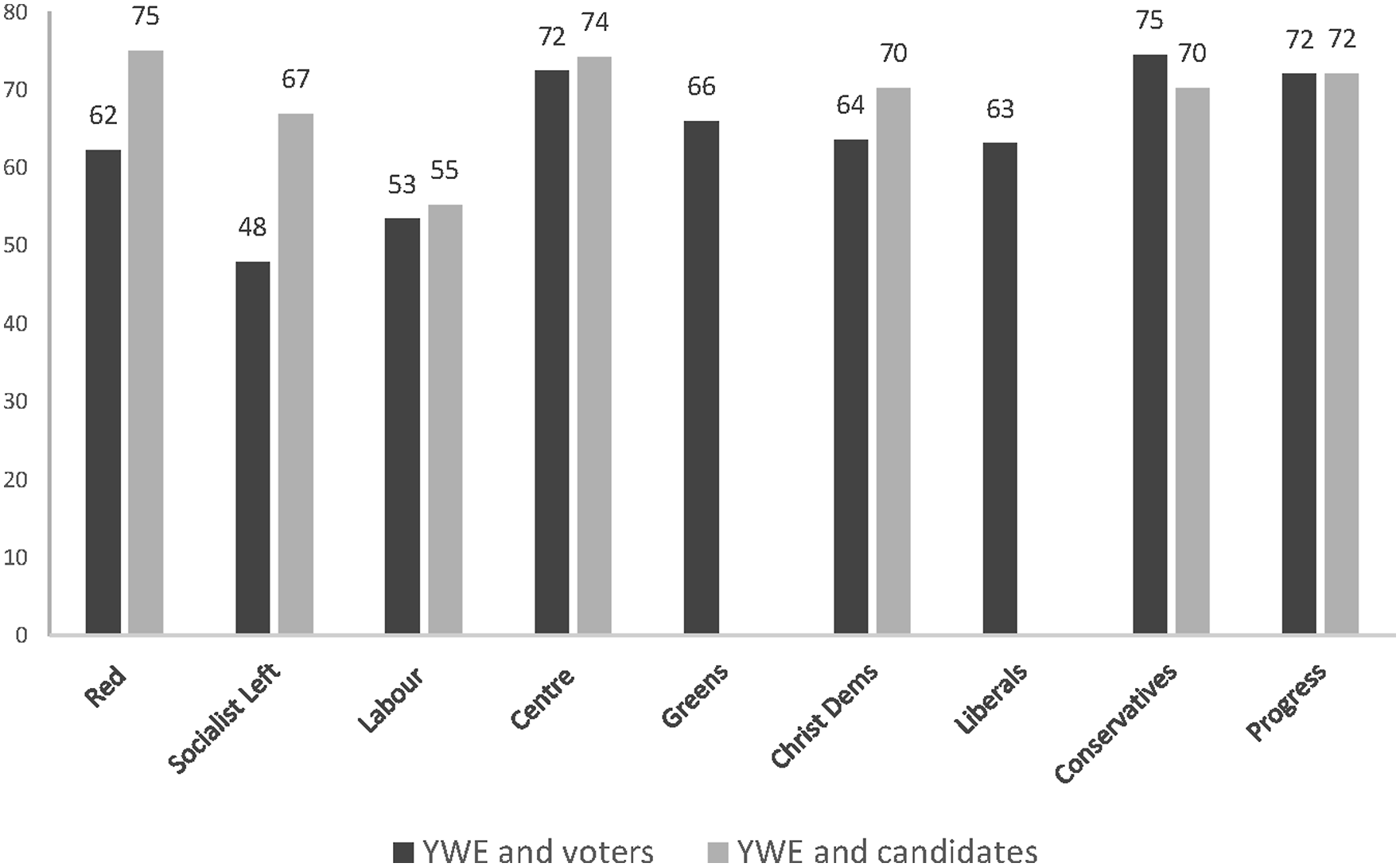
As Figure 5 shows, the incongruence is clearest between youth wing elites and voters from the Socialist Left, the Labour Party and the Liberals. Congruence is high for the Conservative Party, Progress Party and Centre Party. There are, however, important differences across issues (see Tables A4 in Appendix). On the left-right dimension, youth wing elites and voters from the Socialist left and Labour clearly disagree (CA 42 and 46 respectively). Youth wing elites from the Conservative Party seem very well aligned with their voters in the left–right dimension (CA 87). In general, youth wing elites from parties on the left wing are more leftist, and youth wing elites from parties on the right wing are more to the right compared to voters. On the immigration issue, youth wing elites and voters from the Socialist left, Greens and Liberals clearly disagree (CA 38, 38 and 40 respectively). Overall, youth party elites from all parties are more positive towards immigration. On the centre–periphery question, youth wing elites and voters from the Socialist left clearly disagree (CA 35). Overall, for parties on the left side, voters are more pro centre compared to the youth wing elites, and for parties on the right side the youth wing elites are more pro centre. Youth wing elites from the Labour Party are especially out of step with voters on the climate question (CA 57). On this dimension, more youth wing elites from all parties believe climate change is a severe problem compared to voters.
Youth wing elites from the Labour Party are also the least aligned with parliamentary candidates, while congruence is high for the Red Party. Zooming in on the different dimensions, youth politicians and parliamentary candidates from some parties hold very different views on certain issues (see Table A5 in Appendix). On the ideological left–right scale, the congruence for Labour is only 55 (CA), suggesting that Labour’s youth-wing elites are radical counterpoints compared to the party elites standing for election to parliament. Again, youth politicians from the Conservative Party seem very well aligned with the candidates in the left–right dimension (CA 85). Overall on this dimension, the patterns remain the same as above: youth wing elites from parties on the left wing are more leftist, and youth wing elites from parties on the right wing are more to the right, compared to candidates. On immigration, youth wing elites from all parties (bar Labour) are quite aligned with candidates. The pattern is that youth wing elites from all parties (bar the Centre Party) are more pro immigration. Also on the centre-periphery dimensions, youth wing elites are aligned with candidates. Here, youth wing elites from all parties (bar the Progress Party) are more pro centre. On the climate dimension there are clear differences between youth wing elites and candidates from all parties. The congruence is only 30% between youth-wing elites and candidates from the Conservative party. Similarly, the climate congruence is only 31% between youth-wing elites and candidates from the Labour Party. The differences in means are clearly negative, showing that youth wings from these two main governing parties are much more concerned about climate than are the candidates. The general pattern is that youth wing elites from all parties are more concerned about climate change than are the candidates.
Concerning the type of party, there is no clear pattern on the left-right dimension as some mainstream parties are disaligned (Labour) and some niche parties are aligned (Christian Democrats and Reds), both when it comes to youth wing elites and voters, and youth wing elites and candidates.
To investigate if incongruence between youth wing elites, voters and elites across parties and dimensions are driven by other variables (Allern et al., 2016), linear regressions were conducted using the recoded issue variables (distance-from-center scaling) and controlling for socio-demographic variables such as gender and age, as well as party affiliation. We also include our measure for political ambitions.
The plots presented in Figure 6 support the notion that youth wing elites indeed hold different views on the left–right dimension than voters and party elites (see Table A6 in the Appendix for full regression tables). The effect of both voters and candidates are negative and significant, suggesting that youth wing elites (the reference category) are farther away from the centre (0) and thus more extreme. This group effect holds when controlling for age, gender, political ambition and party affiliation. Political ambition is not significantly related to the dependant variables, hence the expectation (H2b) that the politically ambitious among youth wing elites align their attitudes with party elites is not supported. Regression Analysis, three issue dimensions. B-coefficient plots.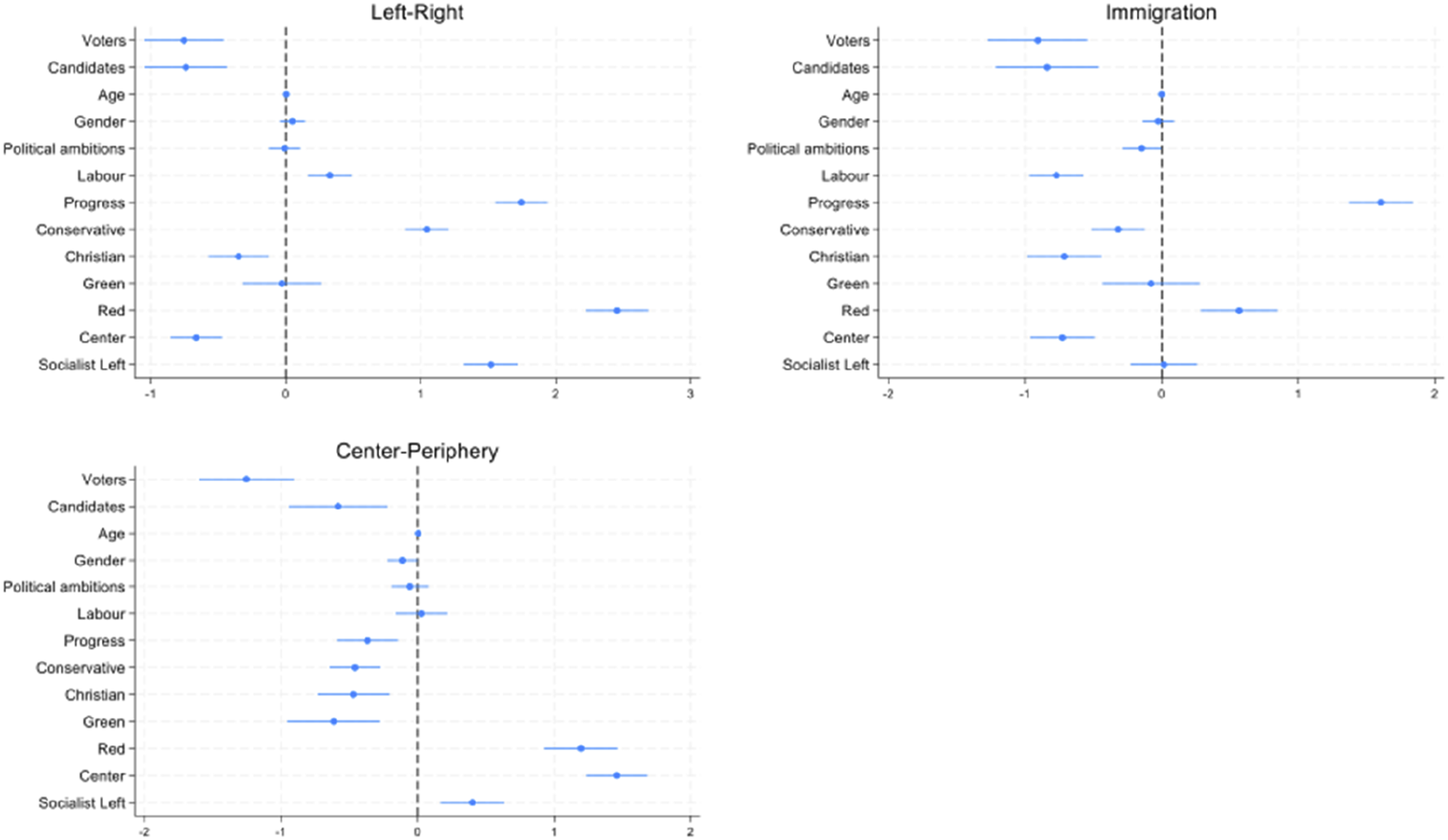
The same main pattern emerged regarding the other dependent variables. Concerning both immigration policy and the centre–periphery dimension, youth wing elites are clearly more extreme than voters and party elites.
Turning to climate attitudes, we investigate whether youth wing elites are more concerned with climate issues using an 11-point scale. Figure 7 shows that youth wing elites (reference category) are clearly more concerned about climate than candidates and older voters (both coefficients are negative and significant). The candidates are clearly much less concerned. Regression Analysis, Climate issue. B-coefficient plots.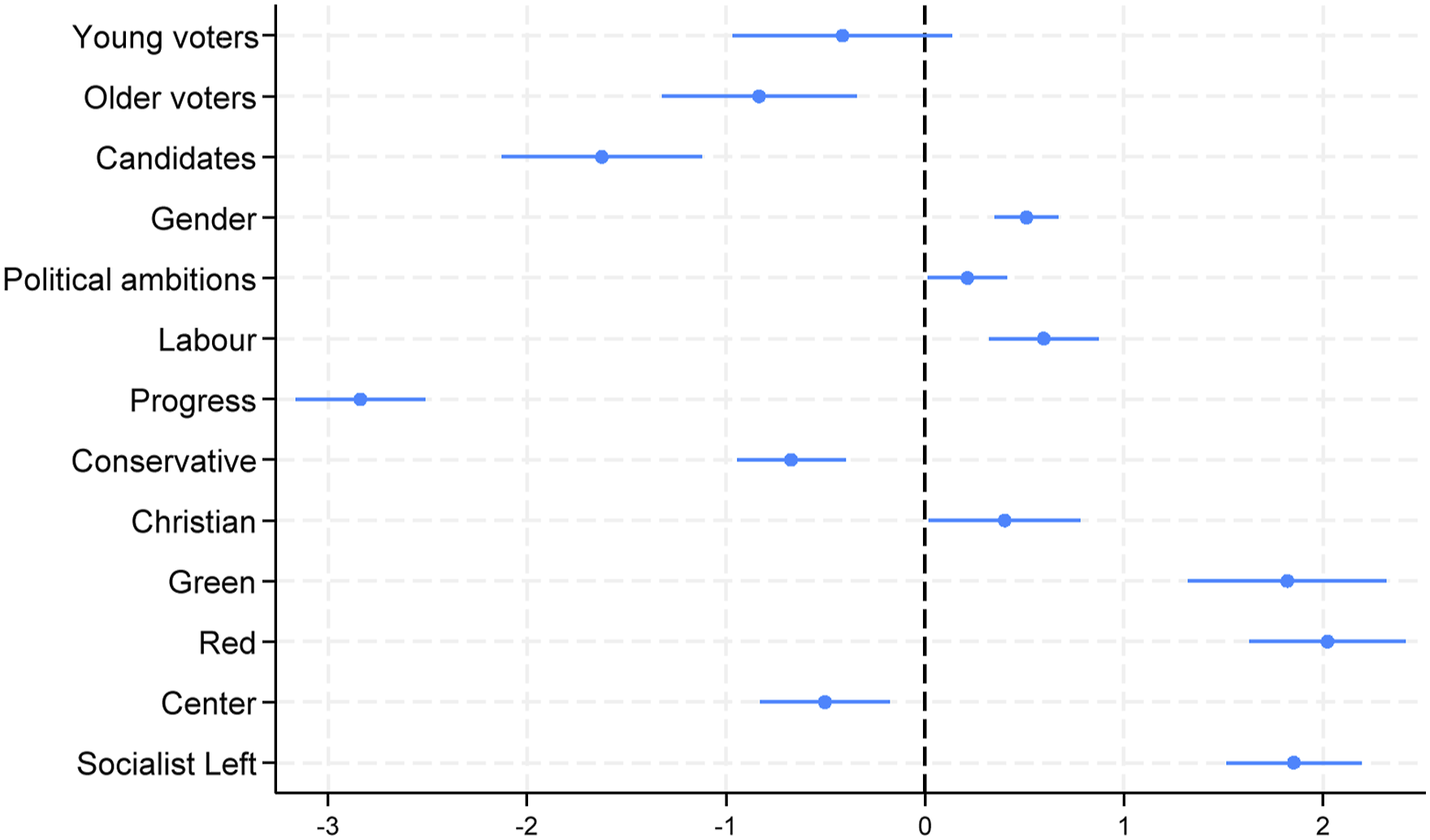
The youth wing elites are not more concerned than young voters (below 25), suggesting that this is a generational concern. Note that when the cut point is set at 30 years, the youth wing elites are more concerned compared to the young voter group (see Table A7 for full regression table in Appendix). Again, the group effect holds when controlling for age, gender, political ambition and party affiliation. If we also control for elite candidates, the main conclusions remain the same: Youth wing elites indeed hold different views compared to elites (see Table A8 in Appendix). Interestingly, political ambition is positively related to climate attitudes, suggesting that the ambitious among the youth wing elites are even less aligned with voters and candidates. Hence, hypothesis 2b is not supported, rather we find evidence for the opposite relationship than what we expected.
Concluding discussion
Youth wings are often termed as more radical than their mother parties, thought to serve as counterpoints and to provide radical opinions on public policies. The results of our study support this notion. Overall, we found that youth wing elites were more extreme than voters and party elites, lending support to hypothesis H1a and weakening hypothesis H2a. In this sense, our findings tie in with former studies on British political parties finding some traces of youthful extremism (Bennie and Russel, 2012; Mycock and Tonge, 2012). Our study is a strong test of the radical youth argument. We surveyed only youth wing elites and not youth party members in general. If the youth wing elites are more radical than the parliamentary candidates and voters, it seems plausible that also rank-and-file members in the youth parties are more radical.
However, our study shows that there are clear differences across policy dimensions, offering a more nuanced interpretation of the common impression of the radical youth. Incongruence is typically higher on issue-specific dimensions than on the abstract left–right dimension. On the left–right dimension, youth wing elites are found more towards the extremes, both left and right, than voters and candidates. Youthful radicalism seems somewhat stronger on more contested issues like centre–periphery and especially immigration. In these dimensions, the youth wing elites are more skewed towards one pole, being more inclined than both voters and candidates to be more liberal towards immigrants and wanting to do more for rural areas.
Furthermore, we find clear and important differences across parties. In the left–right dimension, youth wing elites from both the Socialist Left and Labour are strongly misaligned with voters and also candidates for the Labour Party. In contrast, youth wing elites from the Conservative Party are strongly aligned with voters and candidates in this dimension, suggesting that the youth wing elites in the two political blocks in Norway are differently in touch with ‘their own’. Overall, youth wing elites from parties on the left wing are more leftist, and youth wing elites from parties on the right wing are more to the right, compared to both voters and candidates. These patterns resemble recent findings from Sweden (youth wing members’ self-placement and placement of their mother parties on the left-right scale) (Bolin and Backlund, 2021: 109).
We found that youth wing elites and young voters alike were clearly more concerned about climate change compared to both the mother party elites and older voters, supporting hypothesis H3. This suggests that youth wing elites across parties constitute a group of future politicians who are more worried than other politicians and voters and, thus, perhaps more willing to act.
We found few patterns suggesting that incongruences regarding the left–right dimension between youth wing elites, mother-party elites and voters were most prominent within niche parties. Hypothesis H1b is therefore not supported. Rather, on the left-right dimension different strata in mainstream parties can be quite disaligned (Labour) and strata in niche parties can be quite aligned (Christian Democrats). Even if congruence on the left-right scale is high, it seems like a paradox for an issue-focused party like the Greens, that the alignment with voters in the climate question is not even higher (CA 76%). Similarly, congruence between youth wing elites and voters is not very high for the Centre party on the centre-periphery question (CA 52%), suggesting that in Norway, some incongruences are present for party strata in different parties also on their “core issues” (Valen and Narud, 2007).
Finally, the regression analyses reveal that youth wing elites’ increasing political ambitions decrease extreme attitudes on the issue of immigration but increase pro climate attitudes, and these mixed results go against our initial expectation (ref. H2b). The fact that political ambitions apparently have an independent effect on political attitudes is, however, something future research should investigate further.
Overall, our results support the notion that youth wing elites are more extreme but that patterns differ between parties and issue dimensions. How to measure ideological orientations with the left–right scale has long been debated (Jankowski et al., 2023). Studies have found that in some countries, asking about “extreme left”-“extreme right” instead of “left”-“right” or can influence responses (Kroh, 2007; Weber, 2011). To enable comparisons, we based our approach on established items in the Norwegian Election survey were tail ends on the left-right dimension were labelled “left side” and “right side” rather than “extreme left” and “extreme right”. Further on, our findings were based on surveys from 2017 to 2019, something that is a weakness as attitudes to specific policies changes over time. For instance, longitudinal election studies show that voters think the climate issue has varying salience. Future studies should therefor see how congruence can evolve.
An important insight from this study is nevertheless that congruence varies across policy dimensions, underscoring the necessity of studying more than the left–right dimension (Narud and Skare, 1999). In our study, for instance, drawing only on the left–right dimension would leave the impression that mainly parties from the left block are out of touch. Future research should therefore continue to investigate congruence though a multidimensional approach, as advocated recently by Bäckersten (2022).
The variation found across parties and issue dimensions does not testify to youth wing elites being young careerists who have complied with role expectations and strategically adjusted their attitudes (Rehmert, 2021). Rather, Norwegian youth wing elites in all parties and on some issue dimensions indeed have rather radical views, even on the parties’ core issues. The effect of group remains even when we account for age and political ambition, indicating that youthful extremism is more linked to their roles in youth wings rather than just being young and without strong ambitions for future political careers. One possible implication for the political parties of tomorrow is that youth radicalism could be a sign of future changes, meaning that the new generation will take their party in a different direction as they enter leading positions. However, youth’s radical edges can still be honed over time (Rekker et al., 2015). For young people who are politically interested, it shows that political parties are not just hatcheries for upcoming political careerists but actual political workshops. Youth parties are not the place where political idealism dies in the upper echelons. On the contrary, it’s blooming. The youth parties are arenas to develop deviant messages and policy positions that break with the mother party, without any fear of alienating older voters (Mycock and Tonge, 2012), whether its legalisation of cannabis, free contraception, active euthanasia, cuts in the sick pay scheme or stopping oil exploration (as have been the most present youth party issues in Norway).
We should note that our data does not allow us to say anything about the extent to which youth wing elites succeed in changing mother party’s policies. We encourage youth wing scholars to investigate this further in future studies, for instance in countries where youth wing organizations have a similar autonomous role, like the other Scandinavian countries. In Sweden, a majority of youth wing members believes that their most important role is to influence the mother party’s policy (Bolin and Backlund, 2021). Future studies should also investigate how youth wings in the Scandinavian countries are used strategically by their mother parties. In Denmark, for instance, youth wings can make statements to show the party’s distinctiveness if otherwise constrained by the compromises of a coalition or be used strategically to send up “trial ballons” to see how new policies will be received amongst the electorate (Kosiara-Pedersen and Harre, 2015).
As mentioned above our results resemble findings from Sweden (Bolin and Backlund, 2021: 109). In conclusion, it remains an open question as to what extent the results from this study also will travel to countries where youth wings have a weaker organisational foundation and are sub-organisations under the mother-party organisation. In the UK for instance, some traces of youthful extremism have been found, but youth wings are often obediently towing the party line (Pickard, 2019: 212). In such contexts, it can be more difficult for youth wing politicians to voice radical proposals in public that break with those of the mother party. To fully understand how organisational ties enable or hinder youthful radicalism, there is a pressing need for future comparative studies to investigate the role of youth wings as agents of change in party politics, thereby enriching our understanding of youthful radicalism and political parties.
Supplemental Material
Supplemental Material - Radical or aligned? Assessing issue congruence between youth wing elites, parliamentary candidates and voters in Norway
Supplemental Material for Radical or aligned? Assessing issue congruence between youth wing elites, parliamentary candidates and voters in Norway by Kristoffer Kolltveit and Rune Karlsen in Party Politics
Footnotes
Declaration of conflicting interests
The author(s) declared no potential conflicts of interest with respect to the research, authorship, and/or publication of this article.
Funding
The author(s) received no financial support for the research, authorship, and/or publication of this article.

Supplemental Material
Supplemental material for this article is available online.
Notes
Author biographies
References
Supplementary Material
Please find the following supplemental material available below.
For Open Access articles published under a Creative Commons License, all supplemental material carries the same license as the article it is associated with.
For non-Open Access articles published, all supplemental material carries a non-exclusive license, and permission requests for re-use of supplemental material or any part of supplemental material shall be sent directly to the copyright owner as specified in the copyright notice associated with the article.
