




Abstract
Parties face a dilemma when confronted with shifting public opinion or changing rival parties’ issue positions: while ignoring ongoing changes could lead to electoral losses, position shifts on a salient issue might be perceived as flip-flopping and alienate supporters. This paper proposes a model combining positional and framing approaches in order to understand how parties can shift their position on a specific issue without losing face. The empirical analysis of rhetoric-based estimates of party strategies draws upon a corpus of 8790 press releases issued by Swiss parties between 2007 and 2016 on the issue of migration. The results show that parties, rather than bluntly shifting their opinion on the issue, prefer to draw the public’s attention toward another set of frames that allows for a different position. These results have important implications for our understanding of parties’ competition on issues, as well as for the literature on mass-elite linkages.
Introduction
Political parties, which are confronted to shifting public opinion and/or changing 1 party competition on a policy issue, face a dilemma. On the one hand, not changing their position on this particular issue might lead to voter loss. Since they do not represent an electorally viable position anymore, they risk losing support to another party, which holds a position that is closer to voters’ opinions on this issue. The empirical evidence shows that parties indeed move their position on issues as a response to public opinion shifts. On the other hand, however, shifting one’s position entails a risk of losing credibility (Meguid, 2005, 2008) because voters perceive the party to flip-flop according to the latest trends (Jones, 1994). Thus, the literature on party competition is ambiguous about the benefits of parties’ position shifts (Adams, 2012).
Insights from the political communication literature suggest that parties can avoid losing credibility by framing their new position differently than the one held previously. By shifting their framing of an issue from one frame (e.g., moral) to another (e.g., economic), parties might be able to advocate a different position without losing face.
Building on the work by Meyer and Wagner (2019), who analyze parties’ position shifts on the ideological left-right axis, this paper sets out to understand how parties shift their position on a given issue. Combining positional and framing approaches, it proposes a new model of parties’ position shifts and tests this model looking at Swiss parties’ position shifts on the migration issue over a period of 10 years. As expected, the results show that parties, when shifting their position on this issue, prefer to resort to shifting the emphasis of different frames instead of changing their opinion on the issue. These results question our understanding of parties’ strategies when competing on issues, and call for a more thorough investigation of how these different strategies affect voters’ opinions.
2. Parties’ position shifts: Combining positional and framing approaches
Parties’ position shifts have been studied extensively in the literature (Adams, 2012). Existing studies have analyzed the influence of public opinion and rival parties on position shifts on the overall left-right axis (see e.g., Adams et al., 2004, 2005; Adams and Merrill, 2006; Adams and Somer-Topcu, 2009; Ezrow et al., 2011; Meyer, 2013; Somer-Topcu, 2009; Tavits, 2007), as well as, in the wake of the growing interest for parties’ issue competition, on separate issues (see e.g., Abou-Chadi, 2014; Abou-Chadi and Krause, 2018; Akkerman, 2015; Arnold et al., 2012; Bevern, 2015; Meguid, 2005, 2008; Spoon and Williams, 2017; Traber, 2013; Van Kersbergen and Krouwel, 2008; Van Spanje, 2010).
In most of these studies, a party’s position shift is understood as a party updating its position, thus dismissing its previously held position for a new one. Implicitly, this means that the communicated position shift signals that the party changed its opinion. However, Meyer and Wagner (2019) show that this is not necessarily the case. The authors develop a model of the way parties shift their positions on the left-right axis, which draws on the literature on parties’ issue competition. Building on the idea that a party’s position on the left-right axis is given by a combination of its stances on a multitude of different issues, they suggest two distinct ways for parties to shift their position on the left-right axis. On the one hand, a party might shift its position on one or several individual issues, which form the left-right axis. This opinion-based policy change is our implicit understanding of a party’s position shift: the party changes its mind. On the other hand, parties might also maintain their positions on individual issues, and only change the relative emphasis of different issues in their communication. This idea of rearranging the relative emphases of issues is based on the premises of issue competition. Through emphasis-based policy change, parties highlight certain issues, which place them more to the right or to the left on the overall left-right axis. This allows parties to avoid the potential electoral cost of being perceived as holding inconsistent positions, or flip-flopping (Jones, 1994). In reality, these two ideal-typical strategies often overlap. 2
While Meyer and Wagner (2019) convincingly show that parties shift their attention to different issues in order to shift their position on the overall left-right axis, the literature has not yet looked into how parties shift their positions on specific issues. Indeed, in order to properly understand parties’ issue competition, it is important to study the ways in which they shift their positions on separate issues. Issues are defined as broad questions of public policy (e.g., migration, environment), which represent domains of competition for political actors, and “ […] possibly [give] rise to one or several positions” (Guinaudeau & Persico, 2014, 316). 3 In addition to studying parties’ struggle over the emphasis of different issues (see e.g., Abou-Chadi, 2018; Green-Pedersen, 2019; Hobolt & De Vries, 2015; Meguid, 2005, 2008; Spoon and Klüver, 2014, 2015; Traber et al., 2018), scholars are increasingly interested in parties’ positions toward a specific issue once they address it. The positional conflict is a struggle over the direction to take on an issue, and authors draw on elements of the spatial approach on the left-right axis to explain parties’ positions on specific issues. Parties have certain position preferences on issues based on their ideological background. However, rival parties and public opinion might prompt a party to shift its position on an issue (see e.g., Abou-Chadi, 2014; Abou-Chadi & Krause, 2018; Akkerman, 2015; Arnold et al., 2012; Bevern, 2015; Meguid, 2005, 2008; Spoon and Williams, 2017; Traber, 2013; Van Kersbergen and Krouwel, 2008; Van Spanje, 2010).
Although these studies explore the causes of parties’ issue-level position shifts, they fail to further analyze how parties change their positions on specific issues. The implicit understanding of a party’s position shift on a given issue is similar to the one of parties’ position shifts on the overall left-right axis; it is expected that a party changes its mind or opinion on a given issue, for example, shifting from being pro-immigration to being anti-immigration. However, such a change might be perceived as non-credible (Meguid, 2005, 2008) and lead to voter loss (Jones, 1994).
This paper argues that insights from the political communication literature help us understand how parties move their positions on issues without risking a loss of credibility. Indeed, parties compete on the presentation of issues by framing them in different terms. Framing designates the process by which a party “defines and constructs a political issue […]” (Nelson et al., 1997: 567) around a frame. A frame is understood as a “[…] central organizing idea […] for making sense of relevant events suggesting what is at issue.” (Gamson and Modigliani, 1989: 3; emphasis added). By framing an issue in different ways, parties thus essentially compete over its meaning (Vliegenthart, 2019: 115). Findings from several empirical studies back the claim that parties hold strong preferences for certain frames, for example, highlighting the economic or the moral aspects of an issue (Arbour, 2014; Helbling et al., 2010; Hänggli and Kriesi, 2012; Roggeband and Vliegenthart, 2007; Slothuus and De Vreese, 2010; Statham and Gray, 2005; Van de Wardt, 2015). In order to stay ideologically consistent, parties usually respect their previous general commitments when framing an issue (De Vries et al., 2013; Helbling, 2013; Lefevere et al., 2019; Sniderman and Theriault, 2004; Vassallo and Wilcox, 2006; Vliegenthart, 2019). However, while parties have preferences for certain frames, their framing of issues might rely on multiple frames.
Framing an issue a certain way does not automatically mean advocating a certain position. Indeed, Gamson and Modigliani (1989: 3) acknowledge that a frame “[…] typically implies a range of positions, rather than a single one, allowing for a degree of controversy among those who share a common frame.” While this is contrary to how, for example, Entman (1993) envisions frames, recent empirical studies have shown that frames indeed allow for a certain “positional flexibility” (Bjarnøe, 2016).
Building on these insights, this paper argues that parties shift their positions on an issue either by changing their opinion on a specific frame (e.g., focusing on positive economic aspects of a certain issue to highlighting the negative economic aspects) or by shifting their emphasis of different frames they use to communicate about this specific issue (e.g., shifting their attention from economic to moral aspects). In other words, and in analogy to the model developed by Meyer and Wagner (2019), a party’s position shift on a specific issue can be a result of either the party shifting its position on one or several frames (opinion-based change, OBC), the party shifting its emphasis of the different frames used regarding the issue (emphasis-based change, EBC), or a combination of both strategies.
Example of political party’s position shift on an issue.

In view of the above, it can be expected that, when a party has to advocate for a different position on a given issue (either for reasons of party competition of changing public opinion), it prefers an emphasis-based change over an opinion-based change. As has been mentioned before, this latter strategy might indeed be perceived as flip-flopping and lead to a loss of credibility in the eyes of the voters. In what follows, the theoretical model of how parties change their position on a given issue will be tested for the case of the migration issue in Switzerland. I thus expect that
H Swiss parties, when shifting their position on the issue of migration, prefer an emphasis-based change, that is, to shift the relative emphasis of different frames over an opinion-based change, that is, changing their position on each frame.
3. Case selection
3.1. The Swiss party system
Studying political parties in Switzerland brings many advantages. While Lijphart (1999) classified Switzerland as a paradigmatic example of a consensus democracy, recent profound changes in political institutions (Vatter, 2008), as well as day-to-day politics (Sciarini, 2014; Sciarini et al., 2015) transformed the exceptional Swiss case and its party system into a more typical case in the European context. This makes Switzerland’s multi-party system a case that can provide important insights applicable in other settings. In addition, its system of direct democracy and its executive power-sharing make Switzerland a case with a high added value for scholars of party competition.
Although comprising a relatively large number of parties 5 Switzerland’s party system has a tripolar structure (Kriesi et al., 2008). The main parties on the left are the Social Democrats (SPS), which obtained 18.8% of the vote in 2015, the Green Party (GPS; 7.1%) and the center-left Green Liberal Party (GLP; 4.6%) founded in 2007 with the aim of reconciling ecology with an economically liberal mindset. The moderate right is composed of the Liberal Democrats (FDP; 16.4%), the Christian Democrats (CVP; 11.6%) and the Conservative Democratic Party (BDP; 4.1%) founded in 2008. 6 Switzerland’s largest party, the Swiss People’s Party (SVP; 29.4%), is the main exponent of the conservative right, which underwent an important programmatic change toward a national-conservative party campaigning on the issues of migration and European integration from the mid-1990s onward, prompting a remarkable rise in its vote share (Kriesi et al., 2005) and contributing to an increasing polarization of the Swiss party system (Vatter, 2016). The Swiss party system thus offers scholars of party competition the opportunity to study a wide range of parties on the left and the right of the political spectrum.
Switzerland is characterized by extensive governmental power-sharing. The Swiss government consists of a seven-member collegiate composed of members of the four major parties, which collectively scored over 75% of the votes in 2015 (Swiss People’s Party, Social Democrats, Liberal Democrats, and Christian Democrats). This collegial body is different from a broad coalition, since the parties do not negotiate a coalition agreement beforehand. Each member of government is elected by the parliament for a mandate of 4 years. However, elections virtually never lead to a change in government composition. The absence of coalition bargaining means that parties’ participation in government happens without constraints on parties’ behavior. Each party is free to pursue its own campaigning strategy, giving scholars the opportunity to study party messages, which are (relatively) exempt from political calculations regarding possible future coalitions. Furthermore, in the Swiss system of direct democracy, parties campaign on a wide range of issues under the entire electoral cycle. This provides a unique opportunity to study party competition beyond elections.
In short, the Swiss system is a very interesting setting for the study of political parties’ strategies. The relatively high number of parties offers the opportunity to observe a variety of different party characteristics, while the tripolar structure reflects the situation normally encountered in other European contexts. In addition, the Swiss setting offers other advantages. Its system of direct democracy, which brings an additional supply of triggering events for political campaigning, and the executive power sharing, which entails (virtually) no coalition bargaining, make Switzerland a case with a high added value for scholars of party competition. Studying parties in Switzerland might give insights into parties’ behavior in other Western European countries.
3.2. The migration issue
While migration 7 has been on the political agenda in Switzerland for a long time, it has, as in other Western European contexts, become increasingly politicized during recent years (Lavenex and Manatschal, 2014). During the 1950s and 1960s, it was mostly economic concerns that steered the debates surrounding immigration policy, with the right-of-center parties representing the economic sector advocating for fewer restrictions on immigration, while the Social Democratic Party and labor unions defended a more restrictive position. In addition to the economic considerations surrounding immigration, questions regarding national identity and culture became increasingly important in the 1970s, and opposed left-of-center parties to smaller xenophobic parties. Since the late 1990s, the Swiss People’s Party’s has become the driving force in mobilizing anti-immigrant resentment (Bernhard, 2012; Skenderovic, 2007). In the context of globalization and growing European inter-dependence, the SVP points to both the economic and cultural drawbacks of migration, while left-of-center parties mostly refuse to view migration as culturally detrimental, and right-of-center parties remain more conflicted. Since the 2000s, based on the number of direct democratic vote propositions, the migration issue appears to have become “[…] one of the most salient issues of modern Swiss democracy” (Bernhard, 2012: 41). 8 This is reflected in the electoral context as well; 25.7% of respondents considered migration to be Switzerland’s most important problem in the post-electoral study of 2007 (Selects, 2007). In 2015, after a national election campaign taking place in the midst of the Syrian refugee crisis, 44.8% of respondents considered migration to be Switzerland’s most important problem (Selects, 2015).
The present study spans a 10-year period starting in 2007. This period of time was chosen because it includes three national elections, 10 national direct democratic votes relevant to the migration issue (Swissvotes, 2022), and covers a period during which the migration issue has become increasingly important in Swiss politics.
Analyzing a highly salient issue, which is important to voters, makes for an interesting case to study. Indeed, migration is a relevant issue in Swiss politics, and parties, knowing that this issue is high up on the voters’ agenda, cannot afford to ignore ongoing shifts in party competition and/or public opinion. Moreover, this context of high issue salience is comparable to several other Western European countries during this time period, which makes this single-case study an important point of departure for comparative research.
The next section explains the data collection, coding process, as well as the calculation method to estimate the contribution of emphasis-based and opinion-based change to Swiss parties’ position shifts on the migration issue.
4. Data and methods
4.1. Party press releases
This study is based on an original dataset of political parties’ press releases, providing a rhetoric-based estimate of parties’ emphasis, positions and framings of the migration issue. Press releases from the seven main Swiss parties (SVP, SPS, FDP, CVP, GPS, GLP, and BDP) were collected and coded from 2007 to 2016.
Press releases are not only useful sources for studying politicians’ and political parties’ expressed priorities, they also allow for more in-depth analyses, since their main goal is to “[…] communicate specific political views, solutions and interpretations of issues in the hope of garnering public support for political policies or campaigns” (Froehlich and Rüdiger, 2006: 18). Political parties’ press releases offer considerable advantages over other data sources. Press releases are published regularly (Grimmer, 2013) throughout a term of office, offering uninterrupted information on parties’ communication strategies. Most of the literature on party competition focuses on election time. However, parties do not stop competing and communicating between elections. On the contrary, they put considerable effort into their daily communication (Bevern, 2015). By examining party press releases, short-term shifts in attention, positioning or framing may be captured, as well as day-to-day reactions to public opinion, rival parties’ communication and/or events. In contrast to manifestos, for example, a party is free to choose whether to publish a press release or not, signaling its priorities and concerns (see also Sagarzazu and Klüver, 2017). Furthermore, press releases convey messages that come directly from the party and are aimed at the constituents (Grimmer, 2013). This means that there is no additional filter by a third party, as would be the case when using media data, thus avoiding a media selection bias (see Hopmann et al., 2012). Finally, since press releases are aimed at communicating with their constituents, they are readily available (Grimmer, 2013), which makes collecting them much easier for researchers. 9
Most press releases published by Swiss parties are accessible on their current websites. 10 The dataset contains a total of 8790 press releases from the seven major Swiss parties over a period of 10 years (2007–2016). All codings are based on the title, the abstract, and the main body text of the press releases. 11 The first step consists of identifying press releases pertaining to the migration issue based on a dictionary with keywords relevant to this issue. 12 The issue of migration is addressed in 1474 press releases published between 2007 and 2016. This means that 16.8% of all collected press releases pertain to the migration issue.
In a second step, the frames used in the press releases are coded manually. Table A4 in the Appendix lists the coded generic frames based on the Policy Frame Codebook by Boydstun (2016). The codebook is exhaustive but non-exclusive, which means that a press release on migration may contain one or several frames. A total of 2662 frames were identified in the 1474 press releases pertaining to the migration issue. On average, parties address the migration issue in terms of (almost) two frames in each press release.
Finally, the position toward migration is coded at the frame-level at the rate of one position for every frame. A value of −1 means a negative position, which would translate statements like “migration is a problem/migrants pose a threat in terms of [frame].” Positive statements (e.g., “migration is an opportunity/migrants are an enrichment in terms of [frame]”) are coded 1, while a value of 0 designates a position advocating for the status quo. The majority of statements parties’ make on the migration issue are negative ones. They account for almost double the number of positive ones (N = 1489 against N = 787). When talking about migration, parties in general take a stand: statements defending the status quo only represent a small share of all statements (N = 153). In line with Bjarnøe (2016), the coding shows that frames indeed allow for different levels of “positional flexibility.” Figure A1 in the Appendix shows the distribution of frame-level positions. While some frames occur mostly in only positive or only negative party statements about migration, others are used when parties talk about migration in negative or positive terms. For instance, the Economy frame, which comprises statements addressing migration or migrants in terms of their contribution or threat toward the economy, is mostly used to talk about migration in positive terms, while the Crime and security frame, which designates threats—or lack thereof—to Switzerland’s external or internal security is clearly linked to a more restrictive position. Conversely, statements framed as a matter of Culture and religion can either express a negative of positive position on migration. These results are further confirmed when calculating entropy scores, a comparable measure for the diversity of positions across frames, displayed in Figure A2 in the Appendix.
Intra-coder reliability tests on a randomly selected sample of over 10% of press releases validate the estimates of party rhetoric obtained on the basis of the press releases. 13 The observations of the original press release codings are aggregated in 3-month periods. The quarterly dataset contains 267 observations. 14
4.2. Calculating the contribution of emphasis- versus opinion-based change
In order to operationalize emphasis- and opinion-based change, this section presents how to calculate their respective contributions to a party’s overall position shift on the migration issue. As stated above, parties’ positions on the migration issue are coded on the level of the frame f (1 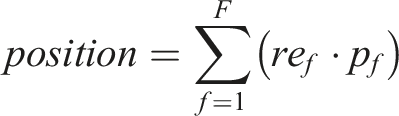
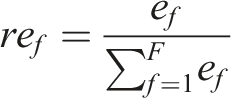
A party’s shift on the migration issue from quarter t0 to quarter t1 is given by the difference between its position at t0 and its position at t1

In the above calculation, shifts toward a more negative position and shifts toward a more positive position cancel each other out when occurring in the same time period. The extent to which a party has shifted its position is obtained by summing up the absolute shifts at the frame level
The shifts on each frame can be retraced either to a change in the relative emphasis with which the party mentions this frame (emphasis-based change on the frame level, EBC f ), to a change of position on this given frame (opinion-based change on the frame level, OBC f ) or to a combination of both scenarios.
In the first case of a party only changing the relative emphasis of a frame without changing its position on this frame, that is, given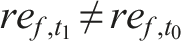
and
the contribution of this frame-level shift to the shift on the issue overall is purely due to a change of emphasis, which means that
In the second scenario, where the party changes its position on the frame but uses this frame with the same relative emphasis as before, that is, given
and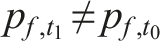
the contribution of this frame-level shift to the shift on the issue overall is only due to a change of position, which means that
Finally, when a party shifts both the relative emphasis of a frame in its communication, and the position on this same frame, that is, given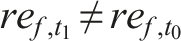
and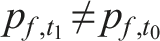

Similarly, the shift on a specific frame is calculated assuming that the party only shifts the position of the frame OBCcounterfactual
f

In a second step, the residue between the sum of these counterfactual shifts and the actual frame-level shift is determined by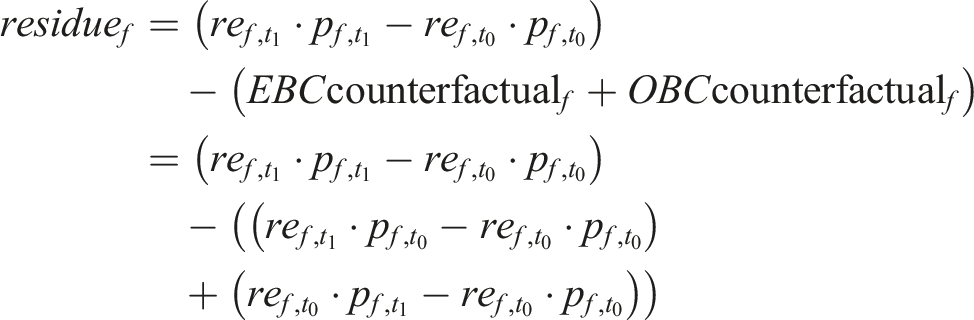
In order to obtain an estimation of the contribution of EBC
f
and OBC
f
to the party’s shift, the residue is equally distributed between both components. The contribution of emphasis-based change to the shift on a specific issue is thus estimated as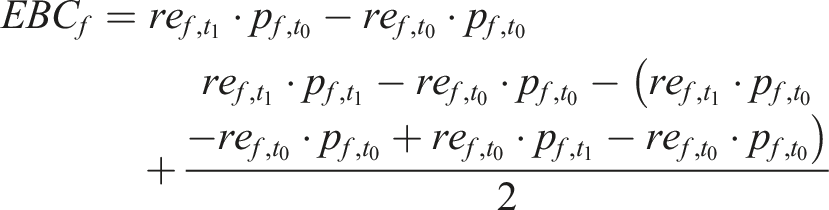
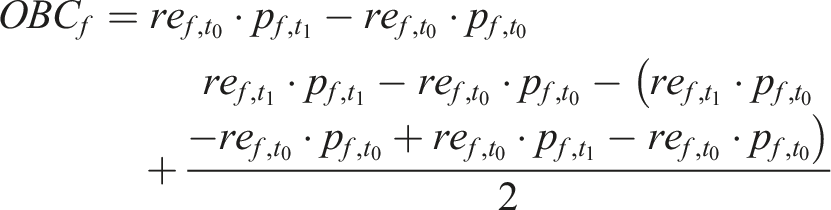
The contribution of emphasis-based change on a party’s shift on the migration issue is obtained by adding all emphasis-based changes at the frame level. Once again, the main interest lies within the amount of total position change that can be attributed to changes in emphasis. As a consequence, the sum is calculated based on the absolute values of frame-level changes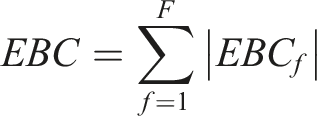
Respectively, the contribution of opinion-based change on a party’s position shift on the migration issue is the sum of all opinion-based changes at the frame level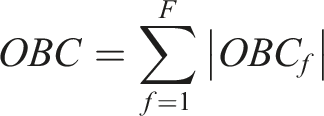
5. Results
Before showing the results regarding the contribution of opinion-based versus emphasis-based changes on parties’ position shifts, the question is whether parties indeed shift their positions on the migration issue.
5.1. Parties’ position shifts on the migration issue
Figure 1 shows the evolution of the mean quarterly issue position of each party between 2007 and 2016 using smoothed conditional means, i.e. estimating a party’s mean position conditional to the number of datapoints. We first notice the obvious outlier, the Swiss People’s Party (SVP). This party has a very stable position throughout the entire period, continuously advocating for a restrictive position on migration. This is not very surprising, as migration is one of this party’s core issues since its programmatic change in the late 1990s. All other parties display greater volatility in their mean positions on migration. Swiss parties’ mean quarterly position on the migration issue 2007–2016. Note: Smoothed conditional means obtained with the loess method (95% confidence intervals).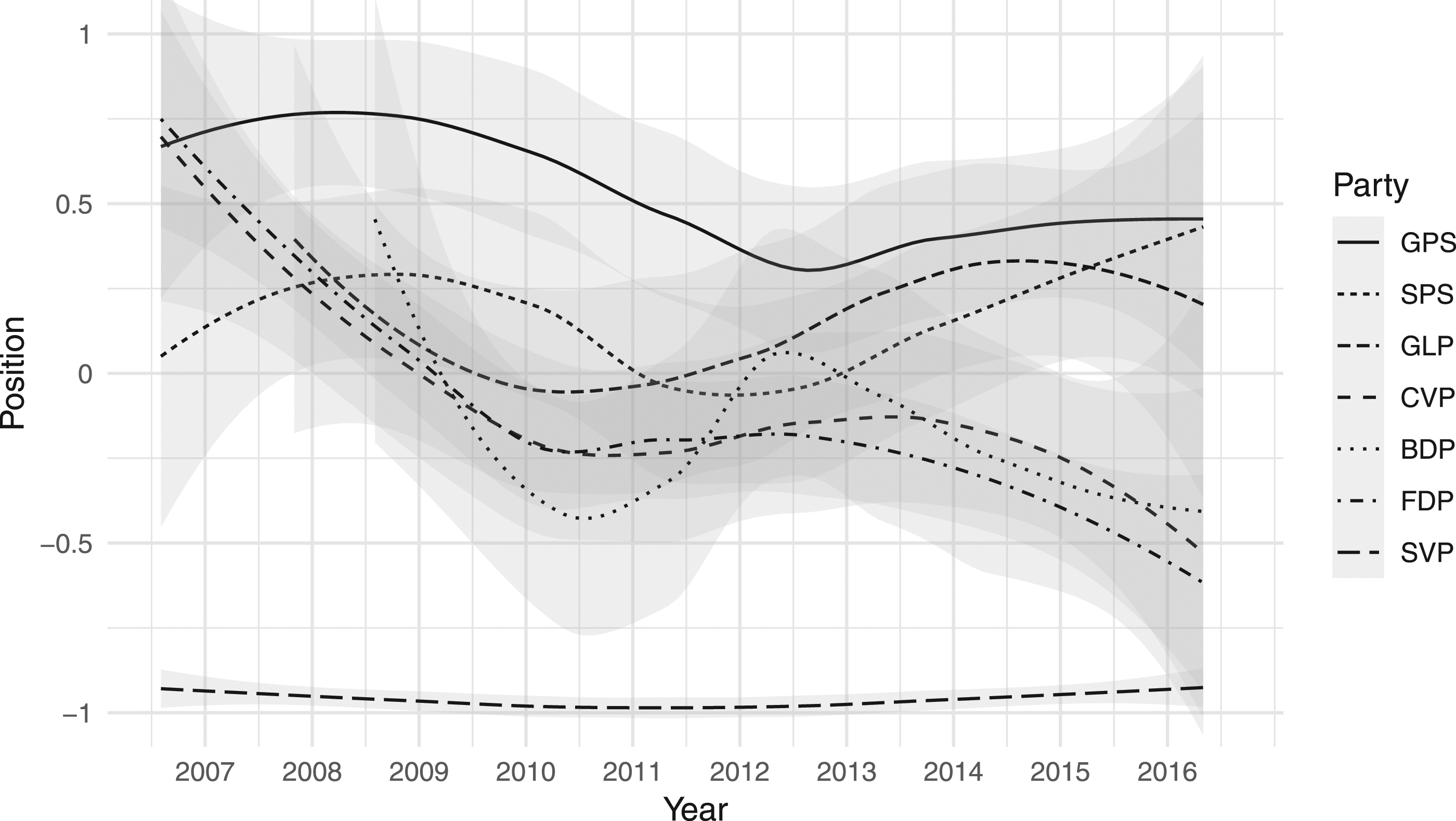
On the left side of the left-right divide, the Green Party (GPS) shifts from a very positive position at the beginning of the analyzed period toward a position defending the status quo (value = 0), while generally defending an overall more liberal tone than other parties. Especially near the end of 2010, when Swiss citizens vote on the popular initiative “For the expulsion of criminal foreigners,” the GPS communicates about migration in a very positive tone. During the Syrian refugee crisis of 2015, the GPS, together with the Green Liberal Party (GLP), takes a clear stand in favor of refugees, appealing to people’s solidarity and humanitarian values. After a dip toward a status-quo position at the beginning of its existence, the GLP displays a slight trend toward a more liberal position on migration toward the end of the analyzed period, aligning with the other left-of-center parties. The Social Democratic Party’s (SPS) mean position on migration fluctuates between a moderately liberal or positive stance on migration and defending the status-quo. After 2009, the party moves toward a status-quo position, before adopting a more positive position again starting in late 2013. This might be linked to the SPS’s reaction to the outcome of the popular initiative “Against mass immigration” in early 2014, when, it mostly blames companies for using cheap labor and turning public opinion against immigrants, thus trying to reconcile its labor union background with its current culturally liberal rhetoric. During the last 2 years under study, the SPS adopts a moderately positive position on migration.
The opposite is true for the two major parties of the moderate right, the Liberals (FDP) and the Christian Democrats (CVP), who have moved toward a more restrictive or negative position on migration over the last 10 years. While still moderately positive in 2007, the CVP’s position takes a negative turn in connection with the popular initiative on the ban of minarets in 2009. The party appeals to reject the initiative on the grounds of religious freedom, but nevertheless draws attention to certain problems it attributes to the Muslim faith or Muslim immigrants. Before early 2014, the party campaigns for the rejection of the popular initiative “Against mass immigration” together with the FDP, and thus adopts a more positive position on migration. However, once the initiative is accepted and the CVP publicly acknowledges, together with the other right-of-center parties, that citizens’ concerns and fears of immigration need to be taken seriously, the party’s mean position on migration becomes moderately restrictive again. The FDP also displays a clear trend toward a more restrictive position on migration. As seen with the CVP, the party still defends a rather liberal position in 2007 and 2008, but grows increasingly negative, advocating for an obligation for foreigners to integrate into Swiss society. The party also starts making a clear distinction between immigration from other OECD countries, which is considered positive and beneficial for the Swiss economy, and immigration from non-OECD countries, which the party would like to restrict. In 2012, the change in party leadership does not seem to greatly impact the general trend toward a more restrictive position on migration, which continues after 2014. The Conservative Party (BDP), despite starting out with a liberal position on migration after its secession from the SVP, also displays a clear trend toward a more negative position, aligning with the other right-of-center parties.
The results show that most parties do not hold the exact same position on migration during the analyzed period; parties’ positions fluctuate. While there is not much mean volatility among the left-of-center parties, the parties on the moderate right display a steady position shift over the analyzed 10-year period. In order to assess the magnitude of this phenomenon, parties’ position shifts on the migration issue need to be assessed in absolute terms. Figure 2 displays Swiss parties’ absolute position shifts from one quarter to the next. Swiss parties’ mean quarterly absolute position shift on the migration issue 2007–2016. Note: Smoothed conditional means obtained with the loess method (95% confidence intervals).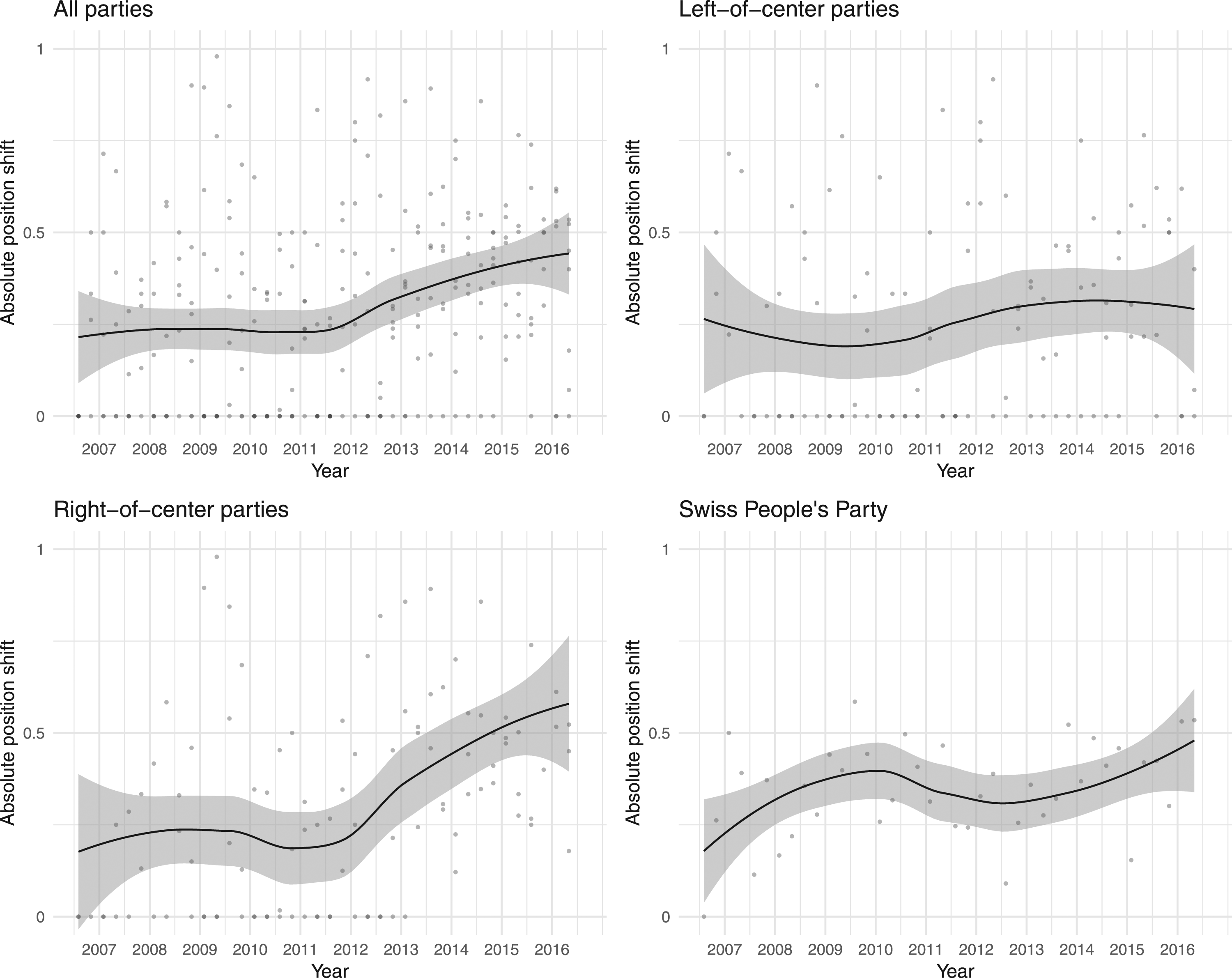
Looking at the mean general trend for all parties, the absolute position shifts on the migration issue are rather moderate in the first half of the analyzed period, but get accentuated during the second half. Left-of-center parties’ absolute position shifts on the migration issue move around an average of 0.25 points, which, on a scale from −1 to 1, represents a rather moderate volatility. This reflects the findings seen in Figure 1 above. Indeed, left-of-center parties, while defending liberal-leaning positions on migration all along, still shifted their positions on the issue. Meanwhile, right-of-center parties display a much greater volatility, especially during the second half of the 10-year period under scrutiny. Indeed, as already noticed in Figure 1 above, the moderate right’s position on migration becomes increasingly restrictive, its average absolute position shift even exceeding 0.5 points. On the conservative right, on the other hand, the Swiss People’s Party only displays a rather moderate volatility, defending, as seen in Figure 1 above, a very negative position on the migration issue during the entire time period.
Having found that parties indeed shift their positions in the migration issue, the question remains as to how these position shifts are performed. Do parties indeed change their opinion on different frames regarding migration, or do they change the relative emphasis of certain frames in order to signal a position shift on the issue? The next section disentangles the contribution of emphasis-based change and opinion-based change to Swiss parties’ overall position shift on the migration issue.
5.2. The contribution of emphasis-based versus opinion-based change
The previous section established that Swiss parties shift their positions on the migration issue during the 10-year period under consideration. While the moderate right seems to have most clearly shifted its positions on this issue, all parties show a certain degree of positional volatility when the absolute quarterly position shifts are considered. Building on the work by Meyer and Wagner (2019), this paper argues that a party’s position shift on a specific issue can be a result of either the party shifting its position on one or several frames (opinion-based change, OBC), the party shifting its emphasis of the different frames used regarding the issue (emphasis-based change, EBC), or a combination of both strategies. Parties are expected to prefer the latter strategy, as it allows them not to be perceived as flip-flopping, which could prove detrimental in electoral terms (Jones, 1994; Meguid, 2005, 2008).
The results show that parties indeed prefer to shift the relative emphasis of frames instead of shifting their frame-level positions. As shown in Figure 3, emphasis-based change systematically contributes more importantly to parties’ shift on the migration issue than opinion-based change, which lends support to the hypothesis. Contribution of emphasis- and opinion-based change to parties’ mean quarterly absolute position shift on the migration issue 2007–2016. Note: Smoothed conditional means obtained with the loess method (95% confidence intervals).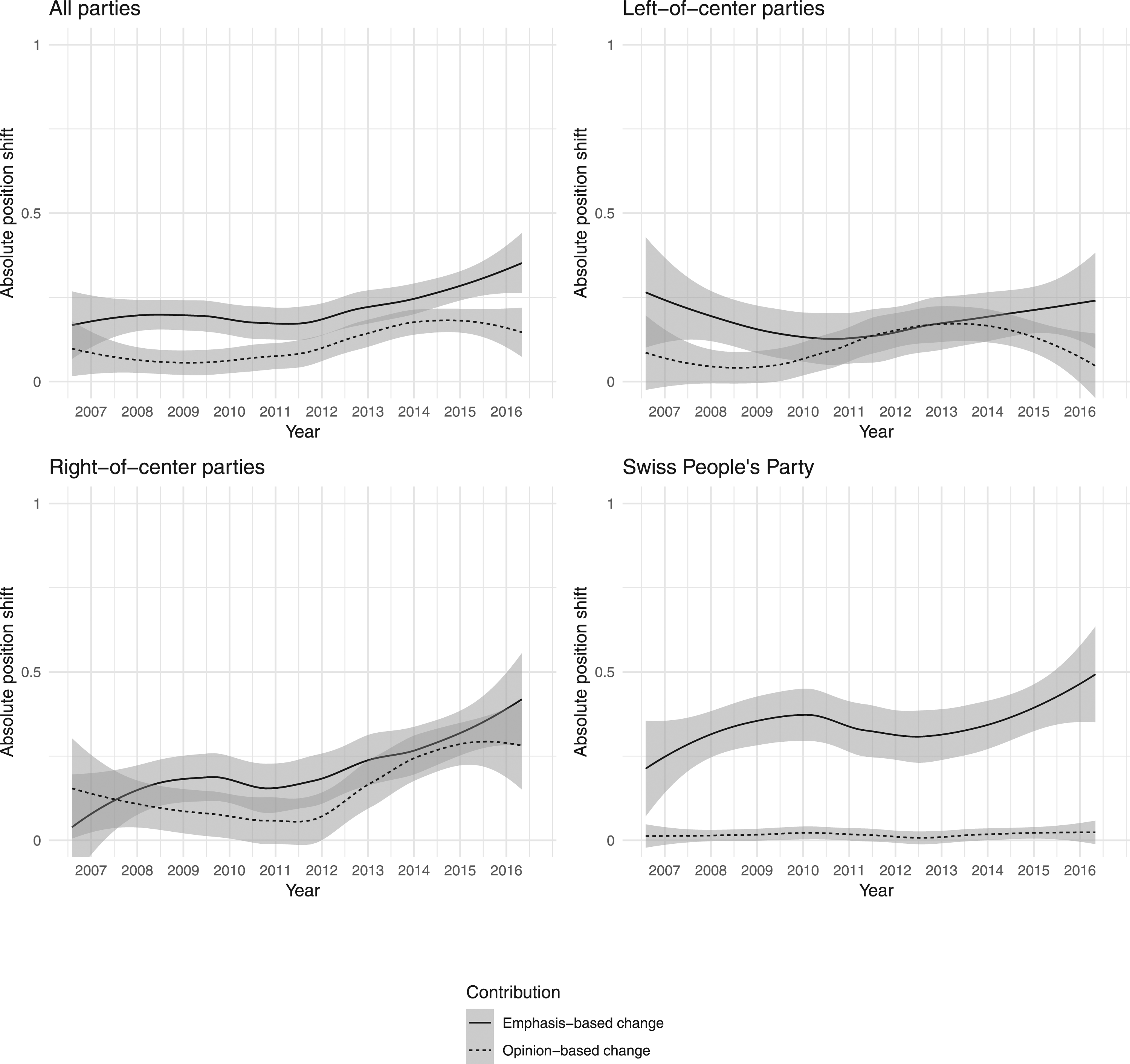
Looking at all parties’ average emphasis-based and opinion-based change on migration, the results show that the level of emphasis-based change is systematically higher during the entire period under investigation, and thus contributes more importantly to parties’ absolute quarterly shifts on this issue than opinion-based change. The same holds true when focusing on left-of-center parties, with a small exception around 2012 when the position shift on the migration issue seems to be due both to emphasis-based and opinion-based change to almost equal extents. Opinion-based change seems to contribute more importantly to right-of-center parties’ position shift on the migration issue. Certainly in the second half of the studied 10-year period, parties on the moderate right shift their frame-level positions more extensively, however still preferring to shift the relative emphasis of different frames in their communication on migration. In contrast, the Swiss People’s Party displays a remarkably low level of opinion-based change, which means that this party almost never uses the same frame to advocate a different position on the issue. Virtually all of this party’s position shift on the migration issue can be attributed to emphasis-based change. Since it can be expected that the SVP pays close attention to maintaining a high public credibility regarding one of its core issues, this result further strengthens the assumption that using the strategy of emphasis-based change allows a party to uphold this credibility when shifting its position on this issue.
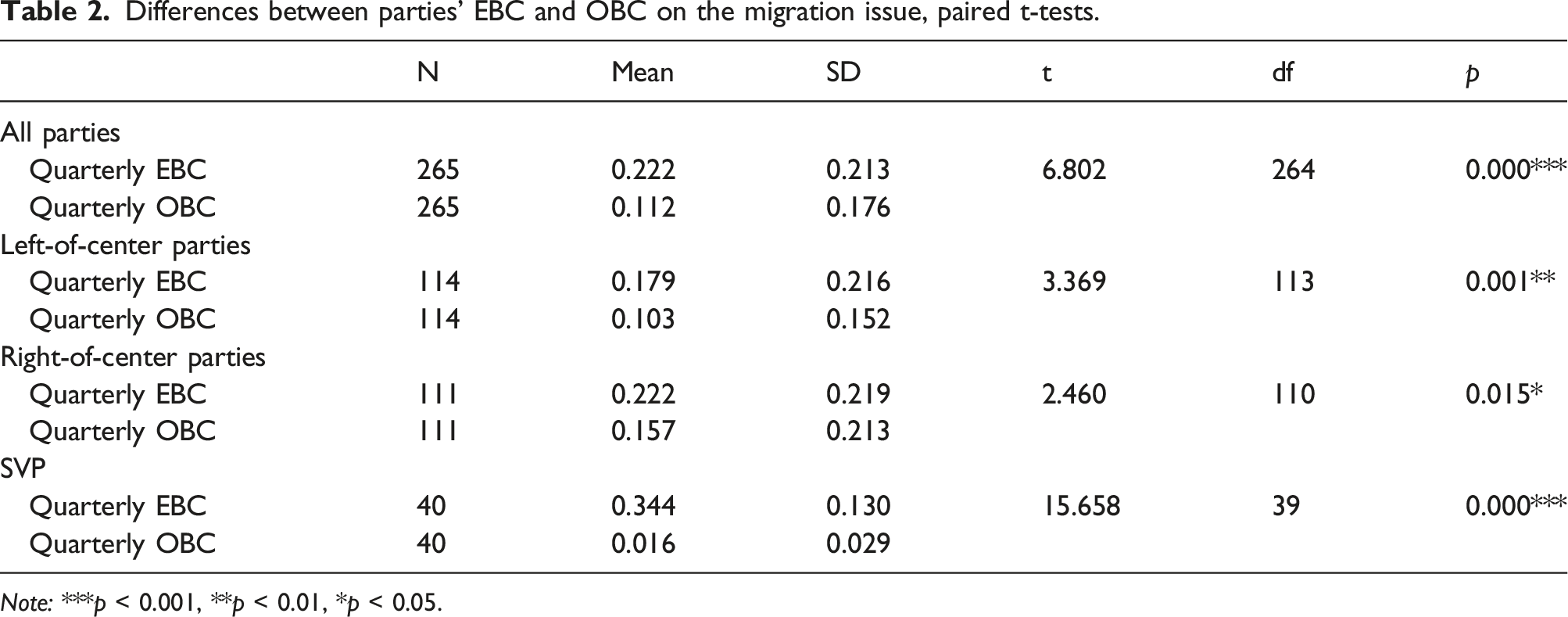
Differences between parties’ EBC and OBC on the migration issue, paired t-tests.
Note: ***p < 0.001, **p < 0.01, *p < 0.05.
6. Conclusion and outlook
Political parties face a dilemma when confronted with a situation that would require them to change their position on an issue. The aim of this paper is to understand how parties proceed when shifting their issue positions. This paper puts forward a model combining positional and framing approaches in order to understand how parties can shift their position on a specific issue without losing face. The model builds on the work by Meyer and Wagner (2019) and states that a party’s position shift on a specific issue can be a result of either the party shifting its position on one or several frames with which it addresses the issue (opinion-based change), the party shifting its emphasis of the different frames (emphasis-based change), or a combination of both strategies. Parties are expected to resort more often to emphasis-based change than to opinion-based change, that is, to changing the relative emphasis of the different frames with which they address an issue instead of changing their position on one or several frames. Indeed, using this former strategy allows parties to maintain a certain level of consistency in their communication on an issue, since they do not signal to have changed their opinion, but merely their focus of “[…] what is at issue.” (Gamson and Modigliani, 1989: 3; emphasis added).
This expectation is tested for the case of the migration issue in Switzerland. Drawing on a corpus of 8790 press releases issued by Swiss parties between 2007 and 2016, rhetoric-based estimates of party strategies regarding their position shifts on the migration issue are analyzed. Despite parties having shifted their position on the migration issue to different extents over the analyzed 10-year period, the results show some clear general trends. As could be expected, the main driver of the migration issue, the Swiss People’s Party, holds a relatively constant restrictive position throughout the entire period. The other right-of-center parties display a rather important shift toward more restrictive positions. For left-of-center parties, this shift is more moderate, although they also defend moderately more restrictive positions in 2016 than in 2007. For all party families, however, the contribution of emphasis-based change to these position shifts on the migration issue is systematically and significantly more important than the contribution of opinion-based change. In other words, parties indeed change their positions on frames to a lesser extent than they shift the relative emphasis of different frames with which they address the migration issue. This confirms the expectation that parties, when shifting their position on an issue, rather try to draw the public’s attention toward another set of arguments that allows for a different position, instead of signaling that they changed their opinion on this issue.
The results presented in this analysis provide further insights into parties’ issue competition, and indicate how parties might succeed at shifting their positions on issues without losing face. The differentiation between two strategies parties can apply to shift their position on an issue changes our implicit understanding of what a position shift entails. Indeed, our intuitive understanding of a position shift implies an opinion change or change of mind. This paper shows that this implicit understanding does not necessarily correspond to how parties actually shift their positions on issues. On the contrary, parties try to avoid signaling that they changed their opinion on an issue, preferring to shift the focus of their communication onto other considerations concerning the issue.
Furthermore, this paper also fuels the debate about the complex theoretical and empirical relation between frames and positions. While some scholars argue that specific frames entail a single position (e.g., Entman, 1993), recent empirical research, based partly on the landmark study by Gamson and Modigliani (1989), argues that using a frame not automatically implies arguing for a specific position (Bjarnøe, 2016). The results presented in this paper give further reason to believe that frames indeed allow for different positions, and that parties might exploit this flexibility to adjust their positions on issues.
While this paper offers a stepping stone toward a better understanding of how parties handle situations where they might need to diverge from previously communicated priorities and positions—either because of changing party competition or shifts in public opinion, research opportunities in this area are far from exhausted. Since these results stem from a single-case study, it goes without saying that more comparative research is needed in order study the phenomenon of how parties shift their positions on other issues. Indeed, studying a highly salient issue such as migration offers advantages in terms of, for example, triggering events parties might respond to and the amount of empirical material at hand. However, there is little reason to believe that the obtained results should differ significantly when looking at other issues. While public scrutiny might be less intense on other issues, parties most likely still do not want to be perceived as “flip-flopping.” Furthermore, while Switzerland’s multi-party system offers many advantages for scholars studying party competition, there is no reason to assume that the expectation based on the theoretical model put forward in this paper should not apply in other contexts. Indeed, parties across all electoral systems are likely to fear losses in their credibility. In addition, comparative research comprising a greater amount of different parties might shed some light on factors influencing a party’s strategic choices when shifting its position on issues such as party type and internal organization (as suggested by Meyer and Wagner (2019)), or public opinion. Indeed, the findings in the case of Switzerland trigger the question as to when, if at all, parties might shift positions according to our implicit understanding, that is, through an opinion-based change. This might be the case in a situation where a party wants to draw attention to its position shift on an issue. Indeed, as Meyer and Wagner (2019: 2) note, emphasis-based change “[…] may be less likely to be noticed by […] voters, potentially reducing its electoral benefits.” Thus, when a party considers the benefits of voters noticing is position shift to be greater than the costs of being perceived as holding an inconsistent position, it might be expected to choose to shift its position based on an opinion-based change.
Finally, the premises of this research on how parties change their position on issues are strongly based on parties anticipating voters’ reactions. Therefore, it is important to study whether their strategies indeed yield at the expected outcome, namely, shifting positions while maintaining public support. Scholars of political communication and public policy have been able to show that changes of issue framing in public media discourse leads to position shifts in public opinion (e.g., Baumgartner et al., 2008), but research in the realm of party communication is scarce. In this sense, more research is needed to understand which impact the use of either one strategy (opinion-based vs. emphasis-based change) might have on public opinion and parties’ electoral fortunes. In this sense, this research contributes to the growing literature on mass-elite linkages.
Footnotes
Acknowledgements
I would like to thank Thomas Meyer, Pascal Sciarini and the panel participants at the American Politican Science Association’s Annual meeting 2019 for their comments on previous versions of this paper. An especially warm thank you to Florian Feddersen for his help with the mathematical formulas.
Declaration of Conflicting Interests
The author(s) declared no potential conflicts of interest with respect to the research, authorship, and/or publication of this article.
Funding
The author(s) received no financial support for the research, authorship, and/or publication of this article.
