



Abstract
What effect has the COVID-19 pandemic had on the political donations gender gap in Canada? Drawing on data from two national surveys conducted in May and August 2020, as well as Elections Canada data from 2019 and 2020, we find an overall decline in contributions to political parties and a reduced but still significant gender gap, with women less likely to donate to political parties than men.
A variety of research has found that political participation across many contexts is characterized by a significant gender gap (Annesley et al., 2019; Kitchens and Swers, 2016; Kittilson, 2016) that extends to party donations, with women less likely to donate compared to men (Tolley et al., 2020). What effect has the COVID-19 pandemic had on this gender gap? We answer this question by focusing on the extent to which men and women donated to Canadian political parties during the first year of the pandemic. Given that women are more likely to be employed in precarious work and to shoulder more of the domestic responsibilities (Goodyear-Grant, 2020; Young, 2010), we expect that as governments moved to impose mobility restrictions and close schools and the economy, that the gender gap widened. Drawing on individual-level data from the May 2020 Democracy Checkup Survey (Harell et al., 2020), the August 2020 Recovery and Resilience Survey and Elections Canada records, we find that a political donations gender gap exists, albeit reduced compared to non-pandemic times and despite an overall decline in contributions from men and women.
Why do individuals donate?
Francia et al. (2003: 43) identify three categories of political donors in US congressional elections. “Investors” see politics as a marketplace (Ansolabehere et al., 2003; Gordon et al., 2007) and donate in hopes of convincing policymakers to serve their narrow and mainly economic interests. “Ideologues” seek to “advance their positions on salient issues” by supporting candidates who share their issue position, while “intimates” are motivated by their friendship or connection to a particular candidate or a desire to socialize with candidates and celebrities (Francia et al., 2003: 44). Distinguishing between the motivations of interest groups and individuals, the former donates in hopes of gaining direct access to policymakers while the latter has more diverse and idiosyncratic reasons for giving (Barber et al., 2016: 235; Francia et al., 2003).
The socio-demographic characteristics of political donors can also motivate donations. A variety of studies have found that donors are overwhelmingly well-educated, upper-class, middle-aged white men who identify as partisans (Hill and Huber, 2017). Verba et al. (1995: 192) find that family wealth strongly correlates with an increased likelihood of donating larger amounts of money, which in turn contributes strongly to the “representational distortion” that comes from political contributions (Francia et al., 2003: 19).
The literature on the relationship between gender and political contributions is relatively modest in size and offers mixed results. Despite the “feminization of poverty thesis” that suggests “poorer women will be less able to donate money or engage in resource-intensive activities” (Beauvais, 2020: 321), Ponce and Scarrow (2011: 1008) found that age and education had a positive effect while marital status, income, and gender had no effect on donations in Europe. Similarly, Thomas’s (2013: 220) analysis of the 2011 Canadian Election found no statistically significant relationship between gender and the likelihood of having donated in the last 12 months. In contrast, more recent work on campaign finance for state legislators in the USA between 1990 and 2010 found that men make up the majority (approximately 80%) of the donor base (Barber et al., 2016). As well, individuals who donated to congressional candidates were overwhelmingly male (Francia et al., 2003) with women categorized as “occasional donors” who tended to give smaller amounts of money to fewer candidates. (Francia et al., 2003: 29). Work published last year on Canadian donations found a similar pattern. Collecting and merging Elections Canada administrative data with candidate data from 1993 to 2018, Tolley et al. (2020) found a significant “gendered donations gap, with men contributing more money to candidates and political parties. This gap has narrowed, but remains large, and it has persisted over the two-and-a-half decades that we examine” (Tolley et al., 2020: 3–4).
Giving during a recession
Financial contributions, whether to charities or political parties/candidates, tend to decline during economic downturns and crises as lower incomes reduce the discretionary funds available for charitable giving (Rooney and Bergdoll, 2020). A recession may also shift attitudes around donating or increase feelings of uncertainty among those who regularly give (Meer et al., 2017). For example, political contributions to the Virginia General Assembly candidates in 2011 declined by 17% compared to 2007, likely in response to the 2008 financial crisis (VPAP, 2011). Similar results have been found in studies on charitable giving and philanthropy (America, 2020; Reich and Wimer, 2012; Rooney and Bergdoll, 2020; Waldie, 2011).
Expectations
COVID-19 has generated unprecedented policies aimed at limiting the spread of the virus, from closing schools and international borders to requiring face masks. Data from Statistics Canada (Goodyear-Grant, 2020), combined with findings from the existing literature (Annesley et al., 2019; Kitchens and Swers, 2016; Kittilson 2016), suggest that the normal political participation gap in favor of men is likely to widen during the pandemic, and the lack of resources that drives this gap is likely to be exacerbated by the pandemic given that women have suffered greater job losses than men (Alon et al., 2020; Goodyear-Grant, 2020; Watt, 2020). Whereas the recession prompted by the 2008 financial crisis heavily impacted male dominated occupations, the jobs affected by the pandemic have been those typically dominated by women. From February 2020 to March 2020, almost 62% of job losses in Canada were experienced by women (Watt, 2020). As well, the closure of schools and the economy has meant that many parents have had to work from home while simultaneously taking care of their children. On average, women are much more likely than men to take on child-care responsibilities (Alon et al., 2020; Goodyear-Grant, 2020) and so are left with less time and money to engage politically (Solt, 2008; Verba et al., 1995). As a result, we expect the following:
Data and methods
Summary statistics.
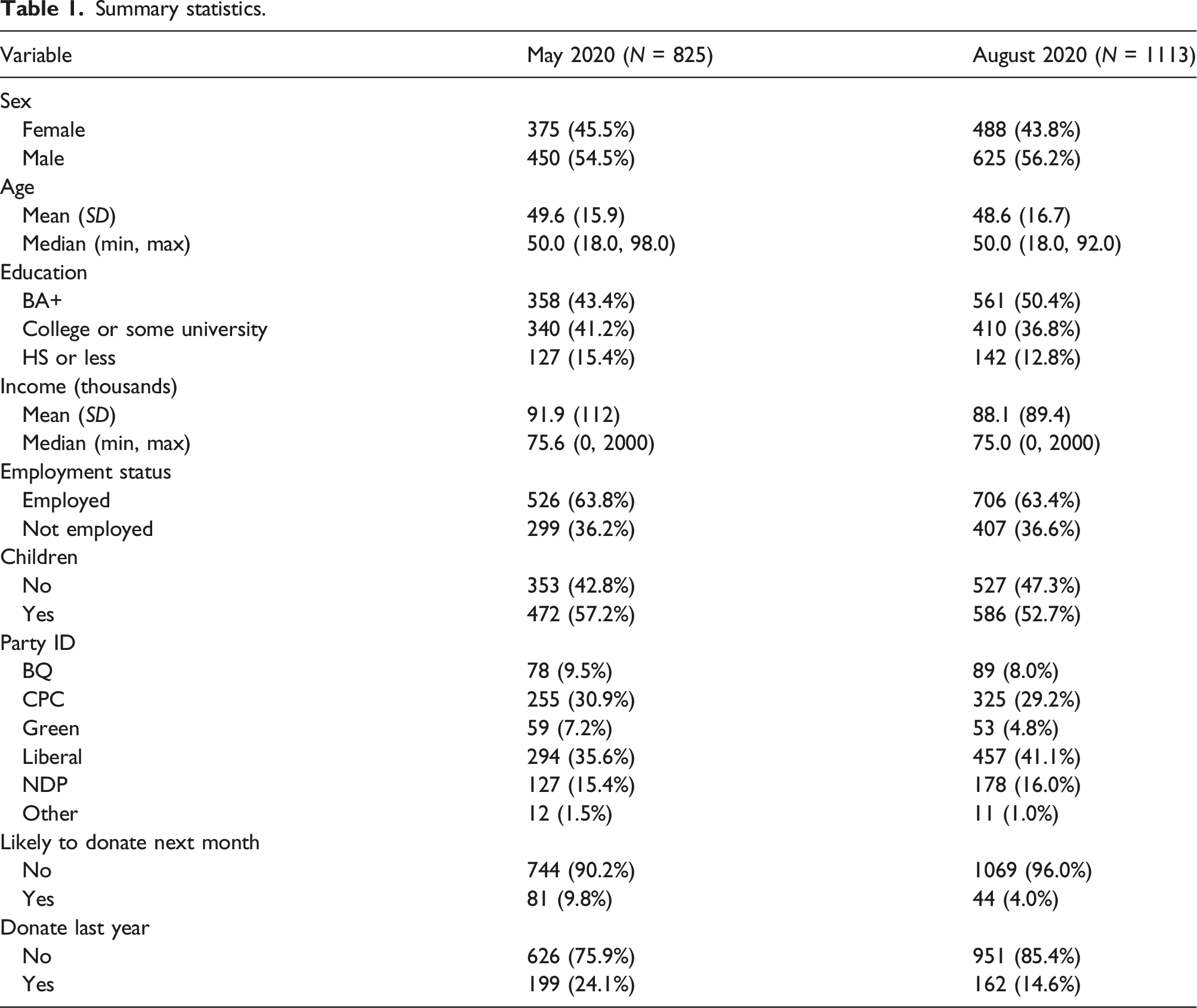
To assess the robustness of our results, we collected and analyzed individual donations to the three main political parties in Canada: the Liberals, Conservatives, and NDP. The data are taken from Elections Canada 3 and include information on the donor (e.g., name, postal code, and city) and the donation itself (e.g., amount, date of donation, and the party to which it was given). Following Tolley et al. (2020), we use the “gender” package in R (R Core Team, 2021) to predict the gender of donors based on their first names (Mullen, 2020). 4
Our results are from after the initial outbreaks in China in late 2019 and in Canada in early 2020 and the declaration of a global pandemic by the World Health Organization and closing of the US/Canada border in March 2020 (Bronca, 2020).
Results
Donations to a political party.
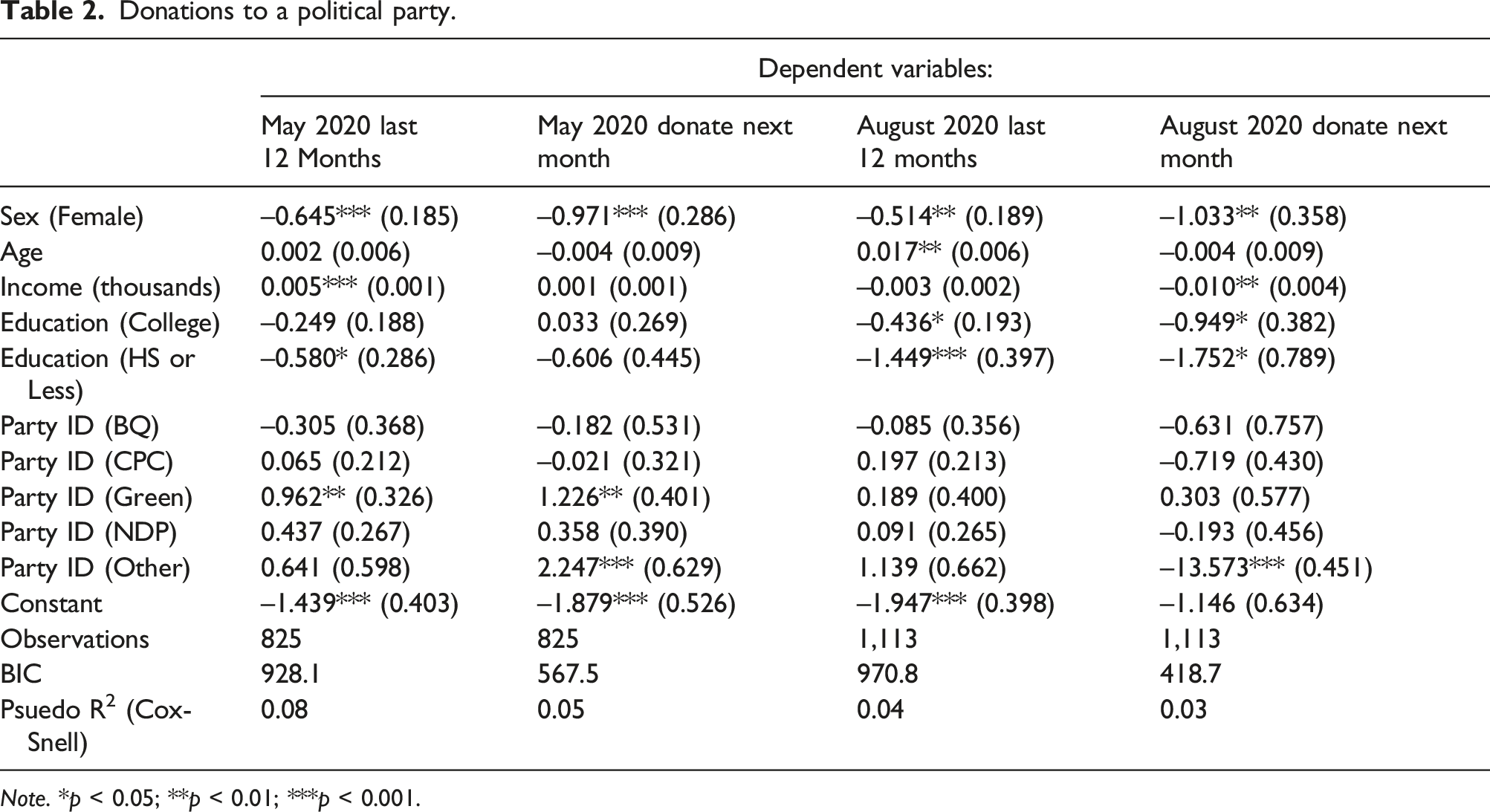
Note. *p < 0.05; **p < 0.01; ***p < 0.001.
Figure 1 illustrates the predicted probabilities
6
of donating to a political party or candidate given the gender of the respondent in May 2020. The panel on the left corresponds with the question regarding donations in the last 12 months (Model 1 in Table 2), and the panel on the right corresponds with the predicted probabilities for those likely to donate in the next month (Model 2 in Table 2). Predicted probabilities of donating to a party by gender (May 2020).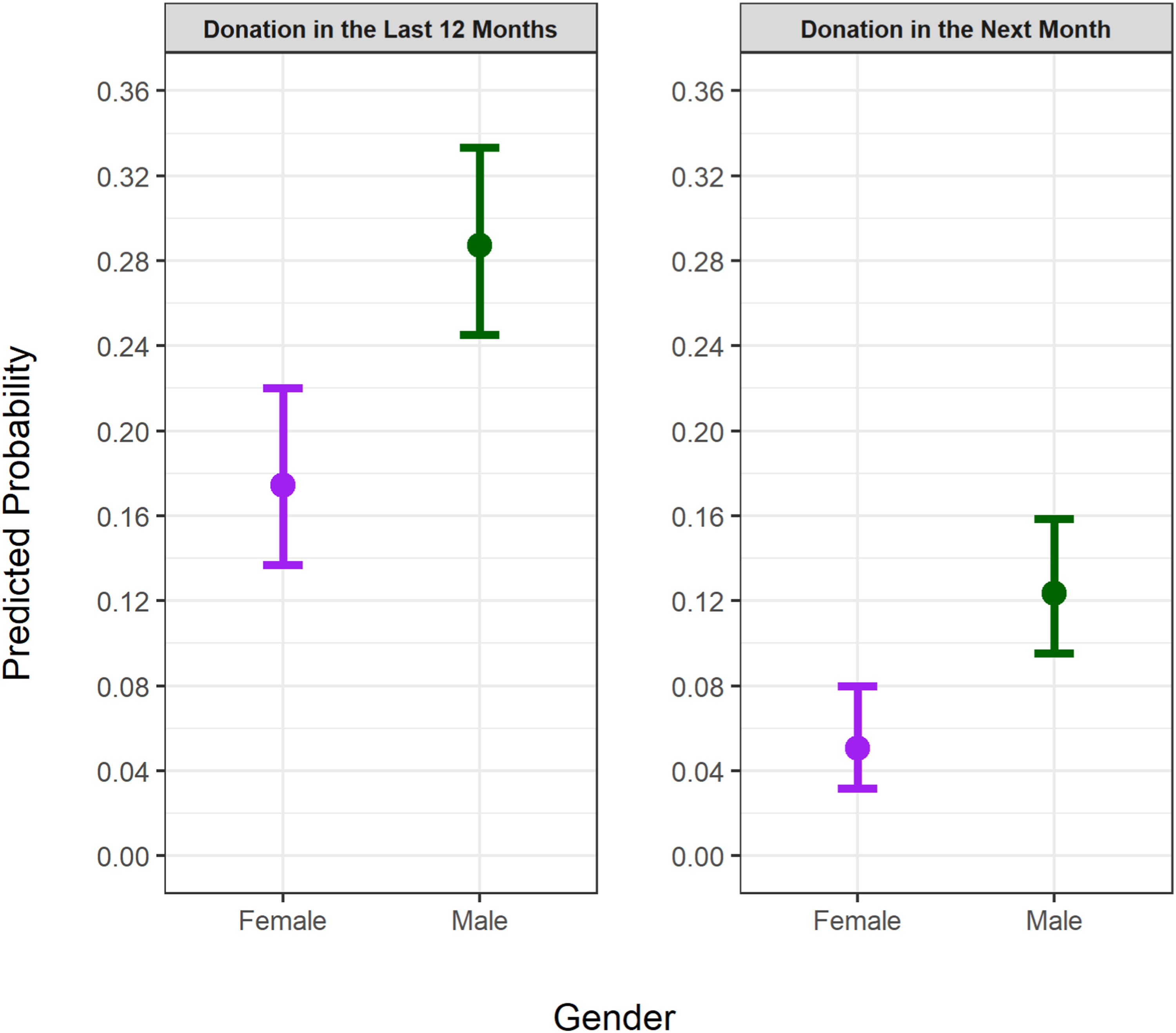
Figure 2 illustrates the predicted probabilities of donating to a political party or candidate given the gender of the respondent in August 2020. The panel on the left corresponds with the question regarding donations in the last 12 months (Model 3 in Table 2), and the panel on the right corresponds with the predicted probabilities for those likely to donate in the next month (Model 4 in Table 2). Predicted probabilities of donating to a party by gender (August 2020).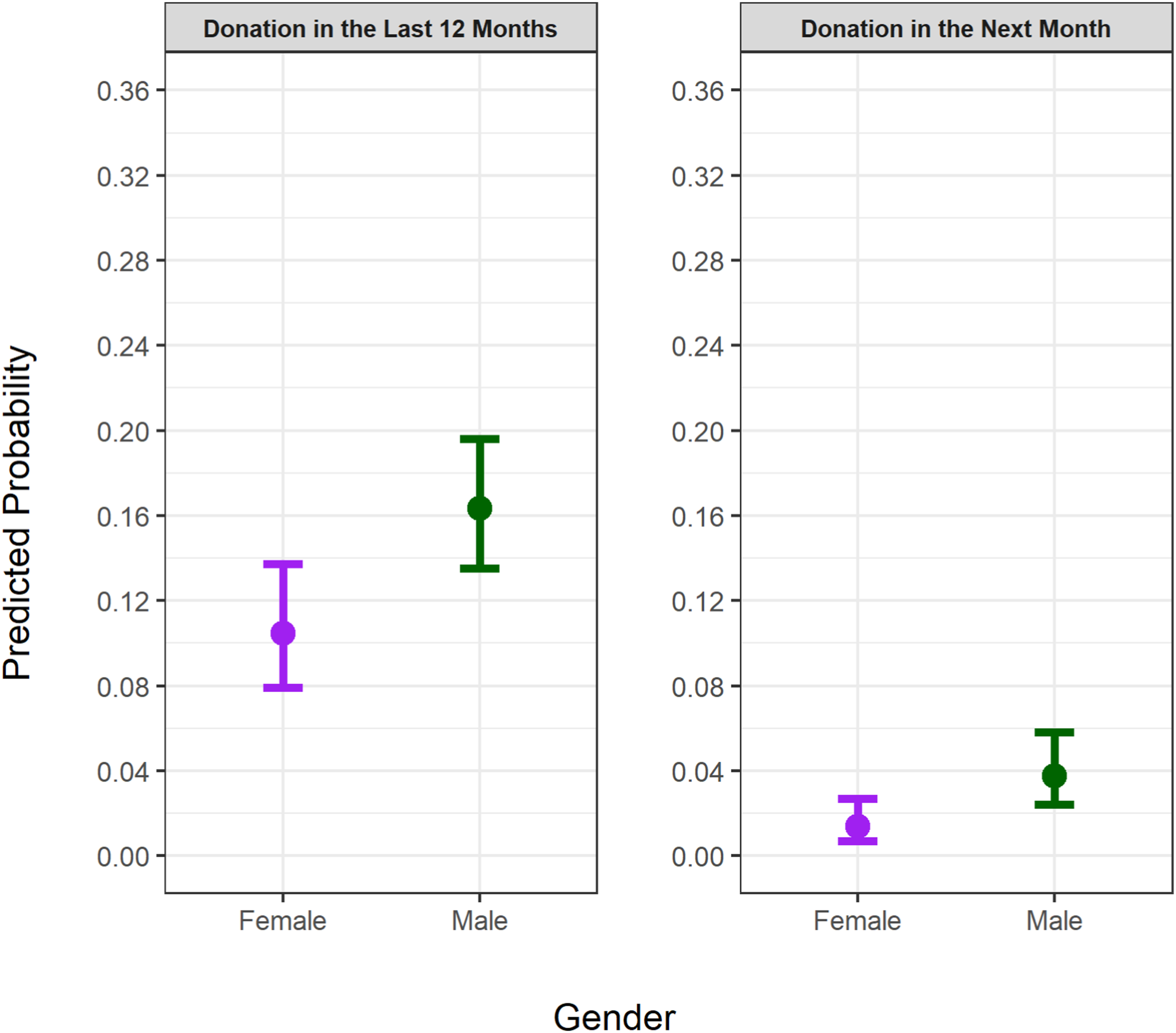
Predicted probabilities of donating to a party by gender.

Note. The 95% confidence intervals are shown in the square brackets.
Our results also suggest a slight narrowing of the gender gap in the likelihood of donating in late May/early June versus late August/September (corresponding to the question on donations in the next month). The gender gaps between the predicted probabilities for these two time periods are 0.07 and 0.03, respectively, suggesting the opposite of what we expected in H1. 7
To explore the robustness of our results, we analyze donation patterns by gender using actual donation records collected by Elections Canada. Figure 3 demonstrates the existence of a donation gender gap in 2019 and 2020, confirming the findings of Tolley et al. (2020) whose analysis of donation records ended in 2018. Women contributed 37% of donations in 2019 and 35% of donations in 2020. In an effort to validate our findings, we also extended Tolley et al. (2020) figure that illustrates the predicted probability that a donor is a woman (shown in Supplementary Appendix Figure 1-A).
8
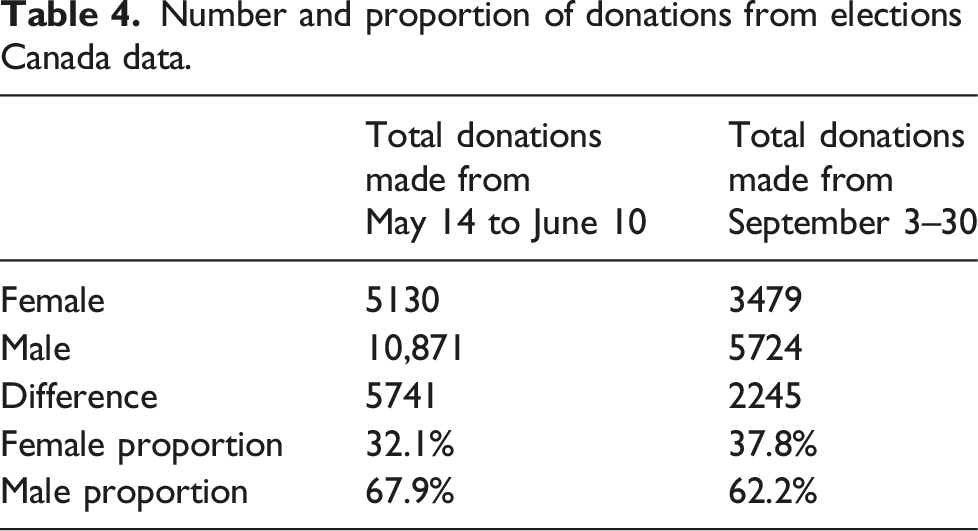
Of particular interest is the 28-day period after the August survey (corresponding with the “donation in the next month” question on the survey). This is where we might expect the gendered donation patterns to narrow slightly, given our results above. Consistent with those results, Table 4 shows that the gap between the number of donations from men and women in the 28 days following the August survey
9
is narrower than the gap in 28 days that followed the May survey
10
(5741 vs 2245, respectively). Proportionally, women were responsible for 32% of donations in the month after the May survey and 38% of donations in the month following the August survey. It is important to note that the donation spike between September and October 2019 is a reflection of the 2019 Federal Election in Canada. Additionally, the peaks in February/March 2020 and April to August 2020 are largely driven by the Conservative Party Leadership race that was postponed in March but resumed in May and concluded in August. Supplementary Appendix Figures 2-A–4-A provide gendered donation patterns for the NDP and the Liberal and Conservative parties. Weekly donations to top 3 Canadian parties, by gender in 2019 and 2020. Number and proportion of donations from elections Canada data.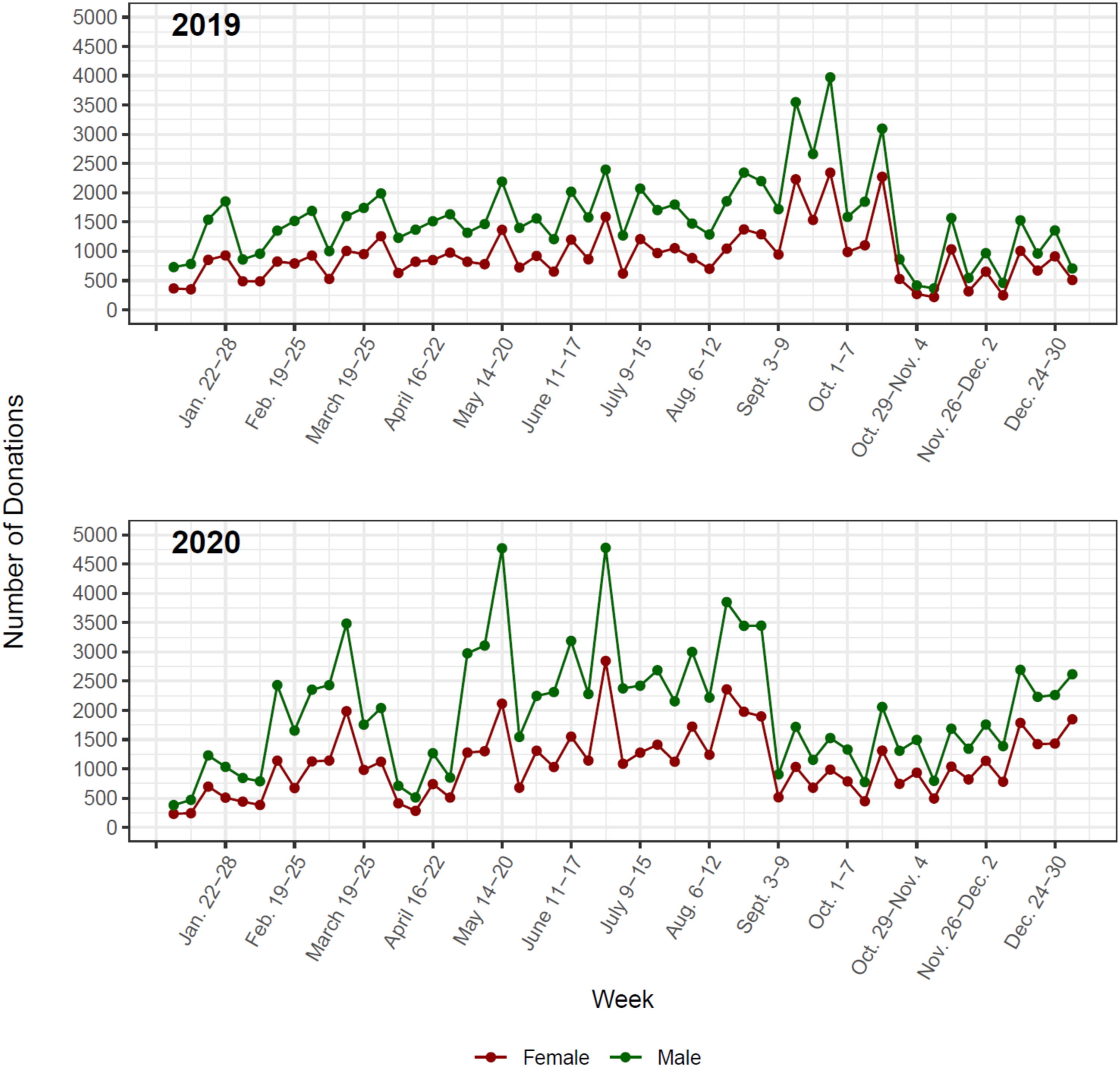
Conclusion
Our results confirm that a gender gap exists when it comes to political donations. Surprisingly, while we expected this gap to widen during the pandemic the opposite seems to have occurred. While we are unable to fully explain this outcome, despite adding controls thought to strongly affect the political representation of women, 11 we take comfort from the fact that our results are broadly consistent with recent literature (Tolley et al., 2020; see Supplementary Appendix Tables 1-A–4-A). Our findings are consistent with Tolley et al.’s argument that the smaller number of women who donate are generally dedicated/motivated givers, while the men who donate includes a larger group of less dedicated donors. 12 During economically difficult periods it may be that this variation in levels of dedication temporarily reduces the political participation gender gap. Future research is needed to confirm this causal mechanism.
To what extent do our findings travel outside of Canada? If Tolley et al. (2020) are right that what matters is the existence of gendered levels of dedication, then our results should travel reasonably well among countries typically grouped with Canada, such as Australia, New Zealand, the United Kingdom, and the United States. Women in these countries also are more likely to be employed in precarious work and to shoulder more of the domestic responsibilities, which means we should likely see similar gendered effects on political donations behavior. On the other hand, the party systems and campaign finance rules vary significantly across these countries, including how much can be donated and the minimum amount that needs to be publicly reported (Mendilow and Phelippeau, 2018). Canada has some of the strictest campaign finance laws in terms of how much can be donated and who can donate (Currie-Wood, 2020). Future comparative research will need to consider these institutional differences when investigating the existence of gendered donation patterns across countries.
Supplemental Material
sj-pdf-1-ppq-10.1177_13540688211047768 – Supplemental Material for Political donations and the gender gap during COVID-19
Supplemental Material, sj-pdf-1-ppq-10.1177_13540688211047768 for Political donations and the gender gap during COVID-19 by Nicole McMahon, Anthony Sayers and Christopher Alcantara in Party Politics
Footnotes
Declaration of conflicting interests
The author(s) declared no potential conflicts of interest with respect to the research, authorship, and/or publication of this article.
Funding
The author(s) disclosed receipt of the following financial support for the research, authorship, and/or publication of this article: This study was supported by Social Sciences and Humanities Research Council of Canada, 435-2019-0964.

Supplemental material
Supplemental material for this article is available online.
Notes
Author biographies
References
Supplementary Material
Please find the following supplemental material available below.
For Open Access articles published under a Creative Commons License, all supplemental material carries the same license as the article it is associated with.
For non-Open Access articles published, all supplemental material carries a non-exclusive license, and permission requests for re-use of supplemental material or any part of supplemental material shall be sent directly to the copyright owner as specified in the copyright notice associated with the article.
