




Abstract
Intra-party democracy calls for party elites being responsive towards party activists. Yet, empirically, we know relatively little about how responsive parties are towards their rank and file and the factors influencing these processes. This article investigates drivers of party responsiveness towards activists, using a novel data source. Following a case study approach, the article analyses how motions submitted at 41 post-war party congresses of the Austrian Social Democratic Party were treated by party elites (n = 3249). Results indicate that elite responsiveness is a means to appease activists when the party underperforms in party competition. Elites vary responsiveness across intra-party groups. They are more ready to accept the demands of those groups that are affected most by the party’s failure to deliver. Party elites are also more responsive towards electorally successful subunits.
Introduction
How power is distributed within political parties is the question that has inaugurated modern party research (Michels, 1949 [1911]). It is important, given the crucial role of parties in providing ‘linkage’ between society and government, in running the machinery of the state, and making public policy. Yet most of the party organization literature examines intra-party power distribution based on parties’ statutory rules, thus focusing on relatively stable formal party institutions. While important, formal rules are rarely deterministic with regard to the outcome of the processes they regulate. Looking beyond these formal rules, we know surprisingly little about the factors conditioning activists’ actual influence in party decision-making. Drawing on the party change literature, this article contributes by developing a more dynamic perspective on intra-party power distribution. We provide rare systematic evidence on the empirical reality of intra-party decision-making and on short-term shifts in the balance of power between party elites and the rank and file over the post-war period.
Using a novel data source, we seek to overcome some of the limitations that the party organizations literature usually faces. We analyse how the party elite treated motions submitted at 41 post-war party congresses of the Austrian Social Democratic Party. Our case study shows that the party elite’s level of responsiveness towards activists is driven by party performance in inter-party competition. Specifically, the less party elites are able to ‘deliver’ in terms of reaching party goals, the more they appease their membership organization by responding to rank-and-file demands. These effects, however, are not uniform across intra-party groups. Rather the party elite differentiates its responsiveness strategically. First, it compensates those groups within the party who are hurt most by a given performance shock. Second, the party elite is generally more responsive towards intra-party groups, who have performed well in electoral competition, thus rewarding valuable groups. In identifying these drivers of elite responsiveness, the article carries important implications in terms of intra-party power and party change.
Intra-party democracy, stratarchy and responsiveness
Ever since Robert Michels (1949 [1911]), the notion that party elites exercise oligarchical control over the parties has been a widely shared assumption in political science and beyond. In this vein, the seminal party models (Duverger, 1954; Katz and Mair, 1995, 2009; Kirchheimer, 1966) suggest a continuous decoupling of party elites’ actions from the preferences of the rank and file. As parties transform from mass organizations to catch-all and cartel parties, intra-party democracy is reduced to empty formalities and party members are degraded to cheerleaders of an ever more powerful party elite. These expectations have shaped much of the party organizations literature in terms of theory, and there are individual empirical studies suggesting that responsiveness is in decline (Hertner, 2015). Yet there is empirical evidence which points into a different direction and the overall picture is at best a mixed one (Enroth and Hagevi, 2018; Krouwel, 2012; Loxbo, 2013; Rohrschneider, 1994; Saglie and Heidar, 2004; Widfeldt, 1999). Rather than increasingly uniform and oligarchic patterns, there seems to be remarkable variance in terms of intra-party democracy across parties, party families and party systems (Pettitt, 2012; Poguntke et al., 2016). Thus, the empirical literature does not support the classic argument of a general decline in intra-party democracy. Rather than gradually monopolizing intra-party decision-making, party elites seem to be sometimes more, sometimes less responsive towards the party on the ground.
While at odds with the classic literature on party models, this is largely in line with the ‘power-sharing arrangements’ described by Cross (2018) as a defining characteristic of party stratarchy. Party stratarchy generally states that the different levels of the party 1 agree to share or divide the authority over key areas of intra-party decision-making (Bolleyer, 2012; Carty, 2004; Carty & Cross, 2006; Cross, 2018; Eldersveld, 1966). In the original formulation of Eldersveld (1966), power-sharing was mainly conceived as a ‘separation of powers’, where areas of mutual autonomy were distributed among the levels of the party. Recent contributions rather stress a model of shared authority, a ‘checks-and-balances’ approach, in which ‘no single level has absolute authority within any of the party’s principal decision-making areas’ (Cross, 2018: 208; also Bolleyer, 2012). Thus, party elites and the party on the ground share decision-making power in all areas, but the specific power equilibria they reach will differ between these areas. Most notably, the balance of power they reach will necessarily be fluid, since all levels of the party will constantly try to increase their influence in any area, however, avoiding to destroy the ‘power-sharing agreement’ as a whole (Cross, 2018). Hence, instead of a party elite one-sidedly marginalizing the party on the ground, elites and activists should constantly engage in a constrained struggle for more authority. Party’s responsiveness towards activists, in this sense, is a function of the current state of the struggle.
The empirical literature has addressed this struggle by focusing on activists’ and party congress delegates’ attitudes with regard to intra-party decision-making (Rohrschneider, 1994; Saglie and Heidar, 2004), studying change in leadership and candidate selection rules (Cross, 2018), by holistically characterizing parties’ decision-making processes (Pettitt, 2012), or by means of focused comparison of a limited number of decision-making processes (Loxbo, 2013). Notwithstanding the relevance of such evidence, what is still missing is studying the dynamics of leadership–activists relations in quantitative terms in the long term. Our article contributes by analysing leadership responsiveness and its causes with regard to policy and party organizational party congress motions. We think that our fine-grained empirical mapping of responsiveness over time is better suited to the stratarchy perspective’s theory of constantly changing power equilibria than the data used hitherto.
Manin et al. (1999: 9) characterize responsiveness as adopting ‘policies that are signaled as preferred’, hence requiring a prior ‘signal’ and subsequent action. Leaders then ‘are responsive to the extent to which their actions follow the preferences signaled’ by the constituency. To be sure, responsiveness may not mean a mechanical acceptance of rank-and-file demands. Discursive engagement with demands may compensate for some substantive concession (Esaiasson et al., 2017; Öhberg and Naurin, 2016). Still, the acceptance of bottom-up demands is generally seen as the core of responsiveness. Hence, the more bottom-up signals lead to substantive acceptance of demands, the greater the responsiveness. This is the approach we follow in our empirical mapping of party responsiveness towards activists. Analytically, we seek to identify the crucial factors responsible for shifting the internal power equilibrium in one or the other direction.
Our study contributes to the party change literature in two ways. On the one hand, any temporary shift of power constitutes internal party change itself; on the other hand, it is a mechanism to bring about change of external party behaviour, in particular with regard to parties’ issue attention and issue stances.
Theory and hypotheses
In trying to understand why party elites vary their responsiveness towards activists, we start building our argument from the literature on party change (Harmel and Janda, 1994; Panebianco, 1988). This literature generally suggests that competitive pressures and performance shocks in particular cause parties to change. Much of this literature takes a holistic view of the party or, in the tradition of Downs (1957), proceeds from parties as teams of leaders. In bringing about party change, party leaders then react strategically to external challenges such as shifts in voters’ preferences, electoral losses or moves of competing parties (Abou-Chadi and Orlowski, 2016; Adams et al., 2004; Fagerholm, 2016; Harmel et al., 1995; Lehrer, 2012; Meyer, 2013; Schumacher et al., 2013; Somer-Topcu, 2009). Yet this perspective leaves out that parties are also organizations. As such, they consist of different layers and groups, have specific mechanisms of decision-making and vary in how power is distributed internally. A few contributions have taken this into account, incorporating such organizational characteristics as independent variables to explain party policy change (Abou-Chadi and Orlowski, 2016; Lehrer, 2012; Meyer, 2013; Schumacher et al., 2013). These important studies have begun to unravel the role of party organizational factors in party change processes. 2 Yet, while these studies have assumed parties’ internal balance of power to be a relatively stable organizational feature, we add to the general understanding of party change by examining whether parties’ internal power distribution is itself driven by party performance.
In line with the party change literature, we hypothesize that competitive pressures shape parties’ responsiveness towards the party on the ground. Our general expectation is that the party on the ground will gain influence when the party’s overall performance is bad. Conversely, it will lose influence when the party’s performance is good. This is because, whenever a party leader and her leadership team are not able to secure the party’s goals, they have to look for other ways to keep the organization content, since underperformance may trigger accountability processes and lead to leadership replacement (Andrews and Jackman, 2008; Bynander and ‘t Hart, 2007; Ennser-Jedenastik and Müller, 2015). Notwithstanding the leadership issue, underperformance in competition may also deprive the party from public resources, making elites even more dependent on the party organization and the resources it can generate. Underperformance thus should lead elites to increase responsiveness towards the rank and file as a means of appeasement and resource mobilization (Strøm, 1990).
One way in which party elites may fail to deliver good party performance, and usually a substantial shock for any party organization, is losing executive power (Bale, 2012; Harmel and Janda, 1994; Scarrow, 2015: 25). Whenever a party exits government or has to form a coalition government after a period of single-party rule, it deprives the organization from spoils and party elites from the opportunity of distributing them among loyal followers. Moreover, activists will be frustrated about the party’s reduced influence on public policy. In order to counterbalance these effects, party elites have to compensate the rank and file by giving up a proportion of their authority, hence increasing activist’s influence in intra-party decision-making (Strøm, 1990). Our first hypothesis therefore states:
Following the same logic, we expect that parties’ electoral performance will affect their level of responsiveness towards activists (Andrews and Jackman, 2008; Bale, 2012; Bynander and ‘t Hart, 2007; Ennser-Jedenastik and Müller, 2015; Gauja, 2016; Greene and Haber, 2016; Harmel and Janda, 1994; Quinn, 2004). Specifically, party elites will be more willing to respond to the preferences of the party on the ground when their position is undermined by losing votes in elections. When a party’s electoral performance is positive, however, this will increase its elites’ authority and minimize responsiveness towards activists.
While arguing that party performance should have these general effects on party elite’s responsiveness, we also expect that the two types of malperformance affect different intra-party layers to different degrees. This builds on the assumption that various levels of the party organization are likely to differ in the hierarchy they attribute to different party goals (Müller and Strøm, 1999). In order to minimize the costs of responsiveness, rational party elites should take into account these differences. For instance, if one particular intra-party layer is more interested in office than in votes or policy, elites will primarily need to be more responsive towards its demands when the party loses office.
Specifically, we expect that those activists who form the party’s primary recruitment pool for government office, the party’s sub-elite, will have more at stake when the party loses executive power. Regularly, these activists will be professional politicians, having a relatively strong influence within the national party organization. A loss of executive power immediately deprives such sub-elites from career perspectives, which ordinary rank-and-file members do not have. Consequently, we argue that party elites will have to compensate sub-elites more for a loss of executive power than the ‘true’ rank and file. For the latter group of activists, having no realistic chance to be selected for government office, the party’s hold on executive power will not be equally attractive. In many cases, and especially in coalition situations, the compromises necessarily involved with governing will undermine party policy ideals, with which the party on the ground will be most concerned (Müller and Strøm, 1999). Sometimes the rank and file might even conceive exiting government as a relief as it sets an end to policy compromises and allows returning to ideological purity. Yet, naturally, rank-and-file members also favour a party that is a successful competitor at the national level, not least because they depend on the party’s resources for their own political work at the local or district levels. Since electoral performance is the primary indicator of the party’s success, we argue that the ordinary rank and file will react more strongly to the electoral performance of the party than sub-elites. Hence, party elites will have to compensate the rank and file more for electoral performance failure than sub-elites. Accordingly, we specify hypotheses 1 and 2 as follows:
Finally, in addition to the appeasement argument represented in hypotheses 1, 1a, 2 and 2a, we expect that party elites will unequally redistribute influence among intra-party groups, since they will privilege successful and resourceful subunits. From the party elites’ perspective, not every intra-party group is equally valuable in electoral competition. Thus, the more a specific subgroup has to offer to the party elite, the more it should be rewarded (Ceron, 2014; Gamson, 1961). Therefore, we hypothesize that the more a specific group contributes to the party’s vote share, the more likely it is that the party elite will be responsive towards its demands.
Data and operationalization
While the bulk of the comparative literature derives data from parties’ statutory rules (‘the official story’), only few quantitative studies account for the actual behaviour of intra-party actors (‘the real story’). 3 In this article, we use a novel data source, which goes beyond party statutes and allows for a behavioural quantitative analysis of party responsiveness towards activists. Following a case study approach, we analyse the treatment of motions at 41 party congresses of the Austrian Social Democratic Party (SPÖ) between 1945 and 2014.
Case selection
Austria is a well-suited case for studies of party organizations in terms of being an extreme case in at least two respects. First, Austria has the largest party organizations per capita in the Western world (Van Biezen et al., 2012) and the SPÖ has been the key party of the left over the entire post-war period, maintaining high organizational continuity. Among the 122 parties across 19 countries covered by the Political Parties Data Base (PPDB), the SPÖ ranks third with regard to party strength (Scarrow et al., 2017). Second, Austrian party organizations are among the least internally democratic according to recent comparative accounts (Poguntke et al., 2016: 672). The SPÖ, specifically, has been identified as the most oligarchic organization of the Austrian established parties (Müller and Meth-Cohn, 1991; Müller et al., 1992). Thus, SPÖ elites should be less likely to respond to the demands of the rank and file than party elites in most other organizations should.
Measuring responsiveness
We measure responsiveness as the party elites’ treatment of motions submitted by party activists at party congresses. According to the SPÖ’s intra-party decision-making rules, proposing motions at party congress is a crucial tool for activists to voice demands, following a highly institutionalized procedure. The rules governing this process have hardly changed during the last 70 years. For most of the observation period, it also has been the only formal means of the rank and file to influence the party’s course. While (elite-controlled) plebiscitary instruments of intra-party democracy were introduced in 1993, the SPÖ had not used them until the end of the observation period. The treatment of motions thus allows for a long-term examination of intra-party responsiveness.
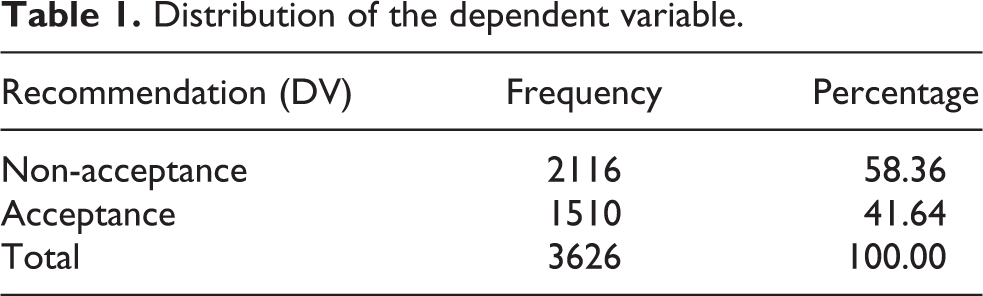
The SPÖ’s party statute requires motions to be submitted in advance to a commission for examination and approval (‘Antragsprüfungskommission’, ‘Antragskommission’ since 1991). The commission is elected by the party congress en bloc on the proposal of the party leadership in a show-of-hands vote and composed of officials of the federal, Land and district levels, as well as representatives of affiliated organizations. It is typically headed by a party ‘heavyweight’. The commission’s task then is to issue recommendations how the party congress shall (and usually does) decide on the proposed motions. In order to measure party elites’ degree of responsiveness, we recode the seven possible recommendations 4 into a binary dependent variable, indicating whether elites recommended to accept or not to accept a particular motion (Table 1; Online Appendix, Section 3).
Distribution of the dependent variable.
Measuring competitive pressures and intra-party groups’ contribution
The first main independent variable we use is executive power loss (hypothesis 1). For most of the time under examination (1945–2014), the SPÖ participated in the national government. The party exited government only twice before 2017, after the 1966 and 1999 general elections. In addition to these cases, we treated the ending of a 13-year period of Social Democratic single-party reign as executive power loss. Although the SPÖ continued in government, it had to face reduced policy influence and reduced access to spoils. 5 Thus, this event should trigger the same appeasement mechanisms theorized for total loss of office. Electoral performance (hypothesis 2) is measured as the party’s change in vote share between the last two general elections before the party congress. Thus, negative values indicate vote loss, while positive values mark vote gains. Naturally, both executive power loss and electoral performance vary only at the party congress level (e.g. all motions made at one party congress share the same values for these two variables).
In contrast, our third variable of interest, group contribution to vote share (hypothesis 3), varies on the level of motion-submitting organizations. All subunits of the party, represented at the party congress, may put forward motions. Besides the party executive representing the party elite (and therefore excluded from the analysis), these are district organizations, Land organizations, affiliated organizations and working groups. We restrict our test of hypothesis 3 to motions submitted by district organizations (about 50% of all motions) as we can only measure vote-mobilizing potential for these territorial subunits in a comparable way. 6 In order to measure each district’s contribution to the party’s electoral performance, we calculated their respective shares of the SPÖ’s total national vote in each parliamentary election between 1945 and 2014.
Sub-elites and the rank and file
For hypotheses 1a and 2a, we differentiate between the party’s sub-elites and the ordinary rank and file. While sub-elites are a group of regularly influential professional politicians, forming the party’s primary recruitment pool for government office, rank-and-file activists do not act in the national political arena, they have much less influence within the national party organization and they are usually not considered for government office.
For the case studied, we treat the SPÖ’s affiliated 7 and Land organizations as sub-elites, because they indeed feature the characteristics specified above. The leadership and many delegates of these sub-organizations are professional politicians having a nation-wide reputation. Moreover, affiliated and Land organizations represent the most important stepping stones for a career in government office. Looking only at the highest level of government, the SPÖ’s federal ministers and secretaries of state since 1945 (N = 289), close to 50% held – regularly high-ranking – functions in either one affiliated or Land organization before their appointment to cabinet. Taking into account those government officials who already held a high-ranking position in the national party organization before entering government, only one-third of all SPÖ ministers and secretaries of state had a different course of political career. In contrast, district organizations represent the SPÖ’s rank and file, the lowest level of the organizational hierarchy, focusing on political work at the local and district levels. Their delegates are usually neither full-time politicians, nor do they have realistic chances for appointment to government office. However, district organizations account for half of the SPÖ’s party congress delegates and submit 50% of all motions.
Controls
We control for several potentially influential factors at the party congress level, at the level of submitting organizations, and at the level of individual motions. On the party congress level, we control for the party’s participation in government. In line with our appeasement argument, we expect parties to be most responsive when in opposition and least responsive in single-party government. Moreover, the more party leaders control government the less they can blame others (coalition partners, the government) for preventing the actual implementation of party congress resolutions. Accounting for the transformation of party organizations, particularly the changing role of members, we control for party members’ contribution to party finance (membership fees’ share of total party finance) (Müller, 1992, 1996; Sickinger, 2009), expecting responsiveness to be lower the more financially independent the party organization is from its members. We account for leadership change by including a control variable for each first party congress with a new party leader. We expect responsiveness to be lower when a new leader takes over, since leaders’ legitimacy should be strongest when newly elected. In order to cover the effects of party system transformation, we account for the effective number of parties (Laakso and Taagepera, 1979) expecting responsiveness to decrease the more competition the party faces. This is because more competitors in the electoral arena will force elites to behave more strategically, thus constraining their ability to respond towards activist demands.
At the level of submitting organizations, we control for the organization type of every submitting unit: district organization, Land organization, affiliated organization or working group/special committee. Our conjecture is that party elites will generally be least responsive towards district organizations, since they usually have the least authority within the national party organization. Conversely, we expect elites to be most responsive towards the sub-elites of affiliated and Land organizations who regularly act on the national level and have a larger sphere of influence. Since the last category of submitting organizations, working group/special committee, is very heterogeneous, we do not have clear expectations regarding this group of subunits. Note, however, that working group motions represent only a marginal fraction of our data set (barely 3% of all motions).
Finally, at the level of individual motions, we use the binary variable motion type, indicating whether the motion is primarily about organizational issues (statutory/organizational reform, the fixing of membership fees, etc.) or about policy. The policy category also includes motions dealing with current or potential future coalitions, since there is a strong overlap between the two topics. Motions were assigned to either category by hand-coding. Our expectation is that party elites will be more willing to make policy concessions than changing organizational structures. This is because, in contrast to organizational matters, there is a long way from congress motions to actual decision-making in government institutions involving many more actors (and thus providing for many potential excuses if a motion remains inconsequential).
Analysis
The empirical analysis is structured as follows: We first address the appeasement argument by testing hypotheses 1 and 2 using our full data set (general models). We then specify our analysis by calculating separate models for sub-elites (affiliated and Land organizations) and the rank and file (district organizations), testing hypotheses 1a and 2a. 8 Finally, we turn to the rewards argument by testing hypothesis 3 based exclusively on the motions of district organizations.
Given the hierarchical structure of our data, we use logistic multilevel regressions. The unit of analysis is the individual motion (level 1; n = 3249). Since subunits can make several motions per party congress, motions cluster by submitting organization (level 2; n = 1046) and by party congress (level 3; n = 36). Regression models include explanatory variables at all three levels: the party congress level, the level of the submitting organization and the level of the individual motion. In addition to the regression models discussed in the article, we report further models using alternative control variables in the Online Appendix. These include the number of party members, media attendance, the number of submitted motions and motions’ policy positions. Results consistently support the findings presented below (see the fourth section in the Online Appendix).
We first test hypotheses 1 and 2 using our full data set (n = 3249) (Table 2; Figure 1). Results of the general models indicate that a loss of executive power has the expected positive effect on responsiveness (hypothesis 1). On average, executive power loss increases the probability of a motion being recommended for acceptance by 25% (model 1). Coefficients are statistically significant in all models, except model 3. However, we still have quite some uncertainty about the effect size (see Figure 1). This of course is due to the fact that there were only very few instances of executive power loss in our observation period. In contrast to the loss of executive power, regression models suggest that party’s electoral performance does not affect party elite’s responsiveness towards activists (hypothesis 2). Coefficients are not consistently negative and remain insignificant across all models.
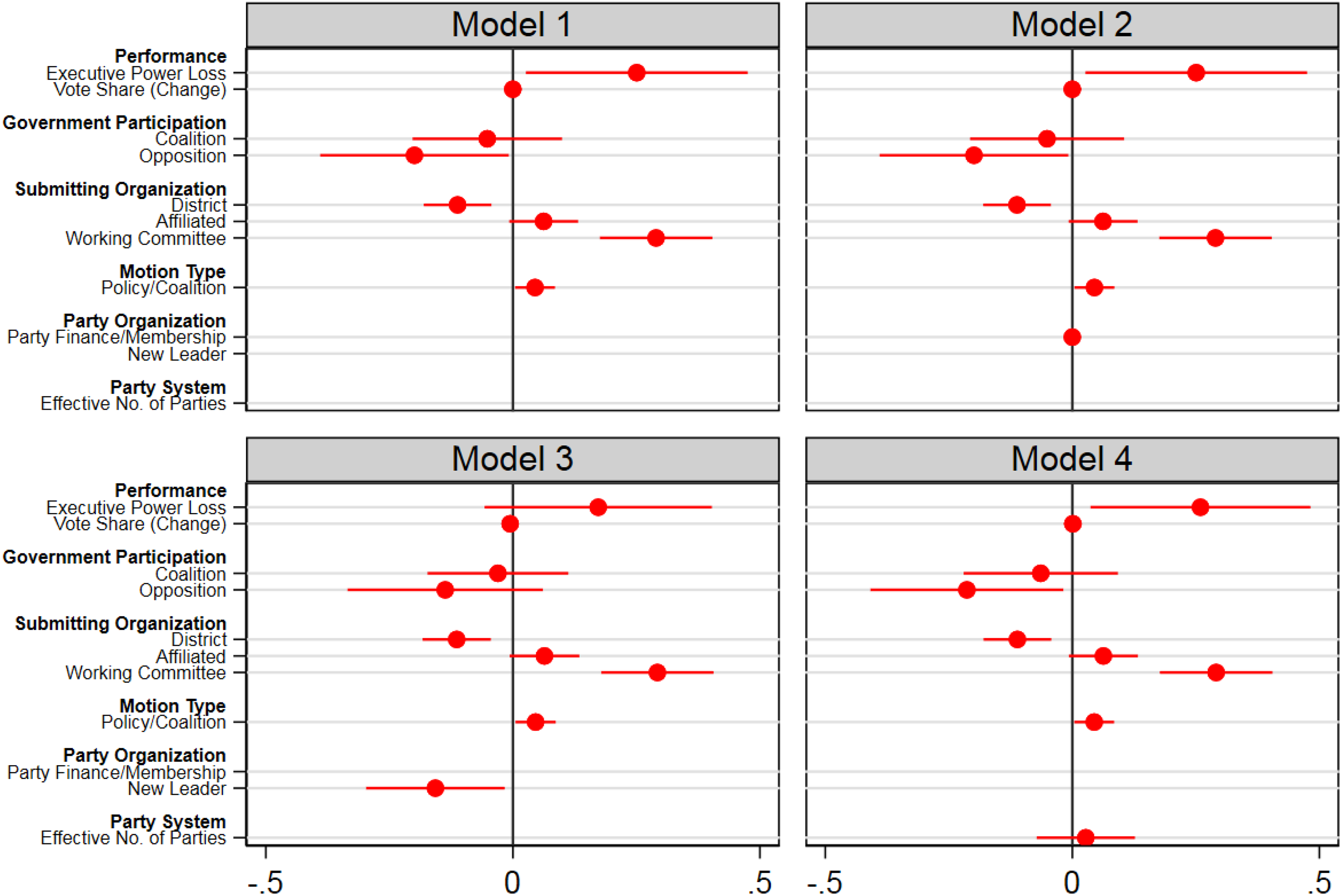
Average marginal effects on responsiveness, models 1–4.
Logistic multilevel regressions on motion acceptance (responsiveness).
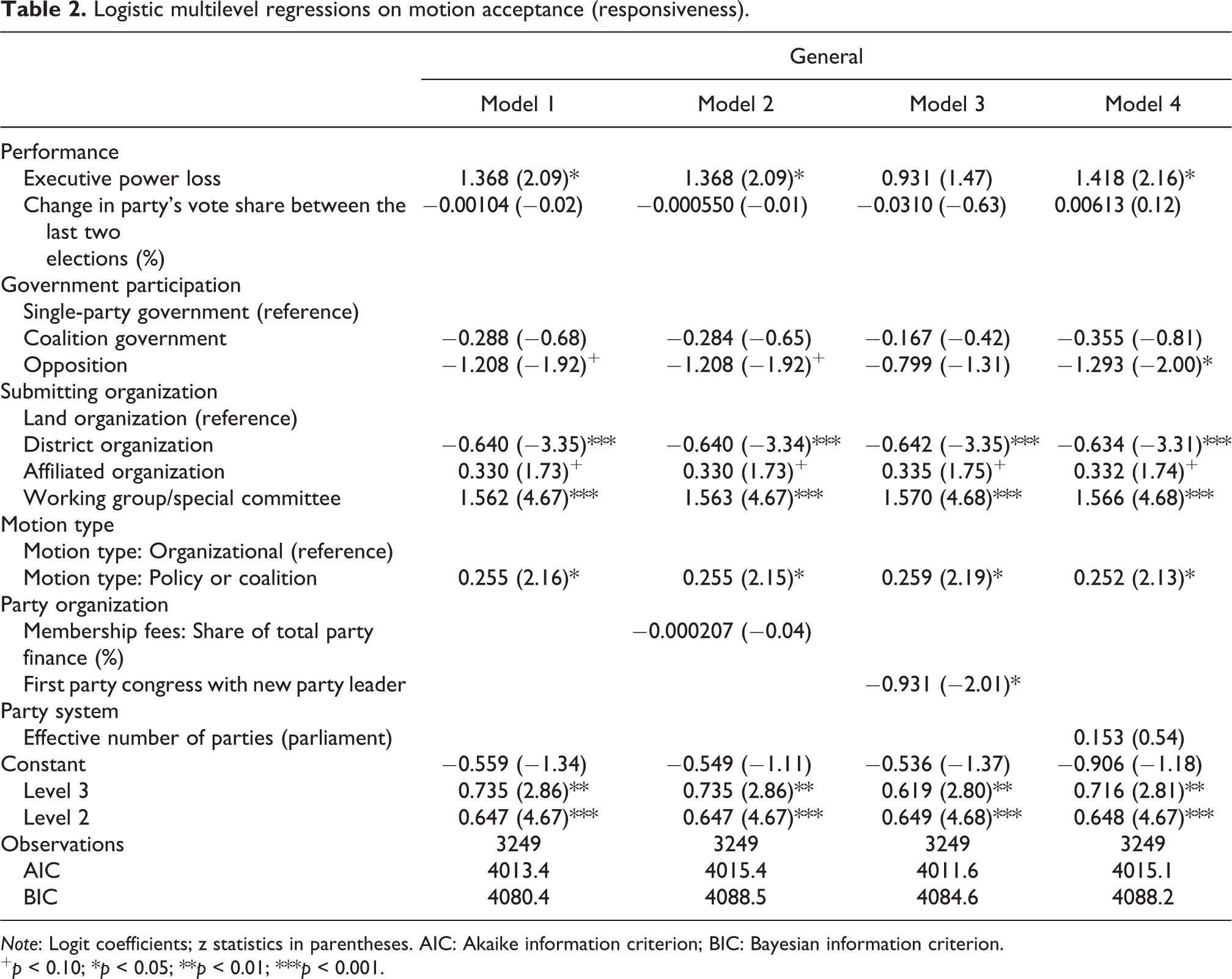
Note: Logit coefficients; z statistics in parentheses. AIC: Akaike information criterion; BIC: Bayesian information criterion.
+p < 0.10; *p < 0.05; **p < 0.01; ***p < 0.001.
Among control variables, we find rather surprising effects of government participation on responsiveness. Unlike our expectations, party elites appear to be less responsive when the party is in opposition than when in government, with an average marginal effect of −0.2 (model 1). Again, this result loses statistical significance in model 3. The effect of the ‘new leader’ variable, however, fits our expectations. When a new leader takes over, the party is less responsive all else equal. On average, the probability of a motion being accepted decreases by 15% at the first party congress with a new leader (model 3). Controlling for ‘new leader’ also affects the explanatory power of executive power loss and government participation. Yet, for the effect of executive power loss, we argue that this is due to the substantial correlation between these variables, as party leadership is very likely to change after the party loses office. Thus, the effects found in models 1, 2 and 4 still make a strong case in favour of hypothesis 1 (see also the fourth section in the Online Appendix). The remaining control variables on the party congress level, members’ contribution to party finance and the effective number of parties, do not show any significant effects on responsiveness.
Moving beyond the party congress-level variables, we find substantial effects of organization type (level 2) and motion type (level 1). As expected, party elites are less responsive towards district organizations than towards the sub-elites of Land and affiliated organizations. The latter two groups are similar in terms of their chances for party elite responsiveness. District organizations’ disadvantage compared to the reference category Land organization, however, is substantial in terms of effect size and statistical significance (AME = −0.11; model 1). Contrarily, working groups’ motions are clearly the most likely to be recommended for acceptance (AME = 0.29; model 1). However, the latter represent only under 3% of all motions in our data. The effect of motion type indicates that party elites are indeed significantly more responsive towards activists’ policy demands than proposals on party organizational issues. Yet with an average marginal effect of 0.04 the effect is not particularly strong (model 1).
Looking at the separate regression models for district organizations (rank and file) and affiliated/Land organizations (sub-elites), results support hypotheses 1a and 2a (Table 3). Losing executive power has a significant positive effect on elite’s responsiveness towards affiliated and Land organizations (hypothesis 1a). However, as in the general models, this effect loses statistical significance when controlling for leadership change. In models 1b and 2b the effect is significant at the 10% level, in model 4b at the conventional 5% level. Again, given that we record only three instances of executive power loss over the observation period, there remains considerable uncertainty about the effect size. While party elites are more responsive towards affiliated and Land organizations after a loss of executive power, such failure to realize the party’s office goals does not significantly change the elites’ responsiveness towards district organizations (Figure 2). Likewise, electoral performance has the expected negative effect on elites’ responsiveness towards district organizations (hypothesis 2a). A 1% increase in the party’s national vote share decreases the probability that a district motion is accepted by 1%, on average (model 1a). The effect is significant at the 5% level in models 1a and 3a, and at the 10% level in models 2a and 4a. Conversely, we do not find any effect of electoral performance on responsiveness towards affiliated and Land organizations. Hence, losing elections leads party elites to respond more towards the rank and file (district organizations), however, they do not change their behaviour vis-à-vis the sub-elites of the affiliated and Land organizations (Figure 3). The support we find for hypothesis 2a is particularly interesting, as we do not find support for hypothesis 2 on the general level.
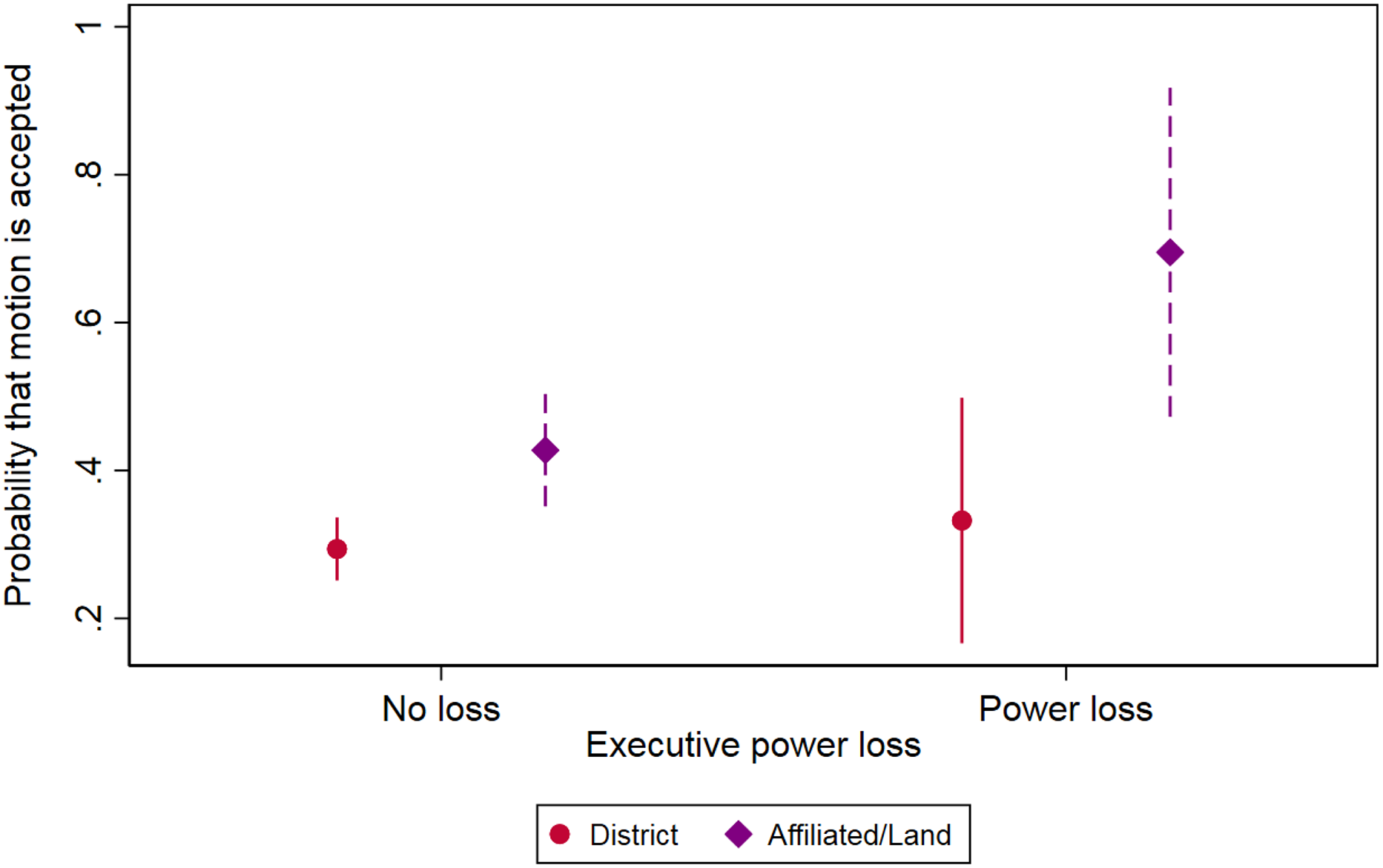
Executive power loss and responsiveness by organization type. Plot based on models 1a and 1b.
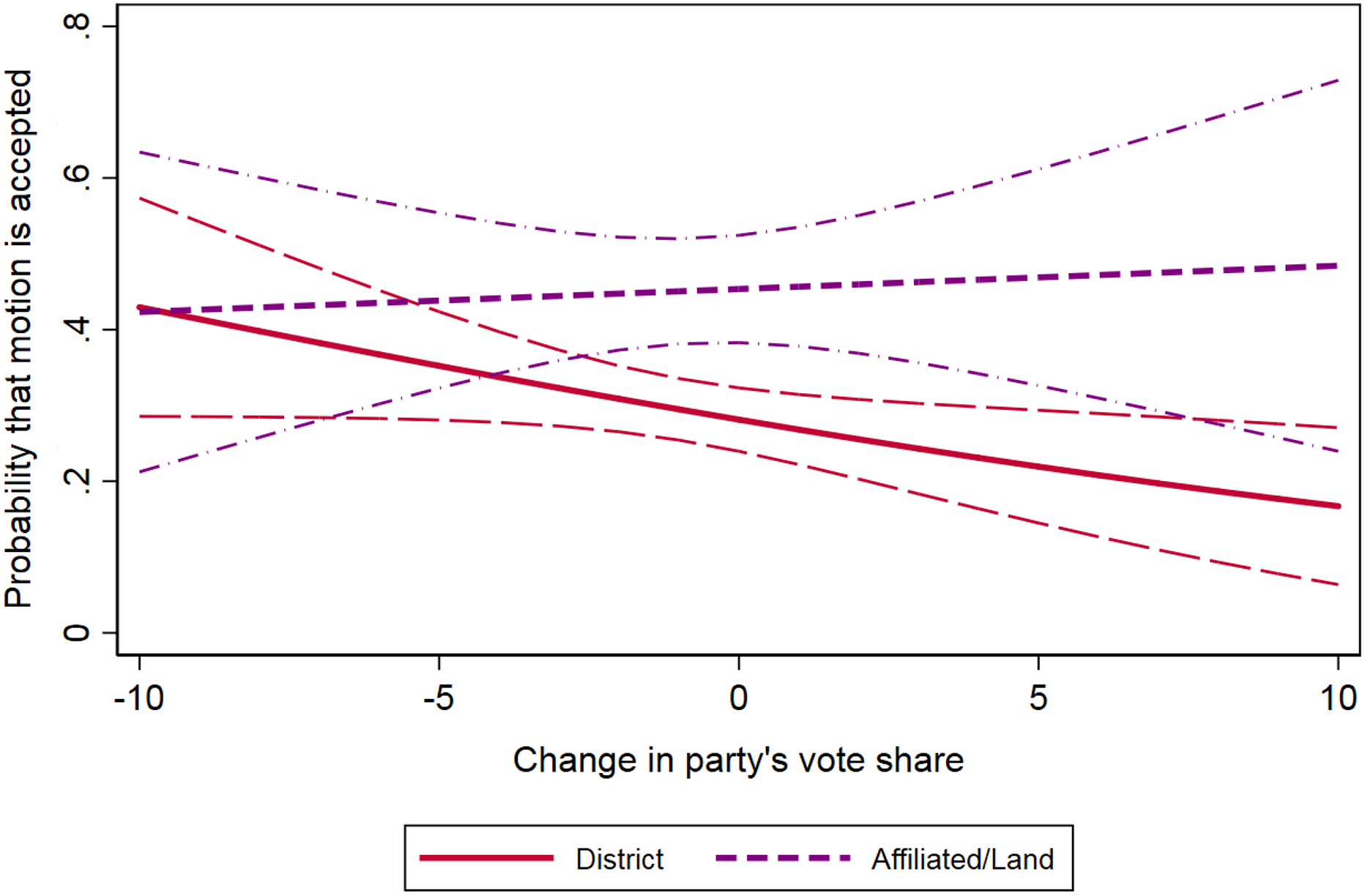
Electoral performance and responsiveness by organization type. Plot based on models 1a and 1b.
Logistic multilevel regressions on motion acceptance (responsiveness) – by submitting organization type.
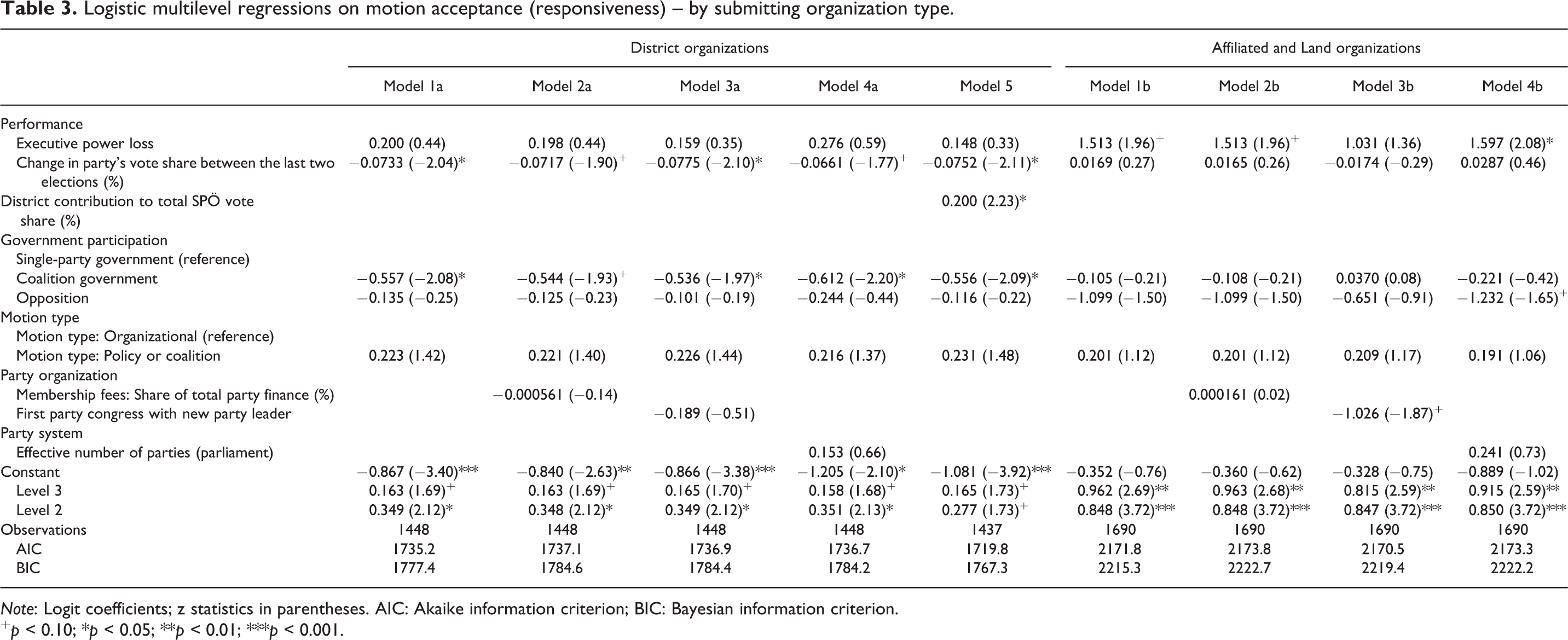
Note: Logit coefficients; z statistics in parentheses. AIC: Akaike information criterion; BIC: Bayesian information criterion.
+p < 0.10; *p < 0.05; **p < 0.01; ***p < 0.001.
Regarding control variables, only government participation and leadership change remain influential once we split our data set. Again, the two groups of subunits differ in terms of which factors impact party elites’ responsiveness towards them. Only for district organizations, government participation matters. Specifically, elites respond less towards their demands when the party is in a coalition government compared to the reference category single-party government (AME = −0.1; model 1a). Intriguingly, we do not find the same negative effect of being in opposition on responsiveness, which we find based on the full data set. Yet, considering the necessity of policy compromise linked to coalition government, it seems plausible that party elites have to decline more of the party on the ground’s demands for the sake of coalition peace. Again, mirroring the general models, having a new leader negatively affects responsiveness towards affiliated and Land organizations (AME = −0.18; model 1b), while it has no effect on district organizations. We find no further effects for any other independent variable. Motion type, as well, loses statistical significance once we split our data set.
Finally, we examine whether party elites use responsiveness in order to reward valuable intra-party groups. Specifically, we test whether party elites are more responsive, the more district organizations contribute to the party’s national vote (hypothesis 3). Results (Table 3; Figure 4) indicate that districts’ electoral contributions indeed matter. Party elites are significantly more responsive towards the demands of district organizations mobilizing more voters. On average, a 1% increase in district contribution to the national vote increases the probability of a motion being accepted by 3% (model 5). The negative effect of the party’s overall electoral performance remains virtually unchanged when adding the district contribution variable (AME = 0.01; model 5). Again, there is support for hypothesis 2a. Likewise, we find approximately the same negative effect of coalition government on responsiveness (AME = −0.11, model 5), while none of the other controls is influential.
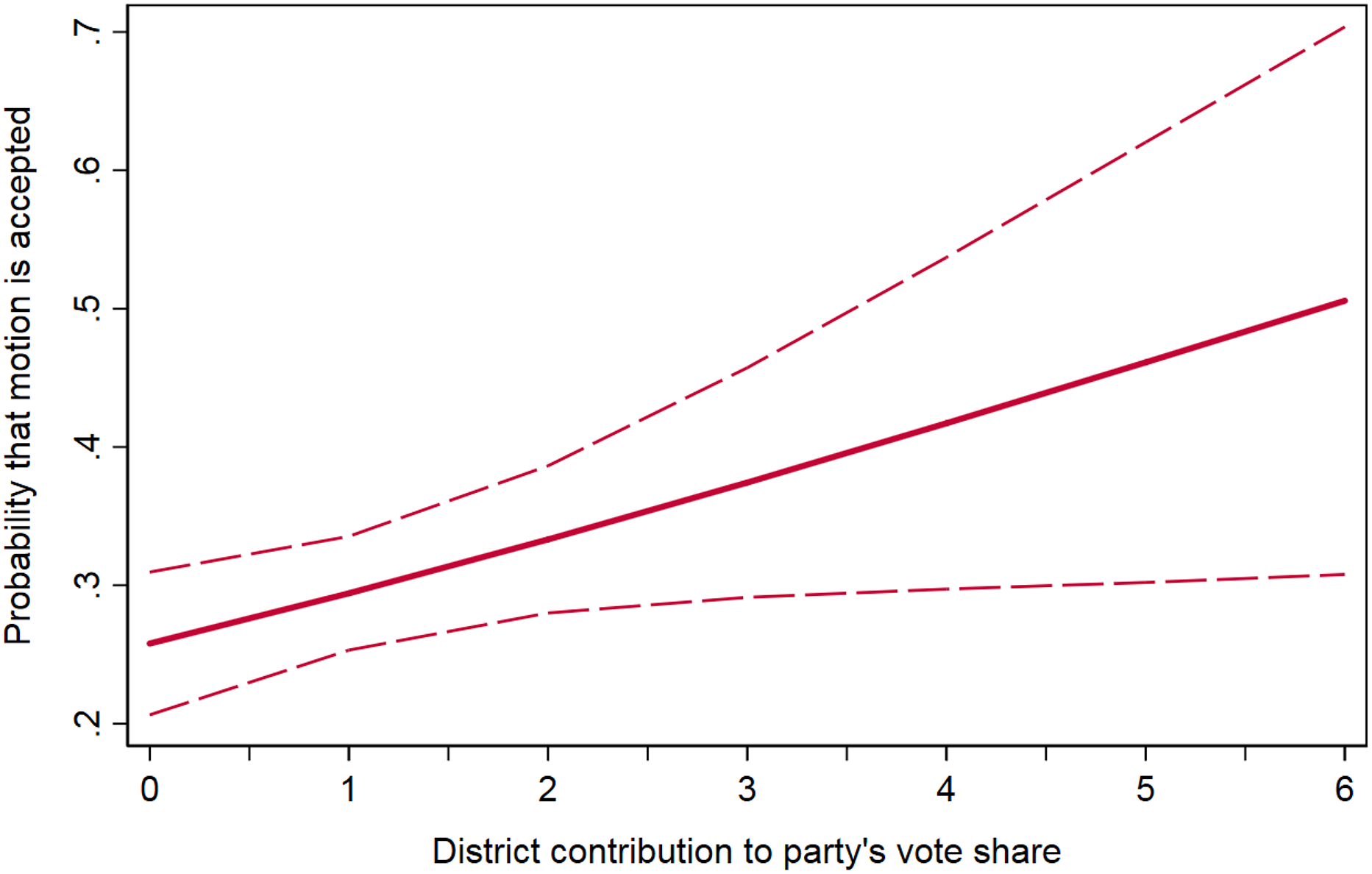
District contribution to party’s national vote share and responsiveness. Plot based on model 5.
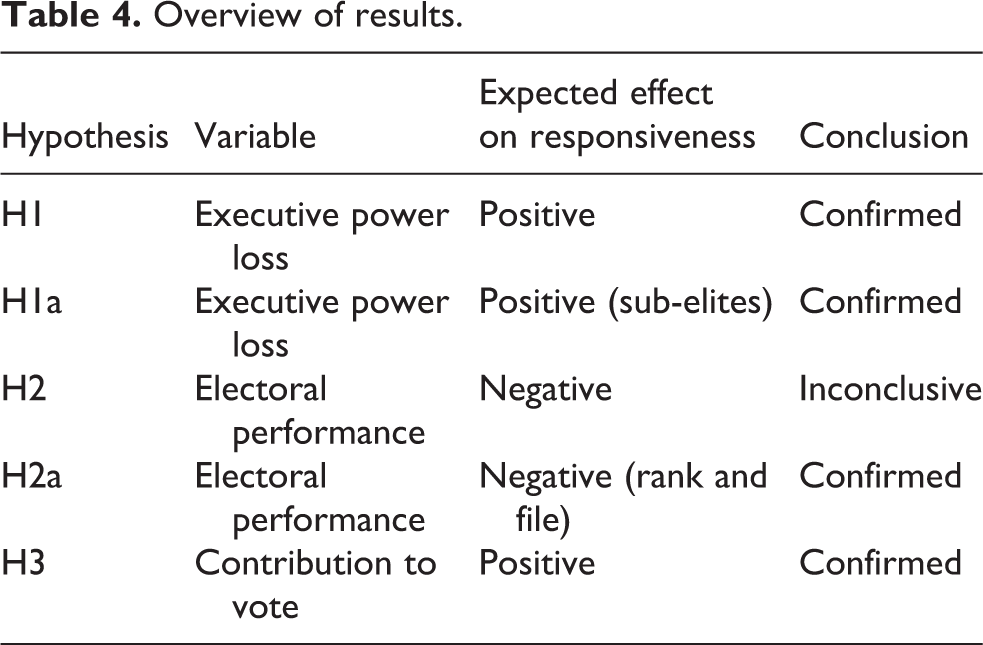
Summing up, the empirical analyses largely confirm our expectations that party elites use responsiveness as appeasement and rewards for party activists (Table 4). Executive power loss has the expected positive effect on responsiveness in the general models as well as for sub-elites. In contrast, we find that electoral performance only affects elites’ responsiveness towards the ‘true’ rank and file. Results also indicate that party elites are more responsive towards electorally valuable intra-party groups. Among control variables we find the expected effects of sub-organization type, while there is no or inconclusive evidence for the remaining controls. Note in particular that neither long-term transformations of party organization nor party system transformation affect party responsiveness.
Overview of results.
Conclusion
The question of how power is distributed within political parties has traditionally been one of the core interests of party organizations research. The power issue is particularly relevant given the parties’ role in filling government office and making public policy. The question is also highly relevant from a normative perspective, when considering parties’ role as providers of ‘democratic linkage’. This study adds to a better understanding of the intra-party balance of power by providing a systematic quantitative account of intra-party responsiveness based on intra-party actors’ behaviour (‘the real story’), rather than on statutory rules (‘the official story’).
Results indicate that party elites use responsiveness as a means of appeasement towards party activists. Thus, when party performance is bad, activists gain influence relative to the party elite. As we demonstrate, however, party elites’ reaction to external stimuli is group-specific. Since different intra-party groups have different priorities, party elites are only responsive towards those groups who are substantially hurt by bad party performance regarding a specific party goal. In this way, while indeed employing responsiveness in order to compensate the rank and file for performance failure, party elites minimize the costs of responding towards activists. In addition to the appeasement strategy, we find that party elites also use responsiveness to reward valuable intra-party groups. Specifically, party elites are more responsive towards intra-party groups, contributing more to the party vote in general elections.
Our results speak to the literatures on intra-party democracy and party change. For one, they confirm scepticism about the classic argument of a monotonous decline of intra-party democracy (Cross and Katz, 2013; Duverger, 1954; Enroth and Hagevi, 2018; Hertner, 2015; Katz and Mair, 1995, 2009; Kirchheimer, 1966; Krouwel, 2012; Loxbo, 2013; Michels, 1949 [1911]; Rohrschneider, 1994; Saglie and Heidar, 2004; Widfeldt, 1999). Our findings rather support the idea of fluid ‘power-sharing agreements’ implied by a stratarchical understanding of party organizations, as parties’ responsiveness towards activists varies in response to competitive pressures (Bolleyer, 2012; Cross, 2018; Eldersveld, 1966). However, we see the party leadership still in the driving seat in this process, making concessions where considered necessary and withholding them in other instances.
As most other work in this area, the present study is a case study. The generalizability of our findings thus remains an issue. Given that we follow an unlikely case logic, we argue that the effects found in this study should have high external validity. Nonetheless, future research should aim at studying the topic using cross-sectional research designs. While the availability of systematic behavioural data is traditionally a problem for accounts on intra-party politics, we suggest that party congress data, as used in this study, qualify as a fruitful data source for future comparative research.
With regard to party change, our study indicates that a party’s internal balance of power is indeed affected by similar factors as were identified as drivers of other variants of party change (Abou-Chadi and Orlowski, 2016; Andrews and Jackman, 2008; Bale, 2012; Bynander and ‘t Hart, 2007; Ennser-Jedenastik and Müller, 2015; Gauja, 2016: 50; Greene and Haber, 2016; Harmel and Janda, 1994; Harmel et al., 1995; Quinn, 2004; Scarrow, 2015: 25). The concessions responsive party leaders make constitute party-internal change: a temporary shift of power. Yet at the same time, accepted congress motions influence external party change: the issues parties advance and the policy stances they take. What future research should try to investigate is how important the congress motions mechanism is in making external party changes compared to leadership-driven issue entrepreneurship and strategic policy adaptation.
Supplemental Material
Supplemental Material, Appeasement_and_Rewards_Online_Appendix_(anonymous) - Appeasement and rewards: Explaining patterns of party responsiveness towards activist preferences
Supplemental Material, Appeasement_and_Rewards_Online_Appendix_(anonymous) for Appeasement and rewards: Explaining patterns of party responsiveness towards activist preferences by Matthias Kaltenegger, Katharina Heugl and Wolfgang C Müller in Party Politics
Footnotes
Declaration of conflicting interests
The authors declared no potential conflicts of interest with respect to the research, authorship and/or publication of this article.
Funding
The authors received no financial support for the research, authorship and/or publication of this article.

Supplemental material
Supplemental material for this article is available online.
Notes
References
Supplementary Material
Please find the following supplemental material available below.
For Open Access articles published under a Creative Commons License, all supplemental material carries the same license as the article it is associated with.
For non-Open Access articles published, all supplemental material carries a non-exclusive license, and permission requests for re-use of supplemental material or any part of supplemental material shall be sent directly to the copyright owner as specified in the copyright notice associated with the article.
