




Abstract
Despite the growing movement towards inclusivity, the voices of ethnic minority students (EMS) in Southeast Asia (SEA) remain underrepresented, resulting in marginalization that hinders their academic pursuits, and well-being. However, past research often overlooked experiences of EMS and the role of sociocultural elements that drive oppression. This study seeks to explore the experience of stigma among EMS in Indonesia, Malaysia, and the Philippines. We conducted in-depth, semi-structured interviews with 37 EMS from university-based student organizations and analyzed them using the KJ method. The results indicate that sociocultural elements significantly influence their experiences, ranging from subtle microaggressions to overt acts of harm and violence. Furthermore, these encounters necessitate a variety of strategies, including coping mechanisms, stigma management, and the management of social standing, which characterize our understanding of how they navigate stigmatization. The findings illuminate the intricate interplay between socio-cultural elements and stigma among EMS in SEA, underscoring the urgency for more inclusive policies in higher education, facilitated by community-led initiatives, allyship, and activism.
Keywords
Introduction
The SEA region has been a product of multiple colonizations, making it a diverse tapestry of cultures and traditions (Ting et al., 2023). Countries such as Malaysia, Indonesia, and the Philippines both share similarities and differences. These countries have exhibited diverse ethnolinguistic groups and are located within some of the largest archipelagos and islands in the world. Indonesia has boasted more than 1,000 ethnic groups, making it one of the most diverse countries (Badan Pusat Statistik, 2015; Wolters et al., 2024). Malaysia has been a multicultural nation home to various ethnolinguistic groups, with the majority of Malay people (Ahmad et al., 2024). The Philippines consists of over 100 ethnolinguistic groups within its archipelago (Borlaza et al., 2024; Dressel & Susilo, 2023).
These countries also embraced diverse religions. The majority of people in these countries practice Abrahamic monotheistic religions, with Malaysians and Indonesians identifying as Muslims and Filipinos as Christians. Moreover, these countries were influenced by colonial rule from the West, with Indonesians under the Dutch, Malaysians under the British, and the Philippines under the Spanish colonization (Ahmad et al., 2024; Borlaza et al., 2024; Dressel & Susilo, 2023; Wolters et al., 2024). The past colonization may still manifest as remnants of the present, such as social injustice, conflict, and discrimination, which had been experienced by Indigenous Peoples (IP), 1 negatively shaping their identities, values, ecologies, and relationships (Moore & Nesterova, 2020; Nesterova & Jackson, 2020). As such, this invited us to examine the ramifications of these countries’ colonized history relative to the experience of stigma among EMS.
Context of ethnic-minority students
The corpus of the literature suggested that EMS and IP often experienced marginalization from their Indigenous identities and physical traits (Kovats Sánchez, 2020). Such experience led to social isolation, unpreparedness for their academic life, familial issues, and admission to higher education (Anderson et al., 2022). This warrants us to explore the contexts of EMS in SEA.
Indonesian EMS had been part of the ethnic minority groups in the country. Indonesia’s major ethnic groups include Javanese (40.1%) and Sundanese (15.5%; Badan Pusat Statistik, 2015). Indonesian EMS faced adversities in education due to their socioeconomic positions, geographical isolation, and limited access to educational resources (Nurman et al., 2022). They also encounter stereotypes leading to discrimination, perpetuated by the majority groups, and, in turn, shaped their educational outcomes (Wiraatmaja, 2020).
In Malaysia, ethnic conflict and tension among the majority Malays and ethnic minorities stemmed during British colonial rule when Chinese and Indian workers were brought in for imported labor to diminish the influence and the perceived threat of the local Malay community (Chin, 2022). After the independence in 1957, the colonial legacy led to significant inequalities between the majority of Malays (57.9%) and the ethnic minorities, which included non-Malay IP (12.2%), Chinese (22.6%), and Indians (6.6%) who were disadvantaged based on the policies announced by the new constitution (Department of Statistics Malaysia, 2023; Ravallion, 2020).
In post-colonial Malaysian society, the inequities faced by ethnic minorities permeated the education sector, such as limited public education rights, including a limited quota system for public universities’ enrolment, scholarships, and financial aid (Lee, 2012). Lino and Mohd Hashim (2019) highlighted how these structural inequalities in the education sectors exacerbated the racial polarization and divide, as the interviewed Malaysian university students of all ethnicities (including Malays) reported facing inter-ethnic racial microaggressions. Among other stigmatizing attitudes faced, such as language barriers, being put under the spotlight, or being ignored for one’s ethnic identity, a unique microaggression reported among only the EMS was feeling “alien in own land” (Lino & Mohd Hashim, 2019, p. 88).
The Philippines enacted several legislations aimed at protecting and promoting the culture, well-being, and access to education among EMS and IP (e.g., Republic Act 8371; Republic of the Philippines, 1997). However, inequities persisted in the country. As noted by Eduardo and Gabriel (2021), the right to education among IP, including EMS, remains underdeveloped partly due to discrepancies in policies and implementation. The inequitable access to quality education among children from ethnic minority groups could be linked to discrimination, reduced social opportunities, and income inequalities (Cucio & Roldan, 2020).
The inequities faced by Filipino EMS and IP can be attributed to the neo-colonial orientation of the Philippines’ educational systems. This orientation prioritized everything deemed American (Caoli-Rodriguez, 2008; Maligalig et al., 2010; Tullao, 2003), leaving a mark on educational systems, philosophies, structures, and programs. However, this neo-colonial approach to education had been incongruent with IP cultures and practices (Eduardo & Gabriel, 2021). Furthermore, Filipino EMS and IP, continued to encounter challenges in achieving autonomy due to the pervasive colonial mentality among the majority of Filipinos, which posed obstacles to Indigenous cultures (Decena, 2014; La Torre, 2016). As such, EMS has continued to face stereotypes and prejudice (Salvador-Amores, 2020).
Stigmatization among ethnic minority students
Contemporary research on stigma has shown that people often attribute negative characteristics to those they perceive as different. This can change how both the individuals who stigmatize others and those who are stigmatized view themselves and each other. Such a process led to discrimination and abuse, perpetuating oppression (Goffman, 2009). Goffman (2009) framed stigma in three elements: abominations of the body (e.g., being dark-skinned), tainted marks of the body (e.g., perceived weakness), and group stigma of race, nation, and religion (Rufaedah & Putra, 2018). Stigma manifests at two levels, including public/institutional stigma, where society reinforces stereotypes, and perceived/self-stigma, where individuals internalize prejudice (Corrigan & Bink, 2005; Corrigan & Watson, 2002). Link and Phelan (2001) identified interlocking elements that could lead to stigma: differentiating human differences, labeling people with negative attributions, categorizing negatively attributed individuals, and reducing social standing leading to adverse outcomes.
Despite experiencing stigma, we acknowledged that EMS may use mechanisms to navigate such experiences. Evidence suggests that EMS use coping mechanisms to address stigma (e.g., Sianturi et al., 2023). The seminal works on coping can be traced to the works of Endler and Parker (1990) also Lazarus and Folkman (1984) where they described coping as cognitive and behavioral efforts to modulate internal and external demands that are perceived beyond personal resources.
Even with an extensive body of knowledge available exploring stigma and coping strategies among marginalized groups, including EMS and IP, we argue that the research often failed to underscore the critical role of contexts in understanding stigma among EMS and IP. For instance, Earnshaw et al. (2022) claimed that stigma fluctuates over time, undergoing constant evolution, suggesting that how we view stigma changes over the course of time. Therefore, we argue that to fully understand their experiences, we need to explore their stigma and coping experiences from a bottom-up approach, focusing on the paramount contribution of socio-cultural dimensions that shape these experiences among EMS.
Drawing on the work of Link and Phelan (2001) on stigma, we contend that emphasizing the enormous role of socio-cultural elements in shaping stigma experiences among EMS is vital. They noted that traditional works on stigma often overlooked the lived experiences of people experiencing oppression, focusing solely on individual levels and neglected the sociocultural elements that perpetuate stigma and discrimination (Kleinman et al., 1995; Schneidre, 1988). We affirm that exploring the lived experiences of EMS is crucial for understanding how they overcome stigma. By emphasizing the socio-cultural elements that shape their coping strategies, we can better understand how resilience is fostered among EMS. As Kirmayer et al. (2011) asserted, in developing resilience among EMS, we must acknowledge their cultural nuances, geo-political conflicts, and history of adversities.
Despite some studies exploring their experiences among EMS, limited exploration of the stigma and coping experiences among EMS in the SEA region, especially in Indonesia, Malaysia, and the Philippines, still prevails. As such, we asked the following research questions: What are EMS’ experiences with stigma in three SEA countries? How do EMS cope with their stigma experiences? What are the EMS’ proposed strategies to minimize their stigma experiences?
Study aim
We aimed to understand the experiences of stigma and coping among EMS in SEA by understanding how socio-cultural elements fuel this experience. To achieve this, we enumerated the following objectives: 1. To examine how various socio-cultural elements have contributed to EMS’ experience of stigma; 2. To understand how EMS managed their experiences of stigma.
Method
We used an inductive qualitative design to explore stigma and coping experiences among EMS in three SEA countries. Following phenomenological principles by Heidegger, our analysis prioritizes EMS’ descriptions of their experiences (Jasper, 1994). We remained mindful of our preconceptions about stigma and engaged in reflexivity, and meaning-making (Parsons, 2010; Todres & Wheeler, 2001). This approach facilitated cross-country analysis and contextualized EMS’ experiences (Alhazmi & Kaufmann, 2022).
Participants recruitment
Demographic information of the Participants.
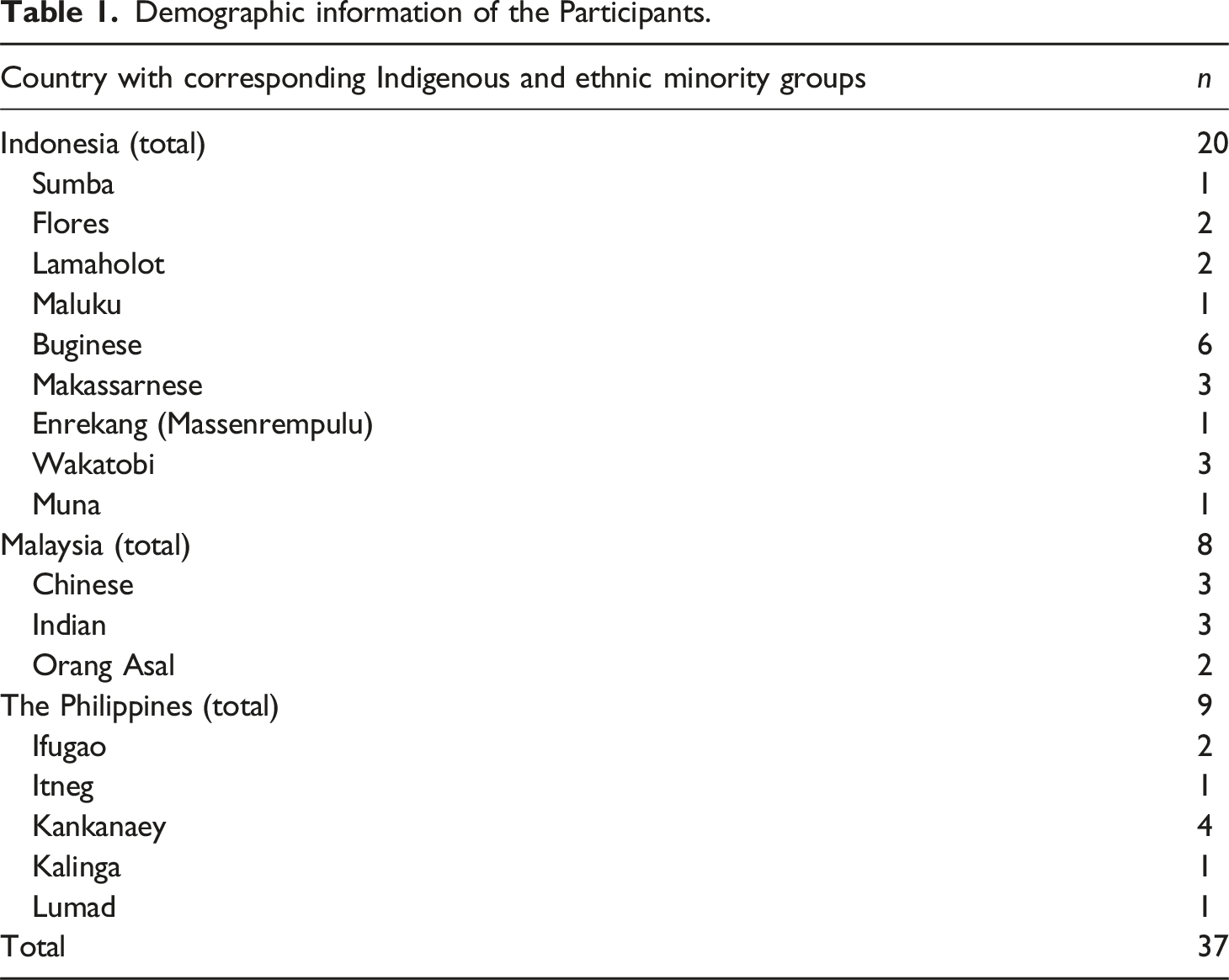
Our sampling method combined purposive and snowball techniques to identify eligible participants. Criteria included being aged 18–30, belonging to a marginalized or Indigenous group, actively pursuing education, and having at least one year of student experience. Limiting the age range to 30 aimed to prevent more mature perspectives from influencing perceptions of marginalization differently. We primarily contacted participants via phone, email, or in-person meetings.
Data collection and analysis
Interview Schedule.
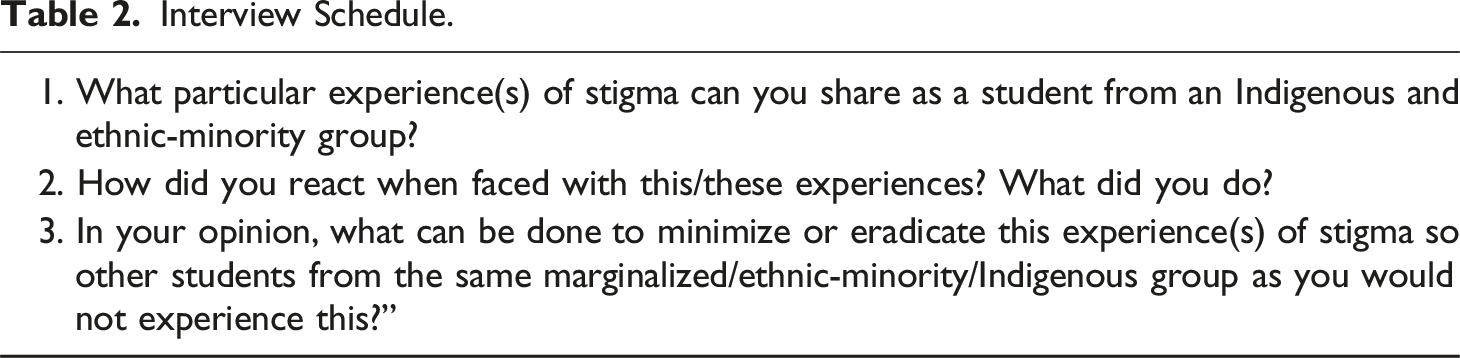
Analysis
Guided by prior studies (e.g., Tagaki, 2023), we used the KJ method, named after its founder, Kawakita Jiro. Drawing upon Peirce’s concept of abduction, Kawakita (1967) emphasized the use of intuition and non-rational thinking in analyzing qualitative data (Scupin, 1997). Some scholars (e.g., Nochi, 2013) have asserted that the KJ method resembles other qualitative methodologies, such as grounded theory (GT; Glaser & Strauss, 2017). Both the KJ method and GT aim to create relationships between concepts or categories assigned specific codes derived from distinct corpora. However, a major difference is that GT focuses on forming a theory from the integration of different concepts or categories, whereas the KJ method emphasizes creating relationships between concepts or categories, even if they do not make rational connections (Tagaki, 2023). The application of the KJ method has transcended from interpreting ethnographic data in Nepal to various disciplines, in social sciences, i.e., developmental psychology (Sato et al., 2009).
We used the KJ method over others (i.e., Consensual Qualitative Research [CQR]; Hill et al., 2005) due to its approach. Given the collectivistic nature of Asian cultures (Markus & Kitayama, 1991), our research team’s group orientation was emphasized, aligning well with the KJ method’s focus on teamwork (Scupin, 1997). This method also reflected efforts in Southeast Asian Indigenous Psychology, liberating us from Western approaches and helping explore stigma experiences among marginalized populations, including EMS (Scupin, 1997). KJ Analysis’ universal relevance in understanding human behavior aided us in comprehending EMS’ stigma through aligned decision-making on the analysis and supporting social reforms (Scupin, 1997).
We begin by forming KJ method teams of three to four members, drawn from our research team members. Our role was to achieve consensus on response cards and form clusters of similar responses. In each country, we conducted two key steps: 1) KJ Analysis following the outlined procedure, and (2) comparing identified clusters across countries to reveal shared and distinct themes. Our structured research process involved sorting and coding interview transcripts, compiling data into tables for each research question, and scheduling analysis sessions. Sessions included introducing questions, reading response cards, and facilitating discussions to reach a consensus and cluster similar responses. Any unresolved issues were noted for later discussion. Findings were labeled and summarized for each question, ensuring comprehensive analysis.
Trustworthiness and reflexivity
During transcription and analysis, we often consulted audio recordings for clarity. After each interview, we diligently recorded fieldwork notes to capture our observations and insights. While our analysis is primarily inductive, we recognize the importance of our experiences and viewpoints in interpreting the data (Kelle, 2007). Thus, we acknowledge the significance of our professional and personal backgrounds in maintaining credibility and rigor.
We are a team of eight researchers from the same countries as our participants, collaborating through the Southeast Asian Indigenous Psychology Scientific Meeting. Our diversity encompasses both Indigenous and non-Indigenous identities, acknowledging that our worldviews influence our research. We strongly oppose all forms of stigma and discrimination, standing as allies to our participants and other EMS.
Results
Our analysis revealed one overarching theme and three supporting themes. The overarching theme, Navigating Stigma: Context and Responses, described how EMS experienced stigma, how they responded to it, and their aspirations for addressing it. This theme encompassed participants’ narratives of overcoming adversities and their hopes for reforms.
The first supporting theme explored how participants articulated their experiences of stigma and discrimination. In the second theme, they elucidated their strategies for positioning themselves and others in response to stigmatization. Finally, the third theme discussed thei recommendations for addressing their experiences of stigma and discrimination.
We are a lower version of them: “I think they are nicer to them than us”
This theme characterized how participants experience stigma and discrimination. From their narratives, it described how they viewed themselves as inferior to others who are not EMS. Their narratives showed that stigmatization may begin from the outset when non-EMS had an awareness of their distinct cultural customs: There was this group of people that were asking to get it [bulols; Ifugao rice Gods], and we asked, “For what reason?” They said we want to borrow it. We need it for our project.” “What project is that?” We kept asking and they were starting to get agitated, and they were like, “Eh, we just want to borrow it![…] There are things [Bulol] that should not be handed out or handled by anyone. And sometimes, they have a hard time understanding that… I think that’s it – the ones I can remember. (PHCO 5)
The sustained cultural insensitivity of non-EMS permeated within the interactions of the participants. As such, this creates a “them against us” (MY 2) where the participants were seen as inferior and the non-EMS were seen as superior which could visible the differences in power dynamics. As such, this often led to the non-EMS asserting their superiority over the participants: The educational degree [is] much less than in Java [Indonesia]. So like there are some [people] that underestimate [us]. (like) “Ah, it’s just from NTT [Nusa Tenggara, Indonesia]. “Why should I be friends with them?” or things like that. (IDN-NTT 1) I think they’re nicer to them [non-ethnic minority students] compared to [us], I mean, they’re ready to help them compared to us. (MY 2)
The prevailing superiority of non-EMS towards the participants manifested in varying elements. Such elements were: stereotypes, objectification, discrimination, and systemic oppression. From the recollections of the participants, these elements were portrayed from subtle to life-threatening circumstances. These can be exemplified by the following accounts of the participants: They said that Igorots have tails. In the place where I am now—in my father’s province—we, the Igorots, are being discriminated [against]. People say that we are grabbing [taking away] their [non-IP] lands and we are just paying them. (PHCO 8) Because how do I say this, we were like being sexualized or like being idealized for an example...So oftentimes, they will drop comments that are very towards like…Sabahan people all have white complexion, very pale, it must be pink [female reproductive organ]. So, if you understand what it means like the pink part. (MY 8) It’s like this, public universities are dominated by this one majority group and it's like always about them. Even getting into university, like, there’s a quota set for ethnic groups such as for Indians, and Chinese, there’s like a quota set. So, the majority has to be ‘them against us’. (MY 2) They attacked us and looked at us as an NPA [New Peoples’ Army, a terrorist group]. And we gave statements that wasn’t true. We also invited them [soldiers] to go in our school to see it for themselves that we don’t carry weapons and that we don’t want to cause harm. But they didn’t go. What they did was put a tank outside our school and they would go in and out of our school saying we had drugs inside. But the school was only full of grade 7 and 11 years old students […] They killed one of the students there namely, [name redacted] she was a grade 6 student who was armed by the military to look like she was an armed Lumad. And if someone dies they would call it “tribal war” but actually they’re the ones doing it [military]. (PHAE 1)
We also acknowledge the plurality of the experience of stigma within the participants. Aside from their identity as IP and EMS, other stigmatized identities surfaced which could shape how they positioned themselves towards others and to themselves. These multiple stigmatized identities could overlap which could intensify the experiences of oppression within the participants. Such overlapping of stigma was relative to time and place: You all know that in our culture [Cordillera], it is a taboo to have a relationship with the same gender because they say that it’s bad luck. So yeah, I’m part of the LGBT, and then actually, in college, I found it difficult when I went to the city. Actually, when I departed from our place, they expect that I’m going to change. They are expecting that I am going to have a girlfriend. (PHCO 7)
Dimensions of survival
The second theme illustrated how participants navigated their experiences of stigma and discrimination stemming from their stigmatized identities. It portrayed various strategies they employed for self-management, spanning from intrapersonal to interpersonal domains. These strategies included managing their emotions, repositioning their relationships with those who stigmatized them, and gaining insights to make sense of their experiences.
Leveraging on emotions: “I don’t want to hear because it hurts”
When participants experienced the stigma of their identity as an EMS, they anchored to their emotions. The utility of emotions as their strategy to dilute the stigma was visible when participants expressed anger and humor. Instead of taking an assertive move to address stigma, the participants tried to use a more socially acceptable way—humor. They tried to divert the focus towards making the situation entertaining and humorous. Such experiences of using emotions to address stigma can be exemplified by the participants’ experiences: About that stigma and I tried to just take it as a joke. (I was) trying to just accept, to not prolong things into a reason to fight, but I tried to take it as a just a joke. So, the way I take it, as a — people might just keep on going on their stigma. But I try to keep calm and entertained. Aahh, it’s just a joke, I thought. It eventually became a norm (you got used to it). (IDN-NTT 5) That is what I don’t want to hear because it hurts especially when they say: We [IP] are worshipping the devil. (PHCO 8)
It depends on how I relate: “Oh, you better not be racist”
Aside from their emotions, the participants also capitalized on several interpersonal strategies to address stigma. Some accounts showed that participants had varying strategies which include being helpless and passive about their current situations. Others were more proactive in reaching other groups and other participants were more assertive and confrontative. This variation in relating to others can be seen in the narratives of the participants: Uhh, in public universities, it’s kind of hard, yeah, I don't think they, uhm, take this seriously. So, like, there’s nothing much I can do. There’s not a body that I can complain to. (MY 2) Umm… at that time, maybe because we were also emotionally immature, right uhh we were more…Tend to be silent or for example keep ourselves away [avoiding the issue]. (IDN-SU 1) We shouldn’t just think about it too much. Like… maybe try, try befriending them more, like if they sit in a group, yeah… just join them smoothly. Ask them about the homework, ask [about] important school things. Surely, surely they would change, like… they won’t be so heartless, they (would) accept them eventually. (IDN-NTT 2)
In dealing with stigma, some participants used assertive mechanisms. They tried to address the negative views towards them and their culture by questioning the status quo and trying to correct the stereotypes about them and their culture. This can be exemplified by the accounts of the participants: I was [actually] remembering a Facebook post I had during high school “Igorots are like this and that...” What did that person say? I had an argument or fight with that person. That person posted, Igorots are like Aeta and have kinky or curly hair. And then I kinda engaged with that person: “Try to visit our place and learn about our culture, and you’ll know that whatever you have written on your post is something that is not true. (PHCO 3) Just… it was just that. But growing up, like now, in university, if there anyone that those again I would.. I would tell them off directly (like) “Oh you better not be racist!” (in an accent) like so and so. In university, when there are any friends joining about physique or like racist stuff. I would tell them off, I am braver now to speak up (stated in English). Telling them “Ohh you don’t body shaming (stated in English) other [IP], don’t be racist!” like so. (IDN-NTT 3)
Playing around my identity: “I have to know how to adapt”
The participants adjusted how they identified as an IP and EMS to address stigma. This adjustment was created to adjust how they were viewed by others and how they viewed themselves. They tried to portray an acceptable identity which is considered to be the norm of the non-EMS (majority group). As such, the participants need to navigate these changes and assess whether such identity was deemed acceptable or not: I have to make myself like say (because) I am mixed, I am Kadazan and Chinese. So, if there is monetary gain right, I have to say I am from..I am Kadazan because Kadazan is Bumi [Bumiputra, majority]. If there is anything they want to talk bad about the Malays right, those kind of people they like talk bad about any other race, especially the Malay[s]. They say they are lazy and all, especially the Bumi, they always refer the Bumi is very lazy because they get a lot of things. So I have to say that I am a Chinese, I have to say that, I agree with what they say so I have to know how to adapt you know. (MY 7) I am a youth member [IP group], but I don’t see myself like a core member [of the IP group]. That’s like deep into the knowledge of our culture that I was born and raised here. The language taught to me is English instead of Ibaloi or Kankana-ey. For example, we just celebrate it [Indigenous traditions] during weddings, birthdays, important things, or if someone dreams about dead relatives. (PHCO 5)
Prove them wrong: “We have to be better”
Experiencing stigma also led the participants to compare themselves to the majority group. They inquired themselves as to what makes them different from non-EMS. Such differences led them to feel and be seen as inferior. Yet, they tried to navigate by developing their abilities to be on par with the non-EMS or even better than them. This was done so that non-EMS would perceive them as not inferior, but akin to the non-EMS. Such narratives were exemplified by the participants: Ok, so, as I said just now, we have to be more skillful, [and] double our talent to be on par with our brothers and sisters from the majority group, right? (MY 1) Yes, show the great behavior, so they can see that people from NTT [Nusa Tenggara] [are] great. So the perception was wrong, they can change that, the mindset [non-EMS]. (IDN-NTT 1)
Finding meaning from experience: “It took a while to realize those realizations”
When faced with adversities brought on by their experiences of stigma, participants evaluated themselves and assessed where they positioned themselves in their current circumstances. This transformation led the participants to gain insights. As such, this led participants to adjust their mindset, and a sense of purpose from the hardships they faced as an EMS: I would say, I didn’t have a change in coping strategy but having more of a change in mindset. When I was younger, I felt sad and angry. But right now as I'm going into the corporate world, I can’t be focusing on my feelings but on how I can hold anger and into not caring [what others say about me]. So my mindset has grown and I just became smarter when I was moving among my peers amongst this stigmatized community. (MY 1) Yeah, for me, since [the] beginning till now, I don’t really have a negative reaction, but because of it, I adapt more with Javanese friends because we agree that’s a good thing. So umm, my reaction was not that negative. I’m just going to think positively because one of [the] things are maybe uhh it’s their culture, it’s their social environment, so is ours. But we came to study here, so I try to uhh adapt, trying to learn things. Bit by bit. (IDN-NTT 6) It took time for me to realize those realizations, those reflections that if you really want to go out of your cocoon. During the process, you just have to observe. Observation of the culture, that it’s possible to have a relationship [same sex] with other. It’s okay to post in Facebook. It’s like that, so it takes time to accept that it can be. And also, when I’m affirming if I’m like this one, I went through a process. At first, I was in denial due to my culture. But later on, I just say, yeah, what you see is what I am. (PHCO 7)
Reforms in addressing stigma
The participants noted that for stigma to be mitigated, reforms must start from within themselves, and this would be possible if they could authentically embrace their identities. Acceptance of the differences of non-EMS individuals was also one of the options to address stigma. The acceptance of differences between both EMS and non-EMS individuals may lead to harmonious relationships. Furthermore, reform within institutions must be undertaken to address the deeply rooted problems associated with stigma. These accounts can be exemplified by the participants: For me, personally, to lessen it, I would just hang out with other[s] no matter what. Interact without looking at the background. (IDN-NTT 2) First of all, you should embrace yourself, [and] your differences. Accept that you are a Cordilleran [IP group] and be proud of it because that’s what makes you unique. (PH CO 2) I think with that power, I want to change the system. Give platform and space to Indigenous People because strip your skin bones and all will all the same. I don’t understand why we have to favor just one ethnicity, I don’t understand why you have to do that one. We have to live together and build this country together, not just Malay people. (MY 8)
Discussion
This study aimed to contextualize the experiences of EMS in Indonesia, Malaysia, and the Philippines in experiencing stigma and discrimination. We also sought to explore how socio-cultural elements within these nations shaped their experiences of stigma.
The EMS in Indonesia face challenges related to cultural insensitivity, stereotyping, discrimination, and systemic oppression. They often perceive themselves as inferior to non-EMS, leading to power imbalances and feelings of undervaluing, which in turn influence their experiences. In Malaysia, EMS employ various coping strategies to deal with stigma and discrimination. They utilize a range of emotional and interpersonal tactics, such as humor, adapting their identity to societal norms, and employing assertive approaches to challenge stereotypes and discrimination. Additionally, these students often compare themselves to the majority group to assert their worth and address feelings of inferiority. Furthermore, socio-cultural elements, such as the quota system in education, may perpetuate oppression within Malaysian EMS. Specifically, this element may promote segregation, which could further stigmatize Malaysian EMS. Similarly, the Filipino EMS face stigmatization rooted in cultural misconceptions and discrimination. Due to stereotypes and systemic oppression, they are red-tagged and labeled as terrorists, leading to violence. Some EMS show narratives of struggling with multiple stigmatized identities compounding their experiences of oppression. It is critical to emphasize that the majority of Filipino EMS are the dominant ethnic group in their educational institutions. Yet, they continue to face marginalization, suggesting that being a majority ethnic group does not preclude experiences of stereotyping and sustained discrimination. Despite being considered a majority, Filipino EMS struggle with feelings of inferiority compared to non-EMS, being labeled as violent, and experiencing oppression in their identity. Nonetheless, they manage these experiences of marginalization through passive acceptance, assertive actions, adaptation, or finding meaning and purpose in their identity as EMS. At the forefront of these experiences is the prevailing insight that even the majority of EMS continue to pursue strategies to overcome marginalization and other adversities.
Context of stigma
The findings showed that stigma shaped the lives of EMS. The stigma experienced by them aligns with stigma literature whereby elements are present for stigma to exist. For instance, they narrated that they are seen as different by the majority group and seen as the minority, the inferior group due to their Indigenous identities which are often labeled as negative. This leads to us versus them between the EMS and the non-EMS. However, it is critical to take note that the stigma experienced by the EMS does not exist in a vacuum and is dynamic, as it may be influenced by elements such as geographical location, cultural context, historical background, and time (Bambra, 2022; Earnshaw et al., 2022). For instance, in Malaysia, systemic discrimination may be more salient compared to other cultures brought by their political systems (i.e., quota system in education), and certain geographical locations–—where IP communities dwell — are labeled as inferior, second-class citizens. Moreover, in Indonesia, EMS received stereotypes from the non-EMS which could lead to their devaluation. Further, in the Philippines, some EMS are tagged as terrorists and persecuted. They narrated various degrees of stigma ranging from day-to-day interactions to systemic, and institutional discrimination and some, violence.
Our findings showed that the varying experiences of stigma among EMS in Indonesia, Malaysia, and the Philippines align with the movement of scholarship on stigma where scholars underscore the role of place and time. Bambra (2022) contends that “place needs to be considered as an aspect of intersectionality”—a paradigm for exploring stigma. Moreover, Earnshaw et al. (2022) assert that scholars should view stigma as a dynamic element on which it “waxes and wanes” throughout time. This would suggest that stigma and discrimination are relative to the contexts (i.e., place, time) of the people experiencing the stigma, and those who perpetuate stigma and discrimination.
Through the exploration of socio-cultural elements within the EMS, this study unpacked narratives of students who have multiple and overlapping stigmatized identities. For instance, some Filipino EMS experience stigma from being part of the queer community, highlighting the intersectionality of stigma and the need for a comprehensive understanding of their experiences. This illuminates how stigma exists as a dynamic element, co-existing and overlapping with other stigmatized identities (Bowleg, 2012; Crenshaw, 2013). This calls for a holistic approach to stigma that aims to capture their complex experiences and identify how systems of power fuel stigma.
This study underscores the role of identities among EMS. For instance, does the centrality of their identity as EMS or IP shape their experience of stigma? Our findings may portray how an EMS identifies with their IP identity could be one of the important elements that shape their experiences of stigma. Despite identifying as EMS, some participants narrated that they are not actively practicing their Indigenous traditions compared to others, suggesting that their identity as IP or EMS may not be that central to themselves. Evidence in the literature suggests that the more central the stigmatized identity to the person, the worse the health outcome will be (e.g., Brener et al., 2020). This current research adds to the evidence of how centrality stigmatized identity is contextualized within EMS.
Coping, stigma management, or management of social standing?
The findings of this study found that when EMS experience various forms and degrees of stigma, they have developed a mechanism to cope with and manage stigma in their daily lives. They employ strategies such as seeking social support, engaging in cultural practices, creating a sense of belonging within their communities, advocating for their rights, concealing their IP identities, and adapting to the majority’s cultural norms. Such mechanisms align with the existing literature on coping and stigma management used by marginalized populations (e.g., Ellefsen et al., 2022).
These strategies used by the EMS depend on their agency, resources, and contextual elements. For example, an EMS may experience systemic discrimination from their educational institution and may not have the agency to challenge the system directly, but they may find solace and support within their community and engage in cultural practices that bolster their sense of identity and resilience. In contrast, when students have the agency to question the status quo (that catalyzed stigma), they may choose to advocate for their rights and challenge the discriminatory practices within their institutions or broader society.
Our findings suggest that these strategies vary depending on how the EMS perceive the centrality of their identity under threat from stigma. For instance, although some students may choose to fight back against the oppressors because of the stigma received from being an EMS, some of the EMS may opt to hide their IP identity altogether to avoid discrimination and negative experiences. In contrast, other EMS do not give much importance to their IP identity and instead focus on assimilating into the non-EMS culture to gain social acceptance and reduce stigma. These findings characterize the existing literature that highlights how centrality influences stigma (Brener et al., 2020; Quinn & Chaudoir, 2009).
Is ‘coping’ the inclusive term for naming the construct used by EMS to navigate and manage their experiences of stigma? This phenomenon has been termed coping strategies in the literature (Folkman & Lazarus, 1980; Lazarus & Folkman, 1984). However, if we look deeper, coping may refer to the general reaction of people when they experience stress that is far beyond their control (Folkman & Lazarus, 1980). Although there are studies that have termed coping as a reaction of marginalized people who experience stigma, this may pose challenges as not all experiences among marginalized populations—including EMS—used coping as their strategy to neutralize their experience of stigma.
The findings of this study have found that a more inclusive term to describe their experience of warding off the stigma they experience is stigma management strategies (SMS) defined as “shifting or manipulation of internal and external processes to address stigma in a given situation or setting” (Fielden et al., 2011). Instead of only reacting to the stress brought by their stigmatized identities, EMS embraced various SMS to navigate their experiences of stigma. Such strategies align with the body of literature that existed, i.e., acceptance, avoidance, and ignoring (Meisenbach, 2010). Despite embracing SMS as a mechanism of warding off the stigma, certain behaviors are present that may not fall under the traditional notion of SMS.
Aside from SMS, this study finds that EMS used strategies that go beyond the traditional concept of coping or stigma management. For instance, when they received a negative attribution brought by their devalued identities, they framed themselves to be more acceptable by modifying their language, appearance, and behavior. They adopted a form of impression management as a means to overcome the stigma they faced and present themselves in a more positive light towards their oppressors and themselves. This phenomenon aligns with the growing body of research on the management of social standing (MSS), which is defined as the status extended to a person by how they are perceived by others in a social context (Qi, 2011). To put it this way, when EMS receives a negative attribution from their stigmatized identities, they alter their unacceptable trait so that their stigma can be mitigated and they can be perceived more positively by others. Thus, devaluation from stigma may not happen because the EMS managed their social standing within the group of non-EMS. While SMS focuses on forming the strategy of reducing the threats of stigma from negative attributes, MSS focuses on making their image acceptable despite receiving a negative attribution from others. This study found that EMS in three SEA countries used an array of strategies in dealing with the negative attribution they received from their stigmatized identities.
Stigma is a well-documented barrier to help-seeking behaviors among multiple marginalized populations, such as EMS. Therefore, stigma research that underscores the lived experiences of EMS is critical for informing policymaking and developing interventions in the form of programs, projects, and activities (PPAs) that can be government-initiated or institutionalized in schools to address EMS issues. The collective experiences of EMS provide a grassroots approach to reform, which can lead to amendments in existing policies or legislation to improve outcomes for EMS by addressing their stigma experiences as found among EMS in Australia, Canada, and England (National Academies of Sciences, Division of Behavioral, Social Sciences, Board on Behavioral, Sensory Sciences, & Committee on the Science of Changing Behavioral Health Social Norms, 2016).
Rather than a siloed approach that overlooks the experiences of ethnic minorities in crafting and reforming policies to protect and promote their welfare, the current study highlights the importance of including EMS themselves in creating programs and policies aimed at reducing inequities in their education. This calls for full representation of EMS and Indigenous students in designing policies and programs that promote their welfare in educational institutions (da Silva et al., 2023).
While we advocate for full partnerships and representation of EMS in educational institutions and governmental aspects of crafting interventions to promote their welfare, it is also crucial to critically assess claims of partnership (Scholz, 2024). Despite the growing movement to engage the community in co-designing, creating, and evaluating services, programs, and policies (e.g., Davis et al., 2024; Montague-Cardoso et al., 2024; Scholz et al., 2024), many institutions do not fully include people with lived experiences of marginalization in these processes (Scholz, 2022). Instead, they often conduct mere consultations with the marginalized community, which does not constitute full engagement. This leads to tokenistic practices (Scholz, 2022). Therefore, transparency is critical to reducing tokenistic practices (Scholz et al., 2024) and ensuring genuine partnerships with people with lived experiences of marginalization in crafting programs, interventions, and policies that promote their welfare.
Limitations and future recommendations
Language and communication play an important role in shaping stigma experiences. However, the findings of this study did not focus on how communication and language are used in this stigma between interlocutors. We also did not analyze the perspective of non-EMS individuals with negative attributions to the EMS participants which could widen our understanding of the stigma experience. Additionally, the EMS in this study may not represent the diversity of other EMS groups in these nations. Their lived experiences may not represent the unique narratives and lived experiences of other IP communities. Future studies may benefit from expanding their sampling to other EMS groups in Indonesia, Malaysia, the Philippines, and other SEA countries. An exploration of how stigma is shaped within the context of communication and language can also benefit our future understanding of how stigma begins within day-to-day interactions between EMS and non-EMs and insights into how the differences or similarities of their perspectives may (un)fuel oppression. Future studies should engage in lived experience among EMS as one of the strategies for reducing educational inequities among EMS. Their lived experiences could facilitate leadership in decision-making processes in policy reforms which in turn, could address the ongoing educational inequities faced by EMS (Roper et al., 2018; Scholz et al., 2024) which amplify their voices, foster allyship, and activism (Brooks et al., 2023). Further, future studies may leverage the important role of communities in reducing the marginalization of EMS, where they and their allies work together to promote welfare and ensure full representation in policy-making, and the crafting of programs and interventions. As such, we call for the involvement of EMS in crafting policies that aim at reducing the educational inequities faced by marginalized students.
Conclusion
This article explores how ethnic-minority students in Indonesia, Malaysia, and the Philippines experience marginalization from their stigmatized identities. Their narratives unpack how they suffered and emancipated themselves from such experiences. Experiencing marginalization also leads them to develop various strategies and mechanisms to overcome ongoing oppression. Contexts such as place and time become pivotal in understanding the intersection of stigma experiences with socio-cultural elements and their lives. This study highlights how lived experiences of ethnic-minority students may catalyze activism. Further exploration of lived experience leadership among ethnic-minority students and Indigenous communities aims to inform policies by involving them in policy and decision-making, which could reform educational policies, amplify their voices, and improve the representation of ethnic-minority and Indigenous communities.
Footnotes
Acknowledgements
We extend our gratitude to Monash University Malaysia, specifically Dr Rachel Ting Sing Kiat, for bringing us together at the first Southeast Asian Indigenous Psychology Conference in December 2020, which enabled our research team to collaborate across Southeast Asian countries. We also thank Dr Justine Thong Jian-Ai for her contributions to our project, and our research assistants in Indonesia, Malaysia, and the Philippines for their assistance with our research project. Finally, we express our appreciation to our participants, whose narratives made this research project possible.
Authors contribution
Aron Harold Pamoso: Conceptualization, Methodology, Formal Analysis, Investigation, Resources, Writing – Original Draft and Final Paper, Project Administration, Supervision.
Andrian Liem: Conceptualization, Methodology, Formal Analysis, Investigation, Resources, Writing –Draft and Final Paper, Project Administration
Rozel Balmores-Paulino: Conceptualization, Methodology, Formal Analysis, Investigation, Resources, Writing –Draft and Final Paper
Syurawasti Muhiddin: Conceptualization, Methodology, Formal Analysis, Investigation, Resources, Writing –Draft and Final Paper
May Kyi Zay Hta: Conceptualization, Methodology, Formal Analysis, Investigation, Resources, Writing –Draft and Final Paper
Faridah Kristi Wetherick: Conceptualization, Methodology, Formal Analysis, Investigation, Resources, Writing –Draft and Final Paper
Jeremiah Paul C. Silvestre: Conceptualization, Methodology, Formal Analysis, Investigation, Resources
Indra Yohanes Kiling: Conceptualization, Methodology, Investigation, Resources
Declaration of conflicting interests
The author(s) declared no potential conflicts of interest with respect to the research, authorship, and/or publication of this article.
Funding
The author(s) disclosed receipt of the following financial support for the research, authorship, and/or publication of this article: We received seed fund grants from the Asian Association of Social Psychology (https://asiansocialpsych.org/wp-content/uploads/Fi) through the Southeast Asian Indigenous Psychology Scientific Meeting and from the International Association of Cross-Cultural Psychology (https://www.iaccp.org/iaccp-announces-spark-grant) through its SPARK grant. Our funders were not involved in any aspect of the study, including study design, data collection, methodology, analysis, and publication.
