




Abstract
The pandemic of COVID-19 has brought to the front a particular object: the face mask. I have explored the way people make-meaning of an object generally associated with the medical context that, under exceptional circumstances, can become a presence in everyday life. Understanding how people make meaning of their use is important. Using cultural psychology, I analyse preferences toward different types of face masks people would wear in public. The study involved 2 groups, 44 Norwegian university students and 60 international academics. In particular, I have focused on the role of the mask in regulating people affective experience. The mask evokes safety and fear, it mediates in the auto-dialogue between “I” and “Me” through the “Other”, and in the hetero-dialogue between “I” and the “Other” through “Me” The dialogue is characterized by a certain ambivalence, as expected. Meaning-making is indeed the way to deal with the ambivalence of human existence.
Introduction
The sanitary face masks, a quite ordinary object in some particular contexts of activity, have gained a huge visibility as important sanitary devices during the COVID-19 pandemic. In some Asian countries, the use of face masks was quite common in everyday life, also outside healthcare activities (Miyazaki & Kawahara, 2016). Suddenly, they have become object of desire for everybody also in the rest of the world. The meaning of the face masks is of course strongly related to the prevention of the contagion, and it is also becoming a compulsory accessory enforced by the laws of many countries. Indeed, governments are planning the exit strategy form the total lockdown, requiring for a certain time that all the citizen must wear face masks in public spaces or at work. So, we must be prepared to deal with this object in our everyday public activities for a long time being, affecting the self-other relationships. From the previous pandemic events, we know that face masks are a big deal of respiratory disease control and prevention but also that they are not neutral objects (Condon & Sinha, 2010; Ferng et al., 2011). People have different feelings towards masks, affecting their willingness to wear them. Ferng et al. (2011) showed that even if masks are available to people, they may not wear them for a number of reasons: because they are uncomfortable; because of the different perception of safety/unsafety; because “it would be embarrassing to wear the masks outside the home” (Ferng et al., 2011, p. 19); or simply because people did not think about wearing them. Condon & Sinha (2010) noted that during an acute epidemic, even the trust in the authorities can be a factor influencing the use of masks in public. When masks become widespread, they could even create problems of public security that uses facial recognition (Sanders et al., 2017). In general, the few studies existing on the topic provide a hint toward the importance of the meaning of the mask in people’s conducts. Thus, it seems reasonable to study the way people make-meaning of the face masks as objects that are strictly related both to the self (because it is something worn on the face) and to the others (as they are objects exhibited in public). Albert Camus (1991) elegantly summarized this double function in the existentialist novel The Plague: “Before they reached the glazed double door at the end of the passage, behind which shadowy forms could be seen moving, Tarrou took Rambert into a small room, all the wall space of which was occupied by cupboards. Opening one of these, he took from a sterilizer two masks of cotton-wool enclosed in muslin, handed one to Rambert, and told him to put it on. The journalist asked if it was really any use. Tarrou said no, but it inspired confidence in others.” (Camus, 1991, p. 173)
The mask as meaningful object
Human beings are compulsive meaning-makers, through continuous production, maintenance and demolition of signs. The body is one of the main arenas of this process, as it is at the interface between the self and the environment, on which ornamentation and modifications, like make-up, are acting as semiotic layers (Valsiner, 2018a). The perspective of cultural psychology of semiotic dynamics (Valsiner, 2014) stresses the role of signs mediation in the functioning of higher psychological functions, such as feeling, thinking, will, self-fulfilment and sense of humanity. In this perspective, culture is neither a container (people fit into or belong to a culture) nor an independent variable (people are similar or different because of their culture). The I-other relationship is rather based on the capacity to use semiotic devices (in use in a more or less extended collective of humans) that mediate and regulate psychic experience and conduct in the immediate life context. The signs mediation plays a double function: “the person becomes simultaneously an actor who is immersed in the given “situated activity context” and a reflexive agent who is distanced from the very setting in which he or she is immersed. This duality is relevant for transcending the adaptational demands of the here-and-now context and guides the development towards increasing autonomy. Yet any autonomy is a result of the immediate dependence upon the here-and-now context (as the open-systemic nature of any developing system—be it biological, psychological, or social—entails).” (Valsiner, 2018b, p. 285)
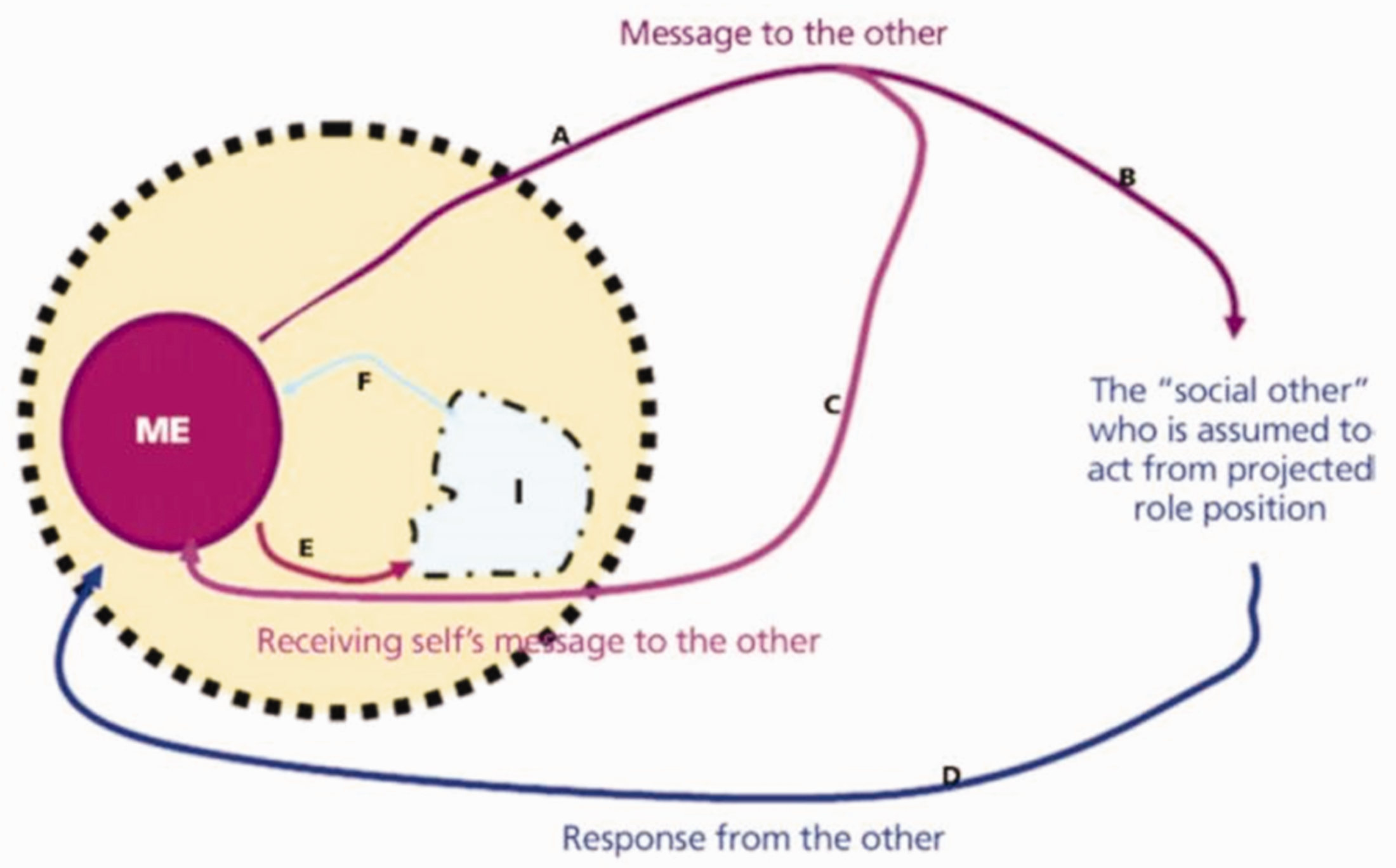
Pathways of cultural regulation of the self (Valsiner, 2018b, p. 286).
For example, a person wearing a face mask who thinks to herself “I feel safe with this” is involved in an act of auto-regulation of feelings. The same person thinking to herself, immediately after, “Also the doctor on TV said that masks are mandatory to protect oneself” is involved in a semiotic act of hetero-regulation of her feelings. So, the same observable conduct (wearing the mask) can be the result of a complex dialogue between intra-psychic and inter-psychic relations. This process can be organized in multiple layers adding complexity to the self-system. “Complexity of such intrapsychological semiotic mediation devices can include created hierarchies. One can create—in the intrapsychological system—an “alter ego,” with whom one can enter into lengthy internal dialogues. Such dialogues involve the use of signs, including in ways that entail hierarchical relations between those.” (Valsiner, 2018b, p. 286)
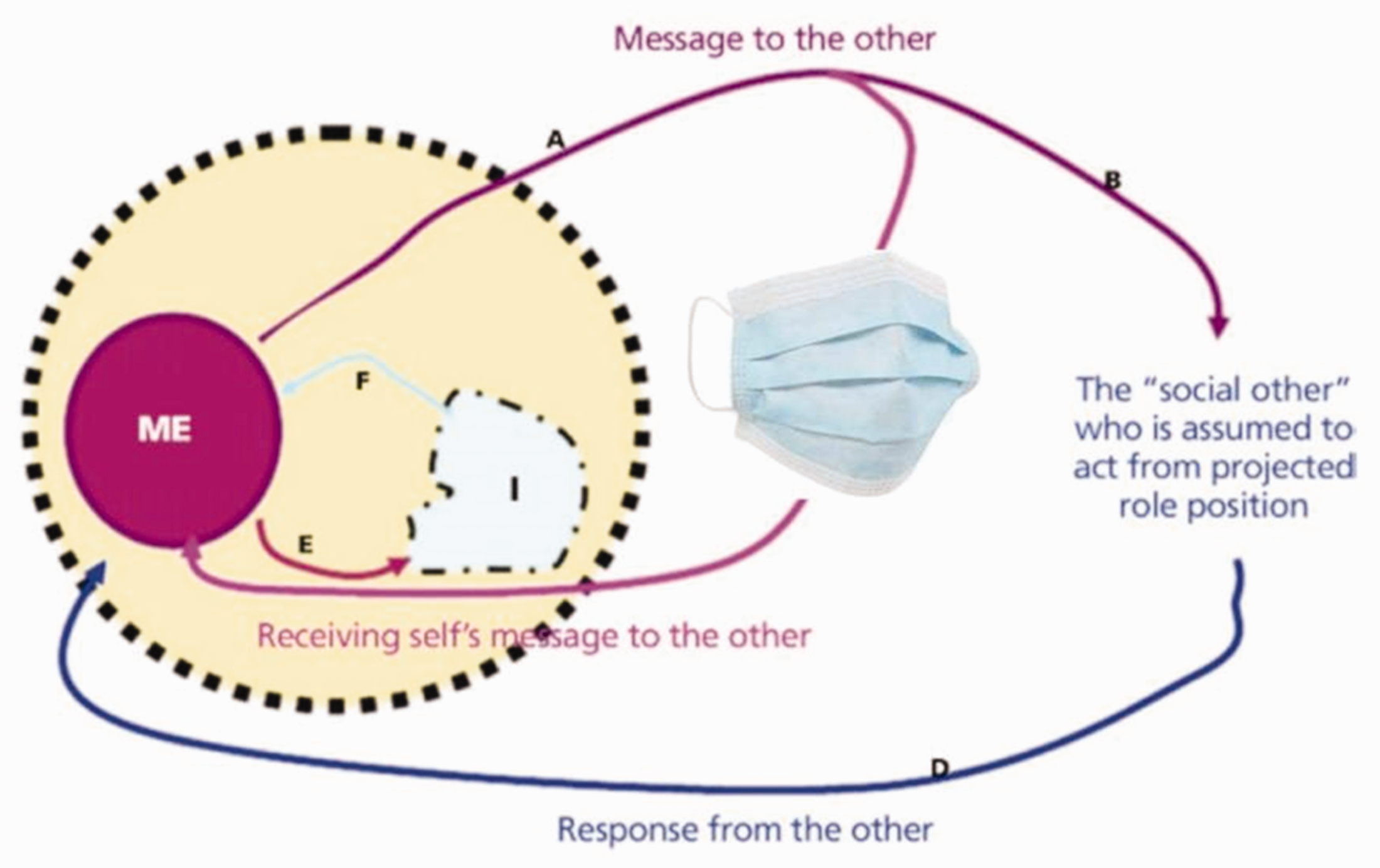
The face mask as mediating layer in I-other relationships.
The masks covering half of the face becomes a layer of semiotic mediation that make the system of self-regulation even more complex. Does the mask belong to the body of the person, or is it an external artefact that covers the real face? Of course, the question is useless from the perspective of the model of semiotic regulation of the self. The mask is both part of the person and of the social environment, it is an interface that at the same time distances and connects the I-other relation. The mask acts as a mediator in the auto and hetero-dialogue. By wearing the mask, the person is producing different layers of meaning and auto hetero-regulation processes (e.g. “I am safe”; “I inspire confidence in the others”; “I must wear the mask because the government said it”; etc.).
Ordinary and extraordinary masks
The face mask is also an arena in which the ordinary/extraordinary dialectic is at stake (Tateo & Marsico, 2019). No thing is “just a thing”, all the objects populating our daily life are invested with practical, affective, normative surplus of meaning at both collective and personal levels. We constantly turn ordinary objects (e.g. a mug; a pair of shoes) into extraordinary ones (my special lucky mug on my desk; the unique branded shoes that makes women sexy and successful). The coordination individual and collective activities is largely based on the dynamics between ordinary and extraordinary circumstances, between expected and unexpected events, between valuable and non-valuable things (Tateo & Marsico, 2019). Marketing is based on the process of turning ordinary things into extraordinary objects of desire or need. On the other side, we cannot live all the time into a world populated by extraordinary and unexpected events, so we need a way to turn extraordinary things into ordinary object that can fit in the daily routine. It is fundamental in any cultural context to create semiotic devices to escalate and de-escalate the meaning of objects from extraordinary to ordinary. Tateo and Marsico (2019) identified some of these semiotic devices: Decorating, illuminating, or colorizing are all semiotic means to stress the special character things; Magnifying or reducing the scale of a thing contributes to its ordinary or extraordinary meaning; Craftmanship or serial reproduction of things contribute to the loss or gain of their aura of uniqueness and artistic character; The contact/proximity between ordinary and extraordinary things can lead to an escalation by contact, but also to its deterioration by contamination; The meaning of certain things and events can be escalated–deescalated through processes of semiotic regulation of access, like limited editions or special entry passes. Narratives can turn ordinary lives into extraordinary events, like gospels, hagiographies, myths, but also diaries and everyday narratives.
The first arena of this process of mutual feeding between ordinary and extraordinary meanings is the human body itself. The ways to represent and to decorate the body (Valsiner, 2018a) shows how its meaning is constantly negotiated along the inward/outward continuum by the semiotic means of covering/uncovering and modifying it. Yet, the body is not a monolithic semiotic object. It is a complex arena made of different meaningful layers with different degrees and conditions of permeability (Nedergaard, 2016; Picione & Valsiner, 2017). The processes of auto and hetero-regulation work across the different layers, producing an intense auto and hetero-dialogue mediated by semiotic devices located at the different body layers (e.g. tattoos. make up, underwear, dresses, masks, etc.).
During a generalized state of emergency due to the pandemic, the face masks suddenly become the subjects of an intense meaning-making activity, involved in a dialectic between ordinary and extraordinary. Of course, they are at the same time potentially ordinary (e.g. for healthcare workers) and extraordinary objects (e.g. as they become the visible symbol of the pandemic). Under some conditions (when they become mandatory for the general population), their meaning can change. People shall make them ordinary in order to include them into everyday life routines. Yet, by becoming ordinary things, will they lose their meaning as safety devices, making people less willing to wear them? These are the kind of questions that societies are facing nowadays.
The process of meaning-making is clearly visible in the act of modifying the face masks in order to make them meaningful through for instance ornamentation and personalization, triggering a dialogical relation between ordinary and extraordinary (Tateo & Marsico, 2019). Everywhere, one can observe the multiplication of personalized, decorated, branded face masks (Figure 3). The aesthetization of the face masks represents also one of the most powerful cultural tools through which humans make sense of both positive and fearful events (Tateo, 2017).
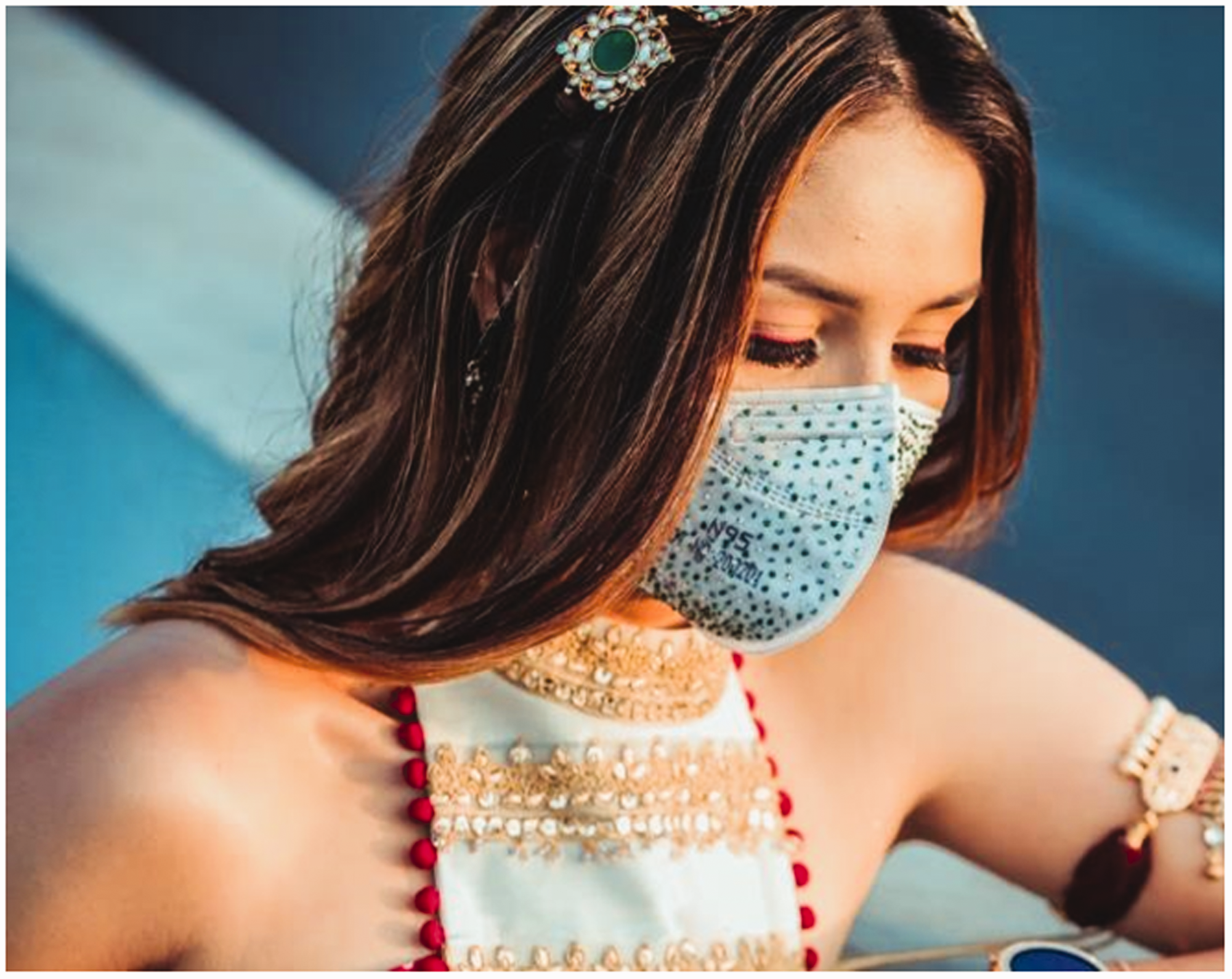
Indian woman wearing a fashion face mask (Photo by Nilay Ramoliya, retrieved from Pexels.com, May 2020, free use license).
How do people relate to the face masks and how they make sense of it as a semiotic layer that it is at the same time part of the body and emergency artefact? How does the semiotic regulation work in the meaning-making of safety/unsafety and in the I-other relationships in relation to the face masks?
The study
The study aims at exploring the role of the face masks in the meaning-making processes in participants with different age and cultural backgrounds, living in countries that are dealing with the COVID-19 with different timing and modalities (Norway, Brazil, Australia and Italy).
Method
The study is inspired by the tradition of qualitative social experiments (Milgram et al., 1992), acting upon everyday life experience to understand how people make sense of the ordinary/extraordinary dynamics (Tateo & Marsico, 2019). We have created a simple qualitative experiment consisting of an online questionnaire in English, divided in two parts: in the first section (Figure 4), a series of nine different masks are presented, asking participants whether they feel safe or unsafe against the COVID-19 and why.
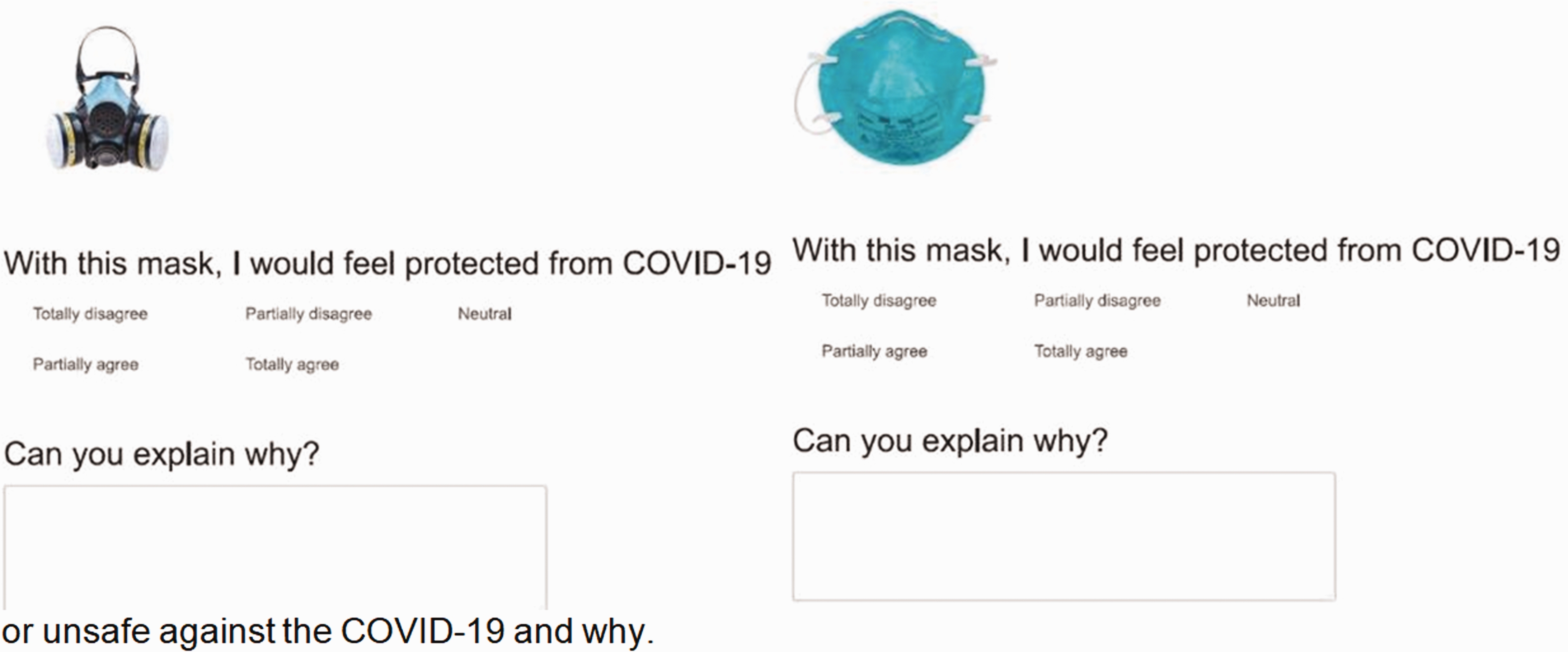
Example of questionnaire items.
Each mask refers to a different field of meaning (there are, for instance, an old mask from the 14th century plague, a military gas mask, a surgical mask, a scuba mask, etc.). The idea is that the different types of masks will evoke different meanings of safety/unsafety.
In the second part of the questionnaire (Figure 5), a series of commercial sanitary face masks with different ornamental designs are presented, and participants are asked to choose which one they would wear to go out in public and why.
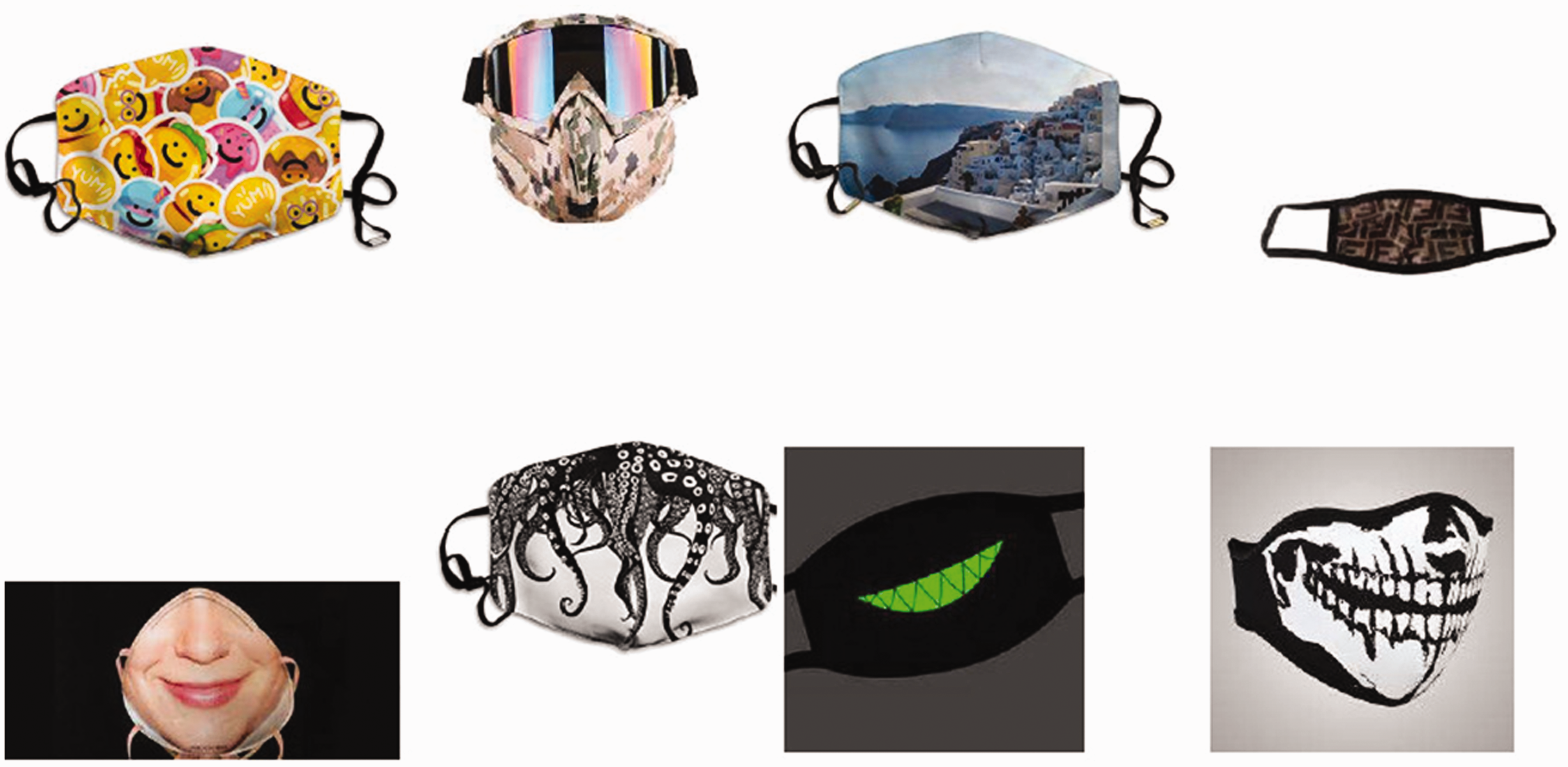
Examples of the masks in the item “when I go out, I would like to wear this mask”.
Of course, it does not really matter what masks participants choose. What matters are the reasons they provided in the open questions. The face mask is at the same time an artefact attached to the body and a boundary (Picione & Valsiner, 2017), an artefact which is not canonical and thus produces ambivalence (Tateo, 2015). The idea of the social experiment is exactly to create a strange situation in which something requires elaboration and thus makes visible the process of meaning making.
For the construction of the questionnaire and the data collection has been used the survey software Nettskjema licensed to the University of Oslo. For the qualitative analysis has been used NVivo. Participants’ answers have been collected, carefully read and then interpreted according to the themes described below in the section Categories Building. Participants have been recruited through the mailing list of students at the Department of Special Needs Education and through different international academic mailing lists. Data have been collected between March 10th and April 15th, 2020. The expected outcome of the study is to understand how people make sense of the mask as semiotic layer with respect to the dimension of safety/unsafety and with respect to the dimension of self/others.
Participants and context
The study has been conducted on two different groups of participants, invited on a voluntary basis. At the time of the data collection (March-April 2020), the pandemic was in its first phase of spreading in Europe. Italy has been the first country seriously hit and declaring the lockdown. Other European countries, like Norway, have been affected in different magnitude and with a certain time delay. American countries and Australia have been impacted later. At the moment of the publication, the situation is of course different. However, the focus of the study is to study the role of face masks in the meaning-making process. So, the participants are not representative of the situation in each country, rather they represent the personal sense of the pandemic experience as it is mediated by the use (or avoidance) of a particular artefact.
The first group is composed by 44 Master students of the Faculty of Special Needs Education at the University of Oslo (41 female and 3 male). Oslo students are mainly girls, 39 are of Norwegian nationality and 5 are from different nationalities (American, Chinese, Nepalese, Spanish). The students have already some familiarity with the healthcare system as part of their education is related to social work and clinical assistance to people with special needs or impairments. The majority of the participants have an age between 18 and 35 years (Table 1).
Gender and age range of the group 1.
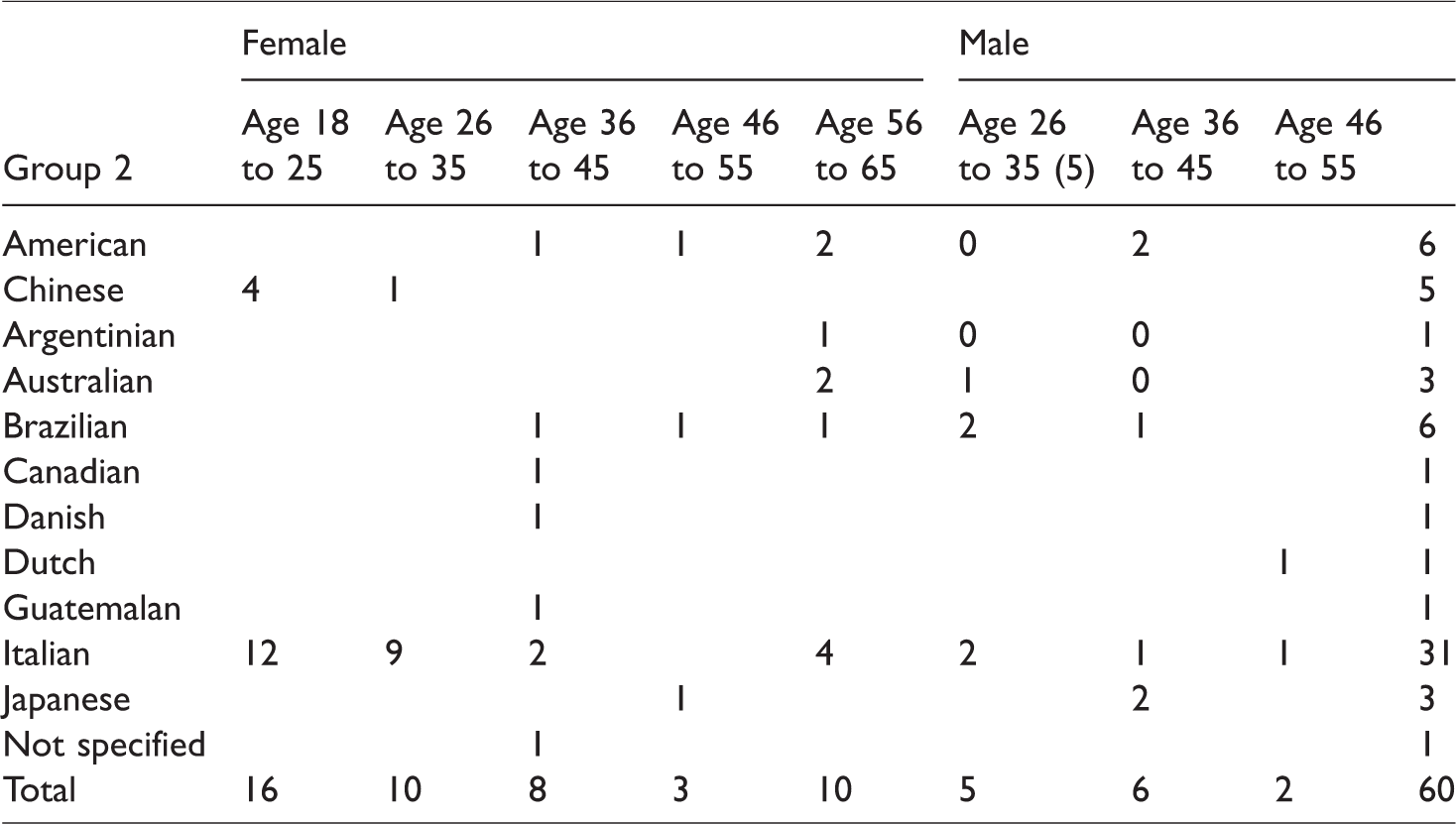
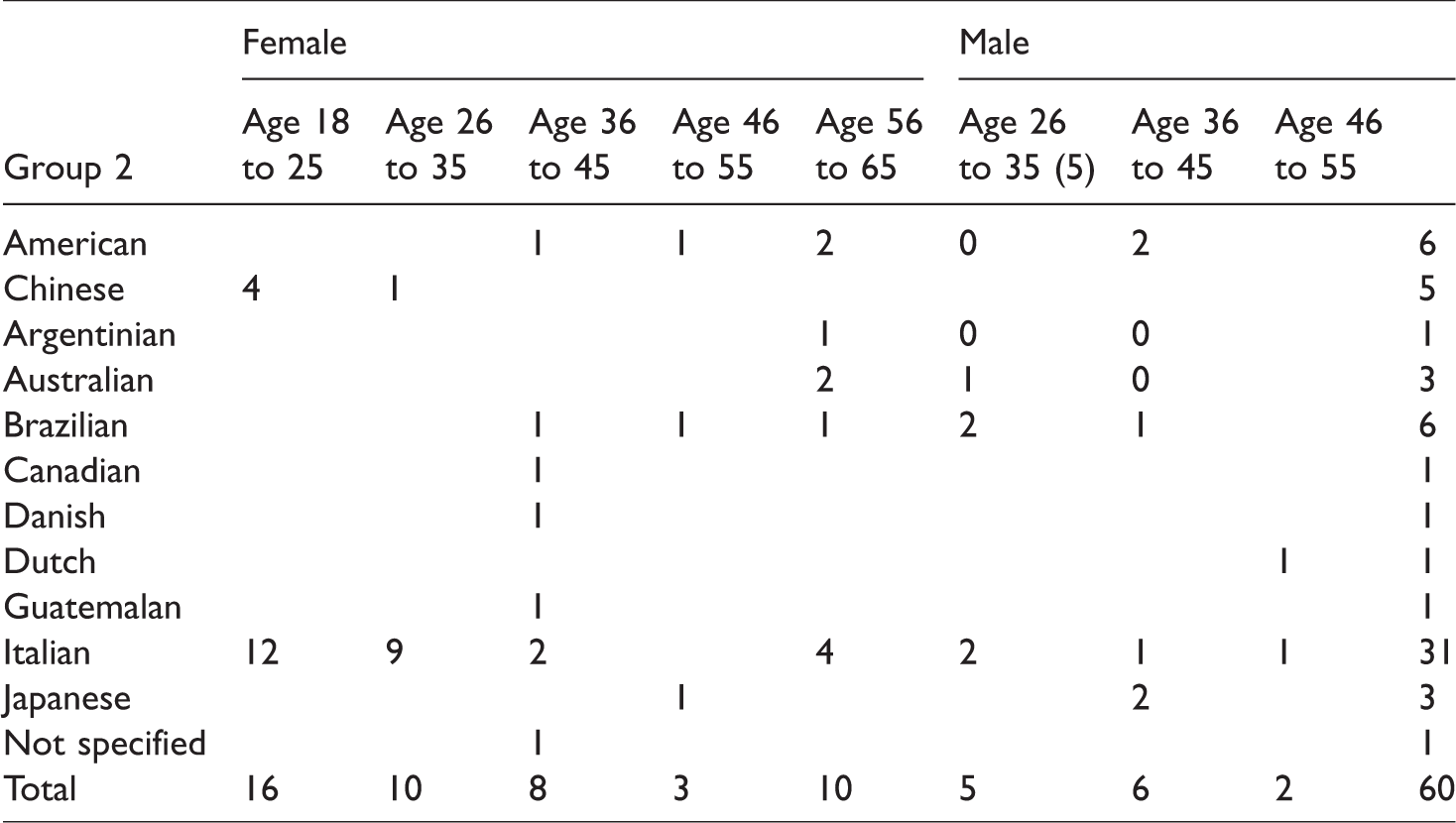
The second group of participants is composed by 60 student and scholars from different countries and different age groups (47 female and 13 male) (Table 2).
Gender, age range and nationality of the students group.
The two groups are not comparable, of course. The scope is to have a group of students from the same faculty that presumably is more homogeneous and shares some knowledge, practices and values; and a group which is more heterogeneous in age range and residence thus more culturally differentiated. As the participants are recruited on a voluntary basis, the Italian participants are numerous, because the theme was topical at the moment of the data collection. However, the age range is enough heterogeneous to not consider them as a separate sub-group. The purpose is not to identify similarities or differences between groups (that would be superfluous), rather to understand the process of meaning-making in relation to the face mask as meaningful artefact.
Categories building
The construction of the interpretative categories has been oriented theoretically but also based on the participants answers to the open-ended questions. The theoretical questions, guiding the construction of the categories, revolved around how people make-meaning and feel the face mask as artefacts; the safety/unsafety dimension; and how the use of the face mask mediate the relationships with the others. The first part of the research question is about people meaning-making process related to the safety/unsafety dimension. The public discourse has largely made use of the rhetoric of the “war on virus” (Cohen & Kupferschmidt, 2020) in order to mobilize the appropriate collective behaviours, like voluntary isolation and social distancing. However, this rhetoric device has appealed to people feelings of fear (Tateo, 2019), rather than appealing to reflexivity and responsibility. This is why we have chosen to evoke the dimension of war in our experiment, by using also images of gas and military masks. The second part of the online questionnaire focused on the I-other relationships, asking participants which type of mask they would wear to go out.
Discussion
What type of mask do participants prefer? In the first part of the questionnaire, participants were asked: “With this mask, I would feel protected from COVID-19”, required to grade on a Likert scale (5 points from “totally disagree” to “totally agree”) different types of masks (see Figure 4), and then to explain why. The first interesting observation is the absence of a clear-cut preference for one of the masks for group 1. Group 2 shows a clear preference for some of the designs. In Table 3, the percentages of preference for the masks in the two groups are presented only for the sake of helping the reader to grasp the context in which the interpretative analysis has been carried out.
The types of face mask providing feeling of protection. a

aFor reason of space, only the masks positively rated by more than 25% of participants have been presented.
The focus of the study is the meaning-making process, so the rating task was secondary and made to provoke participants’ justifications for their preferences. However, I can’t help nothing that two types of design received the higher ranking in both groups. It is understandable that the surgical masks directly related to the medical field of meaning have been felt as protective. At the same time, the gas masks, closer to the field of meaning evoked by war, also provoked higher preferences. The main difference between the two groups is that the Norwegian students (group 1) do not express a striking preference for one type. Group 2, composed of seniors from different countries, seems to have stronger preferences, although they also include the scuba diving mask (that has been used in some countries as pulmonary ventilator) and the face mask with the smile. The reasons for these preferences will become clearer if one looks at the reasons provided by the participants.
1. How do participants talk about safety and unsafety? The mask is a quite ambivalent object; it can be more or less protective and effective. This can also justify why participants are not so confident in preferring one type of mask. There are actually four elements in the relationship: Me, the Other, the mask and the virus. 1.1 “It is helpful to prevent others from being infected by asymptomatic individuals, but not protect individuals from contracting the virus” 1.2 “I am not sure, but I am influenced by the idea that masks don't do as much to protect me (the wearer) as to protect others from potentially catching the virus from me” 1.3 “The mask protects me from giving the virus to others. It also prevents me from touching my face” 1.4 “But if other people wore one of those id feel protected and similarly they’d be protected by me wearing one. So yes partially agree” 1.5 “Creates hysteria if we are to wear such masks. The fear among those around you can be just as dangerous to your health” 1.6 “Therefore is just give the healthy people false security and make more insecurity among the population” 1.7 “Even though you are protected, people around you can still have Covid and then give it to you. I think the only reason you should wear one is if you know you are sick and wants to protect others around you” 1.8 “There is not much proof that the masks do much. I think it’s more of a mental perception of safety, ie quelling the anxiety rather than any real protection.” 1.9 “thought it was excessive it contributes more to the fear in my eyes, the authorities have really also said that it is a “false protection” 1.10 “The mask I have gives me the idea of a teddy bear, a teddy bear face. I state, that I do not like wearing it, I am in trouble, I touch it constantly, I move it and sometimes I get the instinct to take it off.” 1.11 “I don't like wearing face masks. I think it makes me look overprotective and paranoid.”
2. The mask acts also as semiotic mediator between “I” and “Me” in the embodied dimension. How do participants relate to the body? 2.1 “goggles add extra protection, the reason they say don't touch your face is to keep virus out of eyes, nose, and mouth.” 2.2 “I would remember to not touch My own face.” 2.3 “I think this will cause more touching in the face.”
3. What is the meaning related to the design and appearance of the mask? The safety of the mask is related to the field of meaning of medicine. Participants’ answers only refer to science or to medicine when they mention the characteristics of the masks’ design and material. 3.1 “I like that it has a bit of character and flair, but not too cartoony or silly. But I prefer it over other, more medical-looking ones (like the plain white one) which feel like the wearer is taking themselves too seriously. Also it looks like it has decent coverage and would actually fit the shape of one's face, so it might be more comfortable and stay in place.” 3.2 “This mask seems to be very sophisticated, so I would also feel safe.” 3.3 “I felt reassured that the mask had a distinct medical mark. And it looks very simple.” 3.4 “All masks probably protect the same. However, the bear is cute and lightens up the mood. It sparks joy.”
4. How does the mask mediate in the relationship with the others? This is mainly the focus of the second part of the questionnaire, in which participants are asked to choose which mask they would prefer to wear when going out. However, the issues of the I-other relationship emerged also in the first part. Meaning-making seems to develop along two different directions or preferences: neutrality versus cuteness. 4.1 “I wouldn't want to look like a fool, nor to look creepy. I want my mask to be as neutral as possible.” 4.2 “Seems less offensive/is The most neutral. The others are Kind of making fun of The situation” 4.3 “If I wore that people would look at my like i was some kind of conspiracy theorist. I would feel their stares, feel like I was part of one of those 'prepping' groups”
On the other hand, it seems that the opposite strategy can work in order to turn an extraordinary object into an ordinary one, both in front of the others and to myself. 4.4 “It's happy and full of colours, it could make someone happier.” 4.5 “or the octopus, because I really like it. the rainbow seems protective” 4.6 “Looks secure enough and it looks cute” 4.7 “It looked the least strange, however it may make me seem like a hypochondriac with a fear of germs” 4.8 “It looks like the most professional one, so I guess I trust the design to work as intended, more than the others. I probably wouldn't wear a mask either way, but.” 4.9 “It looks funny. Hopefully it'd make people laugh” 4.10 “It’s cute and my two children would probably find it less scary than a medicinal one or other options”.
Conclusion
The pandemic of COVID-19 has brought to the front of public discourse a particular type of object: the face mask. In the present study, I have explored the way people make meaning of an object that is generally associated with the medical context: 5.1 “Yes, it is the mask for medical use. However, I want health professionals to use this mask, not me”
The study is of course a first semiotic exploration of the role of the face mask in meaning-making. We are aware of the many limitations of such a work. For the sake of space, the author decided not to provide a more detailed analysis of all the textual data, limiting the discussion to the theoretical dimensions that seem more topical. Although this was not the objective of the study, the semiotic analysis could be complemented with a quantitative content analysis of the participant’s answers. The further development could be a field study, interviewing participants while they are wearing face masks in public. It would allow to better understanding the interface role of the mask. For instance, what about people wearing make-up under the mask? Unfortunately, the social distancing is not allowing this kind of study at the moment. It will be worth making this study as soon as the conditions will allow it. It will be crucial to understand how people make meaning of this object that is fundamental in the prevention of the pandemic, as the meaning-making will be related to how people are likely to use the masks in everyday life.
I have applied the semiotic model of cultural psychology (Valsiner, 2014) to the answers of two groups of participants, a group of Norwegian university students and a group of international academics. In particular, I have focused on the role of the mask, as meaningful artefact, in mediating meaning and in regulating people affective experience in the auto and hetero-dialogue. I have identified four main dimensions in participant’s answers: How the mask mediates in the experience of safety and unsafety in the relation between I, the other and the virus; How the mask acts as semiotic mediator between “I” and “Me” in the embodied dimension; What is the meaning related to the design and appearance of the mask; How the mask mediates in the relationship with the others in public.
The mask evokes at the same time safety and fear, it mediates in the auto-dialogue between “I” and “Me” through the “Other”, and in the hetero-dialogue between “I” and the “Other” through “Me” (Figure 2). The dialogue is characterized by a certain ambivalence, as expected. Meaning-making is indeed the way to deal with the ambivalence of human existence. When it comes to solve problems like the use of the face masks, psychology focuses on behavioural modifications. Many campaigns of awareness fail to obtain the expected behavioural change. This study shows that the importance of focusing on the meaning of the object in relation to its use cannot be overlooked. We suggest that the same process is in place whenever one uses artefacts that create a further layer of the body, like condoms2 (Broemer, 2002), personal protective devices, underwear, religious clothing, etc. producing a similar dialogical movement in the meaning of safety/unsafety. Most important, face masks will probably become an object of ordinary life even after the end of the current pandemic. Their correct use can save lives. This is why understanding how people make meaning of their use is fundamental.
Footnotes
Acknowledgements
This study has been imagined by the author during a session of the kitchen seminar group. The kitchen seminar is an international informal network of more than 400 peer scholars (professors and students), created 20 years ago by Jaan Valsiner, who meet every Wednesday in presence and in video conference to discuss ongoing research projects, drafts and new ideas. I am deeply grateful to the kitchen people for the stimulating and friendly environment where to cultivate new ideas.
Declaration of conflicting interests
The author(s) declared no potential conflicts of interest with respect to the research, authorship, and/or publication of this article.
Ethics approval
The study with humans has been approved by the Norwegian Centre for Research Data. This article does not contain any studies with animals performed by the author.
Funding
The author(s) received no financial support for the research, authorship, and/or publication of this article.
