



Abstract
The acoustic environment of schools is critical for effective learning, teaching, and wellbeing, with traditional guidelines prioritizing technical parameters such as noise levels thresholds, reverberation time, and sound insulation. However, the integration of soundscape principles, encompassing perceptual and experiential aspects of the auditory environment, remains underexplored. Gray literature offers a valuable resource for synthesizing reviews, particularly in fields where guidelines and policies are often published outside traditional academic channels. In this review a comprehensive gray literature search plan was developed using four complementary strategies: (1) gray literature databases, (2) customized Google search engines, (3) targeted website searches, and (4) consultation with field experts. Documents were screened for relevance through their abstracts, executive summaries, or tables of contents, followed by full-text reviews. Extracted data included acoustic parameters, user-centered elements, inclusion of wellbeing and soundscape considerations, and mentions of positive auditory stimuli. The search strategy identified 18 guidelines, most addressing traditional metrics like noise level thresholds and reverberation time. However, integration of soundscape principles, positive sounds, and wellbeing was minimal, with only 2 out of 18 guidelines (WELL Building Standard v2 and DQLS Version 3.0) mention soundscape principles, with WELL addressing auditory comfort and DQLS acknowledging natural sounds outdoors. User-specific needs were addressed in 11 guidelines, but user preferences were absent. Wellbeing was linked to acoustics in 6 guidelines, though mostly indirectly. These findings highlight gaps in addressing the experiential and psychological aspects of sound in educational environments.
Introduction
The acoustic environment of schools plays a crucial role in the learning, teaching, and wellbeing of students and staff,1–3 making it essential to address key acoustic concerns. Research by Shield and Dockrell, Beaman, and others has documented the negative impact of poor classroom acoustics on students’ cognitive performance and comprehension.4–9 Excessive noise can significantly disrupt learning by impairing speech intelligibility and concentration. 10 Recognizing this, numerous countries have developed guidelines to enhance school acoustics, aiming to create comfortable learning environments. The development of guidelines for school acoustic design has evolved significantly since 1944 when the UK Ministry of Works published guidelines on sound insulation and acoustics for school buildings. 11 These guidelines vary across regions, reflecting diverse approaches to achieving optimal acoustic conditions in educational settings. International guidelines focus on strict acoustic parameters such as limiting noise levels, managing reverberation, and enhancing sound insulation.
While noise parameters are essential to minimize disruptions and support effective communication in educational environments, the various components that constitute indoor soundscapes—including acoustic characteristics, sound sources, spatial factors, and perceptual responses—can inform the design of spaces that promote auditory comfort and enhance positive experiences for individuals. Visentin et al. 12 highlight the predominance of unpleasant sounds, such as voices and traffic, and children’s preference for music and natural sounds, suggesting design opportunities for more inclusive and positive learning environments. Pellegatti et al. 13 extend this discussion by showing how ventilation sounds impact students’ learning, comfort, and cognition, with natural sounds proving beneficial and mechanical or anthropogenic noises often detrimental. From another perspective, school staff’s sound perceptions were analyzed, revealing that staff members emphasizing the need for soundscape designs that minimize disruptive noise and enhance positive sounds within school settings. 14 In another study, researchers implied that incorporating positive sounds can enhance the acoustic experience by fostering relaxation, improving focus, and promoting overall wellbeing. 14 Studies demonstrate progress in applying indoor soundscape principles to school environments. These principles emphasize user-centered evaluation, including perceptual attributes (e.g. Comfort, Content, and Familiarity), contextual relevance (e.g. activity and spatial use), and the potential for positive sounds to enhance the acoustic environment. 15 However, they also suggest a research gap in the lack of integration of soundscape-related, perceptual principles into existing standards and guidelines for school acoustics.
Overall, despite the increasing recognition of soundscape approaches in academic research, their integration into practical guidelines and standards remains underexplored. Most acoustic regulations for schools continue to prioritize room acoustic parameters, with limited attention given to the perceptual or subjective aspects of the sound environment. This raises important questions: To what extent do existing school acoustics standards incorporate soundscape approach? Another critical consideration is how these standards address user-specific auditory needs and preferences. Finally, an essential question is how these standards support the overall wellbeing of staff and students within school settings.
Methods
This study applies a systematic review search method to gray literature, focusing on non-commercially published materials such as government regulations, organizational standards, and professional guidelines. While academic literature provides important conceptual and empirical contributions, this study specifically targets gray literature to examine how sound-related policies are operationalized in practice.16,17 While academic research offers valuable theoretical perspectives, this review addresses a critical gap by analyzing how, or whether, those ideas are reflected in policy and regulatory frameworks. In doing so, it complements academic literature and reveals important disconnects between evidence, policy, and practice.
By pre-determining search parameters, the plan ensures a structured, comprehensive, and transparent search process, guiding the methodology throughout. A detailed plan minimizes the risk of bias by establishing consistent criteria, making the search less subjective and more reproducible. Defining the scope early, including the number of terms and volume of results to screen, aids in setting manageable boundaries, saving time, and effort. Documenting each search step aligns the study with PRISMA standards, which are essential for systematic reviews. 18 PRISMA guidelines recommend detailing all information sources used, specifying the search performer, recording the search date, and providing a comprehensive search strategy (including all terms and combinations) for at least one database. This documentation is especially important in gray literature searches, where transparency may be less straightforward due to the diversity of sources. This strategic approach enhances the reliability of the review and aligns with systematic review reporting standards.
In this review, the term soundscape approach refers to a framework that integrates perceptual, contextual, and user-specific dimensions of acoustic environments. Drawing from the ISO 12913 series 19 and relevant research,20,21 it is focused on four key indicators: (1) reference to users’ perceptual responses (e.g. pleasantness, comfort), (2) contextual sensitivity (e.g. activities, spatial use), (3) consideration of diverse user needs and preferences, and (4) support for wellbeing and positive experiences. These elements were used to assess whether and how current guidelines incorporate soundscape thinking. It is recognized that formal standards may not use this terminology directly, so researchers also looked for indirect evidence of these principles.
Eligibility criteria
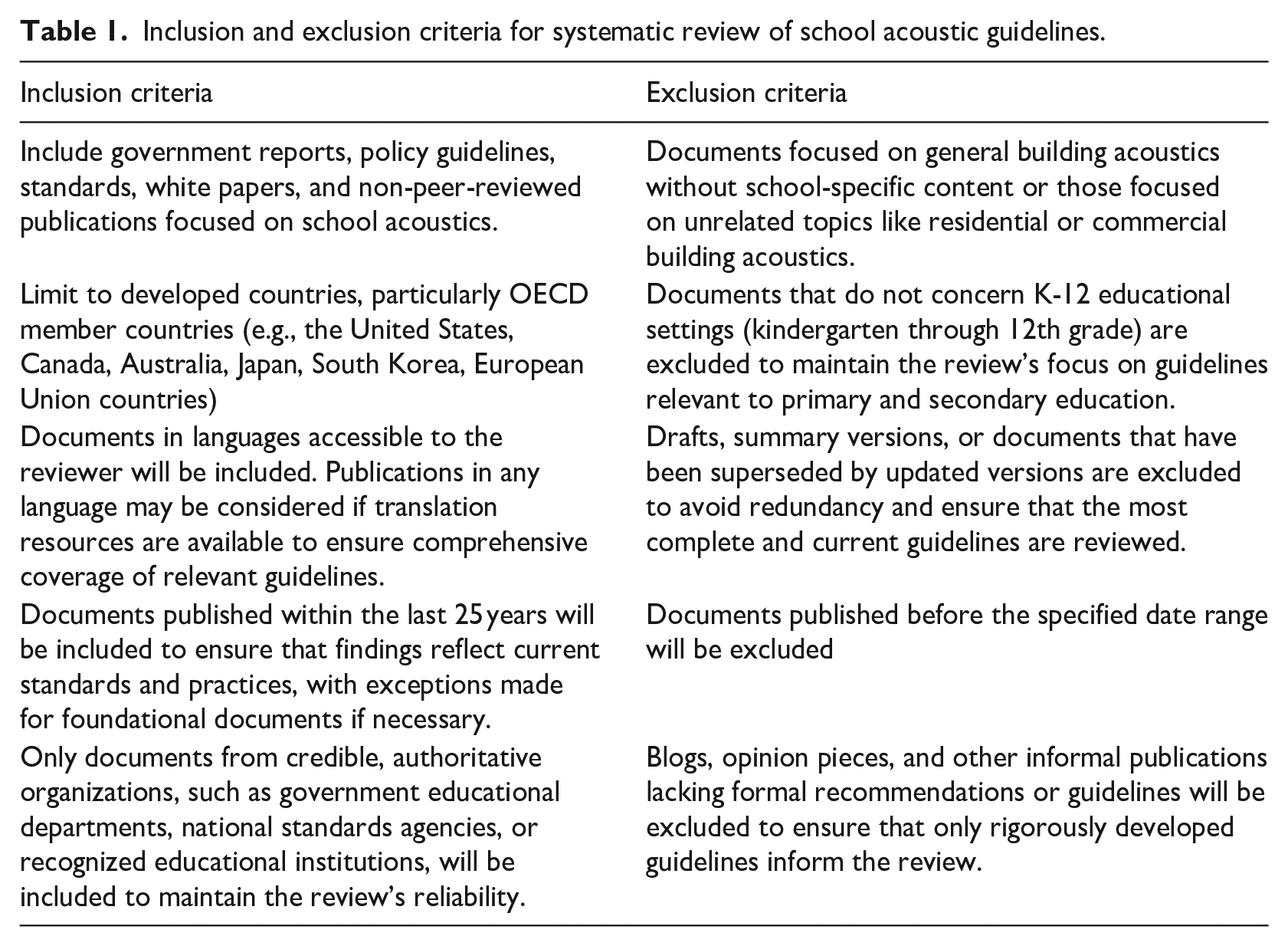
The study conducted to develop a systematic gray literature search and review focused on examining guidelines for school acoustics. Eligibility criteria for the review were outlined in the gray literature search plan, as presented in Table 1. These criteria highlight that a typical approach of systematically searching academic journal databases is insufficient for fully addressing the research questions posed in this study review.
Inclusion and exclusion criteria for systematic review of school acoustic guidelines.
Search strategy
A comprehensive plan for gray literature searching was developed, incorporating four strategies: (1) gray literature databases, (2) custom Google search tools, (3) specific websites, and (4) expert consultations. These methods were inspired by a previous gray literature review on school-based breakfast guidelines. 21 To reduce the risk of missing sources, multiple methods were employed. Since databases and search engines each use different algorithms to assess relevance, utilizing a mix of these resources broadens the scope of findings. Documenting each step of the search process is vital for ensuring transparency and comprehensiveness in any review. As a result, all decisions, assumptions, and challenges encountered throughout the process were carefully noted.
The initial search strategy involved querying gray literature databases related to the topic of the review. For this study, a search was conducted on November 01, 2024, using the Policy Commons platform, which provides access to over 24 million pages of curated, policy reports, guidelines, analyses, working papers, and datasets from thousands of policy organizations, including IGOs (Intergovernmental Organizations), NGOs (Non-Governmental Organizations), and think tanks (Think tanks are organizations that conduct research and analysis to influence public policy and decision-making). This platform was chosen because the research specifically focused on guidelines. The search included three key groups of terms: (1) school; (2) acoustics (e.g. sound, noise, school environment, acoustical design, soundscapes); and (3) guidelines (e.g. guidelines, standards, frameworks, recommendations). These terms were used as keywords in the search. The results were exported into an Excel spreadsheet, where duplicates were removed using the “remove duplicates” function. The titles of all results were reviewed in Excel, similar to how a title screen is used in a traditional review of academic journal articles. Titles deemed relevant were highlighted and retained for further screening. This search yielded 53 documents, all of which were further reviewed for relevance to the study. Out of the 53 documents identified, only one was selected for full-text screening. The remaining documents were excluded for two main reasons. First, some were not directly relevant to school acoustics. Although they mentioned “school acoustics” in broad terms, they lacked specific content related to acoustic guidelines or standards applicable to educational environments. Second, several documents had only a partial scope within school settings. These focused on particular areas—such as gymnasiums or auditoriums—without providing guidance for the entire school environment.
The second search strategy involved using Google to search for documents available on the Internet. Given the vast amount of information and the inconsistent organization across websites, Google searches can be overwhelming. Unlike systematic searches in academic databases, where a single search strategy is used to screen all results for eligibility, 22 Google searches often require multiple strategies with various combinations of search terms. Additionally, it is impractical to screen all the results returned by Google searches. Instead, the search process relies on Google’s relevancy ranking system, which prioritizes the most relevant results at the top. To maintain consistency and manage time effectively, a predetermined number of pages were selected for screening. Custom Google search engines were used to refine the search results to specific subject areas or websites, enhancing the precision of the search. We filtered results to include only websites with domains such as .gov, .edu, and .org, and focused on documents published within the last 25 years (from 2000 onward), limiting the search to the first 10 pages. The search query used was: “school acoustics” guideline site:.gov OR site:.edu OR site:.org. This search specifically aimed to retrieve documents that: Include the term “school acoustics” to ensure relevance to the subject of acoustical design in schools. Contain the word “guideline” to focus on documents that offer formal recommendations, best practices, or standards related to school acoustics. Are hosted on domains such as .gov (governmental), .edu (educational institutions), or .org (non-profit and organizational websites), which are trusted sources of information in the field of education and public health. By using this approach, we were able to systematically filter the vast volume of available online content and identify documents that meet the criteria of being authoritative, relevant, and related specifically to school acoustics and design guidelines. This search yielded approximately 571 results. From these, five documents were included. The following exclusion criteria applied.
Not directly related to school acoustics: Any documents that did not focus specifically on acoustics in the context of school environments were excluded. This includes documents where “school acoustics” was mentioned only briefly or in a peripheral context, such as in general discussions about building design or unrelated noise management.
Not a guideline or recommendation document: Documents that were not classified as guidelines, standards, or frameworks were excluded. This includes documents that might discuss acoustics or noise issues in schools but do not provide actionable or formal recommendations, such as articles, research papers, or reports without explicit guidelines for acoustical design or management.
Limited or no mention of acoustics: Documents that only referred to acoustics in passing or did not include sufficient detail on acoustical considerations in school design were excluded. For example, documents that mentioned acoustics only in relation to specific areas (e.g. a single classroom) without discussing broader guidelines for acoustic design or management were not included.
Inaccessible or restricted documents: Any documents that were not freely accessible or required special permissions or subscriptions for access were excluded. Only publicly available documents were considered to ensure transparency and ease of access for the research.
The third search strategy involved targeting specific websites that are authoritative in the field of acoustics and environmental design. These websites were selected as they provide access to comprehensive guidelines and technical standards from authoritative sources and certification bodies. Relevant sources were drawn from trusted organizations such as the International Organization for Standardization (ISO) or BREEAM (Building Research Establishment Environmental Assessment Method). The search was further refined by filtering results to those published within the last 25 years (since 2000). This included the International Organization for Standardization (ISO) and certification bodies such as BREEAM and WELL. Each website was searched using specific keywords and filtering criteria tailored to ensure the inclusion of documents relevant to school acoustics and educational environments.
International organization for standardization (ISO)
The ISO standards database was searched with various keyword combinations to maximize the likelihood of finding comprehensive acoustic standards relevant to schools. The following strategies were implemented: Keyword Combination 1: The terms “school” and “acoustics” were used together. This search yielded 1 included guideline after excluding documents not specific to school environments or comprehensive acoustic standards. Keyword Combination 2: The terms “acoustic standards” alone were used to capture broader standards that might include schools. This search resulted in 46 documents, of which 1 were included after screening for applicability. One document overlapped with results from the first search combination.
Through these combined search efforts, one ISO document was identified that met the criteria for inclusion in this review.
Certification bodies (BREEAM and WELL)
Manual searches were conducted on the websites of BREEAM, and the WELL Building Standard to identify guidelines addressing acoustic comfort and soundscapes within sustainable design frameworks. These organizations provide standards that often include criteria for acoustics impacting wellbeing in educational settings. Due to limited search functionalities, the following strategies were employed: BREEAM: The BREEAM technical standards section was manually reviewed to locate documents related to educational buildings and acoustics. The latest applicable standard is BREEAM New Construction Version 6.1, which includes criteria relevant to school acoustics. WELL Building Standard: The WELL certification guidelines were examined to identify features related to acoustic comfort in educational environments. The WELL v2 standard covers concepts such as Sound, which addresses building acoustics and noise levels.
The fourth search strategy involved consulting with experts to identify additional relevant documents and resources that may not be readily accessible through database searches or online platforms. Experts in the field of acoustics and environmental design, particularly those with experience in educational settings, were approached to provide guidance on key publications, guidelines, and gray literature that may have been overlooked during earlier searches. . Emails were sent to 15 experts, selected based on their expertise in school acoustics and related fields. These experts were asked to provide any relevant guidelines, recommendations, or resources they had access to. Of the 15 experts contacted, 5 did not respond to the request, while the remaining 10 experts provided valuable input. After reviewing their responses and removing duplicates, 28 guidelines were included for further analysis.
These 28 guidelines, contributed by the experts, were carefully screened for relevance and quality. The expert consultation helped to enrich the collection of guidelines and ensure that the review captured a comprehensive set of recommendations from a global perspective.
The review will include a range of national and international guidelines on school acoustics and soundscapes from recognized bodies. Guidelines will be selected based on relevance, accessibility, and applicability to K-12 educational settings. Since abstracts are often unavailable in gray literature documents, 23 the abstracts, executive summaries, or tables of contents (whichever were available) of items were reviewed for relevance to the research objectives by one author. If more than one of these elements were available, all were reviewed for relevance. Next, the full text of all items that
Eligibility assessment and study selection
The PRISMA guidelines suggest utilizing a study flow diagram to illustrate the process of screening and selecting studies. 18 This approach was implemented in the methods for searching gray literature. The four-search method use in this review demonstrated in Figure 1. The abstracts were often unavailable. For this reason, sometimes table of contents, sometimes summaries which ever available were screened. Documents passes the first screening moved to the full text screening. At this stage some documents were excluded due to a lack of details relevant to school acoustics or because they did not provide guidance or recommendations. All documents that passed the full-text screening were included in the final review.
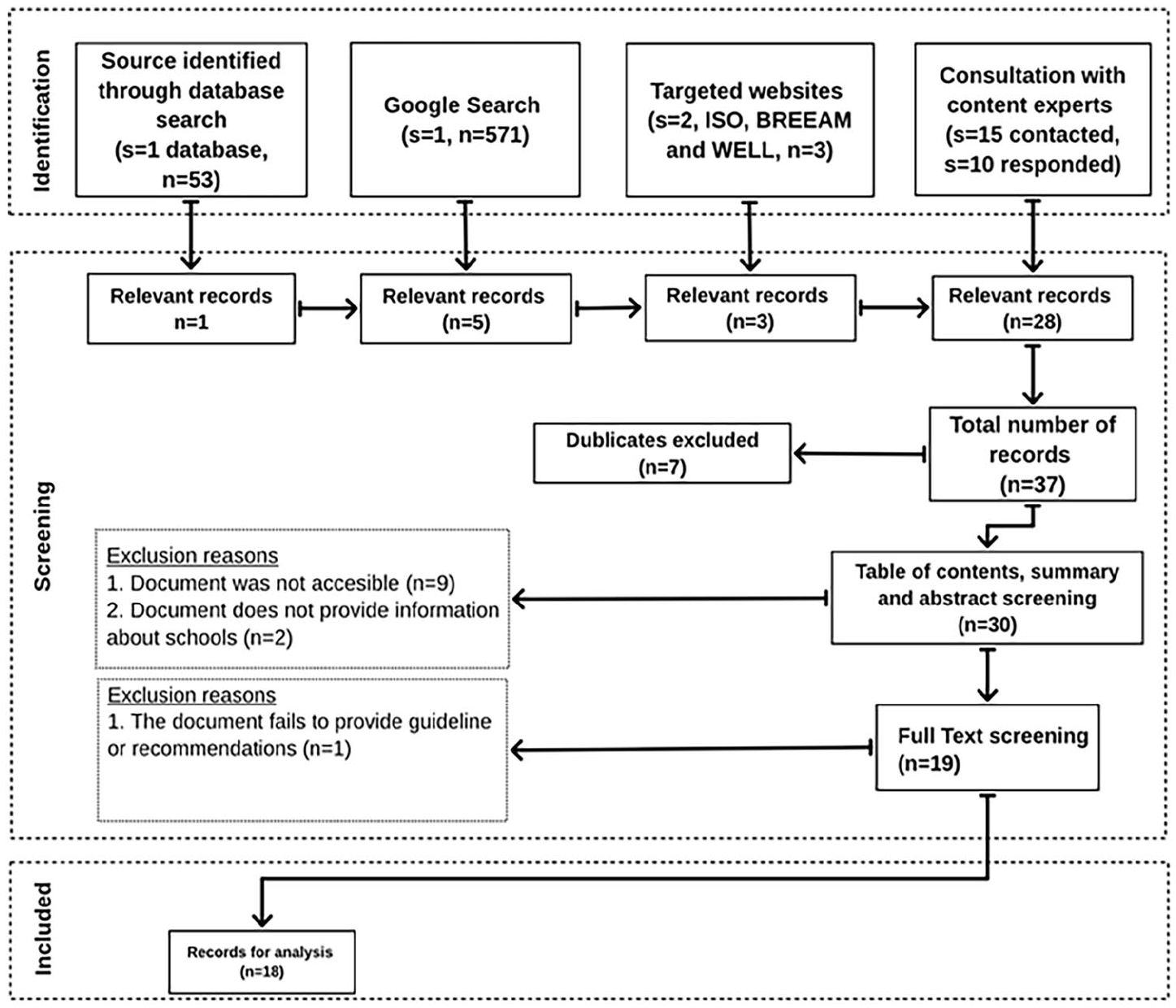
Four-search method for identifying gray literature in the review.
Analysis
A coding framework will be developed to systematically categorize the content of each guideline based on key themes. These themes include soundscape integration, acoustic parameters (e.g. reverberation time, sound insulation), and design recommendations. The information was organized into an Excel sheet, which included fields such as country, title, language, authoring organization, year, scope, noise level limits, reverberation time, speech intelligibility, sound insulation, sound pressure levels, material recommendations, room shapes and sizes, outdoor acoustic design, inclusive design, mention of wellbeing, mention of soundscape, and positive sounds.
Comparative analysis of included study analysis
In this comparative analysis, a total of 18 guidelines were included. These guidelines are as follows: ISO 17772-1:2017 (International Organization for Standardization, 2017), 24 UNI 11532-2 (Italian National Unification Body, 2019), 25 SS 25268:2023 (Swedish Standards Institute, 2023), 26 DIN 18041:2004 (German Institute for Standardization, 2004), 27 AAAC (Association of Australian Acoustical Consultants, 2018), 28 DQLS Version 3.0 (New Zealand Ministry of Education, 2020), 29 BB93 (UK Department for Education, 2014), 29 Regulation on Protection of Buildings Against Noise (Turkish Ministry of Environment and Urbanization, 2007), 30 National Building Code of India 2016 (Bureau of Indian Standards, 2016), 31 Program Requirements for Healthy Schools (Dutch Ministry of the Interior and Kingdom Relations, 2021), 32 SBI 217 (Danish Building Research Institute, 2008), 33 ANSI/ASA S12.60-2010/Part 1 (Acoustical Society of America, 2010), 34 ANSI/ASA S12.60-2009/Part 2 (Acoustical Society of America, 2010), 35 Regulation of Acoustic Requirements for Buildings (Portuguese Institute for Quality, 2024), 36 STR 2.01.07:2003 (Ministry of Environment of the Republic of Lithuania, 2003), 37 BREEAM UK New Construction Version 6.1 (BRE Global Ltd, 2024), 38 and WELL Building Standard v2 (International WELL Building Institute, 2020), 39 Acoustic Environmental Design of School). 40 All guidelines emphasize the importance of acoustic factors, with a focus on controlling noise levels, reverberation times, and sound insulation. Most guidelines, provide specific thresholds for these parameters to ensure effective communication and reduce distractions within learning environments.
ISO and UNI focus on acoustic values without providing specific limits but highlight the importance of creating learning environments conducive to communication. DIN, BB93, and AAAC explicitly set acoustic limits, with detailed recommendations for minimizing noise transmission, and optimizing reverberation times. SS and Regulation of Acoustic Requirements for Buildings offer general guidelines but with a less detailed focus on specific limits.
Guidelines like WELL Building Standard and BREEAM further emphasize the role of acoustics in reducing stress and promoting occupant wellbeing, linking acoustic comfort with cognitive performance and learning outcomes. All guidelines stress the importance of design factors, including the selection of materials, spatial arrangements, and layout. For example: BB93 and Regulation on Protection of Buildings Against Noise provide extensive recommendations for school layouts and material selection that enhance sound insulation and reduce noise transmission. ANSI/ASA S12.60-2009/Part 2 and Program Requirements for Healthy Schools discuss the role of designing quiet zones for individuals with hearing impairments or those who are sensitive to noise. ISO and SS suggest general design guidelines aimed at achieving acoustic comfort, though their focus is not always as comprehensive.
Inclusive design is a major focus in many guidelines, particularly those that cater to students and staff with hearing impairments, neurodivergence, and other sensory challenges. Guidelines such as ANSI/ASA S12.60-2010/Part 1, Program Requirements for Healthy Schools, and DQLS Version 3.0 explicitly address these needs, ensuring spaces are accessible, and suitable for all users. ANSI/ASA S12.60-2010/Part 1 and ANSI/ASA S12.60-2009/Part 2 focus on the acoustic needs of a wide range of users, from individuals with cognitive impairments to non-native language speakers and young learners. UNI and DIN address the acoustic needs of children and the elderly, while Program Requirements for Healthy Schools considers the needs of both teachers and students, including those with sensitivity to noise. SS 25268:2023 and AAAC 2018 also discuss inclusive design but with a focus on hearing impairments and how to design spaces that cater to these individuals’ needs.
While some guidelines, like the Turkish Regulation on Protection of Buildings Against Noise and Regulation of Acoustic Requirements for Buildings, do not specifically mention inclusivity, they still offer general guidance on improving the acoustic environment, indirectly benefiting all users.
Though often discussed in indirect terms, several guidelines make the connection between acoustic comfort and wellbeing. For example: The WELL Building Standard v2 links acoustic comfort to reduced stress, improved learning outcomes, and increased productivity, explicitly tying acoustic design to occupant wellbeing. BREEAM UK New Construction similarly emphasizes the role of acoustic comfort in promoting mental health and reducing stress. ISO 17772-1:2017 and SS 25268:2023 discuss acoustic comfort as an indirect contributor to wellbeing, though they do not explicitly explore its effects on health and performance. Guidelines such as ANSI/ASA S12.60-2010/Part 1 and DQLS Version 3.0 note the importance of acoustic environments for cognitive wellbeing but do not go into depth regarding the mental health benefits of acoustic comfort.
Most of the guidelines reviewed here do not delve deeply into the concept of soundscapes, but some make brief references to the importance of natural sounds or quiet zones. DQLS Version 3.0 briefly mentions incorporating natural sounds like wind or leaves in outdoor spaces to enhance wellbeing. WELL Building Standard v2 categorizes spaces into sound zones to optimize acoustic environments but does not focus on the use of positive soundscapes in its recommendations. Other guidelines, such as ISO 17772-1:2017, ANSI/ASA S12.60-2009/Part 2, and BB93, do not mention soundscapes directly, focusing primarily on controlling negative acoustic factors.
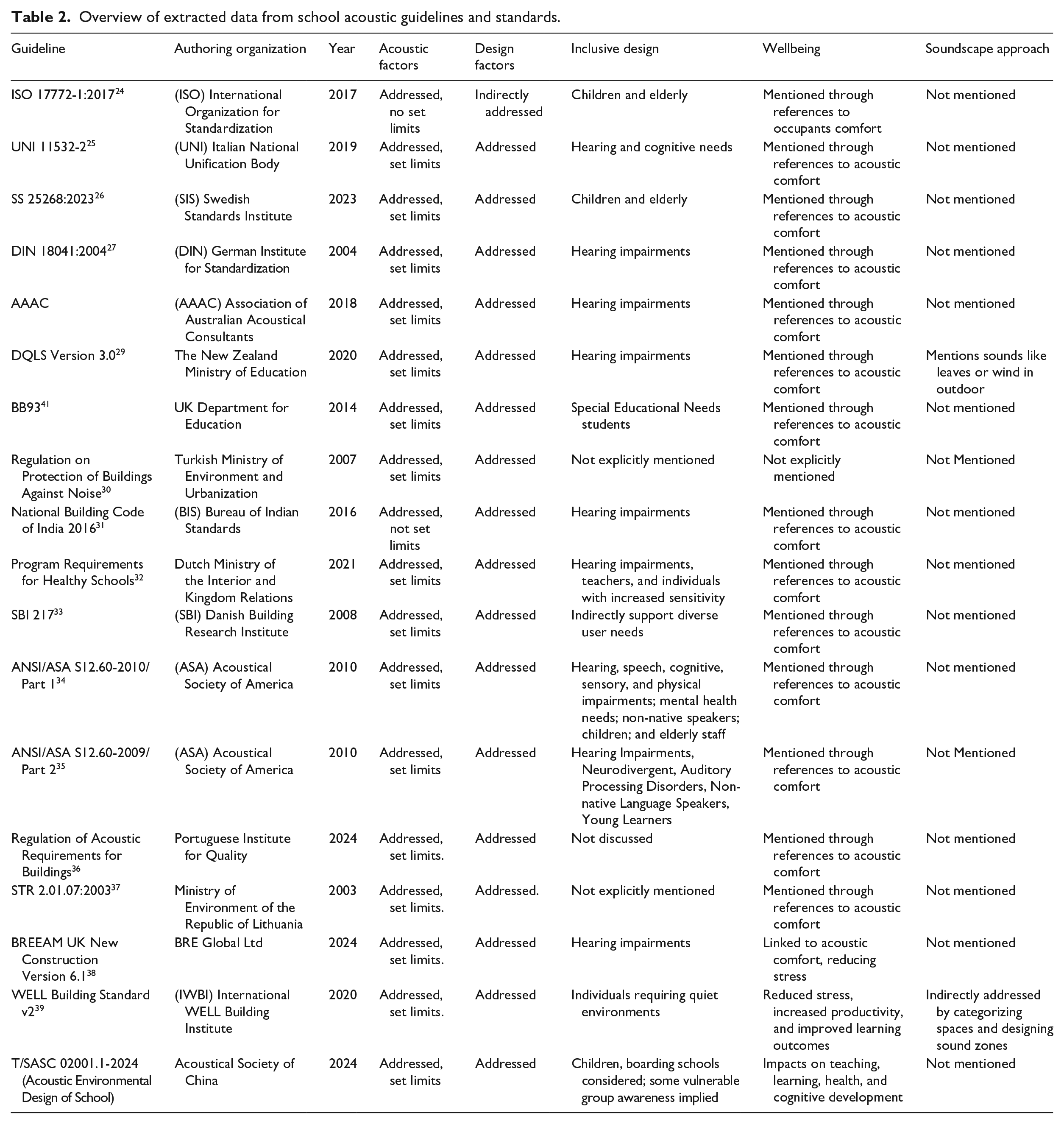
While there is significant interest in acoustic comfort and noise control, few guidelines address the role of soundscapes in fostering positive environments for learning and teaching. In this study, the extracted information focused on critical categories, including the acoustic parameters, design parameters, inclusive design considerations, mentions of wellbeing, references to soundscape principles, and the inclusion of positive sounds. This detailed data was organized and in Table 2.
Overview of extracted data from school acoustic guidelines and standards.
Results
The findings from this review are organized to address the research questions directly. Each standard analyzed in terms of its scope, acoustic and design parameters, and its treatment of user-specific needs, soundscapes, and wellbeing.
Soundscape principles
The analysis revealed that soundscape principles are rarely incorporated into existing school acoustic standards. Only two guidelines, the WELL Building Standard 39 and DQLS, 29 mention soundscape concepts. The WELL Building Standard indirectly addresses soundscape principles by categorizing spaces and designing sound zones to balance functionality and auditory comfort. DQLS Version 3.0 briefly acknowledges the use of natural sounds like leaves and wind to mask unwanted noise in outdoor environments, but it lacks a comprehensive integration of soundscape design. This highlights a significant gap, as 16 out of the 18 guidelines fail to explicitly consider soundscape principles. The remaining 16 guidelines focus only on mitigating disruptive or negative sounds.
User-specific needs and preferences
User-specific needs are addressed inconsistently across the guidelines. ANSI/ASA S12.60-2010/Part 1 stands out as the most inclusive, covering a wide range of needs, including hearing, speech, cognitive, sensory, and physical impairments, as well as mental health needs, non-native speakers, children, and elderly staff. BB93 and the Program Requirements for Healthy Schools also cater to Special Educational Needs (SEN) students and individuals with sensory sensitivities. However, 6 out of 18 guidelines—for example, those from Portugal, Turkey, Lithuania, the Danish Building Research Institute (SBI), the Swedish Standards Institute (SIS), and the International Organization for Standardization (ISO)—do not explicitly address user-specific needs. Across the board, none of the guidelines address user preferences, such as comfort or enjoyment of specific sounds, indicating a missed opportunity to adopt a user-centered approach to acoustic design.
Supporting the wellbeing
Wellbeing is indirectly addressed in most guidelines, with a focus on acoustic comfort rather than explicitly targeting mental or emotional health. Six of the 18 guidelines, including the WELL Building Standard and BREEAM UK New Construction Version 6.1, link good acoustic design to outcomes such as reduced stress, increased productivity, and improved learning. These guidelines recognize the potential of acoustics to influence wellbeing. However, the majority of standards, such as ISO, SS, and DIN, focus primarily on technical parameters, with no explicit mention of mental health or emotional wellbeing.
Discussion
These results of evaluation align with existing literature emphasizing the importance of key acoustic metrics, such as noise level thresholds and speech intelligibility, in educational environments.1,5,42 This consistency reflects the foundational understanding of these criteria in acoustic research and their subsequent prioritization in guideline development. However, the analysis highlights a critical oversight: the lack of integration of soundscape principles. This is significant, as contemporary research increasingly demonstrates the importance of soundscapes in enhancing wellbeing and performance in educational settings.14,43–45
Integration of soundscape principles in school acoustic standards
Soundscape is an important concept that offers a comprehensive understanding of the acoustic environment and its impact on human perception, behavior, and wellbeing. 46 Although the soundscape approach is increasingly recognized as necessary for acoustic comfort, the focus of existing guidelines appears to show a notable disregard for soundscape literature.
Even as school-specific soundscape research is rapidly emerging and highlighting the importance of soundscape-related factors in educational settings,3,12,43 existing guidelines appear not to be integrating these insights. This disconnect suggests a missed opportunity to align standards with current research that underscores how soundscapes can significantly influence learning environments, user comfort, and overall wellbeing. 14 Furthermore, the vibrant and dynamic atmosphere of schools often renders some guideline limits unrealistic, with certain aims proving difficult, if not impossible, to achieve in practice.4,47 Therefore, alternative perspectives are needed to redefine and broaden our understanding of acoustic comfort in schools.
Adding another perspective, soundscape research brings to the forefront the role of positive sounds and their contribution to creating a welcoming and engaging atmosphere in schools. Recent studies reinforce the importance of integrating positive sounds into school acoustic guidelines. For instance, Eleanor Ratcliffe’s narrative literature review highlights the restorative potential of nature sounds, such as birdsong, wind, and water.48,49 Ratcliffe’s work demonstrates that exposure to nature sounds can improve mood, cognitive performance, and arousal levels after stress or fatigue, underscoring their value for educational settings. 48 Additionally, Shu and Ma's study on children’s perceptions of restorative environmental sounds identified music, singing, and natural sounds as the most restorative. 50 These findings provide actionable insights for designing school environments that cater to the unique auditory needs of children. Complementing this, Van Hedger et al.′s research demonstrated that natural soundscapes, such as cricket chirps, significantly improve cognitive performance on tasks requiring directed attention, aligning with Attention Restoration Theory (ART). These findings illustrate that even brief exposure to natural sounds can restore cognitive functioning and enhance focus, making them an essential consideration for schools. 51
Soundscape also highlights the need for adaptive design strategies to accommodate changing functions and expectations associated with different school activities. 43 Schools serve a variety of purposes beyond traditional teaching, and there is growing interest in new teaching and learning strategies that further diversify these functions. 52 Acoustic conditions differ also across different schools, posing challenges to the development of universal guidelines that adequately address all contextual factors. 53 These differences are central to soundscape research but are largely overlooked by most existing guidelines, which tend to adopt a one-size-fits-all approach. School soundscape research emphasizes the role of student and teachers’ perception, cultural expectations, and environmental context in shaping auditory experience.3,12,14,49 Researchers support the idea that school soundscape should be designed and evaluated not just by decibel levels, but through their perceived quality, appropriateness, and emotional impact on specific user groups in specific contexts. 49
Consideration of user-specific auditory needs and preferences
Student perception and individual factors play a pivotal role in shaping the effectiveness of school acoustics, yet they are often overlooked in existing guidelines. It is often recognized as a significant factor influencing learning outcomes, yet the perception of the school environment itself should also be considered as a key modifier of students’ general wellbeing.49,54 The way students perceive their acoustic environment can directly impact their comfort, engagement, and overall experience of school life.55,56
Additionally, special consideration is essential for individuals with specific auditory needs, such as those with hearing impairments or autism spectrum conditions. Crandell and Smaldino’s call for more stringent acoustic criteria in classrooms for children with hearing impairments highlights the need for inclusive design principles in acoustic guidelines. 57 For these groups, the auditory environment can significantly impact their comfort, focus, and overall wellbeing. School acoustic standards should adopt a more inclusive, user centered approach that acknowledges these differences and actively incorporates them into design strategies. By doing so, schools can create environments that not only support learning and teaching but also promote inclusivity and accessibility, ensuring that all students and staff benefit from an acoustically comfortable and supportive setting. While most guidelines address the needs of children with hearing impairments, they often fail to consider the sensory needs of children with other conditions, such as autism, or sensory processing disorders. Some guidelines adopt a more inclusive approach, covering both hearing and sensory needs, but many fail to adequately address the full spectrum of special needs children.
Acoustic standards and wellbeing in educational settings
The findings highlight that wellbeing is often indirectly addressed in acoustic guidelines, with a focus on achieving acoustic comfort rather than explicitly targeting mental or emotional health. For instance, while provisions such as reduced noise levels and optimized reverberation times inherently contribute to improved acoustic environments, only some guidelines reviewed link good acoustic design to outcomes such as reduced stress, increased productivity, or enhanced learning. This technical emphasis overlooks the potential for acoustics to influence psychological outcomes, despite growing evidence from studies like Astolfi et al., which demonstrate the link between poor classroom acoustics and diminished happiness, increased noise annoyance, and lower life satisfaction among students. 58
Similarly, research by Mogas-Recalde et al. underscores the impact of poor acoustics on teachers, highlighting increased stress and vocal strain. 59 While these outcomes align indirectly with the goals of acoustic comfort, current guidelines fail to directly acknowledge these challenges or their broader implications for wellbeing. Anderson and Graham’s findings further emphasize the importance of fostering environments where students feel respected and valued, which is often hindered by poor communication in noisy classrooms. 60
Limitations
Internet-based sources, may miss documents that are not highly ranked or indexed, resulting in the exclusion of relevant materials that do not appear within the top search results. Expert consultations, while helpful, may be limited by the expertise and availability of the consulted experts, potentially missing other valuable insights from practitioners and academics not involved in the study. The absence of abstracts in gray literature documents further complicates the screening process, requiring additional effort to assess relevance based on executive summaries or table of contents alone. This increases the risk of overlooking crucial documents, leading to a less comprehensive review of available school acoustic guidelines.
Conclusions
This study reviewed international building and school acoustic guidelines to address school acoustic parameter and soundscape. Documents were evaluated for mentions of soundscape design and positive sounds. The comparative analysis of the 18 school acoustic standards reveals significant gaps in addressing school soundscape:
Soundscape Principles: only 2 out of 18 guidelines (WELL Building Standard v2, and DQLS Version 3.0) mention soundscape principles, with the WELL Building Standard v2 addressing auditory comfort through space categorization and sound zones, while DQLS briefly acknowledges the use of natural sounds like leaves, and wind outdoors, highlighting a significant gap where 16 guidelines fail to explicitly consider soundscapes, focusing instead solely on mitigating negative sounds.
User-Specific Needs: 11 out of 18 guidelines address user-specific needs, but none consider user preferences, such as comfort, or enjoyment of certain sounds.
Wellbeing: only 6 out of 18 guidelines link acoustics to mental health or stress reduction, with most addressing wellbeing indirectly through acoustic comfort.
These results highlight a critical need for school acoustic standards to adopt a more holistic approach. Integrating soundscape principles, positive sounds, and explicit wellbeing considerations can significantly enhance the quality of learning environments, aligning them with contemporary research and the diverse needs of students and staff.
Footnotes
Acknowledgements
We would like to thank the experts in the fields of acoustics and environmental design who generously to share their knowledge and to assist in identifying relevant documents and resources.
Authors’ contributions
HKC and FA conceptualized the study, designed the gray literature search strategy. HKC conducted the initial search and screening. FA assisted in refining the search strategy, conducted expert consultations, and contributed to the interpretation of findings. JK helped develop the data extraction methodology and participated in manuscript revision. All authors were involved in the study’s conceptualization, data analysis, and manuscript preparation, ensuring a comprehensive and rigorous review.
Declaration of conflicting interests
The authors declared no potential conflicts of interest with respect to the research, authorship, and/or publication of this article.
Funding
The authors disclosed receipt of the following financial support for the research, authorship, and/or publication of this article: The authors acknowledge receiving financial support for the research of this article from the Turkish Ministry of National Education, Republic of Turkey.
