



Abstract
School acoustics is pivotal for children’s well-being given their substantial time commitment to education within these environments, with potential positive or negative impacts. Soundscape has gained relevance in various settings, including indoor environments, and explores both positive and negative responses of individuals to sounds within a context. This scoping review aims to investigate the application of the soundscape approach within the school environment, with a primary focus on evaluating perceptions of the acoustic environment. It aims to identify key factors considered in the studies, such as age groups, sound sources, and methodologies. A Scopus search was conducted, covering the period from January 2000 to September 2023. The search was limited to peer-reviewed articles published in English. The inclusion criteria required studies to investigate schools and assess the perceptions. After screening, 11 studies met the inclusion criteria from 49 articles. The most targeted age cohort was primary school-aged children. Yet, the need to consider secondary school children’s perceptions persists. The dominant sounds investigated were categorized as “negative” sounds, referring to auditory stimuli that are commonly perceived as unpleasant. These negative sounds were primarily traffic-induced noise. The prevailing method used was questionnaires. To advance school soundscape research, exploring secondary school-aged children’s views would provide valuable insights. By enhancing knowledge in this field, researchers can improve school acoustics for student well-being. Notably, a limitation of this review is that soundscape studies have centered around urban environments so far. Consequently, there have been only a limited number of studies examining indoor environments, and even less for schools.
Introduction
School experiences are intended to hold a central position in the lives of its occupants. 1 Among the pivotal indoor environmental quality parameters for educators, school acoustics stands out prominently. Consequently, insufficient acoustic comfort, along with the disruptive presence of noise, could be identified as a negative indoor environmental element for school personnel 2 . Ensuring the quality of acoustic environments in schools is crucial also for students, as children have been identified as a vulnerable group susceptible to the detrimental effects of negative sound exposures. 3 Given that children spend a significant portion of their day within school premises, 4 the school experience is expected to hold a pivotal role in their overall well-being. 1 Consequently, school acoustics can be viewed as a critical factor that mediates the health of children. 5
Soundscape is a dynamic and evolving approach that investigates the range of sounds perceived and comprehended by individuals within specific contexts. 6 In particular, soundscape studies strive to encompass the overall sonic composition, including both positive and negative sounds, in order to determine the acoustic character of various environments. 7 Sound is typically described and categorized based on various attributes, such as frequency, amplitude, duration, and perceived qualities. Positive sound, as a term, might be used in a more subjective or context-specific manner to describe sounds that are pleasant, soothing, or enjoyable to individuals. “Negative sounds” refer to sounds that are generally perceived as unpleasant, disruptive, or irritating by individuals. 7 It’s important to note that the perception of sound can be highly subjective, and what one person considers a positive sound, another person might find annoying or disruptive.
It is worth noting that, traditionally, studies in the field of school acoustics have primarily focused on negative sounds. Previous research indicates that noise can have numerous detrimental health effects on children, including hyperactivity symptoms, impaired cardiovascular functioning, elevated blood pressure, cognitive impairments, asthma, fatigue, and headaches.8,9 Additionally, students’ discomfort and aggressiveness are often caused by environmental noise. 5 Moreover, hearing impairment, effects on sleep, stress-related effects and vocal nodules have been considered noise-induced. 10 Mealings evaluated the effects of primary school acoustic conditions on children’s attention and memory. 11 Findings determined that potentially, there are adverse effects of noise on children’s cognition. In parallel with this review, Shield and Dockrell stressed that students are exposed to a variety of noise sources which impact them negatively. 12 Similarly, numerous studies have highlighted the impact of the acoustic surroundings on school staff,13 –15 with a predominant emphasis on the disruption caused by noise.16 –18 The investigation into teachers’ perception of both indoor and outdoor noise has been explored extensively.19,20
Conventional studies in the field have predominantly focused on negative sounds, disregarding the potential positive health effects that sound can have. Despite the diverse range of benefits that pleasant sounds offer, our understanding of them remains limited. Interestingly, there is a scarcity of research investigating the potential of restorative sounds in designing acoustic environments.21,22 For instance, birdsong and water sounds are associated with stress recovery and attention restoration.21,23 Children are curious about their surrounding environments, can identify familiar soundscapes and reflect on their experiences.24,25 From this point of view, Lee and Welch considered the use of background music in schools. 23 Teachers using background music reported that it is helpful for the learning environment. 23
Indoor soundscape investigations require an inquiry into individuals’ expectations depending on various building types.
26
From this point of view, the function of spaces should be considered.27,28 In that context, the auditory aspects of the learning environment also require to be investigated with an indoor soundscape approach.
26
Besides, occupants’ own ratings and judgments can add valuable knowledge to current school acoustics literature. Although there are reviews available dealing with school acoustics,3,10
–12,14 there is no review in the literature specifically for school soundscape studies. However, it is pertinent to consider two relevant reviews in this context, which, while not explicitly concentrating on the broader school soundscape, delve into related topics. One review addresses indicators and methods for assessing the acoustical preferences and needs of students in educational buildings, while the other explores indoor soundscape, speech perception, and cognition in classrooms regarding the effects of ventilation-related sounds on students.29,30 Therefore, the primary objective of this review is to gather pertinent research on school soundscapes and examine their objectives, methodological approaches, and outcomes. By doing so, this review aims to facilitate potential enhancements in the sound environment of schools, thereby benefiting children’s health, quality of life, and overall well-being. The questions this review is addressing are: Which age groups are mostly studied in school soundscape literature, and which are underrepresented? What sound sources are usually studied in school soundscape literature and how sounds are perceived by people? What are common methodological approaches implemented in school soundscape studies?
Methods
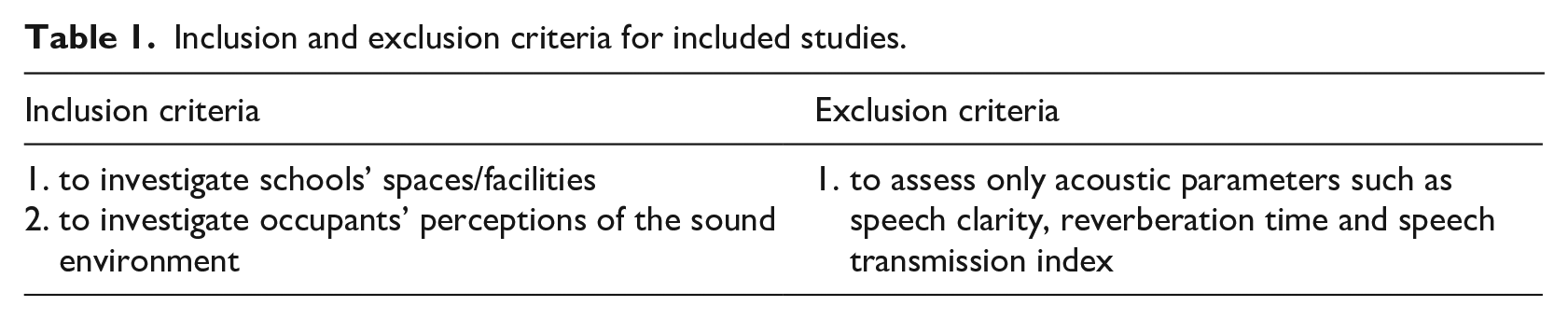
For this review, studies between 2000 and 2023 were searched on the Scopus database with the words combination: “school*” AND “soundscape*.” The scoping review was conducted following the PRISMA-ScR (Preferred Reporting Items for Scoping Reviews) guideline.31,32 Research articles written in English were included. Scopus returned 49 articles results in English on 1st of September 2023. The following inclusion criteria were determined: (1) The study needs to investigate schools’ spaces/facilities, and (2) The study needs to investigate occupants’ perceptions of the sound environment. For the first criterion, this meant studies surveying a school, or a specific place in a school such as classroom, dining hall, gym, hallways, or playground will be included. We have established the following criteria for exclusion: (1) The studies assessing acoustic parameters such as speech clarity, reverberation time and speech transmission index in schools are excluded. For the second criterion, the literature must be based upon participants’ perception. The studies that use only other data rather than people’s perception will be excluded; however, the studies that use other data as additional information will be included. The age group and cultural background of investigated people are neither an inclusion nor exclusion criteria. Table 1 illustrates the criteria for both inclusion and exclusion in this study.
Inclusion and exclusion criteria for included studies.
Search strategy and selection process
Forty-three articles were retrieved, after the duplications were eliminated with the title, keyword, and abstract search. Title, keyword, and abstract searches were performed separately, followed by full-text screening for each set of results. The search strategy involved performing separate searches using the selected keywords and subject headings in the title, keyword, and abstract fields. This step allowed us to cast a wide net and retrieve a comprehensive set of potential articles relevant to our research topic. Following the title, keyword, and abstract searches, we conducted a rigorous full-text screening process. Each set of search results was independently reviewed. Some articles could be retrieved in multiple sets of search results. These publications are eliminated. Because of the risk of bias, selection has been done by three reviewers. The second reviewer checked the included and excluded studies and the third reviewer checked the final decisions.
Study selection
After the screening stage, 11 studies among 49 studies were included in the scoping literature review. Figure 1 demonstrates the search and screening process of the present review.
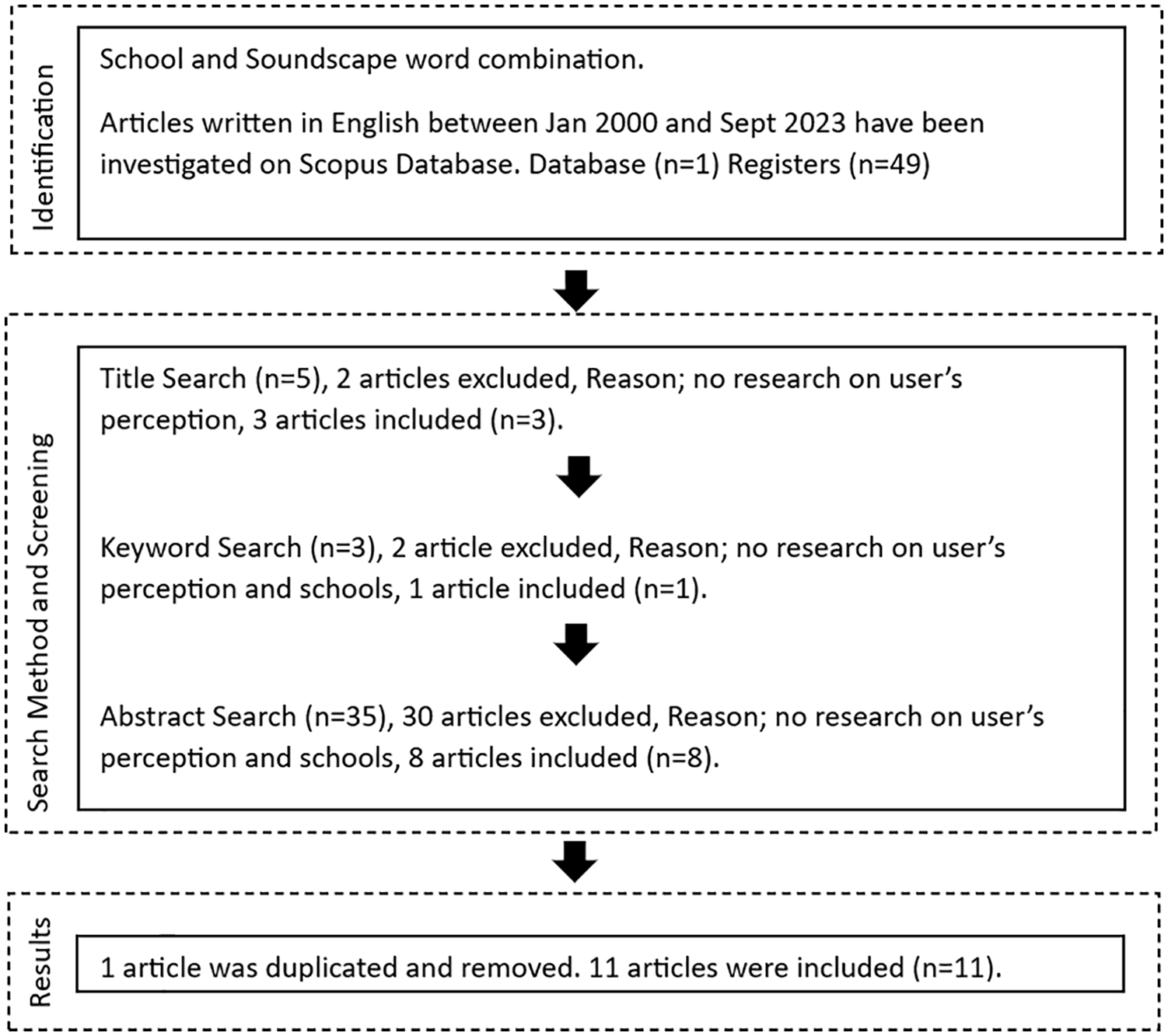
The search, method, and screening process.
The decision to utilize Scopus as the primary database for our study was based on several considerations. Scopus is a widely recognized and reputable multidisciplinary abstract and citation database, offering extensive coverage of academic literature across various disciplines. By selecting Scopus, we aimed to ensure a comprehensive and diverse pool of peer-reviewed studies related to our research topic. Regarding the choice to start the search from the year 2000, this decision was taken to strike a balance between ensuring a sufficient body of contemporary literature and minimizing the potential biases that may arise from outdated research. By setting the starting point at the year 2000, we aimed to capture recent advancements and trends in the field of soundscape and perception studies.
We conducted distinct searches using the same search string for titles, keywords, and abstracts, which may result in the retrieval of certain articles across multiple search sets. While Scopus is a renowned database equipped with advanced deduplication features, occasional overlaps can still arise. Consequently, we identified one duplicate entries.
Data collection
Data was extracted from the 11 included studies, according to the review questions; namely: info on the age of the participants’ sample, and sound sources of interest. The aims and methodological approaches of included studies were then examined.
After completing the full-text screening, the data were extracted from the selected articles, with a focus on relevant variables, including the age of students. To analyze the age of students in the context of soundscape and perception studies, we categorized the reported age ranges into four distinct groups: (1) Under School Age: This group includes children who have not yet reached school age, typically ranging from birth to approximately 5 years old. (2) Primary School Age: This category comprises students who are attending primary or elementary school, typically ranging from ages 6 to 12. (3) Secondary School Age: This group encompasses students attending secondary or high school, generally ranging from ages 13 to 18. (4) Adults: This category includes participants who are beyond secondary school age, typically aged 18 years and older. The study exclusively focuses on the adult age group of school staff rather than adult students in universities. By employing these four age groupings, we aimed to provide a clear and comprehensive summary of the age demographics represented in the selected studies. This approach enables us to identify patterns and trends related to the age of students and participants across the soundscape and perception research landscape.
The first reviewer extracted the data and the second reviewer checked for accuracy. If required, any inconsistencies between the two reviewers were discussed with a third reviewer to reach consensus.
Findings
A qualitative approach was adopted to answer the research questions. The included studies have been summarized in the sections.
Included studies
Study 1- Indoor soundscape in primary school classrooms, Chiara Visentin; Simone Torresin; Matteo Pellegatti; Nicola Prodi
Aims and specific context: The study investigated the perceived loudness and emotional aspects related to pleasantness and arousal. Furthermore, it not only considered the existing indoor soundscape but also sought to understand the children’s preferences for an ideal soundscape.
Methodology and participants: Questionnaires utilizing visual scales were employed to examine the indoor soundscape within classrooms attended by primary school children (n = 130; aged 8–10 years).
Results: The findings of the study revealed that the most prevalent sounds within these classrooms arose from the students themselves, followed by external traffic noise. Notably, the urban surroundings of the school had an impact on how the children perceived their acoustic environment, particularly when windows were open for natural ventilation. The concept of pleasantness was found to be correlated with factors such as the students’ age, perceived loudness, and the frequency of children’s voices in neighboring classrooms. Additionally, the frequency of exposure to indoor sounds, specifically children’s voices and sirens, influenced the students’ level of arousal. The results of this investigation suggest that children in school settings are commonly exposed to less favorable sounds, while their preferred sounds tend to be music and those associated with nature. 33
Study 2- Sounds of learning: Soundscapes - teacher perceptions of acoustic environments in Finland’s open plan classrooms, Elina Hytonen-Ng; Kaisa Pihlainen; Kwok Ng; Eija Karna, 2022
Aims and specific context: The aim of the study is to explore and understand the experiences of teachers regarding the soundscapes in modern Finnish comprehensive schools.
Methodology and participants: The study entailed conducting interviews with a group of 10 teachers from two schools, aiming to understand how the school’s architecture impacts both the soundscape and the organization of teaching.
Results: The study reveals that the designs of these modern schools, with open plan learning spaces and flexible classrooms, promote collaborative learning but do not consistently meet the instructional needs of all children due to their associated soundscapes. The study concludes by emphasizing the importance of designing soundscapes in schools that accommodate both the learning needs of children and contribute to the overall well-being of both students and teachers. 34
Study 3- A comparative study on indoor soundscape assessment via a mixed method: A case of the high school environment, Sıla Çankaya Topak; Semiha Yılmazer, 2022
Aims and specific context: This study examined student perceptions of their school soundscape.
Methodology and participants: Objective measurement and subjective questionnaires were utilized in the study. A total of 59 students (aged 13–17 years) willingly participated in the classroom questionnaire, while 58 students voluntarily took part in the computer laboratory survey.
Results: According to the students’ responses, human sounds were the primary sounds perceived in the classroom, while mechanical sounds took precedence in the computer lab. In the classroom, students identified music, laughter, and natural sounds as positive, while in the computer laboratory, only music was considered positive. Teachers’ speech, music, and natural sounds were regarded as desirable sounds for the classroom, whereas for the computer lab, music and natural sounds were preferred. The researchers suggested that recognizing sounds as desirable can aid in creating positive soundscapes for future schools. 27
Study 4- The impact of music making outdoors on primary school aged pupils (aged 7–10 years) in the soundscape of nature from the perspective of their primary school teachers, Dylan Adams; Gary Beauchamp, 2021
Aims and specific context: This study investigated how the outdoor soundscape has a relationship with children’s music making.
Methodology and participants: It evaluated qualitative information obtained through semi-structured interviews conducted with seven teachers across six primary school classes. These teachers observed their classes’ involvement in music-making activities. To ensure the reliability of the teachers’ observations, their perceptions were cross-verified with data from semi-structured interviews conducted with six groups of children (aged 7–10 years) from the same six classes.
Results: The results were not only about the music making but also about improved behavior. The teachers state constantly that being in a natural soundscape differs positively from being in a classroom. 35
Study 5- Hearing my world: negotiating borders, porosity, and relationality through cultural production in middle school music classes, Kelly Bylica, 2020
Aims and specific context: This study investigated how children perceive their sound environment in a music classroom.
Methodology and participants: Children were asked to create a soundscape which answers the question “How do I hear my world.” Creating a soundscape was chosen as a methodology because it is a way for children to present their sound environment. Two secondary schools investigated (grade 7 and grade 6 students).
Results: As a result, the author emphasized listening is a vital element to design and determine children’s environment. 36
Study 6- Perception of noise pollution in a youth and adults’ school in Curitiba-PR, 2017, Orlando Borges Filho; Angela Ribas; Claudia Giglio De Oliveira Gonçalves; Adriana Bender Moreira Lacerda; Renato Riesemberg; Karlin Klagenberg, 2017
Aims and specific context: This study aimed to identify how adults and youth perceive noise pollution.
Methodology and participants: Structured questionnaires were administered to 120 people and the variable of characterization of the place of residence occupation, leisure health and perception of soundscapes was evaluated. Additionally, a closed questionnaire to the school’s geography teacher about educational actions against noise pollution was evaluated.
Results: In conclusion, the study revealed that the study group did not perceive noise as a harmful factor and did not take measures to protect themselves from it. Furthermore, the school did not address content related to noise pollution. Although the participants were able to identify noise sources, their perception in this regard was found to be fragile. 37 The fragility in identification stemmed from the subjective nature of sound perception, wherein individuals interpret and categorize noises differently based on personal experiences and contextual factors. 37
Study 7- The sonic surrounds of an elementary school, Chee-Hoo Lum; Patricia Shehan Campbell, 2007
Aims and specific context: The researchers investigated the daily activities of children, particularly emphasizing the aspect of “musicking” that takes place in their everyday lives.
Methodology and participants: The fieldwork for this study involved conducting direct observations of children in grades 1–3 (between 5–6 and 8–9 years old) at a primary level. These observations were carried out both indoors and outdoors, encompassing various settings such as classrooms, hallways, and playgrounds.
Results: The study emphasized that every space has its sound environment, especially the school soundscape should differ noticeably from other buildings. This is because children’s perceptions and preferences were strictly distinct from adults. 38
Study 8- Classroom acoustics in Poland-preliminary research, J. Smirnowa; P. Pekala, 2003
Aims and specific context: This article examined primary and secondary schools’ acoustic conditions.
Methodology and participants: In addition to measurements, a subjective questionnaire was conducted to understand the perception of children. The questionnaire consisted of six parts acoustic comfort, teacher voice clarity, speech comprehension, evaluation of different noise sources’ intensity, annoyance, and consequences of noise in the classroom.
Results: The author detected that the negative sounds are mostly generated inside of the school. It was found that the point of acoustic comfort was lower for increasing reverberation time. 39
Study 9- Assessment of soundscape in children: Affective and cognitive determinants, I. López Barrio; R. Martín; J.D. Guillén, 2003
Aims and specific context: This article examined the negative effects of aircraft and traffic road noise on children. The authors aimed to characterize the soundscape surrounding the children not only at school but also at home.
Methodology and participants: This study integrated an assessment tool designed to evaluate the impact of the soundscape on the negative effects of noise, specifically related to air and road traffic. The sample comprised 283 grade 6 students in the ESO (Lower Secondary education-Educación Secundaria Obligatoria). The evaluation instrument employed both quantitative and qualitative methodologies. For the quantitative analysis, a questionnaire was developed to assess two main aspects: (a) the characteristics and emotional significance of the soundscape experienced by the children at home and school, and (b) the affective qualities of the environment. The emotional evaluation of the soundscape focused on assessing its pleasantness. The affective qualities of the environment were evaluated using a scale of 10 adjectives with a semantic differential format. In addition to the questionnaire, the representation of the soundscape was captured through a written essay and a drawing, serving as a qualitative technique for analysis.
Results: The study ultimately sought to explore how environmental noise impacts students’ perceptions and emotions, both in their school and home environments, using a combination of subjective assessments (questionnaires and qualitative expressions like drawings and essays) to capture the nuanced experiences and feelings associated with these soundscapes. 40
Study 10- The effects of road traffic and aircraft noise exposure on children’s cognition and health: The Ranch project, Mark Matheson; Charlotte Clark; Rosanna Crombie; Jenny Head; Irene van Kamp; Elise van Kempen; Stephen A. Stansfeld, 2003
Aims and specific context: The study examined the effect of negative sounds on children. It is suggested that noise has effects on children’s cognitive performance, health, and psychology.
Methodology and participants: Tests were conducted to investigate cued recall, recognition memory and prospective memory. The questionnaire was completed by children and parents. A group of 2844 children, with ages ranging from 8 years 10 months to 12 years 10 months and a mean age of 10 years 6 months, actively participated in this study.
Results: As a result of the study, no relationship was found between recalling information and road traffic, and aircraft noise. The author suggested that traffic and aircraft noise do not have any certain impact on children’s memory. 41
Study 11- Children’s and adults’ perception of soundscapes at school, M.E. Nilsson; Östen Axelsson; B. Berglund, 2003
Aims and specific context: In this article, the authors investigated the relationship between the acoustic environment and emotions.
Methodology and participants: Soundscape records were used to examine the perception of 40 children aged 9–12. A visual scale was created for emotional attributes. It is indicated that this relationship is poor and children’s and adults’ emotional elements were similar at the low sound levels.
Results: The differentiation were not observed between children whose school is close to aircraft and children whose school is not close to aircraft. Therefore, the researchers suggested that past listening experiences did not have an influence on the perceived soundscape. 42
Data extraction
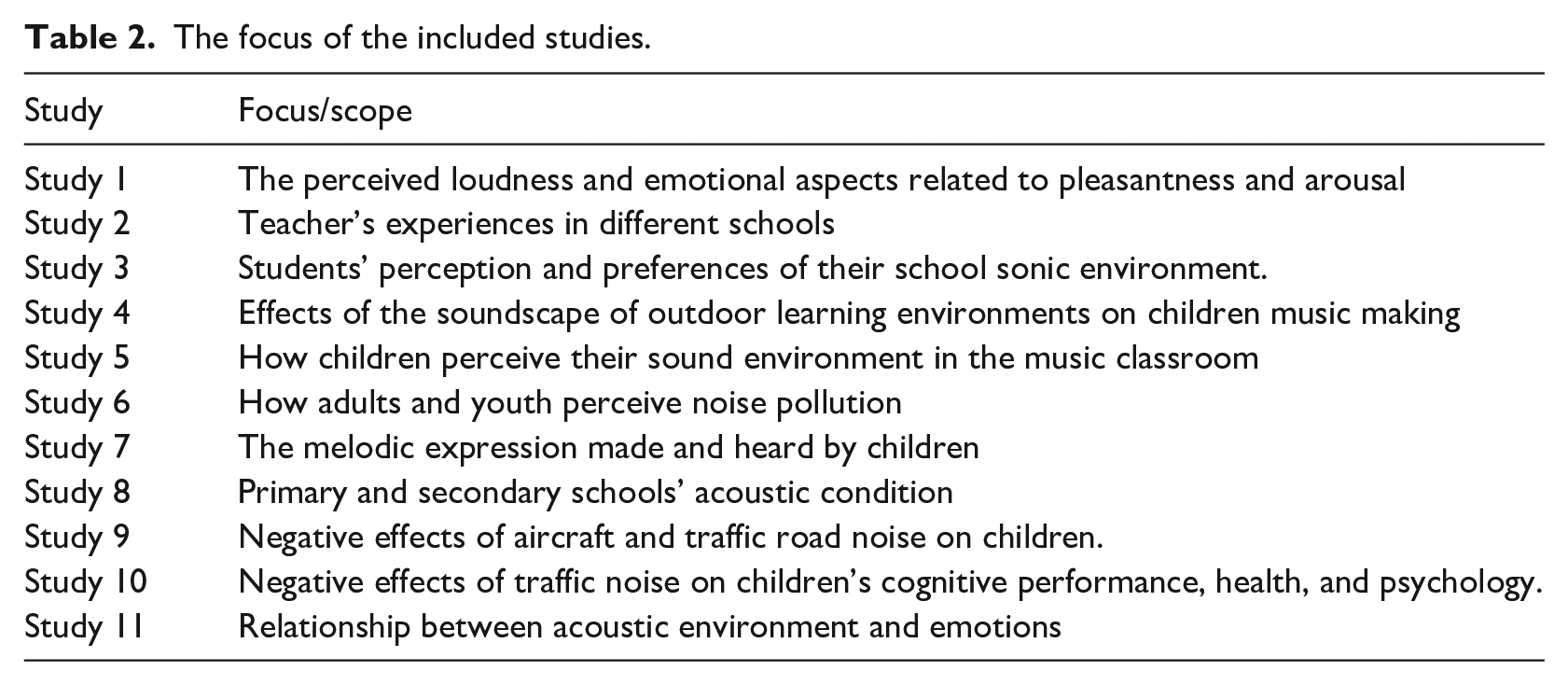
It is essential that defining and understanding the key areas of included studies within the scope of these studies. Table 2 provides an overview of the included studies, highlighting their primary focus and the main concerns addressed within the field of school soundscape research.
The focus of the included studies.
The methods of school soundscape studies, the age groups and numbers of participants and investigated sound sources are extracted from the included articles. Table 3 demonstrates all included studies and extracted information. Items are indicated by their chronological order of publication. Figure 2 provides a general view of the participants’ details, methodology used, and sound sources for each study.
Included studies and extracted information.
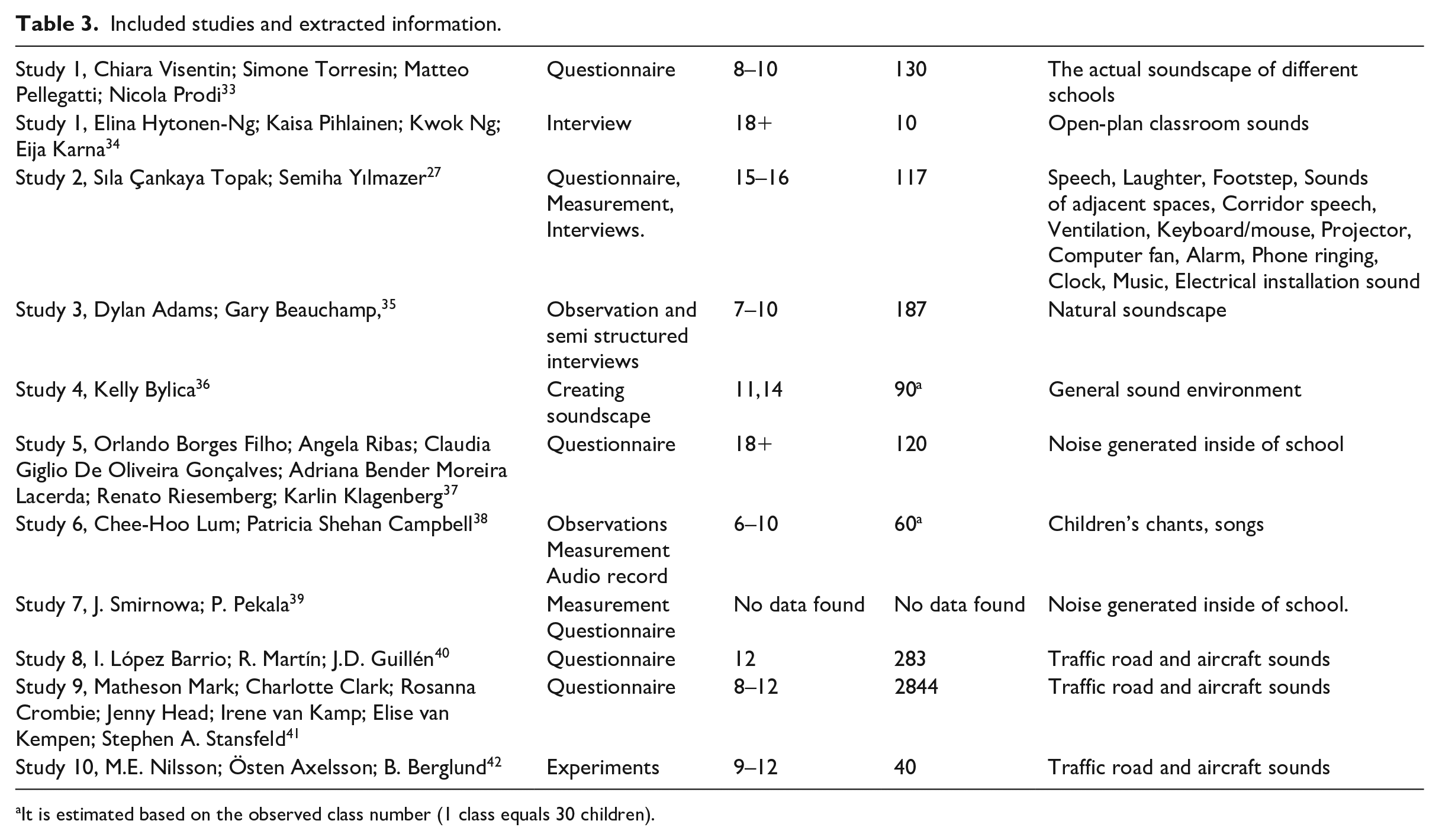
It is estimated based on the observed class number (1 class equals 30 children).
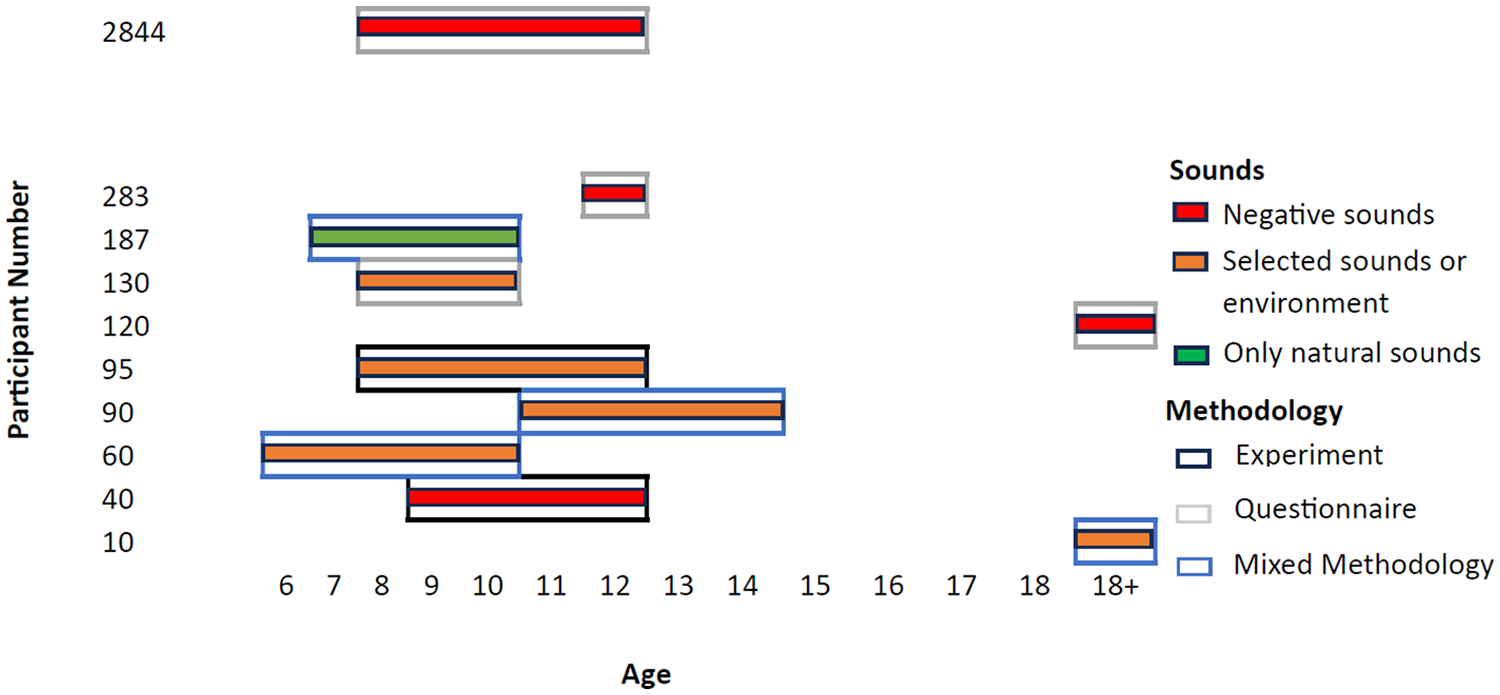
Participants’ numbers, methodology, and sound sources of included studies.
Discussion
In our scoping review, we identified several noteworthy trends and findings in the literature related to school soundscapes and occupants’ perceptions. These findings can be categorized into three main themes: noise annoyance, outdoor sound environments, and the role of children’s behavior and perception in shaping school soundscapes.
The scoping review revealed that a significant portion of the included studies (n = 5) focused on noise annoyance within school environments, particularly concerning children’s subjective responses and school acoustics. These studies consistently highlighted the potential for noise to trigger annoyance, stress, and sleep disturbances among students, emphasizing its adverse impact on children’s perception, cognitive performance, and psychological well-being.37,39 –42 Additionally, there is growing interest in the potential benefits of outdoor learning environments, with studies suggesting that exposure to nature may enhance children’s participation, creativity, and cognitive abilities. 43 Researchers also investigated the effects of natural sounds, such as bird songs and flowing streams, on children’s cognitive performance, identifying them as effective for improving short-term memory. 44 Another study explored the rhythmic behaviors of children, finding that these behaviors may be influenced by cultural background, reflecting the role of factors like social status, religion, age, and culture in shaping sound environments and perceptions. 45 Researchers suggest improving children’s listening environment would enhance their everyday interactions and understanding. 36 The preference for specific sound sources among high school students varied based on the context, with classrooms favored for teachers’ speech, music, and natural sounds, while computer labs were preferred for music and natural sounds, highlighting the task and location-dependent nature of sound preferences. 27 Overall, the soundscape of each school is unique, shaped by its specific auditory and visual characteristics, emphasizing the need for tailored examinations of each sonic environment.
While the existing body of literature concerning school acoustics predominantly emphasizes classrooms and the adverse effects of poor acoustics, there is a subset of studies that delves into the beneficial impacts of favorable acoustic conditions on learning. The majority of this literature, however, concentrates on the detrimental consequences of inadequate acoustics, particularly in relation to noise disturbances and their influence on students’ well-being.46,47 It’s essential to recognize that schools encompass areas beyond just classrooms, and the overall school sound environment significantly influences children. Although there may be limited literature addressing these aspects, it remains crucial to take into account the acoustic environments of all school spaces to foster an optimal learning environment for students.
Soundscape design is a different practice from noise protection.6,48 It tries to plan, manage, and use possible sound sources to reach the preferred listening environment. 7 This brings researchers to the perspective which identifies sound as a resource. 7 The findings demonstrate that although children’s own assessments and judgment can add critical contributions to school acoustic literature, there is little attention on this.
The majority of previous studies on schools have struggled to establish a clear link between school occupants and the sonic environment. It is essential to recognize that listeners’ expectations and activities significantly influence their perceptions. Moreover, children do not confine themselves to a single location within schools. 8 Given the significance of expectations within the soundscape approach, schools designed to accommodate diverse activities require thorough investigation. Each school possesses its unique auditory character, shaped by the activities, expectations, and perceptions of its occupants.
Age groups explored in school soundscape literature
Schools can house a range of age groups. For this study, these age groups have been divided into 4 which are under school age, primary school age, secondary school age and adults.
Under-school-aged children have not been studied, presumably because their ability to express themselves and conduct assigned tasks is seen as constrained. It should be noted that students older than 9 years old are capable to identify positive and negative features of their school building. 9 Furthermore, children aged between 6 and 12 are more affected by noise. 10 Primary school-aged children have been studied because they are more sensitive to physical surroundings. 49 They are more easily distracted, and their understanding of speech is not reaching a sufficient level until their late teenage years. 50 Early studies have implied that younger children cannot use selective listening strategies. 51 Along with their sensitivity, under-13-aged children’s immature auditory mechanism is another reason for their examination. 12 However secondary school-aged children are more reliable with their preferences. 52 They can evaluate the acoustic quality.53,54 In this scoping review, adults in schools have been investigated only in two studies.
Sound sources and perception of sounds by individuals examined in school soundscape literature
School soundscape studies are often dominated by negative sounds. About half of the included studies examined noise originating outside the school.40 –42 These studies mainly consider vehicle noise. One study analyzed noise from inside the school. 39 In summary, four studies focused on users’ discomfort. However, children’s perceptions are not formed by a single sound source.25,53
Soundscape is the acoustical environment covering all sound sources in context. 6 Following this explanation, only one study has established general concern on the integration of possible sound sources in the school environment. 27 This study does not define sounds as negative or positive but makes inquiries about the general vocal environment.
Schools are vibrant places with all the sounds of children shouting, laughing, singing, or playing. 38 To make every space silent seems to be an approach that contradicts the nature of schools. Studies need to examine all sounds rather than concentrated only on negative sounds. Each sound stimulus is vital to discuss the aural experiences of school. According to our findings, there is no study investigating the school’s sound environment as a whole. It is possible that sounds can influence people differently when they are together, or it is worth studying the positive impact of sounds to enhance acoustic comfort.
Common methodological approaches in school soundscape research
Until now, several soundscape standards and methodologies have been proposed in the field of soundscape research. These standards and methodologies aim to provide a scoping and comprehensive framework for studying and evaluating sound environments in various contexts. The measurement of soundscape is dependent on human perception. 55
Evaluating individuals’ feelings and perceptions could be misleading. Because of this potential for ambiguity, The International Organization for Standardization (ISO) published a conceptual framework in 2014. 55 ISO 12913-2:2018, titled “Acoustics - Soundscape - Part 2: Data Collection and Reporting Requirements,” provides guidelines for collecting and reporting soundscape data (i.e., data on how people perceive the physical acoustic environment). It offers methodologies for assessing various perpcetual dimensions of a soundscape, as well as acoustic parameters, such as sound pressure levels, sound sources, and psychoacoustic descriptors. 55
In addition to the ISO standards, other methodologies have been proposed to capture and evaluate the soundscape in specific contexts. Questionnaires, interviews, grounded theory, and sound walks have been used to evaluate (indoor) soundscapes. 56 In some cases, objective measurements are used to compare with subjective assessments. Researchers implied that different types of methodologies are necessary to capture the complexity of a sonic environment. 7
In the light of ISO and previous school soundscape studies, generally, two methodological approaches have been developed by researchers. It is obvious from this review the subjective experiences of the users were collected mostly through questionnaires.
Limitations
Soundscape studies on specific building types are restricted. As soundscape studies generally focus on the urban environment, there are a small number of indoor environment studies and among these studies, school soundscape studies are relatively few. Firstly, this scoping review primarily relied on the Scopus database for article retrieval. While Scopus is a widely recognized multidisciplinary database, it may not encompass all relevant literature on the topic of school soundscapes and occupants’ perceptions. Excluding other databases could potentially result in the omission of pertinent studies published in alternative sources. Additionally, this review only included articles written in English. This language restriction may lead to the exclusion of valuable research conducted in other languages. Furthermore, the chosen search string in our study was carefully crafted to ensure a focused and comprehensive exploration of soundscape and perception studies. However, it is essential to acknowledge that the strictness of the search string might have resulted in the exclusion of some relevant articles that are related to the topic. Lastly, although a rigorous selection process was employed, with three reviewers involved in the final decision-making, there is still the potential for bias in the study selection process.
Conclusions
The acoustic environments that children are exposed to in school facilities are of utmost importance for their physical and mental health, overall well-being, and cognitive development. Traditionally, the focus of acoustic-related studies in schools has been on room acoustics performance of learning and teaching spaces for speech-related parameters (e.g. speech intelligibility, reverberation time, background noise level, etc.). Yet, it is important that school designers and facility managers acknowledge a more holistic effect that soundscapes can have on school health, by looking at the acoustic environment of the school premises as a whole (i.e. beyond the sole classroom space) and focusing on the overall sonic experience of the space during the day.
According to the research questions, the main conclusions of this literature review are:
Mostly, primary school-aged children have been involved as participants in soundscape studies. It is estimated this is because they are more sensitive to noise compared to other age groups. The prominence of primary school-aged children’s participation in these studies directly correlates with our first research question.
Nearly half of reviewed studies investigated negative sounds which are mostly coming from outside of the school facilities (e.g. traffic noise). Some studies have also analyzed the noises coming from inside the school’s premises. This finding directly addresses our second research question.
School soundscape studies commonly focus on the distress caused by insufficient levels of acoustic comfort. This observation responds to our second research question, shedding light on the primary concern that shapes the discourse in this field.
School soundscape studies used combined methodologies for more reliable results. Interviews and questionnaires were the most common methodological approaches. The emphasis on combined methodologies, particularly interviews and questionnaires, responds directly to our third research question.
Building upon the insights garnered from the present study, a promising avenue for future research lies in investigating the positive aspects of school soundscapes and their potential influence on multisensory learning experiences. While the existing literature has extensively addressed the distress caused by negative sounds within educational environments, there is an opportunity to delve into the benefits that positive sounds could offer to students’ overall well-being and cognitive development.
Footnotes
Declaration of Conflicting Interests
The author(s) declared no potential conflicts of interest with respect to the research, authorship, and/or publication of this article.
Funding
The author(s) disclosed receipt of the following financial support for the research, authorship, and/or publication of this article: Turkish Ministry of National Education, Republic of Turkey. The other authors received support fron the European Research Council (ERC) Advanced Grant (No. 740696) on Soundscape Indices (SSID).
