



Abstract
A novel concept for enhancing timber floor slabs with integrated acoustic decoupling is introduced. The approach was evaluated through a series of measurements on both small-scale and large-scale setups. The tests involved a dual-shell timber slab system with discontinuous timber beam elements within the cavity. The timber beam elements are used to integrate acoustic decoupling into the structural system achieved through the use of targeted processing and geometric modification. The results show up to 5 dB improvement in the weighted normalized impact sound pressure level
Keywords
Introduction
Timber is increasingly being used in construction, offering a sustainable alternative to traditional building materials such as reinforced concrete, also with regard to multistorey buildings.1–4 This growing trend has led to a steady expansion in the use of timber in various building construction types. Timber construction methods have evolved to meet the demands of modern architecture, with developments such as mass timber structures, hollow box systems and ribbed ceiling slabs enabling spans of more than 5 m. 5 However, it has been observed that the low weight of timber poses unique challenges for acoustics and sound insulation.6,7
The acoustic quality at low frequencies in multistorey timber buildings is particularly challenging due to the distinct properties of timber. As a porous material with lower density and stiffness compared to other building materials, such as concrete or masonry, timber provides reduced sound attenuation at low frequencies, leading to sound transmission issues and noise disturbances that affect user comfort. The propagated low-frequency sound is often a result of impact noise.3,6,8
To address this challenge, various design strategies are employed to enhance the acoustic quality of timber buildings. Acoustic improvements are typically achieved by adding mass and incorporating multi-layered surface structures. These may include the use of mineral materials such as gravel, cementitious screed and mineral wool to create weight-bearing surface structures, fillings and suspended ceilings. 1 Figure 1 shows an example of a typical timber slab assembled from cross-laminated timber (CLT) along with acoustic improvements.3,9 While the CLT plate has a thickness of 140 mm, the total height of the ceiling slab’s cross section increases by 230 mm, resulting in a total height of 370 mm due to these improvements.
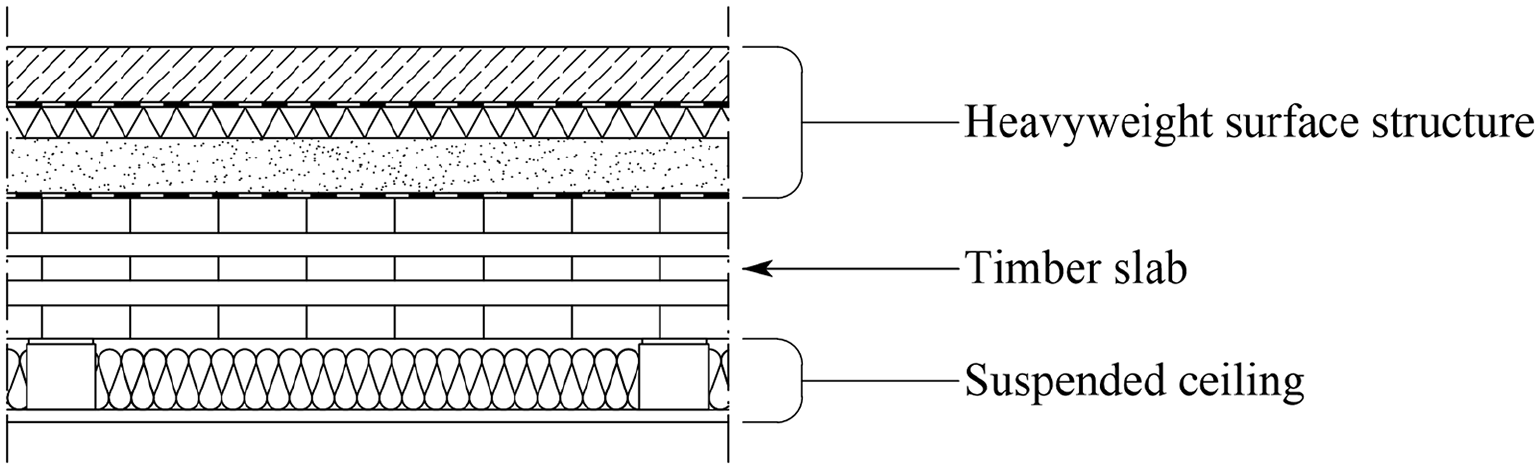
These known approaches of applying additional layers are based on practices in reinforced concrete slabs and do not show the expected efficiency for timber structures, as they can also lead to a deterioration in the acoustic performance of timber slabs in the low-frequency range. 10 The introduction of certain acoustic treatments can sometimes exacerbate sound transmission issues if not carefully designed and implemented.
In addition, acoustic enhancements in timber slabs can substantially affect the overall environmental impact of building systems. Therefore, a significant correlation exists between the acoustic performance of floor structures and the environmental profile of the entire building. As a natural raw material, wood has the unique ability to sequester
This paper investigates the potential for hollow core timber slab structures to be fitted with structurally engineered acoustic performance features following the principle of a leaf spring. The goal is to enhance sound insulation while simultaneously eliminating the need for mineral weights.
State of the art
In practice, the acoustic performance of timber slabs, particularly regarding impact sound transmission and vibration behaviour, is typically addressed only after the structural design phase. As a result, wooden floor slabs are designed with mass-based layers. This not only increases the cross-sectional thickness but also adds significant weight to the structure. However, these measures are suboptimal, as they fail to effectively improve impact sound transmission in the critical low-frequency range below 100 Hz. To achieve targeted improvements in sound transmission, it is essential to analyse the frequency-dependent stiffness properties of the materials used in conjunction with the overall structural dynamics of the system, with a particular focus on different frequency ranges. 8 This is especially relevant for cross-laminated timber (CLT), considering its layered substructure and the differing properties of timber along and perpendicular to the fibres.12,13
Solutions for maintaining or improving the impact sound insulation performance of timber slabs by reducing additional mass have been proposed in Kohrmann et al. 14 and in Schoenwald and Vallely. 15 The approach detailed in Kohrmann et al. 14 focuses on reducing vibrations of the bare slab through the installation of tuned mass dampers which are particularly effective in the frequency range below 100 Hz and also have static relevance. These tuned mass dampers improve the vibration behaviour with regard to serviceability and increase the impact sound insulation by damping the sound-emitting ceiling. 14 On the other hand, Schoenwald and Vallely 15 presents methods for minimizing the need for additional mass by applying functional gradings to the ceilings, where the ballast is localized. This approach utilizes CNC (Computer Numerical Control) processes for targeted machining to explore the application of the so-called acoustic black hole principle in this specific context. 15 Both approaches are primarily suitable for solid wood slabs, for example from cross-laminated timber (CLT). Compared to solid CLT, hollow box systems require less material, allow cavity utilization and achieve an overall lower weight. 16
For timber systems with cavity (such as hollow box systems), Málaga-Chuquitaype and Ilkanaev 17 presents an innovative beam configuration with regard to digital manufacturing that enhances the vibration comfort of timber slabs. These narrow, elongated formations within timber beams function as vibration absorbers, resembling cantilever beams. As a result, they effectively dissipate vibration energy from the slab structure while preserving the ecological benefits of timber. However, all these additional measures – whether applied between or on top of the beams and slabs or through the addition of mass – serve only to insulate or dampen the sound or vibration energy already introduced into the building component. Consequently, their effectiveness remains limited, particularly for the critical low-frequency impact sound.
This study pioneers the investigation of integrative acoustic design in the sense of multi-functional structural elements that both connect structurally and decouple acoustically. By minimally invasive CNC processing of wooden elements in the vertical direction (global Z-axis), the dynamic stiffness can be altered in such a way that acoustic performance improvements are achieved, reducing the need for mineral or plastic materials.8,18 Therefore, this paper explores an entirely new area within the field of building acoustics, addressing a significant gap in knowledge that has, until now, received little research attention.
Experimental investigation
Concept for integrative sound decoupling
The incorporation of acoustic elements is based on the interdisciplinary development of an innovative, flexible, multistorey timber building system as described in Krtschil et al. 16 and Orozco et al. 19 This system is being created through a process that seamlessly incorporates structural, architectural, fabrication, building physics and building services requirements (co-design) without the need for additional layers for each discipline. It merges the advantages of solid timber construction with hollow box systems to create a point-supported slab that is capable of spanning in multiple directions. The design features top and bottom plates with discontinuous timber beams within the cavity, aligned according to principal stress directions in the global XY-plane (Figure 2). 16 The provided cavity between the two slabs can be used for acoustic improvement, for example, by using insulation material. 8 In this case, the structurally necessary connecting web elements between the plates consequently act as acoustic bridges and are ideally decoupled. 8 Leveraging digital technologies, new methods are now available to apply and modernize the design concepts of integrative acoustics.
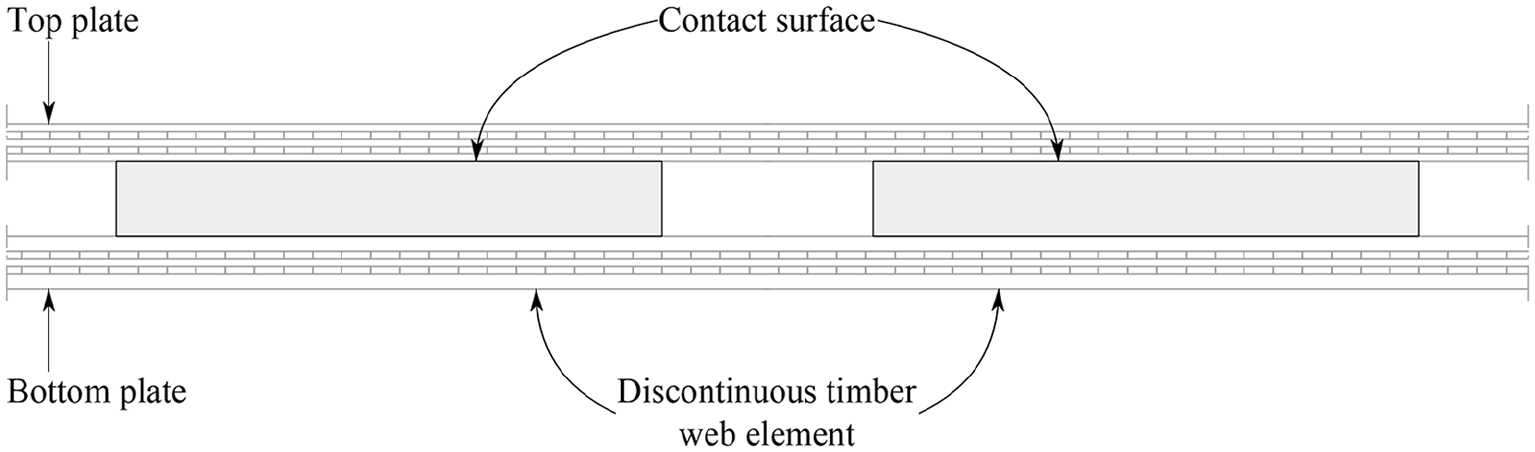
Cross-section through the centre of the slab in the initial system configuration.
The decoupling is achieved by geometric modifications of the timber web components using CNC processing to cut a defined slot in the component as illustrated in Figure 3. Due to this and a milled recess on top of the web, oscillating arms are generated. The top plate rests on these, ensuring that the vibrations introduced are transmitted into or through the slab structure with reduced amplitude. The resulting targeted and axially differentiated dynamic stiffness creates a spring effect in the vertical direction (along the global Z-axis), similar to the functional principle of leaf springs used in automotive engineering. As a result, the timber components are provided with an acoustic decoupling function in addition to their structural function. The transmission of horizontal shear forces remains largely unaffected. Using computational design and FEM simulation, areas with low out-of-plane shear stress can be identified and therefore be equipped with timber spring elements. This represents a previously unexplored opportunity to integrate acoustic decoupling functionalities into building components, such as slab structures. 8
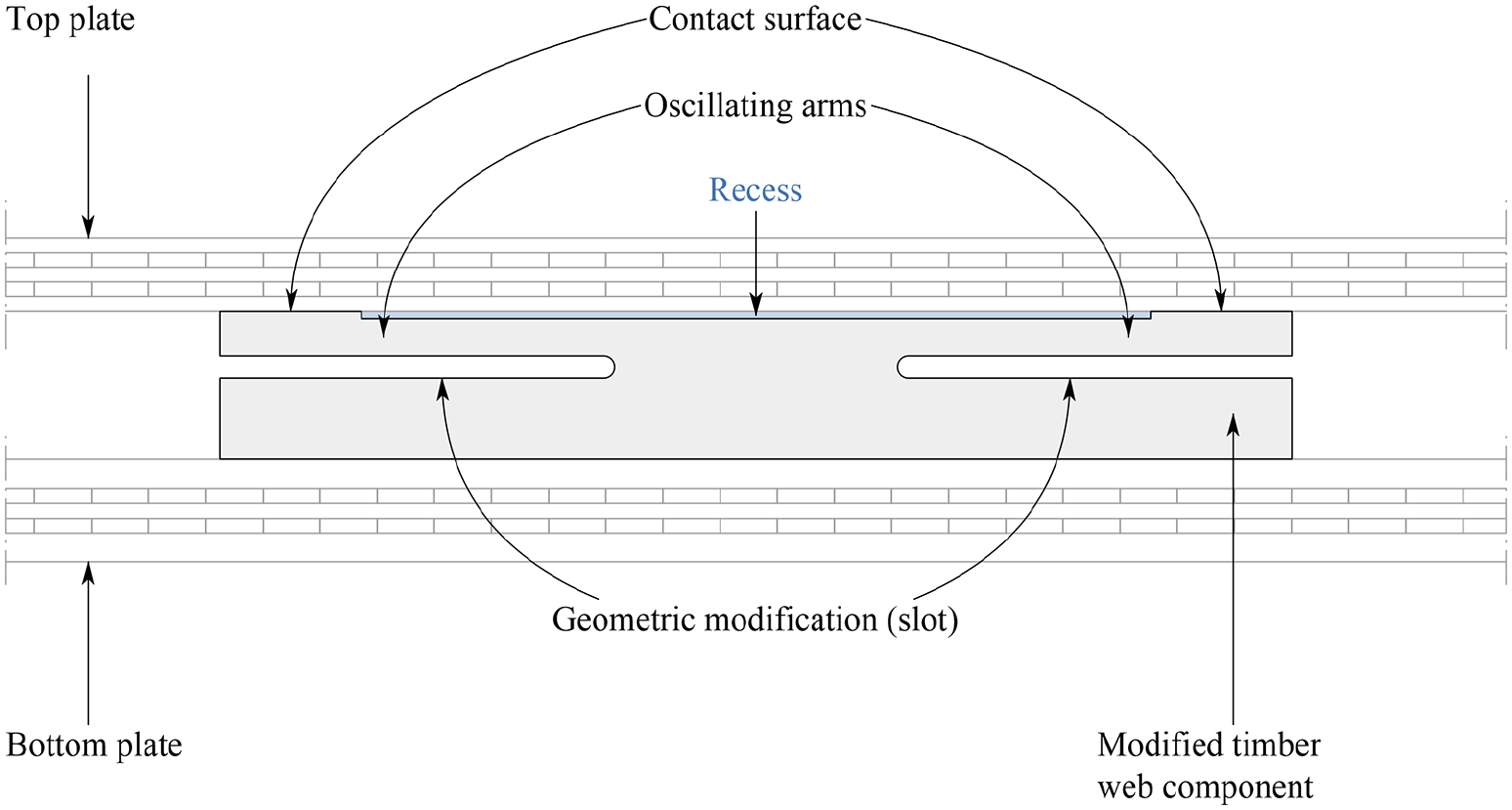
Developed acoustic-functional timber component with geometric modification (timber spring).
The developed acoustic-functional web element builds on the principle of leaf springs. Leaf springs are a conventional type of spring, offering the distinct advantage of serving as both structural and dynamic element. They are mainly used in vehicles for the front and rear axle. Leaf springs can be of various types, with the simplest form being a rectangular cross-section with a constant thickness and functioning as a bending beam. 20 This paper focuses on the conceptual investigation and proof-of-concept of this straightforward design, although several variants have been elaborated. Furthermore, since bending vibrations are the primary concern in the examined system, the developed acoustic-functional web element is employed according to the functional principle of a bending resonator in order to reduce sound transmission caused by impact sound. The developed element is therefore presented as a timber spring and will be referred to as such in this paper.
Dimensioning of the developed timber spring
The sound insulation of timber components is determined by various physical aspects. For monolithic planar structures, the sound insulation is primarily dependent on the mass per unit area and on the bending stiffness. The bending stiffness also significantly influences bending wave resonance, as well as the coincidence frequency and eigenfrequencies. 21
For multi-layered structures, the resonance frequency is also a relevant factor, as the vibration behaviour is described by a mass-spring-mass model. In the case of floor structures, resonances can occur in the substructures such as floating floors or suspended ceilings. The effectiveness of sound insulation in these cases is largely determined by the damping at the resonance frequency. Suitable insulating materials can reduce sound transmission, enabling higher sound insulation with lower mass by decoupling component layers. However, conventional insulating materials face limitations, as current available options do not offer dynamic stiffnesses lower than 6 MN/m³. 21
The resonant frequency in a mass-spring-mass system is calculated using equation (1). The two outer shells form the surface-related masses

Airborne or impact sound excitation induces vibrations in the mass-spring-mass system, which are particularly pronounced at the resonance frequency
For the design of the timber spring, 100 Hz is set as the upper limit and serves as the target value for determining the resonant frequency of the overall system. Considering the masses of the upper and lower plate, the required dynamic stiffness is calculated by using equation (1).
Elastic layers, such as impact sound insulation boards, have been designed for flat surfaces. Their spring stiffness, or dynamic stiffness

Neubrand et al.
20
describes the calculation of leaf springs. Equation (3) shows the relation between the deflection s and the applied load F at the end of the cantilever beam,
20
as illustrated in Figure 4. The deflection
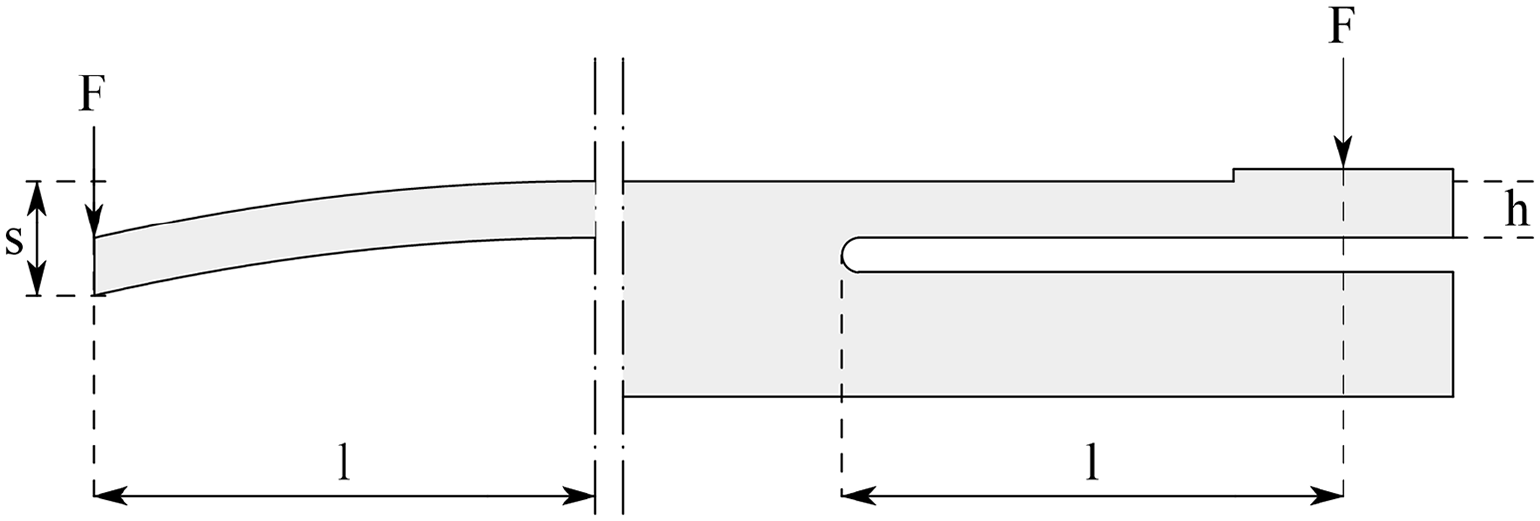
Functional and calculation principle for rectangular leaf springs.
The required dynamic stiffness of the elastic damping layer is then equated with the force-displacement ratio of a leaf spring, using equations (2) and (4). This creates an interdependence between the length


In principle, the geometry is parametric and the subtractive CNC milling of the cavities is digitally adapted to the boundary conditions resulting from the respective slab structure. For the measurements, whether in a small-scale or large-scale test setup, the timber springs are dimensioned and fabricated according to the prevailing boundary conditions, as detailed in the following Sections 3.3 and 3.4.
Small-scale prototype
The effectiveness and functionality of the concept is being investigated using a small-scale test setup. The National Metrology Institute of Germany (PTB) in Braunschweig has developed a compact measurement setup (COMET) for determining impact sound reduction, which is standardized by DIN EN ISO 16251-1. 22 The main differences to the conventional method in the slab test facility, according to the procedure described in ISO 10140, are that the acceleration or velocity level is measured on the surface of the test specimen and the test area is reduced to 1 m². Therefore, only statements on the frequency-dependent impact sound reduction can be made. 22 The COMET was initially developed for measuring floor build-ups on concrete slabs. However, the use of lightweight wooden floor slabs has also become part of the research at PTB. Schmidt and Wittstock, 23 for example, confirmed the comparability of the results of a large ceiling test stand with the COMET measured values for wooden beam-slab structure. 24
The assembly of the small-scale test specimen is shown in Figure 5. The bottom plate is inserted first, followed by the web elements and the upper plate. The upper plate has a thickness of 100 mm, while the lower plate is 200 mm thick. All elements are made of softwood cross-laminated timber (CLT, strength class C24 25 ). During the series of measurements, the web elements are replaced by two variants of prototypes of timber springs (Figure 6). To facilitate easy exchanging of the elements between the plates, they are placed without the use of screws or adhesives. As the specimens are tested and compared for their effectiveness with each other in the COMET, screwing them is not necessary. The test setup with unmodified web elements serves as reference system.
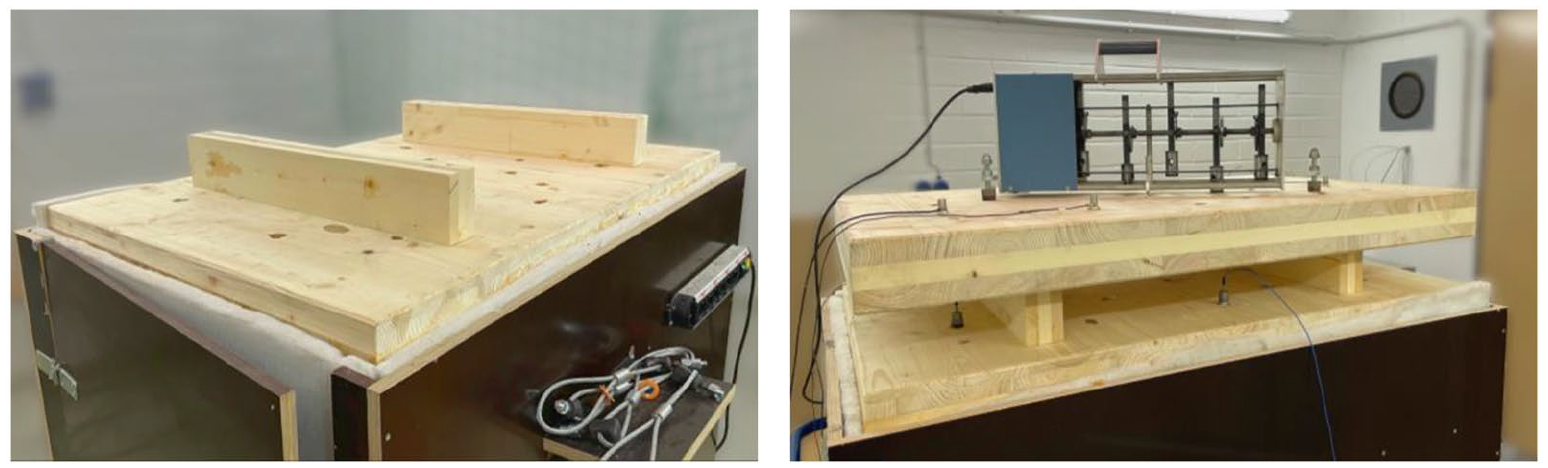
Reference test setup with web elements shown without top plate (left) and reference test setup with measurement equipment (right) on the COMET.
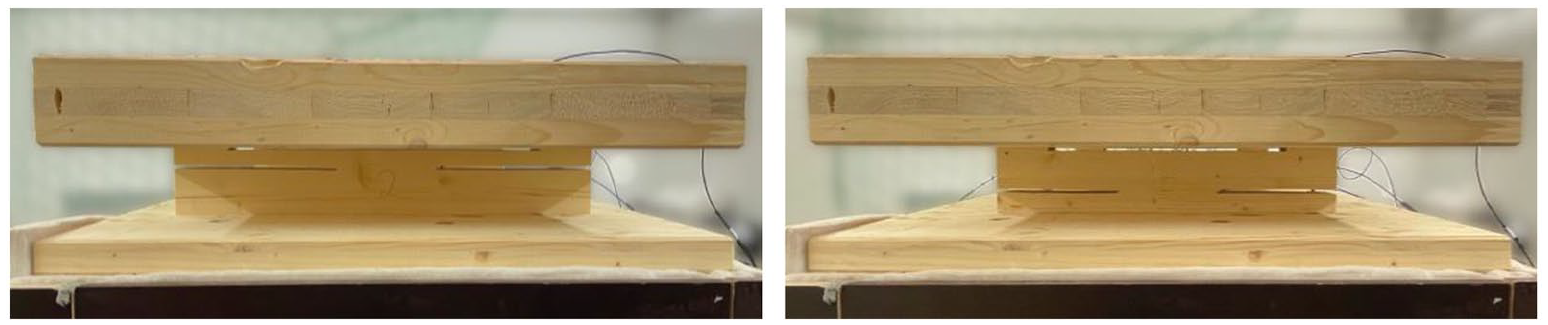
Variant 1 (left) and 2 (right) of the test specimens installed in the COMET.
Considering 100 Hz as the reference value for the first eigenfrequency, the dimensions of the test specimens for two variants are determined according to the procedure described in Section 3.2. For softwood CLT in strength class C24, the material parameters are
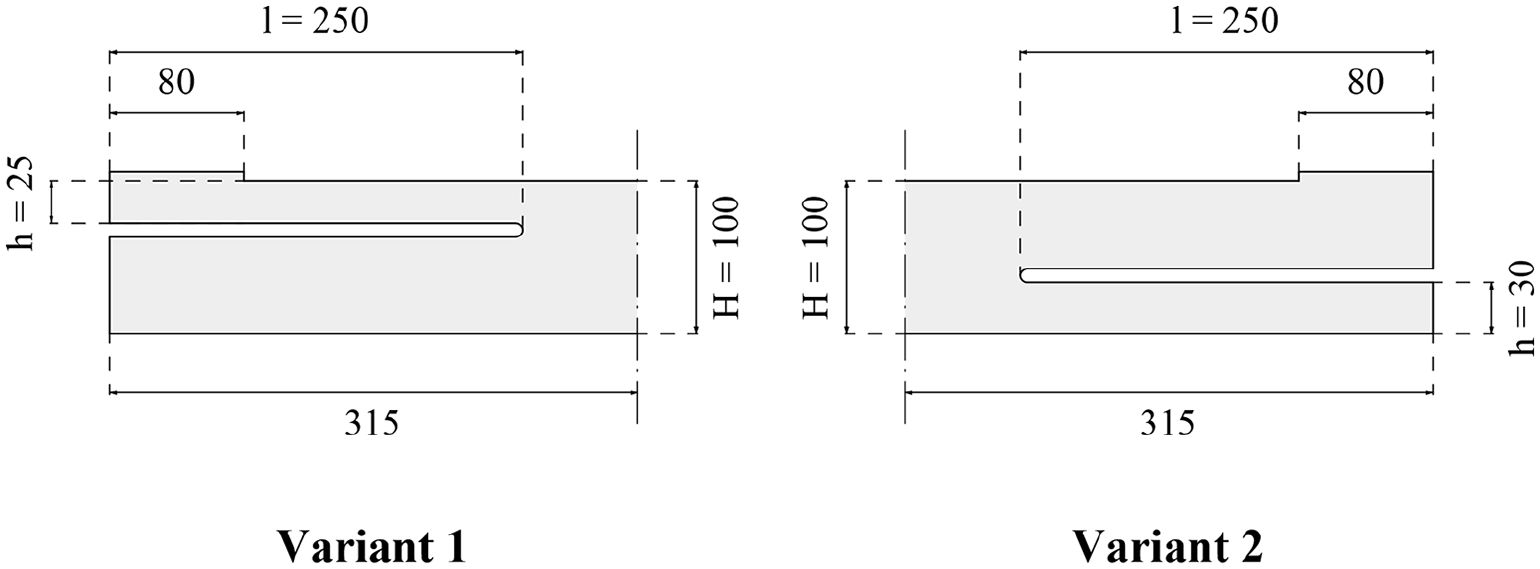
Experimental configurations of the small-scale test specimens, Variant 1 (left), Variant 2 (right).
The standard tapping machine is used to excite the structure for impact sound testing. The resulting velocity levels are measured with four acceleration sensors on each of the two panels, as shown in Figure 5. Details regarding the positioning of the measurement equipment are provided in the associated dataset. 27 In order to exclude any possible influence and to decouple the slab from the compact test stand construction, the lower plate is placed on elastomer and nonwoven was inserted as an insulating material between the slab and the surrounding construction.
Large-scale prototype
In order to test the findings from the small-scale test on a full-scale slab system and to assess the impact sound behaviour, a wooden slab is installed in a slab test facility with a test area of
As mentioned in Section 3.1, the investigated slab system is based on an innovative and flexible timber building system designed for spans of more than 8 m. Due to the different boundary conditions compared to the setup in the COMET, which affect the vibration behaviour, the timber springs have been geometrically adapted according to the procedure described in Section 3.2. The dimensions for the timber springs used in the slab testing rig are presented in Figure 8.
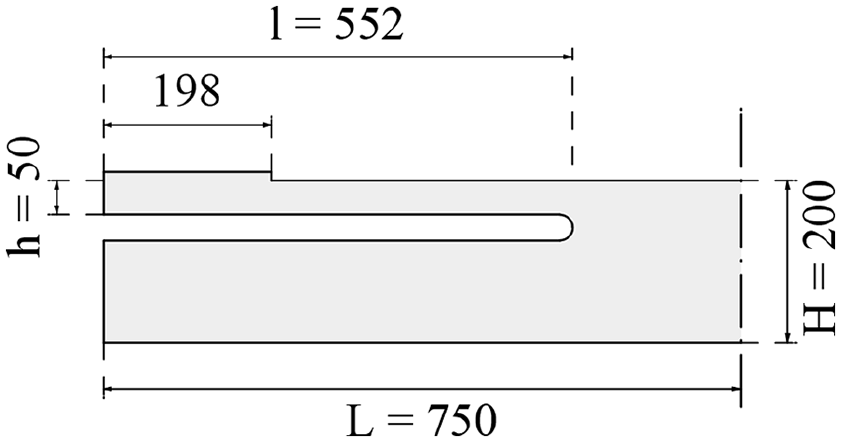
Experimental configuration of the large-scale test specimen.
The weighted normalized impact sound pressure level
Two series of measurements are conducted. In the first series, the dual-shell system with wooden web elements in the cavity is investigated, which serves as a reference for the adapted slab system with timber spring elements, similar to the investigations in the COMET. In the second series, the web elements are replaced by the timber springs. The components are screwed together to enable disassembly. Figures 9 and 10 show the assembly of the two system variants and Figure 11 pictures the measurement equipment. For the impact sound testing, a tapping machine is used for excitation on five different positions on the structure. A loudspeaker is used to generate a diffuse sound field in the source room. The sound pressure levels are then measured in both the source and the receiving room with rotating microphones. The sound reduction index
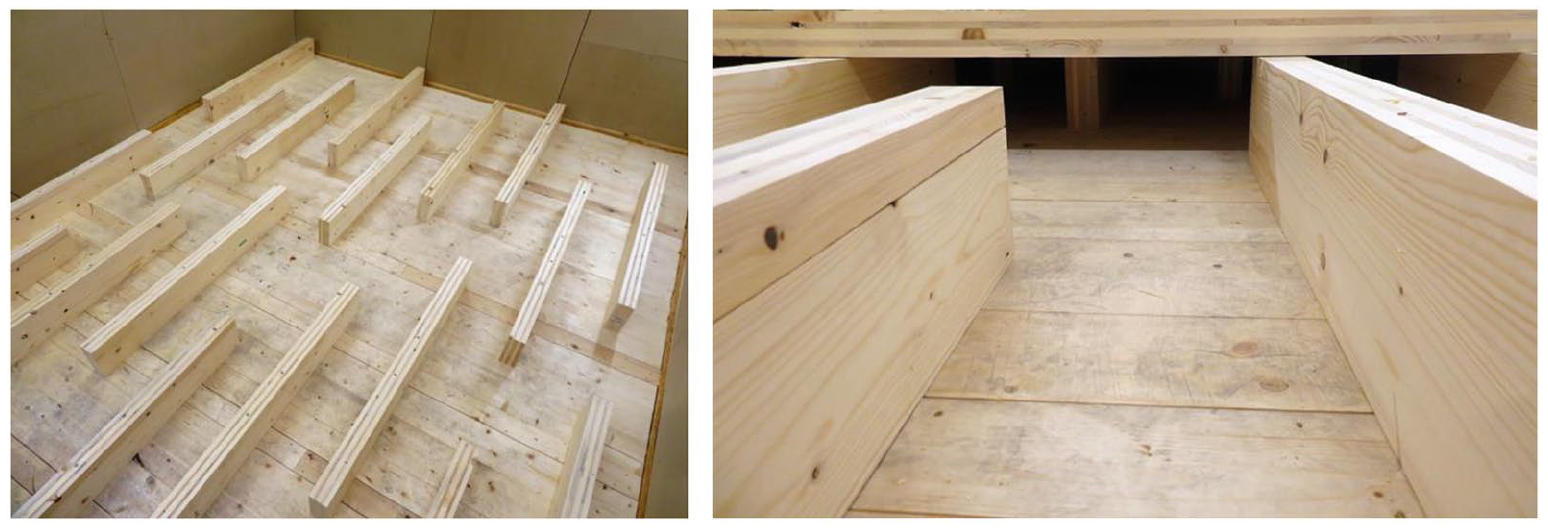
Assembly of the dual-shell slab system with beam elements in the slab testing rig.
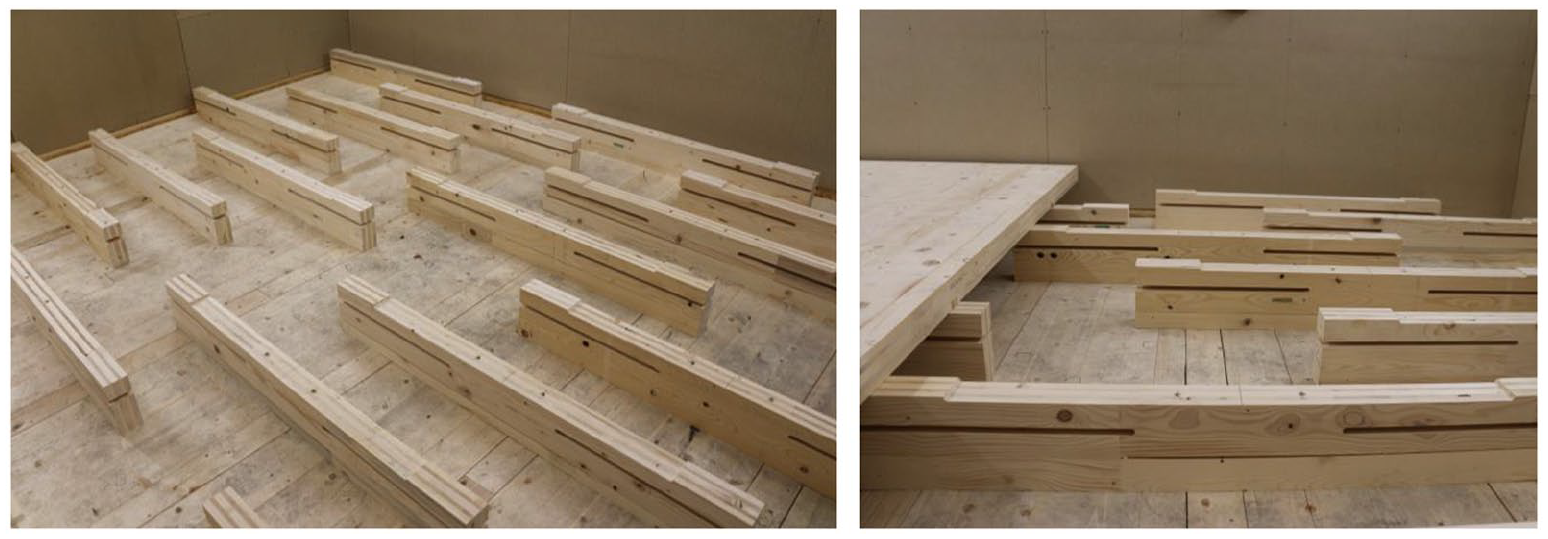
Assembly of the dual-shell slab system with timber springs in the slab testing rig.
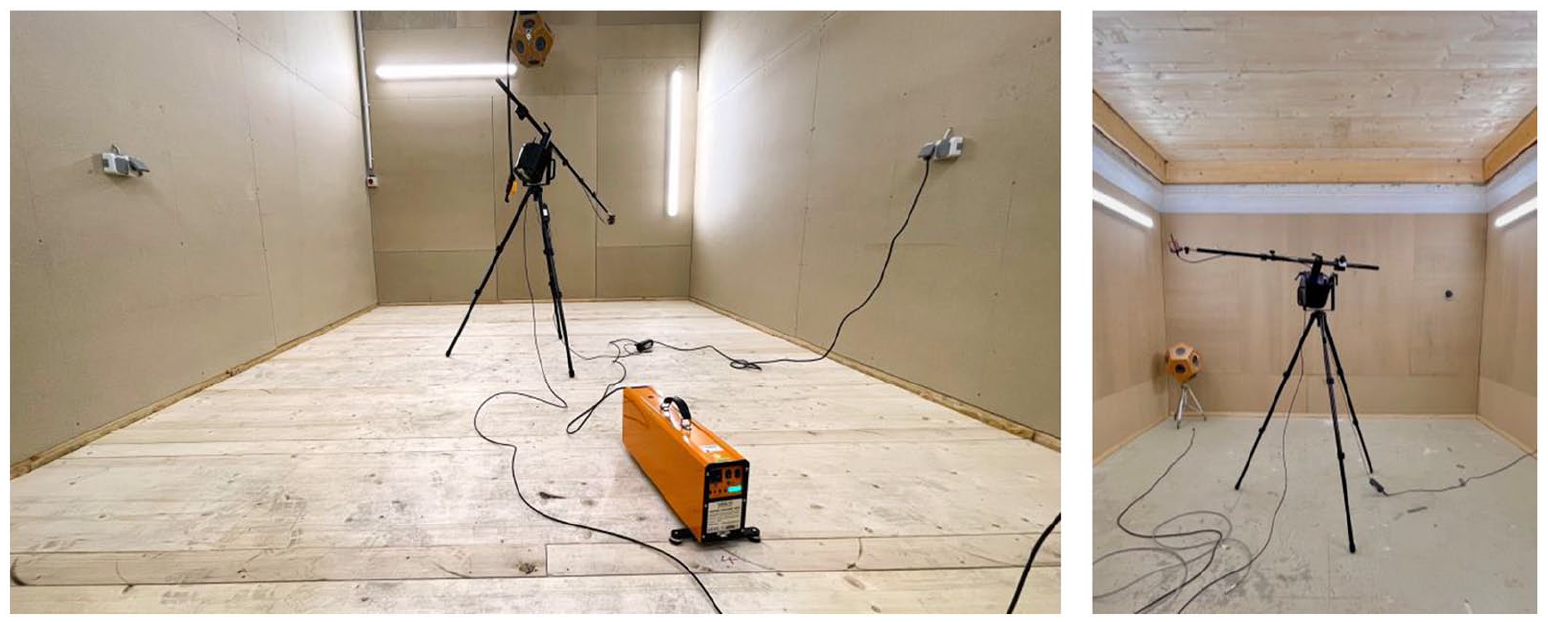
Measurement equipment in the source (left) and receiving room (right) of the slab testing rig.
Measurement results
The presented acoustic-functional web element uses the principle of leaf springs to improve sound transmission in dual-shell timber slab structures caused by impact sound. The effectiveness is analysed based on measurements conducted in both small-scale and large-scale test setups.
Small-scale testing on the COMET
The acceleration sensors on the two plates measure the structural velocity
The difference in velocity levels
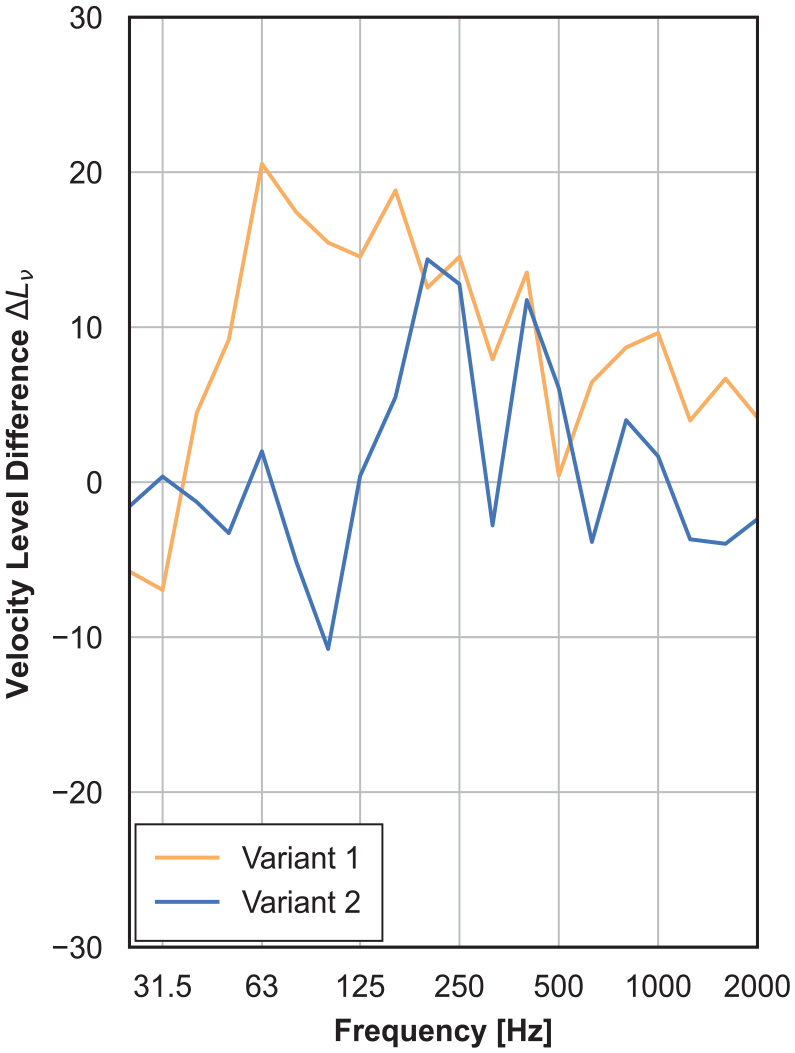
Difference in velocity levels
The results of the velocity level differences
The results show a reduction in the transmitted sound energy from the upper to the lower plate in all variants examined. One contributing factor is the web elements themselves. However, the milled slots on the web elements lead to greater level differences, which demonstrates the functionality of the concept in terms of a decoupling function. Variant 1, in which the slot was positioned in the upper area of the web element, results in a lower dynamic stiffness of the spring compared to Variant 2 and demonstrates a significant improvement, particularly in the low-frequency range.
Due to the influences of bearing and excitation, the results in the very low-frequency range around 25 Hz are subject to greater uncertainties and should be interpreted with caution. Nevertheless, the COMET is suitable for carrying out initial feasibility studies of this kind.
Large-scale testing in the slab testing rig
To assess effectiveness of the timber springs on the impact sound pressure level, the findings from the small-scale test setup are evaluated through testing on a large-scale setup. The structure is excited by positioning a tapping machine at five different locations. The sound pressure level in the receiving room is recorded for each position. Additionally, the reverberation time is measured to determine the equivalent sound absorption area of the room.
The measurement results for both series are compared in Figures 13–15. Figure 13 illustrates the difference in velocity levels
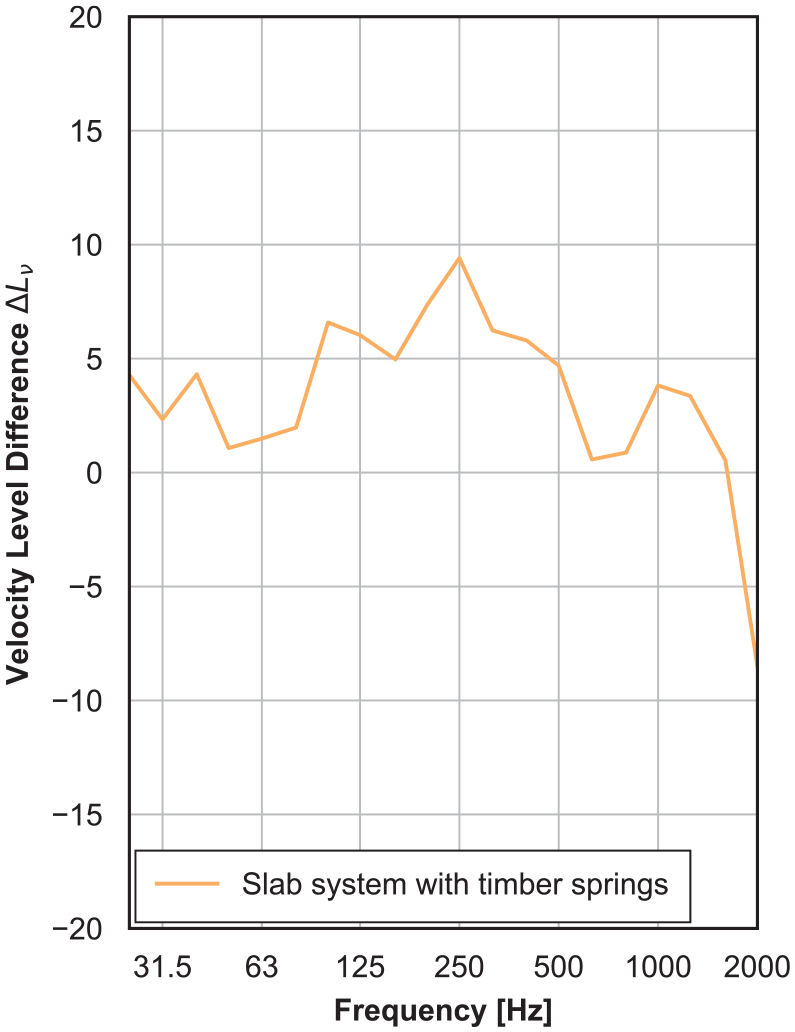
Velocity level difference
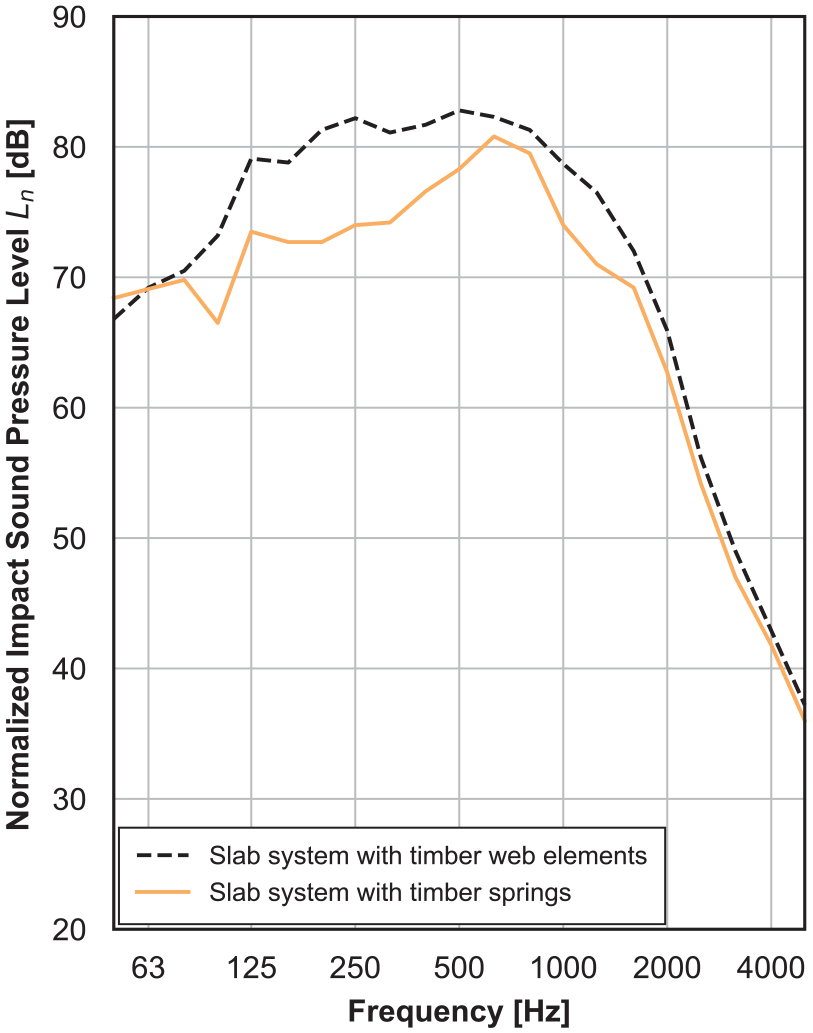
Measured normalized impact sound pressure level
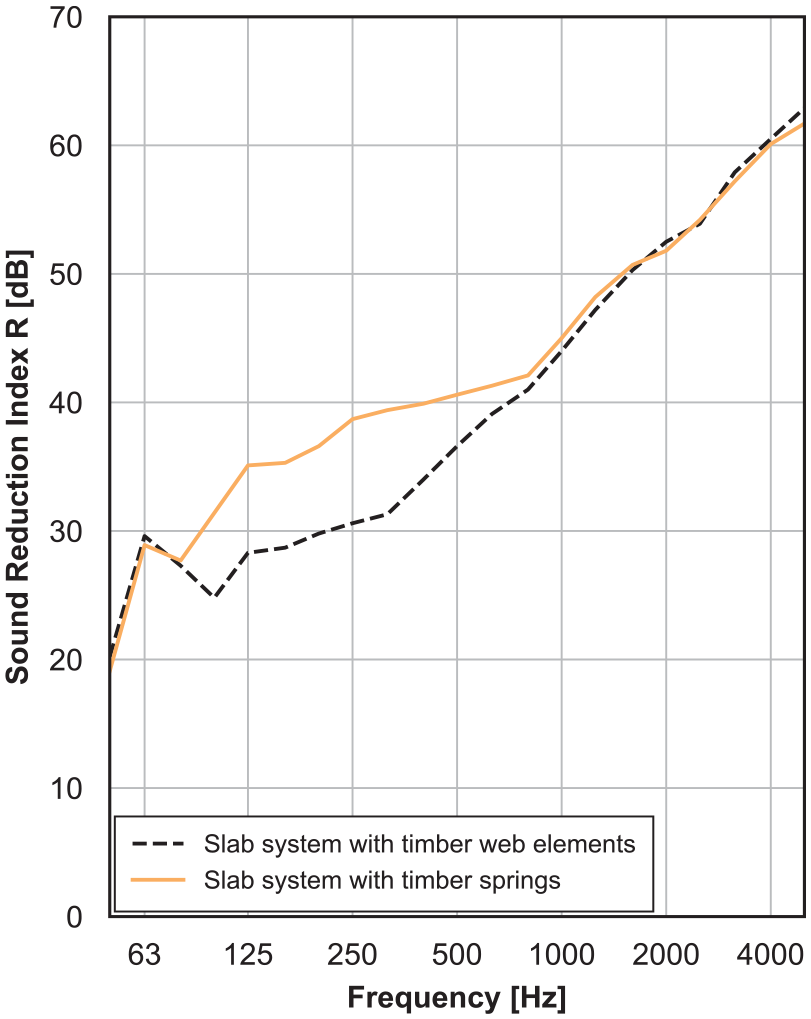
Measured sound reduction index
The curves in Figure 14 also clearly illustrate the improvement in the normalized impact sound pressure level
The analysis of the sound reduction index
However, the typical resonance behaviour expected in dual-shell systems cannot be observed. For instance, the curve of the sound reduction index
The air in the cavity also impacts the sound reduction index. As the use of the timber springs suggests that they also influence the vibration behaviour of the plates, further research or more detailed measurement data is required.
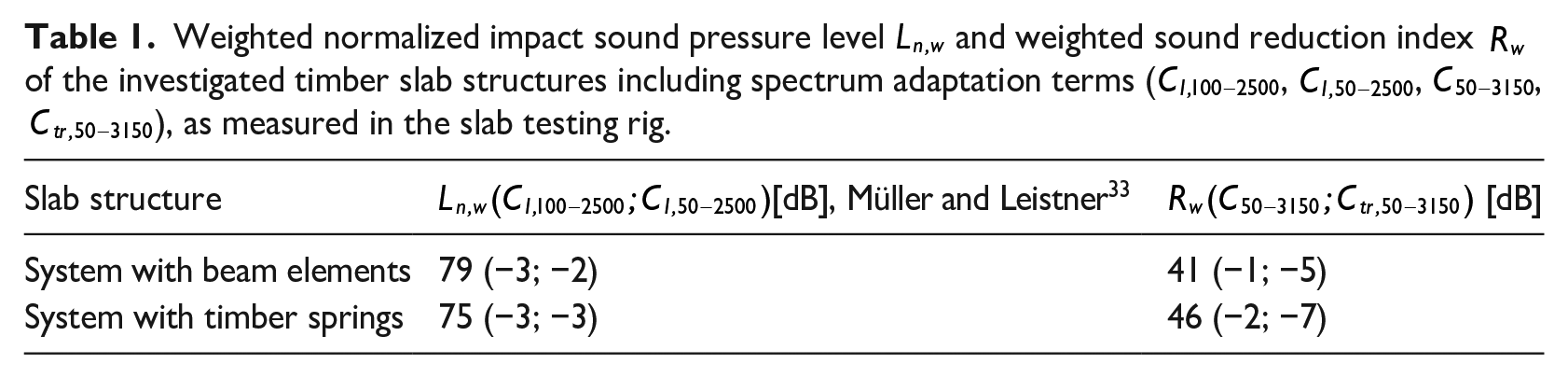
For the rating of the sound insulation of the investigated slab structure, the sound reduction index
The results are presented in Table 1. The reduction in the weighted normalized impact sound pressure level
Weighted normalized impact sound pressure level
Discussion
The conducted measurements demonstrate the functionality of acoustic decoupling by means of minimal geometric modification of linear wooden building system components. In the small-scale tests, the difference in structural velocity between the upper and lower plates suggests a significant alteration in the vibration behaviour of the overall system. When this method is applied to a timber building system in a slab testing rig, the improvement in acoustic performance is evident through the evaluation and characterization of the velocity level difference
However, despite the improvements, the current weighted normalized impact sound pressure level
Floor build-ups and cavity damping were not included in this investigation, as the primary focus was on improving the bearing slab by integrating acoustic decoupling functions. As a result, fewer additional measures are required, such as surface structures or suspended ceilings. This approach not only offers the potential of reducing the need for heavy materials, such as gravel, thereby reducing the overall weight, but also allows for savings in the overall cross-section.
Additionally, the system with timber springs does not exhibit the typical resonance behaviour that is usually observed in dual-shell structures. For instance, the sound reduction index
This anomaly can be attributed to the distribution of the surface load caused by the movements of the plates. The timber springs are loaded differently over the entire surface. Further investigation using finite element analysis is required to better understand this behaviour.
Conducting a comprehensive parameter analysis can further improve the performance and effectiveness of the developed timber springs. This analysis should include key factors such as material selection, fabrication techniques and the placement and alignment of multiple timber springs and their connections to the plates. In addition, optimizing the design and arrangement of timber springs tuned to different frequencies could significantly improve the overall performance, especially in the very low frequency range.
Studying these parameters will allow for adapted modifications to improve the performance of the timber springs. Further measurements are also necessary to assess the shear characteristics. Moreover, extending the impact sound transmission studies to include spectrum adaptation terms ranging down to 25 Hz provides deeper insights into the acoustic behaviour in the very low frequency range (with appropriate excitation), as proposed by Ljunggren and Simmons.
7
Besides that, the investigation of the transmission function
To facilitate the practical implementation of the developed timber spring, further adjustments regarding production and installation need to be made in consultation with industry professionals or design and construction firms. The cost-effectiveness of system component configurations and materials should be evaluated to ensure they are both affordable and beneficial.
The geometry of the timber spring is parametric and can be adapted to different configurations. It is necessary to explore optimization through discussions with industry to ensure that the integration of the timber spring does not compromise other essential functions of a slab system, such as load-bearing capacity and fire safety.
From an ecological perspective, it is important to assess the environmental impact of the materials used, including their manufacture and disposal. Additionally, evaluating the potential savings offered by the proposed acoustic-functional element will provide a clearer understanding of its overall benefits.
Conclusion
This paper presents a promising concept for the integration of acoustic decoupling in timber building systems with cavities, introduced as timber spring. The findings from the investigations provide valuable measurement data that enhance the understanding of this innovative approach.
The concept demonstrates the potential to reduce sound transmission from impact sound within a dual-shell. Measurement data revealed significant differences in structural velocity compared to the reference system with unmodified timber web elements, indicating improved acoustic performance. Specifically, the weighted normalized impact sound pressure level
The timber spring was tuned to create a resonance at 100 Hz in the slab system, as shown by the normalized impact sound pressure level results. Achieving this outcome requires a fundamental understanding of structural behaviour and force distribution within the slab structure, which underscores the importance of an interdisciplinary approach during the planning and design phase.
This research lays the foundation for future investigations by establishing a fundamental understanding of this concept. It offers novel potential for significant advances in related fields and redefines current practices in timber construction and acoustics.
Footnotes
Acknowledgements
The authors would like to thank the project team of the University of Stuttgart for the interdisciplinary exchange on this topic: Cristóbal Tapia Camú and Simon Aicher of the Materials Testing Institute (MPA), Luis Orozco of the Institute for Computational Design and Construction (ICD) and Anna Krtschil and Jan Knippers of the Institute of Building Structures and Structural Design (ITKE). Acknowledgements are also extended to those involved in the realization of the measurements: Anna Krtschil for structural verification and Jan Mösche and Bernd Kaltbeitzel from the Fraunhofer Institute for Building Physics (IBP) for the assembly of the measurement setups and the subsequent investigation of the measurements conducted. The authors express their gratitude to Bernd Kaltbeitzel, Mark Koehler and Moritz Späh, also from the Fraunhofer Institute for Building Physics (IBP), for the valuable discussion on this topic.
Data availability
The research data is available at  . [Müller T. Replication Data for: Concept and development of a novel timber spring for impact sound reduction in timber floor slabs, 2025. DOI:10.18419/DARUS-5110. URL https://doi.org/10.18419/DARUS-5110.]
Declaration of conflicting interests
The author(s) declared no potential conflicts of interest with respect to the research, authorship, and/or publication of this article.
Funding
The author(s) disclosed receipt of the following financial support for the research, authorship, and/or publication of this article: The presented work is supported by the Deutsche Forschungsgemeinschaft (DFG, German Research Foundation) under Germany’s Excellence Strategy – EXC 2120/1 – 390831618.