



Abstract
This study examines 22 peer-reviewed papers to offer insights into the current utilization of psycho-acoustic sound quality metrics in research focused on indoor soundscapes. The selection of papers followed the PRISMA method for systematic review, followed by descriptive and bibliometric analyses. The review focuses on (i) identifying what psycho-acoustic indicators can be utilized to obtain an objective soundscape assessment, and (ii) determining if soundscape descriptors vary with the desired activities within the indoor space. The findings provide an overview of how psycho-acoustic sound quality metrics are used to predict perceived annoyance in indoor environments. The discussion delves into response variables related to occupants’ sound perception across various indoor settings. It highlights the lack of sufficient research on prediction models based on psycho-acoustic sound quality metrics within indoor soundscapes. Further research is required to develop tools enabling the optimal design of indoor soundscapes, which can vary according to the intended use of the room.
Introduction
Noise as unwanted sound, along with poor room acoustics, can lead to dissatisfaction within the office environment and can significantly adversely affect workers’ performance. A 2015 report 1 by the World Green Building Council (WGBC) shows that background noise can lead to as much as a 66 percent drop in productivity, and as such, the need to consider the prevailing acoustic environment is now a common business need. For example, the WELL Building Standard includes ‘Sound’ as a concept and aims to bolster occupant health and well-being through the identification and mitigation of acoustical comfort parameters, while the LEED green building rating system has indoor environment quality category that focuses on a number of factors, including acoustic performance.
The effect of sound on overall human performance has received tremendous interest and has resulted in a substantial amount of research over the years. The main focus point in building acoustics research has been to control the sound originating from building structures and services. To encompass the overall acoustic experiences of the occupants in such buildings, the analysis of human-environment interactions has introduced the concept of indoor soundscape. Soundscape research serves as the foundation for bridging the gap between predicted and experienced acoustic performance by humans, as it delves into their perceptual response to the acoustic environment. 2
Several researchers have concluded that in order to achieve optimal worker performance and satisfaction, indoor environmental quality (IEQ) factors such as HVAC design, air quality, thermal comfort, lighting and acoustic comfort need to be improved. 3 To ensure acoustic comfort and enhance workers’ productivity, the sound environment needs to be optimized according to the occupants’ expectations. A review paper was published by Al Horr et al., 4 which included papers published between 1926 and 2015, focusing on occupant productivity and its relationship with IEQ factors. Only three papers were selected to describe the effects of noise and acoustics on occupant comfort and productivity.
Reinten et al. 5 published a comprehensive review of room acoustics, focusing on the influence of sound on human task performance. This review considered empirical findings from 12 papers out of a total of 272 papers to evaluate research outcomes based on the reviewer’s criteria related to sound levels and speech intelligibility. The review concluded by confirming the lack of effective studies on the effect of sound on worker performance, with only a small number of studies being deemed useful. Acun and Yilmazer 6 utilizes a grounded theory methodology to investigate how individuals perceive the soundscape within open-plan office environments. Through interviews and observations, the study identifies various perceived sounds, including human-generated sounds, mechanical and electronic sounds, outdoor sounds and music, noting their mixed effects on work—some being energizing and others distracting. A significant finding of this research is the coping strategies employees adopt in response to negative interpretations of the soundscape. These strategies include using headphones, relocating and adjusting work schedules. Differences in sound preferences and tolerance were influenced by personal factors and the nature of their jobs.
Park et al. 7 investigated the relationships between acoustic factors (i.e. active noise levels, reverberation time and speech privacy-related measures), job characteristics (i.e. skill variety, task identity, task significance and autonomy) and job satisfaction of employees in open-plan offices (OPOs). The research presented is based on acoustic measurements and online questionnaire surveys conducted in 12 OPOs, involving a total of 324 employees. An interesting finding of this research is the impact of task identity on job satisfaction, which was influenced by the levels of active noise and speech privacy.
Research on indoor soundscapes extends beyond commercial buildings, encompassing various contexts such as residential buildings, educational establishments and indoor public spaces. For instance, Torresin et al. 2 introduced a principal components model for acoustic perception, demonstrating how customized acoustic interventions can notably improve residents’ well-being and cognitive performance. The model specifies the perceptual aspects to assess in post-occupancy evaluations, recommends appropriate attribute scales and suggests strategies for enhancing indoor soundscape quality, serving as a valuable reference for both researchers and practitioners alike. In educational settings, Dockrell and Shield 8 investigates the influence of noise on classroom performance and the effectiveness of acoustical barriers. The study explores how ambient noise levels, such as from external sources or within the school environment, affect students’ ability to concentrate and learn effectively. It reviews various acoustical solutions and interventions implemented in classrooms to reduce noise disruptions, including sound-absorbing materials, acoustic panels and building design considerations like improved insulation and window treatments. The paper discusses empirical research findings that highlight the significant impact of noise on student achievement, cognitive processing and speech perception in educational environments. In public indoor spaces, Bubaris 9 explores the role and impact of sound within museum environments, highlighting how sound can enhance or detract from visitor experiences. It discusses various strategies and considerations for integrating sound effectively in museum exhibitions, emphasizing its potential to convey narratives, evoke emotions and enrich cultural interpretations. The paper underscores the importance of thoughtful sound design in enhancing visitor engagement and creating memorable museum experiences. Alnuman and Altaweel 10 investigated the acoustical environment in a shopping mall and its correlation to the acoustic comfort of workers, highlighting the significance of sound management in enhancing workplace satisfaction and productivity. Wang et al. 11 investigates noise acceptance within indoor soundscapes of transport hubs, focusing on acoustic sequences. It explores how various sequences affect subjective perceptions of noise through surveys and acoustic measurements. The study reveals that temporal patterns and specific sound qualities significantly influence noise acceptance levels. The study highlights the importance of considering sequence dynamics in designing acoustically comfortable environments in busy transit areas. These studies underscore the importance of soundscape assessments across various indoor environments, aiming to improve comfort, productivity and overall quality of life.
Today, the standard approach to assessing the acoustic characteristics of an indoor space involves a consideration of the reverberation time and prevailing ambient/background noise levels in that space and oftentimes, rooms must meet specific requirements. While the current standard of reverberation time and background noise assessments yield important information regarding the overall acoustic characteristics of an (empty) room, they do not give any representation of the overall sound quality in a space – the perception associated with noise/sound in the workplace has many factors that are not accounted for in such assessment. The measurable physical acoustic quantities, that is, sound level,5,12 speech intelligibility 5 and speech privacy, 12 are the frequently used quantifiers for assessing the acoustical effects on human performance in a indoor environment. However, human perceptions of sound can be both wanted and unwanted, based on physical, psychological and sociological factors, 2 as well as individual responses to an acoustic environment composed of various personal factors, task types and environmental factors, all of which need to be considered. This is applicable not only in the context of commercial indoor spaces but also in residential indoor spaces as well.
In general, the soundscape approach evaluates how the acoustic environment is perceived by humans. The ISO 12913-1 13 defines soundscape as an ‘acoustic environment perceived, experienced and/or understood by a person or people, in context’. Traditionally, soundscape research has been focused on urban areas and outdoor spaces. However, in 2017 an indoor soundscape questionnaire, aimed at the subjective evaluation of contextual experiences in indoor public spaces, was developed and tested by Dokmeci Yorukoglu and Kang. 14 The contextual experience variables considered in this research include psychological factors, space usage factors and demographic factors. The study found that demographic factors (such as gender and education level) and space usage factors (including preference, usage frequency and time spent) all influence psychological factors, which encompass aspects like expectation, perception and reaction. Although the presented indoor soundscape questionnaire was initially developed for assessing public library soundscapes, its assessments can be adapted for other indoor soundscapes through revisions of the sound sources. A systematic review by Lionello et al. 15 presented prediction models aiming to assess the experience of urban soundscapes. The methods used to construct soundscape models were scrutinized through an exploration of the following dimensions: techniques for gathering data, selection of indicators employed as predictors within the models, identification of descriptors aimed for as model outcomes, preference for linear over non-linear model fitting and the overall effectiveness of these approaches. The systematic review discusses prediction models of urban soundscapes based on acoustic and psycho-acoustic indicators such as sound quality metrics.
Sound quality metrics have been developed to comprehend the impact of sound on human perceptions. 16 Commonly recognized sound quality metrics for psycho-acoustic evaluation include loudness (N), sharpness (S), tonality (T), fluctuation strength (FS), roughness (R), impulsiveness (I) 17 and oppressiveness penalty (OP), 18 among others. Numerous studies have been dedicated to devising sound quality metrics for noise originating from specific sources, such as rotating machines, 19 aircraft, 17 automotive 20 and household appliances, 21 among others.
However, a limited number of papers have addressed the development of sound quality metrics for psycho-acoustic evaluation within indoor environments involving human interaction. In 2021, a review conducted by Engel et al. 22 on the use of psycho-acoustic indicators in soundscape studies mostly focused on urban soundscapes. Only 2 articles considered indoor soundscape assessment. According to ASHRAE guidelines, 23 people spend almost 90% of their entire day indoors, yet there is a clear lack of research addressing the well-being, comfort and health of the occupants. In recent years, there has been growing enthusiasm for indoor soundscape research, particularly in analysing psycho-acoustic sound quality metrics in indoor environments, especially in the context of activity-based soundscape research. ‘Activity-based soundscape’ refers to the auditory environment surrounding specific activities or events. 24 Unlike traditional or generalized soundscape assessments that consider overall environmental noise, an activity-based approach focuses on understanding how sound influences and interacts with particular activities or tasks in a given context. 25 For example, in educational settings, an activity-based soundscape study might analyse how different classroom activities (such as reading, group discussions or individual work) are affected by the types and levels of sound present, and how these soundscapes influence the participants’ experiences and outcomes. As a requirement to include a human-centred approach to indoor acoustic comfort assessment, several papers have been published by incorporating sound-quality-based soundscape techniques in the assessment process.
A systematic review was conducted by Torresin et al. 26 to investigate the data collection methods employed in the literature for studying indoor residential soundscapes, as well as the factors identified through these methods that positively characterize such soundscapes. This review includes both field and laboratory studies relevant to residential buildings, as well as studies assessing the factors that influence how building users perceive indoor acoustic environments. It has been suggested that designing an indoor acoustic environment that occupants positively perceive requires adopting a perceptual approach to define what constitutes a pleasing soundscape. Hasegawa and Lau 27 conducted a systematic review exploring the use of audiovisual bimodal and interactive effects in the design of indoor environments’ soundscapes. Emotional response variables other than noise annoyance include restorativeness and tension/fatigue, as found in various articles. In their review, they only reported loudness as an indicator of human perception within the auditory domain. However, there is a noticeable gap in comprehensive research on indoor soundscapes that incorporates psycho-acoustic sound quality metrics.
The primary objective of this paper is to conduct a comprehensive review of existing research on indoor soundscapes, with a particular focus on psycho-acoustic analysis across various indoor settings. The study aims to critically evaluate the methodologies and procedures employed in these studies, identifying key soundscape descriptors such as annoyance, acoustic satisfaction and perceived productivity that are relevant to indoor environments. Additionally, the paper seeks to categorize these soundscape descriptors based on specific indoor contexts and activity-based analyses, providing valuable insights into how different acoustic environments impact various indoor activities and experiences. This study aims to review literature related to the assessment of indoor soundscapes, focusing on the following research questions:
What psycho-acoustic indicators can be utilized to obtain an objective soundscape assessment?
Do soundscape descriptors vary with the desired activities within the indoor space?
Bibliometric analysis
A bibliometric analysis was conducted using VOS viewer software to examine 126 shortlisted articles sourced from different databases, including Scopus, Web of Science and PubMed. Co-occurrence analysis was performed using ‘All Keywords’ as units for analysis. The full counting method was employed, setting a threshold of 5 for the minimum number of occurrences of a keyword. A total of 1200 keywords were extracted, of which 36 met the threshold criteria. Before analysis, keywords were checked for duplication, with similar terms consolidated; for example, ‘Soundscape’ and ‘Soundscapes’ were considered as one. Additionally, synonymous keywords were replaced with a common term, such as ‘Acoustic environment’ being used interchangeably with ‘acoustic noise’, ‘acoustics’, ‘environmental sound’, ‘noise’, ‘sound’ and ‘sound environment’. Figure 1 illustrates the results of keyword network analysis, depicting the relationships and associations among various keywords within the current focus dataset or context.
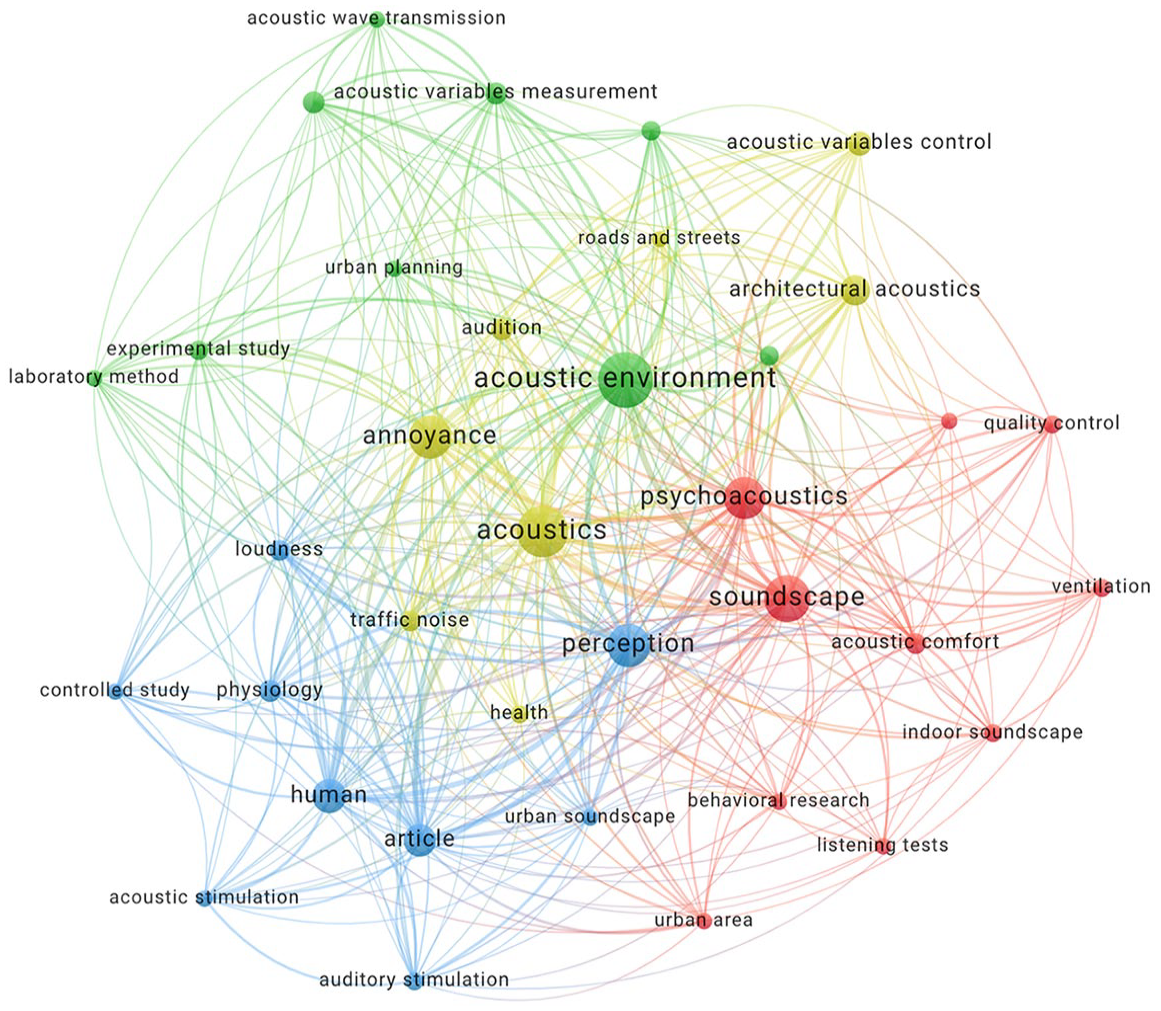
Analysing keyword networks: clarifying pertinent keywords and their connections.
Keywords like ‘open plan office’ and ‘office building’ are replaced with ‘architectural acoustics’. Keywords like ‘audition’, ‘auditory perception’ and ‘auditory stimulation’ were unified under ‘perception’. Similarly, ‘male’, ‘female’ and ‘human’ were merged into ‘humans’. This refinement reduced the final 36 keyword list, facilitating the subsequent analysis.
In VOS Viewer, clustering involves constructing a network of nodes (items or Keywords) and edges, calculating similarities between items based on co-occurrence data, and converting these similarities into distances. 28 The VOS clustering algorithm is then applied, 29 which iteratively assigns items to clusters by optimizing modularity—maximizing intra-cluster density and minimizing inter-cluster connections. The final step visualizes the clusters, often in different colours, providing an intuitive representation of the grouped items and their relationships. This process helps to identify and explore related items within the network effectively. The analysis revealed five distinct research clusters, elucidating the thematic focus of studies on indoor soundscapes and psycho-acoustics. Cluster 1 comprised keywords such as, ‘Soundscapes’, ‘Indoor soundscapes’, ‘psycho-acoustics’, ‘Behavioural research’, ‘Experimental studies’, indicating a predominant emphasis on human perception of auditory stimuli through experimental methodologies. Cluster 2 included keywords like ‘acoustic measurements’, ‘acoustic variable measures’, ‘sound reproduction’, ‘acoustic wave propagation’ highlighting research within the domain of sound propagation, simulation and measurement studies with a notable emphasis on acoustic analysis and characterization. Cluster 3 encompassed keywords such as ‘human’, ‘loudness’, ‘perception’, ‘controlled study’, ‘physiology’ and ‘urban soundscapes’ indicating research in perception and psycho-physiological changes in urban soundscapes. Finally, Cluster 4, comprising ‘traffic noise’ and ‘annoyance’, exhibited a stronger inclination towards Cluster 3, reflecting extensive research on negative impact of traffic noise and urban soundscapes.
Considering the timeline of the studies conducted, it was found that the majority of studies in the areas of acoustic comfort, acoustic simulation and traffic noise were predominantly conducted in the last decade. This was followed by studies based on soundscape assessment, human perception, experimental studies and behavioural research. In recent years, studies based on indoor soundscapes, mainly in office buildings and open-plan offices, have evolved under soundscape assessment. The exploration of soundscape studies with a psycho-acoustic approach initiated in the past few decades. Figure 2 depicts the distribution of published articles across various years from 2006 to 2024. Studies focusing on the psycho-acoustics of indoor soundscapes began in 2007, experiencing a surge in 2016 with more than 10 articles published in this sub-domain. Since then, there has been a significant increase in these studies. Figure 3 illustrates the distribution of published articles among various countries. Each bar represents the number of articles published from a particular country. The majority of studies originate from the United Kingdom, followed by China and other European countries such as Italy, Spain and Germany. Additionally, other Asian nations such as South Korea, Japan, Hong Kong and India have participated in exploring this research area. Nations such as Canada, the USA and Mexico have also presented results related to soundscape assessment with a psycho-acoustic approach. Institutes such as the Swiss Federal Laboratories for Material Science and Technology in Switzerland, University of Sheffield, University College London, Nanyang Technological University, Harbin Institute of Technology, University of Trento, University of Salford, University of Liverpool, University of Washington and University of Surrey have been involved in publishing articles.
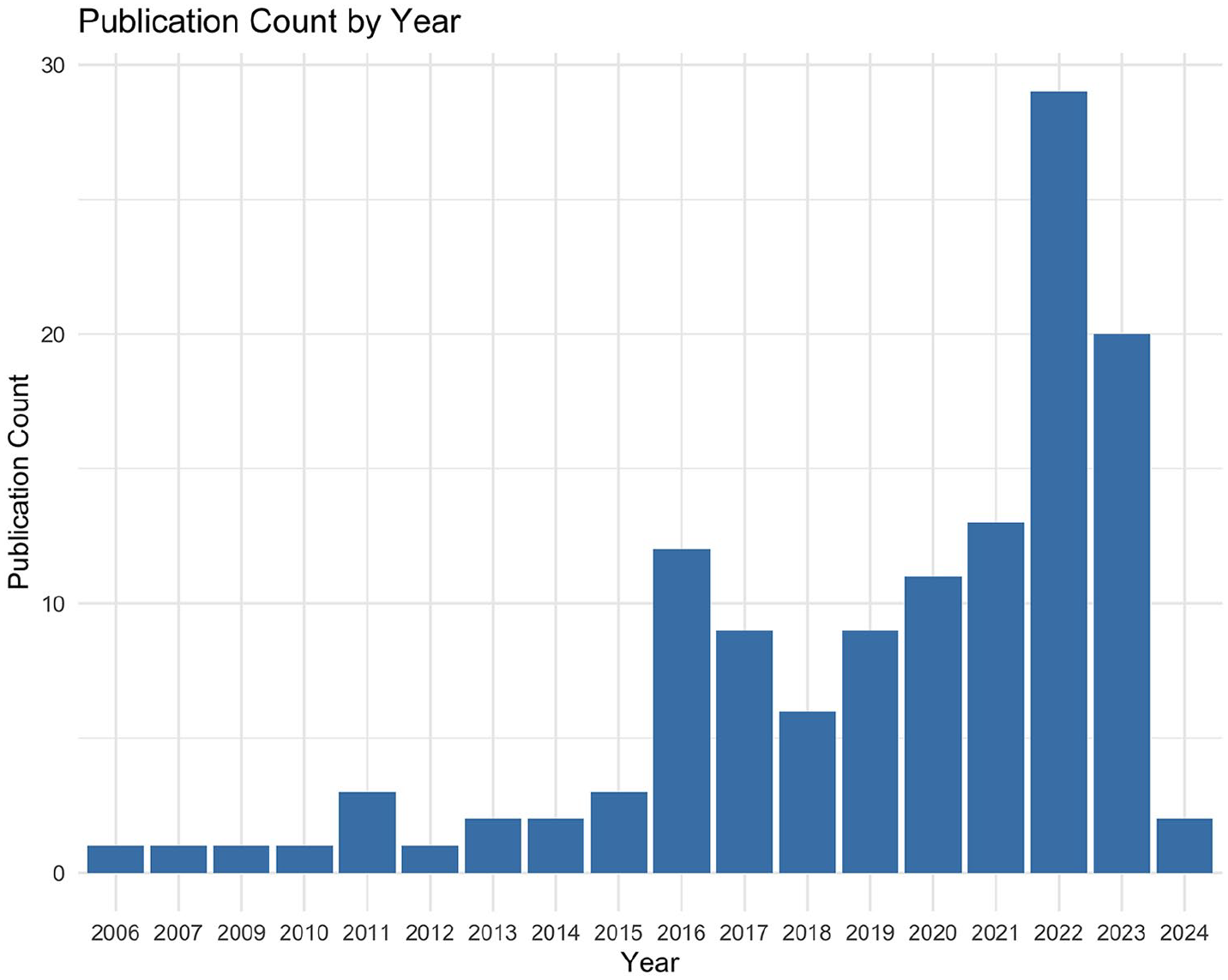
Total number of research articles published each year 2006–2024.
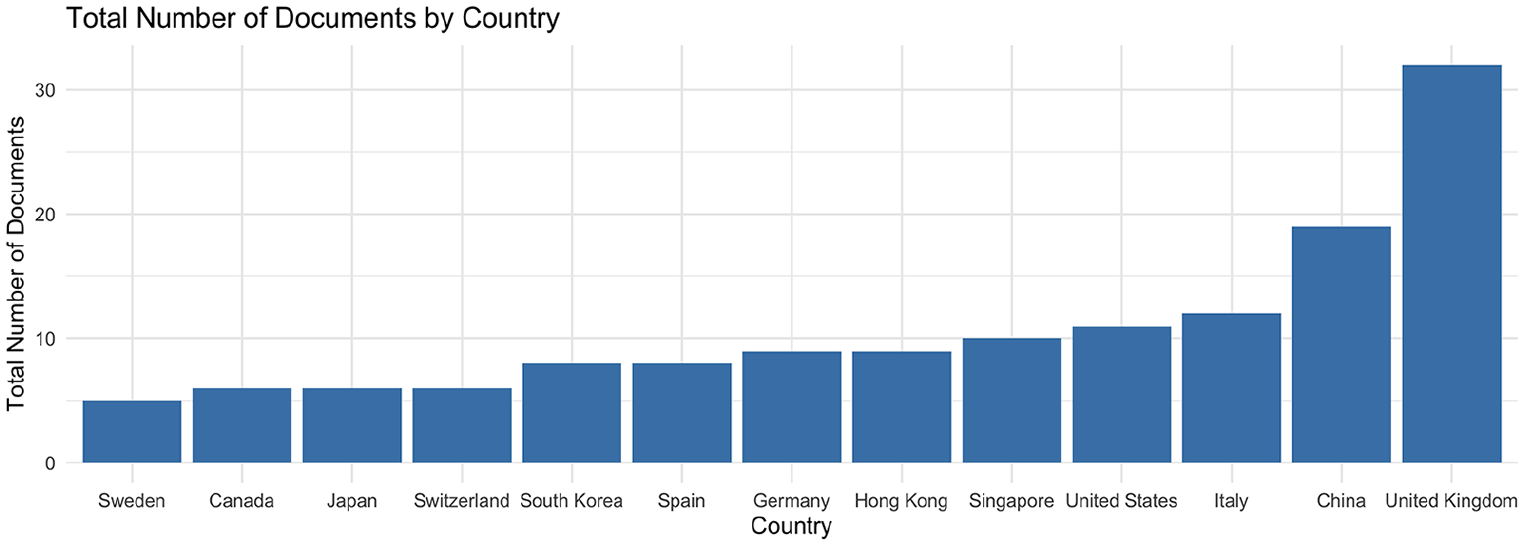
Bar graph showing the number of articles published from different countries.
Methods
This systematic review has been conducted based on the Preferred Reporting Items for Systematic Reviews and Meta-Analyses (PRISMA) guidelines. PRISMA represents an evidence-based minimal set of items intended for reporting in systematic reviews and meta-analyses. 30
Search and study selection
For this study, a broad literature search was conducted using search engines such as SCOPUS, Web of Science and PubMed. The work focused on only peer-reviewed journal papers published over the last 20 years, which matched the keywords ‘psycho-acoustic’, ‘indoor’ and ‘soundscape’. The search keywords included psycho-acoustic indicators, soundscape and indoor space terms, and were explored through the titles, abstracts and keywords of publications. For example, within the soundscape terms, several descriptors such as annoyance, pleasantness, etc., were searched for. In the indoor context, residential, commercial and other indoor spaces were considered, and psycho-acoustic indicators such as loudness, sharpness, etc. were included in the search. Figure 4 illustrates a collection of key terms and partial listings, demonstrating their correlation with the predetermined study criteria used for conducting database searches in this research effort.
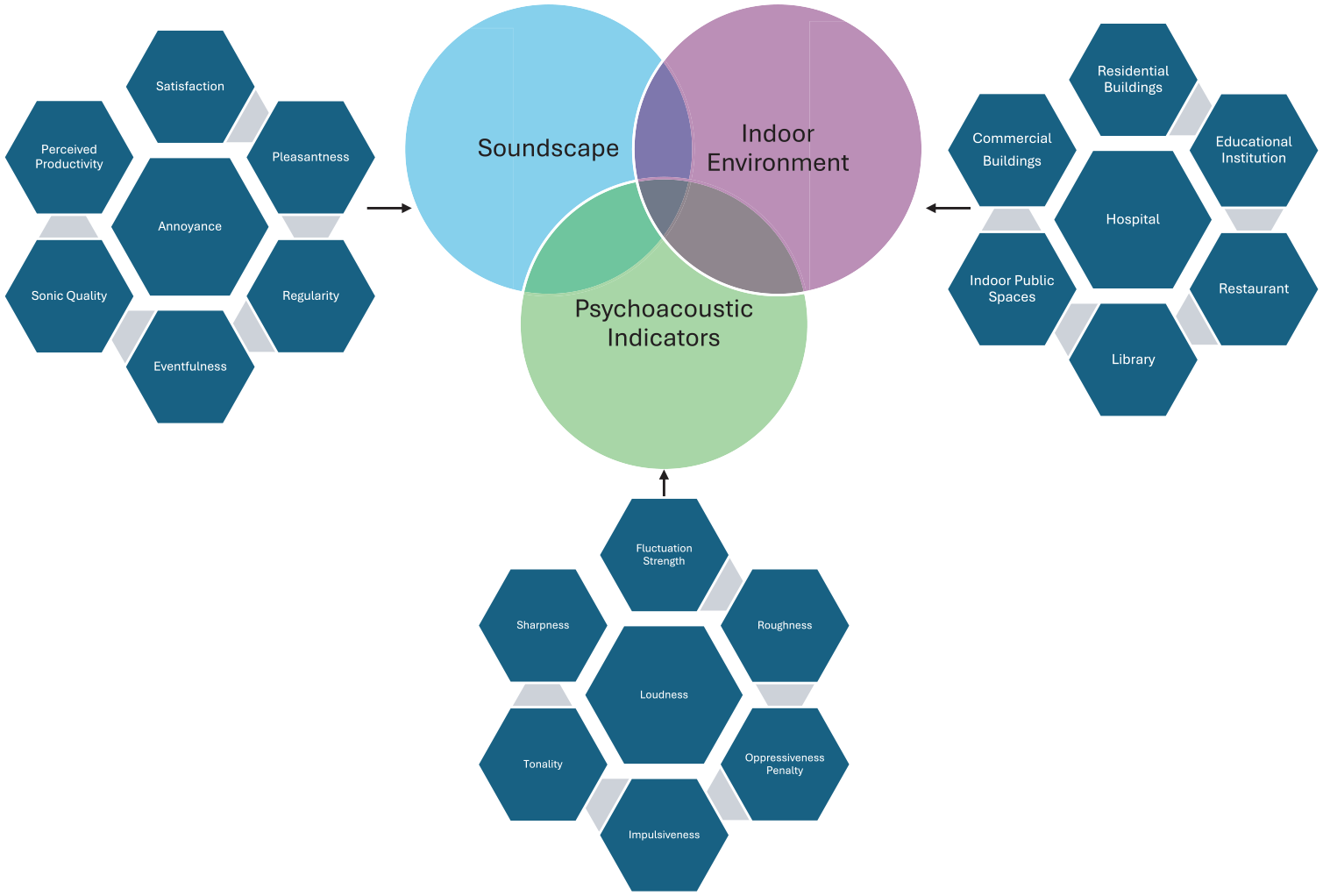
A compilation of key terms and partial listings of their correlation with the predetermined study criteria for conducting database searches in this review.
On December 19th, 2023, a total of 134 papers were identified using the keywords ‘psycho-acoustic’, ‘indoor’ and ‘soundscape’. Thirteen duplicates were found and removed, leaving 121 unique papers. After revisions, five more articles were included, bringing the total count of verified works to 126. These journal papers were gathered from diverse sources, such as search engines and academic databases, that matched the designated keywords. Out of these, 76 papers were excluded due to the requirement of collecting data only from peer-reviewed journal articles, thus excluding review papers, books, or book chapters. After this selection process, a total of 47 papers met the criteria for data collection. Furthermore, 28 papers were excluded because they focused solely on the ‘urban soundscape’ rather than the ‘indoor soundscape’ and lacked psycho-acoustical analysis. After the completion of this systematic review’s data collection, 22 peer-reviewed journal papers were included, showcasing practical work on indoor soundscape combined with psycho-acoustic parameters.
The complete process of this systematic review is illustrated as a PRISMA flow diagram—shown in Figure 5.
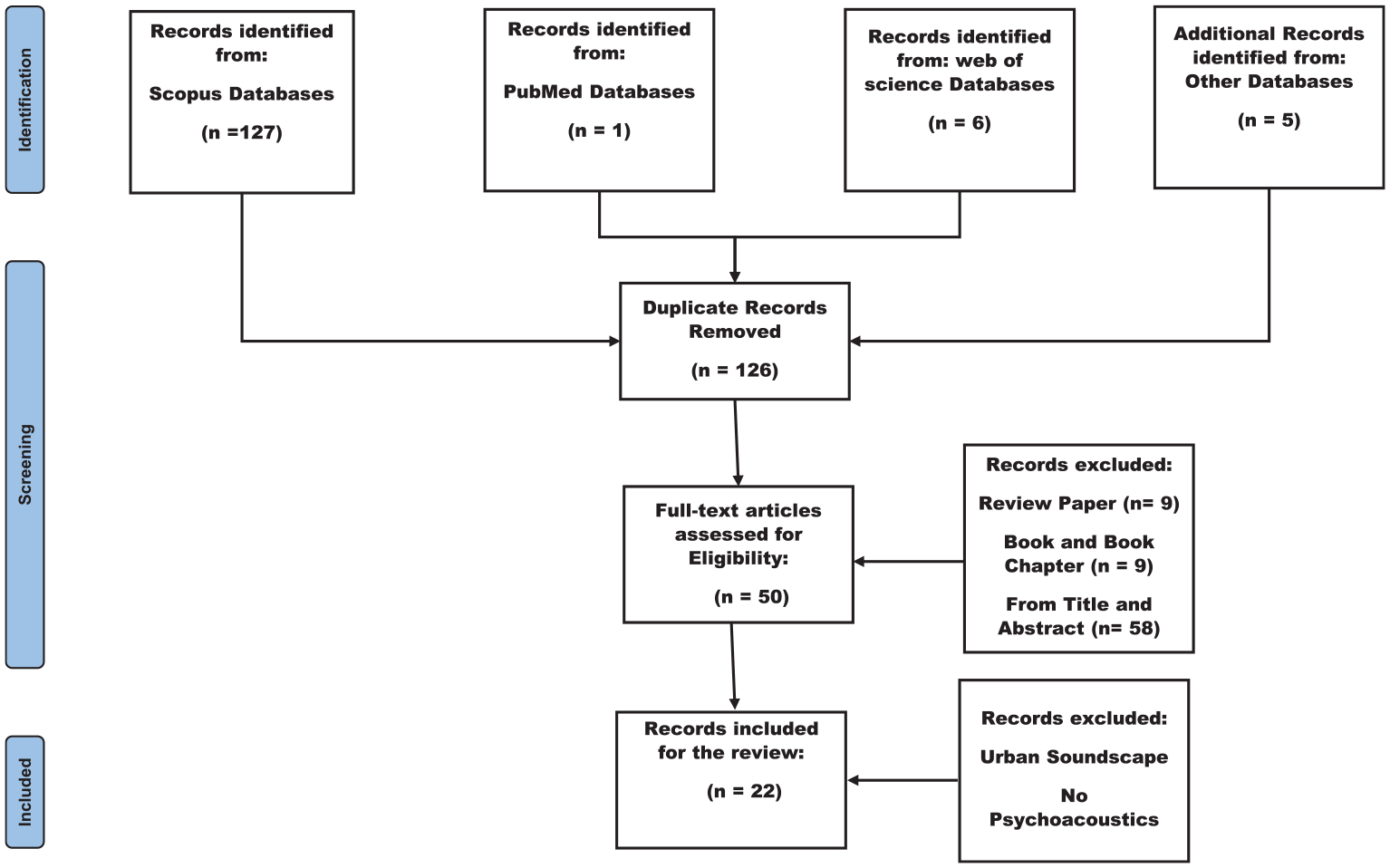
Work-flow diagram of the screening process with the individual steps according to the PRISMA standard.
Data analysis structure
Among 126 unique papers, a total of 50 papers underwent a comprehensive assessment of full-text articles to determine eligibility. During this screening process, articles were examined to ascertain whether they addressed all three core concepts of this review study, namely:
Psycho-acoustic indicators: Articles were evaluated based on their inclusion of both psycho-acoustic sound quality metrics and perceived annoyance factors.
Soundscape: Articles were scrutinized for their incorporation of soundscape concepts, particularly focusing on human sound perceptions.
Indoor: The research sites under consideration were restricted to indoor spaces.
Finally, 22 articles were selected as they fulfilled all three criteria mentioned above. Since a bibliometric analysis was conducted earlier as part of this investigation, a description of output patterns for each psycho-acoustic indicators and response variables in indoor soundscape studies has been included.
Figure 6 illustrates the distribution of publication years for the articles included in this study. Each bar represents the number of articles published in a given year. Missing bars indicate years where no publication records were found. To visualize the overall trend, a solid red line representing a two-period moving average has been overlaid on the histogram. This trendline smooths the data by averaging the number of publications over each two-year period, helping to highlight broader trends in publication activity over time.
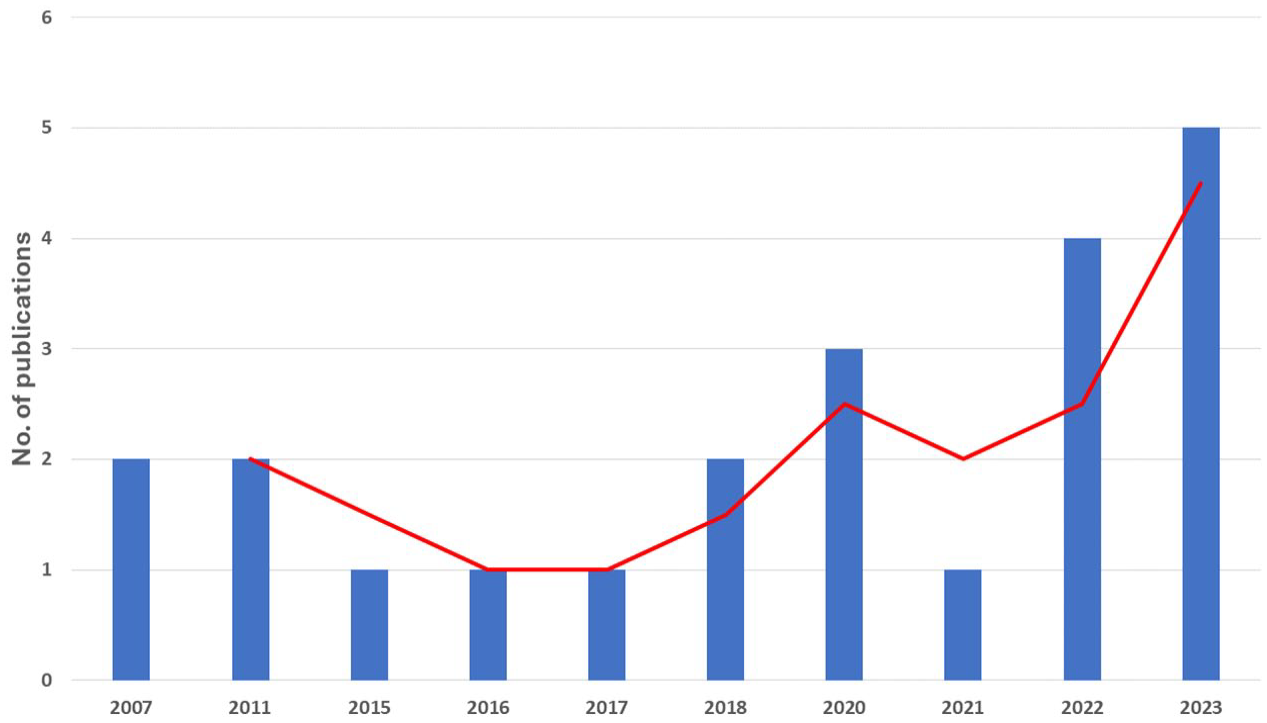
Histogram shows the publication years for included articles.
Results and discussions
Psycho-acoustic sound quality metrics
The inclusion of psycho-acoustic sound quality metrics from the chosen articles has been summarized in Table 1. One of the widely used psycho-acoustic sound quality metrics is loudness. Among the selected articles, most of them considered loudness and sharpness in the perceived annoyance model. Loudness and sharpness were both adopted in 95.5% of the studies, followed by fluctuation strength (77.3%), roughness (68.2%) and tonality (36.4%). Although impulsiveness has been reported mostly for noise annoyance analysis in outdoor spaces, 17 only one research work 31 considered it in indoor environments. Only one study 18 considered the oppressiveness penalty (4.5%). 86.4% of studies considered perceived annoyance based on statistical analysis using regression analysis, Pearson correlation coefficient and Spearman’s rank correlation coefficient. Only 13.6% of studies considered psycho-acoustic annoyance based on Zwicker’s method and 4.5% considered psycho-acoustic annoyance based on modified Zwicker’s method.
Consideration of sound quality metrics in the selected articles.
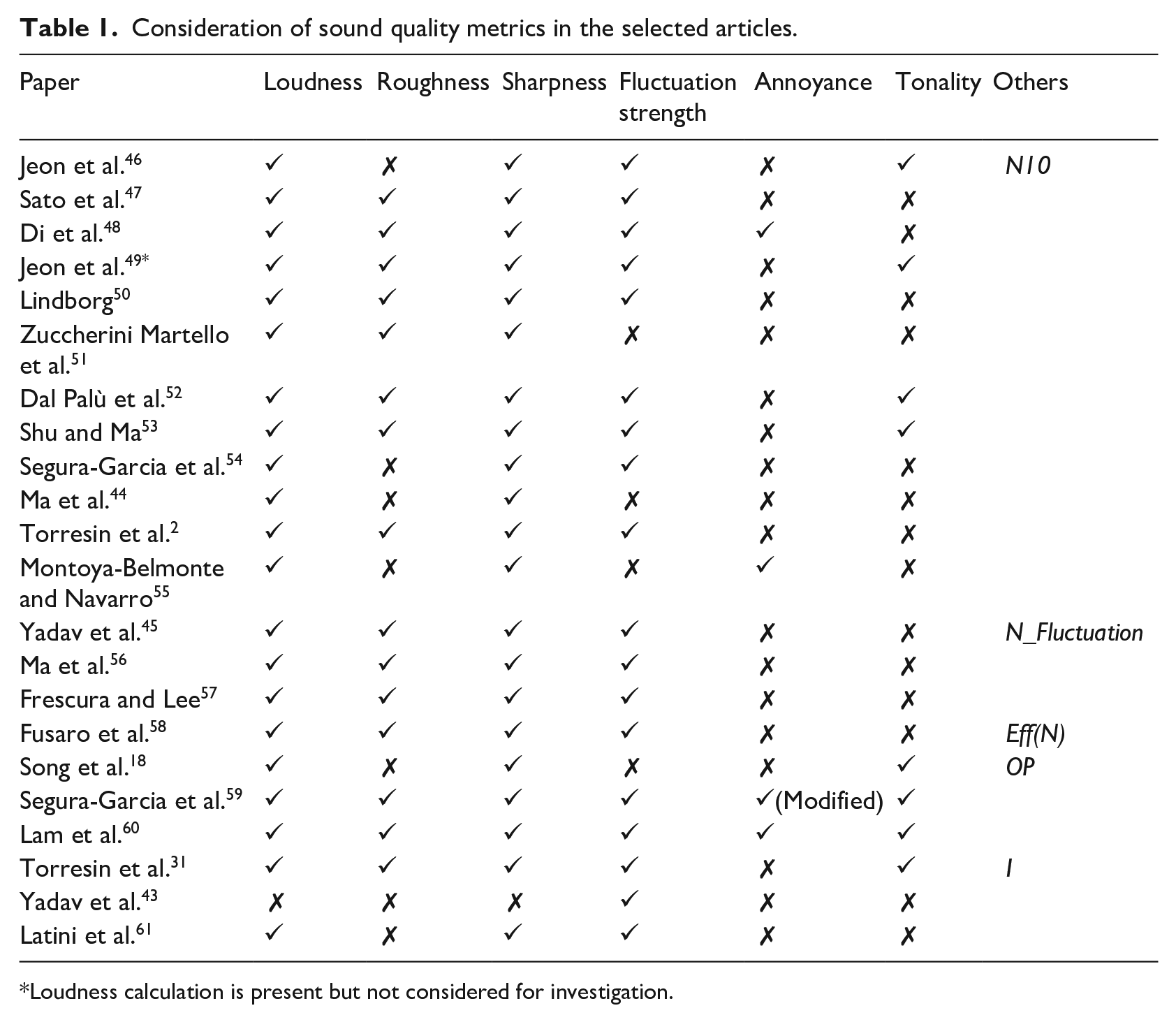
Loudness calculation is present but not considered for investigation.
The most used loudness calculation method was the Zwicker method (N= 14) (66.7%), which is presented in Zwicker and Fastl’s 16 work, and standardized as ISO 532-1. 32 Two of the selected articles used DIN 45631/A1, 33 and another two used the Moore and Glasberg 34 loudness model. Just one article used the dynamic loudness model by Chalupper and Fastl. 35 Two of the articles do not specify the loudness calculation method. There is no standardized calculation method for fluctuation strength yet. Most researchers used calculation methods provided by Zwicker and Fastl 16 and by Zhou et al. 36 Calculation of sharpness were mostly obtained by ISO 532-1 (N= 12) and DIN 45692 37 (N= 4) using calculations provided by Aures. 38 One paper used the Von Bismarck method, and another used calculations provided by Chalupper and Fastl. The rest did not specify. Three papers used the method by Daniel and Weber 39 for roughness calculation, and another two used the standard ECMA-418-2 40 of psycho-acoustic metrics for ITT equipment. For tonality calculation, the Sottek’s 41 hearing model, ECMA-74, 42 and the Aures 38 tonality model were used. The rest did not specify a calculation method. The calculation of impulsiveness used the unspecified hearing model and the oppressiveness penalty calculation provided by Song et al. 18
Most of the articles considered sound perception by occupants through the utilization of a prediction model that correlates psycho-acoustic sound quality metrics. Additionally, some exceptional studies are presented here which do not consider sound perception of the occupants, but consider factors such as semantics, spatial variation, workplace factors, etc. Yadav et al. 43 explored the use of a straightforward psycho-acoustic sound metric fluctuation strength, to assess the effects of room acoustics and semantics in open-plan offices. Ma et al. 44 conducted an investigation into psycho-acoustic metrics with spatial variation, utilizing both acoustical measurements and subjective assessments. This study is notable for being the first to establish a correlation between the predictability of psycho-acoustic metrics N and S spatial variation. The study delved into the distance dependence of the psycho-acoustic metrics and . Yadav et al. 45 conducted a comprehensive quantitative assessment of the physical sound environment, examining various key workplace factors such as workstation numbers/density and office types. The study involved omnidirectional and binaural sound measurements taken during office hours across 43 open-plan offices (OPOs). Statistical analyses were presented, highlighting a range of acoustic and psycho-acoustic metrics in relation to different workplace factors. This paper is groundbreaking in that it pioneers the investigation of key psycho-acoustic metrics within large open-plan offices (LOPOs) through long-term binaural measurements. Furthermore, the study recommends future research endeavours centred on human-environment interaction, particularly in the realm of sound quality prediction.
Response variables for indoor soundscape assessment
Several response variables also called ‘soundscape descriptors’ have been reported for sound perception as experienced by the occupants in indoor settings. The overall response variables in the selected articles can be seen in Tables 2 and 3. The majority of the articles included here focus primarily on the assessment of ‘perceived annoyance’. It is also termed as ‘psycho-acoustic annoyance’ or simply ‘annoyance’. The annoyance-based assessment of soundscape was often used to characterize the whole acoustic perception of the context. Though annoyance is an extensively used soundscape descriptor, it lacks a comprehensive explanation of soundscape. For instance, a neutral or monotonous environment that is not annoying may not also be considered pleasant. To eradicate the dependency on the unidimensional scale of annoyance, the soundscape assessment approach was developed.
Consideration of sound perception descriptors in the selected articles.
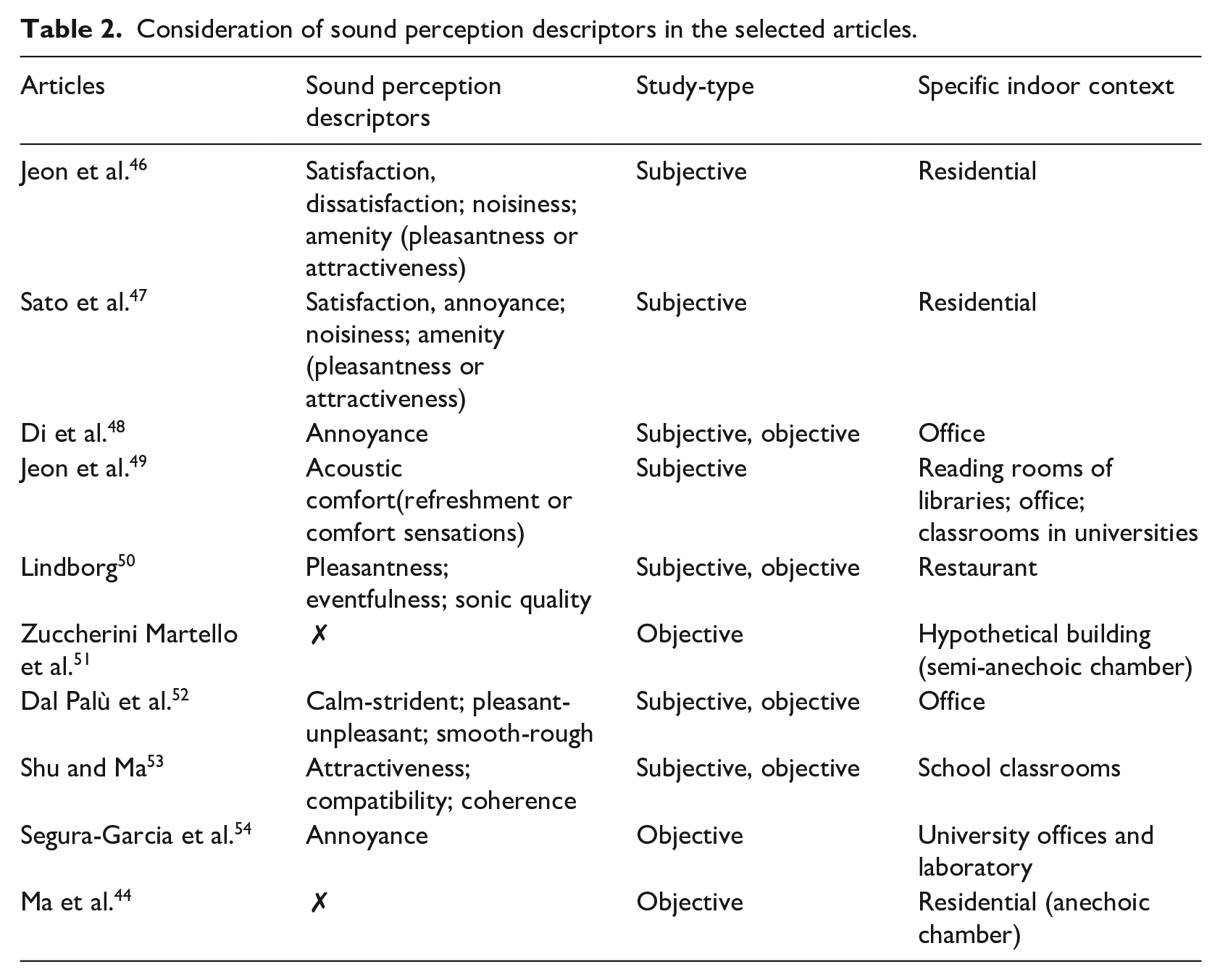
Consideration of sound perception descriptors in the selected articles (continued).
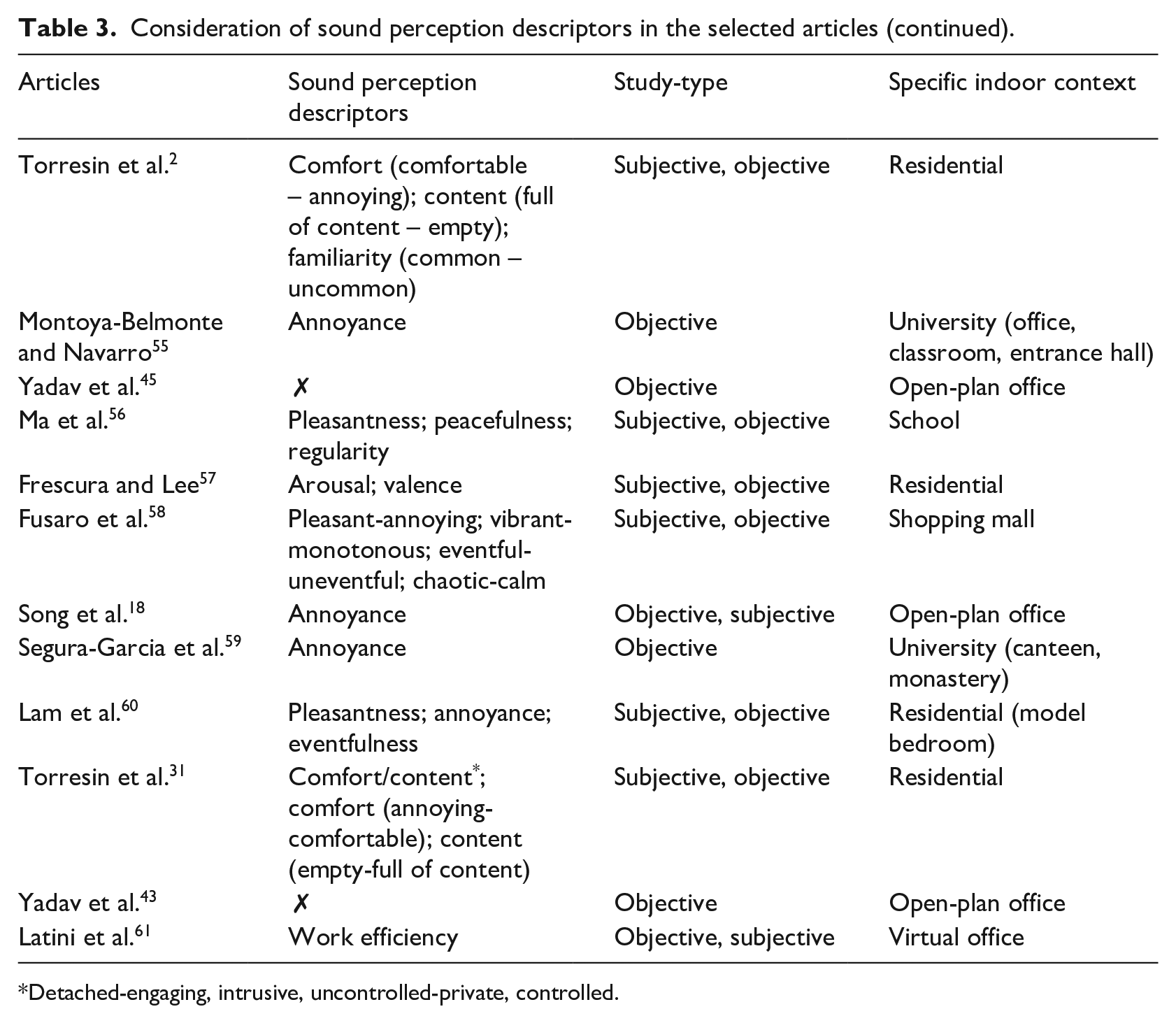
Detached-engaging, intrusive, uncontrolled-private, controlled.
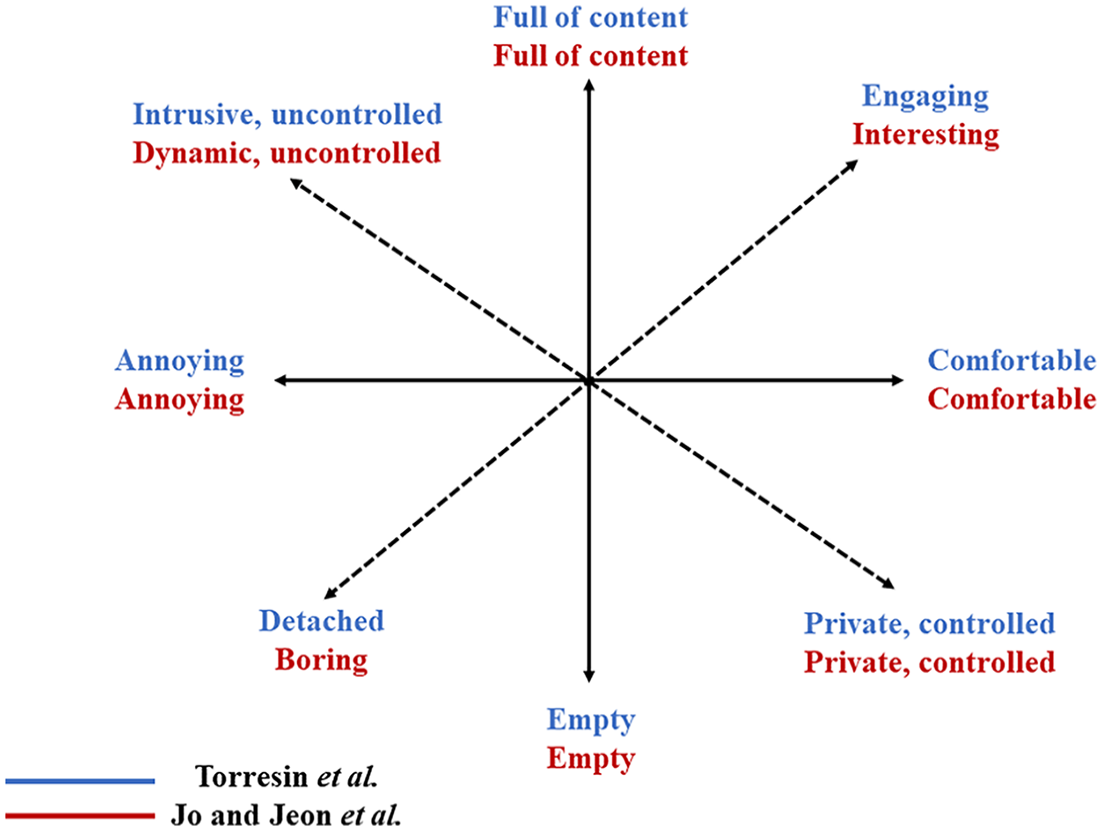
This approach is based on the soundscape circumplex model, 62 which is derived from Russell’s circumplex model of affect. 63 The soundscape circumplex model is based on a two-dimensional scale one related to valence (‘pleasantness’ or ‘comfort’) and one related to the degree of saturation of the environment with sounds and events (‘eventfulness’ or ‘content’). In this model, the description of annoyance is synonymous with the negative side of pleasantness, often replaced with the unpleasantness level.
In the reviewed articles, 26.3% of the studies have used ‘annoyance’ as an opposite response to ‘pleasantness’ or ‘pleasant’. Among these, 53.3% of the studies have reported ‘pleasantness’ as the response variable. At the same time, several other positive response variables have been reported, such as ‘satisfaction’ or ‘acoustic satisfaction’, ‘calmness’, ‘peacefulness’, ‘comfortable’, ‘eventfulness’, sonic quality’, ‘attractiveness’, etc. Although ‘sonic quality’ typically carries a neutral connotation, in the context of our study, we refer to it as a positive response due to its strong correlation with pleasantness. This correlation is supported by the findings ofLindborg, 50 which demonstrated that higher sonic quality is often associated with increased pleasantness. Therefore, we consider sonic quality to reflect a favourable auditory experience, contributing to the overall positive perception of the environment. Also, negative response variables such as ‘noisiness’, ‘dissatisfaction’, ‘unpleasant’, rough’, ‘monotonous’, etc. have been presented in selected articles. Only one article included ‘work efficiency’ as the response variable. Although Jo and Jeon 3 presented work-related quality metrics such as ‘perceived productivity’, ‘willingness to work’ and ‘overall satisfaction’ as the response variables, no analysis has been conducted using psycho-acoustic sound quality metrics.
In a residential context, other response variables such as ‘amenity’ (which correlates with ‘pleasantness’ or ‘attractiveness’), ‘arousal’ and ‘valence’ have been reported. In educational institutions such as universities and schools, several other response variables have been reported. For example, ‘regularity’, ‘refreshments’, ‘comfort sensations’, ‘compatibility’ and ‘coherence’. Interestingly, Lindborg 50 introduced a new measure called ‘priciness’ in restaurant settings, which showed a negative correlation with loudness. These findings emphasize that the dimensions used in the soundscape circumplex model, which are also integrated into ISO TS 12913-3, 64 were developed for outdoor settings and are not necessarily indicative of soundscape perception in indoor environments. This highlights the need to develop soundscape dimensions that are appropriate for the context and surroundings of indoor settings. Considering this, an indoor soundscape dimension has been proposed by Torresin et al. 2 for residential environments (e.g. a living room) as shown in Figure 7. Additionally, an alternative indoor soundscape dimension has been proposed by Jo and Jeon 3 for office building (e.g. OPOs) as shown in Figure 7. It is important to highlight that the model described by Torresin et al. 2 was rigorously developed using statistical methods validated through listening tests. In contrast, the model proposed by Jo and Jeon 3 lacks a formal derivation process and is inspired by Torresin et al. 65 It’s worth noting that both are in indoor settings, but certain soundscape descriptors have been altered to align with the occupants’ sound perception for the specific environment. So, the type of activity or task significantly influences the acoustic experience or sound perception of occupants, as well as the response variables for specific indoor contexts. Further exploration into the interplay of these variables could provide valuable insights for designing more pleasant and functional spaces in residential, educational and commercial settings.
Notably, Visentin et al. 66 have addressed the context of educational buildings, with most studies focusing on primary schools. This study investigated the indoor soundscape of classrooms for primary school children aged 8–10, examining perceived loudness and the affective dimensions of ‘pleasantness’ and ‘arousal’ using non-verbal, pictorial scales. The key findings indicate that children perceive exposure to unpleasant sounds primarily generated by themselves, with the urban context influencing their responses when windows are open. Pleasantness is influenced by age, perceived loudness and the frequency of hearing nearby children’s voices, while arousal is affected by perceived loudness, reverberation time and the frequency of both indoor and outdoor sounds. Children’s ideal soundscape consists of calming and restorative sounds, such as music and natural sounds, reinforcing the idea that future research should evaluate beneficial soundscapes. This study enhances understanding of children’s perception of classroom soundscapes and underscores the need for further research to develop design suggestions for supportive learning environments. However, a complete model for assessing affective response to soundscapes in school buildings has not been provided, suggesting avenues for future model development.
Limitations
There are several non-peer-reviewed articles67 –69 that have been published, providing different aspects of research based on psycho-acoustic sound quality metrics and indoor soundscape, which are not considered in this review. Sheikh and Lee 67 attempted to evaluate the aural comfort in indoor spaces through a soundscape methodology. They discovered that psycho-acoustic factors such as loudness and roughness are significant determinants of comfort when considering road traffic noise in indoor residential areas, especially in tall, naturally ventilated buildings. Azzahra et al. 68 focus on defining soundscape dimensions specific to Intensive Care Units (ICUs) from the perspective of nurses. Unlike urban environments where main noise sources may not contain valuable information, ICUs feature distinct noise sources like medical equipment that convey crucial patient information. A questionnaire using semantic differential scales was distributed to nurses to gauge their perceptions of the acoustic environment in ICUs. Principal component analysis was then employed to identify three primary soundscape dimensions: calmness, dynamics and information. These dimensions provide a framework for evaluating and improving the acoustic environment in ICUs, catering to the unique needs and responsibilities of healthcare professionals. West et al. 69 investigate the suitability of soundscape perceptual assessment methodologies for the open-plan office environment and suggest the applicability of the ISO/TS 12913-3:2019 two-dimensional model to such environments. Additionally, they found that psychological well-being, overall work-related satisfaction, and perceived productivity were correlated with ISO Pleasant scores. This review presents a first step towards understanding indoor soundscapes by integrating psycho-acoustic analysis, especially considering the context of an emerging scientific field where the number of research studies on this particular topic is increasing daily.
Conclusions
This study aimed to investigate how psycho-acoustic sound quality metrics could be applied in indoor soundscape studies by conducting a systematic review of peer-reviewed publications spanning the past 15 years. We considered the following research questions: (i) what psycho-acoustic indicators can be utilized to obtain an objective soundscape assessment? and (ii) do soundscape descriptors vary with the desired activities within the indoor space?
Regarding the first research question, this systematic review presents research that integrates psycho-acoustic sound quality metrics into the assessment of sound perception, utilizing response variables within specific indoor environments. Both objective and subjective studies have been considered to establish prediction models for sound perception. The most frequently utilized psycho-acoustic sound quality metrics in indoor soundscape thus far have been loudness and sharpness, followed by fluctuation strength, roughness and tonality. Several other psycho-acoustic sound quality metrics have been considered, although their research has been reported very sparingly. The lack of studies integrating psycho-acoustic sound quality metrics into indoor soundscapes is evident.
Regarding the second research question, response variables or soundscape descriptors exhibit distinct variations depending on the utilization of each indoor space. The model of affective response to indoor soundscapes in residential buildings was developed by Torresin et al., 2 while a model for open-plan offices was developed by Jo and Jeon. 3 The development of a model for the affective response in each indoor space should take into account the specific activities and usage of the targeted area. Very few papers have addressed work-related quality aspects such as productivity, job satisfaction, willingness to work and work efficiency.
Further research should prioritize the integration of psycho-acoustic sound quality metrics into these aspects of work-related quality. Occupants of indoor spaces commonly struggle to understand engineering terms such as sound pressure levels and decibels. Incorporating appropriate response variables can aid in enhancing their understanding of sound perception and promoting overall well-being. This review has highlighted the importance of using response variables appropriately in different indoor settings. Exploring their correlation with psycho-acoustic sound quality metrics would be helpful in designing indoor spaces that are acoustically suitable for their intended usage. Prediction models can be developed by incorporating various aspects of human perception and the factors that affect it, specifically tailored to the activities within indoor spaces.
Footnotes
Acknowledgements

Declaration of conflicting interests
The author(s) declared no potential conflicts of interest with respect to the research, authorship, and/or publication of this article.
Funding
The author(s) disclosed receipt of the following financial support for the research, authorship, and/or publication of this article: This work was supported by the Room-Phonic project jointly funded by Enterprise Ireland and Sonitus Systems.