




Abstract
Trends of urbanization, densification, and telework all point to increasing exposure to ambient noise for workers. With the lockdown policies implemented in response to COVID-19, a research opportunity to study perceived noise exposure for teleworking arose. This paper presents the results of a survey on noise issues in multi-unit residential buildings (MURBs) and the consequent effects on occupants' well-being and productivity during the lockdown. Responses were collected from 471 MURB occupants across Canada. The results show that, despite the decrease in environmental noise, many are annoyed by outdoor noise, particularly from traffic and construction activities, and indicated that it affects their ability to work. Effects on ability to work from home were more frequently reported for indoor noise sources particularly airborne and impact noises coming from neighboring suites. Our findings, however, show that noise coming from occupants in the same suite (i.e. roommates and family) present the biggest issue. The findings indicate that existing noise conditions in MURBs might not be suitable for a permanent large-scale implementation of teleworking.
Introduction
By the end of March 2020, the COVID-19 pandemic had forced many countries into lockdown to prevent the spread of the virus, which resulted in halting or significantly reducing various economic and social activities. As part of the social distancing measures, public events were restricted, construction activities were limited, and businesses, schools and non-essential workspaces were closed which forced many people to stay home.
While these social distancing measures have negatively impacted countries’ economies, studies have shown that the lockdown has had positive impacts on the environment.1–4 One of the main positive impacts is a reduction in environmental noise. Many acousticians have reported changes in environmental noise in various cities across the globe.4–8 For instance, an average noise level reduction of 4 dB was recorded in Stockholm 9 and Madrid 10 due to COVID-19 lockdown. Similarly, noise measurements taken at various outdoor locations in New York City showed that, compared to noise conditions before the lockdown, daytime and nighttime noise levels were lower by about 5 dB and 3 dB, respectively. 11 One of the main reasons for this was the reduction in traffic noise.4,12 Traffic noise, which is one of the most problematic environmental noise sources,13–15 was drastically reduced as many people stayed home and avoided using private and public transit. Based on mobility reports provided by Google LLC, 16 visits to various destinations, including transit stations and workplaces, decreased in many countries compared to baseline data collected in the first 5 weeks of 2020 (Figure 1). Reductions in construction and other outdoor activities also contributed to the drop in environmental noise levels.
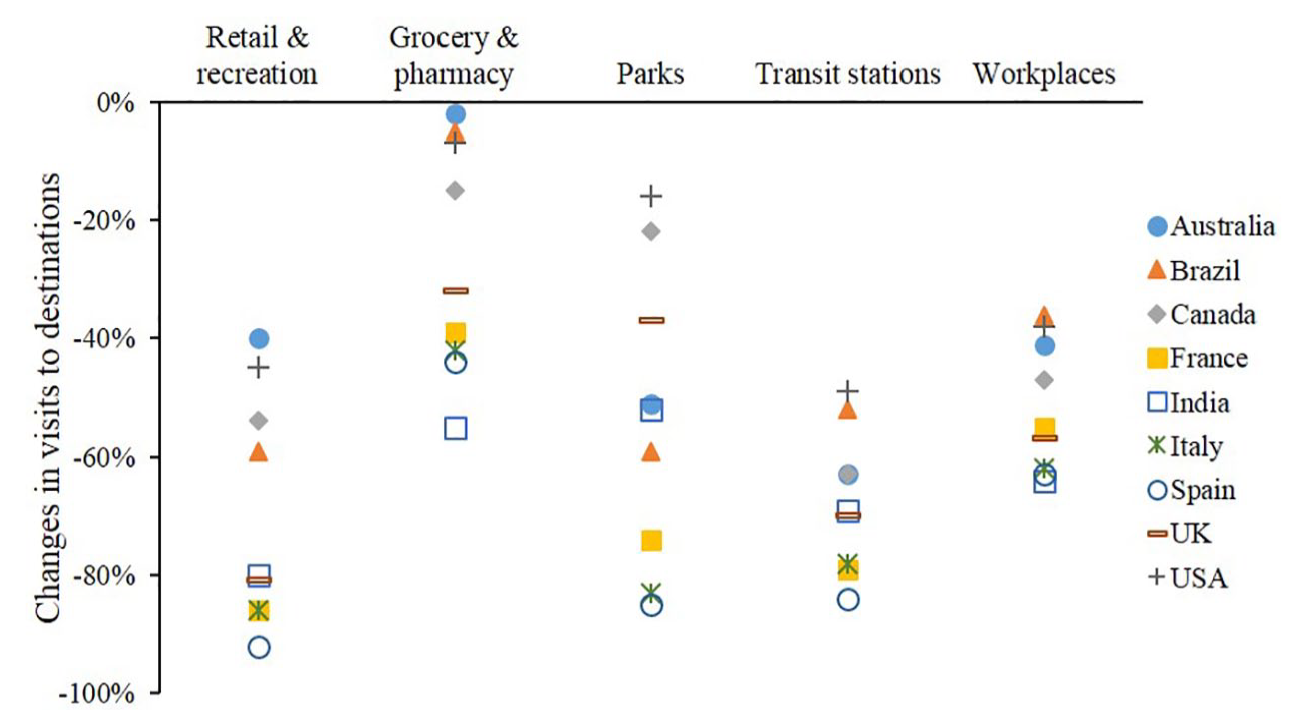
Changes in visits to various destinations on April 11th during major lockdowns from COVID-19 compared to baseline data collected in the first 5 weeks of 2020. 16
While there was a reduction in environmental noise levels, the effect of the lockdown might have been the opposite for noise coming from indoor sources in residences. As more people stay at home, they are more likely to produce, as well as be exposed to, more noise in their buildings. This might especially be an issue for occupants in multi-unit residential buildings (MURBs) who can be exposed to a number of indoor noises with limited mitigation strategies compared to those in single-family homes.17–21 The frequency of noise coming from elevators, garbage chutes, and hallways might increase. Airborne and impact noise from neighboring suites might also be more frequent. This might have an adverse effect on those who have to perform noise-sensitive activities 22 from their home and are now subject to greater exposure to noise. Working from home might particularly be troublesome as, unlike office spaces, occupants in different suites are likely to have different types of work and schedules. Activities such as vacuuming or playing loud music during typical work hours might affect the productivity of occupants in neighboring suites. As a result, residential noise complaints, especially for noise coming from neighboring suites in MURBs, have increased since the lockdown.23,24
While it may be an extreme condition, the current pandemic and the resulting large-scale teleworking experiment provide a unique opportunity to study noise issues in MURBs, investigate the effects on occupants' wellbeing and productivity when working from home, and explore opportunities to improve acoustic conditions. Teleworking has been growing over the past few decades,25–27 and the current pandemic might facilitate further adoption of teleworking policies following the large-scale teleworking ‘trial’ necessitated by COVID-19. If this approach to working proves successful, companies may continue to encourage this post-COVID-19.28,29 Researchers suggest that teleworking has many benefits including a reduction in transportation-related air pollution, and improved workers’ wellbeing and productivity.30,31 However, there is limited research on how the noise conditions in MURBs, and residential spaces in general, can impact workers’ performance. 17 Indoor noise issues in MURBs might not be as frequent and as loud as during the lockdown, but similar noise issues should be expected to occur if the large-scale teleworking scheme continues after the lockdown. Similarly, since the lockdown measures, such as the reduction in construction activities, limited social gatherings and public events, have contributed to the reduction in environmental noise during the early days of the COVID-19 lockdown, outdoor noise levels will not be as low post-COVID-19. This is evidenced by the surge in activities seen in parks and outdoor spaces during the later months of the pandemic and the resulting increase in noise complaints related to outdoor neighborhood activities.32–34
The current study thus aims to use the COVID-19 pandemic experience to investigate how acoustic conditions in MURBs affect occupants’ subjective wellbeing and work productivity for a large-scale implementation of teleworking. The main objectives of the paper include (1) assessing the perceived changes in indoor and outdoor noise conditions due to COVID-19 lockdown (2) identifying noise sources that are more problematic for occupants during the lockdown compared to pre-lockdown conditions and (3) assessing how the noise conditions affect occupants’ reported work productivity in MURBs and investigate other factors that affect productivity. The study also aims to look at other effects of noise conditions during the lockdown, including how reported noise annoyance levels have changed compared to pre-lockdown conditions and evaluating the perceived effects of the noise conditions on sleep and other activities as well as reported mental health. While COVID-19-related policies in their current form are not expected to last, the pandemic is predicted to cause a long-term transformation in working; thus the findings of this paper have lasting implications.
Methodology
COVID-19 lockdown strategy at study location
This study was administered in various regions in Canada. Much like many other countries, Canada closed its borders and limited air travel to Canadians and permanent residents only soon after the world health organization declared COVID-19 a global pandemic. 35 By March 22, all Canadian provinces and territories had declared a state of emergency. 36 Non-essential workplaces and businesses, public parks, schools and universities were closed. Provinces prohibited or limited public events and social gatherings. While many of these restrictions are still in place in some parts of the country (as of August 17, 2020), many provinces started to gradually ease their restrictions starting the first week of May. 36
Study design and sample
To assess how perceived MURB noise conditions during COVID-19 lockdown affect occupants, an online survey, consisting of 41 questions, was administered using LimeSurvey. The survey is similar to an online survey used in a previous study conducted in the Summer and Fall 2019 in the City of Toronto. Findings of the previous study showed that both building-related factors (e.g. building age, floor level, proximity to ongoing construction, the existence of balcony, number of bedrooms, proximity to elevators, and garbage chute), and personal and demographic factors (e.g. occupants’ age, length of residency, ownership status, relationship with neighbors, and willingness to pay) are important predictors of noise annoyance in MURBs. The results of the study also suggested that, without proper noise control strategies, occupants are forced to take some noise mitigating actions which can have negative consequences on building noise conditions, indoor air quality and energy consumption. Details about the 2019 study, its data collection strategies and findings can be found in Andargie et al. 37
One of the main goals of the current study was to collect responses from those who participated in the 2019 study (N = 213) so that responses to conditions before and after the lockdown could be compared directly. All of the participants who completed the 2019 survey were thus contacted via email and invited to fill out the new survey. These respondents were asked to provide the same email they used in the 2019 survey so that we can identify and match responses in the two surveys. The survey was also open to those who did not fill out the 2019 survey. The authors used various platforms and social media outlets, such as Honeybee Hub, 38 LinkedIn, and university news platforms, to advertise the survey and collect additional responses from MURB occupants in various cities across Canada.
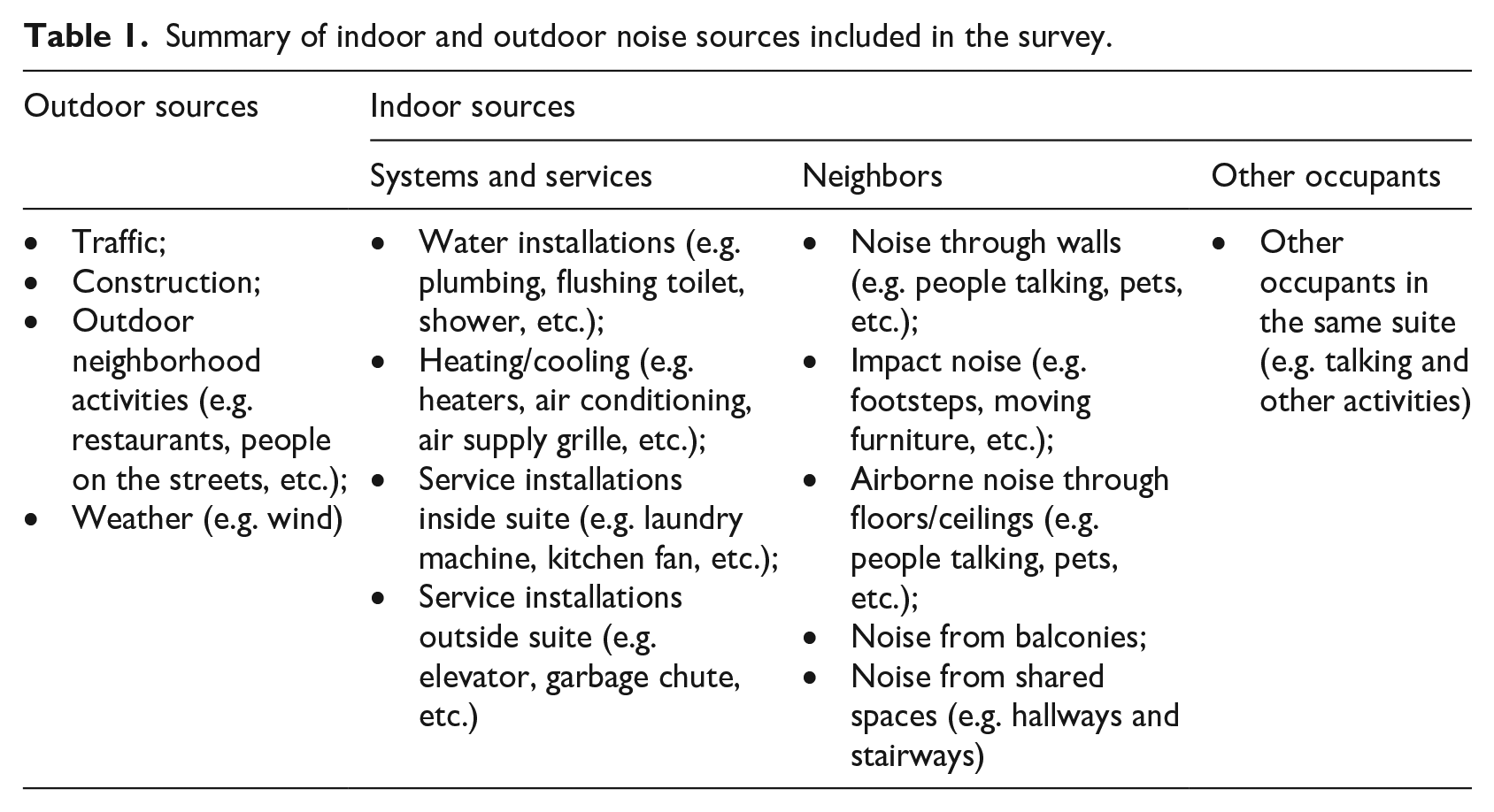
The complete survey used in this study can be found in Supplemental Appendix A, and the different indoor and outdoor noise sources included in the survey are summarized in Table 1. The questions in the 2019 survey were slightly altered, and phrases, such as “During the COVID-19 lockdown . . .,” were used so that participants of the current study reported about conditions pertaining to the COVID-19 lockdown. To identify other factors that might contribute to changes in noise conditions, those who filled out the 2019 survey were asked if they had made any changes or retrofits that might have affected the noise conditions in their suites since they filled out the initial survey. Additional questions were also included in the survey to identify the effects of noise conditions during the lockdown on those working from home. Respondents were asked to specify, on a scale of 0%–100%, the extent of their work that was previously done outside of their home that was now done at home due to the lockdown, and the extent to which they perform different types of activities (writing, reading, creative work, repetitive work, phone web-based conference, and presenting/speaking) as part of their work. They were also asked to identify the type of office they occupied at their workplaces (private enclosed office, shared enclosed office (2–3 people per room), open-plan office (four or more people per room), home office or other) before the lockdown. The question “How does your unit's noise condition during COVID-19 affect your ability to work from home?” (question no. 30 in Supplemental Appendix A) was used to assess how perceived noise conditions affected participants’ reported work productivity. In addition, participants were asked to report on how the loudness (question no. 31 in Supplemental Appendix A) of different indoor and outdoor noise sources and annoyances (question no. 32 in Supplemental Appendix A) due to these noises have changed compared to pre-lockdown conditions. The survey was approved by the Research Ethics Board at the University of Toronto. Participants were provided with an online informed consent form at the beginning of the survey. The consent form included information about compensation, which was provided in the form of a random selection drawing. Five randomly selected participants were provided with a $50 gift card each.
Summary of indoor and outdoor noise sources included in the survey.
Analysis
In order to make a pairwise comparison between the responses collected in 2019 and during COVID-19 lockdown, Wilcoxon signed-rank test 39 was used. This test was used to identify any significant differences in annoyance levels with various indoor and outdoor noise sources, and changes in effects of noise conditions on respondents’ ability to work from home, mental health, sleep and various other activities. Wilcoxon signed-rank test is considered appropriate for the comparative analysis as it requires the two samples to be paired and ordinal or continuous variables, and does not assume that the data have a known distribution. 40 The additional assumption regarding the symmetry of the differences between the two paired groups40,41 is confirmed using histograms. Ordinal logistic regression was also performed to predict the effects of noise conditions during the lockdown and other related factors on occupants’ ability to work from their suites. Ordinal logistic regression is suitable for situations where the response (dependent) variable is ordinal and predictor (independent) variables are categorical and/or continuous. The results of the regression are presented in the form of odds ratios which show the relationship between the independent variables and the effect on work. Three models were developed: Model 1, 2, and 3. Model 1 evaluated the effects of job-related factors: the percent of different job activities performed (writing, reading, creative work, repetitive work, phone web-based conference, and presenting/speaking), percent of work done from home, and office type before the lockdown. It is hypothesized that the impact of noise conditions on work will depend on the type of tasks performed and the percent of work that is done at home. We also hypothesized that those who were working outside of their home before the lockdown might be affected differently compared to those who were already working from home before the lockdown. Similarly, those who were working in open-plan offices might be affected differently by their suites’ noise conditions than those who worked in private enclosed offices where there might be a lower exposure to noise from coworkers. For Model 2, suite characteristics (floor level and number of bedrooms), living with family or roommates and number of children in suite were included to evaluate any effects these factors might have on participants' ability to work. For Model 3, changes in loudness and annoyance levels with overall indoor and outdoor noise were included based on our hypothesis that perceived loudness and annoyance will affect reported effects on work. The analyses were conducted using R software version 3.6.2, 42 and p-values less than 0.05 are considered significant.
Results
The survey was administered from April 16 to May 16, 2020, and was open to all MURB residents in Canada. While most of the responses, approximately 76%, were collected from the City of Toronto, other responses came from various cities across the country. The average time taken to complete the survey was 24 min and 28 s and the median time was 14 min and 58 s. A total of 710 responses were initiated and 471 complete (66% completion rate) responses were collected. Out of these responses, 51 came from those who also participated in the 2019 survey and were still living in the same suite. The authors were unable to identify and match the emails of three of these respondents to those in the 2019 survey. Therefore, 48 (10%) responses were used for the longitudinal comparison between the 2019 and COVID-19 survey responses.
Supplemental Appendix B presents a summary of the building-related factors, demographic and personal characteristics of respondents and the type of offices respondents occupied at their workplaces before the lockdown. Most of the respondents were between 21 and 39 years of age. The majority of respondents rent their apartments and 92% of the respondents have lived in their respective suites for at least 6 months. Most of the respondents live in either a one-bedroom or a two-bedroom suite and many have balconies. Almost half of the respondents indicated that their suites face a major roadway with four or more lanes, and 28% and 23% indicate that their suites are adjacent to or across from elevators and garbage chutes respectively.
About half of the respondents stated that they worked in open-plan offices with four or more people per room before the lockdown and about 24% worked from their home even before the lockdown. Furthermore, approximately 75% of respondents indicated that 70% or more of their work that was previously done outside of their home was now done at home due to the COVID-19 lockdown.
Figure 2 shows the percentage of respondents that indicated being away from home during COVID-19 lockdown and compares it to the responses in the 2019 survey. It can be seen that, during the pandemic, less than 10% spent time away from their home both on weekdays and weekends for almost all hours of the day. In 2019, however, more than 70% and 25% indicated that they are away from 9:00 AM to 5:00 PM during weekdays and weekends respectively.
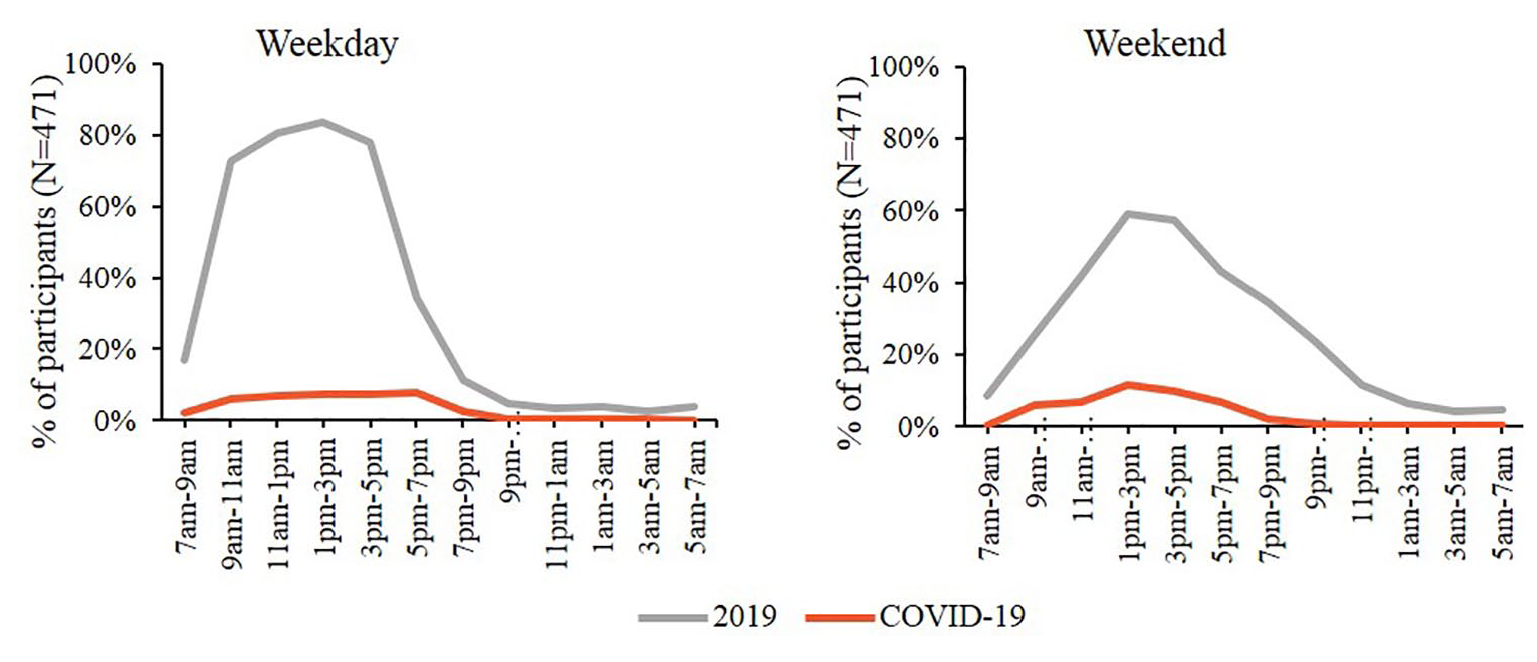
Percent of respondents that spent time away from home on weekdays (left) and weekends (right) during COVID-19 lockdown (N = 471) compared to 2019 (N = 213).
The results of the analysis described in section 2.2 are presented in the following sections. Section 3.1, 3.2, and 3.3 show the results of descriptive analysis and ordinary logistic regression results performed on the entire COVID-19 survey sample (N = 471), and section 3.4 presents results of the comparisons between the COVID-19 and the 2019 survey responses.
Perceived loudness and annoyance with noise during COVID-19 lockdown
Figure 3 shows the reported changes in perceived loudness and annoyance levels with individual and overall noise conditions due to the lockdown. Approximately 46% indicated that overall outdoor noise is quieter compared to before the lockdown. The highest decrease in perceived loudness was observed for traffic noise with 52% suggesting that traffic noise is somewhat or much quieter during the lockdown, with only 8% reporting that it is somewhat or much louder. However, despite the large number of people reporting lower loudness levels, only 17% reported that they are less annoyed by overall outdoor noise. Approximately 66% reported that there is no change in their annoyance levels with overall outdoor noise. Similarly, only 20% indicated that they are less annoyed and 68% reported that there is no change in their annoyance levels with traffic noise during the lockdown. While this trend is generally similar for construction, outdoor neighborhood and weather noise, lower percentages of respondents indicated that construction (35%) and weather (1%) noise are quieter during the lockdown.
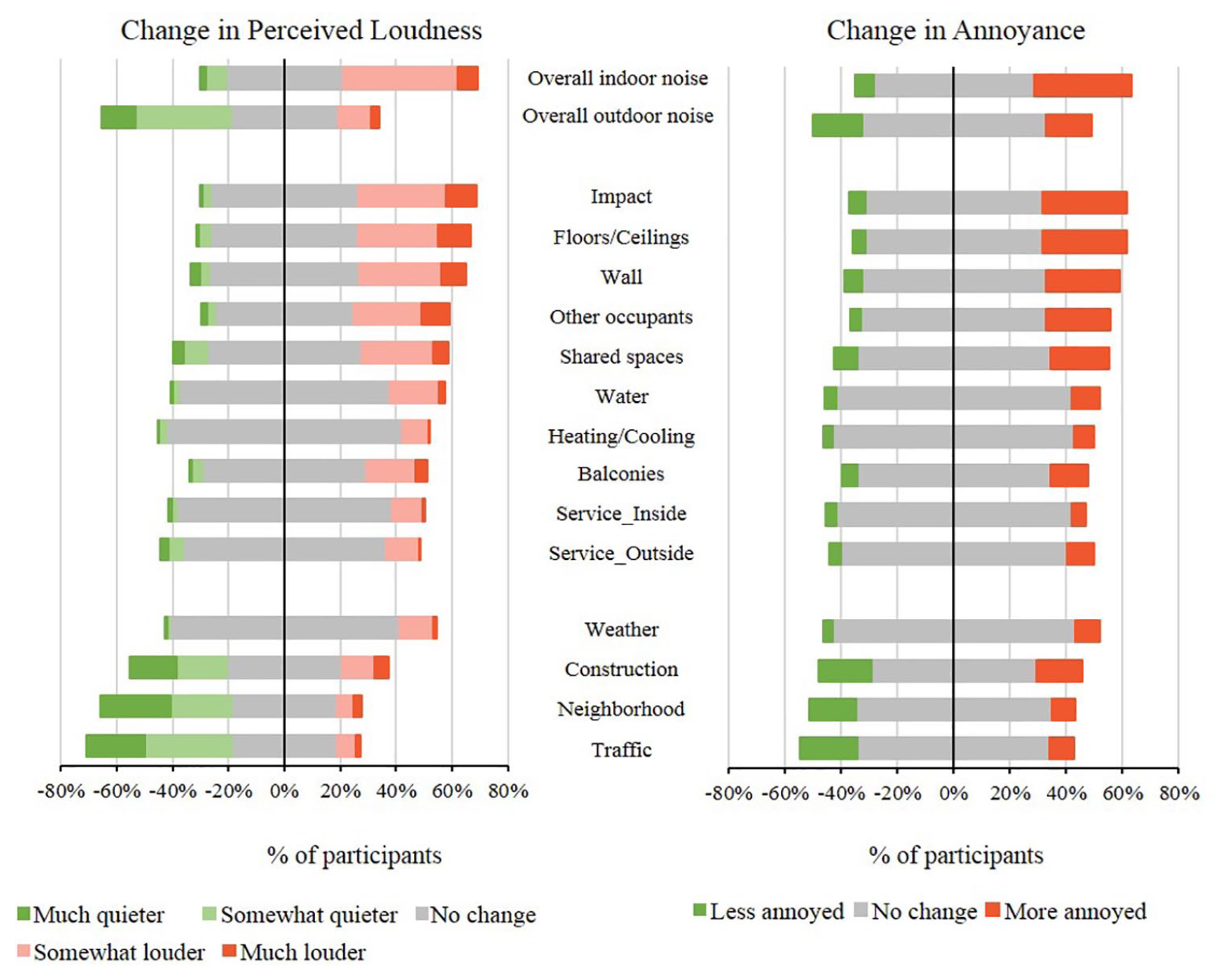
Changes in the perceived loudness of (left) and annoyance with (right) various indoor and outdoor noise sources during COVID-19 lockdown compared to before the lockdown.
Though many reported that outdoor noise is quieter now, approximately 12% and 3% indicated that it is somewhat louder or much louder, respectively, and 16% reported more annoyance during the lockdown. We looked at responses in open-ended questions to understand the reasons for such reports. Some respondents indicated that they hear sirens from emergency vehicles more frequently, and are bothered by noise from nearby construction and garbage trucks that they would usually not experience as they are away for work during construction hours and garbage collection times. Some suggested that there is more noise coming from the streets as there is more foot and bicycle traffic on empty roads. A few respondents also indicated that the clapping and cheering that occurs at 7:30 PM daily to show appreciation for essential workers are very loud but most said that this noise does not annoy them. Some also mentioned that they started hearing nature, such as birds chirping loudly, as traffic and other outdoor noises have decreased.
Unlike outdoor noise sources, many indicated that indoor noise has gotten much louder since the lockdown. As shown in Figure 3, respondents reported increased loudness and higher annoyance levels due to indoor noise sources than outdoor noise. About 48% of the respondents indicated that the overall indoor noise is louder during the lockdown, and 35% reported that they are more annoyed by these indoor noises. These responses are mostly reported for airborne and impact noise coming from neighboring suites. Many also indicated that noise coming from other occupants in the same suite is louder and more frequent during the lockdown which results in higher annoyance levels. Contrary to expectations that there will be less noise coming from shared spaces, such as hallways and stairways, as people are not going outside, 31% indicated that noise coming from shared spaces are louder during the lockdown and 21% indicated that they are more annoyed by this noise compared to conditions before lockdown. One respondent wrote that, due to restrictions imposed by their building management that only allow one person or one family in an elevator at a time, there have been some conflicts near elevators, which can get loud.
Figure 4 presents overall annoyance ratings with various noise conditions during the lockdown and shows the percentage of respondents that indicated that they were slightly, moderately, highly or extremely annoyed by each noise source. Even though many indicated that outdoor noise conditions are quieter and they are less annoyed compared to before the lockdown, Figure 4 shows that 42% are annoyed, to some extent, with outdoor noise conditions during the lockdown. Annoyance is more frequently reported for construction noise (40%) compared to other outdoor noises. Similarly, despite many indicating that traffic noise is quieter and that they are less annoyed by it compared to conditions before the lockdown, when evaluating their annoyance levels independently, 37% indicated that they are annoyed, to some extent, with traffic noise during the lockdown. As expected, there is a higher number of reports for annoyance with overall indoor noise sources compared to outdoor noise. The most frequently reported annoyance was for impact noise, followed by airborne noise through floors or ceilings and walls.
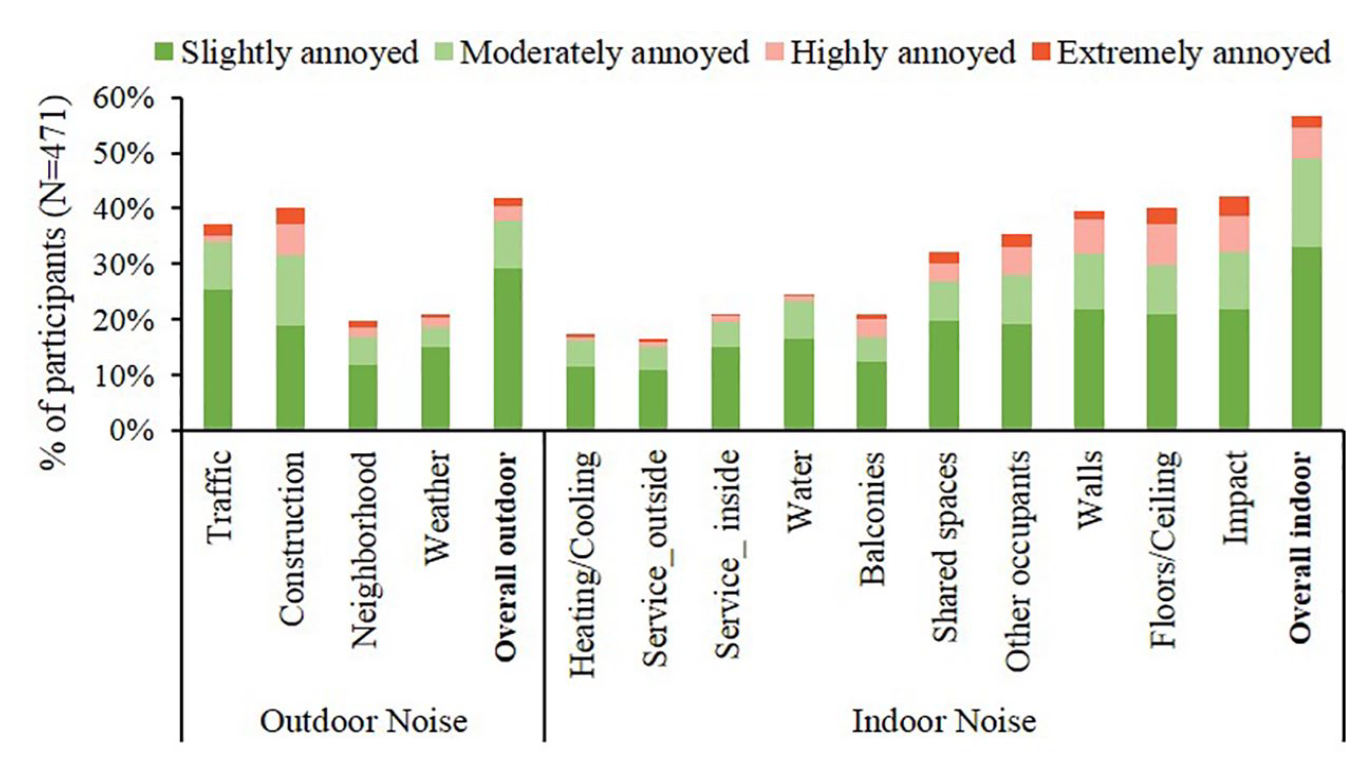
Annoyance levels with various noise sources during COVID-19 lockdown.
Impacts of noise conditions during COVID-19 on occupants’ daily activities
Figure 5 shows the reported effects of various noise sources during the lockdown. It can be seen that sleep disturbance, effects on work/study, and respondents’ mood are the most frequently reported effects of noise during the lockdown. Approximately 22% indicated that traffic noise and construction noise during the lockdown disturbs their sleep. The effect on work/studying is most frequently reported for noise coming from other occupants in the same suite, with 28% indicating that their work or study is affected by this noise source. In open-ended questions, many indicated that they find it hard to concentrate on their work when their children, spouse/partner or roommate are making noise, such as having a conference call or playing music.
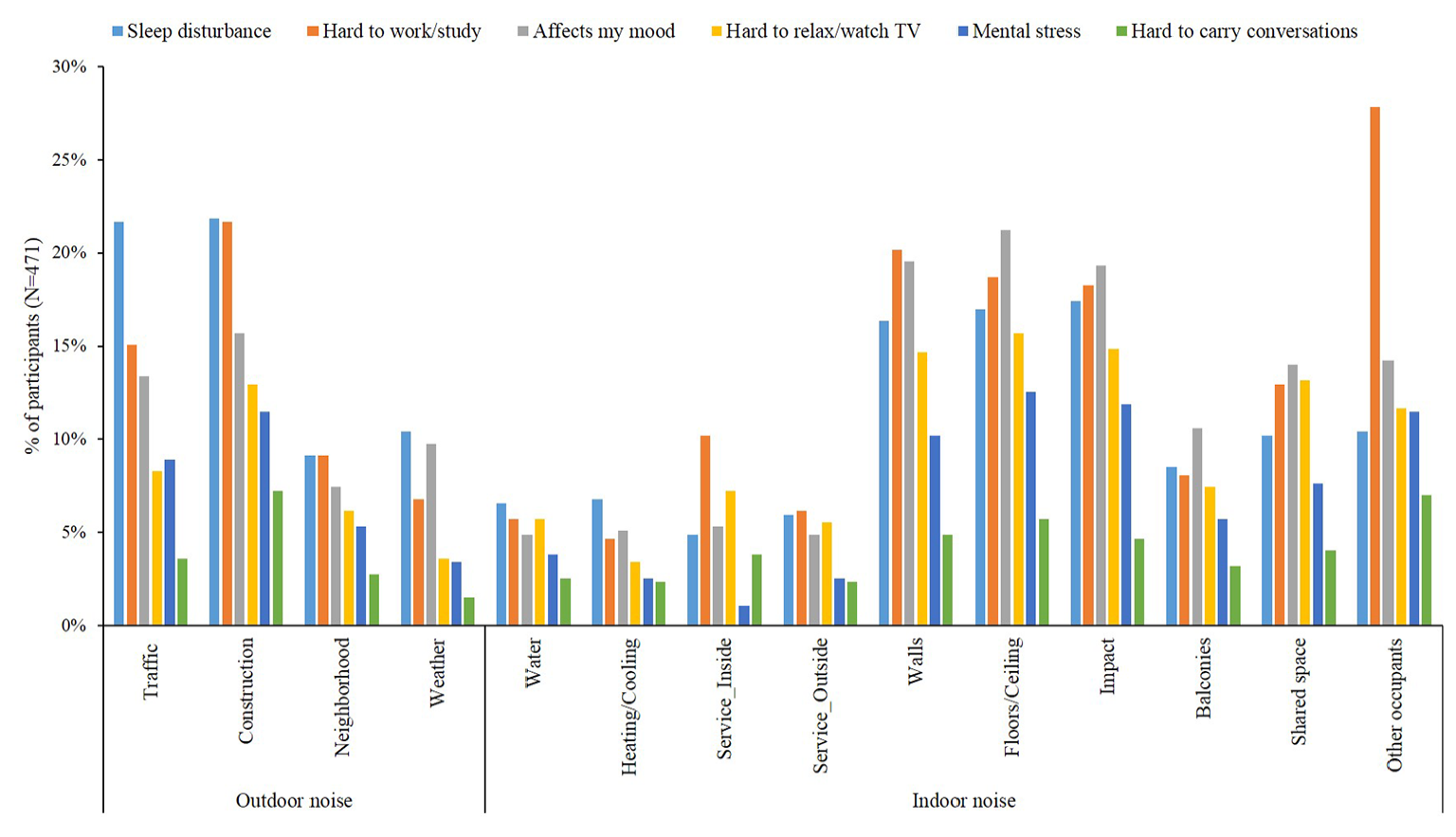
Effects of noise during COVID-19 lockdown on respondents’ daily activities.
Effects of lockdown noise conditions on the ability to work from home
When asked to report if the noise condition in their MURB suites during the lockdown has any impact on their ability to work from home, many (approximately 67%) indicated that it did not affect their work. About 25%, however, reported that the noise conditions have a negative effect on their ability to work from home, and 8% indicated that it has a positive effect. The results of the ordinal logistic regression for Model 1 (which includes job-related factors such as type of task, and office occupied before COVID-19), Model 2 (which adds suite characteristics and number of occupants to Model 1) and Model 3 (which adds loudness and annoyance ratings to Model 2) are presented in Table 2. The likelihood ratio test of Model 1 (p = 0.61) and Model 2 (p = 0.31) are not significant and McFadden’s R2 are very low, indicating a poorness of fit. This shows that job-related factors do not have a significant effect on work. Model 3, on the other hand, has a significant likelihood ratio test result (p < 0.001) and a better R2 value. It is thus taken as a good fit. It can be seen that the percentage of work that participants perform from home and the type of job activity they do, and the office type that they occupied before the lockdown do not have a significant effect on their work. The odds ratio for many of these variables is 1.00 which indicates that there is no association between the variables and ability to work from home. Thus, those who were working from home before the lockdown are not affected differently than those who did not work from home. Similarly, there was no significant difference between those who occupied private enclosed offices and open-plan offices. In addition, number of bedrooms, floor level and number of occupants do not have an impact on participants’ work.
Results of ordinal logistic regression models for effect on work (N = 471).
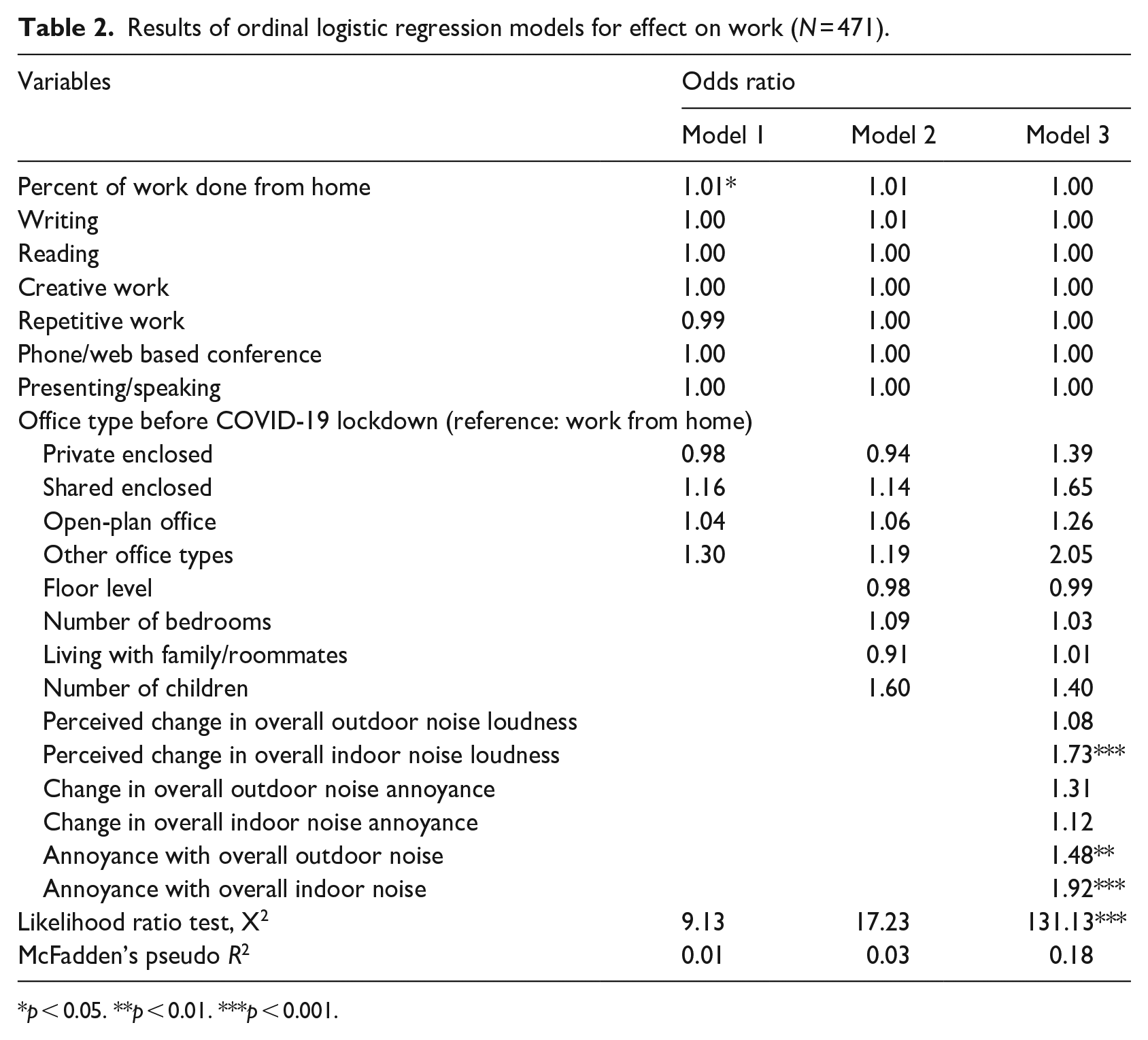
p < 0.05. **p < 0.01. ***p < 0.001.
Regarding loudness and annoyance ratings, reported changes in annoyance with indoor and outdoor noises and changes in perceived outdoor noise loudness have no significant effects on participants’ reported ability to work from home. However, overall annoyance level with both indoor and outdoor noise during the lockdown and changes in the perceived loudness of indoor noise significantly impact the ability to work from home. The odds ratio for changes in the perceived loudness of indoor noise indicates that, as reported changes in loudness increases by one unit, the probability of reporting negative effect on work increases by a factor of 1.77. For annoyance with overall outdoor noise, the odds ratio is 1.48 which means that when annoyance increases by one unit, the probability of participants reporting a negative impact of noise conditions on work increases by 1.48. The odds ratio for annoyance with overall indoor noise is 1.93, which indicates that when annoyance level increases by one unit, the probability that participants will rate that the noise condition in their MURB suites has a negative impact on their work condition will increase by 1.93. The higher odds ratio value for annoyance with overall indoor noise compared to outdoor noise is in agreement with the results of the analysis discussed in previous sections. Participants indicated that indoor noises are louder during the lockdown compared to outdoor noises, thus it is more likely that indoor noises will have a higher impact on participants’ ability to work from home.
Comparisons with 2019 survey responses
This section presents results of a descriptive analysis and Wilcoxon signed-rank test performed on the 10% (N = 48) that participated in both the 2019 and the COVID-19 survey.
Comparisons of indoor, outdoor and overall noise annoyance ratings
The Wilcoxon signed-rank test was used to determine whether there are any significant differences in reported annoyance levels between the responses in the two surveys. Box plots in Figures 6 and 7 show the differences in annoyance levels along with the results of the test. As shown, there is a significant difference in annoyance with overall outdoor noise (W = 59, p
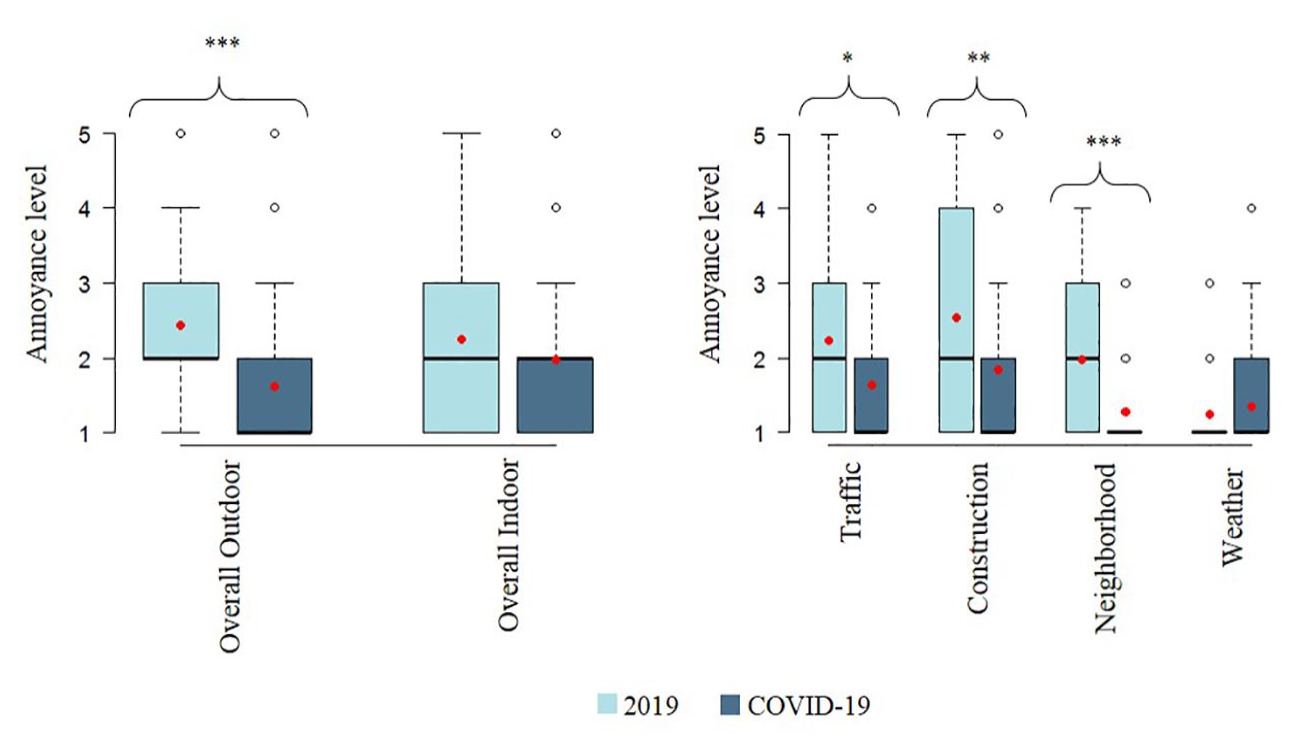
Overall (left) and outdoor (right) noise annoyance levels before (b) and after (a) lockdown. ⎯ = median, ∙ = mean, ○ = outlier; statistically significant difference: *p < 0.05. **p < 0.01. ***p < 0.001; annoyance level: 1 = not annoyed, 5 = extremely annoyed.
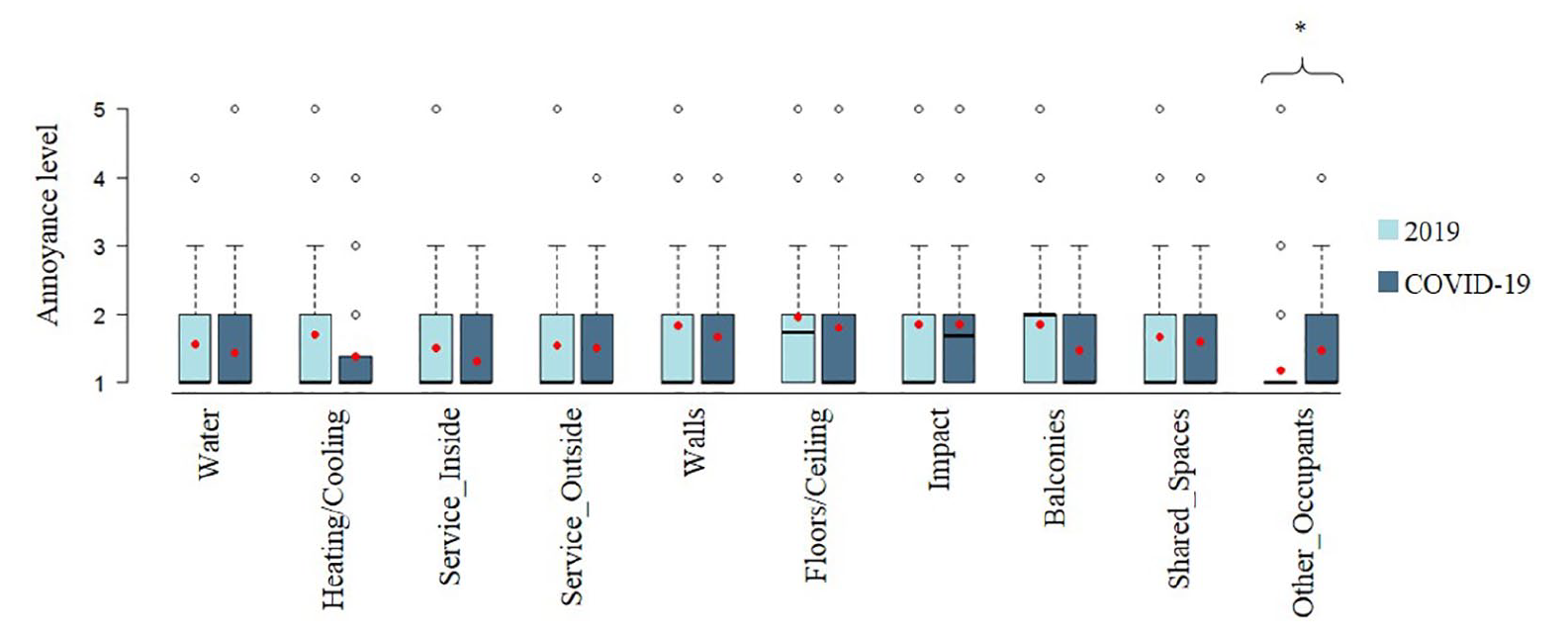
Indoor noise annoyance levels before (b) and after (a) lockdown. ⎯ = median, ∙ = mean, ○ = outlier; statistically significant difference: *p < 0.05. **p < 0.01. ***p < 0.001; annoyance level: 1 = not annoyed, 5 = extremely annoyed.
Unlike outdoor noise, there is no significant difference in annoyances with overall indoor noise between the 2019 and COVID-19 responses (W = 114, p = 0.104). The results are similar for the different individual indoor noise sources, except annoyance ratings with other occupants inside the same suite (W = 91, p = 0.014) and neighbor’s noise coming from balconies (W = 65, p = 0.040). Annoyance with other occupants is significantly higher during the lockdown compared to responses in the 2019 survey while annoyance with noise coming from balconies has decreased.
Comparisons of effects on occupants’ work, reported mental health and other activities
Responses in the two surveys were also compared to find any differences in the effects of noise on the various activities of the participants. Figure 8 presents comparisons between responses on the impact of MURB noise conditions on participants’ ability to work or study from home, their mental health and other activities between the 2019 and COVID-19 survey responses. Compared to the 2019 responses, negative impacts of noise coming from traffic, construction and outdoor neighborhood activities on the ability to work from home are less frequently reported during the lockdown. In contrast, the number of people reporting effects on work due to indoor noises has generally increased. The highest increase is found for noise coming from shared spaces and other occupants in the same suite with a 17% increase for each of these noise sources.
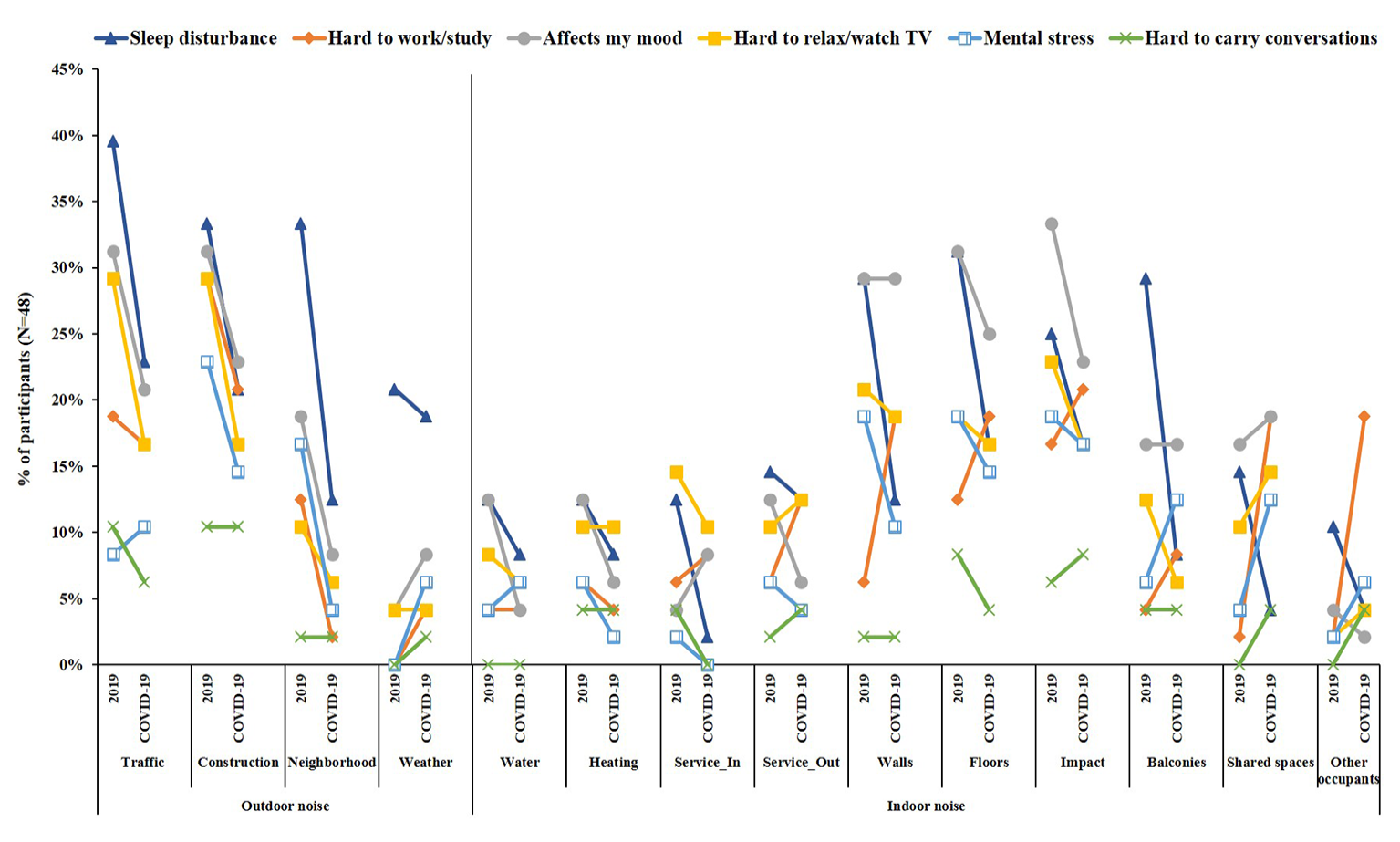
Changes in the effects of noise conditions on participants’ ability to work from home, their reported mental health and various activities.
The number of reports on sleep disturbance is lower during the lockdown for all noise sources. Looking at effects on other activities, they are generally less reported for outdoor noises while they are more frequently reported for indoor noises, particularly for noises coming from shared spaces inside buildings and other occupants in the same suite. Effect of noise coming from neighbors’ balconies, shared spaces and other occupants in the same suite on mental health are more frequently reported during the lockdown compared to responses in the 2019 survey. It is interesting to note that participants report effects of noise coming from water installations and heating and cooling systems less frequently during the lockdown compared to reports in the 2019 survey. This can be because noise coming from other indoor sources is much louder during the lockdown and masks noises coming from HVAC systems and water installations.
Discussion
One of the main goals of this study was to use the COVID-19 experience to investigate how a large-scale adoption of teleworking might impact noise conditions in MURBs and occupants’ comfort and well-being as a result. As expected, this study found that indoor noises, especially noises from neighboring suites, shared spaces and roommates or family, are louder and outdoor noises, specifically from traffic, construction and other neighborhood activities, are quieter during the lockdown. This is in agreement with studies that reported reductions in outdoor noise levels in cities during the pandemic.9–11 While a proportionate increase in annoyance levels to reported increase in loudness levels is observed for indoor noises, the decrease in annoyance with outdoor noises was not proportionate to the decrease in reported loudness. Several participants indicated that outdoor noise sources affect their sleep, ability to work at home, their mood and mental health during the lockdown. One of the reasons for this could be that, even though participants reported that outdoor noise levels are lower than before the lockdown, levels could still be high enough to cause annoyance. For example, noise data collected in 2016 at the facade level in various locations in Toronto showed that 43.7% of residents are exposed to equivalent daytime noise levels above 65 dBA. 43 Applying a 5 dB noise reduction, similar to the reduction observed in New York City due to the pandemic, 11 these residents would be exposed to more than 60 dBA. This is still above the 55 dBA noise level limit recommended by WHO. 44 This is in agreement with the findings of Basu et al. 45 Their study, which recorded noise levels before and during lockdown at various locations in Dublin, Ireland, reported that all sites showed a decrease in average noise levels (4.9%–11.5% reduction in hourly average equivalent sound level, Leq,1hr). However, they reported that for sites located close to an expressway and the Dublin airport, the Leq,1hr exceeded 55 dBA for more than 60% of the time during the lockdown.
Another reason for high annoyance with outdoor noise during the lockdown could also be the fact that many are experiencing additional noises. Studies suggest that annoyance does not increase with time spent at home.46–48 The current study, however, shows that spending more time at home might expose people to additional noise sources which can contribute to their overall annoyance. Several studies suggest that annoyance is directly related to the extent of activity disturbance caused by noise source.49–51 In addition to sleep and other daily activities, occupants are now experiencing noise while working and doing many other activities that they would have previously done outside of the home due to the stay-at-home orders, which increases the number of activities that might be disturbed due to noise and consequently increase annoyance.
Another important goal of this study was to investigate if noise conditions during the lockdown are affecting occupants’ ability to work from home and identify factors that contribute to this effect.
While it is important to improve sound insulations in MURBs to decrease noise coming from outside one’s suite, this study found that noise coming from inside one’s suite, particularly from roommates and family members, is the most problematic for occupants and has the most impact on their ability to work from home. The shrinking size of dwelling units in MURBs is particularly an issue for multi-person households. In the Toronto census metropolitan area, for example, only 8.6% of rental apartments in 2018 have three or more bedrooms. 55 Without rooms dedicated to working, occupants might have to set up workstations in rooms and spaces, such as living rooms, which are shared with, and thus exposed to noise coming from other occupants. In suites with one or more bedrooms, occupants might choose to work in their bedrooms to reduce disturbances from these noise sources. However, bedroom walls might not provide enough noise attenuation as there are currently no regulations on sound insulation levels between rooms within suites. The results of this study indicate that current acoustic conditions in MURBs might not be sufficient to support a large number of occupants working from home. Thus, to ensure a large-scale teleworking scheme can be successful and realize the increase in productivity and other benefits of working from home, it is imperative that MURB designs be improved to provide satisfactory acoustic conditions. Future MURB designs can include additional study/work rooms inside suites with partitions that have a minimum sound insulation level to attenuate noise coming from other rooms in the same suite. High-rise MURBs can also provide co-working spaces that provide the necessary conditions, acoustic and others, to facilitate working from home. It is important to note that, since objective noise measurements would have required entering participants’ suites to install equipment which was not possible and considered risky due to the lockdown and the social distancing measures required during the time of the study, the findings of this study are based on subjective data only. Similar to several other studies that have used surveys as their main or sole method for evaluating acoustic comfort in residential buildings and other spaces,50,56–61 the current study demonstrates that surveys can be used to provide critical insight on acoustic comfort in buildings. However, we recommend further investigation of acoustic conditions in MURBs by combining subjective and objective data collection methods 61 in both field and laboratory studies to properly characterize the required design changes for new MURBs.
It is important to note that, in addition to changes in noise levels, annoyance ratings and reported effects on work and other activities are also likely affected by increased exposure levels due to stay-at-home measures. Additionally, many respondents are experiencing changes in their daily lives due to the pandemic. Several reports have shown that many people are under mental stress due to concerns about health, job and financial security, and isolation due to social distancing measures.62–64 As many schools and daycare centers are closed, parents with young children are faced with more stressful working conditions as they have to care for their children while working. 65 These and additional changes COVID-19 introduced could have impacted survey responses in this study. The sample size used for the longitudinal comparison between the 2019 and 2020 survey in section 3.4 is small (N = 48) and thus it cannot be used to generalize and apply the findings to a larger population.
Conclusion
This study investigated the effects of noise conditions in MURBs during COVID-19 lockdown on teleworking and other activities of occupants. As many companies are planning to make teleworking permanent, this study explored noise issues that might arise in MURBs if the large-scale teleworking scheme continues post-COVID-19. While outdoor noise was reportedly lower during the lockdown, many still expressed annoyance with traffic, construction and other neighborhood activities. This study indicates that factors such as exposure to additional noises and the increase in activity types that might be affected by noise (e.g. working at home) might have contributed to reported annoyances with outdoor noise. The results also show that airborne and impact noise coming from neighboring suites and shared spaces within suites affect occupants’ ability to work from home in MURBs. Noise coming from other occupants in the same suite was found to be the most problematic for those working from home. The findings indicate that existing MURB designs and sound insulation requirements might not be sufficient for a large-scale implementation of teleworking. Future work can look into strategies, such as improved suite layouts and additional sound insulation, which provide acoustic conditions that promote productivity.
Supplemental Material
sj-pdf-1-bua-10.1177_1351010X21993742 – Supplemental material for Case study: A survey of perceived noise in Canadian multi-unit residential buildings to study long-term implications for widespread teleworking
Supplemental material, sj-pdf-1-bua-10.1177_1351010X21993742 for Case study: A survey of perceived noise in Canadian multi-unit residential buildings to study long-term implications for widespread teleworking by Maedot S. Andargie, Marianne Touchie and William O’Brien in Building Acoustics
Footnotes
Declaration of conflicting interests
The author(s) declared no potential conflicts of interest with respect to the research, authorship, and/or publication of this article.
Funding
The author(s) disclosed receipt of the following financial support for the research, authorship, and/or publication of this article: Funding was provided by the Natural Sciences and Engineering Research Council of Canada (NSERC Grant RGPIN-2016-06325], Ontario Early Researcher Award and HGC Engineering.

Supplemental material
Supplemental material for this article is available online.
References
Supplementary Material
Please find the following supplemental material available below.
For Open Access articles published under a Creative Commons License, all supplemental material carries the same license as the article it is associated with.
For non-Open Access articles published, all supplemental material carries a non-exclusive license, and permission requests for re-use of supplemental material or any part of supplemental material shall be sent directly to the copyright owner as specified in the copyright notice associated with the article.
