




Abstract
Eight participants with a musical background were asked to reflect in depth on their experience of sonic environments through a structured questionnaire answered in either oral or written form. Six of these interviews took place at the Zentrum für Kunst und Medien in Karlsruhe, and two in London, to provide contrasting comparison terms. The questionnaire invited the participants to progress in their reasoning from the description of the present sonic environment to the formulation of thoughts on the acoustic design of spaces, the educational potential of soundwalking practices and the elicitation of places with aural character from their memory. The interview transcripts were qualitatively analysed through the grounded theory method with the aim to detail the underlying mechanisms towards the appraisal or criticism for an acoustic environment. Acoustic and psychoacoustic indicators were extracted from the binaural measurements of the interview settings to provide objective grounds for comparison. Five concurrent factors were identified as involved in the quality attribution process: purpose affordance, affective impact, memory, ecological awareness and acoustic design.
Keywords
Introduction
Acoustic comfort should be taken into high consideration in social enclosed spaces where people spend part of their lifetime, often without consciously paying attention to the sonic environment. 1 Architectural design choices influence acoustic environments at two levels: they set the conditions for the likelihood and positioning of future sonic events and they modulate the sound propagation in space. This influence is more evident in indoor reverberant spaces where the amplification effect yielded by the enclosure might affect the user’s capability to carry out activities among the original design expectations. The sound levels in dining spaces, largely composed by dining ware, commonly increase with the occupancy.2,3 Based on a field survey on Singaporean restaurants, classifications of typical sound sources for these locations have been proposed by Lindborg,4,5 accompanied by the analysis of the psychoacoustics, physical and perceptual features emerging during the survey.
In atria, the relationship between the size of the volume and the effect on sound levels should be studied with more detail. According to the study by Bradley and Oh, 6 large panes of glass can have low-frequency absorption effects which can reduce reverberation time (RT) and early decay time (EDT), while the void contributes to reduce decay time at higher frequencies, due to air absorption. Their observations also highlighted that larger atria can yield to less acoustic pressure than smaller one, up to 10 dB difference in sound level strength (G).6,7 One common question when researching these spaces from an aural perspective is whether the architectural design choices are made in compliance with the acoustic comfort requirements, whether they support the activities that the space is supposed to host, and most importantly how users perceive the acoustic comfort of such spaces. 8
In 2014, the standard ISO 12913-1:2014 9 has defined the soundscape as ‘the acoustic environment as perceived or experienced and/or understood by a person or people, in context’. This framework aims to qualify users’ perception of a given place and its acoustic environment, allowing to match subjective judgements with objective characteristics such as measured sound levels and spatial properties. Techniques based on spatial analysis and questionnaires have been developed to support the widely adopted Post Occupancy Evaluation method.10–12 In the last decade, the indoor soundscape framework has been applied to libraries,10,13,14 shopping malls,8,15 health-care facilities,16–20 offices,21,22 schools. 23
Soundscape scholars have recently focused their efforts on the standardisation of procedures as well as the triangulation of available data.24,25 Methods have been developed to detect the perceived dominance of sources in their original environments, allowing to compare places according to their sound source profiles. 14 In analogy to the valence arousal model, soundscape assessments can be plotted on a circumplex model, representing the affective dimensions of our soundscape appraisal.26,27 Describing the soundscape along pleasantness and eventfulness dimensions allows to compare these perceived components among participants and among places, and eventually connect energy parameters with these estimates. Spatio-temporal characteristics of recorded soundscapes can be further analysed through machine learning techniques, seemingly able to estimate the averaged position of a given audio excerpt in the affective space, yet without predicting the judgement variance.28–30
Although useful in large-scale projects, automated techniques are not suitable to qualify the subjective experiential relationships that individuals construct with specific places and sounds. This variability can be represented in the aforementioned circumplex model along another independent dimension named familiarity. 26 However, the reasons why certain associations come to mind can remain obscure, even though a soundscape is perceived as familiar. Among the other factors involved in the cognition of a sonic environment, there are the expectations connected to the listening experience situation,25,31 personal noise sensitivity and the perceived annoyance.32–34 Prolonged exposure to soundscapes may lead to habituation phenomena, often accompanied by the development of coping methods. 17 Sonic environments may cause a number of reactions in the listeners depending on the sound source type, context and composition 25 Schafer 35 divides reactions in affective (such as feelings of annoyance and pleasure), cognitive (information based) 36 and behavioural (action based). 37
The content presented next wants to shed light on the multiple factors involved in the attribution of qualities to sonic environments, as it emerged from a study with eight participants with a musical background. Six were interviewed at the Zentrum für Kunst und Medien (ZKM) – Centre for Arts and Media) in Karlsruhe and two in two rooms chosen by the participants at Queen Mary University of London (QMUL). The interviewees were presented different questions and exercises to investigate their understanding of the sonic environment in which the interview took place and their views on educational topics. To clarify the context of investigation, it is first provided a description of the grounded theory (GT) method of analysis, and the reasons for its application. It follows the development of the study with eight participants, with the related results. In the discussion section, it is provided with a critical contextualisation of the emerging themes and possible trajectories for research developments. This article concludes with a reflective examination of the goals achieved by this phase of work.
GT and soundscape
In the study of complex embodied experiences such as soundscape perception and cognition, qualitative research methods allow to go in depth, capturing rich and articulated data which can be directly related to social aspects. The GT method is a largely used qualitative research method which helps to analyse qualitative data in a systematic way. Its creators, Glaser et al., 38 also defined it as ‘Discovering theory from data’. The GT method originated from the need in social sciences to describe a ‘basic social process’ (BSP). For Glaser 39 BSP’s are pervasive ‘fundamental, patterned processes in the organisation of social behaviours which occur over time and go on irrespective of the conditional variation of place’ (p. 100).
The basis of GT is to use an inductive iterative approach which allows to construct a theory supported by continuous reinterpretation of the data and the addition of new information where necessary. The data are gathered mainly through interviews and field observations, although other sources (e.g. focus group transcripts, reflective journals, questionnaires, policy documents) provide additional information in the form of elicited and extant texts, respectively, data inputted by the research participants and existing independently from the research.40,41
Data collection in GT aims to obtain a broad range of perspectives and experiences relevant to the research question. For this reason, the GT approach invites to employ more than one data source or involve more than one study population, to add richness of the understanding of the phenomenon under study (triangulation). 41 As soon as the data are gathered, the researcher starts to code, breaking the information into smaller chunks, proceeding word-by-word as well as line-by-line, a process called open coding. 40
The core of GT is the constant comparison method, which requires the new codes, incidents or issues of interest arising, to be compared to ones already identified, highlighting similarities and differences. The constant comparison method pushes the researcher to rename, reorganise or redefine the thematic categories employed to organise the emerging theoretical constructs, ensuring that the theory is continuously refined. 41
The identification of major themes leads to the second phase of the process, by Strauss and Corbin 42 called axial coding, where connections between categories in different parts of the data are explored, and their significance to the whole body of data is discussed. 42 During the comparison of themes and categories in the coding process, memo-writing is used to reflect on the patterns emerging from the analysis, defining the properties and characteristics (dimensions) of the different categories.39,41,43 This process is at the basis of the inductive process which generates the theory.
When sufficient connections are made between the categories identified, the researcher can proceed with the final phase, the selective coding, 42 where themes relevant to the description of the phenomenon are selected and connected with what is identified as the core category of the theory, that can be connected with all the other ones. In order to be able to explain a phenomenon and generate a theory, the researcher should develop theoretical sensitivity, a research skill which emerges from the application of the constant comparison method to the data itself. 39 Reading relevant literature in other fields can also help develop this skill.
The theory emerging from the data should not aim to describe a phenomenon, but to explain the processes characterising the observations collected. This is typically done by creating connections among recurrent patterns without forcing pre-existing schemata. The validity of the theory is also ensured by the choices of participants, which should account for minimum and maximum variability in the data, contributing to theoretical saturation and the full development of the categories.22,43,44 In the context of GT, the number of the interviews is less important than rich and well-conducted ones. The data collection stops when theoretical saturation is achieved, which ensures the consistency of the data as well as its capacity to be represented.44,45 Some limitations for the theory derive from the epistemological position of the researcher conducting it, who should try to neutralise negative effects deriving from personal bias.
In the last decades, an increasing number of researchers have adopted the GT method to study the factors involved in contextual soundscape perception. Since differences in places generate different soundscapes, the application of the GT method to test the users’ experience of different occupational settings can bring new insights on the differences in the interpretation of the soundscape among participants, among spaces, and the behaviours deriving from the adaptation to the soundscape. 46 In soundscape research, the GT method has helped highlight: the importance of social and cultural structures in soundscape evaluation;47–49 coping mechanisms and soundscape habituation in the hospital ward; 17 the everyday manipulation of the soundscape, and mechanisms which make it go noticed; 50 how positive and negative behaviours influence the soundscape evaluation by local experts. 51 The GT method was employed to study classroom settings, 23 offices 22 and historical buildings with public values, 52 such as mosques 44 and museums. 52 Although the soundscape of atria and dining spaces has been previously researched,3,13,53,54 to our knowledge, GT has not yet been applied on foyers which serve both as exhibition and dining spaces, the context for six of the eight interviews analysed in this study.
Materials and methods
The following study aimed to better understand the cognitive processes involved in recalling memories of acoustic environments. Therefore, a questionnaire was prepared to favour the access to experiential memories, stating from the verbalisation of the present sonic scene. The questionnaire aimed to help the interviewees reflect on the relationships between the acoustic environment identity, its acoustic design and self-reported outcomes. The selection of participants followed the hypothesis that those with musical training could offer rich and articulated perspectives with respect to acoustic design topics, besides having a more developed sound-based vocabulary and some form of training in listening practices. Figure 1 shows the methodology undertaken in this study. The analysis starts when the data are being collected and stop when the information gathered is sufficient to answer the questions posed. The data gathered for each part of the interview is constantly compared to the data previously collected. Since this was the first of a series of studies, it was chosen after a pilot interview (P7) to create a data set from the interviews held during a specific event (P1–P6) with one similarly expert participant (P8) interviewed in different settings to provide variability in the data.
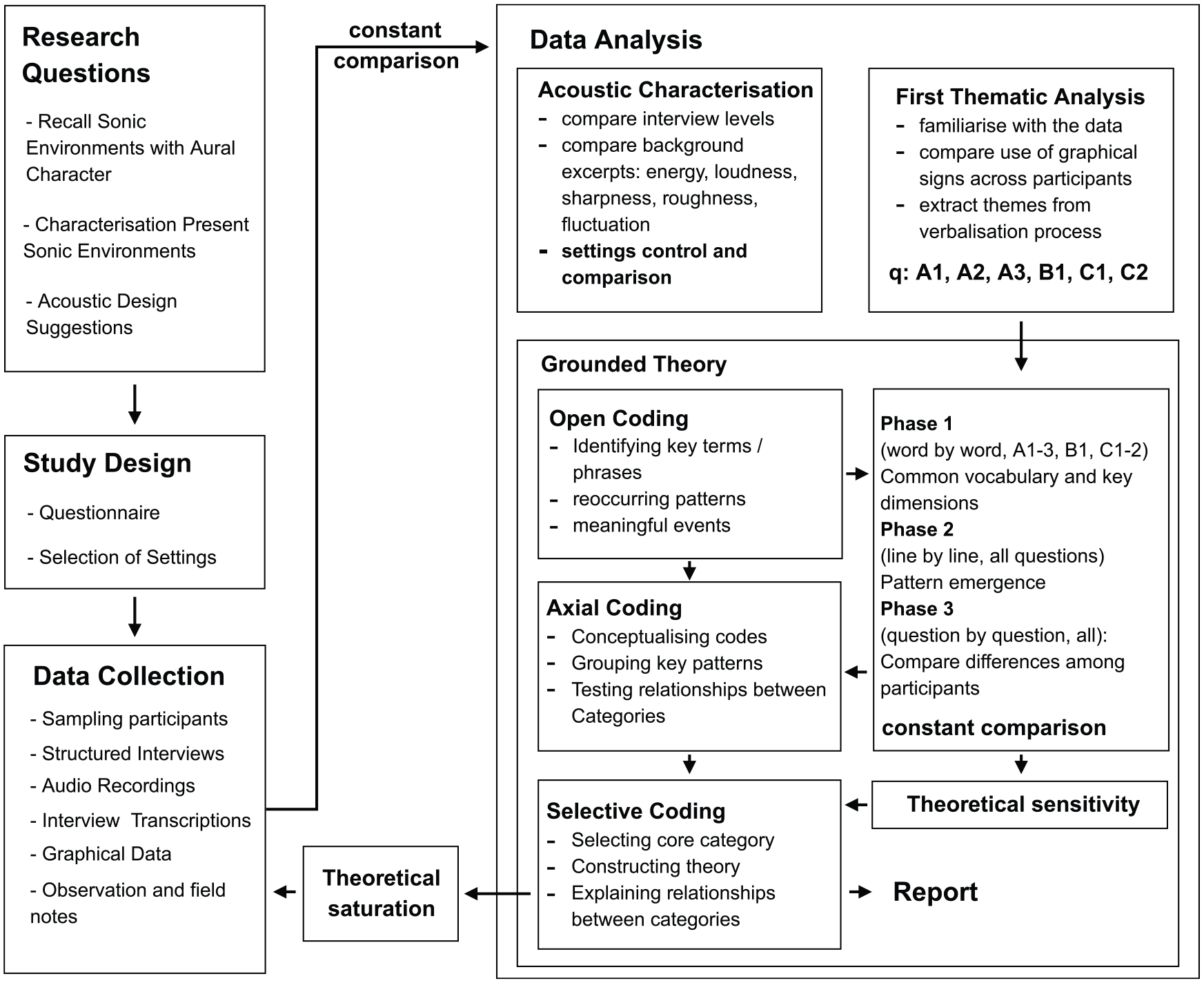
Research methodology.
Eliciting the aural character of places
In qualitative research, it may be generally useful to situate the interview in a context which facilitates to discuss certain themes rather than others, 55 used also in the form of walking or go-along interviews.56,57 Focusing on the relationships between health and place, Gale and Sultan 58 have used situated interviews to study the participants’ home health space. A structured questionnaire was designed to support the participants in accessing their sonic memories and elicit additional information regarding their situated perceptions of sonic environments and beliefs related to acoustic design. The questionnaire was composed by the series of questions presented in Table 1 plus other background questions and a graphical exercise (C1–C2), consisting of sketching a spatial soundmap upon a given template. The graphical tool capabilities to support sonic environment descriptions have been previously discussed. 59 The questionnaire was checked in its validity with an experienced sound artist, familiar with the acoustic ecology philosophy (http://www.wordthecat.com/acoustic_ecology.html), and was inspired by some of the ‘ear-cleaning’ exercises presented in acoustic ecology literature.35,60 To capture both the acoustic effects yielded by the spatial features of a space and the soundscape unfolding in the place, the term ‘aural character of a place’ was introduced in the questionnaire. This term was inspired by the concept of ‘character of place’,61,62 which some scholars had considered connected to the Schaferian concept of soundscape.63–65
Questionnaire used in the study, excluding background questions.
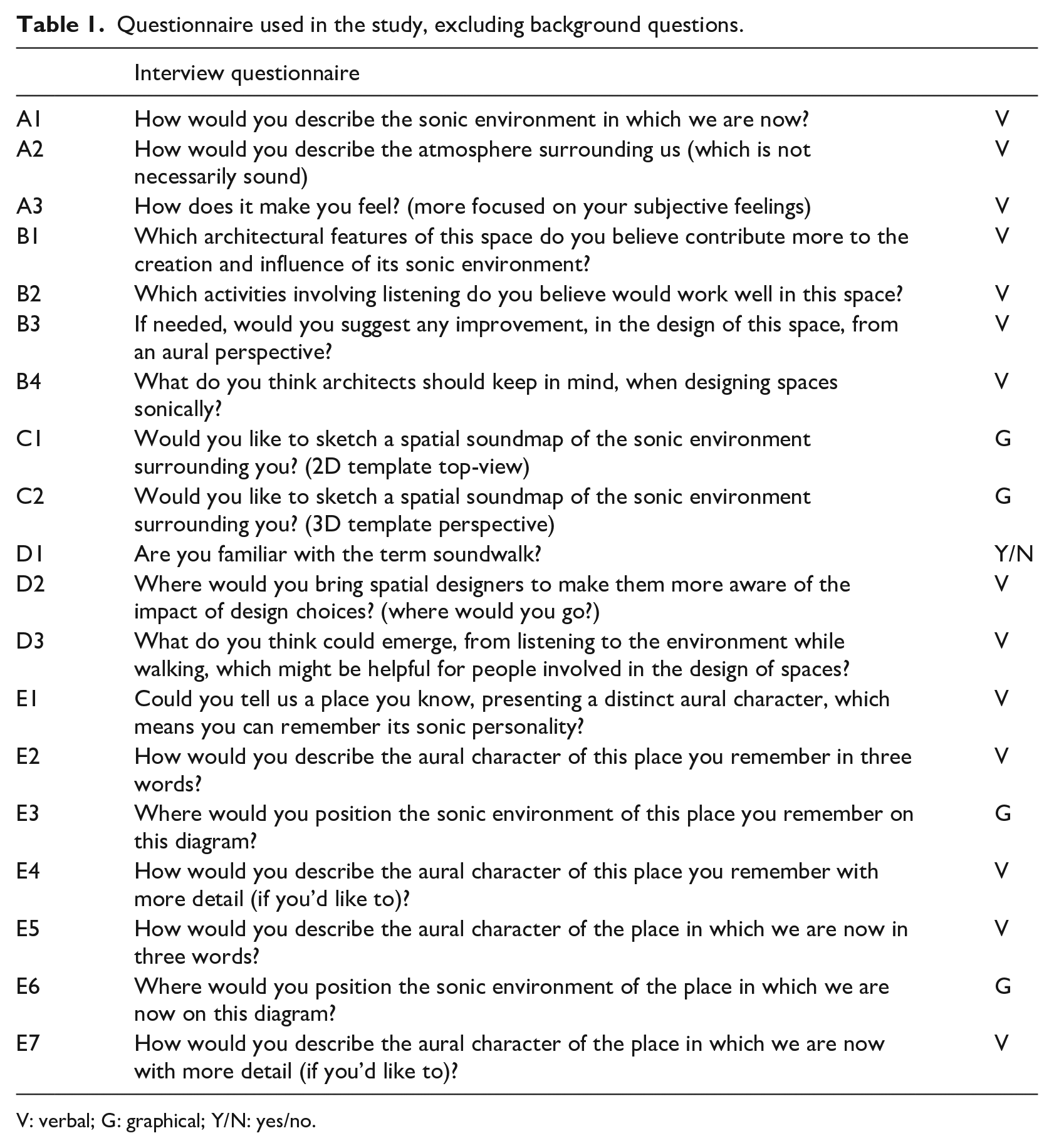
V: verbal; G: graphical; Y/N: yes/no.
The key aspects of the questionnaire consisted of helping the interviewee in reflecting on design choices which could yield desirable or undesirable effects in the present acoustic environment. In order to do so, the participant was invited to observe the wholeness of the acoustic situation and its architectural features as well as the effects on inhabitants, the self and the communication process where the interview was verbalised rather than written down. This choice followed the theory by Truax 66 that sound can be considered as ‘mediating or creating relationships between listener and environment’, affecting the transmission of information and our capability to communicate (p. 12).
Section A of the questionnaire aimed to let the participant familiarise with the interview situation by providing a description based on listening which pointed at the sonic environment (A1), the atmosphere (A2), the subjective feelings (A3). Section B aimed to let the participants reflect on acoustic design aspects by focusing on the architectural features of the space and their contributions to the sonic environment (B1); activities involving listening that could fit the space (B2); suggestions for design improvements from an aural perspective (B3); advice for architects designing spaces sonically (B4). Section C introduced a graphical exercise requiring the participant to ‘sketch a spatial soundmap of the sonic environment’ which surrounded them, based on a given 2D top-view (C1) and 3D perspective view (C2) of a placeholder listener, surrounded by a sphere and a cube to provide directionality. Section D focused on soundwalking by asking first whether the participants were familiar with the term soundwalk (D1), followed by the brief explanatory sentence ‘A soundwalk is any excursion whose main purpose is listening to the environment’. 67 Question D2 invited participants to suggest soundwalk locations that would make spatial designers more aware of the impact of design choices and it was followed by the reflective question (D3) ‘What do you think could emerge, from listening to the environment while walking, which might be helpful for people involved in the design of spaces?’.
In section E, the participants were asked first to tell about a known place with aural character (E1), followed by a brief description in three words (E2), and a graphical assessment (E3) based on a circle divided in eight sectors where the extremes were labelled according to the circumplex model proposed by Axelsson et al. 26 Differently from procedures adopted in soundwalk studies, 68 and to reduce their cognitive load, the participants would not rate each axis independently on a graduated scale, but directly on the printed figure. Before moving to the three-word description of the present sonic environment (E5), the participants could describe further the aural character of the remembered place (E4). It followed the graphical circumplex model assessment for the present sonic environment (E6), and the possibility to describe further the aural character of the present place (E7).
In section F, the participants were asked to provide information on their background on a series of disciplines in open form and on a 0–10 scale. Open questions covered the background regarding sound (F1), space (F3), sound and space/spatial sound (F5), music (F7). Numerical self-reports aimed to quantify experience in ‘x’ studies/practice with ‘x’ being: sonic (F2); spatial (F4); spatial sound (F6); music. Finally, the participants were asked open questions on their age (G1); gender (G2); first language (G3); occupation (G4); familiarity with the interview settings on a 0–10 scale (G5); further comments (G6).
Procedures
Participants could choose to respond orally or in a written form. In both cases, the researcher would binaurally record the present soundscape to triangulate the verbal information with the analysis of the audio material, as suggested in the literature69–71 and more recently in the soundscape data collection technical standard. 25 Ethics procedures were followed and all participants received an information sheet and a consent form to be signed prior to the interview. As part of the interview agreement, which remarked the data anonymisation, the participants could choose the interview location and were informed that the interview would have included the description of the sonic environment of their choice, in order to provide additional data on what they would consider a place suitable for an interview and interesting to discuss. For this study, the researcher did not ask further questions to the participants to avoid any possible bias deriving from lack of experience in interviewing techniques. However, clarifications were provided when needed. The questionnaire and its pre-defined structure were used as a tool to equalise possible responses, especially because the questions themselves were already directing towards specific topics and issues, rather than general ones.
The interviews lasted between 8 and 42 min and were all audio recorded through a recorder (Zoom H4N; fixed gain set at 50) and binaural microphones worn at the researcher’s ears (Soundman OKM II Classic). The system in-ear-microphones-recorder was calibrated in an insulated damped listening room (RT at mid-frequencies of <0.3 s) by recording test signals with the apparatus holding the study settings, while saving the readings from a calibrated sound level meter (Lutron SL-4022 IEC 61672 type 1) set in dBA mode. White and pink noise generated by the software RoomEQ Wizard sent to a couple of loudspeaker monitors (PMC AML2) oriented in an equilateral triangle pointing towards the SPL metre position and the researcher’s head, slightly behind to avoid strong facial reflections. The signal recorded by the in-ear system was thus matched with the dBA value captured by the sound level metre (ca. 85 dBA) to obtain in return the reference value to input in the analysis software to calibrate the interview recordings (105.2 dBA). For this study, the MATLAB® toolbox audio and acoustical response analysis environment (AARAE) was used, 72 freely available and open source, which provided the acoustic and psychoacoustic analyses and plots presented in the results section.
Choice of interview settings and participant sampling
The first interview (P7) was conducted at QMUL. This participant chose the postgraduate study space in the library, visible in Figure 2(a), which was controlled by exclusive card access. He completed the questionnaire in a written form to avoid disturbing the other occupants.
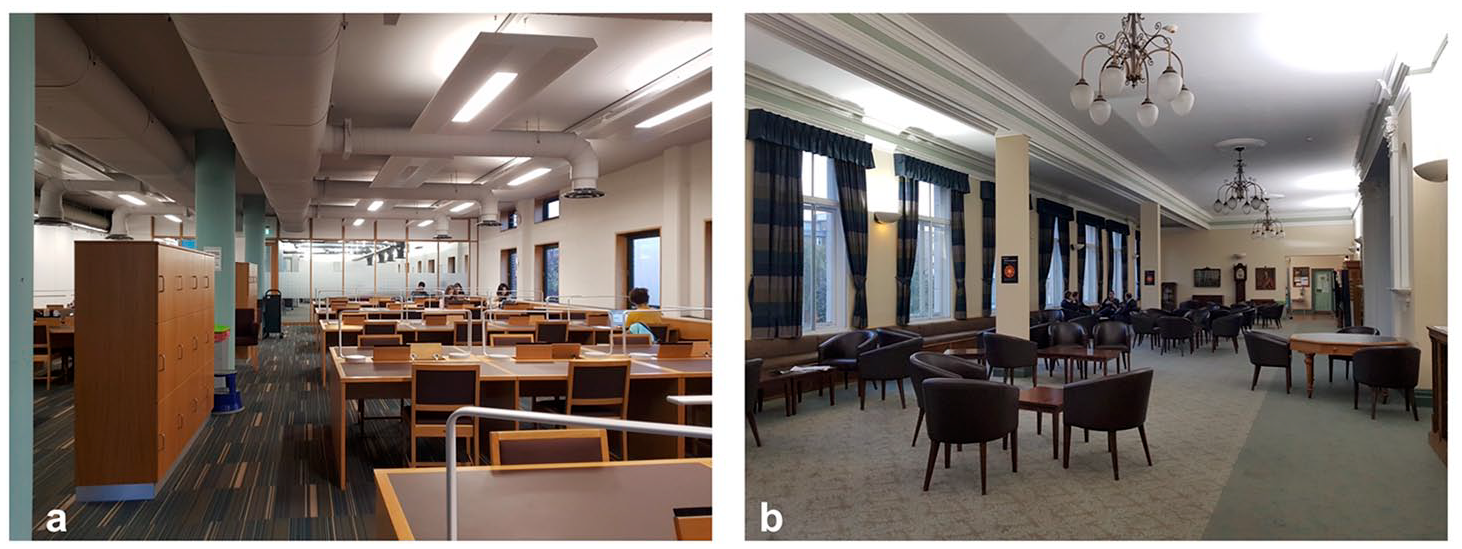
The interview settings at QMUL respectively for P7 and P8: (a) the postgraduate study space in the library and (b) the senior common room.
To ground the interviews in a meaningful setting, six participants were recruited during an event on the aesthetics of spatial audio called Insonics2015 (http://insonic2015.org/), held at the institute ZKM in Karlsruhe. The event provided a common context – the place and the situation – for all the participants recruited on site. Founded in 1989, the institute is very active in the education in media arts and spatial music, influencing music culture at a global level. 73 The ZKM has been housed since 1997 in the building A of a heritage-listed industrial complex which was previously employed as a munition factory. Following the classification proposed by Dokmeci and Kang, 7 the spatial organisation in the ZKM can be considered court-based, interpenetrating, with openings on several planes. From an acoustic perspective, this leads to multiple coupling phenomena, which are common in atria. 74
The interviews took place in two different atria of the same building complex, the ZKM Foyer (P1–P3, P5–P6) and the atrium of the University of Arts and Design Hochschule für Gestaltung (HfG) (P4), shown respectively in Figure 3(a) and (b). Other pictures visually describing the settings can be found at the institution’s website (https://zkm.de/en/about-the-zkm/location-renting/foyer). In Figure 4, the locations of the participants P1–P6 are shown with respect to the building floor plan. The last interview was held again at the QMUL campus with a participant (P8) having a musical experience similar to some of those previously interviewed, to provide a contrasting comparison between the interview locations. This participant chose a space called Senior Common Room, a prolonged-shape room with absorbing material and carpet on the floor, as shown in Figure 2(b).
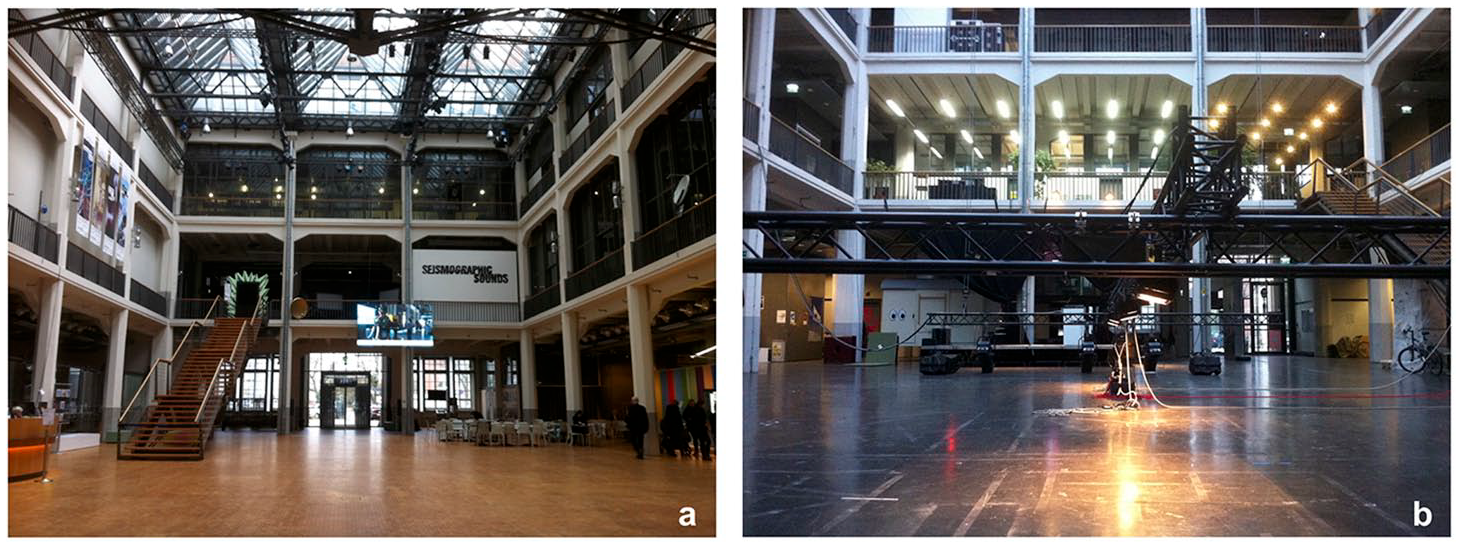
The interview settings in the ZKM for P1–P6: (a) the Foyer with the cafeteria and (b) the Hochschule für Gestaltung (HfG) atrium.
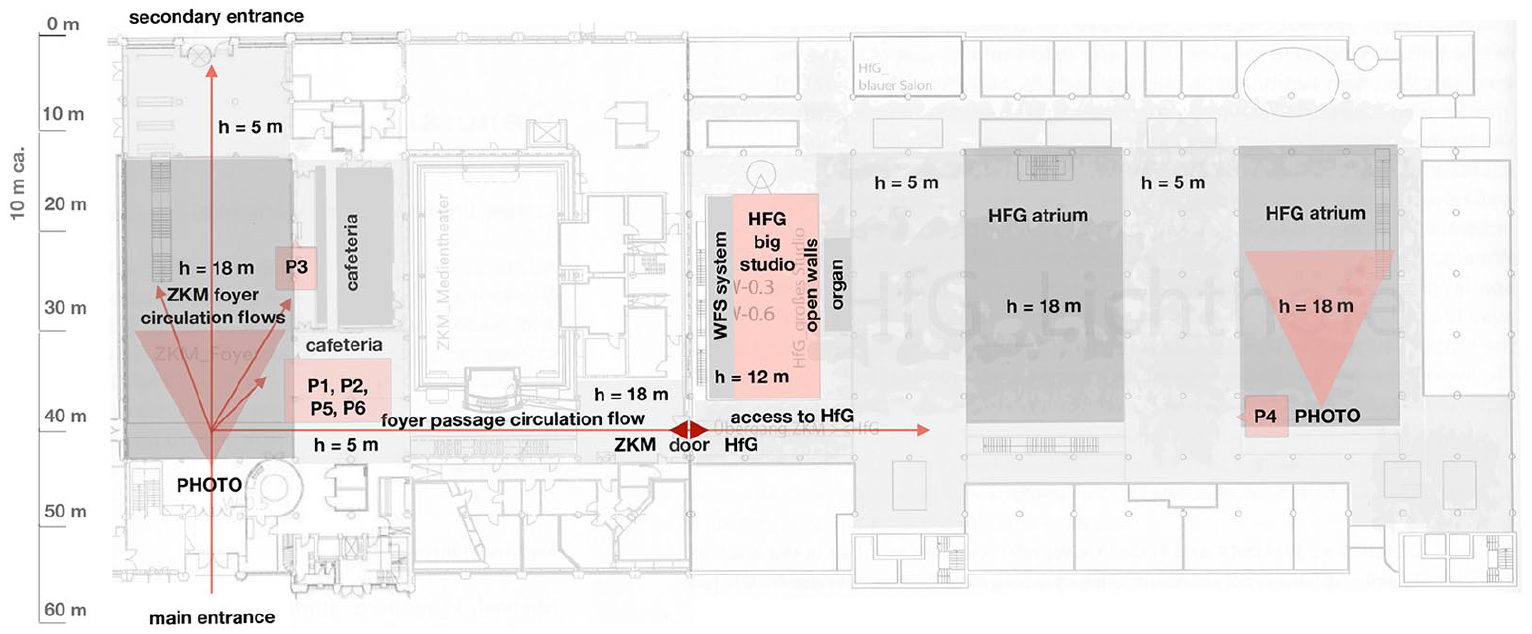
Interview and picture locations in the ZKM Foyer and HfG atrium. Circulation flows shown with arrows for the Foyer.
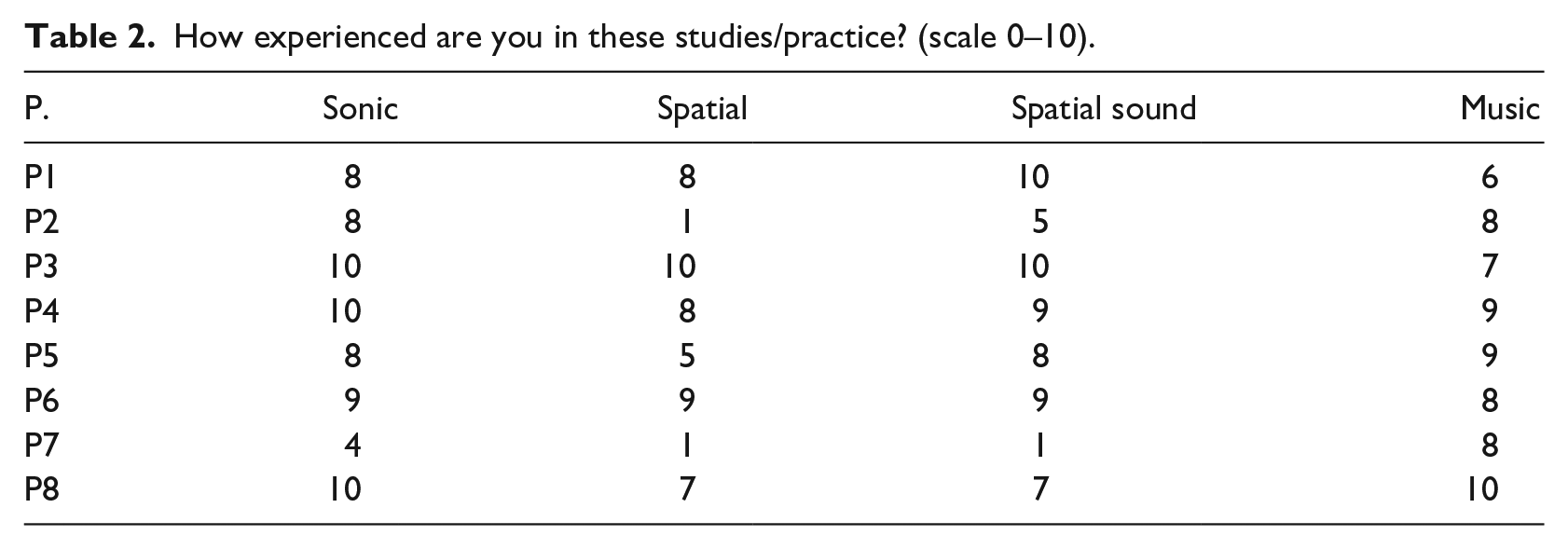
The average age of the participants taking part in the experiment was 43.4 years (6 males and 2 females). Four were between 40 and 50 years old, 1 between 50 and 60, 2 between 20 and 30. The participants could understand and answer the questionnaire in English, but for all of them this was not the mother language. The average self-reported familiarity with the interview settings was 5.4 on a scale of 10. Three participants had visited the ZKM more than once, one worked at the ZKM, two were new to the venue. Among the participants, four were trained composers, four researchers, two artists, one an architect, one a theatre director. All of them had experience in music either from past studies or current practice. In some cases, they were also involved in music technology development. The self-reported numerical scores qualifying the participants’ background in sound, space, spatial sound and music disciplines, are presented in Table 2. Setting the study during the spatial sound event at the ZKM allowed to select participants having significant experience in listening practices and strong opinions on topics related to acoustic design, deriving from their profession. For this reason and thanks to the fact that many of the interviews were answered verbally and with rich detail, the data collected allowed to achieve theoretical saturation for this set of participants. The next phases of the research were thus directed towards participants with a different background.
How experienced are you in these studies/practice? (scale 0–10).
Acoustic characterisation of the interview settings
The analysis of the interview acoustic conditions was conducted to objectively compare the situations in which the interviews took place. As sound pressure levels vary over time, statistical indicators are employed to describe these level variations. 25 These are defined as the A-weighted sound pressure levels exceeded ‘n’% of a time interval (LA N ), such as LA50, LA10, LA90. The background sound of the scene can be described by the average LA90 and its fluctuations, while LA10 or LA5 help to define peaks in the recorded log. The integration window, commonly fast (0.125 s) or slow (1 s), was set to fast to represent the variability of sound during the interviews with better detail.
The recordings of the oral and written interviews were first analysed quantitatively as a whole, including the dialogues in them. Table 3 shows the results from this analysis, ordered by participants. These values were obtained from the software AARAE using the soundlogger function with a window size of 10 s, an overlapping of 5 s and A weighting. In most of the spoken interviews, the peaks in the levels (LA max ) correspond to the researcher asking the question to the interviewee and the interviewee answering. Exceptions were very loud sounds from the cafeteria, such as metallic clashes of kitchenware, presented in Figure 9 in Appendix 1. The figure helps to compare the energy produced by the interview voices with respect to kitchenware collisions and their reverberation trace in Foyer’s space.
Equivalent A-weighted levels for the interview recordings, including dialogues.
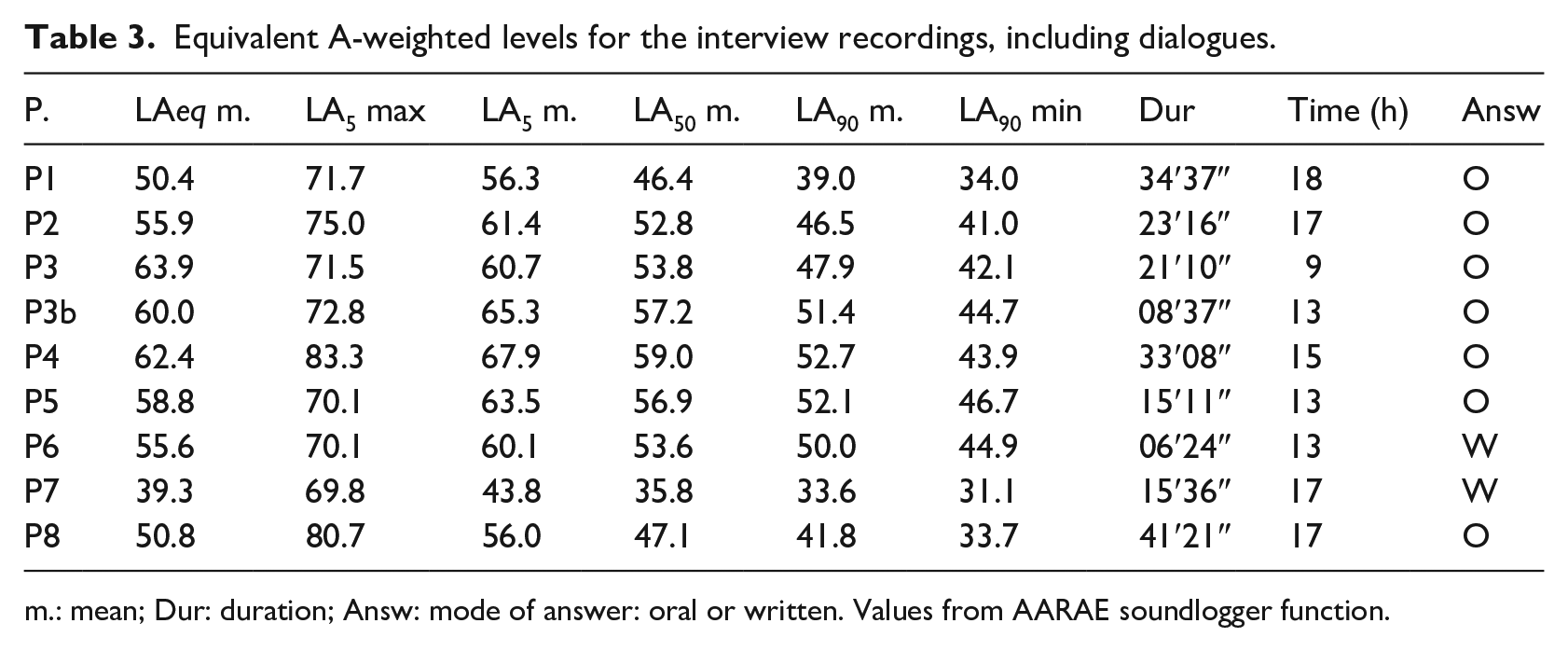
: mean; Dur: duration; Answ: mode of answer: oral or written. Values from AARAE soundlogger function.
A set of shorter background excerpts was collected to test the differences among some of the background ambiences. Where available, the moments without dialogue were selected integrally. Where not possible, a background recording was assembled by placing the longest available sequences without dialogues one after the other without interruption. These background recordings are released in Creative Commons and available for audition at the following link (https://freesound.org/people/vertex_wave/packs/26708/). This set of audio excerpts, lasting between 20 and 30 s, was further analysed in AARAE by examining their psychoacoustic indicators, as reported in summary in Table 4. The material inspected to compare the conditions in the interview settings consisted of the variation over time of the equivalent levels for left and right channel, statistical values for the left channel (LA max , LA5, LA10, LA50, LA90), psychoacoustic parameters for left channel (loudnessCF, 75 sharpness, 76 roughness, 77 fluctuation strength, 78 ) and their standard deviation. Plots for the loudnessCF (black) and sharpness are reported in Figure 10 in Appendix 1.
A-weighted equivalent levels and psychoacoustic indicators for the background excerpts as determined in the AARAE toolbox.
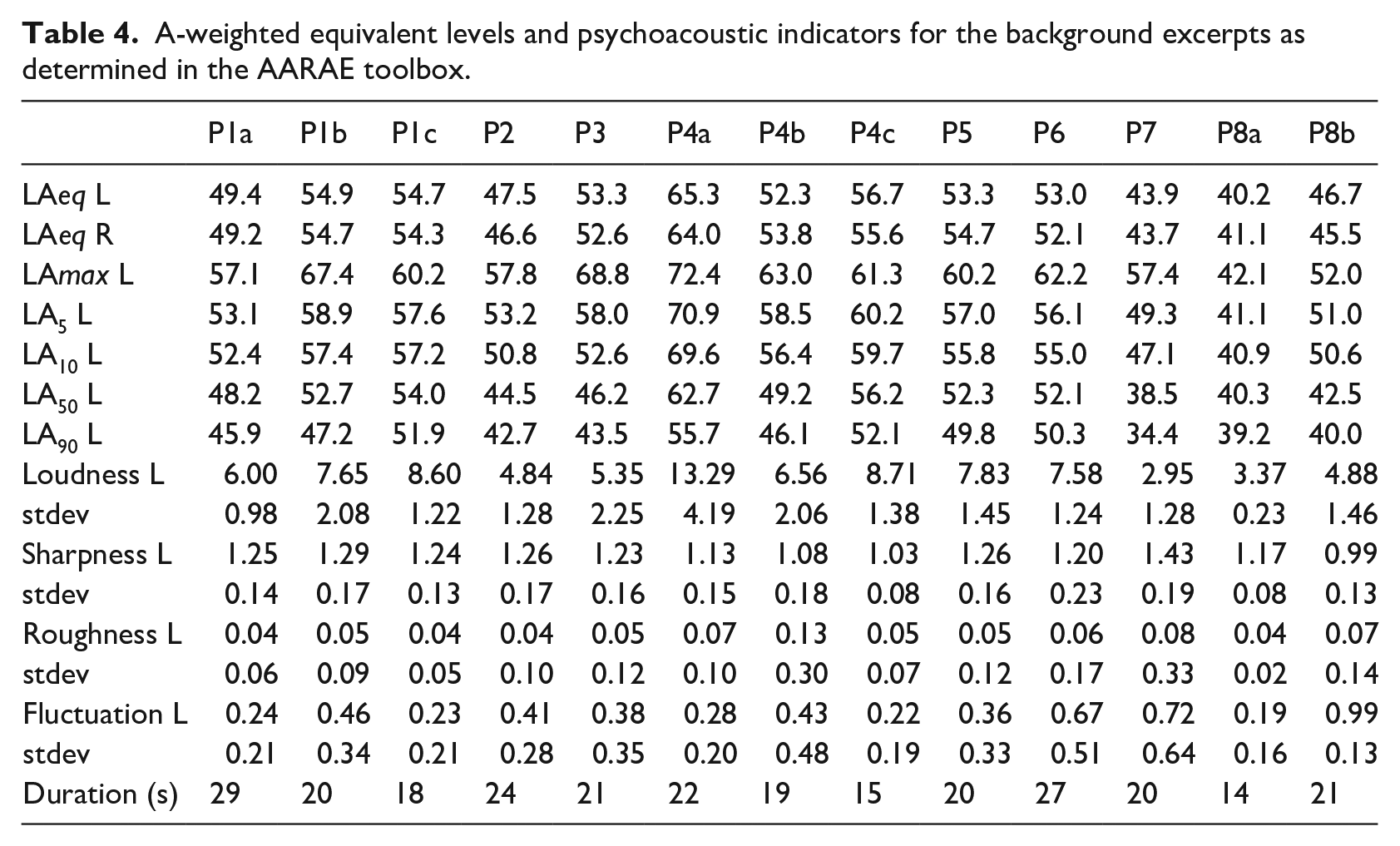
The inspection of the figures and numerical values and the audition of the recordings show that in the ZKM cafeteria (P1, P2, P3, P5, P6), the spikes in the sharpness values are mostly caused by tingling of dishes and cutlery, increasing the sharpness level from just above 1 vacuum to almost 2. The loudness changes according to the hours of the day. The mean loudness level goes from 4.84 sone (N) for P2 to 8.60 N for P1c. The standard deviation varies from 0.98 N (P1a) to 2.25 N (P3), showing that over the day the loudness level can be perceived twice as loud just because of the human activity. P4a is the background recording with the organ rehearsal, with mean loudness equal to 13.29 N, three times the lowest average level in the cafeteria. Without the organ, the background goes back to 6.56 N in a quieter situation and 8.71 N in a more active one. The highest roughness value is 0.13 aspers for P4b, consisting of sounds of gaffer tape being unfolded. In the quiet space of P7, the mean loudness is 2.95 N, while for P8 is 3.37 and 4.88 N when the underground train is passing below the building.
Elicited text and graphical assessments: results from thematic analysis
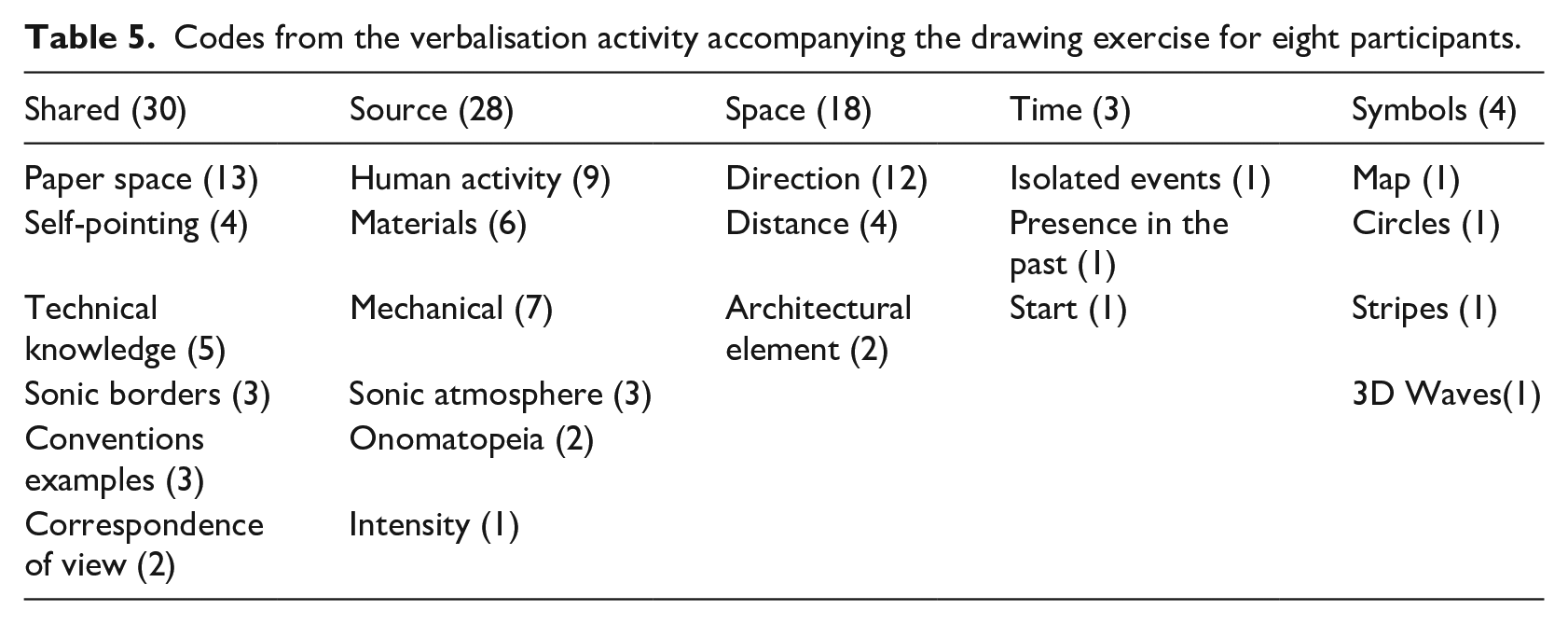
The graphical data were analysed first using an inductive thematic analysis approach, coding each individual sign produced on the paper template, as well as the verbalisation activity during the graphical exercise.59,79 All participants answering in an oral form added verbal comments describing their actions in support of their graphic activity. Moreover, some of them added words directly in the drawing to disambiguate sources of sounds and spatial anchoring references. This approach helped understanding how participants went back and forth from the represented space in the diagram to their present perception. Figure 5 presents a synoptic view of the elaborations of the participants on the question C1 and C2. Text, small marks and arrows were the most used strategies to represent the present sound field, each one adopted by five participants, followed by straight lines, boundaries, fields and layout or icons, each one adopted by three participants. Table 5 shows the categories deriving from the analysis of the verbalisation accompanying the drawing exercise. The first one, called Shared, helps capture this reductive translational process which the listener puts into action when transforming a sensory experience into the graphical language, fundamentally based on symbols and conventions.
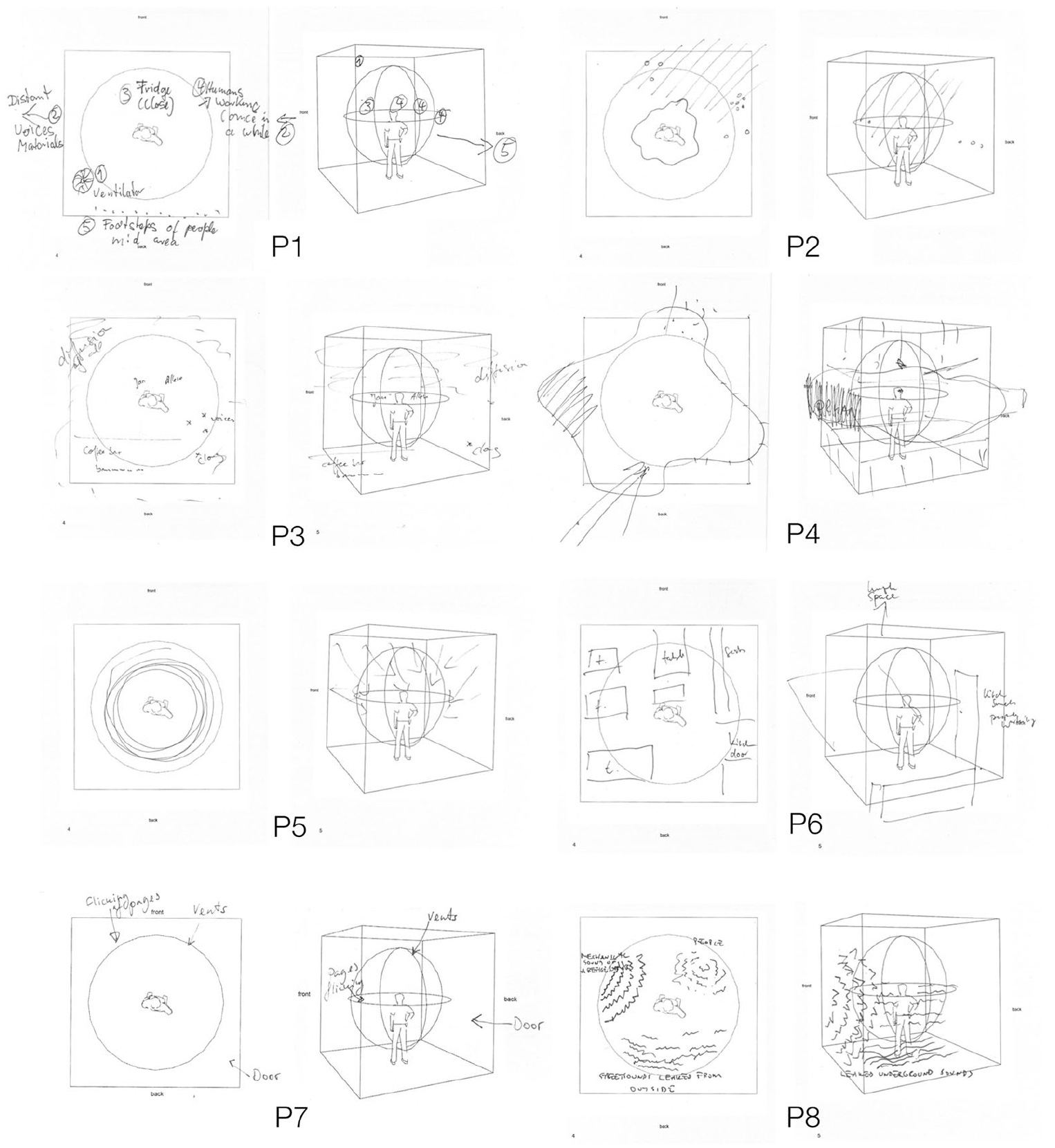
Participants’ drawings for questions C1 and C2 ‘sketch a spatial soundmap’.
Codes from the verbalisation activity accompanying the drawing exercise for eight participants.
In Figure 6(a) and (b), it is shown respectively the results from the graphical assessment of present and recalled locations on the labelled circumplex space, accompanied by the words used by the participants to briefly describe the aural character of these places. This information was used as a reference for the more detailed verbal descriptions analysed through the GT method. It was noted that the presentation of the diagram and its labels could have influenced the vocabulary choice in the word elicitation process. Among the terms used to describe the ‘aural character’ of the present place, there were ‘chaotic’, ‘pleasant’, ‘calm’, ‘monotonous’, which were some of the diagram’s labels. Only ‘calm’ had appeared in the three-word description of the recalled location (E2). However, ‘calm’ had been used earlier in the answers by four participants, and ‘pleasant’ by 2. As shown in Figure 6, only one participant decided to independently assess every axis, generating lobed profiles. The other participants used the diagram in a more intuitive way, in two cases describing the variation of the soundscape through arches, in one case plotting two different points on the diagram.
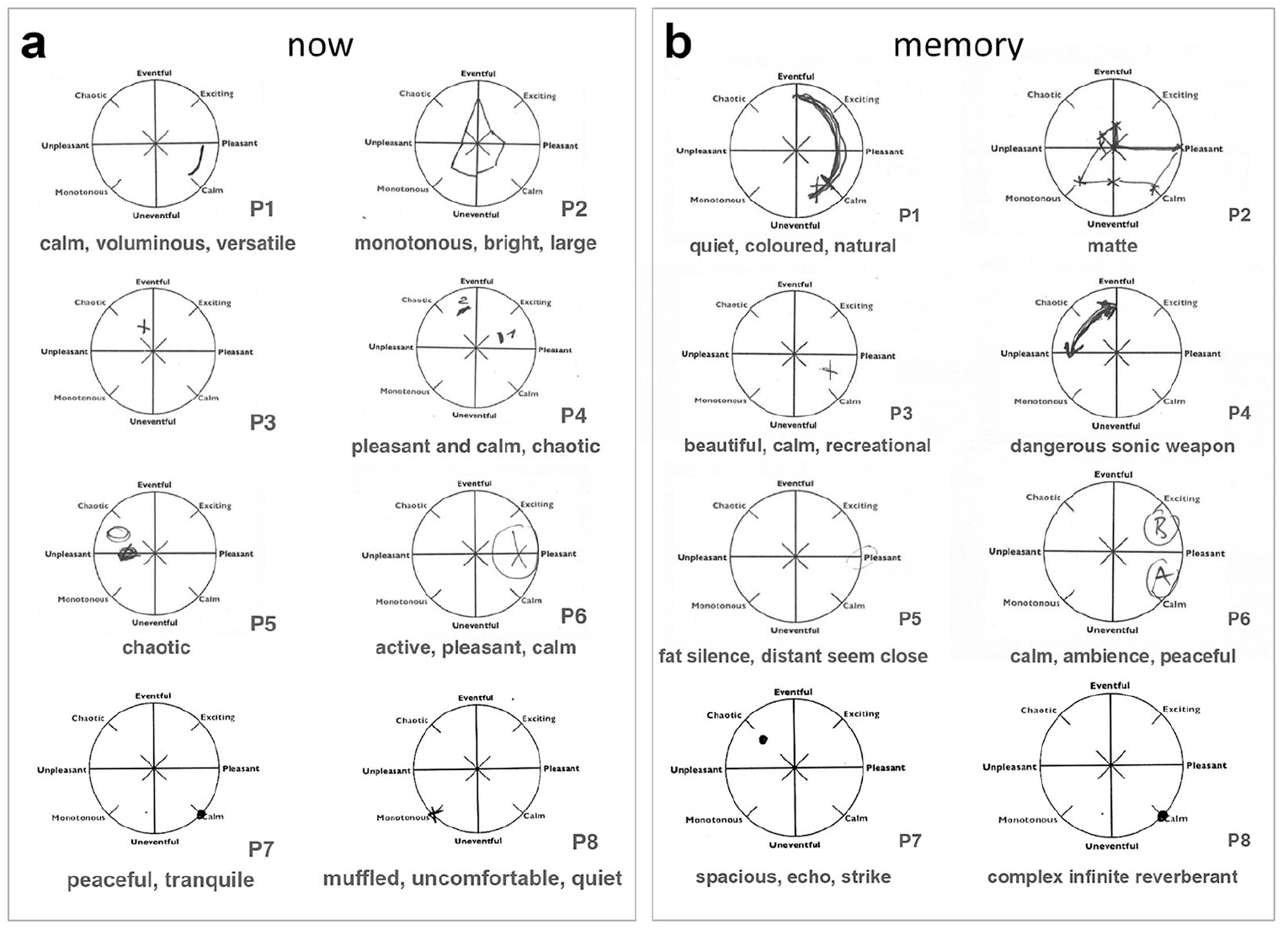
(a) Results for questions E5 and E6. ‘How would you describe the aural character of the place in which we are now in three words?’ ‘Where would you position the sonic environment of the place in which we are now on this diagram?’ and (b) Results for questions E2 and E3. ‘How would you describe the aural character of this place you remember in three words?’ ‘Where would you position the sonic environment of this place you remember on this diagram?’
GT analysis: results
Open coding
The audio recordings of the spoken interviews were transcribed verbatim and collected in the software package for qualitative analysis MAXQDA, together with the text extracted from the written answers and the observation notes taken while the participants were answering. These covered materials in the interview spaces, the estimated age of the architectural elements, the presence of people, nature, technology in the interview settings, the estimated distance from the walls.
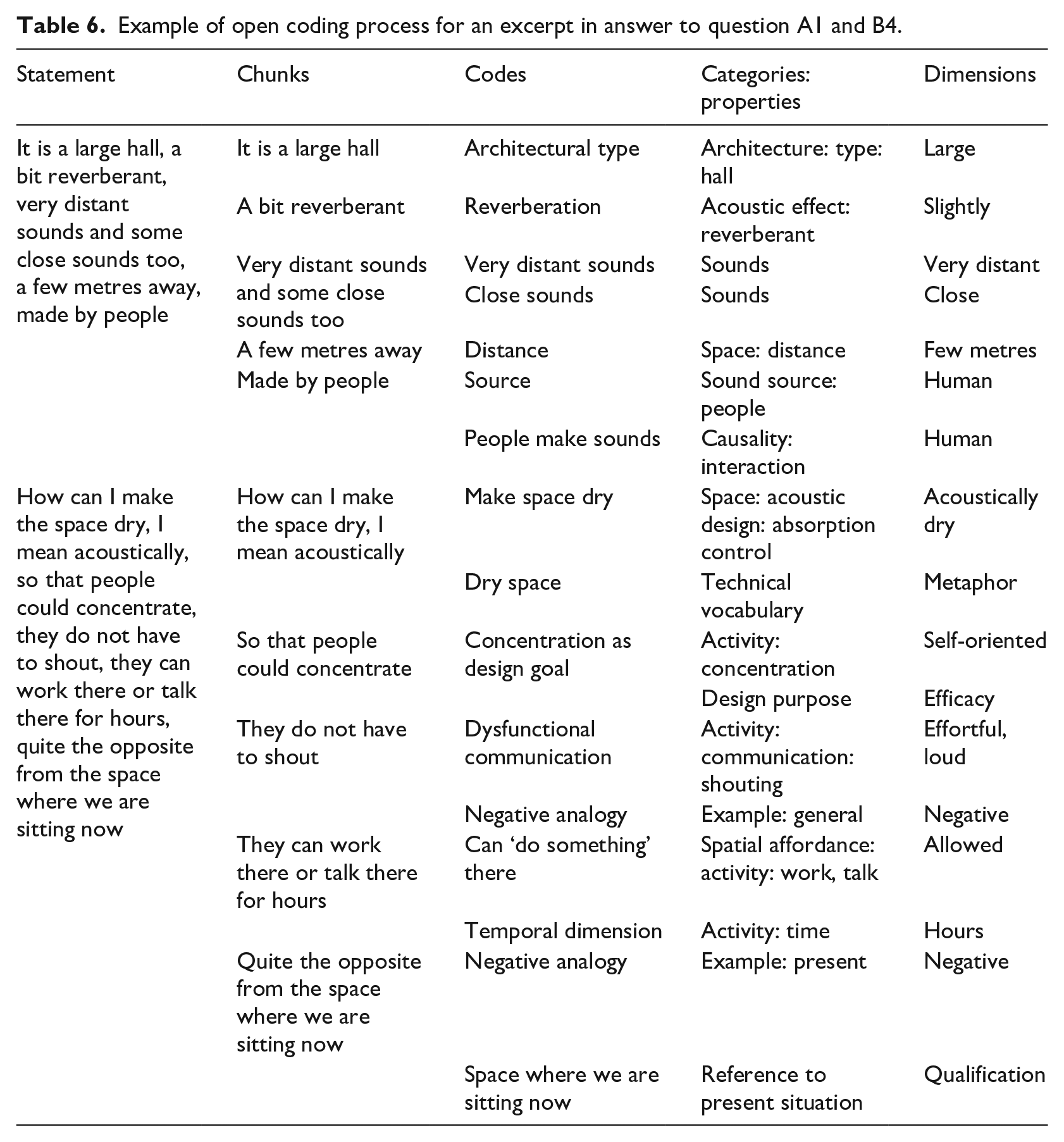
During the first phase of coding, called open coding, the researcher broke down the data in chunks, examining, comparing, conceptualising and categorising the emergent concepts, as exemplified in Table 6. The qualitative analysis software helped organising this process in facilitating the search for occurrence of similar words, the assignment of codes and their categorisation, and the creation of conceptual maps during the axial coding phase. The preliminary coding process was conducted word-by-word and focused at the beginning on questions A1–A3, B1 and C1–C2, the graphical exercise. 59 The categories resulting from the first phase of the analysis are presented in Table 7. The analysis was then repeated on the entire data corpus line-by-line, looking at the vocabulary employed and the related mental constructs. A total of 694 codes were generated during the two iterations.
Example of open coding process for an excerpt in answer to question A1 and B4.
Categories from the analysis of questions A1–A3 and B1.
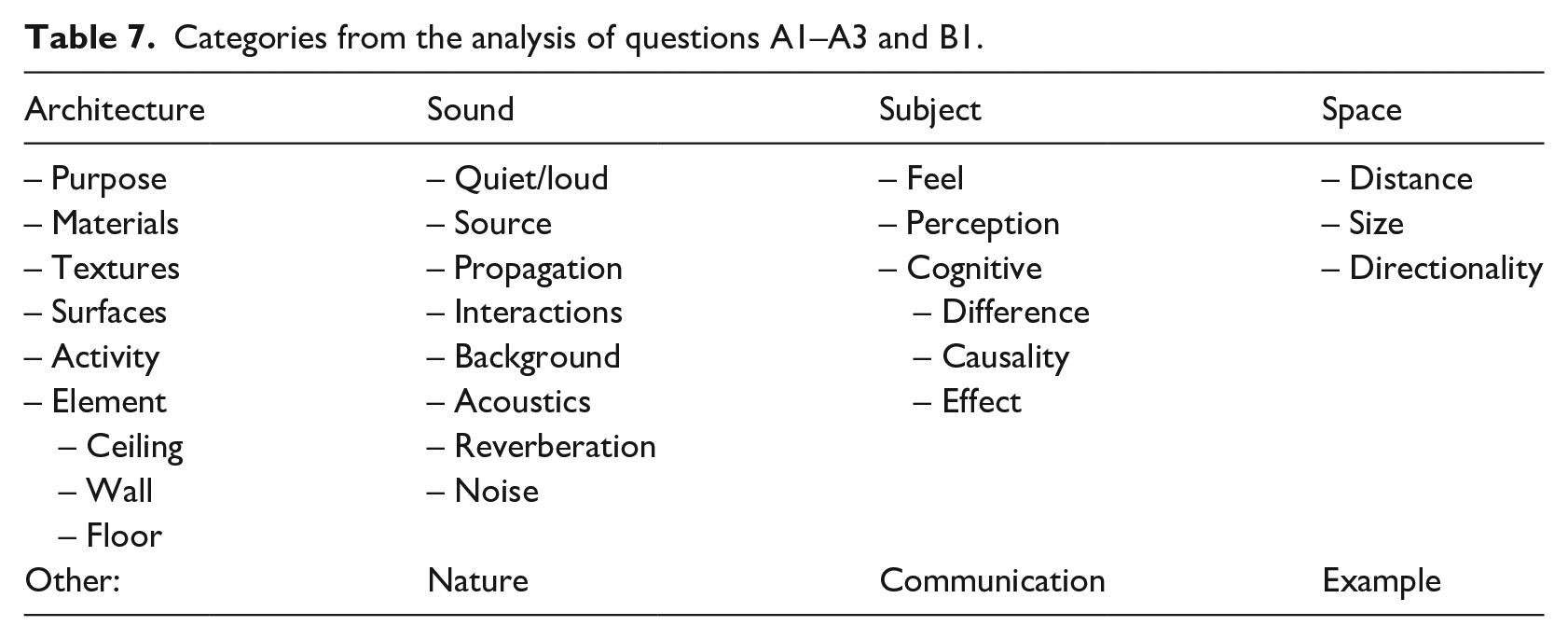
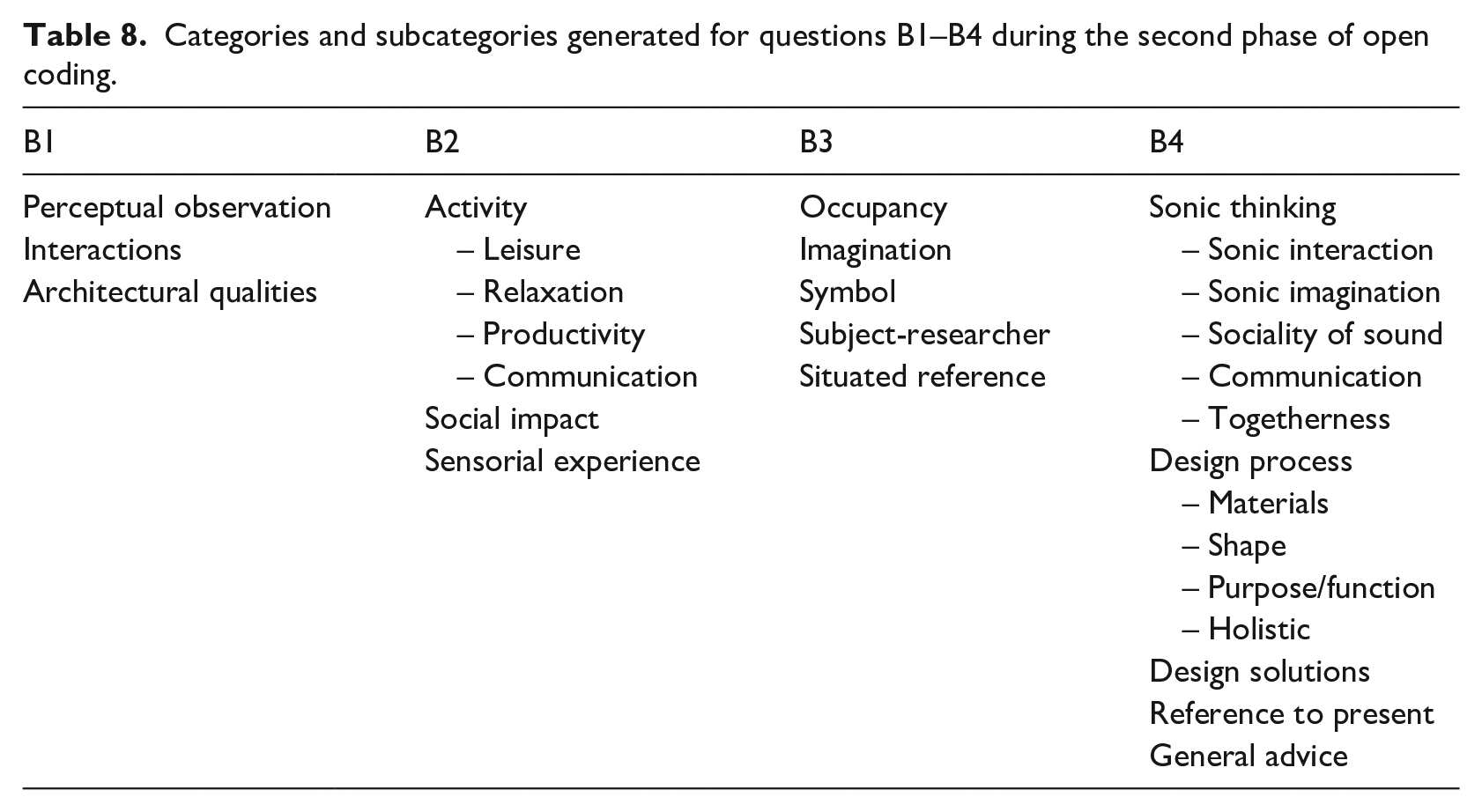
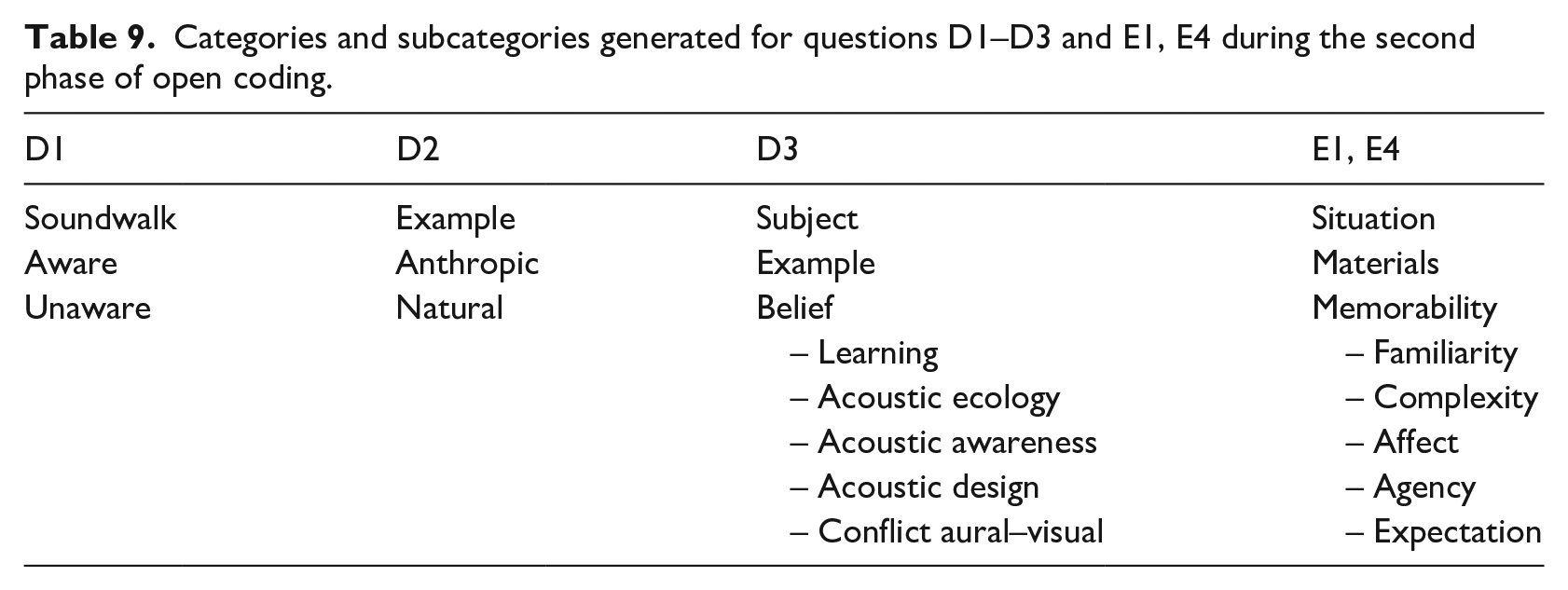
The third phase of open coding covered in depth the more reflective questionnaire sections B and D, aimed at understanding the participants’ views on the relationship between architecture and acoustic design, and the employment of soundwalking as an educational practice. This phase of coding proceeded strictly question by question comparing the participants responses, generating other 405 codes. The categories created during this additional phase of analysis are presented in Tables 8 and 9.
Categories and subcategories generated for questions B1–B4 during the second phase of open coding.
Categories and subcategories generated for questions D1–D3 and E1, E4 during the second phase of open coding.
Axial coding
While exploring causal conditions in the last open coding iterations, recurrent categories started being organised along their dimensions and properties, which marked the entrance to the axial coding phase. This phase involves assembling the data in new ways and consists of ‘intense analysis done around one category at a time in terms of the paradigm items’ (p. 32). 80 This category represents the axis around which additional coding and category building is performed, eventually becoming the core category of the emerging theory. 81 In social science, research intentions and goals are of primary importance and Strauss and Corbin 82 provide a paradigm model to support the analysis of action and interaction strategies (p. 99). This model helps to investigate whether categories that have been developed during open coding relate to the following:
Phenomena at which the actions and interactions in the domain under study are directed.
Causal conditions which lead to the occurrence of these phenomena.
Attributes of the context of the investigated phenomena.
Additional intervening conditions by which the investigated phenomena are influenced.
Action and interactional strategies the actors use to handle the phenomena.
The consequences of their actions and interactions.
In order to develop an axis for the GT, the researcher is thus advised to identify the kinds of phenomena, contexts, causal and intervening conditions, and consequences that might be relevant for the category or categories with primary importance (p. 202). 81
During this phase, the relationship between categories and subcategories were tested in multiple ways, focusing at times on the observation process, and other times on the observation content and its context. Figure 7 shows one step of the axial coding process, aimed at identifying those elements more deeply connected to the observer – the subject – and those pertaining to the object and context of the observation – the environment. Since the interview was repeatedly focusing on the site and its sonic environment, the observational process was modelled around the communication of the present and recalled scenes, studying the interdependence of the factors in the composition of the observation framework.
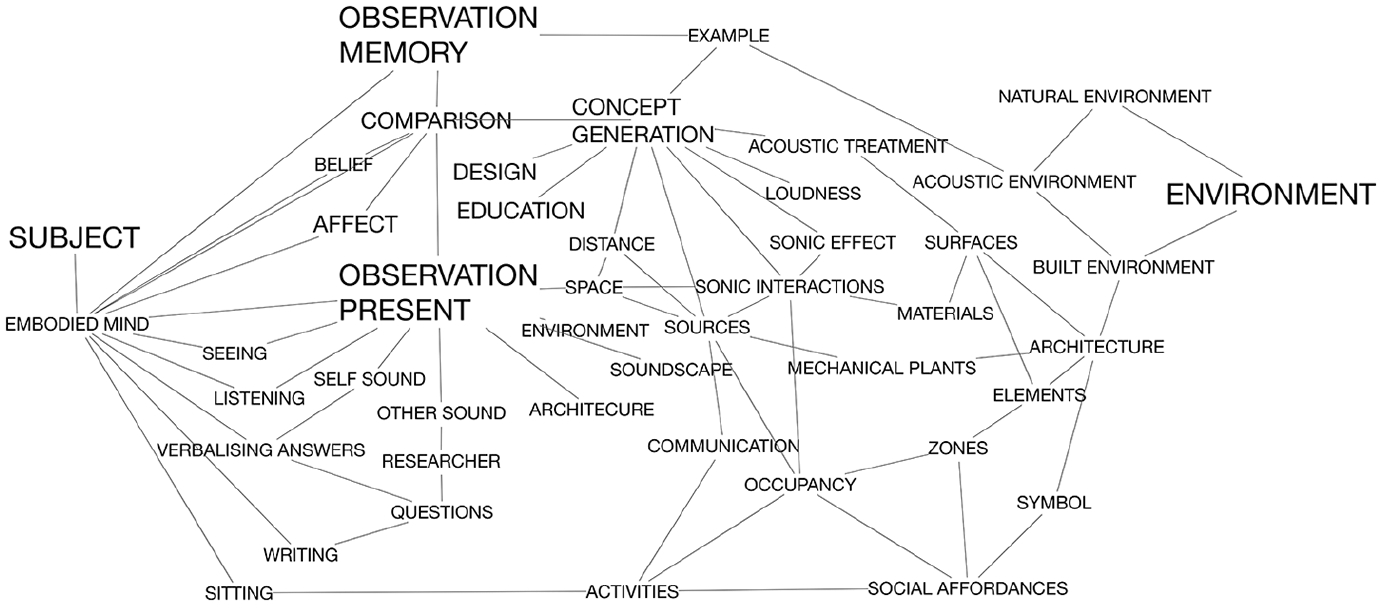
Diagram showing the process of connecting categories at a macro level, during the axial coding phase.
Selective coding
Selective coding is ‘the process of selecting the core category, systematically relating it to other categories, validating those relationships, and filling in categories that need further refinement and development’ (p. 116). 82 This process will result in a substantive-level theory relevant to a specific problem, issue or group. At this stage, the categories started being organised around a central phenomenon related to how the participants perceived sonic environments, what made them good or bad for their judgement system, and how they should be designed. It was found helpful to reconsider the importance given to the concept of place in the questionnaire. One of the original aims of the questionnaire was in fact to explain how ‘the aural character of places’ is perceived or remembered by listeners asked to characterise, with their reflections, the context in which the interview takes place. Consequently, it was tested whether the categories already identified could help explain the participants’ experience of a place, as mediated by the questionnaire’s structure.
Theory formulation: attributing values to sonic environments
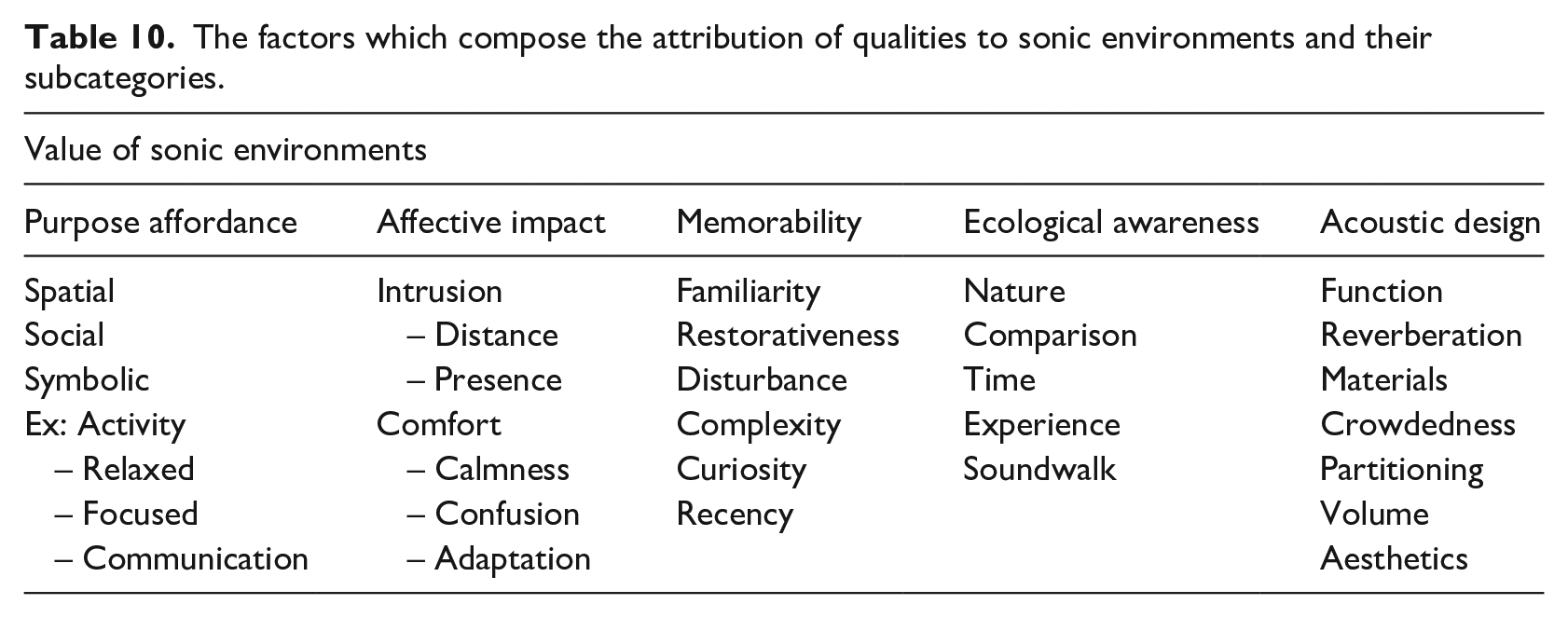
At the end of the reformulation phase, five main categories were found involved in the sonic environment quality attribution process. These were purpose affordance, affective impact, memorability, ecological awareness, acoustic design, as shown in Table 10. The core category connecting all of them was found to be the concept of value attribution, linked in sociology to Max Weber’s theories. 83 It is provided next an explanation of the formulated theory and a description of the main factors identified from the analysis process. The five categories (Purpose Affordance, Affective Impact, Memorability, Ecological awareness, Acoustic Design) are arranged in a diagram showing the factors’ configuration in determining the attribution of value to sonic environment qualities. The factors that majorly influence this process are two: the purpose affordance interactions in a sonic environment and the affective impact that such environment has on the individual.
The factors which compose the attribution of qualities to sonic environments and their subcategories.
The concept of ecological affordances was originally introduced by Gibson 84 to refer to what the environment offers in support of basic animal behaviours such as nourishment. In this study, affordance is used to address the possibilities offered by the sonic environment to those immersed in it. These factual possibilities interact with purposes which can be temporary or anchored in grounded schemata, depending on the person, the space, the social dimension, the symbolic layer. These can be called contextual purposes. Contextual purposes and the sonic environment affordances are evaluated in the questionnaire upon embodied observation or upon hypothetical judgement. The weighting of the dimensions was found to be dependent on the individual’s unique identity and experience. The category purpose affordance represents overall these multiple interactions (Figure 8).
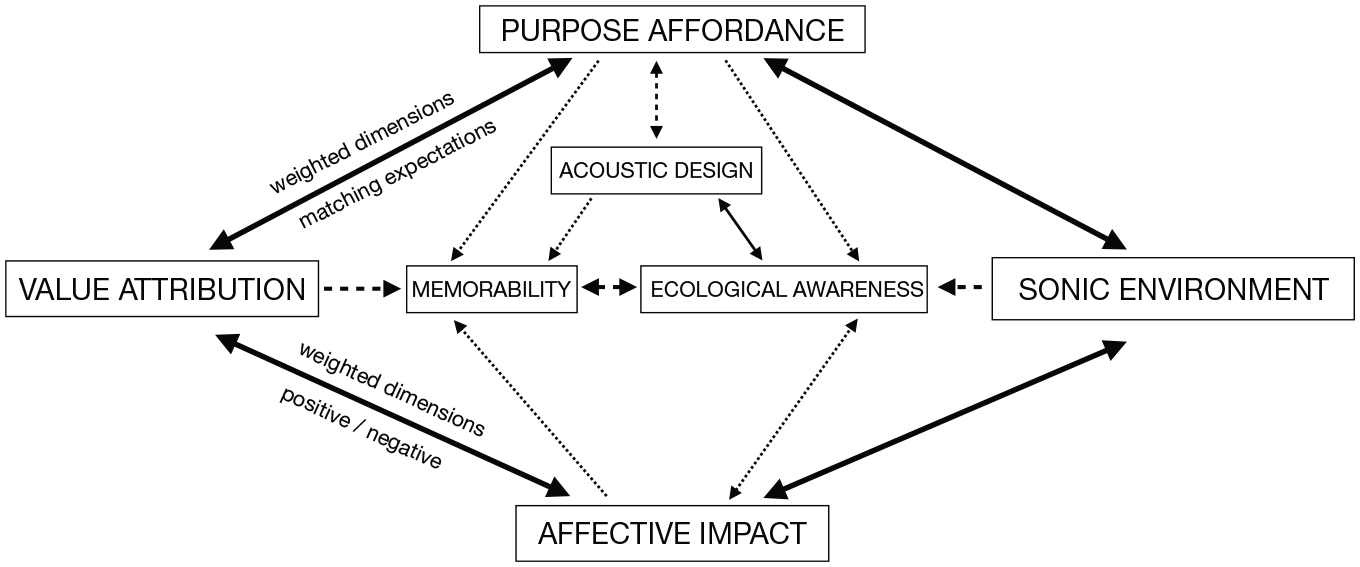
Relationships between the factors which compose the attribution of value to sonic environment qualities.
The interaction between the purpose-affordance evaluation and the affective impact evaluation generates the first appreciation or critique towards a sonic environment, a series of differently weighted positive and negative judgements, sometimes in conflict, sometimes in agreement. Individuals might attribute more importance to the affective or the functional sphere according to external factors such as the level of acoustic pressure sensed by the body, or internal processes. These depend on immediate priorities, personality traits, education, beliefs, and so on. Judgements are at this point compared with experiences of previous sonic environments, encoded in variably persistent ways according to their memorability.
This comparison process between the present situation under judgement and all the past situations already judged and revisited in memory generates ecological awareness, which develops by acknowledging one’s own relationship with the context and the human role and responsibilities towards the environment. 85 The ecological awareness of the individual can be trained through many different methods, among which listening represents one of the possible ways. In the participants’ views, soundwalks are seen as learning experiences able to generate aural awareness, the capability to know the reasons behind sonic phenomena and their effects. Aural awareness becomes also ecological when the conceptualisations on the environment are not solely directed to sonic aspects, but rather to the entire system of causalities which include spatial and social aspects, as well as the individuals’ place in the world. To process which leads to acknowledging one’s responsibility in sound making can thus be enhanced through listening activities aimed at understanding the ecosystem and its composing sounds.
Becoming aware of the differences between sonic environments helps to reflect and discuss their acoustic design. The acoustic design of an environment is primarily assessed with respect to its functional value (purpose affordance). According to the individuals’ awareness of causal dependencies, it might be judged also for its apparent features, upon comparison with stored information. In order to discuss the topic of acoustic design or characterise the acoustic design of an environment, the individual needs to have experienced a number of comparisons between what is valuable and what is instead detrimental. This might imply acquiring information on how other people react to sonic environments or what are the causes that make a sonic environment louder than another one. This wealth of knowledge makes the individual capable to adopt or promote strategies which can transform their relationship with the environment. This transformation takes place again by acting on the factors purpose-affordance and affective impact, mediated by the awareness of one’s needs and capabilities. The individual learns to tolerate the adverse reaction to a situation, seeks a different environment or attempts the transformation of the contextual settings.
Purpose affordance
For the resident participant (P3), the vast emptiness that welcomes the ZKM visitors symbolically represents the greatness of the institution. The large volume in the foyer works well for artistic purposes. It communicates through perceptual spatial experiences its cultural and educational engagement in media arts, design, spatial music. The sound installations spread everywhere, reaching even at a distance anyone that happens to be in the acoustic continuum. However, the ZKM also presents difficulties for those who want to stay in its spaces and concentrate. The same participant declares that a space of this size is difficult to bear for a long time if one wants to work privately, and it reminds of a train station from an acoustic perspective. This participant gives a more important value to the social contribution of the venue allowing aesthetic experiences than the wish for comfort in the cafeteria.
P4 suggests that such large spaces could be also used for parties, sports or ‘anything that doesn’t need concentrated communication’. This participant values the possibilities of the space for large social gatherings. P5 mentions the past history of the ZKM building as a munition factory and states that the arts have a transformative power, suggesting further that bringing spaces with a difficult past back to the community can be considered a healing process. Therefore, P5 highly values the social utility of art. All these participants provided some critical observations on the levels and the diffusion of sound, but having experience in artistic practices, they also acknowledged the role of the space in building a community which was valued as more important than individual personal comfort. Similarly, one non-ZKM participant (P8) would like to experience more acoustic spaces designed for ‘creative purposes’.
Several times participants highlighted the crucial importance of considering carefully the purpose of a space in the design phase. Among the basic needs, being able to communicate with others effectively and without stress holds a primary role. Being focused or productive, relaxing – ‘being together’ – were also mentioned among important activities which sonic environments should allow. From a health perspective, hospitals – specifically psychiatric ones – are brought as one example where too reverberating spaces, often designed according to visual cleaning standards, are actually counterproductive. For P4, they amplify the sounds, causing problems to the mental health of the patients which already have to manage their internal voices: ‘The problem is that they are producing so many echoes, that you are driving people mad, just by the building’.
Affective impact
Attributing qualities to a sonic environment is mediated by the impact that this has on the affective state of the occupants. Participants often mention moods to qualify both the atmosphere of the place and their emotions, in some cases combined with the effects yielded on expected activities. One example is the main station in Berlin, seen by P4 as ‘a nightmare’ or ‘an aggressive invasion of people’s health’, a ‘dangerous sonic weapon’. In this location, there are spots where ‘you actually have the feel of pain’, or where ‘the atmosphere is so chaotic that you cannot concentrate at all’, or where ‘you actually can’t talk, because it’s so loud’ and other ones ‘where you can’t understand important information like announcements by speakers’.
For P3 too reverberant spaces make people agitated and ‘it’s important to get the spaces towards calm spaces’. Similarly, P5 says that,
the human need[s] a lot of calm. I think we don’t think enough about that, things are becoming always louder and louder and louder, I think it is important to stop it and I think the nature can help us to understand that, that the sounds must be not always expanded.
This participant defined the sonic environment of the interview as slightly loud and declared that made her nervous. This could suggest that the interview environment, perceptually offering a sense of expansion for the large volume, could have negatively influenced the view of the participant.
An interesting position is taken by the participant interviewed in the Senior Common Room of QMUL, which was mostly empty during the interview. Sources of sounds were the noise of the refrigerator, the traffic from outside through the window and the subway vibrations from the floor. According to this participant (P8), the room is uncomfortable, as it suggests hierarchical structures that prohibit the access to the room for the younger population. For this participant, the symbolic value of the place has greater weight than the sounds that characterise it, as sounds will also be mediated by this negative view. Differently, the participant in the Library’s reading room (P7) places value on the access limitation, since it helps him reduce distraction and focus on the work.
Memorability
Participants recounted places and related sound environments in three cases: (1) when they brought examples to justify their reasoning, (2) when the questionnaire asked them to suggest soundwalks with educational potential and (3) when asked to mention a place with a memorable distinct sonic personality. While some recycled one of the examples provided in case (2) for case (3), other ones chose different places. Among the places with educative potential or memorable qualities mentioned, some were natural, other ones anthropic. The natural places in case (2) were often chosen for their ability to sharpen the senses, raising the perceptive awareness. In case (3) for being special or familiar immersive experiences. The sea was mentioned across the two cases four times, with seagulls, wind, or only in the distance. Three spatial sound composers (P1, P3, P8) believed that forests had aural training potential, for their high quality, spatial complexity and local sonic materials. Other suggestions were the Alps where the sound of cow bells resides on shifted surfaces; the desert that absorbs sounds; the cocoon sensation after it snowed; the home garden. Among the anthropic places, as negative examples mentioned there were: the main station of Berlin; the airport of Cologne where the announcement sounds are distorted; a motorway; bad music venues. Positive anthropic educational examples included: a city without cars; the French national library; IRCAM with its absorbent surfaces; the Hague City Hall; the room next door to the teaching classroom. Among the memorable anthropic locations, there were an indoor skate park with music and a sauna place with the calm water flowing on stone, considered ‘a fine noise’.
Ecological awareness
Five of the participants were familiar with the term soundwalk, and three were not. Those familiar with the term identified themselves as composers (4), or sound artist. Among the composers, one had also received education in architecture, and two had experience in teaching. One participant declared to practice soundwalking privately all the time. Another one employs this practice with students to make them aware of the everyday sounds around them and how the sonic environment changes even when only opening a window. More than one participant suggested that acoustic awareness can be activated by starting to listen to spaces, causing changes in decisions.
For some participants, soundwalking can ‘open eyes and ears’, sharpen senses, and allow comparison ‘with already existing similar situations’. One example is,
I would bring them to the city without cars [. . .] maybe a minor city, not too big, and make them listen to sounds of the bells around, or some dogs and some people walking and talking with each other, whatever’s there too, some birds . . .
Another mentions the Library and City Hall of the Hague, because it is an impressive space, and in general, Dutch people are more attentive to planning because population density makes them ‘very sensitive to [. . .] acoustically designing spaces’. The value of this example is thus social and aesthetic.
Some believed that wrong examples of acoustic design hold educative potential, whereas others thought that nature could teach its acoustic qualities. In the first case, the value is paradigmatic, deriving from the will to develop awareness in others and correct the problem. In the second case, the value is based on the will to share the restorative effect of nature and its aesthetic qualities. The forest makes ‘the branches of the trees clutter, or crackle, in the winter, and the leaves, in the summer’. In the forest, the temporal dimension qualifying the variation of the soundscape is expressed through the sound of different materials as the seasons change. The forest made of pines, for another participant is also ‘such a complex environment for, you know, acoustic reflections, that it really is a pleasure to scream and listen to it, or make any sorts of sounds, and listen to it back’. The concept of ecological awareness is also based on the understanding of one’s responsibility in sound making, which helps to detail the relationship with the environment and the feedback deriving from an embedded active presence.
Acoustic design
The questionnaire stimulated the reflections of the participants on the subject of acoustic design. The knowledgeable participants correctly consider architectural materials as surfaces with acoustic properties. The description of these was often accompanied by brief causal explanations of their effect on sound propagation. Participants generally suggest to use appropriate sound materials to obtain a dry sound atmosphere, preferable to a reverberating one. P1 says: ‘so few architects think about the space sonically, when they design it. They should keep in mind to make it not too reverberant by using too much glass, or steel surface’. Hard surfaces are considered detrimental to the enjoyment of a place, as this example from the same participant shows: ‘I think the textures aren’t too hard, so it’s not uncomfortable like being in the lobby of a bank’. P4 suggests as an acoustic design strategy to start from a ‘situated purpose’ and then derive the ‘auditive aspects’, an ‘audio image’, which can help to inform the aural planning, including the shape of the building, and the furniture, which is an ‘acoustic entity’. The participant trained in architecture suggests to introduce ‘directors’, a form of ‘acoustic mirrors’ above tables in restaurants to improve the intelligibility of conversations while respecting privacy. Two participants suggest that the ventilation sound perceivable in the cafeteria represents an issue which could be solved. Three participants see the field of acoustic design as promising and exciting from a creative perspective. P4 says: ‘aural architecture will be a key topic in the future’. Many brought forward the aural-visual conflict theme, with a broad range of arguments. P4 suggests that ‘the lack of aural attention causes design problems to be corrected by other specialists’, we are ‘visual people’ and architects are too, believing that audio models are impossible. P3 reported ‘more funding goes to visual equipment than acoustic design’ and ‘we live in a visual world, this is a complete neglecting of the acoustic world, ignorance of the acoustic world in which we live in’.
Discussion
The discussion section is articulated in five main points, reflecting the range of topics covered in this study.
Social appraisal
In the ZKM, isolated sounds were not considered problematic, with the sole exception of the ventilation noise, a common issue in buildings. Even during the organ rehearsal, which dominated part of the interview with P4 and indirectly forced the participant to shout, the sonic event was not criticised. One hypothesis is that the sounds of the organ, the cafeteria, the technical materials were all considered a fundamental part of the place identity, for Yilmazer and Acun 44 ‘the spatial elements and activities which individuals use to define the identity of the space’. The ZKM interviewees all appeared reluctant in altering the spatial design of the venue, suggesting strong aesthetic appreciation for the space and its social contribution in promoting the arts, particularly valuable for experts in spatial music composition and artists. Even when the sonic environment was declared hard to bear for a prolonged time, the resident participant manifested the will to sacrifice the comfort for a higher collective scope. This can be considered a coping strategy resulting in the acceptance of the soundscape, 17 but it also represents the soundscape expectations implicitly attributed to a high-profile public space. The factor sound preference was not highlighted in this study possibly because the questionnaire was formulated differently than in the study by Davies et al. 86 For the interview with P8, the setting itself and the acoustic energy of the background was significantly lower, as shown in Figure 10 in Appendix 1. This environment lacked presence of people at the time of the interview and the participant addressed with criticism the setting chosen for the social barrier it represented. Not having human sources of sounds masking the mechanical sounds of the refrigerator and the subway could have reinforced a negative interpretation of the setting. However, the forest soundscape recalled from memory was suggested by other participants interviewed in the ZKM.
Atmosphere
From the second and third questions, the participants were asked to qualify the atmosphere and their feelings. The atmosphere was often characterised with affective parameters such as pleasant, relaxed, calm, as well as other dimensions, such as cold, neutral, quiet, busy, semi-public, which are environmental indicators. Between the sonic environment, external to the participant, and the participant’s inner space there seems to be an interaction space characterised by the projection of emotional states on the environment, which interferes with the observable reality. The atmospherical layer could be considered the one which hosts the symbolic meanings deriving from cultural constructs and mediates the experience of the participant with the present experience of the place. Jackson
87
defines atmosphere as the ‘quality of its environment’.
62
Pallasmaa
88
states that,
atmosphere is similarly an exchange between material or existent properties of the place and the immaterial realm of human perception and imagination. Yet, they are not physical ‘things’ or facts, as they are human experiential ‘creations’. Paradoxically, we grasp the atmosphere before we identify its details or understand it intellectually.
What has been found in this study agrees with Pallasmaa’s theory. Studying the atmospherical qualities of places as perceived by the participants could offer new interpretation keys to the semantic layer which characterises the interpretation of the soundscape. 37
Vocabulary
The participants with a music composition background, specifically in spatial sound, had a richer vocabulary to describe the sonic environment surrounding them or recalled from their memory, although they answered in a second language. They used terms as ‘multilayered’, ‘condensed atmosphere’, ‘light’, ‘weight’, ‘pressure’, ‘balanced’, ‘dry acoustic scene’, ‘acoustic horizon’, ‘borders’, ‘spatial image’, ‘versatile’, which suggests how practicing with the spatial aesthetics of music develops the capacity to provide metaphors and analogies to describe an experiential situation depending after all on variations of acoustic pressure. This finding can be compared to the suggestion from Schafer 35 to involve music composers in the repair of the soundscape. Being music traditionally based on sound, the creative act of making music with aesthetic purposes brings with itself deep awareness on the affective properties of organising sonic configurations in a sequence. This knowledge could be used more effectively by soundscape research, promoting collaborations with musicians in site-specific surveying campaign focusing on qualitative experiences. The symbolic meaning of the place emerged more vividly from those engaged in artistic practices. Additional factors which might influence the characterisation of the qualities of sonic environments might be the knowledge of the English language. Further studies should verify how rich spatial sonic experiences of everyday indoor spaces are described verbally by native speakers.
Soundwalking as learning and surveying method
Although not all the participants were familiar with the soundwalking method, all of them brought examples to justify their adoption in training contexts targeting spatial designers. The soundwalking method has recently been standardised as an advisable way to retrieve subjective data on specific locations, supporting the generation of reproducible results.24,25,89 The participants’ opinions seemed aligned with the soundscape pioneers, advocating for strategies to improve the world soundscape through the understanding of the mechanisms generating good and bad acoustic design examples.35,66 Particular emphasis was spent in qualifying valuable sonic environments presenting absence of traffic as well as a multitude of local spatially distributed sounds, such as in the forest example. These examples were found capable to heighten perceptual awareness, in a rediscovery of one’s own sensitivity and aesthetic discernment.
Conversely, the main train station in Berlin was reported as an aggression to health while the resident participant compared the experience of the foyer’s acoustic space to a station. The problem reported seemed to affect both the functionality of the space and its effect on the well-being of the users. Since people spend a lot of time in train stations – often daily – this finding could motivate new research directions aimed at capturing the effects of the acoustic design of such spaces on the occupants’ comfort. Architects should take into account that in such large spaces, the lightness of the unobstructed void is likely to be translated at busy times into the presence of a multitude of sound sources spreading everywhere, possibly weighting as a stress factor on the occupants’ well-being. However, smaller volumes could lead to higher localised acoustic pressure. 6 Soundwalking methods could be a valid way to investigate in educational and professional contexts whether the problems highlighted by the participants could be answered by research-informed acoustic design strategies. Architects, clients and acoustic consultants could take part in joint soundwalks aimed at assessing critical situations in social spaces fundamental for the local community.
Acoustic design of dining spaces
Cafeterias are important social area in public spaces, and their architectural design should take into account the acoustic comfort of the users. Five of the six participants interviewed at the ZKM chose the cafeteria area as a suitable place for this specific interview topic. The acoustic comfort in eating spaces has been discussed in the literature by other researchers. Dökmeci and Yılmazer 8 found that people like to spend time in the food court area of a shopping mall, although a large majority of them perceive it as noisy. In this food court, the average LA eq values were measured between 62 and 71 dBA, while in the ZKM cafeteria the average levels observed during the interviews were between 50 and 64 dBA. The interview setting with a LA eq of 64 dBA was in fact assessed as slightly loud and chaotic. Whether this is a commonly reported problem could be checked in other studies.
The venue reverberation was not heavily criticised, although it provided arguments to advocate against the use of hard reflective materials. It was observed that the early morning interview with P3 next to the foyer’s void had lower average LA50 and LA90 but higher LA5 max than the lunchtime interviews in the cafeteria. The audition of the recordings revealed that this was due to sonic events in the cafeteria’s kitchen and the foyer which were considerably amplified by the space volume and morphology. The cafeteria’s other dining area has a ceiling 5 m high, while the foyer is 18 m high. Thus, the sound levels in the lowered ceiling cafeteria increase more easily with dining activities but are less affected by the events happening in the foyer, while next to the kitchen below the skylight any event is strongly amplified.
General design recommendations would be to avoid placing kitchen areas next to large voids, which although generating spatially interesting effects could harm the workers’ and customers’ tranquilly upon prolonged exposure. Overall, some of the participants advocated for improving acoustic comfort in social spaces through the application of absorption techniques or tuned amplifiers supporting effortless conversations in restaurants. These participants favour calm spaces with the goal to diminish the stress deriving from the prolonged exposure to a sustained sound level, in part caused by reflective materials. In contrast, other participants are excited by the idea of designing spaces achieving aesthetic effects by virtue of their design. If on one hand such effects may make one place more attractive and stimulating, such as in an exhibition space, this may not be advisable in those places where the primary activities are conversation, relaxation and eating.
On the other hand, Braat-Eggen et al.90,91 have recently shown that a prolonged reverberation affecting background conversation seems to help concentration in open plan offices. Thus in multi-purpose areas the interaction effects between acoustic expectations and comfort according to different activities should be studied more in-depth.
Conclusion
A study was conducted with eight participants with a musical background, adopting an approach which qualified in-depth spatial sonic experiences by combining GT and acoustic energy characterisation. The questionnaire designed successfully served the purpose of eliciting memories of sonic scenes, further providing the participants’ reflections on acoustic design themes and a broad range of data points on the present sonic environment. This richness allowed to construct an initial theory aiming to connect low-level perceptual phenomena with subjective factors difficult to access through brief surveying procedures. The results from the GT analysis highlighted a number of factors involved in the sonic environments’ value attribution process. Three factors are similar to those found by other researchers applying similar methods. The first is purpose affordance, which can be considered the matching between (1) what a place symbolises; (2) the acoustic activities expected to be allowed in a place; (3) what the place really allows in the present sonic environment; (4) what the place does not allow, creating frustration. The second is affective impact, representing the impact that a sonic environment has on the personal sphere of the individuals and their well-being. The third is memorability, identified in the comparison process that takes place with previous positive or negative experiences in the judgement action. In addition to these factors other two themes were identified, ecological awareness and acoustic design. Ecological awareness refers to the process which leads to a greater understanding of the active role of the observer in the ecosystem. The musicians interviewed can be considered aurally aware individuals who were further trained through the questionnaire’s situated descriptive tasks and successfully provided suggestions on how to improve acoustic comfort in social spaces. The participants interviewed believed that spatial designers could highly benefit from taking part in soundwalks in extremely negative spaces as well as in places with particular sonic and spatial qualities. Among these, nature plays an important role, both for its restorative power and for its complex or unusual aesthetics, here positively valued.
Supplemental Material
Questionnaire – Supplemental material for Reflecting on sonic environments through a structured questionnaire: Grounded theory analysis of situated interviews with musicians
Supplemental material, Questionnaire for Reflecting on sonic environments through a structured questionnaire: Grounded theory analysis of situated interviews with musicians by Alessia Milo in Building Acoustics
Footnotes
Appendix 1
Acknowledgements
The author thankfully acknowledges the support from her supervisor Josh Reiss, the helpful comments from the article reviewers and all the participants.
Declaration of conflicting interests
The author(s) declared no potential conflicts of interest with respect to the research, authorship and/or publication of this article.
Funding
The author(s) disclosed receipt of the following financial support for the research, authorship and/or publication of this article: This research was supported by the CdT Media and Arts Technology through the EPSRC grant EP/G03723X/1.
Supplemental material
Supplemental material for this article is available online.

References
Supplementary Material
Please find the following supplemental material available below.
For Open Access articles published under a Creative Commons License, all supplemental material carries the same license as the article it is associated with.
For non-Open Access articles published, all supplemental material carries a non-exclusive license, and permission requests for re-use of supplemental material or any part of supplemental material shall be sent directly to the copyright owner as specified in the copyright notice associated with the article.
