




Abstract
Hydrogen is being introduced as a clean energy source for heavy-duty applications to reduce carbon emissions and environmental impact. However, its application in internal combustion engines poses significant challenges, particularly regarding lubrication performance and surface degradation under pressurised hydrogen conditions. Hydrogen diffusion at contact interfaces can alter tribofilm formation, potentially increasing wear and compromising component durability and efficiency—issues that remain insufficiently explored. This study examines the tribological performance of conventional lubricants in a hydrogen-rich environment using a custom-built tribometer housed within a 3-bar pressurised hydrogen vessel. Lubricants formulated separately with zinc dialkyldithiophosphate (ZDDP), molybdenum dithiocarbamate (MoDTC), and glycerol monooleate (GMO) in base oil were tested. Surface characterisation was performed using Raman spectroscopy and scanning electron microscopy coupled with energy-dispersive spectroscopy (SEM/EDS). The results reveal the presence of iron oxides and carbonaceous materials on sliding surfaces, which influence the formation and stability of ZDDP-, MoDTC-, and GMO-derived tribofilms. These interactions lead to variations in friction and increased wear, highlighting the need for lubricant formulations specifically designed for hydrogen-based systems.
Introduction
As the world shifts to zero-carbon emissions, hydrogen is gaining traction as a feasible alternative fuel for internal combustion engines, offering a new energy source to replace conventional fuels. Hydrogen is increasingly being adopted as a clean energy solution across critical heavy-duty sectors, including marine transport, off-road industrial machinery, and large-scale commercial vehicles.1,2 In hydrogen engines, hydrogen and oxygen gases react during the combustion process to produce clean energy, with the primary emission of water vapor. 2 Hydrogen-powered combustion engines offer key advantages, including high energy density that facilitates efficient storage and a clean combustion process that produces no carbon emissions.3,4 The effect of the hydrogen combustion process on the degradation of engine lubricants, as well as its further consequences on tribological contacts, is a source of concern that has not been sufficiently studied.5–8 These potential issues related to using hydrogen as a fuel can reduce engine efficiency, compromise durability, and ultimately shorten the engine's lifespan. Therefore, investigating conventional lubricants and developing new ones for hydrogen environments is crucial for next-generation high-performance engines.
Surface degradation in a hydrogen environment is mainly caused by three mechanisms: hydrogen embrittlement, surface delamination, and hydrogen-induced wear.3,9–11 In a hydrogen engine, the current research3,4,10–12 has therefore concentrated on mitigating these damages by optimising the oil formulations and developing suitable surface coatings. Hydrogen diffuses through the surface and interacts with the ferritic-steel microstructure, reducing its fracture resistance, ductility, and strength. 13 Hydrogen barrier coatings are widely regarded as an effective solution for mitigating hydrogen embrittlement.13,14 Hydrogen embrittlement of the surface and its effect on the mechanical properties of diamond-like carbon (DLC) coating have been studied by Shin et al.. 11 The results showed that hydrogen penetrates through the DLC coating, affecting wear resistance and adhesion strength of the coating. Other coatings, including Al2O3, TiC and TiAlN, reveal strong candidates that can mitigate hydrogen embrittlement. 14 However, cost-effectiveness and adherence to standard requirements for hydrogen engines must be taken into account when designing hydrogen barrier coatings or implementing alternative methods to limit hydrogen diffusion. 14
Only a limited number of studies have examined the performance of lubricants in hydrogen-rich environments and their influence on surface degradation. Jie et al. 8 studied the performance of isooctane and n-hexadecane liquids under a hydrogen environment using the MTM tribometer. The results revealed the formation of carbonaceous film in the presence of hydrogen. The authors proposed that the carbonaceous film was produced from hydrocarbyl free radicals under the mechanochemical process during the tribological test. The study demonstrated that the level of oxygen mixed with a hydrogen environment influences the formation of carbonaceous film, increasing wear. Niste et al. 7 investigated the effect of WS2 nanoparticles in the base oil on the hydrogen embrittlement in bearing steel. The findings exhibited that the WS2 tribofilm impedes hydrogen permeation, thereby extending the service life of the bearing. Garcia et al. 6 studied the effect of hydrogen gas during the internal combustion process, fuelled with diesel, on the lubricant's performance. The results revealed oxidation of engine oils and an increase in wear for interface components. Moreover, the tribological performance of engine oil was investigated in a hydrogen-assisted diesel engine by Newadkar et al.. 5 The results demonstrated a change in physical and chemical properties of the lubricant, which impacted the frictional performance.
The tribological performance of commercially available lubricants under hydrogen-rich conditions warrants rigorous evaluation. Conventional lubricants incorporating antiwear additives are known to form protective tribofilms on contacting surfaces. These tribofilms may serve as diffusion barriers, potentially impeding hydrogen ingress into the substrate and thereby mitigating hydrogen-induced degradation mechanisms. 15 The most common antiwear additives are Zinc dialkyldithiophosphates (ZDDPs), which produce phosphate and sulfide-derived films on the interface surfaces. 16 The ZDDP tribofilm revealed a good hydrogen barrier, minimising the hydrogen permeation. 15 Tanaka et al. 15 found that the substrate covered by ZDDP tribofilm contains less hydrogen compared to the substrate that has no ZDDP tribofilm on the surface. However, the effect of pressurised hydrogen gas on the formation and growth of ZDDP tribofilm has not been investigated yet. The molybdenum dithiocarbamate (MoDTC) and glycerol monooleate (GMO) friction modifiers have shown excellent antiwear and friction properties in previous studies.17–20 Due to their favourable properties, these lubricant additives have been carefully selected for testing in hydrogen conditions. The tribofilm formed by these additives may act as a barrier to hydrogen diffusion across surfaces, thereby helping to prevent surface degradation. Therefore, the ZDDP, MoDTC and GMO additives, which generate distinct tribofilms with differing chemical and physical properties, were selected in this study to compare their response under hydrogen conditions.
This study investigates the performance of lubricants containing different additives in a hydrogen-rich environment. This aims to develop a better understanding of how hydrogen-pressurised gas in hydrogen combustion engines influences tribological performance, tribofilm formation, and surface degradation.
Materials and methods
Materials
The lubricants tested are shown in Table 1. The PAO4 base oil was used as a reference. The lubricant additives, including antiwear additive (ZDDP) and friction modifiers (MoDTC and GMO), were mixed separately into the base oil at 40°C and 500 rpm for 30 min. The additive percentage of 1 wt.% was chosen to provide sufficient additives to ensure effective performance, as reported in previous studies.21,22
Lubricants selected for tribological tests in a hydrogen and ambient environment.
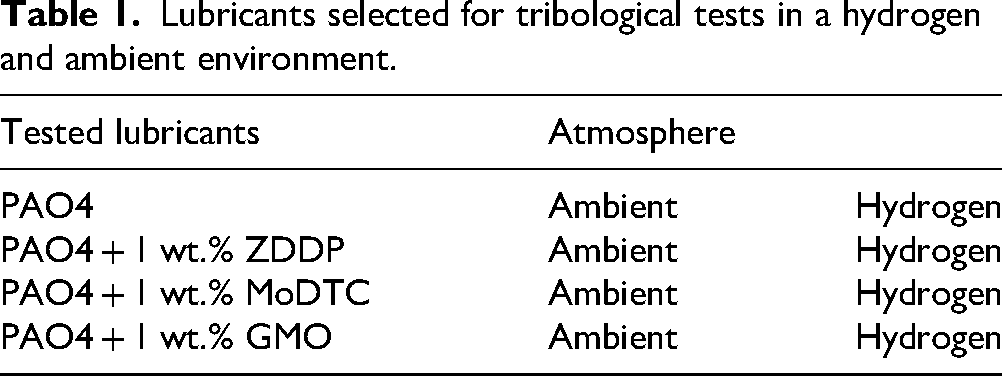
Lubricants selected for tribological tests in a hydrogen and ambient environment.
A bespoke ball-on-disc tribometer (Figure 1(b)) was used to conduct tribological tests. The ball is made of AISI 52100 steel and has a diameter of 5.5 mm. The disc has an inner diameter of 85 mm, an outer diameter of 110 mm, and a thickness of 1 mm. The material of the disc is AISI 1074 steel. The roughness (RMS) of the contact surfaces is 200 nm of the disc compared to 80 nm of the ball. The hardness values are 47 HRC for the disc and 64 HRC for the ball.
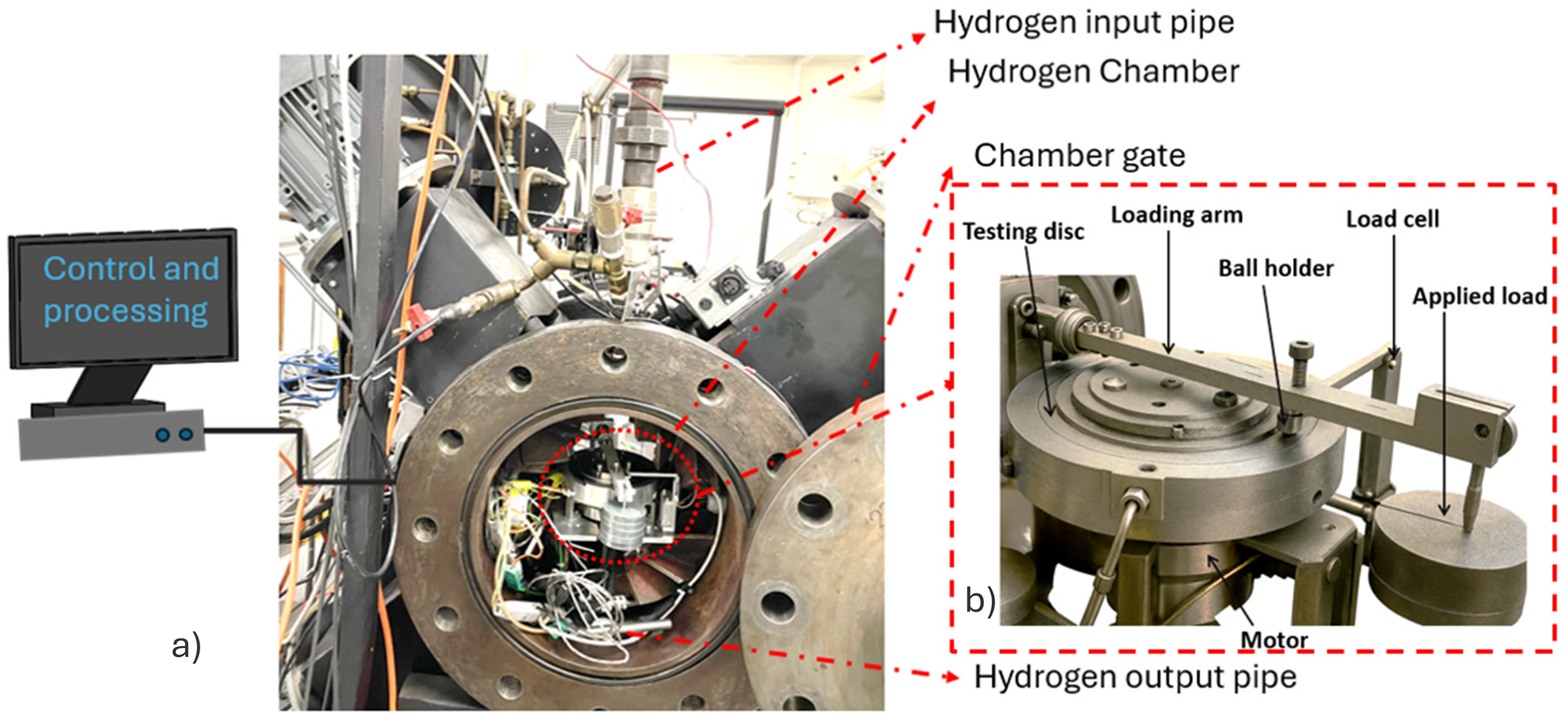
Tribological test setup in a hydrogen atmosphere; a) hydrogen vessel was used to apply a hydrogen-rich environment, b) the tribometer
Tribological test in hydrogen environment
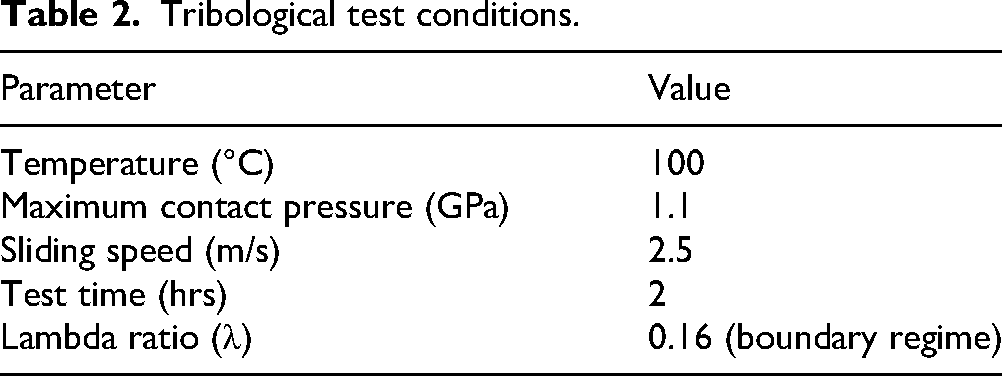
For tests in a hydrogen environment, the tribometer was placed inside a hydrogen vessel that provides pressurised hydrogen up to 3 bar, as shown in Figure 1(a). The current laboratory conditions are mechanism-isolated and do not fully replicate the environment of a real hydrogen combustion engine, as they limit the effects of oxidation and water in the presence of oxygen on tribochemical processes, lubricant degradation, and surface oxidation. Before the tribological test, the ball and disc were cleaned with acetone solvent to remove any contaminants from the contact surfaces. The ball is positioned at 97.5 mm, which corresponds to the central diameter of the wear scar. The disc rotation speed of 500 rpm translates to a sliding speed of approximately 2.5 m/s, calculated at the central diameter of the wear scar. The 3 ml of tested lubricant was applied to the disc surface. The chamber was evacuated to 2×
Tribological test conditions.
Post surface analysis
White Light Interferometry (NPFLEX, Bruker) was conducted to measure the wear scar on balls. The data has been analysed by Vision64 software. The wear volume loss of balls was calculated using a formula similar to that used for calculating the volume of a spherical cap. This method was described in detail in our previous studies.18,24
High-resolution imaging and chemical analysis of the wear scars on balls were employed using the scanning electron microscopy (SEM) technique. Energy dispersive spectroscopy (EDS) was applied to determine the chemical composition of rubbed surfaces.
Raman spectroscopy was performed on all tested samples under both ambient and hydrogen environments to identify iron oxides and map the distribution of MoS₂ within the tribofilm. The Raman shift ranged from 200 to 2000 cm-1. Area mapping of the MoDTC-derived tribofilm was conducted for a lubricant sample containing 1 wt% MoDTC in an ambient environment and compared with the same lubricant tested under hydrogen conditions. The scanned area measured 20 × 10 µm2, divided into 112 points, with a total mapping time of approximately 3 hours.
Results
Hydrogen effect on friction
The tribological tests were carried out for PAO, PAO + 1 wt% ZDDP, PAO + 1 wt% MoDTC, and PAO + 1 wt% GMO in both ambient and hydrogen environments. The friction results are presented in Figure 2. The PAO sample was used in this study as a benchmark oil. For the PAO reference oil, the coefficient of friction under both test environments behaves similarly for most of the test time. However, the friction coefficient in a hydrogen environment has gradually decreased over the final 30 min of rubbing time, as shown in Figure 2. The reduction in friction is likely related to the potential formation of lubricant degradation materials, which come into contact between the surfaces. The composition and formation mechanism of these degradation materials will be explored during the chemical analysis of the surface.
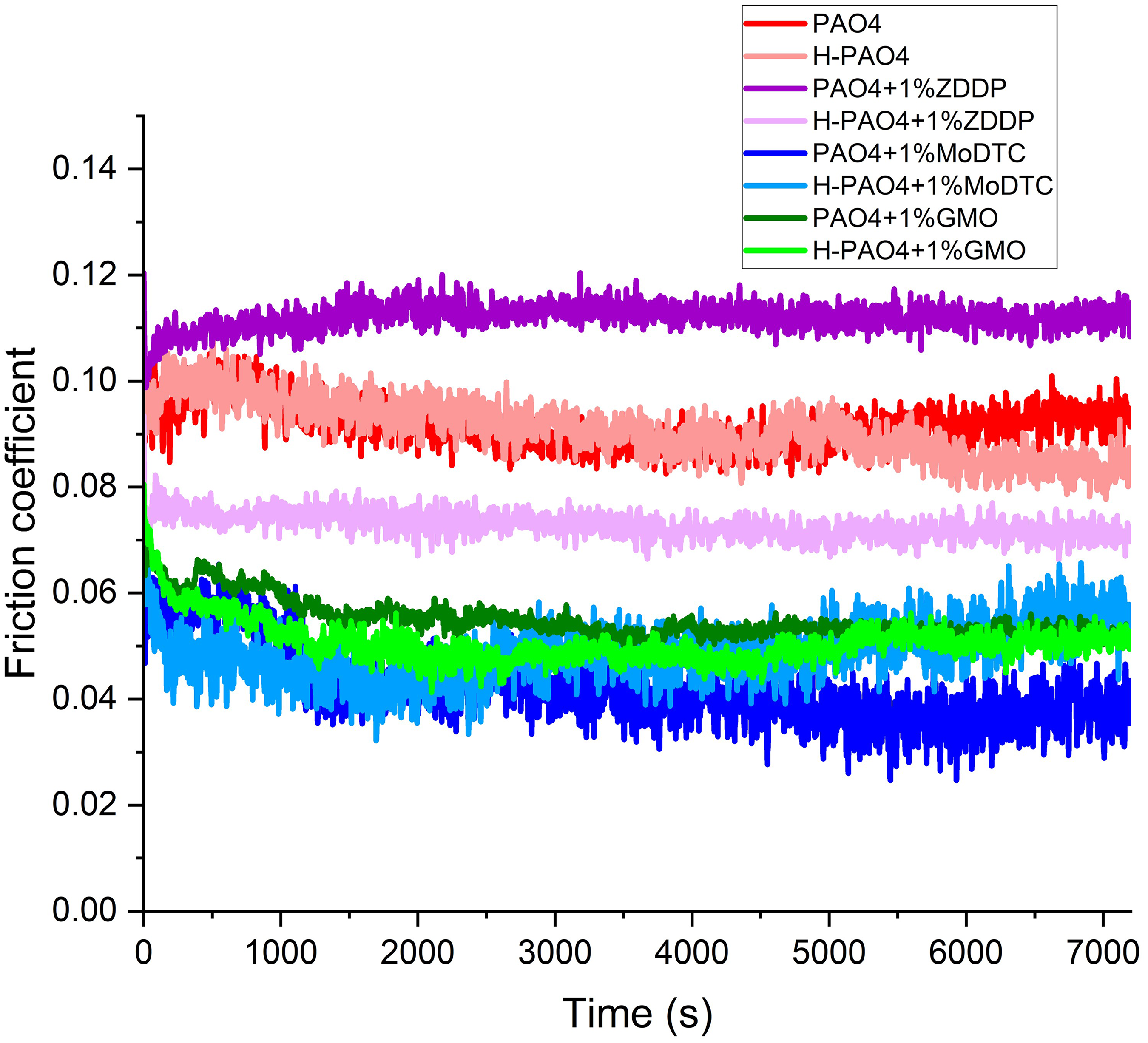
Coefficient of friction for tested lubricants at ambient and hydrogen conditions.
The addition of the ZDDP antiwear additive in the base oil results in stability in friction under both tested conditions, as shown in Figure 2. Notably, a significant reduction in the friction coefficient was observed in the hydrogen atmosphere compared to ambient conditions for the same formulated oil. Figure 3 shows the average of the friction coefficient for the last 10 min of the test. At ambient, it is expected that in the presence of the ZDDP additive, the formed tribofilm contributes to an increase in the friction coefficient, as shown in Figure 3. Previous studies25,26 have confirmed the relationship between ZDDP tribofilm growth and the increase in friction. In a hydrogen environment, lower average friction was observed in Figure 3, which is associated with the suppression of ZDDP tribofilm formation in hydrogen conditions.
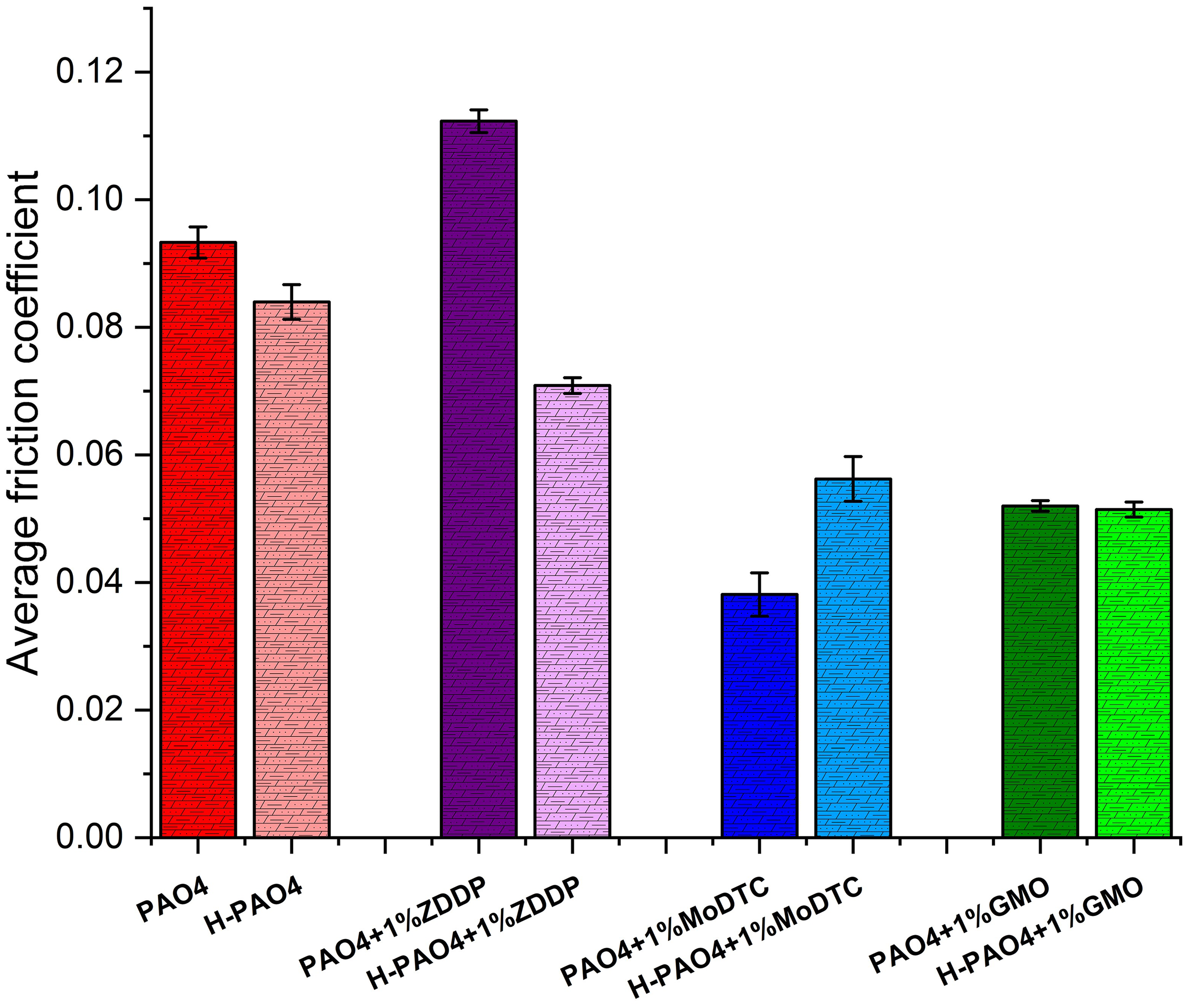
The average friction coefficient for the last 10 min of the tribological test.
In contrast, the friction performance in the presence of MoDTC additive (PAO + 1 wt% MoDTC) was highly responsive to the test conditions, as shown in Figure 2. At ambient conditions, the positive effect of the MoS2 sheets on the friction behaviour is well-established. Initially, the gradual reduction of friction during the first ≈15 min was attributed to the formation of MoS2. This was followed by a stabilisation in friction until the end of the test, once the MoDTC tribofilm had developed. Under hydrogen, the same lubricant sample initially performed a decreased friction coefficient, followed by a progressive increase in friction through the tribological test. This indicates that the formation of MoDTC tribofilm is less stable in a hydrogen environment, resulting in higher friction. This can be explained by either the suppression of the MoDTC decomposition process that forms MoS2 or by other third-party materials generated on the surface, causing the removal of tribofilm, leading to MoS2 instability over the test duration. The average friction coefficient (Figure 3) shows an increase in overall friction under hydrogen compared to ambient conditions.
The PAO+1wt% GMO sample exhibits no significant change in friction behaviour in both environments, as shown in Figure 2 and 3. This suggests that the carbon-based tribofilm formed in the presence of the GMO additive is less sensitive to hydrogen gas compared to ZDDP and MoDTC tribofilms. However, further chemical and physical analysis of the surface will support the results analysis.
Overall, the friction results reveal that pressurised hydrogen has a significant impact on friction performance for lubricants containing ZDDP or MoDTC additives. However, it had a limited effect on the GMO additive. The ZDDP additive shows an improvement in the friction coefficient in hydrogen conditions. In contrast, the MoDTC additive in hydrogen demonstrates a negative impact on friction, resulting in higher friction. Whereas the GMO sample appears unaffected in a hydrogen atmosphere. These differences in the results are attributed to tribofilm chemistries, the formation of third-body particles, and/or the additives’ adsorption on the surface.
Hydrogen effect on wear
Wear volume loss was measured on the ball for the tested lubricants in both ambient and hydrogen environments. The results are presented in Figure 4. Wear results demonstrate a significant increase in wear for all lubricant formulations in hydrogen compared to the ambient environment. The results show that the rubbing surfaces have been strongly influenced and degraded under hydrogen conditions.
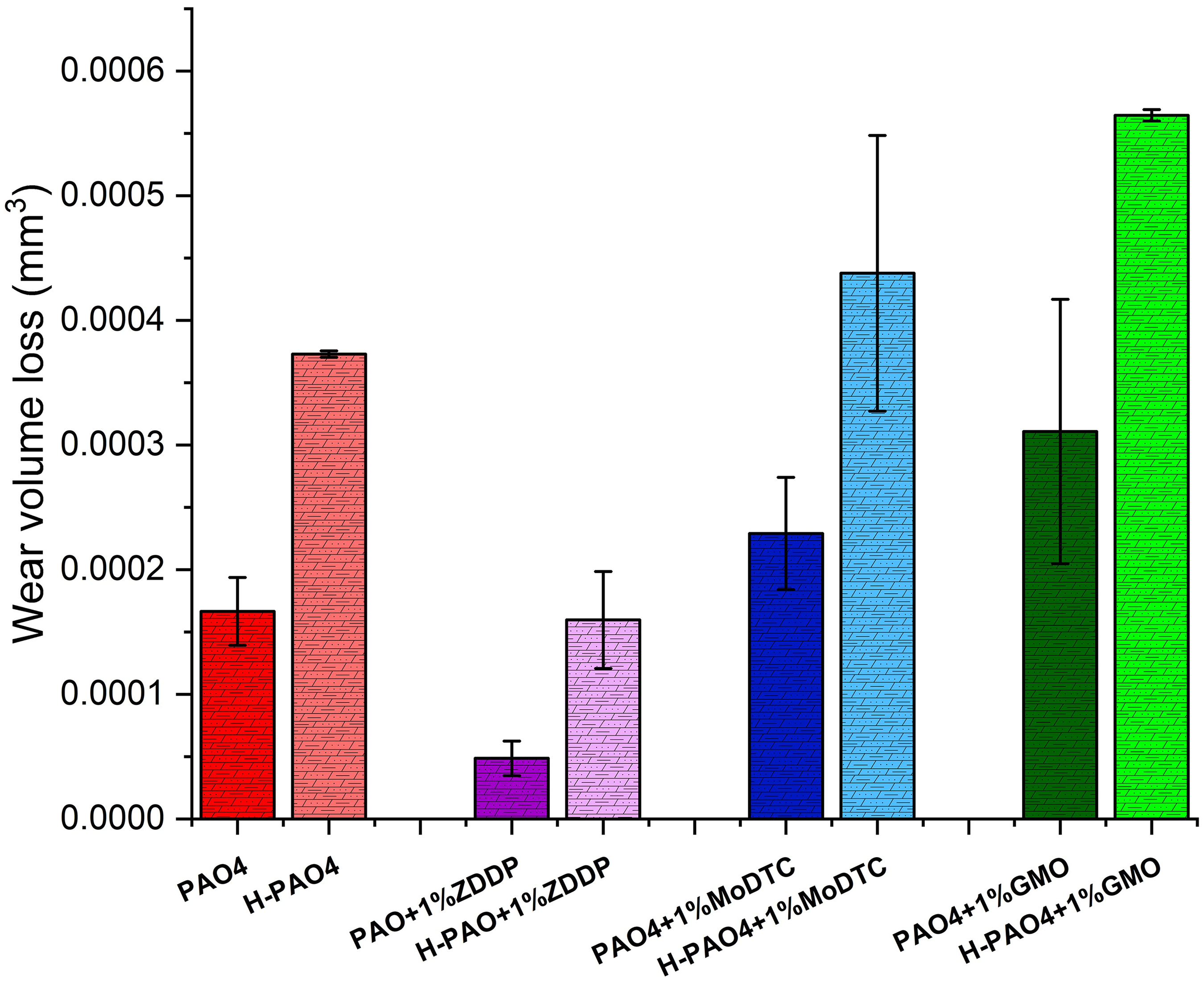
Wear analysis for the tested lubricants at ambient and hydrogen conditions.
For the PAO lubricant, the observed increase in wear is driven by two main factors: a) hydrogen embrittlement through the surface, reducing the surface toughness by generating initial cracking, and b) lubricant degradation during the sliding test and under pressurised hydrogen, which produces by-product particles that cause material removal from the surface. The presence of ZDDP (PAO + 1 wt% ZDDP) improves wear performance compared to the PAO sample due to the formation of ZDDP tribofilm, as reported in Figure 4. However, the PAO + 1 wt% ZDDP sample performs higher wear at hydrogen compared to the same lubricant running at ambient conditions. Also, it is worth noting that the friction coefficient was decreased in hydrogen for the same lubricant formulation, as shown in Figure 2. The possible explanation is that the hydrogen (oxygen-free) conditions affect the formation and growth of ZDDP tribofilm, causing higher wear and reduced friction. The correlation between the ZDDP tribofilm and its impact on friction reduction has been reported before.25,26
Similarly, for the MoDTC (PAO + 1 wt% MoDTC) lubricant, Figure 4 shows higher wear in hydrogen atmosphere. At ambient conditions, it has been reported before that the formation of MoS2 sheets from MoDTC is responsible for lower friction and stabilisation throughout the test period (Figure 2), effectively protecting the rubbing surfaces and reducing wear. 18 However, in hydrogen atmosphere, friction was observed to increase, and correspondingly higher wear was noted (Figure 4). This is due to the instability of the MoDTC tribofilm in a hydrogen atmosphere. The GMO lubricant sample displayed no differences in friction results in both environments (Figure 2), despite higher wear being observed Figure 4. This suggests that GMO layers in hydrogen, which are responsible for reducing friction, are relatively weak and insufficient in protecting the surface, increasing wear.
The findings highlight the need to investigate the surface chemistry, as it is critical to determine lubricant performance in a hydrogen atmosphere. The additive selection for a lubricant that operates under hydrogen conditions demands achieving a balance between low friction and wear protection.
Post-test surface analysis
Surface analysis for ball and disc samples after tribological tests was carried out using an optical microscope and SEM. The microscope images of the tested balls in both environments are shown in Figure 5
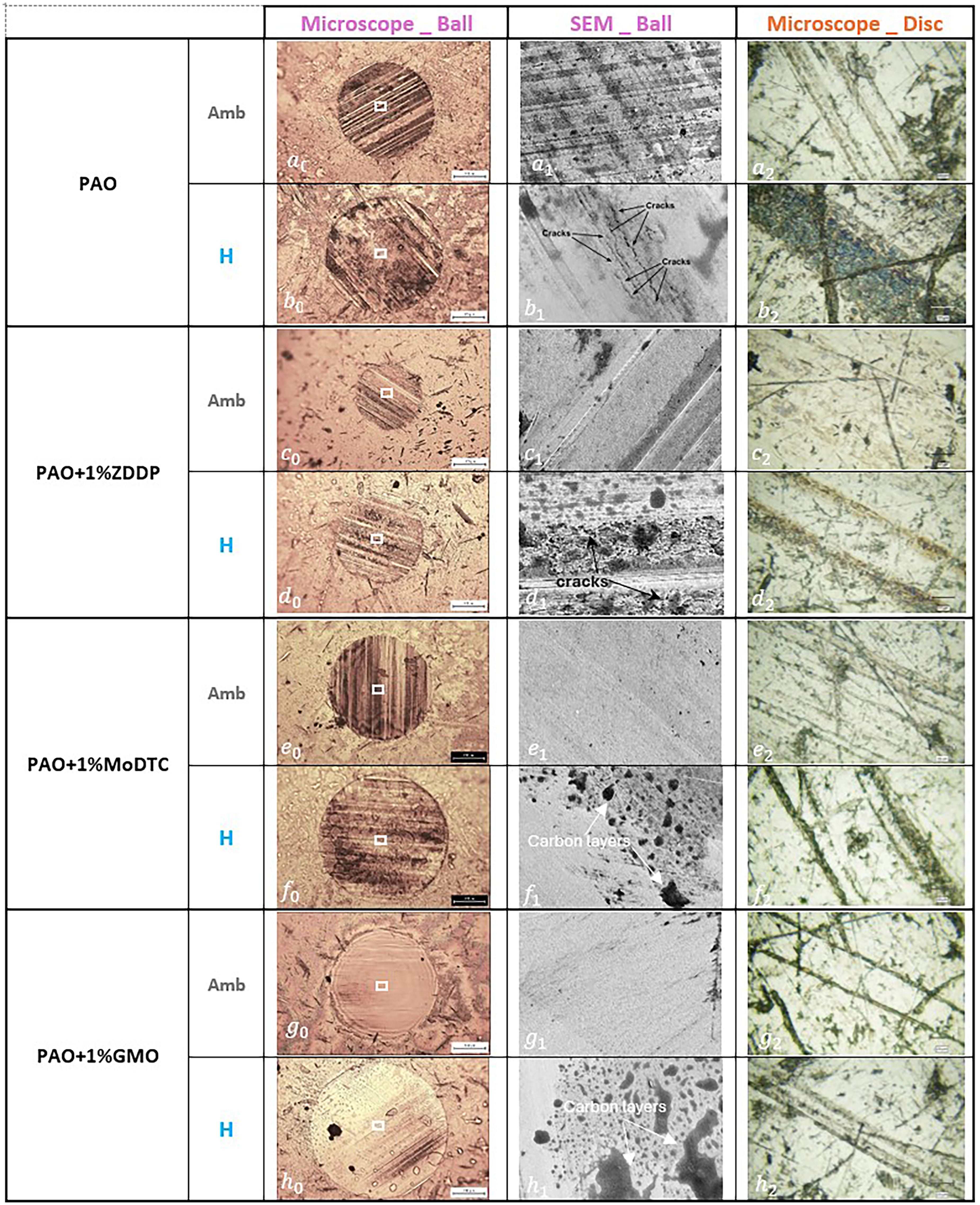
Microscope and SEM images for tested lubricant samples in ambient and hydrogen environments.
Moreover, carbon-based layers are detected on the ball surfaces for all tested lubricants in a hydrogen environment, as shown in Figure 5
The subsequent section presents an investigation into the chemical analysis of wear scars on the ball and disc under both environments, providing detailed information about the presence of degraded materials and chemical compositions of tribofilms.
Chemical analysis of disc surfaces for all tested lubricants was conducted using Raman Spectroscopy and the results are reported in Figure 6. The Raman spectrum of the PAO sample under ambient conditions shows that no distinct peaks were detected in the wear track. However, the spectrum for the surface of the same tested lubricant under hydrogen conditions reveals the formation of amorphous carbon with peaks at 1360 and 1570 cm−1.28,29 The peak at 670 cm−1 is assigned to iron oxides.30,31 The peak at ≈980 cm−1 is associated with hydrogenated amorphous carbon (a-C-H).28,29
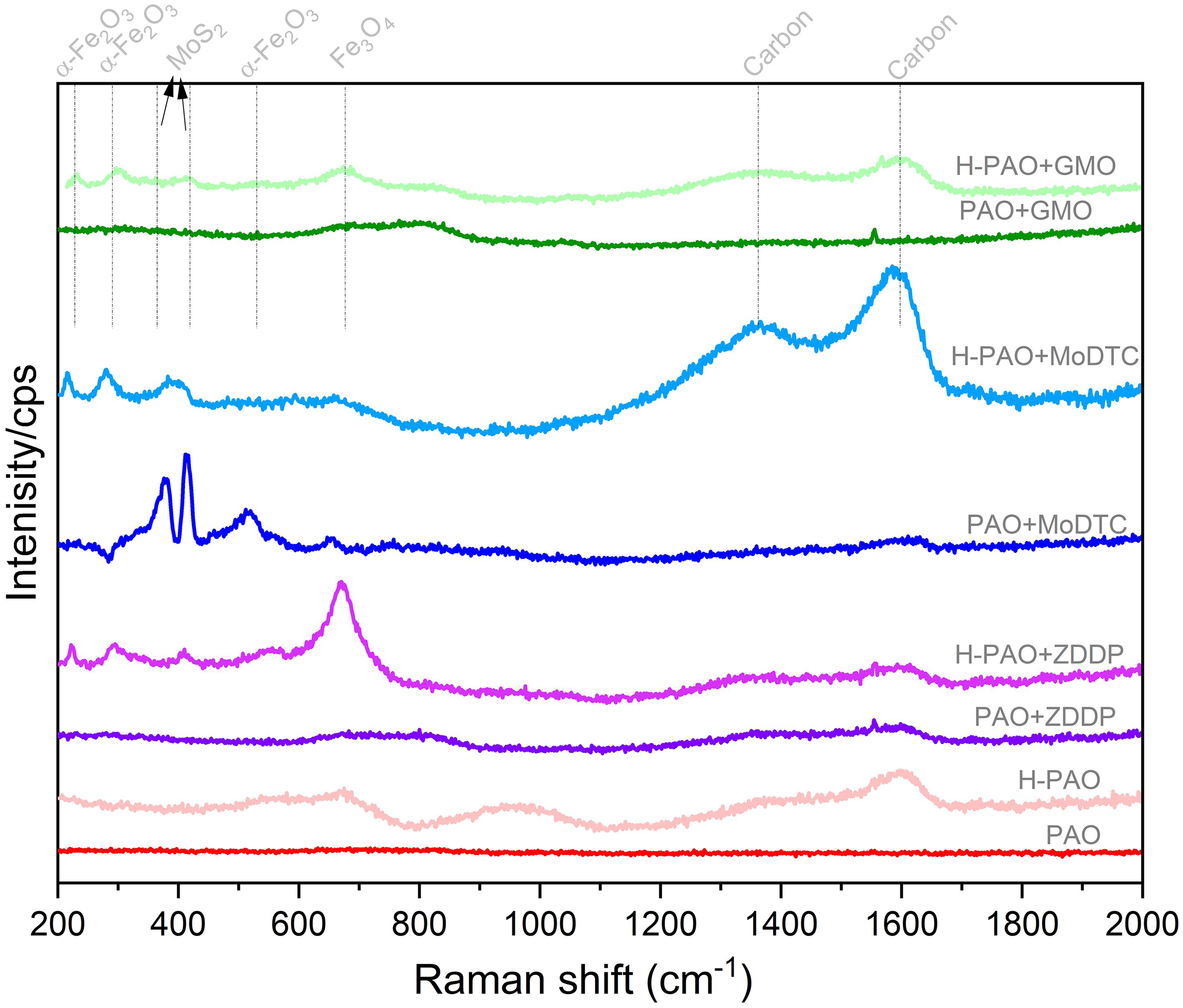
Chemical analysis of the wear track of the disc surface obtained by Raman spectroscopy.
For the H-PAO + 1 wt% ZDDP sample in the hydrogen environment, the carbon peaks at 1360 and 1570 cm−1 are detected. 28 While the following peaks 225, 290, 410, and 670 cm−1 corresponded to iron oxides.30,31 However, for ZDDP additives, there are no distinct peaks when running a similar lubricant at ambient conditions. The effect of hydrogen on the formation of MoS2 tribofilm is observed at peaks at 380 and 410 cm−1.18,32 There is a significant reduction in the formation of MoS2. While iron oxides (at peaks of 225, 290, 410 and 540 cm−1) and amorphous carbon (at peaks of 1360 and 1570 cm−1) are detected in the H-PAO + 1 wt% MoDTC spectrum. A similar impact in hydrogen conditions is obtained for the PAO+1 wt% GMO lubricant sample; the presence of carbon (1360 and 1570 cm-1) and iron oxides (225, 290, 410, and 670 cm-1) is highlighted in the spectra in Figure 6 under hydrogen conditions. In the presence of ZDDP or GMO additives, the spectral features observed around 400–410 cm-1 are attributed to iron oxide species rather than to MoS₂ formation.
To confirm the lack of formation of MoS2 tribofilm from MoDTC, multiple Raman Spectroscopy point analyses have been performed over an area of 20 × 10 um, generating MoS2 distribution maps. The MoS2 tribofilm mapping was performed on the PAO + 1 wt% MoDTC sample under ambient and hydrogen environments. Figure 7(a) and (b) present Raman intensity maps of MoS₂ across the scanned wear-track areas under ambient and hydrogen conditions, respectively. The colour scale shown alongside Figure 7(a) and (b) represent the spatial distribution of MoS₂ peak intensity within the mapped regions. The corresponding histograms of MoS₂ intensity, extracted from the mapped areas, are presented in Figure 7a1 and b1. These histograms provide a more quantitative comparison of the MoS₂ distribution on the wear track, allowing assessment of the influence of the hydrogen environment on the formation and evolution of the MoDTC-derived tribofilm.
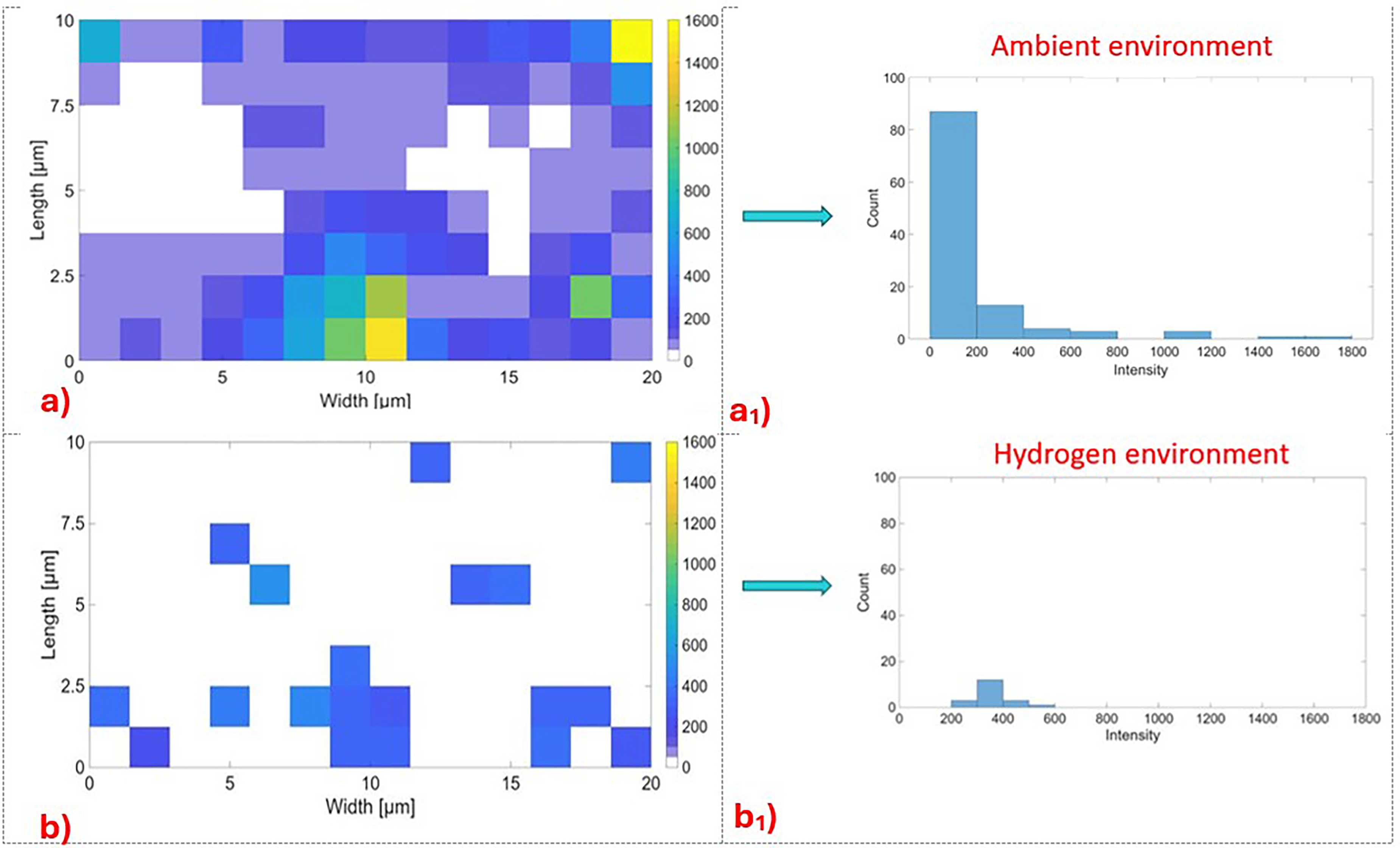
The mapping of MoS2 tribofilm using Raman spectroscopy for PAO + 1 wt% MoDTC lubricant tested in ambient conditions (a, a1) and hydrogen environment (b, b1).
Under the ambient conditions, the MoS2 sheets formed substantially on the wear track and almost covered the scanned area, as shown in Figure 7(a). The corresponding intensity of the MoS2 peaks is presented in Figure 7a1. In contrast, in a hydrogen atmosphere, the distribution of MoS2 sheets in the tribofilm was significantly reduced, as depicted in Figure 7(b). The results demonstrate only a small coverage of MoS2 in the mapped area. The peak intensity of MoS2 peaks in hydrogen is less compared to the MoS2 peaks for a similar sample at ambient conditions (Figure 7a1 and b1). The lack of MoS2 formation on the wear scar explains the higher friction coefficient in the hydrogen environment, shown in Figure 2. The relation between the MoS2 distribution in the tribofilm and its effect on the tribological performance has been reported in.33,34
Figure 8(a) and (b) demonstrate the elemental composition of the wear scar of balls for PAO and PAO + 1%wt ZDDP samples under both running conditions using the SEM-EDX technique. In the tested sample of PAO in hydrogen conditions, a notable increase in carbon content is observed, accompanied by a reduction in oxygen concentration (Figure 8(a)). This means carbon-rich layers replaced the oxygen-containing species on the scanned surface under hydrogen conditions. The hydrogen conditions promote the formation of carbonaceous layers inside the wear track (Figure 8(a)). The formation of carbonaceous material is the main reason behind the increase in wear and decrease in friction.
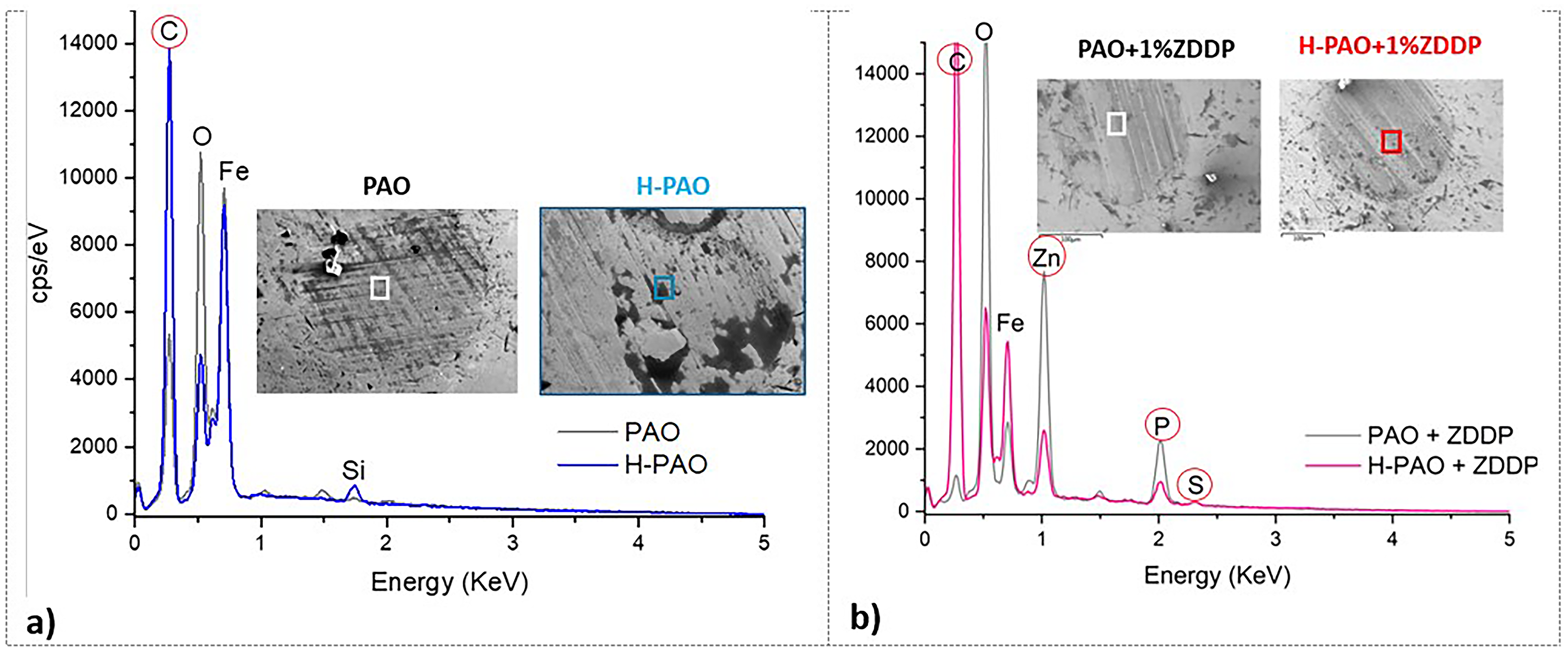
Chemical analysis of wear scar of pin surfaces using SEM-EDX for PAO sample (a) and PAO + 1% ZDDP sample (b) at both ambient and hydrogen conditions.
In the case of ZDDP additives, pressurised hydrogen extensively alters the elemental concentration and composition of ZDDP tribofilm. The main elements of ZDDP tribofilm, including P, S and Zn, were significantly decreased in a hydrogen environment compared to ambient conditions. Furthermore, under a hydrogen atmosphere, carbonaceous layers characterised by a significantly elevated carbon concentration were more prominently observed on the wear scars of the worn surfaces (Figure 8(b)). This explains why lower friction was observed for PAO + 1%wt ZDDP in hydrogen compared to the same tested sample at ambient conditions (Figure 2 ). A higher shear rate is correlated with the presence of ZDDP tribofilm on the rubbing surfaces.25,26 The lower friction of the PAO + 1 wt% ZDDP sample in hydrogen is due to two factors: the formation of carbonaceous layers and the removal of the ZDDP tribofilm. This also results in increased wear due to the loss of the protective ZDDP tribofilm.
Discussion
In this study, chemical and physical analyses of the sample surfaces confirmed the formation of carbonaceous films under hydrogen-rich conditions for all formulated lubricants, as illustrated in Figure 5–8. The presence of these carbonaceous films significantly influences tribological performance by increasing friction and accelerating wear, as shown in Figure 3 and 4.
The mechanism underlying the formation of carbon-based layers and tribofilm during tribological testing in a hydrogen environment, compared to ambient conditions, are depicted in Figure 9. Under ambient conditions, hydrocarbon molecules originating from the lubricants undergo mechanochemical reactions, generating hydrocarbyl radicals. These radicals readily react with atmospheric oxygen to form hydroperoxyl radicals (Figure 9(a)). Conversely, in a hydrogen environment—where oxygen is not available —hydroperoxyl radicals tend to combine and, under sliding actions, condense on the surface, resulting in the formation of carbonaceous films (Figure 9(b)).
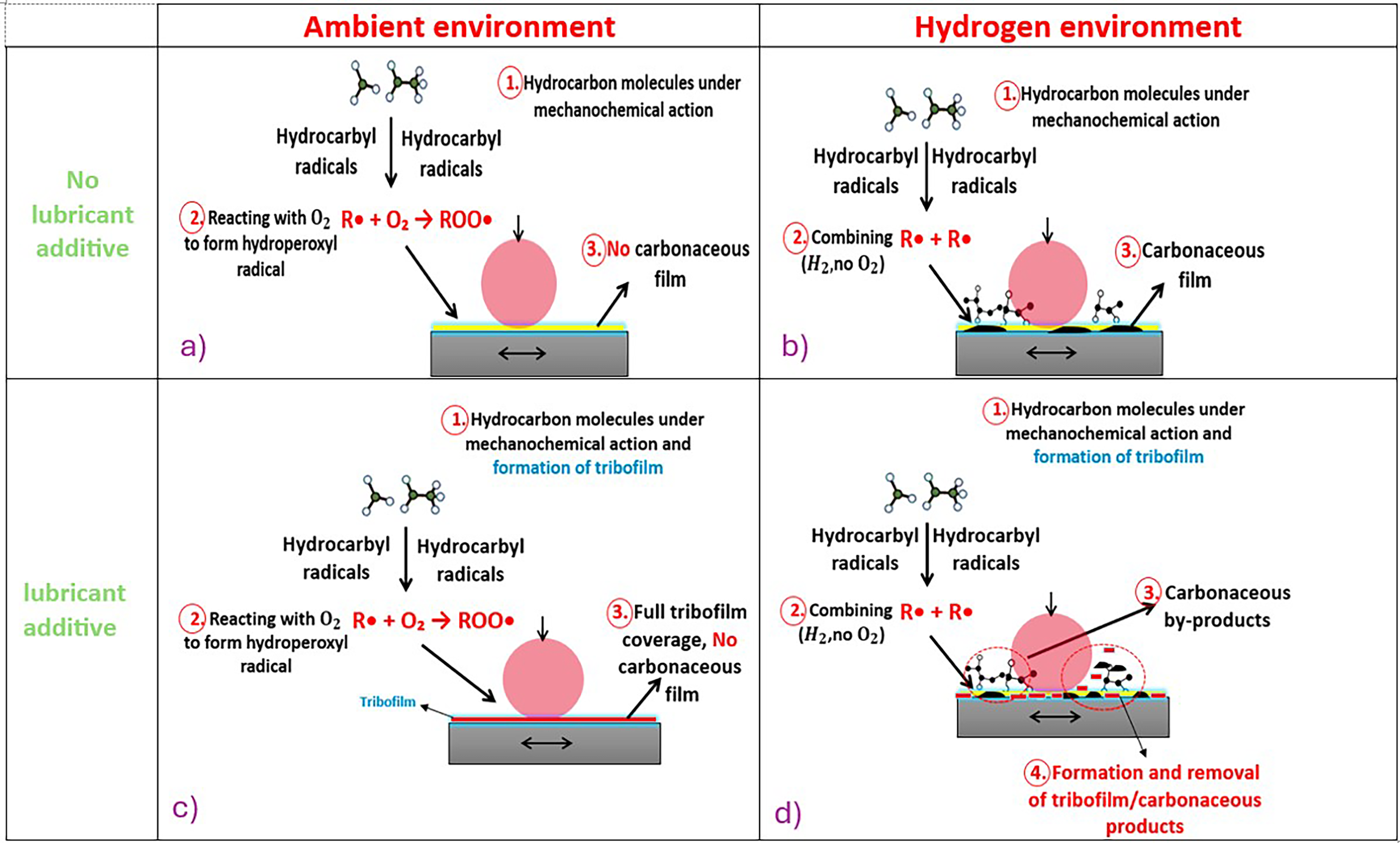
Schematic images of the formation of the carbonaceous by-products and their effect on tribofilm on the worn surfaces in hydrogen (b,d) compared to running the same lubricant at ambient conditions (a,c).
The findings are consistent with previous research regarding surface degradation and the formation of carbonaceous films, which influence tribological performance. Jie et al. 8 observed the development of a carbonaceous film in the presence of hydrogen following tribological testing. They attributed this to hydrocarbyl free radicals generated through mechanochemical processes during the test. Their study also highlighted that oxygen concentration in a hydrogen-rich environment plays a critical role in the formation of carbonaceous layers, with the resulting carbon products contributing to increased wear. Moreover, the tribological performance of engine oil was investigated in a hydrogen-assisted diesel engine by Newadkar et al.. 5 The results demonstrated a change in physical and chemical properties of the lubricant, which impacted the frictional performance. The presence of ZDDP in the lubricant resulted in superior wear protection (Figure 9(c)) compared to other additives under hydrogen-rich conditions (Figure 4). This behaviour is attributed to the dynamic interplay between the formation and removal of ZDDP-derived tribofilms, influenced by carbonaceous by-products generated from the oil under hydrogen conditions (Figure 9(d)). Recent work by Eryu et al. 35 investigated the performance of primary and secondary ZDDP anti-wear additives under a hydrogen atmosphere. Their results revealed distinct distributions of sulfur and zinc elements on the worn surfaces in a hydrogen environment. The authors hypothesised that hydrogen gas promotes sulfur activation for secondary ZDDP compared to primary ZDDP, thereby influencing the formation and molecular structure of the ZDDP-derived tribofilm. The findings support the notion that a hydrogen atmosphere can alter tribochemical mechanisms and tribofilm evolution, potentially leading to less wear when secondary ZDDP additives are employed. However, the ZDDP investigated in this study was a primary ZDDP additive, which is associated with less favourable wear performance compared to secondary ZDDP formulations under hydrogen conditions. However, under ambient (oxygen-rich) conditions, which promote tribofilm formation, oxygen acts as an additional factor influencing the chemical reactivity of lubricant additives with the contacting surfaces. 8 Zhang et al. 8 found that more than 5% of oxygen in the atmosphere enhances the reactivity of oxygen molecules with peroxy radicals, thereby initiating the hydroperoxyl radical cycle, which reduces the likelihood of forming carbonaceous tribofilm. Comparable trends were observed for the MoDTC additive in relation to MoDTC tribofilm, which increased the friction (Figure 3). Although friction remained unchanged for GMO additives under hydrogen conditions compared to ambient conditions, this suggests that the GMO-derived tribofilm exhibits chemical features similar to those of carbonaceous products formed as a result of oil degradation under hydrogen conditions. However, the tribological performance of the PAO + GMO samples remains different from that of the PAO base oil.
Conclusions
This study explored the tribological performance of conventional lubricants under hydrogen-rich conditions. Four lubricant formulations, including PAO, PAO + ZDDP, PAO + MoDTC, and PAO + GMO, were evaluated to understand how hydrogen conditions influence friction behaviour, tribofilm formation, and surface degradation. The key conclusions are as follows:
Hydrogen conditions and a lack of oxygen gas significantly affect friction and wear, with their influence varying depending on the additive package in the base oil. In the absence of additives, the base oil exhibited a marked increase in wear, attributed to the formation of carbonaceous films and iron oxides on the contact surfaces. With antiwear additives such as ZDDP, hydrogen altered the tribofilm formation, leading to increased wear but reduced friction. For friction modifiers such as MoDTC and GMO, the tribofilm mapping of MoDTC on the contact surfaces was reduced under hydrogen conditions, leading to increased friction and wear. In contrast, GMO showed no significant change in friction but resulted in a substantial increase in wear when exposed to hydrogen. Overall, pressurised hydrogen degraded lubricants performance by promoting the formation of carbonaceous films and iron oxides resulting from lubricant breakdown.
Limitations of the study
In this study, the primary focus is to investigate the effect of a hydrogen-rich environment on the tribological performance of different lubricants, including tribofilm formation and surface chemistry. Under boundary lubrication conditions, the maximum contact pressure resulting from the applied load was calculated using Hertzian contact analysis. The calculated maximum contact pressure (1100 MPa) exceeds the yield strength (∼200 MPa) of the steel substrates, suggesting the occurrence of local plastic deformation at the contact and potentially within subsurface regions.
The influence of substrate plastic deformation and changes in mechanical properties under hydrogen exposure was not the primary focus of this study; however, such effects may influence tribofilm formation and surface chemistry. Future work may therefore focus on the impact of hydrogen-rich environments on the mechanical properties of substrates, including subsurface plastic deformation and hydrogen diffusion. This can be complemented by coupled experimental and modelling approaches to investigate stress-assisted hydrogen diffusion under varying temperature and hydrogen pressure conditions.
Footnotes
Acknowledgements
The authors would like to thank the Slovenian Research Agency ARIS under the Research Core Funding Programme No. P2–0231 and Marie-Sklodowska Curie COFUND - Seal of Excellence No. 5100–237/2023–7 (5.2.2024) for funding this project.

Transparency statement
This paper used the Microsoft Copilot in some portions of the manuscript, which were applied only to improve writing and language quality. This was conducted in accordance with the enterprise data protection policy at the University of Leeds.
Funding
The authors disclosed receipt of the following financial support for the research, authorship, and/or publication of this article: This work was supported by the Slovenian Research Agency ARIS, Marie-Sklodowska Curie COFUND - Seal of Excellence, (grant number P2-0231, 5100-237/2023-7 (5.2.2024) ).
Declaration of conflicting interests
The authors declared no potential conflicts of interest with respect to the research, authorship, and/or publication of this article.
Declaration of data availability
The data are available when requested.