




Abstract
In this work, a full numerical solution to the cam–roller follower-lubricated contact is provided. The general framework of this model is based on a model describing the kinematics, a finite length line contact isothermal-EHL model for the cam–roller contact and a semi-analytical lubrication model for the roller–pin bearing. These models are interlinked via an improved roller–pin friction model. For the numerical study, a cam–roller follower pair, as part of the fuel injection system in Diesel engines, was analyzed. The results, including the evolution of power losses, minimum film thickness and maximum pressures, are compared with analytical solutions corresponding to infinite line contact models. The main findings of this work are that for accurate prediction of crucial performance indicators such as minimum film thickness, maximum pressure and power losses a finite length line contact analysis is necessary due to non-typical EHL characteristics of the pressure and film thickness distributions. Furthermore, due to the high contact forces associated with cam–roller pairs as part of fuel injection units, rolling friction is the dominant power loss contributor as roller slippage appears to be negligible. Finally, the influence of the different roller axial surface profiles on minimum film thickness, maximum pressure and power loss is shown to be significant. In fact, due to larger contact area, the maximum pressure can be reduced and the minimum film thickness can be increased significantly, however, at the cost of higher power losses.
Introduction
The design of the injection cams in heavy-duty diesel engines is from a tribological perspective one the most challenging technical tasks as these components are subjected to instantaneous heavily loaded pressures from the fuel injector. Lubrication is of significant importance to reduce friction and wear. Apart from the high fluctuating loads, varying radius of curvature and lubricant entrainment speed make the tribological design even more challenging.
The preference of roller followers over sliding followers is more often made by engine manufactures due to reduced friction losses and occurrence of wear. 1 As reported by Lee and Patterson, 2 the problem of wear on the interacting surfaces still remains if slip occurs. Furthermore, accurate estimation of friction losses depends to a large extend on the sliding velocity. In contrast to a cam and sliding follower, the slide-to-roll ratio (SRR) for the cam and roller follower is additionally also dependent on the lubricant rheology and friction at the roller–pin interface. Most previous studies assumed pure rolling conditions,3–5 i.e. the cam and roller surface speed are assumed to be equal. One may only find a few published studies on the lubrication analysis of the cam and roller follower contact that considers the possibility of roller slippage along the cam surface. Chiu 6 and later Ji and Taylor 7 developed a theoretical roller friction model from which they concluded that slippage exists, especially at high cam rotational speeds due to large inertia forces. The occurrence of roller slippage has also been proven experimentally. 8
Axial surface profiling of the rollers is often utilized to minimize stress concentrations that are generated at the extremities of the contact. It has been proven both theoretically and experimentally that the maximum pressure and minimum film thickness occur near the regions where axial profiling starts.9–11 Disregarding axial surface profiling, as assumed in traditional infinite line contact models, may lead to inaccurate estimation of crucial lubrication performance indicators such as the minimum film thickness and maximum pressure. Consequently, frictional losses may also deviate significantly from reality as these are dependent on the film thickness and pressure distribution.
Finite line contact models would therefore be more appropriate to describe the EHL behavior of the contact. Finite line contact problems of cam and flat-faced follower conjunctions have been studied in the past.12,13 Shirzadegan et al. 14 studied the finite line contact problem of a cam–roller follower. However, roller slippage was disregarded in their analysis and no results concerning the working frictional losses at the lubricated interfaces were presented. Turtorro et al. 15 also presented a cam–roller lubrication model which allows for roller slippage; however, their solution for the lubricant film thickness is obtained using analytical expressions rather than solving the Reynolds equations.
From the previously mentioned studies, it may be concluded that up till date, a limited number of studies concerning the lubrication analysis of cam–roller followers based on a full numerical solution, i.e. taking into account non-typical EHL characteristics of the finite length line contact and possible roller slippage, have been presented. However, the approach followed in the aforementioned studies can be applied to perform more in-depth investigations into the frictional behavior of cam–roller follower mechanisms.
Therefore, in this paper, an FEM-based lubrication model, applicable to any cam–roller follower system, is developed. In the present study, we assume that thermal effects are insignificant, and therefore isothermal conditions are assumed. The finite line contact EHL model is similar to the one presented in Shirzadegan et al., 14 which efficiently takes care of roller axial surface profiling. An improved roller friction model, to determine roller slippage, is presented. In contrast to previous models, the presented roller friction model also takes into account the film thickness distribution in the roller–pin bearing. For the numerical analysis, a cam–roller follower unit as part of the fuel injection equipment of a diesel engine was considered. The results analyzed, are the evolution of the minimum film thickness, maximum pressure, individual frictional losses and roller slippage along the cam surface. Furthermore, the influence of different roller axial surface profiles on the aforementioned variables is analyzed.
Mathematical model
The type of configuration considered in this work is that of a cam and reciprocating roller follower, in which the roller is free to rotate due to traction enforced by the cam. The roller is supported by a “low-friction” hydrodynamic bearing. The considered configuration, with an emphasis on the working frictional forces at the lubricated interfaces, is presented in Figure 1. The lubricated interfaces in the configuration are separately defined as cam–roller interface and roller–pin interface for the sake of distinctness.
Cam and roller follower configuration with an emphasis on frictional forces acting at the cam–roller and roller–pin interface.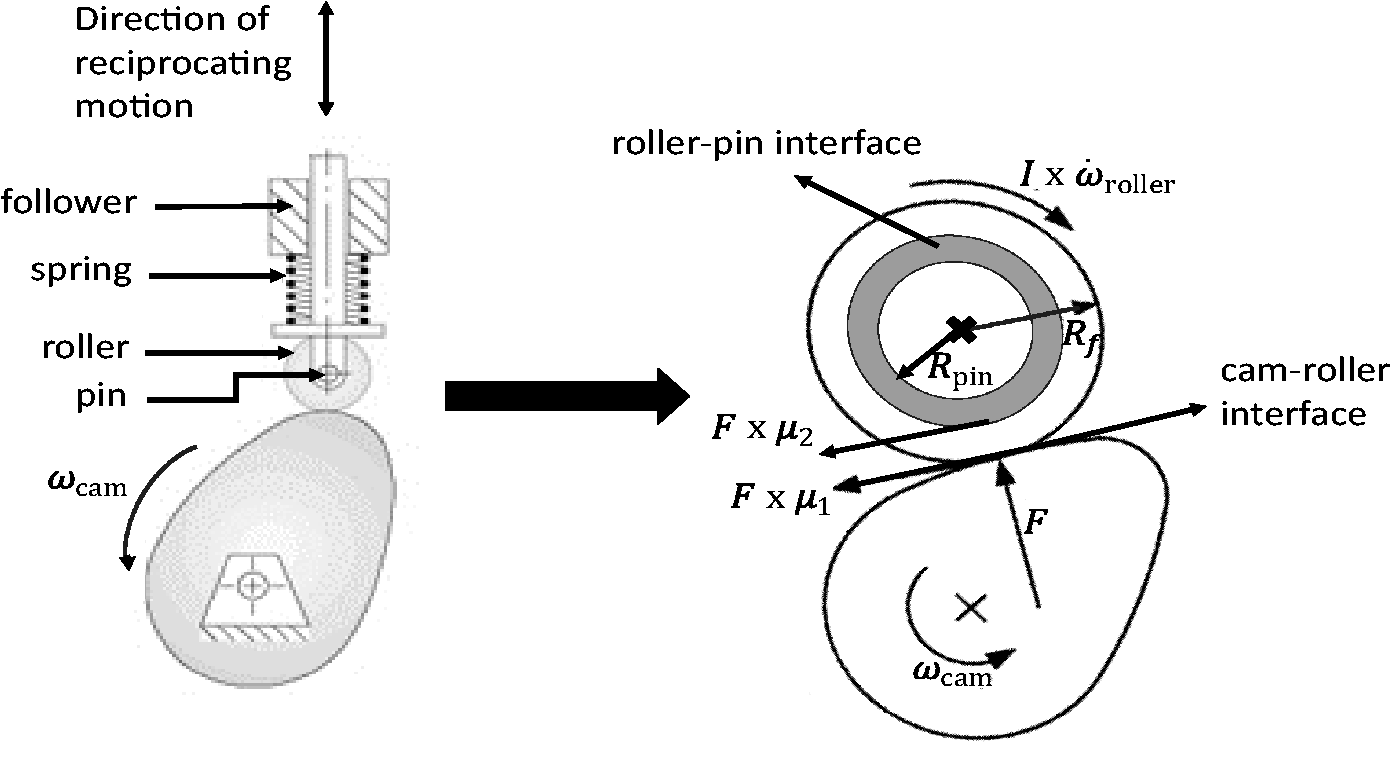
In the first part of this section, a kinematic analysis for the considered configuration is presented. The kinematic analysis provides input, in terms of reduced radius of curvature, entrainment velocity and normal contact force variations that enters the EHL calculations. The second part presents the governing EHL equations to describe the tribological behavior in the cam–roller contact. The third part provides details concerning the individual evaluation of frictional losses, due to hydrodynamic rolling and sliding at cam–roller and roller–pin interfaces. Finally, the last part of this section treats the roller slippage calculation.
Kinematic analysis
The kinematic model adopted in this work stems from Matthews and Sadeghi
4
who developed a general procedure to derive the variations in reduced radius of curvature and entrainment velocity for several types of cam–follower configurations. For this reason, only the main equations are presented, and for details the reader is referred to Matthews and Sadeghi.
4
Figure 2 shows the cam and reciprocating follower configuration along with nomenclature, coordinate system and angles. The kinematic analysis of the cam and reciprocating roller follower mechanism requires the lift curve Cam and roller follower configuration with specification of coordinate system and nomenclature.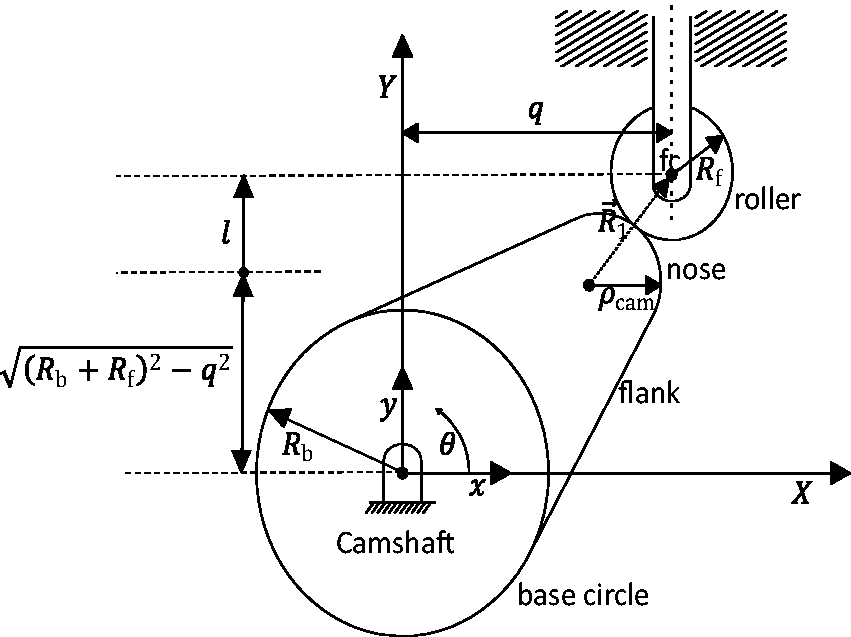
With global position, (X, Y) is meant the center position of cam and follower in a coordinate system where the origin is fixed to the ground. However, commonly a relative coordinate system (x, y), where the coordinate system is fixed to the camshaft, is used to derive the instantaneous radius of curvature. Transformation from the global coordinate system to the relative coordinate system, or vice versa, can be made using


Note that angles are measured positive in counterclockwise direction. As mentioned earlier, the lift curve
The global coordinates of the roller follower center (

Calculation of cam radius of curvature
From mathematics, we know that the radius of curvature ρ at a certain point, that moves along a path in the relative frame (x, y), can be computed as follows

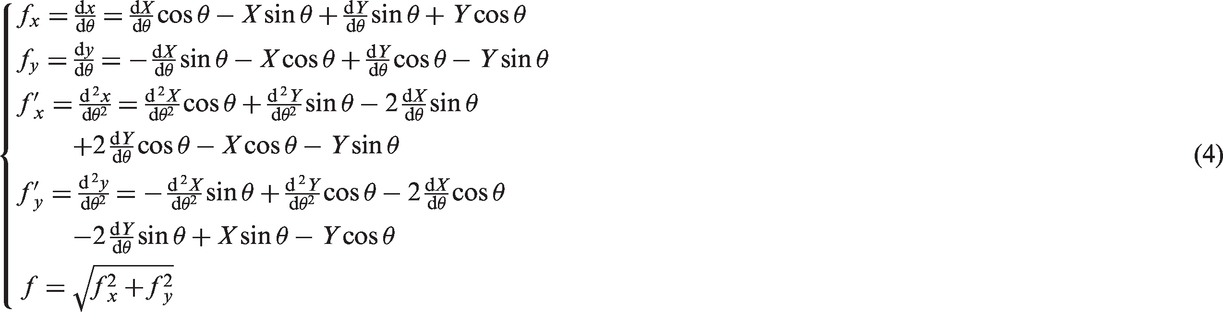
Now, by substituting the expressions for the roller follower center (equation (2)) for the above-defined kinematic coefficients, and then again substituting in the expression for calculation of the radius of curvature, equation (3) gives the instantaneous cam radius of curvature

The equivalent radius of curvature Rx that enters the EHL calculations is then calculated as follows

Calculation of cam surface velocity
The mean entraining velocity of lubricant that enters the EHL calculations is calculated as follows

Vector



The point of contact (

Similar to equation (8), the roller surface speed can be computed as follows

The calculation of the angular velocity of the roller
Calculation of normal contact force
The contact force associated with the cam–follower pair is typically the resultant of inertia forces, caused by moving parts, and the spring force. In the present work, we consider the operating conditions of cam–roller follower pairs in fuel injection pumps (FIP) of heavy-duty diesel engines. These pumps are used to generate high fuel pressures for injection. Therefore, in addition to inertia and spring forces, the injection force acting on the plunger also needs to be considered.
In order to simplify the analysis, a few realistic assumptions are made. These are: (i) the complete tappet including roller, pin, spring, plunger, etc. is considered as a single moving mass, (ii) each individual component is considered as a single lumped mass, (iii) the rotational velocity of the pump is constant and is also not affected by fluctuations of engine strokes, (iv) the moving mass of the spring is assumed to be a third of its mass Zhu and Taylor, 16 (v) the spring stiffness is linear and finally, (vi) there is no offset and/or eccentricity of the cam to the center of the roller.
With these simplifications, the total acting force is computed as follows


For the cam and roller follower configuration, the pressure angle θP is an important design parameter as it limits the steepness of the cam in the design process. The pressure angle is defined as the angle between the direction of axis transmission and direction of motion of the follower. The pressure angle is calculated as follows

The actual acting normal contact force, that enters the EHL calculations, is then computed as follows

Governing EHL equations for cam–roller contact
As mentioned earlier, the EHL model here is similar to that presented by Shirzadegan et al.
14
The model leans on a full-system finite element resolution of the EHL equations. In this work, only the main equations are recalled, and for more details the reader is referred to Shirzadegan et al.
14
All EHL equations are presented in dimensionless form. Hence, the following (dimensionless) variables and parameters are introduced
Equivalent geometry for EHL analysis of the finite line contact problem. Note that the dimensions are exaggerated for the sake of clarity.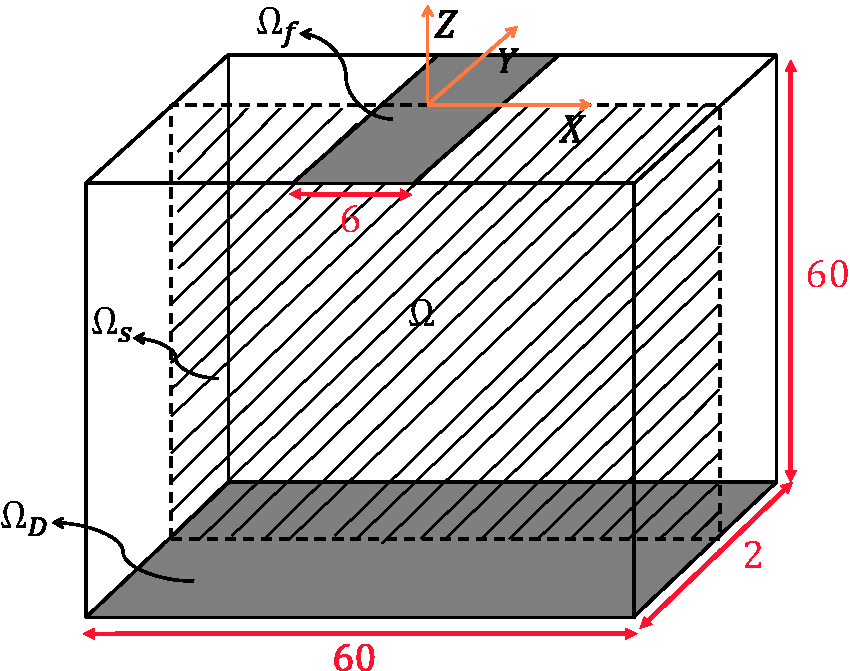
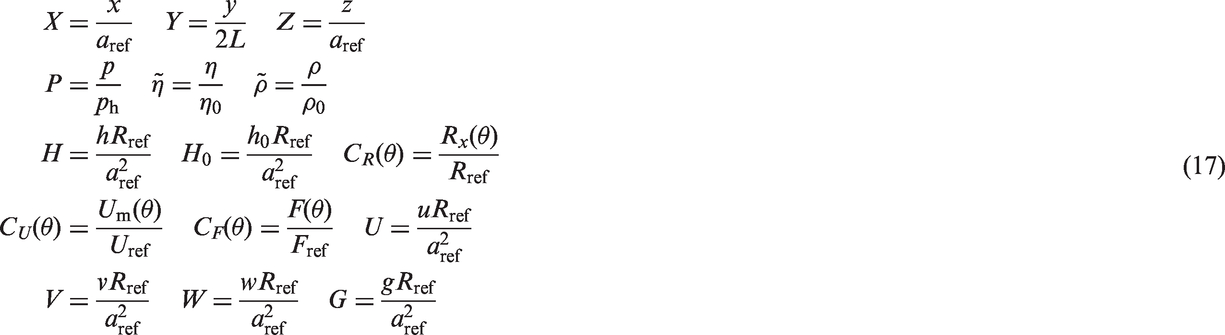

Reynolds equation
The dimensionless Reynolds equation is written as follows

The free boundary cavitation problem, arising at the exit of the lubricated contact, is treated according to the penalty formulation of Wu.
19
In the latter, an auxiliary/penalty term is added to the Reynolds equation to force all negative pressure to zero. It should be mentioned that this term has no influence on regions where
A combination of non-residual and residual-based “artificial diffusion” terms, as detailed in Habchi et al., 20 was added to the weak formulation of equation (19) in order to stabilize the solution at high loads.
Finally, it is assumed that the inlet of the contact is fully flooded and the surface roughness is small enough to be disregarded (smooth surfaces are assumed).
Film thickness expression
The film thickness expression H for a general finite line contact problem may be written as follows


Equation (21) corresponds to Figure 4 in which A represents the degree of crowning curvature, Roller axial profiling utilizing a logarithmic shape with defined design parameters straight length 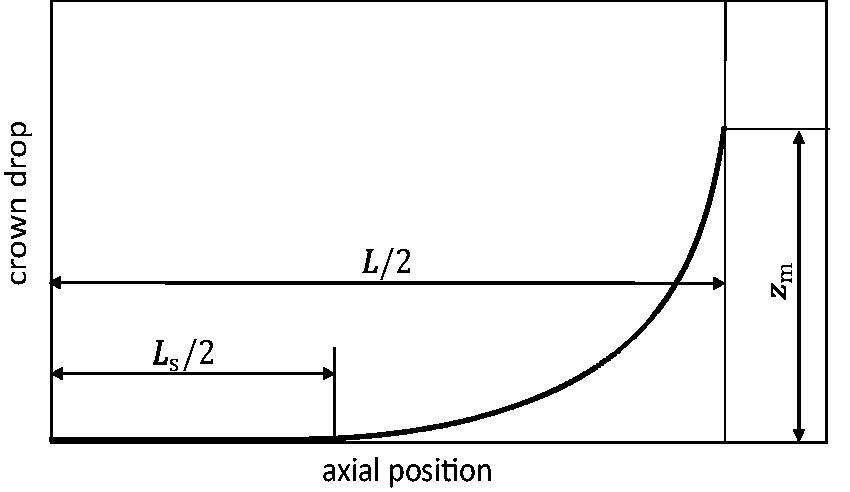
Load balance
H0 is obtained by satisfying the conservation law that states that the applied load should be balanced by the hydrodynamically generated force. In equation form, this can be written as follows

Calculation of elastic deformation
For the elastic deformation calculation, we make use of the equivalent elasticity property as described in Habchi et al.,
20
i.e. two contacting material properties


From equation (24), it follows that the dimensionless (equivalent) Lamé’s coefficients


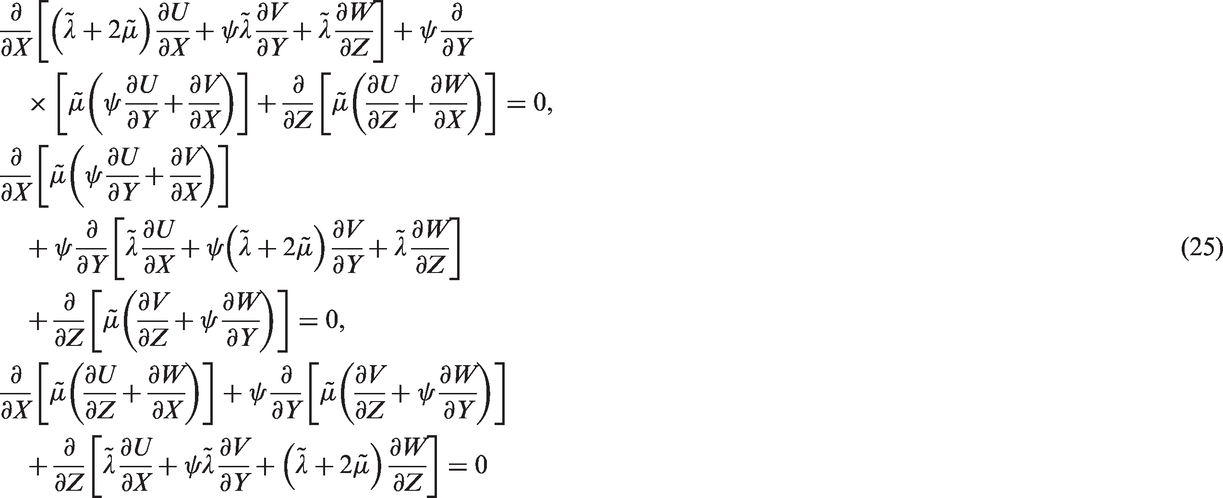
Boundary conditions
In order to obtain a unique solution for the EHL problem, proper boundary conditions (BCs) need to be imposed.
For the Reynolds equation, these are summarized as follows

Note that for the present analysis, the advantage of symmetry of the problem (around symmetrical plane Ω s ) has been taken in order to reduce the computation effort required.
For the elastic model, the BCs are summarized as follows

Friction loss evaluation
The three most important friction-related issues in a cam and roller follower configuration, assuming perfectly smooth surfaces, are: (i) occurrence of roller slippage, resulting in high friction, (ii) the EHL rolling friction that becomes increasingly important for lower degrees of slide-to-roll ratios, and (iii) roller–pin bearing friction. The three aforementioned friction contributors are inter-related.
The total frictional force, acting at the cam–roller interface, consists thus of a sliding and rolling component which are calculated as follows



In the present analysis, the roller–pin is modeled as a full film bearing. High pressures are not expected (due to large contact area), and therefore the viscosity–pressure dependence is neglected here. According to Kushwaha and Rahnejat
12
and Dowson et al.,
22
squeeze film effects are important in cases when the lubricant entrainment velocity profile inhibits points of flow reversal. For the both cam–roller and roller–pin contact, this is not the case (see Figure 7). Hence, for the roller–pin contact squeeze film effects are neglected and quasi-static behavior is assumed instead (see Figure 9(a) which justifies this assumption). The film thickness distribution for the roller bearing with a certain eccentricity e from the central position, can be approximated as follows
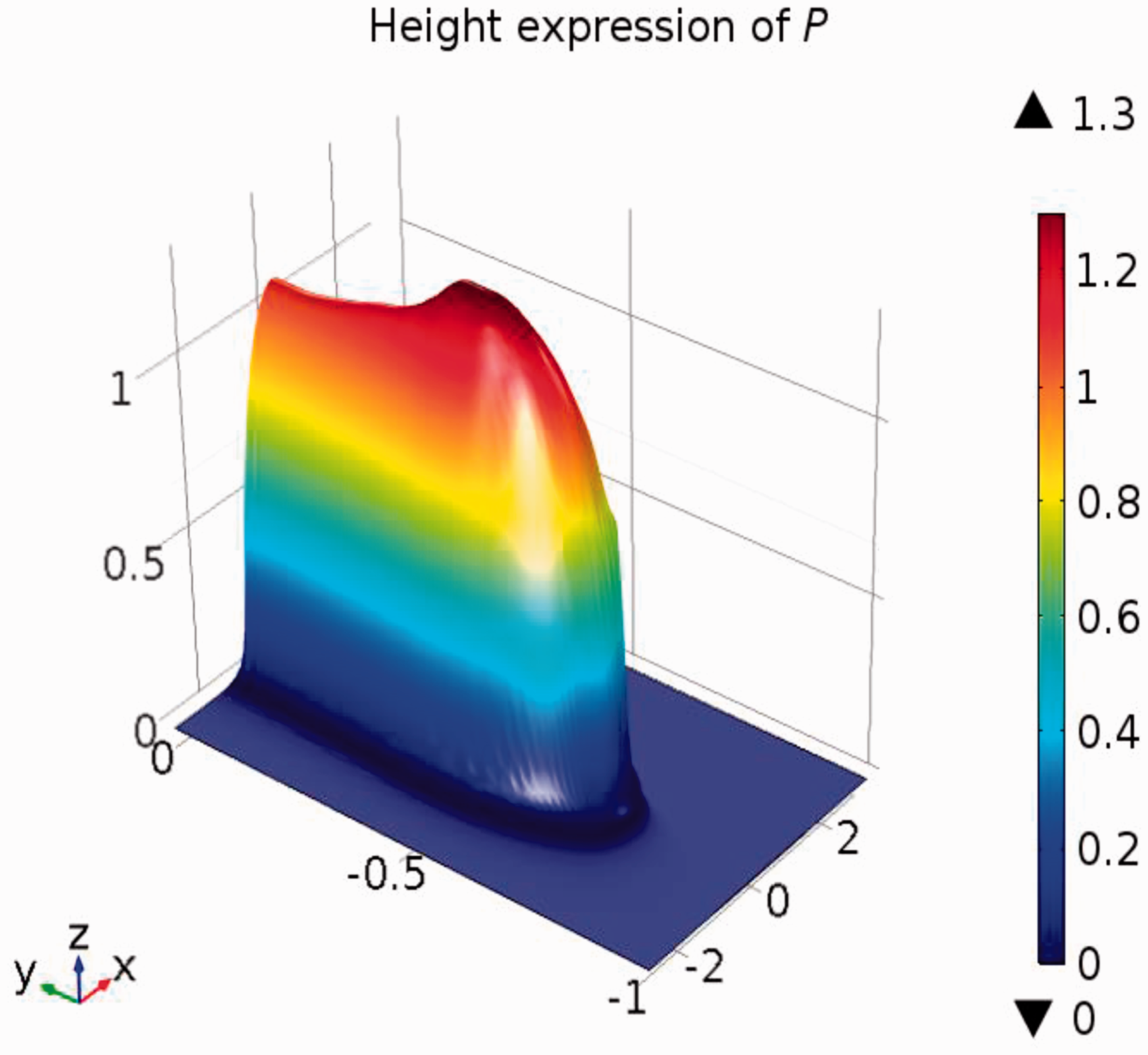
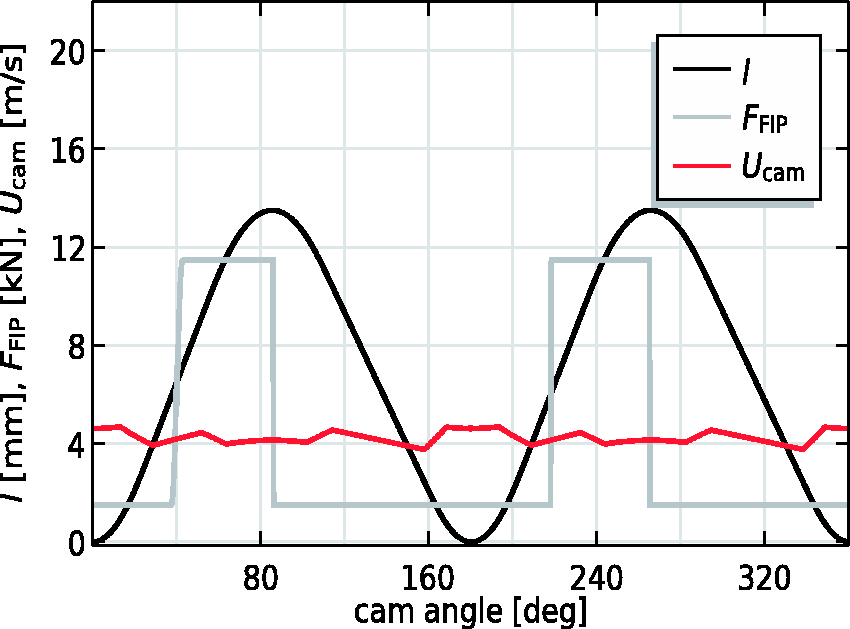
Schematic view of a cylindrical journal bearing with fixed coordinate system (x, y) and moving coordinate system (r, t). Height expression of pressure distribution for roller with logarithmic axial profile, viewed from the rear of the contact. Furthermore, F = 7 kN, Variation of pumping load 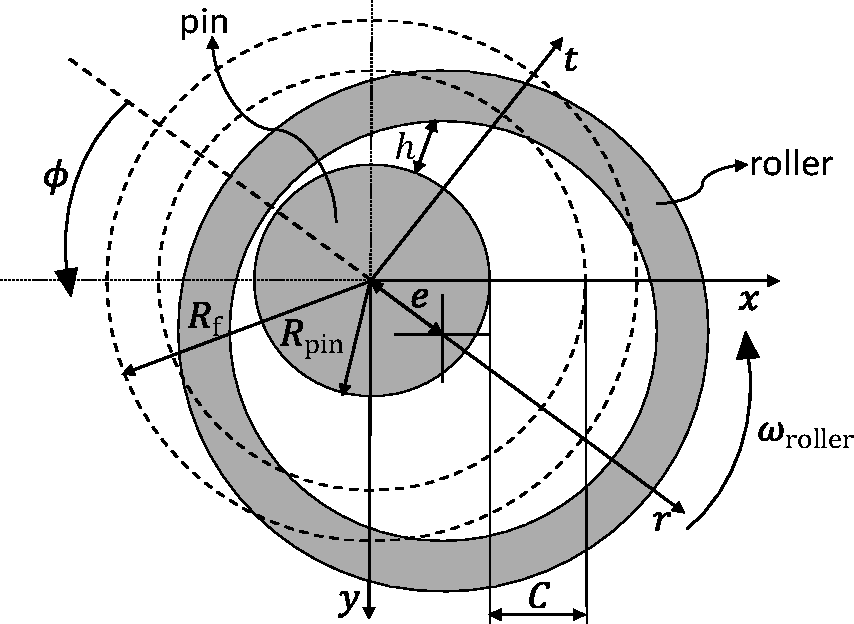

For journal bearings of finite length, the pressure gradients in both directions need to be considered. As such, there is no analytical solution to the Reynolds equation. Several approximate solutions are reported in literature, which are based on asymptotic solutions obtained using the long bearing (Sommerfeld) and short bearing (Ocvirk) solutions. San Andres
23
derived an approximate analytical solution that gives good results for finite length bearings. This approach gives the following approximate solution for calculating the Sommerfeld number S
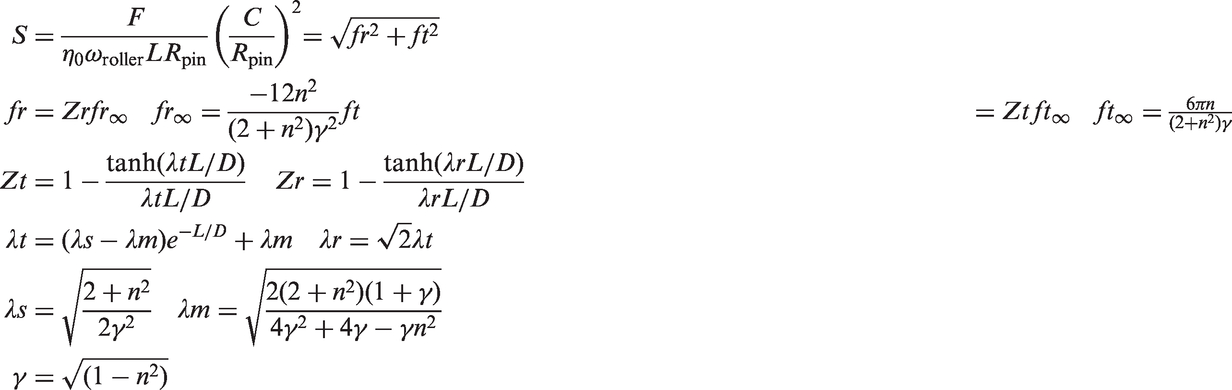
It is worth mentioning that the analytical expressions in equation (31) also take into account the side leakage from the bearing (for more details the reader is asked to refer to San Andres 23 ).
The bearing friction coefficient μ2, defined at the roller inner surface, and attitude angle β are calculated as follows
23

The individual (absolute) instantaneous power losses (in Watts) at the cam–roller and roller–pin contact are respectively computed as follows



The calculation of
Determination of roller slippage
The rotational speed of the roller follower is primarily determined by the driving/tractive torque at the cam–roller interface. Sliding friction acting on the inner wall of the roller resists or tries to slow down the motion of the roller. The roller on itself rotates about its own axis and thus has an angular acceleration. This consequently induces an angular moment of the roller, which is defined as the product of the angular acceleration and mass moment of inertia of the roller.
The roller rotational speed is obtained by balancing the tractive torque (acting at the outer surface of roller) with the combined torques due to roller–pin friction and roller inertia force, by iteratively adjusting the roller rotational speed. In equation form, this yields

Note that in this analysis, the frictional torque, due to sliding friction at the end of the roller, has been disregarded as it is assumed that its contribution to the overall resisting torque is small.
From equation (34), it can readily be deduced that if the RHS of the equation is larger than the LHS, it means that the rolling requirement cannot be satisfied and consequently slip will occur. This may be the situation, for example, at higher rotational speeds where inertia forces are high.
Another situation that might increase the possibility of roller slip is when the limiting traction coefficient μ0, governed by cam–roller lubrication conditions, is exceeded. For full film lubrication, μ0 is typically governed by the type of lubricant used, mean contact pressure and sum velocity. In this analysis, however, μ0 is assumed to be constant for the sake of simplicity. If the friction coefficient at the cam–roller interface is found to be larger than μ0, then maximum friction cannot satisfy the pure rolling condition and roller slip will occur.
Overall numerical procedure
The complete system of equations is formed by the Reynolds equation (19) and elasticity equation (25) with their respective boundary conditions as given by equations (26) and (27), respectively. Additionally, three other equations are added to the complete systems of equations, namely: (i) the load balance equation (22) associated with unknown H0, (ii) the roller slip equation (34) associated with unknown
The model developed here is solved using the FEM with a multiphysics finite element analysis software COMSOL.
24
The problem is formulated as a set of strongly coupled non-linear partial differential equations. The resulting system of non-linear equations is solved using a monolithic approach where all the dependent variables
A custom tailored mesh, similar to Habchi et al., 20 was employed for the present calculations. For the elastic part, Lagrange quadratic elements were used, while for the hydrodynamic part, Lagrange quintic elements were used. The aforementioned tailored mesh corresponds to approximately 300,000 degrees of freedom.
For steady-state simulations, converged solutions to relative errors ranging between 10−3 and 10−4 are reached within 10 iterations. This corresponds to a computation time of approximately 1.5 minutes on an Intel(R) Core(TM)i7-2600 processor. Realistic initial guesses, as detailed in Shirzadegan et al., 14 for pressure and H0 are to be chosen to reduce to the number of iterations required for converged solutions.
For the transient calculations, a steady-state solution was fed as initial guess. Furthermore, a dimensionless time-step
Results
Reference operating conditions and geometrical parameters for cam–roller follower analysis.
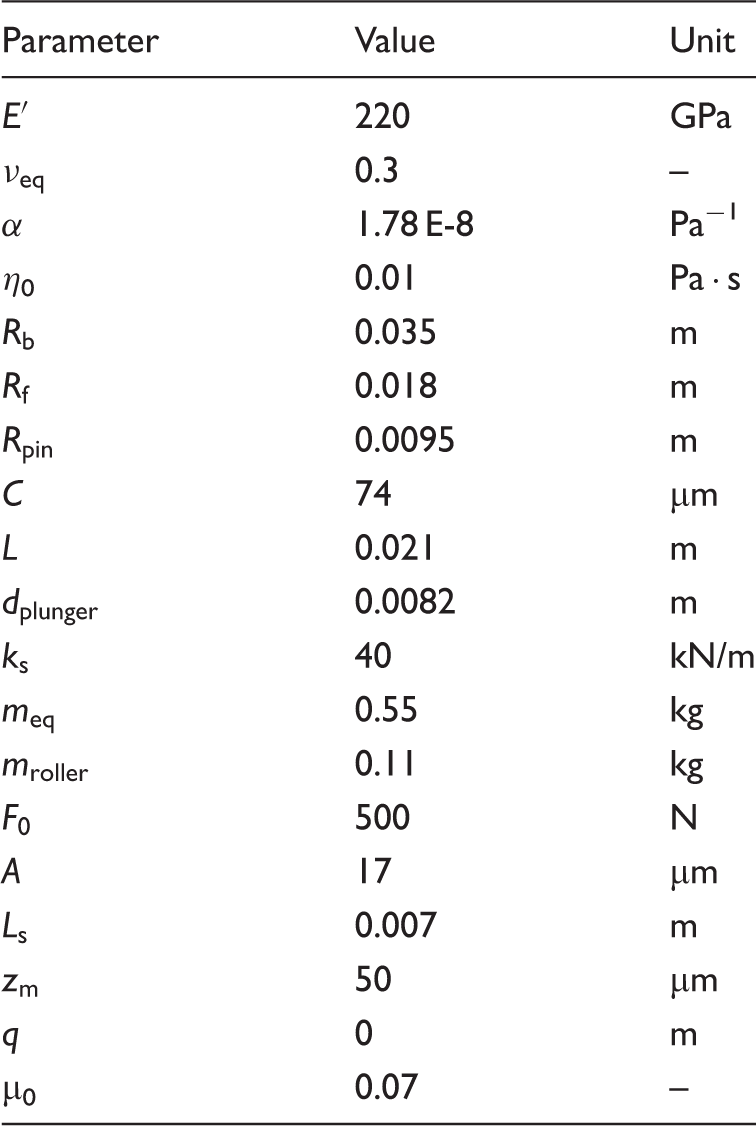
A height expression of the pressure distribution, for the given reference operating conditions, is shown in Figure 6. Traditional characteristics are observed as for finite line contact solutions, i.e. a secondary pressure peak is observed at the rear of the contact. Near the occurrence of this secondary pressure peak, the absolute minimum film thickness is located (see for instance, Park and Kim 25 ).
Transient analysis
Kinematic variations
The kinematic variations, such as for contact force, cam surface speed and radius of curvature, are required as an input for the EHL calculations. The kinematic model, as presented earlier, was therefore used to derive profiles for
Looking at the lift-curve, it can be readily extracted that the considered cam has two lobes/noses, hence two periods of rise and dwell. Furthermore, it is clear that the lift-curve (and hence cam surface speed) and load profile are symmetrical about 180° cam angle.
The profile for the radius of curvature
The contact force at the cam/roller interface is dominated by the fuel pressure (
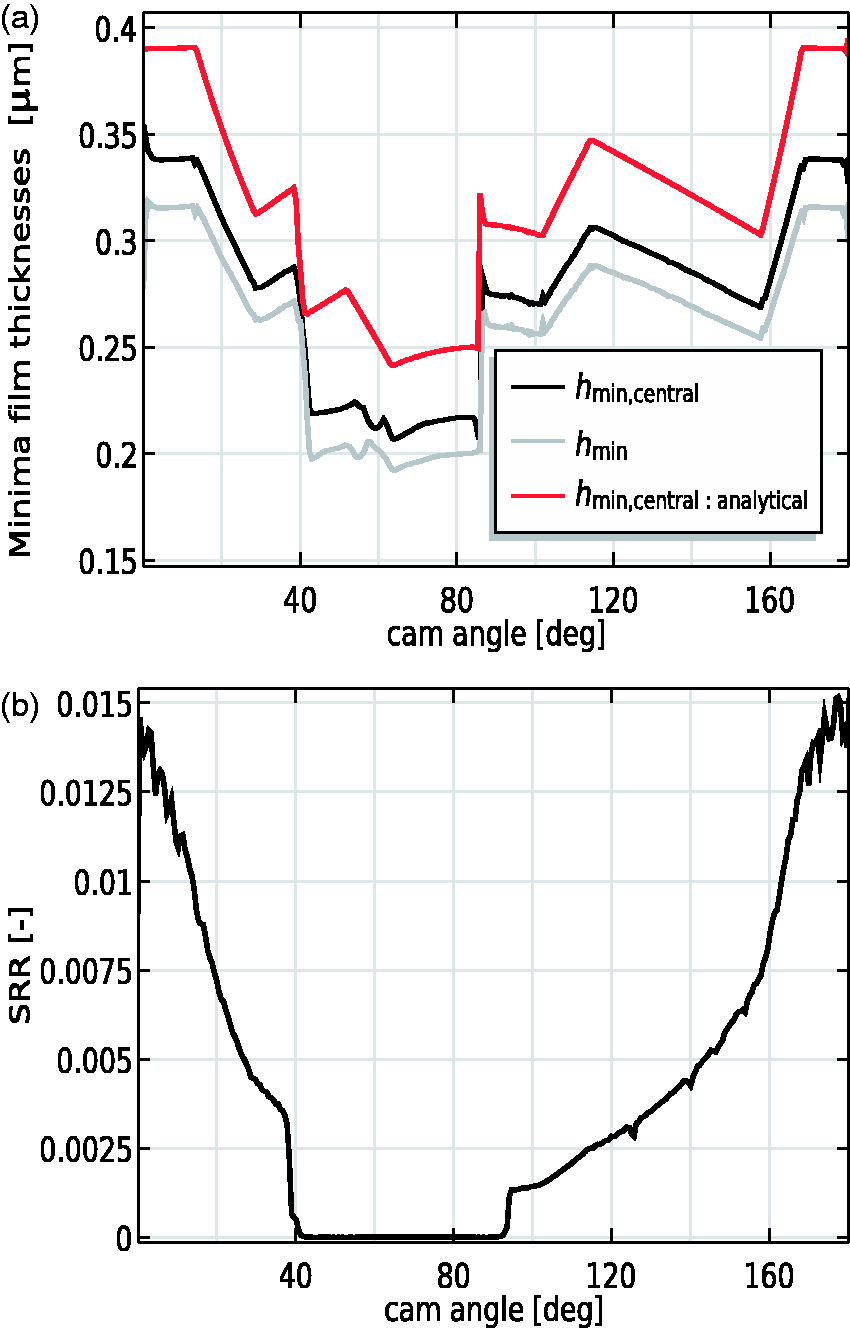
Common rail fuel injection systems are nowadays commonly used. In this system, a common rail, connected to the individual fuel injectors, is utilized in which fuel is kept under constant pressure providing better fuel atomization. In real life, there is a complex mapping of common rail pressure vs. engine rpm and engine torque. A change in common rail pressure will directly influence the pump load. For the present analysis, a worst case scenario was extracted from the complex (software-based) mapping of Mapping of maximum pumping load Evolution of (a) minima film thicknesses and (b) slide-to-roll ratio SRR as function of cam angle. Note the abrupt variations in the overall solution between 40° and 90° cam angle, due to sudden activation of pumping action.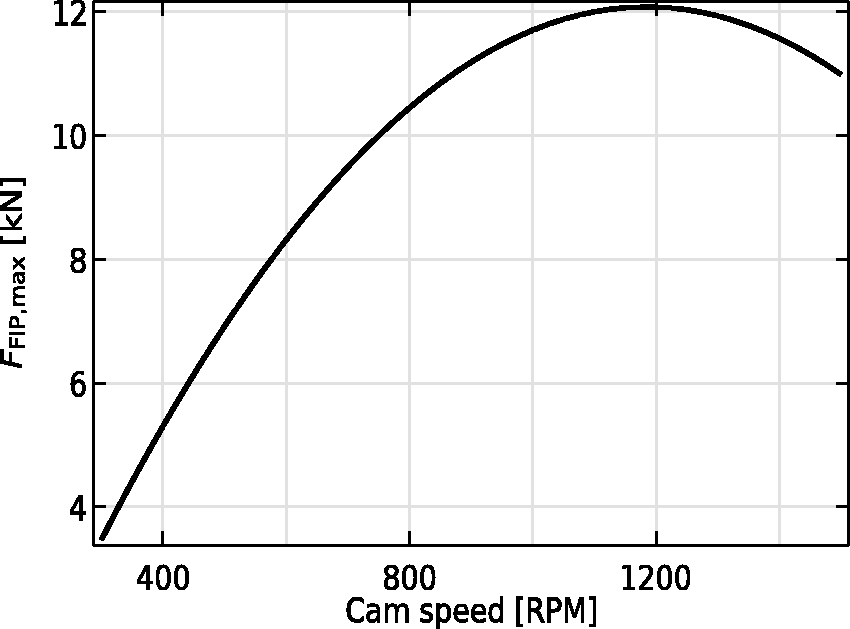
The final contact force profile
Results
The results hereafter are presented for cam angle intervals of 0°–180°, as the cam shape is symmetrical about 180° cam angle. In fact, the solution from 0° to 180° is identical to that for 180°–360°. Furthermore, the cam speed is kept fixed at 950 r/min.
The degree of separation between surfaces, defined as specific film thickness, has a very strong influence on the type and amount of wear. Figure 9(a) provides the variation of the absolute and central minimum film thicknesses,
Overall, a fairly constant film thickness is predicted as compared to the flat-faced followers due to rolling motion of the follower. The “dips” in the film thickness profile (between 40° and 90°) are due to a rapid increase of the contact force (1 kN to 12 kN), i.e. the contact force remains approximately constant at a value around
Comparing the solutions for the analytically and numerically calculated minima film thicknesses, it can also be extracted that transient effects are negligible, i.e. minimum phase lag, due to squeeze-film motion, is observed between the solutions. This observation is in line with previous findings. 14 Squeeze-film damping is mainly observed for cam–follower configurations in which the lubricant entrainment velocity profile inhibits points of flow reversal, see for instance Dowson et al. 22
Furthermore, due to large contact forces involved, negligible slippage occurs. It is evident from Figure 9(b) that the SRR remains less than 1.5% over the full cycle. For the present analysis, it was found that the friction coefficient at cam–roller interface μ1 was less than the limiting traction coefficient μ0. Therefore, there is a very small difference between 
Note that for pure rolling conditions, the sum velocity is Evolution of individual power losses (due to rolling and sliding friction) for (a) cam–roller interface and (b) roller–pin interface.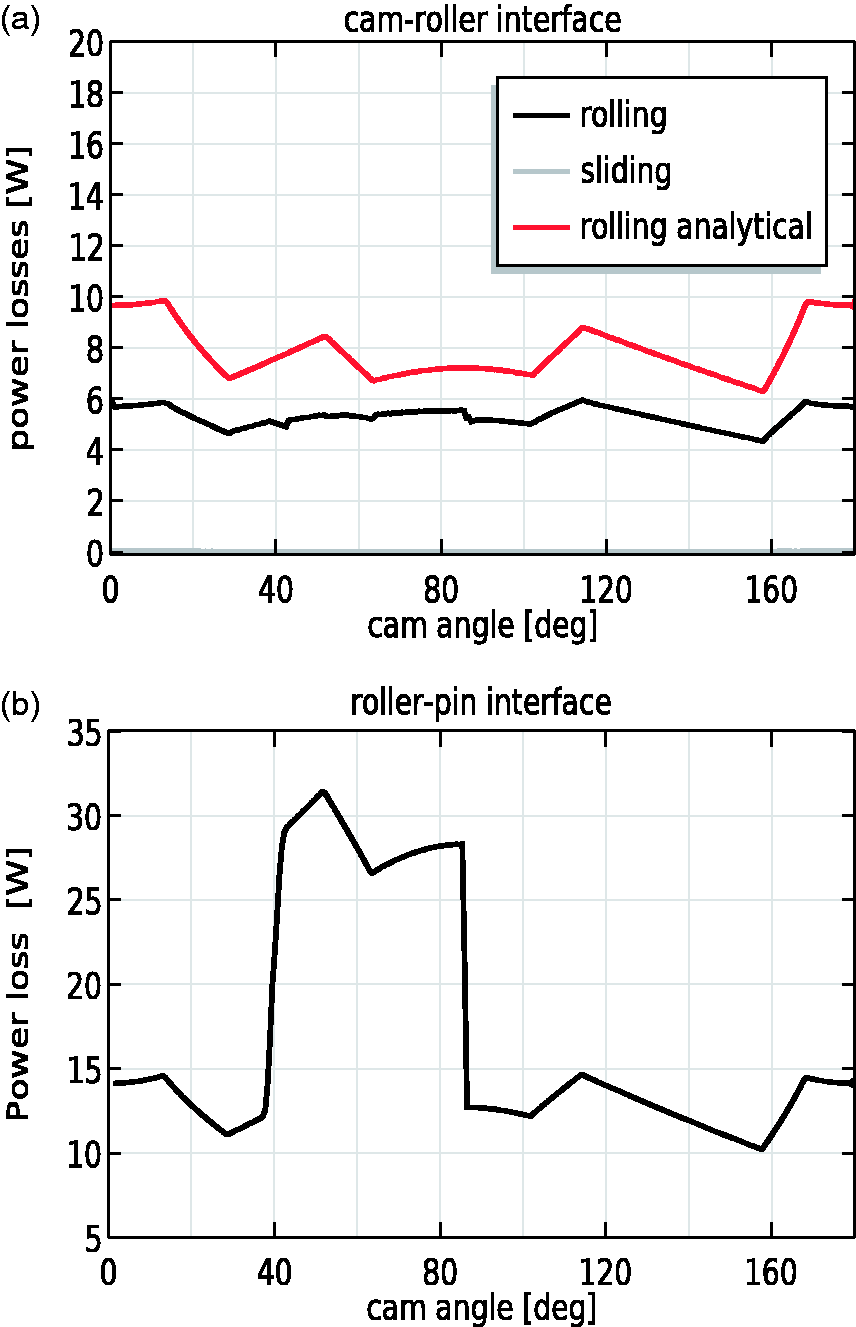
Figure 10(b) plots the evolution of the power loss for the roller–pin interface (refer to equation (33c)). Due to the high contact loads, the total bearing losses reach peak values up to 30 W around the nose region. The sudden rise in frictional losses in the bearing can be attributed to the abrupt variation in contact force. This causes, likewise to cam–roller interface, a “dip” in the minimum film thickness profile of roller–pin bearing (see Figure 11(a)). However, for the roller–pin bearing, this effect is much more amplified as the eccentricity is directly dependent on contact force (see equation (31)).
Evolution of (a) minimum film thickness for roller–pin interface and (b) maximum pressures for cam–roller interface as a function of cam angle. Note the abrupt variations in the overall solution between 40° and 90° cam angle, due to sudden activation of pumping action.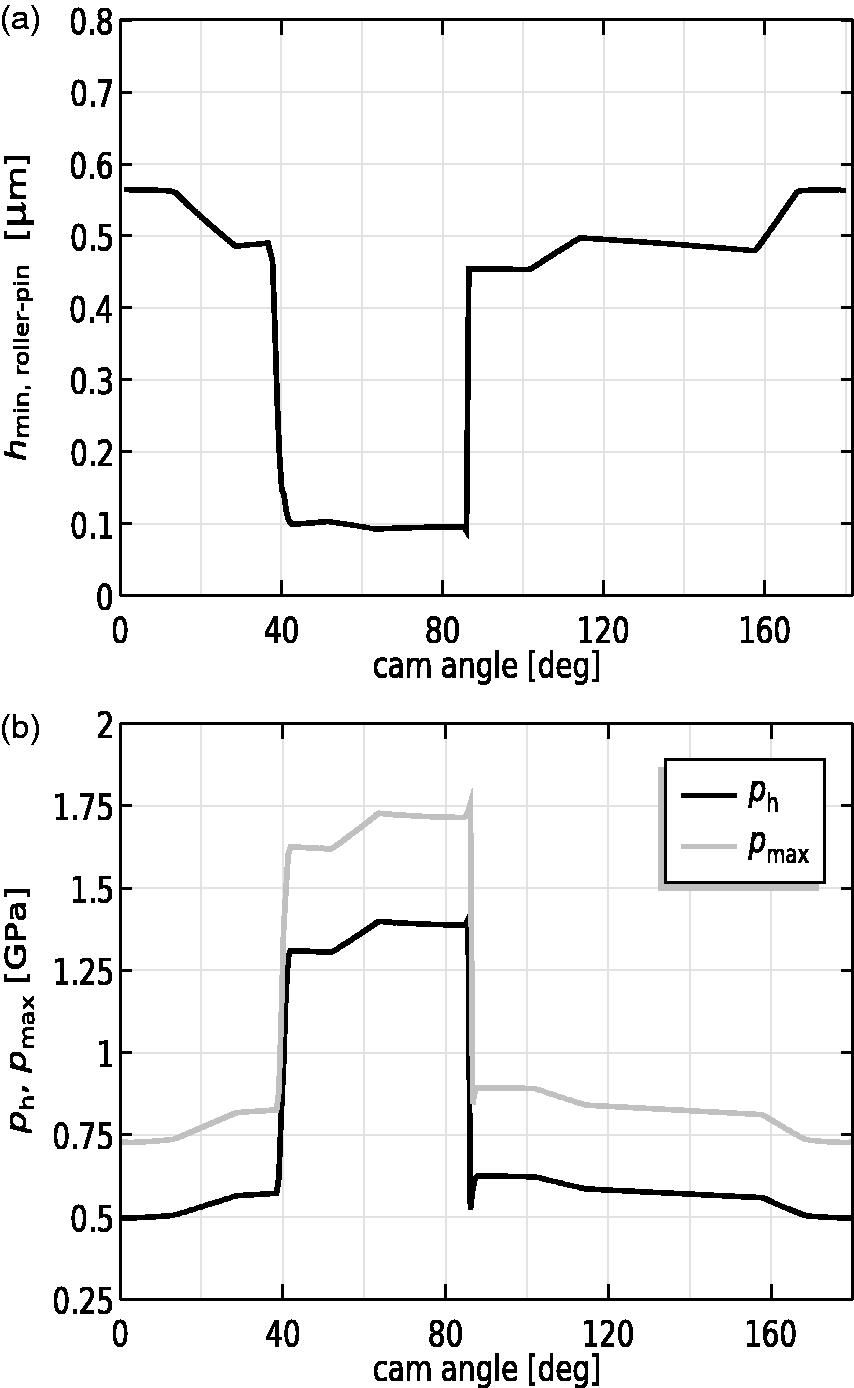
When considering the variation of minimum film thickness at the roller/pin interface, as presented in Figure 11(a), it can be concluded that a poor film thickness of approximately 0.1 μm is predicted around the nose region. This indicates that, assuming a composite roughness of 0.2 μm, the roller–pin bearing operates in mixed or even boundary lubrication regime. The semi-analytical lubrication model for the roller–pin interface does not include deformation of solids which might enhance the film thickness distribution. Furthermore, in this simplistic analysis for the roller–pin interface, it is assumed that surfaces are perfectly smooth, meaning that in the practical case frictional losses will be higher and consequently will induce higher roller slippage. Accurate calculation of the film thickness distribution in the roller–bin bearing is thus extremely important and should be investigated in more detail in future work. The present work, however, certainly emphasizes on the importance of accurate friction calculation in the roller–pin bearing as this contact is equally important as the cam–roller contact, but often weakly included in previous roller friction models.6,7
Finally, the maximum pressure variation is presented in Figure 11(b). The maximum pressure cycles between 0.5 GPa and 1.8 GPa. The maximum Hertzian pressure
From the aforementioned comparisons between analytical and numerical predictions, it is clear that the usage of traditional analytical tools (applicable to infinite line contacts) may lead to significant deviations from actual solutions. The analytical solutions, however, can be used as a first estimation for preliminary designs. For accurate predictions, numerical studies are inevitable.
Parameter study: Variation of cam rotational speed
It is of interest to analyze the behavior of the minima film thicknesses and other performance indicators over the full range of cam rotational speeds. As earlier mentioned, the maximum fuel injection force is also mapped against cam speed (see Figure 8).
From the results obtained from the transient analysis, presented in the previous section, we could also observe that the worst operating conditions are expected in the nose region of the cam, i.e. power losses, minima film thicknesses and maximum pressures reach their peak values in the nose region. We also saw that the aforementioned performance indicators also remain fairly constant in the nose region because of the contact load that remains almost constant between 40 and 90° cam angle. Therefore, for the parameter study, concerning variation of cam speed, any position in the nose region can be chosen. To be more specific, any position on the nose between the fixed margin of 40 and 90° cam angle can be chosen to examine the variation of crucial tribo-performance indicators.
Figure 12(a) presents the evolution of minima film thicknesses, for cam–roller and roller–pin contact, with increasing cam speed at a fixed cam angle of 68°. For cam–roller contact, it can be seen that the minimum film thickness increases with increasing cam speed even though the contact force on nose region also increases with increasing cam speed. The effect of contact force seems to be less dominant as compared to sum velocity, which is analogously explainable from traditional infinite line contact EHL solutions.
Variation of crucial design variables such as (a) minima film thicknesses, (b) (inverse) Sommerfeld number (c) maximum pressure and (d and e) power losses with cam rotational speed.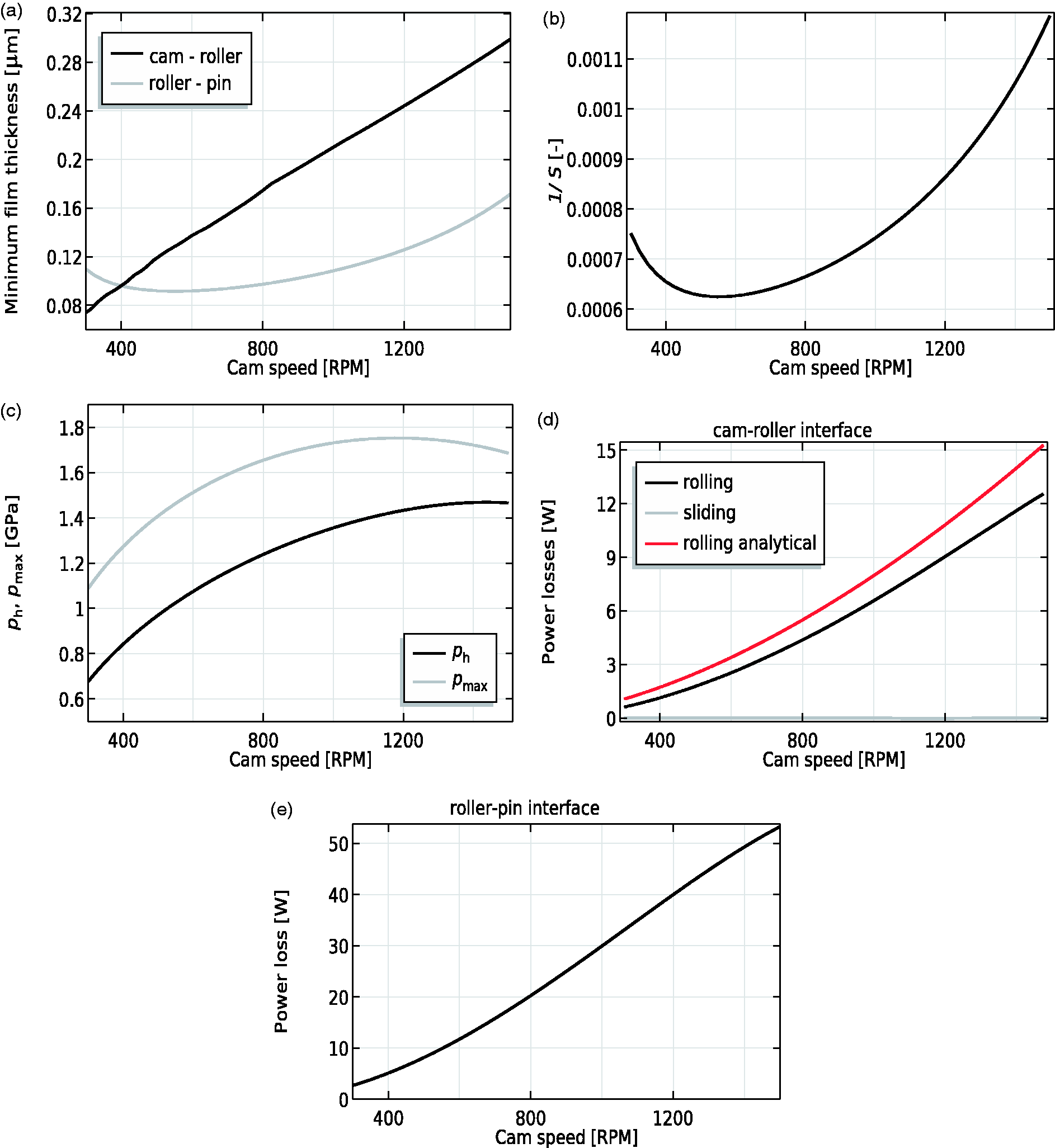
For the roller–pin contact, the minimum film thickness decreases from low to moderate cam speeds and then again increases from moderate to higher cam speeds. This trend can analogously be explained from the variation of the (inverse) Sommerfeld number with increasing cam speeds, which follows the same trend (see Figure 12(b)).
The variation of individual power losses for cam–roller and roller–pin interface is plotted in Figure 12(d) and 12(e), respectively. For the cam–roller interface, we see that the sliding power loss, which is mainly governed by the contact force, remains negligible for the full range of cam speeds, i.e. the contact force increases with cam speed and hence the sliding speed remains minimal. Furthermore, rolling power loss increases with increasing cam speed mainly due to the fact that the sum velocity increases (refer to equation (33b)), and hence, the film thickness increases. The analytical method overestimates the rolling power loss due to overestimation of contact area. For the roller–pin interface, an increase power loss is observed with increase in cam speed. This increase is mainly due to the fact that the sliding speed increases, and hence, viscous shear in this contact increases accordingly.
Finally, an increase in maximum pressure is observed with increasing cam speed (see Figure 12(c)). This is mainly due to the mapping of
Influence of different axial surface profiles
From the results obtained from the transient analysis, it can be extracted that for the considered cam–roller configuration, any position on the nose between the fixed margins of 40°–90° cam angle can be chosen to examine the variation of crucial tribo-performance indicators. It would be of interest to study the effect of different axial profile designs on crucial cam–roller contact performance indicators, such as minimum film thickness, maximum pressure and rolling power loss. The axial profile can be optimized for a certain operating point, to obtain a more uniform axial pressure distribution. Note that for the considered operating conditions, roller slippage around nose region was found to be negligible. Also note that the choice of different roller axial shapes does not influence the results from the semi-analytical lubrication model for the roller–pin contact, as the film thickness is directly correlated with the applied load.
Considered logarithmic axial surface profiles.
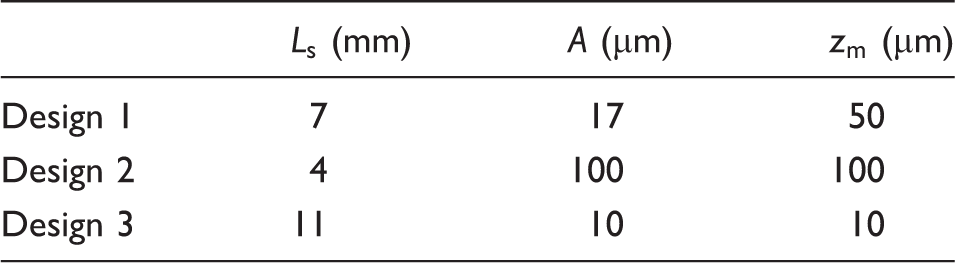
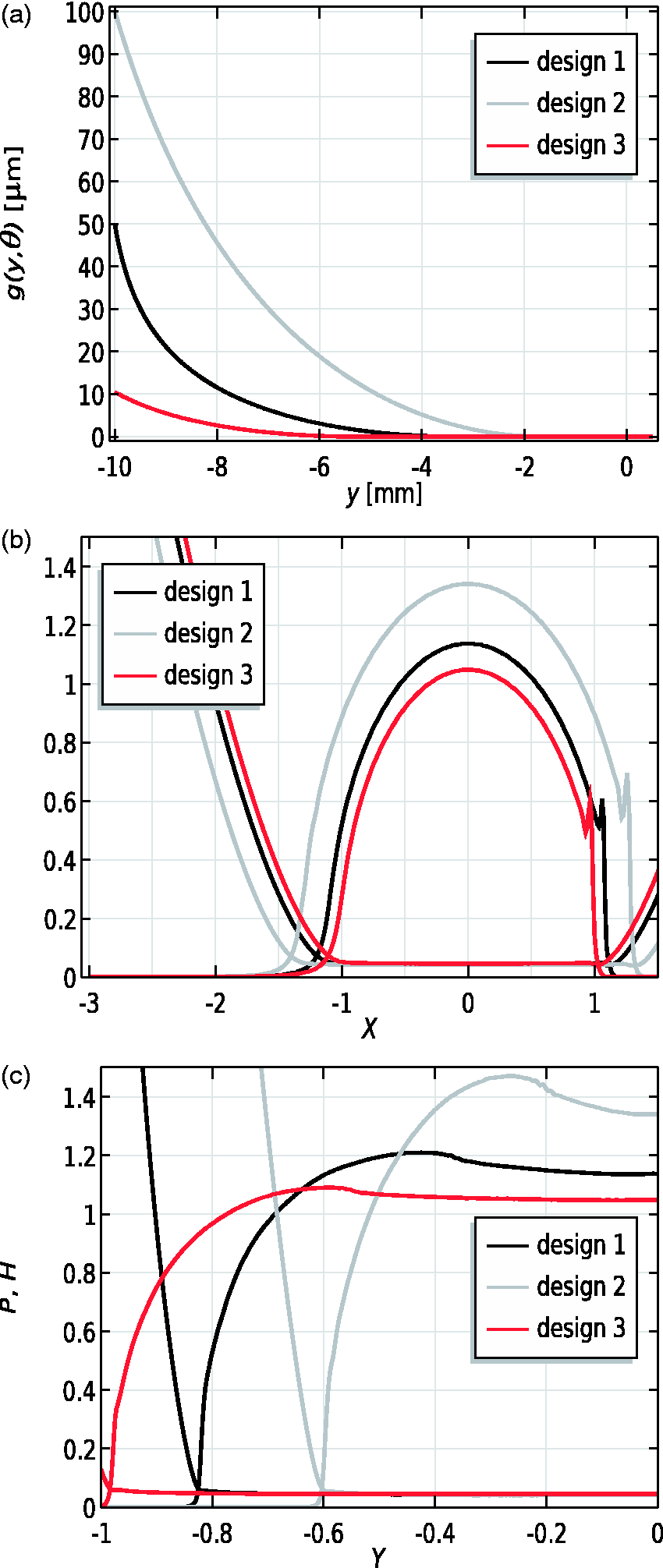
Influence of (a) considered roller axial surface profiles on (b) streamline and (c) axial pressure and film thickness distributions.
Influence of considered axial surface profile design on crucial performance indicators around nose region.
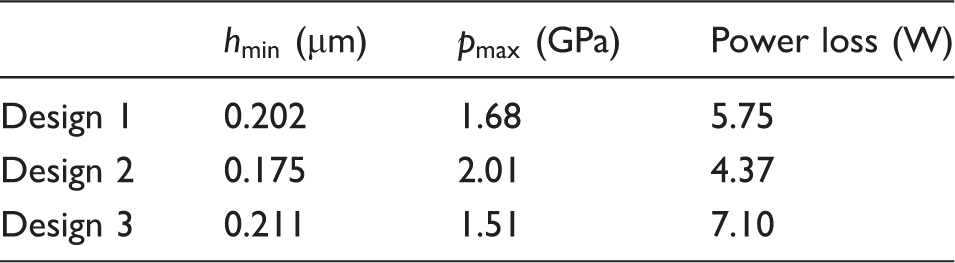
Exact the opposite is observed for design 2, i.e. due to larger geometric discontinuity, the maximum pressure increases and minimum film thickness decreases. However, due to decrease in covered contact area, the power loss decreases. It is clear from the case studies that maximum pressure and minimum film thickness values are improved at the cost higher power losses.
Conclusions
A finite line contact EHL model was utilized to analyze cam–roller follower lubrication conditions. A detailed kinematic analysis was presented to derive variations of load, speed, and radius of curvature with respect to cam angle. The model includes an improved (semi-analytical) roller friction model, which takes into account the roller–pin film thickness distribution. Therefore, friction losses are more accurately estimated, and consequently, the roller slippage prediction is also improved.
For the numerical analysis, a cam and logarithmically profiled roller follower were simulated. The cam–follower pair was assumed to be part of the fuel injection equipment in heavy-duty diesel engines.
It was found that friction losses in the roller–pin contact are highest due to high contact forces (and thus low film thickness) and sliding speeds. The importance of more accurate friction models for the roller–pin contact is highlighted here as this the contact associated with highest power losses and lowest minimum film thickness.
For the cam–roller contact, it can be concluded that rolling friction is the most important power loss contributor as roller slippage was found to be negligible for the load range considered. The results in terms of friction losses, minimum film thickness, and maximum pressure were compared with quasi-statistic analytical solutions corresponding to infinite line contact models. The importance of considering a finite line contact model, instead of an infinite line contact, was clearly emphasized, i.e. traditional line contact model significantly underestimates the maximum pressure and overestimates the minimum film thickness. Also, power loss estimation using the analytical approach may deviate significantly when compared with actual power losses due to overestimation of contact area.
An important observation that was made is that transient effects are negligible; therefore, the quasi-static analysis should also suffice to study the lubrication conditions for the cam–roller pair.
Different roller axial profiles were considered to study their influence on crucial performance indicators around the nose region. It was found that maximum pressure and minimum film thickness values can be improved significantly, however, at the cost of higher power losses. Therefore, suitable optimization routines need to be utilized in order to reach an optimum combination between friction losses, maximum pressure, and minimum film thickness.
Computational times for simulating cam–roller follower lubrication, with usage of the current model, are found to be reasonable. Moreover, the developed model demonstrated the ability to cope with abrupt changes in operating conditions in which the load suddenly increases and decreases. Therefore, this model can certainly be used to study the influence of modifications in cam and/or roller shape design, on the overall efficiency of the cam–follower unit.
The present study focuses on lubrication conditions in a highly loaded cam–roller follower pair in which sliding is found to be insignificant. However, for example, in lightly to moderately loaded cam–roller contacts, where relatively high sliding speeds might occur, extension of the model to non-Newtonian and thermal effects might be important. Also, more extensive rheological formulations29,30 should then be used. The aforementioned aspects are suggested for future work.
Footnotes
Declaration of Conflicting Interests
The author(s) declared no potential conflicts of interest with respect to the research, authorship, and/or publication of this article.
Funding
The author(s) disclosed receipt of the following financial support for the research, authorship, and/or publication of this article: This research was carried out under project number F21.1.13502 in the framework of the Partnership Program of the Materials innovation institute M2i (www.m2i.nl) and the Foundation of Fundamental Research on Matter (FOM) (www.fom.nl), which is part of the Netherlands Organization for Scientific Research ( ).
).