




Abstract
This paper employs an Afropessimism framework to critically analyse the Marikana massacre in South Africa, specifically examining the pervasive presence of anti-Blackness within organizational structures. Through an exploration of labour-management dynamics and conflict resolution mechanisms, the study underscores how anti-Black violence operates as a genocidal force under settler colonialism, perpetuating enduring states of social death among Black individuals. Utilizing a narrative case study approach, we illuminate the intricate interplay between anti-Blackness and settler colonialism, demonstrating how these forces dehumanize Black workers, leading to conditions of social death. This research enriches critical and postcolonial organizational studies by exposing corporate anti-Blackness within colonial contexts, centering on the unique experiences of Blackness, and engaging with Black narratives to elucidate intersections of anti-Blackness, capitalism, and racial oppression. Theoretically, it challenges conventional notions of humanity by interrogating the assumed humanity of Blackness and explores Afropessimism’s ethical implications for emancipation, particularly in relation to the dynamics of physical and social death within critical organization studies.
Keywords
Introduction
. . .The Marikana tragedy calls to mind earlier instances of violence. . . Does this kind of violent clash between labour and capital belong to the past, or will it be an integral part of twenty-first-century history? (Piketty, 2014: 39).
Piketty’s (2014) analysis of the Marikana massacre, where 34 Black mine workers were fatally shot by the South African Police Service (SAPS), provides crucial insights into contemporary labour-capital dynamics within postcolonial contexts. This tragedy mirrors historical labour-capital conflicts such as the Haymarket Square affair in the United States and the Fourmies events in 19th-century France (Piketty, 2014; cf. Neocosmos, 2016), highlighting persistent issues in labour-management dynamics within critical management studies (CMS) and postcolonial perspectives (Banerjee, 2008; Dar et al., 2021; Prasad, 2021; Varman and Al-Amoudi, 2016). These events reveal entrenched oppressive practices within capitalist frameworks, resulting in the marginalization of workers, economically disadvantaged individuals and racialized groups – a phenomenon termed necrocapitalism, where death and human suffering are exploited for profit (Banerjee, 2008). Furthermore, these analyses underscore the potential for resistance through social reforms and activism (Banerjee, 2008; Chowdhury, 2021).
An in-depth examination of the Marikana massacre reveals the deliberate targeting of Black individuals, underscoring the genocidal hostility inherent in settler colonialism – a hostility that manifests through anti-Blackness (Carruthers, 2018; Fanon, 2008; Sithole, 2020). Before the tragedy, Black mineworkers were subjected to both a lack of representation and violence, not only from the broader societal structures but also from their own union, the National Union of Mine Workers (NUM), further reflecting the insidious nature of anti-Blackness within institutional frameworks (MCR, 2015). Anti-Blackness operates through both overt and covert structural violence, systematically constraining and devaluing Black aspirations (Carruthers, 2018). It dehumanizes Black individuals, denying them agency and perpetuating entrenched structural violence within organizational practices (Abdallah et al., 2021; Nkomo, 2021). The massacre is emblematic of this anti-Blackness, illustrating the structural racism embedded within settler colonialism and its reliance on both overt and covert forms of violence (Carruthers, 2018). Consequently, the Marikana massacre stands as a critical moment in contemporary labour-capital conflicts, particularly in the context of Black workers asserting their fundamental labour rights to strike and negotiate (MCR, 2015).
This paper employs Afropessimism to examine anti-Blackness within organizational dynamics in settler colonial contexts, focusing on the lived experiences of the Black mine workers in the massacre as individuals marked by legacies of slavery, colonialism and apartheid (cf. Wilderson III, 2010, 2020; Sithole, 2020). Afropessimism foregrounds Blackness from the perspective of the enslaved, revealing distinct experiences compared to other exploited labourers and indigenous subjects (Sexton, 2016; Wilderson III, 2010). Blackness, visible through skin colour, is subject to the white gaze, perpetuating anti-Black violence and racial hierarchies, subjugating Blackness to the authority of whiteness (Hart, 2018; Hartman, 2022). This authority posits Blackness within a state of social death, perpetuated through systematic anti-Black violence (Hart, 2018; Wilderson III, 2020), manifested in dishonour, natal alienation and gratuitous violence, rooted in historical legacies (Sexton, 2016; Wilderson III, 2010, 2020).
Afropessimism contends that social death reinforces structural violence, or anti-Blackness, particularly at the level of the skin, serving the libidinal economy of society and organizations (Sexton, 2016; Wilderson III, 2010). In this context, Blackness holds equal or greater significance than political economy, shaping societal coherence and placing Black individuals at the extreme margins of humanity (Wilderson III, 2010). This sustains racial and class power dynamics, perpetuating the dominance of whiteness and the genocidal essence of settler colonialism (Wilderson III, 2010). The central research question of this paper is: How does anti-Blackness permeate the mechanisms of conflict resolution in organizations?
To address this question, we examine the intertwined dynamics of anti-Blackness and settler colonialism, recognizing them as mutually constitutive forces. Focusing on South Africa, where the enduring legacy of white supremacy persists through the settler colonial present (Sithole, 2020), we explore the historical and ongoing impact of settler colonialism on the systematic dehumanization of Blackness within work organizations. South Africa’s history of settler colonialism, exemplified by British state control and state-legislated apartheid, serves as a compelling case study of organizational exclusion and racial dynamics within workers’ movements such as trade unionism and forms of state violence, including capital accumulation by multinational and settler-controlled corporations (Banerjee, 2008; Banerjee, et al., 2023; Neocosmos, 2016; Varman and Al-Amoudi, 2016).
Utilizing a narrative case study methodology, this paper comprehensively analyses the Marikana tragedy, exploring the dynamics between labour and management and conflict resolution mechanisms through an Afropessimistic lens, particularly social death. By examining the racial dimensions of Black workers in Marikana within the context of settler colonialism and social death, it illuminates insights into organizational conflict resolution, emphasizing Blackness’ non-relational status, denial of humanity, erosion of civil liberties and exposure to gratuitous violence – a state akin to non-being (Wilderson III, 2010, 2020).
The paper contributes to organization studies, CMS and postcolonial perspectives in several ways. First, centering on Afropessimism prompts a critical re-evaluation of ‘human bodies’ and death in these perspectives (e.g. Banerjee, 2008), including organizational processes, fostering a profound exploration of Blackness and anti-Black violence within management and organizational studies (MOS; Abdallah et al., 2021; Nkomo, 2021). This research extends these perspectives by unveiling the pervasive influence of anti-Blackness in corporate practices and state-sanctioned capital accumulation within colonial contexts, highlighting organizations as microcosms of broader anti-Black manifestations in settler colonial environments.
Second, engaging directly with the narratives of Black individuals, particularly through Afropessimism, unlocks profound insights aligned with the emancipatory ethics of critical management studies (CMS) and postcolonial perspectives. By critically examining the lived realities of Black individuals within contemporary organizations and delving into the significance of death, specifically the toll of suffering for Blackness as a form of emancipation from social death, this paper contributes to a deeper understanding of organizational dynamics and social justice agendas in CMS and postcolonial perspectives.
Anti-Blackness and settler colonialism in organizational contexts
The 2012 Marikana massacre, where 34 Black mine workers were killed by the South African Police Service, starkly exposes entrenched inequalities and racial injustices (Kenny & Webster, 2021; Piketty, 2014). This tragedy illuminates the systemic exploitation of labour, the subjugation of Indigenous peoples and the pervasive racism embedded within capitalist structures and labour-management relations, implicating the postcolonial state in upholding capitalist interests, and dehumanizing corporate practices (Neocosmos, 2016). These critical themes are central to both critical management studies (CMS) and postcolonial perspectives, which scrutinize how corporate practices subordinate certain ‘human bodies’ to what Banerjee (2008) terms necrocapitalism, a concept that reflects the commodification and disposability of specific bodies within capitalist frameworks, often prioritizing profit over human life (Banerjee et al., 2021; Varman and Al-Amoudi, 2016). Mbembe’s concept of necropolitics, first articulated in 2003, provides a foundational framework for understanding how ‘neoliberal capitalist’ systems exploit human bodies for economic gain, frequently with complicity from the state (Mbembe, 2019: 114). Banerjee’s work builds on Mbembe’s theoretical contributions (2003), applying the concept of necropolitics to management and organization studies to elucidate the dynamics of necrocapitalism (Banerjee, 2008).
While these frameworks acknowledge the unequal treatment of racialized bodies, they sometimes neglect the unique lived experiences of Blackness within this context. For instance, Mbembe (2017) argues that historically, ‘Black’ signified exclusion, brutalization and degradation for people of African origin, but has now been generalized to include all human beings, a process he terms the ‘Becoming Black of the world‘ (Mbembe, 2017: 5–6). This perspective inadvertently subsumes the specificity of Black experiences into a broader category of racialized oppression and unspecified ‘human bodies’, potentially overlooking the distinct historical and social dynamics shaping Blackness.
Consequently, it is essential to return to Fanon’s focus on the corporeal impacts of colonialism and its racialist capitalist imperatives, emphasizing the distinct experiences of Black individuals under these systems of oppression (Fanon, 2008; cf. Kelley, 2017). Fanon posits that settler colonialism’s social structure is inherently Manichean, rooted in a stark division between the colonizer and the colonized. Wealth and privilege are linked to whiteness, while poverty and exploitation are associated with Blackness, encapsulated in Fanon’s assertion: ‘you are rich because you are white . . . and poor because you are Black’ (Fanon, 2004: 5). Settler colonialism manifests through two distinct zones: the zone of being and the zone of non-being (Fanon, 2004, 2008). The former includes individuals recognized as ‘human‘ with rights, predominantly white or non-Black (Sithole, 2020), while the latter comprises marginalized ‘dirty Blacks’ subjected to violence, violation and death (Fanon, 2008).
These zones depict the contemporary global landscape, where Black people endure a paradigmatic condition of structural vulnerability, rendering them susceptible to perpetual appropriation and ‘involuntary openness’ to violence (Sexton, 2008: 149). The Marikana massacre exemplifies this structural vulnerability, highlighting Blackness’s perpetual placement in the zone of non-being, subjected to gratuitous violence that perpetuates non-Black subjectivities (cf. Sithole, 2020). The pervasive anti-Blackness in colonial society is evident in the objectification, dehumanization and denial of humanity experienced by Black individuals (Fanon, 2008). This insidious form of systemic racism underscores the structural dynamics within settler colonialism, perpetuating racial hierarchies and reinforcing the subjugation of Black individuals.
Anti-Blackness, as a pervasive system of beliefs and practices, manifests through individual prejudices and systemic inequalities, serving to justify the exploitation and subjugation of Black people (Carruthers, 2018). In organizational contexts, these power imbalances often mirror and perpetuate systemic inequalities (Abdallah et al., 2021; King et al., 2022; Nkomo, 2021). Black individuals are included in postcolonial organizations but remain controlled by the settler colonial framework through exclusion. This exclusionary dynamic persists as Black individuals within settler colonialism lack coherent recourse, relegating them to a state akin to perpetual death (Sithole, 2020). This condition is not merely a historical artefact but a persistent feature of social, political and economic structures that marginalize and exploit Black bodies (Carruthers, 2018). The struggle for recognition and humanity within these organizations in settler colonial contexts thus becomes a profound resistance against a system that denies Black individuals’ full personhood (Abdallah et al., 2021; Nkomo, 2021)
Centering Blackness beyond broader racialized bodies underscores the enduring impact of anti-Blackness within settler colonial frameworks. Anti-Blackness remains crucial for addressing persistent racial inequalities in organizational research (Abdallah et al., 2021; Nkomo, 2021). It unveils the deep-seated historical and structural origins of discrimination against Black individuals, challenging notions of race neutrality and necessitating a re-evaluation of organizational theories and practices to foster genuine equity (Nkomo, 2021). The post-‘Black Lives Matter’ era underscores the urgency of confronting systemic racism within organizations (Dar et al., 2021; Mir and Zanoni, 2021; Prasad, 2021; Tinguely, et al., 2021). Scholars advocate for exploring the distinct experiences of racialized groups, particularly Black individuals, within organizational frameworks to combat structural racism (Abdallah et al., 2021; Nkomo, 2021; King et al., 2022).
Aligned with these objectives, this paper critically engages with critical management studies (CMS) and postcolonialism in organizational studies, probing the intricate nexus of settler colonialism and anti-Blackness through the lens of the Marikana massacre. Centering Blackness at the corporeal level aligns with Afropessimism’s meta-theory, which posits Blackness as the paradigm of slavery rather than merely exploited labour, illuminating the lived experiences of Blackness within contemporary work environments. Below, we delve into Afropessimism’s meta-theory, emphasizing key aspects relevant to our analysis and highlighting the paradigm of the enslaved and libidinal economy.
Afropessimism: Interrogating Blackness and structural violence
Afropessimism, championed by scholars such as Frank B. Wilderson III, Jared Sexton and Saidiya Hartman, presents a rigorous theoretical framework that disrupts traditional notions of race and oppression (Hartman, 2022; Wilderson III, 2010). Rooted in Frantz Fanon’s legacy, Afropessimism critically examines the political ontology of Blackness, challenging fundamental concepts of human subjectivity (Fanon, 2008). It seeks to elucidate the conditions and experiences of Blackness within a global structure defined by anti-Blackness, interrogating foundational aspects of human existence and asserting the ongoing nature of Black social death.
Central to Afropessimism is Hortense Spillers’ distinction between ‘body‘ and ‘flesh‘ (Spillers, 1987). Spillers posits that the ‘body‘ signifies physical presence, while ‘flesh‘ encompasses existential core and inherent entitlement to freedom. For Black individuals, this distinction is pivotal, as Blackness has historically been marked by a unique form of flesh characterized by centuries of dehumanizing commodification and violent subjugation under slavery (Spillers, 1987). The visibility of Black flesh during the transatlantic slave trade and colonial expansions solidified the association between Blackness and enslaved embodiment, perpetuating the erasure of Black subjectivity throughout history (Wilderson III, 2020).
Afropessimism critically engages with and exposes the structural violence inherent in societal arrangements by elucidating the ontological implications of Blackness, particularly at the corporeal level, within an anti-Black world. In the specific case of South Africa, Afropessimism highlights how Blackness is consigned to a state of perpetual social death, existing on the margins of humanity where systemic anti-Blackness denies Black individuals the right to be recognized as fully human subjects (Sithole, 2020; Sexton, 2016; Wilderson III, 2010). This theoretical lens critiques and destabilizes dominant narratives that obscure or normalize the ongoing violence and oppression experienced by Black communities within organizational structures and broader societal frameworks.
Central to Afropessimism is the concept of the white gaze, a mechanism of surveillance and control embedded within settler colonial contexts that perpetuates racial hierarchies and sustains anti-Black violence (Hart, 2018). This gaze shapes perceptions of Blackness in organizational settings, legitimizing discriminatory and violent practices (Hart, 2018). It is wielded not only by white individuals but also by marginalized groups, fostering the fetishization and dehumanization of the Black body and contributing to the phenomenon of ‘social death’ experienced by Black individuals (Wilderson III, 2010).
In Afropessimism, social death denotes the exclusion of Black individuals from full participation in the social contract, reducing them to objects necessary for renewing non-Black subjectivity (Wilderson III, 2020). This condition entails perpetual dishonour, natal alienation and gratuitous violence inherent to Black existence within a white supremacist social structure, independent of any specific transgressions. Dishonour within Afropessimism entails the denial of recognition and dignity, exacerbating the dehumanization and relational isolation of Black individuals (Wilderson III, 2010). Settler colonialism systematically objectifies and debases Black bodies, intensifying their state of non-being (Sithole, 2020). This spatial objectification perpetuates a non-relational and non-human status (Wilderson III, 2010).
Natal alienation, exemplified by the experience of Black individuals severed from their historical and cultural roots due to slavery and colonization, persists through ongoing marginalization and narrative erasure within settler frameworks (Wilderson III, 2010; Mbembe, 2019). Colonial and apartheid legacies in South Africa starkly illustrate this alienation (Sithole, 2020), wherein Black people were systematically dispossessed of their land, culture and familial ties, resulting in a profound disconnection from their ancestral roots and a systemic denial of their humanity.
Gratuitous violence, a fundamental aspect of Afropessimism, characterizes the lived experiences of Black individuals as a direct consequence of historical oppression (Wilderson III, 2010). This systemic violence extends beyond physical manifestations, encompassing the structural conditions that define Blackness itself (Wilderson III, 2010). It exposes how gratuitous violence, both overt and covert, systematically devalues Black lives through neglect of working conditions, wages and cultural forms of resistance.
These dimensions of social death underscore the stark realities faced by Black individuals within settler colonial contexts, often cast as involuntary migrants in their own homelands. The Marikana massacre in South Africa serves as a vivid example of such structural violence, starkly revealing profound disparities in the treatment and perception of Black lives compared to those recognized as ‘fully human’ in organizational studies (Wilderson III, 2020). Wilderson III (2010) offers a distinctive interpretation of Blackness that surpasses both labour and indigenous identity, emphasizing the spatial and temporal factors that underpin social death.
Despite the absence of physical shackles or geographical separation akin to the Middle Passage, Africans endure a form of global enslavement, devoid of recognition and agency under the pervasive white gaze (Wilderson III, 2010, 2020). Consequently, as Wilderson III (2020) explains, the perpetual condition of Blackness existing within a framework of enslavement challenges conventional temporal frameworks and questions the coherence and essence of humanity itself (Wilderson III, 2010). This spatial and temporal disjunction isolates Blackness from exploited labour and indigenous subjecthood, disrupting conventional narratives and emphasizing its structural position as fundamentally incommunicable with other social positions but aligned with the paradigm of the enslaved (Wilderson III, 201).
Afropessimism elucidates the position of Black individuals within a global capitalist paradigm structured by Black/White relations, particularly under settler colonialism (Sexton, 2016; Wilderson III, 2008). Blackness here is not merely an organic identity but a socially constructed one, dependent on its ‘Other’ for legibility (Wilderson III, 2020). Within this framework, Blackness signifies a subjecthood perpetually violated by a political ontology that is both unconsciously and judicially foreclosed (Wilderson III, 2020). The ‘Black ego’, instead of being dismissed as immature or weak, is portrayed as an absence haunted by negativity, reinforcing the impossibility of a coherent Black ontology within an anti-Black society (Wilderson III, 2020).
This perspective underscores the imperative to recognize the distinct position of Blackness within the global capitalist order and the ongoing struggle for liberation that transcends conventional political thought and action. Afropessimism thus provides a robust framework for examining the temporal dimension of Blackness within the spatial confines of settler colonialism, weaving together broader socio-political contexts of slavery, colonialism, apartheid and ongoing racism (Sexton, 2016; Wilderson III, 2010). Wilderson III (2010) underscores the intrinsic link between Blackness and slavery, rooted in the libidinal economy, revealing the intricate interplay between conscious identification, unconscious fears and subconscious desires that precede gratuitous violence against Black bodies.
Within this economy of desires, fantasies, fears and violent tendencies, Black individuals become focal points for the accumulation of desires and fears, shaping power dynamics and perpetuating structural violence against Blackness (Wilderson III, 2010). The heightened presence of the libidinal economy within settler colonialism results in the disposability of Black bodies in organizational contexts, driven by white settlers’ fixation on land dominance and the commodification of Black bodies (Wilderson III, 2010). Afropessimism emphasizes that Blackness transcends cultural, economic, or gendered identities, stressing the absence of distinct spatial and temporal dimensions prior to enslavement (Wilderson III, 2010).
Afropessimism offers a transformative lens for comprehending anti-Blackness within organizational contexts, reframing Blackness as distinct from other marginalized identities or exploited labour. Unlike conventional approaches that prioritize human relations in conflict resolution, Afropessimism exposes the structural dimensions of Blackness within organizations, challenging the universality of ‘human’ existence. By centering Blackness as fundamentally incommunicable with other social positions, Afropessimism deepens our understanding of racial dynamics in organizational settings, particularly within African contexts.
In sum, Afropessimism provides a metatheoretical framework for examining anti-Black dynamics in organizational contexts, especially conflict resolution. It highlights the enduring impacts of settler colonialism and the white gaze in denying Black subjecthood and agency. By focusing on dishonour, natal alienation and gratuitous violence, Afropessimism reveals the deep and ongoing effects of these forces on Black lives, challenging traditional narratives and emphasizing the inherent denial of Black subjectivity within a global capitalist order defined by its opposition to whiteness (Wilderson III, 2010, 2020). This framework calls for a re-evaluation of organizational practices and policies to combat systemic violence and exclusion, aiming for a more inclusive and equitable environment. By positioning Blackness as a distinct paradigm, Afropessimism deepens our understanding of racial dynamics in organizations, challenging conventional narratives and illuminating pathways towards equity and justice.
Contextualizing anti-Blackness in South Africa
The Marikana massacre in South Africa starkly illustrates the deeply entrenched anti-Blackness within the country’s social and organizational frameworks, rooted in its history of settler colonialism and apartheid. Since its inception in 1910, South Africa has grappled with the systematic marginalization of Black individuals, a legacy solidified by apartheid policies (Magubane, 1986). The mining sector, crucial to the nation’s economy, has historically reinforced racial hierarchies dating back to colonial and apartheid eras (Magubane, 1986). Companies like Lonmin, founded in 1909 as a British platinum group metals producer, epitomize the monopolization of ownership and control by white capital (Chetty, 2016). The recent acquisition of Lonmin by Sibanye-Stillwater in 2019 reflects the ongoing evolution of corporate entities within the South African mining landscape (Chetty, 2016).
South Africa’s mining sector trajectory intertwines with narratives of settler colonialism, labour unionism and workers’ rights struggles. Labour unions emerged within a socio-political context rife with racial biases and labour conflicts (Magubane, 1986). During British colonial rule, white-dominated trade unions favoured white workers, exacerbating racial divisions in the workforce (Magubane, 1986). The apartheid regime further entrenched these disparities by restricting Black workers’ rights to unionize (Magubane, 1986). Despite these challenges, Black workers established independent unions such as the Industrial and Commercial Workers Union (ICU) in the early 20th century. Figures like Cyril Ramaphosa founded the National Union of Mineworkers (NUM) in 1982, a significant union for Black mine workers, followed by the establishment of the Congress of South African Trade Unions (COSATU) in 1985, amalgamating all trade unions, particularly Black trade union organizations (Kenny and Webster, 2021).
This historical context provides a nuanced backdrop for comprehending anti-Blackness within South Africa’s organizational landscape, where racial dynamics intersect with capitalist structures (Magubane, 1986). The country’s social fabric is intricately woven with threads of race and racism, reflecting a white economic monopoly entangled with a colonial social structure (Hart and Padayachee, 2013; cf. Kelley, 2017, 2020; Fanon, 2004). The legacies of colonialism and apartheid continue to shape power dynamics and perpetuate racial inequalities within organizational settings, influencing labour relations, management practices, and conflict resolution mechanisms (Hart and Padayachee, 2013). Understanding this historical context is imperative for analysing contemporary organizational practices and policies, particularly in addressing systemic inequalities and advancing social justice agendas within South Africa’s complex organizational landscape.
Analysing the Marikana massacre through an Afropessimist lens reveals the structural violence inherent in anti-Black systems, underscoring the enduring legacy of social death experienced by Black individuals within South Africa’s organizational dynamics (Wilderson III, 2010). Interrogating the complexities of race, power, and capitalism within the context of Marikana provides critical insights into the ongoing struggle for racial justice and equity within South Africa’s organizational landscape.
Methodology: Narrative exploration
This study employs a narrative approach within organizational studies to reconstruct the sequence of events leading to the Marikana massacre. This approach facilitates an exploration of experiences and the significance of storytelling within organizational contexts (Gans and Zhan, 2023; Peticca-Harris, 2019). Using techniques such as thematic and dialogic/performance analyses, this narrative approach delves into the storytelling process (Parcell and Baker, 2017). While direct primary worker testimonies are not cited, the study constructs the narrative of the massacre using various sources to illuminate the nuances of anti-Blackness within organizations. Thematic analysis was pivotal in identifying and dissecting recurring themes from diverse data sources, organizing the narrative chronologically, and underscoring the underlying themes that shaped this harrowing tragedy.
Dialogic/performance analysis scrutinized the dialogues, interactions and performances within the narrative. By examining how different actors communicated, responded and performed within the story, this approach illuminated how these exchanges contributed to the escalation of tensions, the breakdown of negotiations, and the eventual outbreak of violence. Integrating dialogic/performance analysis with thematic analysis sheds light on the conveyance of narratives, their intended audiences, the formation of identities, and their broader community or cultural implications (Parcell and Baker, 2017). This multifaceted approach ensured a nuanced and comprehensive understanding of the tragedy, avoiding a one-sided interpretation.
Scholarly works by Alexander et al. (2012), Bruchhausen and Naicker (2018), Kenny and Webster (2021), Piketty (2014) and Alexander (2013) provided foundational insights into the events leading up to and during the Marikana massacre. These sources offered critical analyses, background information, and interviews with survivors and families. Key details, such as the Rock Drill Operators’ (RDOs) demands, the roles of trade unions (NUM and AMCU), and escalating tensions between workers and management, were extracted from these works. These scholarly contributions provided crucial insights into labour dynamics, wage disparities and the socio-political context surrounding the unfolding events.
In addition to scholarly works, media sources, particularly the documentary ‘Miner Shot Down’ (Desai, 2014), offered real-time visual coverage of the Marikana incident, vividly portraying the events. Visual documentation, including excerpts from the documentary, enhanced the narrative’s authenticity and emotional impact. This documentary evocatively conveyed the emotions, actions and reactions of the individuals involved in the tragedy, with specific visuals enriching the storytelling. Government reports (Bruchhausen and Naicker, 2018) played a pivotal role in understanding the official responses to the Marikana massacre, including the establishment of a commission of inquiry. These reports shed light on the political and legal dimensions of the incident, as well as the involvement of government officials in pressuring law enforcement.
Visual elements, such as images (screenshots) and excerpts from the ‘Miner Shot Down’ documentary, were integrated into the narrative to provide a visual dimension to the story. This visual documentation facilitates a visceral connection for readers, adding an embodied understanding to the narrative. The narrative approach aimed to capture polyphonic perspectives by incorporating diverse accounts and viewpoints from various stakeholders involved in the Marikana events. These perspectives encompassed voices from workers’ leadership, trade union leadership, management, government officials and law enforcement. While primary accounts from workers were not available, the sources mentioned above were utilized to reconstruct some of the voices of the key players.
By incorporating multiple viewpoints, the analysis sought to provide a comprehensive and nuanced understanding of the tragedy, avoiding a one-sided interpretation. Furthermore, the narrative analysis considered how the storytelling process shaped identities and cultural implications within the organizational context of Marikana. It examined how the events and narratives contributed to the formation of identities, both among the workers and other stakeholders. Cultural implications, such as the use of traditional weapons and rituals, were explored to understand their significance within the narrative.
The analysis also considered the intended audiences of the narratives presented in the sources, shedding light on the motivations behind certain narratives and performances. In summary, the narrative analysis approach combined thematic and dialogic/performance analyses to construct a rich and comprehensive narrative of the Marikana massacre. Beyond presenting a sequence of events, it delved into the deeper layers of meaning, identity formation and power dynamics that played a pivotal role in the unfolding tragedy. Through this analysis, the narrative effectively illuminated the nuances of anti-Blackness within organizational contexts and contributed to a profound understanding of the events at Marikana.
A tragedy foretold: Unveiling the Marikana Massacre narrative
The sombre narrative of the Marikana Massacre began on August 10, 2012, when Black mineworkers, known as Rock Drill Operators (RDOs, see. Figure 1) initiated an unauthorized wildcat strike at Lonmin’s platinum mines (Alexander et al., 2012). Their unified demand was straightforward yet powerful: a monthly wage increases from approximately R5000 ($600) to R12,500 (approximately $1500 at the time) (Forslund, 2018) (Figure 2). These RDOs were Black men, many lacking formal education (Bruchhausen and Naicker, 2018). Strikingly, their demand mirrored the pay structure for Lonmin’s RDOs in the company’s Australian mine, highlighting stark wage disparities (Chetty, 2016). Most were affiliated with the National Union of Mineworkers (NUM), established by Cyril Ramaphosa in 1982. Alongside this, the Association of Mineworkers and Construction Union (AMCU), formed in 2001, played a significant role in the unfolding Marikana events (Alexander et al., 2012).
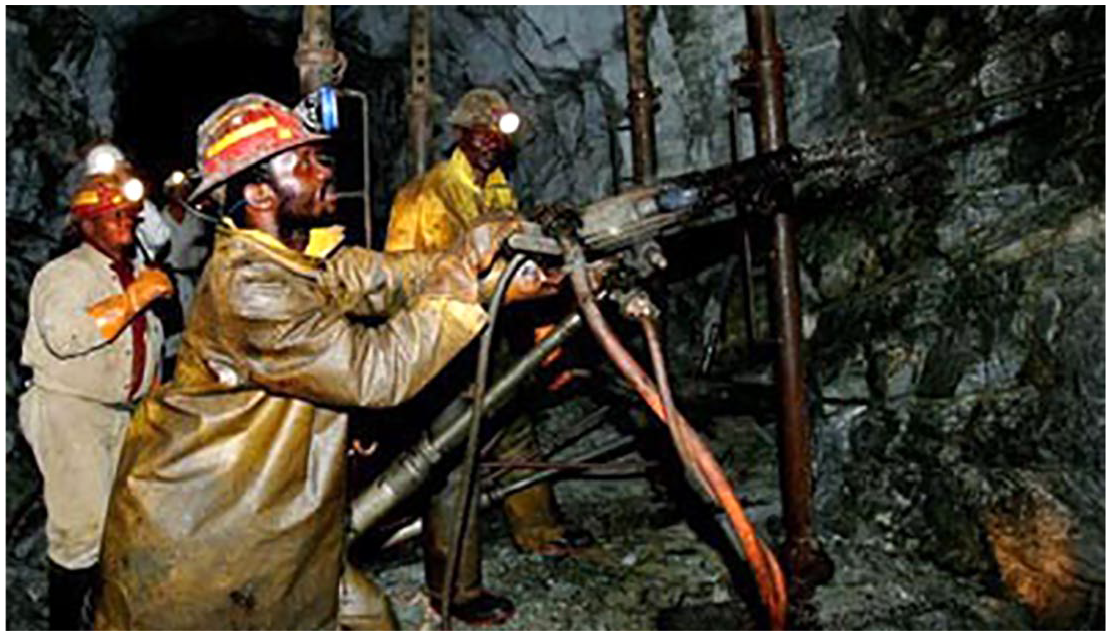
Picture of RDO.
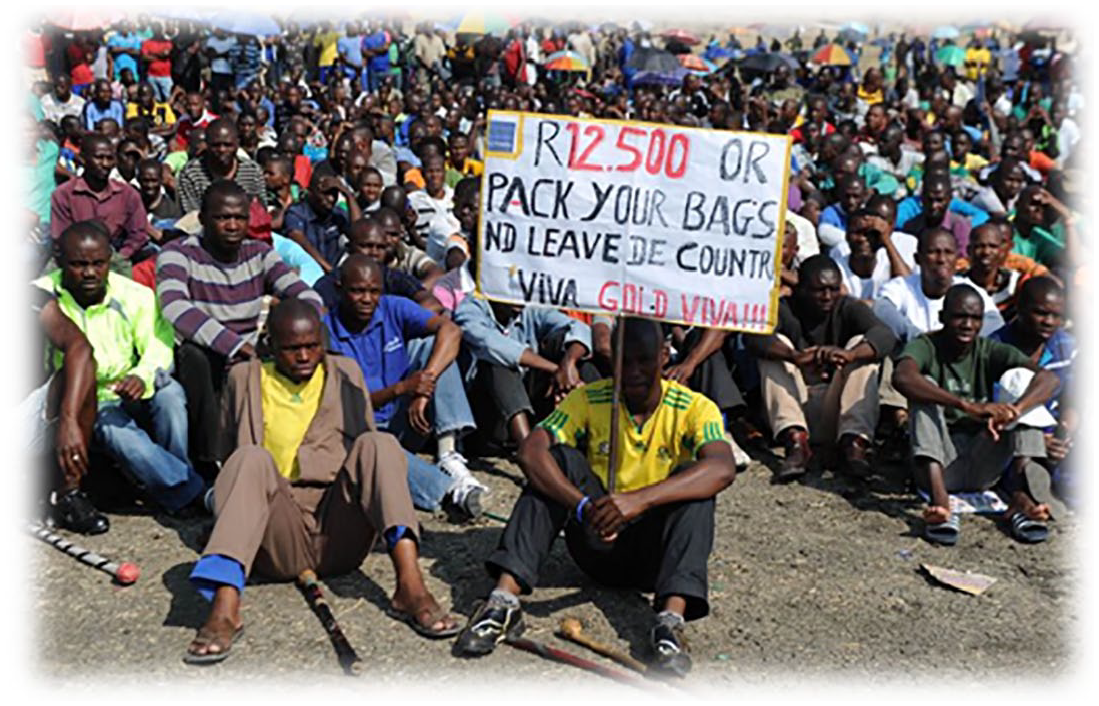
Workers gathering at the stadium with a sign demanded figure of R12 500.
Before the events at Lonmin, negotiations had occurred at Implants Platinum, where NUM represented RDOs and secured an 18% pay increase applicable across all ranks. However, this increase was applied indiscriminately, resulting in only a modest raise for the RDOs (Alexander et al., 2012). Concurrently, between August 9th and 11th, 2012, Lonmin’s RDOs, employees of the British-controlled platinum mining entity, echoed similar demands.
However, NUM adopted a different strategy, abstaining from presenting these demands to Lonmin’s leadership. Instead, the union advocated for a comprehensive raise encompassing all blue-collar workers. This discrepancy exacerbated the frustration among the RDOs, deepening their discontent as they received a relatively modest increment specifically designed for them (Alexander et al., 2012).
On August 9th, a pivotal moment occurred as a significant gathering of RDOs assembled at Wonderkop Stadium within Lonmin Marikana mine. Approximately 3000 workers united, vowing to withhold their labour the following day, driven by their collective determination to achieve a monthly net salary of R12,500 (MCR, 2015; see Figure 3). As dawn broke on August 10th, a determined procession of striking workers embarked on a resolute march from the stadium to Lonmin Platinum Division’s esteemed offices. The presence of ‘traditional weapons,’ including ceremonial items like knobkieries and pangas, accompanied by forceful chants and traditional medicine believed to confer invincibility, cast an intimidating shadow, effectively quashing prospects for dialogue with management (Desai, 2014).
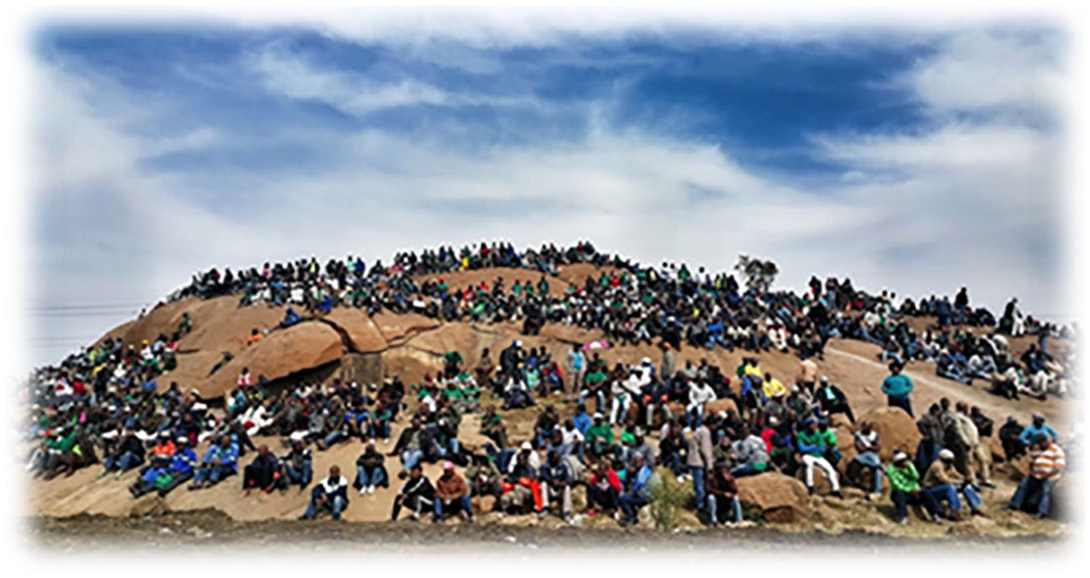
Shows the mountain where workers gathered prior to the massacre.
With the arrival of August 11th, an unwavering resolve surged through the ranks of the striking miners, mainly NUM-affiliated RDOs, as they advanced their dissatisfaction towards NUM’s primary offices in Wonderkop. Near the bustling Wonderkop taxi rank, an unsettling scene unfolded. Around 15–20 NUM representatives, armed with firearms, purportedly fired shots at the gathered demonstrators, casting a cloud of uncertainty over the motivations behind this distressing escalation (MCR, 2015). Subsequent investigations compelled NUM representatives to reluctantly acknowledge their role in the shooting (MCR, 2015). Their account contended that protesters had approached wielding traditional implements, stones and threats, invoking a self-defence justification fuelled by rumours of an impending assault on the NUM office (MCR, 2015).
Following the events of August 11th, the rivalry between the two prominent worker unions, NUM and AMCU, intensified, giving rise to a series of violent clashes. AMCU, seemingly more attuned to workers’ concerns, found itself marginalized and weakened by Lonmin’s management, leaving only NUM as the recognized representative (Desai, 2014). The divide between the unions was underscored by differing stances – while some NUM workers were inclined to resume work, AMCU affiliates remained steadfast in their demands. These escalating tensions culminated in violent confrontations, resulting in the loss of nine lives, including two police officers, in the Marikana region from August 12th to 14th (Desai, 2014). Amid accusations and a growing atmosphere charged with tension, a strategic retreat unfolded as the workers sought refuge on a nearby mountain, which symbolized a collective sanctuary.
Nearly 3000 Black mineworkers, armed with ancestral weaponry, converged on this mountain. This mountain transformed into an improvised assembly ground, becoming a platform for discussions and aspirations – a powerful space where they expressed their determination to engage Lonmin’s management. The resounding call for equitable negotiation echoed as the workers stood united, vowing to remain on the mountain until management met them ‘as equals’. However, both NUM and Management (represented by HR Head and Mr. Barnard Mokwena including CEO Ben Magara) ‘held to their guns’ and refused to approach the mountain’s slopes. At this stage, the workers’ self-representation and use of ancestral arms are disruptive undercurrents challenging established norms of organizational order.
The occupation of the mountain marked a critical turning point, thrusting negotiations between workers and the police into the spotlight. On August 13, a law enforcement officer, a hostage negotiator, was dispatched to the mountain to persuade workers to relinquish their weapons and disperse, categorizing their assembly as ‘illegal’. The chief negotiator, a white man, approached the workers in Fanakalo, the language of black migrant mineworkers, seemingly to defuse tensions. He requested that the workers select five representatives to engage in a dialogue with him. Subsequently, these five amadoda descended from the mountain to engage with the negotiator.
However, the situation escalated palpably as the negotiator staunchly refused to exit the running police vehicle, choosing to address the workers from within, even after they had set aside their weapons. Despite the workers’ requests, the police declined to turn off the engine, hindering direct communication. Undeterred, one of the five amadoda climbed onto the police vehicle, attempting to communicate through the window amid the running engine (see Figure 4). Frustrated by the apparent apathy of the police, the workers reiterated their position, expressing their desire to engage with their management rather than the police. Following this moment, the five amadoda became the representative voices of the workers’ demands – replacing union representation (Bruchhausen & Naicker, 2018). The deadlock with the police persisted, resulting in an unyielding impasse. The workers’ continued occupation of the mountain and the use of traditional weapons and rituals on the mountain became the justification for subsequent brutal police violence.
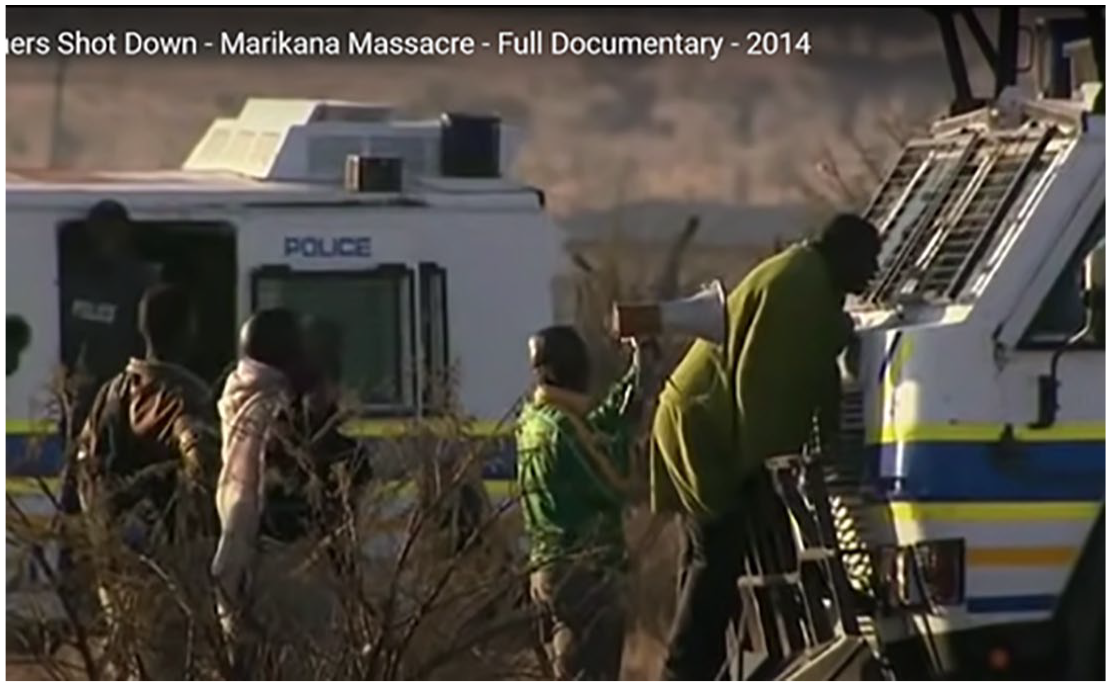
The five amadoda attempting to address the police (MSD screenshot).
On August 16, a decisive moment arrived as the police terminated negotiations with the striking workers. This pivotal decision led to the forceful dispersal of workers from the mountain, culminating in the tragic loss of 34 mineworkers and numerous injured protestors (see Figure 5). In the aftermath of the heart-wrenching massacre, a commission of inquiry was established to investigate the unfolding events. Revelations emerged, indicating that the police faced external pressure from government officials, including shareholder at Lonmin, Mr Cyril Ramaphosa, then a deputy president of South Africa and deputy president of the ruling ANC.
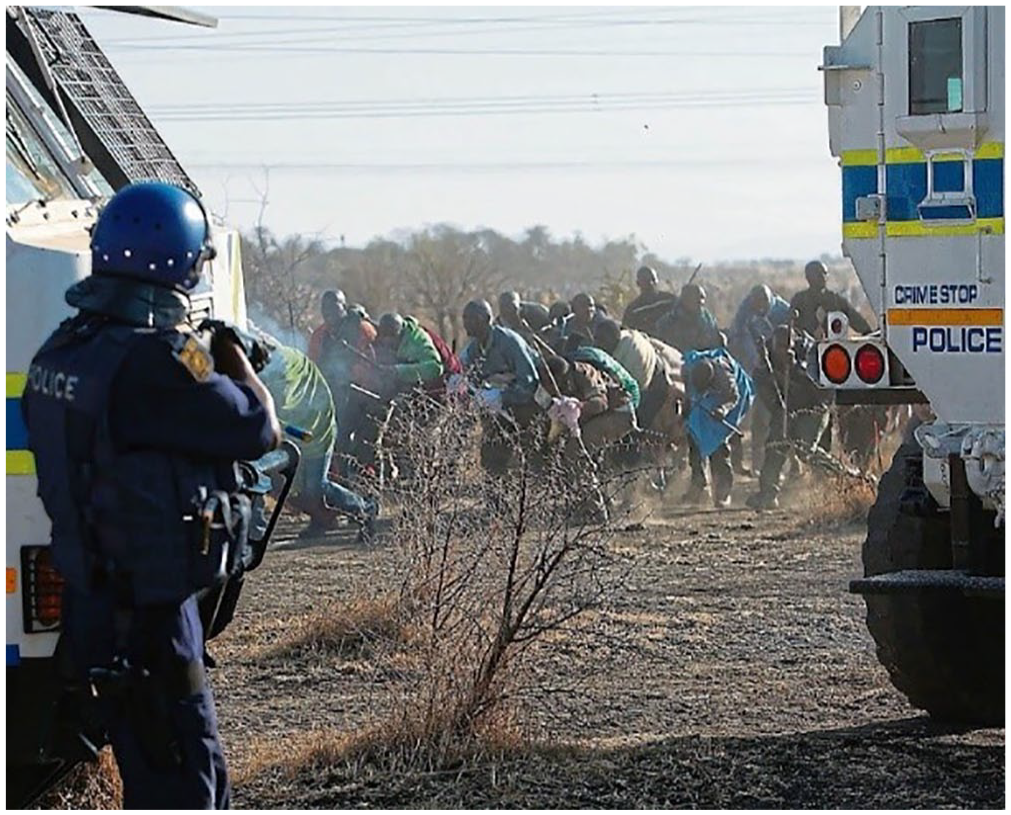
Police begin to shoot the workers. Scene 1 (SowetanLive).
An email sent by Mr. Cyril Ramaphosa, to the police minister and Lonmin executives characterized the situation as involving ‘dastardly criminals’. This language, laden with colonial undertones, undermined the significance of the workers’ courageous resistance. Tragically, despite substantial evidence, none of the implicated police officers have been convicted as of 2023. 1 Moreover, the commission, however, concluded that ‘Mr. Ramaphosa’s intervention with the Ministers was not inappropriate or inadmissible’ (MCR, 2015: 432). Furthermore, the subsequent commission of inquiry shed light on the sequence of events that led to the devastating massacre, exposing the deeply rooted legacies of anti-Black violence that stem from eras of slavery, colonialism and apartheid. Testimonies and leaked video recordings from the aftermath provided a chilling glimpse into the stark reality of the workers’ unwavering struggle for fair treatment and genuine representation in their workplace.
For instance, days after the massacre, during a rally on August 18, 2012, a survivor of the Marikana massacre and workers’ leader recounted the events when they encountered the white policemen: I was asked to ride in the back of a police van. Inside the van, I found a white man. He approached me in my language, but as a black person, I was expected to speak in his language. This is the same white man who said they wanted to build friendly relations with me. I said if that is the case, let us step outside and go and talk. He replied and said he has the right, which was granted to him by the government so he can only address me privately. I turned around and told the workers that the white man refused to come and address them directly. He said, ‘The government gave us the job and the workers’ union’. I said, ‘Thank you’. And went back to the workers, and we all sat down, we all met and talked. (Speech cited in Alexander et al., 2012: 60).
The reference to the government by the police suggests that the violence had shifted from being a mere labour-management dispute to a condition perceived as a threat to the safety of the state. The tragic events at Marikana have left an indelible mark on South African history, laying bare systemic issues of inequality, racial discord, and the exploitative treatment of workers within the corporate realm (Neocosmos, 2016). The Marikana massacre stands as a stark reminder of the power dynamics within organizations operating in settler colonial contexts. By delving into the meta-theory of Afropessimism, we can gain a deeper understanding of the intricate interplay of power and resistance in the face of anti-Blackness, as we will further demonstrate below. See the timeline (Table 1) of the events depicted in the narrative below.
Timeline of events leading to the Marikana Massacre (2012).
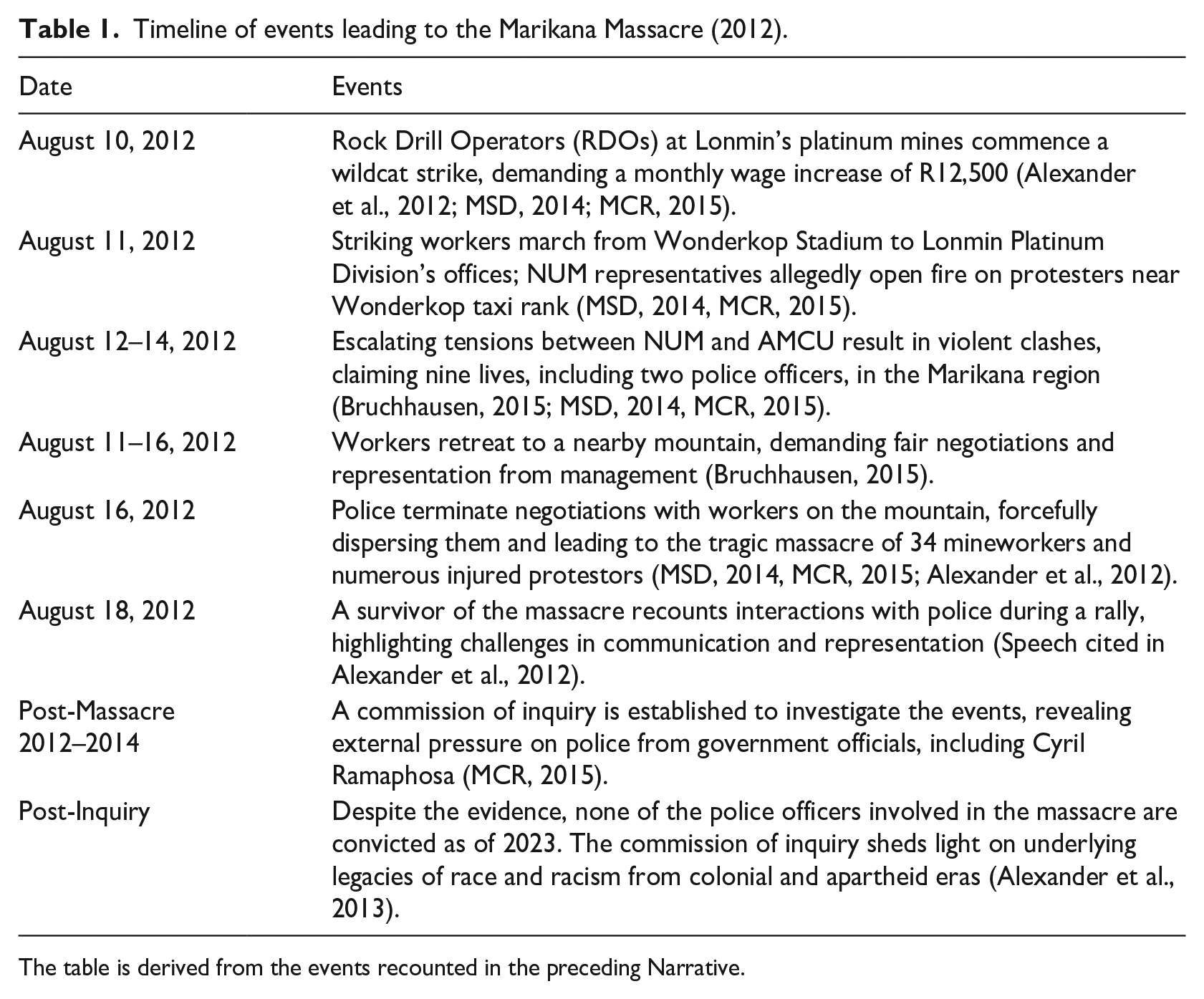
The table is derived from the events recounted in the preceding Narrative.
Unveiling anti-Blackness in the Marikana Massacre narrative
The Marikana massacre narrative is intricately linked to South Africa’s historical trajectory, emblematic of the enduring consequences of colonialism and apartheid (Neocosmos, 2016; Piketty, 2014). To comprehensively grasp this tragedy, it is crucial to first contextualize it within the broader framework of economic disparities and racial capitalism entrenched within settler colonialism (Prasad, 2021). Marikana’s evolution from a rural farming community into a pivotal platinum mining centre vividly illustrates how Dutch and British colonization reshaped landscapes while erasing and marginalizing the cultural heritage of Black communities (Bruchhausen and Naicker, 2018).
This transformation underscores the profitability of mining, which heavily relied on exploiting cheap migrant labour, perpetuating racial hierarchies and economic disparities (Magubane, 1986). Despite the formal end of apartheid, the mining sector remained fraught with low wages, inadequate living conditions, and frequent labour rights violations. These conditions starkly highlight enduring racial biases and economic inequities in post-apartheid South Africa (Hart and Padayachee, 2013; see Figure 6).
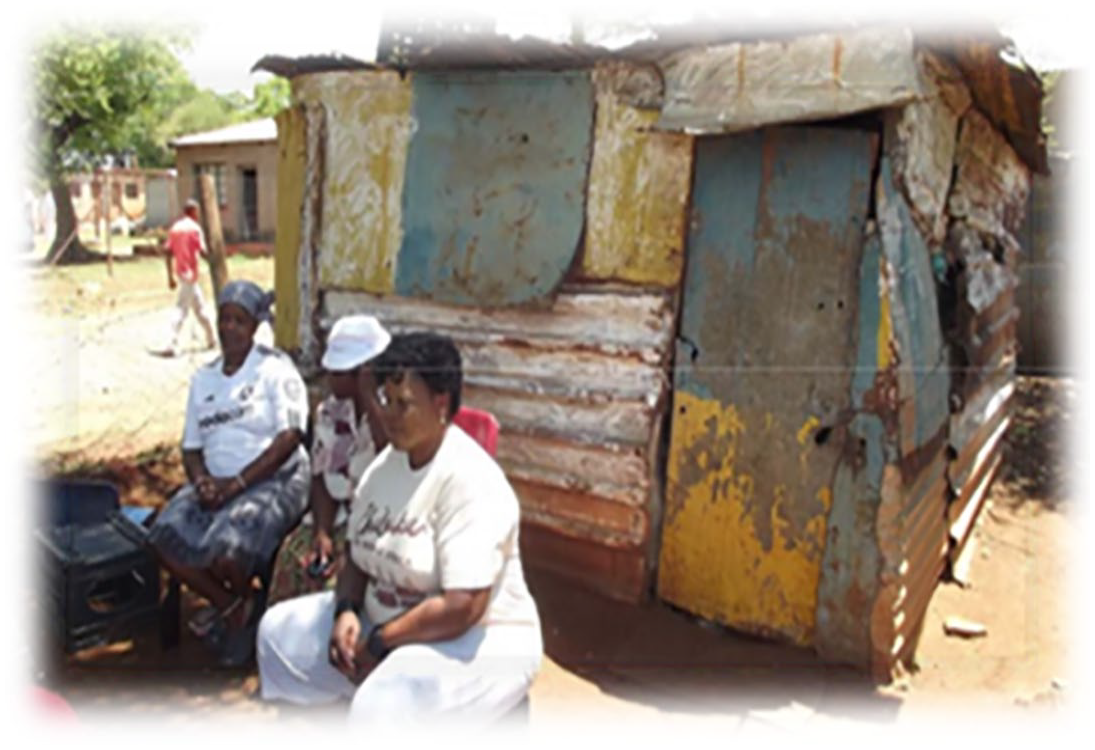
Photo included in the Marikana Commission’s evidence leaders’ Heads of arguments showing a shack occupied by a mine worker and his family.
The Marikana massacre unfolded amid the African National Congress’s (ANC) ongoing struggle to address entrenched poverty and inequality (Alexander et al., 2012). Mounting frustration over sluggish socio-economic reforms exacerbated grievances among workers, particularly in sectors like mining, where stagnant wages and poor working conditions fuelled discontent (Hart and Padayachee, 2013). The wave of labour strikes and protests preceding the massacre underscored widespread dissatisfaction with the government’s responses to socio-economic challenges, revealing enduring racial discrimination and economic disparities that fuelled social unrest (Bruchhausen and Naicker, 2018; Neocosmos, 2016). Understanding these contextual dynamics is essential for comprehending the underlying causes and enduring consequences of the Marikana tragedy, rooted deeply in the systemic devaluation of Black lives.
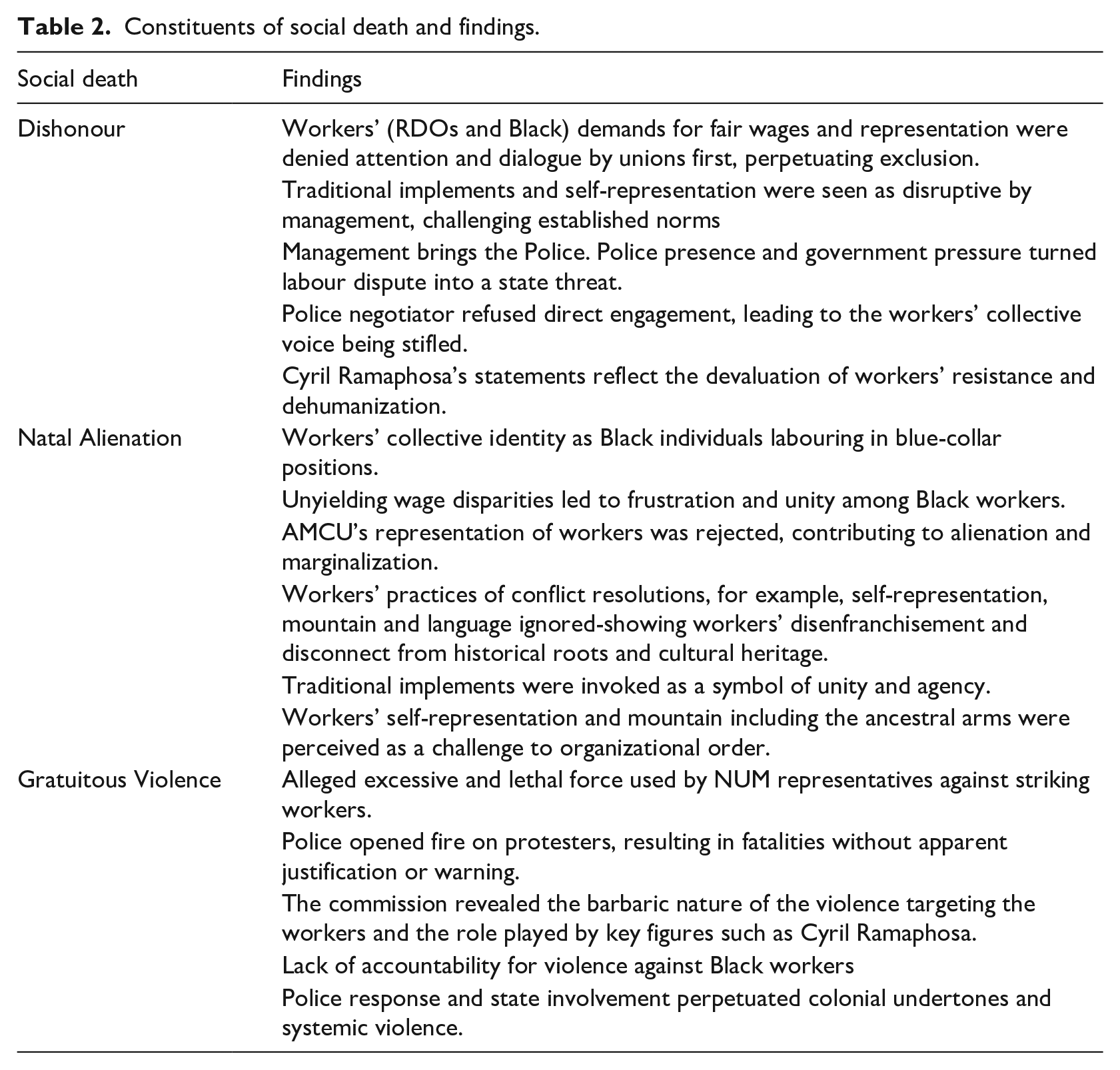
Within the organizational context, the Marikana incident reveals significant failures in conflict resolution mechanisms at Lonmin. Rock Drill Operators encountered resistance from both union representatives and management, compounded by a heavy-handed response from law enforcement, ultimately escalating their marginalization and leading to tragedy (Bruchhausen and Naicker, 2018). The breakdown of events in Table 1 above reflects broader power imbalances that perpetuate privilege and exploit indigenous labour within postcolonial settings. Applying an Afropessimism lens to analyse the Marikana narrative reveals entrenched anti-Blackness, where Black lives endure conditions of social death characterized by dishonour, natal alienation and gratuitous violence (see Table 2 below). The subsequent sections will delve into these manifestations of social death, drawing parallels between the experiences of enslaved individuals and exploited workers to elucidate the enduring legacy of anti-Black violence within settler colonial contexts.
Constituents of social death and findings.
Dishonour and natal alienation: Unmasking anti-Black structures in the Marikana Massacre
The tragic narrative of the Marikana massacre, illustrated in Table 2, exposes deep-seated anti-Blackness ingrained within multinational corporations’ conflict resolution mechanisms in settler colonial contexts. Central to this dishonour is the National Union of Mineworkers (NUM), which dismissively disregarded the demands of the Rock Drill Operators (RDOs) at Lonmin for fair wages and representation, exacerbating their exclusion from meaningful dialogue within the organizational structure (Alexander et al., 2012).
The workers’ efforts at self-representation – conducting meetings on the mountain and wielding traditional weapons – stood in stark contrast to established organizational conflict resolution norms. Management perceived these actions as disruptive, undermining the workers’ cultural agency and intensifying their sense of dishonour. Furthermore, police intervention, at the behest of management, escalated the dispute into a perceived state threat, labelling the assembly as ‘illegal‘ and further deepening the workers’ social death by trivializing their grievances as mere lawlessness (Alexander et al., 2012). Cyril Ramaphosa’s characterization of the workers as ‘dastardly criminals‘ further dehumanized them, reducing their legitimate demands to mere criminality (MCR, 2015; see Table 2 above).
The escalating rivalry between NUM and the Association of Mineworkers and Construction Union (AMCU) amplified the dishonour experienced by Black workers, exacerbating historical antagonisms within South Africa’s settler colonial legacy. The transformation of NUM’s leadership, notably Cyril Ramaphosa, from a unionist advocate to a powerful politician and corporate shareholder complicates the narrative, revealing a conflict between Black liberation and capitalist accumulation (cf. Neocosmos, 2016). This scenario illustrates NUM’s complicity in the dehumanization of Black workers. Union disputes with AMCU diverted attention from addressing systemic inequalities towards preserving exploitative capitalist practices, thereby reinforcing divisions among Black workers. NUM’s passivity underscores its inadequacy in genuinely representing Black interests, revealing both resistance to and complicity with corporate and political agendas perpetuating settler colonialism and entrenched anti-Blackness, thereby obstructing collective justice movements (cf. Wilderson III, 2020).
Conversely, AMCU’s defence of dishonoured Black workers marked a critical stance against injustice. Their advocacy for substantial wage increases to R12,500 highlighted efforts to address the struggles of Black workers within a capitalist framework marked by racial dehumanization. Joseph Mathunjwa’s plea to the police on August 16th, ‘These are human beings’, captured in the Marikana documentary (see Figure 7), underscores the disregard for Black dignity and rights, emphasizing the theme of social death where Black lives are systematically devalued within anti-Black structures (Sexton, 2016; Wilderson III, 2010).
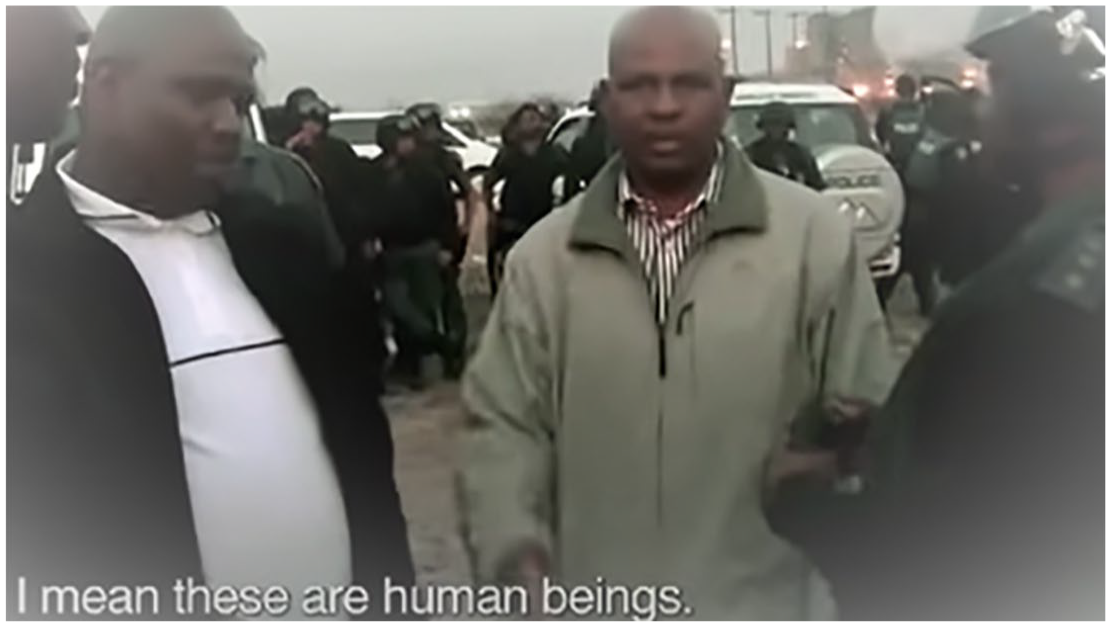
Shows Joesph Mathunjwa (centre) pleading with police officers to speak to workers at the mountain (MSD screenshot).
Furthermore, the collective identity forged by the workers, advocating for fair wages and establishing symbolic mountain retreats, aligns with Afropessimism’s concept of revolutionary ‘good sense’ (Wilderson III, 2010) or the Rejectionist perspective in critical management studies (Chowdhury, 2021). This perspective underscores the workers’ acute awareness of their exploitation and alienation, empowering them to challenge existing oppressive structures. Mathunjwa’s poignant statement during the massacre (Desai, 2014), ‘Comrades, the life of a Black person in Africa is so cheap. . . They will kill us, and they will finish us and replace us with others and pay them salaries that cannot change the lives of Black people. . . That would mean we were defeated but capitalists would be the ones that win’, encapsulates the existential and economic paradox faced by Black workers. Mathunjwa’s words highlight the futility of struggling within a system that views Black workers as expendable entities.
The rejectionist paradigm celebrated by Chowdhury (2021) does not apply to Black workers in the Marikana massacre, where they were denied an audience by both NUM and management, only to face massacre. This event underscores the contradiction faced by Black workers and evokes the co-constitutive nature of Blackness and death in a settler colonial context (Wilderson III, 2008, 2010). Despite heightened consciousness and the pursuit of justice, systemic anti-Blackness and entrenched settler colonial structures preclude the possibility of conventional freedom for Black individuals. The massacre exemplifies how Black lives are sacrificed without consequence, irrespective of the workers’ moral consciousness and resistance.
The events leading up to and including the massacre must be situated within the spatial context of existing settler colonialism, marked by settler dominance and the systematic relegation of Blackness to the zone of non-being (Fanon, 2008; cf. Sithole, 2020). This zone resists reconciliation as it represents a state fundamentally at odds with the dominant order (Sexton, 2016; Wilderson III, 2010). This spatial dimension is starkly evident in South Africa, a settler colony characterized by European territorial occupation. Lonmin’s operations symbolize a continuation of economic control rooted in South Africa’s colonial past (Chetty, 2016). The systemic nature of anti-Blackness and the power dynamics of settler colonialism preclude traditional notions of freedom for Black individuals (Wilderson III, 2010).
This analysis parallels historical atrocities like the Sharpeville and Ngquza Hill massacres, highlighting persistent anti-Black violence manifested in the disregard for Black lives at Marikana (Makama and Kubjana, 2021). The assembly site (Mountain) at Ngquza Hill, imbued with spiritual and historical significance (Bruchhausen and Naicker, 2018), serves as a battleground where the erasure of Black identity and misinterpretation of traditional symbols perpetuate systemic anti-Blackness. This discussion encapsulates Natal Alienation, illustrating the profound estrangement of Black individuals from their historical heritage, cultural roots, and fundamental identity within settler colonial contexts and organizations (cf. Wilderson III, 2010; Mbembe, 2001).
The Marikana workers, united by their identity as Black individuals in blue-collar roles, epitomize the profound impact of Natal Alienation (see Table 2). Their demand for fair wages signifies not only economic equality but also a direct challenge to historical exploitation that has relegated Black individuals to low positions and low wage labour. This unity, rooted in shared grievances, underscores the potency of collective identity in mobilizing resistance against deeply ingrained anti-Black systems (Wilderson III, 2010). Lonmin management’s rejection of AMCU exemplifies Natal Alienation, further intensifying the workers’ sense of marginalization and alienation by distancing them from decision-making processes that significantly impact their lives (Sithole, 2020).
The interactions between workers and police following the release of a hostage officer lay bare the natal alienation of Blackness. The white police officer’s disregard for the workers’ language, Fanakalo, underscores the asymmetry of power. Initially utilizing Fanakalo to build trust, the officer then shifts to English, denying agency and perpetuating the collective alienation of Blackness at a political level that regulates existence and relationality (Wilderson III, 2010). By insisting on English and dismissing the workers’ language, the officer deprives them of agency and self-expression.
Similarly, Lonmin management, exemplified by HR senior personnel Mr. Bernard Mokoena, avoids direct communication with workers, favouring English-centric communication channels through English radio and television news outlets (cf. Bruchhausen and Naicker, 2018). This undermines Black workers’ conflict resolution mechanisms, which demanded management’s equal engagement with them on the mountain (Bruchhausen and Naicker, 2018). These actions demonstrate how management manipulates the concept of dialogue to assert dominance and justify further violence against workers who resist their terms, highlighting the entrenched anti-Black violence perpetuated by settler colonial structures.
In summary, the interplay between dishonour and Natal Alienation exposes how historical legacies, economic interests, and power dynamics converge to perpetuate social death, marginalization, and violence against Black individuals. These revelations underscore the urgent need to confront and dismantle the anti-Black structures thriving within organizations and society at large. Simultaneously, they emphasize the crucial importance of recognizing the agency, resistance, and shared identity of Black individuals, including the role of physical death in their relentless pursuit of justice and equity (cf. Sithole, 2020).
Central to examining dishonour and natal alienation is the question: Why are these workers subjected to such treatment? The answer lies in acknowledging that these workers are perceived as Black before all else. The overt visibility of Black bodies subjects them to relentless scrutiny through the white gaze, rendering them inconspicuous and unworthy of attention from those in power, irrespective of their racial identity (Wilderson III, 2010). The structures and practices employed by management and state agents, including NUM’s actions, perpetuate historical social hierarchies and discrimination based on desired and undesired Black flesh (Sithole, 2020; Wilderson III, 2010). Within this context, a conflict situation, governed by meeting of bodies and skins, degenerates into the objectification of the Black subject, robbing Black RDOs of power and likening them to the paradigm of slaves (Wilderson III, 2010).
The Black workers’ assertion of labour rights in our narrative aims to escape social death and gain recognition as human subjects, dominated by the white gaze that excludes Blackness from humanity. However, this assertion is met not with integration but with reinforcement of structures that perpetuate Blackness as abject, reinforcing non-Black subjectivities. This response aligns with Afropessimist theory, asserting that Black suffering uniquely defines the Black condition within white supremacist societies (Wilderson III, 2020). The Marikana massacre illustrates this, positioning Blacks not as degraded humans but as the antithesis of the Human, irredeemably placed within existing social, political, and economic structures (cf. Wilderson III, 2020). The subsequent termination of negotiations by law enforcement and the forceful eviction of striking workers from the mountain site vividly highlight the pervasive anti-Blackness inherent in settler colonial contexts.
Gratuitous violence and structural violence in the Marikana Massacre
The tragic events of August 16, 2012, where police opened fire on striking workers, resulting in 34 deaths and numerous injuries, epitomize the stark application of gratuitous violence. This violence must be contextualized within the preceding events, as revealed by the Marikana Commission of Inquiry. Initially, the National Union of Mineworkers (NUM) deployed live ammunition against its own members, followed by police violence against workers who were in conflict with their employer, even while carrying traditional weapons. This symbolizes a clear and aggressive antagonism in a conflict centred on Black lives (MCR, 2015).
Insights from the Marikana Commission, including leaked police videos, reveal the insidious nature of the violence during the massacre. They underscore that the police opened fire unprovoked against the workers (Marikana Commission of Inquiry Report [MCR], 2015). Despite the workers not firing a single shot at the police, live ammunition was unleashed on those carrying ‘traditional weapons‘ (MCR, 2015).
Moreover, the commission exposed that the police had detailed information, photographs, and descriptions of the clothing of five amadoda, specifically targeting these individuals. Consequently, police gunfire in ‘Scene 1’ claimed the lives of 17 miners, including a leader, one of the five amadoda, who was shot 14 times. This reveals targeted killings facilitated by corporate interests in collusion with postcolonial state violence. Approximately 15 minutes later, another 17 strikers were fatally shot near ‘Scene 2’. Hearings at the commission unveiled a disturbing truth: during ‘Scene 2’, police callously targeted Black protestors seeking refuge behind rocks, some with their hands raised in surrender, while others were fleeing (MCR, 2015) (see Figures 8 and 9). They fell victim to an unbroken 20-minute spree of violence (MCR, 2015).
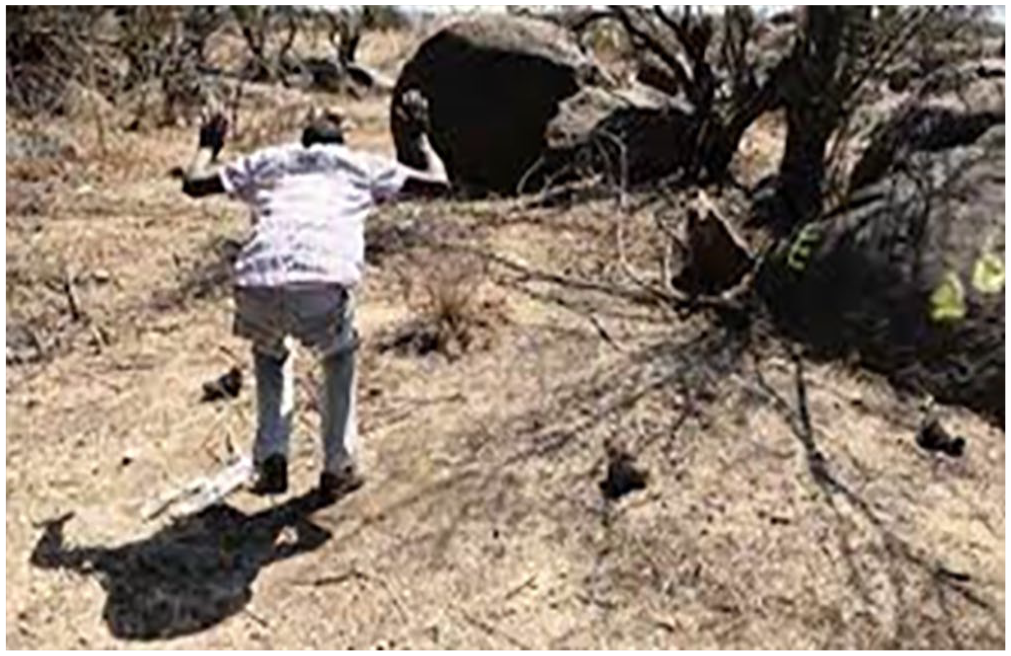
Survivors of Scene 2 massacre demonstrates media obscured events where workers with raised hands were shot. Marks on the stones mark the location where bodies many bodies were found (MSD screenshot).
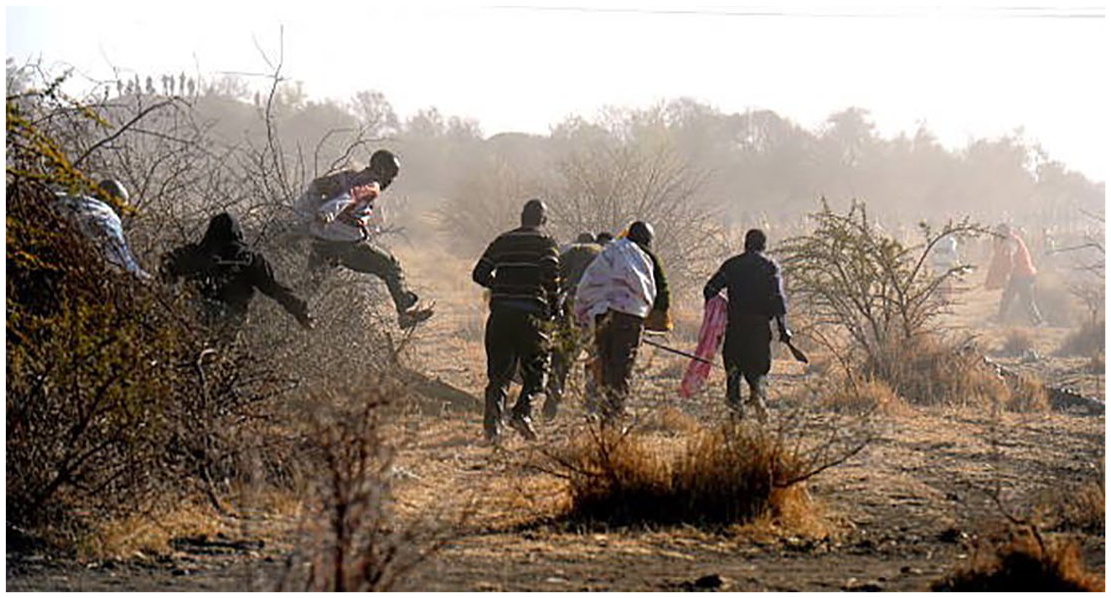
Scene 2: Workers flee for cover after the police opened fire in Scene 1. Despite attempting to escape some were pursued and fatally shot (MSD screenshot).
A leaked recording exposes the chilling commentary of a police officer beyond the primary massacre site in Scene 2 (MCR, 2015). This officer proudly recounts shooting a miner multiple times, boasting, ‘Did you see how I took him down? I shot him 10 times and he still kept coming. . . That motherfucker, I shot him at least 10 times!’ (Desai, 2014). The recording captures a fellow officer commending the shooter’s actions with unsettling pride, stating, ‘I saw it, you used a nice skill to get him’, to which the shooter responds with unsettling pride, ‘It was me’ (Desai, 2014). The victim of this violent act was Thobile Mphumza, a 26-year-old Black man. Mphumza, a former Lonmin employee dismissed for participating in an unprotected strike, sustained 12 gunshot wounds (Desai, 2014).
These revelations raise a pivotal question: if these are workers, do they truly possess agency and rights? While a resounding negative answer might not be warranted, for subjects existing in the zone of beings, the actions recounted in the recorded statements of the police officers reflect their active involvement in a veritable hunt for what they deemed ‘criminals’ or even ‘animals’ – slaves, runaways.
The actions of the police and the prevalent discourse lay bare the deeply rooted anti-Blackness ingrained within settler colonial society, reducing Black humanity and perpetuating violence. This disturbing ‘hunting’ mentality (see Figure 10) is contextualized, though not exclusively, by remarks made by Cyril Ramaphosa, who characterized the workers’ actions as ‘dastardly criminal’ (Table 2). At this juncture, the protestors ceased to be acknowledged as workers and were instead cast as ‘nasty Blacks’, reaffirming the enduring nature of social death and the genocidal nature of settler colonialism (Sithole, 2020).

Police searching for workers at the mountain (MSD screenshot).
The harrowing events across two distinct scenes illuminate a nightmarish pattern of anti-Black violence, underscored by systemic dehumanization and disregard for Black lives. The actions of the police seamlessly align with the paradigm of anti-Blackness, depicting Black workers as expendable entities in their relentless pursuit of order and the preservation of the prevailing settler colonial system (Fanon, 2004, 2008). The police’s actions reinforce the devaluation of Black humanity and worker identity, casting the Black protesting workers as modern-day slaves, emblematic of anti-Black violence.
This echoes historical patterns, as the police continue their role of managing existence within the settler colonial framework, relegating Blackness to a zone of nonbeing and subjecting it to dishonour and violence when attempting to exercise the ‘rights’ guaranteed by the postcolonial state project (cf. Mbembe, 2001). The violence inflicted upon Black people is not a reaction to their actions but is constitutive of the master-slave dialectic, underpinning the existence of the Human (Wilderson, 2010). This mindset resonates with the era of slavery and colonialism, where any challenge to the status quo warranted severe consequences, prioritizing the dominant group’s social and economic interests over the lives and dignity of Black individuals.
Moreover, the overt displays of violence witnessed in the Marikana massacre perpetuate the cycle of dehumanization and subjugation, reinforcing the hostile environment of anti-Blackness within settler colonial structures. By inflicting visible physical violence, anti-Blackness seeks to exert control, instil fear, and maintain dominance over Black lives, deepening the dehumanization of Black individuals and perpetuating the notion of Black bodies as disposable objects of desire and punishment (Sithole, 2020). Additionally, the psychological impact of witnessing such violence reinforces powerlessness, trauma, and disconnection from history, culture, and land, intensifying the experiences of dishonour and natal alienation, and further perpetuating the legacies of slavery and colonization (Wilderson III, 2010).
Afropessimism’s framework of the libidinal economy underscores the regulation of Blackness at the skin level, both by whites and within the Black community, necessitating an examination of race, class (or political economy) and Blackness at the corporeal level (Wilderson III, 2010; White, 2020). Despite enduring anti-Black violence, Black workers faced oppression from various quarters, including Black trade unions, management figures, and predominantly Black police officers (see Figure 11) (Sithole, 2020), revealing a governance structure perpetuating anti-Blackness. This internalization is shaped by the libidinal economy, where the Black image, influenced by the white gaze, reinforces stereotypes of othering, undesirability, and negation associated with Black skin, thereby fetishizing and commodifying Blackness (Wilderson III, 2010; White, 2020).
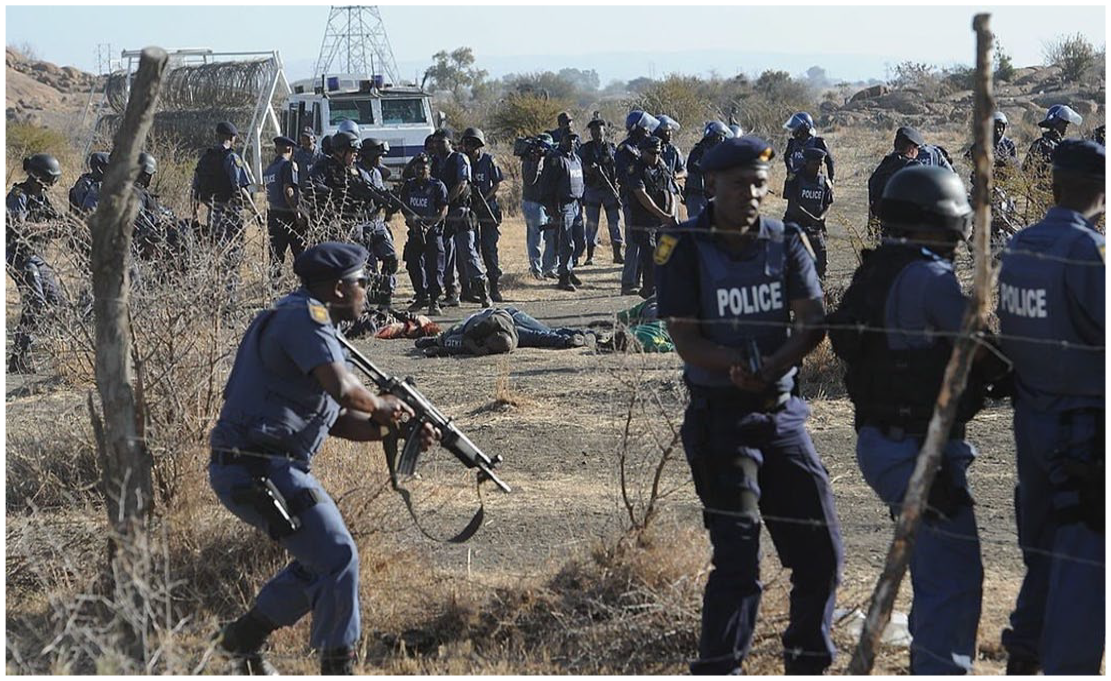
Police officers, majority Black, open fire on striking workers outside the Nkageg informal settlement on 16 August 2012 in Marikana (Photo by Felix Dlangamandla/Foto24/Gallo Images/Getty Images). https://www.gettyimages.com/detail/news-photo/police-officers-open-fire-on-striking-mine-workers-outside-news-photo/150411774.
This internalization manifests in the policing of Blackness at the skin level, where Black individuals perpetuate anti-Black violence and reinforce racial hierarchies (Wilderson III, 2010), rooted in the settler colonial context where structures of violence persist from slavery and colonialism (Wilderson III, 2010). This underscores the entrenched nature of anti-Blackness within the Black community (Hart, 2018). This psychic condition propels a pursuit of proximity to whiteness as a strategy to evade social death (Wilderson III, 2010). In settler colonial contexts, formerly oppressed Black individuals vie for economic advancement and proximity to whiteness, perpetuating a cycle mirroring the dynamics of white supremacy. Even when Black individuals occupy positions of authority within racist systems, they may wield violence comparable to or exceeding that of whiteness, illustrating the pervasive nature of antiblack racism across all societal levels, including organizations and interpersonal relationships in settler-colonial contexts (cf. Fanon, 2004).
Understanding this complicity requires an ethical evaluation rather than a moral judgement, acknowledging the structural positioning of Black individuals as the antithesis of the Human within a white supremacist social order. The violence against Black bodies is intrinsic to the Black condition within this framework, emphasizing the pivotal role of Blackness in shaping political economy and exposing the inadequacies of class analysis in capturing anti-Black dynamics (Wilderson III, 2010). Therefore, the violence at Marikana cannot be reduced to mere economic mechanisms but must be understood as a system of control and symbolism that shapes settler colonial power dynamics and enforces authority to extract value (Mbembe, 2019). This coercion intertwines with libidinal dynamics, encompassing desires, anxieties, prejudices, and racial categorizations (Mbembe, 2019). This perspective underscores capitalism’s dependence on racial hierarchies and its persistent subjugation of Black individuals, including by fellow Black individuals (Wilderson III, 2010).
Anti-Blackness transcends the confines of ‘necrocapitalism’ and extends beyond class and economic disparities, as highlighted by Banerjee (2008: 1548), to encompass the profound role of Blackness in shaping the narrative of political economy (Wilderson III, 2010, 2020). Within this framework, class is understood as a structural position within society and work organizations that intersects with anti-Blackness but does not supersede or nullify it (Wilderson III, 2010). Afropessimism’s emphasis on the libidinal economy disrupts traditional political economy analyses in organizational studies, revealing the intricate interplay of race, desire, and power that underpins the subjugation of Black individuals within capitalist structures.
The striking absence of judicial convictions for the police officers involved in the massacre, despite clear evidence of their participation, epitomizes a troubling pattern of impunity that allows acts of violence against Black lives to proceed unchecked (see Wilderson III, 2020 on law). This blatant lack of accountability further cements the perception that Black lives remain expendable and unworthy of protection. In sum, the violent incidents detailed above form part of the broader phenomenon of anti-Blackness, a malevolent force deeply ingrained within organizational structures that propel systemic violence against Black lives. Even in spaces striving for inclusivity, such as workplaces in a ‘post’-settler context, the spectre of violence may persist, as systemic violence against Black lives serves to underpin the psychic cohesion of these very organizations. This violence is inherently structural, targeting not only Black individuals but also the very essence of Blackness itself.
Unveiling anti-Blackness in organizational contexts
The study of the Marikana massacre reveals entrenched systemic racism within organizational structures and highlights the perpetuation of racial hierarchies (cf. Abdallah et al., 2021; Banerjee, 2008; Dar et al., 2021; Nkomo, 2021; Prasad, 2021). By foregrounding Blackness within the framework of settler colonialism, it enriches existing paradigms by addressing the specific experiences of Black individuals subjected to anti-Blackness and systemic violence within capitalist frameworks (Abdallah et al., 2021; Fanon, 2008; Nkomo, 2021), thereby challenging conventional understandings of necrocapitalism and necropolitics.
The dehumanization of Blackness, rooted in the legacy of slavery, extends beyond the Marikana massacre to encompass the liberal narratives surrounding it. Sithole (2020) astutely critiques the use of the number 34 in the Marikana narrative, which, while intending to memorialize the deceased, paradoxically reduces Black lives to statistical data, exemplifying a form of dehumanization. Similarly, Alexander et al. (2012), as cited by South African scholars, denigrate practices like ‘five amadoda‘ and the mountain as ‘backward‘ (Bruchhausen and Naicker, 2018), thereby dismissing the collective social values and systems of Black workers, perpetuating anti-Black racism and its structural violence, even within ostensibly progressive liberal discourses.
These criticisms extend to critical management studies (CMS) and postcolonial perspectives within organization and management studies, exposing the dominance of white and European perspectives within CMS (Prasad et al., 2016). The production of knowledge, theoretical frameworks, and their dissemination are overwhelmingly influenced by privileged voices, predominantly White and male, often situated in the global north (Prasad et al., 2016), thereby contributing to the perpetuation of anti-Blackness and the marginalization of alternative knowledge systems and experiences, reinforcing racial hierarchies. The erasure of workers’ agency, their dehumanization, and the misrepresentation of their experiences by unions in our narrative necessitate a critical examination of the violence and exclusion experienced by Black individuals within organizational contexts and within the scholarly production that attempts to theorize from their lived experiences.
The narrative of the Marikana massacre underscores ongoing violence against Blackness within a settler colonial context, challenging the conflation of labour and Blackness in organization studies. Through the lens of Afropessimism, the spatial and temporal dimensions of social death become apparent, revealing how Black individuals endure social death trapped in perpetual chains of slavery, even within Africa, perpetuated by the white gaze and the broader socio-political context of colonialism, apartheid, and ongoing racism (Mbembe, 2019; Sithole, 2020). This perspective reshapes existing studies on exploited labour, race and conflict resolution mechanisms in organizations, emphasizing the structural and systemic dimensions of anti-Blackness within organizational dynamics and positioning Blackness as a distinctive paradigm within critical organization studies and postcolonial studies (Wilderson III, 2010).
The events of the Marikana massacre illustrate the intersection of political economy and libidinal economy within critical management studies (CMS) and postcolonial perspectives, particularly highlighting the centrality of Blackness. In this narrative, Black individuals emerge as focal points for desires, fears, and structural violence, perpetuated by settler colonialism (Wilderson III, 2010). The Marikana massacre serves as a stark example, where the agency of Black workers is vilified, illustrating how anti-Black racism permeates organizational structures, regulated by the white gaze, and penetrating even within Black communities themselves.
Afropessimism further elucidates how Blackness disrupts conventional temporal norms, challenging the coherence of humanity within organizational narratives, as Black individuals ensnared in cycles of social death remain subjected to violence and dispossession (Wilderson III, 2020). Thus, while MOS sheds light on management practices contributing to worker exploitation (Dar et al., 2021; Mir and Zanoni, 2021; Prasad, 2021; Tinguely et al., 2021), Afropessimism complements these discussions by centering the distinct experiences of Black workers and their enduring social death within systems of power and control (Wilderson III, 2010). Finally, the heightened prominence of the libidinal economy in settler colonial contexts underscores the disposability of Black bodies, driven by white settlers’ fixation on land dominance and the commodification of Black bodies (Wilderson III, 2010), transcending cultural, economic, or gendered identities, and emphasizing the absence of distinct temporal and spatial dimensions preceding enslavement (Wilderson III, 2010).
Contributions to critical management studies and postcolonial perspectives
The study of the Marikana massacre exposes systemic racism within organizational structures, illustrating how these environments privilege whiteness and perpetuate racial hierarchies, thereby contributing significantly to critical management studies (CMS) and postcolonial perspectives (Banerjee, 2008; Dar et al., 2021; Nkomo, 2021; Prasad, 2021). By foregrounding Blackness within the context of settler colonialism, this study critically addresses the specific experiences of Black individuals facing anti-Blackness and systemic violence, challenging conventional frameworks. It emphasizes the corporeal reality of race and underscores how the libidinal economy supports the political economy typically emphasized in CMS and postcolonial perspectives in organization studies (Banerjee, 2008; Dar et al., 2021; Nkomo, 2021; Prasad, 2021).
Our research adopts the radical framework of Afropessimism, highlighting the persistent influence of anti-Blackness in organizational dynamics within settler colonial contexts (Sexton, 2016; Wilderson III, 2010). This perspective prompts a re-evaluation of the concept of ‘Human’ in organizational studies and challenges historical narratives of resistance, revealing the entrenched structures of social death that define Blackness (Wilderson III, 2010). The Marikana massacre analysis positions Black workers within a slavery paradigm, urging a critical reassessment of labour categorizations based on assumptions of ‘Human’, especially concerning Blackness (Wilderson III, 2020). This disruption fosters a broader reconsideration of the ‘Human’ in management studies, advocating for the recognition of Blackness’s unique experiences beyond traditional classifications (Wilderson III, 2020).
Afropessimism’s view on social death profoundly impacts our understanding of emancipation, prompting reflections on whether physical death could liberate Blackness from its enduring social death (Sithole, 2020). Following the Marikana massacre, South African mine workers experienced a significant wage increase along the platinum belt, ranging from 11 to 22%, although not fully meeting initial demands, marking a historical high (Forslund, 2018). This raises a pivotal Afropessimist question: Was sacrificing lives necessary for these wage gains? Reflecting on the lives lost in organizational contexts, such as in the Marikana narrative, raises speculative thoughts about the potential transcendence of Blackness beyond physical death into the realm of ancestral spirits – imagining if, at the moment of physical death (from social death), Blackness could truly live on. Specifically, the tragic events of Marikana prompt inquiry into whether death, in certain contexts, can rupture the perpetual cycle of social death and catalyse emancipation (cf. Wilderson III, 2008).
To be clear, Afropessimism does not advocate passivity or acceptance of social death but underscores the imperative of ongoing struggle and resistance against anti-Blackness and oppressive systems. It emphasizes the significance of suffering and the symbolic ‘power of death’ in the pursuit of emancipation. Thus, the deaths of Black workers and the outcomes of the Marikana massacre compel us to explore death’s transformative potential and its role in galvanizing the fight for liberation within settler colonial contexts (Wilderson III, 2010). Afropessimism calls for a critical engagement with death as a mechanism of resistance and emancipation, particularly in the face of the systemic anti-Black violence perpetuated by settler colonial organizations.
In conclusion, Afropessimism provides a crucial perspective for challenging dominant discourses and enriching knowledge production within CMS and postcolonial studies, highlighting the urgent need to address forms of suffering and promote a more inclusive understanding of organizational dynamics and human experiences. The narrative of Marikana underscores the necessity for in-depth inquiry into the lived experiences of Black individuals within settler colonial organizations, advocating for a comprehensive examination of how organizational structures, leadership practices, HR processes, and union actions perpetuate anti-Blackness and uphold settler colonialism.
Conclusion
Examining the Marikana massacre through the lens of Afropessimism reveals a nuanced understanding of settler colonialism and anti-Blackness, transcending the categorization of Black individuals within broader marginalized groups or ‘human bodies’ in CMS, shedding light on the structural racism specific to Black experiences. Our analysis uncovers a distinct pattern in labour-capital dynamics – one rooted in enduring anti-Blackness, starkly evident in the Marikana tragedy (cf. Nkomo, 2021; Abdallah et al., 2021; Carruthers, 2018). The event underscores the systemic violence and oppression faced by Black individuals within capitalist structures. Within settler colonialism, anti-Blackness permeates not only capital accumulation but also social interactions within organizations. Overlooking the foundational power of anti-Blackness perpetuates an incomplete understanding of labour-capital dynamics and inequalities (cf. Piketty, 2014).
Echoing W.E.B. Du Bois, our study affirms that the 21st century remains entangled in the grip of the colour-line (anti-Black racism; Hart, 2018; Wilderson III, 2020). Therefore, based on our findings exposing the omnipresence of anti-Blackness within conflict resolution mechanisms, we pose a critical question: Will anti-Blackness persist as an enduring fixture of the future, or can it be relegated to history through sustained confrontations between Blackness and societal structures – human, organizational, or state-driven? This inquiry impels a critical assessment of the enduring influence of anti-Black racism and the ongoing struggle for Black liberation within organizational and societal realms.
In a world shadowed by the pervasive influence of anti-Blackness, our study emphatically calls upon organizations and scholars to confront the enduring legacy of settler colonial violence and oppression embedded within their structures. This necessitates a critical engagement with the structural foundations of anti-Blackness and settler colonialism within organizational contexts. By acknowledging and actively dismantling these entrenched systems, organizations can begin to cultivate environments that prioritize inclusivity and uphold the humanity and dignity of every individual. Nonetheless, it is essential to recognize that even within ostensibly inclusive spaces, systemic violence against Black lives may persist, ingrained as it is within the fabric of these organizational structures (Wilderson III, 2020). Centering Black experiences and narratives is paramount for gaining a profound understanding of the intricate dynamics of racial oppression and the various forms of suffering within organizational frameworks.
Footnotes
Funding
The author received no financial support for the research, authorship, and/or publication of this article.
