




Abstract
This article examines the features and effectiveness of 11 ‘private dispute resolution arrangements’ (PDRAs) established by employers and unions in Ireland since the early 2000s to resolve collective disputes within organizations. These PDRAs are groundbreaking in redrawing the rules aligning internal dispute resolution with services provided by external state agencies. The article extends the boundaries of our knowledge of alternative dispute resolution (ADR) by highlighting the features of PDRAs and by identifying the conditions contributing to their evenhandedness, fairness and independence.
Introduction
This article examines private dispute resolution arrangements (PDRAs) established within organizations by employers and trade unions in Ireland to settle collective disputes. PDRAs are intended as alternatives to conventional dispute resolution procedures that provide for the onward referral of deadlocked negotiations over unresolved workplace disputes to external state-provided conciliation and adjudication agencies. All involve the creation of new internal dispute resolution arrangements that either break entirely with external state dispute resolution bodies or seek to redraw long-established rules of engagement between internal dispute resolution and external agencies. An earlier study concerned with the genesis of PDRAs identified their antecedent conditions within organizations and in their external environments (Roche, 2021). This article contributes to the literature by demonstrating how these novel institutional arrangements extend the boundaries of alternative dispute resolution (ADR) by simultaneously achieving many of the classical objectives of ADR while at the same time embedding within organizations the evenhandedness, independence and fairness associated with independent external state conciliation and adjudication bodies. The article shows that PDRAs set a high bar for their sponsors and do not provide a panacea for dispute resolution. The article begins by reviewing the literature on ADR. It next sets out a series of research questions that guide the research and analysis. It then outlines the context of collective ADR in Ireland and the research methods adopted. Core sections of the article that follow present a thematic examination of the features of PDRAs, and the concluding discussion section highlights the novel features of PDRAs and the contribution of the research to the literature on ADR.
ADR practices
To frame the article’s examination of how novel features of PDRAs extend the boundaries of what is known about ADR we begin by examining three features of the international literature. All are pertinent to the article’s contribution. The first concerns a series of widely reported generic features of ADR. The second involves moot or contested issues, and the third relates to significant lacunae in international scholarship on ADR.
ADR practices and arrangements are commonly understood as alternatives to litigation in the civil courts, or to mediation, conciliation or adjudication by independent state-provided conflict resolution agencies, such as conciliation and arbitration bodies, labour courts and employment tribunals. ADR practices are also understood as alternatives to long-standing or conventional multi-step individual grievance and collective disputes procedures within workplaces (Costantino and Sickles-Merchant, 1996; Lipsky et al., 2003; Roche and Teague, 2011; Roche et al., 2014; Ury et al., 1993).
There is a good measure of consensus in the literature on the features of ADR as compared with conventional conflict resolution arrangements (Avgar and Colvin, 2016; Bush and Folger, 2005; Campolieti and Riddell, 2019; Costantino and Sickles-Merchant, 1996; Dundon et al., 2004; Kolb, 1985; Lewin, 2010, 2014; Lipsky et al., 2003; Ridley-Duff and Bennett, 2011; Roche et al., 2014; Ury et al., 1993; Wilkinson et al., 2020). First, ADR arrangements are seen to prioritize the resolution of conflict within the boundaries of organizations precluding or minimizing the referral of conflicts to external conciliation bodies, labour or civil courts or employment tribunals. They do so by precluding classical ‘narcotic’ and ‘chilling’ effects whereby employers and unions become chronically dependent on third parties to resolve disputes (the ‘narcotic effect’) and so refrain from earnest negotiations focused on compromising with a view to finding agreement (the ‘chilling effect’).
Second, ADR arrangements are also seen to permit a deeper understanding of the nature and triggers of conflict within organizations, especially when they provide for internal mediation/conciliation or so-called ‘interest-based’ or ‘mutual gains’ bargaining. Third, ADR arrangements are seen to be more flexible than conventional internal procedures or than external bodies in allowing for non-linear arrangements for conflict resolution. For example, they may allow the parties in conflict to pre-empt or adjourn adjudication hearings in order to (re)engage in mediation in search of better settlements. Combined mediation–arbitration or ‘med–arb’ arrangements may allow adjudicators to find mediated settlements to conflicts in advance of, or as alternatives, to adjudication decisions. Fourth, the ADR literature emphasizes the process skills required for parties involved in ADR. For example, an influential study of workplace partnership in the US healthcare provider Kaiser Permanente stresses that third parties facilitating agreements are required to combine multiple conflict resolution styles involving both classical skills (agenda setting, clarifying issues, pressing for compromise) and problem-solving skills (McKersie et al., 2003; see also Eaton and Kochan, 2014; Kochan et al., 2016). Finally, ADR practices, in common with conventional internal conflict resolution procedures, are commonly viewed or conceptualized as forms of ‘employee voice’ that can provide effective channels through which employees, or their union representatives, can resolve and seek redress for grievances; identify dysfunctions arising from management policies, and more generally participate in organizational life.
If there is a large measure of consensus in the literature on these generic features of ADR, other issues remain moot or contested. Major issues arise around the independence, fairness or evenhandedness of those occupying mediator or adjudicator roles in employer-mandated adjudicative ADR arrangements. Advocates of ADR have stressed that ‘organizational due process’ is an imperative that requires ‘neutrals’, with ‘credibility’ and a ‘high degree of decision-maker independence’ (Aram and Salipante, 1981; Ewing, 1989; Ridley-Duff and Bennett, 2011; Rowe and Baker, 1984). Sceptics however have highlighted the potential for adjudicative ADR arrangements to deliver ‘poor man justice’ or ‘rickshaw justice’ – where the dice are loaded in favour of employers because the procedural underpinnings of fair and impartial proceedings associated with external conflict resolution agencies, courts or tribunals may be absent or heavily attenuated (Colvin, 2007, 2014a, 2014b; Lipsky et al., 2003: 180–181; Marcum and Campbell, 2009). ADR arrangements in the US have also been associated with attempts by employers to promote ‘union substitution’ (Lipsky et al., 2003: 112–113). Similar concerns are echoed in the literature on adjudicative ADR arrangements jointly mandated by employers and unions. It remains moot whether ‘mutual’ or ‘asymmetric’ gains arise from novel forms of dispute resolution and ‘interest-based’ employer–union engagement often undertaken in the context of wider workplace partnership arrangements (Kelly, 1996, 2004). Kelly distinguishes ‘employer-dominant partnerships’, based on gross power asymmetries between employers and unions, from, as he sees it, far less common more equally balanced ‘labour parity partnerships’, where engagement between the parties is seen to lead to gains for both sides. This theme is echoed in subsequent reviews of workplace partnerships (see Johnstone and Wilkinson, 2016).
The international literature is also marked by significant knowledge gaps or lacunae. First, the literature is mainly rooted in studies of individual rather than collective conflict and of employer-mandated ADR bodies. It is not therefore evident whether joint employer–union mandated ADR arrangements like PDRAs have similar or other features and whether their evenhandedness, fairness and independence may be compromised. Second, the primary focus of the literature has been on interest-based ADR practices, such as ‘assisted bargaining’, ‘facilitation’ and ‘interest-based bargaining’ (IBB), where agreed third parties provide support to the collective bargaining activities of employers and unions (Acas, 2005; Branney, 2019; Euwema et al., 2019; Klingel, 2003; Kochan et al., 2016; McAndrew, 2014). Much less attention has been focused on the adjudication or arbitration of otherwise unresolved disputes or on arrangements combining adjudication with interest-based practices like mediation (Klingel, 2003; McAndrew, 2014; Roche et al., 2014; Steadman, 2003; Thompson, 2010). Third, while, as earlier discussed, ADR practices have been conceptualized as forms or aspects of ‘employee voice’, little is known about whether or how collective ADR aligns or interacts with other forms of collective or representative voice. Fourth, the literature remains highly schematic, commonly providing few supporting empirical data on the features of collective ADR innovations within organizations (see Brown, 2014; Euwema et al., 2019; Steadman, 2003; Thompson, 2010). Finally, the existing case study literature is restricted in the main to single instances where collective ADR supports wider innovations in industrial relations within organizations (Dobbins and Dundon, 2016; Kochan et al., 2016; McAndrew, 2014). Systematic studies empirically exploring the features of multiple collective ADR arrangements are missing.
The research reported in this article contributes to the literature by examining whether PDRAs provide for generic features of ADR, by assessing moot or contested issues surrounding such ADR arrangements and by addressing major lacunae in the literature using micro-level data on PDRAs within multiple case organizations. The study is guided by the following research questions:
Are PDRAs configured to provide for generic features of ADR identified in the literature?
Are other features evident in the ways in which PDRAs are configured?
How do PDRAs provide for fairness, evenhandedness and independence?
Dispute resolution and PDRAs in Ireland: Context and research methods
The long-standing or conventional pathway for dispute resolution in Ireland is for unresolved disputes within organizations first to be referred for external conciliation (collective mediation) by the Workplace Relations Commission (WRC) (until 2015 the Labour Relations Commission [LRC]). 1 Where deadlock remains, disputes are then referred to the Labour Court for adjudication. Labour Court decisions or ‘recommendations’ are generally non-binding but are nevertheless widely respected and adhered to by employers and unions. The services of the LRC/WRC and the Labour Court are widely used and are seen as highly effective (WRC, 2018). No charges are levied on users for the services of either body.
In line with Ireland’s voluntary industrial relations system, employers and unions are free to adopt any dispute resolution arrangements they choose. Historically, PDRAs were confined to the state-owned electricity utility, ESB, and the public broadcasting authority, RTÉ. 2
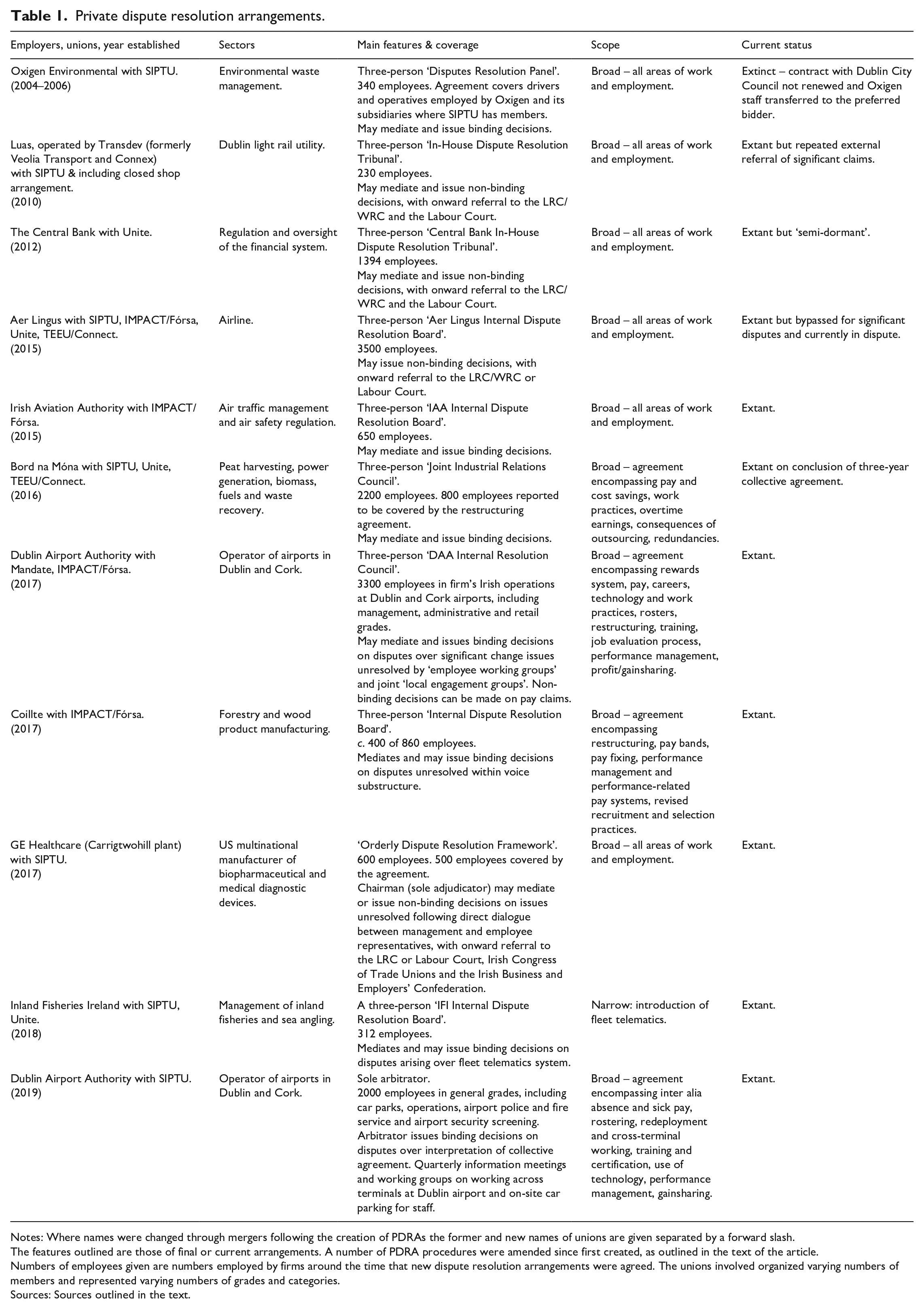
The 11 PDRAs that provide the focus for this study began to emerge from the early 2000s. Table 1 presents an outline of the principal features of the 11 PDRAs established in 10 organizations from that time. PDRAs are defined as arrangements agreed between employers and trade unions to resolve disputes and that involve ‘panels’, ‘tribunals’ or ‘committees’ comprising either three persons or a sole arbitrator (in one instance called a ‘chairman’). In no case are any of those involved currently employed in the organizations in question. The PDRAs may either issue binding judgements or refer unresolved disputes to external agencies, but all envisage the resolution of disputes within the boundaries of organizations in which they have been established.
Private dispute resolution arrangements.
Notes: Where names were changed through mergers following the creation of PDRAs the former and new names of unions are given separated by a forward slash.
The features outlined are those of final or current arrangements. A number of PDRA procedures were amended since first created, as outlined in the text of the article.
Numbers of employees given are numbers employed by firms around the time that new dispute resolution arrangements were agreed. The unions involved organized varying numbers of members and represented varying numbers of grades and categories.
Sources: Sources outlined in the text.
The PDRAs were identified in the first instance through reports in the weekly periodical, Industrial Relations News (IRN). IRN is a long established and authoritative weekly source of reports on developments in Irish industrial relations and contributes regular bulletins to the European Industrial Relations Observatory (EIRO). Reports in IRN were supplemented by a wide range of other sources, including trade union newsletters, media reports, company reports, interviews with conflict resolution professionals, managers and union officials and by reports and audio recordings of conference presentations. These sources were used to create an inventory comprising all 11 PDRAs established in 10 organizations in Ireland since the early 2000s. These form the basis of the research. Given the multiple authoritative sources used to identify PDRAs, there is a high degree of confidence that they represent a complete list of all such innovations over the period covered by the research (2004–2019).
As Table 1 reveals, both foreign-owned multinational companies and Irish-owned firms have created PDRAs. General unions (SIPTU, Unite), craft unions (TEEU/Connect) 3 and white-collar unions (IMPACT/Fórsa, Mandate) have been party to such arrangements, including some of the largest unions in Ireland. Private sector public and family-owned firms, commercial state-owned firms and one EU public agency have been involved – a cluster of PDRAs emerging in state-owned firms and agencies in recent years. The state firms and agencies with PDRAs are governed by independent boards and operate within a private sector employers’ grouping for the purpose of collective bargaining and dispute resolution. PDRAs have been established in a range of sectors: environmental waste disposal (Oxigen), light rail (Luas), aviation (Aer Lingus), peat fuels, biomass, power generating (Bord na Móna), financial regulation and oversight (Central Bank), air traffic management and aviation regulation and safety (Irish Aviation Authority [IAA]), airport management (Dublin Airport Authority [DAA]), inland fisheries and sea angling development (Inland Fisheries Ireland [IFI]), forestry management and associated manufacturing activities (Coillte) and pharmaceuticals (GE Healthcare). The PDRAs were established from 2004 to 2018, most were established in the years from 2015.
A previous paper (Roche, 2021) showed that the 11 PDRAs were established in three (overlapping) sets of circumstances: where employers conceded recognition to unions de jure or de facto following disputes over union representation (Oxigen, GE Healthcare); where employers and unions sought to improve industrial relations (Luas and Aer Lingus); and where PDRAs were pivotal to landmark collective agreements or new models of industrial relations (all other cases). There is no direct correspondence between the circumstances in which PDRAs emerged and their features. In all cases employers and unions sought to break with pre-existing dispute resolution arrangements, which were no longer seen to serve their objectives of gaining prompt and effective resolutions to disputes. Champions of new arrangements played an important role in gaining stakeholder support for PDRAs, often drawing support from professional networks that could provide first-hand intelligence on how similar dispute resolution arrangements could be expected to operate (Roche, 2021).
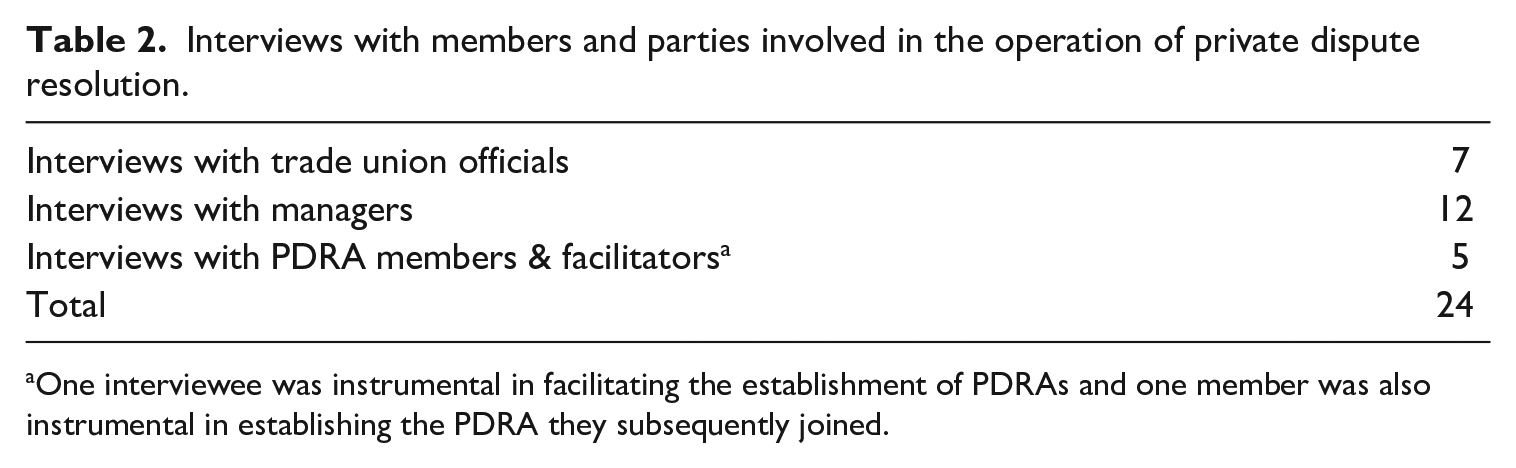
To gain deeper insight into PDRAs, semi-structured interviews were conducted with a representative group of the main players involved in their operation. Interviews were conducted with managers, union officials and members of PDRA bodies. In all, 24 interviews were conducted. Some informants were interviewed more than once. Members and facilitators of PDRAs who had direct knowledge and experience of the features and operation of more than one PDRA were prioritized for interview. Other PDRA members were chosen for interview because of their deep involvement in specific PDRAs. Also interviewed were managers and union officials involved in the conduct of industrial relations in each of the 11 cases examined. Of those originally invited to undertake interviews, one person could not be contacted, and one person agreed to be interviewed but a date for interview was not forthcoming. The interviews undertaken permitted multiple perspectives to be obtained on the features and operation of PDRAs in all of the cases investigated.
Table 2 presents a breakdown of the backgrounds of those interviewed. The disparity in the numbers of management and union interviews is explained by the union officials interviewed sometimes representing members in several organizations with PDRAs and possessing knowledge and experience of the features and operation of multiple arrangements. With the permission of interviewees, interviews were recorded and transcribed. Otherwise, detailed notes were taken and written up following the interviews. Interviews were generally of about one hour in duration. In many instances, interviewees provided copies of constitutions or charters governing the operation of PDRAs and other internal documents connected with PDRAs. The interview fieldwork spanned the period from May 2018 to October 2019.
Interviews with members and parties involved in the operation of private dispute resolution.
One interviewee was instrumental in facilitating the establishment of PDRAs and one member was also instrumental in establishing the PDRA they subsequently joined.
The research draws extensively on reports of developments in dispute resolution contained in IRN; on other media reports, conference reports, public addresses by parties involved; on internal company documents made available and on companies’ annual reports. Biographical data on PDRA members, used to create professional career profiles, were also obtained from a variety of sources, including LinkedIn, conference entries and professional websites. Personal knowledge and queries to professionals were also used to create these profiles.
Data analysis was conducted by means of the classic industrial relations method of triangulating between reports, other publicly available data and the views and experiences of those involved, as expressed in the interviews.
PDRAs and the joint governance of dispute resolution
The composition of PDRAs: Securing fairness, evenhandedness and independence
As outlined in Table 1, most PDRAs are variously termed dispute resolution ‘panels’, ‘tribunals’, ‘boards’ or ‘councils’ comprised of one union and employer nominee from outside the organization and an agreed external chair. A minority of PDRAs comprise a sole adjudicator or arbitrator. The composition and operation of PDRAs is subject to formal collective agreements between employers and unions. Employers and unions made their respective nominations for PDRA membership and in no case did any party issue or attempt to issue a veto over the other party’s nominee. Chairs of three-person panels or sole adjudicators are jointly agreed. PDRA members are not drawn directly from professional bodies, as occurs in countries such as the US, where members of the American Association of Arbitrators figure prominently in grievance resolution within firms. 4 PDRA members, other than public servants providing their services as part of their work in state conflict resolution agencies, are paid a professional fee for their work by employers in the organizations in which PDRAs have been established.
The organizations establishing PDRAs are characterized by high union density and strong workplace organization and representation. This remains the case even in instances where PDRAs were established to resolve disputes surrounding union recognition, as in the environmental waste disposal firm, Oxigen, and the biopharmaceutical and healthcare devices manufacturer, GE Healthcare (Roche, 2021). While formal union recognition was not conceded in GE Healthcare, the union’s position is that it had achieved, through the PDRA (the Orderly Dispute Resolution Framework), what amounted to ‘de facto recognition’ and the ability to represent and bargain collectively for its members at the plant (Interview with Trade Union Official).
What is recognition? If we run a ballot, we got 50 +1 and maybe [having] gone through a difficult union lobbying exercise and won it, it merely means that the management sit in the same room. It doesn’t compel them to collectively negotiate. . . . The essence of union recognition from my perspective is more about union representation. (Interview with Trade Union Official)
In no instance did unions harbour concerns about compromising their institutional security or power as a result of participating in the PDRAs, and in no instance had management sought to use PDRAs and associated ADR practices as ways of promoting union substitution and marginalization. Rather, the new arrangements reflected the power and influence of unions in collective bargaining in the organizations involved.
The cardinal feature of PDRAs was the joint governance by employers and unions of the dispute resolution process, comprising the establishment of PDRAs through voluntary collective agreements, balanced representation by equal numbers of employer and union nominees and jointly agreed independent chairs or sole adjudicators. Given their structural features, power asymmetries threatening the fairness, evenhandedness and independence of PDRAs have not arisen, and the processes through which disputes are resolved are tractable at all points to the influence of the parties that created them.
I think if [a PDRA] . . . retains the confidence of the parties in its independence and its integrity it will probably last. It will be quite durable. . . . But once one side loses confidence for any reason I think it is a dead duck. I think the durability is largely around confidence and integrity. . . . You’ve got to have confidence not just in the process, you’ve got to have confidence in the people doing the process as well. (Interview with PDRA Member)
In no case has a PDRA fallen into crisis or collapsed due to a perception by either of the parties that dispute resolution bodies had failed to operate in a neutral, independent, evenhanded or fair manner. Unions have not in any instance become disillusioned with, or seceded from PDRAs, resulting from outcomes reflective of power asymmetries.
Ironically, it is the very independence of PDRAs and their capacity to deliver judgements without fear or favour that dissatisfy one or other of the parties that may threaten their operation or durability.
We got a couple of recommendations that were favourable towards us and the company decided that they weren’t having it. . . . Then we had another issue that would have been considered fairly meaty as well and then we decided to reject it; we put it to ballot of our members and they rejected it. . . . Now the [PDRA] did what it was supposed to do. It made recommendations. (Interview with Trade Union Official)
A comment by a PDRA member highlights the surprise of parties in dispute who might have anticipated a higher level of success in their dealings with a PDRA: [Management] were quite surprised that we found against them on a number of cases. . . . I wouldn’t have said they were major cases. They won the major ones but on a couple of the less extensive ones we thought there was merit [in the union case]. . . . I think they thought they’d win all the cases. (Interview with PDRA Member)
The crux of the comments in these cases is that it is the independence and evenhandedness of PDRAs that may provoke negative responses from the parties rather than concerns about their independence or evenhandedness.
Reviewing, renewing or rescinding PDRAs
As revealed in Table 1, PDRAs differ in respect of whether they have been established as standing arrangements of indefinite duration or coterminous with collective agreements. PDRAs in Luas, the Central Bank, Aer Lingus, the Dublin Airport Authority (agreed with unions other than SIPTU) and the GE Healthcare PDRA constitute standing arrangements. These have either been established in open-ended agreements on dispute resolution procedures, were renewed across successive comprehensive collective agreements, or were otherwise intended as abiding features of dispute resolution.
All PDRAs contain review mechanisms, and any party dissatisfied with the operation of PDRAs can resort to review or oversight to revise or potentially terminate them within the periods during which they were intended to operate. These arrangements provide ‘escape hatches’ should parties form the view that PDRAs are not operating to their satisfaction or advantage – further underwriting the power equivalence evident in the way they are configured. In no instance have such joint reviews either terminated PDRAs or significantly altered their jurisdiction or operation. However, as will be examined below, in the case of Aer Lingus a review was triggered externally by the Labour Court following a dispute referred by the unions over the airline’s decision to withdraw unilaterally from the PDRA. The Labour Court recommended that both parties should initiate a joint review of the PDRA.
Due process supports: Internalizing the practices of external agencies
Confidence in the evenhandedness and independence of PDRAs is further bolstered by the way in which both their composition and operation in effect emulate long-established and familiar external state conflict resolution agencies. The Labour Court investigates disputes and issues recommendations through three-person divisions. One member is nominated respectively by union and employer bodies and one acts as chair. Prior to disputes being referred to the Court for investigation, disputes must first be referred to the LRC/WRC for conciliation (collective mediation). This procedure is replicated by PDRAs, with the exception that mediation and investigation are provided by the same body and persons rather than two separate bodies or sets of people. The sole adjudicator arrangements in the Aer Lingus–SIPTU and GE Healthcare PDRAs also emulate LRC/WRC procedure.
Emulation of LRC/WRC and Labour Court procedures is further embedded in the operational procedures of PDRAs. Parties to disputes are enjoined first to engage directly in search of settlements. Second, as will be further discussed below, PDRAs commonly offer or require internal collective mediation (conciliation) if the parties become deadlocked. Finally, the parties are required to attend and present their positions to formal hearings of the PDRA.
Following the completion of hearings, dispute bodies issue decisions within an agreed timeframe. Some PDRAs provide for a casting vote by the chair where it is not possible to reach decisions by consensus. In practice this is a rare occurrence. As one PDRA chair remarked: I don’t ever remember us having a disagreement, a serious disagreement of any sort about getting anything out. In fact, it was even better: I thought the two [employer and union nominees] had a really enlightened view on things and were able to stand outside [the positions of their respective constituencies]. Easy for me but more difficult if you’re a nominee. (Interview with PDRA Member)
In the case of the light rail operator, Luas, the PDRA procedure states that the deliberations of the In-House Dispute Resolution Tribunal will not be ‘dissimilar to those of the Labour Court’ (Transdev and SIPTU, 2010). The Aer Lingus and Irish Aviation Authority charters state that ‘all the parties will afford the IDRB [Internal Dispute Resolution Board] and each other the respect that would be associated with Labour Court hearings’ (Aer Lingus and Group of Unions, 2014: 4; Irish Aviation Authority and Unite, 2015: 4).
Expertise in process and organizational context: The members of PDRAs
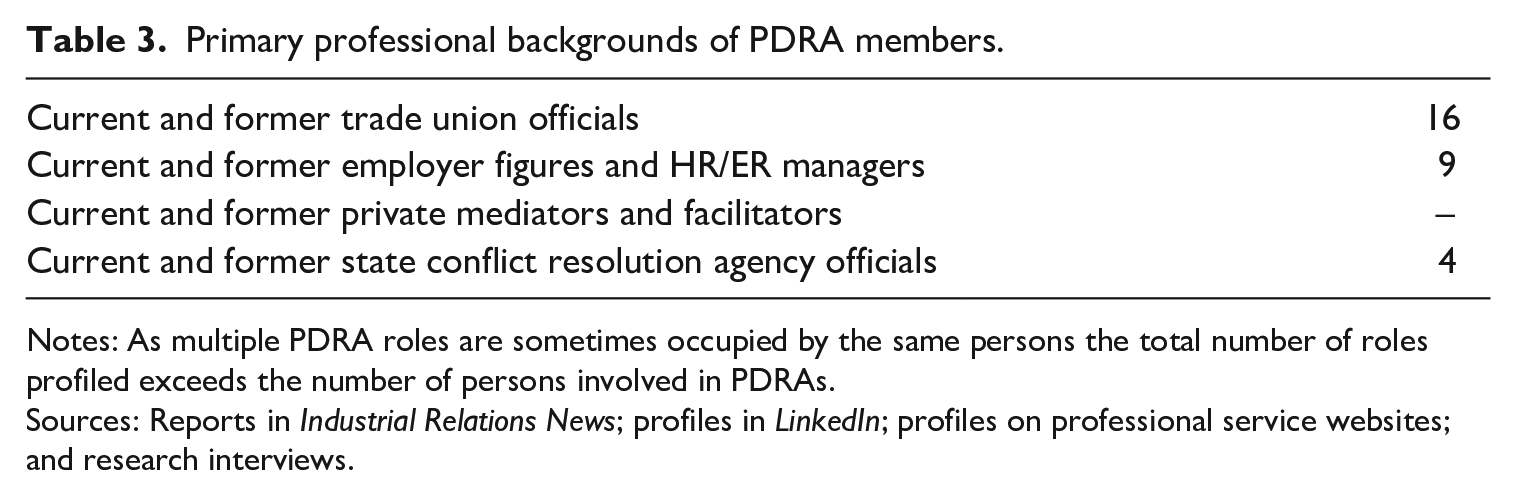
Members of PDRAs and sole adjudicators are pivotal to the process of dispute resolution. In total, 24 people have served as PDRA members or chairs. As a number hold or held positions across two or more PDRAs, the 24 people occupy or have occupied 29 positions in PDRAs. Table 3 profiles the primary professional backgrounds of the occupants of all PDRA roles: that is, the roles in which they have spent the greater part of their careers, or for which they are publicly best known. More than half of the occupants of all PDRA positions are former or current trade union officials. Less than one third are occupied by former or current employer officials or HR/ER managers. The disparity is explained by the greater prevalence of former or current union officials acting as chairs or sole adjudicators. Fewer positions are occupied by former or current officials of state conflict resolution agencies – all of whom occupy roles as PDRA chairs. No chairs or sole adjudicators hail from mainly employer or HR backgrounds.
Primary professional backgrounds of PDRA members.
Notes: As multiple PDRA roles are sometimes occupied by the same persons the total number of roles profiled exceeds the number of persons involved in PDRAs.
Sources: Reports in Industrial Relations News; profiles in LinkedIn; profiles on professional service websites; and research interviews.
The predominance of trade union backgrounds among PDRA chairs and sole adjudicators reflects above all a concern by employers, who in all cases fund the operation of PDRAs, to bolster their perceived independence and evenhandedness and to assuage any concerns on the part of unions and their members about departing from long-established conflict resolution procedures.
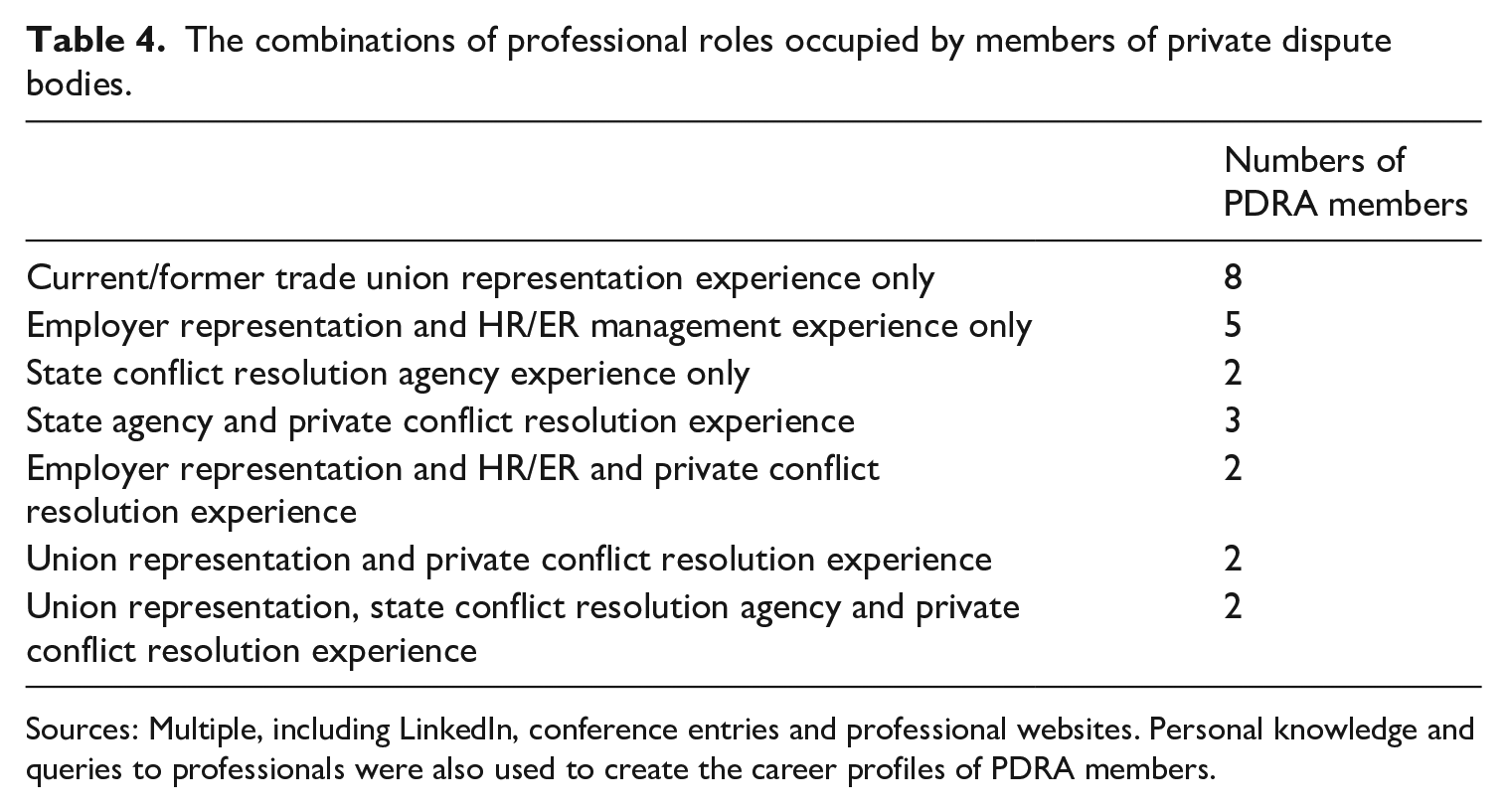
Confining the profile of PDRA members to primary professional backgrounds fails to capture the rich and varied experience of many PDRA members who have occupied spells in multiple professional roles over the course of their careers. Table 4 shows the permutations and combinations of professional roles or positions occupied by PDRA members over their careers. Nine out of 24 former union, employer and former or current state agency nominees occupying PDRA positions also work or have worked as private conflict resolution professionals. Some PDRA members have worked or work as externally contracted adjudicators (or formerly as ‘rights commissioners’) in the LRC/WRC. Former union officials are somewhat more diverse in their professional trajectories than those from employer representation or HR/ER backgrounds: 33% of all PDRA members with experience as union representatives having had experience as private conflict resolution professionals, sometimes having occupied roles in the state conflict resolution agencies. A number of PDRA members possess professional qualifications in conflict resolution. Some possess PhDs in the area or allied areas. Their professional backgrounds and experience mean that in general PDRA members are well-known and highly respected professionals, often with strong public profiles. Some enjoy near legendary status as highly skilled dispute resolution professionals. Small wonder that in one instance PDRA members were described as having between them accumulated ‘over one hundred years of experience of dispute resolution’ (Interview with Manager). This was not an exaggeration. Interviews with union officials and HR/ER managers commonly referred to PDRA members by name to highlight the stature of those occupying roles as PDRA chairs and members. A manager commented that ‘you need really credible, really experienced ER people involved in such a body’. Another manager interviewed highlighted the ‘calibre of their three members’ by describing their organization’s PDRA as ‘like a mini Labour Court’.
Primary professional backgrounds of PDRA members.
Sources: Multiple, including LinkedIn, conference entries and professional websites. Personal knowledge and queries to professionals were also used to create the career profiles of PDRA members.
But deep process expertise and even possession of the marquee reputations in dispute resolution were seen as insufficient for effective mediation and adjudication roles in PDRAs. Not infrequently, PDRA members have worked as managers, union officials or conflict resolution professionals in the industries where they serve as PDRA members, granting them first-hand knowledge and experience of the business and labour market environments involved. One manager stressed that theirs ‘was a quite complex business’ and that adjudicators and mediators needed to ‘immerse [themselves] in the mechanics of the business’. Another stressed the importance of creating a ‘consistent panel of people who develop a familiarity with the business and the actors involved’. A union official highlighted that a union-nominated PDRA member ‘had a lot of experience of the [sector and workplace]’.
This deep technical knowledge was contrasted with the more limited technical expertise of sectors seen to characterize the state agencies, especially where complex operational issues such as rostering were in contention.
So, if you are getting a third party to make a call on something, [it is important] to have people that have knowledge of the . . . industry as well. And we definitely see value in that . . . particularly around the operational stuff. No disrespect to anybody who sits in the Labour Court but they’re listening to four cases a day, going from healthcare to manufacturing and you’ve got some argument about the finer points of . . . rostering [in the industry where the PDRA operates]. It just didn’t work out. (Interview with Trade Union Official)
Repeatedly, managers interviewed highlighted, as one HR Manger interviewed put it, ‘familiarity with the organization’ and ‘knowing the business and culture’ as critical attributes of PDRA members.
The scope and versatility of PDRAs
As outlined in Table 1, the majority of PDRAs possess jurisdictions of broad scope, with mandates permitting them to resolve disputes involving a wide range of areas. The exception is Inland Fisheries Ireland, where the jurisdiction of the PDRA was narrow and confined to disputes over the introduction of a new fleet telematics system. This however was still a highly significant issue in an agency where most of the workforce is required to undertake driving duties as part of their jobs.
The jurisdiction of PDRAs encompassed ‘disputes of interest’ and ‘disputes of rights’ – the former arising over issues not covered by existing collective agreements and the latter over issues covered by current or legacy agreements or enshrined in ‘custom and practice’. PDRA members in some instances are wary of becoming involved in disputes over pay rises out of concern with the possible knock-on effects of settlements on economy-wide trends in pay bargaining.
Internal disputes boards are not there to set the trend of pay in the economy. It’s an understanding you can have with the [LRC/WRC and Labour Court] that you’re not going to ignore trends and if people have aspirations, it’s a matter for the Court to decide if there are circumstances where these [have merit]. (Interview with PDRA Member)
Managers interviewed endorsed this position – even where PDRAs could formally resolve pay disputes. While some PDRAs adopted a ‘self-denying ordinance’ with respect to pay disputes, other PDRAs, such as that at the Central Bank, were seen by some to have favoured PDRAs because they provided more flexibility and latitude in resolving disputes over pay and conditions than might be afforded by referring disputes to the state conflict resolution agencies.
Med–arb and precluding ‘narcotic’ and ‘chilling’ effects
A major feature of PDRAs and of the work of their members involves providing conciliation (collective mediation) as well as adjudication in resolving disputes. Most PDRAs provide for mediated settlements, either in their governing charters or constitutions or added this facility as practice evolved. Members of PDRAs view this form of dispute resolution as preferable to adjudication and commonly use it to resolve disputes.
We try to mediate and say to the parties ‘if you work with us, we’ll try to come up with a solution that is balanced and fair’. (Interview with PDRA Member)
Mediated settlements are viewed as particularly effective in resolving disputes surrounding complex issues (for example, pensions). Mediation is seen as being particularly effective in helping mediators (who are also prospective adjudicators) and the parties to disputes themselves to acquire a common understanding of issues in contention. Where mediation fails, or is only partially successful, the parties will nevertheless have been ‘walked through’ disputed issues, even if an eventual adjudication decision may not be wholly welcomed: The purpose [of mediation] is to try to refine the issue; to resolve a couple of matters, even if there are residual issues left that have to come back for adjudication. (Interview with PDRA Member)
While formally a separate process and a precursor to adjudication, mediation may sometimes occur within the formal adjudication process conducted by PDRAs: [Mediation may occur] even after a hearing has commenced formally on an issue. Because a set of issues may not always lend themselves to a holistic recommendation . . . even after a hearing has commenced, a decision can be made to adjourn those matters to allow for mediation as a step. (Interview with PDRA Member)
Measures to avoid classical narcotic and chilling hazards of third-party involvement in dispute resolution are enshrined in rules governing the operation of PDRAs and are seen as important by PDRA members. PDRA procedures enjoin the parties to disputes to engage in direct negotiations in good faith with a view to reaching agreement without third-party assistance. In some cases the parties in dispute are formally required to submit formal statements to PDRAs outlining their efforts to resolve issues through direct negotiations. The Charter establishing the PDRA at the Irish Aviation Authority states that the body should be viewed as ‘an internal forum of last resort’.
The chairs and members of dispute bodies enjoy considerable latitude to decide independently whether enough effort has been devoted by parties in dispute to reaching negotiated settlements through direct engagement. PDRAs are mandated to refer matters back for further negotiation, or for other prescribed forms of deliberative engagement, if they are not satisfied that sufficient direct engagement has been evident.
The purpose of that provision is that there has indeed been some meaningful engagement on the issue or issues and that the parties themselves . . . recognize that they’ve reached an impasse and need help. In circumstances where that hasn’t been obvious, we’ve had to say that ‘it’s not ready for us at this time’ or requires further engagement. (Interview with PDRA Member)
The strong emphasis on direct negotiations as the primary dispute resolution method also seeks to narrow down, clarify and delimit the issues that are referred for adjudication: The reason why that [significant direct engagement] is important is to make sure that when an issue comes to the entity that it has been properly understood and discussed by the parties themselves. Because what should not happen . . . is that an issue or issues end up being engaged with by the body and some new fact or new issue suddenly emerges that could easily have been subject to deliberation between the parties. (Interview with PDRA Member)
In the Orderly Dispute Resolution Framework (ODRF) model adopted at GE Healthcare the sole adjudicator or ‘independent chair’ meets separately with the parties in dispute to allow them to outline the background to the dispute, explain their respective positions and present their proposals to resolve the issues in dispute. The adjudicator can then opt either to facilitate a compromise resolution or to issue a proposal or decision (GE Healthcare and SIPTU, 2016: 4). In this case, therefore, no formal plenary hearing involving the parties to a dispute is provided for.
Supports to adjudication and restraints on industrial action
In the majority of cases (Oxigen, Bord na Móna, DAA, Coillte, IAA and IFI) PDRA decisions are designated as binding and have been so regarded by the parties. The binding adjudication grouping represents the sharpest break with conventional dispute resolution in Ireland, where it is standard for disputes remaining unresolved within organizations to be referred externally to the LRC/WRC for conciliation and from there for non-binding investigation and recommendation by the Labour Court. In Luas, the Central Bank, Aer Lingus and GE Healthcare PDRA decisions are not binding, unless the parties agree otherwise, which in practice they do not do. In the DAA PDRA agreed with unions other than SIPTU a hybrid model operates where adjudication decisions on all disputes under current collective agreements are binding, whereas decisions on disputes over pay rises that the parties opt to present to the Internal Resolution Council (IRC) are non-binding. The parties have not thus far opted to refer any disputes over pay claims to the IRC – respecting the view of the PDRA that such claims having the propensity to establish pay headlines are more appropriately referred to the LRC/WRC and Labour Court.
In cases where non-binding decisions are delivered by PDRAs, the parties are enjoined to have serious regard to those decisions and to view them as having the same status as Labour Court recommendations, which should not be set aside lightly. Some members of PDRAs as well as union officials take the view that even where PDRA decisions are non-binding de jure, they are tantamount to being binding de facto. This is because were unresolved cases to be referred for investigation, the Labour Court would be unlikely to overturn or seriously diverge from decisions by expert and respected internal disputes bodies. As a result, there would be considerable pressure on parties to disputes to accept even PDRA decisions that are technically non-binding.
Our sense of it was that you’ll have a couple of cases that will be rejected by either side. You’ll end up at the WRC. Nothing will happen and you’ll end up at the Court. I’ve yet to see them actually reverse a decision from an internal board. . . . So then after a period of time what we expected to see happen was that people would accept that OK this is the end result. OK we have the option to go on to the Court but really we’re just wasting time. This is the end of it. So in effect while it wouldn’t necessarily be binding it would. (Interview with Trade Union Official)
PDRA procedures contain a range of injunctions against the issuing of threats or pressure while matters in dispute are subject to negotiation or dispute resolution. Specific provisions are contained in the Luas, Central Bank and IAA PDRAs for ‘procedural adjudication’ to occur in the event that one party complains that dispute resolution procedures are not being adhered to in good faith by the other. A number of PDRAs provide that pending the resolution of disputes the status quo ante should prevail and neither party should demur from current arrangements until disputes are resolved. In other cases, PDRA procedures incorporate ‘working under protest clauses’ in which management-initiated changes are expected to be accepted ‘under protest’ by unions and their members until the issues in dispute are resolved. The GE Healthcare PDRA procedure allows the sole adjudicator to determine what is referred to as a ‘cooling-off period’ following his engagement with the parties before a written decision is issued. The intention here is to provide a time window, the duration of which is determined by the sole adjudicator, to allow the parties in dispute to reflect on their respective positions and to allow scope for further mediated compromise, prior to adjudication.
The Luas and Central Bank procedures also include what amount to de facto cooling-off provisions. Both PDRAs provide for multiple ballots prior to the occurrence of industrial action. In the case of Luas, tribunal findings are subject to a union ballot, and, if rejected, are referred to the Labour Court for investigation. Labour Court recommendations are in turn subject to ballot by the union. Where rejected and industrial action is contemplated, the union is required to conduct a further ballot on the ‘question and form’ of any action. The union is further required to provide 21 days’ notice or an intention to undertake industrial action – well in excess of the general legal stipulation of not less than one week’s notice. Even then the union is required to meet the company during the period of notice. An ‘industrial peace bonus’ was subsequently added to the Luas procedure. The bonus is worth between 5 and 6.5% of basic pay and is issued to union members annually where industrial conflict is avoided by adherence to the procedure. PDRAs commonly provide for the joint training of managers and union representatives in dispute resolution and problem-solving and contain provisions for the release of lay union representatives from normal duties when engaging in the dispute resolution process.
It is evident that irrespective of whether PDRAs provide for binding or non-binding adjudication, structural arrangements prioritize adhering to procedure; solemnize an expectation that adjudication decisions will be respected by the parties; and provide for the maintenance of orderly industrial relations while disputes are subject to resolution efforts. Further supports to industrial peace are provided by such mechanisms as procedural adjudication, cooling-off periods and, less commonly, financial incentives.
Organizational participation: Aligning dispute resolution with voice arrangements
Agreements establishing PDRAs commonly contain general injunctions supporting partnership, problem-solving and new and enhanced ways of joint working. Beyond the rhetorical, PDRAs are sometimes formally aligned with voice arrangements fostering problem-solving, consultation and the exchange of information. In all, six such PDRAs are found among the 11 cases examined. Two models for aligning PDRAs with voice channels are evident: what will be referred to as ‘parallel arrangements’ where provisions for voice operate in conjunction with but separate from PDRAs and ‘integrated arrangements’, where voice substructures are created as stages within PDRAs.
Parallel voice models operate in the Central Bank, IAA and the DAA–SIPTU PDRA. In these cases dispute resolution and voice channels (information exchange committees, partnership and joint consultation forums) are formally recognized as significant contributors to avoiding disputes in charters and constitutions establishing PDRAs. In the case of the Central Bank and the DAA–SIPTU PDRA, these voice channels were created as part of agreements establishing PDRAs. Their creation in the Central Bank reflected the objective of transforming industrial relations at the Bank. The same objective was jointly espoused in the DAA–SIPTU PDRA, where quarterly information meetings and working groups on cross-terminal working and on-site car parking for staff emerged as features of what was presented as an ambitious new departure from hitherto fractious relations between the parties. In the case of the IAA, the PDRA was introduced in parallel to pre-existing information exchange and consultative structures.
Interviews with managers, union officials and PDRA members involved with parallel voice models elicited few comments on new dispute resolution arrangements as forms of voice, or as platforms for enhancing or transforming voice. Reflecting the structural separation of dispute resolution and voice channels, the focus was almost entirely on the workings and innovations of dispute resolution per se – as though voice occupied a separate realm, which in formal terms indeed it does. No comments were made on whether or how dispute resolution arrangements interacted with other voice channels.
The position is very different where integrated models have been developed. Here parties to their creation and operation, in particular union officials, regard them as integral to voice and organizational participation and they are seen as providing important forums for organizational participation. Indeed, in some of these cases PDRAs are viewed primarily as forms of organizational participation and secondarily as arrangements for dispute resolution.
Adopting the metaphor of a ‘ladder’ to explain how voice substructures are aligned with the work of PDRAs, one person interviewed commented that ‘persons making a journey up the ladder know the reason for that journey. And know that there’s a purpose behind that journey and know there’s purpose at the end of it.’ The process was portrayed as ‘solving the problem before the problem becomes a problem’.
So the [PDRA] is at the very end of the process. What we say to the company . . . is OK, you have ideas, you want change from employees, you’re facing emerging business problems, or you’re facing emerging regulatory problems. You need to change tack; you need to change work procedures. . . . Employee work groups were set up then. So the management had to bring [issues] to employee work groups. Employee work groups are made up of all the employees affected with the managers responsible for implementing the change, but more importantly for [managers] looking for the change to discuss the issues as to why they looked for the change: why they needed it; what were the parameters, the business parameters; what were the business problems or pressures coming at them etc. And we left it to them to build a solution. The process then after that would have been if that group couldn’t have agreed we then would have got a group of representatives with the company to take up the issues that were outstanding. And if they couldn’t do it then it would go on to the [PDRA]. (Interview with Trade Union Official)
Integrated models exist in the DAA PDRA agreed with unions other than SIPTU, in GE Healthcare and in Coillte. Integrated models have variously created ‘employee working groups’, joint ‘local engagement groups’, or ‘consultation forums’ in which the parties first address and seek to resolve issues through direct engagement in work groups and in representative bodies. As evident in the comments of the trade union official, disputes only become subject to mediation and adjudication by PDRAs where they remain unresolved following engagement within these voice substructures. In the case of the DAA, employee work groups and joint local engagement groups can avail of external third-party facilitation to support problem-solving. In the case of GE Healthcare, an integrated model was created by adapting original management-mandated direct and representative voice forums following the de facto recognition of SIPTU and the creation of the new dispute resolution arrangements provided for in the ODRF. Prior to this, SIPTU had discouraged members from engaging with company-mandated voice forums. With agreement on the ODRF, the union saw voice advantages in engaging with established participative arrangements. Here the dynamic governing union involvement in voice substructures was different, more iterative and initially more defensive than that described in other cases by the union official quoted above. The union in GE sought to gain formal recognition for shop stewards involved in resolving day-to-day problems and disciplinary issues. When management sought union agreement to the preservation of the employee forum, the union made this conditional on shop stewards being recognized within the employee forum.
I said look, I wouldn’t be opposed to some lower level issues to be grappled with and an attempt to resolve them. . . . So we had the local . . . stuff tied down, then we had the obvious big issue, which was how do we collectively bargain? . . . My thinking was well look, if we had a broker, and I think this is the innovative piece, that the broker would be part of the internal resolution process. . . . I don’t have to go into the independent chairman stage expecting to win everything but I do have ownership of the issues that go in there. . . . And I think that from our perspective, it’s a fantastic example of working together, you know, no rows, no disputes. (Interview with Trade Union Official)
The union was satisfied that the forum would be aligned with what amounted to de facto collective bargaining brokered through the mediation and adjudication roles of the independent chair.
Discussion: Extending the boundaries of ADR
The literature treats innovations in collective ADR within organizations in a highly schematic manner or often generalizes findings from single case studies. In this study the structural features of PDRAs have been identified in detail by systematically examining 11 PDRAs in 10 organizations across a range of sectors in Ireland. The article presents the first micro-level account in the literature of collective ADR innovations, drawing on multiple cases and a range of data sources. The PDRAs established by employers and unions in Ireland in recent decades are groundbreaking in seeking to internalize the resolution of disputes within the borders of firms and agencies, either cutting off referral to external dispute resolution agencies, or rewriting the rules aligning internal and external dispute resolution. The differing structural architectures of PDRAs share the underlying objective of transforming dispute resolution within organizations.
The PDRAs examined remain extant, except for the arrangement at the environmental waste firm, Oxigen, which lost the contract for waste disposal for Dublin City Council, resulting in the transfer of staff to a new supplier with a conventional dispute resolution procedure. The PDRA in Aer Lingus is in contention between the parties, as will be discussed below.
In assessing how the cases contribute to our understanding of ADR or extend the boundaries of what is known, discussion is organized around the research questions posed at the outset. In answer to question one, PDRAs are generally structured to secure generic features of ADR identified in the literature. They seek to prioritize the resolution of conflict within the boundaries of the firm and to address narcotic and chilling effects widely associated with conventional arrangements for dispute resolution. Most PDRAs seek to cut off resort to external agencies by providing for mandatory adjudication. The rest seek to discourage and minimize external referral. The parties are further required to exhaust direct engagement prior to referring disputes to PDRAs. This is sometimes explicitly policed by PDRA members or chairs. PDRAs also provide for and prioritize collective mediation over adjudication. PDRAs provide for deeper engagement with the nature and triggers of conflict through intensive mediation around complex issues. Deeper engagement is also facilitated by the specialist knowledge of the business and employment context of organizations commonly possessed by PDRA members. PDRAs provide flexibility in the way disputes are resolved by departing from linear and lockstep conflict resolution procedures and by allowing mediation to occur within adjudication. The importance of the deep process skills of PDRA members was also repeatedly highlighted by managers and union officials, and it was shown how these often emerged from professional careers spanning multiple roles. PDRAs represent a form of voice in manifestly providing channels through which disputes could be aired and resolved. Their wider voice effects will be considered below.
Notwithstanding these features, PDRAs impose exacting demands on organizations, and they are not a panacea for dispute resolution. While the financial costs borne by firms with PDRAs were not mentioned as a concern by managers interviewed, nor identified by union officials as an issue that in any sense compromised them, it is evident that the composition of PDRAs imposes a high bar for organizations. A cardinal feature of PDRAs repeatedly highlighted in interviews concerned the significance of the often stellar reputations and professional backgrounds of PDRA members. PDRAs commonly comprise professionals with marquee reputations. Their effectiveness is seen to be inextricably linked with people of high status and deep and uncommon experience. Run-of-the mill or less publicly recognized professionals, it appears, simply will not do. This imposes obvious constraints on their establishment and wider adoption. Adding to the high bar surrounding their creation is the widely made observation that PDRA members also need to possess deep technical or domain knowledge of business and employment conditions in the sectors in which they operate.
If PDRAs are in this sense exacting to establish, they do not provide a panacea for dispute resolution. In Aer Lingus narcotic effects re-emerged as parties began to bypass the PDRA, while in Luas disputes commonly vaulted beyond the PDRA to the external agencies, culminating in a serious strike in 2015. These outcomes can be attributed to legacies and changes within both firms. Each had a legacy of fractious industrial relations. While PDRAs were created in Aer Lingus and Luas to escape or transform these legacies, this objective has proved elusive. As a previous paper on the genesis of PDRAs has shown, industrial relations legacies in Aer Lingus and Luas also conditioned the parties to opt for non-binding adjudication, increasing the exposure of PDRAs in each case to narcotic effects. Management champions who had played an important role in the creation and operation of PDRAs in both firms subsequently departed, and a new management regime emerged in Aer Lingus following the company’s acquisition by the International Airline Group (IAG) (Roche, 2021). While generic features of ADR identified in the literature are thus evident in the structural features of PDRAs, these can nevertheless be attenuated or even nullified by deep-seated industrial relations legacies or by the departure of managers invested in internal dispute resolution innovations.
In answer to question two the findings highlight features of PDRAs not underscored in the ADR literature. The high bar surrounding their establishment and operation has already been discussed. Other features not subject to commentary in the literature also bear emphasis. First, while the literature sharply distinguishes between the features of internal and external conflict resolution, the extent to which PDRAs sought to replicate internally major features of external state conflict resolution agencies was shown to be one of their cardinal features. Their most common structural form provided for a management and a union nominee and an agreed chair. This in effect emulates the structural form of Labour Court Divisions. Formal PDRA hearings also deliberately followed similar procedural rules to hearings of the Labour Court. In some instances, as shown, charters and terms of reference governing the operation of PDRAs enjoined the parties to respect adjudication decisions in the same manner as Labour Court recommendations. In these ways, PDRAs in major respects internalize rather than displace long-established and widely accepted external approaches to dispute resolution. Second, technical as well as process knowledge and expertise was underscored by managers and union officials as key to the effectiveness of PDRA members. It was repeatedly commented upon in interviews that PDRA members were highly skilled both in the process of dispute resolution and in their domain knowledge of the organizations and sectors in which they worked, and this was viewed as highly germane to their work in dispute resolution. This departs from the ADR literature, where knowledge, expertise and versatility in processes or styles of conflict resolution have been the focus of commentary and research. That a rather special and uncommon skill set is seen by those with experience of PDRAs as essential for their operation is something that needs to be considered by employers and unions establishing new dispute resolution arrangements. Third, while the literature views dispute resolution arrangements as forms of employee voice, this is the first study to examine the wider voice features and effects of collective ADR, by highlighting two different models for aligning dispute resolution with other voice arrangements and with promoting organizational participation. In what have been described as parallel models, PDRAs and other voice arrangements occupy distinct domains with little evident interaction or cross-fertilization. The implicit view appears to be that each domain may be expected separately or discretely to contribute to industrial relations outcomes, including reducing industrial conflict. In the case of parallel models, interviews suggest that the dispute resolution properties of PDRAs are of primary importance and voice is secondary. In what we termed integrated models, new voice substructures have been created, or existing substructures adapted, that culminate in dispute resolution only when direct or representative problem-solving fails. Here the explicit expectation is that PDRAs should fulfil the dual purpose of delivering higher levels of employee and union voice and contributing to dispute resolution. This involves a more radical approach to marrying collective ADR with organizational participation and is understood as such by those directly involved. Voice is seen as of primary importance in the design of PDRAs and dispute resolution provides a failsafe where voice fails to resolve disputed issues. The upshot of this finding is that simply conceptualizing dispute resolution as a form of voice, the standard position to date in the literature, is overly limiting in comprehending the relationship between dispute resolution arrangements and voice as more generally understood. Progress rather will be predicated on categorizing different dispute resolution–voice arrangements and their effects. The article has opened this out as an area for further investigation.
Question three turns on moot or disputed issues in the literature concerning whether or how ADR arrangements provide for fairness, evenhandedness and independence. The key conclusion here is that in no instance were any of the PDRAs examined compromised or undermined because employers or unions came to doubt their neutrality, fairness or independence. For sure, as the interviews revealed, there were occasions on which the parties were critical of and dissatisfied with adjudication decisions. But this was never because those decisions were viewed as partisan, biased or otherwise improperly arrived at. The multiple structural features of PDRAs all but fairness-proofed their activities and decisions. To begin with no PDRA had been imposed through force majeure by a powerful party on a submissive or compliant party. As shown, all resulted from voluntary collective agreements between parties with considerable power resources at their disposal, including on the union side, high levels of density and strong workplace organization. The findings emphasize the extent to which PDRAs involve the joint governance of dispute resolution, stemming from their agreed working procedures, balanced composition and joint oversight of their operation. Second, whether PDRAs are subject to renegotiation or intended as standing arrangements, they commonly contain escape hatches such as review mechanisms. Third, as shown, features of more conventional dispute resolution arrangements, such as status quo and working under protest clauses, have been retained under PDRAs to underscore the maintenance of orderly industrial relations when disputes are being addressed: neither side can use power to alter the status quo when disputes are subject to deliberation within PDRAs. In short, what stands out are the multiple mutually reinforcing ways in which PDRAs enshrine fairness, evenhandedness and independence as core structural features. In these ways they systemically correspond with what sceptics of ADR and associated industrial relations innovations portray as ‘labour parity’ arrangements in which fairness and evenhandedness are never in question. In Aer Lingus, when the employer sought unilaterally to rescind the PDRA, unions stayed their hand by complaining to the Labour Court that the company was seeking to rescind a negotiated agreement. The Court recommended that a joint review be undertaken by the parties, consistent with the original agreement. The findings ironically suggest however that it is the very independence and determination of PDRA members to adjudicate disputes without fear or favour that may pose the greater risk to their stability and durability than any perceived partisanship. The interview and other findings of the research point clearly to disputing parties in some instances venting their dissatisfaction by referring decisions externally or even bypassing PDRAs where they were seen or expected to be unpalatable. This indicates that evenhandedness and independence may be a double-edged sword: both underpinning the perceived fairness of PDRAs and imperilling acceptance of their decisions and the key objective of internalizing conflict resolution.
The novel dispute resolution arrangements represented by PDRAs contribute to extending the boundaries of our existing knowledge of ADR by showing that exacting conditions must be met for their establishment and that even then they do not provide a panacea. PDRAs are found to emulate external dispute resolution agencies to a much greater degree than recognized, require unusual sets of skills on the part of their members and align in different ways with voice and organizational participation. While the structural features of PDRAs systemically preclude concerns about partisanship, these same features imperil their operation and render conflict resolution an area that demands continuing attention and innovation by the parties to industrial relations.
Footnotes
Declaration of conflicting interests
The author declared no potential conflicts of interest with respect to the research, authorship, and/or publication of this article.
Funding
The author received no financial support for the research, authorship, and/or publication of this article.
