



Abstract
Public value and city governance are fundamental notions in contemporary settings, but, currently conceived, they are not fit for the challenges presented by the proposed new epoch of geological time—the Anthropocene. Walking through the locked-down streets or calle of Venice, we face the sudden emptiness that starkly reveals the impact of human activity on the city and its waterways. Reflecting on the walk, our starting point is to problematize how a city organizes and manages public value and what actually constitutes public value. In this, we develop a new definition, “New Public Value for the Anthropocene Epoch” (NPVA), which expands the notion of public value through the questions: “who” is it valuable to do things for, beyond humans and economic actors, building on a relational epistemology to incorporate the planet and its biosphere; and “what” is valuable to do, in order to ensure the inclusion of social, environmental, and cultural values alongside economic values. We conclude by arguing that NPVA is organized across scales in a manner that embeds global attentiveness toward local ecosystems solutions to drive the global response to the environmental crisis we all face.
Keywords
Vignette: Walking in Zona Arancione
Toc, toc, toc. Walking in Zona Arancione, hearing the sound of my footsteps. It is rather surprising. I am even more amazed to hear them in Piazza San Marco, where the ears were always assaulted by the noise of tourists. The noise, the voices, the cacophony. This is the first time, in my memory, that I can clearly and distinctly hear the sound of my footsteps in Venice. This is even more astonishing as I am walking during the Carnival period. No one else is around, as we are in lockdown. No voices, no tourists’ squeals, no police whistles. Only a few seagulls are squawking, grunting, and squealing. There are, however, construction noises: some of the cafes, temporarily closed, are taking this opportunity to renew their façades or interiors. No queues in front of the Hard Rock Cafe (still wondering: why is a Hard Rock Cafe in Piazza San Marco? Was such a hyper-consumption brand name needed in one of the most iconic heritage squares of the country. . . if not the world?). I have never seen Venice so uninhabited, empty, deserted. Even more forsaken than in the aftermath of the 2008 financial crisis. I thought I might have experienced the acme of its emptiness in summer, when the temperature was incredibly hot and fewer tourists were coming to Venice, as walking outdoors was unbearable. “We will end up closing our business and selling to the Chinese” a restaurant owner commented while serving my meal as the only customer of the day. The city is dying, the waiters were saying on both occasions.
Today, walking on a cold day in January 2021, during the second lockdown, it does not seem dead, but mostly. . .ghostly, foggy, reminiscent of a picture from Casanova’s book. It felt Venetian. During my wanderings, I meet runners. This is the first time I have seen them exercising in Venice. I have seen runners in Venice before, but that was during an organized event, the Venice Marathon (this makes me think: where do Venetian runners train when the city is overcrowded?).
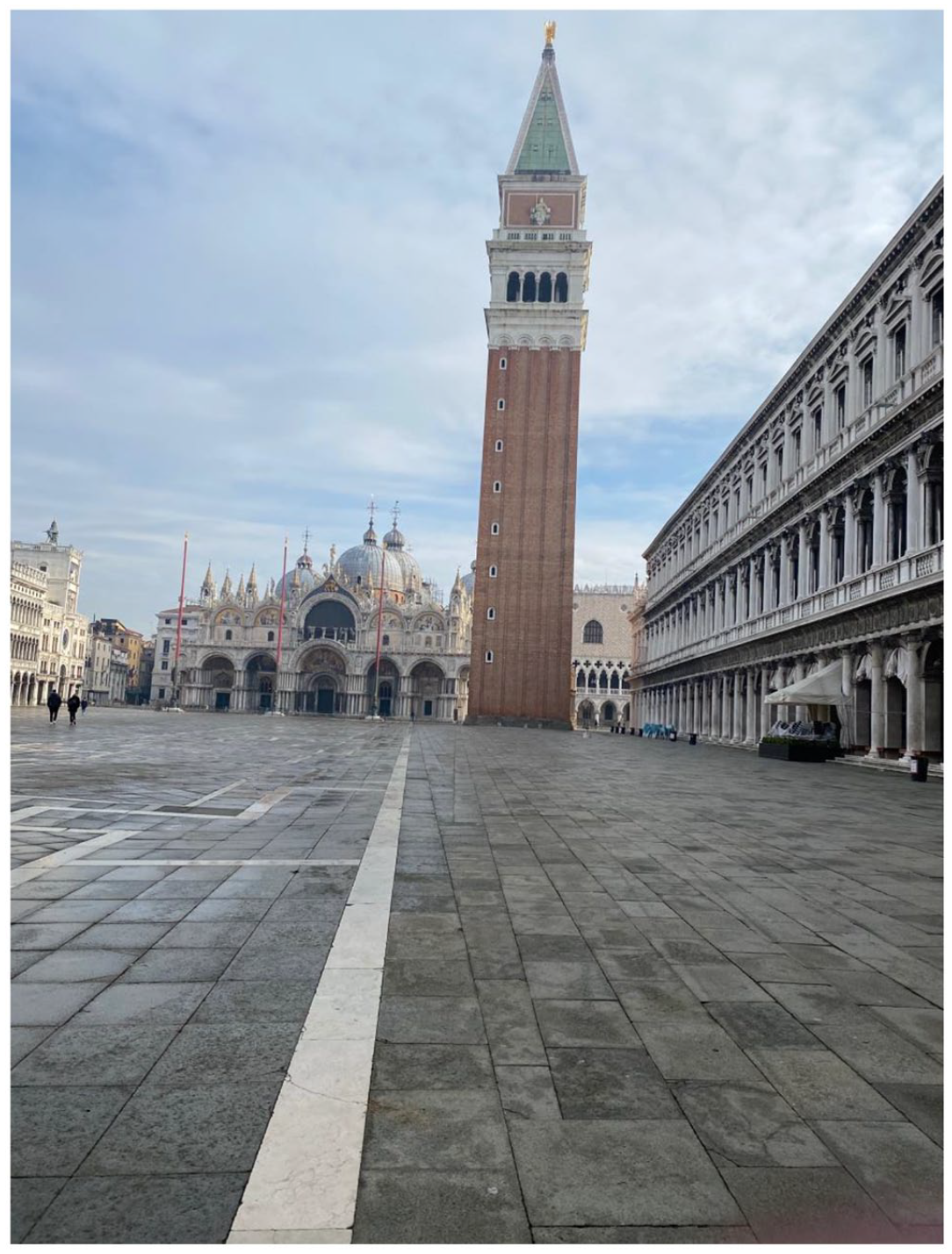
Piazza San Marco During Lockdown, Author’s Own Picture January 2021.
It was such a pleasure to see the beauty of Venice. Its exquisiteness is finally palpable without the crowds of tourists queuing relentlessly. I might be biased; after all, I lived the first part of my life not far from Venice’s city center, until I moved away to study at the university. Walking the empty streets, I was reminded of times when I came here with my father for the Carnival, during the Martedi e Giovedi Grasso. We had to hold hands very tightly to not lose each other. The crowd was so powerful, rivers of people on the bridges, and we could only walk through the small “callette” (narrow streets), as the main “calle” (streets) were too packed. People had to wait hours to get on a train, both on the way in and on the way out of the city.
When I was in high school, I used to visit Venice with my classmates, and we adored the parties during the Carnival. Once, the public ferry was so crowded that one of my friends was pushed out of the boat and fell into the Canal Grande. Disgusting. We swore we could smell the stench of the water on her for a few days, despite her showering frequently. The city was full of waste then, which attracted rats. They were huge and scary. Walking in the Zona Arancione, I do not see trash on the streets; the bin bags are carefully collected through a new door-to-door system. There is no acrid smell in the air, although, to be fair, I am wearing a FP2 mask. And. . . fewer tourists, less trash. Less trash, fewer rats.
The population decline in Venice is quite visible when there are no tourists. The absence of tourists leaves an empty space in the city. In the last 10 years, the city has changed considerably, with tourism being a factor that led to the transformation of the social and urban infrastructures. From 2008 to 2019 there was a near 500% growth of bed and breakfast places in the historical city, a 160% increase in restaurants, but a 13% decline in its permanent population (Bertocchi et al., 2020). Many of the traditional, high-quality craft boutiques have been replaced by cheap, standardized, industrially made fakes. For a while, walking in Venice was like walking in an amusement park: the esthetic of the city, its cultural values and social connections, seemed artificially made. During such rapid tourism growth, alongside a rising sea level and rapid local land subsidence, Venice has been struggling to maintain both the fabric of its buildings and the character of the city. The focus of the policymakers has been on growth-oriented strategies, and little attention has been given to social and ecological resilience. Also, the main value they seemed focused to create was value for tourists, rather than for the local citizens and for the local ecosystem.
As I am making these reflections, I keep walking in the city, as walking is a learning practice (Beyes and Steyaert, 2021). Walking allows us to observe, capture and understand the different cultural, social, human, and non-human interactions that happen in a particular place (Moles, 2018). Through walking, I notice that the city has changed during the pandemic. COVID-19 impacted on the public imaginaries of the citizens, which was both emotional and economic. In fact, the virus was detected in the Veneto region during the Carnival, when the city was visited by day-trippers, and the close proximity, the overcrowded transportation systems, facilitated the spread of the virus.
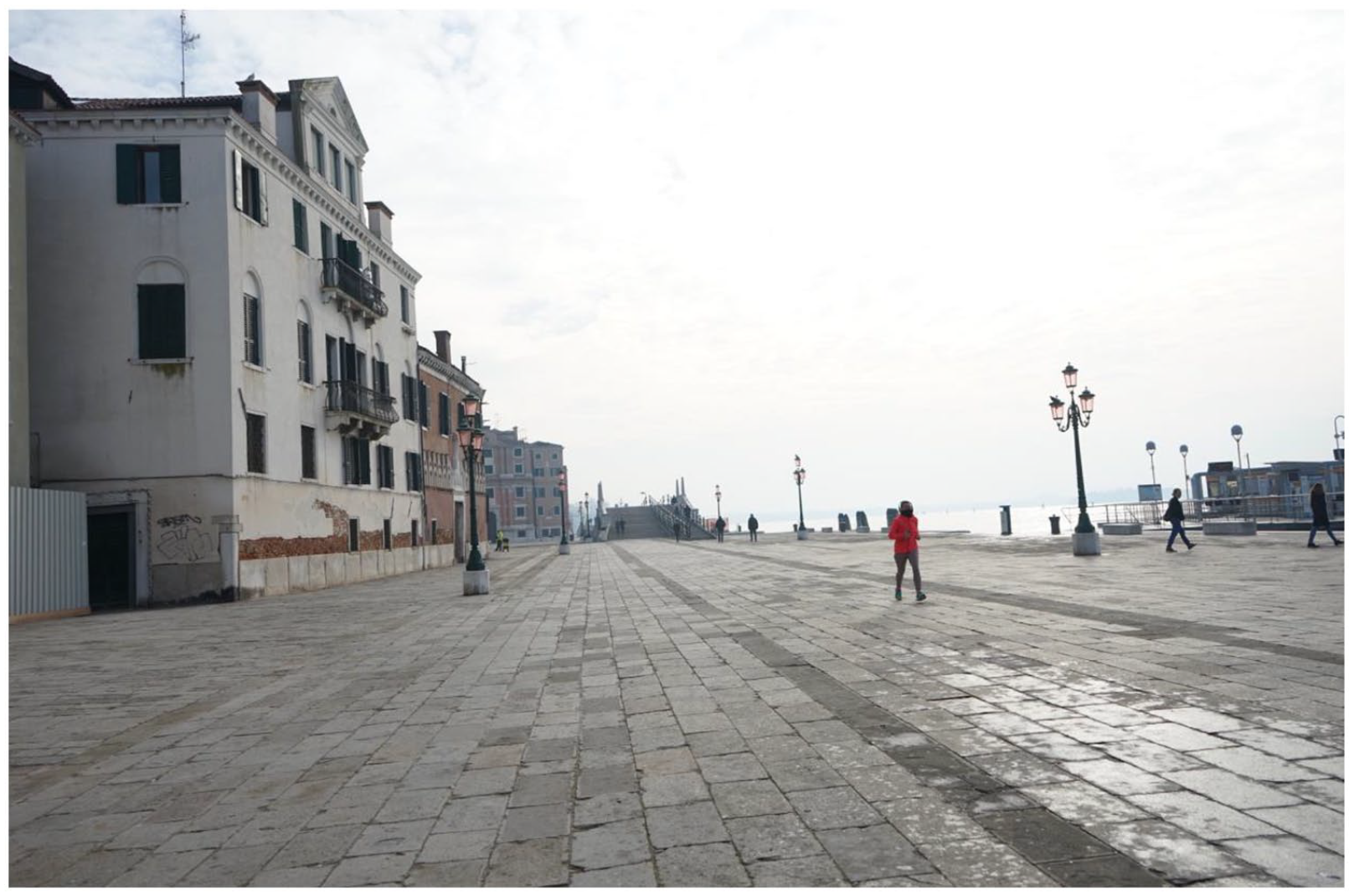
Runners in Venice During Lockdown, Authors Own Picture January 2021.
With an exponential increase in the contagion rate, the celebrations were suspended. On 10 March 2020, Italy went into full and strict lockdown. The tourist flows, the cruises, the ships and boats, the vaporetti (water bus), all suddenly stopped. This was a major economic breakdown in the city, which was still recovering from the tragic floods – Acqua Alta – that engulfed Venice on 12 November 2019 – one of the highest ever recorded, second only to the event that happened on 4 November 1966. On 12 November, the high water-level forecasted was>140 cm, and on top of this, during the evening the city experienced extreme gusts of wind (>100 km/h), which intensified the sea’s ingress. An apocalypse within the apocalypse.
Walking in Venice during lockdown forced me to think about how and what it means to slow down the experience of being in cities. During COVID-19, Venice’s total apparent population was more than halved, as city users, workers and the overall tourist influx, which before COVID-19 largely outnumbered the official resident population (Bertocchi et al., 2020), stopped going into the centre.
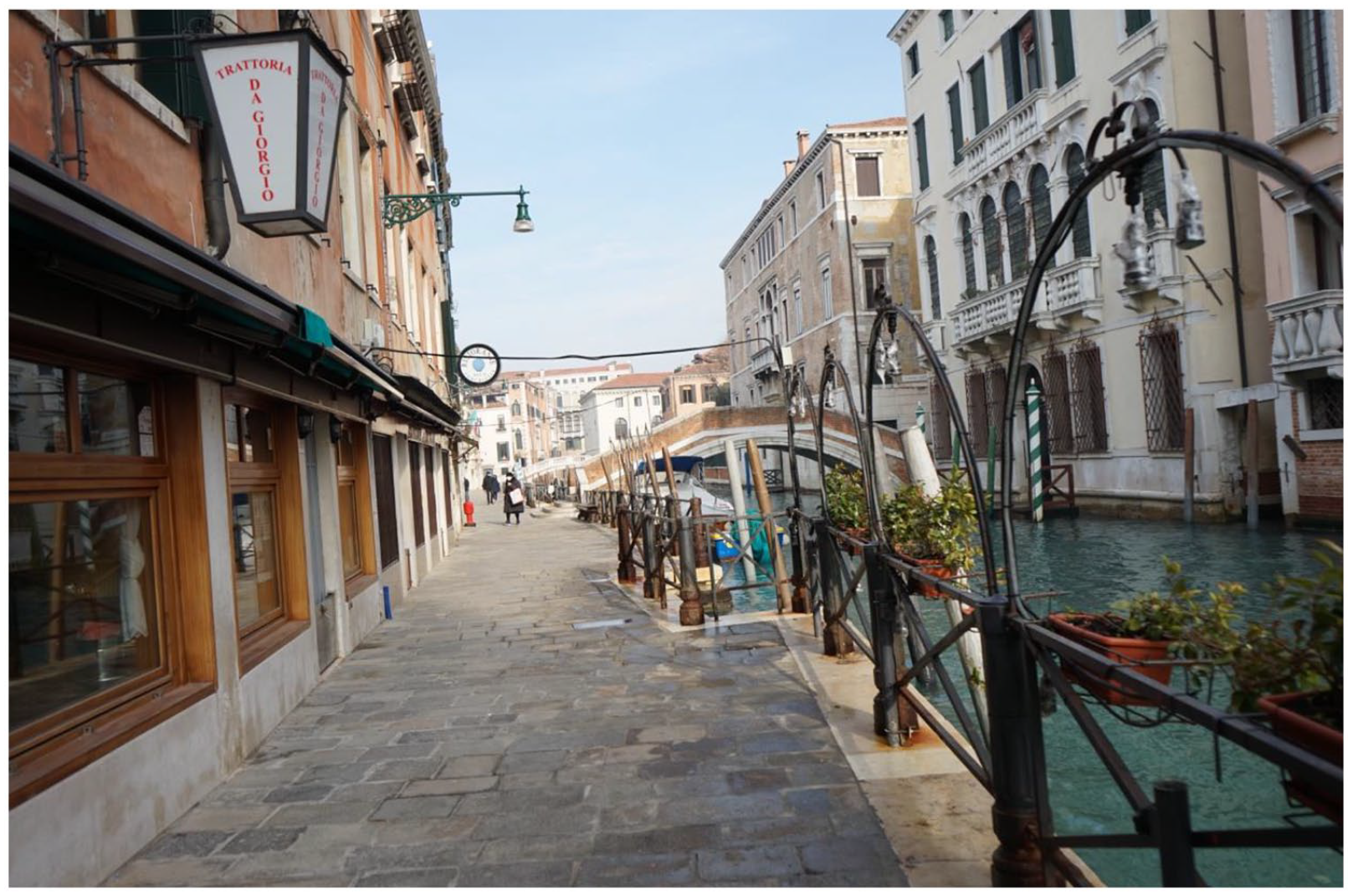
Venice During Lockdown, Authors Own Picture January 2021.
During the first lockdown, international media reported remarkably clean water in the Venetian lagoon, which was produced by a combination of factors, including the reduced impact of boat and cruise ship wakes, less water traffic, reduced turbulence in the water, less wastewater discharge into the canals, a lower runoff from lagoon tributaries, and, at the same time, because of cleaner and less turbid water and an increase in phytoplankton blooms at the start of the growth cycle in late winter/early spring (Braga et al., 2020).
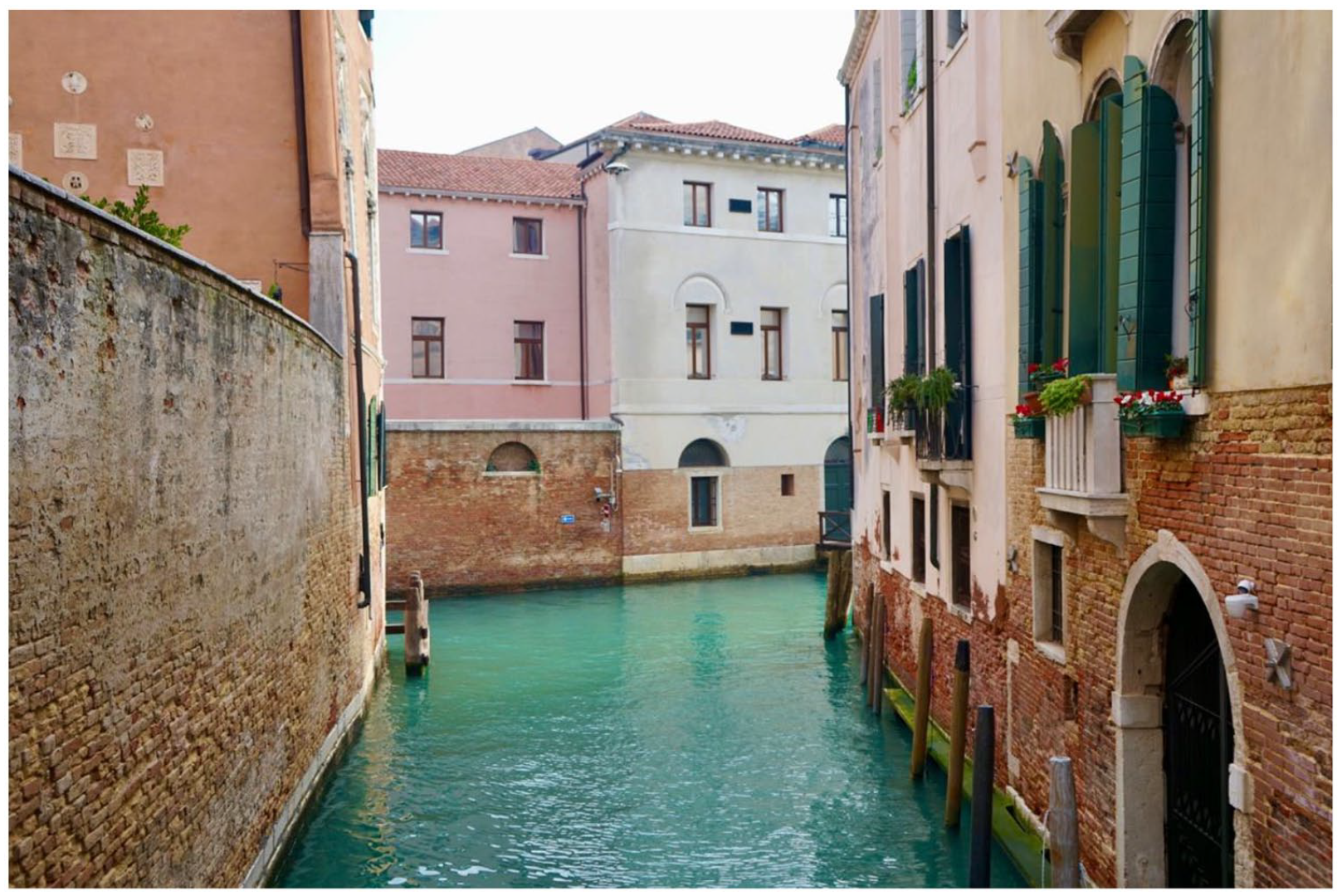
Clean Venetian Canal Water, Authors Own Picture Janaury 2021.
Water transparency brought a sense of relief, especially for a city that is at risk of disappearing due to anthropogenic actions (e.g. increasing the space of the canals for large ships and, before August 2021, also for tourist cruises, which increases the water’s salinity) (Pijl et al., 2018), as well as higher relative sea levels in the northern Adriatic resulting from climate change and local subsidence (Torresan et al., 2019). Water transparency, and the return of dolphins, turtles and other aquatic animals, created a sense of hope among the residents of the city, as emerged from conversations between fellow citizens. Walking in Zona Arancione, I am starting to wonder then who a city is for, who its leadership should care for, what constitutes a community and how it should address the tensions between the local ecosystems (intended not only for human beings, but also for all the non-human entities that are populating the city) and the city’s economic interests.
Introduction
Walking in Venice during lockdown brought forward the need to reflect on the problems of defining and consequently researching, organizing and managing public value in cities, especially as we are entering a new planetary state, that may become formalized as a new geological epoch called the Anthropocene. The Anthropocene is characterized by a complex configuration of agents, networks, rules, and systems implicated in the negative impacts on social–environmental systems (Morrell and Dahlmann, 2023). This new geological time has a proposed start-point in the mid-20th century, corresponding to the post-WWII “Great Acceleration” in economic development (Steffen et al., 2007, 2015). The Anthropocene would succeed the previous Holocene Epoch 1 (Zalasiewicz et al., 2021), and it is increasingly destabilizing and perturbing Earth’s various life-support systems. 2 The modes of organizing societies, regions, cities and communities through epistemological positions developed in the Holocene are no longer appropriate; they do not account for the impact they have on the Earth System, 3 nor the growing instabilities that are threatening truly catastrophic planetary transformations. Hence, in this paper, we intend to open a dialog and develop, within the community of organization studies, a transdisciplinary and interdisciplinary approach to researching and managing public value in cities, to face these challenges.
Whilst a research agenda has been set for Earth System Governance (Biermann et al., 2017), based on the Earth System Governance Project (Burch et al., 2018), a new stream of research on organizing public value in cities has not yet been established. So far, the development of public administration and public management scholarship has been driven predominantly by a neo-liberal logic fostering unlimited growth and economic value, predominantly for human actors. This is based on a Western conception explicated in Fukuyama’s (1992) work celebrating Western democracy, masculine technocratic values (Escobar, 2019), and industrialized living conditions, which, 30 years later, have produced many negative effects including: economic decline, the increasing possibility of global pandemics, worsening living conditions for many people, and extensive destruction of natural environments, both marine and terrestrial (e.g. Thomas et al., 2020). Some alternative voices are emerging, such as those of prefigurative politics, which focus on alternative ontologies (Monticelli, 2022) for creating a desirable future (Laamanen, 2022) in a non-destructive and non-exploitative relational society (Escobar, 2022). This emerging research can support the development of different conceptualizations of public value. Indeed, one of the major intellectuals in the development of public value, Moore (2019), reflects that the focus on economic prosperity and a rolling back of regulations has resulted in other kinds of public value he had earlier identified being lost, for example community and social values (Moore, 1995, 2014). Consequently, our research approach concerns problematizing how cities organize and manage public value and what actually constitutes public value.
Stoker (2006) argues that public value management is a way to open up value creation to a broader constituent of communities through networked governance. Here, we challenge the network notion. Several calls have been made in organization studies to shift the perspective from a human-centric and individualistic conception of networks and communities, toward a more collective and inclusive perspective (Hamilton, 2020; Lemmens, 2020). Building on these, we suggest that public value in a city should be constructed through a relational epistemology that embeds global attentiveness toward local ecosystems.
Although historically cities have always been important for the development of culture and technological progress, cities in the Anthropocene have also become the fulcrum of an epoch of rapid change, which encompasses ecological, social and economic spheres (Thomson and Newman, 2020), as well as environmental problems and concerns. The accelerating patterns of consumption in cities is one of the defining components of the Anthropocene. Urban areas account for about three-quarters of the energy used by humans (Güneralp et al., 2017). Moreover, they use vast resources of fresh water piped over long distances (McDonald et al., 2014), and impact on ecologies far beyond the urban landscape, such as to the lands given over to farming and to the seas overfished. Walking Venice during lockdown, at a time when human domination and human presence was diminished due to the prevailing domination of the virus, helped us to reflect that walking can be a democratizing force that seeks equality of access and freedom of movement. Walking the city allowed us to experience the absence of mass tourism, and to ponder the vast consumerism associated with it, and the lack of planning and organizing for real sustainability.
As expressed in the vignette, walking in Venice gave the opportunity to slow down and observe that existing patterns of economic production and consumption are visible and dramatically unsustainable, and that environmental crises, even when perceived as only local, are producing adverse global effects (Clark and Szerszynski, 2022) and environmental catastrophes (Gasparin et al., 2020b). Biodiversity loss and local pollution threaten the well-being of city populations and the hinterland ecologies that support them. Indeed, vast areas of the world are now effectively the hinterland of cities. Calls have been made to address this. For example, contrast globalization, a lived experience throughout the world, with the inclusion of indigenous knowledge for preventing further biodiversity loss (Mazzocchi, 2020) and reflecting on societal adaption, for example climate-induced resettlements of cities in the Anthropocene (Whyte et al., 2019). The challenge of making changes is due to the fact that current modes of organizing economic activities are based on the prevailing narrow economic logic rather than on environmental, social and cultural values (Gasparin et al., 2020a), and these are damaging the Earth System. In the Anthropocene, humans act as a “geological force,” transforming nature into a hybrid (Latour, 2004) entangled with cultural, social and economic spheres (Latour, 1993). Suggestions have been made to radically move away from Kantian human-centric ontologies (Hamilton, 2020) and rationalities (Gasparin et al., 2020a, 2020b; O’Doherty, 2020), in order to overcome the dichotomies of nature–culture, nature–technology, and natural–artificial (Latour, 2004). Some of the approaches apply a relational and pluriverse perspective, defined as a perspective of “radical interdependence and focused on fostering diverse movements for civilizational transitions to a world in which many worlds fit” (Escobar, 2022: xxvi).
In times of major global interconnectedness and environmental change, there is an intensified pressure to identify, create and exploit new resources, which requires a “radical and disruptive approach to innovation, sustainability, and management studies and policy” (Hultman et al., 2021: 104297). There is a failure to organize with local communities, local realities and local governance systems, with implications for cities, and the role of democratic leadership within this (Gibson-Graham et al., 2013; Smolović Jones et al., 2016).
In doing this, we contribute to the special issue by proposing a new theory on public value, which we call “New Public Value for the Anthropocene Epoch” (NPVA).
Public value as a concept does not have a single agreed definition. Scholars have been focusing on aspects of the production, creation (Voorberg et al., 2015), and governance (Bozeman, 2007; Meynhardt, 2009) of value(s) for the public (Moore, 1995, 2014, 2019), in addition to questions of what constitutes values and worth (Alford et al., 2017). The concept was initially focused on value creation by the public sector (Moore, 1995), but has since also been extended to include public value creation by the private sector (Meynhardt et al., 2014). However, from both a public and a private perspective, the concept has been conceived and drawn from a human-centric definition of value, which treats the natural world as a neutral player with little or no agency. This has implications for the outcomes of systems designed on extant readings of public value creation in a globalized world, and its suitability for the transformed planetary conditions of the Anthropocene.
Furthermore, the implementation of public value has used definitions of value that have focused on the production of economic and monetary outcomes (Dahl and Soss, 2014; Gasparin and Quinn, 2021; Moore, 2019; Stoker, 2006) when making policy decisions. However, defining value only in economic terms is reductive and ignores some essential characteristics of public services and their value creation. Bozeman (2007) identifies three key characteristics of public value creation: public value is best understood as a collective endeavor; there is a relational aspect to the production of the goods and services that are required to produce public value; and this process includes the public.
Hence, we define New Public Value in the Anthropocene as: The creation of different sets of values (including, for example, economic, cultural, social, environmental and ecological values) to be mobilized, creating an equilibrium between human and non-human actors, and embedding global attentiveness towards local ecosystem solutions. NPVA is intended to drive the global response to the environmental crisis, for the protection and the creation of relational mechanisms of resilience in ecological systems.
In the theory of NPVA, we include consideration for non-humans and local ecology with ontological and epistemological dignity equal to humans, places, and businesses, when addressing the questions of what is valuable to do and for whom is it valuable to do things. This shift fundamentally alters the prescription of which actions can be taken by each actor in the system, as outcomes of value creation should err toward mutualistic patterns of symbiosis rather than the parasitic approach (Gasparin et al., 2020a). Subsequently, in this paper, using the NPVA definition, we reflect on the potential for its realization and its implications for city governance, by combining theories from place-based approaches and city/public leadership, whilst acknowledging the need for a collaborative, concomitant global attentiveness. Previous work on organizing in the Anthropocene has acknowledged the prevalence of a “business as usual” (Wright et al., 2018) orientation to economic organization in the Anthropocene, retaining a focus on growth and consumption as economic priorities. We propose developing more inclusive forms of public leadership in constructing the response to the challenges that the Anthropocene Epoch is creating, through a city-based approach which extends governance, governing and leadership to non-human actors 4 and voiceless communities as key constituents of the ecosystems in which they are embedded and embodied.
The paper proceeds as follows. In the next section, we review how public value is currently defined and how its conception is limited as we enter a new planetary and geological context, in particular analyzing it from the cities in a globalized world perspective. We then move to conceptualize NPVA, and to discuss how organizing for this will be achieved through a multi-scalar approach to governance which places the city as the fulcrum of an interconnected global response to the changes set in train by the Anthropocene. In this section, we unpack our posthuman approach to public value before returning to an imagined future of what might happen to cities like Venice if public value continues as currently conceived.
The limitations of public value theory in the Anthropocene epoch
Public value and governance
Public value is a notoriously messy concept to define (Brown et al., 2021). This is due in part to the different debates that have emerged, which consider public value from the point of view of the public sector, the private sector, what value might constitute, and how to organize for it. The ideas of public value creation (dynamic and both public and private) and what is valuable for the public sector to do and for whom (normative), are subject to much research, comment, and debate (Brown et al., 2021). However, that research is based on the assumptions that the world is stable, that natural resources can be used infinitely, that the Earth System is not subject to periodic large-scale events that can reset its parameters, that humans are motivated predominantly by economic gains, and that humans will accept decision-making/governance based on these assumptions.
Public value creation is managed via governance structures and the management of public administration (Moore, 1995). Governance structures across the world are largely constructed and diffused through a top-down approach (Raco et al., 2019), formed in national institutions that are then passed through and filtered down to the regional and local tiers (Geddes, 2006). Some researchers have argued that this approach to policy development is neither appropriate nor effective for regional impacts of policy on cities (e.g. Paasi, 2009; Quinn, 2015; Tomaney, 2015). Indeed, this approach tends to create governance networks directed from the Nation State, which ignores the binding factor of city leadership (Sotarauta, 2016).
Kelly and Stephen (2002) track the development of public management from traditional public administration, through New Public Management and onto what they term as Public Value Management. Within this, decisions made in the “public interest” are arrived at via a “complex process of interaction that involves deliberate reflection over inputs and opportunity costs” (Kelly and Stephen, 2002, cited in Stoker, 2006: 44). These debates between the public management and public value conceptions (Brown et al., 2021) are centered on the idea of what constitutes the notion of “public.” This was initiated in the context of the Holocene Epoch, in which it was assumed that the “natural world” would continue acting as a stable and fundamentally unchanging context and resource for human social and economic activities. This perspective was promoted by politicized, neo-liberal economic narratives with the Bretton Wood agreements, conceptualizing natural resources as infinite (Simon, 1981). This socio-economic approach has created a new ecological crisis (Kureethadam, 2018), which we analyze in the following paragraph.
Public value in cities in a neo-liberal globalized world
City governance, public value in the cities and city leadership are embedded in a perspective of a globalized world. Globalization has resulted in a situation whereby the national state is no longer the most appropriate site for policy intervention (Milward et al., 2016; Peck, 2011; Quinn, 2015; Sotarauta and Andrew, 2021; Tomaney, 2015) as it has been superseded by supranational organizations (e.g. the UN, the EU, multinational corporations). One result of this has also been, conversely, a strengthening of the subnational tier which can negotiate with the supranational tier directly. Here we can witness the place-specific ways in which globalization is experienced as a tangible phenomenon impacting lives and ecosystems, rather than merely as an abstract concept. The State’s central role in producing public value is dependent on its ability to organize economies and societies within its remit. However, the current social and political configurations are largely shaped by the interests of multinational corporations (Ballor and Yildirim, 2020; Chatterjee, 2016), which influence the global economic orientation and the growing integration of national economies (Frenkel, 2001; Osborne, 2018). Since the 1990s, globalization has been linked to the denationalization of financial capital market regulations (Osborne, 2018), which made the world economy highly unstable and subjected to predatory practices (Antonio et al., 2008) impacting all levels of economic and social activities. Spivak (2012: 1) writes: “Globalization takes place only in capital and data. Everything else is damage control.” This “everything else” encompasses the economic, technological, environmental, cultural, political and geographical dimensions, and creates multidimensional global forms of social interdependencies (Osborne, 2018).
Neo-liberal economic approaches have been promoting globalization as the Western delocalization in emerging economies of productive activities and as a win–win situation, with Western countries cutting their production costs and emerging ones being empowered through job creation and improvement of their economic situation. Instead of a win–win, this has created extreme imbalances, concentrating wealth in the hands of a minority of people who are exploiting the less well-off. The focus on value creation has shifted from the public to the private sphere; as Mazzucato (2014) argues, profit and wealth have been privatized while risk and debt have been nationalized. This has contributed to growing inequalities in a global space, the emergence of new supranational organizations, new types of global risks, and inevitably new forms of warfare, global organized crime, and terrorism (Beck, 2008). It has also affected mundane and daily purchases, leaning toward a performative logic of goods consumption based on advertising, desire, compulsion, and standardization of tastes by offering the same products everywhere, and causing the disappearance of local cultures (Ritzer and Jurgenson, 2010). Globalization is a multidimensional phenomenon, composed of many factors that affect the economy, distribution of wealth, political power, employment, identity and cultural experiences (Martell, 2017). It creates inequalities in terms of class, gender and poverty, which lead to global migrations and alienating effects by breaking social connections and ties. Globalized production has reduced access to local resources and placed stress on the environment with increased use of pesticides and monocultures and increasing production rates and volumes (Debs, 2013; Gasparin et al., 2022; Gasparin and Quinn, 2021). Pursuing a more productive and homogeneous system has fragmented local cultural identities (Cutcher, 2015) and endangers biodiversity and local ecologies.
Faulkner and Kaufman’s (2018) work on measuring public value finds that this leads, unsurprisingly, to a focus upon, for example, service delivery of quality, efficiency, and desired outcomes within public management. The term was then extended to the involvement of the private sector as a mechanism for businesses and organizations to be able to demonstrate their contribution to broader society, above and beyond that garnered by immediate shareholders (Meynhardt et al., 2014).
The Anthropocene presents profound challenges for political systems and institutions: existing modes of economic production and consumption are proving unsustainable as the global environmental crisis begins to intensify (Gasparin et al., 2020a). Moreover, because of exponential increases and changes in production systems, energy consumption is increasing rapidly (Hornborg, 2019). Fischer-Kowalski et al. (2014; see also Syvitski et al., 2020) demonstrate that human pressure on the Earth System is strongly correlated with the energy consumption of fossil fuels and population growth, though we note that patterns of consumption are heavily skewed to wealthy countries, or to wealthy people within less wealthy countries. Energy consumption is concentrated in urban areas (Güneralp et al., 2017; Seto et al., 2014). In fact, it is estimated that by 2050, 68% of a global population of 9.7 billion people will live in urban centers (United Nations (UN), 2023), with each having its own challenges. This problem has been brought to the stark attention of the public by the energy crisis that has affected Europe throughout 2022 and is ongoing.
However, the urgency of actions are unequally distributed across the globe. Some cities face immediate and grave dangers; alongside our vignette in Venice, Shanghai, New Orleans, Jakarta and Ho Chi Minh City are just four examples of major metropolitan areas that are currently subsiding at a rapid rate (e.g. parts of Jakarta at up to 25 cm per year; see Erkens et al., 2015). The populations and neighborhoods of these cities are at grave risk of being inundated by sea within a matter of decades, posing the risk that the walk we enjoyed in our vignette may be denied to future generations in these cities. In other parts of the world, changes in established weather patterns are becoming increasingly common and will have effects on the infrastructure and habitability of cities (e.g. Gough et al., 2019; Tuholske et al., 2021). Yet, cities are fundamental for social, economic, and environmental lives, making them of crucial importance for the continuity of civilization (Cox, 2017; Montgomery, 2013). Indeed, research needs to re-define what organizing public value in the Anthropocene could entail, from a city perspective, which we problematize in the next section.
A new public value for the Anthropocene (NPVA)
The conspicuous patterns of consumption and economic growth that characterize the Anthropocene (Williams et al., 2016) cannot continue unabated without precipitating significant change to the Earth System, with notable impacts on the biosphere already evident (e.g. Ceballos et al., 2015; Richardson et al., 2023; Steffen et al., 2015). There are numerous calls from researchers, politicians, activists and citizens in general to slow down the impact humans have on the Earth System. A multi-scalar approach open to localized, city-based solutions within a global context could offer an opportunity to organize for this slowing down by incorporating local ecologies as beneficiaries of public value. As emerged from our reflections in the vignette, Venice is one of the cities in the world that urgently needs a new approach to city leadership that takes into consideration the relations with human and non-human actors, ethos, and inclusive democracy. The Anthropocene, having returned us to a version of the State of Nature (Lakitsch, 2021), presents challenges and opportunities for leaders; perhaps, more accurately, it will force them to seek new ways to organize the fabric of their local, social and economic systems.
Reorganizing for public value at the city tier also offers an opportunity to create networks and partnerships to refocus on value for non-human actors in the local ecosystem. As cities led the way into the modern mode of economic exchanges, concentrating resources and energy use in centers of high population density, placing immense stresses on infrastructure, then they could also be vehicles through which alternative inclusive modes of leadership and organization could be introduced to incorporate the needs of local ecologies. Such an approach recognizes the distinctive contribution that those that have been traditionally rendered as “human” make to the posthuman policy assemblages being envisaged here.
These include the capacity to attribute meaning to events; to act altruistically; to imagine and create technologies; and to use reason to theorize, predict, or anticipate future events. . .[;] abilities [that] underpin a capacity to formulate and implement policy (Fox and Alldred, 2020: 278).
Whilst the posthuman approach allows us to rethink agency and value distribution beyond the anthropocentric perspective, there are some issues within this approach. Malm (2018) has argued that there remains a tension whereby human actors exercise their agency over nature as the posthuman approach does not fully disconnect the social from the natural in its thinking. Distinguishing the social from the natural could allow us to focus on the problems of nature and to break with the neoliberal political paradigm.
Accepting this critique, we (the authors), have reflected about whose agency needs to be subdued and whose amplified, to work through to a new form of public value. This is a compelling task, and we invite other scholars to take part in the discussion. In using “we,” it is to mean “us” as a collective of researchers who are devoting their professional lives to discuss these issues and bring them to the center of academic debates, conferences and publications. We come from different academic disciplines, and our effort is to involve colleagues to take part in this vital discussion. As lecturers, we are also engaged in disseminating these notions in our teaching, via promoting a different curriculum (Gasparin et al., 2020a), as our students will be the next generation of managers and administrators, and they will need to act in times of crisis. Finally, we are actively participating in discussions with policymakers, and hence, our wish is that our theories will be translated into accessible reflections for key stakeholders.
Pragmatic reflections on how agency for this kind of public value can be created and enacted is represented by examples of reorganizing public value, such as the Cittaslow Movement (2017), which enables connections between specificities of local policies and experiences associated with a global movement. Based on the Slow Food movement, the Cittaslow Movement (established in 1999) therefore encourages the consumption of local resources without exhausting the local ecosystem, preserving it, and valuing local cultures and their diversity. In this case, city leadership creates value for citizens, as well as promoting the protection of the local ecosystem alongside extant economic remits, creating a reorganization of cities and places toward sustainable models of production and consumption (e.g. Raworth, 2020), ones that build on nature-based solutions. The idea underlying the Cittaslow Movement is to consider the city through a different development lens, one that is based on improving the quality of life of the local communities and local biosphere. The main goal of Cittaslow is to embrace the philosophy of Slow Food within local communities, applying the concepts and practices of locally made and locally sourced produce, shortening its supply chain, and protecting the local traditions and heritage of the place. The manifesto asks us to embrace slowness in producing, respecting the succession of seasons, respecting citizens’ health, the authenticity of products and food, promoting local art and culture, and respecting the joy of slow and quiet living. There are 287 cities in 33 countries worldwide that are adhering to the Cittaslow manifesto. Activities in the Slow Cities involve recycling projects, Slow Food organizations, after-school programs, and information for tourists that helps them have a real “local” experience (Pink, 2012). This also includes having a strong connection with the diversity of local ecosystems, biospheres, and ecologies, to protect the local species and the biodiversity that contributes to agriculture and food production: plant species and varieties, animal breeds, insects (including pollinators), the invertebrates, microorganisms, the microflora that live in digestive systems and those that enable fermentation processes in many foods; and, also, the diversity of knowledge that has allowed farmers and food producers to select and adapt plants, animals and farming traditions (Slow Food, 2020).
To be part of the Cittaslow, cities have to fulfill 72 requirements, divided into: energy and environmental policies to live in harmony within the local biodiversity; infrastructure policies (alternative mobility, cycle paths, etc.); quality of urban life policies (requalification of marginalized areas); agricultural, touristic and artisanal policies prohibiting the use of GMOs in agriculture, increasing the value of working techniques and traditional crafts, use of the Slow Food principles, providing ecosystem services to overcome environmental shocks, creating the conditions for production with a minimal impact on non-renewable resources (water and soil above all) and with less need for external inputs that are costly and harmful to the environment (e.g. fertilizers, pesticides and antibiotics); policies for hospitality, awareness and training; social cohesion; sustainable partnerships (Cittaslow, 2022), creating in this way value for the community intended as an ensemble of humans and non-humans.
Cittaslow is an example of an early implementation of a new set of public values. Other examples could be the farmers’ associations as described in Escobar (2020), or attempts at mobilizing indigenous knowledge beyond a “managerial” perspective in which indigenous or local knowledge is not only a perspective to be added to environmental policy, program or projects; instead, acquires it epistemological parity, connected to the worldviews and cosmologies from which it originates (Inoue and Moreira, 2016).
By making a shift from public value to NPVA, the advantages of public value management and networked governance identified by Stoker (2006) and Moore (2019) are extended to non-human actors and to the Earth System, as they become an embedded part of the deliberations and calculations of “public interest” outlined by Kelly and Stephen (2002). Furthermore, this expansion of the question of “who” has implications for considerations of “what” is valuable to do. This then has knock-on effects on how design, innovation and policy are created in the Anthropocene. Purely economic or monetary considerations of value have little or no meaning for the Earth System, its biosphere, or indeed for some minorities within a city community, and in relation to other communities left behind. Finally, this redefinition of public value in the Anthropocene alters the focus of policy and decision-making from short-term profit to a long-term appreciation of value.
Transferring lessons into governance practice
This reconfiguration in turn requires a new conceptualization of city governance and leadership, economic growth, innovation, and a different approach to the issues of globalization, such as designing localized supply chains, production systems, and the development of new skill sets for workers, to allow the conditions for the innovations necessary to change production and consumption patterns (Fitzgerald, 2020; Hambleton, 2015). This also entails taking alternative slow approaches to innovation and production in the economy of a city (Gasparin et al., 2020b), empowering local communities to share social responsibility and co-create avenues for improving the quality of life through social and environmental justice, and solidarity in the overall ecosystem. This also encourages a rethinking of the transportation system, adopting sustainable approaches to travel between and within cities, with a refocus on walking the city, allowing people to rediscover their local environment. For example, traveling by train rather than aeroplane, walking or biking through the city rather than traveling by car or taxi, allows one to take the time to discover hidden cultures and architectures, as we were able to do in our opening vignette, rather than rushing through.
Conclusion: Researching organizing for new public value in the Anthropocene for the future
Walking in Venice is no longer possible. I talk about my memories of this magical city with my colleagues, who did not have the joy to visit it before it was too late. I still remember the day it sank and we were forbidden to return. The explosion of the petrol refinery made the Earth tremble. All the lagoon was covered by toxic black oil. Short-term profit was so much more attractive, then, than a promise of a better world in the future. The government promised it would invest in renewable sources, but the newly discovered petroleum reserve was such a rich opportunity for them. They dismissed all the expert reports and recommendations. They discredited whoever was providing evidence against this insane plan. But the banks changed the discourse: A narrative of energetic autonomy after the energy crisis. We will be rich again. We will be wealthy again. Energetic autarchy! But now everything is lost. The lagoon, the ecosystem, the hundred thousand people displaced. Several killed. Several injured. Many ill due to the toxic exhalations. And we still do not know the consequences for future generations. An entire city disappeared into the black waters. An entire ecosystem, an entire region, thousands of years of history blown for the avarice and greed of the few.
Hopefully this apocalyptic text does not become the conclusion of the walk in Venice. However, it might yet be a probable future, unless there is sufficient action to stop it. In this paper, we propose opening up the discussion to radically challenge the notions of public value and public good to explore ways of embedding the non-human in their creation, with the hope of opening up the discourse and developing a scholarly conversation.
Currently, organizations are adopting processes and modes of production that have been developed according to Holocene environmental norms, a relatively stable period of time that we used to think of as permanent. These theories, in both the public and private spheres, have been a central factor leading to the climate crisis we face today (Thomas et al., 2020). Often, the economic logic that drives current implementations of public policy leads to an exclusion of those groups (human and non-human) who are not seen to produce “economic” value from consideration in the question of “who” it is valuable to do things for. If we extend this question of “who” to include the environment, natural resources, animals, plants, fungi and microbes, marginalized communities living outside of the mainstream economy, non-monetized forms of work in the community such as caring for elderly relatives, then the question of “what” is valuable to do necessarily moves on from the solely economic and into other forms of value (societal, cultural, environmental).
Our aspiration with this paper has been to open up a discussion and initiate a fruitful conversation on what will constitute Public Value in the Anthropocene, and how we can suggest changes that involve making the places we live more habitable in the long term—that is, beyond short-term economic cycles, and more walkable, to open them up and democratize them in posthuman policy democratic assemblages (Fox and Alldred, 2020) whilst striving for a balance between the human and non-human actors within the Earth System. Achieving this within a global context will require a reorganizing of how we approach governance and governing in the Anthropocene.
We argue that a feasible way to achieve this is by changing policies and governance. We suggest that a governance structure implementing NPVA allows for the design and implementation of an inclusive, sustainable, and environmentally savvy set of policies that create governance of New Public Value, in order to achieve meaningful and positively impactful responses to the climate crisis.
We propose to do this by combining a global and local approach to the governance and leadership of NPVA that cuts across scales and the divide between human and non-human actors and beneficiaries. Whilst the Anthropocene and the associated environmental crisis is a global challenge that demands a collaborative globally organized response, it is crucial that any governance system accounts for the fact that it is the localized nature of the ecologies that will draw actors together around that challenge, just as areas of economic functionality (Tomaney, 2014) draw actors together from an economic governance perspective. This also links to arguments from prefigurative politics (Monticelli, 2022) that existing State power and apparatus are unlikely to be conducive to the kinds of radical changes required, and thus the organization of any transformation needs to be undertaken from the ground up via communities (Reakstad, 2022).
Governance and governing, as we have previously outlined, are underpinned by the ideal of producing public value for the citizens of the governed realm (Benington, 2011; Brown et al., 2021). Stoker (2006) argues that a networked governance approach that includes, in the debate and decisions, a wider range of voices in the public interest is necessary for the production of public value within public management. In this perspective, preferences are not arrived at outside of their context and therefore actors come to the network with pre-existing interests and motivations.
In fact, each city and region has its own unique natural, local ecology, understood broadly. Historically, these local ecologies are the very reason urban settlements were possible due to access to productive land, clean water, and the natural minerals they provided to the earliest settlers. Unless urban areas can move toward functioning in a manner more akin to the natural ecologies they are part of, initiatives to move toward a more sustainable model of living will continue to progressively degrade the wider global ecosystem (Ozer, 2014; Raworth, 2020; Williams et al., 2022).
Previous attempts to organize the city and govern in front of the challenges posed by large-scale environmental change have provoked an increased awareness of the environmental crisis, but this is not enough for facing the challenges that the Anthropocene Epoch presents. Sancino et al. (2022) study 40 examples of cities of varying sizes across the world that are taking a lead in addressing climate change issues. They pose the question of “what can city leaders do about climate change” and find that organizing at the city tier was an effective way of addressing the “Wicked problem of climate change.” These actions necessarily include adopting a bottom-up approach, which allows the community to ensure the local ecology is factored into discussions. However, circumstances demand that we go still further than this. . .
. . .to establish a posthuman understanding of environment and environmental sustainability. Such a posthuman perspective de-privileges human interests in relation to those of other animate and inanimate matter, while not denying continuing human involvement in the Earth’s ecosystem. In this view, the environment is an assemblage (Bennett, 2005: 445) or arrangement (Buchanan, 2017: 465) in which humans are an intrinsic element, rather than separate from or in opposition to it (Fox and Alldred, 2020: 270; see also Kotzé, 2019).
Responding to the climate crisis demands collaborative action across government, the private sector, communities, environment, local ecologies, natural resources, cities and regions (Hambleton, 2015), moving beyond the usual core focus within policymaking on economic activity. As with previous economic crises (Sotarauta and Andrew, 2021), city leadership can be central in reorganizing for public value and thus formulating the response of cities and regions across the globe to the climate crisis and the challenges posed by the Anthropocene. This paper has highlighted some examples of sustainably organizing cities and economies in a manner more appropriate for the Anthropocene and Earth System. However, further research is needed to develop theories of public administration drawn from other examples such as the relationship between practices of rewilding and urban administration, and those drawn from other settings (coastal regions, rural and/or mountainous regions). Other sources might include research into the practices and cosmologies employed by indigenous peoples around the world and their relationships with their surroundings (Mazzocchi, 2020). In order to do so, we also need to develop new innovative methods that allow us to include critical fabulations of future scenarios in order to create new cutting-edge organizational theories and modus operandi through relational epistemology.
Footnotes
Declaration of conflicting interests
The author(s) declared no potential conflicts of interest with respect to the research, authorship, and/or publication of this article.
Funding
The author(s) disclosed receipt of the following financial support for the research, authorship, and/or publication of this article: This research was funded by Carlsbergfondet and HORIZON EUROPE Culture, Creativity and Inclusive society.
