




Abstract
This study examines the metaphors used in the British press to characterize the payday loan industry in order to develop our understanding of organizational delegitimation. Drawing on critical discourse analysis and theories of moral panic, we show how the metaphors used in the press framed the industry as a ‘moral problem’. The study identified four root metaphors that were used to undertake moral problematization: predators and parasites, orientation, warfare and pathology. We show how these metaphors played a key role in the construction of a moral panic through two framing functions: first by constructing images of the damage and danger caused by the firms and second by attributing agency in such a way that moral responsibility was assigned to the organizations. We also extend the discussion of our findings to explore the ideological dimensions of the moral panic. We develop a critical analysis that points to the potential scapegoating role of the discourse, which served as a convenient moral crusade for the government and other neo-liberal supporters to pursue, while detracting attention away from the underlying socio-economic context, including austerity policies, the decline in real wages and the deregulation of the finance sector. From this critical perspective, payday loan companies can be seen as a ‘folk devil’ through which society’s fears about finance capitalism are articulated, creating disproportionate exaggeration and alarm, while the system as a whole can remain intact.
Introduction
In the wake of the global financial crisis, the finance sector as a whole has experienced a dramatic shift in legitimacy (Engelen et al., 2012; Kelsey et al., 2017). Banking had previously been a relatively well-respected profession. The financial crisis triggered a sudden shift in the societal attitudes towards the institutions and their workforce (Stanley et al., 2014; Tourish and Hargie, 2012; Whittle and Mueller, 2012). We know that organizations can be problematized in many ways through the expression of concern about their efficiency, effectiveness and ethics (Vaara and Tienari, 2008). The focus of this article is on the latter and we seek to understand the social construction of moral problems concerning organizations in the news media. According to Vasterman (2005), the news media ‘manage the public debate and perform the role of the critical watchdog, revealing problems, threats, failures and scandals’ (p. 511). The news media thus fulfils an important framing role (Entman, 1993, 2004, 2007; Scheufele, 1999) that can include the framing of organizations as a source of ‘problems’ affecting society (Street, 2010: 35).
The process through which a ‘problem’ is socially constructed is known as problematization. In some industries, such as the tobacco industry (Prasad et al., 2016) and nuclear power (Patriotta et al., 2011), the problematization process has stretched over decades and the mass circulation media also played an important role in both cases. While the literature on delegitimation has pointed to the role played by moral problematization, we do not yet know how discourse generates moral problems and how this discourse relates to the ideological context of its production and circulation. In addition, we know that industries often gain notoriety in no small part through negative media coverage, but we do not yet fully understand how media discourse enables the framing of organizations as illegitimate. Moral problematization can of course also occur in non-mediatized ways. Actors can engage in moral problematization discourse without engaging the mass media, such as the discourse generated within and between religious organizations, civil society organizations or in the political sphere about problematic business practices. However, we focus here on mediated discourse because of our interest in the role of media framing in the construction of moral panics. More specifically, we examine the role played by metaphors in the framing of payday lenders in the British press, between early 2008 and late 2014. We ask: how do metaphors contribute to the framing of organizations as illegitimate? While our study is focused on the payday loan industry, our theoretical contribution is of relevance to studies of delegitimation more generally by advancing the understanding of the process through which an organization or industry is constructed as a ‘moral problem’.
The article draws upon and contributes to the theory of moral panics (Cohen, 1972; Goode and Ben-Yehuda, 2009; Welch et al., 2002) and framing in mass media (Couldry and Hepp, 2018) by explicating the role played by metaphorical language in these processes. Our study reveals two moral framing functions performed by metaphors. The first framing function involves the creation of analogies with domains that have a preexisting moral quality due to their association with elements such as pain, pollution, death and disease. The second framing function involves the attribution of agency within which moral responsibility is ascribed to the organization(s) and agency is removed from other actors. We will show how this metaphorical discourse constituted an important building block in the construction of a moral panic that quickly engulfed the media, politics and civil society. We will also discuss the broader implications of our findings in relation to the ideological context and consequences of the moral panic. We will argue that the discourse served the ideological purpose of scapegoating a small section of the finance industry while deflecting criticism away from broader underlying socio-economic issues, including the decline in real wages, austerity and reform of the banking system. In so doing, we seek to contribute to the understanding of both the discourse of debt and the financial services industry specifically, and also the understanding of how discourse plays a role in the delegitimation of organizations more generally.
The article is structured as follows. We begin with a review of the history of morality and debt and a review of the literature on legitimacy, morality and moral panic. This is followed by another literature section on metaphors, media discourse and delegitimation. The empirical context of payday loans is then presented followed by a description of the methodology used in the study. The empirical data are presented in four sections structured around the four root metaphors uncovered in the study. We then broaden out the analysis to discuss the wider ideological context and consequences of the discourse. The article ends with a conclusion and implications for future research.
Morality and debt
Throughout history, there have been competing discourses of the (im)morality of debt (Aldohni, 2013; Lazzarato, 2012) and the consumption associated with borrowing (Trentmann, 2016). As Graeber (2014) has pointed out, debt is a moral category that taps into broader cultural beliefs about the rights, responsibilities and obligations of lending and borrowing. It is certainly not clear-cut or self-evident that borrowers or lenders are either generally ‘good’ or ‘bad’. Indeed, the discourse of moral responsibility for debt is a complex one because there are deep-rooted cultural associations drawn from historical discourses of debt (Graeber, 2014) in addition to a more contemporary discourse concerning the role of debt in neo-liberal capitalism at the level of the individual, organization and nation-state (Lazzarato, 2012).
Much of the moral discourse surrounding debt can be traced back to its roots in religion (Aldohni, 2013; Atwood, 2009: 44; Dickson and McLachlan, 1989). At one extreme, Aldohni (2013) notes that religious prohibition of moneylending was ‘due to the exploitative nature of usury which contradicted their underlying moral message’ (p. 424). At the other end of the extreme, it was the debtor who was held to be morally responsible for their condition. During certain historical periods, unpaid debt was treated as a crime that was punishable by imprisonment (Peebles, 2013). Moral reasoning operating through discourses of debt at times emphasized that money borrowed should be repaid, casting the debtor who defaults as the immoral party. For example, Weber (1967: 48–54) discusses Benjamin Franklin, who emphasized the acceptability of moneylending and cast scorn on those who failed to live a frugal life and resorted to borrowing rather than saving for necessary purchases (see also Dickson and McLachlan, 1989).
To further complicate matters, discourses of indebtedness are also infused with ideas of ‘good’ and ‘bad’ forms of debt and ‘good’ and ‘bad’ reasons for getting into debt (Penaloza and Barnhart, 2011). Moral differentiations are often made between different types of debt and different types of borrower and lender. There is a long-standing argument in economic geography about different ecologies of borrowers, for example, the middle-class suburban low-risk borrower on one hand, and the inner-city high-risk borrower on the other hand, which has led to different financial products serving each (Leyshon et al., 2004, 2006). Lending to business is also subjected to a different set of moral evaluations to consumer lending. For example, in recent years, banks have been criticized for not lending enough of the ‘much-needed finance’ to small businesses necessary for economic recovery (The Sunday Telegraph, 27 May 2012). In contrast, during the fallout of the global financial crisis, banks were criticized for lending too much to certain types of consumers and businesses. Within consumer borrowing, a range of moral differentiations also exist. Some forms of borrowing are typically viewed as acceptable or sometimes even praiseworthy (such as mortgages or student loans), whereas other forms are typically viewed as less acceptable and disreputable (such as the use of pawnbrokers, logbook loans secured against vehicles and rent-to-own) (Graeber, 2014).
Payday loans are a high-cost credit product in which loans are made on a short-term basis, usually for a relatively small amount, to be repaid on the next ‘payday’. While ‘payday cheque cashing’ services have a long history, the more recent variant makes use of digital technology to advance short-term loans at the click of a button. While the sector forms part of the wider high-cost credit market (Leyshon et al., 2004, 2006), payday loans have undoubtedly become ‘its most notorious and well-known variant’ (Packman, 2014: 2). Payday lending is a type of high interest lending that includes ‘legal loan sharking’, which emerged as part of a ‘conceptual evolution’ in sub-prime lending practices (Aldohni, 2013: 423–24). Thus, while payday loans are nothing really new, the sudden and intense emergence of a problematizing discourse targeting the payday loan industry has been a relatively recent phenomenon, and hence is the focus of this article.
Legitimacy, morality and ‘moral panic’
To state that an organization or industry has legitimacy is to acknowledge that it has achieved a level of acceptance within society. Such acceptance is negotiable and not necessarily permanent. Therefore, organizations need to engage in ongoing discursive processes of building, maintaining and repairing legitimacy. Vaara and Monin (2010) argue that the use of discourse to construct legitimacy is not just a symbolic ‘sideshow’ but is central to how organizations interact with societies and their stakeholders. From this discursive perspective, legitimacy is not something that organizations ‘have’ by possessing certain attributes or ‘bases’. Rather, legitimacy is viewed as an ongoing and dynamic discursive sense-making process (Vaara and Monin, 2010). Legitimacy is also thought to be established through discourses that provide the ‘frames’ through which people make sense of particular issues (Vaara and Tienari, 2008). These discourses may be homogeneous or heterogeneous, stable or changing, and accepted or contested over particular periods of time and in relation to specific issues or events (Patriotta et al., 2011; Phillips and Hardy, 1997; Suddaby and Greenwood, 2005). Thus, organizations that were previously legitimate can be subject to periods of delegitimation or, like in our case, organizations that have previously experienced a morally problematic status can be subjected to further intensification of that problematization, either because of particular dramatic events such as scandals or because of more general and diffuse shifts in societal attitudes.
The taint of illegitimacy can affect individual organizations but can also spread to groups of similar firms or even whole institutional fields (Jonsson et al., 2009). Industries and occupations that were previously highly regarded can be subject to sudden losses in legitimacy, such as the investment banking industry following the financial crisis (Stanley et al., 2014). Hudson (2008) claims that there are also certain bodies of organizations, which lose social support and ‘suffer broad-based social condemnation’ (p. 252). As we noted at the start of this article, moneylending is one such industry with a long-standing history of illegitimacy, such as the condemnation of usury during the European Middle Ages (Graeber, 2014). Importantly for our purposes, shifts in legitimacy can affect not only organizations that were previously legitimate but also organizations that have long-standing associations with illegitimacy (such as the sex industry or gambling industry) which then experience periods of increased (or decreased) media attention and public scrutiny relating to the social or moral problems they are deemed to generate.
The concept of problematization is a vital component in understanding shifts in legitimacy. Problematization is used here to refer to a rhetorical strategy for constructing a particular practice or actor as a ‘problem’ and is often, but not always, coupled with ideas purporting to be a ‘solution’ to that problem (Toulmin et al., 1979). Problematization is a concept that has also been used in scholarship inspired by actor-network theory and science and technology studies (Lowe, 2001; Lowe and Roper, 2000; Ureta, 2014), as well as poststructuralist theory, particularly the work of Michel Foucault (Bacchi, 2009; Barthe, 2009; Marron, 2014; Tregidga, 2013). In this article, we instead draw on and contribute to the body of work that adopts a discursive approach to studying problematization. Discourses of morality are important here because morality is a key component of (de)legitimation processes (Suchman, 1995; Van Leeuwen, 2007). The moral dimension is also central to Vaara and Tienari’s (2008) framework for understanding discursive legitimation processes, which they define as the process of creating ‘a sense of positive, beneficial, ethical, understandable, necessary, or otherwise acceptable action in a specific setting’ (p. 986).
Vaara and Monin (2010) define delegitimation as the process of ‘establishing a sense of negative, morally reprehensible, or otherwise unacceptable action or overall state of affairs’ (p. 6). For example, Vaara et al. (2004) show how ‘problematization’ was used in discourses of airline alliances to question the value of traditional nationalistic strategies and to pave the way for the ‘naturalization’ of alliances as a legitimate business strategy. However, problematization can also occur in the absence of a ready-made solution being put forward, as part of a more general and diffuse construction of something being ‘wrong’ or ‘damaging’ to society. It is in this sense that the media often plays a role in acting as the ‘moral compass’ or ‘moral watchdog’ of society (Wilkins and Coleman, 2005) and by creating a ‘moral panic’ around particular issues (Cohen, 1972).
The concept of ‘moral panic’ was first developed by Cohen (1972) based on his study of media coverage of mods and rockers. The concept of moral panic is now a central concept in the sociology of deviance and media studies (Goode and Ben-Yehuda, 2009). The concept refers to the manufacturing of an exaggerated fear about a particular social group that is presented by critics as behaving in ‘immoral’, and potentially, but not necessarily, illegal, ways. These moral panics create and sustain an image of a ‘folk devil’ (Cohen, 1972) that concentrates the moral fears of society. A ‘moral panic’ occurs when a condition, episode, person or group of persons emerges to become defined as a threat to societal values and interest; its nature is presented in a stylized and stereotypical fashion by the mass media; the moral barricades are manned by editors, bishops, politicians, and other right-thinking people. (Cohen, 1972: 9)
Crucially for our purposes here, moral panics also have an ideological component. As Goode and Ben-Yehuda (2009) argue, when examining those behind the manufacturing of the moral panic, it seems that ‘the individuals who took up the cause, and worked to criminalize the behaviour in question, were motivated not by the harm inflicted by the behaviour itself, but by moral, political, economic, and ideological issues’ (p. 47).
By creating a major fuss about trivial or non-existent problems, ideological effects are also created when the problems created by elites are sidelined in public consciousness and removed from the political agenda. Statements of the harm created by some important issues, such as tax avoidance, are ignored, dismissed or reserved for selected audiences, while the discourse of the harm created by another, perhaps more trivial issue, such as MPs’ expenses, ‘quickly becomes the topic of widespread public concern, hostility, outrage, denunciations, investigations, legislation, campaigns, a flood of media attention, [and] social movement activity’ (Goode and Ben-Yehuda, 2009: 79). For our purposes, it is important to emphasize that we study the discursive practices through which the media ‘“fan public indignation” and … “engineer” moral panics to generate news and appeal to the concerns of their audiences’ (Young, 1971: 90). While we cannot judge the effects these articles would have had on their readers, we agree with Goode and Ben-Yehuda (2009) that ‘even if the media do not generate or stir up fear, concern or hostility in the public, the media’s expression of that fear, concern, or hostility is itself a moral panic – a media panic, but a moral panic nonetheless’ (p. 91).
The construction of organizations and economic issues in the media has gained increasing attention in recent years from organizational researchers, with scholars recognizing the importance of media texts in shaping public opinion on business issues (e.g. Chouliaraki and Morsing, 2010; Deephouse, 2000; Grafström and Windell, 2011; Hartz and Steger, 2010; Kostera and Glinka, 2001; Riaz et al., 2011; Stanley et al., 2014; Vaara and Tienari, 2002). Pallas et al. (2014) contend that the monitoring, scrutiny and evaluation of organizations by the media form an important grounding for how we understand and evaluate organizations and also shape how organizations themselves respond. Media discourse, argue Gamson and Modigliani (1989), ‘is an essential context for understanding opinion’ (p. 1) on different social issues. It is through the media that significant discourses are created, promulgated and refined, in addition to their active role in ‘framing’ debates (Riaz et al., 2011: 188). Importantly for our purposes, Scheufele and Tewksbury (2006) argue that media discourse is consequential not only for its role in disseminating information about an issue but also for its role in agenda setting by getting certain issues onto the agenda and framing by shaping how we think about that issue. Thus, media discourse shapes both whether we think about an issue (see also Tankard, 2001) and how we think about it (Scheufele and Tewksbury, 2006: 14).
According to Cornelissen and Werner (2014: 202), the framing literature has shown that frames play a role in diagnosing the causes of problems, proposing strategies to address the problems and mobilizing actors into action to address the problem (see Snow and Benford, 1988). Different public policy responses also flow from the discourses that gain dominance, as Hardy and Phillips (1999) showed in their analysis of the media discourses about the Canadian refugee system. This is particularly relevant for our purposes here because the media framing of the causes of the ‘moral problem’ did indeed mobilize policy responses in the form of regulation of the industry. This framing process is also particularly important, we would argue, in situations where (il)legitimacy is not already clear-cut and a variety of justifications can also be put forward that seek to repair in reinstate the legitimacy of a controversial industry (Patriotta et al., 2011). In the next section, we will expand on the role of metaphors specifically in this framing process.
Metaphors and framing
Our contribution to the existing body of research on discourse and legitimation is through theorizing the framing function performed by metaphors in the construction of a moral problem. Metaphor can generally be described as a ‘phenomenon whereby we talk and, potentially, think about something in terms of something else’ (Semino, 2008: 11). Interest in how metaphors frame our understanding of social issues, reinforce existing thinking or provide new ways of viewing a social phenomenon has led to extensive research on metaphor within organization studies (Cassell and Bishop, 2014; Cornelissen, 2005; Cornelissen et al., 2008; Grant and Oswick, 1996; Inns, 2002; Oswick et al., 2002; Tinker, 1986; Tourish and Hargie, 2012).
The media is a key site in which metaphors are used and circulated. In an early study, Hirsch (1986) examined the metaphors of hostile takeovers in business periodicals, showing how the normative framing of hostile takeovers facilitated the legitimation and diffusion of their use. Crucially, the media not only reflects changes in social attitudes towards business practices, it also plays a key role in creating shifts in legitimacy (Hellgren et al., 2002; Kuronen et al., 2005: 261; Riad and Vaara, 2011; Risberg et al., 2003; Vaara et al., 2003, 2006: 806; Vaara and Tienari, 2002: 297). Metaphors do of course have many other cognitive, social and ideological functions in addition to moral problematization, and it is also reasonable to speculate that moral problematization could take place without metaphorical language. However, the two elements do connect in situations where metaphorical language serves to create moral associations in the construction of a situation as ‘morally problematic’. For example, in the third edition of his now classic book, Cohen (2002: xxiv) highlights the role of metaphors such as flooding, tides and waves in the creation of moral panics over immigration in the media. The role of metaphors has also been highlighted by others writing about moral panics: Hawdon (2001), for example, highlighted the role played by war metaphors in presidential rhetoric about narcotics, and Welch et al. (2002) explored the role played by metaphors of the ‘wild’ such as ‘wolf pack’ in the representation of youth violence in the media.
To develop a more critical approach, metaphor research has started to move beyond the purely cognitive aspects of how metaphors affect perception (Lakoff, 1987, 1995; Lakoff and Johnson, 1987). A small but growing body of work on critical metaphor analysis has begun to explore the power-laden and ideological nature of metaphor use (Charteris-Black, 2004; Hart, 2008; Koller, 2005; Lakoff, 2008; Semino, 2008). As Semino (2008: 32) highlights, metaphors are not neutral and can serve ideological purposes through the way they highlight certain aspects of the target domain while downplaying or hiding others. Metaphors, like discourse more generally, can serve an ideological purpose by playing down ‘structural conflicts’ and helping to create a ‘false consciousness’ (Tinker, 1986: 363, 378). Metaphors that attain the status of being taken for granted and appear as ‘common sense’ can appear as neutral while actually carrying power implications (Semino, 2008: 33), as Koller’s (2005) analysis of the sexism underlying contemporary business discourse shows. Metaphor analysis can therefore be seen as ‘central to critical discourse analysis since it is concerned with forming a coherent view of reality’ (Charteris-Black, 2004: 28) that also serves to reinforce unequal power relations in society (Fairclough, 2001, 2010).
Much of the literature on metaphorical discourse and legitimation has studied how the metaphors serve to legitimate and ‘naturalize’ (represent as natural and inevitable) particular management ideas and organizational practices (Chiapello and Fairclough, 2002). For example, studies have shown how metaphorical language can be used to make organizational actions appear natural and unavoidable (Kuronen et al., 2005) and to make sense of and justify contentious business decisions (Hellgren et al., 2002; Risberg et al., 2003). Thus, it is clear from this existing research that metaphors can play a significant role at a societal and political level in establishing, or contesting, the legitimacy of organizations and their actions. We also know that this delegitimation process can lead to radical change in the practices of firms, in addition to shaping the actions of governments, regulators and other stakeholders (Vaara et al., 2006). What we do not yet know is how metaphors operate to link the cognitive process of sense-making about organizations with the social and political process of enacting shifts in industry practices and government policies, including the ideological dimension of these shifts. Our aim is to establish this link by theorizing how organizations are framed as a ‘moral problem’ through the metaphors employed in the media about payday loans. In the next section, we will provide a brief overview of the rise of the payday loan industry, the topic of this study, including its historical roots.
Context: the payday loan industry
Payday lending initially developed in the United States and dates back at least as far as the Great Depression. An early form of payday lending consisted of money being lent to consumers in return for a postdated cheque, for the amount plus interest and other fees, which would later be redeemed by the lender (Packman, 2014: 5). In the United Kingdom, payday lending also began in pawnbroking and cheque-cashing shops. By 2014, there were approximately 1800 retail stores offering payday loans as part of their services (Association of Chartered Certified Accountants [ACCA], 2014: 10). Both the in-store market and the door-to-door lending market (Leyshon et al., 2004, 2006) have been gradually superseded by online payday lenders, which are now responsible for issuing around two-thirds of short-term loans in the United Kingdom. The payday loan industry has grown rapidly in a short period of time, from an estimated £900 million in 2008/2009 to over £2 billion in 2011/2012 (Office of Fair Trading, 2013: 9). These figures are, however, still a small fraction of the £200 billion consumer credit market, which includes other types of unsecured debt such as credit cards and overdrafts (Financial Conduct Authority, 2014). The retail side of the payday loan industry is dominated by two American companies, Dollar Financial (which owns The Money Shop) and Axcess Financial (which owns brands including the Cheque Centre). The two largest online-only operators, Wonga and Cash America (owner of QuickQuid), account for nearly half of the entire payday loan sector, despite having only been operating in the United Kingdom since 2008 (ACCA, 2014: 10).
Payday loans tend to be taken out by those with a poor credit history and limited access to other loan products (Aldohni, 2013: 421). Payday lending therefore tends to be categorized with other ‘alternative’ lending outlets such as pawnbrokers, doorstep lending and logbook loans (Financial Conduct Authority, 2016), which tend to charge high interest rates and target at those at the periphery of the mainstream banking industry (Aldohni, 2013). An investigation by market regulators in the United Kingdom in 2013 found that approximately one-third of payday loans are ‘repaid late or not repaid at all’ and loans that are ‘rolled over or refinanced at least once’ made up a significant source of revenue for lenders (Office of Fair Trading, 2013: 2). According to the UK Competition and Markets Authority (2015), borrowers are predominantly male and of a younger than average age, work full-time and have average income levels. Over half of borrowers reported that the payday loan was used to fund essential living costs or an unexpected rise in expenses. Many were repeat borrowers who often returned to the same lender to obtain credit at a later date (Competition and Markets Authority, 2015).
In recent years, payday loan companies have been criticized for charging excessively high rates of interest, encouraging people to renew loans and take out additional borrowing and for using deceptive marketing practices. Payday lenders have been described in the press as a ‘plague’ (Mail on Sunday, 12 May 2013), ‘toxic’ (The Sun, 17 October 2012), ‘corrosive’ (The Guardian, 13 March 2014), ‘ruthless’ (Metro, 29 February 2012), ‘abusive’ (The Guardian, 6 March 2013), ‘parasites’ (The Mirror, 4 November 2010) and a ‘scourge’ on society (Mail on Sunday, 12 May 2013). If we accept a definition of legitimacy as ‘a generalized perception or assumption that the actions of an entity are desirable, proper, or appropriate within some socially constructed system of norms, values, beliefs, and definitions’ (Suchman, 1995: 574), payday lenders had clearly experienced an intense period of delegitimation (Durand and McGuire, 2005). Unlike organizations that previously experienced high levels of legitimacy and then experience a sudden period of delegitimation, often following a particular crisis or scandal (Patriotta et al., 2011), payday lenders obviously did not start out with a ‘clean slate’. As our review of the history of discourses of debt earlier in the article has shown, moneylending and especially sub-prime moneylending have a long history of moral problematization. As Brookes and Harvey (2017) point out in their study of Wonga, payday lenders today are well aware of their reputation as morally problematic and have adopted discursive strategies to mitigate their controversial status. However, in terms of a mediatized discourse that reached the public consciousness and political agenda, while some early reports did pose questions about the high interest rates being charged in the home credit and door-to-door lending sector (Leyshon et al., 2004, 2006), there was no concentrated problematization of the industry in the mass media. Hence, the focus of this study is on the sudden and intense period of coverage that built the sense of a ‘moral problem’ in the mass media.
Methodology
For this study, a body of texts from the LexisNexis database were selected from high-circulating newspapers that encapsulated ‘popular’ discourse on the topic of payday lending. After consulting the National Readership Survey figures, the top six titles (and their Sunday counterparts) were selected for inclusion (see Figure 1).
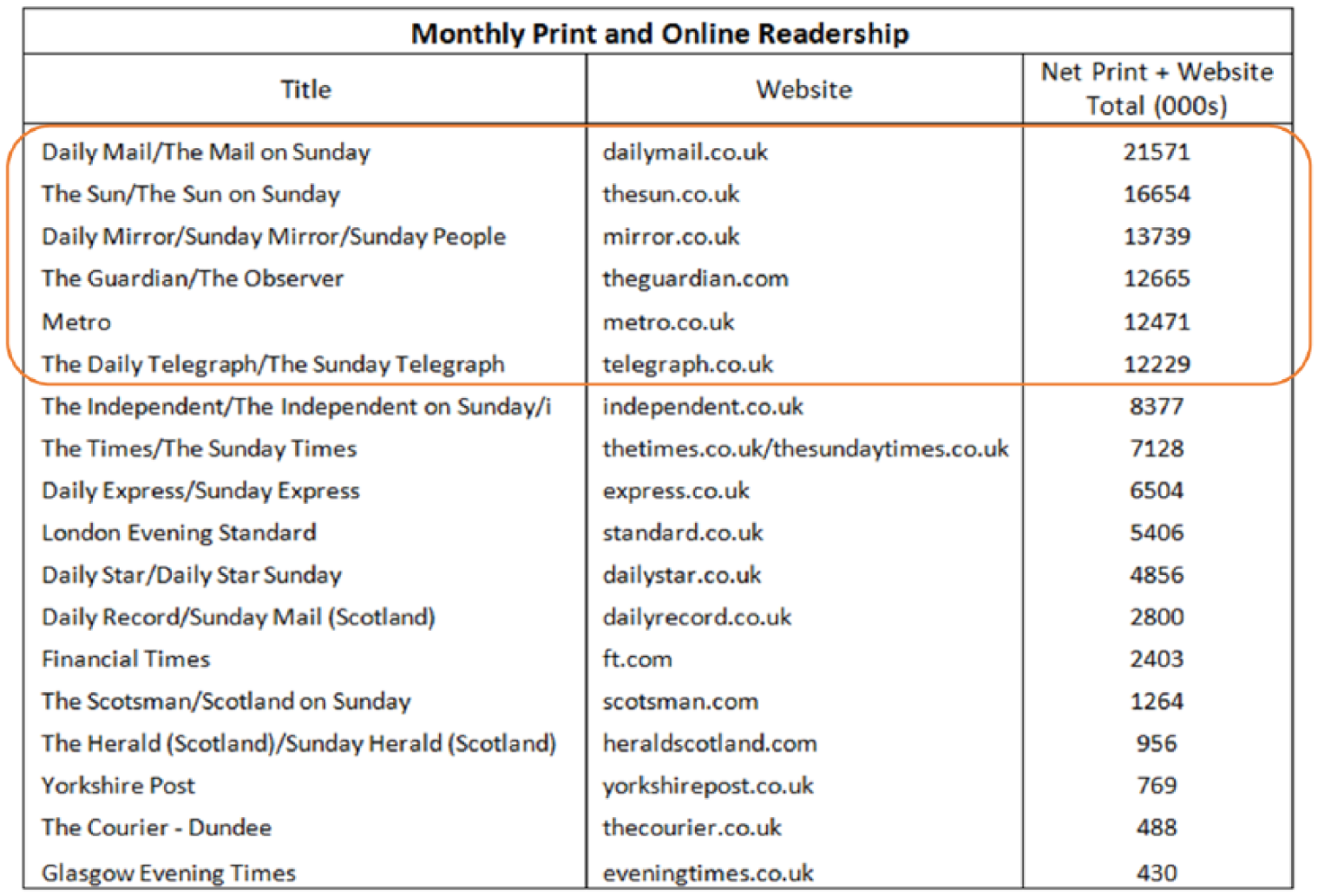
Print and online readership data, January–December 2013.
Together, the six titles selected have print and online readership that reaches over 12 million readers per month on average. The sample encapsulates a range of political perspectives, a range of formats (tabloid and broadsheet) and a range of price points (paid-for and freesheet). The LexisNexis search revealed that payday lending was only mentioned in newspaper reports dating from 2008 onwards. The sample therefore begins on 1 January 2008 and ends on 31 December 2014, the point at which regulation of the industry had been announced by the government. All variations of the main search term were included in the database search, including payday loan(s), lender(s) and lending. To limit articles to those of the highest relevance, the ‘Major Mentions’ function in LexisNexis was used, selecting only those articles that featured the search terms in the headline, lead paragraph or indexing; 40% of the articles in the dataset were classified as news articles, the rest being opinion-led articles such as editorial columns, letter pages and feature articles. The first front-page article, indicating the increasing ‘public interest’ and ‘newsworthy’ status of the topic, was in the Metro in 2010.
The dataset comprised 1693 articles over the 7-year period (2008–2014). The majority of the sample dated from 2012 to 2014, when media reporting about the industry was at its peak (see Figure 2). The study included analysis of both the discourse of the journalists and those sources and commentators they cited, and Figure 3 gives an overview of the sources directly quoted in the articles.
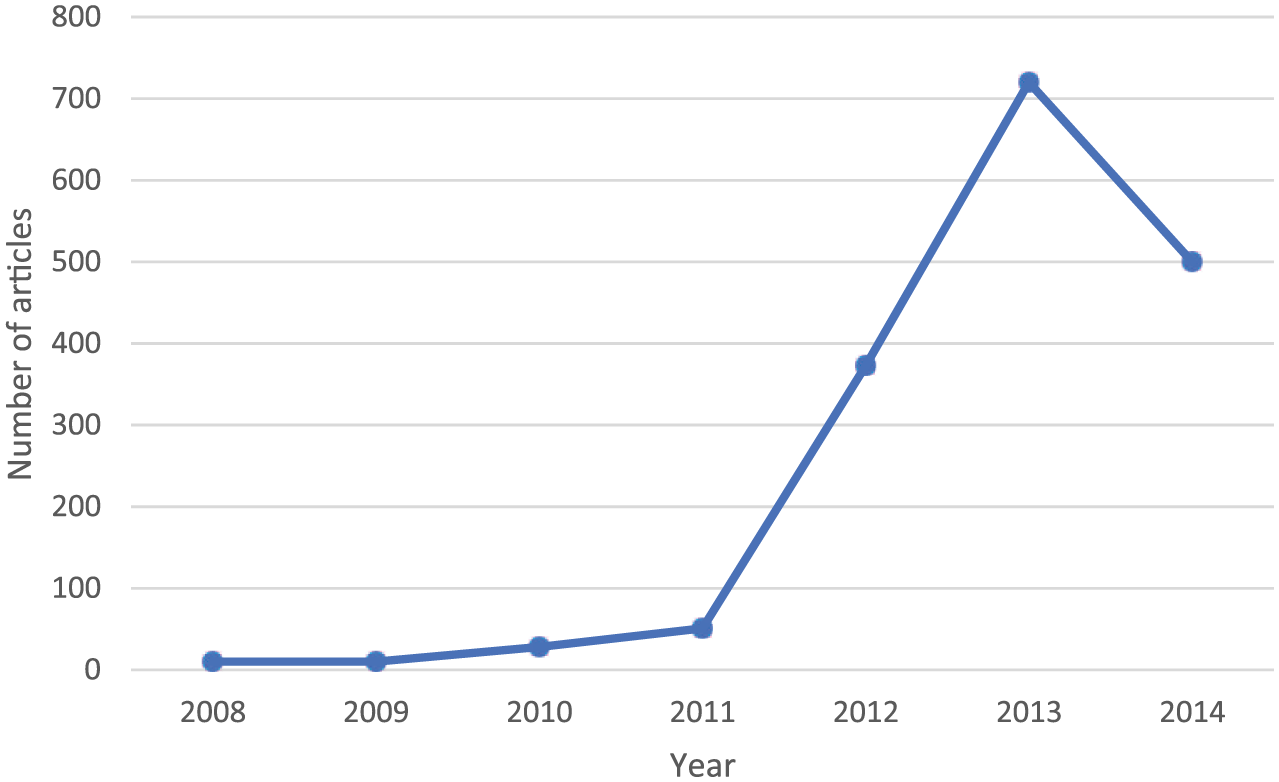
Newspaper articles by year (2008–2014).
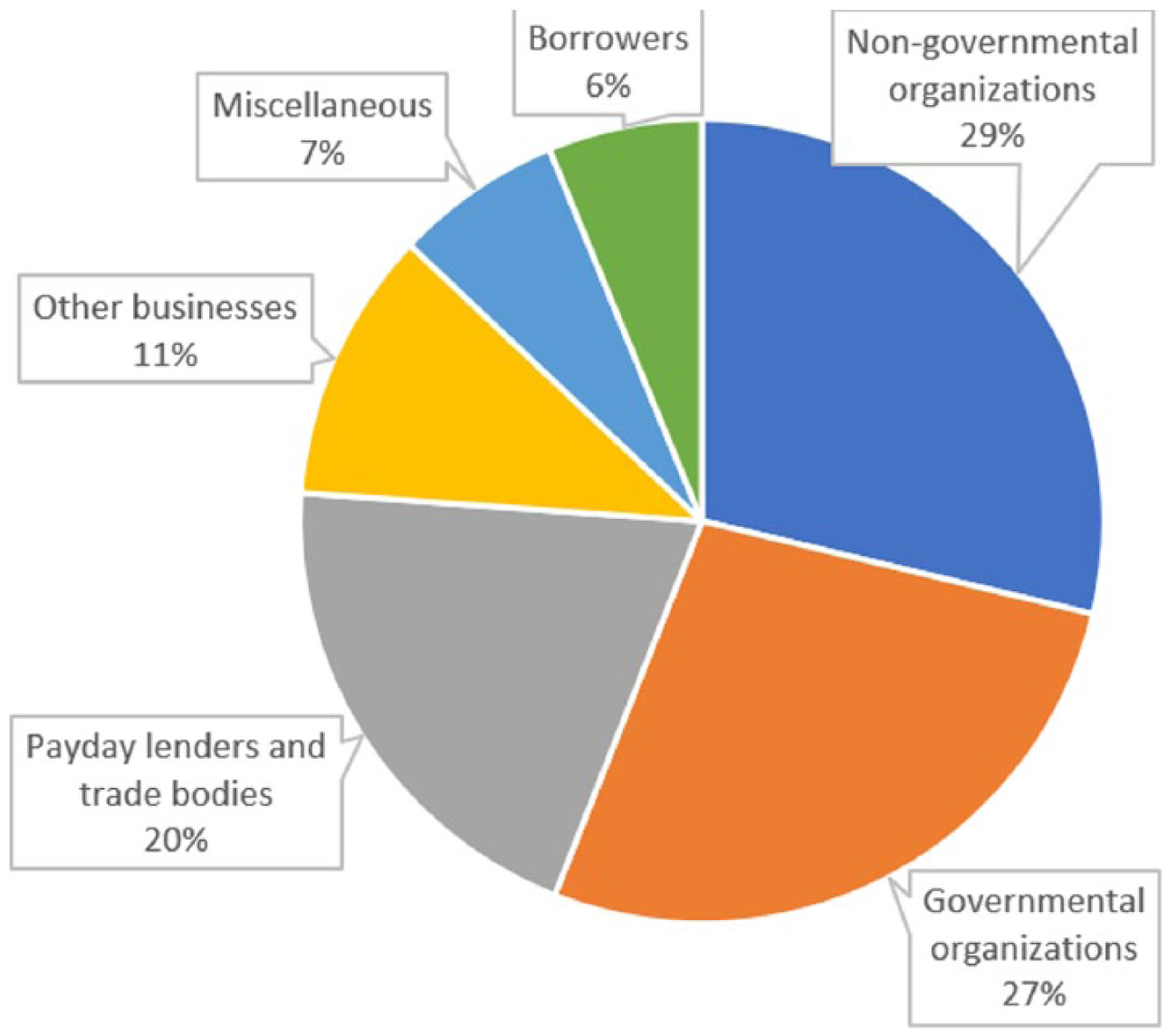
Sources of direct quotations (2008–2014).
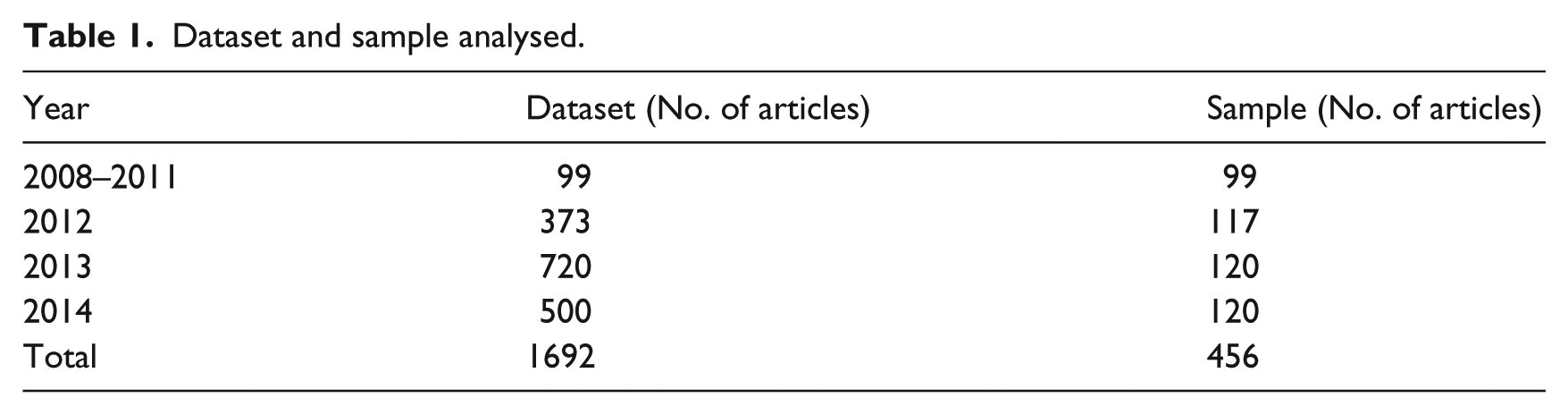
A random sampling method was used for the 3 years where the sample was largest (2012, 2013 and 2014) that involved selecting 10 articles at random from each month using a random number generator to enable a dataset to be generated that was amenable to qualitative analysis (see Table 1).
Dataset and sample analysed.
The decision to analyse metaphors arose from the first stage of qualitative coding, in which a prevalence of metaphorical expressions was identified. Each article was then coded line by line to identify metaphorical expressions, a method also used by other organizational scholars such as Tourish and Hargie (2012). We developed our own thematic categories using an inductive approach (Grant and Oswick, 1996: 10). Our analysis started by creating categories using NVivo to organize the material thematically, with categories revised and reworked as the process went on (Jørgensen and Phillips, 2002). This resulted in five thematic categories: Predators/Parasites, Orientation, Warfare, Pathology/Ill-Health and Other. The category ‘Other’ has been excluded from this article due to the diverse nature of the metaphors used, often ‘dead’ metaphors relating to commonplace figures of speech (Cornelissen et al., 2005). Crucially, the analysis was guided by the need to avoid just ‘spotting’ metaphors (Czarniawska, 2004: 41). Instead, we looked for systematic patterns in metaphor use that seemed to play an important role in the social construction of mediated reality (Couldry and Hepp, 2018). The findings are presented in four sections following the four thematic categories of metaphors uncovered in the study followed by a discussion of the framing function they perform in the construction of a moral problem and finally a discussion of the wider ideological function we propose was being served by the discourse.
The discursive construction of a ‘moral problem’
Despite the different formats, audiences and political leanings of the newspapers we studied, all the newspapers identified the payday loan industry as a ‘moral problem’. It was during the qualitative analysis of this ‘problematization’ discourse that the study found that problematization was being undertaken not only through rational argument and evidence (although this was present) but also through the use of metaphorical language. Four root metaphors were identified during the coding of the data. Table 2 provides an overview of the frequency of the four root metaphors across the dataset.
Frequency of metaphors across newspaper samples analysed.
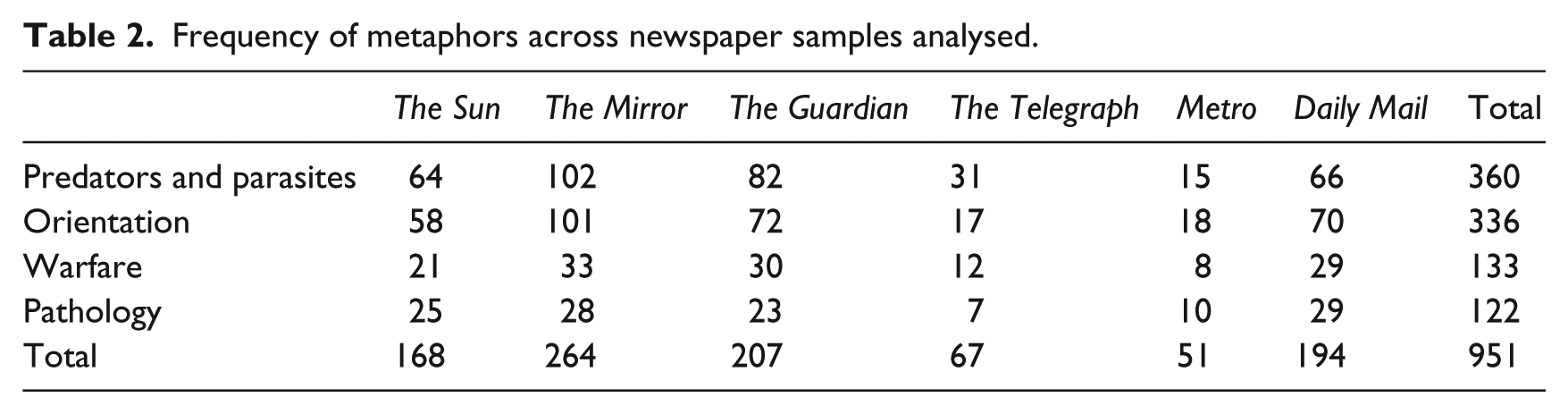
As Table 2 shows, the use of metaphors to perform problematization straddled the political spectrum, including both left-leaning and right-leaning papers and both tabloids and broadsheets. Contrary to Goatly’s (1997: 302) argument that so-called ‘serious’ newspapers avoid such metaphorical language, this study found only small differences between the broadsheets and tabloids. 1 We will now discuss each root metaphor in turn.
Predators and parasites
The most common set of metaphors in the dataset was organized around the root metaphor of predators and parasites, as summarized in Table 3.
Predator and parasite metaphors.
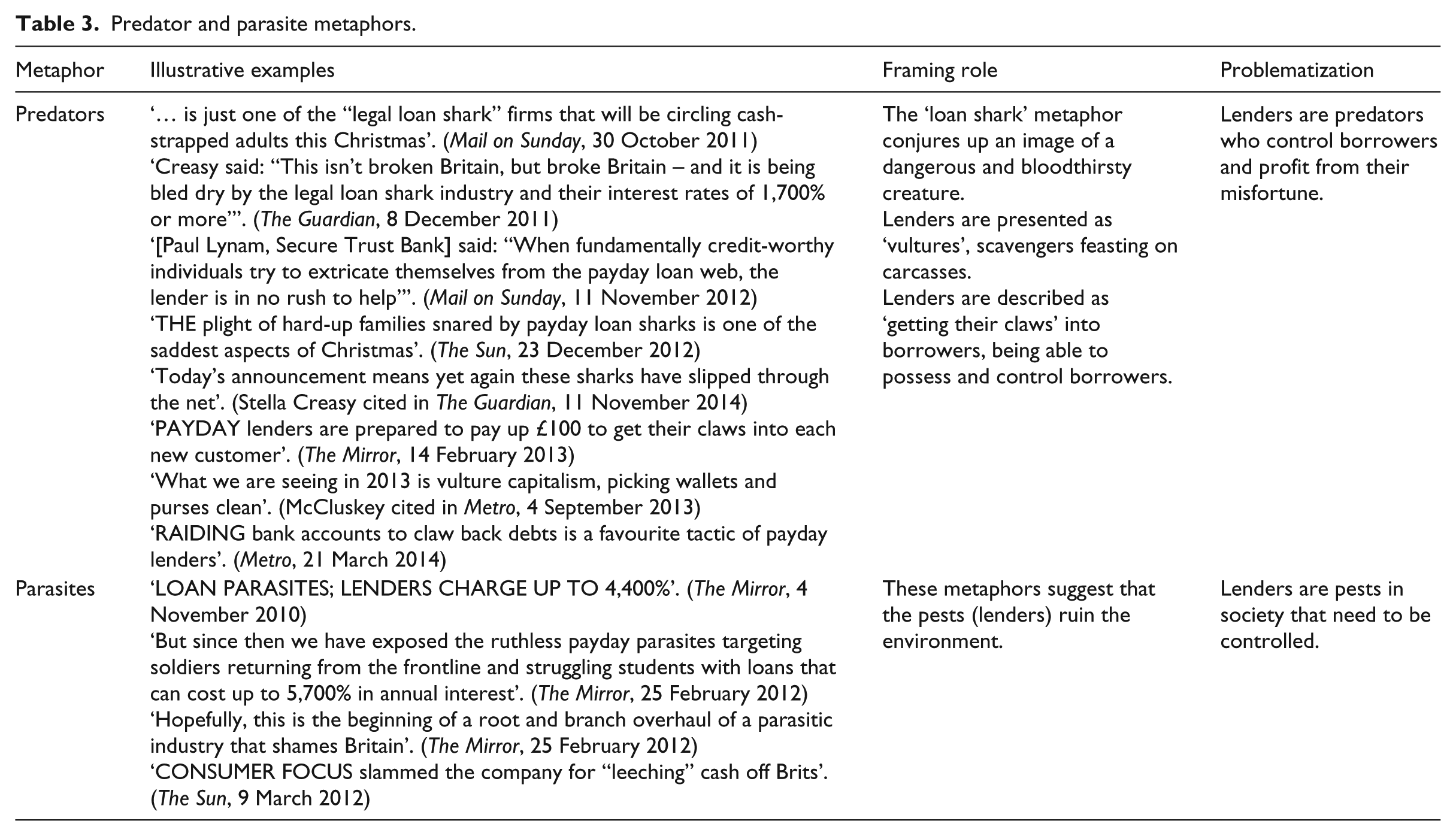
‘Loan shark’ is a commonplace metaphor used to describe certain types of illegal lenders that charge high interest rates to those excluded from mainstream finance (Aldohni, 2013). In some cases, as shown in Table 3, a kind of ‘categorical comparison’ was used: payday lenders were characterized as similar to illegal loan sharks through the use of terms such as ‘legal loan shark’. However, examples of ‘categorical conflation’ were also found, where payday lenders were not compared with illegal loan sharks but conflated into that category. Just as organizations gain legitimacy and resources from fitting into or aligning themselves with categories (Zuckerman, 1999), here we found that the organizations were delegitimated by being placed into an already established illegitimate category. The vulture metaphor also played on cultural tropes derived from the natural world concerning fear of death. With vulture metaphors, payday loan firms were cast as ‘feeding off the dead’, where ‘feeding’ is a metaphor for profiting, and ‘the dead’ represents the borrowers, who are cast as the victims. The final metaphor type was of parasites and leeches, casting the industry as a pest that infects and feeds off its victims. These metaphors performed a framing function by presenting the payday loan firms as a dangerous and bloodthirsty creature, a scavenger that feeds off carcasses or a parasite that feeds off its host. Together, these metaphors problematized the lenders by generating images of danger to life and threat to the body.
Orientation
The second most frequently used set of metaphors was organized around the root metaphor of orientation, as summarized in Table 4.
Orientation metaphors.
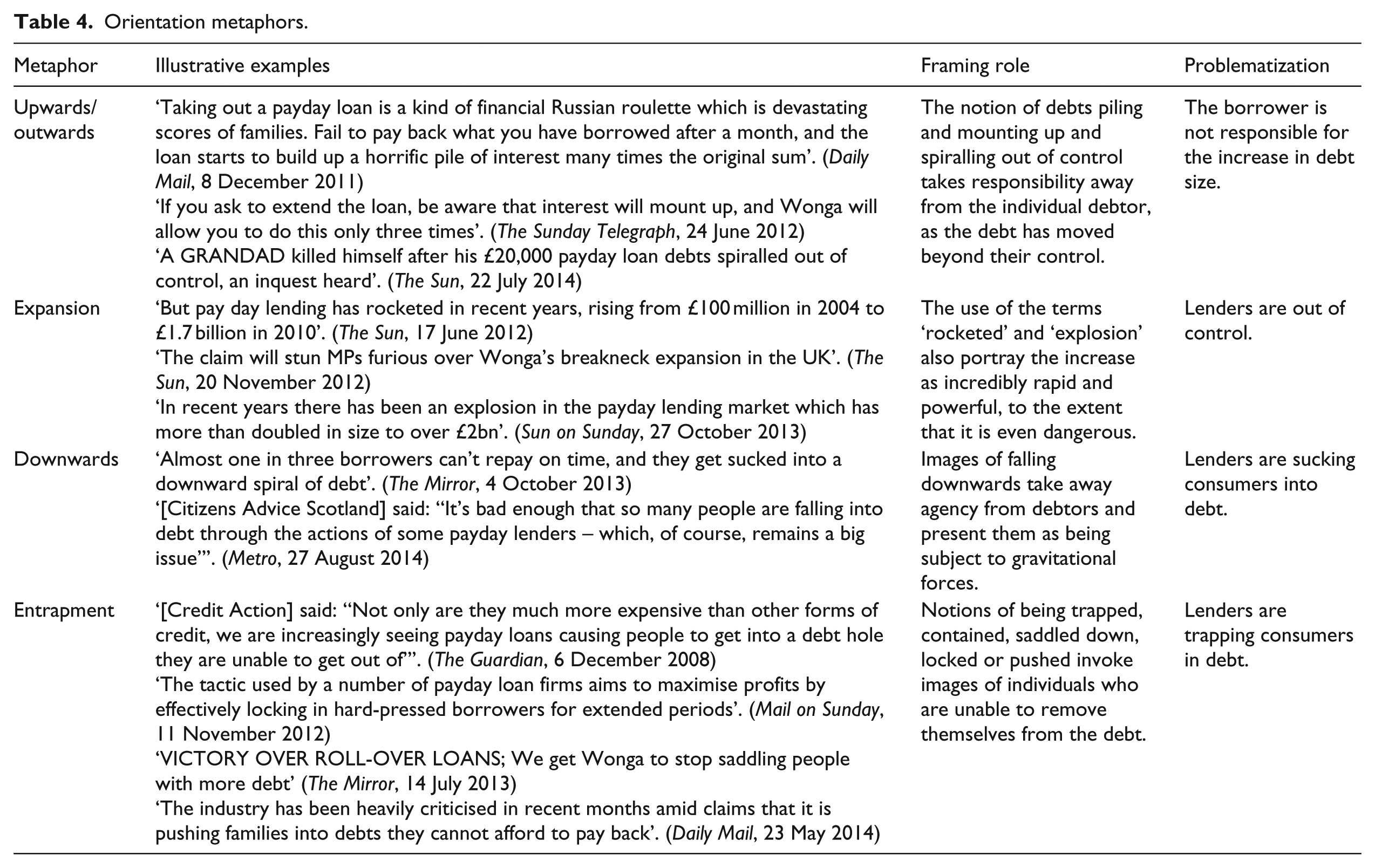
The first type of orientation metaphor involved descriptions of an upward or outward movement. Here, borrowers were presented as being powerless to stop debt ‘building up’, ‘mounting up’ or ‘spiralling’ out of their control. Crucially, it was not the borrower being described as responsible for causing the upward or outward movement, but rather the debt itself. In one story concerning a suicide, the ‘spiralling’ of debt was identified as a causal factor and the active agent was the debt itself rather than the decisions or (in)actions of the borrower. These upward or outward metaphors characterized borrowers being acted upon by the debt and not personally responsible for their debt. Agency here was taken away from borrowers and given to an abstraction. The second set of orientational metaphors characterized the payday industry itself as ‘rocketing’, ‘exploding’ and expanding at ‘breakneck’ speed, which served to problematize the growth of the industry as being dangerously out of control. The third type of orientational metaphor was of downward movement. Rather than ‘spiralling out’ of control, borrowers were presented as ‘spiralling down’ or ‘falling into’ debt. This framing also took agency away from the borrowers and cast them as being subject to physical forces beyond their control. Agency was instead discursively attributed to lenders, who were portrayed as ‘pushing’ or ‘sucking’ people into debt. The final type of orientational metaphor drew on ideas of being trapped or unable to move. Borrowers were presented as being unable to get out of a ‘hole’, being ‘locked in’, trapped in a ‘web’ and being weighed down or ‘saddled’ with debt. The moral problematization achieved by these orientation metaphors is distinct from the predator and parasite metaphors because it involves attribution of responsibility for the debt to the lender and removal of agency from the debtor.
Warfare
The third most frequent set of metaphors centred around the root metaphor of warfare, as summarized in Table 5.
Warfare metaphors.
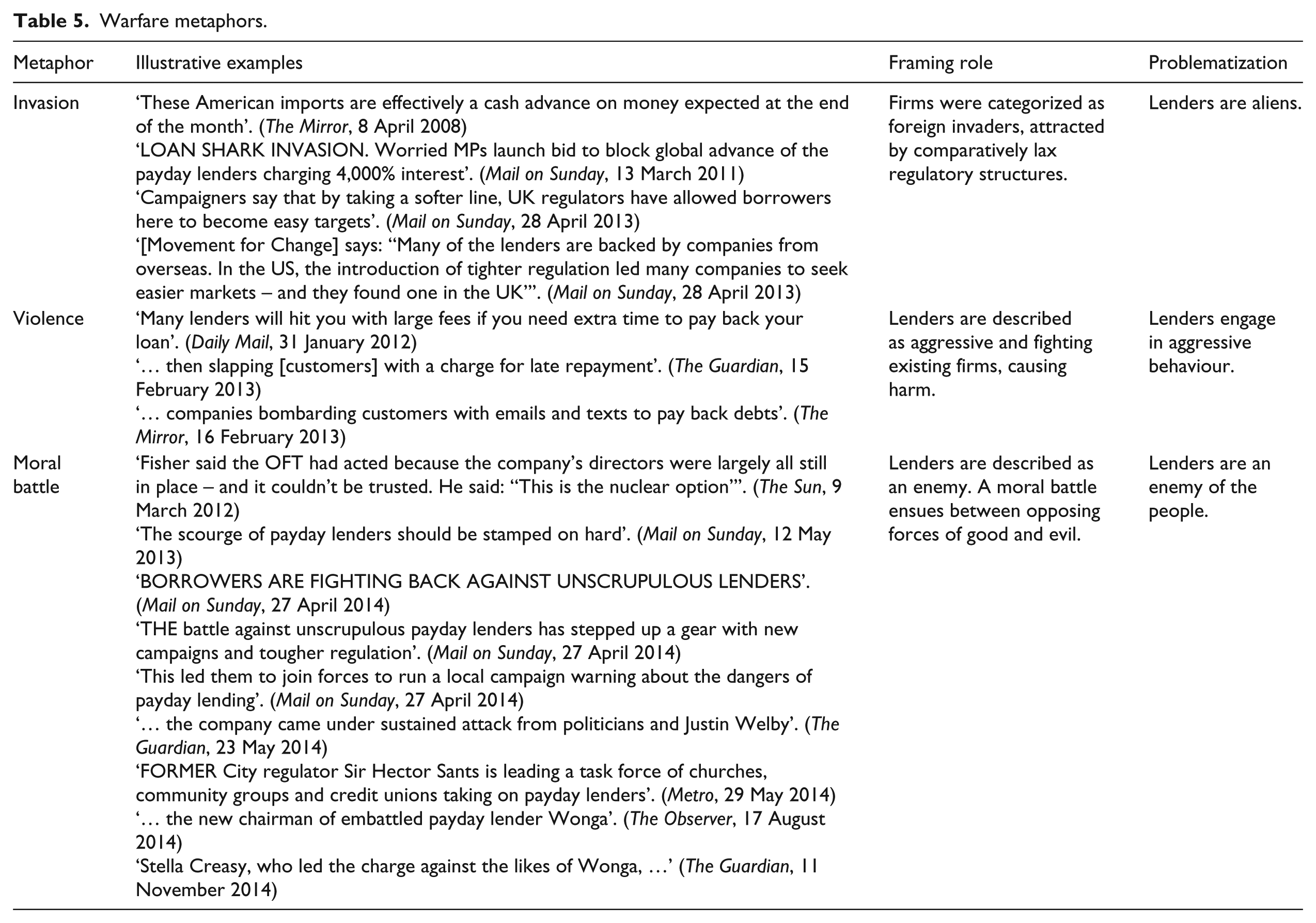
Our study found a cluster of terms drawn from associations with invasion, violence and battles. The use of invasion metaphors created an image of payday lenders advancing into new territory and bringing destruction in their path. In particular, the invaders were framed as ‘foreign’ – described as either ‘global’, ‘overseas’ or, more specifically, ‘American’. These metaphors of foreign invasion exemplify the kind of ‘banal nationalism’ described by Billig (1995), evoking images of an embattled nation having to fight off threats from foreigners. Lenders were also described as ‘attacking’ consumers using terms such as ‘hitting’, ‘slapping’ and ‘bombarding’. An image of a moral battle was also invoked when the newspapers discussed the ‘fight back’ against the lenders. These metaphors formed part of a moral plotline of ‘good versus evil’ (Hartz and Steger, 2010). Lenders were described as ‘taken on’ in a fight with a ‘charge’ being led against them. Lenders were described as subjected to a ‘battle’ and ‘attack’ from opposing forces for good. The ‘good’ was invoked through references to heroic characters, such as Labour politician Stella Creasy, religious figures, charities and regulators. The framing role undertaken by these metaphors involved the representation of the lenders as aggressive foreign invaders who created destruction in their path, coupled with a plotline of a moral battle of forces of good against evil. Lenders were thereby problematized as an enemy of the people that required an opposition force to counter their dark and destructive forces.
Pathology
The final set of metaphors was organized around the root metaphor of pathology and ill-health (see also Semino, 2008: 104), as summarized in Table 6.
Pathology metaphors.
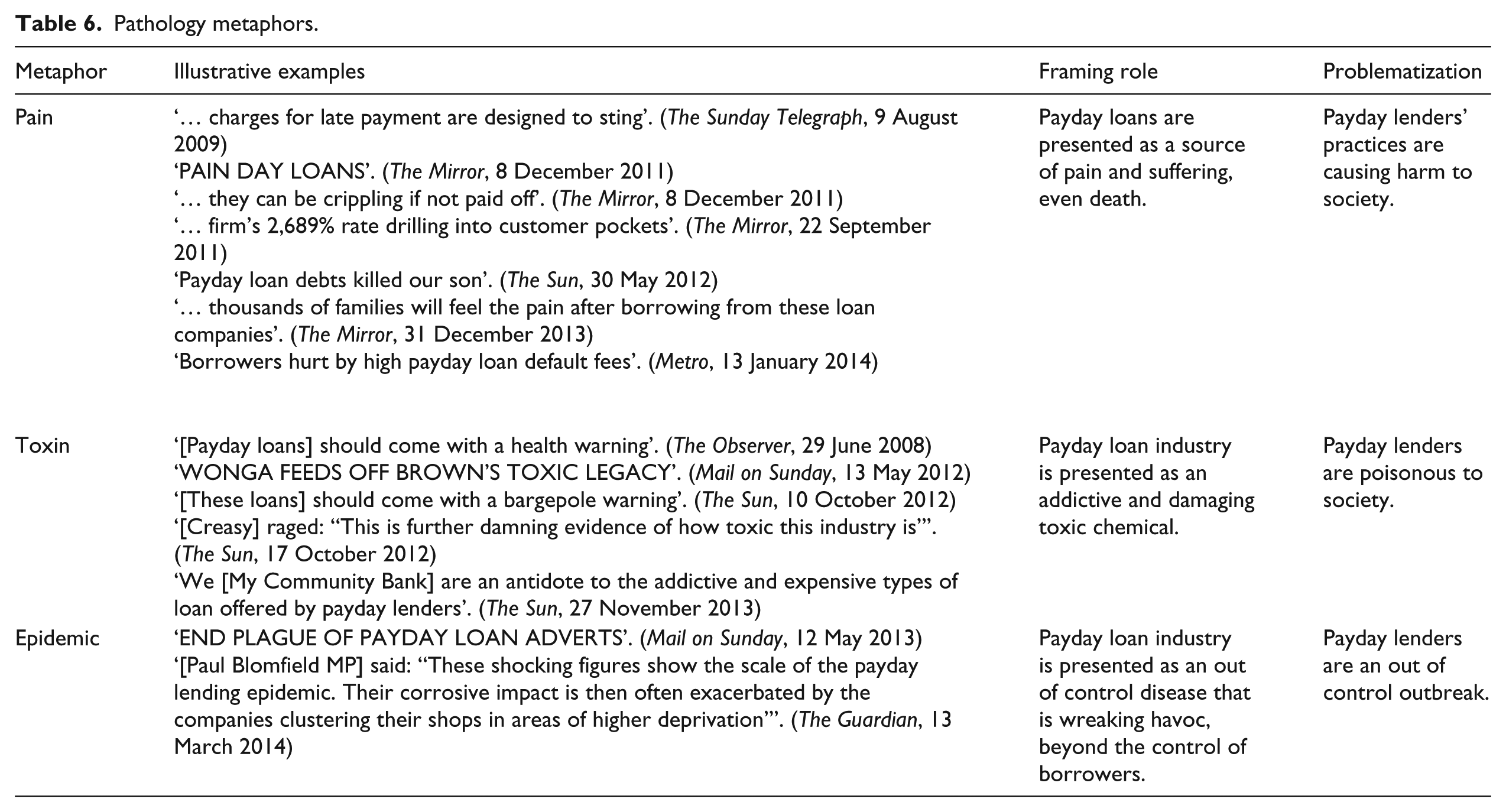
Borrowers were described as ‘hurt’, ‘feeling pain’, ‘stung’ and ‘bled dry’ as a result of the actions of payday lenders. Lenders were also described as inflicting pain by ‘drilling’, ‘crippling’ and ‘squeezing’ borrowers through their actions. In the story mentioned earlier, a payday loan was also singled out as being responsible for the death of one borrower who committed suicide. Other metaphors invoked images of payday lenders as dangerous to public health. Lenders were described as an ‘epidemic’ and ‘plague’, invoking images of an out-of-control outbreak of disease that was wreaking havoc and misery on society. Lenders were described as ‘toxic’; however, in some variants, the source of this ‘toxicity’ was attributed to the economic policies of the previous Labour Government under Gordon Brown. Borrowers were warned about the dangers of payday loans, being advised to keeping a distance with a ‘bargepole’ and calling for ‘health warnings’ on the products like those used on cigarette packets. The toxicity metaphor was also used as a contrast by alternative lenders who presented themselves as the ‘antidote’ of payday lenders, invoking images of a cure to a venomous attack. Lenders were also described as ‘addictive’, invoking images of addictive drugs that served not only to highlight the danger to health but also to remove personal responsibility away from borrowers who needed help to overcome their ‘addiction’. Through these pathology metaphors, lenders were framed as the cause of pain and suffering, and problematization was undertaken by the representation of lenders as harmful to borrowers and society at large.
Discussion
To discuss the significance of our findings for theory development, we will first discuss what our study contributes to the theory of discursive delegitimation by identifying the framing role of metaphors in the social construction of a ‘moral problem’. Second, in line with the critical approach to discourse analysis we adopt (Chilton, 2004; Hart, 2008), we will then broaden out the discussion to consider the ideological context and consequences of moral problematization discourse in relation to the creation of moral panics and the socio-economic and political functions it performs.
Metaphors, morality and problematization
This study has found that four root metaphors were used to characterize the payday loan industry in the British press. How did these metaphors perform moral problematization through the framing of a ‘problem’? Our study has found two framing functions that help us to understand how metaphors perform moral problematization that have a broader relevance beyond our industry-specific case. The first framing function works to construct a sense of the damage or harm that has been generated by the actions of the organization by creating cognitive associations (Koller, 2005), in our case associations with pain, pollution, death and disease. Van Leeuwen (2007) argues that analogies problematize through comparison with other domains or activities that are already imbued with negative values or immoral qualities through their association with pain or suffering. Van Leeuwen gives the example of critiques of compulsory schooling using metaphors such as ‘drilling’ and ‘incarcerating’. In the metaphors of payday loans we have studied here, the domains of warfare, pathology and predators all brought with them a particular ‘symbolic-moral universe’ (Ben-Yehuda, 1990: 3) that served to problematize the industry. In our case, warfare metaphors conjured up images of the industry as a foreign enemy that was inflicting violence on society, also drawing on notions of a moral struggle between good and evil. Ill-health metaphors conjured up images of the industry inflicting pain and administering toxins on people. Predator metaphors conjured up images of fear of death from predatory attacks, parasitic invasion of the body and organizations that feed off the misfortune of others. Importantly, payday loan firms were not only compared with but sometimes also conflated with an illegal industry through the use of the term ‘loan sharks’, conjuring up images of the kinds of illegal operators who, according to popular cultural beliefs, readily resort to intimidation or violence if debtors do not pay.
The second framing function of metaphors involved the attribution of agency which served as a crucial component in the reasoning about moral responsibility. Orientation metaphors played an important role here specifically. Contrary to the idea in metaphor research that ‘up’ is normally associated with something positive and ‘down’ is normally associated with something negative (Lakoff, 1990: 276; Lakoff and Johnson, 1980: 14–15), the same was not true for the discourse of debt. While downward metaphors were indeed associated with being negative for the borrower, upward metaphors were also associated with debt piling or mounting up. The moral problematization performed by orientation metaphors was drawn from images of borrowers being trapped, contained, saddled down, locked or pushed into debt. Crucially, it was the firm that was described as the agent causing these ‘bad’ things to happen, not the borrower who applied for the loan.
These metaphors played an important role in shaping the moral reasoning of the discourse because conceptions of morality are typically grounded in reasoning about responsibility. For instance, actions would not normally be ascribed any moral significance if they are characterized as involving chance, luck or factors beyond the control of those involved (Davidson, 2001; Frye, 1973 [1957]), in other words if there is very little choice or agency contained in an action (Whittle and Mueller, 2016). According to common sense moral reasoning, if the actor had free and unconstrained choice (i.e. agency) and that choice led to a negative outcome for others, the actor should then be held morally responsible (Harré, 1995; Harré and van Langenhove, 1999). For actors who had no choice or severely constrained choice, moral responsibility is not typically attributed.
The attribution or removal of agency is significant in our study because the discourse we studied characterized payday loan debt as something that happens to, or is done to, borrowers rather than something being done by them. This removed the kind of moral reasoning that would lead to the conclusion that borrowers chose to apply for a loan and therefore should be held responsible for the consequences. For example, war metaphors presented the industry as the agents and instigators of a violent attack. Health metaphors presented the firms as agents causing the pain and suffering, not as a self-inflicted or self-induced phenomenon. Predator and parasite metaphors presented the lenders as inflicting death or suffering on the borrower, removing responsibility from the borrower. Orientation metaphors presented the borrower as subject to forces outside their control and being trapped and unable to escape. While Tourish and Hargie (2012) show how the metaphors used by bankers sought to minimize their responsibility for what happened in the global financial crisis, our study has shown how attributions of agency serve to maximize the responsibility of the payday lenders but minimize the responsibility of the borrowers.
The role played by metaphors in this discursive attribution process also has wider relevance beyond the payday loan context to the study of the problematization of other firms and industries. Gambling firms, for example, have recently been targeted for criticism on the basis of their responsibility for ‘luring’ gamblers into incurring heavy losses, placing agency in the hands of the firms and removing agency from the consumer. The theoretical contribution of our study therefore lies in advancing the understanding of how metaphorical language plays a role in ascribing or removing agency, thereby laying out a moral landscape in which blame for the ‘problem’ can be attributed. Furthermore, the construction of a ‘moral problem’ is the first step in the construction of a moral panic that requires us to understand the ideological functions these moral panics play in society, a point we will discuss further in the next discussion section.
Moral panic, policy responses and ideology
The mushrooming of ‘moral panic’ (Goode and Ben-Yehuda, 2009) and ‘media hype’ (Vasterman, 2005) about payday loans that we have traced in this study not only reached public consciousness, it also hit the policy agenda. The high interest rate doorstep lending industry existed already in the 1990s and 2000s. In 2004, Leyshon et al. advised ‘that an effective route for public policy in this area would not be to regulate the home credit industry out of existence’ (p. 643, our emphasis). Sub-prime lenders play an important role in providing access to credit to those excluded from mainstream banking services. What changed between then and now? Attempts to regulate high interest rate lending are certainly not new. In 2005, for example, an ‘early day motion’ in the House of Commons aimed at regulating this sector was unsuccessful, in spite of prominent backers (Aldohni, 2013: 422). In 2011, the Consumer Credit Bill, a Private Members’ bill, which aimed at limiting interest rates and charges, failed to complete its passage through Parliament before the end of the session (Aldohni, 2013: 423). However, ongoing concerns over poor practices within the industry led to investigations being carried out by regulators, who cited evidence of ‘irresponsible lending’ by firms (Office of Fair Trading, 2013: 3). By 2013, the issue was again firmly on the political agenda, and in January 2015, the government announced new regulation that enforced more stringent affordability checks and risk warnings on advertisements, set a legal limit on the rate of interest and other fees that could be charged and limited the number of times loans could be rolled over (Financial Conduct Authority, 2014). Similar calls for government intervention in the market have also been made in other countries around the world at the time of writing, indicating a more global trend of problematization of the industry (The Guardian, 1 March 2017).
The effects of the industry’s problematization were not limited to state intervention. Such was the extent of the moral taint that other actors severed ties with payday firms, as was demonstrated with the uproar from fans and local residents over Wonga’s sponsorship of Newcastle United Football Club (The Guardian, 10 October 2012). Church leaders and charitable organizations led the campaign to establish more ‘ethical’ lenders, such as credit unions. This counter-discourse sparked debates that included challenges to dominant neo-liberal ideas that only markets can solve major social problems such as inequality and poverty (Crouch, 2011). The payday loan firms themselves sought to voluntarily change their practices before the regulation eventually came into force. Trade bodies representing the industry also showed they were acting proactively to tackle the ‘problem’, with four bodies joining together in 2012 to draw up a Customer Charter, to which 100 lenders representing 90% of the market signed up (The Guardian, 25 July 2012). From a critical standpoint, however, these industry reactions could also be viewed as tactics to create the impression that self-governance was effective and regulation was therefore unnecessary. It is therefore reasonable to conclude that the discourse we have analysed had a material as well as symbolic impact on both organizational practice and government policy (Fairclough, 2010: 96).
The media was significant in this problematization process both in reporting the actions of politicians, campaigners and other stakeholders, and influencing the discursive landscape through their coverage. The media contributed, first, to the framing of the industry as a ‘moral problem’ and, second, in whipping up the ‘moral panic’ that policymakers and regulators then sought to address (Gamson et al., 1992; Goode and Ben-Yehuda, 2009; Vasterman, 2005). By explaining how problematization takes place through metaphors, we demonstrate the broader theoretical significance of adopting a critical approach to metaphor analysis (e.g. Chilton, 2004; Hart, 2008). In so doing, we connect work in organization theory to work in politics and public policy contexts, where critical metaphor analysts have begun to ask questions about which metaphors are used, why they are chosen and the social impact that metaphors have in framing public policy choices (Charteris-Black, 2014: Chapter 8).
It is possible to view this discourse of moral panic as an example of the emergence of a counter-discourse that serves to contest the neo-liberal agenda and justify a shift in government policy towards state intervention in markets. However, we propose that this interpretation misses the key ideological role that this discourse served in the socio-economic context at the time of the study (2008–2014). During this period, the progressive deregulation of the banking sector over the previous two decades was identified as a significant factor in the chain of events that led to the global financial crisis (Stiglitz, 2010). The moral problematization of payday lenders took place alongside a wider erosion of trust in the finance sector as a whole, following scandals involving audit failure, sub-prime lending, Libor rate rigging, payment protection insurance (PPI) mis-selling and, more recently, lending to small and medium-sized enterprises (SMEs) (Gillespie and Owen, 2013; Mueller et al., 2015). Increased state regulation of the banking sector was therefore gaining traction in public discourse (Engelen et al., 2012). Governments all around the world were also being held accountable for their public policy choices both in terms of handling the debt burden they were left with and plans for avoiding another similar crisis in future (Riaz et al., 2011).
In this context, governments were under pressure to give the appearance of a display of strength against the finance sector, which was seen as a ‘pariah’ on society, especially in the years of austerity measures that followed (Kelsey et al., 2017). How, then, does the moral panic about payday loans fit into this ideological landscape? The scapegoating of certain agents (Giger and Nelson, 2011), be they groups or a sector, can serve the ideological purpose of deflecting from a more fundamental or encompassing critique. Indeed, instead of seeking to ‘project a coherent alternative to neo-liberalism’ (Block, 2000: 84), our study found newspapers proposing much more localized forms of critique that singled out one small section of the finance sector (representing 1% of the consumer credit market) for intervention and reform. We therefore propose that the ideological role of the moral panic was to ensure localized critique against sections of capitalism which might well serve to protect the system as a whole from critique (Chiapello, 2013). For newspapers of all leanings, but especially for the political right not normally associated with radical critique of capitalist structures, the coverage enabled them to present themselves as fighting causes that would benefit ordinary working people and fight against the worst excesses of capitalism, avoiding discourse that questioned the wider system as a whole.
Within the political sphere, a moral crusade that started off at the political left (most notably through the campaigning of Labour MP Stella Creasy) was taken up by the ruling Conservative government who enthusiastically jumped on the bandwagon and translated the moral outrage into legislation. We would argue therefore that our study provides a powerful example of ‘the distinctive generative power of text’ (Fairclough, 2010: 173) by showing how discourse plays a constitutive role in setting the moral argument for not only public outrage but also state intervention in markets (Engelen et al., 2012). Importantly, in this case, state intervention came from a ruling Conservative government strongly associated with neo-liberal policies and not known for attacking free markets and ‘wealth-creators’. There are certainly convenient ideological benefits from appearing to be ‘on the side’ of those experiencing financial hardship and struggling to make ends meet at the same time as austerity measures and an economy in recession were hitting the poorest members of society the hardest. While we cannot make claims from this study about a precise causal link, given the fact that the media both reports on politics as well as influences politics through its coverage, it is nonetheless clear that the state intervention in the payday loan market was closely tied to the construction of the moral panic whipped up in the media.
While newspapers did at times make the move from episodic stories to more thematic issues (Ritchie, 2013: 107) 2 – for example, by linking stories about payday loans to the broader decline in real wages and effects of austerity – the media discourse remained largely focused on the ‘witch hunt’ (Goode and Ben-Yehuda, 2009) directed towards the industry itself. Why does this matter and what is the theoretical significance? According to Lowe (2001), problematization plays a critical role in enabling the mobilization of policy responses of various kinds. While others have argued that different problematizations lead to different policies (Vallgarda, 2008), we propose that a moral panic is a decisive intervening factor between problematization and policy response. In our case, it is likely that different policy responses would have been enacted if the discourse had emphasized the underlying socio-economic causes of the ‘problem’, such as austerity measures, rising housing costs and the decline in real wages witnessed since the 2008 global financial crisis (Crouch, 2011; Stiglitz, 2016). Indeed, by failing in most cases to make links to the impact of declining real wages, the newspaper discourse could be seen as another example of ‘depoliticization’ (Fairclough, 2010: 243) of deeper socio-economic issues. The ‘problem’ was framed as a localized issue of the business practices of one small section of the finance industry, not a matter stemming from the socio-economic policies associated with the financial crisis.
Conclusion and implications for future research
This article has examined the discourse of payday loans in the British press in order to contribute to the theory of moral problematization and discursive delegitimation by identifying the framing role of metaphors within the delegitimation process. Our study has shown how, through the use of four root metaphors, an intense and sudden period of ‘moral problematization’ took place in the reporting of payday lenders that lay the ground for the construction of a moral panic. We propose that understanding metaphorical language can advance theory of the framing role of discourse in delegitimation processes in two ways. First, the study reveals how metaphorical language frames issues by creating associations with pain, suffering, disease and death. Second, the study shows how metaphors frame issues by attributing agency to certain actors and removing or limiting agency from other actors. This discursive attribution of agency, we propose, plays a key role in the ascription and removal of moral responsibility within the discourse. Moreover, we have proposed that a more critical analysis requires us to examine the ideological dimension of the discourse by examining its socio-economic and political context and consequences. What follows should therefore be read as conclusions and a suggested agenda for future research.
The findings of this study advance further insights derived from existing work on discursive delegitimation, which has, to date, focused primarily on how neo-liberalism and globalized capital are legitimated (Erkama and Vaara, 2010; Vaara et al., 2006; Vaara and Tienari, 2008). This literature has shown how discourse serves ideological functions by legitimating the workings of free markets as ‘natural’, ‘inevitable’ and ‘right’ (Fairclough, 2010: 30–37). The mass media clearly plays an important role in this legitimation process by generating ‘the public knowledge and information, beliefs, values and attitudes which are necessary for establishing and sustaining economic, social and political systems and orders’ (Fairclough, 2010: 468). What this study adds is a way of understanding how discourse functions to delegitimate the workings of free markets through the framing role that metaphors played in the construction of moral problematization. More specifically, what this study therefore adds, and what previous work has not yet fully developed, is an understanding of how metaphors have ‘consequences for how a particular issue is “framed” or structured, which aspects are foregrounded and which backgrounded, what inferences are facilitated, what evaluative and emotional associations are triggered, what courses of action appear to be possible’ (Semino, 2008: 91). While our study has focused on the UK context in particular, it has relevance across other international contexts where metaphorical language is known to play a role in the representation of business practices and the relationship between business and society, as studies of metaphorical language in the United States (Hirsch, 1986), Germany (Koller, 2005) and Scandinavia (Hellgren et al., 2002; Kuronen et al., 2005; Risberg et al., 2003; Vaara et al., 2003) have shown.
In public policy contexts, Barthe (2009) argues that ‘problematising an issue is not only saying what it is, it is indissociably also saying who has to address it, in what way and with which means’ (p. 943). According to Lowe and Roper (2000), ‘solutions’ that involve government intervention are only considered permissible once the ‘facts’ of the problem have been established. We propose that metaphorical language constitutes an important building block in the construction of the ‘fact’ that a moral problem exists and therefore requires attention and intervention. From our critical standpoint, the regulation of payday loans was a convenient ‘moral crusade’ for the Conservative government and other neo-liberal supporters to fight, while detracting attention away from the underlying impact of recent economic policies such as austerity, decline in real wages and the deregulation of the finance sector (Kelsey et al., 2017). As Goode and Ben-Yehuda (2009) observe, moral panics enable elites to ensure that the public become concerned with ‘trivial or non-existent problems’ (p. 46), thereby ‘mystifying the deeper causes’ (p. 64) and leaving other aspects of the economic system unquestioned. Of course, moral panics that ‘fan public indignation’ (Goode and Ben-Yehuda, 2009: 90) also sell newspapers more than tempered and balanced reporting. In each scandal or panic, the diagnosis and associated policy solutions are focused on individual agents, or in our case a specific industry, thus protecting the system as a whole from critique (Boltanski and Chiapello, 2005; Harvey, 2014).