




Abstract
This study investigates how a French manufacturing company responds to institutional forces concerning its diversity policy and how employees react to it, particularly those belonging to minority groups not addressed by the policy. Such questions are relevant to the legitimacy of organizational diversity policies and employees’ perceptions of diversity in particular environments. We analyzed data from 35 interviews to characterize organizational efforts to comply with regulations in the form of gender-affirmative actions. Among ethnic minorities, there were three different reactions to gender-based affirmative action policies that were not accompanied by ethnicity-based affirmative action policies: indifference, focus on gender issues, and discontent. We propose three identity constructions could explain these reactions: dissociation, selective association, and heightened identity, respectively. Together, our results demonstrate trickle-down effects from institutional forces to organizational diversity policy, and hence to construction of identity by minorities within the organization.
Introduction
Diversity can refer to differences in general, but demographic features based on gender and ethnicity have become the main focus of diversity policies in companies around the world (Chatman and Flynn, 2001). Women and ethnic minority groups are the most widely recognized low-status groups (cf. Terjesen and Sealy, 2016), because their physical distinctiveness is readily apparent and thus susceptible to stereotypical categorization and discrimination (Phinney et al., 2006). Social awareness of gender and ethnic inequalities has increased and many countries have passed legislation to improve the status of disadvantaged groups and codify their right to equal opportunities (Reichel et al., 2010).
Most organizations take care to comply with laws and regulations (Reichel et al., 2010; Terjesen and Sealy, 2016). External regulatory and legal pressures (Tatli, 2011) have been a driving factor behind organizational diversity policies. Furthermore, organizational diversity policy influences employees, whether directly affected or not. Accordingly, the subject of this article is the overall impact of organizational diversity policy at both macro and micro levels. More specifically we asked, (1) how do institutional forces influence the design of organizational diversity policy and (2) how do employees (e.g. minorities in particular) react to these diversity policies? The aim of this article is, therefore, to provide a holistic view of organizational diversity policy, including institutional forces to individual employees.
Our investigation deals with organizational diversity in the French context, which is of particular interest as France has adopted two different approaches to diversity, legally mandated and voluntary action (Klarsfeld, 2009). France has, for instance, passed laws to ensure gender equality, but France’s universal model of citizenship does not recognize ethnic minority groups so France has refrained from collecting statistics based on ethnicity and religious affiliation. Therefore, while gender diversity policy is legally framed, ethnic diversity programs are voluntary. Given the divergence in the French government’s approach to gender and ethnicity, we were interested in ethnic minorities’ reactions to organizational diversity policies that address gender discrimination but not ethnic discrimination. This is an important topic as France has a significant ethnic minority community (Maghrebi and sub-Saharan Africans are the most prominent ethnic minorities) and diversity policy does not encompass ethnicity.
Gender and ethnic diversity in the French context
Gender equality
Since the 1970s, various laws have applied the principle of gender equality to every aspect of working life including recruitment, compensation, promotion, and training (Bacouel-Jentjens and Castro-Christiansen, 2016). In 2011, inspired by a European Union (EU) directive about women on company boards, France enacted a law setting quotas for the number of women on boards of directors, which resulted in a percentage increase from 5.0% in 2003 to 41.2% in 2016 (European Commission, 2017). However, although in France the percentage of women in corporate boardrooms is among the highest in the EU, at 41.2% (the EU-28 average is 23.0%), women remain underrepresented in management positions, occupying 31.2% of such positions (European Commission, 2017; OECD, 2017) and in technical and scientific occupations (Lewis and Humbert, 2010; OECD, 2017). In the manufacturing sector, the source of the data for this study, the gender imbalance is greater. Only 8% of the female workforce is employed in manufacturing compared with 19% of the male workforce; the other 88% of the female workforce is employed in the tertiary sector, with 44% employed in education, public administration, and health (INSEE, 2016b).
To understand the gender equality movement in the context of French universalism of citizenship, it should be noted that French gender equality activists initially argued that women were not a category but rather half of humankind. From an intersectional perspective, this means that women’s multiple social positions were not taken into consideration when analyzing women’s inclusion. Similarly, the rationale that women constituted half of humanity separated them from other minority groups (Krook and O’Brien, 2010; Lepinard, 2013).
Immigration history
Understanding the history of immigration to France is important for placing ethnic minorities and immigrants in economic and political contexts. France has experienced several waves of immigrants seeking asylum or responding to a temporary labor shortage in France. The first wave of immigrants arrived during the French Industrial Revolution (1850–1900), which attracted workers from neighboring countries such as Italy, Spain, and Belgium to meet the needs of French industries. As the industrialization unfolded natives of French colonies, particularly those of the Maghreb (i.e. Algeria, Morocco, and Tunisia), immigrated to France in search of a better life. In the 1960s, Algerian indigenes who chose to fight on the side of the French in the Algerian War (1954–1962) were granted political asylum when Algeria became independent (Vladescu, 2006). By the mid-1950s, during an era of high economic growth in Western Europe, France was yet again in need of manpower, particularly unskilled workers, and adopted a relatively open-door immigration policy. Spanish and Portuguese immigration inflows further increased. In addition to Algerians seeking political asylum, a million workers from Maghreb and sub-Saharan Africa were invited to enter the country. They were later reunited with hundreds of thousands of their family members, resulting in a dramatic increase in the size of immigrant communities all over France (Viorst, 1996). This large immigration wave lasted approximately from 1956 to 1973 and was followed by sporadic granting of asylum to political refugees who had fled Southeast Asia, specifically former French Indochina, and Portugal during the Salazar dictatorship. However, during the economic slowdown in the 1970s, many of these immigrants were left without work and were forced to depend on the government for survival (Vladescu, 2006), which pushed the state to control the flow of immigration (Ledegen and Vetier, 2016).
Composition of the immigrant population
In line with the French model of ‘universal citizenship’ (which will be discussed later), the French government has passed laws (including the 1978 Data Protection Act) that prohibit the collection of information showing the racial or ethnic origins or religious affiliation of individuals (INSEE, 2015). This makes it quite difficult to address the specific needs of ethnic minorities in France. Only very restricted derogations from the restriction on collecting data relating to ethnicity or religious affiliation are in place (Pan Ké Shon and Verdugo, 2014), so we have relied on the official INSEE (French national institute for statistics and economic studies) statistics. INSEE categorizes individuals on the basis of their own and their parents’ nationality and differentiates between French nationals, foreigners (foreign nationals), immigrants (permanent residents born abroad under another nationality who may or may not have acquired French nationality), and descendants of immigrants (individuals with one or two parents with immigrant status). Thus, immigrant status is based on both nationality and place of birth (INSEE, 2016a) and children born in France to two foreign parents can become French at majority under specific conditions (Cornuau and Dunezat, 2008). Figure 1 captures the rather complicated dynamics and compositions of these categories in France.
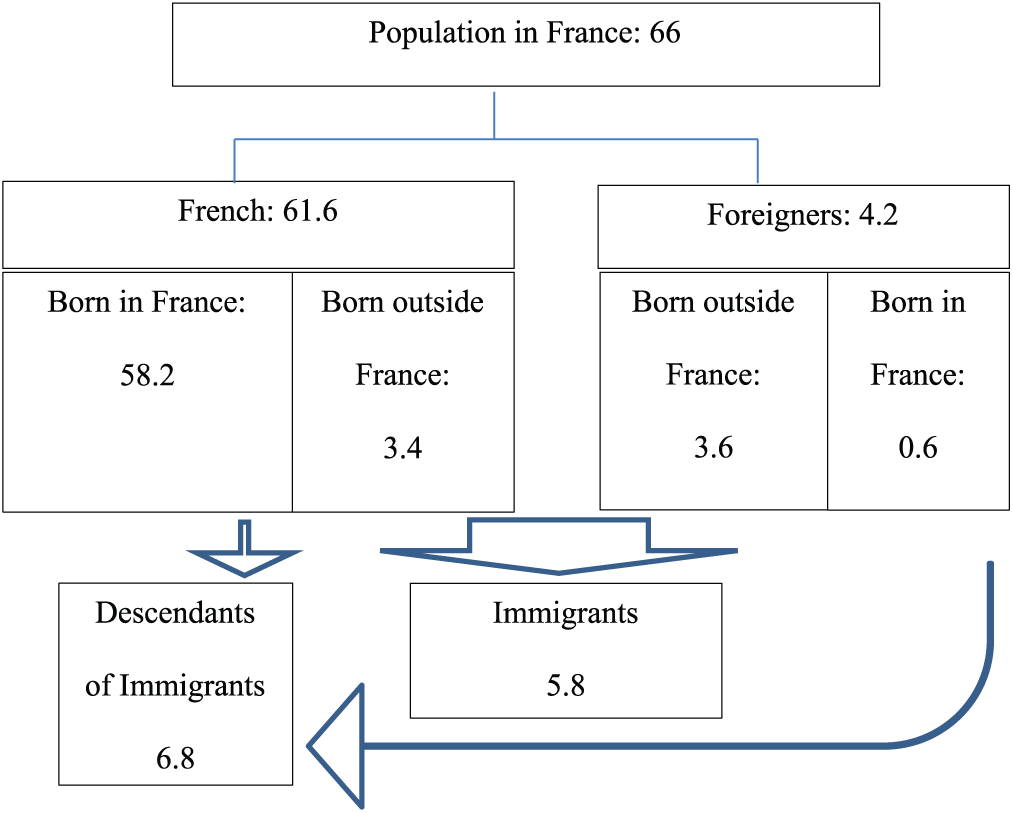
French immigrants and foreigners in France (unit: million, in 2013).
Table 1 gives more detailed information about the composition of the population of immigrants and descendants of immigrants. In 2013, immigrants represented about 9% of the population (i.e. 5.8 million) and 37% and 44% of immigrants came from Europe and Africa, respectively. The Maghreb accounted for about 30% of French immigrants, a proportion which has remained stable since 1980. Immigration from sub-Saharan Africa started later, and mainly involved former French colonies (e.g. Senegal, Ivory Coast, and Burkina Faso). Finally, 14% of immigrants come from Asia, particularly Cambodia, Laos, and Vietnam, and more recently China (INSEE, 2016a). Descendants of immigrants represent about another 10% of the population (i.e. 6.8 million), 48% of descendants of immigrants had a parent of European origin and 30% had a parent of Maghrebi origin (INSEE, 2012).
Number of immigrants and descendants of immigrants in France (unit: million (% of total population), in 2013).
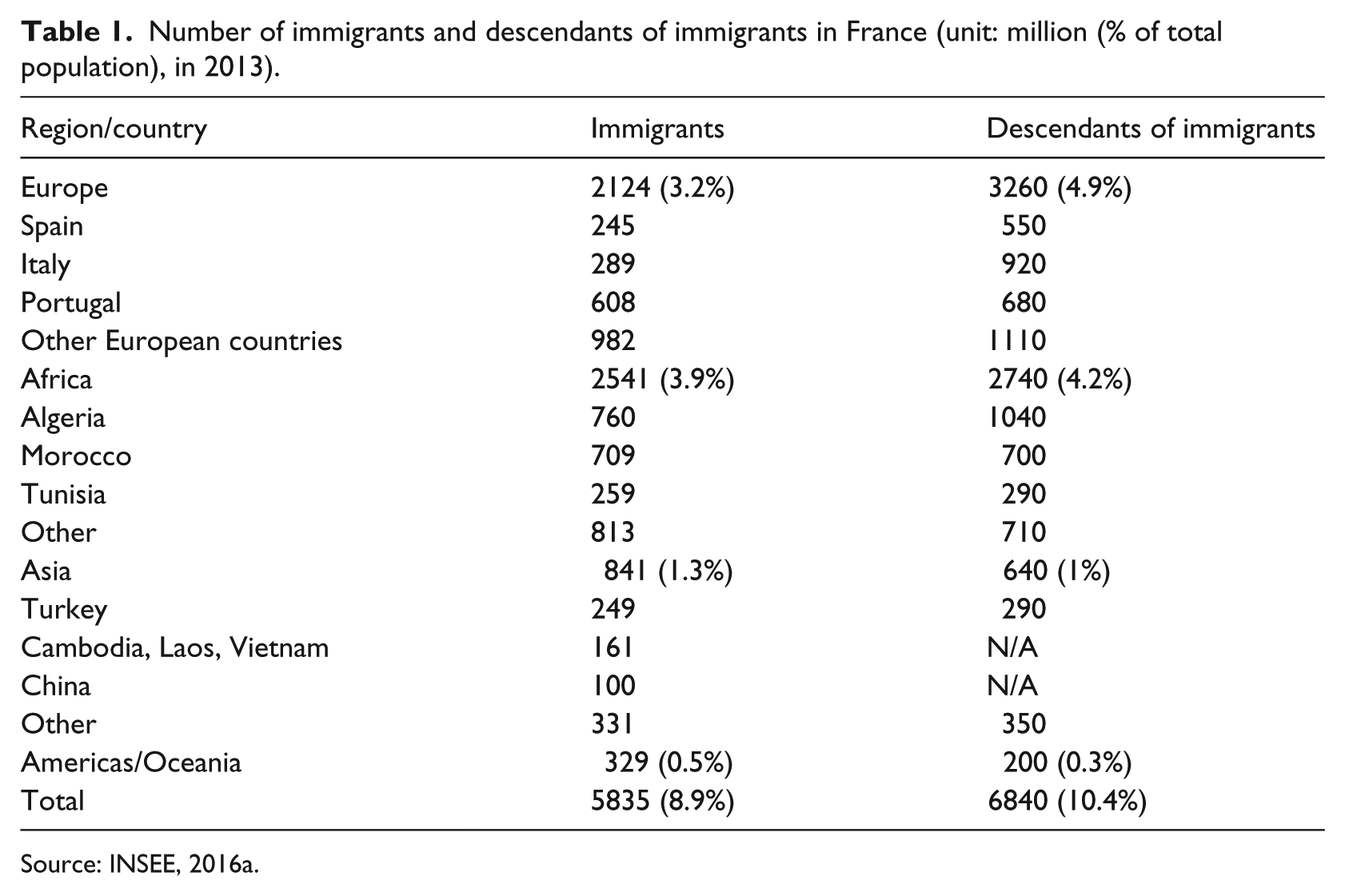
Source: INSEE, 2016a.
Integration process
Although France has a long history of immigration, cultural diversity is a controversial concept as the French model of ‘universal citizenship’ sits in opposition to multiculturalism (Tatli et al., 2012). The French model views internalization of universal values as a major feature of the national integration process (Schnapper et al., 2003). The French Republic separates the public and private spheres as well as the state and church and expression of cultural, religious, or ethnic background and differentiation based on such background must remain in the private sphere (Bertossi, 2011). Individuals are expected to assimilate universal national values regardless of their religious or ethnic identity (Heckmann and Schnapper, 2003). Almost 45% of French people declare themselves to be agnostic or atheist (INED-INSEE, 2010) and the French religious landscape is characterized by continuing secularization; nevertheless, there has been the emergence of Muslim religion, mainly among immigrants and descendants of immigrants (see Table 2).
Religious denomination according to immigration heritage (unit: %).
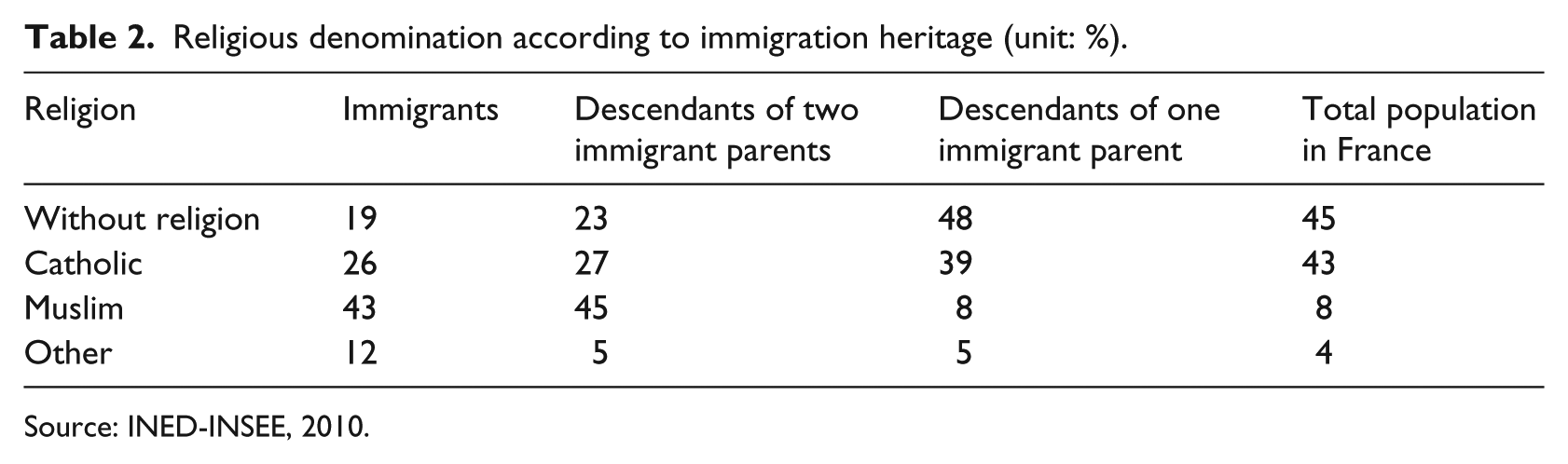
Source: INED-INSEE, 2010.
Although the immigration process in France has focused on assimilation, the integration of some ethnic minorities has been rather unsuccessful. The push for equal rights has not resulted in equal opportunities or equal treatment for immigrants whose level of integration may differ due to ethnicity, religion, and educational opportunities (Vladescu, 2006). European immigrants and their descendants have integrated smoothly into French society. Vladescu (2006) suggests customs of European Christians made it easier for European immigrants to identify with French culture. Asians are generally perceived as unobtrusive in France (Gayral-Taminh, 2009). The Confucian principles of respect and syncretic models actually facilitate their social integration (Gayral-Taminh, 2009). Unlike previous waves of migrants who found employment in the manufacturing industry, many Asian immigrants are concentrated in the services sector, including ethnic trade, confection, and in subcontracting in the building sector (Moliner, 2009). Many are self-employed or own their own business and so they are able to avoid the stigma of low-status jobs and also escape the immigrant labor force’s generally greater vulnerability to unemployment (Moliner, 2009).
The integration of African immigrants into French society has, however, followed a different trajectory (Vladescu, 2006). Most immigrants from the Maghreb and sub-Saharan Africa were invited to work in France in the 1950s and 1960s and eventually settled in Europe (Bracke, 2009). Initially the expectation was that African immigrants would return to their country of origin and so the French government and employers merely cared to provide temporary accommodation such as hostels on the outskirts of major French cities, demonstrating a lack of concern for integration (Ledegen and Vetier, 2016). Family reunification quickly led to many of these estates becoming overpopulated, and this, coupled with the difficulty of finding a job during the recession starting in the 1970s, led to discontentment among ethnic minorities.
Moreover, in the context of the Algerian War (1954–1962), the support of many Algerian immigrants in favor of Algerian independence and the occurrence of violent acts against French authorities led to discriminatory measures and counter-violence by the French police such as a curfew for Algerians. The resulting street demonstrations of thousands of Algerians on 17 October 1961 in Paris (Bracke, 2009) ended with a massacre and the killing of around 100 Algerians by the Parisian police, an episode which became central to Muslim identity in France (Rioux, 1990).
Non-European (and non-Asian) immigrants and their descendants are the most segregated populations in the bigger French cities. In 2008, 54% of the inhabitants of the so-called sensitive urban zones were immigrants or descendants of immigrants and the largest group (35%) comprises those from Algeria, Morocco, and Turkey (Pan Ké Shon, 2010). In France, ethnic discrimination seems prevalent in the workplace and in society (Algan et al., 2010) and immigrants from the Maghreb and other African countries and their descendants are most likely to feel discriminated against (INSEE, 2012). For example, research shows that individuals with Maghrebi names face even greater discrimination than Black people with French names (Amadieu, 2008). Muslims of Maghrebi origin, in particular, are not viewed in the same way as immigrants from European countries, even if they have lived in France for several generations and hold French citizenship. Moreover, Islam is thought to be linked with fundamentalism (Vladescu, 2006), which arouses strong feelings and general fear, especially since the latest terrorism attacks in France.
The manufacturing sector
In the 1970s, 40% of the foreign workforce but only one-third of French nationals held industrial jobs (Bracke, 2009). In particular, in the 1960s, up to 50% of the blue-collar workforce of the French automobile industry employed in their Parisian production sites consisted of immigrants (of whom one-third were Algerian; Pitti, 2006). Although immigrant workers were relatively well integrated prior to the outbreak of the Algerian War, the Algerian War had a detrimental effect on intraracial relations in major industrial plants (Tripier, 1990). Since the substantial fall in the industrial workforce since the 1970s, 40% of immigrant workers (in particular those from the Maghreb, Portugal, and Turkey) are employed in blue-collar jobs in the industrial and increasingly in the construction sector (Perrin-Haynes, 2008). Paris and its outskirts are France’s major economic centers and therefore attract 40% of the immigrant population, particularly those from Africa (Brutel, 2016).
Social and ethnic identity
Social categorization and social identity theories developed by Tajfel and Turner (1986) suggest that people tend to classify themselves and others into various social categories based on organizational membership, religious affiliation, gender, and age. Research drawing on social identity and categorization theories often primes a single identity in one specific context (e.g. ‘I am a teacher’: Ashforth et al., 2008), but studies have also shown that individuals continuously shift their circles of identification according to the audience and context (Ellis and Ybema, 2010). Identities are contextually, historically, and discursively constructed in relation to relevant others (Essers and Benschop, 2009), and individuals may identify in different ways with different groups (Terjesen and Sealy, 2016). Thus, employees may choose to activate specific identities based on their distinctiveness, contribution to sense of belonging, or contribution to self-esteem at work (Cooper and Thatcher, 2010).
On the other hand, it has also been argued that ethnic and cultural identities are particularly salient aspects of social identity (Jasperse et al., 2012) and that ethnic minorities are more sensitive to ethnic identity- and race-related concerns than are ethnic majorities (Phinney, 1990). The literature on diversity and ethnicity in organizations also views identities as stable and unchanging (e.g. Nkomo and Cox, 1996). Ethnic identity involves identification and association with others of the same ethnic group who share one’s cultural practices, nationality, language, or religion (Sardar, 2005).
However, ethnic identity may not have automatic salience; how minority groups process relevant information such as prejudice and/or discrimination may depend on the intensity of their ethnic identification (e.g. Sellers and Shelton, 2003) and their endorsement of individual mobility (e.g. Major et al., 2002). The centrality of group membership is reflected in individuals’ ratings of its subjective importance and chronic salience (Tajfel and Turner, 1986). Similarly, studies found that racial identity and distress may not be as pronounced for women as for men (Lee and Ahn, 2013).
Although research has shown that in some contexts, one particular identity may have greater salience than others and that identities can be weighted by importance (Phillips et al., 2009), explanations for identity preferences have remained somewhat speculative (Ramarajan and Reid, 2013) and incomplete. In addition, identity preferences are not always consciously expressed (Banaji et al., 1993) and the question of how certain identities may be primed in an identity-relevant context remains unanswered. Hence, one of the aims of this article is to shed light on identity construction by examining the reactions of ethnic minorities to organizational diversity policies.
Methodology
We investigated diversity using a case-based approach combined with a close reading of the relevant literature. We followed the suggestions of Yin (1997) and integrated our primary source of data, interview comments, with observations of the physical environment and policy analysis to create a comprehensive description of the diversity climate. We used company records to categorize people into two main categories based on their position in the organizational hierarchy (top management and HR; employees) and their ethnic heritage. We were fortunate to be able to access various sites in this particular organization, which gave us an unusual degree of access to perceptions of potentially sensitive diversity and diversity management issues across the organizational hierarchy and across organizational roles. Such access is a prerequisite for case-based theory building (Eisenhardt and Graebner, 2007). The fact that all researchers were non-French and some belonged to a visible ethnic minority was an important issue for the case company, as management was interested in obtaining a non-French perspective on their diversity efforts. The researchers’ foreign nationality and outsider status also made it easier to gain the confidence of ethnic minority groups working in the case company and thus facilitated the acquisition of data. Fieldwork was carried out over 8 months, from September 2014 to May 2015, and during this period we also had the opportunity to shadow an HR employee on different sites in order to observe diversity-related events (e.g. preparation of a diversity event, meeting with a diversity committee, visit to assembly units on the production site, participation in meetings).
Study context
The study sites were the Parisian sites of a prominent French consumer goods manufacturing company, ranked among the 300 biggest companies worldwide (Forbes, 2017). We specifically asked for access to the Parisian sites of our case company because of the high percentage of immigrants and descendants of immigrants living in Paris and its suburbs (Pan Ké Shon, 2010). In 2014, there were more than 8000 employees working on these sites and 56% of them were blue-collar workers. The company is part of a traditional, gendered industry and women made up just 13.8% of the workforce. A total of14.3% of the workforce was of non-French nationality, and this percentage was significantly higher, at 22.2%, for blue-collar workers. Although women and foreign-born employees constituted a similar percentage of the total workforce, women held almost 16% of all management positions while foreign-born accounted for only 4.6% (Table 3). Because French law prohibits the collection of ethnicity data, the number of French citizens with immigration heritage was not available, but was based on our observations and the statement of interviewees. A significant proportion of the employees on these sites were French employees with Maghrebi heritage, particularly in the case of blue-collar workers. According to the company’s top management, the composition of the workforce at the Parisian production sites reflected the composition of the working population in and around Paris.
Distribution by professional categories, nationality, and gender of employees at the studied company units in 2014 (numbers of cases and percentages).
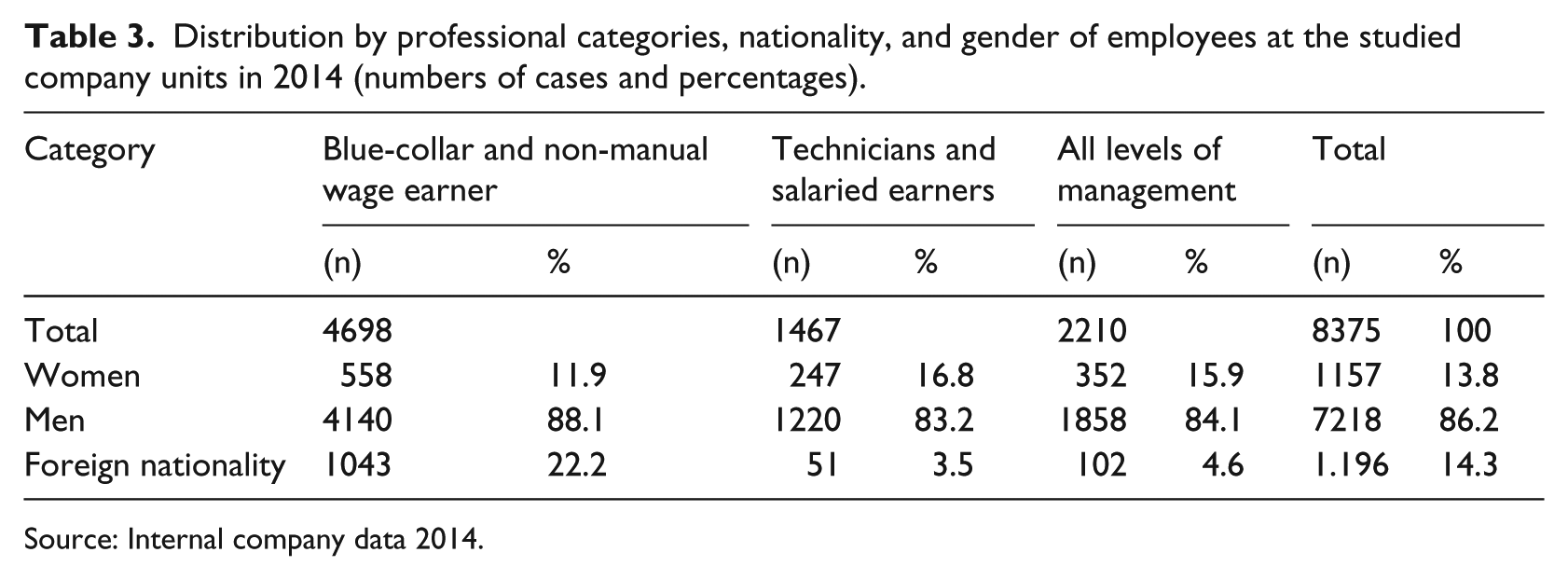
Source: Internal company data 2014.
The company has been officially engaged in diversity management since 2003 and has received various state rewards for gender equality and diversity. The HR department employs diversity managers and ‘diversity committees’ have been established throughout the company.
Interviewees
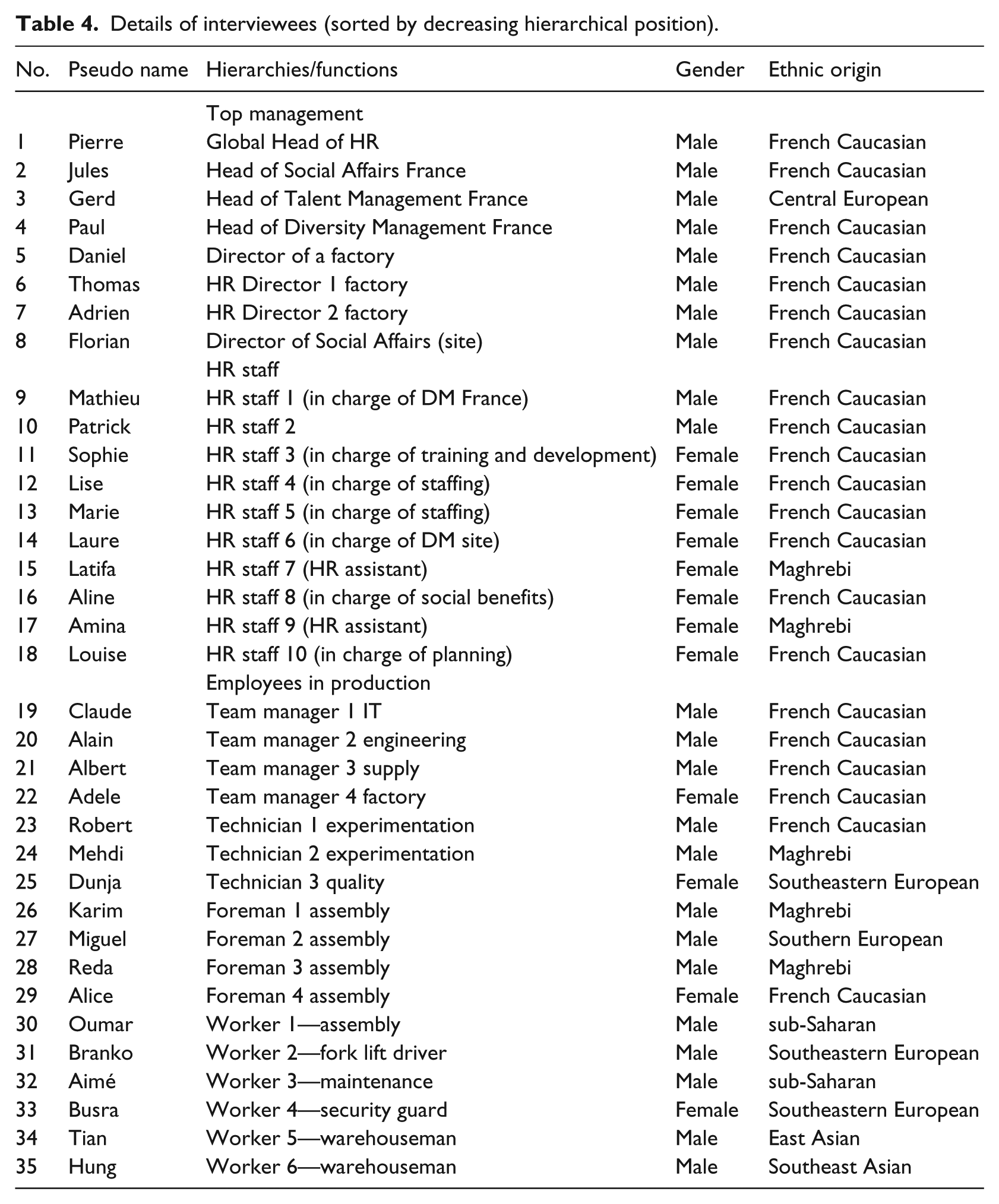
The evidence presented in this article was generated through 35 semi-structured interviews with employees differing with respect to position in the organizational hierarchy, role, and ethnicity (Table 4). The case company and research subjects were promised confidentiality, so although we provide an in-depth presentation of the company context we will not reveal its name or the sector in which it operates. Our sample included all the executives responsible for initiating and coordinating the company’s diversity policy. We asked the director of social affairs at each Parisian site to ask for volunteers from all hierarchical levels who were willing to be interviewed for an academic research project on diversity management. We were officially introduced as an external academic team. Information was disseminated orally by the director of social affairs and managers at various levels to their teams. In all, 38 employees expressed an interest in being interviewed, although 3 subsequently had to withdraw due to emergencies.
Details of interviewees (sorted by decreasing hierarchical position).
We chose the semi-structured interviewing method because it offers flexibility and allows respondents to convey their experiences and opinions freely, yet also provides a degree of structure and focus for the interviewing (Flick, 2000). The interview schedule consisted of questions about the respondent’s organizational role, diversity policy, and diversity management programs in the organization, the background to diversity initiatives, and the respondent’s experience of diversity and diversity policies in the company. The interviews lasted between 30 minutes and 1 hour and were tape-recorded and transcribed (more than 25 hours in total). All interviews were conducted in French by the second author. Representatives of top management were interviewed twice, in French and in English, to ensure that the entire research team (one of whom was more comfortable with English) was provided with the same information about the company’s diversity policy.
Analysis
The analysis consisted of a sequence of steps. The first step involved the categorization of quotations. We captured data fragments from the transcripts and then defined primary themes and provisional categories to consolidate the data at a more abstract level. We then looked at how the categories related to one another. The data fragments were reviewed by the authors, who met several times and discussed concepts and terms that had emerged repeatedly. On the basis of these discussions the second author assigned narratives to the provisional categories (e.g. diversity policy and reactions). After further discussion the research team agreed to a way of subdividing the provisional categories and then, in accordance with Locke’s (2002) advice to document the thought process, we attempted to describe and write about these categories.
Findings
The company’s organizational diversity policy was driven by the need to conform to institutional pressure, especially government legislation. Diversity policy focused more on gender than on ethnicity and there was a noticeable tendency for interviews with subjects in the higher hierarchical positions to evolve into discussions more about gender rather than ethnicity. This preferential emphasis on gender is in line with the legal requirements and general social consensus surrounding gender diversity. Achieving ethnic diversity might be complicated; to begin with, it is illegal to collect information on ethnic background formally and, perhaps reflecting the legal position, French society has not embraced the issue of ethnic diversity. In other words, both the legislation and social consensus have focused the company’s attention on gender. Both top management and HR highlighted the need to increase female representation in the workforce, while acknowledging the practical challenges this posed, mainly due to the nature of the engineering industry. Ethnicity-related diversity actions were limited to social activities.
Given the existence of gender-based affirmative action policies and the absence of corresponding ethnicity-based policies, we examined the perceptions of those subjects (i.e. ethnic minorities) whose needs are not directly addressed by the organization’s diversity policies. Analysis of the subjects’ descriptions of the diversity policies revealed the emergence of three different reactions: indifference, focus on gender issues, and discontent. Close examination of the data revealed that each reaction was associated with a specific group of respondents: indifference was mainly expressed by Asian men, ethnic minority women focused on gender issues, and Maghrebi and sub-Saharan African men expressed discontent. We argue that this pattern of clustering suggests reactions to gender-focused diversity policies may emanate from identity construction processes, that is, dissociation, selective association of identity, and heightened salience of identity.
The trickle-down effects of organizational diversity policy on ethnic minorities are detailed below.
A hybrid diversity policy of mandated and voluntary actions
The investigated company was heavily involved in diversity management, especially gender diversity; it had a company-wide agreement on occupational gender equality and had adopted the French Diversity Charter in 2003. Compliance with legal requirements and governmental guidelines appeared to be an important driving factor for the company’s diversity policy. The company engages with unions and negotiates with them over how the company will comply with legal requirements. Union representatives are elected onto organizational committees, such as the diversity committee, gender equality committee, and disability committee, to integrate diversity issues into the daily work routines:
We have 19 criteria of discrimination in the French law. We have to explain and discuss with trade unions what we want out of this diversity. (Jules, Head of Social Affairs, Frenchman) We negotiate with six trade unions representing our employees. It is important for us to have a strong social dialogue and to have rules as well as an agreement. It is not just a matter of applying the law or applying policies but it is something we define with the trade unions, which we have to agree on, and which we have to live in the company. (Paul, Head of Diversity Management, Frenchman)
Gender diversity: emphasis on gender-based affirmative action
Although the company has various diversity objectives, the emphasis is very much on increasing the proportion of women employed by the company. A quota objective was set by the top management and is tracked through annual evaluations. Such quota led to affirmative action:
During the first two years after our diversity policy was introduced our efforts were mainly directed at achieving equality between men and women. We set a target of 30% of female employees. (Jules, Head of Social Affairs, French man). We control on our female recruitment figures to a certain level. If we have candidates with equal competence, we try to improve diversity if possible. (Sophie, HR staff, French woman)
Regardless of gender-based affirmative actions, the gendered nature of a company is reflected in the percentage of women at all levels of the hierarchy. The gender stereotyping typical of the manufacturing sector prevailed internally, especially on the production line:
The company has not been attractive to women because engineering degrees and manual labor are still not considered to be women’s work. (Pierre, Global Head of HR, Frenchman) There are no women in my unit. It is a male environment. It is very technical. There are women with a theoretical background [e.g. studies in engineering]. But I don’t think that they have any practical experience. They come in at a higher level and don’t touch [the machines] with their hands. You know, a woman will take her car to a garage for repair even if she knows how to repair it in theory. (Mehdi, Technician, Maghrebi-man)
Ethnic diversity: accommodating social activities but ethnic blindness for HRM system
Although France is a secular country and religion and work are strictly separated, tolerance for different religions features in the company’s diversity discourse. In the French manufacturing industry, a common response to the violent social conflicts and strikes of the early 1980s was the introduction of prayer rooms at production sites. The strikes were limited to production sites and trade unions negotiated the installation of prayer rooms in the aftermath of the strikes. During this period, the company we investigated recognized that it needed to respond to the religious concerns of mainly Maghrebi immigrant workers, given the composition of the workforce on the production line:
You know, in France, it is difficult to speak about religious problems because of our history. [However], most trade union members are not of our [Catholic] religion. They [union leaders] have to pay attention to their electing members, the workers, who are often Muslims. I think we have managed the religion issue well because we recognize religion and have found a balanced way to show respect for religion. In France, expression of religion [in the workplace] is forbidden although the rules do not apply to a private company in the same way. We have a praying room [for Muslims]. You can meet [people of your religion, Muslims] in this room. During Ramadan, our timetables are arranged to respect prayers. (Paul, Head of diversity management, Frenchman)
This kind of ethnic awareness has led to the organization of regular ‘diversity days’ during which employees are encouraged to share their culture via traditional costumes and food. Moreover, the company makes some effort to support foreign minority groups (i.e. non-French):
The diversity days allow people to share their cultural habits such as cooking, clothes and so on. People discover and travel. This is enriching for everyone. (Laure, HR staff, French woman) [For training] we track employees with foreign nationality to make sure that they won’t be forgotten. (Sophie, HR staff, French woman)
However, as long as statistical tracking of ethnic minority groups of French nationality remains prohibited, efforts to support them explicitly will remain tentative at best. Career advancement based on competence is emphasized, regardless of ethnic heritage:
French employees with an immigrant background are not tracked. One can infer immigrant background based on someone’s name or appearance. But that would be too heavy to follow -up. (Lise, HR staff, French woman) [People with an immigrant background] are selected based on their skills just like any other French employee. (Aline, HR staff, French woman)
The company’s narratives about its diversity policy emphasize its endeavors to comply with institutional pressure and legislation on gender equality. The top management emphasized that gender diversity was a company priority, but acknowledged the practical challenges of achieving gender diversity, attributing them partly to the mechanical nature of the industry. In comparison, there are no specific ethnicity-based regulations, but the company has taken some voluntary action to recognize cultural differences. This has involved acknowledging the Muslim religion at the production sites, where a significant number of the blue-collar workers are Maghrebi and sub-Saharan African men. However, ethnicity-based diversity activities were limited to social activities (e.g. prayer room and diversity days) and promotion of ethnic minorities was entirely competence based.
Different responses of ethnic minorities to organizational diversity policy
We observed three different reactions to the company’s diversity policy, which dealt with gender but not ethnicity: indifference, focus on gender issue, and discontent. These reactions were clustered demographically: Asian men, female ethnic minorities, and Maghrebi and sub-Saharan African men. We propose three different identity-constructions: dissociation, selective association, and heightened identity, to explain the different reactions of these ethnic minority clusters.
Indifference: dissociation
The first category of reactions to the company’s organizational diversity policy was indifference. This was expressed mainly by Asian employees, who happened to be all men. They showed little interest in or were not familiar with the company’s diversity committees and diversity-related actions. Moreover, they felt interactions at work were good, irrespective of ethnic heritage:
I do not always have time to watch [the diversity events] … [when it comes to] diversity policy, we cannot observe everything around us from A to Z[…] My colleagues are not all of the same nationality. It [my team] is mixed but this does not bother me. Everything is fine between us. There are no issues at work. (Hung, worker, Southeastern Asian man)
They expressed their faith in the fairness of the organization’s approach to career development and accordingly focused on their work or on improving their skills:
I had training to improve [my skills][so that I could] change my post and department. If one has the capacity, one can progress. This is really good […]. I do not know [or care much] about the criteria for promotion. I come here to work. (Tian, worker, East-Asian man) My tasks have changed a lot. I got training for a new task in another site where I used to work. If you have the capacity, you can advance. I really appreciate that […]. Currently, however, I have fewer options for promotion because the structure is different and there are fewer opportunities. It is not my fault, but not the fault of the company either. (Hung, worker, Southeastern Asian man)
This group expressed indifference to the company’s diversity policy and appreciation of the fairness of its procedures and did not comment on diversity policy from a gender or ethnicity perspective.
Focusing on gender issues: selective association of identity
The second category of reactions was a keen interest in and concern for gender diversity, this reaction was common to all the ethnic minority women interviewed for the study. Although gender-based affirmative actions were not perceived to have been successful in delivering equality of representation or pay, the existence of gender-based affirmative action policies seemed to have given women the space to voice their concerns about gender issues at work:
Woman’s day is visible. There were women who gave presentations on their jobs, which was interesting […] It is true that there are more men and not enough women in our company. I do not know whether this is due to the work we are doing. There are not enough women applying for jobs here although there are plenty of jobs that can be done by women […]. There is no gender gap in starting salary. (Latifa, HR staff, Maghrebi woman) There is a law about gender equality […]. The company talks about equality, but this is not about wages. There is still a pay gap between a woman and man doing the same job. This is not fair […]. We do not have any women [except me] in my service. The company should give women more opportunities, to show that women are not less intelligent than men […]. (Dunja, Technician, Southeastern European woman)
The women we interviewed also acknowledged that some progress had been made on gender issues at work:
Society has changed and the situation for women has improved. Before, French women did not work and nor did Muslims, Arabs, Turks and Chinese. When I started, there were women only in gendered jobs such as the sewing department. Today, there is more feminism and certain things such as respect [for women] are in place. The company should be keen on feminism. This is important. They should value both femininity and masculinity. They already do so, but they could still improve. (Busra, worker, Southeastern European woman)
Ethnic minority women’s perspective on gender diversity was quite distinctive, as all the ethnic minority women we interviewed showed little concern about the lack of ethnicity-based affirmative actions. In fact, they appreciated the company’s voluntary efforts to recognize and celebrate diversity and firmly supported the separation of religion from work:
I think the company succeeds in building ethnic diversity. I see progress. I am of Muslim religion but we are not at work to pray. One does not pray at work. We leave religion out of work. (Amina, HR staff, Maghrebi woman) I see that the company has really emphasized diversity over the last couple of years […] I can see that those people hired have different cultures and so on […]. We leave religion out of work. A prayer room? I think it is too much as you may need one for every single religion then. (Latifa, HR staff, Maghrebi woman) The diversity committee is there to observe, to detect problems and to work with management to find solutions […]. There is a prayer room and people go there during their break. It would not be right to go there during your working time […]. For me, religion remains as a private thing […]. All aspects of diversity are important but I am convinced that gender equality should be emphasized a bit more. (Busra, worker, Southeastern European woman)
Discontent: heightened identity
The third and final category of reactions was discontent with a diversity policy that focused on gender-based affirmative actions. This sentiment was expressed by Maghrebi and sub-Saharan men who reported some tension and discrimination at work. They also argued that competence was not always respected and that ethnicity could be a barrier to career advancement:
One day, someone mentioned that I had a beard. So what? Having beard does not mean that I work badly. I told him, yes, I am a practicing Muslim but my beard is nothing to do with my religion. It [the beard] was because I got allergies from shaving [cream]. (Reda, foreman, Maghrebi man) Some people have fixed ideas […]. Certain employees will never have access to higher positions. (Aimé, worker, sub-Saharan African man) There are some awkward situations which might not be obvious. When you practice Ramadan for example, some make remarks such as ‘Oh, you practice Ramadan’. There are many comments like that, about not eating pork for instance. They are afraid of differences they do not understand […]. I am quite shocked that there is only one black foreman on the entire site here and that a French Caucasian advanced much faster than I did. (Karim, foreman, Maghrebi man)
This group also did not value or support gender-based affirmative actions at all. In fact, they argued that the company should not pay too much attention to gender equality and should focus more on ethnic equality instead:
Everything is concentrated on how one can promote women. But people are fed up with this. People think it’s too much. I have colleagues who have said that if it is a matter of having breasts, they are ready to get implants. (Reda, foreman, Maghrebi man) The company talks about gender equality. But women are not very good at man’s work [like our industry] [ …] They should talk more about ethnic diversity. (Karim, foreman, Maghrebi man)
Advancement based on competence
However, the perceptions of these Maghrebi and sub-Saharan men were not shared by others in the company. All of the Caucasian French HR staff interviewed were optimistic and confident about the company’s diversity rules and activities and also emphasized that the company promotes people based on competence:
Ethnic discrimination and discrimination among colleagues are not really issues. (Patrick, HR staff, Frenchman) We shouldn’t do diversity just for diversity. We still have to rely on competence. You have to develop people who deserve it. You have to evaluate competences and not rely on positive discrimination. Being a minority does not mean that you automatically get promoted. (Lise, HR staff, French woman)
Moreover, other ethnic minority men noted that some perceptions of discrimination based on ethnicity were not justified:
My perception is that the Parisian population is very well integrated. People feel discriminated against or not valued, but often they do not have the competences needed. (Miguel, foreman, Southern European man) We are not here to love each other. We are here to make money and to do our hours in the best possible conditions which works well here. There might be some exceptions though, as you know, some people get upset much more easily than others. (Branko, worker, Southeastern European man)
Table 5 summarizes the conflicting perceptions of Maghrebi and sub-Saharan African men and others in the company.
Different perceptions of competency and of discrimination against ethnic minorities.
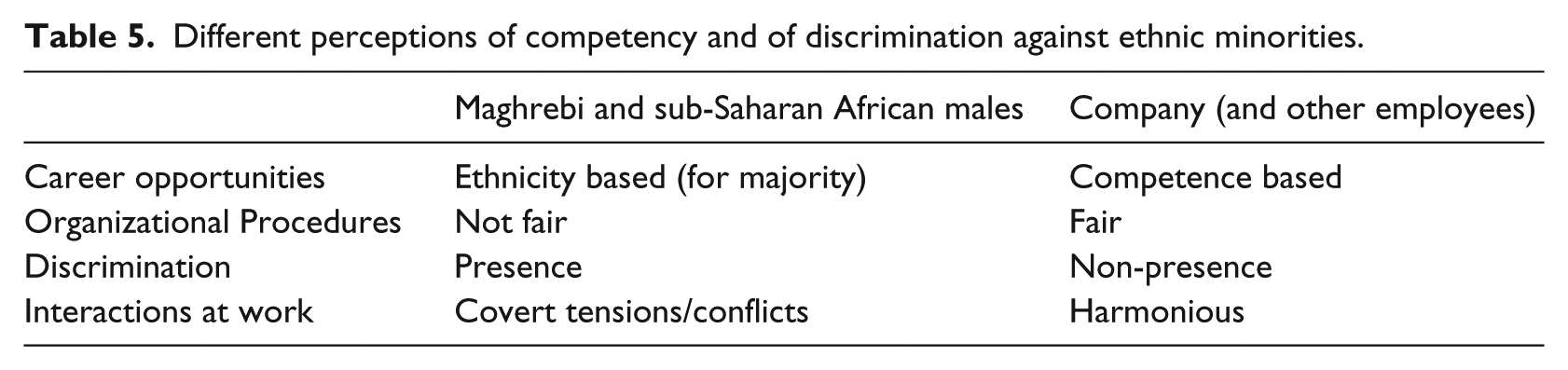
Overall, we noted three different reactions to the company’s diversity policy (i.e. gender-based affirmative actions) among ethnic minorities: indifference, focus on gender issues, and discontent. The group that reacted with indifference did not show much interest in diversity policy, did not value it, and did not see the need for specific actions to improve diversity or support ethnic minorities and women within the company. Overall, they trusted the company’s systems. The group that focused on gender issues was very keen on gender-based affirmative actions. When discussing diversity, it was clear that gender was an important work issue, while ethnicity and religion were viewed as private matters. The discontented group with gender-affirmative action argued that certain ethnic minorities faced a barrier to career progress, but this opinion was not shared by other employees (including other ethnic minorities and women). They also suggested it was wrong to make gender equality the priority and felt there should be more emphasis on ethnic equality.
Given that all respondents were exposed to the same diversity policy, we suspect the differences in their reactions may be best explained by identity construction processes. One’s sensitivity to diversity information may be related to the extent to which a particular identity is activated. As the three categories of reaction were each associated with distinctive demographic variables (Asian men; Ethnic minority women; Maghrebi or sub-Saharan African men) we further propose that there are three different identity construction processes at work: dissociation from one’s ethnic identity, selective association with gender identity, and enhancement of ethnic identity.
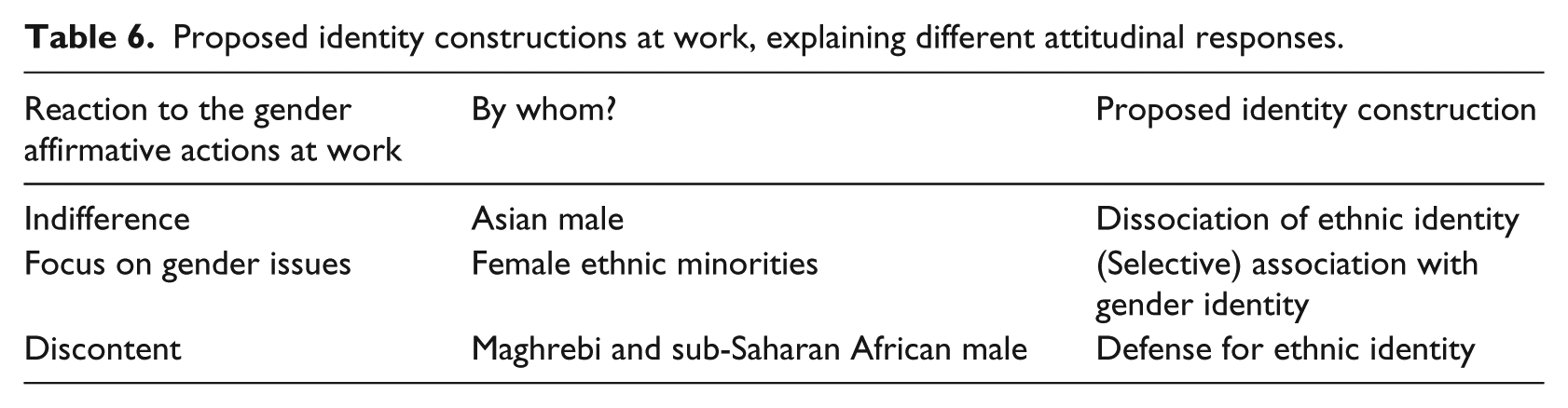
First of all, our Asian interviewees, who all happened to be men, seemed to dissociate from or de-emphasize their ethnic identity. Thus, they became less sensitive to information which could be ambiguous or actions and policies which could be perceived as discriminatory. Given that they expressed faith in the company’s fairness, this dissociation may allow them to associate (identify) with the company and focus on work-related issues including skill development. In contrast, against a background of a diversity policy focused entirely on gender, women from ethnic minorities showed selective association with their gender identity. The existence of gender-based affirmative action policies and recognition of gender issues seemed to encourage female workers to embrace their gender identity and share their interest in, and concerns about gender issues. Their embrace of their gender identity was quite selective; they showed a strong tendency to dissociate from their ethnic or religious identity at work. Finally, Maghrebi and sub-Saharan African men expressed a heightened ethnic identity in that they became quite defensive or protective of their ethnic group. They perceived widespread discrimination against their ethnic group, affecting social interactions and career opportunities. Given that the Maghrebi population is the prominent ethnic minority in France, the heightened ethnic identity of Maghrebi and their sensitivity to ethnic discrimination may arise from their keen historical awareness of ethnic and colonial issues in French society. Maghrebi and sub-Saharan African men’s heightened ethnic identity was thrown into sharper focus by their disregard for gender-based affirmative actions and strong preference for affirmative action on ethnicity rather than gender. They felt too much emphasis was placed on gender equality at the expense of ethnic minority men. Table 6 illustrates the clustering of reactions.
Proposed identity constructions at work, explaining different attitudinal responses.
Summary of findings
The findings of this study are summarized in Figure 2. They suggest a trickle-down effect of organizational diversity policy: the figure illustrates how institutional forces have influenced the general tone and focus of organizational diversity-related activities and, hence, employees’ attitudes. The case company regulations on gender equality and the concept of universal citizenship had led to a concentration of gender-based affirmative action, accompanied by limited ethnicity-based diversity initiatives.
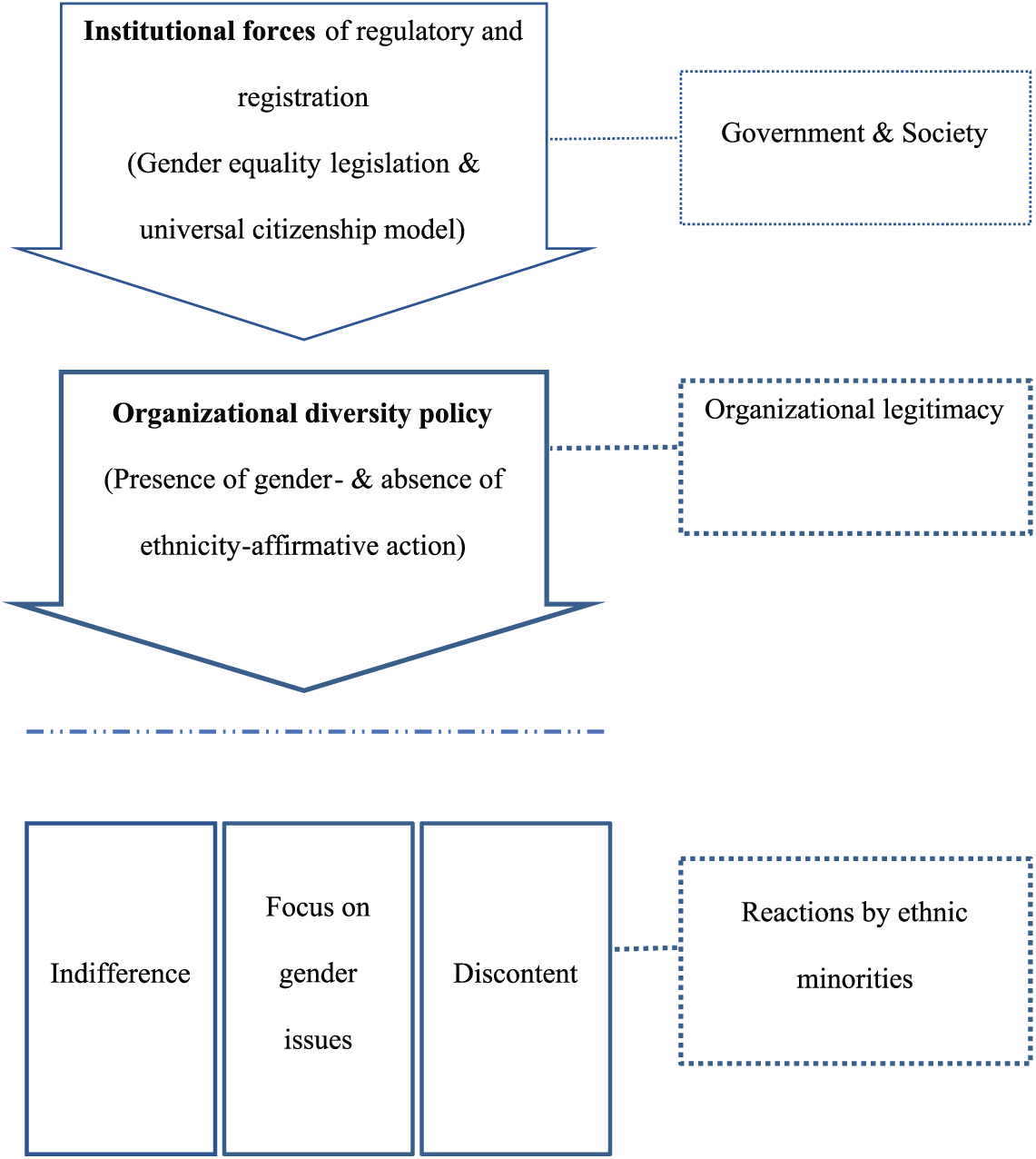
Trickle-down effects around organizational diversity policy in France.
Given the significance of identity to sense-making and interpretation of environments, and the demographic clustering of reactions to the company’s approach to diversity issues, we propose that each reaction is associated with a different identity strategy, developed in the context of the company’s diversity policy. Asian minorities did not perceive the company’s diversity policy as relevant to them, perhaps because of their dissociation from their ethnic identity at work. In contrast, the existence of gender-based affirmative policies, regardless of their practical effects, allowed female ethnic minorities to assert their gender identity. Differently again, discontent was observed among Maghrebi and sub-Saharan African men, although their dissatisfaction was not shared by others in the company. This suggested that the ethnic identity was more salient for Maghrebi and sub-Saharan African men, which caused them to be defensive or protective of their ethnic identity.
Discussion and implications
Our results revealed the trickle-down effects of government regulations on organizational diversity policy and ethnic minorities’ reactions to such policies, thus demonstrating institutional influence on an organization at macro and micro levels. The government-instituted gender equality legislation and the universal citizenship model meant that our case company focused on gender-based affirmative actions and did not implement ethnicity-based affirmative actions. Organizational gender-based initiatives illustrate that organizations’ approach to diversity is driven by the need to comply with legislation and by institutional pressures (Reichel et al., 2010; Terjesen and Sealy, 2016) and highlight the extent to which the general direction of organizational diversity policy is driven by external regulatory pressure and legislation (e.g. Reichel et al., 2010; Tatli, 2011).
Our study contributes to research on social identification by demonstrating how different identity strategies are activated by ethnic minorities. Research on ethnicity and diversity in organizations has paid little attention to the way in which ethnic minority employees construct their identity (Nkomo and Cox, 1996). Our results challenge racial identification theory, which posits that identities are stable and persistent across situations. Our findings suggest that at work, employees are concerned about their status relative to others in the organization and that they may choose to dissociate from certain of their identities. The differences in ethnic minorities’ attention to and reaction to diversity policies illustrated in this article reveal that identity construction is context-dependent.
The defensive attitude and heightened salience of ethnic identity that we observed among Maghrebi and sub-Saharan African men can be understood as a reflection of their deep-rooted awareness of their disadvantaged status in French society. This is consistent with research showing that cultural and ethnic identities are associated in the larger society with certain power positions (e.g. Ely and Thomas, 2001). Studies carried out in North America have shown that African Americans’ consciousness of being a socially and economically oppressed group remains ingrained, despite the fact that some have achieved middle-class status (Cole and Omari, 2003). Researchers argue that it is crucial to acknowledge nonorganizational influences on diversity processes in organizations (Van Laer and Janssens, 2014) as organizations tend to copy social structures, including inequalities between social groups, because they are familiar (Janssens and Zanoni, 2014).
Our observation of sensitivity to ethnic minority issues among Maghrebi and sub-Saharan African men also contributes to the literature on religious discrimination (e.g. anti-Muslim discrimination) in the workplace in the United States (e.g. Almeida et al., 2015) and in central Europe (Van Laer and Janssens, 2014). Muslim identity is ‘quasi-ethnic’ in that religious and ethnic boundaries are not clearly demarcated (Meer, 2010). Although Muslim countries (including Maghrebi countries) have been the major source of ethnic minority immigration to Europe, especially of low-skilled laborers (De Raedt, 2007), these countries have become the ‘other’ in cultural and religious terms (Van Laer and Janssens, 2014). Accordingly, Muslim identities in Western countries can be quite complex (Verkuyten, 2007).
In the workplace, ethnic identity was not particularly salient for Maghrebi and sub-Saharan African women, whereas it was for men with the same ethnic background. North American research has shed light on gender differences in perceptions of ethnic discrimination. Studies have found that African American men report experiencing racial discrimination more frequently than women (Sellers and Shelton, 2003), and that African American stereotypes are gendered and focus primarily on men (King, 1988). Likewise, it has been suggested that although gender is a sensitive matter, in some circumstances it is less sensitive than ethnicity (Choi and Rainey, 2014), because the principle of gender is now widely accepted in society as is the use of quotas to achieve gender parity (Meier, 2013).
This article has questioned whether institutional change is required and if so, what form it should take. Institutional theory describes how actors seek legitimacy to survive (Suchman, 1995) and attributes this to the need to be seen as appropriate, compliant with societal values (Ruef and Scott, 1998) and with the interests of a broad group of stakeholders (Freeman et al., 2007). Stakeholders are likely to have differing views about which goals are legitimate and about potential changes (Terjesen and Sealy, 2016), but the trickle-down effects documented in one French manufacturing company in this article highlight the importance of government regulations. Given the distinctive attitudes of the most prominent ethnic minority groups, there needs to be investigation of ethnic diversity issues and further protection of ethnic minorities from discrimination encouraged at the government level.
On the other hand, this study also illustrates that although discrimination is pervasive and insidious (Oswick and Noon, 2014), not all ethnic minorities feel discriminated against at work and, in consequence, some perceive affirmative action programs as unnecessary (e.g. Swim et al., 1995), which adds to the complexity of designing diversity programs. Our findings also illustrate, however, that in a gendered industry with clear gender inequality, even tokenistic gender-based affirmative action programs seem to be beneficial to female ethnic minorities, as they legitimize the expression of concerns about gender discrimination.
Future research could combine in-depth interviews, as used in this study, with survey-based inquiry. Although our approach gave us rich information about how employees perceived the diversity policies of an organization, other methods—such as archival studies, participant observation, comparative designs, life-history interviews, discourse analysis, simulations, and network analysis—could also offer important insights into employees’ views on diversity management. Our data were collected in a French manufacturing company, so future studies should address other industries in France, and in other European countries with similar and different diversity regulations and ethnic composition. Similarly, given that the proportion of female managers is lower in traditionally male and producer-oriented sectors such as resources, engineering, and business services (Lewis and Humbert, 2010), future studies should explore how both gender and ethnicity issues are perceived in sectors where the proportion of female managers is higher, such as retail, banking, and media.
