




Abstract
We propose a reawakening of interest in the role of artistic knowing for managerial education, presenting a pedagogy that is sensitive to cultural context and aimed at enabling the phronetic management of paradox. Inspired by fado, the iconic Portuguese popular music, especially the ways in which it embodies the stresses of society, we develop strategies for management learning based on engagement with art that fosters sensitivity to paradox. We contribute to management learning by inviting practitioners to be sensitive to the complexity of competing tensions in the cultures and language in and through which everyday lives are lived by bringing attention to the potential of artistic knowing for highlighting and navigating management paradoxes, to develop phronesis.
Introduction
Inspired by the theme of EURAM’s 2019 conference 1 and by work on how local-popular forms of art may inform management studies (e.g. Stovall, 2006), we advance an original approach to management education. From even a purely “functionalist” perspective, it is apparent that rapid development of technology increases the obsolescence of technical skills, oftentimes making them redundant (Petriglieri, 2020). The importance of “marrying” technology with liberal arts and the humanities (Johnson, 2011) is an argument that prophets of corporate innovation, such as the late Steve Jobs, have also been quoted as championing (Dediu, 2011). Bennis and O’Toole (2005) provide reasons for supporting this view: since most management decisions are matters of judgement, business education would benefit from grounding its knowledge in the humanities and social sciences, with training in sociology, psychology, politics, economics, history and literature. Similarly, Brendal (2014), argues that CEOs leadership would benefit from reflecting on the ideas of ancient and modern philosophers.
We move from the observation that technological disruption, the dynamics of globalization and climate change, present managers with increasingly paradoxical challenges. For instance: “get more from less, build individualistic teams, and think globally while acting locally” (Lewis and Dehler, 2000: 709). A paradox perspective recognizes that every context inherently involves competing, persistent, mutually exclusive but nonetheless interdependent, tensions (Smith and Lewis, 2011; Smith et al., 2017). An effective management of tensions requires finding ways to work through them (Smith et al., 2012), seeking synergies and accommodation.
The capacity to reflect critically on one’s actions and intentions (Antonacopoulou, 2010) while striving for desired results (Michaelson, 2016) links to an approach consistent with the pursuit of practical wisdom or phronesis (Aristotle, 2002) in the face of paradox. A phronetic approach requires reflecting on the consequences of one’s action in striving to achieve synergetic results for a variety of stakeholders, taking into account their embeddedness in power relations (Clegg et al., 2014; Flyvbjerg, 2001). Pursuit of practical wisdom in the face of contradictory requirements (deriving from multiple logics and contrasting interests) can be challenging. Confronting paradoxes can be invigorating but also paralysing (Berti and Simpson, 2020) if students are exposed to complexity without offering ways to organizing and apprehending it. Confusion, rather than enlightenment, will be the most likely result. To counter this probability we propose artistic knowledge, as a form of aesthetic, embodied apprehension (Strati, 1992, 2010), highlighting the role of sensible knowledge in knowing and learning in practice (Strati, 2007). In the past, management literature has sought inspiration from the arts, both narrative fiction (Cohen, 1998; Czarniawska-Joerges and De Monthoux, 1994; Michaelson, 2016) and theatre (Beirne and Knight, 2007; Kostera and Kozminski, 2001; Starkey et al., 2019). In more contemporary arts, a rich seam has been mined both from rock (Rhodes, 2004, 2007) and jazz music (Griffin et al., 2015; Hatch, 1999; Kamoche and Cunha, 2001). Other forms of music also provide inspiration; Fado is a rich artistic expression that incorporates music, dance and culture (Gray, 2007, 2013) in a uniquely Portuguese mode that invokes a sense of mournful regret in response to crescive contradictions of the past as well as transcending hope for the future, supporting dignified action and emancipation. Fado is a uniquely culturally specific musical form, one not only representing but also engaging with the paradoxes of Portuguese society.
Stimulated by a simple research question “how is it possible to develop managers’ practical wisdom in the face of paradoxical tension, while avoiding the sense of paralysis and confusion that derives from being exposed to excessive complexity?,” we structure our paper in three movements. First, we introduce the topic of phronesis as applied practical wisdom before discussing the topic of paradox in general and paradox pedagogy in particular. Second, having set the scene, we develop a philosophically informed paradox pedagogy that oscillates between simplifying strategies (identifying and classifying types of paradox and considering the adoption of “standard” mode of response to them) and complexifying strategies. Third, we unravel a knotty tangle of contextual factors through artistic knowing. To illustrate and ground our approach in a specific context, we explore the case of fado. We conclude by framing our contribution in the context of debates about management education.
Art and phronesis
The relationship between art and organizational life is well recognized among scholars. It has variously been encapsulated in notions of “art-and-management” (Parush and Koivunen, 2014) as well as “organizational aesthetics” (Taylor, 2013). The latter is concerned with exploring organizational life as a phenomenological experience, using arts methodologies in organizational practices (Taylor and Ladkin, 2009). Certain epistemologies for the pursuit of human connection and meaning within the organizational context are favoured (Taylor, 2013; Taylor and Hansen, 2005). For Strati (2007), artistic knowledge facilitates a manager’s sensible knowing, highlighting corporeal relations with both the human and non-human Other. Sagiv and Yeheskel (2020) see the management of connections as a paradoxical dance in which managed tensions create contrast, rhythm, harmony—creating a lived/embodied aesthetic experience. What it is to be uniquely human resides in the specificities of the aesthetic experiences of language, art and culture in which we are all embedded, even in our organizational life, despite its rationalizing and universalizing tendencies (Drori et al., 2006). In art, local historical traditions and genealogies enmesh (Cunha et al., 2019) with modernity and beyond, creating different expressions of human organization (van Marrewijk et al., 2016). It is to these particulars, rather than some abstracted “national culture,” premised conceptually on functional prerequisites (Hofstede, 1980; McSweeney, 2002) that cultural analysis in management might attend. Exploring artistic cultural expressions rooted in time-honoured traditions can contribute toward a historically informed, non-universalist understanding of management, one that is comfortable with tension and steeped in practical wisdom and human values (Bachmann et al., 2018).
The notion of practical wisdom (or Phronesis) was originally introduced by Aristotle (2002) as a means of pursuing virtuous behavior (Jarvis and Logue, 2016). In contemporary terms, phronesis refers to an approach to management issues that entails becoming aware of the power implications of decisions and arrangements, the affordances of the status quo, the desirability of current trends (Flyvbjerg, 2001; Śliwa and Cairns, 2009). Management decisions are ideally interpreted by wise judgement within a given socio-political cultural context (Trinh and Castillo, 2020). Many situations of decision-making are contexts imbued and laden with tensions affording various potentialities that are never fixed but always competing for domination. It is in the recognition of the paradoxical complexities of the everyday that the value of practical wisdom becomes pertinent with the invocation of phronesis proposed as helpful for integrating normative, behavioral and sociological approaches to business ethics education.
Huckaby et al. (2012) argue that virtue education is best achieved as a paradox pedagogy concerned with not just the communication of information as codes of practice but with a praxis that involves oscillation between engaging with theory, undertaking practice, moments of reflection, rigorous questioning, all eventually leading to personal transformation. For Putnam et al. (2016) a paradox pedagogy invokes student engagement with complexity by invoking “both. . .and” thinking.
Paradoxical programmatic
Existing paradox pedagogies have varied foci, some concerned with modes of learning and teaching (Huckaby et al., 2012; Tay et al., 2016), others with the attributes of educators (Gallos, 1997) while others deal with the effects of using a paradox pedagogical approach (Knight and Paroutis, 2017). In programmatic mode, some paradox pedagogical approaches offer a four-fold framework. In the Singapore state education sector, Tay et al. (2016) developed a paradox pedagogy by interviewing teachers. The framework they developed highlights four paradoxical dimensions that teachers must balance to design and facilitate effective learning and teaching experiences: (1) teacher control with student autonomy, (2) student’s personal with collective sensemaking, (3) objectives of short-term with long-term learning, and (4) lesson stability with learning flexibility. Within the context of diversity education in management learning, Gallos (1997) similarly provides a paradox pedagogy of four-parts focused on equipping the educator with requisite personal attributes of: (1) being willing to create contexts that make paradoxes salient, (2) learning to expect the unexpected, (3) developing self-knowledge and comfort with ambiguity, and (4), a willingness to embrace paradox. In the management learning context Knight and Paroutis (2017) have argued for the strengths of a paradox pedagogy in fulfilling four threshold learning attributes facilitating higher level insight. Learning through exposure to paradox is: (1) transformative in changing perceptions; (2) irreversible, in that a paradox perspective cannot be unlearned; (3) integrative in being applicable across disciplines and topic areas; and (4) bounded in recognition that not all contradictions are true paradoxes.
Lewis and Dehler (2000: 713) summarize the objectives and process of a paradox pedagogy for management learning by distinguishing it from traditional learning approaches: “In sum, learning through paradox requires analyzing contradictions, experiencing tensions, and experimenting with their management. [. . .] Rather than providing students with well-defined problems with clear solutions, the instructor serves as facilitator, fostering creative tension and opportunities for students to critique and rethink oversimplified concepts, assumptions, and issues and develop more complicated and insightful understandings.”
Holding the aesthetic context as a preferential environment for students to experience paradox, we build on the paradox pedagogies described to contribute an approach that emphasizes learning about management paradoxes by engaging with art as culture. Continuing the theme of a four-step progression, we draw on paradox and the aesthetic to propose a further four-step pedagogical framework for enabling management students to learn about paradox as applied experiential learning: (1) recognize paradoxes in an art culture piece or history, (2) discern paradox management strategies represented in the art, (3) identify cases where those paradoxes arise in management and organizational contexts, and (4), distil essential practical wisdom from the experience to capture management insights and even facilitate personal transformation (See Figure 1). We discuss these four steps in sequence, before applying them to a specific aesthetic/cultural context—that of Portuguese fado.
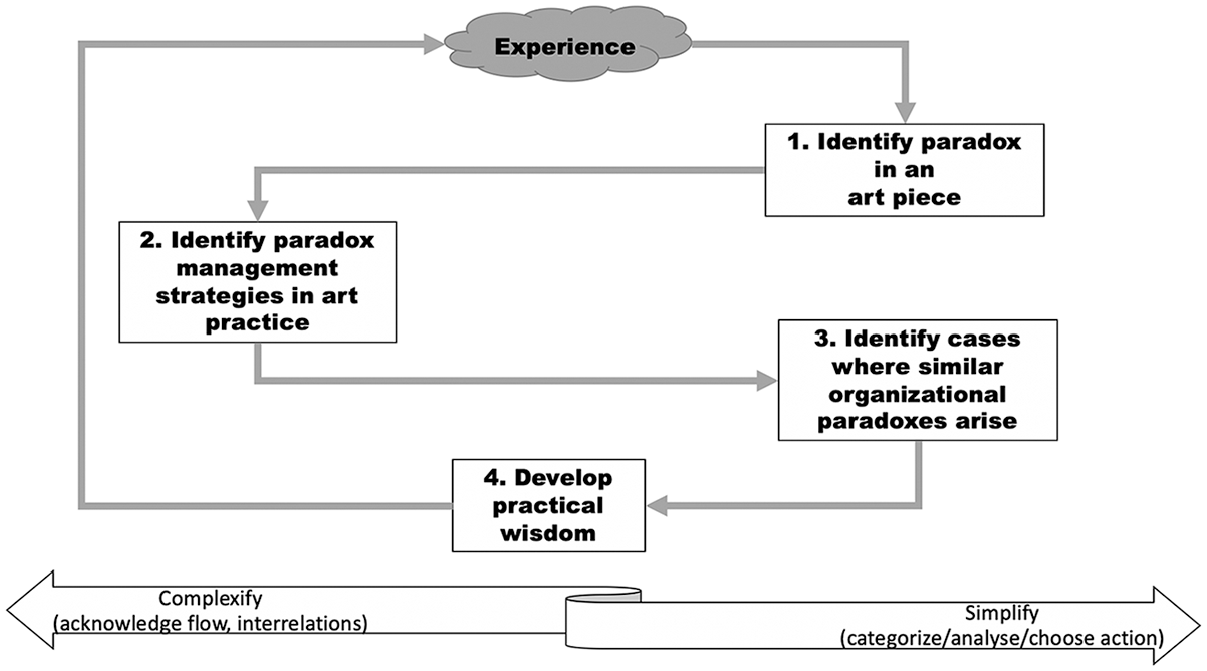
Paradox pedagogy framework.
Step 1: Identify paradoxes in an art piece
The first step in applying our framework involves exposing students to an art performance, artifact or historical description. “Art’s paradoxical character lends itself to being elaborated upon by identifying several paradoxes. . . This goes for all of the arts—architecture, painting, sculpture, dance, music, literature and cinema” (Olivier, 2013: 199). The important principle is for students to discover and feel the paradoxical complexities and tensions at a visceral experiential level, either through immersion in experiencing, creating or discussing histories and practices of art. Scholars have observed engagement with art as a practical means for helping managers experience paradox (DeFillippi et al., 2007; Lampel et al., 2000). For example, Ladkin and Taylor (2010), describe “containing and working with paradox” (p. 238) as a recurring motif of the “leadership as art” (p. 236) literature.
We propose learning from an artistic form of knowing. Drawing not only on codified knowledge but also on embodied know-how, on aesthetic knowledge and on cultural awareness, students will be able to learn about paradox without becoming overwhelmed by complexity. Whereas theories identify connections among phenomena, explaining causes and predicting consequences (Sutton and Staw, 1995), art facilitates application of an abstract conceptual framework to a concrete situation without resorting to excessive simplification. Meeting paradox within the context of art helps to avoid forcing complex reality into rigid categories (which would cause further paradoxes); analysis can be anchored in a “complex system of picturing” (Tsoukas, 2017: 148) incorporating an understanding of reality as constant becoming. In the culture of art, actions and motives are not linked by a coherent intentionality but woven together by affects, habits and desires, in which knowledge, action and power are interdependent.
Step 2: Identify paradox management strategies in the art practice
By engaging sensory-aesthetic knowledge, students can grasp how paradoxical complexities are grappled with and managed in the cultural context (Mack, 2012), our second step. Paradox management strategies can range from acceptance (quite common in art) to unresourceful paradox denial (more often found within the organizational studies context) (Smith and Lewis, 2011). Denying tensions involves focusing on just one side of the paradox, a response that, given tension will continue to exist, will prove unsustainable. The result will likely be confusion, anxiety and possible work paralysis in not knowing which aspect of the contradiction to focus on. In contrast, acceptance strategies involve “working through paradox,” creating spaces for action despite the persistence of tension (Smith, 2014). With some responses, poles may be separated in time or space (Poole and van de Ven, 1989); for instance, attending to different priorities in different moments or adopting contrasting behaviors in a collaborative fashion (as in an orchestra), or when two colleagues play “good cop/bad cop” (in an organizational context) (Tracy, 2004). Alternatively, it is possible to oscillate (Smith, 2014) between poles, akin to an acrobat balancing on a tightrope; for instance, giving voice to contrasting concerns through conversational sparring sessions (Lüscher and Lewis, 2008). Oscillation is also achieved by means of micro-practices and routines that allow individuals to maintain direction (and sanity) despite the contradictory nature of situations experienced (Jarzabkowski and Lê, 2017; Smets et al., 2015). Finally, a rhetorical reframing of events and relationships can, in some circumstances, lead to transcending (at least temporarily) the paradox (Abdallah et al., 2011; Bednarek et al., 2017). Also known as a “more-than” approach, transcendence implies reframing the paradox, situating opposite poles in a new relationship (Putnam et al., 2016; Sivunen and Putnam, 2020). Effective paradox management strategies can thus be identified for each paradox discovered in a piece of art, artefact or in history.
Step 3: Identify cases where similar paradoxes arise in organizational contexts
Organizations are rife with paradox (Smith, 2014) and in this third step students will be invited to recognize corresponding paradoxes in “real life” management and organizational studies contexts. Smith and Lewis (2011) provide a typology of essential organizational paradoxes as relating to tensions between learning, belonging, organizing, and performing. Specific to the management context, Hennestad (1990: 272) lists the following contradictory and interconnected managerial demands: “Take the initiative/Don’t break the rules; Give immediate notice when mistakes occur/You will be punished if you make a mistake; Think long term/Your present behaviour will be punished or rewarded; Think of the organization as an entity of responsibility/Don’t trespass on others’ area; Co-operate/Compete”.
Different couplings of the poles that underlay these paradoxical statements can be identified as: flexibility/control, honesty/dishonesty, future/present, legitimacy/illegitimacy and collaboration/competition. Other tensions relate to similarity/difference, global/local, right/wrong, stability/change, profitability/social responsibility. At times paradoxes can be complex structures, including multiple poles (Cunha and Putnam, 2019; Sheep et al., 2017). Moreover, they can be nested, where a paradox involves additional paradoxes (Andriopoulos and Lewis, 2009; Cunha et al., 2019).
Step 4: Develop practical wisdom
The final step is for students to apply artistic knowledge (revealing in a condensed, apprehensible form the complexities of culture and history) to distil practical knowledge for managing organizational paradoxes. Organizationally, phronesis emphasizes a wise awareness of tensions related to power dynamics, the implications of decision-making processes for various stakeholders, along with an ability to question the value of current arrangements and trends (Flyvbjerg, 2001; Śliwa and Cairns, 2009). Phronesis is important for considering the impact of contextual conditions and adjusting managerial actions and decisions to meet the situation. Simply making a paradox salient to agents or appealing to the need to seek synergies is insufficient. If power conditions exist that curtail agents’ capacity to work through paradox, the tension will be experienced as paralysing, rather than an opportunity for innovation and transformation (Berti and Simpson, 2020). Thus, practical wisdom situates paradoxical cognition and coping strategies in a specific organizational context, aware of political, discursive and practical constraints. Moreover, engagement with practice supports sensemaking, helping learners cope with a level of conceptual complexity that would otherwise cause overwhelm.
Applying the framework to the case of fado
A rich literature covers the first steps of the framework (recognition of paradox tensions and analysis of paradox management strategies) (see Putnam et al., 2016; Schad et al., 2016 for reviews). The employment of aesthetic knowledge has previously been discussed by authors such as Strati (2020; 2007). Multiple sources also discuss the significance of phronesis for management (Clegg et al., 2014; Flyvbjerg et al., 2012; Shotter and Tsoukas, 2014; Tsoukas and Shooter, 2014). We add to these discussions by looking at the role of aesthetics more broadly in management to illustrate how paradox and socio-historical and cultural context can be interrelated by considering the case of fado.
As the case of fado will show, cultures of performing art emerge and construct their identities in situ and in place. Sensitivity to how authentic performances evolve and mature in a world framed and shaped by global best practices and a-contextual sciences of the artificial is a necessary skill for managers. Managers’ lives are deeply embedded in sources of demotic identity that provide unique and valuable resources that universalist rationalization of the world does not. Global managers may cultivate cultural intelligence (Triandis, 2006) by drawing on what is idiosyncratic, uniquely and distinctively theirs whilst still relating to a civic identity as universally rational subjects. We regard the socio-cultural case of fado as instructive for exploring organizational tensions of despair and hope, continuity and change, empowerment and control. We initially explore these paradoxes as enmeshed tensions interwoven within fado’s history.
Case background: Recognizing paradoxes in the cultural history of fado
Fado is the music of Portugal, rooted in the Alfama district of Lisbon. A traditional style of music with a rich iconography (see Figure 2 for an illustration), it has gone in and out of fashion. While fado’s relevance for a paradox pedagogy may not be obvious, there is a connection that the artist Camané describes: “Fado has this paradox about it. It makes us cry when its joyful and it makes us smile when it sad” (as cited in Lübbe, 2011). It translates literally as destiny, fate. Fado follows a traditional structure, characterized by mournful tunes and lyrics, infused with resignation, fatefulness and melancholia captured by the Portuguese word, saudade, symbolizing a feeling much too complex to just call sadness; rather, it invokes a sense of permanent, irreparable loss and its consequent lifelong damage.
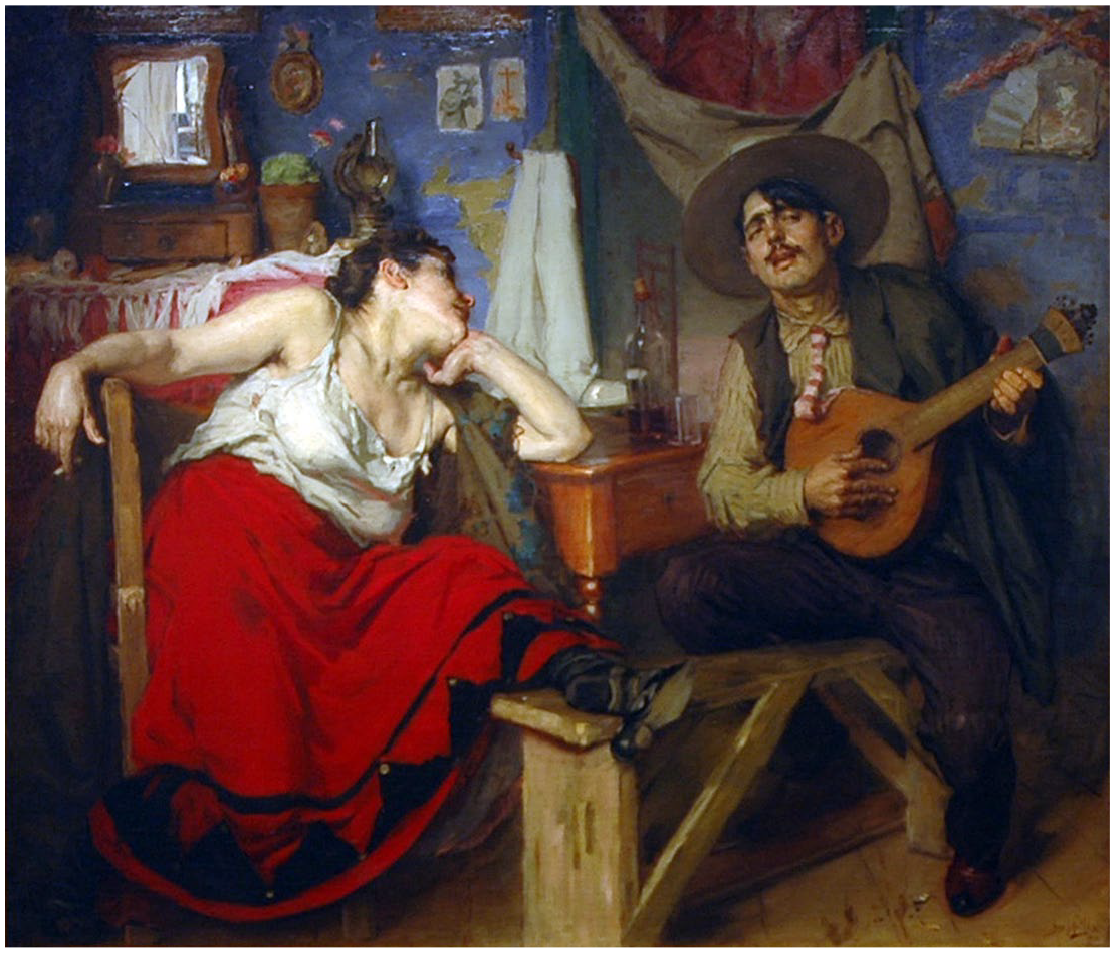
The tradition of Fado: O Fado, by José Malhoa (1910).1
Fado is a form of tradition able to renew itself. The roots of fado are steeped in controversy (Gallop, 1933; Gray, 2007; Holton, 2002), with theories of its originating influence varying from the songs of medieval troubadours, or the homesick pinning of Portuguese seafarers during the era of discovery (Barreto, 1965), the quavering vocals of the Moors (Alves, 1989), or the Brazilian and black African servants who accompanied the Portuguese royal family’s return after retreating to Brazil during Napoleon’s occupation from 1808 to 1821 (Tinhorão, 1994). There is consensus, however, that it emerged as the voice of the lower working classes in and around the 1830s in Lisbon. Fado was performed as the song and dance of labourers, sailors, traders and the unemployed who intermingled with immigrants and freed black-slaves, sharing public-intimacy in taverns, brothels and prisons, during the period from the 1830s to the 1860s, that historian Stephens (1891) describes as the saddest era of Portuguese history. With no political participation or representation, Portugal’s lower classes managed the contradictions and tensions of Portuguese society by claiming a social and political voice in expressing paradoxical mournful hope, or fatalist resilience, through fado (Nielsen et al., 2009). An example is this a fado titled “Mouraria” (as cited in Nielsen et al., 2009: 299):
The life I have been enduring
singing happy or sad
my fados (fates) have varied
but my singing has been steady . . .
When Portugal later become recognized as one of southern Europe’s most advanced societies, during the period from 1870 to 1925 (Page, 2002), it experienced economic expansion, prosperity and stability that was not shared with the lower classes. Working class fado demonstrated both uncertainty avoidance and risk-taking by moving underground, its mood darkening and becoming more militant (Broughton, 2007), as in a fado by Augusto (as cited in Nielsen et al., 2009: 299): To destroy the monarchy,
Have in the world equality
Are two points sublime
For which strives Society!
The middle classes, meanwhile, claimed a gentrified form of fado, cleansed of political content (Vernon, 1998). With the collapse of the monarchy in 1910, the elites and middle class perceived political representation and social betterment promoted by the Republican Government as developments that were unfolding at their personal expense. Consequently, the performance of fado in lower class venues also came under attack. After the coup d’état that installed Salazar as dictator from 1926 to 1940, fado was initially censored and politically emasculated (Gray, 2013). Fados were written with two versions, a version for the censors and another for performance in closed venues. Subversive lyrics were also written with double meanings.
After WWII, the regime appropriated fado as a vehicle of propaganda (Lewis, 2007), elevating it to the status of Portugal’s national musical form. Typical fado shows were organized in casas de fado (fado houses) to present a dignified view of the lower classes, with the lyrics changed to uplifting themes stressing the nobility of the human spirit and family honour (Vernon, 1998). Along with the regimes’ stage-managed rallies, it embraced fado songs justifying the people’s poverty, as in “Uma Casa Portuguesa” sung by the legendary Amália Rodrigues (cited in Broughton, 2006):
A Portuguese house is fine
With bread and wine on the table
When someone humbly knocks at the door
They join us at the table
Such openness is good
People always show it
The joy of our poverty
Is in the wealth of giving
It’s a Portuguese house for sure
It’s a Portuguese house for sure
Fado, as a living practice, comes closer than any narrative description in representing the complex Portuguese disposition toward life: indeed, it has been described as an apt cultural metaphor for Portugal’s complexity (Nielsen et al., 2009). Paradoxes characterize both fado and Portugal, the latter described as a “paradoxical society” (Santos, 1992: 97), as one of the least developed nations in Europe and yet so rich in potential disjuncture in a history punctuated by invasion, occupation, imperialism, earthquake, revolution, coup, fascism and then the “Carnation Revolution” of April 25, 1974, leading to the utopia of integration in the European Union. With the establishment of a popular democracy in 1974, fado experienced an initial period of decline with younger and more sophisticated audiences avoiding it on account of its association with the former regime (Raub, 2007). Fado houses closed and its musicians experienced hardship. Once Portugal joined the EEC in 1986 and the country again experienced prosperity and a surge in national integration and identity (Soares, 2000), fado’s popularity soared to a height greater than previously (Nielsen et al., 2009), in part due to the recognition that the musical form was receiving internationally (Haden and Paredes, 1990).
For some purists, this popularity undermined fado’s true essence of being embedded in a sense of working-class community. Fadistas emphasize that true fado is something immaterial that emerges as an intense, shared emotional experience between musicians, singers and listeners, conveyed through music, gesture and facial expression, in a shared but intimate spatial arrangement. As a moment of transcendent intimacy, fado is a culture understood and interpreted collectively, tacitly; thus, traditionalists hold that a singer who achieves fame and sings to large audiences is no longer a true Fadista (Gray, 2007). We will next consider the history of fado within the broader context of paradox management strategies, organizational implications and practical management wisdom with reference to our paradox pedagogy framework.
Fado paradoxes, management strategies, organizational implications, and practical wisdom
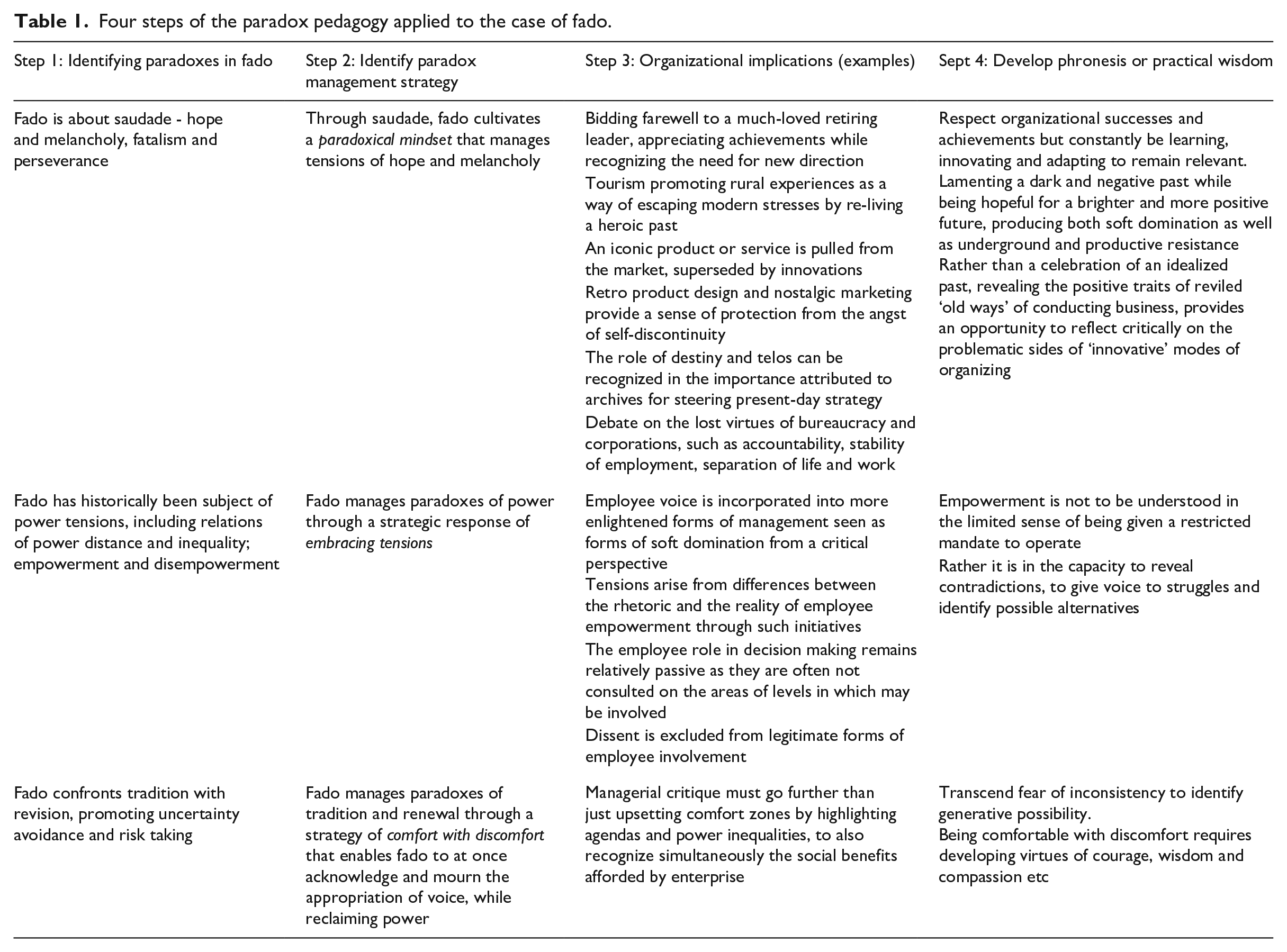
Given that management cannot but be a cultural practice, necessarily situated in time and space (Reynolds and Vince, 2020), management pedagogy ought to approach universalism with caution. The study of artistic cultural expression supports zooming out, to explore how time and space shape processes, including in management. When facing and recognizing paradoxes’ underlying tensions and trade-offs, their generative value can be harnessed rather than distanced (Cunha and Putnam, 2019; Smith and Lewis, 2011). Our paradox pedagogy specifically recommends for students to engage with aesthetics and cultural expressions, such as fado, to gain insight into paradox management strategies, organizational implications and practical wisdom (Table 1), which we consider within the context of three paradoxes identified from the history of fado.
Four steps of the paradox pedagogy applied to the case of fado.
Paradox of melancholy and hope in saudade
The hallmark of fado is its voicing of saudade, expressing essential tensions of grievance and hope, fate and perseverance; a lament of pain in which there is nostalgic pleasure. While it is sad, often evoking the feeling of saudade, it does so in way with which is not unfamiliar for many organization managers (Styhre and Sundgren, 2003): the good times cannot be recovered, other than in memory, as a positive past. Saudade addresses tension by cultivating a paradoxical mindset.
Saudade can be felt and celebrated among organizational members bidding farewell to a much-loved leader going into retirement where there is appreciation for past achievements in overcoming challenges along with recognition of the need for a new direction going forward (Styhre and Sundgren, 2003). It is also evoked by tourism promoting rural experiences as an opportunity to put aside the stresses of modern living and re-live the simplicity, wholesomeness and heroism of a bygone era (Christou et al., 2018). Bitter-sweet tensions in past, present and imagined futures invoked by saudade can also be felt when an iconic product or service is pulled from the market, superseded by innovations more effective, efficient and ideally less expensive. Such products paradoxically can have a second life years after their metaphorical death by becoming collectors’ items or through more technologically advanced reincarnations. Retro product design [i.e. vintage car designs such as the Volkswagen Beetle or the Mini reimagined with current technological features, or restaurants made to look like 1950s dinars (Brown, 1999)], and nostalgic marketing [using old style typefaces, faded vintage colours, and depictions of old world technology or fashion], facilitate an experience of returning to the past (Ju et al., 2016). With a promise of providing a sense of identity congruency and self-continuity across time, nostalgia can be consumed to counteract a subconscious feelings of existential angst at perceived personal self-discontinuity (Sedikides et al., 2004, 2015).
In the language of more general organization theory saudade’s emphasis on the role of destiny and telos can be recognized in the importance attributed to archives for steering present-day strategy (Maclean et al., 2014). As an example, sport management scholars have noted the strategic potential of invoking nostalgia by using IT to conserve and promote team artifacts such as historical images, film, statistics focusing on “significant moments, mythical figures, and heroic performances that occurred within the current or past facilities to benefit the organization” (Seifried and Meyer, 2010: 53–54), thereby reinforcing positive fan base identity and promoting the home team sport facility as a sacred destination (Pajoutan and Seifried, 2014). Another example might be an Australian foundry that continues manufacturing award winning axes at a painful loss, as a legacy product and a cost worth baring in strategically preserving their “tradition of innovation” credentials (Stein et al., 2017). Saudade is also relevant to debate on some of the lost virtues of bureaucracy and corporations, such as accountability, stability of employment, separation of life and work (Davis, 2013; du Gay, 2000; du Gay and Vikkelsø, 2016).
The distilled wisdom of saudade in fado can be generalized more broadly to management: respect traditional organizational successes and achievements but constantly be learning, innovating and adapting to remain relevant. Politically, through much of its history saudade’s key tension lamented a dark and negative past while being hopeful for a brighter and more positive future, producing both soft domination as well as underground resistance. Its complexity promotes awareness of the multiplicity of stakeholders, interests and power relations (Donaldson and Preston, 1995; Flyvbjerg, 2001) organizing creative spaces. Rather than a celebration of an idealized past, revealing the positive traits of reviled “old ways” of conducting business is an opportunity to reflect critically on the problematic sides of “innovative” modes of organizing. Metaphorically, such a paradoxical mindset can be captured in the music of fado and its “contradictory couplings” (Chua and Clegg, 1989).
Paradoxes of power, empowerment, and dis-empowerment
In fado, the working class found solidarity and equality in their poverty. At critical junctures in Portuguese history there has been repeated dissimulation of authentic working-class voicing through appropriation of fado to elitist agendas. From the middle classes claiming a gentrified version during the monarchy and Republican periods, to the propagandised fado of the Salazar dictatorship, to the current commercialized fado of democratic Portugal today, these historical phases exemplify tensions of power distance and equality, as well as fado’s empowerment and disempowerment from working class roots. Fado manages these tensions strategically through embracing them (Berti and Simpson, 2020).
In the broader organizational context employee voicing is incorporated in more enlightened forms of management that recognize benefits of empowerment through flatter heterarchical structures, training and development opportunities, job flexibility and a positive organizational culture. From a critical perspective, these attempts may be seen as insidious forms of soft domination (Courpasson and Clegg, 2006; McKenna et al., 2010). Over the past half century organizations have increasingly used soft-power initiatives of culture management and employee participation to engender higher levels of employee engagement, commitment, trust and loyalty (Wray-Bliss, 2003). Tensions arise from differences between the rhetoric and the reality of employee empowerment through such initiatives. Howcroft and Wilson (2003: 14) observe: “A paradox that arises from the wielding of the term “empowerment” is that managers can employ a variety of tactics to enrol employees in the process of participation, with no intention of genuine influence sharing.” Employees are often not consulted on the areas of levels in which may be involved in decision making, despite the strong organizational emphasis on employee involvement. The overall effect is that, by design, the employee role in decision making remains relatively passive. Employee concern or protest over such non-inclusion is also not counted as legitimate, as dissent is excluded from legitimate forms of employee involvement (Ten Bos and Rhodes, 2003). The assumption that a single individual or group has the legitimate authority to give power to or empower another powerless individual or group (Eylon, 1998) is another contradiction underpinning such so-called empowerment initiatives. Gruber and Trickett (1987: 370) note: “there is a fundamental paradox in the idea of people empowering people because the very institutional structure that puts one group in a position to empower others also works to undermine the act of empowerment.”
In terms of practical wisdom, such empowerment is not to be understood in the limited sense of being given a restricted mandate to operate for corporate purposes (Hardy and Leiba-O’Sullivan, 1998). Rather, fado’s embrace of tensions as a paradox management strategy affords a different politics from the push and pull of power and resistance. Fado is instead committed to embracing the challenges of interdependent contradictions and to maintaining flexibility and autonomy in negotiating these. Fado leverages the power of empowerment through its capacity to reveal contradictions, to articulate struggles and identify possible alternatives. We can consider this dimension as the dance of fado, understanding tensions as signs of vitality evident in reflexivity and debate.
Paradox of tradition with revision
Fado’s history is rife with the paradox of tradition, reinterpretation and renewal, according to the needs of a current generation. Throughout this renewal, fado’s social critiques of power have been accommodated to varying degrees by the appropriating agents, while the needs of the appropriating elite have also been accommodated by fado. From an orthodox perspective, current popular forms of fado, divested of working-class roots, are no longer real fado but an empty shell: folk music without the folk.
Fado manages tensions of tradition and renewal through a strategy of comfort with discomfort that enables fado to, at once, acknowledge and mourn the appropriation of voice, while reclaiming power by reversing discourse to appreciate and celebrate the fame and recognition that fado now enjoys. Inspired music is being performed by contemporary musicians, including those who take inspiration from this music while fusing it with other styles in recognition that the protection or recovery of an imagined past tends to be a bad idea for the future. Contemporary fado is a big musical house inhabited by Amália and Marceneiro but also by Camané and Gisela João, African influenced innovations at the boundary of fado, such as the Cape-Verdian mornas of Cesária Évora, electronic funaná of Dino d’Santiago, and the retro-experimentalism of Dead Combo (see Figure 3). These are the people who make fado fashionable currently, dynamically imbued with a sense of history and place, that over time changes and persists.
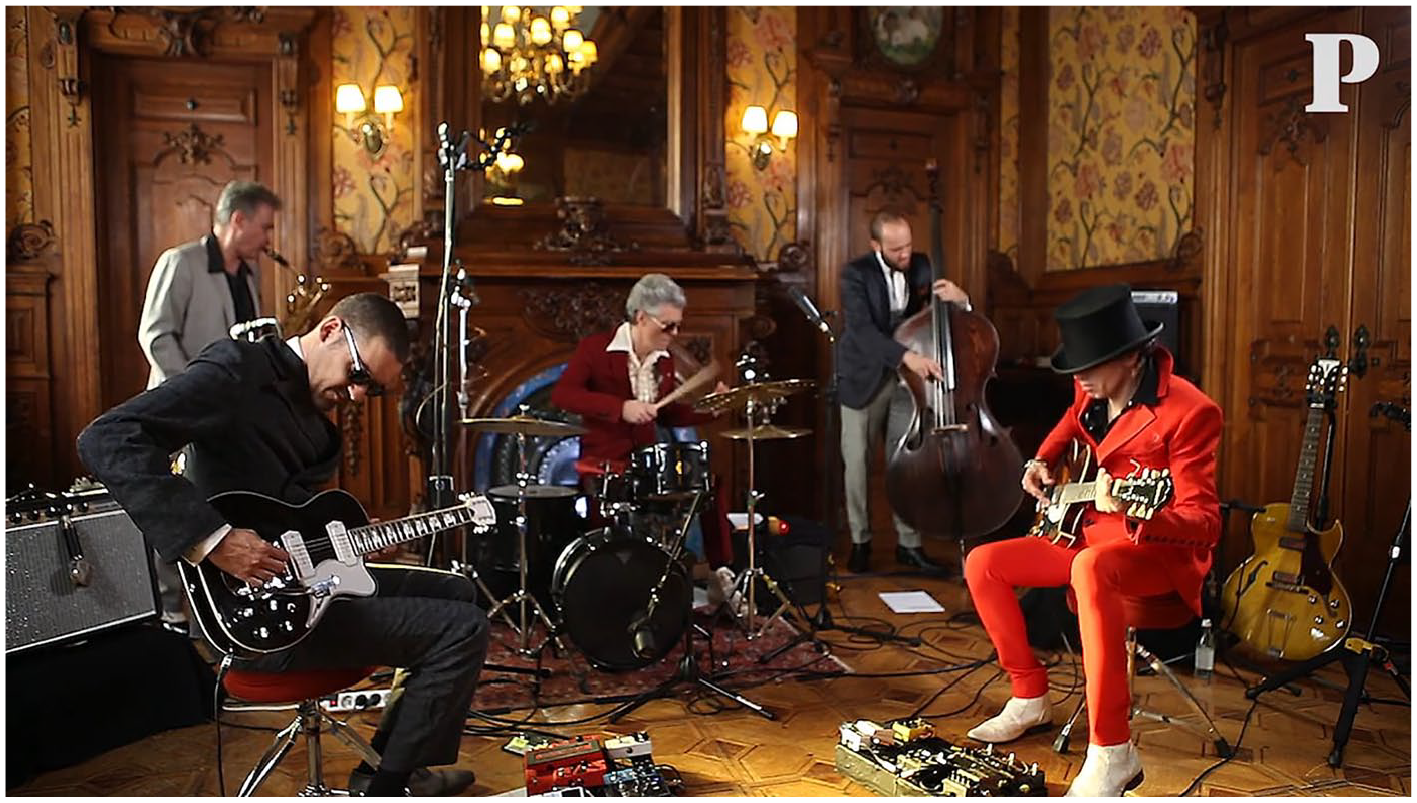
Dead Combo, or tradition revisited. 1
In terms of the broader context of management, critique must go further than just upsetting comfort zones by highlighting agendas and power inequalities. Simultaneously, critique should also recognize the social benefits afforded by enterprise in terms of jobs, valued products and services, innovation and tax revenue that supports the development and maintenance of important social infrastructure (Porter and Kramer, 2011). Seeking to preserve or celebrate organizational identities scripted in an era of class struggle, tends nostalgically to create identity rigidity: class is all there is. Such nostalgia should be tempered with reclaimed agency and a future orientation. Just as recourse to nineteenth century modes of fado makes little sense in the twenty-first century, recourse to the nostrums of a critical practice born in the early days of capitalism makes little sense to today’s youth, for whom capitalism is less a system of oppression and more a bountiful source of pleasurable commodities and pastimes.
Fado’s comfort with discomfort suggests the practical wisdom of transcending fear of inconsistency to identify generative possibility (Bednarek et al., 2017; Simpson and Berti, 2020). Embracing this challenge requires developing virtues (Rego et al., 2012) such as courage, wisdom and compassion (Simpson and Berti, 2020), virtues that can be traced through the beautiful, emotionally haunting lyrics of fado.
Discussion
In this paper we have proposed a novel approach to management learning that builds both on paradox and on artistic knowledge, with the intent of informing practical wisdom in dealing with organizational challenges. Surfacing contradictions and paradoxes avoids recourse to simplistic, technocratic solutions that can exacerbate tensions leading to unfair and unbalanced outcomes. Nevertheless, it can also have paralysing effects, as decision makers can feel overwhelmed by the complexity of the situation. Classifying paradoxes and being aware of effective strategies to work through them can be of assistance; yet the wicked problems deriving particularly from management’s ethical implications cannot be addressed with standardized solutions. To address this conundrum, we propose employing artistic knowing, reflecting on what artistic expression imbued with cultural and historical significance, such as fado, can contribute to reflection on the management of organizational contradictions. As a form of aesthetic, sensible knowledge, artistic knowing reveals the role of interpersonal relations, embodiment, interaction with artefacts and immersion in history and context, characteristic of any management decision.
We contribute to management learning both by adding to a still underdeveloped area of paradox pedagogy (Knight and Paroutis, 2017; Lewis and Dehler, 2000), and by advocating reengagement with the arts through a philosophical paradox pedagogy sensitive and insightful to cultural context. It is particularly important as a response to rapid technological disruptions making technical knowledge increasingly redundant. A paradox pedagogy, rather than teaching managers what to think in terms of specific technological knowledge, instead teaches how to think across varied novel contexts. The challenge for management educators concerns the navigation of paradox (Smith et al., 2012), not only to create competitive advantage but also to uncover and explore the tensions inherent in dominant managerial discourses. More than a mere educational approach emphasizing the development of critical thinking skills, our proposed paradox pedagogy emphasizes critical reflection with an emancipatory interest being coupled with a pragmatism of social and economic progress about the present and possible futures.
In a world of management and work, socially constructed in part from supposedly universalist management theories, a pedagogical process that facilitates reflection on the performative power of these theories is important. Theory is the midwife of practice as its offspring to develop with relative autonomy. Theory hardly represents a world that is given; instead, theory is world-making, ushering into being ways of seeing, being and representing possibilities. Because theories are potentially performative, the theories we develop as education have the power to inform reality (Bartunek, 2019; Marti and Gond, 2018). Theory does not achieve this singularly; many sources of inspiration from popular culture, such as the disciplines of sport, art, the military and pedagogy also inform practices. Specifically, some of these sources of popular culture still represent an authentic experience of a culture that remains linguistically local and specific, a vernacular source of inspiration. In the countries of the British Empire past it might be cricket; for Portugal, a backwater of the European mainstream for most of the twentieth century (Cunha et al., 2009), fado is such a source of inspiration.
As demonstrated in the case of fado, imbuing management learning with a pedagogy for navigating paradox, can aid hope and dignify principled agentic action and emancipation in the face of contradictions. We have not only suggested strategies for the implementation of such a perspective but also analysed how it gives rise to more nuanced insights concerning the future of management by looking at the past and considering tradition and renewal. We conclude by further proposing that this paradox pedagogy should be built upon two fundamental pillars: acknowledgment of asymmetry and moral understanding through deliberation.
First, the acknowledgment of asymmetry—in social reality—between factual truth and factual falsity. Engagement with art should invoke within students the insight that building unequivocal and consensual truths out of social “facts” is problematic, since reality is socially, collectively constructed (Berger and Luckmann, 1967 [1990]; Thomas and Thomas, 1928), and even scientific “data are inextricably fused with theory”, (Alvesson and Kärreman, 2007: 1265). Moreover, because of double hermeneutic effects (Giddens, 1979), influential social theories shape the very reality that they intend to describe (Ferraro et al., 2005). Nonetheless, evidence and data can be employed to demonstrate the untruthfulness of a statement; for instance, demonstrating that a two-way correspondence between description and data is broken. Such an approach is necessary to avoid the proliferation of post-truths, statements that cannot even be defined as lies but more accurately should be considered as “bullshit,” statements that are totally unconcerned with the truth, merely trying to serve those who utter them (Christensen et al., 2019; Frankfurt, 2005; Spicer, 2013). Indeed, the discourse of management is littered with ideas that can be empirically debunked but which still survive because of their instrumental value for propagators (Pfeffer and Sutton, 2006). Yet, accepting that evidence can be used to falsify incorrect statements does not imply that the same evidence can be employed to establish ultimate and universal truths about the correct way to manage or to organize. Plurality of interests, perspectives, desires and tastes make such an objective dystopian (ten Bos, 2000). By contrast the complexity of competing tensions found in varying contexts and perspectives is the central concern of a paradox pedagogy that seeks phronesis through engagement with the varying contexts of everyday lives as represented in the arts.
Considering a social theory or perspective as coherent and consistent with the social facts it describes (and enacts) does not mean it is ethically acceptable, an observation that leads to the second pillar on which our proposed paradox pedagogy rests. Theory must stimulate moral understanding through deliberation (Hannah et al., 2011) in the awareness that management is not exclusively a technical activity but always incorporates a historical, local, traditional, political and moral dimension. As demonstrated in the case, fado’s history teaches this. Hence, exposure to theories, methods, cases, techniques must always be accompanied by critical reflection based on contrasting the apparent evidence with the hidden (or silenced) stories: What is a particular narrative hiding? Which interests become ignored when others are foregrounded? Whose voices are silenced when others are heard? Which attributes are neglected when some qualities are measured? Such a “contrarian” approach will lead not to certainties but hopefully expand the capacity to view and to act responsibly not only in regard to the idols of conventional management but also those of their critics in critical management studies (Bacon, 1861). Contrarianism is more transparent in the arts, the domain of paradoxa, including fado, than other settings.
Awareness of the political tensions that, in Luhmann’s (2013) term “irritate” organizations, as well as acknowledgement of the legitimate interests of multiple stakeholders (Freeman et al., 2004), is also necessary to avoid a purely instrumental application of our pedagogy. The practical wisdom of human managers should not be used only to complement, enhance and extend technical knowledge increasingly delegated to machines (Clegg, Simpson, Berti & Cunha, 2020). Rather, it should be employed to counteract the silencing effects of algorithmic management’s effectiveness in reducing employee resistance and voice in contemporary workplaces. While opposition can appear detrimental to short term productivity, it is a vital force, essential for renewal and collective learning.
Management as a discipline is a collective construction: to create responsible organizations it matters greatly what idols are served, whether these are of the market or performativity, critics that would liberate or colonisers who would make subaltern. Hence, a paradox pedagogy, particularly one inspired by local and traditional cultures, must “dance” around facts and evidence, rigorously and critically testing the coherence and empirical substance of any claim, while at the same time refusing to embrace any single “truth,” accepting instead a polyphony of alternative (albeit internally coherent) stances.
Conclusion
Karl Weick taught that one way to learn about formal organizations consists in studying the social organization of jazz (Bougon et al., 1977) and wildfire responses (Weick, 1993). Following his examples, we have explored the potential of local cultural expressions as windows on the practice of management. Instead of viewing management as aseptic technical rationality, we invite our readers to learn management obliquely, by studying paradox in the case of fado. We contribute to management learning a sensitivity to one of the world’s rich cultural expressions. We do so in an appreciative inquiry, a listening to what is already around us, already there, here and now, whose usefulness is demonstrated in making sense of interdependent yet competing tensions.
As a sociocultural expression, the study of fado facilitates the exploration of culture and history as a palimpsest rather than a linear progression (Santos, 1992). In this cultural space, different periods accommodate themselves in different forms: that of the Fado, Fátima, Futebol, constituted as a Salazarist trilogy, becoming entangled with contemporary hybrid expressions. Where the rationalizations of management silence cultures, in all their complexity, the nihilism of nothingness (Ritzer, 2007) risks overwhelming the authenticity of deeply rooted political, emotional and cultural expression. As the recent toppling of statues indicate, cultures’ significations have both historical and current depths that, once activated, can challenge both organizations and the institutional relations in which they are embedded.
Footnotes
Acknowledgements
We are grateful to our editor and anonymous reviewers for their suggestions and feedback.
Authors’ note
This essay is based on a workshop presented at the 2019 EURAM conference. Stewart Clegg is now affiliated with University of Stavanger Business School.
Declaration of conflicting interests
The author(s) declared no potential conflicts of interest with respect to the research, authorship, and/or publication of this article.
Funding
The author(s) disclosed receipt of the following financial support for the research, authorship, and/or publication of this article: Miguel Cunha acknowledges support from Fundação para a Ciência e a Tecnologia (UID/ECO/00124/2013, UID/ECO/00124/2019) and Social Sciences DataLab, LISBOA-01-0145-FEDER-022209), POR Lisboa (LISBOA-01-0145-FEDER-007722, LISBOA-01-0145-FEDER-022209) and POR Norte (LISBOA-01-0145-FEDER-022209).
