



Abstract
Signage is a popular communication medium used to regulate and govern people in public spaces. The Queensland Government mandates the display of Responsible Service of Alcohol (RSA) signage in licensed venues as an intervention into alcohol-related harms. As intermediaries in policy communication, venue licensees have a degree of control over how they engage with this signage. This research examines RSA signs ‘in place’ across a variety of venues within the Fortitude Valley Safe Night Precinct. We identified how the communication choices reflected in each venue's selection of signage and displays represented each venue's resistance or compliance with the Queensland Government's approach to alcohol-related harms, using signage as a solution. Analysis revealed themes of venue compliance with the Queensland Government's constructions of the problems of alcohol-related harms, including ownership, permanence, and gatekeeping; as well as themes of resistance, including obscured placement, clustering, and graffiti. We draw two main conclusions from this research. Firstly, licensees appeared to prioritise their venue's hospitable space over the communication of Queensland Government messages within some RSA signage displays. Secondly, licensees’ control over RSA signage display extended beyond the Queensland Government's display mandates; licensees modified prescribed messages on RSA signage and used display choices within their control. This research builds on existing research on linguistic landscapes by introducing the displayer as an intermediary between authors and readers in signage. It also has implications for how policy interventions, such as signage, can be critically reviewed.
Introduction
As a stand-alone intervention in public spaces, signage has been identified as a medium used to regulate its readers through forms of governance (Clark, 2021; Dray, 2010). Marianne Clark's (2021) work on public signage made a timely contribution to research on how signage can be used to regulate its readers. Her work examined beach signage in Sydney, Australia, where public spaces were more heavily regulated than before because of COVID-19 lockdowns at the time. The signage in her work concerned lockdown restrictions and which uses of space on Sydney beaches were allowed, if at all. Clark (2021) argues that signage, as an under-explored medium, can regulate its readers by acting as both mundane and more-than-mundane contributions to social and spatial relations. Despite this ability to influence behaviour, many factors can distort the meaning of signage and produce undesirable outcomes (Cheshmehzangi, 2014). Distorting factors might involve signage being damaged, left unnoticed or ignored by readers, misinterpreted, or simply disobeyed (Clark, 2021; Dray, 2010). The margin of this distortion, however, can be optimised or even controlled to achieve an author's desired outcome: ‘… we cannot necessarily determine human behaviours but can maximise the potential of interactions and spatial interrelations…’ (Cheshmehzangi, 2014: 799). Responsible Service of Alcohol (RSA) signage is used along with other interventions by the Queensland State Government to address alcohol-related effects and harms in licensed venues in Queensland, Australia. Queensland liquor policy identifies the misuse and abuse of alcohol as some of the many reasons to deploy liquor policy (Liquor Act 1992, QLD, Section 3). It is well documented that the misuse and abuse of alcohol does indeed produce significant harms to the people exposed to alcohol and the wider communities in which it is used (Babor et al., 2023). These harms should not go without mention in research that looks at the policy interventions that shape uses of alcohol.
The display of this signage within licensed venues is a policy intervention that is mandated by law to mitigate alcohol-related harms, although, the requirements for compliance are not explicitly defined in the state's policies (Liquor Act 1992, QLD; Liquor Regulation 2002, QLD). Venue-level advice for RSA signage display can be found in the No More Risky Business audit tool for licensees. This audit tool asks licensees to make judgements about factors such as signage visibility, effectiveness, and abundance, but does not provide context-specific advice on RSA signage display (Office of Liquor and Gaming Regulation, 2012). This places licensees in an intermediary position as policy communicators between the Queensland Government, as authors of the signage, and staff and patrons, as readers of the signage. While context-specific advice might be difficult to give to licensees, the noticeable lack of tangible requirements in the audit tool can make it difficult for licensees and industry outsiders, such as researchers, to know what the tangible requirements for RSA signage display are. According to the State Government body Business Queensland, the RSA signage is intended to communicate licensees’ expectations of behaviour within the space to both staff and patrons and support for the refusal of service (Business Queensland, 2018). The RSA signs are provided through the Business Queensland website, where licensees are presented with a hyper-linked list of every up-to-date RSA sign design available. Licensees are expected to choose from this list of RSA signage, download the desired RSA signs in PDF (Portable Document Format), and display the signage using their chosen means and placement within the venue. This article examines how RSA signage is displayed in licensed venues, conceptualising licensees as intermediaries in the communication of public policy. Rather than evaluating licensees’ legal compliance or making normative judgements about the appropriateness of their display practices, the study analyses how patterns of compliance and resistance emerge through the everyday mediation of mandated RSA signage within licensed environments. From a communication research perspective, these patterns are treated as observable outcomes of socially and spatially negotiated regulatory media. RSA signage is understood here as a policy intervention deployed by the Queensland Government, whose capacity to shape behaviour depends not only on its textual content but on how regulatory messages are interpreted, positioned, and made visible in practice. Despite its widespread use as a tool of alcohol-related harm reduction, RSA signage has received limited scholarly attention as a form of policy communication. This study addresses that gap by examining what the observed display practices reveal about the enactment of regulatory authority. The analysis is guided by the following research question: How do licensees comply with or resist RSA signage display mandates within their venues?
How signage constructs meaning
Signage can be understood as a multimodally conceived text (Kress and Van Leeuwen, 2006); its effectiveness depends on the clear integration of multimodal elements. When signage is cluttered with or obscured by other objects, aspects of its perception are compromised. Signage relies on semiotic interplay between a variety of visual affordances and placement within the real world to create meaning (Scollon and Scollon, 2003; Spitzmüeller, 2015). Signage can be thought of as a syntagm of signifiers, organised in a particular way to create the signage's overall meaning. Alastair Pennycook's (2010) research into graffscapes provided insights into how spatial syntagms inform the meaning of displays. He explored examples of graffiti where displays were given meaning simply by existing and being visible within a space. This aligns with Dele Olufemi Akindele's (2011) conceptions of signage in public linguistic landscapes, as well as Scollon and Scollon's well-known ideas about spatial context ‘…the [semiotic] signs and symbols take a major part of their meaning from how and where they are placed…Each of them indexes a larger discourse…’ (2003: 2). Signage only fully gains its intended meaning when it is ‘in place’ (Scollon and Scollon, 2003: 1). Susan Dray (2010) adds to Scollon and Scollon's (2003) suggestions that the nature of the relationship between the author and the receiver plays a role in meaning construction as well. Relationship context can provide insight into locally socialised constructions of meaning, nuance, and ways of knowing. For example, if there is little trust between authors and readers, an author might use materials that are difficult to damage or remove. Vivian Cook (2015) also explores how materials and technologies can influence the perception of signage. She points out that the physical materials chosen by authors and their implications for readers have rarely been explored. Cook (2015) draws on Guther Kress and Theo Van Leeuwen (2006) to highlight three implications that materials can have for readers of signage: permanence/durability, temporality/newness, and quality. Using these materials, the ‘design’ of a sign also influences the order and meaning readers might take away from it (Kress and Van Leeuwen, 2006: 219). This circles back to the notions of the multimodally conceived text: the inscriptions and markings on a piece of signage gain meaning from the things that they signify or are inscribed to say, but also from their arrangement and layout on the signage, the materials and technologies used to create the signage, and its placement and orientation within the real world. The roles each of these properties plays and how they contextualise each other suggest a hierarchy through which these properties construct the meaning of a whole piece of signage. Figure 1 illustrates these syntagmatic relationships within a nested framework, showing the properties that make up a sign's meaning. This nested framework provides a basis to identify and discuss the rhetorical and semiotic qualities of the RSA signs when they are in place and will be used for analysis in this research.
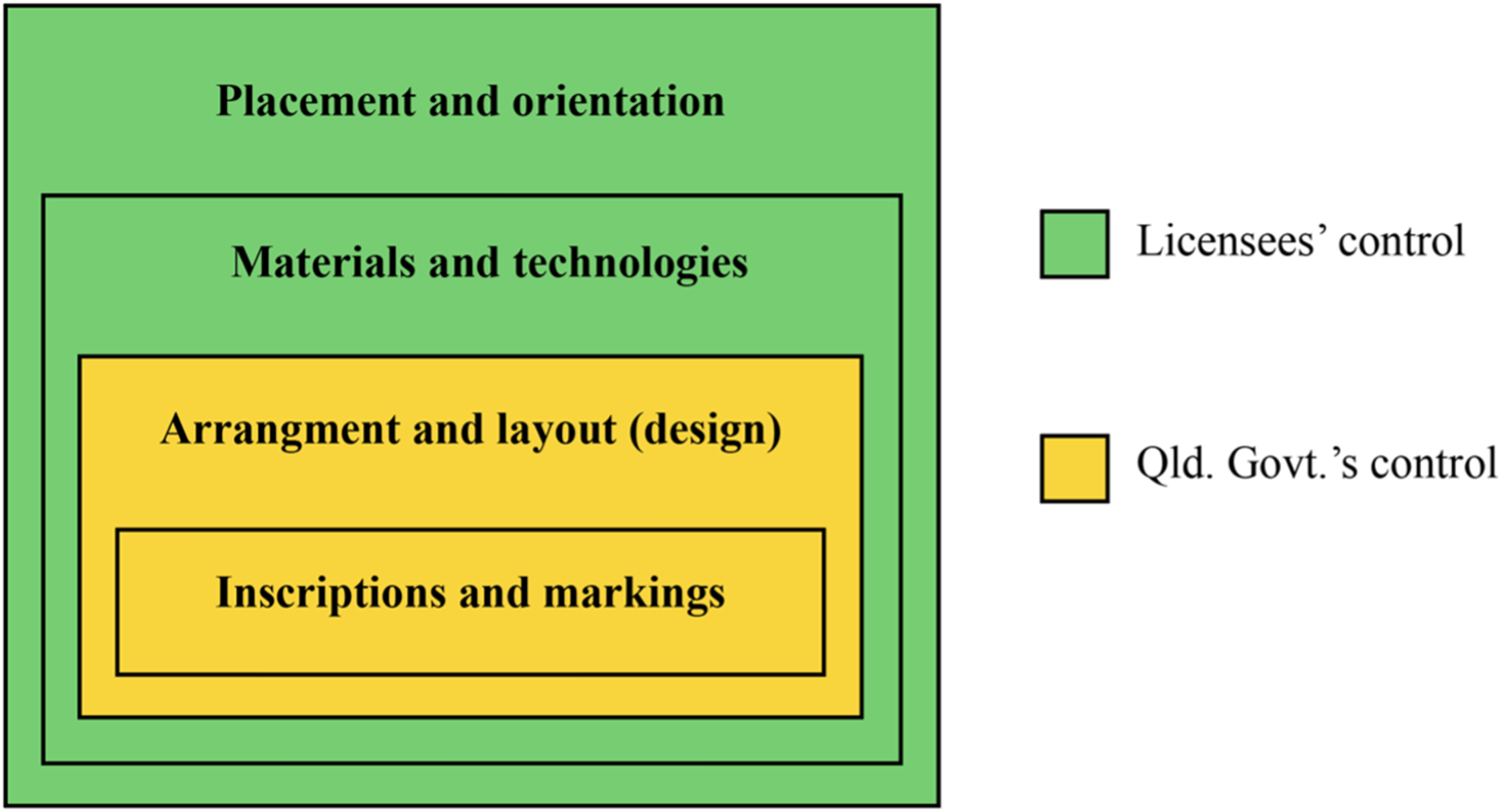
A literature-based nested framework for RSA signage meaning construction. RSA: Responsible Service of Alcohol.
The visual order of the layers reflects the order in which each property of a sign exists in real-world contexts. For example, inscription and markings exist and are influenced by the materials used to create them. The outermost layer, labelled ‘Placement and orientation’, refers to where a sign is placed and how it is placed. The layer labelled ‘Materials and technologies’ refers to the physical means used to produce the sign. The next layer, ‘Arrangement and layout (design)’, represents how the inscriptions and markings are arranged on a piece of signage. Finally, the inner-most layer, ‘Inscriptions and markings’, represents the chosen words, symbols, logos, and images on a sign. The framework is colour-coded with two different colours: green and yellow. The colour key shows which agents have control over what facets (layers) of RSA signage's meaning construction inside a licensed venue, in accordance with the Queensland Government's advice (Business Queensland, 2018). The outer two layers are green, under licensees' control, while the inner two are yellow, under the Government's control. RSA signs are written and designed by the Queensland Government and placed online for licensees to download in PDF format. This puts the Queensland Government in control of Inscriptions and markings, and Design. As intermediaries in communicating Queensland Government legislation to patrons, licensees are expected to produce RSA signage from these PDFs and display it in their venues. This puts licensees in control of Materials and technologies, and Placement and orientation.
Signage as a coercive tool
To govern and regulate readers and achieve desired outcomes, signage needs to appeal to readers using coercive techniques. From a reader's perspective, a sign's very presence within a space can demarcate the space, establish norms, and indicate assumed authority to govern readers (Clark, 2021). To do this, signage appeals to social standards that pressure readers within the space to self-govern in ways that align with the authors’ desires. In a study involving more than 700 pieces of signage, Jan Svennevig (2021) found that creators of signage use several techniques to legitimise their authority and entitlement to communicate directives. The need for these techniques was often made apparent by the fact that the signs’ authors were not present to clarify or persuade readers further. Legitimation techniques included rhetorical appeals to logic, authority, affiliation, and explaining the causal benefits or consequences of the requested action to readers or others (Svennevig, 2021). These rhetorical tools rely on the author's credibility (Aristotle and Reeve, 2018) and align with Fairclough's (2013: 1) assertions that language plays a significant role in the ‘…production, maintenance, and change of social relations of power’. In everyday language, dispreferred actions are produced in dispreferred formats that feature mitigation strategies such as delay, ambiguity, or elaboration (Sacks, 2020). Consequently, the sequence and preference of a speaker or author can have a very strong influence over how politely an utterance might be received by listeners or readers (Brown and Levinson, 1987). Politeness appeals to the rationality and face of the people to whom politeness is directed. Rationality is the subject's ability to achieve what they want by saying the right words. Face refers to a subject's wants. To threaten another's face is a Face-Threatening Act (FTA), which can cause offence (Brown and Levinson, 1987). Therefore, a rational agent will utilise FTA-minimising techniques to optimise their language to achieve their desired outcomes. While signage has been considered a display situated within a space, all of the signage studied in previous research has been treated as authored, created, and displayed by the owners of the space. Given that these signs are usually public communications from governing institutions with the authority to be displayed, the deployment of power is often considered in these analyses too (Clark, 2021; Svennevig, 2021), except in the studies of graffiti, for example, where authors are mobilising a transgressive (sub)culture against the owners of the space (Pennycook, 2010). In most cases, the owners of spaces typically reflect their own ideologies and interests in spatial arrangements and signage (Cheshmehzangi, 2014; Clark, 2021; Kress and Van Leeuwen, 2006; Lugosi, 2007, 2009; Scollon and Scollon, 2003; Svennevig, 2021). RSA signage offers a unique case where the displayer is the owner of the space, but not the author of the signage.
The production of hospitable space
From a commercial perspective, hospitality involves the provision of food, drink, and accommodation in exchange for money. Beyond this commercial exchange, the provision of hospitality involves performances and negotiations of power, identities, ownership, relationships, and space (Lugosi, 2007, 2009, 2014). These provisions are often described as reciprocal favours that operate under the guise of etiquette and ownership. Indeed, ‘The fine art of hospitality avoids the destabilisation of a fragile equilibrium’ (Friese and Keye, 2004: 70) whereby etiquette and decorum are reaffirmed in every passing moment. Peter Lugosi (2009) draws on Friese and Keye's (2004) ideas of hospitality, agreeing that hospitality is situationally reified in a perpetual spatial construction that is both fragile and ephemeral. Through his own ethnographic observations, Lugosi (2009: 406) noted that ‘…notions of hospitable space [are] tentative and could be disrupted at any time’. It is through this spatial construction that commercial venues that sell and supply liquor for monetary exchange become spaces of hedonism and play. For reasons such as these, it is important to consider the production of these spaces as a perpetual and coherent whole, rather than as spaces in which isolated actions occur. The ongoing situational nature of hospitality is one of the three dimensions of the production of hospitable space: situational, normative, and ideological (Lugosi, 2009). These three dimensions exist in tandem when hospitable space is produced. The situational dimension of hospitality can be thought of as the timeline upon which the other two dimensions exist; at any moment, hospitality can be offered, requested, changed, revoked, or undermined by any party within the space. The normative dimension concerns the perpetuation of roles and behaviours by participants within the venue space, using any of the situational engagement strategies listed above (Lugosi, 2007, 2009). These practices are nuanced and embedded in the voluntary governance of the space (Friese and Keye, 2004) and often involve exercises of ownership (Lugosi, 2009). Hospitality's third dimension, ideology, involves a set of interconnected beliefs (unique to each venue) and the associated attitudes that members of a group share and use. Ideological conceptions form the basis of customer association within a venue. Lugosi (2009) identifies three myths that can be ideologically reified in hospitable space: commonality, safety, and liberated play. Signage contributes to these dimensions by communicating things like expectations of behaviour and demonstrating ideals and attitudes towards chosen topics.
To date, research on signage within linguistic landscapes has focused on the construction of meaning and on the relationships between the authors and readers of signage (Akindele, 2011; Cook, 2015; Clark, 2021; Dray, 2010; Scollon and Scollon, 2003; Svennevig, 2021). The role of the licensee in the production and display of RSA signage as an intermediary policy communicator highlights the role of a signage displayer, which has received little attention in communication research. This concept was briefly touched on by Scollon and Scollon (2003: 14) in their discussion about out-of-place signage. They mention a driver transporting a beach sign on a truck, but this received no further attention. While some research has considered the displays of signage in hospitality spaces (Bitner, 1992; Lugosi, 2009, 2014), it has assumed that the author and the displayer are the same agent, rather than accounting for the roles of intermediaries. They also focus on displays motivated by cultural expression and commercial interests, rather than by government policy. In this research, we further consider the intermediary concept by investigating licensees’ display choices that comply or resist, and how these choices may influence the functionality of RSA signage as a government policy intervention.
Data collection
We collected data from six venues in the Greater Brisbane area. Across the venues, 23 photographic images were captured, documenting 46 physically distinct RSA signs. Signs are considered physically distinct where they are materially separate items of signage, even where inscriptions or visual designs are identical due to common authorship or standardised production. From this broader dataset, a sub-set of signage displays was selected for detailed analysis in this paper. Selection was guided by the analytical aim of illustrating how RSA signage functions as a communicative output when enacted within licensed spaces. Specifically, examples were chosen where signage placement, visibility, or spatial arrangement clearly demonstrated patterns of resistance or compliance related to the intended communicative function of the signage. This purposive selection supports the study's focus and accessible analysis of licensees’ roles as intermediaries in policy communication, without presuming intent, responsibility, or evaluative judgement. The analysis presented in this article draws on five images containing 21 physically distinct RSA signs, with 15 of these signs appearing within a single image. All analysed examples were collected from venues located in the Fortitude Valley Safe Night Precinct. Safe night precincts are designated by the Queensland Government as areas requiring targeted regulation to reduce alcohol- and drug-related harms (Safe Night Precincts, 2021). Fortitude Valley is characterised by a high density of licensed venues, particularly nightclubs, compared to the rest of Brisbane, and is informally known as a party precinct and nightlife area. The area contains approximately 27.4 liquor outlets per 1000 adults, compared with ∼2–4 outlets per 1000 adults in neighbouring areas (AIHW, 2024). Fortitude Valley has also experienced recent shifts towards hyper-commercialisation, as more venue owners opt for nightclub operations over live music (Carah et al., 2021). To maintain confidentiality, venues are de-identified as ‘Ven#’ (short for ‘venue’), numbered sequentially from ‘1’ to ‘3’ in order of appearance. All venues were visited during public opening hours to ensure that any RSA signage encountered was displayed under typical operating conditions. This approach supports the analysis of signage as it is experienced by patrons and staff since it functions within existing regulatory and industry practices. Photographs were captured using a mobile phone camera from multiple vantage points that a patron might plausibly occupy within the venue. This process generated a range of images from which to select legible and analytically relevant examples for analysis.
Analysis
To analyse the images collected, themes were identified using the nested framework for signage meaning construction (Figure 1) combined with Carol Bacchi and Susan Goodwin's (2016) WPR (What is the Problem Represented to be?) framework. This framework provides a methodological basis for understanding the implicit problems in RSA signage displays as policy-mandated solutions. The WPR framework uses a post-structural, Foucault-influenced approach, working backwards from the proposed solution to ‘read off’ the implicit problem representation (Bacchi and Goodwin, 2016: 17). Since signage is multimodally conceived, display choices will contribute to this problem construction as well. This means that the analysis will focus on the signage as a policy intervention and its utilisation of appeals to power, authority, and reason to regulate readers. These Foucauldian ideas about power and governance are reflected in Clark's (2021) work on beach signage. Her analysis highlights public signage's appeals to authority, power, and consequences to rationalise directives and requests, thereby regulating readers and gaining compliance. The inscriptions on the RSA signage considered in this research provide a framing of a problem that they seek to solve, or at least mitigate. This creates a problem-solution framing in each piece of RSA signage, where a problem is implied by the inscription on the signage, intended to act as a solution. Here, Entman's (1993) conception of framing is used, which involves making aspects of reality more salient so that the proposed interventions make sense as solutions.
To consider the inscriptions on the signage, Svennevig's (2021) approach was used to treat the RSA signs’ inscriptions as utterances. This allowed for analysis of directives, prescriptions, proscriptions, and any potential FTAs or FTA-mitigating strategies used by the authors. The framing of these problems on the signage and their formulations will provide a backdrop that invites compliance from licensees, making the effect of the display choices they make easier to distinguish, especially when comparing the same sign designs and wording between venues. Most importantly, the display choices were considered exactly as they appeared in the collected images. The contributions of all four facets from the framework to the RSA signs’ meaning were considered (Figure 1) in isolation and within the context in which they exist according to the nested framework. This allowed for the investigation of the facets’ individual meaning as well as insight into how signage properties might be contextualised and given meaning by qualities on outer layers. Bacchi and Goodwin's (2016) WPR logic was then applied to these semiotic findings to understand how venues’ display choices might be influencing the RSA signage's physical, real-time functioning as a solution to problematised alcohol-related harms. The results of this analysis are based on the observed display choices, organised roughly in order from most compliant to most resistant.
Results
Demonstrated assertions of ownership were found to be a hallmark of compliance in terms of the display of RSA signage. This was primarily expressed through the use of reputable materials and customised design. Despite these compliances, some RSA signs’ inscriptions were found to have the potential to threaten readers’ faces, appear rude, or lack affiliation. Licensees used resistive displays to mitigate the risk of FTAs from the RSA signs in their venues. For example, signage was observed whose visibility was obscured by its placement behind a door. Graffitied signage that had been left displayed by a licensee was also observed. Some resistive display choices went beyond the typical display of inscriptions and appeared to use the display choices to construct entirely new meanings that challenge the RSA signage's original functionality as a solution altogether.
Observed compliances
Licensees made display choices to demonstrate their venue's ownership of RSA signage and make it clear that signage is in place. This is an example of an assertion of ownership (Lugosi, 2009). Figure 2 shows RSA signage mounted on the wall in Ven1, with black wooden frames to assert the signage's propriety and its inscriptions.
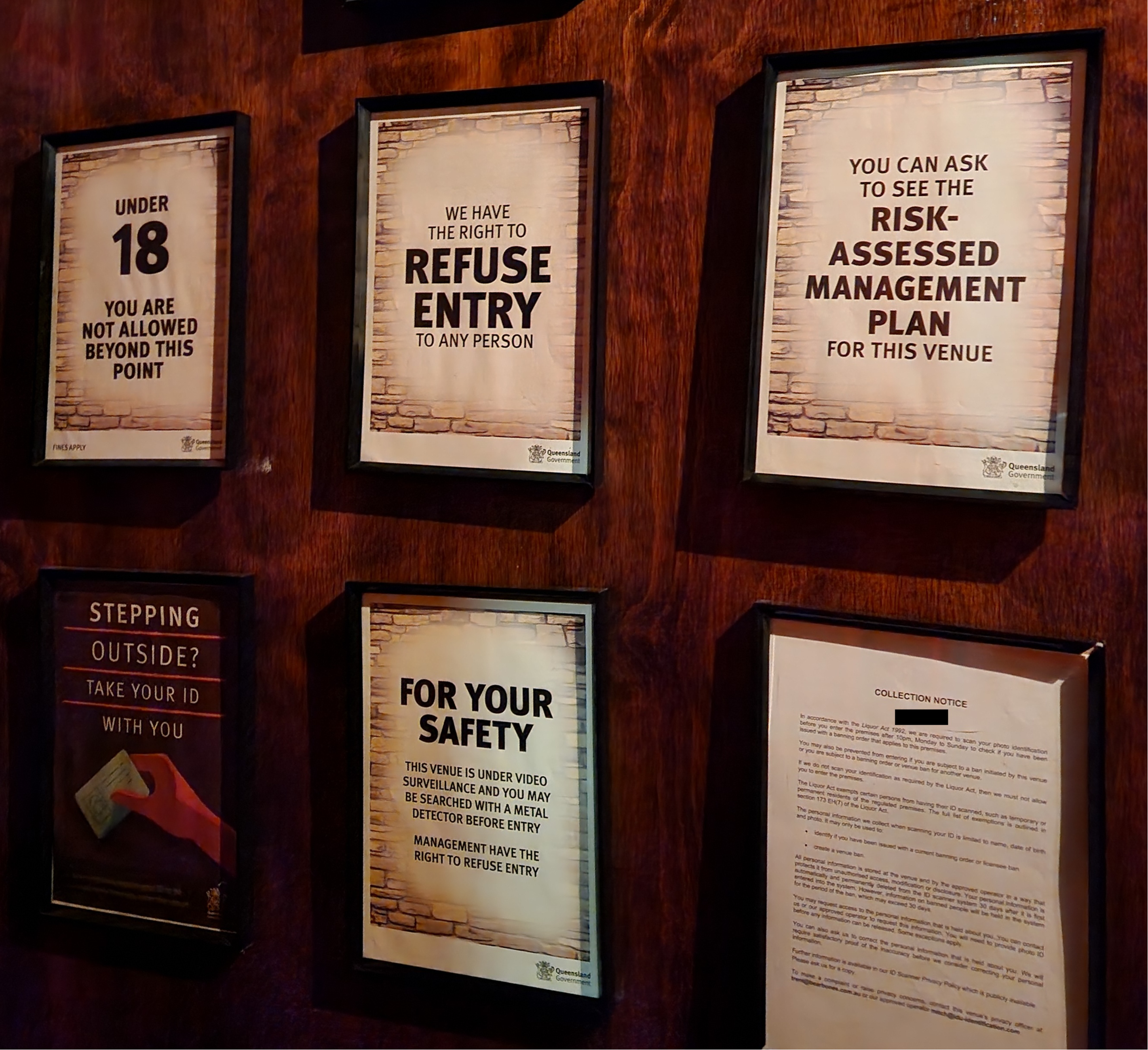
RSA signage displayed in Ven1. RSA: Responsible Service of Alcohol.
The frames indicate to readers that the signs are permanent (Cook, 2015) and an intentional part of the venue's spatial construction. By taking ownership of the RSA signs, the licensee has not only indicated what is celebrated in the venue, but also what is considered desirable and normal behaviour. Therefore, readers can likely expect the inscriptions from RSA signs like these (Figure 2) to be enforced by staff and management. The placement of the signage in Figure 2 appears to corroborate these assertions of propriety and ownership as well. The signs are placed in neat, level rows, which signifies respectability for the signage and further suggests that the licensee's attitude towards the signs’ inscriptions is favourable. The sign that reads ‘For your safety…’ (Figure 2) establishes and visually foregrounds a benevolent relationship between the signage and its readers for what might otherwise be considered invasive practices. The second-person possessive pronoun ‘your’ at the beginning of this sentence positions the reader as the receiver of the communication, and the problematisation of readers’ ‘safety’ projects an attitude of benevolence towards patrons. The RSA sign reads ‘For your safety the venue is under video surveillance, and you may be searched with a metal detector before entry. Management have the right to refuse entry’ (Figure 2). The signage provides no further justification and relies on readers’ consent to be searched and surveilled to achieve what it describes as safety. Being searched with a metal detector is unusual and might suggest to patrons that they are suspected of carrying dangerous items. The arrangement and provision of a reader-benefitting reason or rationale, that is, ‘For your safety’, before the FTA attempts to mitigate potential face-threats towards readers who might be searched and surveilled. To legitimise this invasion of privacy, the signage also uses the Queensland Government's logo in the bottom-right corner of the RSA signage (see Figure 2 for examples), which provides emblematic legitimation for the signage's inscriptions. This logo is a marker of credibility and legitimacy and signals the authority of the RSA signage to govern its readers by leveraging the Government's institutional status. This logo is used on a majority, if not all RSA signage observed in this research. The licensees at Ven2 (Figure 3) appear to assert even closer ownership of such rhetorical appeals as well as exclusionary practices (e.g. ‘No smoking, No Vaping’, Figure 3) outside the venue at the street entrance.
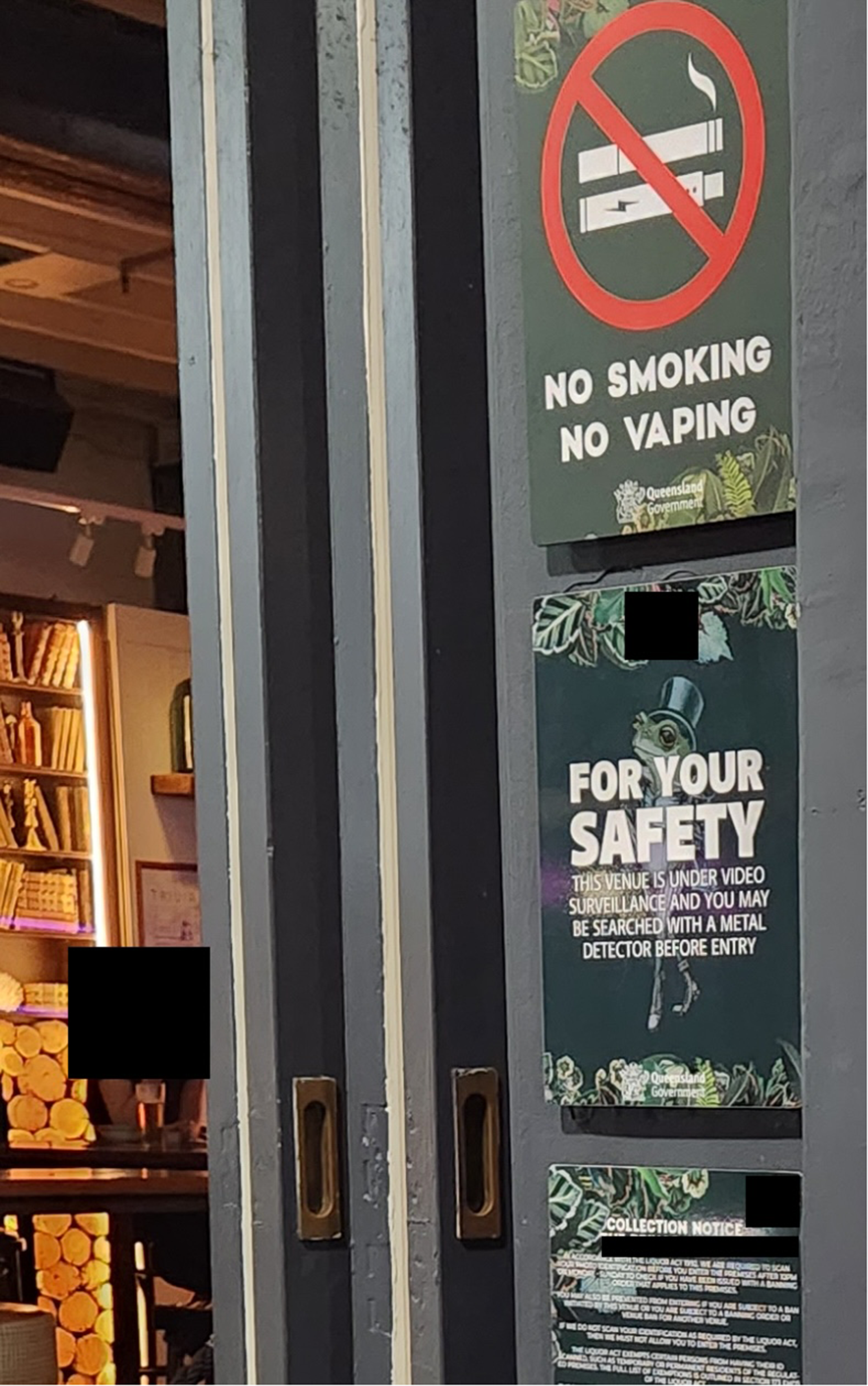
Customised RSA signage on the right-hand side of Ven2's main entrance. RSA: Responsible Service of Alcohol.
These RSA signs have noticeable visual differences from the standard RSA signs provided by the Queensland Government seen earlier (Figure 2). Most noticeably, the licensee has customised the RSA signage design to match the venue's visual branding. This customisation, through the visual use of the brand colours, logo (covered), frog mascot, and leaf artwork (Figure 3), suggests more direct ownership of the inscriptions and markings on the RSA signs, which indicates compliance with the Queensland Government's problem constructions and likely enforcement. The signage is also made of acrylic, which instils notions of permanence and respectability. The placement and orientation of the signage at the front door of the venue, facing towards the street, positions the signage to be read by people on the street who are entering or seeking access to the venue. This places the signage's situated vector in line with the entrance, allowing the signage to physically demarcate the front door as a transitional threshold (Figure 3). Although the inscriptions are the same as the ‘For your safety’ RSA sign in Figure 2, the placement, materials, and design used for this RSA sign in Figure 3 are different, which has implications for the way this sign might function. The placement of the signage at the entry suggests that it communicates conditions for entry to people outside the venues and serves as a gatekeeping function for the hospitable space within. Combined with its placement, the use of materials and design to signal ownership of the signage can serve as a demonstrated commitment to safety by the licensee to its readers. Despite the potentially face-threatening inscriptions involving being searched and surveilled, taking ownership of problems like ‘safety’ (Figure 3) might appeal to prospective patrons who are looking for a venue that prioritises safety using surveillance.
Observed resistances
As seen above (Figure 3), licensees can use RSA signage as a measure to regulate and defend their venue's hospitable space. From a commercial perspective, preserving an appealing drinking environment helps a venue to maintain patronage. Despite the compliant orientation and material choices observed in Figure 2, Ven1 demonstrates resistive practices through placement and orientation. This is done by obscuring the view of their signage with a transitional space concealed by a door (Figure 4) and a curtain (right-hand side out of frame).
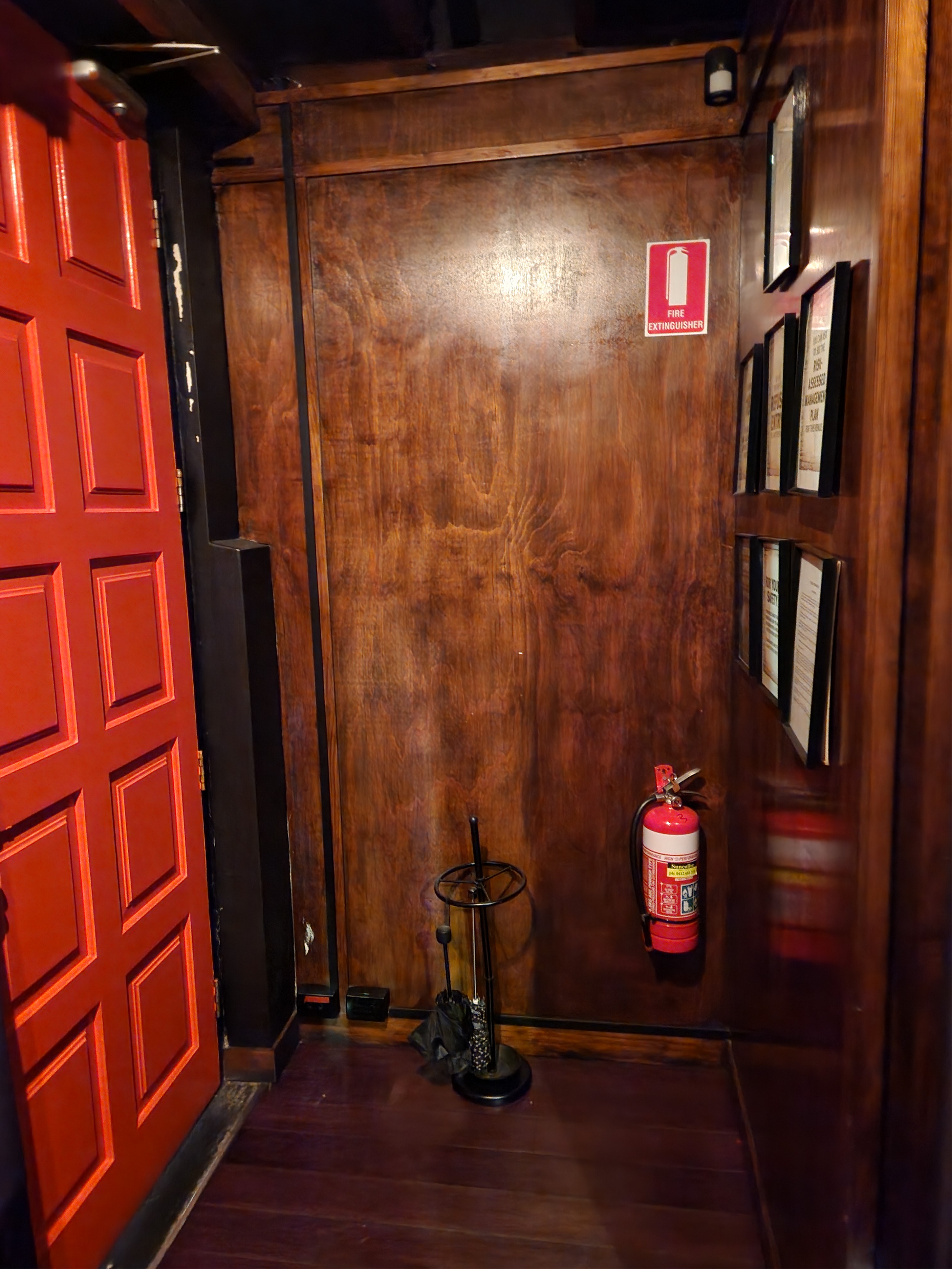
RSA signage placed behind street-entry door in Ven1. RSA: Responsible Service of Alcohol.
This space can be thought of as an airlock since it must be used to access the hospitable space from the street and vice versa. All of Ven1's RSA signage is in this airlock space, so it is not always visible to people inside the venue. This gives staff the power to decide when it is situationally relevant to take ownership of the potentially face-threatening inscriptions on the signage (Figure 4). Obscuring the RSA sign's visibility opens the possibility of those inside the venue of being unregulated by the signage. Conversely, it also plausibly protects patrons’ ability to act freely within the hospitable space without reminders of governance. This ultimately appeals to both the production of hospitable space and commercial imperatives. Unlike Ven2's gatekeeping signage (Figure 3), Ven3's display at the front door appears to extend into the venue, beyond what is necessary and any potential for plausible governance explored in this research.
At the street entrance where Ven3's hospitality proposition is presented, RSA signage is clustered on the walls in abundance (Figure 5). This image alone contains 15 RSA signs, with more covering the walls outside the frame (Figure 5). The various posters and signs are made from thin paper and adhered to the wall with glue to give a wallpaper-like appearance. The ‘For your safety’ sign can also be seen in this venue, using different production materials from Ven1 and Ven2. The excessive clustering and repeated display of signage with the same inscriptions suggest that this display might not be intended to inform and regulate its readers. The concentrated, repeated (e.g. ‘Under 18, Using a mate's ID?’ signage, Figure 5), and side-by-side display of these RSA signs is an example of visual clustering, which presents an excessive amount of information that is likely to be ignored by readers. By removing the individual signs’ meanings, the licensee has arguably constructed a larger spectacle. The RSA signage has been co-opted into the venue's wallpaper, which implies ownership of the absurdity and attitudes reflected in this display. It is unclear whether the licensee of Ven3 is co-opting RSA signage with positive or negative sentiment, although the notion of absurdity is exceedingly clear, suggesting malicious compliance. Similar to the front door signage in Ven2 (Figure 3), these (Figure 5) RSA signs’ placement at the front door contributes to Ven3's proposition of hospitality, meaning this spectacle is being used to appeal to prospective patrons with similar attitudes. Further inside Ven3, an RSA sign defaced with graffiti has been left on display by the licensee (Figure 6). The RSA sign's original design prohibits the consumption of liquor in the venue within temporal constraints. The RSA sign reads ‘No liquor consumed at this venue after 3.30am’ (Figure 6).
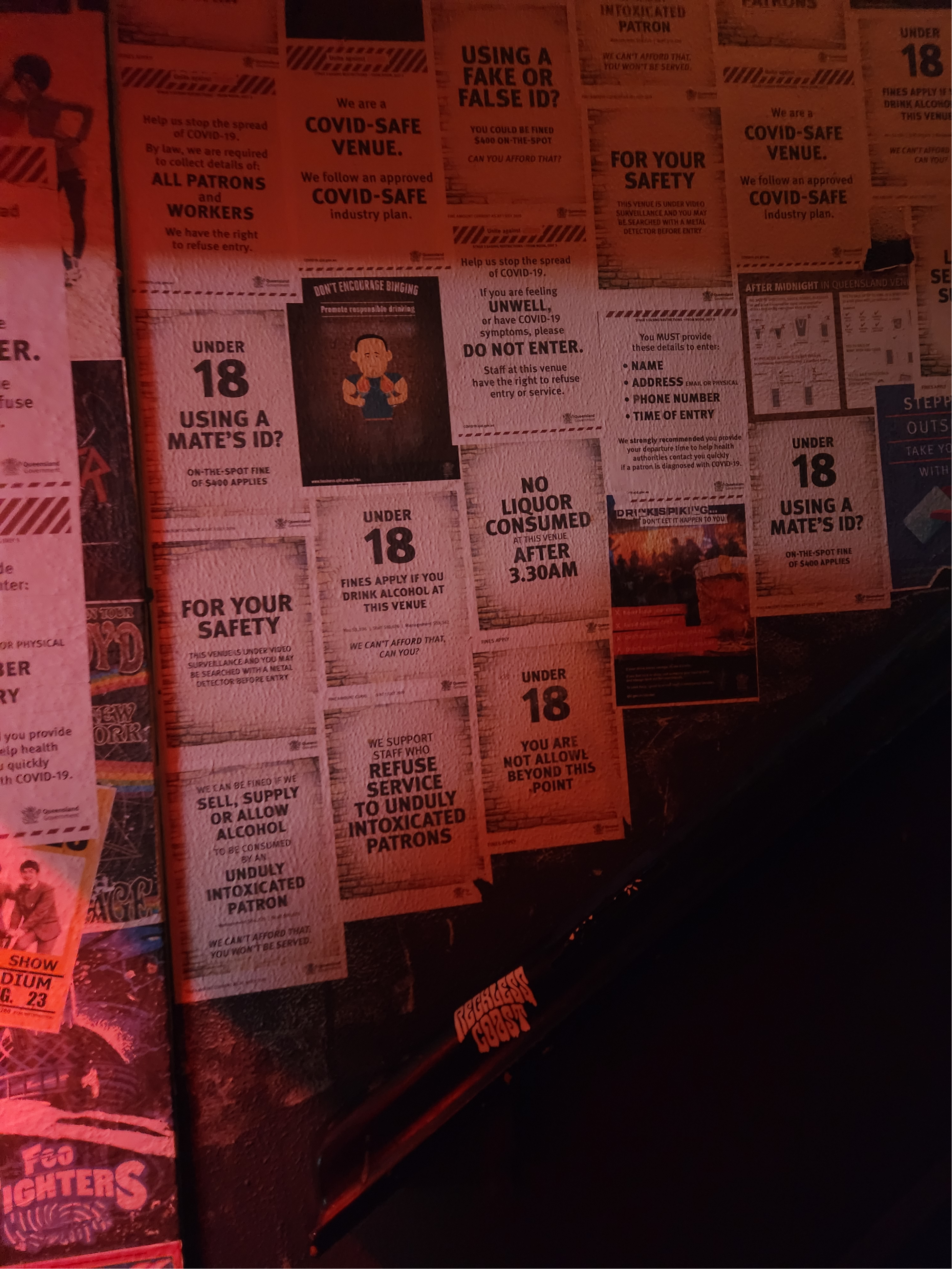
Close-up of RSA signs adhered to the walls of Ven3. RSA: Responsible Service of Alcohol.
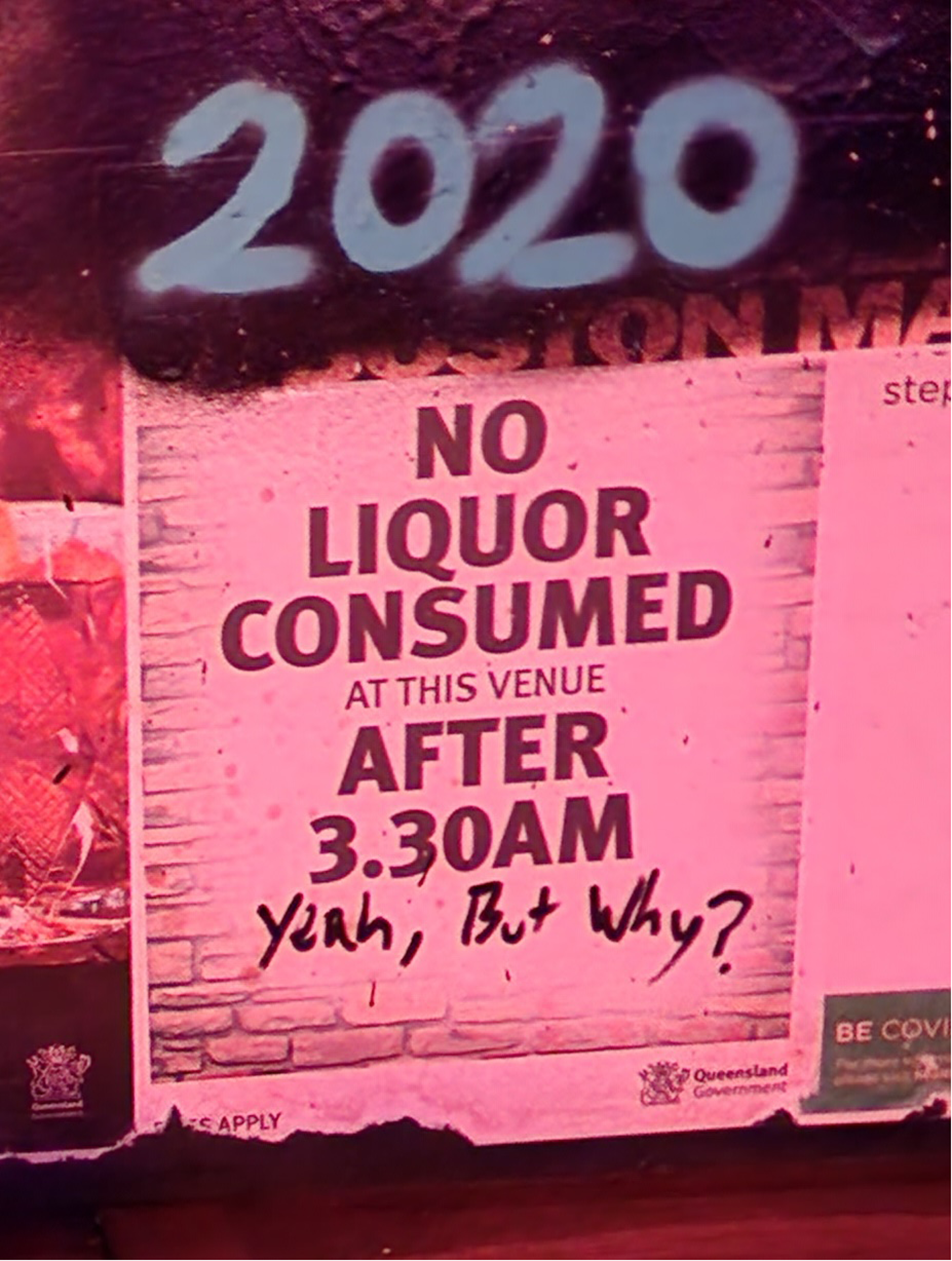
RSA sign in Ven3 with ‘graffiti’ on it. RSA: Responsible Service of Alcohol.
The formulation of a proscription such as this can be considered face-threatening, and the author has not accompanied this with a face-saving mitigation strategy. The legitimacy of this proscription is challenged and brought into question by a graffiti that is visible on the RSA sign that reads ‘Yeah, but why?’ This graffiti is evidently transgressive as it is written in black marker pen and not included in the original design of the sign. The arrangement of the graffiti underneath the sign's original inscription (Figure 6) places it next in reading order, indicating that it is challenging the original proscription on the RSA sign and is a direct response to the original inscription. The presence of this graffiti suggests that the author has not appropriately compensated ‘for the possibility to negotiate meaning’ (Svennevig, 2021: 167), nor provided a rationale for the proscription. The graffiti's challenge to authority is further reified within the venue's hospitable space by the fact that the licensee has chosen to leave the RSA visible and on display.
Discussion
This research set out to investigate the display choices made by licensees within licensed venues, with a focus on their role as communicators of mandated signage as a policy intervention to address alcohol-related harm. The data collected display observable negotiations of policy compliance and resistance between licensees and the Queensland Government. We found that display choices were closely linked to the licensees’ construction of hospitable space. Differences in display choices between the ‘For your safety’ signs across the three venues provided evidence of this, particularly in the materials used. Hospitable space differs from the public spaces discussed by Akindele (2011), Clark (2021), Scollon and Scollon (2003), and Kress and Van Leeuwen (2006). Like RSA signage, public signage will typically index and contribute to the space around it. However, displays in hospitable spaces, including those observed in this study, are tied to a set of ideological concepts that serve as the basis for association (Lugosi, 2009). Analysis explored three venues that appeared to take ownership of their RSA signage by appropriating their displays to suit their themes. Ven1 chose display strategies that allowed RSA signage to function effectively as an intervention, demonstrating an aligned stance with the RSA sign's inscriptions for readers using materials (Cheshmehzangi, 2014). However, these compliances were eclipsed by their resistive placement, which allowed staff to situationally introduce the RSA signage at their own discretion, suggesting a more subtle conflict with the RSA signs’ contribution to hospitable space. Ven2 breached the assumed controls of licensees (Figure 1) by combining branded designs with permanent materials to take ownership of their RSA signage and communicate attitudes towards safety. Ven3 took deliberate and visible ownership of their RSA signs, too, but chose resistive display choices that could stifle the RSA signs’ original inscribed meanings. While still technically displays of RSA signage, these displays communicate different ideological values to readers than those problematised within the signage's inscriptions. In particular, Ven3's wallpaper display demonstrated evidence of Clark's (2021) discussion of paper signage, whereby the paper signage risks blending into the background and appearing banal. In Ven3, this material risk of blending in is exacerbated by clustering, making the display's contribution to the space appear aesthetic more than regulatory. The RSA signs lost their individual meaning, and therefore their linguistic deployment of institutional power (Fairclough, 2013), in favour of displaying a larger spectacle.
As Lugosi (2007, 2009) argues, ideological mobilisations within hospitable space are entangled with the commercial imperative of the space. Logically, then, the RSA signage display mandate complicates or even stifles the ideological construction of the space; this, in turn, threatens the commercial imperative. This entangled relationship between ideological and commercial imperatives was sometimes prioritised above government mandates for compliance by licensees, creating resistances such as those observed. This is especially evident in Ven1's placement of RSA signage in an airlock space, so staff may temporarily introduce and omit RSA signage from the space as needed. Licensees’ roles as intermediaries in the deployment of RSA signage as a policy intervention proved to give them more control than originally thought. The display choices observed in this research challenged and disproved the assumptions of control that informed the construction of the literature-based nested framework for the construction of RSA signage meaning (Figure 1). These included the branded designs from Ven2 and the co-opted graffiti in Ven3. As an appeal to sub-cultures and unrepresented peoples, the graffiti introduces the voices of those governed by RSA signage (Pennycook, 2010). From a post-structural perspective, the graffiti makes visible some of the politics involved in the RSA sign's production of governmentality in Ven3's hospitable space (Bacchi and Goodwin, 2016). This representation of those who are governed offers insight into their attitudes and needs, and should not be ignored by researchers (Pennycook, 2010). Because of their intermediary role, licensees had opportunities to invoke their ideologies onto the Design and inscriptions and Markings of RSA signage. Display choices overall were informed by the wider construction of hospitable space the licensees desired, and by consequence, the pursuit of commercial interest too. Based on these findings and the original literature-based framework, below is a research-informed nested framework for the construction of RSA signage meaning that represents these new understandings (Figure 7).
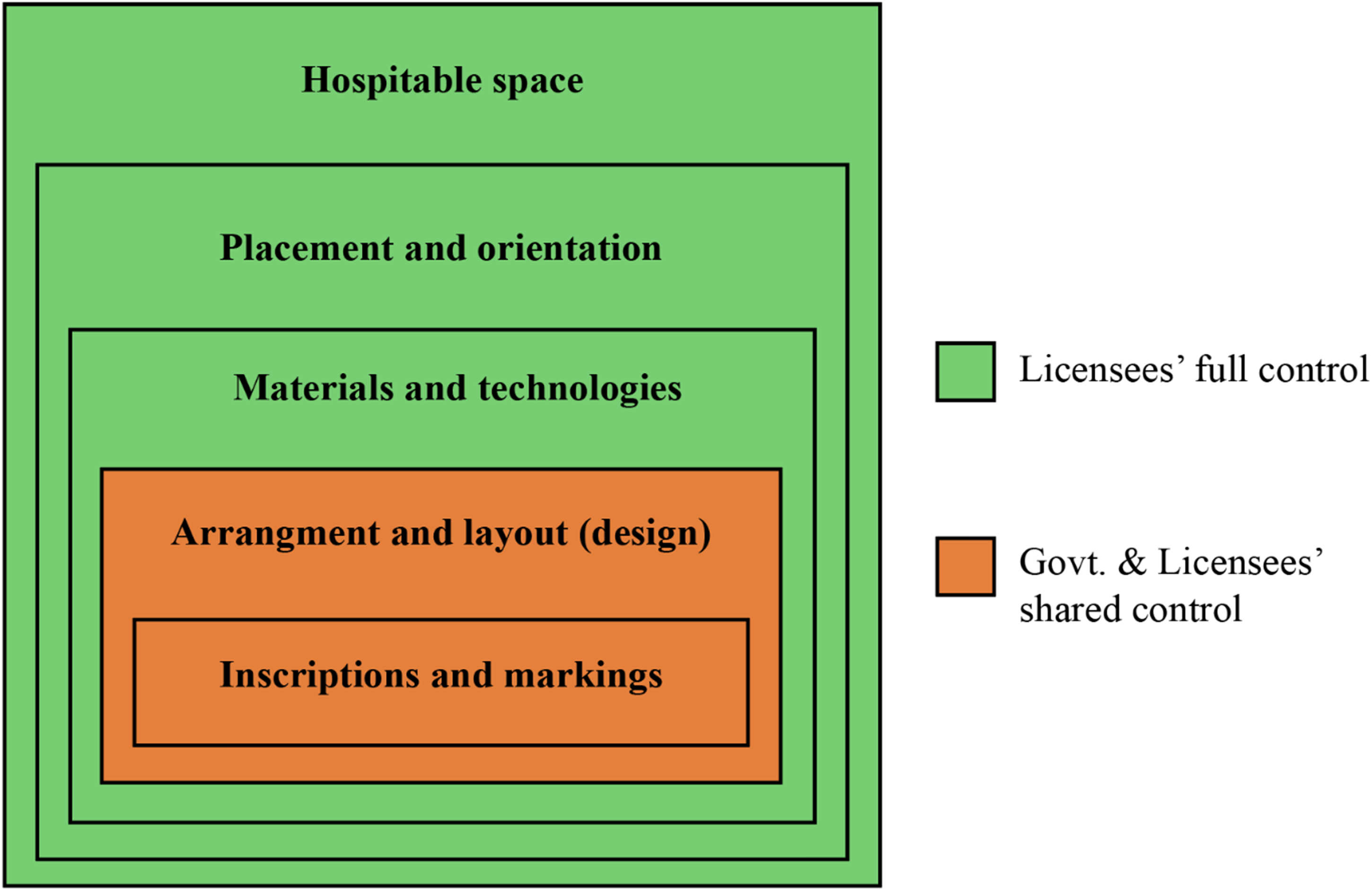
A research-informed nested framework for RSA signage meaning construction. RSA: Responsible Service of Alcohol.
This framework uses a different colour, orange, for the centre two facets of meaning construction. This colour change reflects the new understandings of control between the Queensland Government and licensees that emerged from this research. This shared control is held by the Queensland Government, which creates the RSA signage and then entrusts licensees as intermediaries to produce and display the signage (Figure 7). This shared control highlights the need to investigate relationships in signage production and display, and signage's deployment of governance, which has received little attention. Previous research (Akindele, 2011; Clark, 2021; Cook, 2015; Dray, 2010; Scollon and Scollon, 2003; Svennevig, 2021) has only focused on the relationship between the readers and authors of signage, overlooking the displayer of signage as an intermediary between author and reader. This lends to the importance of continuing further research in spaces such as this, where signage display is the responsibility of an intermediary. This framework also has a fifth layer added to the outside labelled ‘hospitable space’ (Figure 7). This represents the ideological and commercial imperatives that were observed to contextualise and inform licensees’ display choices in all of the four inner facets of meaning construction.
The RSA signage was also observed to regulate and shape alcohol use practices using mundane governance techniques that, in turn, could influence individuals’ relationships with the surrounding space (Clark, 2021). For example, this was done by proscribing in Ven3's ‘No liquor… after 3.30am’ sign. This deployment of a proscription overlooks any nuance of spatial construction or face maintenance that licensees might attempt to engage in. In fact, the Business Queensland website encourages licensees to build rapport and relationships with customers in order to manage behaviour and the potential for harm (Patron and Staff Safety on Licensed Premises, 2025). Leaving the graffiti on the RSA sign in Ven3 might be a way that the licensee mitigates this face threat by keeping the patron's voice on display alongside the Government's. The use of the airlock space in Ven1 could be another example of a licensee attempting to save face and maintain rapport with patrons, making it less likely a patron will see the signage and feel threatened by it. Even though the possibility of an FTA is lowered in some signage, like the ‘For your safety’ signage using appeals to politeness and logic, the possibility of an FTA still exists in these RSA signs due to the face-threatening nature of directives, prescriptions, or proscriptions; that is, to regulate its reader by asserting power (Fairclough, 2013). For the most reliable production of hospitable space, the governance deployed over the space must be voluntary amongst all participants (Friese and Keye, 2004; Lugosi, 2007, 2009). The resistive displays observed in this research provide evidence of responses to mandates that might be imposed on involuntary participants.
While this research contributes to media studies and signage literature, it also has important implications for the use of signage as a policy intervention and for research on alcohol-related harm interventions more broadly. Over two decades ago, Loxley et al. (2005) argued that alcohol research in Australia should pay greater attention to how interventions work in practice, rather than focusing solely on which interventions work. The analytical approach developed in this study responds directly to that call by providing a framework for examining how RSA signage operates as a form of governance, and how its effects are shaped through everyday display and interpretation. The mundane presence of signage, combined with the inscribed formulations observed in this article, suggests that the Queensland Government's approach to using RSA signage relies on the compliance of self-regulating patrons who are expected to internalise and act upon regulatory messages. The example of defaced signage, in which compliance is explicitly contested through graffiti, illustrates the fragility of this assumption and reveals how regulatory authority can be disrupted or re-interpreted at the point of display. While compliance-based approaches embedded in safety communication, such as signage, can contribute to harm reduction, they may also reproduce institutional assumptions about risk and harmful behaviour that do not always align with practical realities (Hutchinson et al., 2022). This raises important questions about the practical adequacy of RSA signage as a tool for addressing complex alcohol-related harms. For researchers, the findings highlight the need to move beyond analyses of signage as static artefacts and instead examine the situated processes through which signs are deployed, negotiated, and interpreted. Future research could further explore how different intermediaries, settings, and power relations shape the social life of regulatory texts across other domains, such as health or transportation. We suggest that future research could adopt similar qualitative, post-structural approaches to examine how regulatory messages are produced and contested across different settings, enabling more context-sensitive and situated forms of harm intervention.
Conclusion
Despite the impossible task of identifying signage causality (Svennevig, 2021), this study demonstrates the potential regulatory force that signage exerts through the ways that it is displayed, mediated, and embedded within social and spatial relations (Cheshmehzangi, 2014). Building on Clark's (2021) analysis of beach signage as a form of public regulation, this research extends signage scholarship into the hospitality sector, a context where commercial imperatives, staff–patron interactions, and institutional obligations can re-contextualise policy communications. By focusing on RSA signage in licensed venues, this study contributes to existing research by showing that regulatory signage does not operate as a stable or uniform policy tool. Rather, its meanings and effects are actively shaped by intermediaries (licensees) who selectively position, frame, and sometimes re-purpose official messages in ways that align with their operational priorities. This finding advances theoretical understandings of signage as a mediated governance technology rather than a direct extension of state authority. Even when signage carries identical inscribed texts, its regulatory function depends on local display practices and spatial contexts
These insights have important implications for practice. For policymakers and regulatory bodies, this study suggests that the effectiveness of RSA signage as a harm-reduction strategy cannot be assumed to flow directly from its wording or design. Rather, its impact depends on how it is modified and displayed by those responsible for implementing it on the ground. Recognising licensees as active mediators rather than passive conduits of regulation suggests re-considering how signage is designed and endorsed as part of a broader alcohol harm reduction strategy. Taken together, this research shows that RSA signage is not merely a backdrop to responsible service associated with alcohol harm reduction but a dynamic site where regulatory intent, licensee interests, and everyday social interaction intersect. By foregrounding this mediation process, this study contributes to a more nuanced understanding of how regulatory communication operates in practice and how its power is reflected and sometimes constrained in real-world settings.
Footnotes
Author note
At the time of this research Oscar Toohey was an enrolled students at Queensland University of Technology, Kelvin Grove, QLD, Australia. Oscar has since graduated and is now affiliated with Griffith University, Nathan, QLD, Australia. He can be contacted at oscar.toohey@griffithuni.edu.au.
Acknowledgements
The authors acknowledge the Turrbal and Yugara as the First Nations owners of the lands where QUT now stands. The authors pay respect to their Elders, lores, customs, and creation spirits. The authors recognise that these lands have always been places of teaching, research, and learning. The authors would like to acknowledge the involvement of both the Faculty of Creative Industries, Education, and Social Justice, and Queensland University of Technology in facilitating and supporting this research.

Ethical considerations
There are no human participants in this article and informed consent is not required. This research project did not require ethics approval.
Funding
The authors disclosed receipt of the following financial support for the research, authorship, and/or publication of this article: This work was supported by an Australian Government Research Training Program Fees Offset.
Declaration of conflicting interests
The authors declared no potential conflicts of interest with respect to the research, authorship, and/or publication of this article.