



Abstract
This study uses the concept of gaming capital to examine transaction practices within the game platform Sky: Children of the Light. Through digital ethnography, we summarized the transactional items and forms, identifying two types of transactions that ensure the prosperity of the game platform: obligational transaction is driven by a logic of association, sustaining the social life of things in exchange rituals; exclusionary transaction is grounded in a logic of difference that exudes a sense of hierarchy within the game platform. Furthermore, we proposed the concept of situationized gaming capital, which highlights that the cross-domain flow of things bears the flux of gaming capital, thereby degrading gaming to a contract-like production–consumption process. Through stories of players’ capital flux in economic, social, and cultural dimensions, we aim to situate individual transaction practices and the concept of gaming capital within the context of the platformization in China's gaming industry.
Introduction
Amidst the turquoise plateau shrouded in an ocean of clouds, with the feeble glow of flame passing through avatars’ hands, a game platform named Sky: Children of the Light thrives through the transaction system mediated by candlelight. Operated by the platform giant NetEase, the game has over 50 million players, transactions and social networking are made possible by connecting the game with other social platforms (Smith, 2024). Meanwhile, moving the scene to Happy Valley Wuhan theme park in China, players of the game joyously exchange self-designed badges and bracelets with their game characters printed on them, serving as tokens of connections within the gamer community. In both worlds, these reified signs become transactional items through which players accumulate capital to expand their influence, their proliferation and circulation become a unique mediascape.
The form of games has continuously evolved throughout history. When games are empowered by the platform's connectivity, they transform into game platforms (Van Dijck, 2013). Unlike game distribution platforms such as Steam, game platforms in this paper mean the gaming infrastructures developed by platform companies that connect players, complementors, and a broader platform matrix on mobile through data streaming (Poell et al., 2019; Zhao, 2024). Nieborg and Poell (2018) termed this process platformization, referring to digital platforms’ “penetration of economic and infrastructural extensions into the web” (p. 4276). As a significant form of cultural production, game development and consumption have been swept into this transformation: games are becoming platforms, bound by top-down platform governance rules (Foxman, 2019; Morris et al., 2021). Games are now increasingly exposed to platform-induced risks, such as exacerbating digital inequalities, reinforcing gender norms, and leaking private data (Gillespie, 2010; Nakamura, 2013; Shore and Prena, 2025).
With platform companies investing in games, China's gaming industry is currently dominated by Tencent and NetEase, which have integrated their gaming products into platform-centric application ecosystems (Coe and Yang, 2022). While games were once labeled as “spiritual opium” (Zhou, 2024: 1), the Chinese authorities’ current stance on gaming remains paradoxical: gaming is perceived as contradictory to the nation's emphasis on striving ethos, but like other platforms, game platforms are among the most profitable industries. As a result, while official discourses often express concern about gaming addiction and impose regulatory restrictions on game design and marketing strategies, the authorities simultaneously provide technological and tax incentives to the gaming industry (Liu, 2013). Benefiting from these policies, platform companies ensure profitability and user stickiness by acquiring game studios/companies (Fung, 2016), partnering with well-known intellectual property (IP) images (Matthews and Tran, 2023), and connecting social platforms with games (Nieborg, 2015), transforming the previous industrial structure into a more networked and decentralized model that accommodates personalized demands (Srinivasan, 2021). With the adoption of blockchain and cryptocurrency technologies, platform companies have facilitated the entry of real-world capital into the gaming sector, fundamentally altering player transaction behaviors and gaming experiences (Jaferian et al., 2024).
To explore players’ transaction practices, gaming capital becomes a crucial concept. Consalvo (2007) extended Bourdieu's concept of capital to coin the term gaming capital, which refers to various resources and assets secured by players in their gaming experiences, including skills, knowledge, reputation, and social connections. Gaming capital extends beyond in-game achievements to encapsulate social relationships. Players can acquire social capital and cultural capital by actively participating in discussions or obtaining knowledge from game magazines (Fernández-Vara, 2019). The concept of gaming capital implies that gaming or transactions in games are interconnected with broader social networks, with the support of the platform's connectivity, the platform has become an important space for the flux of gaming capital.
Previous studies have explored games like Clash Royale, Anti-PUA Investigation, and Overwatch from the perspective of gaming capital (Consalvo, 2019; Huang and Liu, 2022; Korkeila et al., 2023). However, they were not adapted to the context of the game's platformization. This study builds upon this topic by examining the flow of gaming capital through an analysis of players’ transaction practices. Digital ethnography was employed to observe and analyze the players of Sky: Children of the Light, which is an MMORPG launched by NetEase in 2019. Three research questions were proposed: What are the transactional items and transaction forms within the game platform? How is gaming capital present in the game platform? How do players’ transaction practices contribute to the accumulation and flow of gaming capital? By probing into those aspects, this study connects the emerging phenomenon of game platforms with the concept of gaming capital, further expanding it to the context of platform society.
Gaming capital and players’ non-game capital
The concept of capital is generally associated with economic and monetary exchanges, but Bourdieu (1986: 241) attempted to place capital within a broader anthropological exchange system, defining it as “accumulated labor,” and dividing it into economic, social, and cultural capital. In Bourdieu's taxonomy, different types of capital can be transformed into each other, which was followed by scholars to interpret the power relations in the exchange process (Coleman, 1988; Moore, 2004). Whether it is the Kula Ring of Papua New Guinea or the potlatch feasts of the Kuakiutl Indians, the ritualistic exchanges contain cultural symbolic meanings used to determine internal tribal hierarchies and power dynamics with other tribes (Boas, 1920; Malinowski, 1922). Huizinga (1938) viewed these rituals as games of demonstrating superiority, some exchanges are not mediated by currency but by transactional items with symbolic and cultural values.
Gaming capital can be understood as the resources an individual gains and controls during gaming (Korkeila and Harviainen, 2023). The origin of this term is rooted in the recognition that in-game success relies not only on gaming skills but encompasses various assets accumulated by individuals, such as walkthroughs (game guides), character levels, and virtual assets serving as indicators of players’ gaming prowess (Consalvo, 2007). For games, walkthroughs, commercial elements, reviews, and film adaptations can all be categorized as vehicles of gaming capital, with their accumulation deeply intertwined with gaming practices and labor (Fernández-Vara, 2019).
But when games are connected to the broader platform economy, gaming capital extends beyond these forms. Korkeila et al. (2023) argued that gaming capital is not merely an extension of Bourdieu's cultural capital concept but a dynamic aggregate of various capital types. This implies the fluidity of gaming capital: in the platform society, gaming capital accumulates and proliferates in its flow, with tradable assets, network resources, and social interactions flowing symbolically both within and outside the game, contributing to the prosperity of the game platform.
Following Bourdieu's classification of capital, gaming capital is firstly economic. This is a consequence of the gaming industry's platformization, where in-game commodities are no longer part of the game's text but require purchase through social platform accounts. Janoščík (2023) argued that the pay-for-product model is no longer the most popular mode of monetizing, various downloadable content, skins, in-game currencies, and seasonal passes form the myth of high profits. For some games, transactional items such as skins often do not alter gameplay, but players’ investment of economic capital made them more popular in the game (Liu, 2019; Thorhauge and Nielsen, 2021). But other free-to-play games like Candy Crush Saga are different, where achieving high scores may require extra purchases or watching ads (Nieborg, 2015; Nieborg and Poell, 2018). Joseph (2021) further interpreted the freemium monetization mode in Battle Pass, revealing a trend in the ludic economy where consumerism manifests: you must pay real money to win the game. These studies showed that in-game transactions are interconnected with the broader platform matrix and become bearers of gaming capital.
The acquisition of gaming capital also depends on social capital, which refers to resources embedded in social networks (Lin and Bonnie, 2008). In particular, communities can foster connections through the accumulation of both Bridging social capital and bonding social capital (Ramos-Pinto, 2007). The former focuses on weak ties that facilitate access to new information flows, while the latter emphasizes close relationships fostering emotional support like trust and understanding (Paxton, 1999; Putnam, 2000; Granovetter, 1973). Steinkuehler and Williams (2006) applied the taxonomy to game studies, arguing that games provide a “third space” beyond work and home, fostering weak social connections among players but lacking in emotional support. However, empirical studies have refuted this view, suggesting a spillover effect between gaming capital and non-game social capital: the players who accumulate gaming capital may achieve greater success in civic participation within communities, and the players who hold leadership roles in their workplaces are more adept at guild leadership tasks (Molyneux et al., 2015; Williams et al., 2006). These studies demonstrate that triumph within the gamer community is not exclusively determined by individual prowess but also by one's capability of harnessing social capital.
Gaming capital also includes cultural capital, which initially refers to legitimized knowledge for people to secure advantages from education (Bourdieu, 1986). When applied to gaming, it is manifested as interactions in the gamer community that convey meaning through symbols, for example, when players have a certain understanding of new media technologies such as game design, their political ideas can be realized in games through aesthetic and technical practices (Huang and Liu, 2022). Another case about the Overwatch forum also indicated that the accumulation of gaming capital heavily relies on players’ storytelling ability: viewpoints with vivid rhetorical skills and striking symbol usage allow players to gain a higher reputation in the community (Korkeila et al., 2023). In those cases, the accumulation of cultural capital is realized in an institutionalized way, but when games are immersed in the platform ecosystem, knowledge around games is ubiquitous in platform content, which has transformed the path to understanding cultural capital.
In sum, scholars have begun to analyze the forms and exchange of gaming capital. However, there is a paucity of research examining players’ transaction practices accompanied by the platformization of gaming industry in China, and the concept of gaming capital needs to adapt to the context of the game's platformization. Therefore, we further propose “situationized gaming capital,” defining it as the trans-domain crystallization of labor for exchange that helps players gain advantages within the gaming situation. When games become platforms, individual in-game practice is connected to the platform transaction culture. As such, the foci of this research include the form, accumulation, and flow of gaming capital that interact with the platform's transaction ecosystem and players’ transaction practices.
Research method
In this study, digital ethnography is employed to explore players’ transaction practices. Specifically, between June 2023 and April 2024, 26 players of Sky: Children of the Light in China were studied through participatory observation and individual interviews, both online and offline. Participatory observation aims to identify the transactional items and transaction forms to understand the meanings behind transaction practices. Interviews were conducted to gain insights into players’ life experiences and motives for practices (Kvale and Brinkmann, 2015). Therefore, players’ actions and words about transactions in different scenes (online/offline, in-game/non-game) were collected. All observations and interviews were approved by ethical review and written consent from participants, during the process, we adhered to the principles of self-reflexive, collaborative, and participatory to identify possible biases by reflecting on who we are and our research motivations (Murdock and Pink, 2005).
First, we employed the avatar “ZR” to undertake participatory observation within the virtual world Sky: Children of the Light for 10 months. Data collection primarily took the form of co-play, with the avatar immersed in the playful situation prescribed by the platform. Player dialogues and actions were captured through chat logs, screenshots, and videos. Through this engagement, we aimed to observe how the avatar fulfills personal growth, fosters social connections, and cultivates communities. Throughout this process, the roles of transactions and consumption served as vital coding cues: distinguishing between those prescribed by the platform and those emergent from player-driven cultures.
Second, beyond the virtual world, physical scenes where gaming activities occurred were also included in the scope of observation, for example, players’ workplaces (such as a shopping mall in Huaihua City, and a publishing house in Changsha City) and venues for player meetups (Happy Valley, Wuhan city), which is to adapt to the players’ gaming habits. We participated in nine events, and each offline observation session lasted approximately 9 h, depending on the duration of the meetups and players’ working hours. The purpose of participation is to engage in dialogues and observe their playing behavior and transaction practice. Specifically, we met with players personally, engaging in one-on-one conversations or social activities of gamer communities on-site, observing the scenes of gaming, social interactions, and transaction practices. Transactional items such as handicrafts exchanged among players and visual data of transactions were collected and coded.
Third, we extended the field sites to communities that the social platforms reached, such as Weibo, RedNote, and WeChat groups where players gather and chat virtually, aligning digital ethnographic methods with the game's platformization: those places that players gather to seek information and exchange with each other are exactly paratext of the game. We joined five WeChat groups, one RedNote group, and one Weibo group, where we continuously observed players’ transactions beyond the game world. Items and processes of transaction were recorded in the form of chat logs and screenshots, at times, we even participated directly in some transaction practices. Through this approach, we were able to examine players’ spontaneous transaction practices and the flow of gaming capital from a first-person perspective.
Interviews were conducted throughout the entire ethnographic process, including unstructured interviews, semi-structured interviews, and scroll-back interviews. Unstructured interviews primarily refer to open-ended field interviews conducted in locations where we played together offline, such as the Happy Valley theme park in Wuhan, China, where NetEase (the platform company) organized players to gather. Phenomena perceived during conversations and co-playing were recorded, and new interview questions formed in those conversations were asked in supplementary semi-structured interviews later. Scroll-back interviews targeted players or bloggers who posted content on social platforms, this involved co-analyzing their own posts and examining the browsing history of other bloggers to understand the relationship between the content as paratext and the flux of gaming capital (Robards and Lincoln, 2017). Each interview lasted around one hour, and was recorded using the Tencent Video app, the topics cover gaming time and location, ways of enhancing game skills, consumption around gaming, details of transactions, benefits from transactions, and so on.
Ethnography follows a “go with the flow” pattern, aiming to explore new and unexpected cultures encountered in the field site (Nardi, 2010: 27). Following this tradition, snowball sampling was used to identify participants. The collected data underwent three-level coding: first, in-game items and transaction practice were broadly categorized. Then, the data were classified along the dimensions of in-game/non-game, game platform/player/blogger. Finally, when combined with theoretical resources of gaming capital, a macroscopic picture of the flux of players’ gaming capital was outlined, aiding in deeper insight of players’ transaction practices.
Results
To explore the transactional items and practices, the data about the flux of gaming capital were organized into three themes based on Bourdieu's classification: the aspects of economic, social, and cultural capital.
Candlelit transactions and the virtual transaction system
In the enchanting virtual world, we observed avatars diligently collecting candlelight as the in-game “money.” Cloaked humanoid avatars gently soar over scattered candelabras in the majestic shrine, as the hovering candle flames are effortlessly drawn into their satchels. Not far from the shrine, another group of avatars sit around a warm campfire in anticipation of candlelight, the “zzz” symbols above their heads indicate that the players are inactive or away from their screens. Through this AFK (away-from-keyboard) mechanism, players can automatically collect up to 1800 candle points daily without any operation on their fingers. Upon amassing 190 candle points, a white candle is crafted for entry-level item consumption as is shown in Figure 1. White candles are the game's core assets, acquired through daily logins and collection across various virtual world maps. When purchasing in-game items with white candles, avatars kneel before NPCs (non-player characters), offering candles while awaiting the items appearing in their bags.
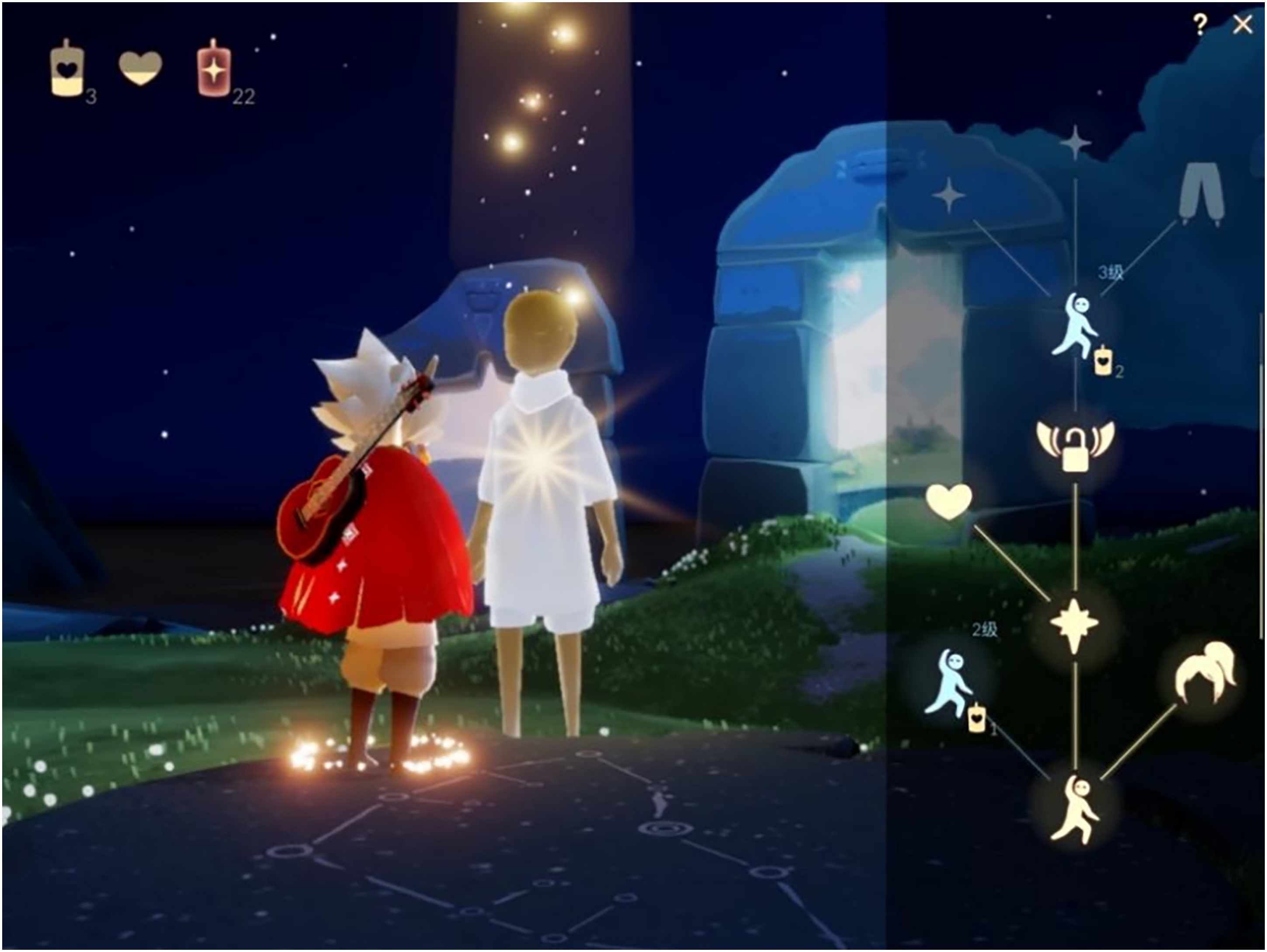
Transactional items using white candles.
Besides purchases from the NPCs, we also observed transaction practices among avatars out of courtesy. The first thing players do after daily login is to exchange candle points in their “constellation wall,” a map where friends are represented as stars connected in constellations. If someone logs in and sends you a candle, their stars will light up, indicating it is time for you to reciprocate with a candle point of your own: “It is not enforced or instructed by the system, we just feel appropriate to do so.” (Interviewee A) 1 Moreover, when players seek to expand their friend list, they need to give candles to others, who reciprocate with candles to unlock further interactions such as holding hands or hugging. They exist as customary practices and have evolved among players into a default ritual, symbolizing the establishment and continuation of relationships. Maintaining these rituals is precisely what Mauss (2000) describes as the courtesies of giving, receiving, and giving back, which build the most basic form of exchange within the cycle of candle circulation.
The above practices are all conducted using in-game currencies, which we term “obligational transactions.” This refers to the player-to-platform or player-to-player transactions within game platforms that operate within the prescribed currency system, implying a logic of association, and manifesting through habitual and ritualized transaction mechanisms. The term “obligational” does not signify compulsoriness; rather, it reflects a transaction mechanism that aligns with the gist of the game—encounter. In 2023, China's National Press and Publication Administration (NPPA) mandated that games should not implement daily login incentives or other inducement-based rewards (Jiang, 2024). However, obligational transactions achieve a similar effect by implicitly encouraging players to log in daily to conduct candle transactions with friends. Meeting and exchanging gifts with other players can be seen as a ritual for establishing social bonds. If this ritual is maintained, friends will remain on the constellation wall; otherwise, due to space limitations, they will be replaced by others. Without friends to engage in these continued transactions, daily login incentives lose their appeal. Thus, obligational transactions function as a transaction mechanism strategically designed by NetEase to sustain player engagement and maintain high daily active user (DAU) rates.
However, some other virtual commodities and practices emit a logic of differentiation, namely “exclusionary transaction.” For example, every three months, the game's seasons change, introducing new themes and exquisite series of purchasable clothing. Players can obtain these items by purchasing a season pass for 68 RMB or teaming up with two others to buy a season pass bundle (128 RMB): “The season pass is just like the membership subscription model of Netease Cloud Music or Tencent Video, you buy it at a reasonable price and get a sense of belonging.” (Interviewee B) Moreover, during special occasions, a series of direct-purchase items are released. These items are often expensive but possess unique functionalities or are linked to renowned IPs, for example, the Little Prince cloak (168 RMB) is linked to the well-known fiction The Little Prince, and wearing it allows entry into an exclusive area. Interviewee C, a fan of the novel, complained: I felt like I could hear my heart breaking when I paid online. I’ve never bought clothing in such an expensive price in real life, but not buying it would definitely lead to regret, as this package will be discontinued later. (Interviewee C)
Furthermore, we also discovered a more industrialized approach, which is akin to the mode of “game gold miners” or “account farming,” referring to the cultivation of game accounts through professional operation to make them valuable (Nardi, 2010). However, this model has extended to platform accounts of gaming influencers. Interviewee D, a gaming influencer who operates many platform accounts, said: To me, this is a wealth management game. I sold my TikTok account at a high price because it had a significant number of followers, many buyers are no longer limited to advertising through me, they want to buy my accounts directly. (Interviewee D)
In this section, we contend that in-game currency system within a broader platform matrix should be considered as a bearer of gaming capital. In-game transactions partially rely on specific symbols as currency within the virtual world, but for the profitability of free-to-play game platforms, the inflow of external capital is indispensable. The in-game currency system is an artificial construct, and the scarcity of commodities is just a designed phenomenon (Castronova et al., 2009). But through it, the ludic economic system and community flourish with players positioning themselves through labor or the investment of gaming capital, creating a give-and-take reciprocal form through obligational transactions. Simultaneously, it is the flow of gaming capital and non-game economic capital that drives the sustainability of game platforms: profitability is ensured through exclusionary transactions such as whale spenders and investment in platform accounts, while on the other hand, the ongoing “labor” of players within the game ensures the data of daily active user.
Social currency and material representation of gaming capital
From October 14 to November 12, 2023, we stayed at Happy Valley Wuhan theme park to observe the player community event organized by NetEase. Amid the laughter of costumed revelers, players traveled from various parts of China to Wuhan and immersed themselves in this grand celebration to win limited-edition accessories. We witnessed groups of individuals with wizard hats and wands, making the space like a game scene. Distinct from conventional cosplay, they portrayed their own avatars from the game. With various styles and lengths, these cloaks were often crafted by skilled game peripheral producers from platforms like Taobao and RedNote, based on players’ requests. In the process of self-presentation, these cloaks gradually became community symbols.
The transaction of things usually occurs through platform communities and embodies social capital. Game peripheral producers often join gamer communities on social platforms to advertise their products. This is not only because product links can be directly inserted into platform content, but also because when a product spreads within the community, it often triggers imitation by other players. These cloaks, wigs, and handicrafts embody the producers’ ingenuity and professional skills. Interviewee E, a graduate student in fine arts, is currently engaged full-time in the production of gaming peripherals, he believes that his motivation is not purely economic: It (making game peripherals) is a lifestyle for me, a mix of both work and practice of hobbies. Before I played this game, I was always on the periphery of social circles and never had so many friends. But because my products are well-made and popular, I have even become a central figure in the community. (Interviewee E)
Another type of game peripheral includes “Baji” (吧唧) and “Guzi” (谷子), we observed players giving them to each other on-site. “Baji” originates from the Japanese word バッジ (badji), meaning a badge. Similarly, “Guzi” comes from グッズ (guzzu), which is derived from the English word “goods,” encompassing small peripheral merchandise related to copyrighted works, such as cards, keychains, garage kits, and necklaces with anime characters on them (as is shown in Figure 2). Typically, players sketch the initial design and pass it on to merchants to produce the final product, and they are preserved until player meetups to distribute them for social purposes. A participant said: I have a scrapbook for collecting cards imprinted with my game characters, each card depicting a set of outfits from the game, they are like ambers that preserve my memories. When encountering players with unique outfits, those who can help my career, or famous online bloggers, I gift them with mine, and I will receive their Guzi in return and house them on my shelf. (Interviewee G)
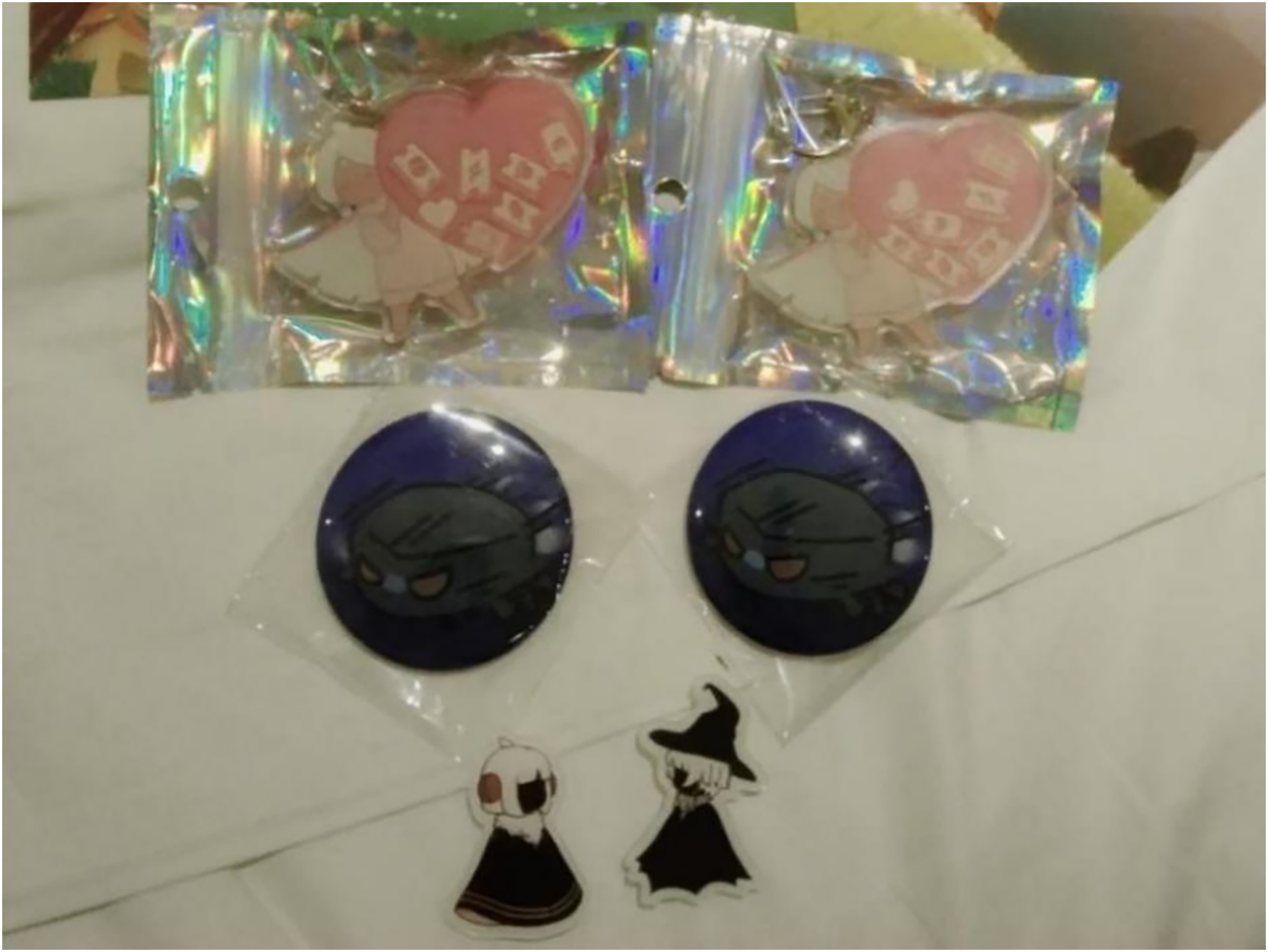
Baji and Guzi circulated among player community.
To summarize, the gifting system maintains the game's social-focused mode, allowing players to transfer gaming capital to the non-game domain. In this process, Guzi and outfits are the material representation of gaming capital, assisting players in choosing the objects with whom they wish to develop relationships. Thus, the eagerness to find friends intertwines with the social relationship network outside the game, resulting in the accumulation of both bridging social capital and bonding social capital (Putnam, 2000). Beneath splendid makeovers, ordinary figures engage in the exchange of social currency. If removed from the playful situation, these actions are no different from those in the formal social occasions.
Production and circulation of knowledge about gaming
As midnight descends, casting its veil over the seascape, an island named “home” is shrouded in darkness, where we conducted observations in the virtual world. It serves as the nexus to eight different zones and the central gathering point for players. Each night, as the clock strikes twelve, new daily tasks refresh, drawing players to a small idol where they bow to check what they should do. These tasks, though seemingly simple, often require navigating the vast world to locate specific coordinates and can be challenging for rookies. It is in this setting that a form of gaming capital production, driven by walkthrough (game guide) sharing, has emerged in platforms such as RedNote.
In the era of PCs or consoles, walkthrough websites were the classic form of gaming capital accumulation. As digital platforms became the bearers of walkthroughs, they also became channels for acquiring and accumulating gaming capital. Interviewee D is one of the first bloggers dedicated to this game. She said, The initial intention of creating walkthroughs was to help more rookies, but veteran players also started following me because my walkthroughs saved them the time of blind exploration. (Interviewee D)
The flow of gaming capital does not solely follow the “blogger-fan” path. As one of the earliest game bloggers, Interviewee D has also provided guidance to many new bloggers, with Interviewee H being one of the stars she cultivated. Initially positioning herself as a walkthrough blogger, interviewee H doubted herself due to low viewership. It was not until 2022, under Interviewee D's guidance, that her platform account gained popularity. The transformation included a major overhaul of titles, cover images, and storytelling of information. From October 2021, she began playing on the test server, which precedes the official server by one season and is used for bug testing to maintain the game platform's operational stability. She leaked information about new season commodities and their prices before the official release, turning her into a prophetic figure, gaining widespread acclaim, and becoming a popular blogger with over 100,000 followers, even having a social media group for fans.
Platform companies also guide bloggers to boost the flow of cultural capital. Gaming influencers are not only players/users of the game platform but also actants who can shape player practice. Therefore, the platform's operation department often approaches bloggers for collaboration, including commissioning content releases, collecting player feedback, providing creative ideas, etc. For example, changes in the currency exchange mechanism garnered negative feedback from players, and NetEase approached a participant to gather players’ suggestions, ultimately settling on a solution that protects players’ interests. In such cases, bloggers play a dual role akin to union leaders and public relations experts, bridging the gap between the platform company and players.
In general, the flux of gaming capital not only occurs within the game world but also extends to the content of gaming influencers’ platform accounts, bearing the accumulation, flow, and productive growth of gaming capital. As bloggers use their platform accounts to supply knowledge to players, there is also iterative flow among them, ensuring the consistent production and inheritance of knowledge. Additionally, information serves as a crucial aspect of gaming capital, with bloggers playing a prophetic role in facilitating the flow of information between players and platforms. The data above also reflects the compression of time and space: sacrificing the enjoyment of gaming aesthetics for task-oriented, mechanical gameplay and meaningless digital roaming.
Discussion
From the descriptions of the cases, the flow of gaming capital is shaped by the transaction practices in the connected platform matrix, becoming a trans-domain “situationized gaming capital” that connects in-game and non-game worlds (as illustrated in Figure 3). By proposing such concept, we contend that the accumulation of gaming capital is not only diachronic but also occurs with the generation and reshaping of synchronous situations. Situationized gaming capital flows between actants in the form of transaction interactions around the platform matrix, merging with situations such as work/leisure, relationship formation, and community cohesion, ultimately forming a platform-centered social information system that reshapes the rules and hierarchy of social relations.
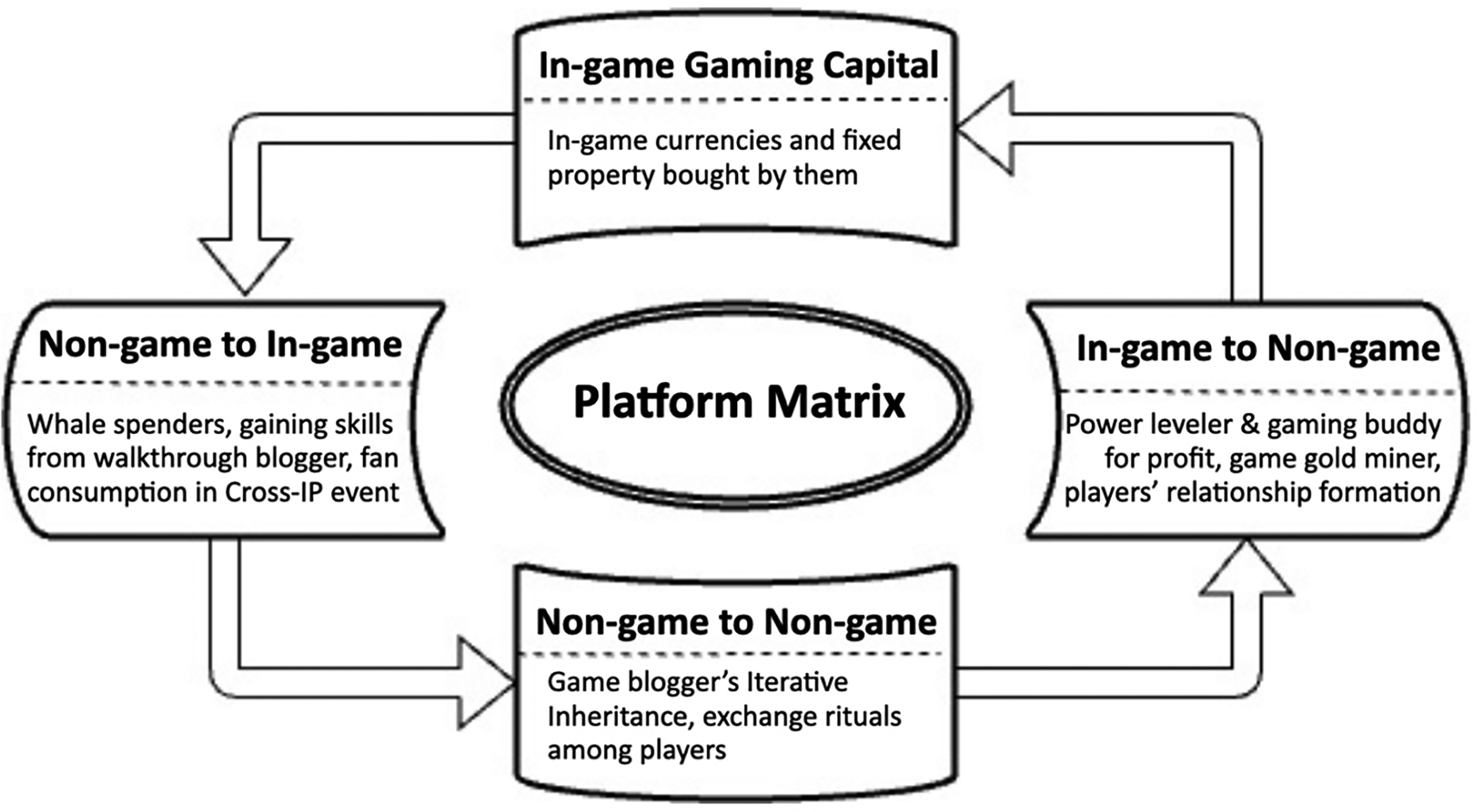
The flow of situationized gaming capital on game platforms constructed by authors.
Specifically, this can be categorized into four steps. First is the prescribed in-game transactional item. The transaction system in Sky: Children of the Light employs candles as a medium, and the various candles accumulated become the prevalent currency in the virtual world. The symbolism of this currency aligns with the core game mechanism of “encounters”: avatars illuminate each other with candles, passing the flame hand to hand without depletion. The in-game currency system is entirely artificial, devoid of risks like inflation or deflation, and the only way to disrupt the game's economic system is through player attrition. Therefore, the daily login requirement for the crucial white candles ensures player daily activity rates and retention rates. Additionally, the fetishism for virtual commodities among players guides the influx of non-game gaming capital, players become whale spenders, which completely establishes the standards for gaming success on the virtual assets owned by players, firmly binding players to the game as Crowdfunder.
Non-game gaming capital, in the sense of Bourdieu, encompasses economic, social and cultural aspects, including the conversion from real-life currency to virtual currency, turning acquired information into gaming skills, and symbolic consumption based on IP. In-game purchases, game walkthroughs, and IP collaborations are not emerging products of the game's platformization but have existed since the era of console and PC. However, the connectivity of platforms has integrated these elements into a more extensive ecosystem, players’ in-game purchases are intertwined with the consumption culture of social platforms. Also, the consumption of walkthrough content is not just about acquiring knowledge, behind the content's production lies the negotiation between the economic forces of various platforms. Thus, the metamorphosis from non-game gaming capital to in-game gaming capital harbors tensions among platform companies, user-generated content producers, and players.
The flow of non-game gaming capital between players and bloggers is particularly noteworthy, originating from bloggers’ social platform accounts and content creation, as well as players’ production of self-made game peripherals. Transactions among players and iterative inheritance between bloggers are all conducted in a ritualistic form, adhering to specific rules, with the premise and consequence of gifting being reciprocal. The social currency that embodies gaming capital essentially serves a symbolic function, carrying meaning and rationalizing transactions: after all, in the playful context of players, written contracts may seem somewhat out of place. Its nature is obligational, symbolized, and standardized social rules that are implicitly accepted in the community.
Lastly, games can accumulate capital for the non-game world, reflected not only in game platforms per se as high-profit cultural commodities but also validated by players. On one hand, services like game leveling, game buddy, and account farming allow players to exchange their labor in the game for economic capital in real life, even forming an industry on platforms like Taobao and RedNote. On the other hand, relationships formed in the game extend to daily life outside the game, bringing social capital benefits.
In the flux of gaming capital, the in-game transaction practices represent a form of pseudo-economic behavior: these behaviors, while appearing as transactions, involve the exchange and metamorphosis of different types of capital in a playful manner. Through discussions of several cases, two essential forms of pseudo-economic behavior in the accumulation and flow of gaming capital emerge: obligational transactions and exclusionary transactions. These respectively correspond to Bourdieu's logic of association and logic of difference (Grenfell, 2008). Obligational transactions are akin to passing candlelight in Sky: Children of the Light: as you extend the flame to others to light them up, you also get lit up by them. In other words, while giving to others or establishing relationships, one also anticipates receiving a fair share of gaming capital, the communities and status formed within the game can also be transformed into social capital outside the game. Obligational transactions take the form of exchange rituals and require a logic of association, such as players forming solid connections by exchanging Guzi, which is in tune with the platform's connectivity function. The social life of things is extended through exchange rituals, and the gaming capital they bear proliferates as it is transformed into gaming capital outside the game.
In contrast, exclusionary transactions resemble remolding the candles into commodities circulating in the market, for instance, players’ transaction practices in the gaming black market, which commodify virtual labor, establishing distinctions among players and deepening digital inequality. However, this is also a crucial driving force behind the profitability of game platforms: by accumulating gaming capital on platform accounts, players are bound to the game platform, thereby helping drive attentions and reduce operating costs. As players’ exchange of transaction items also potentially aid game operations, players become Crowdfunders, laborers, and investors in the virtual world. Therefore, obligational transactions maintain the operation of the game platform through a logic of association, while exclusionary transactions safeguard the prosperity of game platforms from a more fundamental level through a logic of differentiation. Rather than being mutually exclusive, these two forms of transactions work together to bolster the prominence of game platforms and extend the lifecycle of game products.
Therefore, in this vibrant transaction system, players unknowingly play complex roles. On one hand, they are consumers of cultural products. On the other hand, they also participate in the flux of gaming capital through transaction practice, akin to ants walking on a Mobius strip. When they have accumulated some gaming capital in the game, they began to eagerly seek its conversion outside the game, which aligns with the logic of platform companies: when game accounts lose value in the game's black market, it signifies the decline of the game product. Once this happens, players become bound to the game platform and begin to normalize the flow between the in-game and non-game worlds.
Conclusion
Through these interpretations, transactional items that can be identified as representations of gaming capital are brought into focus: in-game currency (e.g., candles), game/platform accounts and their virtual assets (such as game items, information channels, and follower resources), and handicrafts functioning as forms of social currency (e.g., baji, guzi, cloak), among others. These elements embody the flow and transformation of gaming capital. Certain transactional forms, such as in-game purchases and membership-based consumption, are explicitly defined by platform companies. However, players also engage spontaneously in transaction practices embedded within ongoing social relationships and networks of social capital, including black-market trading of games and custom-made peripherals. Collectively, these practices contribute to the construction of a gaming ecosystem that is fundamentally anchored in the platform matrix, thereby sitationizing gaming capital within specific socio-technical contexts. This dynamic continually redefines the boundaries between the game world, digital platforms, and everyday life. As a result, players are transformed into Crowdfunders, laborers, and investors for the platform, rendering leisure activities into an increasingly ambiguous domain.
A theoretical contribution is that in the process of categorizing gaming capital, the concept per se undergoes development, becoming situationized gaming capital. As we defined, it refers to the trans-domain crystallization of labor for exchange that helps players gain advantages within the gaming situation. When games become part of the platform matrix, gaming capital's extension is also redefined by the platform and connected to actants in various domains. Whether within the game or outside, transaction practices in different situations create a ring that facilitates the accumulation and proliferation of capital through the flow of things. The accumulation of gaming capital in a specific situation becomes a constraint, and the emotional bond between players is also simplified into a commercial contractual connection between players and the platform.
Thus, the flow of things, whether in-game currency, barter transactions, or transactions within the platform matrix, essentially represents the flow of gaming capital, constituting a transaction ecosystem and the transaction culture of players. The flow of gaming capital is inherently uneven, as its rules are shaped through negotiations among various actants across distinct fields, thereby establishing hierarchies and reinforcing distinctions within player communities. While passively accepting connections to the platform contexts, players also actively engage in creating rituals that challenge existing rules, embodying a form of playful resistance. As Mauss (2000) suggests, society stabilizes relationships and progresses through the process of “giving, receiving, and finally, giving in return” (p. 106), the principle is also reflected within player communities. Alongside the flux of gaming capital, gaming situations begin to overlap with diverse social scenes, embedding the genes of digital inequality into the transaction system: gaming is degraded to a pseudo-economic production–consumption behavior, losing its aesthetic value as the ninth art.
When players become truly vigilant about the transaction practice normalized by platform companies, it marks the beginning of a war in the discursive arena. With the platformization of games, regulatory frameworks governing digital platforms inevitably extend to the gaming sector. Behind a series of transactions disguised as virtual goods framed through well-known IPs lies the reality that platform companies design these monetization strategies to avoid regulatory oversight. This shift implies that game platform developers are no longer primarily focused on innovating new gameplay modes or enhancing the artistic quality. Instead, their efforts are concentrated on optimizing platform-based business models to ensure that player engagement (through obligational transactions) and monetization (through exclusionary transactions) align with the platform's growth logic. Addressing these systemic issues necessitates not only government regulation or the self-regulation of platform companies but also the awakening and activation of player agency within the platform ecosystem.
Footnotes
Acknowledgements
We would like to express our gratitude to all MIA editors and anonymous reviewers owing to their insights that helped to refine this work.
Declaration of conflicting interests
The authors declared no potential conflicts of interest with respect to the research, authorship, and/or publication of this article.
Funding
The authors disclosed receipt of the following financial support for the research, authorship, and/or publication of this article: This work was supported by The Monash PhD Global Mobility scheme supported by Monash University.
Ethical approval and informed consent
This paper is under Ziran Zhao's PhD project Ritual and rule: the simulation mechanism of game platform, and is approved by Monash Ethics Review Manager as project 38297. The Review Reference number is 2024-38297-113225.
Data availability
The data that support the findings of this study are available on request from the authors. The data are not publicly available due to privacy protection of research participants.
