



Abstract
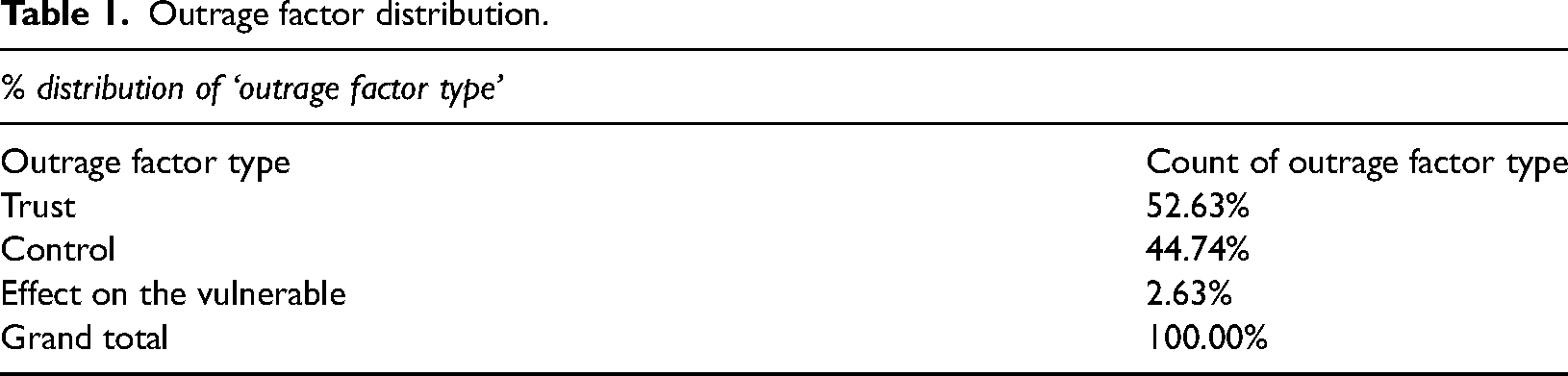
Organisations must clearly understand their stakeholders’ social identities and expectations when making operational and marketing decisions. Failure to do so can lead to a significant backlash that needs to be addressed with textbook crisis communication. This study examines Anheuser-Busch's response to the 2023 Bud Light crisis using the Situational Crisis Communication Theory (SCCT) and analyses stakeholder outrage factors through Instagram posts. This research identifies key outrage factors – primarily trust (52.63%) and control (44.74%) – and the prevalence of humour, particularly sarcasm, in 70% of reactions. Findings indicate that Anheuser-Busch's response lacked core crisis communication principles, focusing on patriotism and product quality (Bolstering) rather than direct crisis acknowledgment or apology (Rebuild). This study highlights the necessity for corporations to align crisis communication with stakeholder expectations and social identities to mitigate reputational damage.
Introduction
In April 2023, Anheuser-Busch, a leading beer brand in the USA, faced a significant crisis triggered by its partnership between one of its products, Bud Light, and transgender influencer Dylan Mulvaney (Bernstein, 2023). The association of the brand with Dylan Mulvaney sparked the boycott of the brand in a matter of days after the influencer posted a video on social media about it (Oladipo, 2023). This crisis not only shed light on the organisation's potential misalignment with its target audience but also underscored the critical importance of effective stakeholder engagement and crisis management in the contemporary business landscape (Weiner-Bronner, 2023). Bud Light, a lighter beer option produced by Anheuser-Busch, has been one of the favourites if not the favourite beer brand for light beer drinkers in the USA, until the April 2023 backlash (Bickerton, 2023; Bernstein, 2023; Oladipo, 2023; Wile, 2023). This consumer behaviour could be attributed to Bud Light's failure to prioritise and value its existing and already substantial, well-defined consumer base (Lovett, 2023). Historically, Bud Light's core audience has primarily consisted of young male American sports enthusiasts, blue-collar workers, military personnel and first responders (Whitworth, 2023), as well as country music listeners and females with the same interests, which accounted roughly for 39% of the consumers (Lovett, 2023). This article aims to assess Anheuser-Busch's response to the crisis, employing Coombs’ (2017) Situational Crisis Communication Theory (SCCT) as the overarching theoretical framework. The paper will also offer a panoramic of the stakeholders’ outrage factors towards the organisation by analysing 100 Instagram posts against the hashtag #budlight. This article will attempt to answer the following research questions:
Literature
Stakeholders’ social identity membership
For any organisation, the ability to effectively engage with its stakeholders is paramount, driven by the imperatives of corporate social responsibility and the desire to enhance organisational value and business performance (Freeman and McVea, 2005; Harrison et al., 2015). This imperative intersects with the foundational principles of Social Identity Theory (SIT), developed by Tajfel (1974) and originating from social psychology research. SIT posits that an individual's self-concept is intricately tied to their membership in specific social groups (Tajfel et al., 1979). Similarly, stakeholders often prioritise a ‘salient’ social identity concerning particular socio-economic issues (Schneider and Sachs, 2017). For instance, a large organisation serves as a sponsor for a sport club by adding their logo on the team's uniform. However, the organisation could withdraw the sponsorship if the club fails to adequately address racists comments made by its players or even fans. This is because the organisation wants to uphold its ethical image. By distancing itself from the club, the organisation switches from being financial support to social critic (Grantham and Pearson, 2022). Stakeholders wield influence not solely due to economic functions but also because of their social identities and shared interests relevant to specific situations (Crane and Ruebottom, 2011; Schneider and Sachs, 2017). Pressure or support may come from stakeholder groups whose societal affiliations are unrelated to economic reasons (Crane and Ruebottom, 2011). For example, employees (thus internal stakeholders) with school-age children, who have a vested interest in local education and sports programmes, may contribute to the company's social media efforts that promote scholarships and awards (Grantham and Pearson, 2022). When self-defined stakeholder groups make claims to an organisation, they impose such claims based on the nature of their societal constituency that affects and/or is affected by the organisation across several market levels (Crane and Ruebottom, 2011). Stakeholders are more inclined to trust digital influencers’ opinions when they partner with brands that align with their expertise (Cunha and Casais, 2024). Consequently, organisations operating on digital and traditional platforms tend to select influencers who reflect and align with their values, fostering a mutually beneficial relationship that enhances brand representation and engagement (Cunha and Casais, 2024). Moral violations committed by either a brand or an influencer can trigger feelings of betrayal, which, in turn, impact consumer trust, attitudes and intentions towards both parties. For instance, a perceived betrayal by a brand can negatively affect an influencer's popularity and weaken parasocial relationships with followers. Conversely, when an influencer is seen as morally transgressive, it can damage the brand they endorse. This mutual vulnerability points to a shared sense of responsibility between influencers and brands, especially during times of reputational crisis (Grantham and Pearson, 2022; Reinikainen et al., 2021). If brands decide to engage influencers during a crisis, failing to communicate openly and with clear values can risk appearing deceptive, potentially damaging both parties’ reputations (Singh et al., 2020). As such, influencer participation in crisis communication demands careful and ethically sound execution, given that their perceived trustworthiness is closely linked to the brand's authenticity and moral conduct (Reinikainen et al., 2021). Therefore, if organisations wish to effectively manage stakeholders’ relationships, understand firm/product social worth and achieve the highest business value, they have to comprehend the groups’ social identities and their intrinsic nature with the interests and expectations such groups advance concerning the firm (Crane and Ruebottom, 2011).
The role of crisis communication theory
SCCT equips crisis managers with a structured approach to anticipate stakeholder reactions concerning reputational damage incurred during a crisis (Coombs, 2007a, 2007b). It serves as a guide for organisations in navigating crises, maximising stakeholder benefits and safeguarding their own reputation (Claeys and Coombs, 2020). SCCT delineates three primary ‘reputation-repair strategies’: Denial, Diminish and Rebuild, complemented by a secondary strategy, Bolstering (Coombs, 2017). Denial seeks to disassociate the organisation from crisis responsibility, Diminish aims to mitigate crisis repercussions and Rebuild focuses on assisting crisis victims or offering formal apologies (Coombs, 2007a, 2007b) through ‘compensation or atonement’ (Singh et al., 2020: 465). Bolstering employs flattery to remind stakeholders of the organisation's past positive actions, emphasising the organisation's victimisation or praising stakeholders for their support during the crisis (Coombs, 2017). SCCT is rooted in attribution theory (Weiner, 2012), which posits that stakeholders tend to seek the causes of unexpected or negative events and make attributions, particularly in crisis situations (Coombs, 2007a, 2007b). In response, stakeholders may adapt their social identity in relation to the crisis and the organisation's crisis management and responsibility. From a crisis communication perspective, Coombs (2020) highlights that an organisation during a crisis must have an impeccable form of communication, distinguished by four key elements: (1) be quick, (2) avoid ‘No Comment’, (3) be accurate and (4) be consistent (p. 103). The need for immediacy is given by the need of the organisation to send its message across so as to satisfy the need of stakeholders and the media for information within 60 min, or golden hour, of the crisis occurring (Coombs, 2020). If such a need is not satisfied, those actors will find another way to gather information, which could be inaccurate if it is not the interested party to divulge it. As Coombs (2020) explains, silence could be interpreted as a passive response, which allows others to control the narrative of the discussion. For this reason, an organisation must clearly state its position on matters during a crisis. Although a rapid response is crucial, it needs to be well balanced against the level of information accuracy in relation to the situation. Inaccurate information could pose more risks than not being quick, depending on the situation (Coombs, 2020). Consistency means that messages delivered need to convey the same information avoiding contradictions (Coombs, 2020). While designating specific spokespersons to convey such messages, the expectation that only such spokespersons could always deliver information remains unrealistic, given the extent crises could reach timewise (Coombs, 2020). Therefore, all employees should be kept updated with the necessary information for the occasions in which the media would approach them, especially if their expertise reflects the nature of the crisis (Coombs, 2020).
Understanding stakeholders, audiences and publics
Although the terms stakeholder, audience and public are often used interchangeably (Wakefield and Knighton, 2019), it is important to clarify the distinctions between them in order to fully understand the Bud Light crisis. As mentioned in the previous section, understanding stakeholders is vital for any kind of organisation if it aims to achieve the highest organisational value and business performance (Freeman and McVea, 2005; Harrison et al., 2015). In fact, Sutherland (2021: 17) warns that considering such characters as a whole, undistinguishable mass is a ‘perilous approach’. However, Rawlins (2006) offers a comprehensive description of the three terms. Audiences connect to a message delivered by an entity and react to it. Audiences are enticed by such a message for several reasons, such as establishing an empathetic link or affinity group with the product/issue. Stakeholders connect to the organisation or other body. Stakeholders are linked to the organisation regardless of the message delivered. They essentially have a stake in the organisation, like investors, suppliers or staff members. They hold an enabling function, and it is important to note that many individuals belonging to the audience category are actually stakeholders that let the organisation grow by buying their products. Publics connect to a specific issue related to the organisation or another entity. Publics establish on their own when a shared interest in a specific issue originates from a common concern. In the Bud Light case, the public gathered to act in regard to the perceived disregard of their values. It is important to note that often such figures are a dynamic conceptualisation of the actors voicing their beliefs, discontent or outrage during a crisis. In fact, Grunig and Repper (1992) explain that an audience was just a listener or latent public because it was not aware of an issue. However, it could become actively engaged in resolving the issue and/or voicing its disappointment, consequently becoming a public (Grunig and Repper, 1992). Similarly, Singh et al. (2020) suggest that consumers rarely remain silent if brand's decisions are not welcomed. The connection between stakeholders theory, SIT and the concept of Stakeholders, Audiences and Publics here is quite evident, as it is possible to notice the tendency to actively engage with a problem and fluidly change their categorisation if an entity fails to value and/or recognise the nature of their audiences or have unethical conduct. It is possible to draw a potential explanation from the concept of authenticity. Woodcock and Johnson (2019) explain that strategic communication practitioners have deemed authenticity pivotal for entities if they aim to engage with communities and cultures. Authenticity delivery translates into communicating in a way that reflects the target subculture (Woodcock and Johnson, 2019). For example, when politicians leverage TikTok entertainment capabilities to connect to a younger demographic or shaping their content around patriotism more in line with an older demographic (Grantham et al., 2025).
Humour
The role of humour plays a critical role on online platforms, highlighting its ability to capture attention, convey critical political opinions and foster a sense of community among users with similar beliefs (Dynel and Poppi, 2021; Grantham, 2024). Dynel and Poppi (2021) argue that digital humour allows individuals to express dissent, critique powerful entities and build solidarity against the perceived targets. Similarly, Grantham (2024: 184) indicates that humour is a powerful tool capable of ‘testing free speech and exposing hypocrisy’. Humour is directly connected to power (Bitterly, 2022). As a result, organisations must now be aware of the power stakeholders wield on social media platforms (Jurgens et al., 2016) where they are able to mobilise and gather large publics (Dalakas et al., 2023), which will operate to address the issue at hand (Grunig and Repper, 1992). Of the different types of humour, the principal ones are satire, sarcasm and irony. Satire represents a form of cleverness intended to ridicule human flaws or errors, frequently employing exaggeration, subtle expression, including sarcasm, and irony. In contemporary times, those employing satire often leverage this humorous form to unveil political blunders or societal deficiencies in everyday experiences, occasionally with the aim of prompting transformation. Satirists use humour to emphasise ‘the gap between how things are and how they should be’ (Fine and Martin, 1990: 101). Conversely, sarcasm is a less gentle form of humour, and often, it is not considered enjoyable as the user convey a brash attitude or contempt towards an issue. When the audience is potentially sympathetic to sarcasm, sarcastic remarks wield significant influence and can influence attitudes. Sarcasm declares a stance, indicating the rhetorician's attitude towards the target (Fine and Martin, 1990). This standpoint is frequently not inherent in the literal meanings of the words used, indeed communicating the exact opposite. Lastly, irony involves employing incongruity as a technique to imply a disparity between reality and expectation, stating one thing but intending another, with the audience aware of both aspects (Fine and Martin, 1990).
Outrage factors
Regardless of the crisis type, situations can be exacerbated due to outrage factors, which are emotional components that contribute to risk perception (Grantham and Pearson, 2022). Sandman (1988, 1993) offers a comprehensive foundational explanation of these elements, and Grantham and Pearson (2022) tailor such explanation to more contemporary issues related to social media outrage. The main ones are categorised as voluntariness when stakeholders tend to be more receptive to risks they have willingly embraced rather than risks imposed upon them. Trust as trusted firms are more resilient in the face of adversity, largely due to the trust they have cultivated among their audiences. Control, or lack thereof, refers to when organisations can or cannot control the narrative of the situation. Familiarity is when stakeholders are more willing to take risks that are known. Finally, effect on the vulnerable when vulnerable groups are affected by a risk, publics react fiercely to it. For instance, if the elderly or children suffer the consequences of a decision or are at risk due to the consequences of that decision, then public outrage becomes widespread (Grantham and Pearson, 2022). The importance for organisations to address their stakeholders properly has been reiterated several times in the previous sections. This is because, in crisis communication, it has been identified an element known as the expectation gap, which refers to the gap between the firm behaviour and the stakeholders, audiences and publics expected organisation's behaviour (Grantham and Pearson, 2022). When these actors feel their expectations were in vain and/or the organisation behaved in a way that does not reflect their nature, then the likelihood of audiences and stakeholders becoming publics dedicated to voicing their disappointment increases. Similarly, Reinikainen et al., (2021: 3) refer to this as ‘brand betrayal’ akin to damaging a personal relationship. Brand betrayal is described as the distressing emotion triggered by a brand's moral violation, particularly when an individual has a strong personal connection to it, ultimately damaging the relationship (Reinikainen et al., 2021). This divergence, evident in the expectation gap, reflects the nuanced attributional perceptions of stakeholders and audiences regarding the organisation's actions during crises. This aligns with Weiner's (1985) attribution theory, which highlights how individuals attribute causality to observed behaviours and outcomes.
Materials and methods
For this research, the official statement delivered by Bud Light's CEO, Brendan Whitworth, has been analysed against Coomb's SCCT. Further, 100 Instagram posts from users against the hashtag #BudLight were gathered. The direct link to each video and metadata, including the date of the post and total interactions, was gathered. The initial pool of data collected 434 posts. Upon observation, many posts were part of organisations or collective pages. Therefore, of those, 100 posts have been selected from personal accounts. Organisations’ accounts often have larger follower numbers, and therefore, the message could be amplified further than personal posts. To avoid this bias, the data set was limited to posts from personal accounts only. The data pool has been extrapolated from CrowdTangle, which is the official Meta data repository. The use of the data in this study has been approved through ethics clearance GU Ref No: 2025/344, confirming that its collection and analysis complies with the required ethical standards. The analysis of each post was carried out by considering the tone of the post, if outrage was present and which type of outrage following Sandman's (1988; 1993) outrage factors, whether humour was present and which type of humour each post contained. Some posts presented more than one outrage factor adding up to 152. All the posts analysed have been published within a 14-day period from April 1 to April 14, the day in which Bud Light's official statement was released.
Results
From the analysis of Bud Light's official statement using Coombs’ SCCT, it was possible to observe that it lacked foundational elements of crisis communication. For instance, the first four sentences attempted to include a Bolstering approach. In the fourth sentence, Bud Light's target audience is acknowledged. Only in the fifth there has been an acknowledgement of the crisis matter without any formal apologies, which could have been a potential approach to take. However, none of the above-mentioned approaches have been utilised. The other six sentences continued to emphasise the brand's commitment to brewing quality beer without addressing any elements of the crisis unfolding. Apart from the fifth sentence, the overarching theme used to deliver the message was patriotism and reiteration of providing a quality product. Of the 100 posts analysed, more than one code could have been applied to it. Of these posts, all of them presented an outrage factor, of which out of five major types, only three were present.
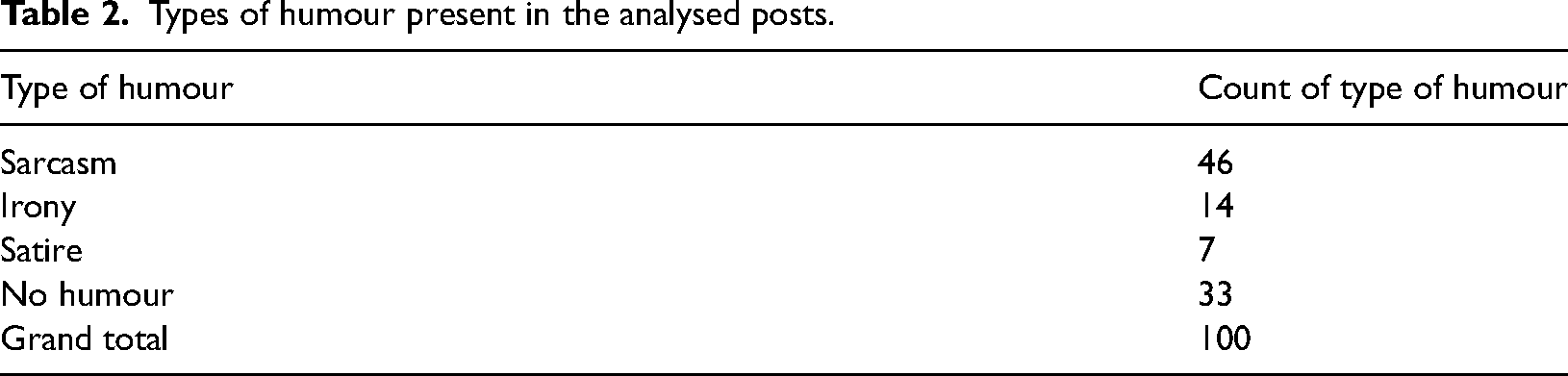
Table 1 shows that trust was present in 52.63% of the posts (n=80), control was present on 44.74% of the posts (n=68) and effect on the vulnerable was present in 2.63% of the posts. Tone of the post was also considered. A negative tone was present in n=68 posts, a positive one in n=50 and n=34 were neutral. Table 2 shows that, out of 100 posts, 70 presented humour. The most used type of humour was sarcasm present in n=46 posts, irony was used in n=15 posts and satire was present in n=7 posts. In n=33 posts, humour was not present.
Outrage factor distribution.
Types of humour present in the analysed posts.
Discussion
From a crisis communication standpoint, Bud Light's communication efforts lacked the basic elements of crisis management. Bud Light kept silent for 2 weeks after the backlash occurred and then released an official statement from the CEO, Brendan Whitworth (Whitworth, 2023). By analysing the statement, it is evident that it did not address the focal issue at the centre of the backlash, nor it gave a clear explanation of the organisation's position on the matter. Coombs (2020) clearly states that it is essential for an organisation to indicate where it stands in a discussion. For instance, Bud Light could have defended the influencer, or it could have apologised to the stakeholders for a bad partnership choice. However, Mr Whitworth opted for a ‘Bolstering’ approach, as in the statement is possible to read his attempt to remind the stakeholders of the organisation's past positive performance. SCCT indicates that the Bolstering approach is considered a secondary approach and must be used in conjunction with either one of the three primary ones, namely, Denial, Diminish or Rebuild. Drawing from Coomb'’s (2020) explanation, it is possible to see, from the examples provided above, that Bud Light's choice to keep silent allowed the stakeholders to get hold of the narrative, exacerbating the situation further. Consequently, the organisation's communication form lacked the key element of being quick. Coombs (2020) indicates that the consensus among professionals is that organisations need to deliver their messages fast, usually within 60 min of the crisis or event occurring. Accuracy and consistency have faded away by opting to keep silent because, at that point, the narrative of the crisis and the inherent information have been controlled by the stakeholders. Bud Light's crisis communication effort cannot be considered textbook resulting in a lack of crisis management effectiveness. Another aspect to point out is that Bud Light's traditional audience and stakeholder group markedly differs from the one represented by Mulvaney, the influencer at the centre of the crisis. From Bud Light's official response, it appears evident that Bud Light's CEO has a clear understanding of the brand's target audiences, potentially raising questions about the marketing choice of employing a transgender influencer for the brand marketing campaign. The fourth sentence of the response states: We have thousands of partners, millions of fans and a proud history supporting our communities, military, first responders, sports fans and hard-working Americans everywhere.
Drawing from the theory, it appears quite evident the link with SIT (Tajfel et al., 1979), stakeholders theory (Freeman and McVea, 2005) and the dynamic shifting behaviour of Audiences, Stakeholders and Publics explained by Grunig and Repper (1992). Bud Light's stakeholders, previously aligned with the beer brand, shifted from being ardent supporters to vocal critics of the organisation as they felt their values had been stepped on. Furthermore, drawing from the concept of authenticity, as explained by Woodcock and Johnson (2019), Bud Light has not been able to communicate with its consumer base due to the dissonance between Bud Light's traditional audience and the one Mulvaney represents. Another important element of this crisis is the fact that it originated from an Instagram video posted by Mulvaney promoting the partnership with Bud Light. If, on one hand, Bud Light may have failed to adequately address and value its stakeholders and audiences by opting for a partnership that potentially did not reflect the traditional Bud Light consumer base's lifestyle and values, on the other hand, Mulvaney's video could have triggered the crisis. Again, this might be due to dissonance between Bud Light's traditional audience and Mulvaney one. As a result, more than half the posts analysed present the outrage of trust.
For instance, the ‘Refused order post’ stating that as a business owner, they refuse Bud Light orders highlights the level of loss of trust the stakeholders had in the brand. Moreover, the owner reiterates that their business will pull Bud Light from the shelves and that they are not the only ones who are doing so, according to the sales representatives. The meaning is that they cannot afford as business owners to stock a product that does not sell. This post offers a clear example of stakeholders losing their trust in the organisation and how such a loss of trust causes retailers to adapt to the demands of the audiences and stakeholders. Out of 100 posts, the ‘Refused order post’ (Figure 1) has been found five times across the users, reaching more than 200K likes in total between the 7th and the 11th of April on Instagram. Originally posted on X (formerly Twitter), the post has been reshared to Instagram, increasing its amplification. Drawing from stakeholders theory (Freeman and McVea, 2005), it is possible to observe the ability of stakeholders to influence the issue for which they are advancing their claims. This is an example of how stakeholders could affect organisations on various market levels during the process of voicing their disappointment concerning the organisation's actions. The post author's statement implies a lack of control on Bud Light's part and its parent company, Anheuser-Busch, over the situation. This aligns with the second quarter of 2023, where Anheuser-Busch InBev reported a −14.1% in the total volume of Bud Light sold and a −10.5% decline in revenue, stating that ‘Performance impacted by volume decline of Bud Light’ (AB InBev, 2023: 7). The brand also stated that consumers want ‘Bud Light to focus on beer’ and ‘Bud Light to concentrate on platforms that all our consumers love – e.g., NFL, Folds of Honor, Music’ (AB InBev, 2023: 8). This shows how the stakeholders’ sentiment drives organisations’ actions and how organisations need to be wary of such sentiment, highlighting the reputational, financial and operational repercussions of stakeholders attributing the crisis responsibility to organisations (Coombs and Holladay, 2005; Coombs 2017). Moreover, it is critical to point out that Bud Light's lack of immediacy in taking a stance in the discussion further exacerbated the situation. As a result, stakeholders were able to take control and shape the narrative by prompting businesses to stop ordering the brand. This demonstrates the shifting dynamics of the stakeholders in relation to an issue (Grunig and Repper, 1992; Freeman and McVea, 2005; Tajfel et al., 1979).
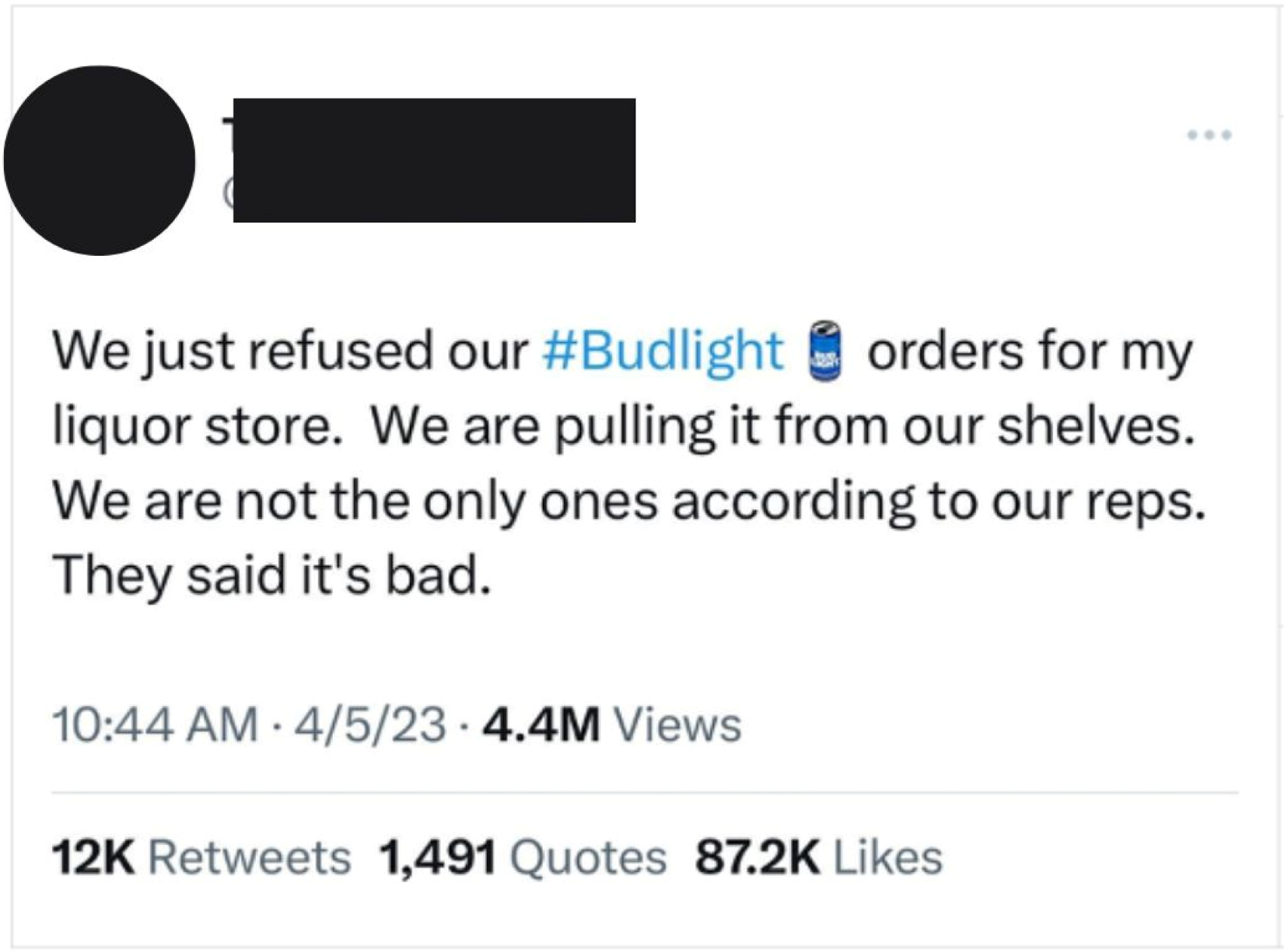
Refused order post.
Therefore, to answer RQ1, ultimately Bud Light could have avoided the exacerbation of the situation by stating its position on the issue and taking control of the narrative (Coombs, 2007a, 2007b). This would have given the stakeholders the feeling of being heard. However, the crisis worsened given the organisation's failure to take position; therefore, at this stage, Bud Light should have opted for a Rebuild approach given that the organisation needed to regain stakeholders’ trust. The only way to do so was by taking responsibility for the mistake and selecting appropriate actions for the organisation's atonement. For instance, prioritising a new advertisement/partnership more aligned with Bud Light's stakeholders’ values, such as brewing good beer with the intent to bring people together over music and sports (AB InBev, 2023: 8).
Figure 2 is an example of stakeholders getting control of the narrative, the second most predominant outrage factor present in 44.74% of the videos. The post highlights the shared sentiment that ‘hundreds of voters’ had in boycotting Bud Light. By sharing the sentiment of Bud Light's dismissal among the event participants, the author of the post tries to highlight the fact that the organisation made poor marketing and business choices by opting to associate with a transgender. The post delivers a concise message: ‘If you decide to support LGBTQ and/or other “woke” ideologies, your business will suffer the consequences’. Also, in this instance, we can find an example of how the stakeholders prioritise a specific social identity reflecting the nature of their values (Freeman and McVea, 2005; Grunig and Repper, 1992; Tajfel et al., 1979).
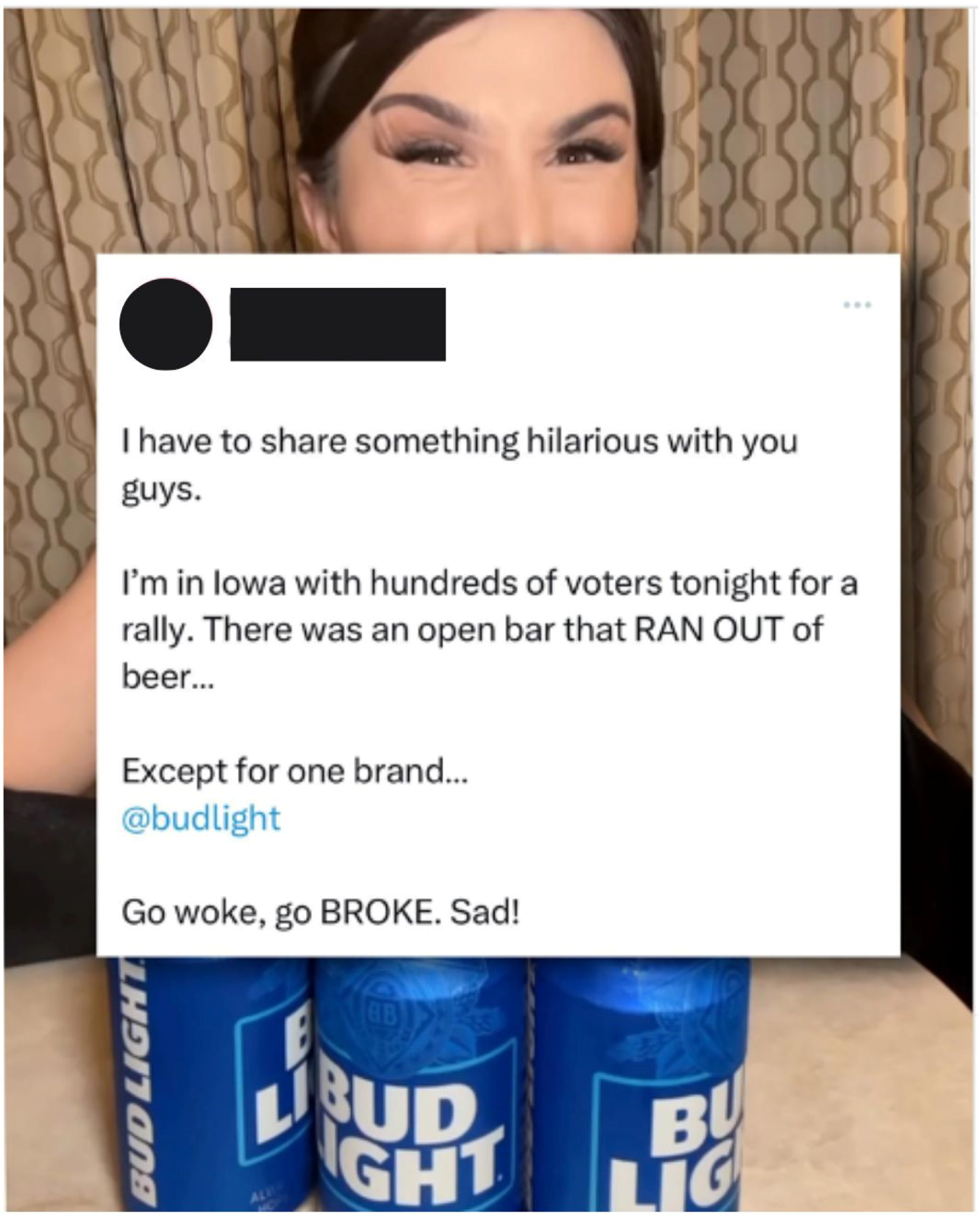
Beer ran out post.
Another example of stakeholders controlling the narrative of the discussion is given in Figure 3. Stakeholders’ use of memes with a positive tone is another way of taking control of the discussion, thanks to the amplification of social media platforms (Zulli and Zulli, 2022). The reputational damage originated from Bud Light's failure to adequately address and value its stakeholders (Freeman and McVea, 2005; Harrison et al., 2015) increased substantially with the use of such narrative control (Coombs, 2020), which at this point had become the association between the brand and the fact that if someone drinks it, it is automatically part of the LGBTQ community. The post reached 11,677 likes and was published on the 7th of April.

Couple in bed meme.
The other outrage factor present in the videos, accounting for only 2.64%, was effect of the vulnerable. For this outrage factor, Figure 4 provides an example of it.
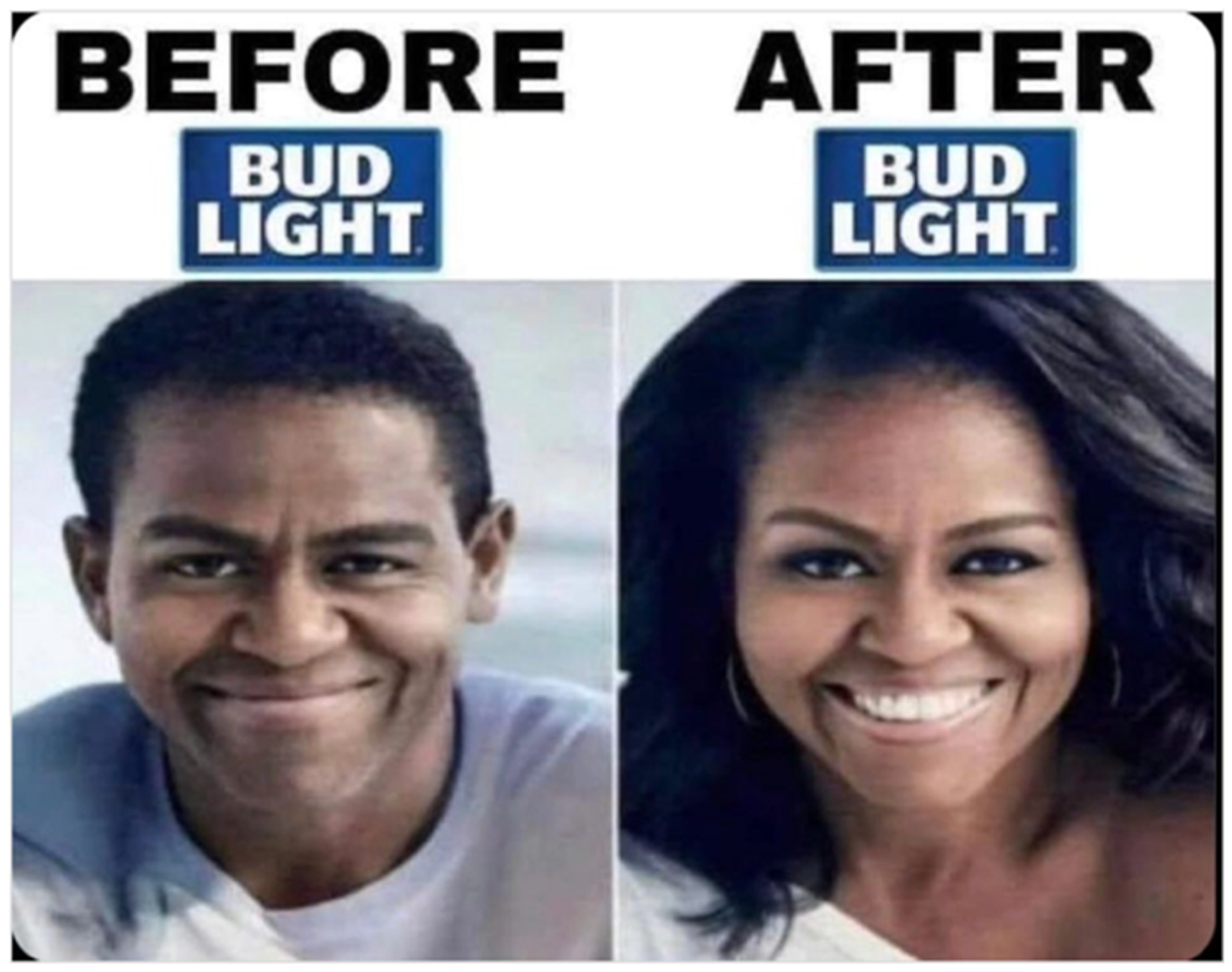
Michelle Obama post.
The analysis of this post shows how vulnerable populations could be affected. Capitalising on the conspiracy theory of Ms Obama being transgender (Reuters, 2020), the creation of this post not only advocates the stakeholders’ rejection of the LGBTQ community but also targets a well-known female figure making people change their opinion about her. Lastly, the post embeds these two narratives associating them with Bud Light, sharing the message: ‘If you drink Bud Light, you will become one of them’.
To answer RQ2, it is evident that Bud Light's stakeholders perceived the company's crisis communication efforts as not aligning with their values as it is possible to observe from the dissent displayed via social media. Individuals’ use of humour to voice their discontent towards Bud Light was an effective way to leverage and bring together apparently disassociated groups (Dalakas et al., 2023; Dynel and Poppi, 2021). The most prominent type of humour found in the posts was sarcasm (n=46 posts). Sarcasm is well placed as the type of humour of choice as its mockery features carry also a negative connotation in the joke. Taking into consideration the social and political inclination of the stakeholders studied in this paper, an example of sarcasm can be found in Figure 5.
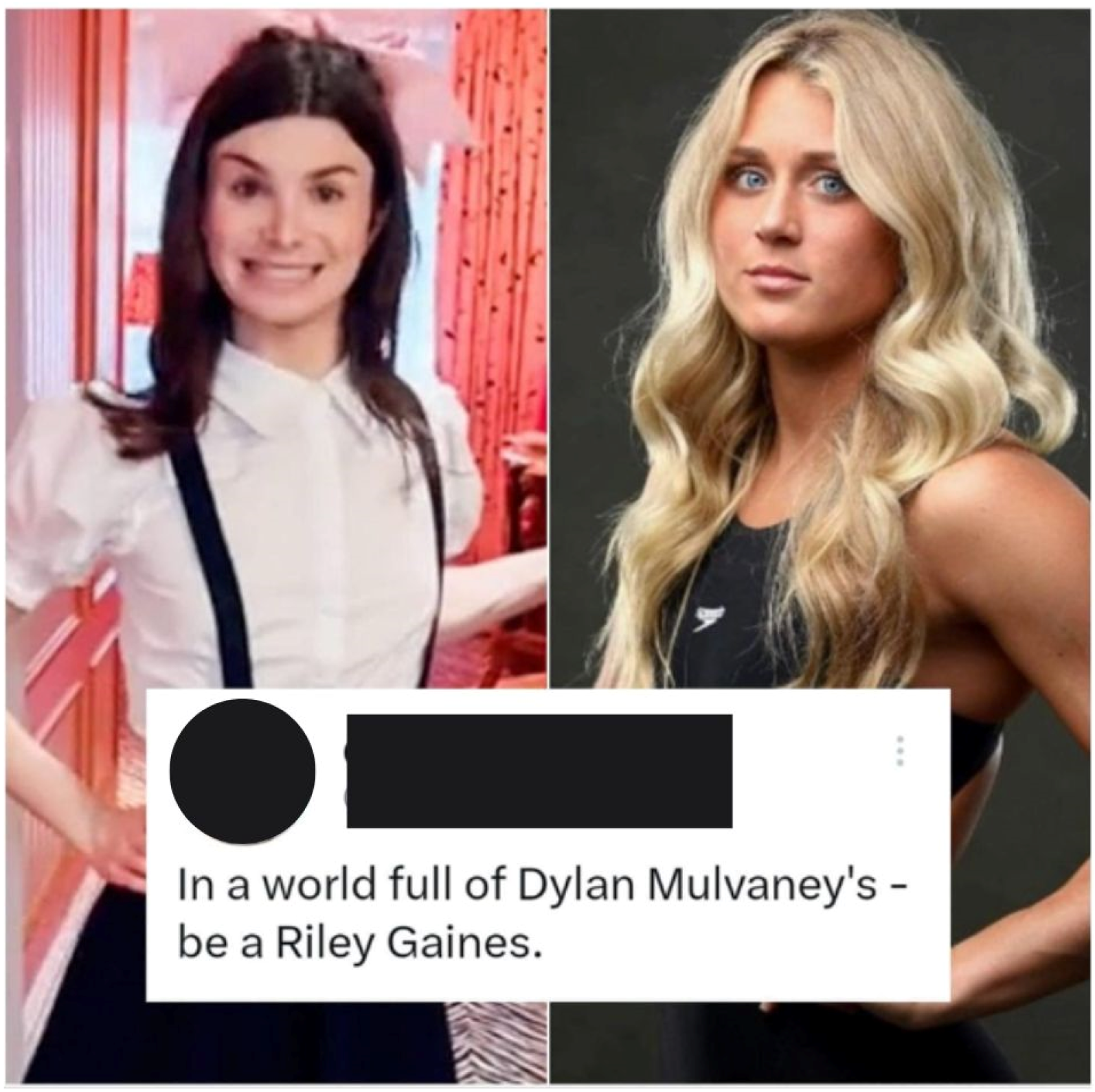
Comparison meme.
Considering the widespread resistance among Bud Light’ stakeholders to accept a transgender person as the iconic face of their beer and Railey Gaines’ vocal stance against transgenders’ participation in women's swimming competitions, the meme presented in Figure 5 wittingly employs sarcasm. It plays on the notion that just as Mulvaney does not authentically represent Bud Light, the meme humorously contends that transgender individuals similarly do not have a place in women's sports competitions. This post is an attempt to use sarcasm demanding organisations and institutions to respect and align with the beliefs of their stakeholders. The shifting dynamics of SIT and the power of stakeholders voicing their disappointment in this post are evident, as it explicitly communicates a desire for alignment with organisations that mirror the perceived values and identity of the stakeholders (Cunha and Casais, 2024; Freeman and McVea, 2005; Tajfel et al., 1979). As the second most used type of humour present in n=14 posts, irony within this narrative is used to mock the failed attempt of Bud Light to include the transgender community in a historically traditional conservative space. Posts using such a type of humour highlight and ridicule the stark opposite result obtained by the organisation. An example of such mockery can be found in Figure 6, the author of the post opted for a straightforward approach by simply taking a photo of a supermarket aisle where Anheuser-Busch products were left unsold while rival beer brands have sold out. This post operates on three levels: firstly, it underscores the palpable loss of trust experienced by stakeholders in the organisation. Secondly, it accentuates the situational irony of the organisation launching a brand-new inclusivity campaign with the expectation of boosting sales, only to witness the opposite effect. Thirdly, it offers a clear view of how the newly formed public find ways to act towards the issue they want to address and/or solve (Freeman and McVea, 2005; Grunig and Repper, 1992; Tajfel et al., 1979).
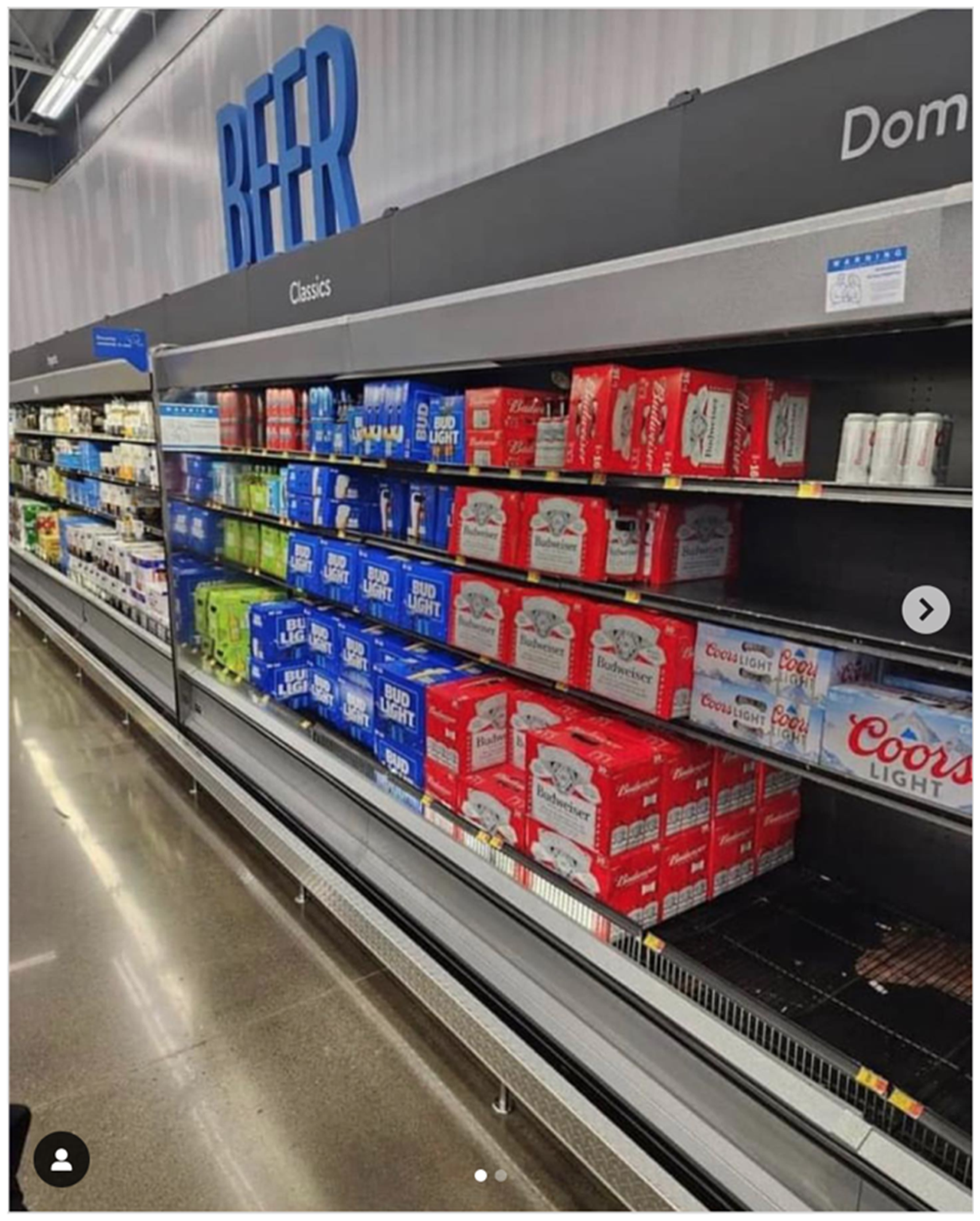
Unsold Anheuser-Busch products.
The third most used type of humour found in the posts analysed is satire present in n=7 posts. The use of satire in the context of the Bud Light crisis has been predominantly used to ridicule the results of the company's marketing Vice-President, Alissa Heinerscheid. The stakeholders’ pressure on social media in her regard has been so profound that pushed the company to dismiss her. An example of the use of satire with strong political roots can be found in Figure 7.
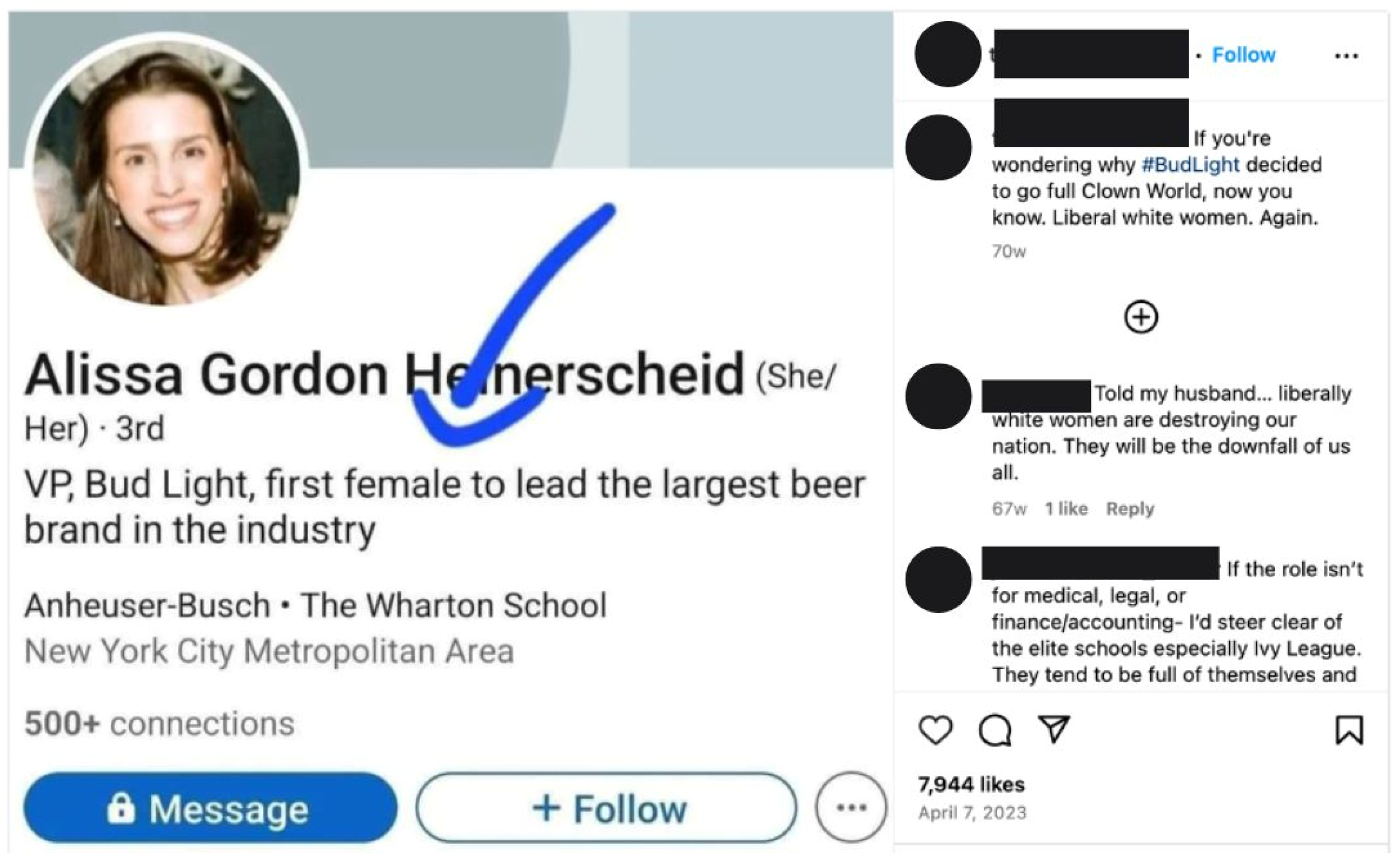
Bud Light's marketing Vice-President mocked.
The post attributes the blame for the unsuccessful campaign to the efforts of a ‘liberal white woman’ to attempt to change the company's direction in terms of audience outreach. In this case, the satirical user emphasises the way the situation is and ‘jokingly’ conveys how the situation should be. This post is also particularly loaded with sarcasm dedicated to the open ‘aggression’ of the subject, highlighting the strong contempt the stakeholders feel towards the issue and the extent they are willing to advance it.
These actions reflect the best practice in crisis communication as exemplified by Coombs (2007a, 2007b, 2017) and clearly illustrate stakeholders shifting dynamics in line with Tajfel et al. (1979) and Freeman and McVea (2005). This paper aligns with the proposition by Coombs et al. (2020) that SCCT can be a useful framework for understanding ‘sticky crises’ which are characterised by complex external elements such as misinformation, social and political tensions and the dynamics of digital communication. This study offers a meaningful contribution to SCCT literature by indicating how a different approach should be prioritised over another given the timeframe organisations have to act on a crisis is shortened by the fast and evolving environment of social media. From a theoretical perspective, the paper also argues that Bolstering approaches may be ineffective when organisations do not act on time and ignore identity-based expectations of stakeholders and the social media sentiment pushes the situation to a point of non-return. Therefore, this study shows that not always organisations should ‘respond to crises through a bolstering strategy promoting existing corporate goodwill, without the influencer's involvement’ (Singh et al., 2020: 464). Additionally, influencers or testimonials help ‘communicating values-driven motives behind the brand-influencer partnership’ (Singh et al., 2020: 464) also was not possible to be leveraged, given the inclusion of the influencer was, in this case, the root cause of the crisis in the first place.
Limitations
The research acknowledges limitations in its development. Users’ comments have not been considered to support the arguments, and as such, they could have potentially indicated contradictions in whether the sentiment of the posts reflected consensus or not. The sentiment of the posts was analysed based only on total interactions. The number of posts from which the data have been extrapolated was limited to 100, which may not necessarily capture the general public sentiment, although selecting them within a 14-day timeframe. Lastly, the author acknowledges that other social media platforms have not been considered which could have increased the diversity of perspectives. However, Instagram was chosen due to its visual and engagement-driven nature and the fact that the crisis started from this platform.
Conclusions
The importance of valuing, addressing adequately and recognising stakeholders and audiences is paramount for organisations or entities that wish to improve their business value both in economic and reputational terms. In these regards, the Bud Light crisis offers a well-illustrated case study about the dynamics occurring from failing to foster the loyalty of an organisation's own stakeholders and failure to employ effective crisis communication principles. Bud Light failed to employ an effective crisis communication as its form lacked all the related principles of (a) be quick, (b) avoid ‘No Comment’, (c) be accurate and (d) be consistent (Coombs, 2020) given the only response offered was a statement delivered 2 weeks after the crisis occurring and not addressing any of the issues concerning it. There has been only an unclear acknowledgement about the brand being at the centre of an issue. As a result, Bud Light's response has only exacerbated the situation further given a prompt, assertive and well-formulated response would have allowed Bud Light to control sales losses and reputational damages while having the chance to steer the narrative in its favour. This is possible to observe in the findings where most of the stakeholders have shown the outrage factor of trust, indicating the stakeholders’ loss of identification with the brand. The other substantial outrage factor was control. This is due to the lack of an effective response from Bud Light, allowing the stakeholders to take hold of the narrative. Consequently, Bud Light failed to acknowledge its stakeholders and underestimated the bond between the symbolic value of the brand and their social identities. Although trying to appeal to a different target audience is a well-established goal among any type of organisation that hopes to expand its consumer base, the importance of conducting exhaustive research about audiences and stakeholders’ values is critical to ensure any campaign's success. Further research may expand the data set and delve deeper into the argument as well as undertake a comparative analysis of other brand crises involving influencer partnerships to identify common pitfalls and successful strategies. It is acknowledged that users’ comments were not part of the analysis, and they could be explored in future research. Including users’ comments in the analysis could serve to better capture the sentiment of the stakeholders involved. This addition would enable also a comparative study between the different types of stakeholders. This could be done by evaluating the sentiment of sports enthusiasts between blue-collar workers and other types of stakeholders, emphasising the need for clear, targeted communication in brand-stakeholders relationships.
Footnotes
Acknowledgements
I am profoundly grateful to Dr Susan Grantham for her invaluable support and guidance throughout this project. Her expertise in social media and crisis communication has been instrumental in helping me to visualise and shape this work. As an emerging scholar, I have greatly benefited from her insights and mentorship, which have been crucial to my development and the successful completion of this research. Her encouragement and wisdom will continue to inspire me in my academic journey.
Declaration of conflicting interests
The author declared no potential conflicts of interest with respect to the research, authorship, and/or publication of this article.
Funding
The author received no financial support for the research, authorship, and/or publication of this article.
