




Abstract
This article presents a discursive analysis of crisis communication strategies employed by British Prime Minister Boris Johnson during the first 2 years of the COVID-19 pandemic. Utilising critical discourse analysis, the study examined official communications from March 2020 to January 2022. While Johnson's communication style encompassed empathy, assertiveness, and a focus on vaccination efforts, enhancing specificity, transparency, addressing potential inequalities, as well as prioritising community building, could have heightened the impact of his messages during the COVID-19 pandemic. By examining Boris Johnson's speeches as a case study, the research adds depth to the discourse on effective communication strategies employed by world leaders. The findings underscore the significance of clarity, adaptability, empathy, and reliance on scientific evidence in navigating the complexities of crisis communication.
Introduction
During times of widespread crisis, leaders around the world are frequently called upon to address the consistently changing environment. During the COVID-19 pandemic, Boris Johnson (BJ), the then-prime minister (PM) of the United Kingdom (UK) was not an exception. As the PM, he delivered numerous speeches – often accompanied by experts in health and economics – about the consistently evolving situation in the UK and around the world. Following these addresses, Johnson engaged in interactions with journalists and fielded questions alongside accompanying experts (Lillecker and Stoeckle, 2021).
For this research, it is necessary to understand Johnson's approach to government before the onset of the pandemic. Johnson's government focussed on centralisation. Brexit, in particular, played a pivotal role in Johnson's ascent to power, as he positioned himself as a preferable alternative to his predecessor's approach. The eventual ratification of the withdrawal agreement further bolstered his popularity and electoral support (Ward and Ward, 2021). Johnson has utilised a series of governing approaches to enhance the authority of the executive in the UK, where the political structure almost displays a bias towards central government and the executive branch (Gaskell et al., 2020).
However, the COVID-19 outbreak altered the political landscape in the UK. The pandemic presented another opportunity for the executive's assertion, as Johnson expedited existing trends under the guise of crisis management (Ward and Ward, 2021). The swift progression from localised cases to a global pandemic prompted the UK government to publish an action plan for containment. As cases escalated, the country entered its first national lockdown, with Johnson and other leaders urging citizens to stay home. While similar measures were adopted across the UK's constituent nations, differences in leadership styles and choices became apparent, with Scotland's approach garnering more of a positive reception (Thiers and Wehner, 2023). Yet, amidst these leadership actions, concerns arose about the erosion of parliamentary accountability and the concentration of power within the executive branch. Johnson's suspension of parliament in 2019 and subsequent management of COVID-19 emphasised the executive's growing influence. Scholars (Diamond and Laffin, 2022; Gaskell et al., 2020) have pointed to structural weaknesses in the government's decision-making processes, leading to policy errors and a lack of coherent responses. This trend underscores the delicate balance between leadership authority and the need for effective governance during crises.
By December 2021, the UK had faced significant challenges from COVID-19, witnessing high infection rates, fatalities and economic losses. Confidence in the central government's pandemic management had dwindled over time, particularly in England, compared to devolved governments in Wales and Scotland. Although vaccine rollout led to some recovery in public trust, overall confidence remained below pre-pandemic levels (Wright et al., 2022).
This study discursively analyses crisis communication, emphasising tone, the language used, frequency and consistency, by BJ in communicating with the public, specifically through the speeches he delivered during the course of COVID-19. Effective crisis communication involves timely and transparent communication with all stakeholders and the media (Barton, 2007). It also requires a clear and consistent message that is aligned with shared values and objectives, and that acknowledges any mistakes or shortcomings (Coombs, 2019).
Crisis communications
The COVID-19 pandemic has highlighted the significance of effective leadership in managing crises. However, existing research on COVID-19's impact on political institutions and public policy has largely focused on elements like policy capacity, institutional trust, historical legacies, cultural influences, and distinct national policy approaches, paying limited attention to the role of leaders as primary drivers of diverse pandemic responses (Capano et al., 2020; Zahariadis et al., 2023). While some studies have explored leaders’ educational backgrounds, communication styles and gender dynamics (Forster and Heinzel, 2021; Piscopo, 2020), there is room to delve deeper into the role of leaders as key influencers in pandemic decision making.
The UK serves as an intriguing context for such investigations, primarily due to its demographic landscape and secondly, its political situation. The demographic composition of the UK is characterised by a rich diversity, featuring a variation of age groups, ethnicities and socio-economic strata (Office for National Statistics, 2020). Notably, the nation's ageing population, with a substantial proportion of individuals aged 65 and above, contributed to heightened vulnerability to severe COVID-19 outcomes, including increased risks of hospitalisation and mortality (Chen et al., 2021). Furthermore, the UK's multicultural composition, comprising sizable populations of White, Asian, Black and mixed ethnic backgrounds, revealed ethnic minorities’ disparate impact during the pandemic, encountering elevated infection rates and poorer health outcomes (Aldridge et al., 2020). Socio-economic disparities also played a pivotal role, as individuals from lower-income households, essential workers, and those residing in crowded conditions faced heightened exposure risks and limited access to essential healthcare and financial resources (Bambra et al., 2020). Nevertheless, it is crucial to acknowledge that demographic dynamics differed across regions in the UK, potentially influencing the pandemic's effects variably.
The UK also serves as an interesting case study due to its early adoption of COVID-19 vaccines and BJ's shift towards aligning pandemic management with WHO recommendations. Johnson, elected in 2019, campaigned on delivering Brexit, which occurred on 31 January 2020, remaining a divisive issue. Initially, the UK pursued a mitigation strategy for COVID-19, targeting herd immunity, but shifted to stricter measures due to forecasted mortality increases. A nationwide lockdown was implemented on 23 March 2020, coinciding with Johnson's own COVID-19 diagnosis. Government communication during this time was criticised for its vagueness and contradictions, leading to public trust erosion. Criticism from the scientific community focused on delayed implementation of stringent measures. Overall, it has been argued that the UK's response reflects the challenge of balancing public health priorities with political and economic concerns (Loner et al., 2023).
The COVID-19 pandemic underscored the pivotal role of leaders in shaping crisis responses. While existing research has explored various dimensions of this role, the article discussed herein seeks to shed light on the temporal narrative of the UK's pandemic management. Examining the speeches and actions of BJ within the contexts of Brexit and COVID-19, the study highlights the complex interplay between leadership, public perception and governance structures during times of turmoil.
The aim of this study is to analyse crisis communication emphasising tone, the language used, frequency, and consistency by the British PM in communicating with the public during the key stages of crisis: the start of COVID-19, the peak of the pandemic and post-peak. These stages help understand the broader responses from him and assist in analysing the tone and language used at different stages of the crisis. This article proceeds as follows. First, we present detailed literature about crisis communication, including previous studies about leadership response to crisis, in particular endemics and pandemics, such as COVID-19. Next, we discuss methodological and theoretical methods used to analyse communication by BJ, which is followed by our findings. Finally, we conclude with the discussion and conclusion of the study.
Literature review
A crisis is an ‘unexpected event that poses a significant threat to an organisation and its stakeholders and can have a negative impact on its reputation, operations, and financial performance’ (Coombs, 2014: 2). Crisis communication is a term often used to describe efforts to alleviate uncertainty through the strategic exchange of risk-relevant information during an emergency (Collins et al., 2016). Crisis communication strategies typically include establishing a crisis communication plan and designated spokesperson, providing timely, accurate, and transparent information to stakeholders (Seeger et al., 2019), providing clear direction and guidance, communicating regularly and transparently with stakeholders (Coombs and Holladay, 2016), and establishing a clear decision-making process.
The study of crisis communication, though still small and facing challenges (Muñoza et al., 2019), has been a growing field in academic literature, with most studies related to commercial organisations. Even the term ‘crisis’, which can be defined in a range of ways, is typically described from an organisation's viewpoint rather than a national/international perspective. For instance, for Coombs (2007: 2–3) it is ‘an unpredictable event that threatens expectations of stakeholders, can impact performance and generate negative outcomes’. Greenhouse (2002: 8) describes it as conditions in which ‘people (including the ‘state's agents’) must cope with a variety of unexpected disruptions’. Effective crisis communication involves timely and transparent communication with all stakeholders, including employees, customers, suppliers, shareholders, and the media (Barton, 2007). It also requires a clear and consistent message that is aligned with an organisation's values and objectives, and that acknowledges any mistakes or shortcomings on the part of the organisation (Coombs, 2019).
Most studies about crisis communication have been done from the standpoint of organisations (Kent, 2010: 705), focusing on image repair (Olsson, 2014), organisational resilience (Cabras and Piga, 2020) and industrial disasters (Utz et al., 2013). However, there is the limited research available on leadership communication during crisis, including response to natural disasters (Romascanu et al., 2020), epidemics such as Ebola in Africa (Tambo et al., 2017), bushfires in Australia, the continued refugee crisis in North Africa, the Middle East and Europe, Brexit in the UK (Diers-Lawson and Meißner, 2021) and terror crises in conflict-stricken areas (Ruggiero and Vos, 2015).
Meanwhile, a review of the rapidly growing body of literature about COVID-19 shows that researchers from around the world have studied the impact of the pandemic from a diverse range of perspectives, including health, economy, international relation, politics and media response. Social media has been a key research topic, given its importance as a communication channel during crises. This is evident in the increasing literature on social media and crisis communication during COVID-19. For example, Liu (2022) studied the influence of source credibility and social media use on public responses to crises; Zhang (2022) compared the crisis communication strategies of government and non-governmental organisations during the COVID-19 pandemic; Wang et al. (2020) investigated how social media information source and information type affect public crisis responses; and Lachlan et al. (2021) examined how social media has impacted crisis communication strategies in the digital age.
Research on COVID-19 in the UK spans various domains, including epidemiology, public health interventions, vaccination efforts, socio-economic impact, mental health implications and future preparedness (Flynn et al., 2020; Morrison et al., 2020; Nanda, Aashima and Sharma, 2021). In the UK, studies on BJ's crisis communication during COVID-19 evaluate his messaging clarity, policy coherence, and leadership effectiveness, alongside public trust, compliance, media impact, and international perceptions. They offer insights into effective crisis communication and leadership during such emergencies, but usually at a specific point during the pandemic (Banyasz, 2023). Studies across regions have explored COVID-19 communication and responses. For example, in the USA, Green et al. (2020) studied political polarisation, while Mandl and Reis (2022) analysed state governors’ speeches. In Australia and New Zealand, research covers public health insights (Kvalsvig and Baker, 2021), economic impacts (Gibson, 2022), mental health effects (Bandyopadhyay and Meltzer, 2020) and public communication responses (Theunissen and Wolf, 2023). However, there is a gap in understanding leadership and crisis communication from a discursive perspective across all points of the pandemic.
Research has identified several factors that can influence the effectiveness of crisis communication, including timing, source credibility, clarity and consistency of messages (Fearn-Banks, 2016). Therefore, this article explores the gaps in the literature by not only analysing BJ's communication and response to COVID-19, but further exploring community building and broader socio-political and ideological differences portrayed by him as a leader during different stages of the pandemic – not just at a specific point in time. Moreover, this article presents methodological innovation by combining crisis communication theory with critical discourse analysis of BJ's response to the crisis and linking the language used by him, as a leader, to the UK's socio-political and ideological values.
Methodology
To analyse the language used by BJ in communicating with the public, this study utilises Fairclough's approach to critical discourse analysis (CDA) to his speeches at different stages of COVID-19. CDA can be used in investigating ambiguous as well as transparent structural relationships of dominance, discrimination, power and control as manifested in language (Wodak and Meyer, 2009: 10). Fairclough (1995) argues that: Discourse analysis aims to systematically explore often opaque relationships of causality and determination between (a) discursive practices, events and texts, and (b) wider social and cultural structures, relations, and processes; to investigate how such practices, events and texts arise out of and are ideologically shaped by relations of power and struggles over power; and to explore how the opacity of these relationships between discourse and society is itself a factor securing power and hegemony. (pp. 132–133)
Given that a crisis evolves over time (Coombs, 2007), analysing speeches at different stages can provide a broader picture of crisis communication. While different scholars categorise stages of crisis in different ways, this study uses three stages of crisis as described by Coombs (2007): pre-crisis, crisis event and post-crisis. While pre-crisis in the context of COVID-19 includes the activities, initiatives and strategies by leaders to mitigate risks and prevention of virus spread in the respective countries, the crisis event refers to the peak of COVID-19; and post-crisis refers to the time frame after restrictions were eased. It is worth mentioning here that COVID-19 continues to be a pandemic disease; so, considering the post-crisis stage as the time period after the listing of restrictions provides opportunities to see the differences in priorities during various stages of crisis.
Sampling and time frame
The first initial case of COVID-19 was identified in Wuhan, China, in December 2019. However, it did not reach the UK until 29 January 2020. The surge in cases began in March 2020, leading to a COVID-19 lockdown, which included the closure of schools across England, Wales and Scotland (British Foreign Policy Group, 2023). By December 2021, the UK had faced significant challenges from COVID-19, witnessing high infection rates, fatalities and economic losses. Trust in the UK government has waned during the COVID-19 pandemic, potentially due to its response measures. Research shows that low confidence correlates with increased non-compliance with infection control rules like social distancing, but the exact reasons for this connection are not fully understood (Wright et al., 2022). BJ, the then-PM, addressed the nation at various stages of the crisis. The sample for this study comprises official speeches, press conferences and media releases delivered by BJ from March 2020 to January 2022, covering the different identified crisis stages: pre-crisis (January to March 2020), crisis event (April 2020 to October 2021), and post-crisis (November 2021 to January 2022).
The textual data for analysis was sourced directly from the official website of the PM's office, accessible at www.gov.uk. Initially, we obtained copies of 82 speeches, which included a diverse array of content such as newspaper articles, speeches, press releases, parliamentary statements, and official announcements. The selection process involved reviewing these speeches within the specified time frame, with a focus on those discussing the pandemic or its response. We chose the time frame of 1 March 2020 to 30 January 2022, to comprehensively assess patterns at the start, during, and towards the end of the pandemic. We excluded any speeches that did not involve a direct address to the UK public or those that involved government officials other than BJ.
The final sample comprises 48 speeches distributed across 3 phases of crisis: 6 in the pre-crisis stage (January 2020 to March 2020), 35 during the crisis itself (April 2020 to October 2021) and 7 in the post-crisis period (November 2021 to January 2022). Notably, most speeches were delivered during the crisis, followed by fewer speeches post-crisis, and the fewest during the pre-crisis stage. All textual content is available for use under the Open Government License, except where otherwise stated. We used the transcribed speeches in a digital format to construct the main body of text for our study, which we referred to as the ‘corpus’.
Given the significant size of the corpus, and to identify significant nodes/themes, frequent words, and the tone within BJ's communication, we utilised NVIVO software for analysis. Initially, the speeches were imported into NVIVO, where we conducted a thorough process of data cleaning and coding. This involved categorising the speeches based on key themes, topics, and crisis stages. Following this, we used NVIVO's text analysis features to identify frequent words, phrases and linguistic patterns across the dataset. Additionally, we employed sentiment analysis tools to discern the tone and emotional content present within BJ's speeches during each crisis stage. Next, the dataset was segmented based on distinct crisis stages and subjected to Fairclough's three-dimensional critical discourse analysis. This comprehensive methodological approach facilitated a thorough examination of linguistic patterns, power dynamics, and socio-political implications embedded within BJ's speeches. In applying Fairclough's three-dimensional CDA, we aimed to uncover deeper insights into the underlying ideologies, discursive strategies, and communicative intents shaping BJ's discourse across different crisis stages.
Findings and discussion
The analysis of BJ speeches shows that during his speeches he highlighted the key aspects of COVID-19 response; yet, his talks lack emphasis on inclusivity, equity, empathy, and compassion. A leader in crisis should have prioritised these values. This includes acknowledging disparities, supporting frontline workers, and ensuring accessible healthcare. It is evident that the government's handling of the pandemic followed the same communication style seen in the Brexit narrative and Johnson's 2019 election campaign, leading to widespread public confusion.
The inability to shift from a perpetual campaigning mindset, treating the pandemic as a brief interruption in Brexit-focused priorities only led to false, overly positive assertions. Johnson was unable to provide certainty in a situation marked by volatility and uncertainty, experienced credibility setbacks due to numerous reversals. The politicisation of the response further brought the central government in focus, rather than members of the general population, which further enhanced ambiguity (Lillecker and Stoeckle, 2021).
Empathetic communication, community engagement and long-term resilience planning would have strengthened the response. Advocating for global cooperation and providing trauma-informed support are vital for a comprehensive and supportive crisis leadership. Figure 1 shows the word cloud generated through NVivo from his speeches.
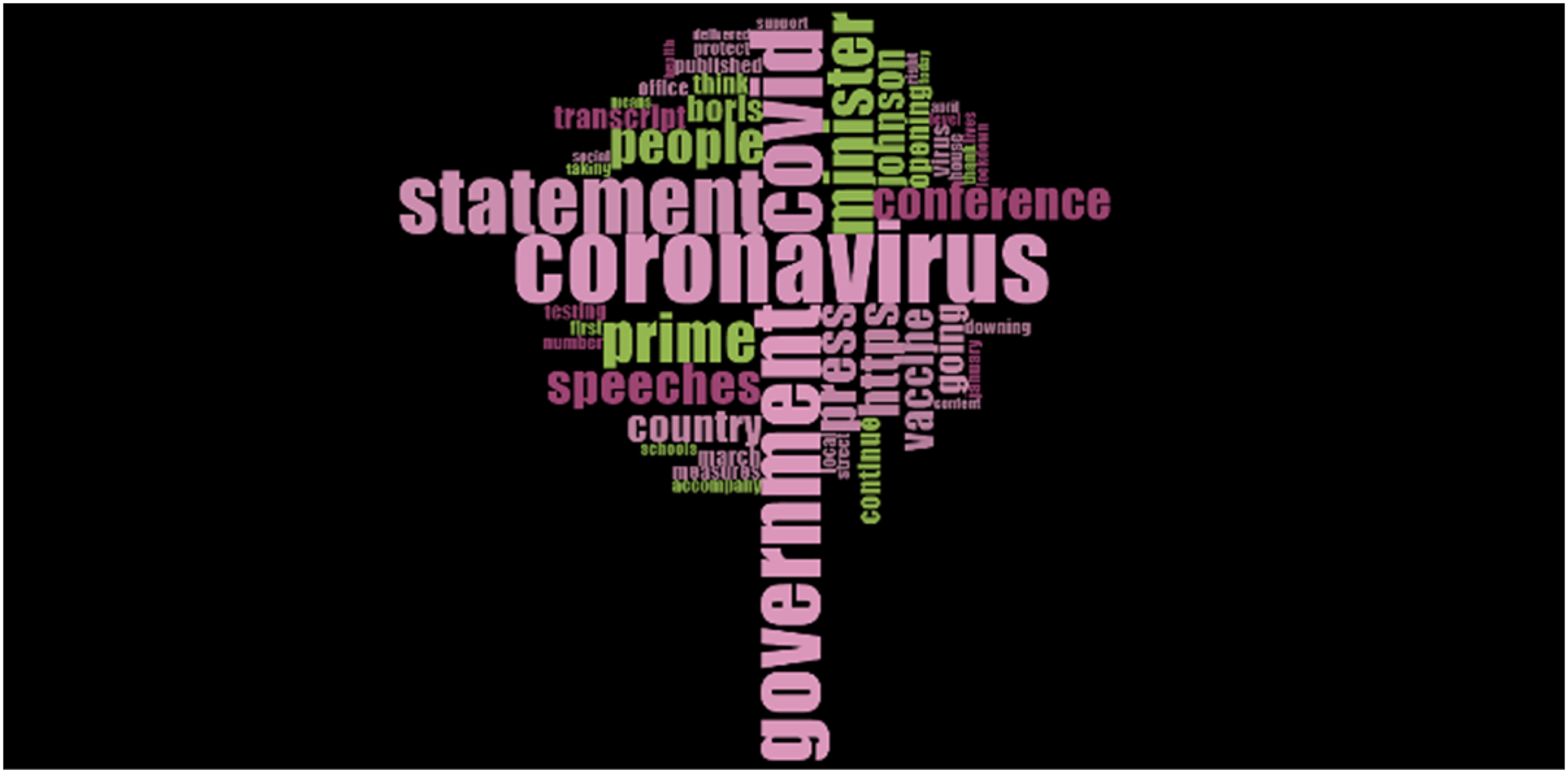
Word cloud of Boris Johnson speeches.
From Figure 1, it is clear BJ's COVID communication strategy placed the government at the forefront of leadership and decision making in response to the pandemic, as opposed to the public, the health system or the medical community. As PM, Johnson positioned the government as the central authority responsible for coordinating the national response, frequently appearing in televised addresses and press conferences to announce measures and provide updates. This is also reflected in Figure 2, which shows BJ's frequent use of COVID-related terminology, emphasising governmental involvement and leadership. It suggests a focus on official communication channels but also reveals a potential gap in addressing empathy and compassion.
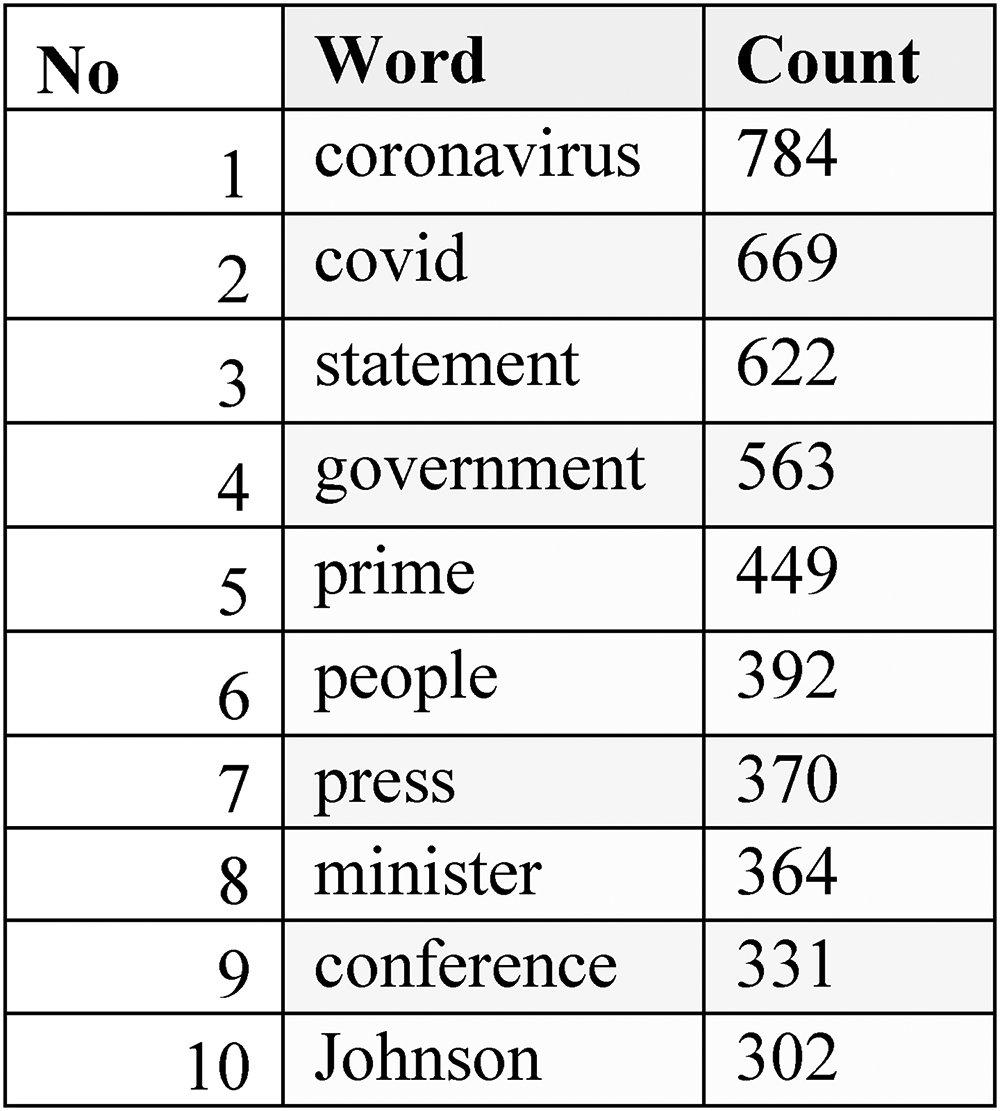
Top 10 most frequent words.
While the analysis revealed a multitude of themes, the focus of this article remains on one key theme that emerged from the in-depth analysis of his communication, which is described by a focus on the government, solidarity and community building. The subsequent sections explain the core theme found in his speeches with typical examples from different stages of the crisis, followed by the discussion and conclusion of the study.
Communication style
Communication style refers to an individual's unique approach to conveying information and emotions through verbal and non-verbal channels (Beebe et al., 2002). In democratic societies, the ability to persuade through communication is a vital tool for exercising power, and effective leadership is commonly linked to adept communication practices. The focus is particularly on how the ideas of trust and authority were deliberately formed as part of this strategy, acting as crucial indicators intended to form the basis for successful persuasion (Sargeant, 2023). For Johnson, communication during the COVID-19 pandemic reflected a blend of fact, confidence and appeals to national unity. He initially downplayed the severity of the crisis (Thiers and Wehner, 2023). For example, during the early stages of the pandemic, he claimed: ‘we have so far succeeded in the first and most important task we set ourselves as a nation, to avoid the tragedy that engulfed other parts of the world, because at no stage has our NHS been overwhelmed’ (Johnson, 2020d).
However, he acknowledged the challenges faced by the public and assured them of financial support. Johnson asserted that the government's approach to COVID-19 is informed and shaped by scientific guidance (Cairney, 2021). He integrated scientific evidence into his messages, emphasising the importance of COVID-secure guidelines and outdoor spaces. For instance, explaining the meaning of the ‘R’ to the public: And last, we must make sure that any measures we take do not force the reproduction rate of the disease - the R - back up over one, so that we have the kind of exponential growth we were facing a few weeks ago…the Covid Alert Level will be determined primarily by R and the number of coronavirus cases. And in turn that Covid Alert Level will tell us how tough we have to be in our social distancing measures - the lower the level the fewer the measures. (Johnson, 2020e)
However, some statements lacked specificity, potentially impacting public trust and effectiveness. He missed opportunities to address disparities in impact on different communities, particularly marginalised groups. In one statement, fear-inducing language was used to highlight potential high death tolls. Johnson attempted to strike a balance between candidness and caution, aiming to inspire confidence and unity. Some statements could have provided clearer action plans and included messages of hope. Economic impact and relief were not always adequately addressed, and a more comprehensive approach would have been more suitable. He also emphasised the importance of vaccination efforts, highlighting achievements and specific data. Our action plan as you know sets out the four phases of our approach to tackling the virus: Contain, Delay, Research, and Mitigate… There is no hiding from the fact that the coronavirus outbreak will present significant challenges for the UK, just as it does in other countries. But if we continue to look out for one another, to pull together in a united and national effort, I have no doubt that we can and will rise to that challenge. (Johnson, 2020a)
The above statement is from one of Johnson's initial speeches, where he presented a phased approach to tackling the crisis. However, it exhibited shortcomings in critical aspects. The ‘Contain, Delay, Research, and Mitigate’ strategy, while sounding comprehensive, lacked the necessary specificity, offering the public vague assurances rather than concrete plans. This lack of detail not only undermined public trust but also left many uncertain about the government's preparedness for the impending challenges. While it is essential to acknowledge challenges, Johnson's admission of the gravity of the situation appeared somewhat subdued.
One glaring gap in the speech was the insufficient emphasis on the importance of a robust testing and contact tracing system, proven to be a critical tool in managing the pandemic. The initial ‘containment’ phase in the UK's plan, involving testing, quarantine and tracing contacts, was quickly dropped. The focus shifted abruptly to the ‘delay’ phase, marked by measures like social distancing, self-isolation, and eventually, a lockdown. These steps aimed to extend and flatten the peak of the outbreak (Baraitser and Salisbury, 2020). In retrospect, this oversight stands out as a significant failure in the early stages of the government's response. Another notable omission was the absence of a discussion about the strain on healthcare workers and resources. A more comprehensive plan addressing the bolstering of the healthcare system, encompassing staffing, equipment and facilities should have been a central focus. However, he discussed the strain of the virus on the healthcare system in the coming days, see for example, his statement below: Some people compare it to seasonal flu. Alas, that is not right. Owing to the lack of immunity, this disease is more dangerous. And it's going to spread further and I must level with you, level with the British public, many more families are going to lose loved ones before their time… The most important task will be to protect our elderly and most vulnerable people during the peak weeks when there is the maximum risk of exposure to the disease and when the NHS will be under the most pressure. So the most dangerous period is not now but some weeks away depending on how fast it spreads. (Johnson, 2020b)
While the above statement sought to underscore the gravity of COVID-19, distinguishing it from the seasonal flu and acknowledging the potential human toll, questions arise about the delayed implementation of more decisive measures to prevent the crisis escalation. There was further failure to communicate the significance of the rules implemented by the UK's Coronavirus Act 2020 to control the spread of COVID-19. Public groups reported significant confusion because people were unsure about what was considered ‘guidance’ and what was actual ‘law’ (De Camargo, 2023). His admission that ‘many more families are going to lose loved ones before their time’ (Johnson, 2020b) prompts reflection on the adequacy of precautions and the potential effectiveness of a more proactive approach. Despite stressing the need to protect vulnerable groups during the anticipated peak, his statement lacks specific details, raising concerns about gaps in the actual response. Also, the timeline mentioning a perilous period ‘some weeks away’, lacks urgency and clarity, potentially contributing to public confusion. As far as possible, we want you to stay at home, that's how we can protect our NHS and save lives. To repeat, I know how difficult this is, how it seems to go against the freedom-loving instincts of the British people. And I also know much, right now, workers and business deserve the financial reassurance we are giving them. But we will get through this. We will get through it together, and we will beat this virus. (Johnson, 2020c)
In this statement Johnson employs persuasive language to urge compliance with stay-at-home measures. The appeal to national unity and solidarity emphasises the collective responsibility of protecting the National Health Service (NHS) and saving lives. He acknowledges the challenges posed by restrictions on personal freedoms, while expressing empathy towards workers and businesses, assuring them of financial support. By acknowledging the ‘freedom-loving instincts’ of the British people, Johnson taps into a socio-cultural understanding of individual liberties deeply embedded in the nation's psyche. This recognition serves to address potential resistance to restrictive measures and fosters a sense of shared identity and cooperation during the crisis. By citing the terms ‘government’, ‘people’ and through reminding the nation of the role of the NHS, Johnson reinstates a narrative of a sense of national identity. This is concurrent with and strengthens the commentary by Loner et al. (2023) on Johnson's COVID statements, suggesting Johnson's focus on the use of ‘science’ in his COVID statements as a means of bolstering the country's global position and influence. The narrative here adopts a strong nationalist tone, highlighting national scientific accomplishments as significant indicators of the nation's esteemed international stature (Loner et al., 2023). On another occasion, Johnson says: ‘with every day we are getting more and more data. We are shining the light of science on this invisible killer, and we will pick it up where it strikes’ (Johnson, 2020e).
In the above excerpt, Johnson discusses the strategic use of science to establish and reinforce a national identity. He specifically mentions ‘British science’ as being actively involved in combating the COVID-19 pandemic, positioning Britain as a leading contributor to the global fight against the virus. By linking the achievements of science to the nation as a whole, Johnson seeks to evoke a sense of pride among the British people and enhance their identification with their country. Moreover, Johnson articulates a broader goal of restoring Britain's position as a dominant force in the field of science. When considered against the backdrop of Brexit, it is evident that he positions the UK as reclaiming its status as a scientific powerhouse and as a key player in shaping the future of science and innovation (Loner et al., 2023).
Further, the statement adopts an assertive and empathetic tone, projecting confidence in overcoming the pandemic. The assurance of financial support reinforces a sense of social cohesion and highlights the government's commitment to standing with its citizens in the face of adversity. However, it lacks specificity regarding the government's action plan, and potential disparities in impact, which may have affected public trust and the effectiveness of the communication. The statement missed an opportunity to address potential disparities in the pandemic's impact on various communities by referring to all those impacted as the ‘British people’. By acknowledging these inequalities and providing targeted support, he could have further emphasised government's commitment to inclusivity and community well-being.
In another statement, he focuses on the reopening of businesses but ignore disregards the potential disparities in the impact of reopening on different communities, see for example: We know that the transmission of the virus is lower outdoors and that it is easier to follow COVID- Secure guidelines in open spaces. That means we can also allow outdoor markets to reopen in a safe way that does not risk causing a second wave of the virus. Then, from 15 June, we intend to allow all other non-essential retail, ranging from department stores to small, independent shops, to reopen. Again, this change will be contingent upon progress against the 5 tests and will only be permitted for those retail premises which are COVID-secure. (Johnson, 2020e)
The reference to the lower virus transmission outdoors reflects the integration of scientific evidence into the decision-making process, promoting a sense of informed decision making within the socio-cultural context. The mention of COVID-secure guidelines indicates a focus on community safety, utilising socio-cultural practices to build trust and adherence. However, the lack of specific guidelines and potential risk management plan are critical points that require further attention. Addressing potential disparities in the impact of reopening on different communities, particularly vulnerable or marginalised groups, should be considered to ensure a more comprehensive and equitable response. But as we’ve also seen from those charts, we’ve got to be humble in the face of nature. And in this country alas as across much of Europe the virus is spreading even faster than the reasonable worst-case scenario of our scientific advisers whose models as you’ve just seen now suggest that unless we act we could see deaths in this country running at several thousand a day. A peak of mortality alas far bigger than the one we saw in April. (Johnson, 2020f)
In this statement BJ humbly acknowledged the severity of the situation as the virus spread faster than projected by scientific advisers, which is linked to appealing shared values, fostering a sense of collective responsibility and unity in addressing the pandemic. However, the use of fear-inducing language may have negatively impacted community engagement and resilience. Such language indicates Johnson's acceleration in the severity of the pandemic and its effects. Fear appeals are frequently used in crisis communication to ensure compliance of the public with policy measures as part of the government's response strategy (Hase and Engelke, 2022). The shift from downplaying the effects of the pandemic to the use of drastic words such as ‘alas’, or ‘mortality’, can once more amplify feelings of anxiety, stress and fear, leading the public to either ignore risks altogether or express frustration towards mitigation strategies (Malecki, Keating and Safdar, 2021).
To enhance community involvement, the statement could have provided clearer action plans and included messages of hope. Our hospitals are under more pressure from COVID than at any time since the start of the pandemic. In England alone, the number of COVID patients in hospitals has increased by nearly at third in the last week, to almost 27,000. That number is 40 per cent higher than the first peak in April… We are now rolling out the biggest vaccination programme in our history. So far, we in the UK have vaccinated more people than the rest of Europe combined. With the arrival today of the UK's own Oxford Astra Zeneca vaccine, the pace of vaccination is accelerating. (Johnson, 2021a)
This statement adopts a sober tone, emphasising the unprecedented pressure on hospitals as the most significant since the onset of the pandemic. The inclusion of specific statistical data, such as the nearly one-third increase in COVID patients and a 40% higher number than the first peak in April, aims to provide a clear and impactful quantification of the escalation of the crisis. The introduction of the vaccination programme is presented as a positive development, noting that the UK has vaccinated more people than the rest of Europe combined. We can consider this statement against this backdrop the UK's relationship with the European Union (EU) in the aftermath of Brexit. As the pandemic was unfolding, the UK was in the midst of its transition away from the EU, having formally exited the union by the time the vaccination programme was rolled out in 2021. Elements in BJ's speeches, such as in the example above, subtly connected Brexit with doubts about the EU and suggested it played a crucial role in the UK's successful vaccination effort (Copeland and Maccaferri, 2023).
Further, the emphasis on the UK's Oxford AstraZeneca vaccine raises questions about potential nationalistic undertones and the need for a more globally cooperative narrative. I want you to cast your mind back exactly a year and think where we were last September, as schools went back and the colder months approached. Because in one way our position today is actually more challenging. We have higher levels of daily cases – thousands more. But in many other crucial respects, the British people – all of us collectively and individually – are incomparably better placed to fight the disease. We have more than 80 per cent of all over-16 s now double jabbed, double vaccinated… COVID is still out there. The disease sadly still remains a risk. But I’m confident we can keep going with our plan to turn jabs jabs jabs into jobs jobs jobs. And protect the gains that we have made together. (Johnson, 2020b)
While acknowledging the surge in daily cases compared to the previous year is crucial, it raises questions about the efficacy of the government's containment measures. Although he claims a better collective position, specific metrics or strategies for this assertion are notably absent, leaving room for scepticism. The statement falls short of providing a comprehensive plan for addressing potential surges, new variants or ensuring the readiness of the healthcare system. This omission raises concerns about the government's preparedness for future challenges. The shift from ‘jabs to jobs’ as an economic goal is commendable, but it raises questions about striking a balance between public health and economic recovery.
Conclusion
In sum, BJ's speeches throughout the evolving phases of the COVID-19 pandemic reveal a nuanced approach that blends empathy, appeals to national unity and a delicate balance of caution and confidence. As the nation confronted unprecedented challenges, his speeches unfolded as a dynamic narrative, navigating the complexities of managing public health, fostering economic recovery and sustaining public trust in the face of uncertainty. Johnson effectively employed persuasive language to encourage public compliance and underscore the collective responsibility of safeguarding the NHS. However, persistent themes of ambiguity, particularly in addressing potential disparities and providing detailed action plans, remained noteworthy. The use of fear-inducing language, intended to convey urgency, might have inadvertently impacted community engagement and resilience, pointing to a need for more effective community building. Strengthening community involvement could have been achieved through clearer action plans and messages of hope to inspire confidence in the face of adversity.
Throughout his speeches, Johnson consistently appealed to national unity and solidarity, emphasising the shared responsibility of safeguarding the NHS and saving lives. His empathetic approach acknowledged the challenges faced by the British people, expressing compassion for workers and businesses while assuring them of financial support, fostering a shared sense of identity and cooperation during the crisis. Despite these strengths, instances where Johnson's assertive and empathetic tone was undercut by fear-inducing language reveal areas for improvement. While he integrated scientific evidence into decision making, references to lower virus transmission outdoors and the importance of COVID-secure guidelines sometimes lacked specificity, concrete plans and opportunities to address potential disparities, impacting public trust. Johnson's attempts to balance candour with caution occasionally fell short, leaving room for scepticism. Missed opportunities to comprehensively address economic impacts, relief measures and potential disparities in reopening underscore the need for a more robust communication strategy.
The analysis of BJ speeches during COVID-19 shows that while Johnson's communication style encompassed empathy, assertiveness and a focus on vaccination efforts, enhancing specificity, transparency and addressing potential inequalities, as well as prioritising community building, could have heightened the impact of his messages during the COVID-19 pandemic. The findings of this study align with a growing body of research recognising the pivotal role of world leaders in shaping public perception and guiding their nations through the unprecedented challenges of the COVID-19 pandemic (Dada et al., 2021). This research situates itself within the broader discourse on crisis communication and leadership during pandemics, shedding light on the delicate balance leaders must strike between prioritising public health imperatives and mitigating the socio-economic impacts of the crisis (Thiers and Wehner, 2023).
In the scrutiny of BJ's speeches amid the COVID-19 pandemic, the examination of power dynamics and relationships reveals a sophisticated linguistic strategy that aligns with Norman Fairclough's three-dimensional discourse analysis paradigm. Scholars such as Fairclough (1995) and Van Dijk (1995) have extensively studied the interplay of language, power and discourse, providing a theoretical foundation for understanding how political leaders exert influence through communication. Johnson's utilisation of language to convey urgency, evident in phrases linking the act of staying home directly with saving lives, illustrates a power dynamic aimed at swiftly mobilising public compliance, a tactic well-explored in critical discourse analysis literature (Fairclough, 2013).
Johnson's adaptive communication style, characterised by shifts in tone and approach throughout the pandemic, demonstrates a nuanced use of power to maintain control and authority in response to evolving circumstances. This adaptability is a recurring theme in crisis communication studies (Coombs, 2020; Heath et al., 2020), emphasising the need for leaders to strategically navigate language to sustain public trust and confidence during crises. Consistent references to scientific evidence and expert advice further reinforce the government's authority grounded in knowledge, establishing a power relationship based on perceived expertise – a dynamic explored in literature on evidence-based decision making in crisis management (McLauglin et al., 2021; Seeger and Ulmer, 2003).
Empathetic communication, manifested in Johnson's acknowledgment of the challenges faced by the public, introduces another layer of power dynamics by positioning the government as a supportive force. This aligns with scholarship on empathetic communication in crisis situations (Heath et al., 2020) and adds depth to our understanding of how leaders strategically wield language to influence public behaviour, perception and trust. However, the exercise of power in Johnson's speeches is not without critique. The analysis also reveals instances where the exclusion of vulnerable components of society is evident in his language. The emphasis on broad slogans and generic messaging may inadvertently marginalise segments of the population that require more nuanced and targeted communication, reflecting power dynamics that risk neglecting the needs of the most vulnerable. This exclusionary aspect raises ethical considerations in crisis communication, emphasising the importance of leaders addressing the diverse needs of society and avoiding the exacerbation of existing inequalities. The intricate interplay of these linguistic strategies exemplifies the complexity of power dynamics and relationships in crisis communication, highlighting the significance of Fairclough's discourse analysis paradigm and the broader critical discourse analysis literature.
Moreover, a focal point of this study is the analysis of BJ's speeches, providing a case study within the broader context of crisis communication. Johnson's communication strategy reflects broader trends observed among world leaders during the pandemic, emphasising clarity and simplicity to facilitate effective information dissemination (Jarvis, 2022). Johnson often mentions on the government, the nation, the British people and British scientists, referring to various societal participants of the pandemic. This resonates with literature emphasising the importance of clear and consistent communication in managing public behaviour during health crises (Depoux et al., 2020) to actively engages multiple social actors and their different perspectives on an alternative, encompassing discourse (Zhang, 2022).
This research underscores the adaptive nature of crisis communication, as evidenced by shifts in Johnson's tone and approach in response to the evolving circumstances of the pandemic. Such adaptability is a recurring theme in crisis leadership literature, emphasising the need for leaders to respond flexibly to changing situations to maintain public trust and confidence (Bundy et al., 2017). The strategic use of urgency and empathy in Johnson's speeches is consistent with studies highlighting the delicate balance between conveying the severity of a crisis and fostering solidarity and reassurance among the public (Emmanouil, 2022; Heath et al., 2020). Furthermore, the consistent referencing of scientific evidence and expert advice in Johnson's speeches aligns with a broader acknowledgment of the role of evidence-based decision making in crisis management (McLauglin et al., 2021). This resonates with literature emphasising the importance of transparent communication about the scientific basis of policies to enhance public trust and compliance during health crises (Reyna et al., 2021; Seeger and Ulmer, 2003).
It is necessary to consider the public relations (PR) aspect of Johnson's communication as the main representative of the UK government. Whilst Johnson focussed on the executive power – the government and related measures as a means to explain stages of the pandemic to the public, Wang (2022) argues that in order to exert control over its administration, the government needed to highlight the importance of all stakeholders and the affected group committing to resolving the crisis. The Johnson government fell short of mobilising community based on the lack of empathy in their communications, where institutional goals of what the government was hoping to achieve was emphasised. An integrated approach to communication, proposed by Brunner and Smallwood (2019) called public interest relations, may have been the wiser choice for more effective communication. In this case, Johnson would have had to address the negotiable relationship between public interest (social goodwill and community trust) and institutional goals. This may potentially expand applications of the study to look towards a critical PR approach as introduced by Wang (2022), discussing crisis communication as a social practice. Drawing on the principles of Political Public Relations and Critical Discourse Studies, the proposed framework gives equal weight to ideology, power and identity, moving beyond a narrow focus on managerial functions.
In conclusion, this study contributes to the growing understanding of crisis communication and leadership during the COVID-19 pandemic. By examining BJ's speeches as a case study, the research adds depth to the discourse on effective communication strategies employed by world leaders. The findings underscore the significance of clarity, adaptability, empathy and reliance on scientific evidence in navigating the complexities of crisis communication. Future research may delve further into the cross-cultural variations in leadership communication styles during health crises and explore the long-term impacts of leaders’ communication strategies on public perception and trust.
