




Abstract
Social media has become an integral channel for official agencies to communicate with citizens in a natural disaster crisis and increasingly time, effort and money are being spent on improving social media strategies and practices. However, there is much less research focused on understanding how people engage with official social media content, a significant piece of the crisis communication puzzle. As the use of social media for crisis communication in natural disasters is increasing and the amount of information threatens to overwhelm people, understanding how people engage with official social media content is vital. Using quantitative content analysis, this study examined the use of Facebook by two Australian emergency response agencies during a specific bushfire event and explored how the attributes of social media content are related to user engagement with the information. The findings show that the two agencies had markedly different approaches which resulted in differences in user engagement.
Introduction
The Australian 2019–2020 bushfire season was extreme. Following years of crushing drought, it resulted in ‘devastating loss of life, property and wildlife, and environmental destruction across the nation’ (Royal Commission, 2020). During a natural disaster such as a bushfire crisis, people need to quickly access information in order to make, sometimes, life and death decisions. Clear and unambiguous information from trusted sources about risk and safety becomes even more crucial (Eriksson, 2018; Steelman and McCaffrey, 2013). While noting that traditional media 1 is an important source of information in a crisis (Eriksson, 2018), increasingly more weight is being given to the use of social media by government organisations, including emergency services agencies (Eriksson and Olsson, 2016). This is due in part to the speed and ease with which information can be created and transmitted (Macnamara, 2010; Postman, 2009) and also in recognition that social media is increasingly being used by citizens to access, create and share information (Eriksson and Olsson, 2016).
There has been considerable research and analysis of what constitutes good social media practices within risk and crisis communication from the organisation's perspective, however less on how information is received, interpreted and processed from the audience's perspective (Rasmussen and Ihlen, 2017). As the use of social media for crisis communication in natural disasters is increasing and the amount of information threatens to overwhelm people, understanding how people engage with official social media content is vital.
Increasingly, researchers have been focusing on understanding how different sources and forms of information impact people's responses and behaviours during crises (Austin et al., 2012; Liu et al., 2016; Utz et al., 2013). Liu et al. (2016) found that individuals tend to be involved in immediate communication via interpersonal forms rather than organisational forms during a crisis.
The social-mediated crisis communication (SMCC) model has developed over the last decade to explore and explain the interplay between different channels of communication transmission in crises (Austin et al., 2012). Over the last decade, SMCC research has begun to explore the role of social media, particularly Facebook and Twitter in crisis communication (Cheng, 2018, 2020; Eriksson and Olsson, 2016; Liu et al., 2016). Research into the concept of secondary crisis communication is also emerging, seeking to understand the exponential spread of large amounts of information during a crisis which has the potential to create new crises and magnify the negative consequences (Cheng, 2020). Eriksson and Olsson (2016) have pointed out that there is a difference in the use and perceived usefulness of social media during crises between communication professionals and citizens. Therefore, it is important to ensure that social media is not treated as a homogenous phenomenon with a single coherent role in crisis management and communication research and practice (Eriksson and Olsson, 2016).
This study investigates how people engaged with different types of social media content on Facebook during a bushfire in southeast Australia and how relevant social media attributes are related to user engagement metrics through a quantitative content analysis of social media posts on Facebook pages. In this study, the two emergency response agencies, which were the most relevant social media communication channels during the 2019–2020 bushfire season in Australia, were selected.
Crisis communication: effective strategies
Over the last few decades, there has been a proliferation of research into what constitutes effective crisis communication across diverse disciplines such as emergency management, social and behavioural sciences, health, education and security and communication (Cheng, 2018; Coombs, 2015; Eriksson, 2018). The global pandemic has provided new impetus, and extraordinary amounts of data, to investigate the important role of communication in responding to crises and how governments connect with citizens to develop trust, inform and influence behaviour.
While there has been extensive discussion about what best practice looks like, much of the literature has been focused on what the organisation should do and has approached the issue with a public relations focus (Cheng, 2018). For example, Coombs’ work has been influential in crisis communication scholarship for decades and with Holladay developed the formative Situation crisis communication theory (SCCT) first published in 1998 (Coombs, 1998). This frequently referenced theory recommends organisations adopt crisis communication strategies in response to stakeholder attribution of responsibility for the crisis, that is, if the company is perceived to be responsible for an avoidable crisis, they need to be seen to be taking responsibility and employ communication strategies such as compensation and apology (Tench, 2014). Steelman and McCaffrey developed a framework of common characteristics of effective communication in risk, crisis and wildfire literature (2013). The framework has been applied to an objective, robust evaluation of official communication during three wildfire events in the United States (Steelman and McCaffrey, 2013). The framework consists of five characteristics: (1) engage in interactive processes or dialogue; (2) strive to understand the social context in which the threat is situated; (3) provide honest, timely, accurate and reliable information; (4) work with credible sources, including authority figures when appropriate and (5) communicate before and during a crisis. This study has been informed by Steelman and McCaffrey's framework to evaluate characteristics of effective risk and crisis communication and to draw out the differences in approach of the two agencies.
Engaging in interactive processes or dialogue enables people to seek clarification of risks and additional information leading to better preparation and response. Creating communication that considers the local situation and understands the communication needs of affected citizens leads to better understanding and action. People are more likely to trust organisations that provide timely, useful and accurate information during a crisis leading to better outcomes. Familiarity with, and credibility of, an organisation's spokesperson enhances the reputation of the information they provide, particularly when the relationship between the organisation and citizens is developed before a crisis (Steelman and McCaffrey, 2013). Steelman and McCaffrey's framework and research particularly recognises the importance of understanding recipient perspectives relating to what information they need in a crisis, and how trustworthy and useful it is (Steelman et al., 2015). Indeed, community engagement has been recognised as an important component of risk communication and education (Prior and Paton, 2008; Sharp et al., 2009), contributing to improved community resilience and preparedness for a bushfire crisis event. In addition to receiving accurate, timely and reliable information, when communities are given the opportunity to ask questions and seek clarification from recognised authoritative emergency services personnel, they are more likely to have trust and confidence in the organisations that provide that information (Guidry et al., 2017). Research has shown that this leads to better collective preparedness and relationships between organisations and communities leading to better outcomes (Sharp et al., 2009).
Much of the research agrees that organisations need to communicate and engage with communities on an ongoing basis and this requires a considerable amount of planning and investment, particularly in understanding the diverse communication needs of citizens. Hyland-Wood et al. (2021) synthesised strategic risk communication in the health sphere and highlighted that well-executed ‘communication strategies can facilitate public trust, confidence, and importantly, compliance with the behaviours needed from individuals, communities, organisations, and nations’ (p. 2). They argue that an effective communication strategy needs to be a two-way process that includes engagement with, and participation of, diverse community groups to build long-term relationships while also noting the importance of understanding the implications of emerging digital technologies in communication and engagement activities with citizens. Ongoing communication and engagement with citizens are specifically highlighted as essential for crisis communication (Seeger, 2006) as is comprehensive crisis planning which is fundamental to crisis communication strategies.
There is abundant literature offering well-substantiated and effective strategies to plan and implement communication and engagement in a crisis. Channel selection is a key component of communication strategies and is discussed at length in public relations research and practice, however, while research is growing into the use of social media in crisis communication, there is little systematic research comparing social media and traditional media in crisis communication or into how to channel selection may have an impact on communication outcomes in a crisis (Xu, 2020). As noted by Eriksson, while traditional media, particularly TV and radio, remains the main channel for dissemination of information in a crisis, social media is becoming more and more important (2018). In their study ‘COVID-19: Australian news and misinformation’, Park et al. (2020) observed that social media is the second most used source of information about the virus and the pandemic after traditional media.
Social media has become a critical component of crisis communication as a direct result of its unique affordances. It enables ‘immediate transmission of important crisis communication’ (Eriksson, 2018, p. 538), it ‘can serve as an important first-hand information source, enabling locals to provide immediate situational information reports which are of significant use to first responders’ (Bruns, 2014, p. 352), and it facilitates direct dialogue and interaction between citizens and with organisations which supports cooperation and community coordination (Xu and Wu, 2015).
Organisations’ social media use in a crisis
The demand for immediate, clear and unambiguous information from sources they trust prompts people to search social media channels including official organisational channels and platforms. This means that organisations have no choice whether to use social media but how to integrate it more fully into their planning and procedures (Xu and Wu, 2015).
Health crisis communication offers additional support to the argument that organisations and public agencies need to establish a strong social media presence on multiple platforms before the crisis to enhance risk communication during it (Guidry et al., 2017). Guidry explains frequent, consistent and interactive communication with the public is integral to building trust and this communication requires going where the conversation is already taking place (2017). Consistent with other scholars, Guidry's research concluded that messaging is likely to be most effective when it comes from organisations that people trust, and when based on well-established risk communication principles that include the use of visual imagery, acknowledge and address people's fears and provide clear advice on actions to be taken (Guidry et al., 2017). She noted that in highly uncertain and volatile situations strong negative emotions such as fear, distrust and anger form considerable barriers to effective communication and may impair people's ability to process information and make critical decisions. Also exploring the advantages of using infographics to convey complex information in the health policy field, Otten et al. found that infographics are a very effective means of communication allowing high-quality information to be presented in small and readily accessible formats (2015). They explain that ‘infographics leverage the brain's most dominant capacity – visual processing – they can be a faster and more effective way of communicating information than text alone’ (p. 1902).
An interesting study into the use of infographics in national security communication in the United Kingdom in 2019 found that ‘visualisation can be used successfully to inform the public about terror threat, security measures and vigilance’ (Lonsdale et al., 2019, p. 40). Drawing on Spiegelhalter et al. (2011), this research discussed the need to engage the public in the design of the images and narratives and understand what kind of information is needed and most useful. They found that infographics also tend to be more inclusive as ‘they are accessible to a larger number of people, including people with varying levels of literacy’ (Lonsdale et al., 2019, p. 40).
Online tools and social media platforms have enabled the public to be more involved in conversations about the issues that impact them (Tench, 2014) and in a crisis, organisations can expand their reach, monitor issues and online conversations and sentiments and create transparency of their actions. On the other hand, the crisis manager may lose control of official messages when content that has been generated by users becomes dominant and rumours and misinformation are shared (Cheng, 2020). Liu et al. found many public voices can have an immediate and exaggerated influence on the spread and direction of the conversation (2016) and the transmission of rumours and negative opinions can be accelerated (Liu et al., 2016; Xu, 2020) which adds complexity and difficulties to how organisations use social media during a crisis.
Cheng et al. (2022) highlight the importance of the context within which online information is spread, drawing on other studies identifying contextual factors and the crucial role they play in how organisations and individuals respond in crises, especially political, social, cultural and economic factors (e.g. Cheng, 2020; Huang et al., 2015; Zhu et al., 2017). Eriksson and Olsson (2016) recognise that there is a difference in the use and perceived usefulness of social media during crises between communication professionals and citizens and that researchers and crisis managers need to ensure that they do not treat social media as an ‘homogenous phenomenon with a single coherent role in crisis management and communication research and practice’ (p. 198). This echoes the findings of Fraustino et al. (2012) that there is limited knowledge about how citizens make use of the various social media platforms in times of crisis. While crisis communication research into the use of social media has increased, there is still a pressing need for more empirical research on the role that social media plays in crisis communication (Eriksson and Olsson, 2016).
User engagement on social media: likes, comments and shares
The literature on effective communication in a crisis highlights that it is often unclear what information is needed and actually used by different people or groups during a crisis (Eriksson, 2018; Steelman et al., 2015). Also, there has been a lack of empirical research to measure how effective organisations’ communication practices are in reaching citizens who may be excluded (Xu, 2020). A few studies reveal that messages are often framed in terms of the organisation's expectations and requirements rather than the needs of the audience (Eriksson, 2018; Steelman et al., 2015). Messages may not be well understood by an audience that is not homogenous in either their needs or ability to understand the implications of the content (Quarantelli, 1989).
Social media users are involved in a variety of activities. They access content, like content, create and share content, comment on posts, message others and check updates from friends and groups they are following (Nadkarni and Hofmann, 2012). Users create and join virtual communities and curate their own online experiences sourcing their news and information from a range of platforms and sources. During crises, social media allows users to share unfiltered, up-to-date information and news, which provide unique crisis information that audiences cannot get elsewhere (Austin et al., 2012). ‘Audiences also use social media for emotional support and recovery from crises’ (Austin et al., 2012, p. 191).
Social media have become indispensable channels for daily conversations (boyd and Ellison, 2007) and to maintain connection and social relationships (Kim, 2014), and particularly during the pandemic can play a positive role in enhancing mental health. Social media use is associated with higher levels of social capital and through self-disclosure activities such as posting about emotional states and life events, users have a heightened awareness of others, providing a means to reach out to offer social support and resources (Lu and Hampton, 2017). Other research shows that receiving responses to posts (even just ‘likes’) may provide social support as they mean something to the receiver (Wohn et al., 2016). Lu and Hampton (2017) suggest that posting to social media may provide a means for coping with unpleasant events as well as a way to access support.
Many social media activities such as likes, shares and comments are often used to measure user engagement on social media (Chugh et al., 2019; Coelho et al., 2016; Gerlitz and Helmond, 2013; Su et al., 2015). Chugh et al. (2019) defined parameters to measure user engagement on Facebook and to move the conversation beyond measuring the number of likes, shares and comments. They found that likes were not directly correlated to shares or comments, and that shares and comments are more reliable in indicating user engagement. ‘“Likes” demonstrate a very simple form of engagement whereas “comments” lead to further engagement and social discussion, and “shares” extend the social reach of a post’ (Chugh et al., 2019, p. 106). All these activities indicate different levels of engagement with the content and with other users. While social media facilitates the sourcing and sharing of information, people are looking for more than that. They are seeking connection and relationships with others (individuals and organisations) and ‘make purchasing decisions based on content’ they obtain through social media sites (Chugh et al., 2019, p. 107). User participation encourages others to contribute more content, noting that posts that attracted more comments can be considered to be more popular as it requires more time and effort to comment on a post than to simply click the like button. Gerlitz and Helmond (2013) also found that sharing posts triggered other activities – further sharing and comments – and considered it showed more engagement than pure likes. Sharing indicates a level of enthusiasm that occurs when a person thinks that others need to know something (Chugh et al., 2019).
In a crisis, social media supports communities to self-organise in response to local conditions as well as disseminating important information and warnings including relaying official emergency services’ alerts (Bruns, 2014). Social media enable people to engage with others (individuals and organisations) and users expect that the exchange will be two-way and reasonably rapid. While its role in crisis communication has been increasingly recognised, there has been a lack of empirical studies exploring how individuals use social media in a crisis, and to what end (Austin et al., 2012). As Cheng (2018) states, the field of crisis communication is being radically impacted by the very nature of social media – it enables interactive, dialogic and fast communication between organisations and communities – which elevates users to a more visible and potentially influential role. Researchers are seeking more empirical studies to better understand the stakeholders’ perspective in a crisis, particularly (1) the public motivation for social media use and (2) response forms and stakeholder desired strategies on social media.
This study attempts to investigate how relevant social media attributes and metrics can demonstrate the effectiveness of crisis communication by examining social media communications practices in the context of user engagement with the information provided by emergency service agencies during crises. In this study, we focus on Facebook and its different attributes of content including, format, length and types of information as measures of social media communications practices, comparing metrics including likes, shares and comments which social media platforms employ as indicators of user engagement.
Q1. How are the different practices of social media communication related to user engagement on the two agencies’ Facebook pages? Q1.1. How is the format of content related to increased user engagement on the Facebook pages? Q1.2. How is the length of the post related to increased user engagement on the Facebook pages? Q2. How are the types of information related to increased user engagement on the two agencies’ Facebook pages?
Research context: the 2019–2020 bushfire in Australia
The 2019–2020 bushfire season in Australia was the worst in recorded history, beginning in July 2019 and not declared over until 31 March 2020 (Royal Commission, 2020). 2019 was the hottest and driest year on record and much of the country was drought declared before the fires began. During this bushfire season, over 24 million hectares were burnt, 33 people died and over 3000 homes were destroyed. By early December 2019, large swathes of New South Wales were blanketed in smoke, and poor air quality had become an issue for many areas, including Canberra and the Australian Capital Territory (ACT).
In these circumstances, the Orroral Valley bushfire was ignited in a remote area of the Namadgi National Park on 27 January 2020 and due to the very hot conditions and extreme dryness following years of drought, the fire spread rapidly and within 24h was growing at 400 hectares an hour (ACT Emergency Services Agency, 2020). When the fire crossed the ACT/NSW border into NSW, the fire was given the name Clear Range Fire (within the Snowy Monaro LGA), standard operating procedure when a fire crosses into a different state jurisdiction. As the ACT is geographically located within NSW, and fires do not remain confined within state boundaries, residents of the ACT were sourcing information about the fires from NSW sources as well as those within the ACT. In the period immediately prior to the outbreak of the Orroral Valley Fire, ACT residents were monitoring fires over the boundary in NSW through the NSW RFS. The Orroral Valley Fire was selected as the topic for this research as it provided the opportunity to examine the different approaches of the agencies to communicating about the same fire which began in one jurisdiction (ACT) and moved into the other (NSW).
This study sets out to examine the practice of social media communication, specifically Facebook, as a form of communication during the Orroral Valley bushfire. As mentioned above, Facebook was the only social media platform that the ACT ESA used, in contrast to NSW RFS which also used Twitter.
Data collection
Sampling
A content analysis was done of social media posts on the Facebook pages of the two emergency response agencies – Australian Capital Territory Emergency Services Agency (ACT ESA) and New South Wales Rural Fire Service (NSW RFS) – as Facebook was used as one social media communication tool during the Orroral Valley bushfire. NSW RFS also used Twitter as a communication channel, but ACT ESA did not, leading to the focus on comparison in the use of Facebook by the two agencies. While the agencies use a number of channels including traditional media, radio and television, this study is focused on Facebook. More people are on FB than other platforms and FB provides a broader range of affordances than other platforms including advance measurement and analytical capability (Kim, 2016). We adopted quantitative content analysis to quantify the frequency of recurrence and interpret the relationships between different aspects of social media communication and differences in the communication practice between the two agencies. The data were manually collected from the official ACT ESA and NSWRFS Facebook pages between 20 January and 5 March 2020. The Orroral Valley fire started on 27 January and was declared extinguished on 27 February.
In total, 613 unique posts were included in the analysis (397 from the ACT ESA page and 216 from the NSWRFS page). These posts were all the posts displayed on the official Facebook pages of the two agencies between 20 January and 5 March 2020. Posts were categorised by type of content (text, video, images, banners) and attributes of content (tone and style, length, number and frequency and accessibility). This was used to analyse each agency's understanding of the social context and information provided. The different Facebook properties such as numbers of shares, likes and comments were used to analyse interaction with users.
There were four different types of content used in the posts: ‘text only’, ‘text + banners’, ‘text + images (photos/maps/infographics/video)’ and ‘image/video only’. The banners referred to are from the national bushfire warning system, where the coloured banners are used to highlight the current warning level: blue (advice), yellow (watch and act) and red (emergency). In addition, each post was classified according to word length – short, medium and long. A short post was less than 50 words, a medium post was between 50 and 150 words and a long post was over 150 words. User engagement on the Facebook pages was explored using parameters including likes, comments and shares. These three parameters were measured on each post.
All the categories listed above were coded manually by the first author.
Data analysis
Data analysis was performed using SPSS 24. Crosstabs analysis and Kruskal-Wallis one-way analysis were conducted to examine the relationship between the different types of posts related to user engagement and the difference in social media communication between the two agencies.
Results
Differences in communication
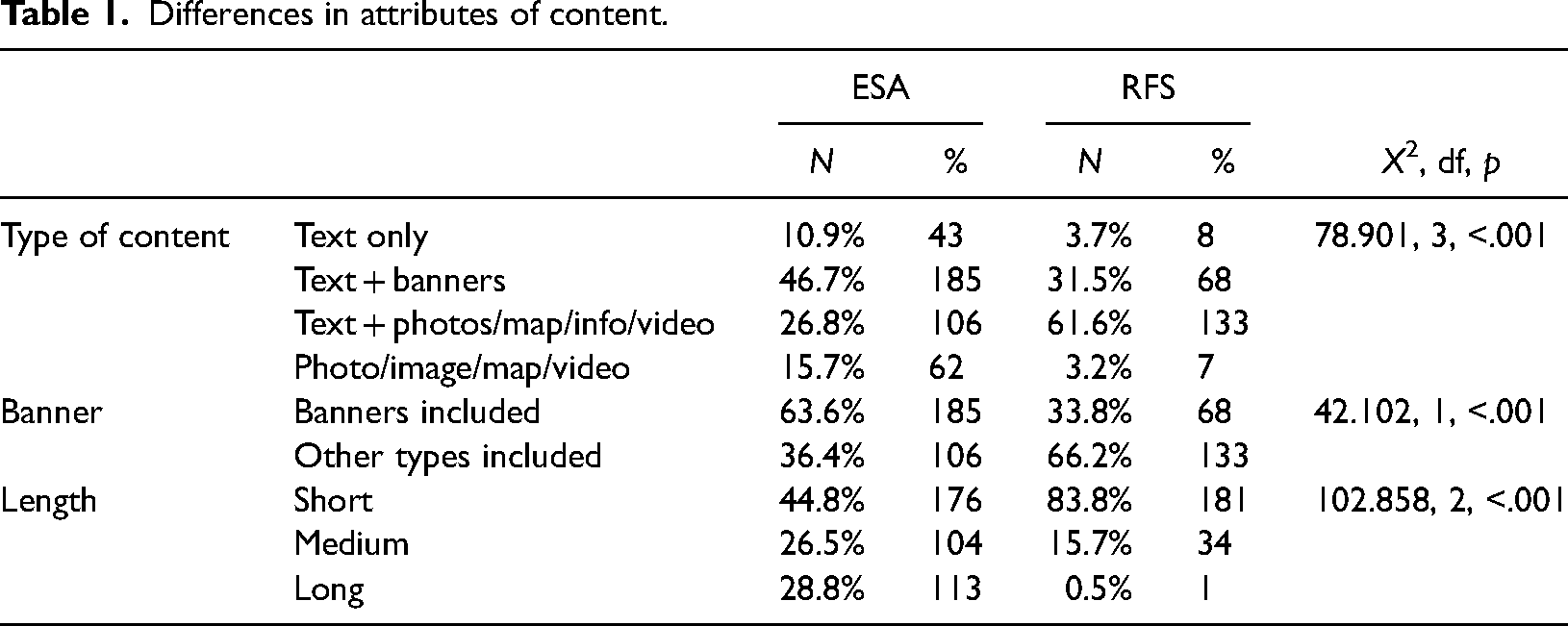
First, we examined the extent to which each agency demonstrated different features in their public communication practice. While a hybrid form comprising text, photos and maps was most commonly used to communicate by the agencies, there was a significant difference in the features of the post type used between the two agencies (Table 2). ACT ESA included more text only posts than NSW RFS and text with banners, whereas NSW RFS included a lot more posts in a hybrid form comprising of text, infographics, photos and maps. ACT ESA included more image-based posts than NSW RFS. A significant higher proportion of posts where banners were included was observed among content posted by ACT ESA compared to NSW RFS.
Regarding the length of posts, while both agencies predominantly preferred a short post, a striking difference was found. Posts on the NSW RFS page were predominately short, whereas ACT ESA consisted of posts in the long category. We observed that ACT ESA posts containing critical information about the fire were commonly over 350 words, whereas most posts on the NSW RFS page were in the short category (Table 1).
Differences in attributes of content.
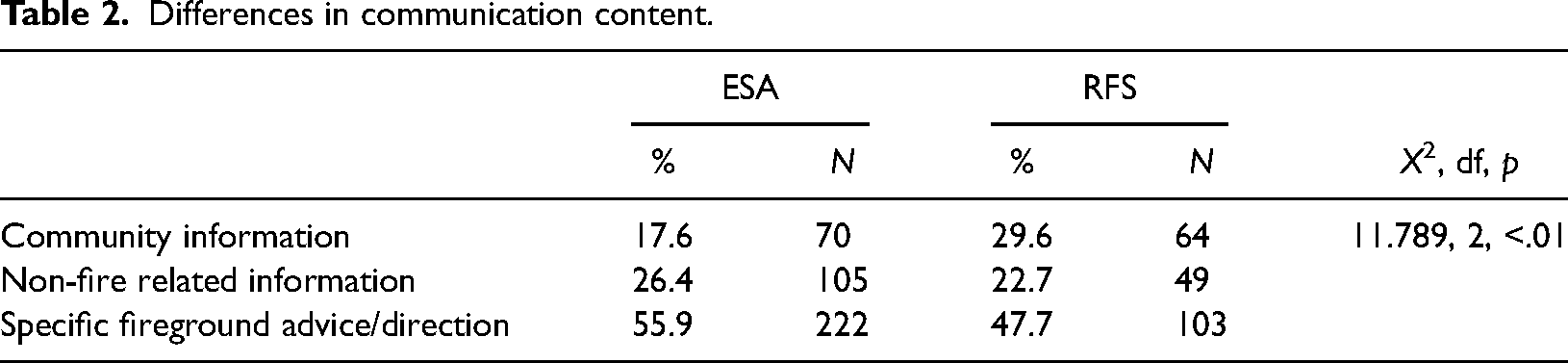
We also compared the type of information posted by the two agencies. Overall, specific fireground advice and direction information were significantly more detected than community-related and non-fire-related information (Table 2). However, there was a significant difference in the content. Community-related information and non-fire-related information were significantly more observed on the ACT page, whereas NSW included mainly specific fireground advice and direction.
Differences in communication content.
In addition, the construction of the content was different between the agencies. The long, fire-related posts on the ACT page were directly copy and pasted from the agency's website, indicating a lack of a dedicated social media approach. In contrast, the posts on the NSW page appear to have been created specifically for social media, that is, short, clear text, maps and infographics.
Relationships between content and user engagement
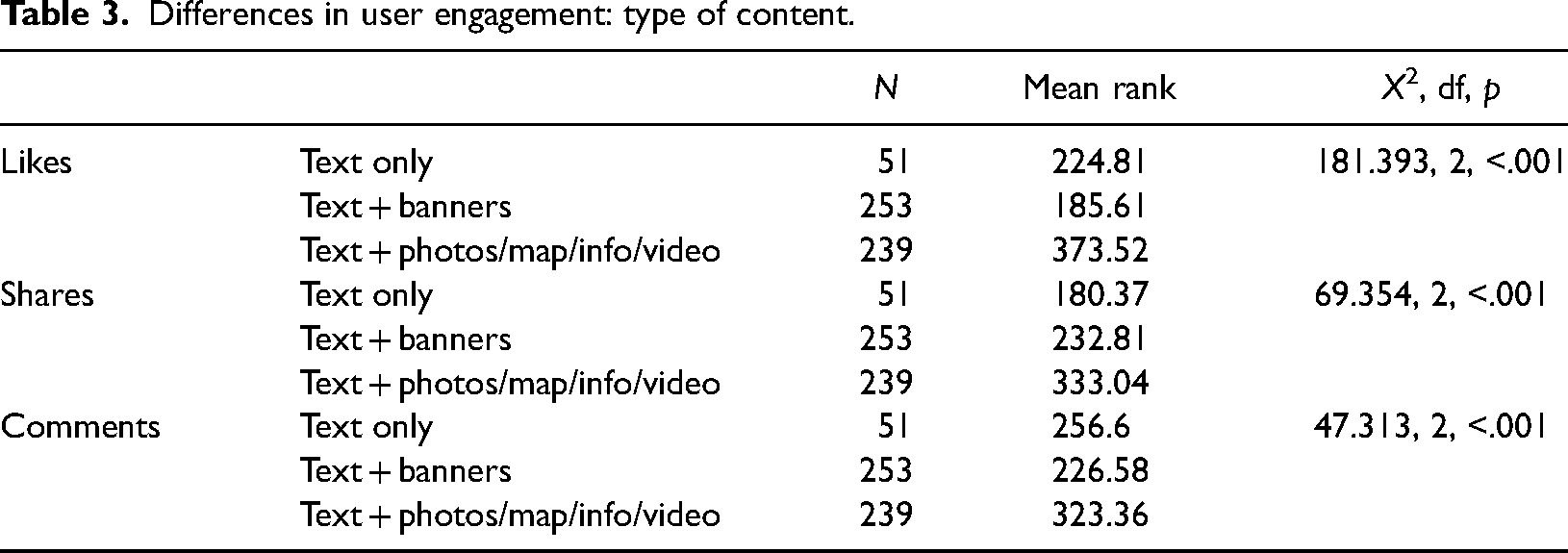
Secondly, we examined how users interact with different types of content in different ways using the Kruskal–Wallis one-way analysis of variance. There were significant differences in the engagement activities: liking (X2= 181.393, p < .001), sharing (X2 = 53.451, p < .001) and commenting (X2 = 26.882, p < .001). Table 3 shows that users were significantly more likely to engage with posts in a hybrid form comprising text, photo, infographic and video than posts with ‘text only’ and ‘text and banners’.
Differences in user engagement: type of content.
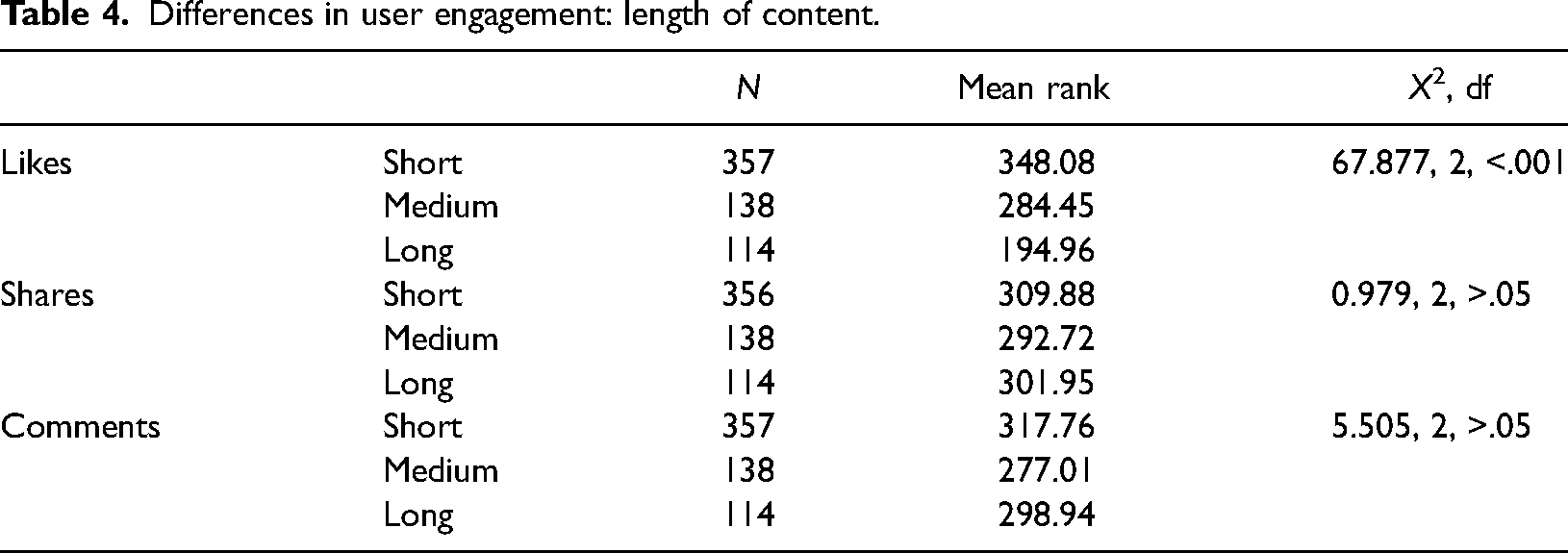
The length of posts was also a significant factor in determining the level of user engagement, with short posts attracting higher numbers of likes (X2 = 67.877, p < .001) (Table 4). However, there was no significant difference in the number of shares and comments between short, medium and long posts.
Differences in user engagement: length of content.
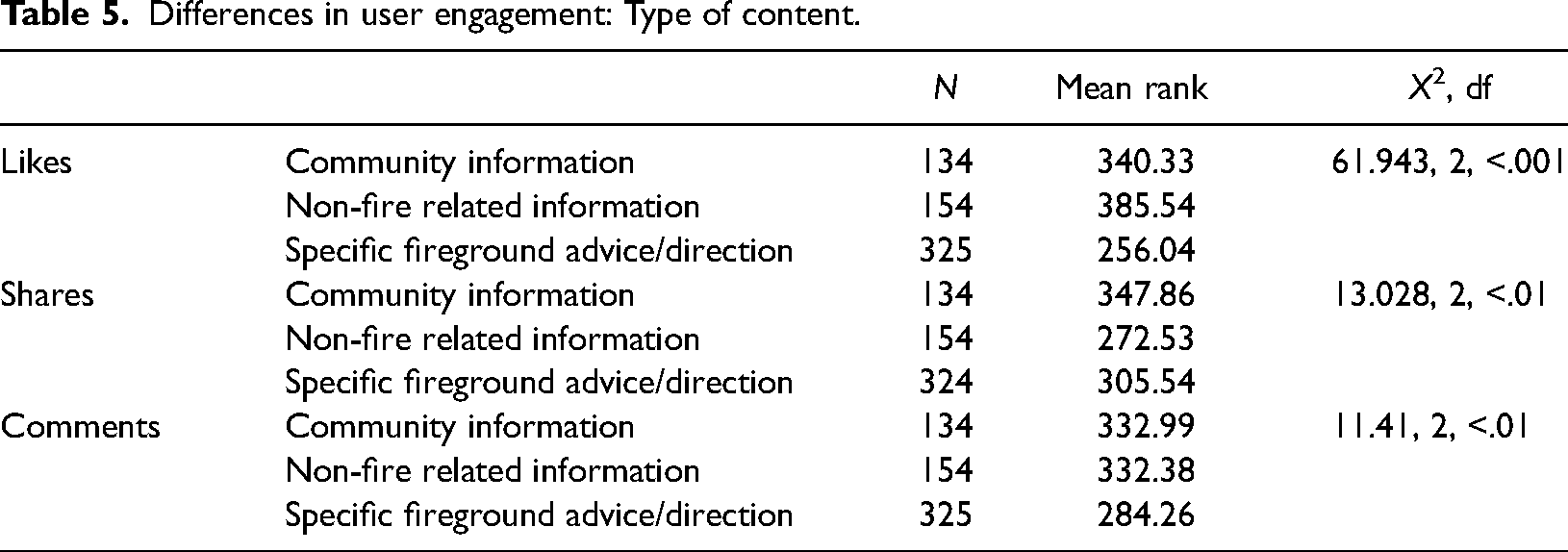
We also examined the relationship between the type of information included in the post and user engagement. Table 5 indicates that the type of information is significantly related to user engagement. However, users’ level of engagement differed depending on the content. Users were significantly more likely to share community information-related posts (X2 = 13.028, p < .01) than other information, whereas non-fire-related information was significantly more likely to have likes (X2 = 61.254, p < .001). In terms of commenting, users were significantly more likely to comment on community information and non-fire-related information compared to specific fire ground advice and direction-related posts (X2 = 11.41, p < .01). Further observation confirmed that many of the comments were people ‘tagging’ others to share information and expressing gratitude for the work of the agencies, staff and firefighters. We also observed a considerable number of comments seeking clarification of information posted and asking questions about specific services and advice on the Facebook pages, which may reflect limited engagement with specific services and advice in the agencies’ communication practice.
Differences in user engagement: Type of content.
Discussion
This study explored how social media attributes and metrics can demonstrate effective characteristics of crisis communication by investigating Facebook posts from the official ACT ESA and NSWRFS Facebook pages. Different attributes of the posts, including format, length and user engagement measures (such as likes, comments and shares) were identified and examined. The results revealed marked differences in the communication approaches of the two agencies, while both actively used Facebook as a one-way communication channel to provide information about bushfires and other emergencies to the community during such events.
Social media users interact with different types of content in different ways. Social media activities such as likes, shares and comments are often used to measure user engagement (Chugh et al., 2019; Coelho et al., 2016; Gerlitz and Helmond, 2013; Su, et al., 2015). Different user engagement on social media can be defined as users’ varying modes of interaction with content and information and with other users (Sang et al., 2020). Our findings in this study confirm that this form of user engagement is prominent in crisis situations. Users interact with different types of content in different ways, which is determined by communication methods. Researchers have found that images are more effective and inclusive due to their accessibility to a greater number of people, including people with varying levels of literacy (Chugh et al., 2019; Spiegelhalter et al., 2011). The results indicating higher engagement with posts in a hybrid form comprising different visual sources, such as infographics, images and videos, are in line with these existing studies. There is a need to engage the public in the design of images and narratives and understand what kind of information is needed and most useful (Spiegelhalter et al., 2011).
We also identified what type of information generated higher engagement levels during the bushfires. Community information-related posts demonstrated the highest engagement levels, particularly revealing a higher level of engagement through sharing and commenting. This has important implications for understanding the effectiveness of government communication in a crisis. It is vital that information addresses the public's interests and concerns, and the public's increased engagement with information that governments disseminate on social media reflects the impact of communication. In addition, a higher level of engagement with non-fire-related information is worth noting. Many studies have revealed that social media use is associated with higher levels of social support (Kim, 2014; Lu and Hampton, 2017; Wohn et al., 2016). Social media facilitates the building of social connections (boyd and Ellison, 2007). This is particularly the case in a crisis where users have a heightened awareness of others, providing a means to reach out to offer social support and resources. In the current study, it was evident that users were actively sharing and commenting on non-fire-related information and community information-related posts. This suggests that users’ interactions using sharing tools on social media enable users to build social communication and engage with conversational behaviours while seeking reliable information on trusted organisations’ social media channels. The significance of informal communication through different communication channels, such as social media, has been increasingly recognised by crisis communication researchers. While the content analysis shows the relationship between communication practices and user engagement, it is constructive to understand how social media facilitates information sharing in a crisis and increases community connectedness. In order to better understand the role of social media communication in sharing trusted information in a crisis and increasing community connectedness, the role and impact of user engagement on the information flow of agencies’ social media channels need to be further investigated.
This study contributes to academic knowledge through applying academic and theoretical understanding to actual events. The study has brought together research from different disciplines and highlighted where theories about communication, emergency management and visual literacy can usefully contribute to improved crisis communication through the use of social media. The findings in this study, that people are using social media for insider information and for connecting and maintaining contact with friends and family during crises, are consistent with the social-mediated crisis communication (SMCC) model. The study also reaffirmed the effective characteristics of crisis communication identified in the robust framework developed by Steelman and McCaffrey (2013).
This study did not include deep analysis of the public comments on the posts. A high-level scan of the displayed comments showed that many of the comments comprised people ‘tagging’ others to share information and expressing gratitude for the work of the agencies, staff and firefighters. In addition, there were a considerable number of comments seeking clarification of information posted and asking questions about specific services and seeking advice. More comprehensive analysis of the detail of comments would yield a deeper understanding of what information people find useful and what they are looking for. Also, due to limited access to FB comments (only site owners can see all the comments, including the total number) it was not possible to do further analysis at this stage. This is an acknowledged limit of this study.
The six-week period of the study and focus on a specific bushfire event means that it is not possible to make any definitive comment on the agencies’ engagement or communication prior to, or after, the event. Risk and crisis communication research highlight the importance of a continuum of communication during the three phases of a crisis: pre-crisis, crisis event and post-crisis and community resilience is dependent on effective engagement through all three phases. Further research into engagement and communication activities throughout the year would inform a more complete understanding of how Facebook is currently being used and inform areas for further improvement.
This study was confined to exploring the use of Facebook by the two agencies during the bushfire event. Both agencies have comprehensive communication strategies that employ more channels, including other social media channels. It would be beneficial to consider the findings from this study in the broader context of the use of social media and as a component of a local, state and national strategic framework employing mass media and traditional forms of communication.
