



Abstract
The effective implementation of information and communications technologies (ICTs) in higher education is not guaranteed without serious and rigorous pedagogical reflection. It is essential to maintain an ongoing debate on the effectiveness of the learning process. A debate accelerated by the impact of the COVID-19 crisis and the growing role of virtual and remote learning in universities worldwide. This research aims to overcome the quantitative approach of previous work with qualitative evidence to contribute to the field knowledge. The designed case study is based on a Moodle teaching experience in communication studies at a Spanish university. This innovative methodology is developed within a hybrid teaching ecosystem (blended learning) with the support of a virtual platform (Aula Virtual). The sample analysed is composed of 77 students enrolled in the subject ‘Television Journalism’. The design of an original and novel data collection instrument has supplied various quantitative and qualitative data. The triangulation of four data collection techniques has provided a demographic profile, an activity report, a grading report and a satisfaction report. The findings suggest a high degree of student satisfaction, with the experience and a significant improvement in students’ television writing skills, thanks to the implementation of Moodle.
Keywords
Introduction
Social Constructivism
An effective classroom is generally dependent on using constructivist strategies and practice. From a social constructivism perspective, the ideas are constructed through the interaction between the lecturer and the class to achieve a personal meaning for the student (Powell & Kalina, 2009, p. 241). Thus, lecturers, first, provide support for learners to build their learning way (Amineh & Asl, 2015, p. 15). The present-day consensus seems that professors can only overcome these challenges if they adopt a new approach: transforming oneself from an information conduit into an experiential learning designer for others (Garreta-Domingo et al., 2017, p. 14). A recurring criticism of the conventional university class is that students do not pay attention because they do not feel motivated and involved in the intellectual process (Nazarenko, 2015, p. 82; Yang et al., 2013, p. 291). In this sense, recent studies have shown that the flipped classroom model promises innovative ways in more effective, supportive, motivating and active learning, especially for low achievers and students who may struggle with traditional lectures (Nouri, 2016, p. 9). An example was put into practice in an experiment to improve students’ writing skills by shifting to a cooperative working model with a collaborative constructivist approach (Álvarez & Bassa, 2013, p. 263).
Information and Communications Technologies and Higher Education
Accepting the premise that teaching innovation must be centred around students’ needs undoubtedly involves implementing a strategy for the employment of information and communications technologies (ICTs) based on efficient teaching experiences. It, therefore, seems relevant to maintain an ongoing debate regarding the effectiveness of the learning process. In certain spheres, the practice of the teaching profession is not necessarily linked to scientific evidence. Although current institutional criteria encourage the development of research on teaching and education, academia has generally favoured debate rather than optimizing answers to teaching problems (Remesal et al., 2017, p. 59). A cultural change is called for, where all involved parties recognize the need for scientific evidence to support good teaching practices, based on the exchange of scientific knowledge within the profession (Goldacre, 2013). These aspects restrict and frame the practice of ICTs’ leadership (Cifuentes-Álvarez & Vanderlinde, 2015, p. 140). The debate gains relevance in the current setting of the European Higher Education Area (EHEA), where universities are reconfigured as spaces for the acquisition of professional skills (González & Triviño, 2018, p. 372). Hybrid or blended learning (BL) is defined as a pedagogical approach that includes face-to-face instruction with computer-mediated teaching. The terms ‘blended learning’ and ‘hybrid learning’ are used as synonyms in current research. Although hybrid learning can be diverse in how it is implemented, educators agree that this approach has the opportunity to provide personalized teaching, with some element of student control over path, pace, time and place (O’Byrne & Pytash, 2015, p. 138). This pedagogical approach has been successfully implemented in the Spanish university context, where at least 78% of professors use some type of virtual platform to support their teaching (Muñoz et al., 2011, p. 107).
Blended Learning and Moodle
We analyse a hybrid education teaching experience in a Spanish public university from the perspective of applying ICTs. ‘Blended training is acquiring an important role in classroom-based contexts which use this learning model as a supplementary instrument that extends the teaching experience outside the classroom’ (Salmerón-Pérez et al., 2010, p. 163). Thus, the instructor becomes a designer of ‘scaffolding’, which guides students towards the desired goal and enables ‘creativity in both directions’ (Salmerón-Pérez et al., 2010, p. 170). Moodle is one of the most popular tools in BL environments. This open-source software has gained popularity due to its versatility in creating online learning platforms for virtual- and classroom-based courses. Recent research on the use of Moodle in BL environments has shown significant correlations between a high level of teaching support and the improved performance of students (Ifinedo et al., 2018, p. 100; Lamia et al., 2017; Mwalumbwe & Mtebe, 2017, p. 11; Seluakumaran et al., 2011, p. 373). Two studies have delved into the measurement of academic performance variables in Moodle ecosystems (Islam, 2013, 2016). Several methods have been implemented to collect evidence in this field of study, including pretest–post-test designs (Yang et al., 2013, pp. 285–305, 2014, p. 746), and case studies (Cerezo et al., 2016, pp. 42–54; Herbert et al., 2017, pp 1–11; Nazarenko, 2015, pp. 77–82). Some of the described advantages of Moodle are the traceability of student workflow and immediate feedback (Martín-Blas & Serrano-Fernández, 2009, pp. 35–44; Renau, 2005, p. 1205). Research has also explored the efficiency of Moodle as a complementary asynchronous tool for student self-evaluation (Charitopoulos et al., 2017, p. 7). The literature review shows that most investigations on Moodle have focused on measuring the satisfaction of users. In this regard, Ibero-American research indicates that the level of satisfaction among professors and students was ‘very high’ (Cabero et al., 2010, p. 156). When students are qualitatively asked to assess their learning in hybrid environments, they describe their experience as ‘active, practical and dynamic’ and the teaching feedback as ‘individualized and fast’ (Hinojo-Lucena et al., 2009, p. 170).
Case Study
Once the theoretical perspective of the studied phenomenon has been outlined, and to provide continuity to the methodological perspective, we have considered it appropriate to design a case study to analyse data derived from multiple quantitative and qualitative sources (Yin, 1984). Relevant theoreticians have described this technique as halfway between experimental, non-experimental and qualitative studies (Creswell, 2007; Mertens, 2015). Hernández-Sampieri and Mendoza (2018, p. 185) claim that ‘by using quantitative, qualitative and mixed research processes, these studies provide an in-depth analysis of the holistic unit to respond to the problem posed, prove hypotheses and support the development of theory’. Case study research is extensive within the field of social sciences. It allows researchers to concentrate their efforts on the in-depth study of the case and address specific objectives with limited resources through a rigorous approach to the studied phenomenon (Gómez-Escalonilla et al., 2011, p. 75). We have employed a triangulation procedure with various data collection techniques to guarantee reliability and validity (Keyton, 2019, p. 250). In addition to compensating the strengths and weaknesses of both perspectives (Bazeley, 2009, p. 205), the intention is to gain detailed knowledge of the subject of study (De Miguel, 2005, p. 288), through the collection of wealth and diversity of data, using a valid, reliable and rigorous measuring instrument. This design proves feasible based on five criteria: convenience, social projection, practical implications, and theoretical and methodological contributions (Del Río & Velázquez, 2005, pp. 47–48). It is also justified that previous investigations on the interaction dynamics in hybrid learning environments have repeatedly expressed the need to overcome the quantitative approach with other means of research (Altanis & Retalis, 2019, p. 14; Osorio-Gómez & Duart, 2011, p. 65). In parallel to this, previous works have shown the necessity to continue providing scientific evidence regarding the effectiveness of ICTs in higher education (Costa et al., 2012; Nouri, 2016, Yang et al., 2013). Due to the hybrid nature of the phenomenon, Dziuban and Picciano (2015, p. 16) claim that an approach that integrates multiple techniques provides more significant results. Using various techniques also contributes to the development of meta-analysis, which elevates the individual case’s evidence to a higher conceptual level (Riley et al., 2013, pp. 161–172). Pre-experimental designs specifically addressing this phenomenon have suggested the need for further development in this line of research to improve the level of student satisfaction, strengthen skills in journalistic writing and explore the dynamics of instructor–student feedback in more detail (Álvarez & Bassa, 2013, p. 264; Bandrés, 2011, p. 79).
Objectives
The research goal is to contribute by advancing scientific knowledge to improve students’ television writing skills in a hybrid ecosystem. The objectives of this research are outlined as follows:
General:
describe the research findings of a case study at the intersection between education and communication; explore the effectiveness of BL to teach communication; and evaluate the use of Moodle as a teaching instrument for journalistic writing. Specific:
SO1. Apply a BL experience in television journalism at Rey Juan Carlos University in Madrid, Spain (URJC). SO2. Describe the use of Moodle to teach television writing. SO3. Evaluate the grades achieved by students. SO4. Evaluate student satisfaction with the experience.
Thus, the research questions guiding this article are as follows:
RQ1: How can BL be applied to the practice of journalistic writing? RQ2: How does the experience affect student performance? RQ3: What are the strengths and weaknesses observed in the Moodle application?
Materials and Methods
Unit of Analysis
Due to its relevance to the research, the subject ‘Television Journalism’ was chosen, included in the degrees and double degrees in Journalism and Media Studies at URJC. It is a core subject with a workload of six credits, according to the European Credit Transfer System (ECTS). As explained in the subject’s teaching guide, its aim is ‘applying all standard formats of television to the news genre, as the guiding theme of the subject. Students will learn about all aspects of the production of traditional news broadcasts, including the editing and reading of news formats and the set design, and all other factors connected with television newsrooms’ (URJC, 2017). The aim is to offer students an overview of the work involved in television news from a theoretical and practical perspective. At the end of the course, students will have developed the production skills necessary to work behind the camera: documenting, writing and managing the audio and script reading of news features. They will also present news in front of the camera, as newsreaders in TV studios and on-the-scene reporters. These objectives and skills coincide with those described in television journalism subjects’ teaching guides in other Spanish universities (Rosique-Cedillo, 2013). The research was developed during the second semester (January–June) of the academic year 2017–2018. The analysed sample included 77 students in the fourth year (senior) of four different double degrees (N = 77): Journalism–History, Journalism–Economics, Journalism–Law and Journalism–Politics. These dual degrees have different academic itineraries but share certain subjects in the field of communication. The semester course ‘Television Journalism’ theory contents were imparted to the whole group (N = 77) in a weekly 2-h session conducted in a lecture hall equipped with technical support to view audiovisual resources. For logistic reasons, the original group was divided into two subgroups (n1 = 39) and (n2 = 38) to attend a 2-h weekly practical session on Mondays or Wednesdays. Depending on the session’s contents, two different audiovisual laboratories were used: a video-editing facility with computers equipped with AVID Composer software and a television studio equipped with a production control room.
Data Collection Instrument
The bibliographic review enabled the design of a preliminary data collection instrument submitted for review by a panel of experts. It was analysed between November and December 2017 by a panel of Spanish experts in fields that combine communication and education: two were from URJC, one from Carlos III University, one from Complutense University and one from Camilo José Cela University. After its evaluation and analysis, the instrument was corrected, attuned and strengthened. Finally, four data collection techniques were selected: a demographic profile, an activity report, a grading report and a satisfaction report. The data were derived from four sources: the URJC digital platform (Aula Virtual), Moodle, a URJC teaching evaluation survey and an internal evaluation survey. The variables derived from the research questions were measured using these reports (Table 1).
Case Study Design
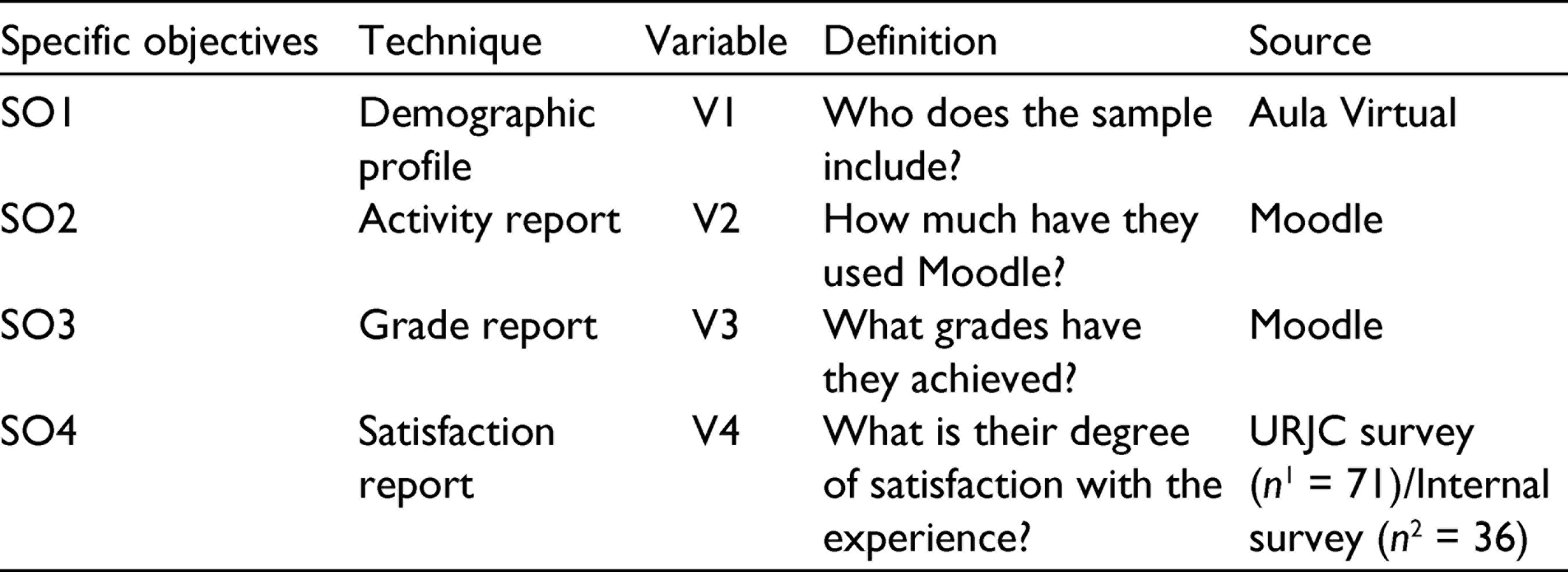
The URJC teaching evaluation survey was conducted at the end of the course. The survey is anonymous and generic, used to evaluate all university subjects. It has 10 Likert-type questions and is divided into four sections: planning and organization of the semester course, fulfilment of formal duties by the instructor, teaching methodology and overall evaluation. A total of 71 valid surveys were collected (n1 = 71), yielding a response rate of 92.2%. A further survey was conducted internally to collect data relevant to the case study. It was also anonymous and was available for 1 month after students had received their final grades. The survey had 13 Likert-type questions and 2 open questions: one on the theoretical and practical knowledge acquired in each part of the subject and one on teaching performance. A total of 36 valid surveys were collected (n2 = 36) with a 46.75% response rate. In both surveys, only the responses directly connected with the study subject were coded, applying the content analysis technique (Denscombe, 2017, p. 313; Keyton, 2019, p. 214). The variables observed in the research have been quantitative (nominal and ordinal) and quantitative (interval) in nature. Subsequently, a univariate descriptive analysis has been applied, and the corresponding statistics have been obtained: measures of central tendency (Mo, Md and x̄ ) and standard deviation (SD). Finally, the data analysis was conducted using the SPSS Statistics package, version 25.
Findings
Moodle in the Subject’s Design
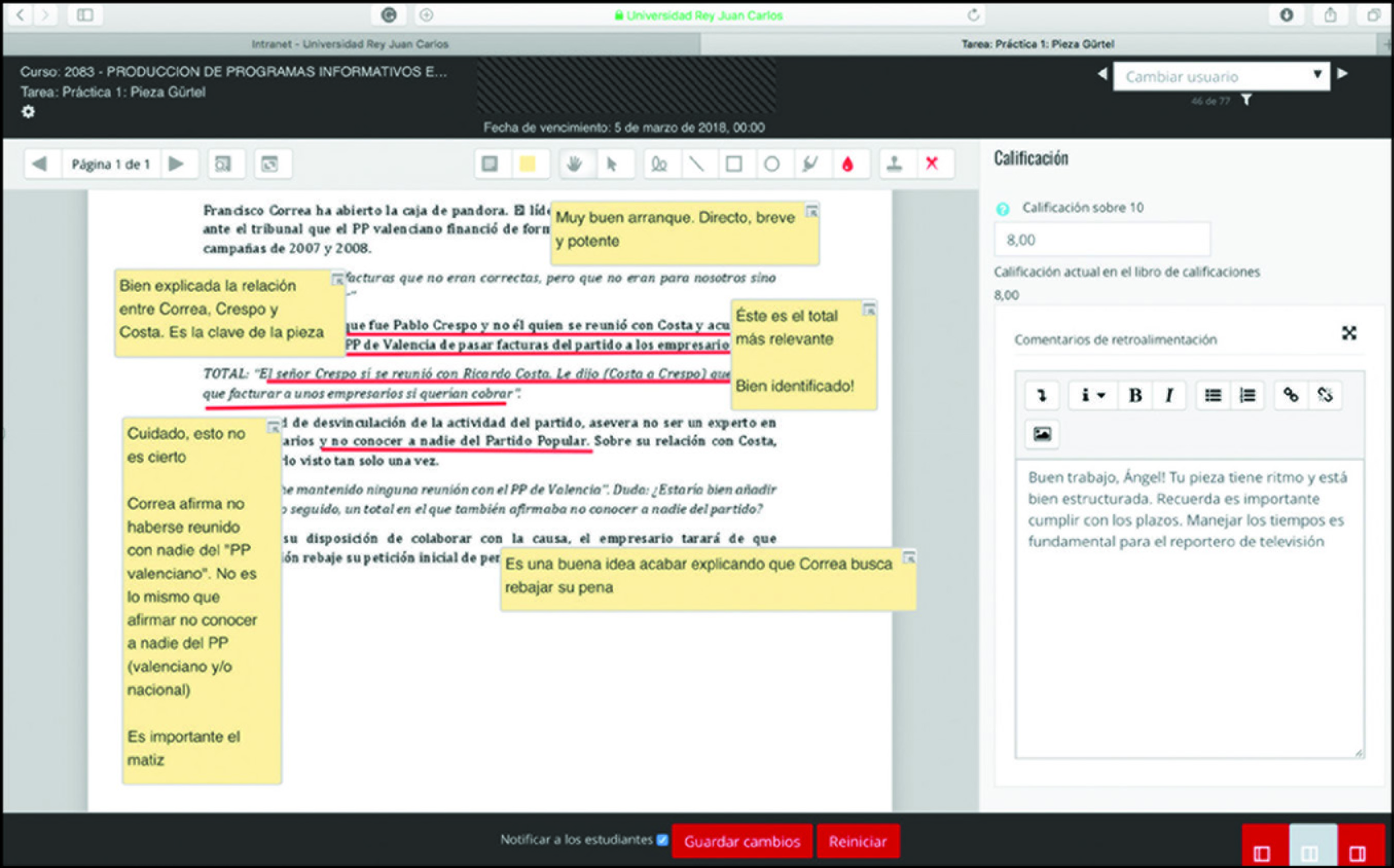
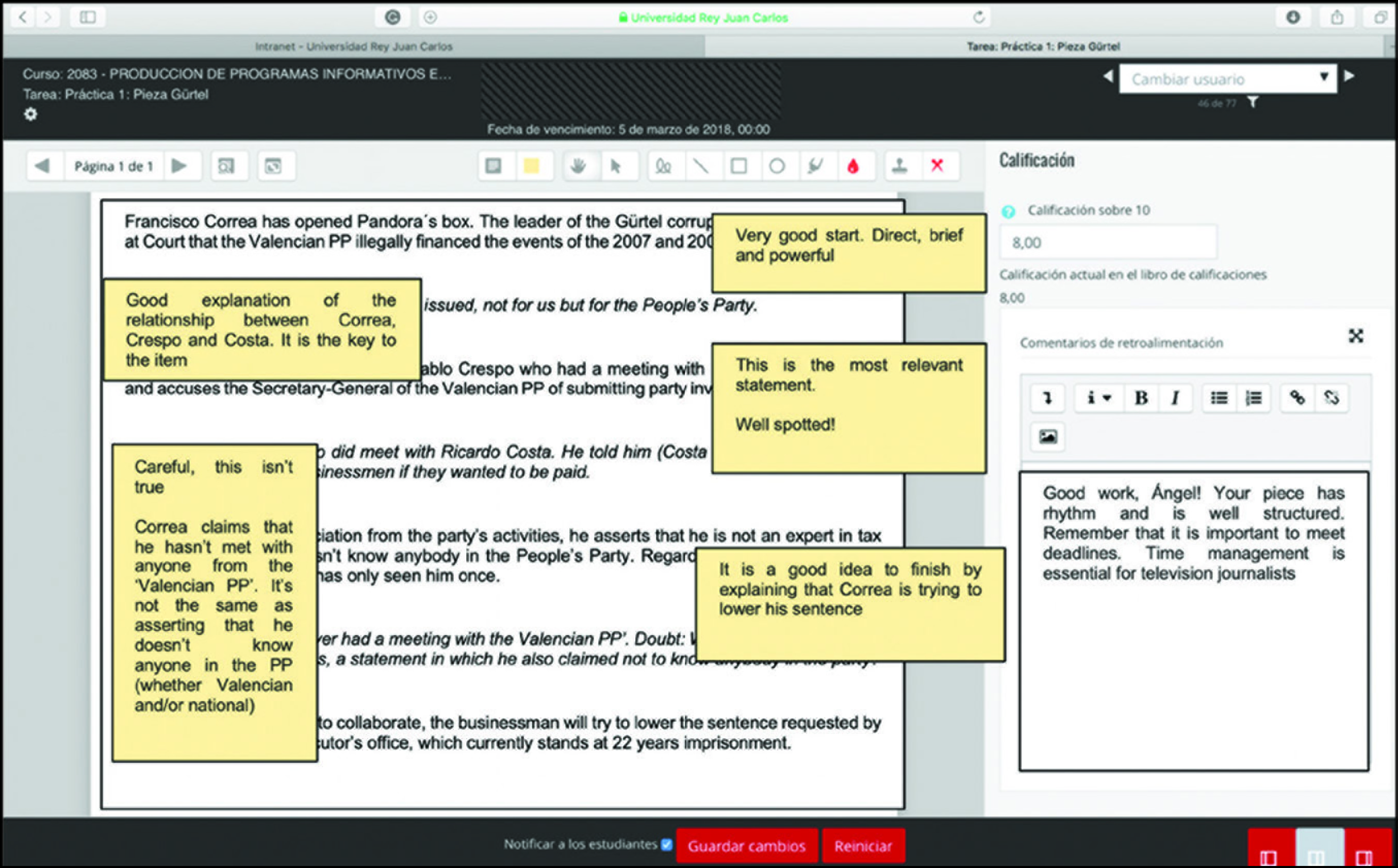
The Moodle design was incorporated into the theory and practice sections of the subject. The course had five tabs in the virtual classroom (Aula Virtual): general information (brief description), instructor (means of contact), contents (support to theoretical contents), evaluation (support to practical contents) and other resources (library, databases, catalogues). ‘Contents’ condensed all the theory involved in the subject. The PowerPoint presentations of the four theory units were uploaded onto the site at the beginning of the course to reinforce the subject’s hybrid nature. Additionally, other complementary materials were added to address emerging needs: tutorials to supplement the practical sessions on video editing with AVID Composer, a workshop on television news locution and two corrections of the student´s most common writing mistakes. ‘Evaluation’ contained all the practical load of the subject. The evaluation criteria outlined in the teaching guide established the weights of each of the four assessable items: news bulletin practices (30%), writing practices (30%), final exam (30%), and attendance and participation (10%). The item ‘news bulleting practices’ included developing two assessable assignments: a live news connection (individual work) and a news story (group work). Students were distributed two news scripts in English from Associated Press and Reuters and given 10 minutes to prepare the live connection. The objective was to re-create the pressure conditions of news bulletin production. For the second assignment, teams of six students had to cover a real news story and produce a one-and-a-half-minute video. They had 4 weeks to complete the project, and the final edition had to include scriptwriting, voice-over, editing and an anchor introduction. The ‘writing practices’ were divided into four assessable assignments. Each one of them developed a specific skill related to the work routine of a television newsroom. In the first practice (P1), students viewed in the classroom 15 minutes of Francisco Correa’s statement—one of the main suspects in one of the most recent corruption scandals in Spain, the so-called Gürtel case—at the National Court. Following the guidelines outlined in the virtual classroom, they had to write a news item. Once the students had uploaded their practices onto the virtual platform, these were corrected by the professor. The corrections had to do with content (management of sources, clarity of presentation) and form (style, accuracy, fluency and suitability for the television medium). Moodle’s functionalities enabled lecturers to underline and write notes in different parts of the text, assign a grade as well as an individualized feedback comment (Figures 1 and 2).
The process was the same for the four ‘writing practices’, which took place between 5 February and 24 April 2018. Students had a 1-week deadline to submit their work. The second practice (P2) focused on developing skills to select the most critical news protagonists’ statements. The students viewed the improvised statement of Francisco Granados, the prime suspect in another of Spain’s recent political corruption scandals, the Púnica case. The third practice (P3) focused on developing skills to write news items based on information from press and communication offices, in this case, the People’s Party press release on the feminist strike of 8 March 2018 in Spain. In the last practice (P4), students developed skills to cover press conferences. The information material came from two masterclasses attended by the students and given by two media professionals: a camera operator and a television producer. Students had to decide the most important headlines and compose a news item. The overall approach in designing the practical assignments was to simulate the newsroom’s real job on a national television station. Thus, the practices replicated the journalistic daily work’s professor as a TV reporter.
Demographic Profile
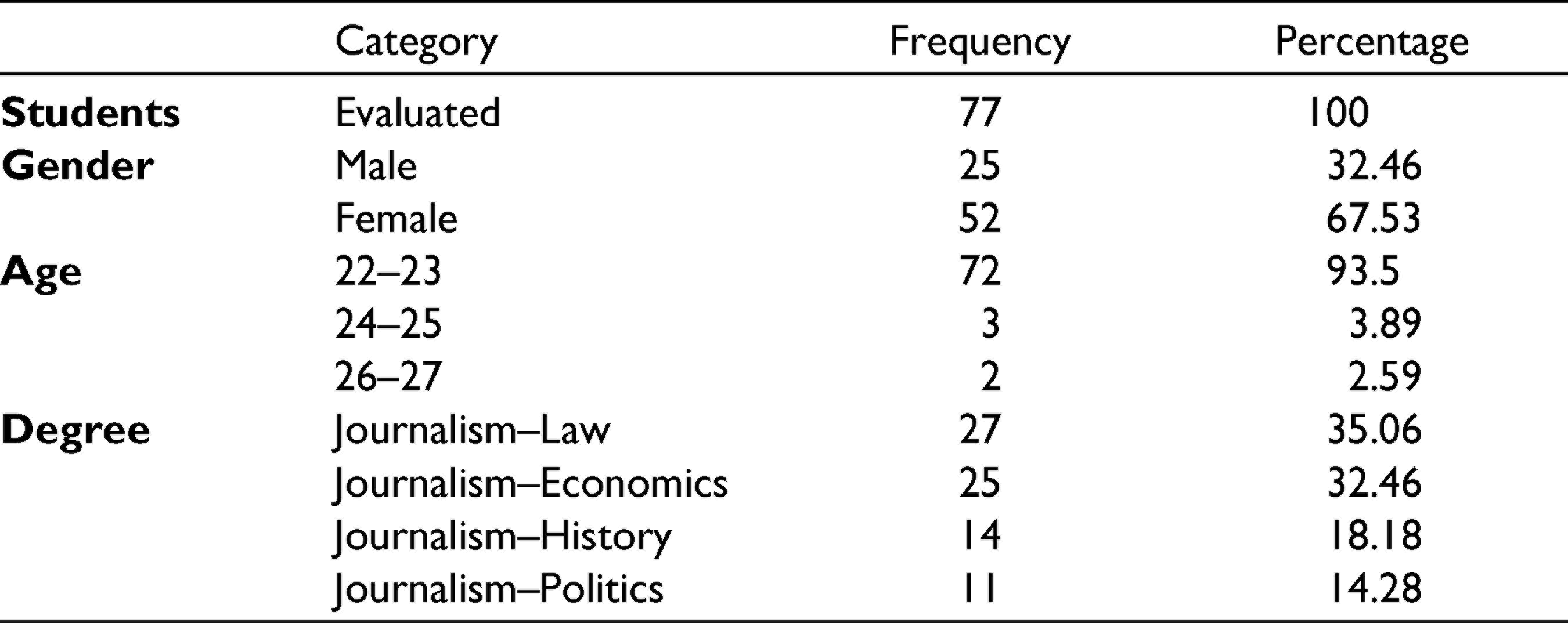
The sample (n = 77) was composed of 77 evaluated students. The demographic profile (Table 2) shows that most students were females (67.3%). The Mo was established at 22.5 years, and the range was 5. Concerning students’ academic background, the most numerous subgroup was Journalism–Law (35.06%), and the least numerous was Journalism–Politics (14.28%).
Demographic Profile
Activity Report
Table 3 provides an analysis of viewed pages. P1 registered the highest total number of viewed pages, both by students and the instructor (n = 2,239). The frequency rate gradually declined as the course progressed, reaching its lowest level in P4 (n = 1,667). A separate analysis of both roles shows that P3 was most visited by students (n = 1,474) and P4 the least seen (n = 1,126). In the instructor’s case, P1 was the most viewed (n = 819) and P4 the least (n = 541). The values for central tendency and deviation registered in students’ case were x̄ = 1,354 and SD = 155.46; instructor’s case were x̄ = 659.75 and SD = 141.51.
Activity Report of Pages Viewed by Students and Instructor
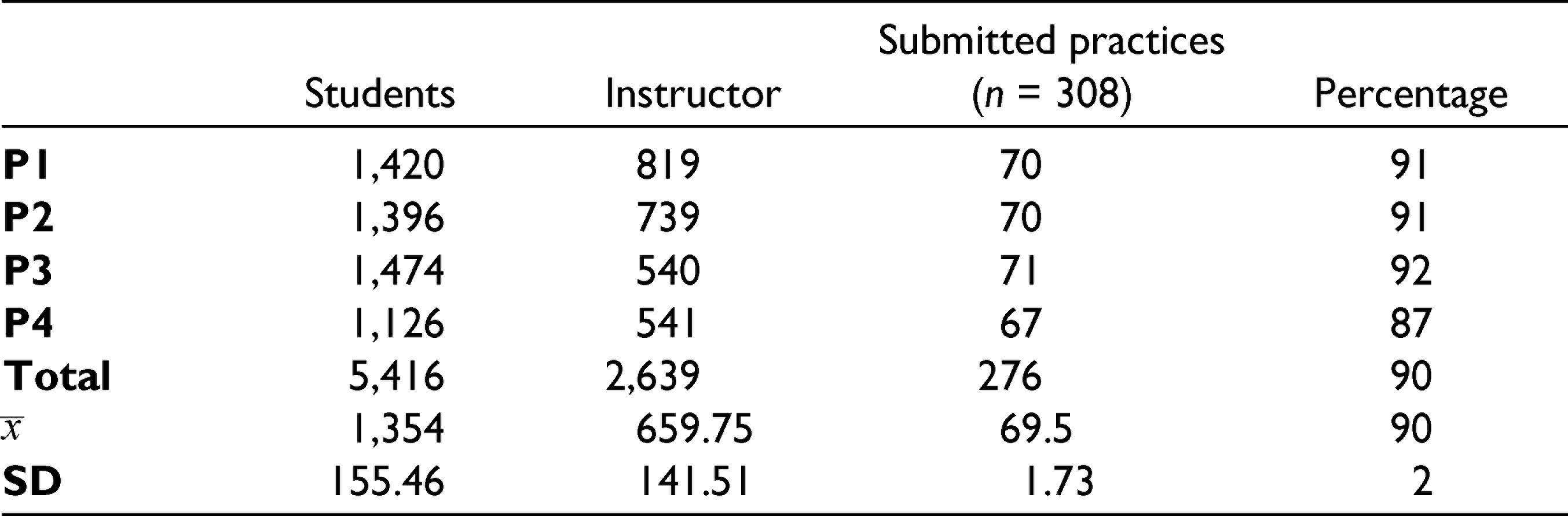
The average percentage of submitted practices during the first term was 90%. P4 registered the lowest value of submitted exercises at 87% (67). Each student visited the virtual classroom an average of 70.33 times during the term (n = 5,416) and viewed an average of 17.58 pages in each of the four practices. The average number of pages viewed by the instructor per student was 34.27 (n = 2,639), and per student and practice 8.56.
Grading Report
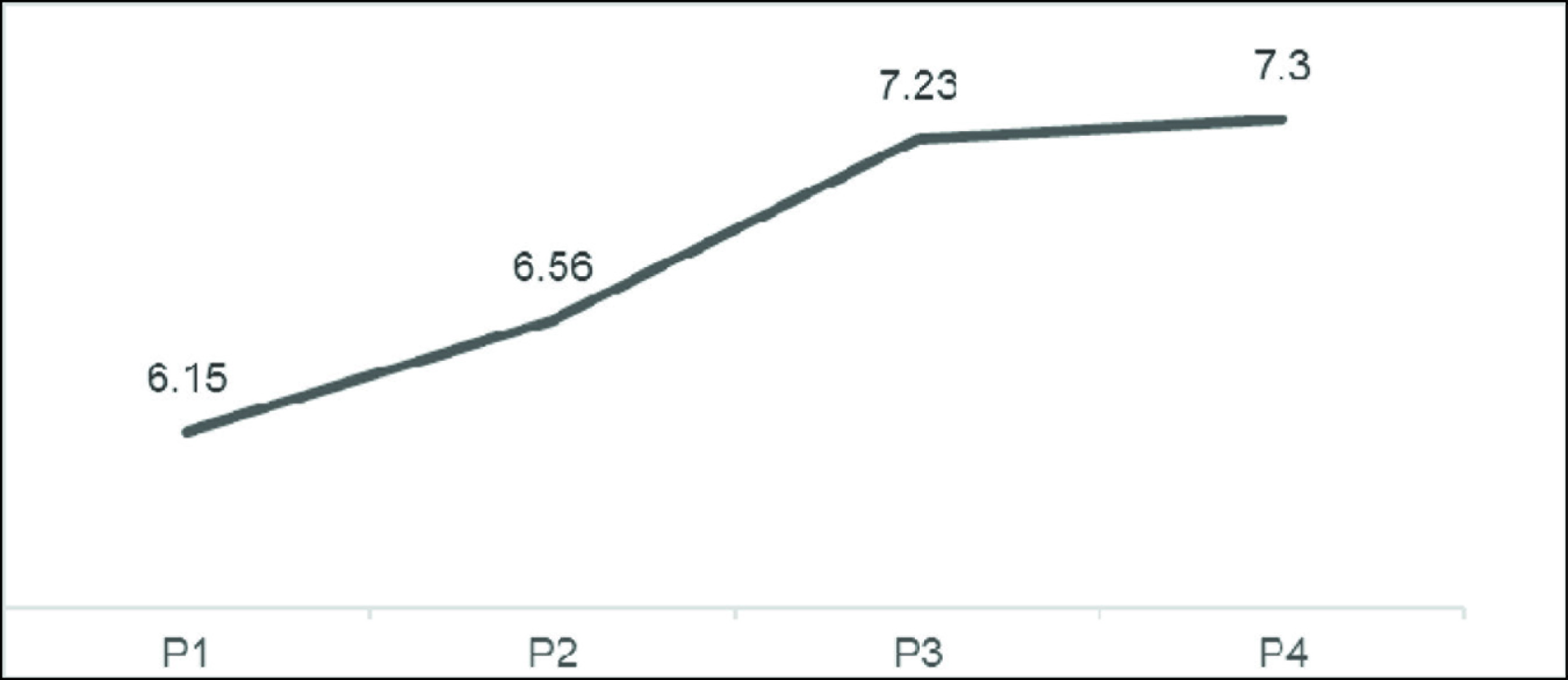
The average grade of the group increased slightly but steadily as the course progressed (Figure 3). P1 registered an average grade of 6.15, and P4 obtained the maximum value for an average grade of 7.30. The overall average is established at 6.81 (SD = 0.55).
Satisfaction Report
It is worth noting that when analysing the findings of the URJC survey, students’ responses regarding their satisfaction with teaching performance have also been considered, indicative of their course satisfaction, since both dimensions go hand in hand (Table 4).
URJC Teaching Evaluation Report
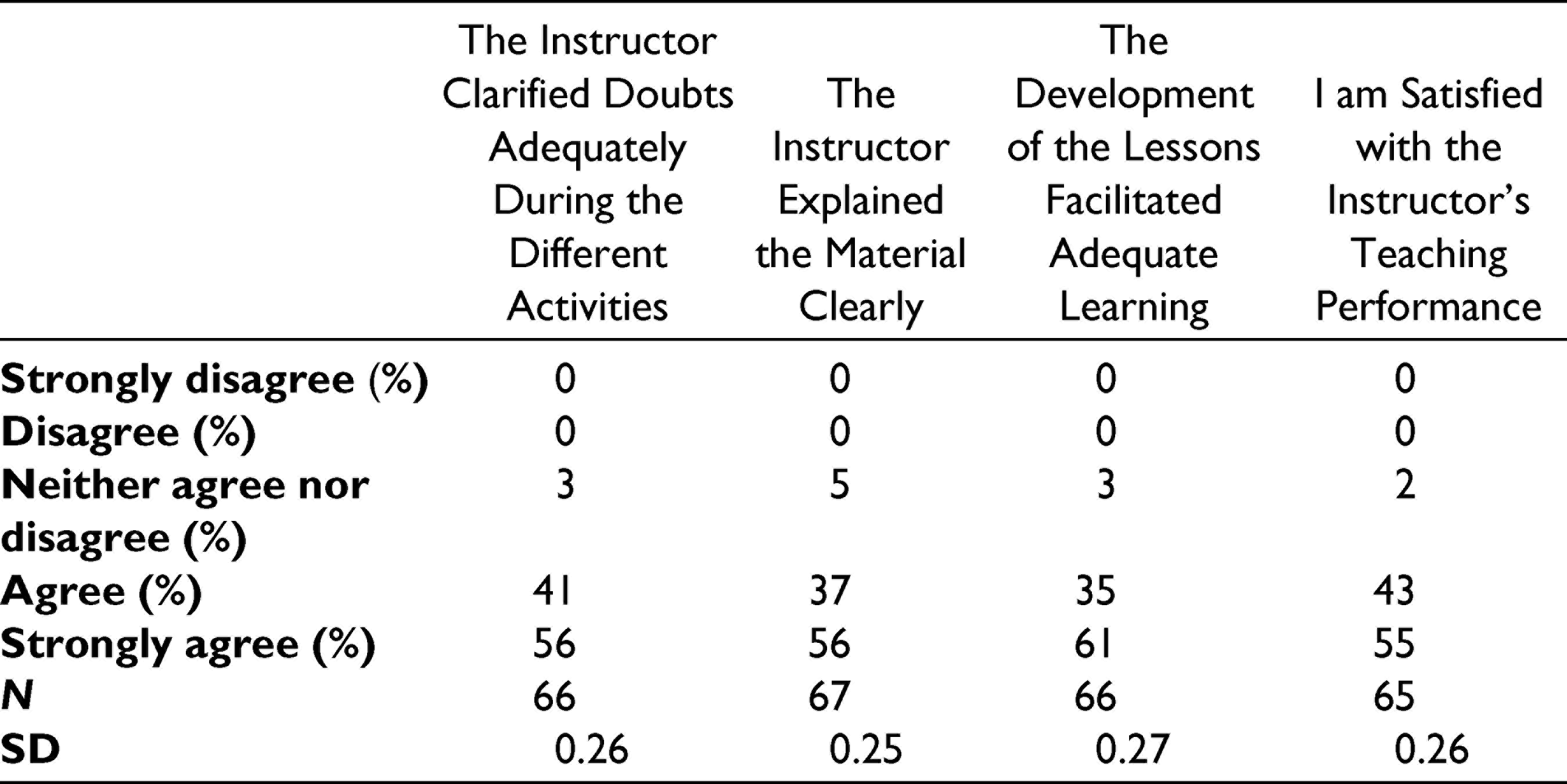
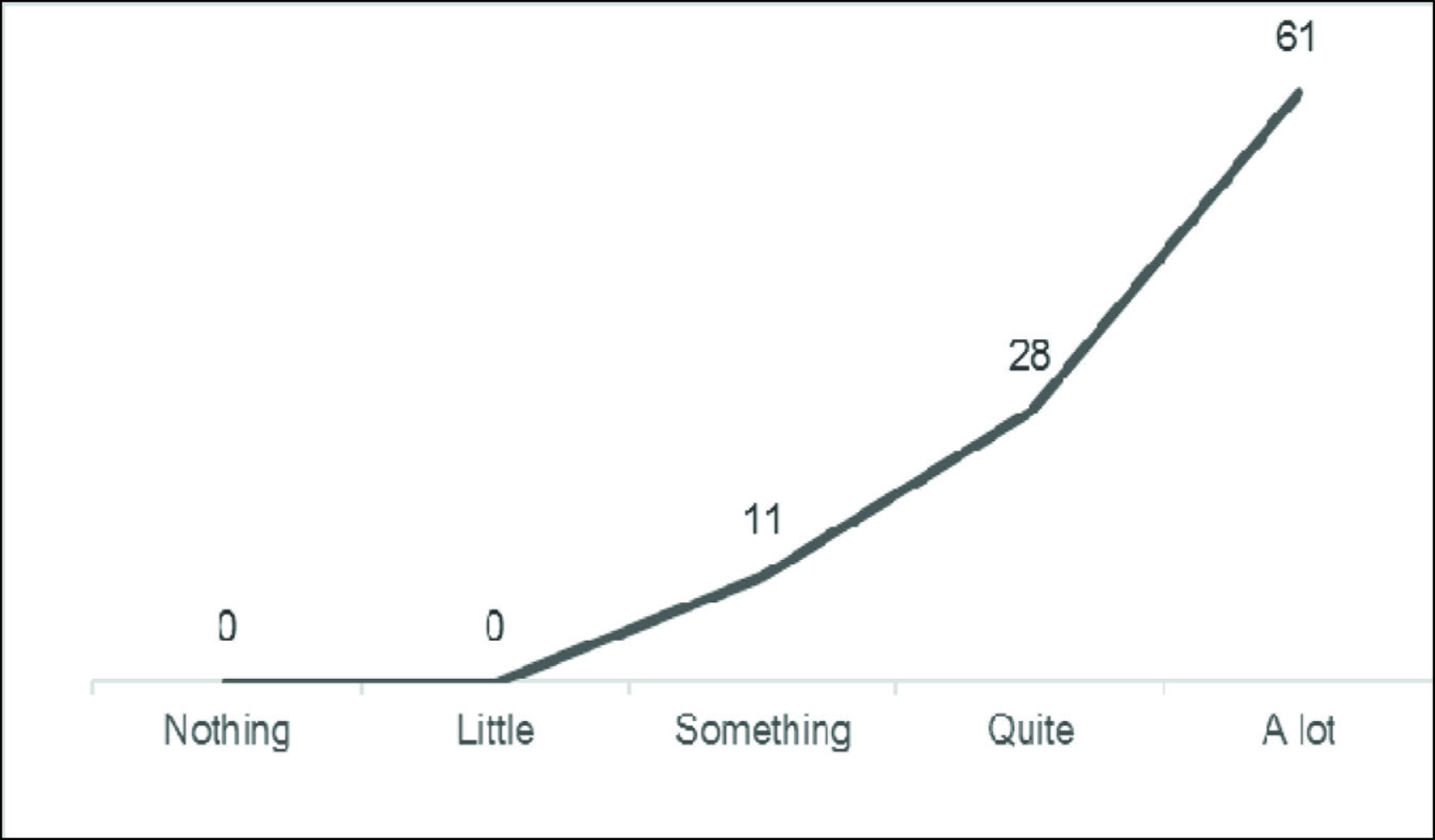
Overall, 96% of students agreed or strongly agreed that the development of the lessons facilitated their adequate learning. A total of 97% of students agreed or strongly agreed that the instructor’s method clarified doubts adequately during the different activities. Additionally, 93% agreed or strongly agreed that the instructor explained the material clearly. Finally, 98% of the respondents were satisfied with the subject. Regarding the internal survey, the findings were consistent. A total of 89% of students considered that they had learnt ‘quite a lot’ or ‘a lot’. Only 11% of the respondents considered that they had only learnt ‘something’, and the options ‘a little’ and ‘nothing’ were not selected in any instance (Figure 4).
One of the open questions in the internal survey (n2 = 36) was: ‘Which aspect of the course did you like the most and why?’. Of the collected responses, 52.77% were related to the Moodle application (f = 19). Some of the comments submitted, by no means exhaustive, were:
Student 7 (S7). ‘What I liked most were the contents and practical aspects of the subject. Finally, we have had a course that has taught us knowledge that applies to our professional future’. S8. ‘What I have liked most about this subject has been the amount of “real” practices that we have done. For the first time, I have felt that I was doing useful things actually related to the profession’. S9. ‘The practical part, particularly, writing news stories, has helped me improve my writing skills for television’. S11. ‘Good balance between theory and practice’. S19. ‘The writing practices. I have learned a lot from them, and it’s been very satisfying to notice my progress and improvement’. S23. ‘Being taught how to write a news item and the different elements used. No one has ever made such an effort to teach us how to write for television’. S26. ‘The possibility to put into practice all theoretical knowledge, “learn by doing”, the critical thinking and curiosity promoted in the lessons and the enthusiasm and initiative of the professor’. S30. ‘The practices on news items. Very useful’.
Discussion and Conclusions
Regarding the research questions initially established, we would like to point out that:
RQ1. The combination of classroom-based and virtual teaching is essential in the current teaching scenario. The impact of the COVID-19 crisis has accelerated the growing role of hybrid learning. Universities worldwide have been forced to integrate these remote teaching pedagogical models to survive periods of student confinement. Therefore, we agree that this combination multiplies the advantages of both models and boosts the performance of both the professor and students (Muñoz et al., 2011, p. 5; Nouri, 2016, p. 8). The heterogeneity of the sample, which included students from four different double degrees, is especially relevant to analyse BL models’ objective, that is, to extend the teaching experience beyond the physical classroom, thanks to the implementation of ICTs. In this regard, we can infer that it would have been challenging to achieve the findings obtained from this teaching experience without implementing ICTs. Moodle has been a critical instrument to address the different issues that arose in each subgroup of the sample and to achieve a hybrid model of BL. Using Moodle has enabled a high level of personalized teaching. This is evidenced by the number of pages viewed by the instructor per student and practice (8.56). The findings achieved regarding feedback are consistent with previous studies (Hinojo-Lucena et al., 2009). The average percentage for submitted practices was 90%, and the practice with the lowest number of submitted exercises was P4 at 87%. These data are highly significant and suggest the commitment and motivation of students. This high level of involvement is also established by the average of 17.58 pages viewed for each of the four practices. These visits were used primarily to read the instructions, write the practice work, check the instructor’s corrections and determine the grade. In this respect, it is relevant that instructions are clear and concise. Certain constraints regarding time limitations and the number of attempts when using Moodle are necessary to enhance teaching innovation quality (Remesal et al., 2017, p. 51). RQ2. The positive and gradual evolution in the four practices’ average grades suggests the overall improvement in writing skills. Average grades increased by 1.18 percentage points between P1 (6.15) and P4 (7.30). This progress is highly significant as it entails a leap in the EHEA grading from a pass to a very good. The findings are consistent with previous studies on the positive impact of Moodle on students’ grades (Ifinedo et al., 2018; Lamia et al., 2017; Seluakumaran et al., 2011; Yang et al., 2014, p. 745). The correction of practices established a two-way process. Therefore, we share the premise that feedback efficiency improves in the context of dialogue (Carless et al., 2011). RQ3. A total of 89% of the students considered that they had learnt ‘quite a lot’ or ‘a lot’ with the writing practices. Significantly, no student selected the options ‘a little’ or ‘nothing’. Thus, we believe that the experience has been very satisfactory for students, and the objectives established in the teaching guide have been achieved. These findings are consistent with previous research’s satisfaction results (Cabero et al., 2010; Nouri, 2016). In the content analysis of the responses to the internal survey, it is worth noting the perception of this experience as ‘useful for my professional future’ (found in cases S9, S11 and S30) as well as ‘inspiring and motivating’ (in cases S7, S8, S23, and S26). Despite its general nature, the URJC survey also suggests a high degree of student satisfaction with the subject (98%). The two items that directly concern the planned objectives show significant findings: the method employed clarified doubts adequately (97%) and explained the material clearly (93%). We conclude that the evidence provided in this case study aims to satisfy the need established in previous research to overcome quantitative analysis with other means of research (Dziuban & Picciano, 2015; Osorio-Gómez & Duart, 2011; Riley et al., 2013). Regarding the intersection between ‘communication’ and ‘education’, we refer that the conclusions could be applied specifically in the classroom by communication studies professors and lecturers of other related sciences within the broader context of the social sciences.
We would also like to underline the limitations of this work. The main criticism of this type of study is that its findings cannot be generalized. Therefore, we accept this limitation and have attempted to clearly describe the context in which this experience was developed, leaving the reader’s judgement on which ideas might be applicable elsewhere. We agree that the findings obtained from research in education can be extended to pedagogical models in various subjects (Yang et al., 2014, p. 746). Besides, the experiment’s replication with a comparison group could provide substantial evidence and continue this research line in the future.
In conclusion, we share the idea that professors should be the facilitators of scaffolding that guides students to achieve their desired goals (Garreta-Domingo et al., 2017, p. 19; Salmerón-Pérez et al., 2010, p. 170). Thus, great lecturers and solid pedagogy are essential, regardless of the medium used. The intention has been to provide useful, relevant and valid knowledge for future research. We agree that teaching practices should be based on scientific evidence and support good teaching practices based on the exchange of scientific knowledge within the profession as recommended by Goldacre (2013).
Footnotes
Acknowledgements
The authors would like to acknowledge the selfless and generous participation of students in this research.
Availability of Data and Material
The data sets used and/or analysed during the current study are available from the corresponding author on reasonable request.
Compliance with Ethical Standards
The authors declare that all procedures performed in this study that involved human participants were under the institutional and/or national research committee’s ethical standards, and with the 1964 Helsinki declaration and its later amendments or comparable ethical standards.
Declaration of Conflicting Interests
The author declared no potential conflicts of interest concerning the research, authorship and/or publication of this article.
Funding
The author received no financial support for the research, authorship and/or publication of this article.