



Abstract
Building alumni relations is critical to the sustainability of higher music education institutions worldwide. Indeed, alumni have a vital role to play in supporting leaders and learners within conservatoires and universities to broaden their perspectives about the music industry and the challenges and realities faced by graduates during their professional lives. The current study involved 41 music graduates from a conservatoire in the United Kingdom who, collectively, had contributed to their former institution’s educational activities in numerous ways. The respondents were invited to complete an online survey which aimed to gain insight into the extent to which respondents perceived their graduate contributions to be of value, both personally and institutionally. The findings show that invitations to contribute to conservatoire activity have many motivational benefits for alumni, including recognition of their career achievements and a sense of belonging and responsibility. In returning to their former institution to share honest accounts of their student–professional transitions and lived career experiences, alumni perceived themselves as highly relatable and relevant, with much to offer to both students and staff. With greater acknowledgement of the significance of their contributions to conservatoire life, conservatoire graduates may have the capacity to influence institutional review and change through “alumni-led communities of practice,” in which alumni become the “experts” in the context of music students’ career preparation.
Keywords
Introduction and research context
For higher education institutions, maintaining links with alumni is crucial to sustainability. While alumni are often associated with philanthropic giving in the form of financial donations and contributions to marketing and recruitment initiatives, Gallo (2021) asserts that graduates can add value to institutions through their “time, talent and ties” (p. 142). This view is pertinent in the field of music, where there is an urgent need to realign higher education curricula to enable graduates to develop skills relevant for an increasingly diverse industry (Brook & Fostaty Young, 2019). Irrespective of how personally and professionally rewarding careers in music might be, they are not typically known for financial stability (Help Musicians, 2023). As such, “institutions have an ethical responsibility to represent the career opportunities and challenges associated with their degrees” (Bennett & Bridgstock, 2015, p. 274), while also taking steps to address the mismatch between music students’ training and workplace expectations, as perceived by employers (Clark et al., 2015; Shaw, 2023). Rumiantsev et al. (2020) propose that institutional leaders should seek advice and perspectives from a range of stakeholders to better align curriculum with professional practices. Several studies have sought to understand music graduates’ career trajectories and retrospective satisfaction with undergraduate professional skills development provision (Hanson, 2024; Locklear, 2024; Miksza & Hime, 2015; Miller et al., 2017), through utilising existing survey data derived from the United States Strategic National Arts Alumni Project (SNAAP, n.d.) as opposed to consulting alumni directly.
Higher music education institutions can gain a better understanding of the lived experiences of early-career professional musicians and enhance their curricula by maintaining connections or reconnecting with alumni who have forged careers in music (or, indeed, other industries). Jepps et al. (2019) concur that graduates “recent experiences of transitioning from study to employment give immediate and authentic insights” (p. 1). Equally, with reference to face-to-face interviews involving 20 recent university music graduates, Branscome (2022) advises, “professional musicians who are in the earlier years of their careers are well suited to [. . .] aid their alma maters in identifying possible gaps between curriculum and current career needs” (p. 22). In reflecting on findings from a focus-group discussion involving seven established musicians with 10 to 25-years’ experience of working internationally, López-Íñiguez and Bennett (2019) recommend that early-career musicians can take on a similarly valuable role as “expert” informants (p. 10).
In higher music education, and the conservatoire sector in particular, Sturrock (2007) implies that staff may gain, alongside students, from remaining in contact with graduates: “alumni are the link between conservatoires and the outside world. As practising professional musicians in their own right, they keep us alert to ongoing developments in the profession” (p. 9). Despite being written almost two decades ago, this statement remains highly relevant. Indeed, Lawson (2025) states that conservatoires “carry significant responsibility for shaping the future of the performing arts” and as such, the learning environment should be “informed by a diverse range of internal and external voices and expertise” (p. 3).
Conservatoires train musicians (often alongside students of other performing arts disciplines, including drama and dance) to high levels of proficiency in music performance and other “principal study” disciplines, such as composition. Typically, principal study provision combines specialist one-to-one tuition with ensemble work and other group-based workshops, forums, and masterclasses. Alongside their principal study, students are expected to engage with a range of supporting and academic musical and professional development activities, including musicianship skills, music history, pedagogy, and health and wellbeing. Typically, teaching is delivered by a combination of salaried permanent staff, visiting (non-permanent) tutors affiliated to the institution, and guest artists.
While conservatoires aim to “give every student the education and training that is right for their needs” (Conservatoires UK, n.d.), there are often “dominant discourses placing performance as the pinnacle of success for a musician” that have led students to feel “second-rate” if they redefine their career aims to include activities beyond performance (Perkins, 2012, p. 11). Ford (2010) concurs that conservatoires place so much emphasis on celebrating performance successes that graduates’ achievements in other areas (including careers outside the music profession) are less widely recognised as accomplishments. This stance is problematic, as Francis et al. (2025) acknowledge: “achieving musical excellence is neither a singular nor a fixed path for every person, but rather one with opportunities and challenges that are as many and varied as there are individual musicians (p. 44). Writing of such challenges, Blackstone (2019) proposes that many conservatoire students remain unaware of ‘the realities of building a career in music’” (p. 241). Moreover, students may need support to more fully understand the relevance of their course content in preparing them for life after graduating. When gathering views retrospectively from alumni across eight higher music education institutions, Porton (2020) found that conservatoire curricula include “many applicable and vital modules [but] there is perhaps a miscommunication and haziness in reflecting exactly why the module content has been chosen and its direct connection to the student” (p. 107).
Reflecting on a graduate mentoring programme, Burland et al. (2023) claim that music students can be inspired by graduates’ passion for their work [and] insights into particular branches of the music profession. Furthermore, “possible selves” can be nurtured in students, since alumni can influence “how individuals think about their potential and about their future” (Markus & Nurius, 1986, p. 954). In studies undertaken by Shaw (2021, 2024, 2025) conservatoire alumni were keen to use insights gained during their early careers to help current music students to navigate theirs. Given Gaunt’s (2016) argument that higher music education pedagogy “has relied largely on a natural but gentle evolution of embedded traditions as they are passed from one generation to the next” (p. 270), it follows that alumni should play a distinctive role in bringing their most recent career experiences to bear in disrupting these traditions. Indeed, Gaunt asserts that engaging in musical “communities of practice” is an important factor in empowering emerging artists “to meet unknown future challenges” (p. 271).
Communities of practice
The concept of communities of practice (CoP) was first introduced by Lave and Wenger (1991) and offered a perspective that placed learning “in the context of our lived experience of participation in the world” (Wenger, 2018, p. 219), with that learning influenced by interaction between “newcomers” (novices) and “old-timers” (experts). Indeed, social constructivist theory emphasises that effective learning takes place when individuals are engaged in social activity (Pritchard & Woollard, 2010) and supported by significant others to reach their potential (Vygotsky, 1978; Wood et al., 1976). According to Burland and Davidson (2004), significant others are vital in musicians’ identity formation.
Within the conservatoire sector specifically, Perkins (2013) claims that music students’ learning is influenced by institutional power structures, being “shaped by their position in the institution’s hierarchical social space” (p. 198). However, communities of practice need not always involve hierarchical structures, as Snell and Burton (2024) found when facilitating supportive discussion between five novice music educators at a critical point in their careers. Furthermore, utilising communities of practice as a theoretical framework led Kenny (2016) to an informed understanding of how a musical community “interacted, learned, formed relationships, participated, made meaning and constructed knowledge” while collaborating in a university-based community partnership project (p. 16).
Building on the concept of an “outside-in understanding” (Fleischman & English, 2019), the current study is underpinned by a new adaptation of Lave and Wenger’s (1991) original communities of practice framework where a musical community of conservatoire alumni, students, and staff come together to add a new “insider/outsider” dimension (Reed-Danahay, 2006). While Illeris (2011) argues that Lave and Wenger’s (1991) communities of practice framework neglected to consider the impact of “management and power structures” on learning communities (p. 8), the current study tackles this issue head on by empowering alumni respondents to engage with critical pedagogy (Apple et al., 2001; Seal & Smith, 2021).
Method
This study aimed to consult alumni directly by (a) inviting them to reflect on their early-career experiences, (b) critique institutional structures and processes, and (c) consider what and how those perceived to be in authority may learn from alumni. The following research questions were explored from the alumni respondents’ perspectives to gain authentic views from those with recent lived experience of a student–professional transition:
What do conservatoire alumni perceive to be the personal benefits of a continued association with their former institution?
What can conservatoires and other higher music education institutions learn from the recent lived experiences of their music graduates?
What might the longer-term implications be for alumni-led learning in higher music education?
Procedure
Given the study’s emphasis on gathering respondents’ own perspectives, and the intention to reach a significantly larger number of respondents than might have been possible via interviews or focus groups, data of a largely qualitative nature were gathered via an online survey. Initially, details of the study, along with indicative survey questions, were shared with the institution’s Faculty Academic Ethics Committee to seek and gain approval in accordance with the Ethical Guidelines for Educational Research published by the British Educational Research Association (BERA, 2024). Once approval had been granted, informed consent was sought and gained from respondents on the understanding that their anonymity would be preserved throughout the data collation, analysis, and subsequent reporting stages.
The researcher devised a 22-question survey using a General Data Protection Regulation (GDPR) compliant online tool: onlinesurveys.jisc.ac.uk (version two) with care taken to preserve respondents’ anonymity, ensure appropriate style, and avoid ambiguity (Cohen et al., 2018; Denscombe, 2014). Five initial multiple-choice questions enabled the collection of regular personal data of a quantitative nature including course(s) and “principal study” specialisms studied, date of graduation from the highest-level course taken, which staff member(s) had invited respondents back to the conservatoire, and whether or not their alumni participation offered the opportunity to connect (or reconnect) with other graduates. The remaining 17 questions aimed to generate free-text qualitative data, while encouraging reflection. Alumni were asked to share details of their professional activities since graduating, whether music-related or in other industries. In addition, they were asked to describe the nature of their contribution(s) to their former institution’s activities and how they had felt about being invited back. Finally, graduates were asked to comment on the potential benefits of their input, including for themselves, other alumni, students, and staff. (See Appendix for a full list of questions.)
Sampling and respondents
Respondents were recruited via “snowball sampling” (Denscombe, 2014, p. 42). To facilitate the referral process, an email was sent to 81 permanent conservatoire staff (including management, teaching, research, and administrative staff) and 228 visiting tutors (non-salaried visiting tutors working with students aged over 18 years old) who were invited to identify alumni who had previously contributed to conservatoire activities. This sampling method generated a list of 78 potential alumni respondents who were subsequently emailed details of the study and an invitation to take part in the study. Of the snowball sample, 41 (52.6%) gave their informed consent to participate.
Analysis
Prior to data analysis, alphanumeric codes were assigned to respondents to preserve their anonymity (e.g., A1: alumni-respondent 1). Quantitative data obtained via the multiple-choice survey questions were collated and summarised automatically by the onlinesurveys.jisc.ac.uk platform, and subsequently transferred into an Excel spreadsheet to generate graphical and tabular representations. Qualitative data from the free-text survey responses were also transferred into Excel to facilitate an initial stage of inductive thematic analysis via a process of coding the data (Creswell, 2012). Multiple readings and close line-by-line scrutiny of the qualitative survey responses yielded a large collection of meaningful words or phrases (codes) that were common to multiple responses. When examined further, words and phrases with similar meanings were either eliminated or amalgamated. Further refinement to the point of saturation (the point at which no new information emerged) revealed six thematic groupings of closely related codes, which together formed six overarching themes outlined in the following findings.
Findings
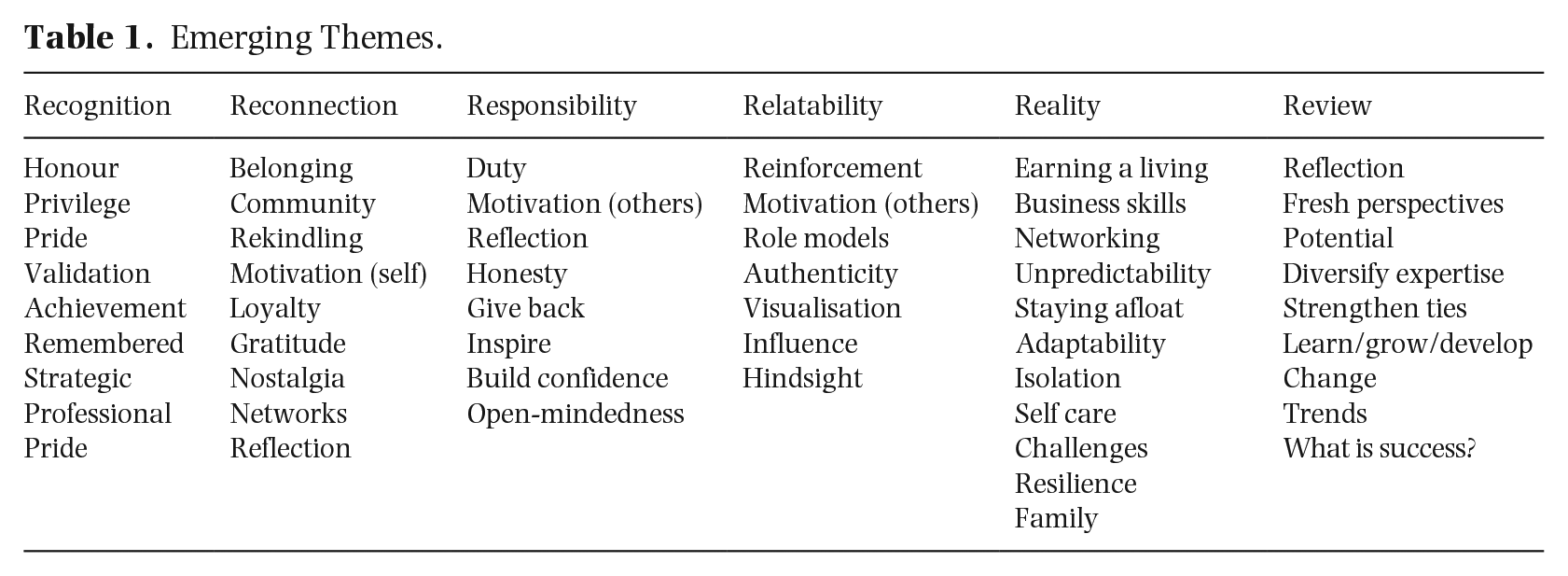
The findings are presented descriptively, reserving interpretation and critique for the subsequent discussion. They include (a) a brief summary of contextual (quantitative) data to provide context regarding the respondents’ backgrounds, and (b) a more detailed overview summarising the overarching and subthemes from the qualitative data. The six themes—“recognition,” “reconnection,” “responsibility,” “relatability,” “reality,” and “review”—are shown in Table 1.
Emerging Themes.
Background of alumni respondents
The survey respondents ranged from those who had graduated relatively recently (in 2024) to those who completed their studies at the conservatoire over two decades previously (in 2001), as illustrated in Figure 1.
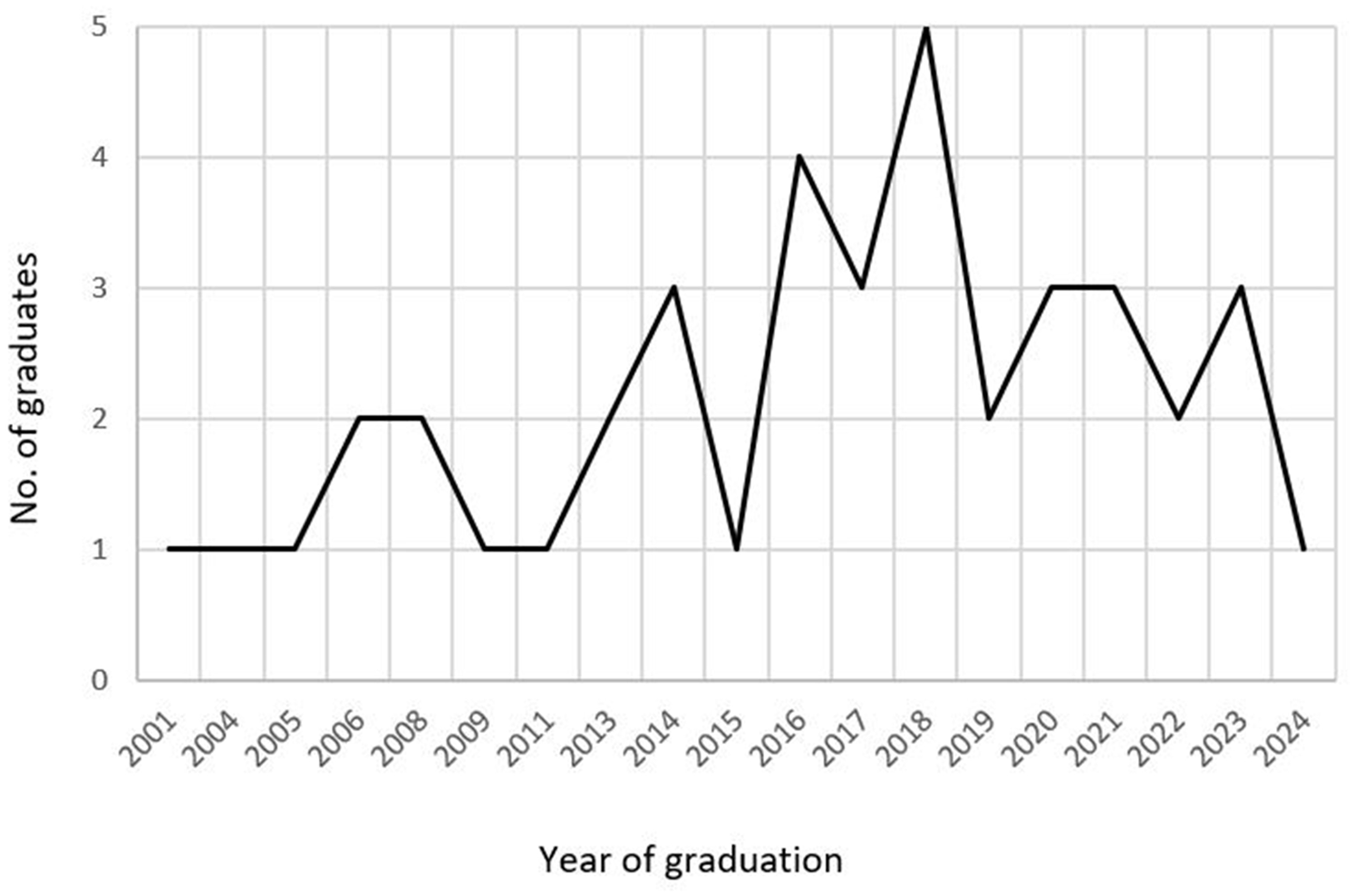
Respondents’ Year of Graduation.
Of these graduates, 20 had studied at undergraduate level only and 13 at postgraduate level. A further eight respondents had completed a combination of undergraduate and taught postgraduate degrees at the conservatoire. One of the postgraduate alumni had also studied for a doctoral degree, and another had spent some time completing a nonaccredited personal study programme in addition to their taught postgraduate degree. Figure 2 offers an overview of respondents’ study backgrounds, including the number and level (e.g., undergraduate and/or postgraduate) of courses undertaken.
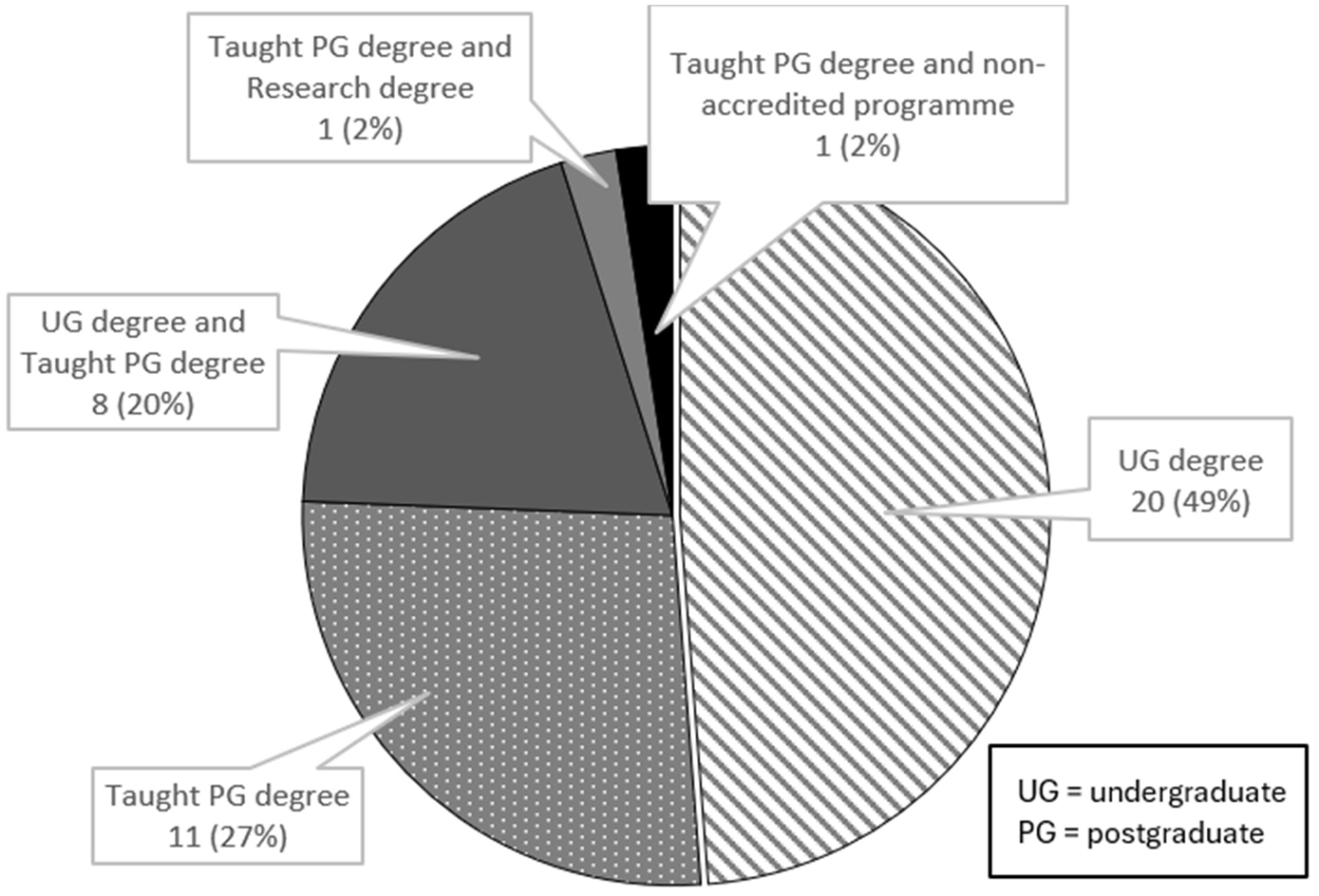
Study Backgrounds of Respondents.
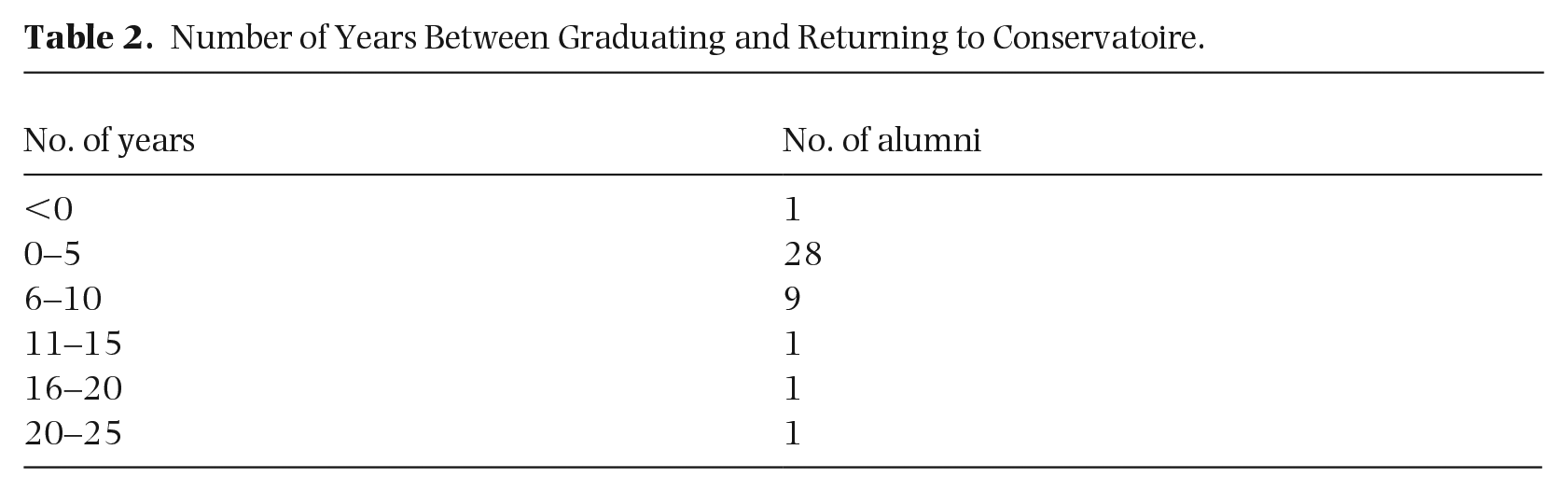
Of the respondents, 28 had been invited back to contribute to the conservatoire’s activity within 5 years of graduating. One graduate had contributed during their doctoral studies, having previously been awarded a master’s degree from the conservatoire. Nine alumni had returned between 6 and 10 years after their graduation, while three were invited back after lengthier periods (see Table 2).
Number of Years Between Graduating and Returning to Conservatoire.
Alongside doctoral research, six of the conservatoire’s principal study departments were represented by the alumni respondents: piano, strings, woodwind, brass, jazz, composition, and music technology (see Figure 3).
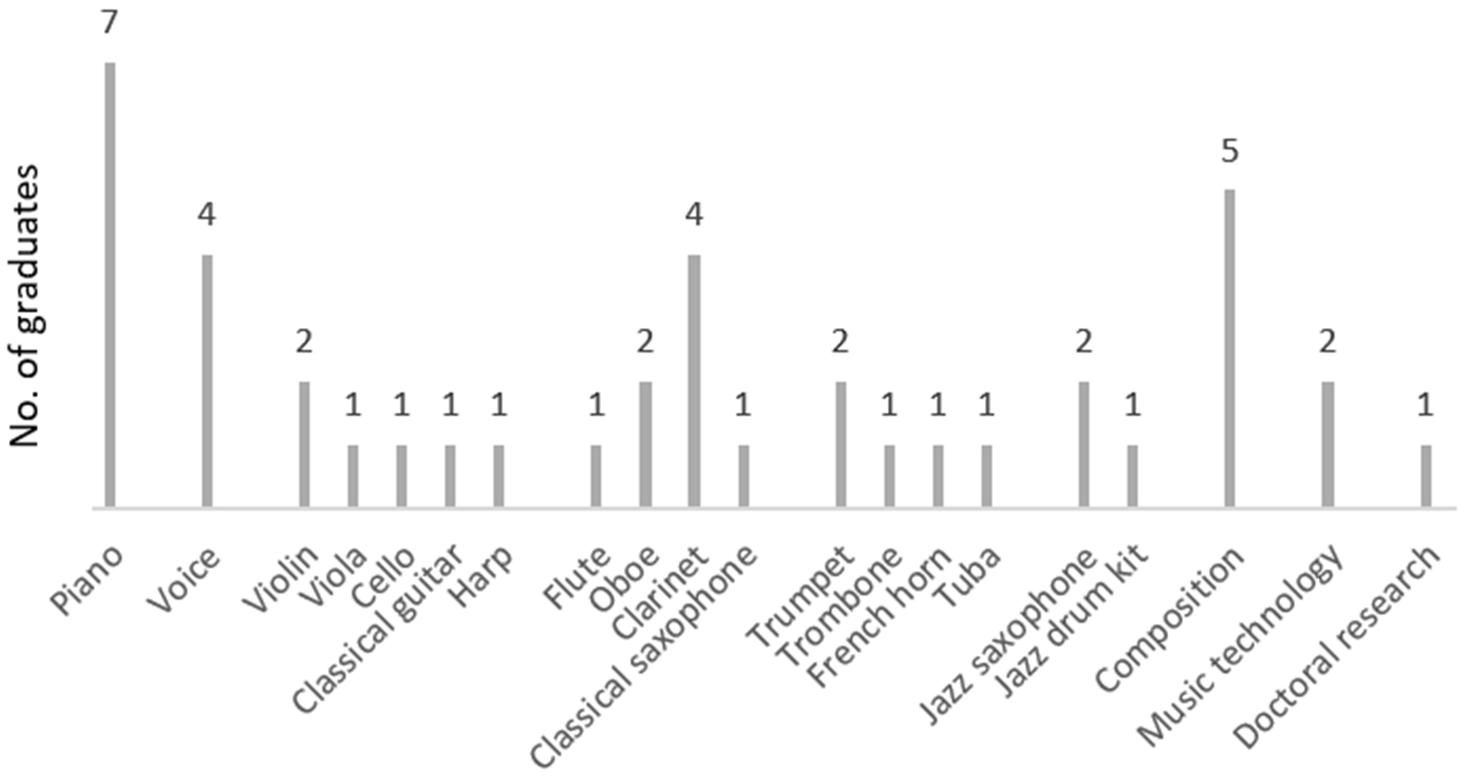
Graduates’ Former Principal Study Disciplines.
Alumni reported having been invited to contribute to conservatoire activity by various staff, including former principal study and/or academic tutors. This contribution tended to involve sharing early-career experiences and advice with current students, playing in concerts or recordings, or supporting current students through side-by-side initiatives with the conservatoire’s larger ensembles. Indeed, of the 41 respondents, 32 had been offered the opportunity to connect (or reconnect) with other alumni during their activity. Some alumni members had been invited to contribute to the work of the institution’s Learning and Participation (outreach) team or to mentor students engaging in teaching placements in local schools, and in one instance, a current student had invited a graduate to contribute to one of their personal projects (Figure 4).
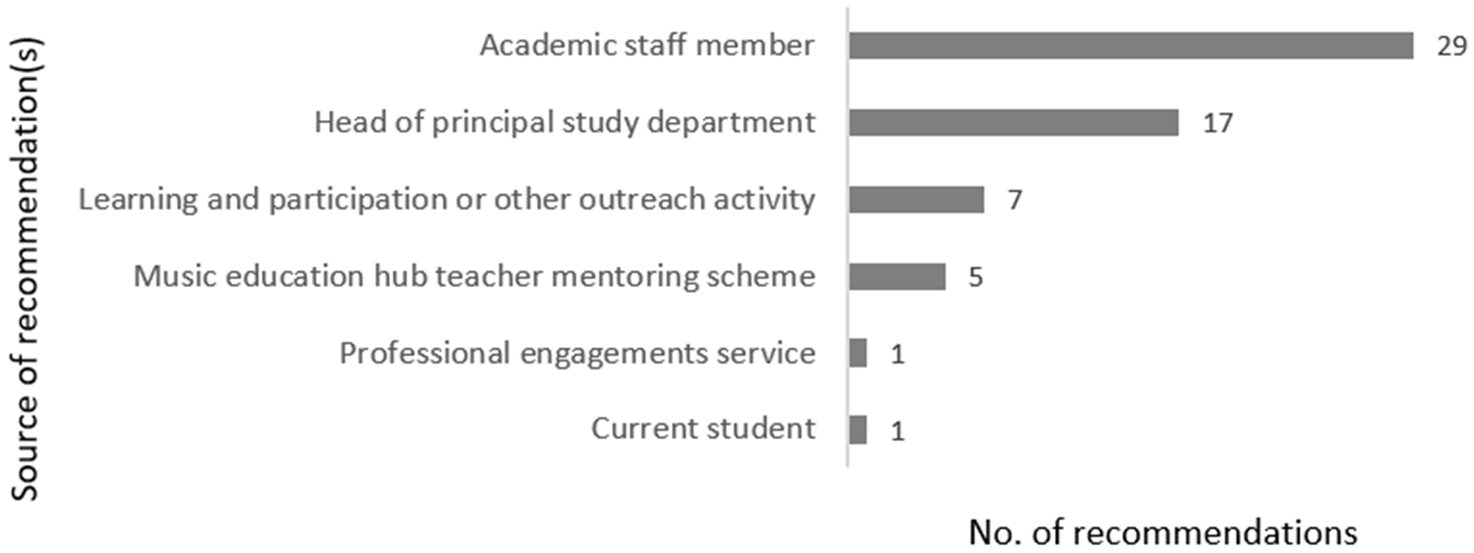
Sources of Alumni Invitations.
The alumni perspectives
In addition to holding significant value for themselves on a personal level, alumni perceived that their continued connection to their former institution was pertinent to students’ career planning and the future of the conservatoire more broadly. In line with survey questioning, responses relating to the potential impact or influence of alumni involvement in conservatoire life tended to focus on three potential beneficiaries: (a) students, (b) staff, and (c) alumni themselves. As such, the emerging thematic areas have been grouped in pairs and are discussed in turn as follows: (a) recognition and reconnection; (b) responsibility and relatability; and (c) reality and review.
Recognition and reconnection—implications for alumni
Alumni respondents’ reactions to being invited to return to their former institution and contribute to its activities were overwhelmingly positive. While three graduates reported feeling nervous about the prospect, they looked forward to the opportunity in equal measure. In fact, 13 respondents recalled a sense of excitement when asked how they had felt at the time. Another graduate (A3) had been “flattered that the conservatoire felt [their] contribution would be helpful to current students.” Indeed, being asked back was perceived by respondents as a mark of recognition, and being “remembered” for certain achievements seemed hugely important to them. However, a composer who was “pleased that [their] professional work was on the radar” understood that such invitations could be strategic: “[I’m] aware that part of my appeal was because I’m a woman and the department struggles to get females presenting work” (A28). For others, being seen by their former tutors as a professional who had “crossed the line between being a student to a graduated musician” (A29) provided a form of validation of their professional status. Indeed, this performer even expressed surprise at “being seen as a graduate that has ‘made it as a professional,’ going against the rhetoric of graduates struggling to find work” (A29).
Alongside this external recognition, many alumni also shared a sense of intrinsic pride. For example, 10 respondents intimated that it had been an “honour” to return to the conservatoire to share their experiences, while four stated that it was a “privilege” to do so. Others revealed their sense of loyalty to their alma mater; for example, A35 shared that they were “deeply proud to be [. . .] able to give back to the place that kick started my career” while others felt nostalgic and appreciated being able to rekindle the “sense of belonging” (A20) they had enjoyed as a conservatoire student.
Many performers commented on how much they had appreciated reconnecting with former tutors during their return visits to the conservatoire, including A34 who had enjoyed working alongside staff “as a colleague” in a professional capacity. In contrast, however, A29 sensed that their career achievements in music education had been acknowledged, but were not regarded as highly as those for whom performance was a priority:
Occasionally, staff and visiting tutors would bump into me whilst carrying out the work, [often] commenting on how happy they [were] that I am still around and making opportunities for myself. Some staff, however, didn’t seem interested in the [educational] outreach work I did, seeming less impressed [. . .]. I was shocked at how some visiting tutors seemed disappointed that I wasn’t an orchestral player. It felt as though they saw music education projects as second to professional performance work. (A29)
In addition to reconnecting with former tutors, graduates appreciated being able to build new connections with current students and other alumni who may also have been contributing to activity alongside themselves: “one thing I learnt about the industry is to expand your own networks because you never know what kind[s] of project could be coming your way” (A11). Through these networking opportunities, graduates often seemed motivated to reconnect with and review their own former and current career aspirations. Indeed, many respondents viewed their contribution to conservatoire activity as a means to support their own continual growth as a musician:
I think a lot of performers struggle with [. . .] doubts about whether or not we’re living up to our potential. The invitation to come and speak at [conservatoire] caused me to pause and reflect on the things I’d done so far, was currently doing, and thinking about doing in future (both music and non-music related). The opportunity to reflect gave me a feeling of pride. (A23)
Other respondents concurred that being invited to contribute to course-related or other activity had made them feel valued. A23 advised that alumni involvement can “stimulate their motivation and draw them into a larger community which can help deter potential feelings of isolation after graduation.” Indeed, for A14, reuniting with former peers and tutors and sharing common challenges had proven cathartic: “it’s not easy working in music and there is a wellbeing benefit to seeing your contemporaries being honest about the challenges over the years” (A14). This graduate also considered that contributing to conservatoire activity helped them, as a music educator in a senior management position, to “stay connected,” viewing alumni-led activity in the conservatoire as “two-way learning” (A14). Another music educator who had recently been involved in mentoring conservatoire students in schools, having been on similar placements themselves as a student, also reflected positively on the reciprocal learning involved, believing that “mentoring students [. . .] keeps graduates on their toes through the questions and discussions that arise” (A20).
Responsibility and relatability—implications for students
Alumni reflections such as those discussed above were indicative of a responsible attitude: a strong desire to nurture and support current students and help prepare them for their futures. Indeed, A22 had previously “enjoyed the sessions when we had people come in from outside” and was keen to “offer a similar [experience] to current students.” Likewise, A23 went on to say “it gave me a real urge to go back to [the conservatoire] and offer words of support and motivation.” In fact, “as someone still working in education,” A14 claimed that they “still feel that buzz of learning” on their return visits, as well as “a bit of personal responsibility to do it well when asked.” In contrast, another graduate confided that
I didn’t have the best time at the conservatoire as I was only supported in what I wanted to do by a select few (and somewhat opposed by others) [. . .]. So, I count it as a privilege and duty to have a positive impact for any students who are looking to break into the same [kind of] career. (A13)
It is conceivable that A13 could have benefitted as a student from being inspired by a like-minded graduate. Indeed, the significance of relatable role models was highlighted by several respondents. It was recommended that alumni contributions to curricula activity were useful in contextualising and/or reinforcing advice from tutors. Furthermore, as one respondent stated, “graduates have distinct and specific experiences which are relatable to students and their career options. Using graduates to tell their stories and share their knowledge bridges [a] gap” (A40). Respondents perceived that graduates, who are often “closer in age to current students than staff members are[,] can provide a more realistic view of current working environment[s]” (A25) and that “alumni will be naturally more in touch with the struggles [that] a soon-to-be graduate will face” (A6). It was considered that relatable role models could help current students by showing many “different options [and] pathways that they might not have considered before” (A33). Equally, it was maintained that more interventions involving alumni could be significant for students’ career preparation, given that the world of work could otherwise be “hard to relate to [. . .] when you are in the middle of your studies” (A22). Reflecting on their former experience of engaging with alumni during their conservatoire training, another respondent agreed: “as a student, [it was] great to see that there is light at the end of the tunnel,” while arguing that “someone who has previously studied at [the conservatoire]” is ideally placed to “empathise with and [. . .] motivate students” (A16). Similarly, A17 reflected that, during their studies, “talking with alumni was a fantastic way for me to practically visualise what paths I could take upon graduating, [which] was important in building some initial confidence. Being that person for current students is an absolute pleasure!”
Graduates’ sense of responsibility and relatability underpinned their approaches and commitment to planning and preparing the provision they had been asked to deliver. From a practical perspective, alumni tended to converse with and seek broad advice on content and delivery from the staff member(s) who had invited them to contribute. Subsequently, the majority of respondents found themselves reflecting on their own experiences since leaving conservatoire, considering what they had found most challenging or what they “wish [they] had known” as a student (A20). One respondent shared, “I simply thought about what I would have wanted when I was studying [. . .] and did my best to talk frankly about the steps I took to get from [conservatoire] to where I am today” (A13). Another respondent “always spent time gathering thoughts into one place on my phone or in a book. It is a musician’s trait not to arrive unprepared [and] it has always been helpful to have some prep to anchor a session”, though the need to respond flexibly to students’ interests and requirements in any given session was clearly acknowledged. A third graduate liked to think through “significant moments [. . .] within my career[,] what made them stand out, good and bad [and what] I would do differently now with more experience” (A21). Other respondents felt it was important to request information about students’ access needs and use a variety of interactive tools to facilitate discussion, including video examples, online polling software, or role-play scenarios.
In addition to being thorough in their planning and preparation, graduates aimed to be as open, candid, and sincere as possible about their lived experiences. Many were keen to highlight the notion that students’ career trajectories would likely evolve over a long period following graduation: “what I do is very different to what I trained to do” (A29). Equally, A3 was eager to showcase examples of workplace demographics and challenges which may contrast significantly from a conservatoire students’ current everyday experiences: “I approached all activities with authenticity and was always honest even if I felt it may not be what a student may wish to hear.” Furthermore, A3 was keen to emphasise the wide range of skills conservatoire graduates will likely need beyond their narrowly defined principal study discipline:
I hope [my contribution] demonstrates that someone who trained as a trombonist for six years but now utilises conservatoire skills (teaching, conducting, management, administration, arranging, strategy and bid writing) in numerous different settings can be successful and thrive in these different areas. I also hope it demonstrates how musicians, should they wish, can and should strive to lead and positively impact their sphere of influence wherever they work. (A3)
In general, graduates were enthusiastic about sharing with students how much they were enjoying their careers and what they had learned about professional life. Furthermore, they affirmed the value of incorporating alumni involvement into courses and wider activities: “being adaptable, flexible and open-minded is very important [. . .] Established practitioners both in [salaried] and freelance positions (part-time and full-time musicians) [can offer] open and honest discussions on how to get work, funding, networking, and staying afloat” (A27).
Reality and review—implications for staff
Alongside the benefits for students, many respondents felt strongly that the staff of the conservatoire (whether management, teaching, research, or administration focused) could learn from graduates who were currently navigating careers as newcomers to the profession, since “the conservatoire can be a bit of a bubble” and needs to “keep up to date with what is going on outside” (A1). It was considered that conservatoire staff could “gain a great deal from leaning on alumni who are doing well [. . .] and know what the work is really like” (A13), to better inform current students about the latest trends and challenges:
Being a freelancer at the moment is extremely tough. No one with an institutional salary will understand the depth of that at the moment: the music industry is changing fast, [and the] types of gigs [and] opportunities are changing. [The] conservatoire doesn’t really understand the grass roots/mid-level ecology (because most tutors aren’t in it). Alumni could give very valuable insights about expectations and realities. (A28)
While the above assessment of conservatoire staff expertise was disarmingly honest, it overlooked the fact that many staff members in conservatoires remain closely connected with many different facets of the music industry, often being skilled in areas beyond performance. Nevertheless, it was evident that alumni respected their former tutors and valued their continued association with them:
The working relationships built between graduates and conservatoire staff are very trusting and strong as in many cases, graduates have known the staff since the beginning of their degrees and have worked with them for many years. (A30)
In the interests of informing staff about how course provision might be reviewed and renewed in the future, A23 asserted that “there are many ways in which a group or institution can grow, develop, and learn simply by drawing on sources that are outside of its current walls.” Many alumni concurred that their stories could initiate reflection on “expected/[desired] outcomes [or] unexpected positive or negative unknowns” (A3), as well as “knowing which modules [have] real world application and what is missing” (A12). A14 was able to elaborate on this particular issue:
Quite rightly conservatoire staff are [often] steep[ed] in a specific specialism. But alumni can bring a different set of skills—problem solving, project budgeting, managing people, managing communications, dealing with complaints, forward planning, comms, fundraising, climate awareness, systems and processes, writing bids and applications for work, employment practices, self-assessment, financial planning etc. These are all skills you need to succeed in music now, even if strictly pursuing a career in performance. And staff can probably learn from current students on these things too. (A14)
Balancing professional activity with their personal lives was important to alumni and many regretted having not learned more while studying about, for example, “burnout, how to manage your schedule [and] politely say no to things” (A16), as well as “realistic income expectations” (A19). In retrospect, alumni felt that it would have been helpful for the conservatoire to emphasise the importance of “thinking about yourself as a business” when starting a freelance career, alongside building an increased awareness of “standard practice in workplaces” (A16), juggling family commitments alongside work, and “managing mortgages [and] bills” (A14). On the subject of financial stability, A14, like many performers, had taken on teaching work upon graduating, to provide a regular income. However, in time, their perspective had changed and teaching “moved from something I do to pay the bills while I play, to something I do as a career that allows me to play.” Specifically, A16 felt strongly that “going into teaching” should be held in higher regard by conservatoire students and graduates than is currently the case because it is “so important for the future of the music industry.”
Other areas where alumni felt their early-career experiences could have been better informed ranged from completing a tax return, writing funding applications, and the advantages of belonging to a union, to dealing with harassment in the workplace, managing mental health, and overcoming feelings of insecurity. It was also proposed that conservatoire alumni could provide “more access to different types of music for students to hear and try without fear of judgement” (A32) and “new ways of teaching that involve [alternative] methods of memorisation/analysis/improvisation” (A10). On a related note, A11 shared that since leaving the conservatoire, they had learned not to “just stay in [their] own bubble” and that, while studying, they would have gained from engaging in more activities that required them to collaborate on bespoke projects with other students across a range of principal study specialisms: “especially in [the] earlier days of your career, you need to learn how to work with other disciplines who are very different from your own.”
Discussion
Reflections on the alumni perspectives
All 41 survey respondents agreed that conservatoire graduates could bring fresh new ways of thinking back to their former institution, a view that aligns with Locklear (2024) who suggested that “alumni perspectives provide unique insight not found anywhere else” (p. 35). However, in terms of study reliability, it is important to acknowledge that the respondent sample was variable in terms of the number of years between graduating and returning to contribute to conservatoire activity (see Table 2). Nevertheless, a significant proportion (68%) had graduated within just 5 years prior to the study, and therefore their responses reflected their firsthand experience of courses refreshed in the conservatoire’s most recent revalidation cycle.
Corresponding with previous research (e.g., Branscome, 2022; Burland et al., 2023; Jepps et al., 2019; Shaw, 2024; Sturrock, 2007), the findings demonstrate that alumni contributions to higher education can benefit multiple stakeholders, including students, alumni themselves, and their former tutors. In contrast, however, Shaw (2025) found that staff members working across management, teaching, research, and administrative roles in one conservatoire in the United Kingdom appeared to be largely focused on the needs of current students and, as such, did not readily acknowledge what they themselves could learn from alumni.
For the alumni respondents in the current study, reconnecting with their former institution was synonymous with receiving recognition for their achievements and akin to a rite of passage. As asserted by Gallo (2021), “there is an element of gravitas [involved]. It’s an endorsement from our alma mater” (p. 76). Conversely, two graduates (A13 and A29) perceived that their chosen professional specialisms were not highly regarded by some staff, resonating with hegemonic attitudes highlighted by other research (Ford, 2010; Perkins, 2012). These graduates, along with many others, were keen to combat narrowly defined notions of what constitutes “success” for conservatoire graduates (López-Íñiguez & Bennett, 2019; Shaw, 2025). Indeed, through engaging with alumni working across a wide range of contexts (both musical and non-musical), students could expand their understandings of multiple professional roles and, in turn, feel more motivated to imagine a more diverse range of “possible selves” (Markus & Nurius, 1986). At the same time, while the alumni-respondents perceived themselves to be responsible and relatable role models for their less-experienced peers, their connection with students could reduce professional isolation and impostor feelings for both parties (Shaw, 2024).
Among alumni, there was evident fondness and respect for former tutors, but at the same time graduates claimed that working life for musicians had moved on significantly since many tutors were graduating themselves, a view reinforced by Brook and Fostaty Young (2019). Students may not have taken full advantage of provision for career preparation while studying because they did not understand the relevance of it at the time (Porton, 2020), or indeed, had forgotten some of the advice given. Nevertheless, the graduates’ responses reflected their lived experiences as working professionals in the current climate and as such could be highly pertinent in informing curricular in conservatoires and other higher music education institutions. Arguably, this finding aligns with the views of Blackstone (2019) and López-Íñiguez and Bennett (2019), although these studies were undertaken prior to careers in the music industry having been impacted by the global COVID pandemic.
Alumni-led communities of practice
The findings resonate with those of Fleischman and English (2019), who through interviews with eight alumni at an Australian university similarly gained an “outside-in understanding” of the “skills, attributes and knowledge needed to transition and navigate the professional workforce” (p. 385). In the current study, a significantly larger alumni-respondent sample was invited to critique institutional structures and processes, while being asked directly about the potential for conservatoire staff to learn from their expertise. In turn, these outside-in understandings of working in the music industry in the 21st century were deepened and broadened through a novel adaptation of Lave and Wenger’s communities of practice framework, where, as noted above, alumni involvement in conservatoire activity has value not only for alumni but also for students and staff to engage in social activity (Pritchard & Woollard, 2010) and be supported by significant others (Burland & Davidson, 2004; Vygotsky, 1978; Wood et al., 1976).
The researcher has developed the findings into a model, “an alumni-led community of practice” (AlCoP) (see Figure 5) where conservatoire students and staff are represented as “newcomers” and “old-timers,” respectively. Building on a previous methodological model developed by the author (Shaw, 2022) and incorporating terminology employed by Reed-Danahay (2016), both of these groups may also be viewed as “insiders” operating within the institution, hence the adoption of the terms “insider-newcomer” (IN) and “insider-old-timer” (IO). In accordance with their affiliation to the conservatoire, and their lived experiences in external professional contexts, alumni are represented in this model as both “insiders” and “outsiders”. Given the professional experience accrued by alumni and the time passed since graduating, it is proposed that these former students are viewed simultaneously by current students as “outsider-old-timers” (OO) and “insider-old-timers” (IO). Indeed, in this context, alumni could be regarded as “persons who engage in sustained participation in a community of practice: from entrance as a newcomer, through becoming an old-timer with respect to new newcomers, to a point when those newcomers themselves become old-timers” (Lave & Wenger, 1991, p. 56). Staff members may perceive alumni as “outsider-newcomers” (ON) given the comparative recency of their entry into the music (or other) industries. Equally, staff may see alumni as “insider-newcomers,” showing care for their continuing professional development by bringing them back into the fold. Many survey respondents were of the opinion that alumni belong to a conservatoire “ecosystem” (Lawson, 2025) in which staff, students, and graduates can all interact, influence, benefit, and learn from being in the presence of one another, leading to a continual exchange of ideas between institution and industry. The model below reflects this notion.
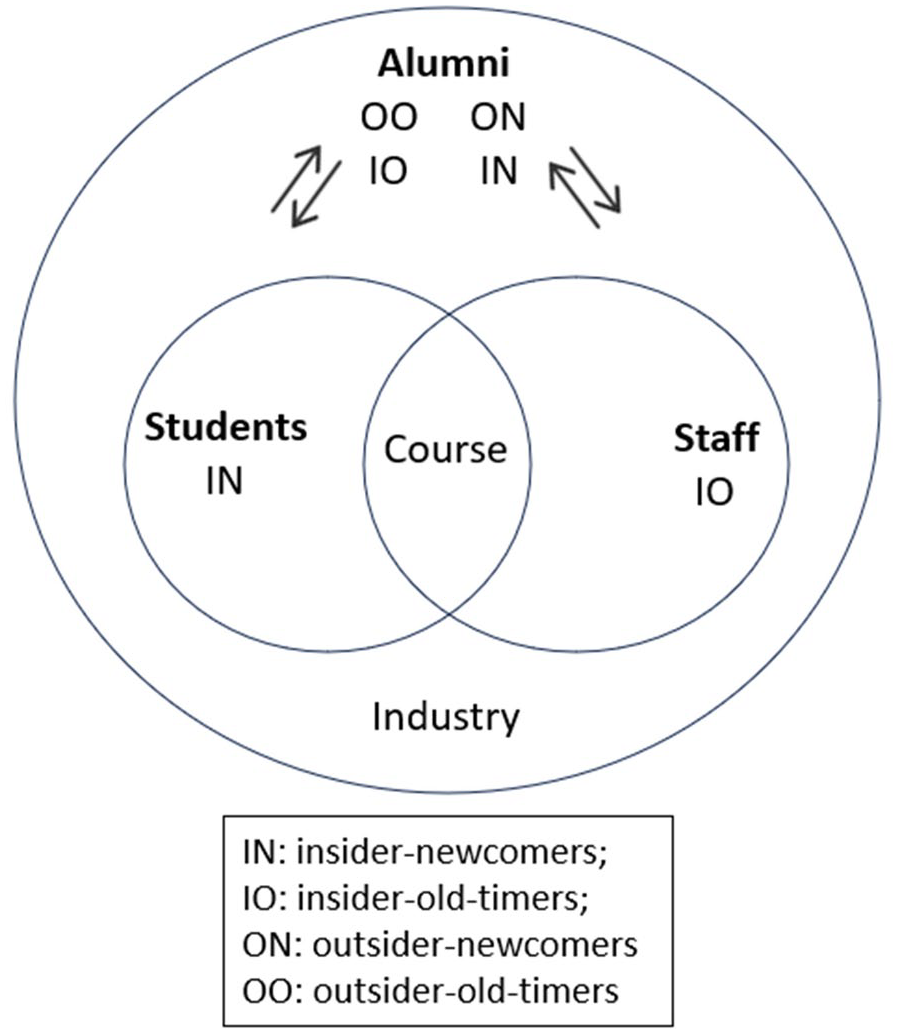
An Alumni-led Community of Practice (AlCoP).
Conclusion
The research findings and emerging alumni-led community of practice model advocate strongly for alumni as potential agents for change in higher music education and beyond. While alumni can benefit from a continued association with their former institution, staff and current students can learn much from graduates who have recently experienced student–professional transition. By being honest about their lived experiences and early-career challenges, alumni can play a vital role in shaping institutional approaches to preparing students to be resilient in professional life. The presence and relatability of the alumni voice could lead to a more inclusive learning and teaching environment for students in conservatoires and universities around the world, while offering continuing professional development to all stakeholders. Furthermore, as the model above advocates, increasing the frequency of learning, teaching, and professional development interactions between alumni, students, and staff could enable undergraduate musicians’ career preparation to become more co-created, flexible, and authentic (Seal & Smith, 2021). Equally, staff could glean fresh insights from the professional realities of musicians’ early careers as they are currently experienced. In turn, alumni may benefit from increased networking and a continued association with their alma mater that extends beyond financial contributions, marketing, and recruitment (Gallo, 2021). The value that alumni bring to conservatoire education has longevity that extends far beyond the courses offered. Through advising staff, and in turn, shaping the development of curricula and course content, the professional lives of future conservatoire graduates and the learning communities or industries they have the potential to go on to serve and influence, will all be better informed. Ultimately, in the context of conservatoire students’ preparation for 21st century careers, alumni are afforded the potential to disrupt “hierarchical structures” (Perkins, 2013) as the “experts” (Lave & Wenger, 1991; López-Íñiguez & Bennett, 2019) within this community of practice.
Limitations
While the survey used in the present study facilitated some distance between researcher and respondents, enabling the alumni to express themselves honestly, it is still possible that some respondents may have felt inhibited by power dynamics and loyalty to their former institution. Other limitations include the potential for bias in the sampling approach—given that the majority of survey respondents had all been engaged by an institution to which they were already affiliated, and the likely presence of the “pigeon-holing” phenomenon (Porton, 2020) with its implications for who was invited back—meaning that multiple other alumni voices were not included in the snowball sample.
Closing remarks
While the study was conducted with alumni respondents from a single conservatoire in a specific geographical area in England, the findings have positive implications for higher music education institutions worldwide, proposing that participating in an alumni-led community of practice could provide a “wellbeing benefit” (A14) for students and alumni alike. Furthermore, given the ethical dimension of degree programme representation raised by Bennett and Bridgstock (2015), institutional leaders and learners could be supported by their alumni-led community of practice to broaden their perspectives about the music industry and the challenges and realities faced by graduates during their professional lives. In turn, emerging alumni-led community of practice insights could be passed on to prospective applicants and their family members to reassure them about institutional approaches to informed career preparation.
The benefits of alumni involvement for student and staff development in higher music education may not yet be fully acknowledged and the positive influence of alumni may be significantly undervalued in terms of their potential to drive change in conservatoires. Further research into the role of alumni as key informants in the development of conservatoire education is recommended across a wider geographical area in the United Kingdom, and indeed globally. To further broaden the concept of “outside” in this context, research with conservatoire graduates working in careers other than music could lead institutions to better understand how the wide range of transferable skills students develop through intensive musical training can equip them for career possibilities they may not have previously considered, including those unrelated to the principal study discipline (Shaw, 2025). Indeed, conservatoire alumni have strong potential to influence more diverse thinking among conservatoire leaders institutionally, nationally, and globally, regarding how student and graduate “success” is perceived, advocated, and celebrated. Given the potential of conservatoire music graduates to become agents for change in both higher music education institutions and in society, it is hoped that the findings will open up discussions about developing alumni-led community of practice across national and international higher music education networks, essentially “bringing the outside in.”
Footnotes
Appendix: Survey questions
Acknowledgements
With grateful thanks to my colleagues for their ongoing support of my research, and to the alumni who have offered their career insights to support students and inform staff.
Author contributions
Declaration of conflicting interests
The author declared no potential conflicts of interest with respect to the research, authorship, and/or publication of this article.
Funding
The author received no financial support for the research, authorship, and/or publication of this article.
Ethical approval and informed consent statement
This study received ethical approval from the Birmingham City University Faculty of Arts Design and Media Academic Ethics Committee (approval #11894) on June 29, 2023.
Respondents were provided with participant information and gave informed consent to participate on the understanding that their survey responses would be anonymised during the analysis and reporting phases and that their anonymised responses (via alphanumeric coding) may be included in publications. A GDPR compliant platform endorsed by BCU was used to conduct the survey.
Data availability statement
Supplementary material is not available.
