



Abstract
Practice is essential to the acquisition and development of musical skills, requiring musicians’ time, investment, application, motivation, metacognitive strategies, and ability to self-regulate. Research in children’s music practice indicates the type, quality, and duration of practice, along with adult support, contributes to fluency in musical development; and when progress occurs, children invest in further practice. However, nuances in children’s lived experiences of musical practice that influence these critical factors are largely unknown. To understand the complex issues in children’s practice, this study employed a unique pairing of Interpretative Phenomenological Analysis and Participatory Action Research to investigate 14 seven-year-old beginner cellists’ practice during early learning and explored how their thoughts and experiences evolved over the first 18 months of lessons. Providing rare insight into children’s perceptions of musical development and the vital role of parents and teachers in nurturing engagement, three superordinate themes emerged: (a) four approaches to practice, characterized by practice structure, learner behavior, and family support, (b) a three-phase practice process, and (c) perfection ideation. Positive experiences, including creative activities, within these thematic contexts fostered children’s enjoyment in early musical development, supported productive learning interactions, and sustained engagement. Together, the findings have meaningful pedagogical implications for instrumental music teaching practice.
Keywords
Effective music practice involves the musician’s sustained engagement in processes of skill acquisition and development to refine technical competencies and enhance abilities in musicianship (Jørgensen & Hallam, 2016). Widely viewed as essential to developing proficiency, practice involves time, investment, metacognition, and the interaction of intrapersonal attributes to inform strategies for development (Miksza, 2022). The types of practice that musicians engage in can range in quality from formal and deliberate to informal and unstructured, all of which are valuable to musicianship (Zhukov, 2021). Deliberate practice, characterized as goal-focused and purposeful attention to tasks, often with the guidance of a teacher, contributes significantly to the successful acquisition of skills that lead to expertise (Ericsson et al., 1993; Ericsson & Harwell, 2019). Informal practice involves a more meandering exploration of self-selected, pleasurable activities, such as learning favorite pieces, playing by ear, and improvising; and these activities have been linked to personal enjoyment in musical skill acquisition and the development of musical expressivity (McPherson et al., 2012; McPherson & McCormick, 2006; Sloboda, 1994). Drawing these distinct forms of practice together, Sloboda et al. (1996) found that high achieving students engage in both formal and informal practice, which suggests their success can, in part, be attributed to multiple approaches to skill development.
Research considering young musicians’ development has investigated the practice habits of beginner and novice learners, revealing compelling evidence that indicates systematic practice strategies and significant amounts of practice contribute to expertise development (Hallam et al., 2012). Scholars have reported that, in addition to acquiring technical proficiencies, sustained instrumental music development can provide young learners with meaningful intrapersonal benefits, including emotional regulation (Campayo-Muñoz et al., 2020). McPherson (2005) found that young learners who used sophisticated practice strategies not only displayed more advanced skills and faster progress but also recognized a link between their effort investment and the quality of their musical development. This resonates with Hallam’s (2013) research that showed that when young and adolescent learners enjoy and see development in their skills, they invest more time and energy in practice. Implications suggest that what takes place during practice contributes to continued engagement. Therefore, it is vitally important to recognize that experiences within practice produce strong emotional responses that impact motivation (Austin & Berg, 2006).
Investigations of children’s practice habits reveal that the application of strategies are only effective when “appropriate aural schemata have been developed to enable the monitoring of errors” (Hallam, 2001, p. 20). However, children’s practice during early learning can consist mostly of repetition and playing through pieces without careful attention to detail (McPherson et al., 2012). This tendency can become habitual as children progress, resulting in stalled progress, disengagement, and drop-out (Hallam et al., 2012). These findings have important implications for music education, confirming the need for teachers to adequately equip young learners with not only the skills to play their instrument but with accurate musical representations of their learning tasks in and beyond the instrumental studio.
It is well-established that guidance from important adult figures, including parents and teachers, is essential to students developing the appropriate metacognition skills required to persist with musical development and sustain interest (Hallam, 2001; Hallam & Bautista, 2012; Hallam et al., 2012). Indeed, it is recommended that during early learning, children receive a high level of support to gather and implement a suite of appropriate practice strategies (McPherson, 2005). Creech (2009) found that reciprocal relationships between parents, teachers, and students are critical to effective support; and that students experience optimal learning experiences when parents and teachers communicate in cooperative partnership (Creech, 2009; Creech & Hallam, 2009). These relational and interpersonal findings in teaching and learning suggest educators need to continually find ways of nurturing productive relationships with all stakeholders in their pedagogical practice.
Lisboa (2008) investigated links between children’s practice and teaching by trying different instructional approaches to three cello students, aged 9, 12, and 14. Findings suggest that without clear instruction, children had limited understanding of the musical and technical demands of the pieces they learnt, their practice strategies were less effective, and these deficiencies could lead to errors in learning. These results align with Pitts and Davidson’s (2000) research, which suggests that deliberate practice strategies should be taught in a way that helps learners develop skills in critical listening and reflection. Further, engaging children in varied approaches to developing technique and musical abilities, such as experimentation and improvisation, contributes to exciting and satisfying learning contexts (Pitts & Davidson, 2000). In related literature, students’ independent practice strategies can be supported through techniques such as encouraging analysis of the score, slow practice, and use of the metronome (Barry & Hallam, 2002). However, the teacher’s behavior and style of teaching in the instrumental music studio, including demonstration and encouragement of learner skill development, can make a greater impact on student engagement and learning outcomes during independent practice in comparison to teacher advice alone (Barry, 2007).
Musicians’ practice has been examined extensively through the lens of self-regulation theory. This theory emphasizes an individual’s ability to control behavior, thinking, and affect to focus on goal achievement through a process of forethought, performance, and self-reflection, and has been found to play an important role in optimal learning (Evans & McPherson, 2014; McPherson et al., 2019; Zimmerman, 2011). Children’s ability to self-regulate during early learning is linked to the development of productive practice strategies and the rate of progress in skill acquisition; and these factors have implications for children’s interest development (McPherson & Renwick, 2001; Upitis et al., 2017). Other studies have found that the application of deliberate strategies during formal practice impacts learners’ ability to self-regulate and enhance student engagement during musical skill development (Bonneville-Roussy & Bouffard, 2015; Leon-Guerrero, 2008).
Existing research indicates that children’s practice experiences—including strategies used and mechanisms of support received—significantly influence the establishment of productive and enjoyable practice habits, and suggests that effective routines are crucial for musical skill development and sustained engagement. However, the literature lacks fine-grained research analyzing children’s perspectives of their music practice experiences. This is surprising given how relevant interpretation of children’s perceptions and reflections can be to improving pedagogy and informing future research. This study therefore aims to address this gap in the literature with the research question: what is the lived experience of cello practice for 7-year-old children during the first 18 months of lessons?
Method
Design
This study was part of the first author’s doctoral project that investigated the lived experience of musical skill development for 14 seven-year-old beginner cellists as they commenced tuition and undertook lessons with her as teacher-researcher during the first 18 months of learning. The longer-term experiences of the children that remained in the study were explored for up to an additional 3 years. A central emergent theme of the study was the children’s experiences of practice, which was viewed by all participants as key to musical development; this is the focus of this article. Ethical approval for the research was provided from the University of Melbourne Human Research Ethics Committee (ID 1544350), and the research setting was the school in which the first author was employed as a cello teacher. An independent advocate was appointed for regular consultation and debriefing for all participants.
Participants
The study took place within a K–12 independent school located in a major Australian metropolitan area. Typical students were from middle to high socio-economic backgrounds and the large, well-resourced instrumental and classroom music programs were supported by school management. The 14 child participants had enrolled in one-to-one cello lessons with the first author after completing a term of stringed instrument (violin, viola, and cello) sampling classes within the Year 2 classroom music curriculum. The children’s parents also participated in the research by agreeing to their children’s involvement and undertaking interviews. All the children and parents, whose names have been changed to protect their identities, provided informed written consent via the independent advocate prior to data collection.
Procedure
Interpretative Phenomenological Analysis (IPA; Smith et al., 2009; Smith & Shinebourne, 2012) and Participatory Action Research (PAR; Cochran-Smith & Lytle, 2015; Kemmis et al., 2014) methodologies were adopted in the study. IPA, underpinned by phenomenology and hermeneutics, is an idiographic, qualitative tool that investigates an individual’s lived experiences of meaningful events by drawing out key thematic material and examining them in the context of a small sample. Data are usually sourced through semi-structured interviews; and the researcher contributes to making meaning of participants’ experiences through close reading of transcripts and interpreting relationships between the emergent themes (Eatough & Smith, 2008; Smith et al., 2009; Smith & Shinebourne, 2012; van Manen, 1990). PAR is ubiquitous in education research, and positions the teacher as a researcher in research contexts with their own students, thereby acknowledging practitioners as essential to improving educational practice (Kemmis et al., 2014).
In the study, data were collected via multiple means. To capture phenomenological elements within the participants’ lived experiences (Smith et al., 2009), individual semi-structured interviews were conducted with the children when lessons commenced and at the end of each school term for 18 months. Parents were interviewed when lessons commenced and again after 18 months. Subsequently, separate annual interviews were conducted with both children and parents for up to 3 further years. Aligning with PAR principles (Kemmis et al., 2014), during the first 18 months of lessons, the teacher–researcher documented the children’s weekly skill development with a rubric (Appendix 1), and documented the weekly teaching and learning processes during lessons with a lesson observation, participation, and reflection protocol (Appendix 2). A separate lesson/practice journal shared between the teacher, parent, and student, communicated weekly learning tasks and provided a chart for daily practice.
Analysis
Interviews were transcribed and codified according to IPA protocols by the first author as an insider, teacher-researcher and validated by the second author; then patterns between themes were analyzed to reveal superordinate themes (Smith et al., 2009). The PAR data underwent close analysis on a cumulative basis every 3 months, with the first author engaged in the inductive reading of her observations regarding the children’s learning behavior and interactions during lessons. In addition, she charted the children’s practice frequency, tracked parent communications, and compared these data with their skill development trends collected from the rubric. Analysis occurred in partnership with the second author who served as a critical friend, authenticating the PAR process and further contributing credibility to the findings (Kemmis et al., 2014). After 18 months, the IPA thematic material was collated with the PAR student learning documentation. This combined data set underwent further analysis and synthesis, effectively merging the data collection with the data analysis (Kemmis et al., 2014). Key extracts from participant interviews that characterize the emergent thematic material are included in the findings to support and represent the children’s lived experiences (Smith et al., 2009); they are indicative, as there is not space within the limits of this article to give multiple examples of each theme.
Findings
Analysis revealed three interrelated superordinate themes in the children’s experiences of practice during the first 18 months of learning: (a) four approaches to practice, (b) a three-phase practice process, and (c) perfection ideation. Within each superordinate theme, important subthemes emerged, and these are explored in the following discussion.
Theme 1. Four approaches to practice
The children’s approach to practice, characterized by the structure and content of practice activities, forms of parental support received, and frequency, were classified into four distinct categories. Longitudinal data indicated that eight of the 12 children who remained in the study changed their approach after 18 months (see Table 1).
The Children’s Four Approaches to Practice.
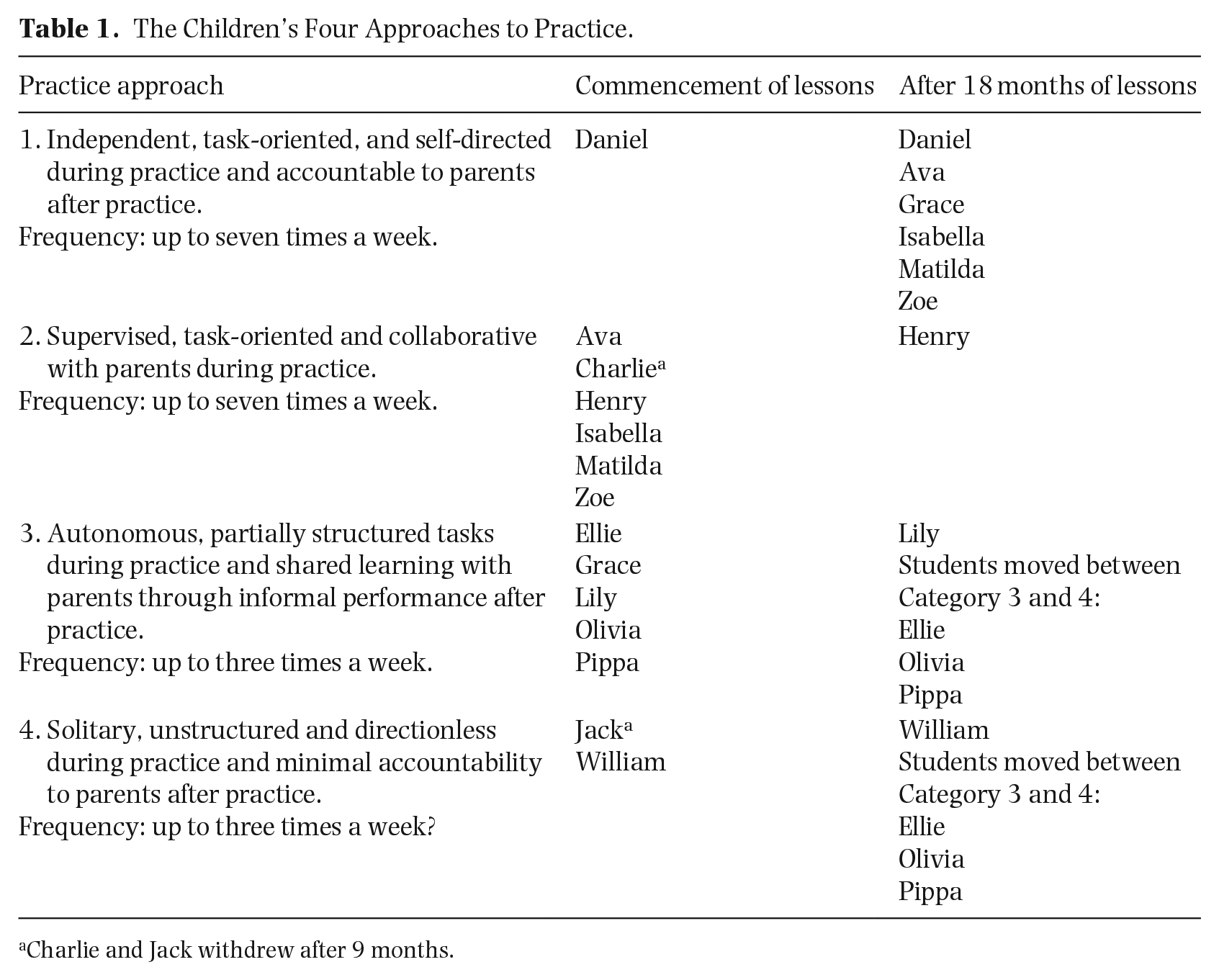
Charlie and Jack withdrew after 9 months.
When lessons commenced
Approach 1: Only Daniel undertook productive independent practice habits. He was a well-established music learner, with 4 years of piano learning prior to starting the cello. Practice of this type was expected by his parents and modeled by three older siblings who also played instruments.
Approach 2: Six students worked collaboratively with their parents during practice. All students in Approaches 1 and 2 indicated their parent functioned as a home tutor with whom they were largely compliant and productive.
Approach 3: Five students were autonomous in structuring practice content and shared their learning with parents who reported their role as facilitative and supportive. For example, Ellie’s mother reflected, “I haven’t had much involvement, I’m only there really as an audience. A lot of her practice has been downstairs with everybody watching her.”
Approach 4: Two students undertook solitary unstructured practice. For example, Jack commented, “Usually when I practice, Dad is sitting down reading the news, so he never comes up. Mum’s cooking dinner, so she never comes up.” There was little accountability for these students, who frequently avoided practice. For example, William disclosed, “I say, ‘Yeah, yeah, yeah’. And go do something else!”
After 18 months of lessons
Two students withdrew from lessons within 9 months; therefore, their longitudinal data were not available.
Approaches 1 and 2: Four students from Approach 2 and one from Approach 3 joined Daniel in Approach 1 with independent and self-directed practice. Henry, an only child, remained in Approach 2, continuing in collaborative practice with his parent supporter. All these students demonstrated even, incremental skill development that satisfied their personal needs.
Approach 3: Lily continued in this category, and experienced even, although comparatively slow, skill development. She maintained an autonomous routine, frequently revisiting known repertoire to performed for her receptive family.
Between Approaches 3 and 4: Four students, who experienced differentiation in rate and ratio of skill acquisition and development, moved between Approaches 3 and 4, admitting they only practiced before public performances.
Observations from the data
The children with Approaches 1, 2, and 3 experienced positive practice conditions due to their parental support and shared with their parents similar expectations regarding the duration and frequency of practice. The two children with Approach 4 were unable to meet their parents’ practice expectations, which affected their longer-term engagement. William, for example, was withdrawn from lessons after the data collection period, despite wanting to continue, because his father thought his son did not practice enough. Jack’s mother voiced concerns about her son fulfilling practice expectations when he commenced lessons. Jack had previously learned the guitar, and although he loved lessons and interactions with his kind teacher, she considered his lack of motivation to initiate regular independent practice as a lack of intrinsic interest and withdrew him from lessons. After 5 months, Jack offered his perspective:
I probably would have been doing guitar at the moment . . . the only reason that I quitted, well I didn’t really quit, Mum quitted for me, is because I wasn’t practising enough. And I’m like, “Alright Mum, it’s time for my guitar lesson.” And Mum’s like, “Oh, you don’t need to go.” And I’m like, “Why?” “Because I’ve quitted it.” And I was like, “Ergh, ok . . .” I was like, kind of sad but kind of relieved at the same time.
Over 9 months of learning, Jack’s interest in cello practice declined. Anticipating an increased workload in Year 3 would further compromise meeting practice expectations, he withdrew from lessons.
Misaligned practice expectations were managed for positive engagement outcomes for another student, Olivia, through the cultivation of a productive, reciprocal relationship between herself, the parent, and the teacher. When lessons commenced, Olivia’s practice was characterized by Approach 3, but within 6 months, due to time constraints within a busy single-parent family schedule, her practice resembled Approach 4. After 9 months, Olivia’s mother withdrew her daughter from lessons even though Olivia wanted to continue. The teacher-researcher contacted Olivia’s mother, who expressed regret about being unable to actively support Olivia’s regular practice and her concern about how inconsistent practice affected Olivia’s skill development and self-efficacy. The teacher and parent discussed how a more relaxed practice expectation that accommodated the hectic family schedule could still meet Olivia’s intrapersonal needs in learning, and Olivia was able to continue learning at her own pace beyond the data collection period. After 18 months, Olivia’s mother, Barbara, identified how collaboration with the teacher-researcher and empathy relieved burdensome guilt:
I think your acceptance that it’s OK to not practice was good. I felt really guilty to be honest. I felt really guilty. And I thought, as a parent, I should encourage her to practice, and I should do this and I should do that, and there’s a set of things I have to do every evening . . . and the acceptance . . . that just sort of lifted that guilt in a way.
She explained how shifting the focus of cello practice to shared enjoyment was pivotal to Olivia’s ongoing engagement:
There is some sort of pressure, it’s . . . like doing homework . . . there is a continuing challenge for both myself and Olivia to fulfil . . . But when we . . . stood back and go, “This is for enjoyment, we do as much as we like, we learn as much as we like. There is no pressure as long as you enjoy playing.” I think that was really great.
When practice routines and processes were well-established, the children were more capable of undertaking productive tasks and described experiences of metacognition during independent practice. These findings provide an appropriate foundation for the second superordinate theme that revealed the complex process the children experienced during practice.
Theme 2: Three-phase practice process
All the children experienced practice as a dynamic process of deliberate skill development and imaginative creative play that was underpinned by emotion and mood. This occurred in three distinct phases, each characterized by subtheme/s:
pre-practice (prompt),
practice (intention, action, reflection, response), and
outcome (engagement) (see summary in Figure 1).
During the pre-practice phase, children were prompted to play their instrument by either an internal drive or parent directive. The practice phase was characterized by four stages and started when children and/or parents formed an intention to undertake a task that was then actioned through the application of strategies, including imaginative thoughts and creative play, that was then reflected upon. The quality of reflection triggered an emotional response that determined a transition to the outcome phase, which was to either re-engage or disengage with practice. The children’s mood emerged as a mutable theme throughout each stage of the three phases; mood stability was influenced by events in the children’s day, their ability to apply metacognitive strategies, emotional responses to perceptions of competency and interpersonal interactions with family, including the types of parental support. These factors shaped learning behavior patterns for both children and parents, influencing their approach to subsequent practice processes. The following section considers each phase in greater detail with supporting excerpts from the participants’ interviews.
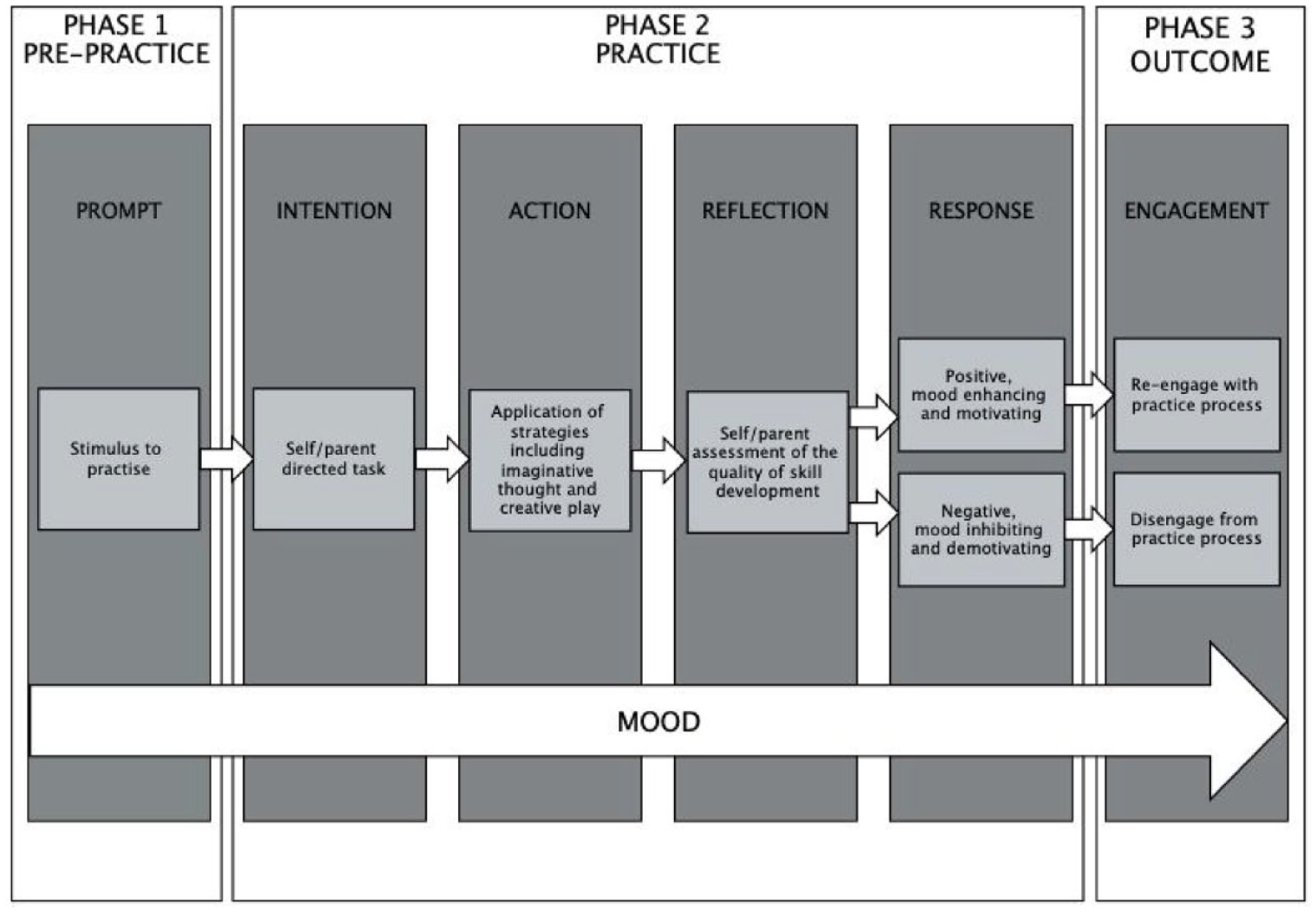
The Children’s Three-Phase Practice Process.
Phase 1
Pre-practice: Prompt
The children were all prompted to practice by a parent, and the quality of the parent prompt and the child’s response contributed to their mood, thereby setting the tone for the practice process. When practice was expected and structured around daily activities, it was more frequently viewed positively and undertaken productively. For example, Matilda was strategic in scheduling her practice:
Sometimes, Mum says, “It’s time for, to practise music.” Sometimes, I just go down, and I know I have to practise music, and I don’t want to do it, like, I could be doing something else, like, one of my favourite TV shows are on, and I know that I have to practise music then, like, I do it before.
Five children—Ava, Henry, Isabella, Matilda, and Lily—initiated practice, indicating positive mood regulation as motivation. Lily explained how an indirect parental prompt triggered her desire to practice:
Sometimes when I get really mad, I just go into my room and play [cello], and I get calmer . . . I always get angry at my Mum, and I just go into my room and shut the door and I start to play it, but I be by myself . . . Then I get calmer and then I go out and be a good girl!!
Charlie, Jack, and William avoided practice. They viewed pressure from parental prompts as intrusive disruptions to more pleasurable activities that contributed to resentment and/or apathy during practice. For example, Charlie described his practice as, “it gets me distracted” from “the television, the couch,” which was “good for Mum and Dad.” Jack reported with ennui:
Dad, they just, they don’t usually really stay when I am practising. Usually they just say, “Go up to your room, do some cello.” And I’m like, “yeah, alright.” So, go upstairs, um, 10 minutes, 15 minutes, then iPad or play with my rollercoaster.
Phase 2
Practice: Intention
The practice phase commenced with an intention of what to do, and this was predicated on the quality of the pre-practice prompt and mood. Intentions could be focused, targeted, and skill-based; or unstructured and ad hoc, such as Ellie’s:
I just go, I go “eeny meeny,” and then I go, “Oh, this song!” (laughs)
Children with practice Approaches 1 and 2 spent more time planning their intentions and following teacher directives and in collaboration with parents, while children such as Ellie in Approach 3 and 4 were more spontaneous in their intentions.
Practice: Action
Active engagement with musical skill development followed practice intentions. When actions were governed by structured, concrete thought processes, children followed teacher instructions and implemented learned strategies. For example, after two months of lessons, Daniel explained, “I . . . practice my first finger and do my warmups and then I just practise my songs after I have done the rhythm patterns.” After 8 months, Daniel reported, “I do what I do at my lessons, like practice it, what I do in my lessons.” Actions were also characterized by imaginative thought processes that involved role-play in invented scenarios, and these contributed to meaningful experiences of creative play resulting in flow states (Csikszentmihalyi, 2014). For example, after 10 weeks of lessons, Matilda described how during practice, she thought about “different things, so like, the music’s about, like, sometimes in my imagination, I make my own story to go with the sound of it and the speed.” After 5 months, Matilda explained how during the practice action stage, she inhabited the musical narrative, “I think about like, what it would be like to actually be someone in the music, like, actually being the person that the music is, being the thing that the music is about.”
Action during practice was also characterized by children engaging in compositional activities and improvisation, as Charlie explained:
I’ve done songs, I’ve made some up. I named one. I’m pretty sure it was at the start, I wasn’t told to, but I wanted to . . . I think it was “Gallop,” because I made it sound like it was galloping . . . I had my cello, and on the side, I was making galloping sounds with my fingers, like a horse!
Being actively engaged in skill development helped Olivia avoid negative rumination, “I get to think about the cello, not things that I need to worry about, like dying.” Olivia also described roleplaying performances during practice. This included organizing concerts for her family, and performing for toys:
I like cello, and just go home and pretend I’m practising, playing in front of a concert, but in front of my dolls!
Parents reported delight in watching their children perform during practice and providing feedback for performances was part of the children’s transition to reflection stage of the practice phase. For example, Matilda’s mother commented:
She’s quite cute actually when she practises, because she does give us little mini concert when she practises. So yeah, it’s lovely.
Practice: Reflection
Reflection involved the children’s and/or parents’ assessment of skill development. The quality of reflection was impacted by experiences during prior stages, and informed the children’s response and final outcome phase during practice. Reflection focused on physical dexterity, sound production, and satisfaction in musical expression, all of which were perceived as indicators of efficacy in skill acquisition and development. During this stage, children reported an enjoyment that propelled them forward, such as Matilda, “I feel like, when I practice, I get better each time.” Conversely, reflection could indicate frustration that was demotivating; for example, Olivia explained after five months of learning:
I try and fix it, and then when I keep trying, and then it doesn’t sound right, I just stomp out of the room . . . well, actually lie on the bed . . . with my face on the pillow!
Practice: Response
Olivia’s description demonstrated how the children’s reflection was inextricably linked with their response and this determined the practice outcome. For Olivia, negative reflection resulted in disengagement. However, reflections were also mood enhancing and for some children like Ava, exhilarating, “It’s fun!!!” Children with Approaches 1 and 2 consistently reported positive responses to reflections and evidenced more robust metacognitive processes during practice. Parents were found to be key mentors for developing these intrapersonal traits.
Phase 3
Outcome: Engagement
The outcome phase was a culmination of the entire process and was characterized by the children’s engagement. This contributed to ongoing motivation to invest further with their development, as indicated by Daniel, “I keep persisting” and Ava, “I want to play forever!” or withdraw altogether, as signified by Jack, “Get it over and done with.”
Children that experienced autonomy in the practice process, particularly in actioning skill development strategies, and that were supported by flexible and collaborative parents who modeled constructive and positive learning behaviors during the reflection and response stages were more intrinsically motivated in their engagement. These children were typically in Approaches 1 and 2.
Theme 3: Perfection ideation
Perfection ideation in cello practice was referred to by nine students and nine parents. Eight of these were child/parent relationships and within these dyads, perceptions of perfection were interconnected. Analysis revealed three further subthemes:
Perfectionism as a learner personality trait.
Use of the phrase “practice makes perfect” to describe the view that persistence in practice could foster positive intrapersonal attributes.
Perfection perceived as subjective and relative to the learner’s personal needs satisfaction.
Perfectionism as a learner personality trait
Four parents referred to their children as “perfectionists” and discussed how associated challenges impacted learning. For example, Ava’s mother attributed her daughter’s perfectionism to being “a people pleaser” and that Ava viewed “mistakes” through the lens of external judgment:
She’s such a perfectionist with everything. If she made a mistake, she has this inner feeling we will be upset because she made a mistake. Whereas we are just so proud that she is doing it!
This was affirmed by Ava when she described her enjoyment in skill development:
I like it to sound right and not disgusting all the time. I like it to be perfect, because then, if someone hears me play, they’ll hear it perfectly, not disgustingly.
Parental support was most effective for these children when the parent was present in the practice room, suggested appropriate intentions and constructive strategies, promoted an elevated mood, modeled affirming reflections, and offered positive responses with a forward-focus that directed their child’s re-engagement.
“Practice makes perfect”
Three parents used the phrase “practice makes perfect” to represent their view that practice not only facilitated musical skill development but also contributed to the acquisition of intrapersonal attributes, such as persistence and resilience. They hoped their children would persevere through challenges to experience personal fulfillment and viewed the pursuit of perfection during practice as symbolic of acquiring positive transferable life skills. Henry’s mother explained:
My motto in everything has always been, “practice makes perfect,” and you’re not always going to get it in the first go. I guess that’s . . . been my experience, because I’ve had to work so hard . . . I encourage that and say, especially in an instrument, the more you practice, the better you get at it.
This was matched by Henry’s view:
Last year, I was only on the fourth finger, when you move up stages, you start to learn new notes and, just, “practice makes perfect” . . . I like that it sounds really nice. It makes me feel calm.
Learner’s personal lens of perfection
Two sets of children and parents used the word “perfect” while describing the experience of skill acquisition and development. The children described wanting to achieve a preferred sound from their cello, thereby satisfying their personal needs. Observations by parents corroborated children’s reports. For example, Grace and her mother shared the view that perfection in cello was relative and linked to personal enjoyment. Grace’s mother reflected:
She can just do cello because she enjoys it, and it’s not something you have to be perfect with.
Grace reported pursuing her own version of perfection during practice:
I think about how nice I should play it and try and get it as perfect as I want it to be.
Grace’s positive reflection during practice reflected autonomy in her learning and contributed to her ongoing motivation to re-engage with practice.
Discussion
Analysis of children’s experiences of cello practice identified three superordinate themes: four practice approaches, a three-phase practice process, and perfection ideation with three subthemes. Throughout the data collection period and embedded within the emergent themes, parents critically shaped their children’s experiences through their investment, commitment, aspirations, and values. In addition, positive shared interactions contributed to enjoyment in learning (Upitis et al., 2017). The longitudinal findings provide clear evidence that parental support was palpable for all children during early learning. Across 18 months, the role of five parents evolved to remind, monitor, and commend their children’s practice as it became an expected, integrated part of their daily lives, and the children became more independent and autonomous in their practice activities (Davidson et al., 1995; Upitis et al., 2017). The children whose families demonstrated affirmation, interest and constructive assistance during early practice tended to practice more regularly (Davidson & Borthwick, 2002; McPherson, 2009). However, the misalignment of parental expectations and children’s ability to undertake independent practice negatively impacted ongoing learning outcomes for two students.
In another example, one parent’s practice expectations were linked to fulfilling an obligation to the teacher. In this instance, the teacher-researcher alleviated the parent’s guilt and supported the child’s continued learning by encouraging a shared longer-term view of musical development that prioritized enjoyment. The intervention successfully aligned the learner’s and parent’s intrapersonal needs. This outcome was consistent with broader research that indicates when parents participate in a communal relationship with their child and the teacher through open communication of learning goals, they can encourage productive practice behavior, including modeling and implementation of appropriate practice strategies (Ang et al., 2021; Creech, 2016). Effective parental support was further characterized by enthusiastic interest, respectful endorsement of teacher directives and affirmation of the teacher-student relationship (Creech, 2010).
The significance of the teacher-student-parent relationship within the Suzuki Method (Suzuki, 1983) is well-established (Duke, 1999; Einarson et al., 2022; O’Neill, 2003). In this study, the teacher-researcher was not an accredited Suzuki teacher. However, she received Suzuki teacher training and embraced several key Suzuki principles, such as nurturing and linking students’ auditory schema to their motor skill development, parental support, playful interactions, group learning, and cultivating learner empathy through musical engagement (Akutsu, 2020; Hendricks, 2011; Hendricks et al., 2021).
The finding that all the children undertook practice as a six-stage process (prompt, intention, action, reflection, response, and engagement) within three phases (pre-practice, practice, and outcome—see Figure 1), offers both insight into children’s highly nuanced, complex experiences during practice and a framework for supporting children’s sustained engagement. Throughout each stage, the children’s thought processes, level of enjoyment, and management of competencies impacted their mood and thereby their motivation to re-engage with future practice. The rich data support previous research that found children’s ability to self-regulate and factors in self-efficacy are vital to persistence (McPherson et al., 2019; McPherson & McCormick, 2006; McPherson & Renwick, 2001). Furthermore, experiences within the children’s practice process were linked to interest development, motivation to learn, and drive for ongoing engagement (Evans & McPherson, 2014; Hallam, 2010). In these experiential micro-moments, social support (Zarza-Alzugaray et al., 2020) by parents significantly influenced the children’s self-belief, including feelings of competency and achievement (McPherson, 2009). In conjunction with findings on practice approaches, this model could be a useful tool for parents to support their children in establishing productive practice routines. Furthermore, future research in this area could explore ways of addressing challenges that arise within each practice stage, particularly during experiences of reflection and response.
A novel and important finding was the scope of children’s creative engagement during the action phase of the practice process. Imagination, composition, and improvisation had the potential to facilitate profound flow experiences (Biasutti, 2017; Csikszentmihalyi, 2014) that heightened motivation. Furthermore, these creative endeavors reflected the children’s perception of skill development and imagined future engagement, with positive projections contributing to continued interest. The key pedagogical implication is that in addition to teaching deliberate and purposeful practice strategies (Miksza, 2022), supporting children to undertake a range of creative and artistic practice activities which focus on sound and expressive musical play can foster meaningful learning experiences and motivate young musicians to re-engage in practice (Swanwick, 2002).
The superordinate theme of parents’ and children’s linked perceptions of perfection in practice revealed how parents powerfully influenced and moderated their children’s views of perfection. This has resonances with findings that parenting styles influence children’s perfectionist traits (Botha & Panebianco, 2018; Greblo & Bratko, 2014). Related literature offers troubling results indicating perfectionism can be associated with music performance anxiety (Dobos et al., 2019; Kenny & Osborne, 2006; MacAfee & Comeau, 2020; Patston & Osborne, 2016). It must be noted that none of the participating children experienced the debilitating symptoms of maladaptive music performance anxiety. This seemed in part to result from the adaptive and reciprocal parent/child relationships within the sample and the student-led, constructivist pedagogical approach undertaken by the teacher-researcher. Jeong and Ryan’s (2022) recent review of the literature indicates the necessity for further research into young children’s experiences of perfectionism, especially in artistic pursuits, so that appropriate pedagogical and parenting strategies can be implemented early in young musicians’ development. The review supports the present study’s findings, which indicate that key adults can broaden children’s perspectives on the benefits of musical education and dispel the common belief that success in musical performance is measured purely by the absence of errors (Jeong & Ryan, 2022). Furthermore, the present study found that teacher/student collaboration over learning objectives and expectations, together with creative experimentation in activities beyond repetitive drills, enhanced children’s learning and engagement. An important pedagogical implication is that teachers should explore their students’ background and interests, advocate for their needs, and encourage them to view practice through a personal lens of perfection that focuses on sound quality and imaginative engagement. Employing such an approach may effectively foster individualized, productive, and creative practice habits during early learning, ultimately contributing to sustained agency and curiosity in musical development.
The study’s small sample, working with a single teacher-researcher, provided rich findings that are limited to the experiences of a well-supported, middle-class cohort of Western beginner 7-year-old cellists. More extensive future studies involving a diverse range of students of different ages, from varying socio-economic and cultural backgrounds, learning different instruments with multiple teachers, have the potential to enhance our knowledge and thereby deepen perspectives on appropriate pedagogical approaches to support young learners’ musical practice.
Conclusion
Together, these detailed findings in children’s experiences of cello practice provide unique insights, important for pedagogical practice, offering a comprehensive understanding of how the practice approaches of young musicians develop and evolve. The emergent practice model identifies how micro-moments during distinct stages in children’s practice process affect their mood to enhance or inhibit engagement. Further, it uncovers the influential roles of adults in children developing positive and adaptive perceptions of perfection in musical skill acquisition. The work highlights how an individualized pedagogical approach, in which learners and teachers work in partnership with the compassionate support of parents toward common musical goals, can impact children’s longer-term engagement. With encouraging, optimistic, and constructive management, children’s practice can be deliberately targeted with timely, facilitative interventions and absorbing activities to assist children in engaging in optimal learning behaviors with a forward focus on continued enjoyment of musical creativity, expression, and development.
Footnotes
Appendix 1
Appendix 2
Author Note
Funding
The author(s) disclosed receipt of the following financial support for the research, authorship, and/or publication of this article: Stephanie MacArthur received a Melbourne Conservatorium Director’s Award for Exceptional Doctoral Research following the submission of her PhD thesis which assisted in funding the writing of this journal article.
Author biographies
 .
.