




Abstract
The purpose of this study was to investigate Hong Kong preschool teachers’ music-specific professional development (PD) preferences and analyze the potential differences among teachers with varying levels of teaching experience (beginning, experienced, and advanced). A survey was developed to assess four music-specific PD preferences: content, facilitators, types, and activities/resources. We found that respondents (N = 1,019) preferred PD that was centered on musical creativity and curriculum integration; facilitated by experts in pedagogy and music performance; conducted as short workshops and mentoring sessions; and focused on observation, skill acquisition, and practice. The data also revealed significant differences between beginning, experienced, and advanced teachers and their PD preferences. Beginning teachers showed a higher preference for graduate studies and blended PD. Beginning and experienced teachers were more interested in playing instruments and in learning by observing other teachers. Advanced teachers showed preference for PD focusing on dance and music appreciation. The study shows that teaching experience is a crucial factor for determining preschool teachers’ music-specific PD preferences. Implications include considering teachers’ interests, motivations, and needs while planning and designing PD for preschool teachers. Further research should explore what teachers with different profiles require in specific educational settings.
Introduction
Preschool teachers provide education—and often also care—services to young children during the years prior to elementary or primary school. The age of the preschool children varies across countries and jurisdictions, normally ranging from 3 to 6–8 years (Kagan, 2019). The importance of providing preschool teachers with professional development (PD) in music education has been highlighted by many scholars (for a recent review, see Bautista et al., 2022). As most preschool teachers are trained as generalists, they lack in-depth music content and pedagogical knowledge. They commonly report facing an uphill battle in fulfilling the music curriculum and integrating music into different learning areas (Lau & Grieshaber, 2018; Welch, 2021). Such limitations lead to negative consequences, as teachers are often unable to enact high-quality music activities that meet the objectives and expectations of preschool curriculum frameworks, which negatively affects children’s musical development and learning (Bautista, Moreno-Núñez, et al., 2018; Young, 2016).
Teacher PD plays a vital role in mitigating these negative consequences, contributing to enhanced preschool teachers’ confidence and competence in teaching music to young children (Bainger, 2011; Barrett et al., 2019; Young, 2007). However, scholars have warned that not all PD initiatives are equally helpful and transformative (Desimone & Garet, 2015). Indeed, the effectiveness of PD depends on a wide range of factors, or critical features (Desimone, 2009), which largely relate to the content covered in the PD initiative at hand, its facilitators, the type or format of the PD, as well as the activities and resources provided to teachers. In this study, we adopted the framework of responsive PD (e.g., Bautista, Toh, & Wong, 2018; Darling-Hammond et al., 2017; Desimone, 2009), which argued that for PD initiatives to be effective, they must be designed in response to teachers’ needs, motivations, and interests.
This study was conducted in the Hong Kong Special Administrative Region (HKSAR), China, where preschools are referred to as “kindergartens” and cater to children aged 3–6 years. In Hong Kong, the requirements to enter the profession of preschool teacher have been raised in recent decades (Rao et al., 2018). Currently, all newly appointed teachers are required to possess a Qualified Kindergarten Teacher qualification. The minimum entry qualification today is the Certificate in Early Childhood Education (which involves 1 year of post-secondary education), although most teachers hold a Higher Diploma (2 years of post-secondary education) or a Bachelor’s Degree (4 years). Professionals with education in other disciplines can also join the profession by completing a Post-Graduate Diploma in Education (PGDE). The provision of music education courses in Hong Kong varies across teacher preparation programs and institutions. Some programs currently include one compulsory course, while others combine music with other art forms (e.g., arts, drama, dance), or even integrate all art forms as part of a generic course on creativity and self-expression (Bautista et al., 2022). The provision of music education courses was even lower in the past, as many seasoned preschool teachers received no formal music education training (Chan & Leong, 2007). This suggests that the music-specific PD preferences of preschool teachers from different generations (i.e., with varying levels of teaching experience) might differ.
The low provision of pre-service music education training in Hong Kong is somewhat paradoxical, as all preschools in the region are expected to provide daily music activities to children (Curriculum Development Council [CDC], 2017). Drawing on the framework of responsive PD, this study employed quantitative survey data to investigate Hong Kong preschool teachers’ music-specific PD preferences regarding four aspects: PD content; PD facilitators; types of PD; and PD activities and resources. In addition, we investigated if preschool professionals with various levels of teaching experience (beginning, experienced, advanced) had different music-specific PD preferences. In the following section, we review the literature centered on these four aspects of responsive PD and the effects of teaching experience.
Literature review
Toward responsive PD: Content, facilitators, type, and activities/resources
In the teacher PD literature, the content focus of PD initiatives has often been classified into three broad categories: (a) subject matter content, (b) instructional practices, and (c) student thinking and learning (Desimone, 2009). Research has shown that preschool teachers highly value PD focused on music-specific content knowledge and instructional practices. In Barrett et al. (2019), for example, participants valued content centered on music-specific skills (such as singing and music technology) and pedagogical music content knowledge (such as incorporating songs into daily activities and classroom transitions). In an interview study, Bautista and Ho (2021) found that preschool teachers felt seriously underprepared in music education and had a strong need for PD focusing on music-domain skills (including singing and instrumental music) and music pedagogy skills (e.g., incorporating musical creativity and integrated music and movement activities). In the same vein, Bainger (2011) found that PD focused on instructional practices and music skills practice aided preschool teachers in building their confidence. Such PD was perceived to instill essential music education qualities to become a better preschool teacher.
PD facilitators are crucial in helping teachers expand their knowledge, reframe their thinking, and apply what they learn in PD initiatives (Grimsby, 2022; Kuijpers et al., 2019). Prior research suggested that preschool teachers favor facilitators with practical classroom expertise, as well as those who are highly skilled in music. Kulset and Halle (2020) detailed how teachers learned to sing alongside their peers, which aided in building their music-making confidence and connections within the teaching community. In Barrett et al. (2019), participants found experienced teacher mentors extremely helpful as they were able to provide an abundance of opportunities for reflection, feedback, and practical insights. Finally, participants in Bautista and Ho (2021) expressed the highest level of interest in PD initiatives led by seasoned preschool teachers, musicians/performers, and curriculum designers.
There are a wide variety of PD types or formats, ranging from short half-day workshops to longer or more intensive initiatives such as mentoring schemes or formal university programs (Darling-Hammond et al., 2017). While some studies found that preschool teachers prefer longer and more intensive forms of PD (Múñez et al., 2017), others reported that teachers favor shorter, day-long PD focused on specific areas or activities (West, 2020; Young, 2007). Participants in Bautista and Ho (2021) expressed preference for short workshops and seminars, especially for those conducted during working hours (as opposed to PD during weekends or school holidays). Due to the rise of educational technologies, there seems to be a progressive shift toward the use of online tools and platforms to facilitate teacher learning, as well as social network sites to spark discussion (Marklund, 2015). These types of online PD have been well received by preschool teachers, especially the younger teacher generations (Lenzo, 2014; Upitis & Brook, 2017).
Regarding activities and resources, PD researchers have long advocated for active learning opportunities where participants can observe procedures, receive feedback, and collaborate with others in practical and reflective activities. In contrast, lecture-style PD has been generally considered to be less effective (Bautista, Toh, & Wong, 2018; Darling-Hammond et al., 2017; Desimone & Garet, 2015). Preschool teachers have been found to prefer activities and resources that foster active learning, working with their peers on hands-on tasks, and opportunities to reflect on their own practice, as opposed to passively listening to lectures (Bautista et al., 2017). In an interview study conducted by Hadley et al. (2015), teachers shared their preference for PD activities such as practitioner inquiry, mentoring or networking activities, and reflective journaling. The least popular PD activity was reading academic publications such as book chapters or articles from peer-reviewed journals (Yim & Ebbeck, 2011). Similarly, Bautista and Ho (2021) found that teachers’ preferred PD activities were mentoring and classroom observation, as they highly valued receiving guided feedback and observing how expert teachers conducted lessons in actual classroom settings.
Teaching experience and its influence upon PD preferences
Research has indicated that teaching experience may serve as a proxy for teachers’ knowledge and beliefs (Hindman & Wasik, 2011; Jung & Jin, 2015). As teachers gain teaching experience in the classroom, they develop practical skills which allow them to carry out their jobs. Hence, their PD preferences evolve across their professional life cycles (Organisation for Economic Co-operation and Development, 2014). Studies focused on beginning teachers at other educational levels found that much support is needed as they transition from students to teachers and navigate the struggles and tension involved in building their own professional identities (Karlberg & Bezzina, 2022).
However, the literature focused on preschool teachers’ music PD preferences is limited; studies on how preferences evolve with teaching experience typically focus on teachers from higher educational levels (e.g., Conway, 2012, 2022; Koner & Eros, 2018). For instance, researchers found that the PD needs of school music teachers tend to shift from aspects pertaining to subject matter and music skills to aspects pertaining to student thinking and learning (Conway, 2012). In preschool education, teaching experience was found to be associated with teachers’ experiences of interacting with students. For example, Jordan et al. (2018) found that prolonged interaction experience may increase teachers’ knowledge about young children and enhance their classroom instruction. The question of how varying levels of teaching experience may be associated with different music-specific PD preferences has not yet been addressed at the preschool level.
Purpose and research questions
The purpose of this study was to investigate Hong Kong preschool teachers’ music-specific PD preferences and analyze potential differences among teachers with varying levels of teaching experience (beginning, experienced, and advanced). While research shows that preschool teachers require PD to implement high-quality music education curricula, little is known about the specific types of PD demanded by these professionals. In addition, there is a lack of large-scale, quantitative studies examining the PD preferences of preschool teachers, especially in the Asian context. Existing studies have been conducted in Western countries and are either qualitative in nature or focused on music teachers at other school levels. Moreover, there is a lack of studies on how preschool teachers’ personal characteristics, such as teaching experience, may influence their music-specific PD preferences. This topic has been addressed with primary and secondary school teachers (Conway, 2012, 2022; Koner & Eros, 2018), but not with preschool teachers.
Based on these gaps in the literature, we investigated the following two research questions (RQs):
RQ #1 What are Hong Kong preschool teachers’ preferences regarding music-specific PD in terms of content, facilitators, type of PD, and activities/resources?
RQ #2 Do PD preferences differ among teachers with varying levels of teaching experience?
Method
Participants
Participants were 1,019 Hong Kong preschool teachers (972 female, 39 male, 8 preferred not to answer), from both government-funded (86.1%) and private (13.9%) preschools. The ratio of teachers from government-funded and private preschools represented the composition of Hong Kong’s kindergarten sector (Education Bureau, 2021). All participants possessed the Qualified Kindergarten Teacher qualification. Most of them (94.5%) had entry-level qualifications in the fields of Education, Early Childhood Education, Psychology, or Special Needs. The rest entered the teaching profession with education in other disciplines, via the PGDE route. The majority held a Bachelor’s Degree or higher (n = 703 teachers, 69% of the sample), while the rest held a Higher Diploma or a Certificate in Early Childhood Education (n = 316 teachers, 31%).
Based on the classification proposed by the Early Childhood Development Agency (2013), the respondents were divided into three groups, according to their years of teaching experience:
Beginning teachers (<5 years): 312 teachers (30.6%);
Experienced teachers (5–15 years): 355 teachers (34.8%);
Advanced teachers (>15 years): 352 teachers (34.5%).
Materials
Data were collected as part of a larger survey study, designed to investigate different topics pertaining to music education with Hong Kong preschool teachers. The survey had five sections: (1) demographics, (2) prior educational experiences in music and music education, (3) self-perceived readiness and confidence to teach music to young children, (4) classroom practices in music education, and (5) music-specific PD preferences. Findings from Sections (2) and (3) can be found in Bautista and Ho (2022), where we analyzed participants’ music-related prior educational experiences (specifically extracurricular activities, pre-service courses, in-service PD), their perceived usefulness of such experiences, and their perceived confidence and readiness to teach music to young children. In other words, Bautista and Ho (2022) looks into the past (i.e., teachers’ prior training) and the present (i.e., teachers’ current readiness and confidence). Findings from Section (4) are unpublished. This article focuses on Section (5), which looks into the future (i.e., the kinds of PD initiatives teachers would like to participate in). While these topics are interconnected, the length restrictions of academic journals made it impossible for us to present all the survey data in a single publication, hence the need to share our findings in several articles. Because these articles are based on different theoretical and conceptual frameworks, we believe each of them makes a substantial stand-alone contribution to the literature.
Section (5) of the survey contained the following items:
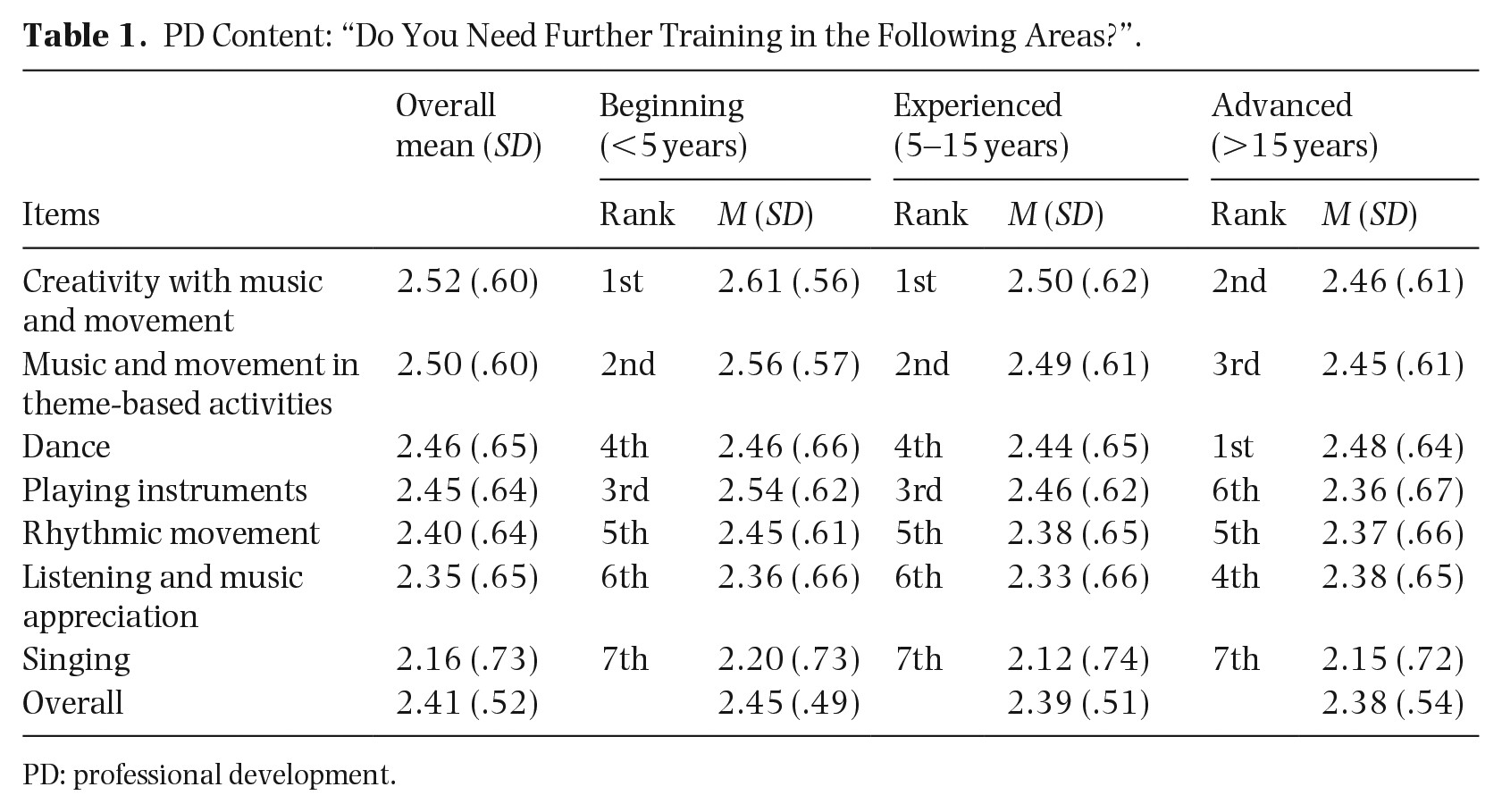
PD content: “Do you need further training in the following areas?” Seven content areas were listed, for example “Singing” and “Playing Instrument” (see Table 1 in “Results” section). Each area was followed by a 3-point Likert-type scale: No, Neutral, and Yes.
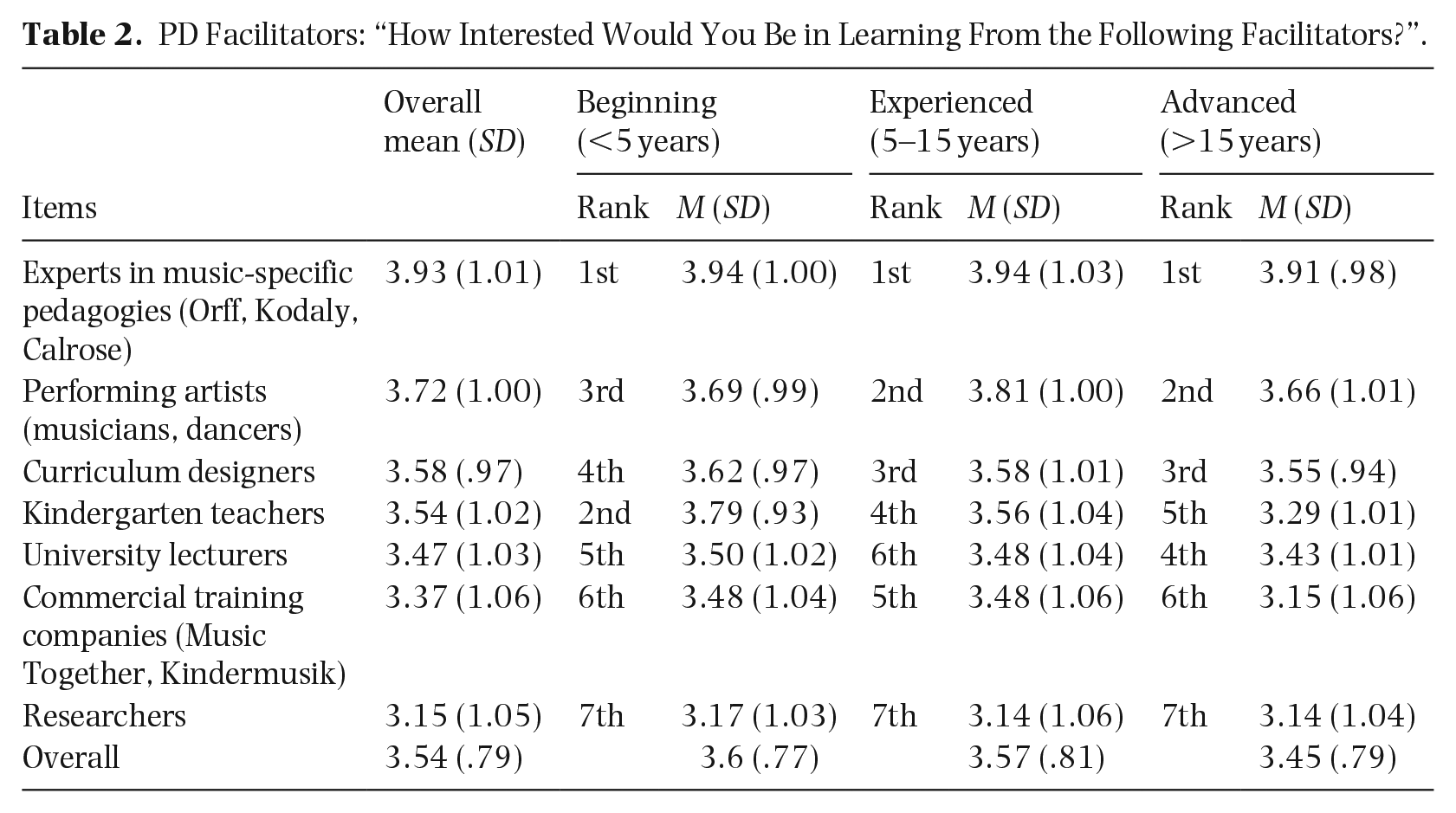
PD facilitators: “How interested would you be in learning from the following facilitators?” We presented seven facilitators that commonly operate in Hong Kong, such as “Curriculum Designers” and “Researchers” (Table 2). Each facilitator was followed by a 5-point Likert-type scale, ranging from Not interested to Extremely interested.
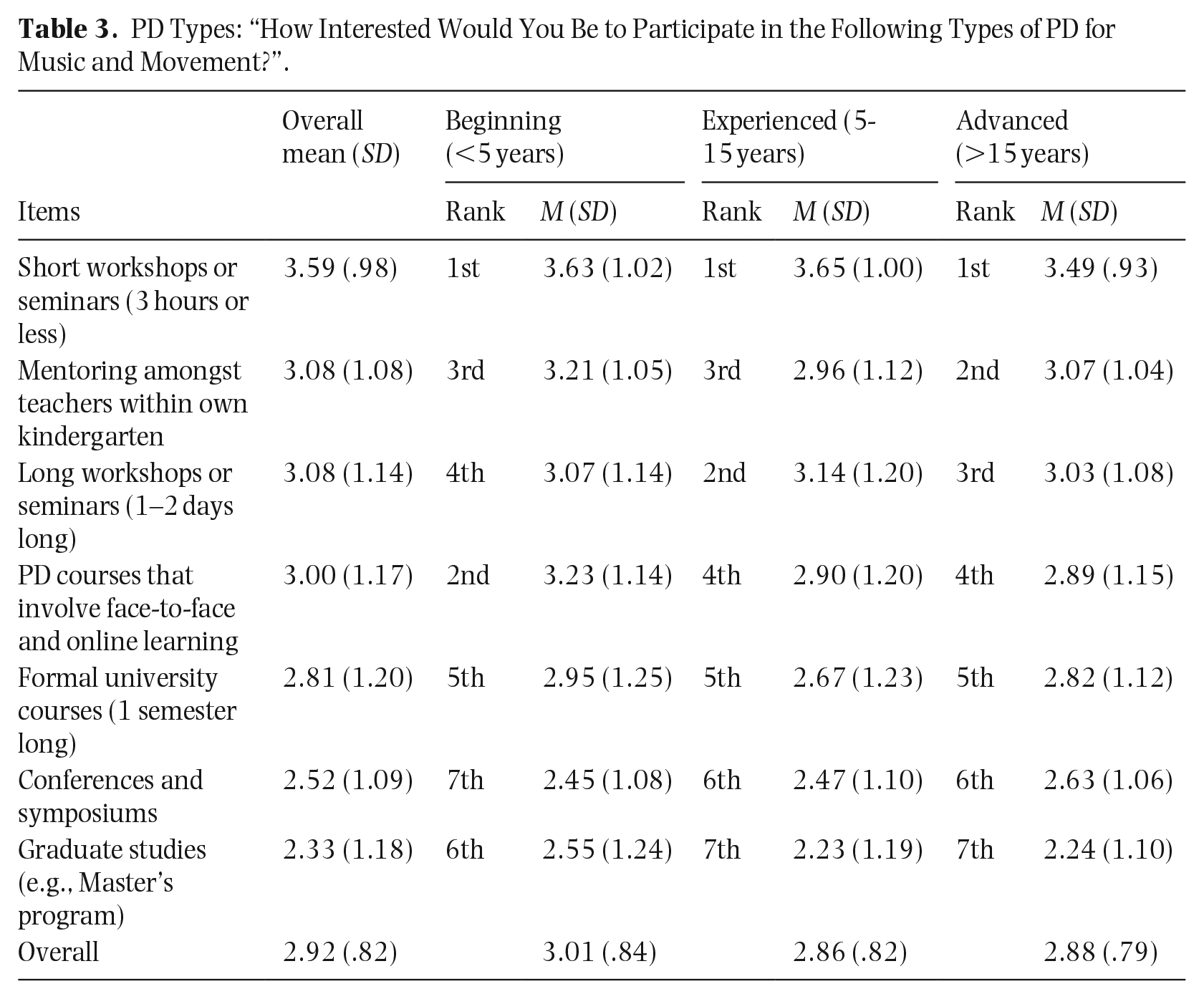
PD types: “How interested would you be to participate in the following types of PD for music and movement?” Seven types of PD were listed, for example “Short workshops” and “Conferences” (Table 3). Each PD type was followed by a 5-point Likert-type scale, ranging from Not interested to Extremely interested.
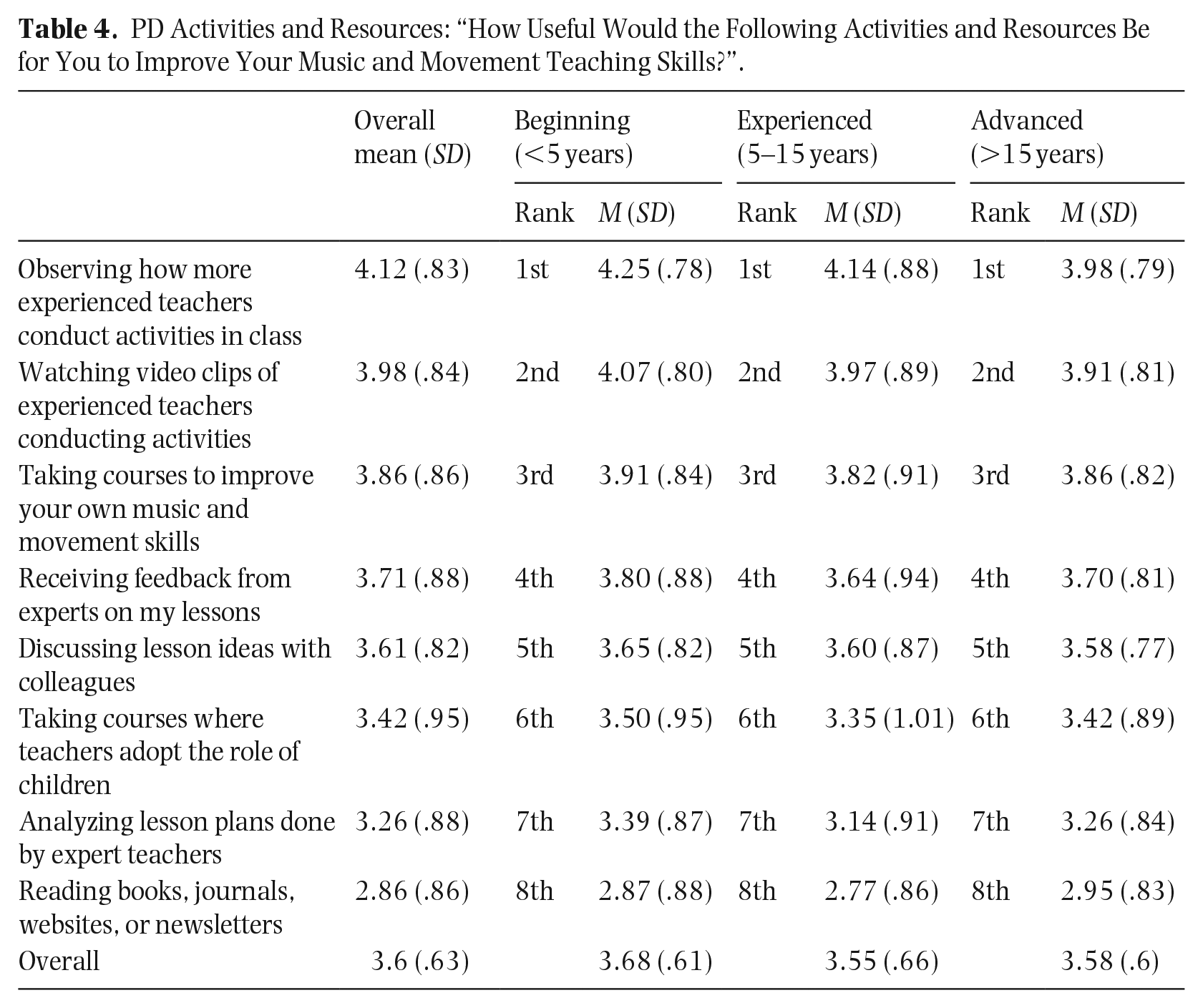
PD activities and resources: “How useful would the following activities and resources be for you to improve your music and movement teaching skills?” We presented eight items (e.g., “Discussing lesson ideas with colleagues”; Table 4), each followed by a 5-point Likert-type scale ranging from Not useful to Extremely useful.
PD Content: “Do You Need Further Training in the Following Areas?”.
PD: professional development.
PD Facilitators: “How Interested Would You Be in Learning From the Following Facilitators?”.
PD Types: “How Interested Would You Be to Participate in the Following Types of PD for Music and Movement?”.
PD Activities and Resources: “How Useful Would the Following Activities and Resources Be for You to Improve Your Music and Movement Teaching Skills?”.
A four-stage process was employed to ensure the survey’s face, content and ecological validity, and reliability. We proceeded as follows:
Procedure
Ethics approval was obtained from the Human Research Ethics Committee of the authors’ University. The email addresses of all preschools in Hong Kong were obtained from the website 1 of the Education Bureau. We sent individual invitation emails to the principals, including the project’s information sheet, the preschool’s consent form, and the hyperlink to the Qualtrics survey. We invited principals to forward our email to all teachers in charge of 3- to 6-year-old children in their respective preschools. The Qualtrics survey was active for 1 month. Two follow-up emails were sent (1 and 3 weeks after the initial email). Teachers were asked to provide informed consent before taking the survey.
Data analysis
A total of 1,128 complete survey entries were recorded. During our data cleaning process, we removed 109 entries for various reasons (i.e., participants did not give explicit consent, they completed the survey inconsistently or randomly). Response choices of Likert-type scales were converted to numeric values in each item (e.g., No = 1, Neutral = 2, Yes = 3). To address RQ#1, we generated a table for each of the four PD aspects showcasing the overall mean scores of each of the items presented (in descending order) and their standard deviations, alongside the findings for each teaching experience group, including the rank position for each item, its mean score, and standard deviation. Ranks (1st, 2nd, 3rd, etc.) were determined based on the mean scores within each group. For RQ#2, we conducted tests such as one-way ANOVA and Welch’s ANOVA to analyze teachers’ PD preferences varied according to teaching experience. When needed, post hoc Tukey HSD or Games Howell tests were also performed. Data analyses were carried out using IBM SPSS Statistics for Windows, Version 26.0.
Results
RQ#1: Hong Kong preschool teachers’ music-specific PD preferences
PD content
As shown Table 1, all areas of PD content presented in our survey obtained mean scores above 2 (on a scale from 1 to 3), indicating that teachers were receptive to receiving further training in multiple topics. Overall, teachers showed a higher preference for pedagogy-related PD content such as “Creativity with music and movement” (ranked 1st for all groups) and “Music and movement in theme-based activities” (ranked 2nd or 3rd), in contrast to traditional forms of music content such as “Singing” or “Listening and music appreciation,” which were ranked lower. Advanced teachers seemed to prioritize PD content focusing on “Dance” and “Listening and music appreciation” (ranked 1st and 4th, respectively), while the ratings for these two items were low for Beginning and Experienced teachers (ranked 4th and 6th, respectively).
PD facilitators
Participants were generally interested in learning from all listed PD facilitators, as all mean scores were higher than 3 on a 1–5 scale (see Table 2). Teachers in all three groups showed a preference for facilitators with music or music education knowledge, such as “Experts in music-specific pedagogies (Orff, Kodaly, Dalcroze)” and “Performing artists (musicians, dancers).” In contrast, facilitators who typically have lower practical experience in preschool settings, such as “University lecturers,” “Researchers,” and “Commercial training companies” obtained lower scores.
PD types
PD types focused on practical skills (e.g., workshops, mentoring, seminars) scored above 3, while those normally focused on theoretical or academic knowledge scored below 3 (e.g., university courses, graduate studies, conferences) (Table 3). Participants showed a preference for “Short workshops or seminars (3 hours or less)” and “Long workshops or seminars (1–2 days long),” which were ranked 1st and 2nd, respectively. In contrast, PD types that require extensive time commitments, specifically “Formal university courses (1 semester long)” and “Graduate studies (e.g., Master’s program),” were bottom ranked by participants (5th and 7th, respectively).
PD activities and resources
Overall, teachers valued the usefulness of the activities and resources presented in terms of improving their music teaching, as most items obtained scores higher than 3 on a 1–5 scale. The only exception was “Reading books, journals, websites, or newsletters.” It is worth noting that all three groups presented identical rankings. The highest mean scores were recorded for activities involving observation, namely, “Observing how more experienced teachers conduct activities in class” and “Watching video clips of experienced teachers conducting activities,” which were ranked 1st and 2nd, respectively. In contrast, activities that involved the analysis of lesson plans and reading were bottom-ranked (Table 4).
RQ#2: PD preferences by teaching experience
Table 5 presents the items in which we found statistically significant differences when comparing teachers’ PD preferences across the teaching experience groups.
PD Preferences by Teaching Experience: Items With Statistically Significant Differences.
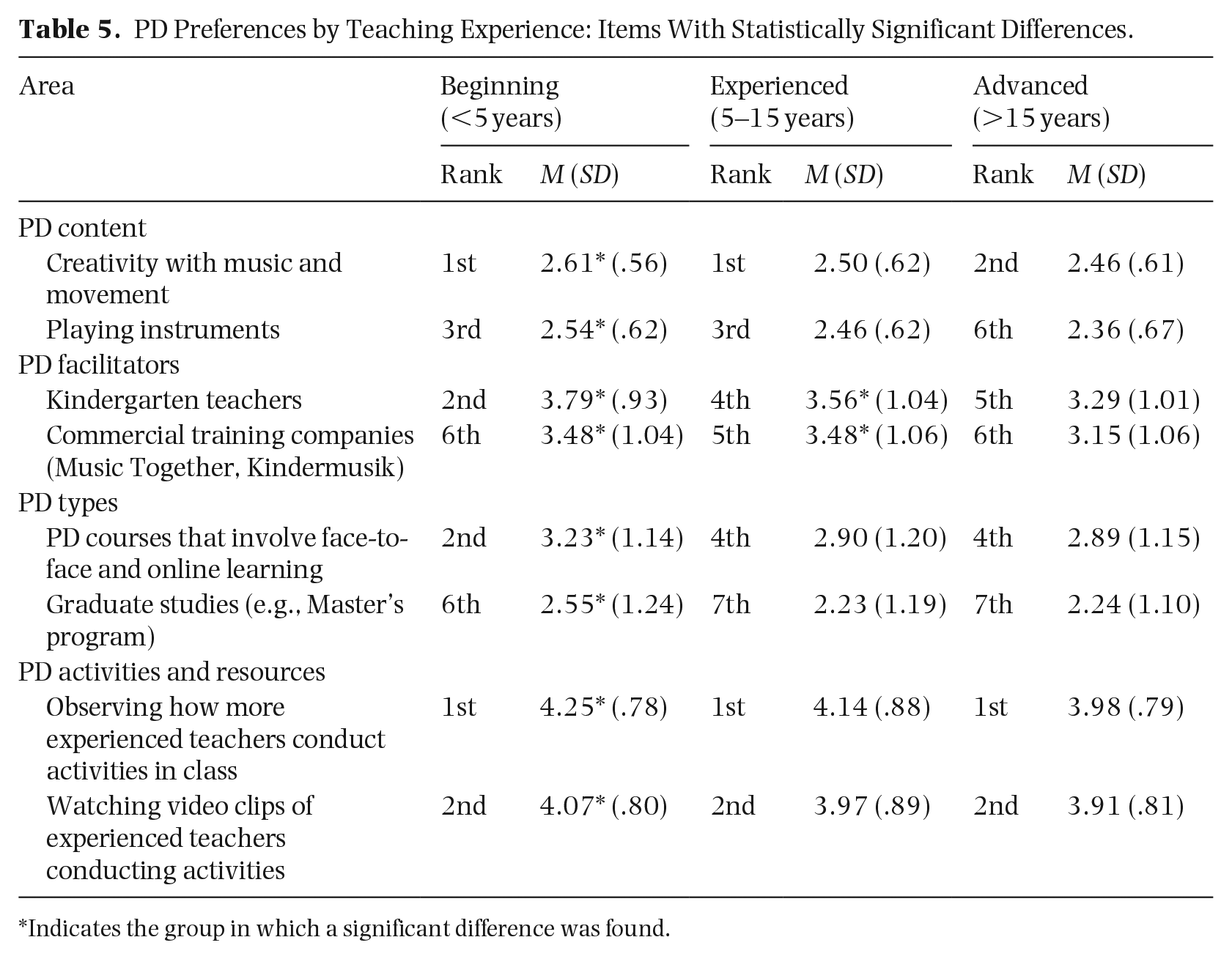
Indicates the group in which a significant difference was found.
Differences regarding PD content
Although the three groups reported high preferences for PD on “Creativity with music and movement” (ranked 1st or 2nd by the three groups), a one-way ANOVA indicated the existence of a significant difference, Welch’s F (2, 675.891) = 5.535, p = .004. Post hoc comparisons using the Games–Howell test indicated that Beginning teachers (M = 2.61, SD = .56) reported a significantly higher mean than Experienced (M = 2.50, SD = .62, p = .049) and Advanced teachers (M = 2.46, SD = .61, p = .004).
Moreover, Beginning and Experienced teachers reported higher preferences for PD focusing on “Playing instruments” (ranked 3rd in both groups), as compared with Advanced teachers (ranked 6th). A one-way ANOVA test revealed a significant difference between the three groups, F (2, 1016) = 6.645, p = .001. Post hoc comparisons using the Tukey HSD test indicated that the mean score for Beginning teachers (M = 2.54, SD = .62, p = .001) was significantly higher than for Advanced teachers (M = 2.36, SD = .67).
Differences regarding PD facilitators
Differences across the teaching experience groups were found for “Kindergarten teachers,” who were ranked 2nd by Beginning teachers, while Experienced and Advanced teachers ranked them 4th and 5th, respectively. A one-way ANOVA confirmed that a significant difference existed in the mean scores, Welch’s F (2, 676.021) = 21.856, p < .001. Post hoc comparisons using the Games–Howell test indicated that the mean score for Beginning teachers (M = 3.79, SD = .93) was significantly higher than for both Experienced (M = 3.56, SD = 1.04, p = .009) and Advanced teachers (M = 3.29, SD = 1.01, p < .001). In addition, Experienced teachers (M = 3.56, SD = 1.04, p = .009) also reported a significantly higher mean compared with Advanced teachers (M = 3.29, SD = 1.01, p = .001).
Similarly, a one-way ANOVA test revealed the existence of a significant difference regarding “Commercial training companies,” F (2, 1016) = 11.476, p < .001. Post hoc comparisons using the Tukey HSD test indicated that the mean scores for both Beginning (M = 3.48, SD = 1.04, p < .001) and Experienced teachers (M = 3.48, SD = 1.06, p < .001) were significantly higher than for Advanced teachers (M = 3.15, SD = 1.06).
Differences regarding PD types
The preferred PD types for Beginning teachers were significantly different from their more experienced peers. Specifically, they reported a higher interest in “PD courses that involve face-to-face and online learning” (ranked 2nd), while this type of PD was ranked 4th for Experienced and Advanced teachers. An ANOVA test confirmed a significant difference, F (2, 1,016) = 8.804, p < .001. Post hoc comparisons using the Tukey HSD test indicated that the mean score for Beginning teachers (M = 3.23, SD = 1.14) was significantly higher than for Experienced (M = 2.90, SD = 1.20, p = .001) and Advanced teachers (M = 2.89, SD = 1.15, p = .001).
Beginning teachers were also considerably more interested in “Graduate studies (e.g., Master’s program).” A one-way ANOVA identified a significant difference, Welch’s F (2, 666.438) = 7.399, p = .001. A post hoc comparison using the Games-Howell test indicated that the mean score for Beginning teachers (M = 2.55, SD = 1.24) was significantly higher than for both Experienced (M = 2.23, SD = 1.19, p = .002) and Advanced teachers (M = 2.24, SD = 1.10, p = .002).
Differences regarding PD activities and resources
Using a one-way ANOVA, we identified a significant difference for “Observing how more experienced teachers conduct activities in class,” Welch’s F (2, 674.068) = 9.469, p < .001. Post hoc comparisons using the Games-Howell test indicated that the mean scores for Beginning (M = 4.25, SD = .78, p < .001) and Experienced teachers (M = 4.14, SD = .88, p = .033) were significantly higher than for their Advanced peers (M = 3.98, SD = .79). Furthermore, the ANOVA test revealed another significant difference for “Watching video clips of experienced teachers conducting activities,” F (2, 1,016) = 3.402, p = .034. Post hoc comparisons using the Tukey HSD test indicated that the mean score for Beginning teachers (M = 4.07, SD = .80, p = .027) was significantly higher than for Advanced teachers (M = 3.91, SD = .81).
Discussion
PD is an essential mechanism to enhance preschool teachers’ confidence in music education and help them improve their pedagogical competencies and practices (Bautista et al., 2022). Meanwhile, there is evidence that teachers’ PD needs evolve across their professional life cycles and are closely related to their amount of teaching experience (Conway, 2012, 2022; Koner & Eros, 2018). Based on the framework of responsive PD (e.g., Bautista, Toh, & Wong, 2018; Darling-Hammond et al., 2017; Desimone, 2009), this study aimed to investigate the music-specific PD preferences of Hong Kong preschool teachers regarding PD content, facilitators, types of initiatives, and activities/resources (RQ#1) and analyze potential differences among teachers with varying levels of teaching experience (RQ#2).
Concerning RQ#1, participants reported a strong preference for PD content related to pedagogical music content knowledge and instructional practices, specifically focusing on musical creativity and theme-based activities, and for PD focusing on dancing and instrumental music skills. Findings substantiate the notion that PD must be aligned with the curricular goals and expectations of each specific educational system (Desimone, 2009). In recent decades, Hong Kong has launched a preschool curriculum framework based on the principle of curriculum integration (Education Bureau, 2006), with a strong focus on the need to foster children’s creativity and self-expression throught the arts (CDC, 2017). These curriculum shifts may explain, as least partially, why preschool teachers showed preferences for these content areas. Using different methodologies, authors such as Chan and Leong (2007) and Lau and Grieshaber (2018) previously arrived at similar conclusions within the Hong Kong context, which indicates that preschool teachers’ needs have not yet been satisfied. In fact, the intake of music-specific PD received by local preschool teachers is still minimal (Bautista & Ho, 2022).
Preschool teachers expressed interest in learning from all PD facilitators, although some clearly raised more interest than others. Indeed, our participants displayed preference for facilitators with practical pedagogical experience and performing background (i.e., pedagogical experts, curriculum designers, musicians), whereas preference for academics (i.e., university lecturers, researchers) was lower. This shows that for PD initiatives to be attractive for teachers, facilitators must be perceived as knowledgeable peers, experienced in content or pedagogy, and able to provide practical insights, expert advice, guidance, modeling, and/or mentoring. These findings are consistent with trends in other countries such as Australia (Barrett et al., 2019), the United States (Tsugawa, 2021), Croatia (Visković & Višnjić Jevtić, 2018), and Singapore (Bautista, Toh, & Wong, 2018), reflecting the need for PD initiatives to be applicable, practical, and aligned with teachers’ job-related demands (Kuijpers et al., 2019).
We found that our participants preferred short-term PD initiatives (e.g., one-off workshops ranging from a few hours to 1–2 days), whereas PD requiring extensive time commitment were least preferred (e.g., semester-long university courses, graduate studies). This might be due to the low priority given to art-related subjects in Hong Kong, which is known to be an academically driven society, highly focused on the learning of areas such as language, mathematics, and science (Rao et al., 2018). Understandably, preschool teachers do not seem willing to devote much time and effort on an area regarded as secondary (Lau & Grieshaber, 2018). Music education scholars in the United Kingdom (Young, 2007) and the United States (West, 2020) have shown that brief and sporadic types of PD can be highly effective to train teachers in music-specific pedagogies. However, it is worth noting that teachers’ preference for this type of PD is incongruent with the general literature on effective PD (Desimone, 2009; Desimone & Garet, 2015), which states that PD initiatives must involve a minimum of 20 hours of work spread through several months to be impactful and transformative.
Finally, findings revealed that participants preferred PD activities and resources that allowed them to observe experienced educators conducting lessons, to discuss classroom ideas with peers, and to receive feedback on their teaching. Consistent with the results discussed above, Hong Kong kindergarten teachers showed a clear preference for developing knowledge and skills that are applicable and practical in the classroom (Hamilton, 2013). In contrast, respondents showed lower preferences for learning activities that did not involve direct interaction with peers and professional exchange (e.g., reading and analyzing lesson plans). These findings echoed prior studies where preschool teachers reported a preference for collaborative activities focusing on exchanging teaching ideas (Rajan, 2017) and observation of more experienced colleagues (Hadley et al., 2015). However, the low preference for reading is slightly concerning, as earlier studies conducted in Hong Kong found that reading music-specific materials and teaching resources is the most common PD activity offered to preschool teachers in the territory (Yim & Ebbeck, 2011).
Regarding RQ#2, we found significant differences in teachers’ music-specific PD preferences when comparing Beginning (<5 years of teaching experience), Experienced (5–15 years), and Advanced teachers (>15 years). Beginning teachers reported the highest mean scores in the four themes investigated. This might be attributed to their low perceived self-competence in music education (Koutsoupidou, 2010), largely due to their limited formal training and lack of pedagogical practice (Bautista & Ho, 2022). Furthermore, both Beginning and Experienced teachers showed higher preferences than Advanced teachers for learning via peer observation, specifically using video clips as a learning tool, and for participating in blended PD initiatives. Younger teacher generations seem to be more willing to embrace educational technologies to further their learning (Lenzo, 2014). In contrast, Advanced teachers showed significantly different preferences regarding content, facilitators, and activities/resources. For instance, they showed higher interest in learning about dance and lower interest in instrument playing. They also showed lower preference for participating in observations, learning from other colleagues, and participating in courses offered by commercial providers.
Conclusion
We conclude that Hong Kong preschool teachers require music-specific PD (1) centered on strategies to foster children’s musical creativity and the design of theme-based activities, intended to meaningfully integrate music with the other learning areas; (2) facilitated by experts in pedagogy and/or music performance; (3) conducted as workshops and mentoring sessions; and (4) focused on observation, skill acquisition, and practice. These findings resonate with prior studies conducted in other Asian societies (e.g., Múñez et al., 2017; Yim & Ebbeck, 2011) and Western countries (Barrett et al., 2019; Hamilton, 2013; Visković & Višnjić Jevtić, 2018). The findings are also largely consistent with the framework of critical features of high-quality PD (Desimone, 2009; Desimone & Garet, 2015), with the exception of the critical feature of extensive and sustained duration. Indeed, Hong Kong preschool teachers showed a clear preference for music-specific PD that is content-focused, coherent with their knowledge and needs (i.e., practical and applicable), that provides active learning opportunities, and that encourages teachers’ collective participation. However, our participants expressed preference for short and one-off PD types (West, 2020; Young, 2007), instead of long and extensive PD types. Finally, we conclude that preschool teachers’ music-specific PD preferences differ according to their career stages. This study provides evidence that teaching experience is a crucial factor that must be considered when designing music-specific PD for preschool teachers.
There are several limitations to this study. While our methodology allowed us to recruit a large sample of preschool teachers and identify clear trends in their music-specific PD preferences, the research relied on a unique source of data (namely, self-reported survey responses). For a deeper exploration of the preference of teachers with different profiles, future studies may triangulate with complementary data sources. Furthermore, the study was not designed to investigate how PD should be conducted to best support teachers with different preferences or professional profiles. PD interventions consistent with the findings reported here should be implemented to measure their impact on teachers’ confidence, knowledge, and pedagogical skills.
Implications
PD scholars have stressed the importance of putting teachers’ interests, motivations, and needs at the center of PD design, implementation, and evaluation (West & Bautista, 2022). With each region adopting a different policy focus and the rapid curriculum changes within the preschool education landscape (Yang & Li, 2018), it is essential to provide teachers with PD that is responsive to their preferences and reflective of local curriculum priorities. For example, it is concerning that one of the main forms of PD typically offered in Hong Kong involves reading specialized materials (Yim & Ebbeck, 2011), whereas our findings show that teachers do not favor this activity. PD providers and facilitators should be mindful of this reality.
Another implication is the need to take teaching experience into consideration when offering music-specific PD initiatives for preschool teachers (Conway, 2012; Jordan et al., 2018; Koner & Eros, 2018). PD cannot adopt a one-size-fits-all approach (Desimone & Garet, 2015). Junior teachers may require comprehensive support in all areas to strengthen their self-efficacy, knowledge, and pedagogical skills, while senior teachers may only need help in certain domains, which might not have been covered during their pre-service education or developed during their years of teaching experience.
This study enriches the limited literature on preschool teacher music-specific PD and provides quantitative data on the varied preferences of teachers with specific profiles, from the perspective of an Asian society. Future studies should be carried out to investigate the preferences of preschool teachers in other socio-cultural settings, ensuring that PD initiatives are aligned with the curriculum frameworks and societal expectations of each specific society.
Footnotes
Declaration of conflicting interests
The author(s) declared no potential conflicts of interest with respect to the research, authorship, and/or publication of this article.
Funding
The author(s) disclosed receipt of the following financial support for the research, authorship, and/or publication of this article: This study was supported by the General Research Fund (GRF) 2021/22, Research Grants Council (RGC) (Grant #18610121). The views expressed in this paper are those of the authors and do not necessarily represent the views of their institution.
