




Abstract
Self-regulation strategies and behaviors are important aspects of instrumental music learning because they allow students to set learning goals by testing and controlling their cognition, motivation, behaviors, and emotions. This work investigates the self-regulation processes of four young instrumentalists (aged 10–11 years) in their initial stages of viola and violin learning, during practice with Plectrus, a real-time instrumental intonation training and assessment software. The qualitative-hermeneutical nature of this research employed a multiple case study design to investigate the construct of self-regulation within a software-supported instrumental learning process. Data were collected from the participants’ practice diaries over a 4-week period. The final practice session was also analyzed from audio-visual recordings. The results indicate that, despite their limited experience, the students showed a diversity of strategies and behaviors with which they self-regulated their cognitions, motivations, behaviors, and emotions. However, not all the students employed the same processes, and there was variability in the frequency of their use. One of the students showed more self-regulatory processes than the rest and achieved the best scores, although it has not been possible to establish a relationship between the scores and self-regulation.
self-regulated learning is “an active, constructive process whereby learners set goals for their learning and then attempt to monitor, regulate, and control their cognition, motivation, and behaviour, guided and constrained by their goals and the contextual features in the environment” (Pintrich, 2000, p. 453). While there are several models of self-regulation (SR) proposed in the literature (see Panadero, 2017). Zimmerman’s (2013), the Cyclical Phases Model has received most attention in the field of instrumental music (McPherson, 2022; McPherson & Renwick, 2011; McPherson & Zimmerman, 2011). This model integrates the roles of motivation, praxis, and reflection. It consists of three phases: (a) the Forethought phase, which is entirely cognitive and encompasses task analysis through goal setting, strategy planning, and motivation; (b) the Performance phase, which involves praxis and cognitive elements, and is where the person performs the task exercising self-control and self-observation processes; and (c) the Self-reflection phase, which is cognitive, wherein the person evaluates their performance and makes positive or negative attributions that lead to associated emotions. Positive attributions may foster the cognitive factors constitutive of the forethought phase, and as such the three phases are interrelated and cyclical (Zimmerman, 1998). This study employed the Cyclical Phases Model to investigate how viola and violin students self-regulate while practicing with intonation support software (McPherson et al., 2017).
Self-Regulated Learning in music performance
In the instrumental music context, the literature consulted addressed instrumental self-regulated learning in the middle and advanced educational stages (Dos Santos & Gerling, 2011; Hatfield et al., 2016; McPherson et al., 2019; Miksza et al., 2018) and was mostly focused on strategies and behavior during practice, such as place organization, repeating bars, varying tempo, help-seeking, fingering (practicing the fingers of the musical task without an instrument), varying rhythm, and listening to recordings (Araújo, 2016; Geringer et al., 2015; Leon-Guerrero, 2008; Liu, 2021; Miksza, 2007, 2015; Miksza et al., 2012; Miksza & Tan, 2015; Nielsen, 2004; Pike, 2017; Rohwer & Polk, 2006; Vellacott & Ballantyne, 2022). Overall, the results of these studies suggest that advanced learners employ more self-regulation strategies and behaviors than intermediate learners.
Despite the fact that music self-regulated learning research has been undertaken predominantly with intermediate and advanced learners, there is also evidence of self-regulated learning in the earlier stages of learning. (McPherson et al., 2017; McPherson & Renwick, 2011). Some research suggests that students are able to apply practice strategies and behaviors (i.e., movement, counting, thinking, singing, and silent finger-practice on the instrument) during their study sessions at the age of 7 to 9 years (McPherson, 2005; McPherson & Renwick, 2001), even doing so in a manner comparable to that of professionals (Bartolome, 2009; Hallam, 2001b)—although this does not preclude the predominance of rehearsing the piece from beginning to end (Hallam, 2001a; McPherson & Renwick, 2001). According to some studies (Austin & Berg, 2006; Hallam, 2001a), strategies and behaviors may become more developed as students become more skilful in their regulation (i.e., repeating difficult passages until they are correct, practicing slowly with gradually increasing tempo, pizzicato, naming notes, using the bow in the air, mental rehearsal, etc.). Beginner students also apply strategies and behaviors involving organizational aspects (keeping track through a practice diary and developing a practice order influenced by personal interests) and practice improvement (setting a goal for improvement and self-correction), which are important to SRL (Austin & Berg, 2006; Bartolome, 2009; Hallam, 2001b; McPherson, 2005). Beginner students have also positively applied other important aspects of self-regulation behaviors and strategies, such as time management, monitoring environment, or asking family, teachers, or friends for help (Austin & Berg, 2006; McPherson & Renwick, 2001). McPherson (2005) self-regulation suggests a relationship exists between a high level of instrumental mastery and the use of more advanced strategies and behaviors (i.e., knowing when and how to use strategies, relating performance to effort, and managing practice accordingly), but this does not occur systematically in students with few years of experience. However, sometimes children are aware of practice processes and strategies, but simply do not use them because they are not interested. This lack of interest is called a production deficit (Hallam, 2001a; Prichard, 2017, 2021).
Some problems arise in students due to a lack of self-regulation behaviors and strategies. Students who do not display self-regulation behaviors are often unable to correct mistakes, and subsequently assimilate them. Another problem due to the absence of self-regulation strategies is not being able to identify complex musical passages. Although the lack of self-regulation behaviors and strategies are often associated with beginner students, this is not always the case. Some beginner students are able to exert good self-regulation during their practice by correcting incorrect sounds or repeating particular sections (Austin & Berg, 2006; Hallam, 2001a; Hallam et al., 2012).
An intrinsic interest in practicing the instrument is another important factor in self-regulated learning (McPherson & McCormick, 2000; Vellacott & Ballantyne, 2022). Thus, choosing the repertoire to rehearse and practice in different time slots, as well as at the weekend, seems to foster the development of self-regulation and continuation in studies (Faulkner et al., 2010; McPherson & Renwick, 2001). Although the absence of family members during practice can assist in developing increased student autonomy (McPherson & Renwick, 2001), the development of practice habits that foster positive self-efficacy beliefs is also important at early levels for aiding continued study in future years (Faulkner et al., 2010). Indeed, family influence in the early stages of learning is relevant to self-regulation (Barrett & Welch, 2021; Hallam, 2011; Macián-González & Tejada, 2020; McPherson, 2009; McPherson & Davidson, 2002).
Self-regulation, music learning, and technology
The literature has investigated a number of uses of technology in relation to self-regulation. For example, researchers have studied how the use of software to support initial general music learning can influence students’ self-regulation (Portowitz et al., 2014). Studies have also looked into how high school students self-regulated while composing a piece of music using music software (Merrick, 2006). The use of recordings has also been investigated—specifically how this practice can influence the self-regulated learning of prospective piano teachers (Deniz, 2012)—although it has been suggested that on numerous occasions students do not subsequently resort to viewing practice recordings (Waddell & Williamon, 2019). The use of a digital portfolio, such as electronic reflections and goals or asynchronous electronic communication with the teacher, has also been the subject of research to find out how it influences instrumental self-regulated learning (Brook & Upitis, 2015; Upitis & Abrami, 2017; Upitis et al., 2010, 2014, 2017).
Overall, the results of the above-mentioned studies suggest that the use of technology does not have negative implications for self-regulated learning. In fact, the available literature emphasizes that the use of technology is conducive to learning. However, our literature review did not find any work concerned with how beginner instrumental students self-regulate in their practice sessions with software, specifically intonation support software. Therefore, this exploratory-descriptive work aims to fill this gap in technology-mediated instrumental self-regulated learning. The main aim of this article is to find out whether students are able to exercise any self-regulation power during their practice with the software. If so, does the use of the software influence student use of self-regulated learning, or does it derive from their own previously acquired experiences, or both? Do all students self-regulate equally? Is there a generalized trend? Are they able to apply the phases of Zimmerman’s cyclical model of self-regulation early during their use of the software? What influence does practice with the software have on self-regulated learning? Is there any apparent relationship between the quality and quantity of SR behaviors and strategies and performance with the instrument? This article seeks to answer these questions with the aim of contributing to a gap in knowledge of musical instrument self-regulated learning in technological environments that support students in learning their instruments.
Method
Design and data collection
This study adopts a multiple case design (Yin, 2003) with an approach based on educational psychology, which provides the theoretical basis that supports the study. The cases are four individual students who share common characteristics (Stake, 2006) and who may be representative of beginner viola–violin students. The design was adopted because the dynamic and complex nature of self-regulation (Boekaerts & Cascallar, 2006) requires a qualitative, interpretative approach to be fully understood. Also, a qualitative focus is necessary to analyze the phenomena associated with the process of learning musical instruments using supporting software.
Considering the study’s qualitative approach, two resources were used to collect research data from pupils. First, an individual practice diary was assigned to each participant with clear instructions on what information to fill in. The diary used was adapted from Austin and Berg’s (2006) self-regulation diary, which consists of a free-writing exercise that is carried out each time the student practices at home with the software. The participant must report in three sections (before practice, during practice, and at the end of practice) what “an invisible person would be able to see.” Second, video recordings of a final practice session were used to analyze the children’s behavior. Video recordings are important because they (a) provide additional data to support the self-regulation process and expand on the single diary entries of participants, which can often be limited in content (Austin & Berg, 2006); (b) provide supporting information for the practice diaries (triangulation); and (c) allow researchers to interpret the students’ nonverbal language (i.e., facial gestures, body movement, etc.). Two external judges validated the researchers’ interpretation of the analysis of the final practice session. The researchers’ interpretations of the strategies and behaviors were collected in 125 statements. Cohen’s kappa statistic showed a high overall inter-judge agreement (κ = .867).
A third source was used to collect data from parents. This consisted of a semi-structured interview with one of each of the participants’ parents to find out background information (e.g., who took the initiative to practice the instrument) and the parents’ views on using technology in education or technological performance by their children. It was hypothesized that this information could influence the participants’ self-regulated learning processes.
Participants
The participants have been given fictitious names to safeguard their anonymity: Helen, Sarah, Cathy, and John, all aged 10–11 years. The first three students are viola students under the tutelage of the main researcher; the last one is not. The student selection criteria were (a) one or no parents had practiced music; (b) they had direct contact with the principal investigator; (c) they were willing to participate in the research; and (d) they were studying the instrument for the second consecutive year. Data collection for Helen, Sarah, and John took place at the conservatory where they were studying. Cathy’s data were collected at the home of her private teacher. Permission to carry out the work was sought through informed consent from the conservatories, the participants, and their families. In the document provided for the students and their families, they were informed of the aims of the study and their rights (data privacy, anonymity, waiver of further participation, and access to the final research report). A positive response was obtained from all participants. Also, ethical approval to undertake the study was received from the University of Valencia Human Research Ethics Committee.
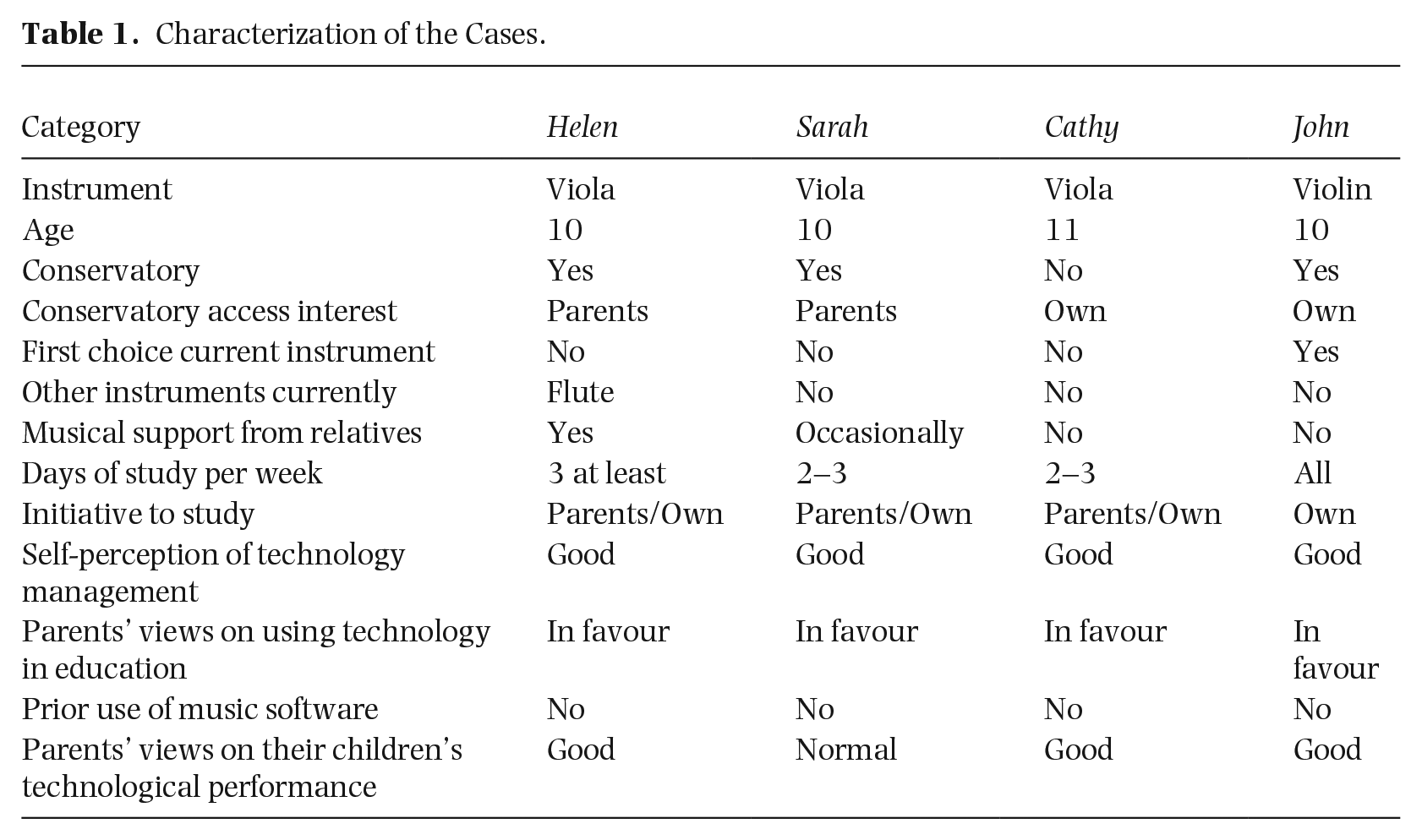
The students started their musical studies at the conservatory because of their family (Helen and Sarah) or personal interest (Cathy and John). Access to study at an elementary music conservatory in Andalusia (Spain) is regulated by passing a musical aptitude test. When people register for these tests, they also have to indicate the instrument they would like to study. Due to the high demand for instruments such as piano, violin, and flute, only people with higher test results are able to study the instrument they want. This was only the case for John, who managed to study the violin. Helen, Sarah, and Cathy were assigned the viola because their marks in the aptitude test were not high enough for them to study the instrument they wanted.
Helen and John had previously learnt the piano, but at the time of the study, only Helen was also practicing the flute at school. Helen and Sarah sometimes received help from a family member during their practice at home, whereas Cathy and John said that they did not receive help from anyone. On average, the participants practiced their instrument three times per week at home, independently of conservatory classes or other musical activities. This is except for John, who practiced violin at home every day. Helen, Sarah, and Cathy sometimes took the initiative to practice at home, but they occasionally practiced because they were reminded to do so by a family member. Family members of Helen, Sarah, and Cathy supported their daughters’ comments about the initiative to practice. John and his mother said that he always took the initiative to practice in his second year of study.
The students said that they were capable with current technologies, a view which was supported by their family members, except for Sarah’s father, who said that his daughter had only a fair command. None of the students had previously used educational music software. All family members were positively inclined toward the educational use of technology. Table 1 shows the characteristics described.
Characterization of the Cases.
Procedure
In the first session with the participants, the operation of the software was explained: recording and playback, changing the tempo, changing the key, the option to identify sounds by name, listening to the recording itself, and analyzing software feedback. Furthermore, the researchers explained to the children how to send the evaluation report generated by the software. Four exercises were used to obtain data from the participants according to a protocol. After explaining all the above information to the participants, each of them practiced Exercise 1 in front of the principal investigator as many times as the participant wanted following the protocol. In the time between sessions, the participants practiced Exercise 1 at home with the software without the presence of the researchers. These practices were always carried out for a minimum of three agreed days. After 1 week, the participants practiced Exercises 1 and 2 with the software in front of the principal investigator as many times as they wanted. In the time between sessions, the participants practiced Exercise 2 at home with the software without the presence of the researchers. The next week, the participants practiced Exercises 2 and 3 with the software in front of the main researcher as many times as they wanted. This procedure was continued over the course of the 4 weeks of the study.
Software
Plectrus is a software for the evaluation of instrumental intonation. A prototype developed from another software dedicated to the evaluation of vocal intonation (Pérez-Gil et al., 2016) has been used for this study (Figure 1) (see Appendix A for a description of the functioning and main features of the software).
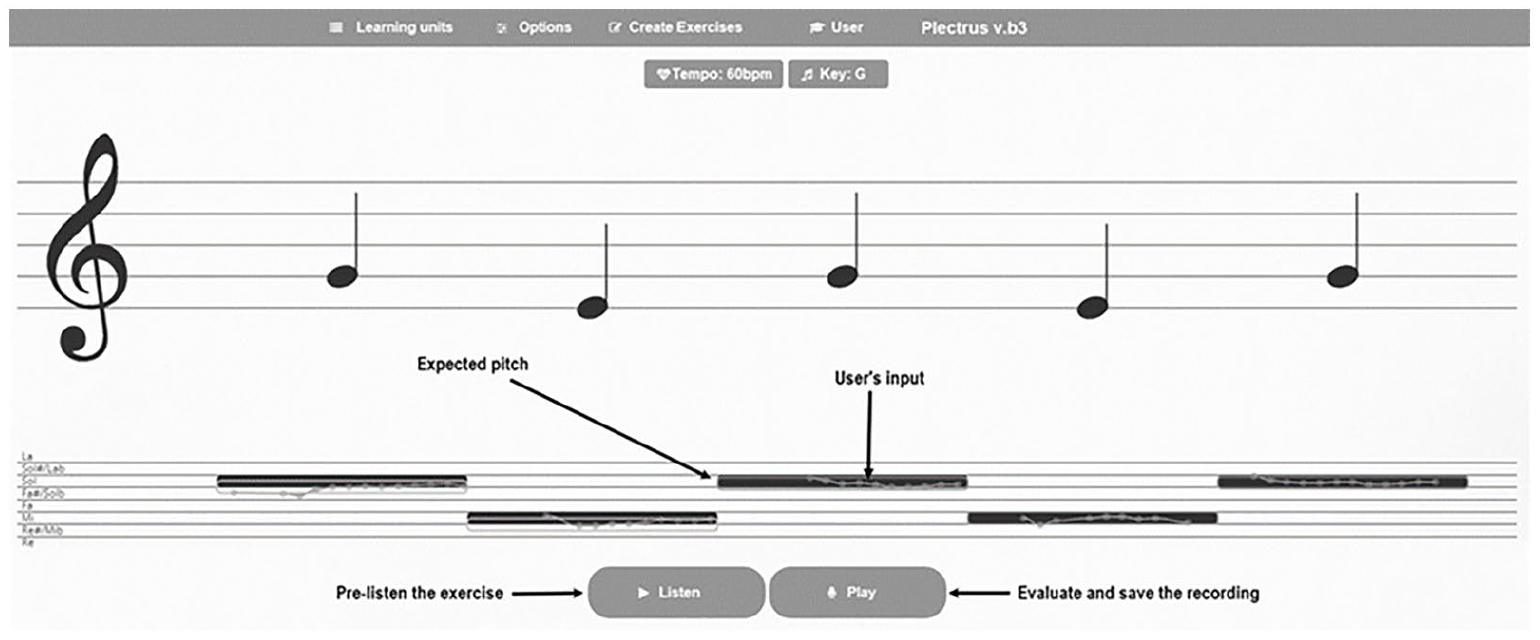
Main Interface of Plectrus.
In a synthesized form, Plectrus is accessed via a web browser. The sound input is collected with the microphone, analyzed in its pitch components, and evaluated according to predefined musical technical criteria. The evaluation is based on a 10-point scale, individually analyzing and scoring each sound of the exercise performed and then summing the partial scores into a global score for the exercise. Each sound in the exercise has a maximum score when the margin of error is less than 10 cents. 1 In any case, the score of each sound is calculated according to the formula: [(10 points/number of sounds in the exercise)]*(1 − [0.75*difference in semitones]). The complete formula (Figure 2) shows this algorithm, where d is the difference in semitones between the reference sound and the input sound, and N is the total number of sounds of the exercise. Participants were free to report the evaluations they obtained in the software in their practice diaries.
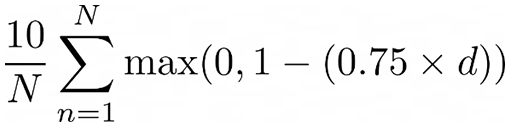
Software’s Evaluation Algorithm Formula.
Four practice exercises were created (see Appendix B), one for each of the 4 weeks of the study. The exercises were isorhythmic because they only worked on intonation, so as to address one difficulty at a time for the student. Each exercise was focused on a different tonality adapted to the fingering approached and developed in the practical context of two strings. The aim of the exercises was to deepen the open and closed position of the second finger, the open position of the third finger, and the backward position of the first finger. These exercises were validated according to their appropriateness to the level of the participants by two judges with 20 years of teaching and performing experience in viola and violin. Complete inter-judge agreement was obtained.
Categories of analysis
The three phases in which the personal study diary was constructed (Austin & Berg, 2006) were used as preliminary categories for the analysis of the qualitative data: (a) before practice, (b) during practice, and (c) at the end of practice. The codes can be seen in Figure 3.
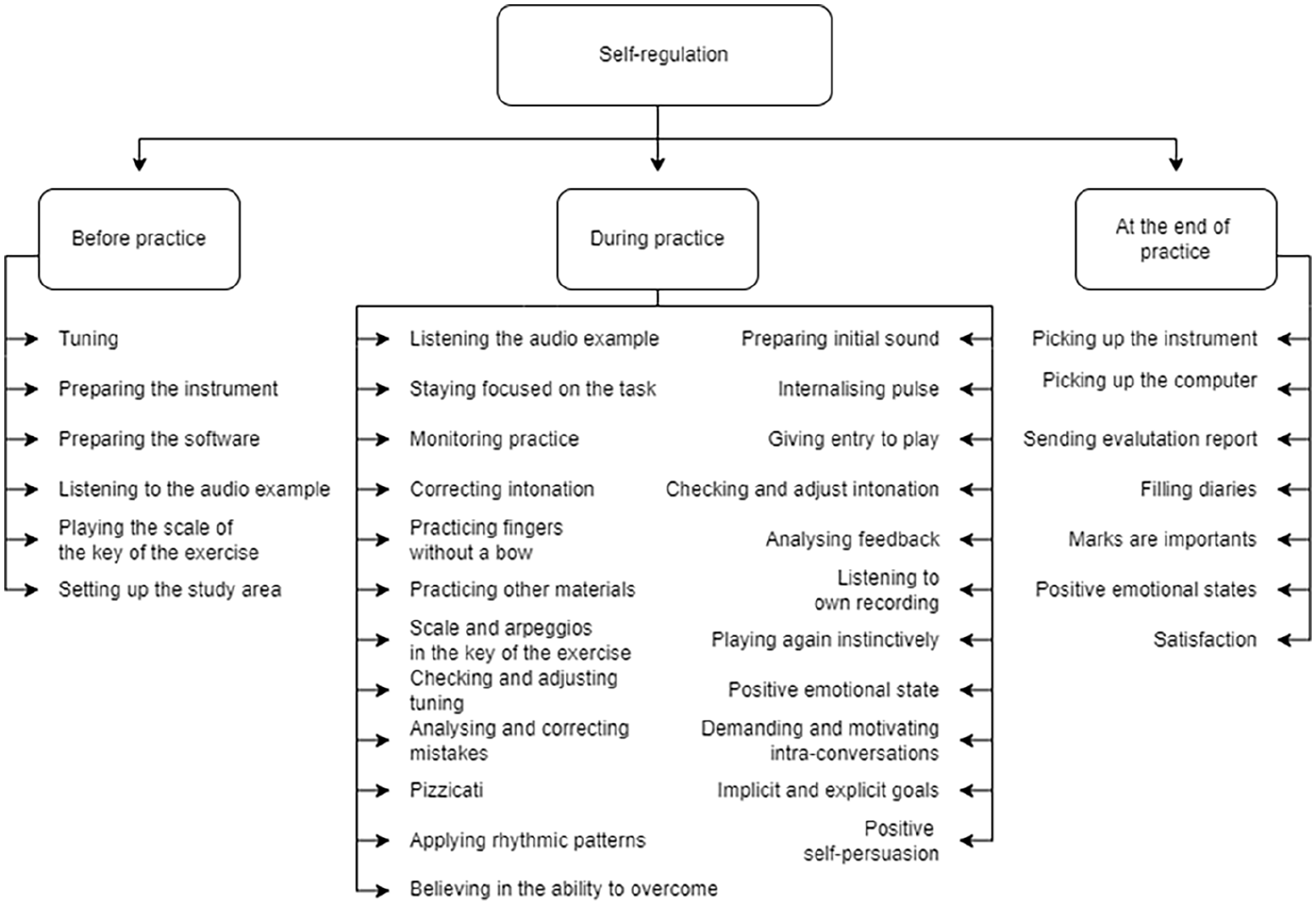
Component Codes of self-regulation (Main Categories).
Results and discussion
The data analysis revealed a number of features about the students’ practice, both from the diary entries and video footage from the last practice session. The analysis has been structured by considering the three categories set out in Austin and Berg’s (2006) diaries, which can be said to bear some similarity to the constructs of Zimmerman’s Cyclical Phases Model discussed in the literature review. This similarity between “Before Practice—Forethought,” “During Practice—Performance,” and “At the End of Practice—Self-reflection” is evident in the nature of the activities that the students demonstrated and the approaches to practice that were reported across all three phases.
“Before Practice”
The study diaries of all participants show that they frequently tuned their instrument before practicing and that they prepared the software and the instrument themselves, which coincides with what was observed in the recordings. Helen pointed out that she used to listen to the sound example of the exercise before practicing, for example, “When I prepared the viola: I tuned it, I opened the software, and listened to the exercise [sound example].” This coincides with her way of proceeding in the recording of the final practice. Sarah did not mention in this section of her diary anything about listening to the audio example of the exercise; however, it was Sarah who stood out in the final practice for her frequent use of this software resource. It should be noted that listening to the sound example in the exercise is an action that shows the intention of self-regulated learning (Volioti & Williamon, 2021) induced by the use of the software. Cathy made no mention in the diaries of listening to the sound example. In her case, she maintained a certain pattern of behavior: “I took out the viola, tuned it, and put on the software. After that I started.” Her not listening to the sound examples coincides with what was observed in the recording. John only alluded to listening to the sound example on one occasion, which coincides with the low frequency of use observed in the recording of his practice.
John indicated in the diaries having carried out actions that were not directly related to the use of the software. He mentioned that he practiced the scale in which the weekly practice exercise is found: “I took out the violin, tuned it, and prepared the computer. Before I started, I played F major which is the scale the exercise is in.” John also set up the study area: “I took the computer out, turned it on, and set everything up. Then I closed the door of the room so that I wouldn’t be disturbed by any noise. Then I took out and tuned my violin and started practicing.” Possibly, John’s self-regulation behaviors derive from previous experiences, but in any case, they coincide with other students showing self-regulated learning and those of more experienced instrumentalists, who practiced the scale of the musical material or made preparations to accommodate their practice (Araújo, 2016; Austin & Berg, 2006; Bartolome, 2009; McPherson, 2005; Miksza & Tan, 2015; Nielsen, 2004).
“During Practice”
Participants’ diary entries outlined their practical actions used during practice, such as listening to the audio example of the exercise throughout the practice session. However, only Sarah did this assiduously during the recording. Helen’s diaries reported that she stayed focused on the task: “That I listened to the exercise [example]. And that I was concentrating.” Helen also referred to monitoring practice during her sessions: “I was keeping the tempo. And I was trying to play the exercise as well as possible, taking care of the intonation.” This behavior was observed in the footage where it was also observed how she monitored (checking the operation of) her left hand. Possibly, this monitoring enabled Helen to realize, in her last practice session, the difficulty of intoning some sounds. The footage of Sarah and John also shows them monitoring practice and their left hand with remarkable frequency during their practice sessions. It is possible that John also benefited from this monitoring by realizing, in his last practice session, the difficulty of intoning some sounds. Cathy’s diaries also reported that she stayed focused on the task: “I was concentrated. I played slowly, and very well.” Cathy’s comments also made reference to monitoring practice during their practice sessions: “I was paying attention to the notes, and I was playing slowly and well.” On examining the footage, it was observed that Cathy was monitoring the functioning of her left hand. Staying focused on the task and monitoring practice are behaviors that suggest the development of self-regulated learning, possibly stemming from previous experiences unrelated to the software.
Analysis of the footage also showed other self-regulation behaviors that were performed alone, but minimally. For example, Helen was correcting intonation in real time through monitoring practice and Sarah was practicing fingerings without a bow. However, it was the diaries and the footage of John’s final practice session that included the greatest number and frequency of self-regulation behaviors. For example, John’s diaries reported practicing other materials: “Every time I assessed [waited for the software evaluation] I practiced [the material for] my [upcoming] audition.” John’s other comments in the diaries and observations of the footage relate to practicing scales and arpeggios in the key of the exercise: “While assessing I played the F major arpeggios.” John’s diaries also reported that he was checking and adjusting tuning: “Halfway through the study I retune.” He did that on the recording even with octave intervals. John also was analyzing and correcting mistakes: “I have played and listened to it many times, analyzing my mistakes,” or “I have listened to it several times and played it correcting my mistakes.” This was corroborated in the recording with the practice of pizzicati to improve intonation or when he was applying rhythmic patterns with the intention of making improvements. John exhibited self-belief in his ability to improve his score: “When I got the score I sent you, I didn’t improve it because I was in a hurry to get to a rehearsal on time.” John’s other behaviors and strategies were only observed on the footage; that is to say, he did not write about them in his diary: producing the first sound with the instrument to check its tuning before starting to play with the software, internalizing pulse, gesturing when to start playing, and checking and adjusting intonation with that of the software during the playback of the sound example. All things considered, John exhibited some behaviors that are similar to those observed in studies by Geringer et al. (2015), Leon-Guerrero (2008), and McPherson (2005).
The performance protocols provided to the participants included information on other possible practice strategies with the software and could be understood as a checklist of actions that have positive implications for self-regulated learning (Cremaschi, 2012). However, no participant made use of those practice strategies facilitated by the software, except for Sarah, who listened to her own recording. She also reported that she almost always paid attention to analyzing the feedback to see where to correct errors: “[The imaginary person] saw [. . .] how [I] saw the graph of the results and where I needed to improve,” or “Every time I played it, I looked at the graph.” This behavior was corroborated in the recording and suggests the construction of self-regulated learning supported by the software. Thus, the participants were aware of different practice strategies with the software, but not all of them used them. When they did, it was mainly in a limited way. This production deficit in the use of resources and strategies that are known and that can be useful for learning is not unique to these students (Hallam, 2001a; Prichard, 2017, 2021). More advanced students (Geringer et al., 2015; Hallam, 2011; Miksza, 2007; Miksza & Tan, 2015) and professional musicians (López-Íñiguez & McPherson, 2020) either do not always listen to the material to be practiced or record and listen to their recordings, although it has been suggested that doing so has benefits for self-regulated learning (Volioti & Williamon, 2021).
Helen and Cathy always had the desire to practice and instinctively repeat the musical exercise if the result was not to their liking. John did this almost all the time. This behavior of not reflecting on mistakes and playing the score repetitively from beginning to finish has also been found in beginner students (Hallam, 2001b; McPherson, 2005; McPherson & Davidson, 2002; McPherson & Renwick, 2001). It is possible that this behavior is due to their interest in achieving the desired grade or a higher grade in the software. This seems to be the case for John, since at the end of the recording of the final practice he mentioned, “I intended to get a 10 because it was the last time.” Indeed, in the recording, John achieved scores close to 10, which he discarded for further practice. In the end, he decided to end up missing his target on Attempt 32 after several less successful attempts. This supports the theory that John made this overexertion to achieve his own goal of scoring better.
The participants’ diaries highlighted the use of affective, cognitive, and motivational self-regulation behaviors in this phase. Cathy tried to maintain a positive emotional state during her practice: “I was calm and happy playing with the software.” This coincides with the positive emotional state related to the score observed in the recording. Likewise, Cathy stood out for her thoughts in which she compared her actual performance with her performance beliefs. She also stood out because she challenged and motivated herself through intra-conversations: “Well, I told myself that I had to do better and that I could do more and that I shouldn’t do so badly.” Sarah and John’s footage also suggest that they had a positive emotional state related to the score. This may suggest that students adopt and use some features of more experienced performers (López-Íñiguez & McPherson, 2020, 2021), which shows a certain self-regulation power (McPherson, 2005; McPherson & Renwick, 2011; McPherson & Zimmerman, 2011; Zimmerman, 2013) related to the use of the software.
The participants’ diaries also implicitly highlighted the goals they were pursuing. For example, Helen said, “That I was going with the tempo. That I had tuned. And that I tried to do my best, respecting intonation and tempo.” In other words, Helen’s aim was to get it right, and to do so she monitored intonation and tempo. Sarah’s aim was also to get it right: “I tried to get it right.” In Cathy’s case, she also aimed to play the piece well to get a good mark: “Do it well and correctly in order to get a good mark.” Similarly, some of Cathy’s comments also indicated positive self-persuasion, for example, “I was calm, paying a lot of attention, listening a lot, playing slowly and well,” or “I was concentrated. I played slowly, and very well.” In John’s case, he tended to emphasize that his aim was to excel: “My aim was to excel and do better than yesterday.” Many of these contributions highlight intrinsic motivational factors, which have positive implications for learning (López-Calatayud, 2016; Vellacott & Ballantyne, 2022). In turn, it is possible that the software’s provision of a grade had some bearing on their goals.
“At the End of Practice”
The participants shared the usual actions that are typical of the end of a practice session: packing up the instrument, the computer, or sending the evaluation report and filling in diaries, among others. However, Helen’s contribution stands out. She reflected that the score generated by the software was important to her, as she reported on two occasions the marks achieved: “That I got an 8.21,” and “That I got an 8.39.” However, Helen’s footage did not show that she presented a positive emotional state at the end of the practice, as she hesitated to keep the score and ended the practice showing some disenchantment with the final score. John was notable for reporting a positive emotional state related to the grade: “At the end, I was satisfied, but I was 0.05 short of my goal,” and “I celebrated the grade, sent it to you, and picked up [the instrument and the computer].” In turn, although John included the information in the “During practice” section of the diary, his comment indicated that he was proud of the grade achieved: “Today was the day I got the most 9s.” He also referred to having a positive emotional state related again to the score: “When the grade I sent you came out I was happy because I repeated it many times getting low 8s and low 9s.” John’s positive emotional state coincided with that observed in the footage. Performance evaluation, positive attributions, and their associated emotional states that lead to positive self-reactions, such as satisfaction with the score achieved with the software, are clear constructs of the reflection phase (McPherson, 2022; McPherson & Renwick, 2011; McPherson & Zimmerman, 2011; Zimmerman, 1998, 2013). Finally, all participants handled the software satisfactorily, but John needed confirmation in his last practice to save the report card.
Summarizing the results of the participants, Helen was autonomous during her practice sessions. She set her own goals and engaged in advanced self-regulation behaviors, such as practice supervision. However, she developed other behaviors that showed a lack of self-regulated learning, such as not paying attention to feedback provided by the software or instinctively wanting to start a new practice session if the result was not to her liking. In addition, she did not externalize or make mention of any reflective behavior. Finally, she showed emotional states related to the marks.
Sarah was quite autonomous during her practice sessions. She stood out from the other participants for her advanced self-regulated learning behaviors, such as her assiduous listening to the audio example and analysis of the feedback. She also showed a positive emotional state related to the marks and implicitly emphasized the goals she was pursuing. However, many of these behaviors and strategies were only observed in the footage—she did not report them in her diaries. Sarah also did not show any reflective behavior such as improvements in technical aspects with the instrument that would help her to progress.
Cathy was autonomous during her practice sessions. She performed advanced self-regulation behaviors, such as monitoring her practice. Nevertheless, she showed a lack of self-regulated learning behaviors, such as not using the feedback provided by the software and a desire to instinctively start a new practice session if the result was not to her liking. However, she stood out for her cognition, motivation, and positive emotional state. Cathy also implicitly emphasized the goals she was pursuing and indicated positive self-persuasion, although she did not show reflective behavior about her practice.
John displayed a sustained level of autonomy in his practice sessions. He showed the most self-regulated learning behaviors of the four students. This was already the case in the “Before Practicing” phase and was confirmed in the next phase by the quantity and quality of the behaviors that he alone performed. However, he did not characteristically use the feedback provided by the software. In addition, John sometimes had the desire to instinctively start a new practice session if the result was not to his liking. John also emphasized the goals he was pursuing and had a positive emotional state related to his grades. John did not provide reflections on his practice.
Conclusion
The study of self-regulation behaviors is a relevant field of research that has made it possible to improve the processes that influence students’ knowledge integration and train them to be able to manage their own learning (Zimmerman, 1998). The aim of this research was to analyze the self-regulation behaviors of young viola and violin students during their practice with intonation support software. Personal study diaries and footage from a final practice session were used as data collection methods. The use of these two methods had clear positive implications, as they complemented each other in offering a more complete analysis of the behaviors and strategies of the participants. On one hand, the personal diaries reported processes and strategies not observed in the footage, while for its part, the footage captured processes that the participants did not reflect upon in their personal diaries. The lack of connection between personal diaries and footage may be due to the fact that young learners do not remember, value, or show awareness of some relevant behaviors of their practice (Austin & Berg, 2006). This shows the importance of highlighting appropriate actions and behaviors to make them aware of them and encourage them to develop them (Concina, 2019).
The results of this research suggest that students are able to use some self-regulation during their Plectrus practice by developing aspects of behavior that display some similarity to that of advanced students (Hallam, 2001a; Hallam et al., 2012). The participants applied aspects of self-regulated learning within their practice, drawing on both Plectrus resources and their own experience. For example, Helen made use of her own resources to stay on task and monitor and correct intonation, but she also used resources offered by the software, such as listening to the audio example. Sarah also made use of her own resources, such as monitoring practice and her left hand, and practicing fingerings without a bow. She also used other resources offered by the software, such as the reiterative use of listening to the sound example to construct a mental sound scheme of the exercises against which to compare her own performance. This, in particular, is essential, because recordings have been suggested to have important implications for musical development (Volioti & Williamon, 2021). Sarah also benefited from Plectrus feedback. For her part, Cathy mainly made use of her own resources, establishing self-dialogues through which she motivated herself. John, meanwhile, made use of his own resources by monitoring practice or analyzing and correcting mistakes, and also benefited from using of the software when he experienced a positive emotional state related to the score.
The data suggest that the students were instinctively directed toward repetition of practice to improve their marks, which indicates that it is necessary to think of ways to encourage young learners to pay attention to feedback when they are practicing with software. In this way, students can enrich themselves with information about the necessary corrections. Nonetheless, this behavior coincides with that of other young instrumentalists with an interest in playing up and down the score (Hallam, 2001b; McPherson, 2005) and could be a good indicator of the level of self-regulation. However, even John, the student who employed most self-regulated learning strategies, neglected feedback from the software on several occasions.
The subjects of this study all self-regulated differently. Although there were common areas, the behaviors and strategies varied between them, which suggests different levels of self-regulation from the early grades (Austin & Berg, 2006; Hallam, 2001b; McPherson, 2005). However, it seems relevant to pay attention also to other influencing factors detected here that may be important, namely, early enculturation (previous musical experience), motivation, cognitive and affective maturity, one’s own goals, personality traits, and the influence of the teacher. For example, self-discipline could be key to abandoning the need to receive practice reminders from the home environment. Practice reminders are a key aspect in the early years with the instrument for continuity for initiated students (Faulkner et al., 2010; McPherson, 2005; McPherson & Davidson, 2002). In his second year of study, John did not receive reminders to practice, as stated by his mother. Perhaps his motivation, underpinned by goal achievement, influenced his practice management. That is to say, there are certain behaviors that may be important to some people because of their deficits or strengths, whereas other behaviors may be important to different people. This suggests that self-regulation behaviors are not static and universal aspects but may vary from person to person (McPherson & Zimmerman, 2011; Zimmerman, 1998).
For these participants, it was apparent that whoever showed higher or lower levels of self-regulation than their peers generally maintained those levels throughout the research. This seems to indicate that self-regulation is cumulative, with behaviors at a given self-regulation level being maintained at the higher level achieved. However, it is possible that factors such as age, motivation, or change in personal goals may negate the trend found here.
The participants’ use of self-regulation strategies and behaviors during Plectrus practice shows that they had automated several primary mechanisms. These mechanisms consist of (a) actions of timing, sequencing, and spatial organization of movement (Zatorre et al., 2007), and (b) functions of association of the graphic symbol (musical notes) and/or aural (musical sounds) with these mechanical actions with the instrument. The internalization of these mechanisms is necessary to direct attention in a self-interested way toward aspects such as self-informed practice monitoring. This suggests that children of ages such as those in this study are able to exert some power of self-regulation over their behavior as long as they have developed certain mental schemas regarding aspects of motor mastery, the association of that mastery with visual stimuli (notes on the score), and auditory and sensory patterns (Hallam, 2001b; McPherson, 2005). These skills may reduce the chance of the student dropping out at a later stage (McPherson, 2005). In other words, it is suggested that the self-regulation of behaviors in instrumental music practice may be dependent on the automatization of patterns. However, a certain level of cognitive, motivational, and affective maturity may also be necessary. self-regulation involves a process of successive enculturation.
The practice diary and recording data suggest that the participants in the present study self-regulate their cognitive, attitudinal, motivational, and affective behavior, but unevenly (McPherson, 2005; McPherson & Renwick, 2011; McPherson & Zimmerman, 2011; Zimmerman, 2013). This supports Zimmerman’s (2013) Cyclical Phases Model in the early age stages, in which each construct is related to one phase of the model: Forethought—cognitive and motivational, Performance—cognitive and attitudinal, Self-reflection—cognitive and affective. The students in this study managed these constructs, placing personal priorities on each of them. However, it is possible that some of the behaviors are not yet considered important by some participants, which may prevent them from storing them in their memory to share them in depth later.
This study indicates that practice with software influences self-regulated learning. The experience with Plectrus had a positive influence in that it motivated the participants to practice to improve their mastery of the instrument (López-Calatayud, 2016; Vellacott & Ballantyne, 2022) because of the test results obtained in the software. The least favorable grades led to new attempts to improve on them. Apparently, the students’ motivation was intrinsic, as they tried to improve their personal best without entering into comparisons with other students. However, there were students who reported the marks achieved to the researchers, which could be seen as an approximation to extrinsic motivation. This needs to be studied further.
This study provides interesting insights into self-regulated learning and contributes to the literature by suggesting that there is an apparent relationship between the quality and quantity of self-regulation behaviors and strategies and performance with the instrument (Hallam, 2001b; Hallam et al., 2012; McPherson, 2005; McPherson & Renwick, 2011; McPherson & Zimmerman, 2011; Pintrich, 2000; Suzuki & Mitchell, 2022; Zimmerman, 2013). John stood out from the other participants in terms of the quantity and quality of the SR actions he performed. Furthermore, this coincided with him having greater instrumental mastery and higher ratings with Plectrus.
The implications of this work are various. The practice of the instrument with the support of Plectrus allowed students, despite their young age, to work autonomously at home, with useful feedback regarding the quality of their practice sessions. At times, this encouraged greater dedication to the study of the instrument, as they competed with themselves to achieve higher scores. Another of the implications of using Plectrus to support the practice of the viola and violin is that it can be adapted to the learning pace of the students. The teacher or the students themselves have the opportunity to develop as many exercises as they wish to work on individual technical problems. This also allows students who need to work on specific technical aspects to find in Plectrus an ally with which to do so. It is worth mentioning that in the present study, Plectrus did not have any observable negative effect on the way in which participants self-regulated during their practice.
Some possible limitations of this work must be considered. The principal investigator was also the teacher of the three violists. This may have had implications for the research results because the students may have offered answers that they hoped would please their teacher. However, this may be partially mitigated by the interpretation of nonverbal language supported by the judges. It should also be noted that this was possibly the first time the students had been videotaped. This may have conditioned their actions because they may have adapted their practice approaches due to the presence of the camera.
To conclude, this article has aimed to contribute to a gap in the scientific literature on SR in technology-supported music learning. It is hoped that it will also encourage researchers to conduct further research that will expand our knowledge on the SRL of a musical instrument with technology support.
Supplemental Material
sj-docx-1-rsm-10.1177_1321103X221128733 – Supplemental material for Self-regulation strategies and behaviors in the initial learning of the viola and violin with the support of software for real-time instrumental intonation assessment
Supplemental material, sj-docx-1-rsm-10.1177_1321103X221128733 for Self-regulation strategies and behaviors in the initial learning of the viola and violin with the support of software for real-time instrumental intonation assessment by Fernando López-Calatayud and Jesús Tejada in Research Studies in Music Education
Footnotes
Acknowledgements
The authors appreciate the important contributions made by the reviewers of this work. They are also grateful for the collaboration of the children and their parents who participated in this study. Also, thanks to Edwin Abbett who reviewed the English translation of this work.
Declaration of conflicting interests
The author(s) declared no potential conflicts of interest with respect to the research, authorship, and/or publication of this article.
Funding
The author(s) disclosed receipt of the following financial support for the research, authorship, and/or publication of this article: This study has been funded by the Spanish Ministry of Science and Innovation -State Research Agency (code PID2019-105762GB-I00/AEI/10.13039/501100011033) and co-financed by the European Regional Development Fund (ERDF).

Supplemental material
Supplemental material for this article is available online.
Notes
Author biographies
References
Supplementary Material
Please find the following supplemental material available below.
For Open Access articles published under a Creative Commons License, all supplemental material carries the same license as the article it is associated with.
For non-Open Access articles published, all supplemental material carries a non-exclusive license, and permission requests for re-use of supplemental material or any part of supplemental material shall be sent directly to the copyright owner as specified in the copyright notice associated with the article.
