



Abstract
Gentrification is increasingly framed as a moral issue, where competing actors struggle to define legitimacy, justice, and belonging. This article examines how these moral narratives shape public discourse in Hochelaga-Maisonneuve, a gentrifying neighborhood in Montreal. Through a qualitative analysis of media coverage, promotional materials, and public statements, and using the Economies of Worth framework developed by Boltanski and Thévenot, we examine the types of moral justifications employed by developers and community organizations in this neighborhood. Our study shows that both sides invoke common ideals such as sustainability, community, and quality of life, yet do so in divergent ways, producing moments of moral overlap as well as deeper normative conflicts. We argue that gentrification is not only a spatial and economic process but also a moral struggle over legitimacy, responsibility, and urban belonging. Residents’ everyday ethical dilemmas, we suggest, are shaped by these broader discursive battles over what a good neighborhood ought to be.
Introduction
Gentrification, broadly understood as the displacement of lower-income residents caused by the influx of more affluent populations, has reshaped the physical and social fabric of many cities and has been extensively studied for its causes, consequences, and forms of resistance. (see Lees, 2000; Lees et al., 2008, 2016; Maharawal & McElroy, 2018; McElroy, 2018). While literature has expanded across the economic, spatial, and political dimensions of gentrification, its moral and ethical contours remain comparatively underexplored (Le Grand, 2023). This gap is notable given that gentrification is not only a material and spatial process but also a moralized one, entangled in complex ethical negotiations among various actors. These negotiations involve, for example, the moral ambivalence and dilemmas experienced by newcomers (Frank & Weck, 2018), the marginalization of displaced or those facing displacement Dawkins, 2023), and the strategic reframing of gentrification through terms like urban revitalization or social mixing. Such framings often obscure the more contentious aspects of displacement and provide moral legitimization for both developers and incoming residents (Huning & Schuster, 2015). Despite the structural pressures imposed on marginalized communities (Van Gent & Hochstenbach, 2020), key stakeholders frequently disavow responsibility, relying on moral narratives that deflect accountability and reposition gentrification as socially beneficial or inevitable. These dynamics point to the importance of critically examining the moral complexities of gentrification and the narratives they produce within public discourse.
To this end, this article examines the moral narratives that shape and structure public discourses on gentrification, with particular attention to how diverse stakeholders, including private developers, incoming residents, and antigentrification activists, engage in moral justifications. More specifically, we examine the types of public and mediated moral narratives constructed by community groups and developers, asking: What moral frameworks do these stakeholders invoke to frame gentrification, and what tensions arise from their deployment?
To analyze these processes, we draw on Boltanski and Thévenot’s (2006) Economies of Worth, a pragmatic sociological framework that emphasizes the plurality of values mobilized when actors justify or contest their actions. This framework provides a way to assess and categorize different “worlds of worth,” distinct regimes of justification, through a moral lens. We use it to analyze how various arguments articulated by different groups rely on similar, divergent, or even conflicting moral values. Importantly, the worlds of worth proposed by this framework do not equate all values with morality. Rather, they allow us to examine how certain values, whether explicitly moral (e.g., civic duty and belonging) or framed as moral in public discourse (e.g., sustainability and efficiency), are strategically deployed to establish legitimacy and to amplify or silence particular voices in debates over such urban transformations.
To investigate these dynamics, we conduct an analysis of public justifications articulated within the context of Hochelaga-Maisonneuve, a gentrifying neighborhood in the city of Montreal. Employing a moral-analytic framework, we categorize and evaluate the moral values explicitly promoted and implicitly neglected by various actors involved in the transformation of this area. This approach allows us to identify and interpret the competing moral narratives that surround gentrification, as well as the discursive processes through which these narratives contribute to the symbolic inclusion or exclusion of specific social groups. We propose this framework not only as a systematic tool for unpacking the normative complexities embedded in gentrification but also as a critical lens for engaging with the moral dimensions that underpin this process.
Moral Framing of Gentrification
While structural forces, such as capitalist labor markets, housing dynamics, neoliberal planning strategies, and broader processes of economic restructuring, are vital to understanding gentrification (Schlichtman & Patch, 2014), it is equally important to pay attention to the meso- and microlevels of this process. These are the levels at which “our own choices and their support or resistance of these structures become readily visible” (Schlichtman & Patch, 2014, p. 1492). Gentrification, at the micro level, is closely tied to the personal decisions of middle-class gentrifiers and newcomers, who may find themselves grappling with the moral tension of reconciling their presence in a neighborhood with the socio-spatial displacement their arrival may contribute to (Donnelly, 2018).
Such dynamics often give rise to ethical dilemmas. Frank and Weck (2018) observe the ongoing struggle faced by many newcomers and middle-class families, who are caught between their desire to be “good parents,” seeking safe, well-resourced environments for their children, and their concerns about social justice, social sustainability, and the cohesion of urban society. As Marcuse (2015) suggested, part of this dilemma stemmed from the widespread lack of affordable housing alternatives in many cities. Gentrifiers, like the displaced populations, may themselves be constrained by broader economic forces operating through the private housing market. As Marcuse (2015) noted, these dynamics reflect “a return of capital to the city,” generating both structural and moral consequences (p. 1266). Although cultural preferences and aspirations may influence these decisions, Marcuse (2015) emphasized that limited and constrained housing options significantly shape the choices families are forced to make. These tensions manifest as ongoing conflicts during decision-making, highlighting the profound moral challenges that gentrification poses, not only for those who are displaced but also for those who arrive.
Within the context of gentrification, dynamics of justification are central to how newcomers make sense of their role. Gentrifiers may simultaneously express guilt over the consequences of their presence and rationalize their actions as morally neutral or even beneficial (Donnelly, 2018). These justifications often rest on narratives that portray gentrification as a driver of neighborhood improvement, point to efforts to build relationships with long-term residents, or shift responsibility onto external actors such as government institutions or real estate developers (Donnelly, 2018). Although the reasons and justifications offered by newcomers vary, it is clear that public portrayals of gentrification significantly influence how these moral concerns are framed and understood. In this regard, media representations play a key role in shaping public perceptions of gentrification (Le Grand, 2023). The way gentrification is depicted in the media does not merely reflect public understanding; it actively shapes it. Media portrayals can serve to minimize, downplay, or even legitimize the process of gentrification, often favoring narratives of urban development while silencing or undermining stories of resistance (Gin & Taylor, 2010). Such representations influence public sensitivity to the moral dimensions of gentrification, potentially reshaping the moral landscape within which newcomers navigate their decisions.
Therefore, while existing literature has acknowledged that moral stakes are deeply embedded in gentrification (Donnelly, 2018; Frank & Weck, 2018), the justifications articulated by various actors often reflect complex and, at times, conflicting moral dilemmas influenced by how gentrification is represented in public discourse and by the types of legitimizing narratives that are employed. In this article, we examine these narratives and the moral work undertaken by actors as they construct, contest, and mobilize moral claims, claims that serve to legitimize specific positions while potentially delegitimizing others. Adopting a sociologically pluralistic perspective, we aim to illuminate the diversity and tensions within the moral repertoires that shape gentrifying contexts. To this end, we draw on Cloutier et al.’s (2025) concept of moral work and Boltanski and Thévenot’s (2006) Economies of Worth framework, which offers a conceptual lens for analyzing how actors invoke distinct moral justifications to define what constitutes a legitimate urban transformation, and to determine whose voices are heard or excluded in shaping that transformation.
Understanding Moral Work
To analyze the normative complexity of gentrification, we draw on Boltanski and Thévenot’s (2006) Economies of Worth (EW). At its core, the EW framework emphasizes that social life is marked by a plurality of justificatory “worlds of worth,” each grounded in a shared conception of the common good. These worlds provide resources for making claims, critiquing others, and evaluating situations. Rather than assuming a single, overarching moral order, EW demonstrates how legitimacy is constructed through the mobilization of diverse evaluative repertoires, ranging from civic equality to domestic belonging, from industrial efficiency to market competition.
Boltanski and Thévenot (2006) originally identified six such worlds: civic, domestic, inspired, fame, industrial, and market, each with its own criteria of evaluation and hierarchy of what counts as valuable or legitimate. A seventh world, the green world, was also added to capture ecological concerns (Lafaye & Thévenot, 1993). For example, the civic world stresses equality and collective welfare, the domestic world emphasizes tradition and rootedness, and the market world highlights competition and price. In each case, legitimacy depends on whether actors and objects align with the evaluative principles of that world. Table 1 summarizes these seven worlds and their criteria of worth.
Moral Pluralism Under the Seven Worlds of the Economies of Worth (Boltanski & Thévenot, 2006; Lafaye & Thévenot, 1993).
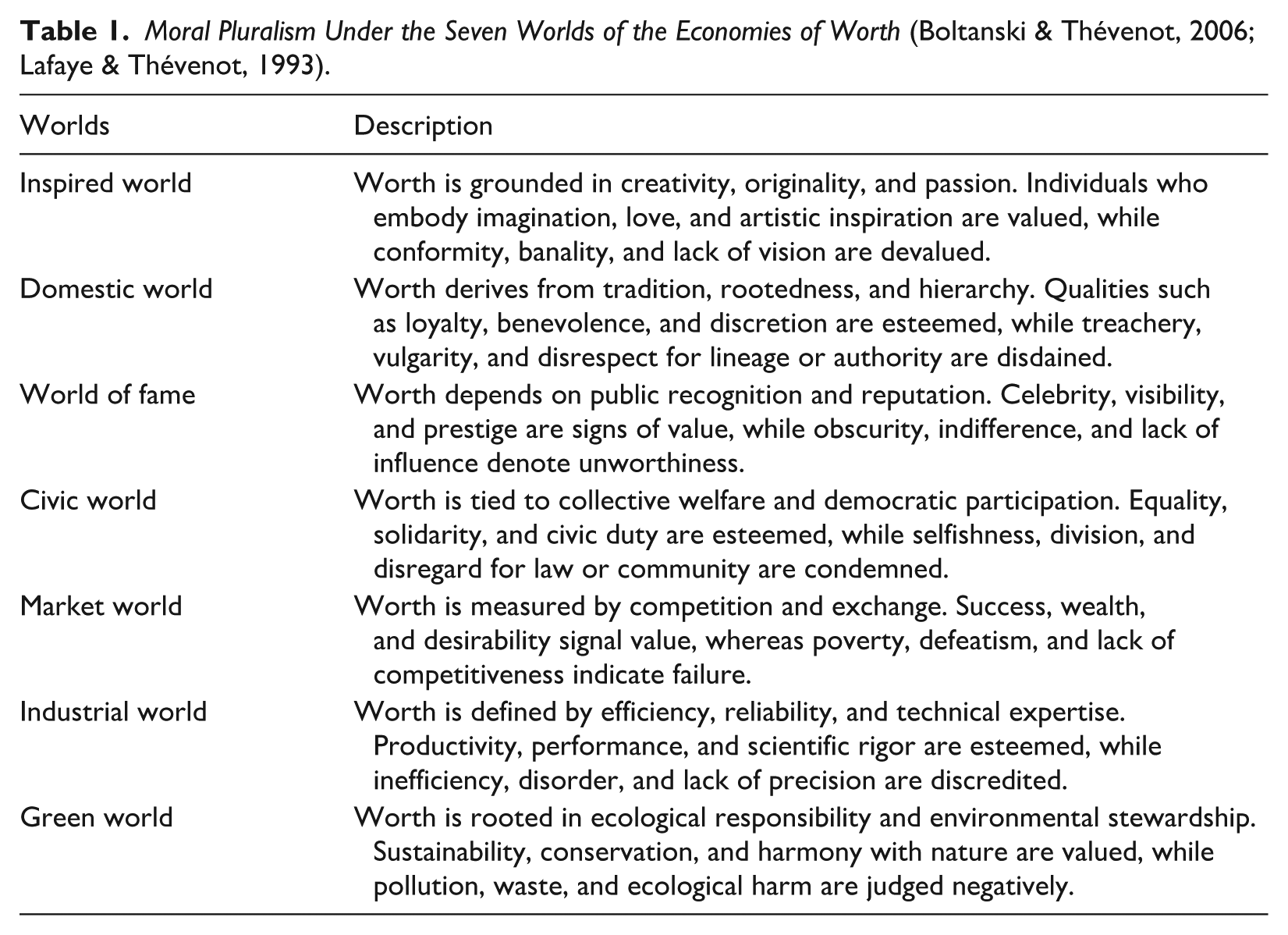
In this article, we use the term moral narratives to describe the discursive configurations that emerge when actors invoke different worlds of worth to define what is legitimate, fair, or desirable in a gentrifying neighborhood. While some worlds may not appear inherently moral in a conventional sense, for example, the industrial world, the EW framework treats them as moral because they can be mobilized to justify positions by appealing to a shared conception of the common good. For instance, arguments that emphasize the efficiency of new housing developments as a way to reduce energy consumption frame industrial values as contributions to collective well-being, particularly when combined with the green world to construct a moral narrative in which modern, energy-efficient condominiums are beneficial for all.
More broadly, in the EW framework, all worlds are considered moral because each is anchored in a conception of the common good, whether expressed through equality, family obligation, efficiency, competition, or ecological responsibility. This broader understanding means that morality is not restricted to rights-based claims but also emerges when diverse values are framed as moral imperatives in contested contexts. Our analysis builds on this perspective by examining how such narratives are mobilized in gentrification debates, revealing how different values are elevated, challenged, or silenced in the struggle over legitimacy.
Earlier applications of EW illustrate its value in analyzing public controversies as they unfold in the media. For example, Mercier-Roy and Mailhot (2019) demonstrate how media debates surrounding Uber’s arrival in Montréal were framed through competing worlds: Supporters emphasized innovation and efficiency, while opponents appealed to values of fairness, regulation, and livelihoods. Similarly, Patriotta et al. (2011) analyze public discourse following a nuclear incident in Germany, showing how industry representatives highlighted reliability, whereas activists foregrounded sustainability and accountability. These studies demonstrate how EW can uncover justificatory struggles in which legitimacy is actively contested, offering a strong precedent for its application to urban transformations.
Building on this foundation, Cloutier et al. (2025) extended the EW framework by introducing the concept of moral work, which refers to the ongoing processes through which norms, values, and evaluative criteria are reshaped in contested contexts. This concept is particularly useful for examining two dimensions: the production of voice and silence and the dynamics of inclusion and exclusion (Cloutier et al., 2025). By tracing which worlds are mobilized, and which are left aside, it becomes possible to see how some perspectives come to be legitimized while others are marginalized in public discourse. Building on this tradition, we apply EW to the contested moral terrain of gentrification. This approach allows us to examine how different actors mobilize justificatory repertoires to legitimize or resist neighborhood change, and how these repertoires shape the symbolic inclusion or exclusion of social groups in public debates about gentrification.
Method
To analyze the moral justifications mobilized in the context of gentrification, we employ the EW framework as our primary analytical lens. This framework allows us to examine how actors draw upon competing moral values (worlds) to legitimize or contest gentrification. Our empirical focus is the Hochelaga-Maisonneuve neighborhood in Montreal, a historically working-class area that has, in recent years, become a site of intensified gentrification. Once marked by economic decline and social stigmatization (Ghaffari, 2020), Hochelaga-Maisonneuve has increasingly attracted private developers and middle-class newcomers, particularly through the construction of condominiums and the transformation of its urban fabric. This evolving landscape presents a fertile ground for analyzing how diverse actors, residents, developers, and activists articulate, justify, or challenge the moral legitimacy of gentrification and its associated consequences.
Our analysis draws on representations of gentrification in the media. Media served as a key source in this study due to its role in shaping public perceptions of gentrification and its capacity to foster either moral sensitivity or detachment in response to the process (Le Grand, 2023). While previous research has shown that media often operates in favor of the middle class, promoting development while reinforcing the marginalization associated with gentrification (Gin & Taylor, 2010; Le Grand, 2023; Lewis, 2000), it nevertheless remains a crucial site where moral justifications are publicly articulated, particularly by and for newcomers. Accordingly, our analysis does not rely on direct consultation with individual actors regarding their personal beliefs or intentions. Instead, it focuses on how these actors publicly represent gentrification. To this end, we examine media discourse as a means of capturing the moral justifications surrounding gentrification in the context of Hochelaga-Maisonneuve.
We collected publicly available materials from a range of public sources, including newspaper articles, promotional content from real estate developers, and informational pamphlets produced by antigentrification organizations resulting in a total of 31 sources (newspaper articles and Facebook posts) analyzed. Data from mass media sourced from both anglophone and francophone outlets such as CBC, Le Devoir, The Gazette, The Link, Global News, and La Presse spanning the past 7 years, a period during which gentrification emerged as a prominent issue in this neighborhood. To further understand grassroots perspectives, we examined social media content, particularly from anti-eviction and antigentrification groups, focusing on posts and campaigns that referenced keywords such as “gentrification” and “Hochelaga.”
The identification of developers followed a slightly different approach. Because major condominium projects are often heavily marketed, we were able to locate key actors through targeted keyword searches, with developers frequently appearing in sponsored advertisements linked to housing-related queries in the area since 2018. This strategy allowed us to collect relevant advertising materials and public communications from the most prominent real estate actors operating in the neighborhood. We looked at eight different condo projects within the neighborhood.
We focused our analysis on the narratives articulated by real estate developers and community organizations, as these represent distinct yet complementary vantage points for examining the moral work embedded in the dynamics of gentrification. Promotional materials and advertisements produced by developers serve as valuable proxies for understanding how moral justifications are constructed to appeal to prospective newcomers. These narratives often frame gentrification in positive term, emphasizing renewal, opportunity, and community, thereby revealing the moral registers invoked to legitimize it. Conversely, the discourses advanced by community and antigentrification groups offer critical insights into the lived experiences and ethical concerns of long-standing, often vulnerable, residents. These narratives challenge dominant framings and highlight the social costs of displacement and exclusion. Together, these two discursive arenas provide an empirical basis for analyzing how different actors engage in moral work, both to normalize and to contest the processes and consequences of gentrification.
We employed a theory-driven coding strategy grounded in the EW framework to analyze the materials produced by both real estate developers and antigentrification groups. We systematically identified the justificatory “worlds” invoked by actors across this moral and political divide, paying particular attention to how distinct moral grammars were mobilized to legitimize or contest urban redevelopment initiatives. This approach enabled us to uncover the normative logics underlying each discourse and to evaluate the competing value systems that were used to support or resist gentrification. Through this analysis, we traced how actors engaged in moral work to frame their positions, assert legitimacy, and shape the broader discursive landscape surrounding gentrification. In particular, we examined how justificatory practices contributed to the dynamics of voice and silence, identifying who was authorized to speak, whose experiences were validated, and who remained absent or marginalized in public debate.
From this process, we derived two overarching types of moral narratives. Constructive narratives articulated competing visions of what a morally desirable or “ideal” neighborhood should look like, as expressed by both developers and community actors. In contrast, oppositional narratives were oriented around rejecting particular developments, actors, or logics, and thus focused on what the neighborhood ought not to become. These narrative categories allowed us to illuminate how moral work can either sustain dominant urban imaginaries or offer counter-hegemonic alternatives ultimately influencing those voices and values that are legitimized, contested, or silenced in the moral politics of gentrification.
Research Context: The Transformation of Hochelaga-Maisonneuve
Hochelaga-Maisonneuve has historically been a working-class neighborhood in Montreal, shaped by cycles of industrial expansion and decline. Beginning in the 1960s, the area experienced profound socioeconomic disruption due to deindustrialization, followed in the 1970s by the displacement of Old Port activities and the demolition of approximately 1,200 housing units to accommodate highway construction. These changes led to a dramatic population decline, approximately 42% between 1961 and 1986, and contributed to the neighborhood’s growing stigmatization, as it became increasingly associated with poverty, drug use, and prostitution (Rose et al., 2013). In response to mounting concerns over urban decay, two major provincial initiatives were launched: An antipoverty program and a revitalization plan aimed at restoring socioeconomic balance (Rose et al., 2013).
During the 1990s, a local “urban planning collective” began advocating for neighborhood renewal, focusing on rental housing rehabilitation and infrastructural improvements. These efforts sought to reposition the district’s public image and attract more economically diverse residents. By the early 2000s, Hochelaga-Maisonneuve began to appeal to younger, university-educated newcomers, contributing to its emerging profile as a site of urban desirability (Rose et al., 2013). The trajectory of Hochelaga underscores how public-sector social mixing policies, originally designed to support moderate-income diversity and urban revitalization, played an instrumental role in paving the way for gentrification. Initially welcomed by some community actors as a tool for rebalancing, these policies ultimately facilitated the influx of higher-income residents. Over time, this process exceeded initial intentions and eluded regulatory control, transforming the neighborhood’s class composition and spatial dynamics (Germain & Rose, 2010).
Hochelaga’s advantageous location, featuring access to public transportation, proximity to downtown Montreal, and adjacency to one of the city’s major green spaces, has further intensified its appeal to newcomers. In recent years, the neighborhood has experienced a marked increase in real estate development, particularly in the form of condominium construction. This wave of gentrification has generated significant tensions, drawing public attention from local media outlets and sparking debate within the Mercier–Hochelaga-Maisonneuve borough council (Ghaffari, 2020). As housing costs have risen and evictions have multiplied, community resistance has grown more vocal, with numerous anti-eviction demonstrations led by grassroots organizations and long-term residents seeking to defend their place in the neighborhood.
The Competing Moral Visions: Constructive and Oppositional Frames
We identified four core moral narratives articulated by key stakeholders involved in the gentrification of Hochelaga-Maisonneuve, each offering distinct ways of framing the phenomenon through both constructive and oppositional lenses. These stakeholders can be grouped into two broadly contrasting factions: on one hand, community groups and activists and, on the other hand, real estate promoters. The narratives emerging from each group reveal how actors mobilize competing moral logics to either legitimize or contest gentrification, while also projecting normative visions of what Hochelaga-Maisonneuve ought to become.
The constructive narratives reflect idealized visions of the neighborhood’s future, rooted in specific moral justifications and values. In contrast, the oppositional narratives articulate critiques of alternative visions, often rejecting specific actors, logics, or trajectories of development. These narrative forms not only frame the moral legitimacy of different claims but also shape inclusion and exclusion within broader public debates.
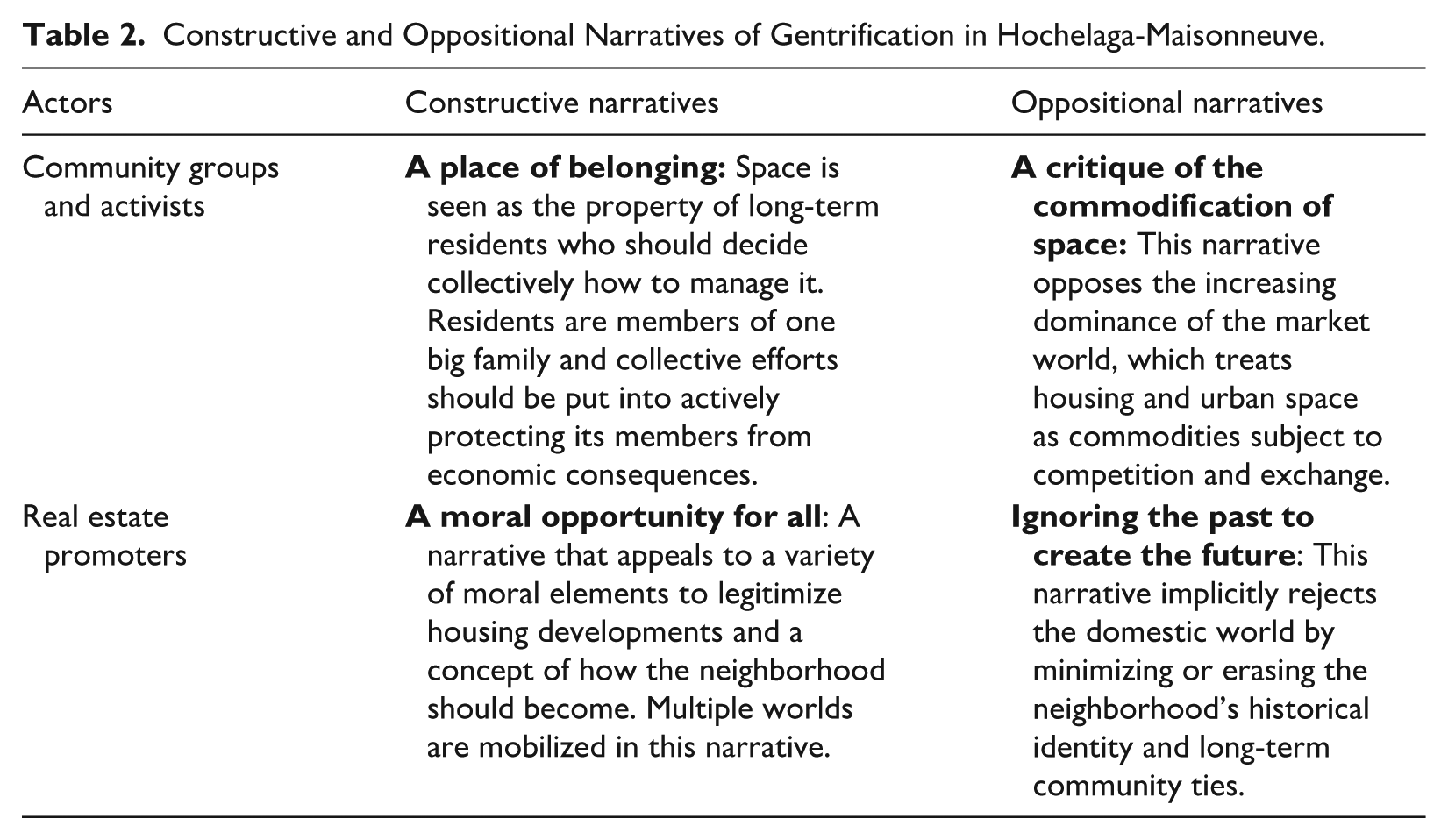
Table 2 presents an overview of these four narratives, highlighting the key areas of focus, the dominant moral justifications employed, and the specific EW worlds they draw upon or resist. The remainder of this section offers a detailed examination of each narrative and the moral assumptions that underpin them.
Constructive and Oppositional Narratives of Gentrification in Hochelaga-Maisonneuve.
For the Community: A Place of Belonging
This is a popular neighbourhood, it’s a working-class neighbourhood, it’s a neighbourhood where people from all over different places, people on welfare, and they deserve to stay here.—Resident quoted in GlobalNews
1
This quote exemplifies a dominant moral narrative articulated in a newspaper by community groups and activist organizations in Hochelaga-Maisonneuve, one that centers on lived experiences of displacement, housing precarity, and the erosion of long-standing community ties. At the heart of this narrative is a profound sense of loss: the disappearance of familiar places, the weakening of collective values, and the disintegration of a historically rooted, working-class community. As redevelopment accelerates, residents describe a neighborhood that increasingly feels unfamiliar and exclusionary. 2 Long-standing businesses are replaced by upscale ventures, and long-term residents are pushed out, leaving many feeling disconnected from their neighborhood’s evolving identity.
This narrative draws on both the civic and domestic “worlds of worth.” From the civic perspective, it emphasizes collective rights, equality, and democratic participation in decisions about the neighborhood’s future. From the domestic perspective, it invokes tradition, rootedness, and a moral obligation to protect community members as one would protect family. Together, these frameworks underpin a vision of Hochelaga-Maisonneuve as a place of belonging, where space is not simply a market commodity but a shared good, one that ought to be governed collectively by those who have long lived there. Within these dynamics, roots to the neighborhood, a sense of belonging, and community became central themes in defending residents’ right to remain. Hochelaga-Maisonneuve has become a place deeply rooted in a strong sense of community, a sentiment reflected by a local baker, who has been running her business since 2007 and expressed in one of the city’s main newspapers her hope that gentrification will not disrupt this communal fabric: There is something true here. I’ve thought about buying a house elsewhere, but I just can’t. I like the mix of people. There’s something beautiful in this neighbourhood that you just don’t find in more homogeneous neighbourhoods. For sure there’s gentrification happening, and I just hope it isn’t as savage as it’s been in other areas.—Resident quoted in The Gazette
3
The critique of gentrification within this narrative targets not only structural outcomes such as eviction and rent hikes but also its broader impact on the community. Community groups and residents who fear the upcoming changes often portray promoters as individualistic and self-serving, contrasting their market-driven logic with values of care, solidarity, and social justice. As one activist put it, “women are suffering from more consequences from gentrification because oppression dynamics are amplified by the phenomenon.” 4 Such critiques aim to delegitimize the moral standing of promoters within the civic world by highlighting their failure to uphold principles of equity and democratic accountability.
Importantly, the place of belonging narrative offers a constructive moral vision: A neighborhood imagined as a close-knit community where residents act as stewards of place and protectors of one another. It articulates a claim to space grounded in social ties and collective memory, positioning revitalization projects as threats to these moral commitments. In this view, long-term residents are not merely victims of urban change, but rightful custodians of the neighborhood, people who should have a say in its future. Thus, the narrative functions as both a critique of exclusion and a defense of an inclusive, community-oriented urban ideal.
For the Community: A Critique of the Commodification of Space
Another predominant moral narrative advanced by community groups and activists in Hochelaga-Maisonneuve centers on a strong opposition to the commodification of urban space. This narrative directly challenges the growing dominance of the market world, one of the justificatory logics identified in the EW framework, where value is determined by competition, financial capital, and market desirability. Within this world, worthiness is conferred upon actors who succeed economically, while unworthiness is associated with poverty and exclusion. For many long-term residents and community advocates, this logic poses a profound threat to the collective life of the neighborhood.
Hochelaga has been a modest, working-class neighborhood for a long time, but Hochelaga residents are being pushed out of their homes as rents rise to unaffordable levels.
5
This quote exemplifies the narrative’s central concern: that housing and place are being reduced to economic goods available only to those with greater purchasing power. Rent hikes and the proliferation of upscale businesses are seen not only as economic threats but also as morally unjust processes that displace those who have the deepest historical and social ties to the neighborhood. The influx of higher-income residents is framed not as renewal, but as replacement, a process that erases both community identity and economic accessibility.
Consequences of gentrification on the neighborhood are dramatic and violent, said one organizer of [. . .], an organization opposing rent hikes. There are fewer and less affordable places, and the remaining ones are very expensive.
Protests and public demonstrations serve as the primary modes through which this oppositional moral stance is expressed. These events not only contest individual development projects but also function as critiques of the broader moral framework in which such projects are justified. Community members invoke the civic and domestic worlds to counterbalance the market logic, emphasizing the collective right to housing, the preservation of intergenerational ties, and the social costs of unchecked urban transformation.
At the heart of this narrative is a rejection of the idea that access to housing should be determined by financial means alone. Community groups articulate an alternative moral economy, one in which housing is treated as a right, not a commodity, and where neighborhoods are valued for their capacity to support diverse and cohesive communities rather than for their market potential. In this view, gentrification is not only merely a process of spatial change but also a moral conflict over what kind of city, and whose city, Hochelaga-Maisonneuve is becoming.
For the Real Estate Promoters: A Moral Opportunity for All
In contrast to the oppositional narratives of community groups, the moral discourse promoted by real estate developers tends to emphasize opportunity, vitality, and enhanced quality of life. Our analysis of promotional materials from a dozen active developers in Hochelaga-Maisonneuve reveals a strategic mobilization of multiple moral worlds, often combined within the same narrative. While this multiplicity of justifications may appear incoherent at times, it reflects an intentional effort to confer moral legitimacy upon redevelopment projects and to appeal to diverse consumer values.
Across these materials, we observed frequent appeals to at least three or more worlds of worth from the EW framework, including the industrial, green, inspirational, civic, and market worlds. For example, one promotional advertisement blended the industrial world (efficiency and comfort), the green world (proximity to nature), and the inspirational world (dynamic lifestyle and aesthetic experience): Enjoy life in the comfort of your new home in the heart of the dynamic Olympic district. The perfect balance between comfort, pleasure, and nature, Designed with a focus on well-being and community.
6
While such advertisements may be dismissed as marketing rhetoric, their invocation of multiple notions of the common good reveals an underlying justificatory logic. The apartment is not merely a place to live, it is framed as a site of well-being (industrial), ecological harmony (green), and aspirational lifestyle (inspirational). These overlapping moral references seek to portray housing developments as socially desirable and ethically grounded. In some cases, developers extend this narrative beyond individual units to reimagine the neighborhood itself. One advertisement for the broader Hochelaga-Maisonneuve area combines moral appeals across several worlds to reframe gentrification as an inclusive and future-oriented transformation: More than ever, it is important to have a place to meet, work, and socialize before going home. Our extraordinary common areas have been designed to offer you an incomparable quality of life and simplify your day-to-day. You no longer need to take the car. [it] allows you to enjoy life without constraints, without stress and above all without compromise. A place to live with an active and urban style, while being close to large verdant outdoor parks.
7
This narrative constructs the neighborhood as a moral opportunity for all, emphasizing urban dynamism (inspirational), community well-being (civic), lifestyle convenience (industrial), and ecological awareness (green). While these narratives are outwardly inclusive and future-focused, they are notably silent on the issues of displacement, affordability, and long-standing community presence, thereby reconfiguring the moral landscape to prioritize the imagined needs and desires of incoming residents.
Developers in Hochelaga-Maisonneuve do more than simply advertise housing, they work to construct a new moral narrative for the neighborhood itself. In this reframing, Hochelaga is no longer portrayed as stigmatized or in decline, but rather as a space of aspiration, efficiency, and sustainability. The neighborhood becomes not just a place to live, but a destination that embodies multiple moral values: It is entertaining and inspiring (inspirational world), efficiently connected to the city (industrial world), and in harmony with nature (green world). This multiworld narrative serves to legitimate redevelopment by associating it with higher moral purposes and distancing it from the neighborhood’s historically marginalized image.
Promoters further reinforce their legitimacy by emphasizing features that align with contemporary values of sustainability, mobility, and modern urban living. Many recent development projects place particular focus on active and environmentally responsible transportation: Located strategically from downtown Montréal where you can go easily on the bike, by bus, metro, and by car.
8
Here, the promotional narrative blends the green world, through its emphasis on sustainable transit options, with the industrial world’s logic of efficiency and accessibility. The convergence of these two worlds constructs a compromise in which environmental responsibility is not a trade-off but an enhancement of everyday urban functionality. This fusion is increasingly present in the rhetoric of promoters, allowing them to moralize development by appealing to a public imaginary that values both ecological consciousness and convenience.
This emphasis on environmental legitimacy is not isolated. For instance, the promoter of a US$350 million project announced in October 2020 publicly underscored the project’s commitment to sustainable development. In an article published in one of Quebec’s most widely read newspapers, 9 the development was described as incorporating green roofs with gardens and beehives, extensive tree planting, dedicated parking for electric vehicles, and a conversion of half the purchased land into a designated green zone.
Through such representations, developers seek to anchor their projects in the green world as a source of moral authority, presenting themselves not only as builders of housing but also as stewards of ecological progress. In doing so, they work to reshape Hochelaga-Maisonneuve’s identity around future-oriented, morally elevated values, aligning their private interests with broader public goods.
For the Real Estate Promoters: Ignoring the Past to Create the Future
While developers in Hochelaga-Maisonneuve often draw upon multiple moral worlds to construct narratives of opportunity and revitalization, they also engage in a subtler but significant oppositional stance, one that targets the domestic world and, more specifically, the neighborhood’s historical identity and traditions. Rather than building on Hochelaga’s long-standing social and cultural legacy, many developers adopt a tabula rasa approach, portraying the area as a clean slate ready for reinvention. This rhetorical strategy seeks to dissociate the neighborhood from its working-class roots and the social stigma that has historically accompanied it. This is evident in promotional language that emphasizes ecological assets and emerging desirability, while making no reference to the neighborhood’s history: An emerging neighborhood where we can find a variety of parks, botanical garden, and the Biodome.
10
In this case, the developer appeals to the green world by invoking nature and proximity to ecological landmarks, while simultaneously activating the market world through terms like “emerging,” a designation that signals opportunity, investment potential, and transformation. What is conspicuously absent, however, is any recognition of the neighborhood’s social history or long-term residents. The portrayal of Hochelaga as “emerging” implicitly negates its past, replacing it with a future-oriented identity that is more palatable to middle-class newcomers and investors. This future-facing narrative is further reinforced by marketing slogans such as: The future is in the East!
11
This statement, displayed prominently on the website of a local developer, explicitly positions Hochelaga-Maisonneuve as a site of forward-looking urban promise, while leaving behind the historical associations that have shaped its identity. The past is not only overlooked but strategically erased in favor of a moral narrative aligned with modernity, renewal, and upward mobility.
Another symbolic erasure is evident in the naming practices adopted by many developers. While the official name of the borough, Hochelaga-Maisonneuve, references both an Indigenous settlement and the French colonial founder of Montreal, numerous real estate projects refer to the area simply as HoMa. This abbreviation, often criticized by community members and activists, is perceived not only as a marketing tactic but also as a form of cultural sanitization. The name HoMa evokes associations with trendy urban districts like SoHo in New York City, positioning the neighborhood as part of a global urban aesthetic while severing ties with its local, historical, and working-class identity. In moral terms, this narrative reflects an implicit rejection of the domestic world, a world rooted in continuity, familiarity, tradition, and historical belonging. By sidelining these values, developers create space for a future-oriented vision aligned with market, green, and inspirational worlds, in which Hochelaga is imagined anew. However, this reimagining comes at the cost of historical recognition and communal memory, deepening the sense of exclusion felt by long-standing residents.
Mapping Moral Tensions: Moral Struggles Over the Right to the City
This study has shown that justifications for gentrification are shaped through the strategic mobilization of multiple, and at times contradictory, notions of the common good, or what Boltanski and Thévenot (2006) conceptualize as “worlds of worth.” Rather than relying solely on market logics, developers frequently invoke civic, green, industrial, and inspirational worlds to construct moral narratives that reframe gentrification as revitalization. We examined the representation of these layered appeals in the media, which contribute to legitimizing redevelopment efforts while obscuring their social consequences, particularly the displacement of marginalized residents. Our analysis reveals that the moral landscape of gentrification cannot be reduced to a binary conflict between market and civic values. Instead, developers construct complex justificatory assemblages that diffuse critique and mitigate moral discomfort among prospective residents. By contrast, community groups challenge these narratives through oppositional moral work grounded in domestic and civic worlds, articulating alternative visions of justice, rootedness, and belonging. Together, these findings underscore the plural and contested nature of mediated and public moral legitimacy in the case of gentrification.
We approached gentrification as a field of moral work, the effort actors undertake to reconfigure norms, values, and evaluative criteria in contested contexts (Cloutier et al., 2025). The narratives analyzed in this study reveal how stakeholders engage in such work by drawing on different worlds of worth to legitimize or contest gentrification. To synthesize these findings, Table 3 maps the points of convergence and divergence between community groups and real estate promoters. Convergence occurs when actors invoke the same moral world but disagree on the evaluation of worthiness within it. Divergence, by contrast, signals the rejection of certain worlds altogether, revealing deeper normative conflicts over what should count as a legitimate urban change. This mapping illustrates how moral work is not only about internal justification but also about the inclusion and exclusion of competing visions of the common good.
Points of Moral Convergence and Divergence Between Community Groups and Promoters.
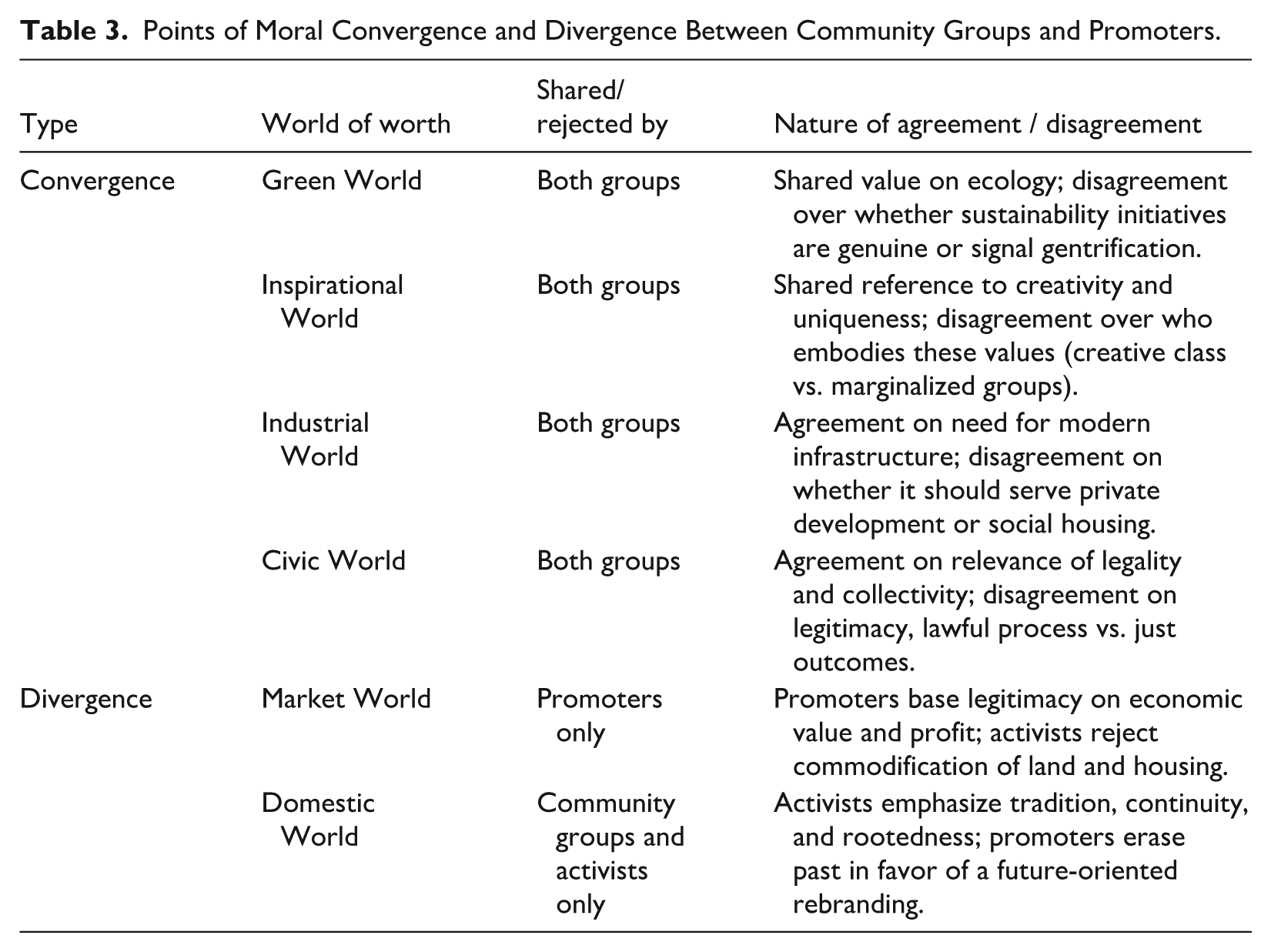
Building on this, our analysis demonstrates that the EW framework offers a lens to unpack the contested moral terrain of gentrification. While previous research has illuminated the ethical tensions faced by gentrifiers (Frank & Weck, 2018), we show how public justifications, particularly those advanced by developers, frequently appropriate the very moral registers invoked by community groups, such as the civic or green worlds. These appropriations often serve to legitimize redevelopment efforts while neutralizing or displacing concerns about community harm and exclusion. By tracing how both convergence and divergence occur across these moral worlds, we propose a more refined understanding of the strategic and situated nature of moral work. In doing so, we shed light on how public legitimacy is produced, not through appeals to a single moral order, but through the careful navigation, and at times, co-optation, of plural and contested notions of the common good, and how these dynamics are morally negotiated.
By recognizing the overlapping and contested moral frameworks that underpin gentrification, we can begin to expose the blind spots and silences within its dominant discourse. This awareness can inform the development of more effective counter-narratives, ones that challenge prevailing justifications on their own moral terms. Ultimately, this research calls for a deeper engagement with the moral terrain of gentrification.
While the socioeconomic causes of gentrification, along with its diverse forms and counter-practices, have been extensively examined (see Maharawal & McElroy, 2018; Redfern, 2003; Shaw, 2008), it is equally important to scrutinize the moralization process embedded within these processes (Le Grand, 2023). Gentrification does not occur in a vacuum; it can be accelerated by population movements driven by preferences, aspirations, and perceived moral or lifestyle values. As such, gentrification must be understood in all its complexities, including the geographically situated moral labor that shapes how places are evaluated, inhabited, and contested. Through this lens, we argue that urban spaces should not be viewed merely as passive backdrops for social interaction or economic restructuring, but as active terrains where moral claims are made, justified, and contested. These claims often revolve around notions of justice, legitimacy, and belonging and may function to either empower or marginalize specific groups, even as the harms of gentrification are frequently obscured by moral justifications rooted in values such as sustainability, efficiency, or communal betterment. These legitimizing discourses can mask displacement and inequality, presenting them as unfortunate but necessary side effects of progress. As such, they must be critically exposed, debated, and resisted.
Footnotes

Funding
The authors received no financial support for the research, authorship, and/or publication of this article.
Declaration of Conflicting Interests
The authors declared no potential conflicts of interest with respect to the research, authorship, and/or publication of this article.