




Abstract
Squats are increasingly studied as spaces of autonomy and horizontality, yet scholarship rarely examines how these qualities are maintained through the space’s daily repair processes. Based on participant observation, this study identifies internal autonomy in a squat by focusing on the opening and closing of spatial formation in the squat of Takayama Architecture Seminar School (TASS) in Japan. Through a trial-and-error process of transforming the space in response to the needs of the participants, activists continually tried to determine how to ensure psychological security and create nonhierarchical relationships in their squat. By theorizing opening/closing as an iterative practice of positioning, removing, and dispersing objects, the study shows that squatters’ autonomy is not fixed at the moment of spatial design but is continually produced through everyday acts of repair. This insight shows that repair in squats provides a space for participants to care for themselves, others, and the community.
This article studies how the repair of squats contributes to the creation of autonomy among participants in a community. Previous research on squats often focused on spatial creation, because the participants in squat spaces regard the creation of infrastructure and the division of space in certain areas as establishing autonomy in the squat itself. By setting up infrastructure and architecture, they have ensured horizontal relationships between participants and the inclusion of diverse people while at the same time guaranteeing participants’ safety. Squats are experiments in which members who happen to be present at a time and place interact with one another to create a form of autonomy (Vasudevan, 2015; Creasap, 2022; de Moor, 2016; Jaureguiberry-Mondion, 2023; Katrini, 2020; Lyra, 2023; M. A. Martínez, 2019).
This research aims to clarify how squatter activists “open” and “close” spaces to ensure the inclusion and psychological safety of diverse participants. Moreover, it examines the repair involved in continual spatial formation because repair activities reflect the needs of the people who live in the community. Repair activities are a community-building practice grounded in their accumulated experience and collective knowledge, and they also serve to provide care for the residents (Aslam, 2023; Graham & Thrift, 2007; Lloveras et al., 2025; F. Martinez, 2022; McDuie-Ra & Campbell, 2023; Perzanowski, 2022).
This article presents observations on grassroots autonomy in squats based on research at the Takayama Architecture Seminar School (TASS) squat in Japan. In the TASS squat, repairing the infrastructure proved important in creating autonomy among participants. Repair balanced openness and closedness to create horizontality, solidarity, and inclusiveness among participants.
These iterative acts of repair show that autonomy does not end when a squat’s spatial formation is “agreed upon” but keeps evolving through the trial and error of everyday space re-creation. Moreover, the repair significantly improves care in the community, fostering people’s communication, mutual assistance, and vibrant social relationships. This insight broadens squat research with a focus on care by studying repair.
Literature Review
This section reviews two types of previous research that are relevant to the research interest of this study. The first type of research focuses on spatial formation in squatting, while the second type focuses on repairs.
Autonomy of Spaces: The Opening of Spaces for Inclusion, the Closing of Spaces for Security
Autonomous politics are strongly connected to horizontality between participants in squats. Maeckelbergh defines horizontality as “less hierarchical, networked relationships of decision making and organizing structures that actively attempt to limit power inequalities” (Maeckelbergh, 2009, p. 68). To create horizontality is a challenge for intentionally democratic and autonomous politics.
Researchers who have studied squats have observed activists collectively forming space, architecture, and infrastructure based on their horizontal ethos (Arruda, 2017; Brown, 2007; Creasap, 2022; Frenzel & Fraeser, 2023; Jaureguiberry-Mondion, 2023; Katrini, 2020; Lyra, 2023; M. A. Martínez, 2019; Vasudevan, 2015). Participants realize their horizontality in their space creation in squats.
Squatters intentionally create an atmosphere that encourages horizontal participation in their squats. Communal or collective kitchens, toilets, and safer or safe spaces are claimed to represent the role of the infrastructure that supports horizontality in squats (Brown, 2007; Canedo & Andrade, 2021; Cattaneo, 2014; Creasap, 2022; de Moor, 2016; Kanellopoulou & Ntounis, 2024; Katrini, 2020; Kiddey, 2018; M. A. Martínez, 2019; Vasudevan, 2015; Wall, 2017).
First, at many squats, activists create an open communal space by setting up a communal or collective kitchen accessible to diverse participants, not only residents but also, in some cases, people living near squats. Such communal kitchens provide food, a cup of coffee, shelter, and care and offer a place for homeless people to be (Brown, 2007; Creasap, 2022; Katrini, 2020; Kiddey, 2018; Reinecke, 2018; Ruiz Cayuela & García-Lamarca, 2023).
In a collective kitchen, refugees and immigrants can express their identity by cooking the cuisine of their homeland and sharing it with others (Katrini, 2020, p. 43). Furthermore, regardless of gender or experience level, everyone can contribute to community care by cooking (Kiddey, 2018, pp. 612–613; Stavrides, 2022, p. 30). The kitchen is a space that exists between openness and closure. It may be open to the wider local community, or it may be strictly managed as a private space (de Moor, 2016, p. 416).
Communal kitchens encourage diverse participants to engage in cooking and serving meals, washing dishes, and cleaning sinks, but sometimes the engagement is biased toward certain types of participants (e.g., female or other minorities) (Katrini, 2020, p. 43; Kouki & Chatzidakis, 2021, p. 886). Therefore, activists agitate for the kitchen space to be open for everyone (Creasap, 2022, p. 69; Kiddey, 2018, p. 610).
Second, toilets are commonly seen as part of the essential infrastructure of squats and are an important space with respect to horizontality. Squats are often used to provide housing for people experiencing homelessness or living in poverty. Installing enough clean toilets and bathrooms in squats means welcoming such people and providing dignity for them and all other users (Katrini, 2020, p. 41; Wall, 2017, p. 85).
On the contrary, participants in squats have an eye on security and privacy in the toilet and bathroom. These spaces can become factors of gender inequality and sexual violence; therefore, they must in some cases be kept closed off to protect people from such harm (de Moor, 2016; Lyra, 2023).
A recurring feature in squats is the construction or repurposing of physical barriers to defend places and provide security for participants. Some researchers contend that deliberately closing or restricting the spaces of a squat can preserve participants’ horizontal relationships while enhancing the physical and emotional safety of minorities (Brown, 2007; Creasap, 2022; de Moor, 2016; Katrini, 2020; M. A. Martínez, 2019; Wall, 2017).
Issues of safety, discrimination, and gender add another layer to the opening or closing of spaces. In squat communities, it is common to create “safer space” policies, which forbid harassment or discrimination and aim to make the squat welcoming for marginalized groups. Safer spaces are deliberate spatial closures. In autonomous squat spaces, participants are encouraged to create women-only spaces and spaces for marginalized people such as immigrants, refugees, queers, and children (Brown, 2007; Creasap, 2022; Grohmann, 2018; Katrini, 2020; M. A. Martínez, 2019; Wall, 2017).
Alternatively, even without explicitly naming it as a safe space, restricting access for specific individuals or strengthening external security would also serve to enhance the space’s closed nature and thereby ensure safety. For example, some squats implement security measures or admission permit system to protect marginalized people from external attacks or unexpectedly large crowds (de Moor, 2016, pp. 419–420; Katrini, 2020, p. 45).
Conversely, some squats are organized on the principle that opening up spaces fosters connections and trust among residents. These squats deliberately keep all rooms accessible and encourage participants to have responsibility for the squat place as a whole (Jaureguiberry-Mondion, 2023, p. 12).
The formation of horizontal autonomy through the opening and closing of spaces is a continuous process. For example, spaces that were once open may now be closed for security reasons (de Moor, 2016, p. 416), while spaces that were previously used by one person only may be modified to become more open (Creasap, 2022, pp. 68–69). On each occasion, participants rearrange furniture, break down walls, and use other materials. This study focuses on participants’ trial and error with regard to autonomy space. The study further refines the findings of previous studies by examining the practices of “opening” and “closing” and repair activity.
Repair, Care, and Community
In this section, I review the literature on repair and make clear the implications of conducting a study about repair in squats. Repair is an activity based on the creativity of its practitioners, developed through trial and error. It is a valid approach for examining autonomy, which emerges through adjusting the opening and closing of the autonomy spaces. Previous studies have clearly distinguished between repair, maintenance, and restoration. They define repair as the incorporation of new functionality by the practitioner, in contrast to maintenance, which is a preventive action. Restoration means that the original function is returned unchanged (Graham & Thrift, 2007, p. 6; Perzanowski, 2022, pp. 14–15).
Previous research on repair has considered the function of repair for autonomy in squats (Aslam, 2023; Graham & Thrift, 2007; Lloveras et al., 2025; McDuie-Ra & Campbell, 2023; Perzanowski, 2022). Repairing fosters care among those engaged in it and in their wider communities (Aslam, 2023, p. 5; F. Martinez, 2022, p. 20), counters corporate hegemony, promotes circular economies, and prevents environmental harm (Lloveras et al., 2025, p. 326; Perzanowski, 2022, pp. 11–13). In terms of effect for autonomy in the community building, repair connects materials and particular embodied thinking and practices that are ingrained in practitioners and shaped by historical and cultural circumstances (F. Martinez, 2022, pp. 20, 27).
The process of squatting typically begins with the occupation of vacant properties, followed by the repair and restoration of essential utilities such as water and electricity (Starecheski, 2016, p. 65; Vasudevan, 2015, p. 110). It may also be necessary to repair and reinforce buildings, replace windows, install new staircases and kitchens, and expand communal areas (Cattaneo & Gavaldà, 2010; Holm & Kuhn, 2011; Starecheski, 2016, 2019; Vasudevan, 2015).
Repairs are not carried out by just a few participants with specialized knowledge or skills but rather by participants with various different abilities and knowledge. Anyone can participate in repairing. Squat repairs are based on the collective knowledge of participants (Cattaneo, 2014, p. 148; M. A. Martínez, 2013, p. 5). Repairs within squats can be seen as a form of resistance against autocracy based on expertise.
Although squatting has numerous social and political implications, the care-based perspective offered by squatting studies provides important insights into the dynamics of social relations within squatting communities. When squatters try to repair infrastructure, they are not only reflecting each participant’s own needs but also caring for themselves and the whole community. For example, if one member has a disability, they might try to make the steps of a staircase as low as possible to accommodate them and might also cover exposed electrical wires to prevent accidents. Repairs prevent damage and enhance the quality and value of the squat (Herbert, 2018, p. 15; Pruijt, 2013, p. 28), contributing to care not only for the person who repairs the infrastructure but also for others and the community.
Case and Method
In this section, I present the squat of TASS as the subject of this research and describe the research methodology employed.
To research the creation of openness and closure in spatial formation as horizontal politics through repair in squats, this study focused on a squat developed by architect activists in Hida-Takayama, Japan. TASS has been running yearly since the 1970s. From an architectural perspective, the squat opposes advanced capitalism, mass consumption, and mass production by creating do-it-yourself (DIY) art and architecture, and this is reflected in the participants’ lifestyle (Zhao & Takayama Architectural School Editorial Office, 2004). As a “school” dedicated to teaching DIY craftsmanship, TASS has a principal, Keisuke Oka, who is a self-build architect activist, and some instructors. However, they try to foster horizontal relationships between instructors and students, enabling anyone to give presentations and talks.
This case was chosen because many of the activists involved in TASS were architects and were very conscious of the materials used in spatial design and the definition of spatial boundaries.
The TASS squat is held every year in the same accommodation and on the same site, and approximately 20–30 participants stay in one large old house for 10 days. They live together away from everyday life in urban and consumer societies and engage in creation alongside activities of their daily lives, such as eating and sleeping. Every morning, everyone cleans together, and the duty to prepare meals is decided in advance, shared out, and carried out daily. At other times, participants are free to concentrate on making things or reading books, but everyone must eat together. Meetings are held after breakfast, lunch, and dinner, and participants make collective decisions on a case-by-case basis as needed. For example, matters such as how to deal with noise from outdoor drinking parties that disturb the lives of nearby residents or how to repair broken tools and equipment are discussed as soon as they are raised. In the squat, problematic behavior and exclusionary attitudes may arise among the participants, who seek to resolve such issues through discussion and spatial reconfiguration.
The TASS squat area is mountainous and experiences heavy snowfall in the winter. The accommodation is a 100-year-old house that was no longer in use and vacant (Figure 1). As the accommodation is not used except for the squat, it becomes uninhabitable from autumn onwards, with drafts coming through the windows and snow piling up on the roof. Each year, the squat’s participants have the task of removing sand, dead leaves, birds, and insects that have entered the accommodation, cleaning the toilet, reinstalling the washing machine, and connecting the sink taps so that they are operational. In addition, because the participants are different each time, their methods of repair, maintenance, cleaning, and reconstruction are correspondingly different.
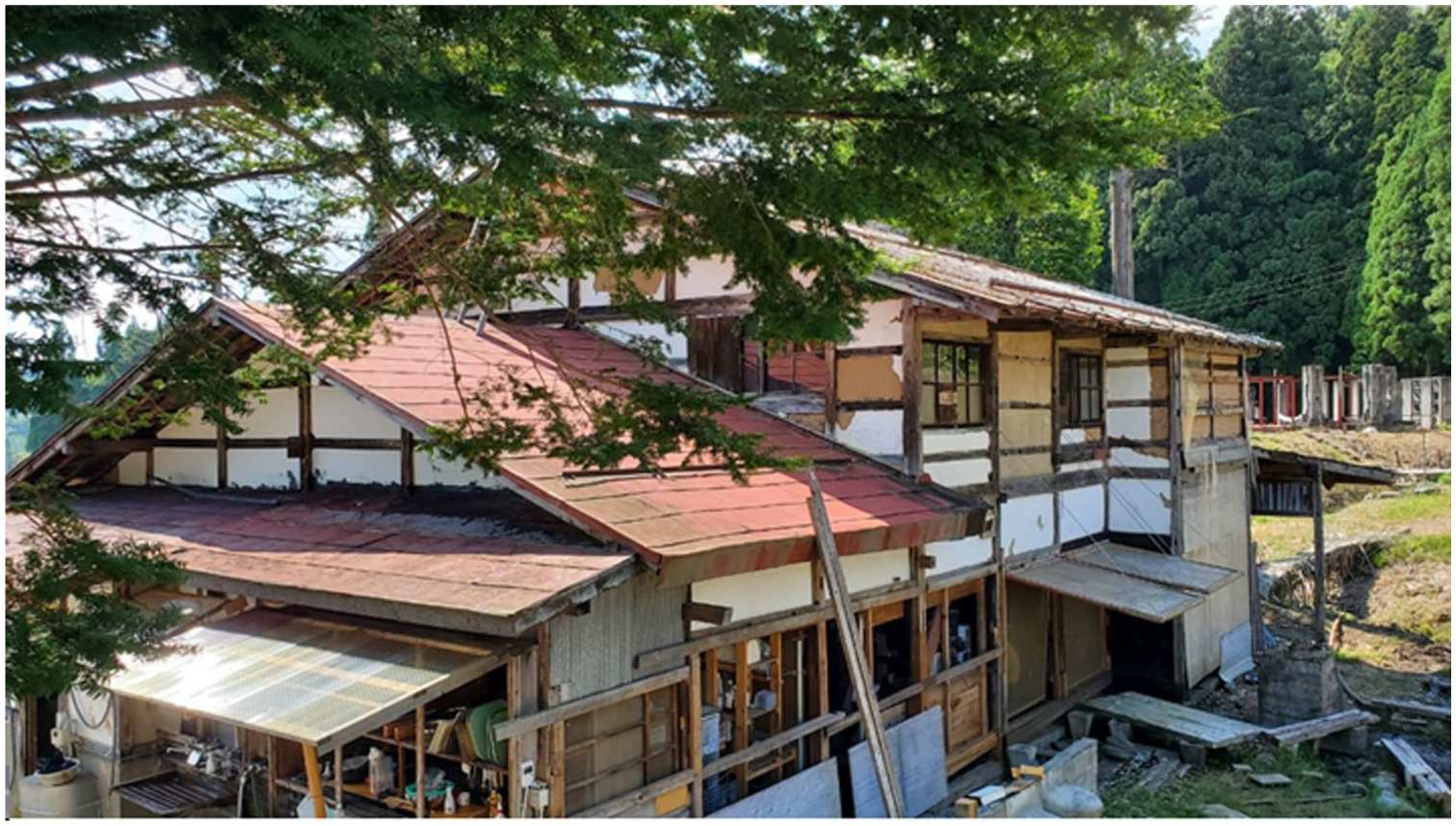
100-year-old Housing Used as Accommodation for the TASS Squat.
This study focused on the 2024 and 2025 TASS squats in Hida-Takayama from August 10th to 20th, 2024 and 2025. Around 20 participants took part in 2024, and 35 in 2025. While the total number of participants varies from year to year, the proportion of first-time attendees, women, and children remains largely unchanged. First-time participants account for around a quarter of the total, while children make up about 10%. Around one-third of participants are female, two-thirds male, but their gender identity is not definitively known. The ages of the participants, excluding children, range from the teens to the eighties. Thus, repeat participants and newcomers coexist in this TASS squat. This is an important characteristic to consider when planning infrastructure repairs tailored to participants’ experiences, as it represents neither the creation of a new space nor the restoration of original functions.
The participants came from a variety of professions and educational backgrounds, but there was a slightly higher number of university students majoring in architecture as well as carpenters and architects. The weather was sunny or cloudy except for 1 day, when it rained but with no strong winds.
I conducted participant observations and interviews with other participants from 10th to 20th August, 2024 and 2025. I went to the camp with a child and took part in activities with the other participants, including meetings, workshops, and drinking parties. I attended the event with the intention of making clear my position as a researcher. When I joined the TASS squat for the first time in 2024, some participants seemed uncomfortable with the fact that I am a social scientist and they often asked me why I was there and what my purpose was. I gradually found my place and established trust with the participants by getting involved in the self-build creation and support production at the squat.
In 2025, I participated again, making it clear that I intended to use TASS as a case study for my research. Participants did not seem negatively concerned about their interview data being used in my research project. However, some participants resisted the academic jargon I used. Therefore, I tried to avoid sounding or behaving like an academic.
Field notes, including text, illustrations, and photographs, were taken from daily observations of the creation of products, morning and evening meetings, workshops and conversations with other participants. Several other participants kept records, and I was allowed access to the photos and sketches that they had collected. I additionally collected documentary data from the blogs and zines of people who had participated in previous TASS squats. I interviewed participants, my questions focusing on the relationships forged with others through participating, personal transformations, a sense of belonging within the community, and memorable events in the TASS squat.
The Safer Space: Wooden Sliding Door or Fabric Partition?
First, I discuss the safer space in the TASS squat as a case of creating an autonomous space through repair.
Concerns about women-only safer spaces in squats (Brown, 2007; Creasap, 2022; Grohmann, 2018; Katrini, 2020; M. A. Martínez, 2019; Wall, 2017) were also evident at TASS, where participants installed doors to separate the women’s and children’s bedroom from the meeting space and then removed them and installed other materials to ensure both safety and equal participation. The TASS squat included two sleeping areas—one for women and children on the first floor, the other for men on the second floor—but the women’s and children’s area was visible from the dining and meeting room where everyone gathered, and noise was easily heard. Neither the men’s nor the women’s and children’s rooms had doors.
In the 2024 TASS squat, the women’s room occupants comprised six women and three children. For the first 2 days or so, our approach was to “leave things as they were,” because, although we could hear people talking in the dining room, there was no risk of men suddenly bursting in. When changing clothes, the women took measures to protect their privacy, such as using a part of the room that was not visible from the outside.
By the third day, the participants had built up a relationship of trust, and it had become easier for them to express their request to create a partition between the women’s and children’s room and the dining room. Coincidentally, there was a large piece of old cloth that was unused at the time, so we decided to use it to create the partition, using clips to hold it in place (Figure 2). Textiles are commonly used to separate private spaces from public spaces in autonomy spaces such as protest and homeless camps (Feigenbaum et al., 2013; Rubing, 2017, pp. 37–38; Speer, 2017, p. 524).
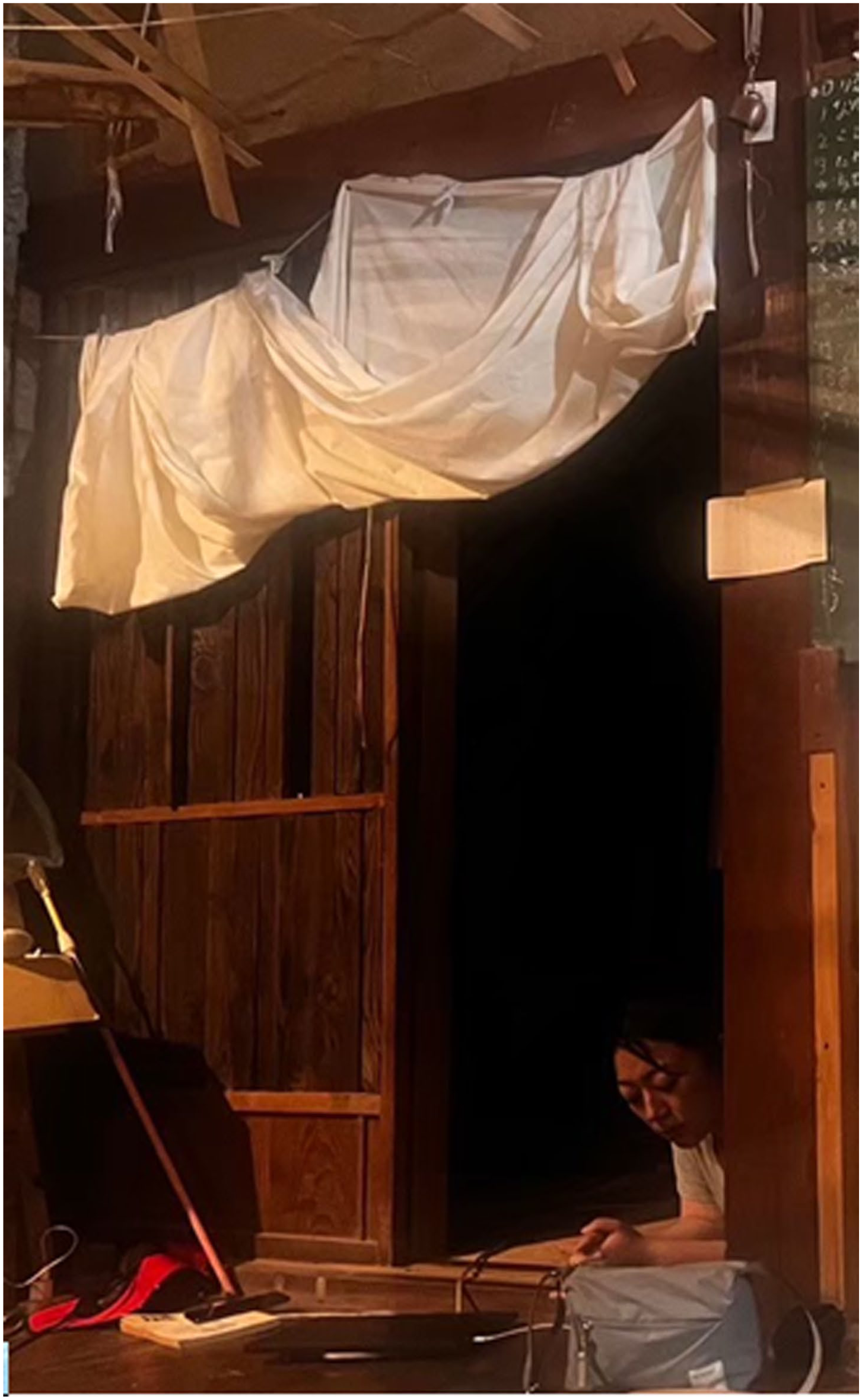
Improvised Partition Made of Fabric.
The fabric partitions did not block light, so the children slept fitfully. The veteran participants worried that those in the women’s and children’s room would feel uncomfortable with a single piece of fabric separating private and public spaces. Therefore, we sought advice from a veteran member who had previously participated in a TASS squat, who repaired the sliding wooden doors (Figure 3). These were strong and soundproof and seemed to make female participants feel safer than did the use of fabric.
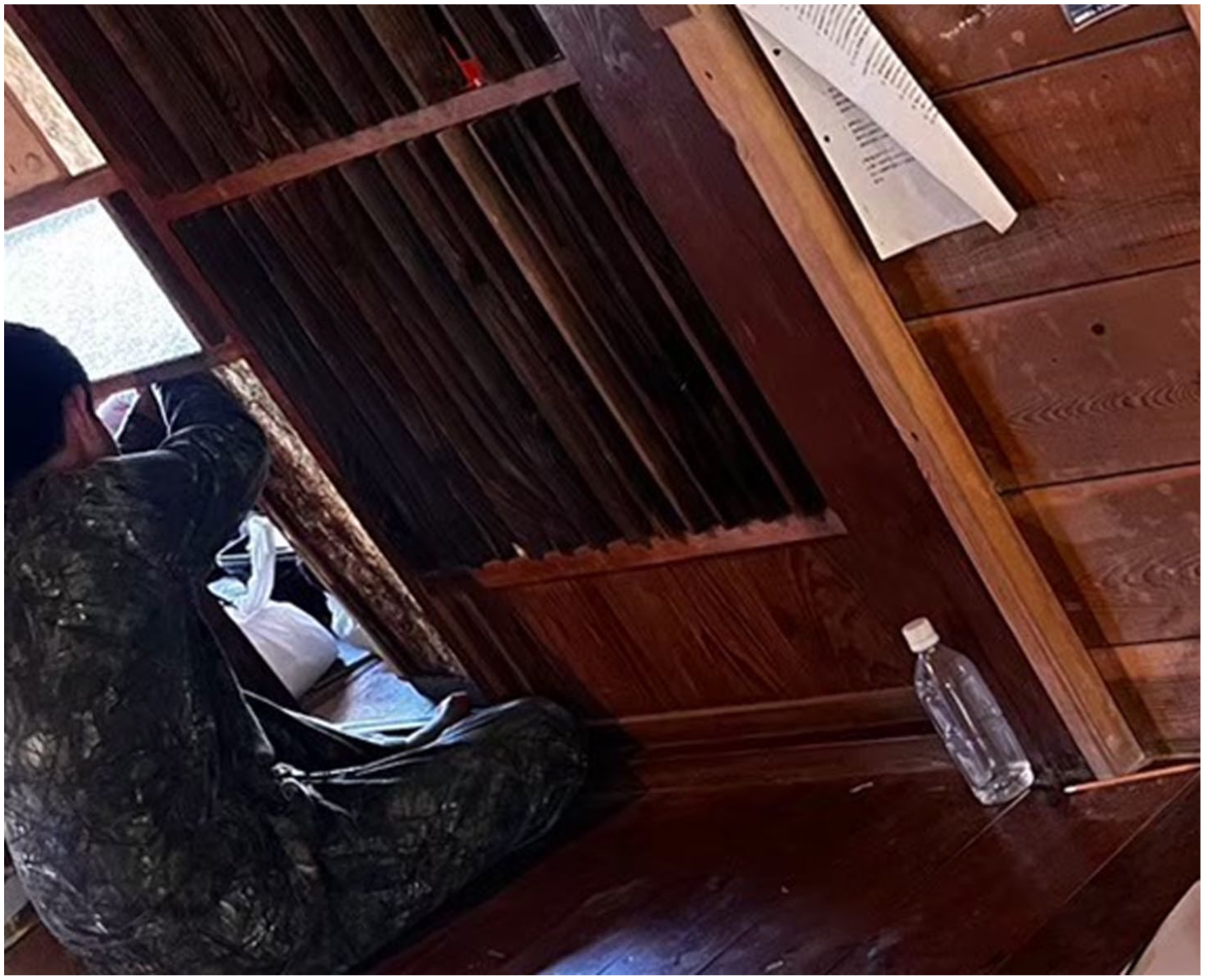
Repairing the Broken Wooden Sliding Door.
However, pulling the doors generated a loud noise because the doors were old, and there was no wax or lubricant to allow them to slide easily. The noise was loud enough to wake a sleeping child, so the doors were removed and replaced with fabric partitions again.
On consideration, it seems more appropriate to use the more stable and comforting sliding doors. Why, then, did the participants choose curtains? Previous research on safer spaces has identified cases in which people have invaded fabric tents. The safety of minorities has been threatened, and the fragility of fabric as a material for dividing spaces has been highlighted (English, 2017, p. 357; Rubing, 2017, p. 37). It seems that using curtains, which are highly vulnerable, and removing doors, which block sound and light, are not desirable when it comes to protecting minority participants, such as women and children. Fabric is easily penetrated, bringing the risk of uninvited entry. This inherent fragility is a key consideration when dealing with cloth. A7, the mother of two boys, talked in an open meeting about the entrance to the women’s room and the noise from people chatting in the dining room late at night: A7: I cannot leave the ladies’ sleeping room, because I have to put the children to bed, but I can hear everyone drinking in the dining room, and it is like a radio, so I really like it. That is why I am not saying I am against drinking and chatting in the evening, and I felt sad when I could not hear the noise when the wooden door was attached.
Rather than sound insulation or security, A7 looked for spatial connections with the people in the dining room. Because she was unable to leave the women’s and children’s room when looking after her children, she felt that the fabric dividing the space was more appropriate for her to be part of the community. Her priority was to avoid isolation rather than concerns about potential disturbances from intoxicated individuals or noise. Participants at risk of isolation prefer fabric walls, as this makes them feel connected to those around them. We can see this finding in the research on autonomous camps for homeless people (Speer, 2017, p. 525).
As I continued to observe engagement with fabric, I noticed that the female participants and children adjusted the fabric partitions in their own ways. Some children wrapped the fabric around their bodies and played with it, and I myself attended a meeting while putting my child to bed and pulling the curtain halfway up (Figure 2). In the 2025 TASS, a fabric partition was adopted to separate the women’s and children’s space from the dining room.
Moreover, fabric partitions were also used in the male sleeping area. Regardless of gender, participants who valued privacy used fabric to create a personal area separate from the rest of the space.
In autonomy spaces, safer spaces are often criticized or even abolished because they undermine openness, solidarity, and equality among the participants (Reinecke, 2018; Tominaga, 2017, p. 277). However, by focusing on the trial-and-error process of forming spaces through repair, we can find ways to preserve community openness while ensuring the psychological and physical safety of participants, thus moving beyond the dichotomy of openness versus closure.
Be Portable: Communal Kitchen and Portable Toilet
Communal or collective kitchens in squats can produce spaces that are open and publicly beneficial as community spaces (Creasap, 2022; Kanellopoulou & Ntounis, 2024; Katrini, 2020; Kiddey, 2018; Kouki & Chatzidakis, 2021; M. A. Martínez, 2019).
Like safer spaces, collective kitchens may be constructed or repaired in response to participants’ needs. As the scale of the squat increases, the kitchen may expand (Stavrides, 2022, p. 30; Lyra, 2023, p. 1957). Alternatively, an initial communal kitchen may fragment into separate kitchens over time (Canedo & Andrade, 2021, p. 95). In a kitchen in a fixed location, the tendency is for female members only to take on the role of cooking (Katrini, 2020, p. 43), and spatial interventions such as posting notices are sometimes used to encourage horizontal participation in the task (Creasap, 2022, p. 69; Kiddey, 2018, p. 610; Kouki & Chatzidakis, 2021, p. 886).
In the case of TASS, the kitchen is located at the edge of the building (it is a typically Japanese old-type housing style, as shown in Figure 4), which makes it difficult for most participants to get to because it is located far from both the dining room and the bedroom. Furthermore, the kitchen is a typical household size and is not designed for preparing meals for groups of 20 to 30 people. The kitchen sink and the shelves for storing cooking utensils are positioned quite high up, which makes it difficult for shorter people and children to help with cooking.
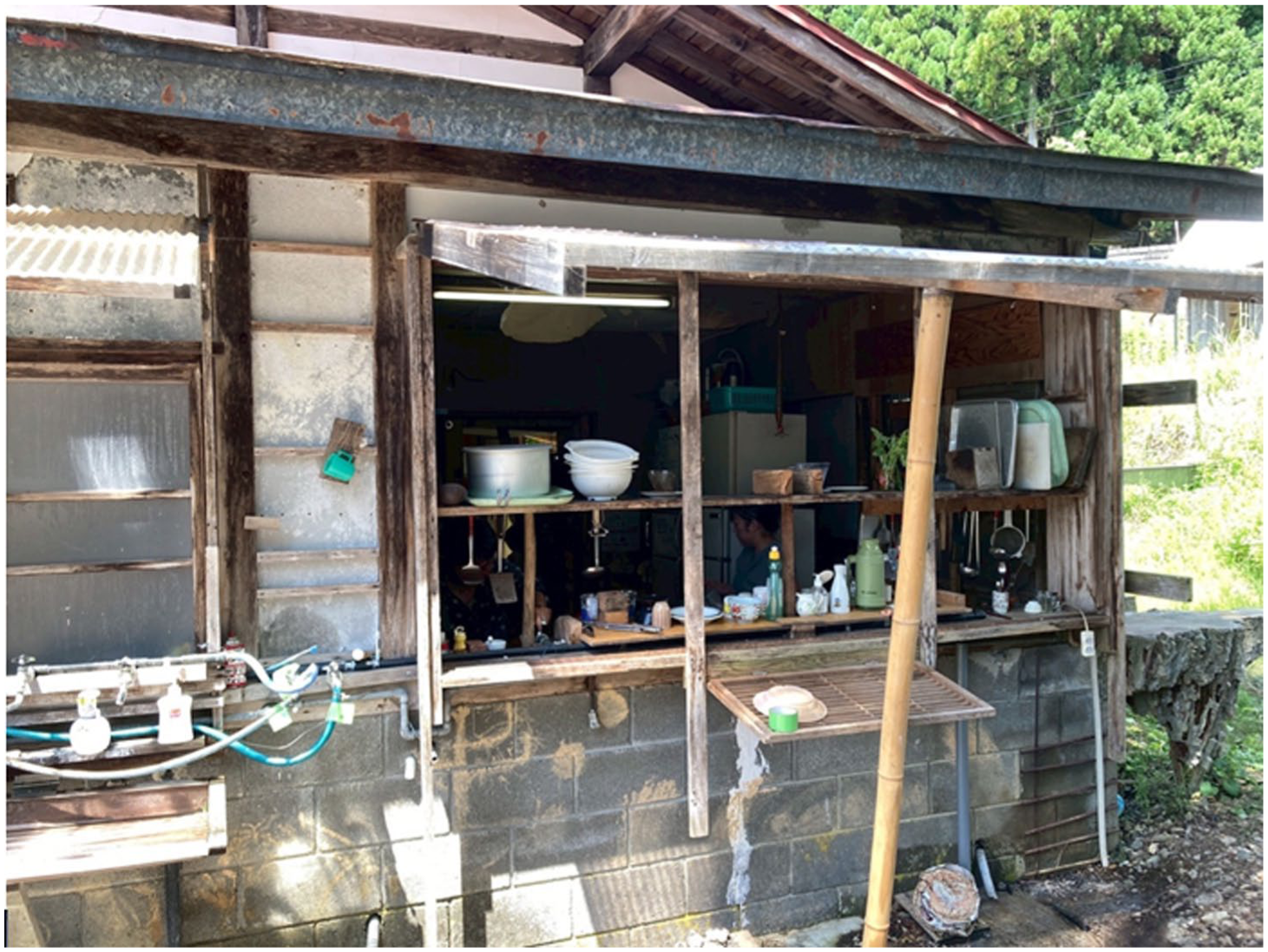
Old-Style Kitchen in the Corner of the Building.
At the TASS squat, cooking duties for the three daily meals (breakfast, lunch, and dinner) are organized on a rotating basis, ensuring that the responsibility for meal preparation does not fall disproportionately on specific individuals based on gender or experience level. However, only a limited number of participants work in the kitchen on informal occasions, such as after-meal drinks or snack breaks. To solve this problem, participants have made it easier for more people to take part in the cooking by making the kitchen’s chopping and serving functions mobile. The mobile kitchen itself is simple in design: a wooden board approximately 4 cm thick sits on top of a rectangular base measuring roughly 15 cm in height, 20 cm in depth, and 30 cm in width. Depending on the task, items such as chopping boards, bowls, and baskets are placed on the board, as shown in Figure 5.
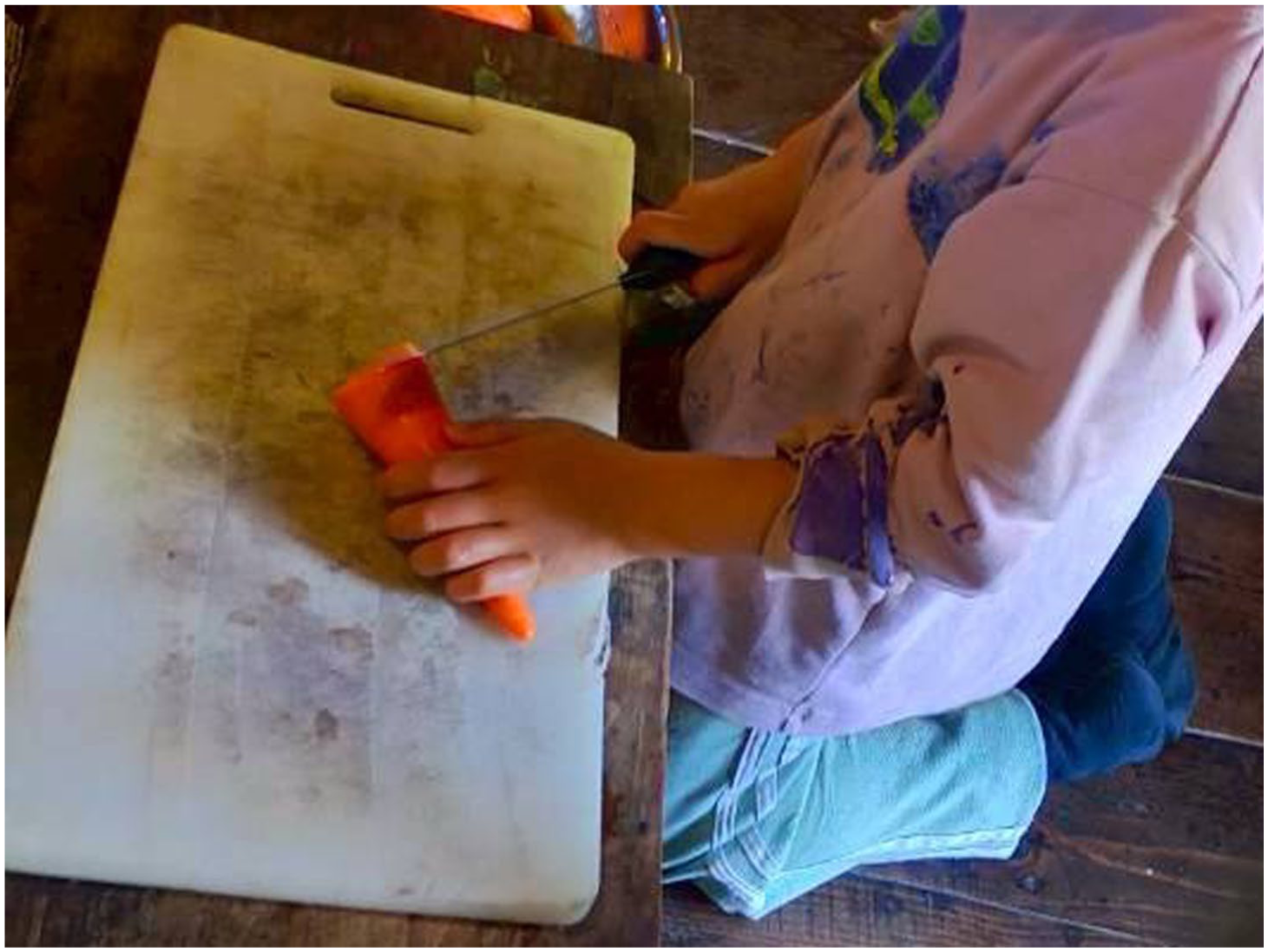
Portable Kitchen
The mobile kitchen enables not only the person who is responsible for cooking on that day but also others to participate in cooking and serving. This fosters reciprocity within the squat beyond the assigned cooking duties. Furthermore, as shown in Figure 5, children can also have a hand in the cooking. This can be considered a form of openness that encourages horizontal participation.
Next, I discuss toilets in the TASS squat. Toilets are relevant to various issues, such as environmental considerations, gender, and public health (Canedo & Andrade, 2021; de Moor, 2016; Katrini, 2020; Lyra, 2023). Ensuring that toilets meet adequate public health standards and protect privacy is crucial for safeguarding the dignity of immigrants, refugees, and impoverished women, especially those who have previously experienced poor housing conditions (Katrini, 2020, p. 41; Wall, 2017, p. 85).
In many squats, there are a limited number of toilets, and it is difficult to add more as they require a connection to sewer pipes and drainage systems (Canedo & Andrade, 2021, p. 95; de Moor, 2016, p. 1962). Also, as these facilities are difficult to install or relocate, their spatial relationship with other facilities may inadvertently reinforce the gendered division of labor. In squats in Belo Horizonte, Brazil, it was found that placing washing machines near women’s bathrooms tended to reinforce the practice of women doing the laundry (Lyra, 2023, pp. 1963–1964).
The TASS squat has two toilets: urinals for men and unisex toilets for both urination and defecation. As the toilets are non-flushable, public service contractors were brought in to remove the accumulated waste. Also, the unisex toilet requires user to climb a significant step up to it. This is a typical feature of Japanese non-flushing toilets and difficult for elderly participants and children to use. The toilet is situated at the far end of the building. An elderly participant, A11, who suffers from a medical condition, had to go to the toilet several times during the night, which was physically exhausting. His legs were weak, making it difficult for him to climb the large step to reach the toilet. He was also concerned about potentially disturbing sleeping participants. Therefore, he repurposed a chair as a portable toilet (Figure 6). At first glance, it looks like a chair, but the hinged seat is a lid that opens. You open the lid to defecate and then close it to prevent smells from escaping. When combined with fabric or wooden partitions, it can be used in a way that is like a normal private toilet booth. This toilet is thus suitable for children or those with weak legs.
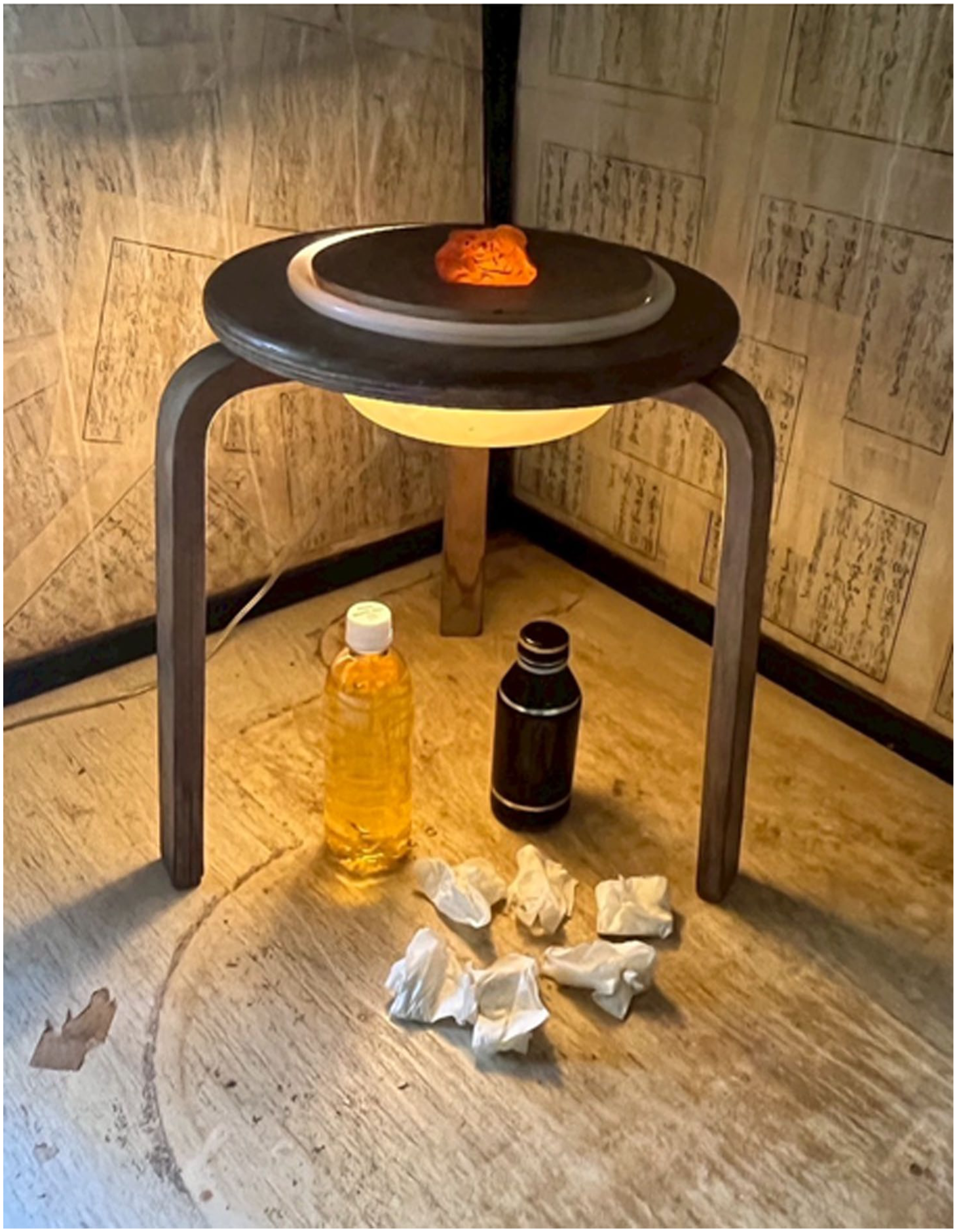
Portable Toilet.
The portable toilet was well received by children and participants with chronic conditions. It fostered an atmosphere in which it became acceptable to speak publicly about bowel movements and illness, issues that many had previously kept hidden and which were rarely discussed within the community. In fact, communication regarding the care and assistance of participants with illnesses or disabilities was also facilitated. One female participant, A29, stated the following: A29 (looking at the portable toilet): I was reluctant to talk about it, but I have a chronic condition, too, and I get diarrhoea frequently. Problems like this loom large in daily life and health, yet there is a strong atmosphere that hinders talking about them. This makes it impossible to ask for help or help someone else with a toileting issue. But now it has become easier to talk about it and get help.
The TASS squat proposed a solution to the issues of the dark kitchen and the toilet with one large step: to make some functions mobile and portable. It does not restore the original functionality but adds function adapted to the participants’ needs, making it a suitable form of autonomous repair. Furthermore, the mobility of the infrastructure enables open and closed spaces to be adapted flexibly according to the circumstances of the community and participants. For example, when more people are needed for cooking, the portable kitchen can be opened up to the outdoors or the dining room. Conversely, when carrying out dangerous activities involving high temperatures or sharp tools, the kitchen can be moved into a closed area. I actually concealed the portable kitchen when my 2-year-old child attempted to use a knife in it. Toilets are usually designed to be close together for security and privacy reasons (Katrini, 2020). Portable toilets are also used in partitioned spaces at the TASS squat.
Discussion
This article examines repair that enables autonomy through spatial formation, focusing on the opening and closing of space to foster horizontal participation and ensure participants’ safety in the squat. Previous research has focused mainly on the spatial formation of the squat, such as creating safer spaces, a communal kitchen, and a toilet. In this research, the author focused on repair in the TASS squat, with spatial formation changing from moment to moment, depending on the participants’ needs, physical condition, and diversity.
In my observations, the participants started repairs based on their own needs, such as creating safe spaces with fabric or remaking kitchens and toilets to be portable. Nevertheless, I make clear that the repair not only meets the creator’s requirements but also solves the problems faced by other participants and the community, as shown by previous studies (Aslam, 2023, p. 5; F. Martinez, 2022, p. 22).
The fabric partitions used in the space for female participants were also used in male participants’ rooms to separate personal private areas from other areas to maintain privacy. The portable kitchen was created to solve the problem of a cramped kitchen, but it became an opportunity for everyone, including children, to get involved in cooking. The portable toilet made by the older participant started everyone talking about toilet-related issues. As a result, participants in TASS were able to go beyond the individual and improve the lives of others in the community, fostering closer mutual support.
Previous research on squatting has shown that construction and repair are important for creating autonomy spaces. While these studies have pointed out the collective knowledge involved in repairs and the repair process to reflect people’s needs, they have overlooked the positive impact that repairs could have on others in the community and on the community itself, extending beyond the intentions of those directly take part in the repair process. This study contributes to research on squats by showing that the repair creates opportunities to care about others, to work together, to act reciprocally, and to communicate among people in the squat.
Finally, as a unique aspect of this study not present in previous research, repair in TASS case does not require any specialized skills or materials. In this case study, fabric is easier to handle than wood, and the kitchen and toilet problem can be resolved without undertaking refurbishments on a large scale. Moreover, anyone can engage in horizontal autonomous politics, regardless of their expertise or knowledge. In that sense, repairs can also be considered a horizontal and democratic process open to all.
Footnotes
Acknowledgements
I am grateful to all the informants for sharing their experience. I also thank R. Endo, S. Sayaka, K. Terashita, K. Ito, K. Ando, Y. Yang, A. Meguro, T. Kadota, M. Donaka, M. Segawa, and T. Osuka for their important contributions. Finally, I wish to thank the editor of this article and the reviewers for their valuable comments and suggestions to improve the quality of the paper.

Ethical Considerations
The study followed the research ethics guidelines of the Japan Sociological Society.
Informed Consent
The participants provided consent to give their information in this study.
Funding
The authors disclosed receipt of the following financial support for the research, authorship, and/or publication of this article: This study was supported by the Murata Science Foundation, Egashira Hospitality Foundation, Labor Research Center, Toyota Foundation, Railway Research—Culture Promotion Foundation, Obayashi Foundation, Window Research Institute, National Federation of Workers and Consumers Insurance Cooperatives, the Foundation for Dietary Scientific Research, Yamaoka Memorial Foundation, Dai-Ichi Life Foundation, Toda Scholarship Foundation, the Japan Health Foundation, Sumitomo Electric Group CSR Foundation, Maeda Engineering Foundation, and JSPS Kakenhi (grant nos 19K13929, 18K18613, 22K18559, and 15K17195).
Declaration of Conflicting Interests
The authors declared the following potential conflicts of interest with respect to the research, authorship, and/or publication of this article: The author declares that the research was conducted in the absence of any commercial or financial relationships that could be construed as a potential conflict of interest.
Data Availability Statement
The raw data supporting the body of this article will be made available by the author without reservation.