




Abstract
Capturing the rapid visual transformation of booming pop-up stores in a gentrifying Seoul neighborhood, this study examines how these temporary businesses curate visuals and orchestrate interactions with the surrounding built environments and people to amplify their visibility in a competitive landscape. The fast-paced structural and visual turnover of pop-ups in open urban spaces draws semiotic attention to how transient marketing mobilizes and generates meaning through dynamic relationships with spaces, people, and materials. This study employs a geosemiotic lens and ethnographic walking surveys to explore how the clustering of pop-up stores embeds and normalizes dominant commercial discourses in the neighborhood. Individual pop-up visibility is amplified through curated visuals, visitor engagement, and the strategic incorporation of surrounding spaces. Collectively, they shape the area’s prevailing commercial discourse, creating a continuous spectacle. Rental advertisements and frequent turnover visibly index transient marketing driven by short-term investments and hyper-visible branding.
Introduction
Recently, various news outlets in South Korea have raised concerns about potential pedestrian incidents due to the large crowds gathering around Seongsu Station. In response, the district office and police department deployed personnel to manage safety. These reports frequently highlight the recent boom in pop-up retail as a contributing factor to the surge in visitors, further intensifying safety concerns (e.g., Jung, 2024). A few hundred meters from the subway, a large gathering of young people can be found in front of the Dior Seongsu building. The crowd lines up to capture photos with the building’s unique backdrop, adding to the allure of this trendy part of Seongsu-dong. Beyond Dior, the area buzzes with pop-up stores, adding further appeal for visitors and creating a vibrant scene that captures the trendy and dynamic character of Seongsu-dong.
The long-standing urban industrial zone of Seongsu-dong has recently undergone rapid transformation into a hyper-commercial district. Old industrial buildings have been structurally and visually reimagined to accommodate trendy retail spaces. Meanwhile, newly constructed buildings incorporate industrial aesthetics to attract tenants by aligning with the area’s trendy visual identity. This spatial and visual transformation has been further accelerated by the recent boom in pop-up stores, as their shorter lifespan results in frequent structural changes. These stores are clustered along the main commercial street, Yeonmujang-gil, and its adjacent alleys. The area resembles a visually contesting space, where brands strategically deploy mobilized visual resources to capture pedestrians’ attention amid intense competition. The highly visualized and temporary nature of these events within a competitive market area necessitates an analytical focus on the interplay between visual and material performances, the surrounding built environment, and human interactions.
Businesses have leveraged pop-up strategies as immersive, experience-driven retail spaces that foster direct consumer engagement, heightening brand interaction through spatial and temporal exclusivity (e.g., Lassus & Freire, 2014). Distinctive visuals are a common strategy to fulfill marketing purposes, enhancing brand identity and consumer attraction (e.g., Ye et al., 2023). The fast-paced structural turnover and visual transformation of pop-up stores in open urban spaces draw semiotic attention to how transient marketing mobilizes and generates meanings in relation to broader spatial contexts. These visual changes do not create meaning in isolation but through their dynamic relationships with surrounding spaces, people, and materials, offering deeper insights into the layered meanings embedded in the urban environment. Grounded in semiotic landscape studies as a theoretical framework for understanding meaning-making in social and physical environments through the interplay of diverse semiotic resources, this study examines how visual materials, spatial arrangements, and visitor engagements shape the semiotic dynamics of pop-up stores and their surroundings (Jaworski & Thurlow, 2010). Observing individual stores documents how individual stores strategically curates its visual presence by interacting with surrounding spaces and human participants to establish visibility in a competitive and transient commercial setting. Meanwhile, ethnographic walking through the visual arcade created by clustered pop-up stores offers a broader perspective on how their collective interactions with people and the built environment construct semiotic landscapes that index dominant commercial discourses in the neighborhood. When individual stores strategically curate visual materials to interact with surrounding spaces and human participants, and this practice is replicated on a large scale by competing stores lining the streets, the symbolic currencies embedded in each store’s visual performance collectively shape a broader commercial discourse that defines the entire area. Equipped with a geosemiotic lens to examine the dynamic interplay of various semiotic systems in the material world and an ethnographic walking survey to read the rich textures of everyday spaces, this study demonstrates how pop-up stores orchestrate complex interactions between visual, spatial, and human resources to heighten their visibility in a competitive commercial landscape. It further explores how these interactions convey the symbolic currencies of the stores and how the broader semiotic landscape, shaped by the clustering of pop-up stores, embeds and normalizes dominant commercial discourses within the neighborhood.
Literature Review
Seongsu-dong has transformed into a vibrant hub for trendy fashion, food, and lifestyle businesses. Over the past decade, this district has evolved as old industrial facilities and shops have been replaced by commercial establishments. Originally developed as a semi-industrial zone in the 1960s, the area housed a mix of residential buildings, retail shops, small factories, and workshops (Seoul Museum of History [SMH], 2015). Initially driven by labor-intensive manufacturing, the neighborhood underwent significant changes as large factories were pushed out due to environmental regulations and economic pressures, including the Asian financial crisis of the late 1990s (J. W. Kim, 2024). As a result, the neighborhood became home to small-scale, consumption-oriented industries, including shoemaking, leather processing, printing, handmade shoe workshops, material suppliers, and auto repair shops catering to the growing number of foreign-brand car owners (J. W. Kim, 2024). By directly serving consumers, these businesses generated “dynamic flows of production-consumption players” in this semi-industrial area, attracting consumers from outside the neighborhood (Kang & Lee, 2021, p. 116). Its proximity to Gangnam, Seoul’s most affluent district, has attracted an influx of consumers while the continuous shift from traditional manufacturing to scientific and technological enterprises has drawn young professionals to work in the neighborhood (K. M. Kim, 2021). Grounded in socioeconomic, industrial, and demographic transformations, the area has experienced rapid gentrification since the early 2010s, marked by a sharp rise in commercial businesses repurposing old industrial buildings and creating a distinctive landscape where industrial heritage blends with hyper consumerism (Kim & Ahn, 2024).
The balance between Seongsu-dong’s mixed industrial and commercial landscape has rapidly eroded with the rise of pop-up businesses, a widespread trend reshaping the area’s economic and spatial dynamics. Seongsu-dong has seen an explosion of short-term retail spaces, driven by brands seeking to create exclusivity and engagement through temporary, experiential marketing strategies (Park, 2022). The vacancy rate of shops and offices in Seongsu-dong is significantly lower than in other major commercial areas in Seoul, raising concerns over soaring rental prices (Jang, 2023). In response to the growing demand, many existing buildings have been rapidly repurposed into pop-up-friendly spaces, further accelerating the area’s transformation. Led by both domestic and global fashion and lifestyle brands, Seongsu-dong’s pop-up trend has expanded to include a diverse range of businesses. This growing diversity has further fortified Seongsu-dong’s reputation as a prime location for pop-up events. By transforming buildings and surrounding spaces, actively engaging with people along the streets, and dismantling the real-estate market, pop-ups have become a dominant spatial practice that reshapes urban culture and economy. Nevertheless, academic studies on Seongsu-dong’s pop-up phenomenon have largely remained within the realm of commercial analysis, with limited exploration through the lens of urban spatial culture in both Korean and English scholarships.
Pop-Up Stores: Visual–Human–Spatial Engagement
Marketing has become increasingly linked to space and time, as seen in the bold visual presence of outdoor advertising in global urban environments. These advertisements highlight the significance of location, spatial dynamics, and timing by engaging pedestrians who are potential customers (Koeck & Warnaby, 2014). Pop-up events represent a more assertive and time-sensitive form of marketing. These temporary setups not only promote brands and products but are also designed to interact directly with customers and passersby.
As a temporary use of space for intensive engagement with target populations, pop-up strategies have been widely adopted by various actors. Local governments mobilize this strategy for place marketing, promoting normative visions of a culturally diverse and vibrant city (e.g., Colomb, 2012), while marginalized populations use pop-up strategies to create opportunities for publicly expressing their identities and asserting spatial ownership (e.g., Stillwagon & Ghaziani, 2019). Private businesses have more actively embraced the event-driven opportunity for direct communication with consumers. These temporary retail spaces provide immersive, interactive brand experiences, offering affective businesses an opportunity to establish direct contact with new customers (Lassus & Freire, 2014; Niehm et al., 2006). Thus, pop-up stores are commonly designed with experiential elements to foster engagement in multiple directions, further intensified by the urgency created through spatio-temporal limitations (Warnaby et al., 2015).
Building on earlier studies on pop-up stores, Overdiek (2017) identifies key characteristics of pop-up stores, including their unconventional locations, limited availability in both duration and product selection, interactive store designs, cultural programming, and online engagement through social media (p. 122). Placing a pop-up store in an unusual area where the brand has not traditionally been visible allows it to reach new customer segments (e.g., Surchi, 2011). The scarcity of time and space increases motivation among consumers seeking exclusive experiences and limited-edition products (e.g., Henkel & Toporowski, 2021). Multisensory cultural interactions around these confined spaces often evoke joy and surprise, fostering positive brand associations (e.g., Lowe et al., 2018). By further integrating with social media, pop-up stores amplify marketing impact through visitor-generated buzz (e.g., Robertson et al., 2018).
The common characteristics shape pop-up business strategies, prompting them to enhance the store’s visual presentation (Overdiek, 2017). As predominantly visual and performative marketing events, pop-up stores activate place through visual articulation, creating a contrast with their surroundings (Ferreri & Graziano, 2016). To establish and reinforce their market presence, pop-up stores strategically invest in visual marketing by curating consistent yet compelling visual elements (Deng, 2023). This visual appeal plays a crucial role in shaping consumers’ positive perceptions of brands and products (e.g., Overdiek, 2017; Ye et al., 2023). By incorporating various visual materials and multisensory elements, businesses create a trendy yet unique atmosphere that enhances visitors’ pleasant perceptions within these constraints (Klein et al., 2016). The perceived uniqueness of pop-up stores has been identified as a key factor in their success (Zogaj et al., 2019). Visual and multisensory elements are also designed to invite customer interaction (Alexander & Bain, 2016). These interactions extend beyond the physical and temporal constraints of the store, as visitors engage with the space by capturing and sharing its visual compositions on social media. The visual uniqueness and aesthetic quality of pop-up stores serve as key drivers of social media engagement, functioning as tools for self-presentation online (Ye et al., 2023).
Semiotic Landscapes of Pop-Up Stores
The history of urban transformation has been closely tied to visual strategies, from the creation of homogeneous suburban facilities for socioeconomically uniform residents to the aesthetic diversification of gentrified areas, serving commercial interests by shaping consumer appeal and increasing market-driven spatial dynamics (Zukin, 1998). Urban change is inherently both a spatial and visual process, as structural repurposing and shifting populations are closely intertwined with the visible transformation of the built environment. In urban commercial areas, visual elements are extensively mobilized to represent the symbolic economy of specific districts and businesses (e.g., Papen, 2015). Within broader socio-spatial contexts, visual materials “indexically invoke social meanings that planners and business owners can exploit in their placemaking and selling efforts” (Modan, 2018, p. 330). Thus, visual materials and the built environment are not merely defined by their independent physical or material characteristics but are conceptualized as a “visual and material performance” that conveys “symbolic currency via its aesthetic quality and various forms of visual imagery” (Aiello, 2011, p. 344). Visual materials and their spatial compositions contribute to meaning-making dynamics, emerging through the complex interplay of diverse semiotic resources that are “situated in a social and physical environment, aligning with contextual features such as participants, objects, the human body, and the setting for meaning” (Canagarajah, 2013, p. 7).
Studies on semiotic landscapes reveal the layered social discourses embedded in the visual, material, human, and spatial interplay of urban spaces (Jaworski & Thurlow, 2010). Conceptualized as spaces “with visible inscriptions made through deliberate human intervention and meaning-making,” semiotic landscapes have been studied to examine the complexity of meaning-making through diverse semiotic resources in social and physical environments (Jaworski & Thurlow, 2010, p. 2). Multimodality provides a lens for semiotic landscape studies to examine the discursive compositions of images, texts, designs, and styles as vehicles of meaning (Kress & Van Leeuwen, 2020). Grounded in the understanding of space as a social production, semiotic landscape studies particularly focus on the interactions among diverse “discursive modalities [including] visual images, nonverbal communication, architecture, and the built environment” (Jaworski & Thurlow, 2010, p. 2). Landscape, as a way of seeing the world, is a material world infused with ideology and, as such, constitutes a form of visual ideology. Urban commercial landscapes are filled with publicity that conveys the ideology of consumerism, emphasizing the pleasures and benefits of consumption (Berger, 1972). Drawing the analytic gaze to ideology-driven visible spaces, semiotic landscape studies have illustrated how certain communities, populations, and entities are differentiated through the mobilization of semiotic systems (e.g., Lee & Lou, 2019). Some studies capture the dialogic interplay between visual, spatial, and demographic hierarchies, showing how they produce discursive hierarchies in given locations (e.g., T. S. Kim, 2021).
Discourse in semiotic landscapes is also layered within the visible practices of how space users mediate, frame, and represent visual and material performances through digital devices (Thurlow & Jaworski, 2015). Engaging with semiotic landscapes, people often construct their self-representation through social relations with visual artifacts and places, driven by the desire for greater visibility in the competitive social media environment (Smith, 2021). Conceptualized as online self-presentation through the display of physical activities in specific places to construct identity, the “spatial-self” captures the dialogical intertwinement between discursive visual material performances in the physical environment, users’ interactions with these spaces, and digitally mediated self-presentation practices (Schwartz & Halegoua, 2015). Selfie-taking practices that associate individuals with material, spatial, and visual environments constitute an additional layer of discursive human interaction with the material world (Gupta & Ray, 2022). Studies on pop-up stores have also demonstrated user engagement through social media; while users benefit by identifying themselves with brand status, brands, in turn, generate further buzz through social media activities (e.g., Robertson et al., 2018), leading to the spatial and temporal extension of pop-up stores beyond their physical boundaries (e.g., Shi et al., 2021). Analyzing semiotic landscapes constructed through visual, material, and built environments, as well as human interactions around pop-up stores, this study integrates users’ visual self-presentation on social media into the analysis of the semiotic landscape of the neighborhoods.
This study explores the semiotic landscapes of Seongsu-dong’s pop-up stores, shaped by the interplay of materials, people, and spatial dynamics. By analyzing the visual materials placed in and around pop-up stores, their spatial arrangements, and various forms of engagement with visitors, this study demonstrates: (1) how pop-up stores orchestrate complex interactions between visual, spatial, and human elements to heighten their visibility in a competitive commercial landscape, (2) how these interactions convey symbolic currencies of the stores, and (3) how the broader semiotic landscape, shaped by the clustering of pop-up stores, embeds and normalizes dominant commercial discourses within the neighborhood.
Geosemiotics and Ethnographic Walking
Geosemiotics, defined as the “study of the social meaning of the material placement of signs and discourses in our actions within the material world,” examines indexicality within integrative semiotic systems, encompassing interaction order, visual semiotics, and place semiotics in a given geographical location (Scollon & Scollon, 2003, p. 2). Meaning-making is embedded in the physical environment through the dynamic interplay of these three key semiotic systems. (1) Interaction order is a semiotic system composed of human bodies and interactions as semiotic resources, making meaning through their locations, postures, interpersonal communicative actions, and other embodied practices. (2) Visual semiotics involves the material performances and compositions of images, texts, signs, and other visible elements present in a place. (3) Place semiotics refers to the meaning-making processes embedded in spatial arrangements and built environments where physical structures function as signs in relation to their surroundings. Various semiotic landscape studies have widely adopted geosemiotics as both a theoretical foundation and an analytical lens to explore “the social meanings of the material placement of signs and discourses” (Scollon & Scollon, 2003, p. 4). Instead of isolating different semiotic dimensions, semiotic analysis equipped with a multimodal perspective enables the examination of social meanings indexed in specific materials within a place as integrally associated with and dependent upon other meaning-making dynamics (Kress & Van Leeuwen, 2020). As geosemiotics is an integrative semiotic aggregate of the three semiotic systems, this analytic lens enables an examination of how individual pop-up stores and the broader clustered pop-up business area serve as a cohesive material world that conveys inscribed social meanings, reflecting the dominant discourses and logics of the area.
While most studies on pop-up stores focus on a single or a few cases, this study examines Yeonmujang-gil, where more than 50 pop-up stores emerge within a 1 km stretch and its surrounding area during each period of fieldwork. Given the abundance of choices available to visitors, pop-up stores place greater emphasis on visual appeal to attract engagement with their brands. This competitive environment in Seongsu-dong necessitates an analysis of the complex interaction of multiple semiotic systems communicating meanings that imply their market values. Considering the short lifespan of temporary stores, which are quickly replaced by new ones, this study conducted eight fieldwork visits over a year from December 2023 to January 2025. While the analysis focuses on Yeonmujang-gil and its surrounding alleys, the actual fieldwork extends across the broader commercial area of Seongsu-dong, covering approximately 1.5 by 0.4 km. This wider scope allowed for an exploration of spatial variations in different locations. The extended and repeated fieldwork confirmed the intense clustering and high concentration of pop-up-related activities in the Yeonmujang-gil area. Over the course of the study, an increasing number of buildings and stores joined the trend of renting their spaces to brands for temporary commercial events.
By repeatedly walking along streets lined with pop-up stores, this study recorded ethnographic field notes and captured photographs for the documentation. This ethnographic walking and photographic survey were conducted during each fieldwork period, interspersed with my own visits to and stays in various pop-up stores, where I engaged with the experiential marketing strategies provided by the stores. Walking has long been a vital method for social documentation, allowing researchers to observe daily practices and shifting urban rhythms (O’Neill & Roberts, 2019). My ethnographic walking was an active participation in the practice of visiting pop-up stores. In Seongsu-dong, people often form a continuous flow as they move along the streets. A common entry point into this movement is Seongsu Station, located on the city’s Circle Line. Exiting from Gate 3, pedestrians proceed along Seongsui-ro toward Yeonmujang-gil, where the repurposed Daelim Changgo building stands as a landmark. For many visitors, Daelim Changgo serves as the key reference point before exploring the pop-up stores stretching east and west of the area. As De Certeau (1984) observes, walking in the city is “a spatial acting out of the place and it implies relations among differentiated positions” (p. 97–98). While ethnographic walking captures ongoing flows, rhythms, and interactions as essential meaning-making processes in the city, photographic surveys are useful for documenting finer details by comparing the visual compositions and spatial organizations of different sites (Hall, 2009). By participating in temporary commercial events while walking along the streets, photo-taking ensures the recording of vivid, ongoing activities and visual performances while avoiding the sampling bias common in using photographs curated by other visitors (Krase & Shortell, 2011).
As mentioned earlier, this study also analyses users’ social media engagement with pop-ups, which serve as important semiotic cues in understanding interaction order as a key meaning-making semiotic system in place. This study collected user activities on Instagram, where users frequently present themselves in ways that associate with visual discourses layered in various material and spatial compositions around them (Gupta & Ray, 2022). Considering the notorious difficulty of collecting ordinary users’ specific posts on Instagram due to its algorithm favoring paid content, I gathered relevant Instagram posts the day after each fieldwork session. The screenshotted posts were analyzed through the lens of multimodal analysis, which enabled an examination of the complex designs of posts composed of multiple modes of communication, such as images, text, and overall composition. This approach provides a semiotic understanding of the interaction between the post owner and various semiotic resources, positioning the owner as both a designer and an agent in meaning-making (Kress & Van Leeuwen, 2020).
Analysis
Visual–Spatial Curation
Pop-up stores in Seongsu-dong line Yeonmujang-gil and are nestled in nearly every alley. Despite the rapid disappearance of industrial sites, old industrial facilities and permanent retail stores form a complex mixture with pop-up stores, accentuating the visual distinctiveness of the temporary businesses. Unlike the static, year-round stores, pop-up stores often transform entire façades, emphasizing brand identities through logos, colors, uniformed staff, and brand ambassadors. A particularly striking example of this phenomenon can be observed around Dior Seongsu, where temporary and permanent retail presences intertwine. One notable site is Door to Seongsu, a specialty store by the major convenience chain GS25, which continuously reinvents itself through frequent pop-up events. In December 2023, for instance, it was fully decorated in Coca-Cola’s iconic Christmas theme, featuring a massive signboard with the K-pop group NewJeans, forming the festive appeal. Directly across the street, the cosmetics brand After Blow similarly leveraged pop-up strategies, creating an experiential retail space with professional studio lighting for customer photo opportunities, allowing visitors to pose like models. The convergence of these vibrant, temporary displays turned the area into a lively, square-like hub, attracting young visitors eager to engage with the visually stimulating retail environment.
The visual contrast between these pop-up stores and conventional ones is marked by a distinct sense of boundary. Traditional stores maintain a clear delineation of their visual territory, confined to their established space. In contrast, pop-up stores aggressively extend their marketing boundaries, often with oversized signage that reaches upper-story windows to assert physical dominance through size and visual distinctiveness. Some stores also utilize the streetscape in front of their premises by placing additional signage and visual materials to promote their events. By extending their visual territory, prominent installations create an immersive experience, making pedestrians feel included in the temporary event even as they merely pass by. Spatially constrained pop-up stores thus expand their marketing reach by integrating pedestrians into their branded space. As this practice becomes widespread, the proliferation of extended signage transforms the street into a continuous visual arcade, effectively turning a public thoroughfare into a privately dominated commercial space, further intensifying the competitive market atmosphere. The visual–spatial strategy increasingly integrates the characteristics of the surrounding environment into the marketing message itself, leveraging spatial associations and urban aesthetics as communicative tools (Koeck & Warnaby, 2014). This bold approach also carries financial implications, as high-quality and large-scale visual installations signal substantial investment in temporary setups. The significant costs associated with such ephemeral branding efforts position pop-up stores within a distinct economic hierarchy, differentiating them from conventional businesses that rely on longer-term, less intensive marketing strategies. This, in turn, reinforces commercial discourse that prioritizes and legitimizes cost-intensive ephemeral business models within hyper-commercialized urban spaces.
The visual contrast between pop-up stores and permanent establishments is also evident in the exclusive visual strategies employed by pop-up stores. These temporary spaces rely on curated aesthetics, using cohesive and carefully designed materials while excluding any unplanned visuals. Rather than conveying information through flyers or other textual materials, pop-up stores rely on uniformed staff and streamlined digital tools, such as QR codes, to maintain visual cohesiveness while minimizing extraneous signage. In a study of the linguistic landscapes of Seongsu-dong, Kim and Ahn (2024) highlight the contrast between the textual abundance in industrial areas and the minimal use of text in trendy commercial spaces, reflecting a deliberate visual strategy employed by new businesses. The distinction is even more pronounced in pop-up stores, where only brand-related text appears on façades, highlighting their visual exclusivity and elevating brand value within the constraints of their temporary presence in Seongsu-dong. This controlled aesthetic sharply contrasts with the surrounding urban fabric, where neighboring buildings and stores integrate a mix of informal elements such as promotional fliers, stickers, stacked goods, or parked vehicles into their visual presentation. These informal materials not only blend with those of adjacent businesses but also reflect the everyday rhythms of the area, shaped by shop workers and customers who differ from pop-up store visitors in terms of generation, appearance, and movement patterns. The juxtaposition of these contrasting visual and social dynamics accentuates the curated exclusivity of pop-up stores, making their presence stand out against the ordinariness of the surrounding built environment and the people who inhabit it. In doing so, pop-up stores assert a temporary yet dominant claim over the urban space, turning the exclusiveness itself into a strategic visual tool that indexes their market positioning.
The common visual elements of pop-up stores, such as bold colors and flamboyant lighting, assert their visual dominance by mobilizing the symbolic currency of these components. These elements are incorporated into sophisticated imagery, often featuring fine prints of famous celebrities representing the brands. Celebrities who have succeeded in the aesthetically driven cultural industry are elevated by the strategically designed brand imagery. As shown in Figure 1, their presence is aestheticized by meticulously crafted signage that boosts the store’s appeal, as well as its prominent placement on façades. The use of brand ambassadors is a common strategy among participating brands seeking to maximize their public appeal. Images of brand ambassadors are often prominently displayed on upper signage extending beyond the spatial boundaries. The combination of these well-known media figures and their elevated placement not only enhances brand visibility but also discursively indexes the dominant market status of the businesses, highlighting both the aesthetic appeal that fuels their success and their strategic alignment with the brand’s identity. This deliberate positioning transforms the built environment into a stage for brand narratives, where celebrity endorsements function as semiotic markers of prestige and desirability, further amplifying the exclusivity and aspirational appeal of the pop-up experience.
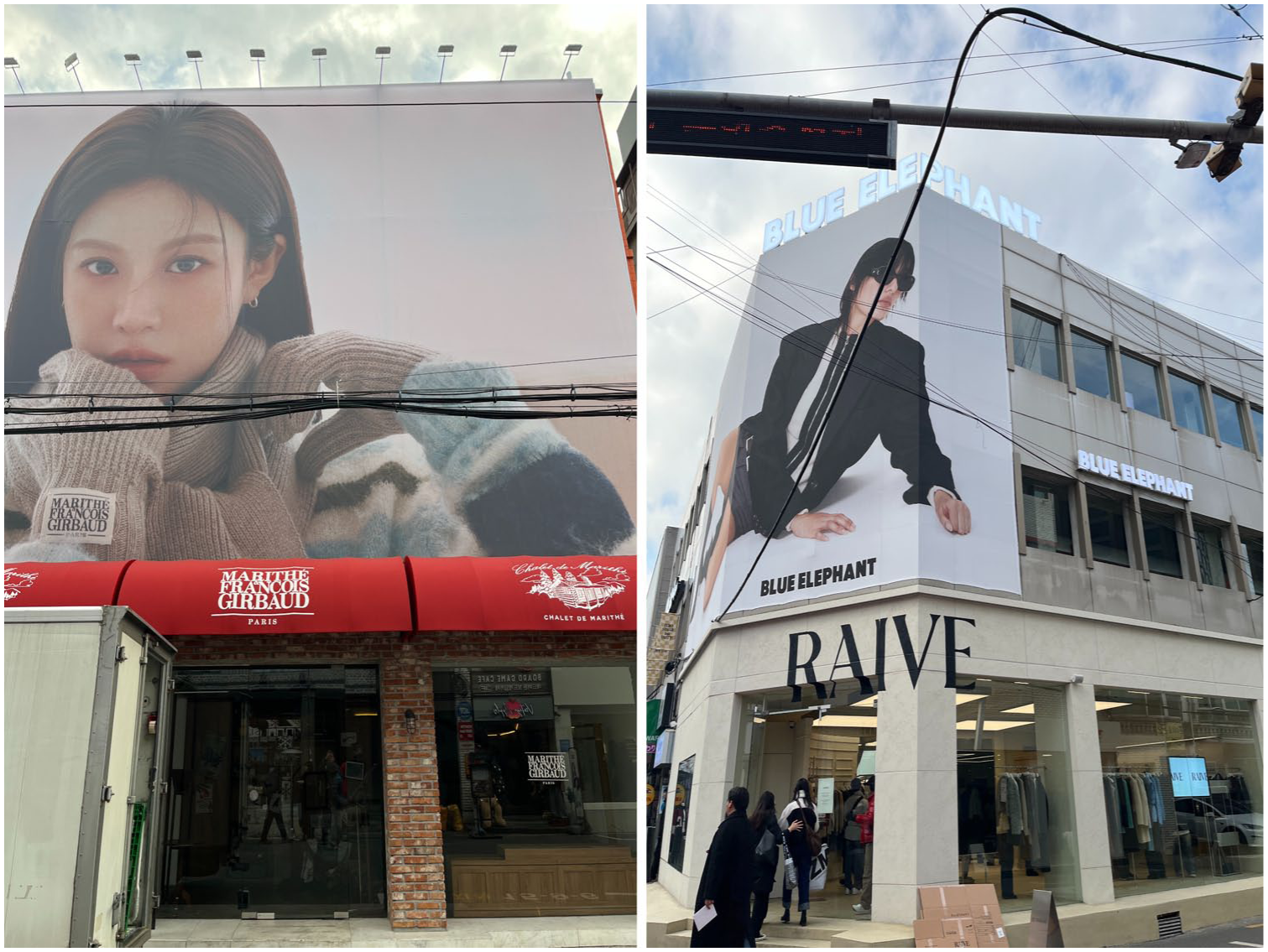
Bold Images of Celebrities Installed in the Extended Space of Pop-Up Stores (Photos Taken and Modified by the Author).
Visual–Human–Spatial Curation
The visual impact of pop-up stores is continuously reinforced by the active engagement of young customers with these event-driven businesses. Pop-up stores often employ guides to direct visitors who queue in front of the stores. As Figure 2 illustrates, the long lines, staff managing the wait, and designated queuing materials form a visible storefront, denoting the popularity of the brand and the exclusivity of the event. Visitors often take selfies against the visually striking shopfronts, interact with uniformed staff, and participate in interactive activities. These engagements become part of the pop-up store’s visual performance, transforming the built environment into a staged spectacle that draws in passersby, who may, in turn, join the scene. While this participatory visual performance visibly affirms the brand’s popularity, it also informs who is included in the festivity and their exclusive presence in the bustling streetscape. This interplay between inclusion and exclusion among visitors, businesses, and pedestrians implies the place’s value by visibly showcasing its participatory performances.
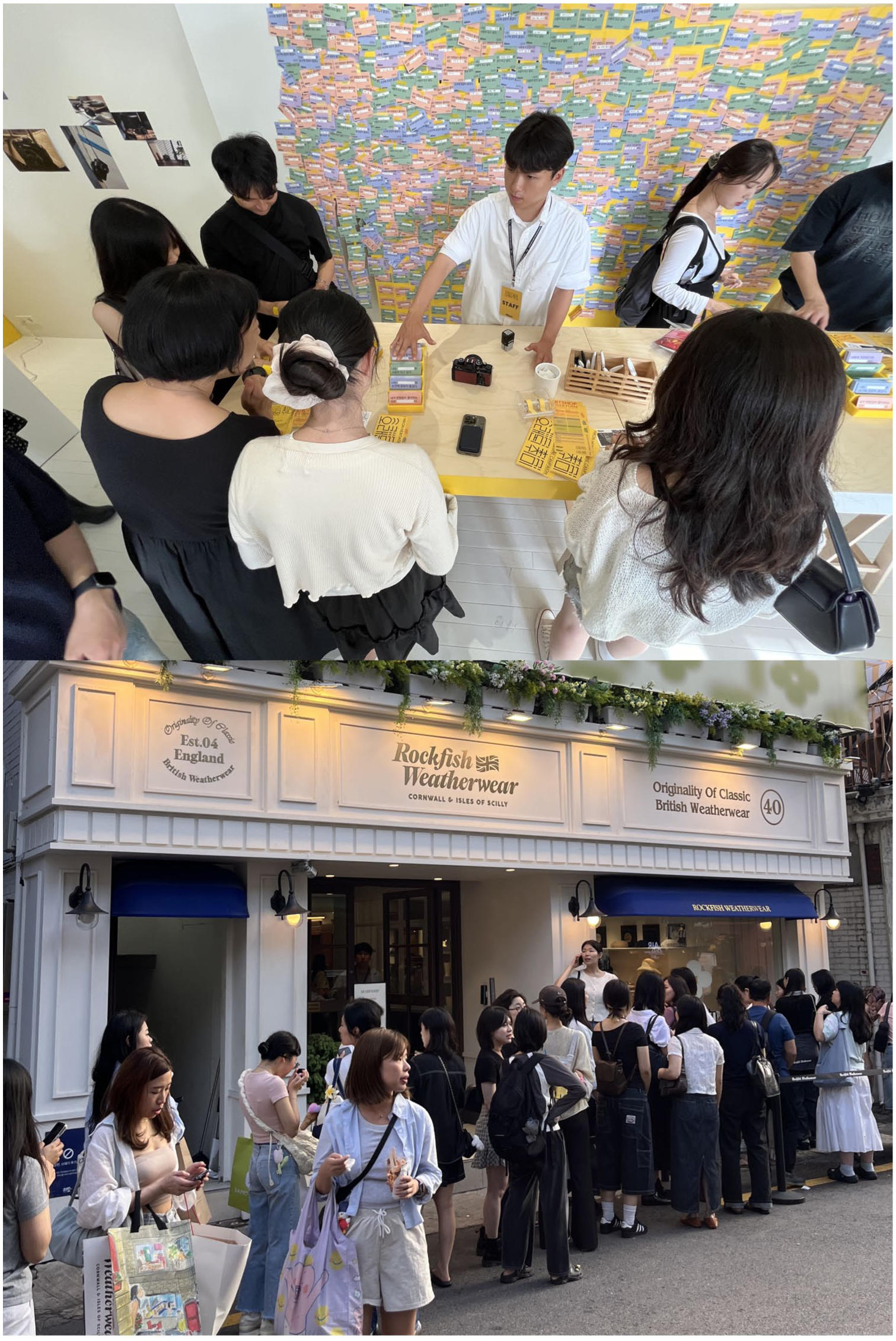
Visitors Engaging With Pop-Up Stores Inside and Outside. (Photos Taken and Modified by the Author).
Yeonmujang-gil is a street without designated sidewalks for pedestrians, resulting in a shared space where foot traffic intertwines with cars, delivery motorbikes, and stacked materials from old industrial businesses. The influx of visitors queuing for pop-up events intensifies congestion, transforming the street into a bustling space. One of the most heavily trafficked areas is the section near the Dior flagship store and Door to Seongsu, where long queues and clusters of pedestrians occupy the roadway, pausing to take photos. Cars become immobilized within the dense crowd, waiting silently for passage as pedestrian activity takes precedence. Despite the apparent disorder, this scene exemplifies how pop-up events assert spatial dominance by reshaping urban interactions, integrating with human, spatial, and material elements. The transient commercial landscape not only drives consumer engagement but also extends its influence beyond immediate participants through interactions with visitors and the surrounding built environment, conveying symbolic currency that signifies the dominant market status of pop-up business.
Interactions between visitors and the temporary spaces are often meticulously controlled to align visible engagements with the marketing strategy. Designed around a postcard giveaway event featuring professional photographs, The Nikon pop-up store in July 2024 guided visitors through a structured engagement process. Upon entering from the long queue outside, visitors received instructions from staff on how to participate. Following a designated path through the two-story store, they were encouraged to customize a blank paper using provided decorative stickers, creating a personalized ticket for stamp collections. As part of the experience, visitors were required to follow Nikon’s Instagram account and post an Instagram Story. At various checkpoints throughout the store, visitors collected stamps, which they could redeem for a professionally printed postcard. Around each checkpoint, activity table, and instructive poster, visitors actively engage with the store’s curated experiences, creating a strong atmosphere of brand-consumer interaction. By strictly limiting the number of visitors allowed inside at any given time and guiding them through structured interactions with uniformed staff, the store curates a highly controlled consumer experience. As a reward for making their experiences and the brand visible online, visitors receive a visually distinctive souvenir, incentivizing engagement. This deliberate regulation of movement within the space and the interplay between visual and human interactions assert the brand’s authority over the spatial and visual narrative, shaping consumer perceptions through both restriction and spectacle.
The visible engagement of human participants in and around pop-up stores is sustained through the convergence of the physical environment with digital media. Using their own digital devices, visitors access further information and exclusive benefits through the store’s designated online platforms while being encouraged to share their experiences on social media, presenting their experienced self. Once activated by scanning the code, the visit to a pop-up store is designed as a continuous interplay between physical experiences and digital representation. Digitally mediated engagement at pop-up stores generally falls into two categories. First, many stores request visitors to follow their social media accounts, with some offering material benefits, such as souvenirs, in exchange for user-generated social media posts about the store. Second, visitors independently share their experiences by posting images taken in and around the store, often tagging popular hashtags, including the store’s name. These digitally mediated pop-up experiences enable visitors to personalize their engagement while simultaneously amplifying the visibility of brands and products in online spaces.
Visitors document their experiences, capturing every corner of the meticulously designed, Instagrammable space. Through these images, they construct and represent their presence, aligning themselves with the branded physical environment. An Instagram post from the Coca-Cola pop-up in December 2023, dominated by the brand’s signature colors, features the iconic polar bear alongside the user, who is wrapped in a muffler prominently displaying the logo. Captioned, “Completed a trip to the hot place, Seongsu,” the post subtly frames the visit as an accomplishment. The celebratory photograph, rich in brand-identifiable visual elements, illustrates how the self, the branded physical space, and the surrounding neighborhoods mutually index their discursive value through a dual process of curation, first by the brand and later by the user representing it online. By associating themselves with these trendy spaces, consumers effectively position themselves within a sophisticated visualized brand space, showcasing their aesthetic taste through digital representation (Gupta & Ray, 2022; Schwartz & Halegoua, 2015). Pop-up visitors engage with the physical space by embedding themselves within its discursive dynamics of place, visuality, and branding, an interaction that is completed through its re-curation within their individual digital spaces. The semiotic systems continue to interact in online spaces, indexing the discursive meaning of the material world.
Visible Commercial Discourse
As previously described, Seongsu-dong consists of a dense mix of old industrial buildings that house small factories, workshops, and material suppliers, alongside an increasing number of commercial establishments. Amid rapid gentrification, many of these industrial buildings have undergone structural and visual transformations to accommodate stylish retail and food and beverage businesses. However, rather than erasing their industrial past, these spaces often retain or incorporate elements such as red brick walls, metal doors, and exposed concrete structures. The built environment has been particularly celebrated as a distinctive area that caters to the sophisticated tastes of the new commercialism (Kim & Ahn, 2024), signifying its transformation from an industrial zone into a trendy cultural and commercial hub. As the spatial transformation accelerates with the boom of pop-up stores, the shifting spatio-economic practices become increasingly visible, both explicitly in the changing built environment and implicitly in the evolving commercial dynamics (Figure 3).
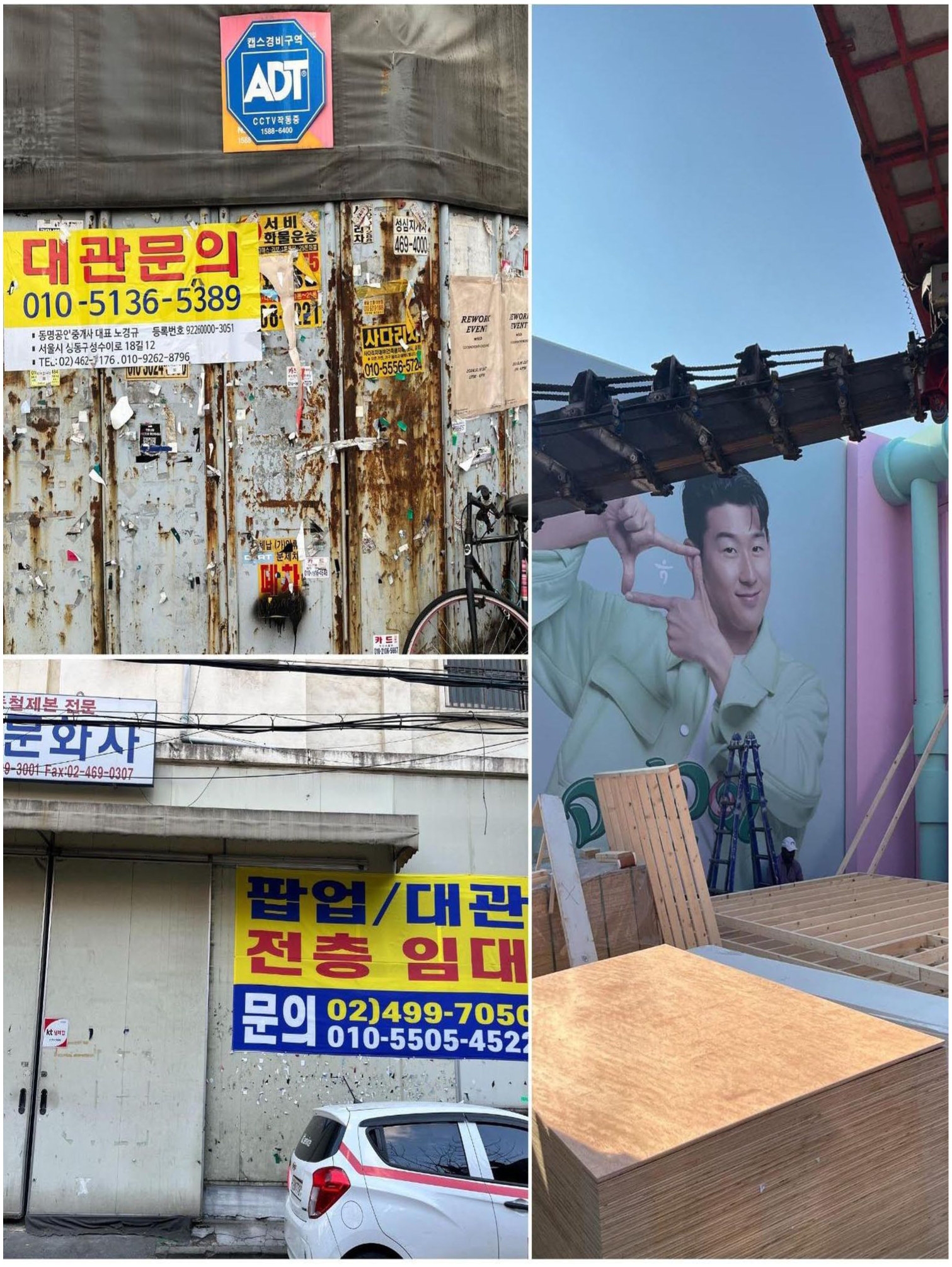
Rental Ads in Old Industrial Sites and a Pop-Up Under Installation (Photos Taken and Modified by the Author).
QR codes appear not only on posters directing visitors to pop-up stores but also on flyers posted by real-estate agencies and property owners seeking new pop-up tenants. In the early stages of Seongsu-dong’s pop-up boom, such rental advertisements were relatively scarce. However, they began to emerge gradually in 2023 and saw a rapid increase throughout 2024, becoming a prominent and visible element of Seongsu-dong’s evolving commercial landscape. Flyers are attached to old factory walls, industrial shop windows, electric poles, and construction site fences, all of which are typical components of the industrial landscape. While placed in different locations with different shapes and types of paper, these flyers typically feature simple texts, displaying contact information or a QR code for further details, along with a straightforward message such as “Pop-up Space for Lease,” as exemplified in Figure 3.0 The large number of rental advertisements, appearing in various shapes and locations, provides insight into the growing number of commercial establishments joining the pop-up rental business. A bright yellow flyer attached to a dented metal fence stands out amid the worn stickers haphazardly layered on the decaying surface, promoting industrial services and products. Displaying the contact information of a real-estate agency, it is the only clearly readable attachment, creating a “double indexicality” of the business’s dominant position in the area by visually distinguishing itself from the deteriorating signs around it (Scollon & Scollon, 2003, p. 23). Similarly, a pop-up rental flyer affixed to an old factory building more explicitly represents the power shift in the economic and spatial dynamics of the neighborhood, marking the transition from an industrial zone to a hyper-commercialized district. Despite the visual and quantitative prominence of pop-up rental advertisements, most are informal and temporary attachments, reflecting the fast-changing and ephemeral nature of pop-up businesses. When a new tenant decorates a storefront, the flyer previously attached to the window is discarded, only to be replaced once the pop-up concludes. These short-term rental cycles and rapid turnover are visually represented by the transient signage, underscoring the high volume of financial transactions shaping the neighborhood’s real-estate market.
It is not uncommon to encounter pop-up preparation or removal sites in this area. In July 2024, I came across a pop-up site being set up by one of Korea’s largest banks. Heavy equipment, vehicles, and workers in safety helmets and vests filled the space, contributing to traffic congestion while blending into the neighborhood’s industrial landscape. Against this backdrop of utilitarian structures, massive, illustrated panels stood out in stark contrast. As Figure 3 illustrates, these commercialized visuals, adorned with vibrant compositions and featuring Son Heung-min, the celebrated English Premier League footballer, were intended to transform the industrial setting into a site of commercial spectacle. The juxtaposition between the heavy industrial structures being reconfigured and the polished, market-driven imagery underscored the shifting economic and spatial dynamics of Seongsu-dong, where industrial remnants give way to a new era of consumer-driven urban aesthetics. Heavy industrial equipment and workers were busily installing a visually striking structure featuring a globally recognized footballer, renowned for his astronomical earnings, as part of a promotional design for a major financial corporation. Raw materials and machinery occupied the streets, quickly dismantling the industrial built environment of the neighborhoods. Through this transformation, industrial elements were not only repurposed but also became instrumental in creating high-cost commercial visuals, signifying the ongoing power shift from production to consumption-driven urban aesthetics. At the east end of Yeonmujang-gil, visitors may come across a large promotional installation on an e-commerce office building displaying the catchphrase “Making Consumption Sustainable” in both Korean and English, anchoring the dominant commercial discourse in the neighborhood.
Concluding Remarks
Before the boom of pop-up stores, walking along Yeonmujang-gil was challenging due to blockages caused by various industrial activities and materials, such as heavy equipment transporting large goods, supplier trucks motorbikes, and stacked boxes occupying the streets. Today, navigating the street remains difficult but for a different reason, as congestion from pop-up events often creates square-like crowds in the middle of the streets. Through ethnographic walking, this study traced the transformation of the neighborhood’s visual and spatial dynamics, which became increasingly pronounced over repeated walks across the years. Walking ethnography, combined with occasional participation in immersive events, revealed how pop-up stores not only shaped individual visual, human, and spatial performances but also collectively constructed a broader semiotic landscape by orchestrating their relationships with surrounding spaces and passersby. The transient commercial landscape cemented the norm of competitive, fast-turnover business logic in the neighborhood. While individually competing to stand out, pop-up stores along the streets commonly reflected the commercial discourse inscribed in their visual materials, compositions, and placement styles throughout the neighborhood. Their drive for visibility was accelerated by visitors who willingly associated themselves with the brands’ visual and market status, as well as by the aggressive incorporation of surrounding spaces into their marketing. Visual evidence, such as rental advertisements and the continuous installation of new pop-up stores replacing older built environments, clearly indexed the dominant position of ephemeral commercial spaces that invested heavily in short-term events.
The concentration of pop-up stores along the street creates a shopping arcade-like experience, encouraging visitors to explore multiple stores in a single visit rather than targeting a specific one. This fosters an immersive engagement with not just individual stores but the entire area. In this context, commercial marketing increasingly overlaps with place marketing, positioning brands as capable of producing “events and spectacles” (Koeck & Warnaby, 2014, p. 1417). As people walk along the street, they consume the curated visuals of the stores, transforming the act of walking into both visual and experiential consumption. In this process, visually and experientially marginalized spaces fade into the background. The visual and spatial dominance of pop-up stores not only enhances brand appeal but also reshapes urban spatial hierarchies, confirming Seongsu-dong as a commercial hotspot. While pop-up stores leverage their curated exclusivity, their transient nature underscores an economy driven by high-cost, high-impact marketing strategies. The intensification of visual competition prioritizes cost-intensive branding, highlighting a hierarchy in which visibility equates to market power. Moreover, the dominance of staged aesthetics over organic urban textures signals a shift in how commercial value is inscribed in the cityscape, privileging an elite consumers while marginalizing local businesses that rely on more conventional spatial practices. By selectively engaging with curated visuals, often through digital platforms, consumers extend the visibility of these spaces online, transforming offline encounters into digital performances. Their participation in the visual and spatial dynamics of pop-up stores reinforces the embedded commercial discourse as they actively contribute to its reproduction through their own acts of selection and engagement. Through geosemiotic analysis of the neighborhood’s physical environment and its digitally mediated interactions, this study demonstrated how private business practices tightly regulate human and spatial interactions, signifying the dominant status of commercial logic in the area.
To fully illustrate the visual–human–spatial performances that construct the broader semiotic landscape of the pop-up-filled area, this study took a focused approach, primarily examining visible interactions around pop-up stores. This focus limited the exploration of the wider network of producers shaping Seongsu-dong’s commercial landscape, including landlords, policy makers, local businesses, and residents. Future research could extend these dimensions to provide a more comprehensive understanding of the intersecting forces that sustain and reshape the area’s commercial discourse. A broader investigation would offer deeper insights into the dynamic interplay between evolving market forces, urban spatial transformations, and the dominant socioeconomic logics that shape contemporary urban landscapes.
Footnotes
Data Availability Statement
The data that support the findings of this study are available from the author upon reasonable request.
Declaration of Conflicting Interests
The author declared no potential conflicts of interest with respect to the research, authorship, and/or publication of this article.
Funding
The author received no financial support for the research, authorship, and/or publication of this article.
Ethics Approval
This research does not include any human-involved data that require ethics approval.
