




Abstract
Street posters are a prominent visual feature of urban environments alongside graffiti, commercial signs, and other public notices. This article explores the world of commercial street postering in Melbourne, Australia, examining posters not only as advertising media but also as semiotic agents and objects of urban governance. Drawing on ethnographic research with Melbourne’s four main poster companies, including interviews, field observations, and visual documentation, we investigate how posters occupy, maintain, and transform the surfaces of the city. We situate our study within broader histories of outdoor advertising and develop a methodological approach grounded in surface semiotics, a framework that emphasizes the material, spatial, and regulatory dimensions of urban signs and surfaces. Our analysis traces how poster companies navigate ambiguous regulatory environments, deploy digital data technologies while working with analog materials, and negotiate legitimacy through maintaining visual order in the city. This article positions street posters as sophisticated spatial agents that challenge simplistic associations with commercial outdoor advertising while revealing power hierarchies in the governance of urban images.
Keywords
“The walls spin, it’s as simple as that,” the street poster company director says. “If the wall looks crap, no-one cares about it anyway, so put a poster there. Before you know it you’ve got ten posters, and then, before you know it, you’ve got 100 sites.”
Sharp, warehouse lighting spills onto the sodden concrete driveway from a non-descript doorway in an inner-city industrial estate. Inside a van, a simple structure built from pine arranges buckets, brushes, extension poles and rolled posters systematically. Drips of glue and torn strips of paper flicked across the van’s flooring challenge the order of everything else.
We huddle as an installer pastes two paper sheets upon a frame affixed to the wall. His arms grow longer, connected to the extension handle of his brush. A bucket is drawn across the bitumen to his feet by the brush head hooked upon the bucket’s edge. Paste is brushed to the wall, a poster rolls down its wet and sticky surface. He flicks the brush back to his hand with his feet, and covers the papered surface again with paste, a symmetry of longitude and latitude performed against the wall.
“How many of these sites would you do in a day?” we ask.
“40–60 frames a day across the city in a nine hour shift,” he responds.
The walls spin.
Introduction: Seeing and Placing Posters
Municipal management of graffiti tagging; thousands of square meters of wall space in the inner city; human mobility data; street textures and surface territories; and centuries-old bill-posting techniques: when we started our research on street posters, we had little idea that these were some of the threads entangled in a single sheet of paper glued to a public wall.
Welcome to the world of commercial street posters, as we encountered it in Melbourne, Australia.
Street posters are a paper-based advertising medium in public space, placed at human scale on existing surfaces, to promote commercial content on city streets. They are part of long and diverse histories and practices of bill posting, outdoor advertising, public commercial signage, and displays. These vary in scale and medium from in situ shop signs and business advertisements to global networks of purpose-built roadside advertising infrastructure (billboards), hand-painted walls, digital screens, neon signs, decals, metal plaques, and paper posters—the semiotic landscapes of urban environments (Jaworski & Thurlow, 2010). With perceptions ranging from civic art to public nuisance throughout the 19th and 20th centuries, contemporary posters continue to exist “as a largely local and relatively low-tech alternative to screen-based media” (Guffey, 2015, p. 30). They are also, we argue, visual, material, and semiotic objects in the city, sites of urban governance, and regulatory devices for the management of urban surfaces. Just what makes street posters special in relation to other urban images is the main subject of this article.
Moving through the surface of the street poster, we first situate our contribution within urban visual and semiotic scholarship and place posters within histories and current practices of outdoor advertising. We then describe our ethnographic methods and the relationships we established with Melbourne’s postering companies before presenting our findings across three key dimensions: first, we locate street posters as sites of informality within the visual and material culture of cities (Aiello, 2011, 2021); second, we examine how posters contribute to the regulation and maintenance of urban surfaces through informal governance practices (Andron, 2023); and third, we explore how poster companies deploy and narrate technological tools in order to maintain relevance within the increasingly data-driven outdoor advertising sector. We contend that street posters are an oft-overlooked and undertheorized medium, with scantily expressed data that do not measure up to the evaluations and regulations of outdoor advertising. Legally, economically, and semiotically, posters remain ambiguous objects, despite their ubiquitous presence on the streets of inner city Melbourne. Using visual ethnographies of street poster sites, interviews with postering companies, and semiotic analyses of urban surfaces, this article makes space for posters in urban visual culture as a unique communicative typology of the contemporary city.
Cities of Signs and Walls of Advertising
Public signage and displays are gaining increasing traction in urban-focused scholarship, in response to what Sontag described as “the creation of urban public space as an arena of signs: the image- and word-choked facades and surfaces of the great modern cities” (Sontag, 1970). Fields such as urban communication or urban visual culture hold visual and semiotic engagement central to urban space research (starting with Venturi et al.’s (2007) 1972 Learning from Las Vegas, through to more recent work by Huhtamo, 2009; Kress & Van Leeuwen, 2017; McQuire, 2017; Papastergiadis, 2016; Degen & Rose, 2023). This multidisciplinary body of work has developed numerous arguments for understanding the importance of images in the governance, experience, and spatial politics of cities. Examples include Ward’s analysis of 1920s Weimar surfaces as dominant cultural and social spaces in the modern city (Ward, 2001), graphic marks as resources for making cities (Hodge, 2017; Jaworski & Wei, 2021; Papen, 2015), and conversely, cities as sites of semiotic production (Kim, 2024; Kress & Van Leeuwen, 2006; Scollon & Wong Scollon, 2003). In addition to these, more than three decades of graffiti and street art scholarship continue to elucidate the prominence of visual and semiotic practices in making, managing, and understanding cities (Andron, 2023; Gonçalves & Milani, 2022; Schacter, 2024; Young, 2014). Public signs and images are increasingly recognized as useful tools to shape and understand contemporary urban life. This article contributes to this growing body of urban visual culture scholarship while also attempting to crystallize the visual field into a robust focus for cities research (see Figure 1).

Overlapping Images and Messages on an Urban Surface, Including Advertising, Tagging, and Commercial and Activist Posters: The World of Surface Semiotics. 2024, Digital Photograph.
Outdoor signage and advertising have had a huge influence on the visual and material culture of Western cities since the 19th century, arguably to the same extent as architecture or planning—and it was the advertisement of private commercial interests that first created this public semiotic flurry (Henkin, 1998). As early as the 18th century, every trade shop in London had its own painted sign that marked the business in its location, while by the 1880s, there were already hundreds of billposter firms operating in the United Kingdom and the United States, circulating commercial information remotely and away from business premises (Cronin, 2010; Gudis, 2004). Since then, companies have divided and multiplied the surfaces of cities into advertising lots while designing and erecting new structures to formalize the display of text and images in public spaces. Permanent purpose-built structures devoted to bill posting grew legitimately alongside rapidly transforming buildings and urban infrastructures, generating a diversity of urban surfaces that became synonymous to the experience of the modern city.
It is hard to overstate the rapid and enduring proliferation of writing, images, and signs in public space since the late 19th century. In the 1920s, Berlin alone had 3000 electric advertisements on display (Ward, 2001), and highways in the United States had been transformed into “buyways” with the erection of thousands of billboards (Gudis, 2004). In Melbourne, advertising signs that are now on the Victorian state heritage register such as Pelaco, Skipping Girl, or Nylex also went up during this period. These signs not only marked moments of great economic development for local industries, but they also altered the skylines of cities and became urban landmarks and mediators of urban experiences. “The cityscape turned into a constantly metamorphosing, tension-filled patchwork of overlapping textual and visual images” (Huhtamo, 2009, p. 17). In this oversaturated brandspace, signs have also become a source of value themselves (Goldman & Papson, 2006, p. 328; Klein, 1999), contributing to the semiotic currency of the vertical city (Tripodi, 2008).
The billion-dollar media companies that control the global Out Of Home (OOH) sector such as JCDecaux, Clear Channel Outdoor, or oOh!media, all have their roots in the business models of early public advertisers, but their visual, material, and economic scale in world cities is currently unprecedented. They build, own, and rent advertising infrastructure, often tying display provision into public amenities such as transport networks and street furniture (Iveson, 2012). Alongside these dominant brandscapes (Klingmann, 2010; Wood & Ball, 2013), street posters remain a reliable, affordable, and nimble medium: To the outdoor advertising agent a poster is a placard or display posted or erected to be seen in a public place (that place not necessarily or usually being an actual point of sale but including public vehicles, transport stations and places of entertainment) as an announcement or advertisement. (Nelson & Sykes, 1953, p. 15)
Not a lot has changed since this 1953 definition of the street poster from Nelson and Skyes’ influential manual, Outdoor Advertising. Posters are still highly utilized street-level media, and their scale has remained constant for almost 200 years. A few aspects distinguish the typology of street posters within the outdoor advertising sector. Posters almost always rely on existing infrastructure, specifically, publicly accessible walls and surfaces. Most often this means building elevations, construction hoardings, and street furniture, with building walls and surfaces making up most street posters’ surface territories (Gerbaudo, 2014; Hoek, 2016). They are affixed to these surfaces with a cheaply produced glue consisting of cornstarch or flour and water, known as wheatpaste; their scale responds largely to street-level pedestrian and vehicle movement through the city. Individual posters are often combined into several adjoining frames to create large single-image displays across multiple sheets. These double, triple, or quad-sheets are called “megasites,” “supersites,” or “dominations” and are comparable in size to roadside billboards. However, they are still displayed at human scale on street level. As one of the Melbourne companies put it on their website, “They’re urban wonder walls, not highway drive-bys.” Finally, posters are “material things that live among us” (Guffey, 2015, p. 38), fusing with walls and forming a textured palimpsest of the city (Hoek, 2016) (See Figure 2).
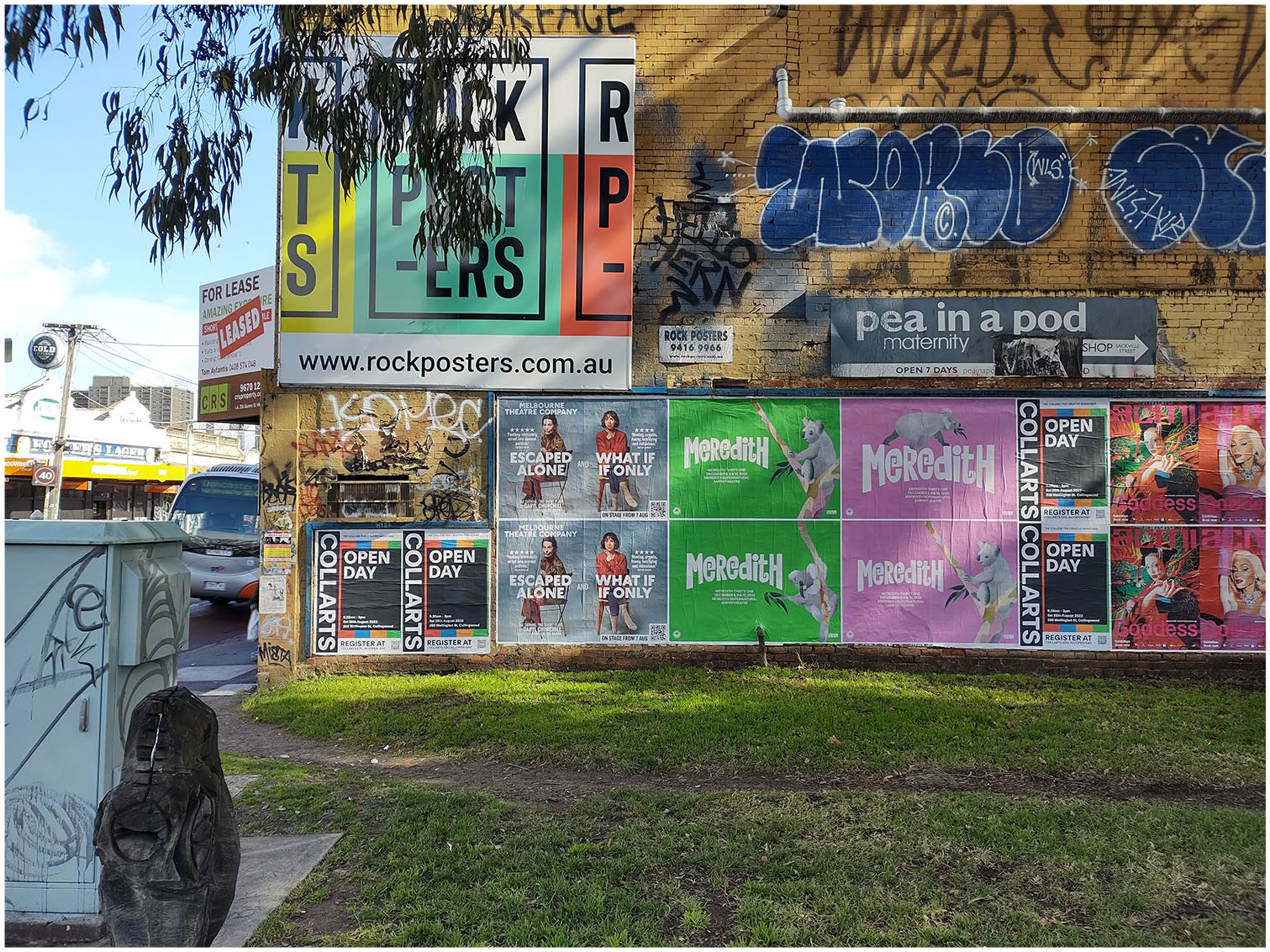
Posters Are Prominent Presences on the Surfaces of Melbourne. A banner for Rock Posters, one of the four local poster businesses, occupies the top part of this wall, while a typical framed poster location extends at the bottom. 2023, digital photograph.
We argue here that street posters are dominant visual and semiotic devices in Melbourne’s inner city suburbs. It was the shared observation of the density of street posters that first brought the two authors together to investigate how these sites were produced, managed, and regulated. Our approach draws from the outdoor advertising studies of Cronin (2010), Sedano (2016), and Iveson (2012), who have investigated the spatial production of billboards and posters in the city, as well as the different agencies and actors they entangle. In line with these studies, we suggest that publicly displayed ads are not simply parasites or capitalist encroachments on public space, and that their communicative function may not be the principal significance of the medium. Instead, we describe visual and material surface territories subject to ambiguous production and regulation, which have considerable implications on our experience of the built environment. Posters are mediators of public culture, as they enable us to form shared understandings of our city spaces in a manner that does not foreground human agency and makes space for the visual in urban studies (Amin, 2008, 2015).
Seeing and Placing Posters in Melbourne
Melbourne is a self-reflective city when it comes to its visual culture, much of which is articulated through the density of its streets, surfaces, and signage. As contested as they may be, the graffiti-covered laneways of the Central Business District and the inner suburbs have shaped the character of the city (City of Melbourne Council, n.d.; Dovey et al., 2012; Merri-bek City Council, n.d.; Young, 2010, 2011) as much as, if not more than, the municipal design and planning guidelines that regulate visual amenity and branding. Street posters are recognized to have contributed significantly to sustaining the local music economy for more than four decades (Walding & Vukovic, 2007, Pasted and Wasted, 2021), but their influence on the visual culture of the city has been much less explored.
To address this blind spot, we conducted ethnographies with the four main street poster companies in Melbourne, which consisted of repeated in-depth, semi-structured interviews and ongoing email exchanges with the management of the companies, along with interviews and field observations with poster installers (Office of Research Ethics and Integrity, The University of Melbourne, project no. 27418). The companies are Plakkit, Rock Posters, Shout Out Loud!, and Revolution360, and they each play distinctive roles in the Melbourne street poster scene. A detailed discussion of how each company positions itself in the market and in the street, how it competes with the others, and the policy implications of the postering business is pursued in another paper. Here, our focus is to unravel how the practice of street postering in Melbourne is deeply enmeshed within systems of urban maintenance, council regulation, local cultural histories, and semiotic production in the city, alongside graffiti, murals, and the outdoor advertising industry. It is a unique combination with notable implications for the governance of images in cities.
Generous senior management of these four street poster companies provided us with access to their offices as well as their street operations. Our facilitated interactions in each workplace included interviews with managing directors, owners, sales employees, and poster installers, tours of company offices, as well as an ongoing cooperation for follow-up queries, with exchanges ongoing at the time of writing. We conducted a total of nine semi-structured interviews with these research participants in each company, between July 2023 and May 2024. The interviews with management were conducted on site during working hours, and we accompanied poster installers in the field, which allowed us to observe their working strategies and techniques. In addition, our ongoing engagement with the medium includes collaborative creative and public engagement practices such as leading walking tours as part of the Melbourne Public Humanities Initiative and the Being Human Festival; Andron’s research exhibition Unredacted City, with Parkinson as a contributing artist (see Figure 3); Parkinson’s exhibition, SUBTEXT, produced collaboratively with poster installers (see Figure 4); and the residency and public programming event SURFACITY, funded by the University of Melbourne’s MPavilion program.
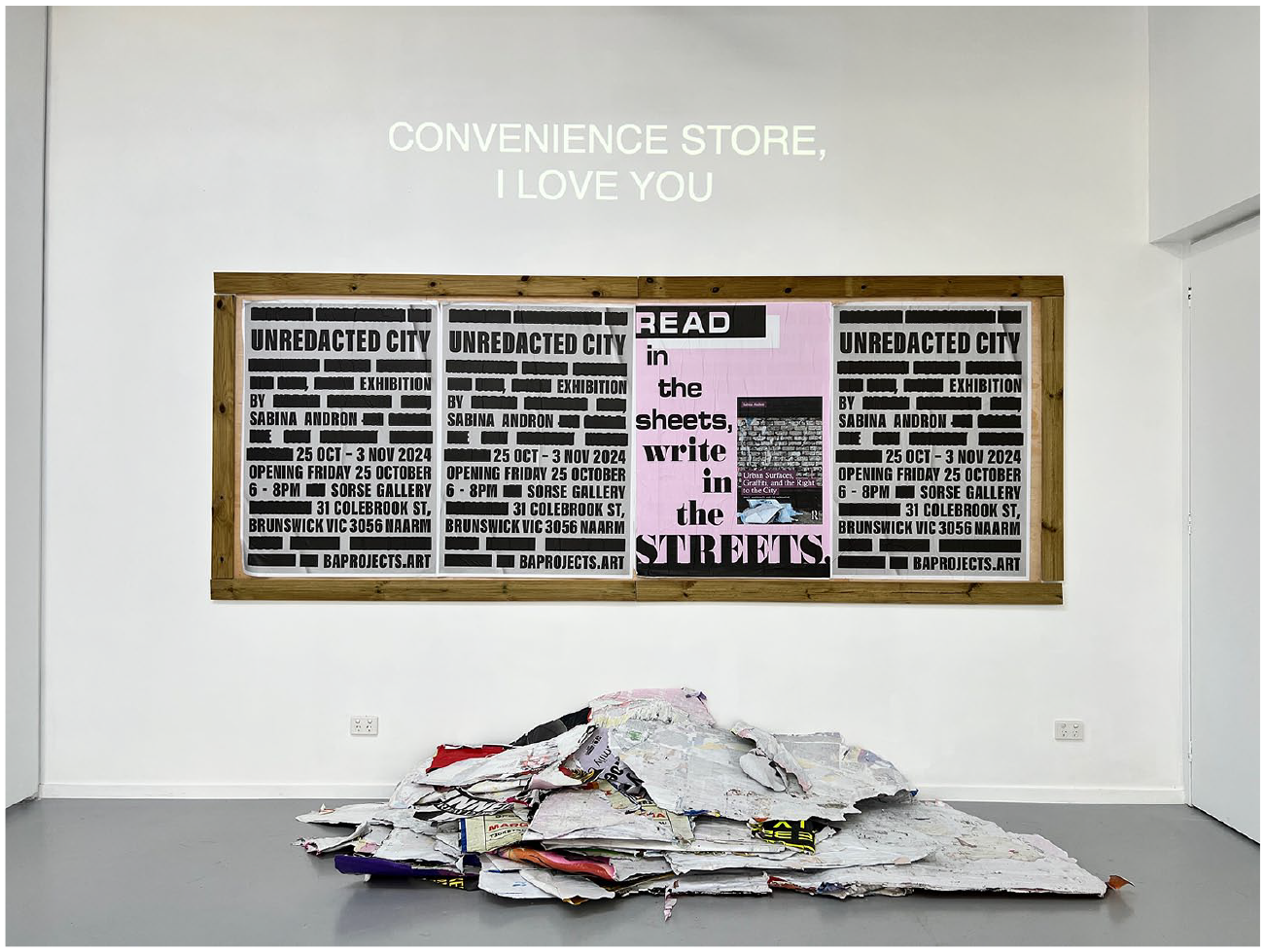
Sabina Andron, Unredacted City Exhibition Installation View. Framed posters, projection, discarded posters. Sorse Gallery, Melbourne, Australia. 2024.

Chris Parkinson, PARANGTRITIS. Framed Billboard Posters, 84.1 cm x 475.6. SUBTEXT exhibition, The Sidney Myer Gallery, Melbourne, Australia. 2024.
Visual Ethnography and Surface Semiotics
Alongside the interviews, we conducted a visual and material ethnography of poster sites in Melbourne, focusing on the materials, spatial contexts, and site conditions of posters (Anderson & Wylie, 2009; Baker, 2005; Hunt, 2014; Langmann & Pick, 2018). This involved observations across seasons and weather conditions, during high and low event cycles, and repeated visits to both formalized, framed sites and “wild” postering locations. Visual documentation and field notes tracked the frequency of turnover of the sites, the weathering of the posters and their transformation into thick, cumbersome masses attached to surfaces, and the ways in which posters interacted with other inscriptions, images, and surface materials such as graffiti tagging or street art. In line with Trinch and Snajdr’s (2017, 2020) analysis of shop signs in Brooklyn as “highly visible arguments about place and people in place,” we approach posters as both prominent and ambiguous elements within the city’s visual order—sites of meaning, mediation, and contestation (see Figure 5).
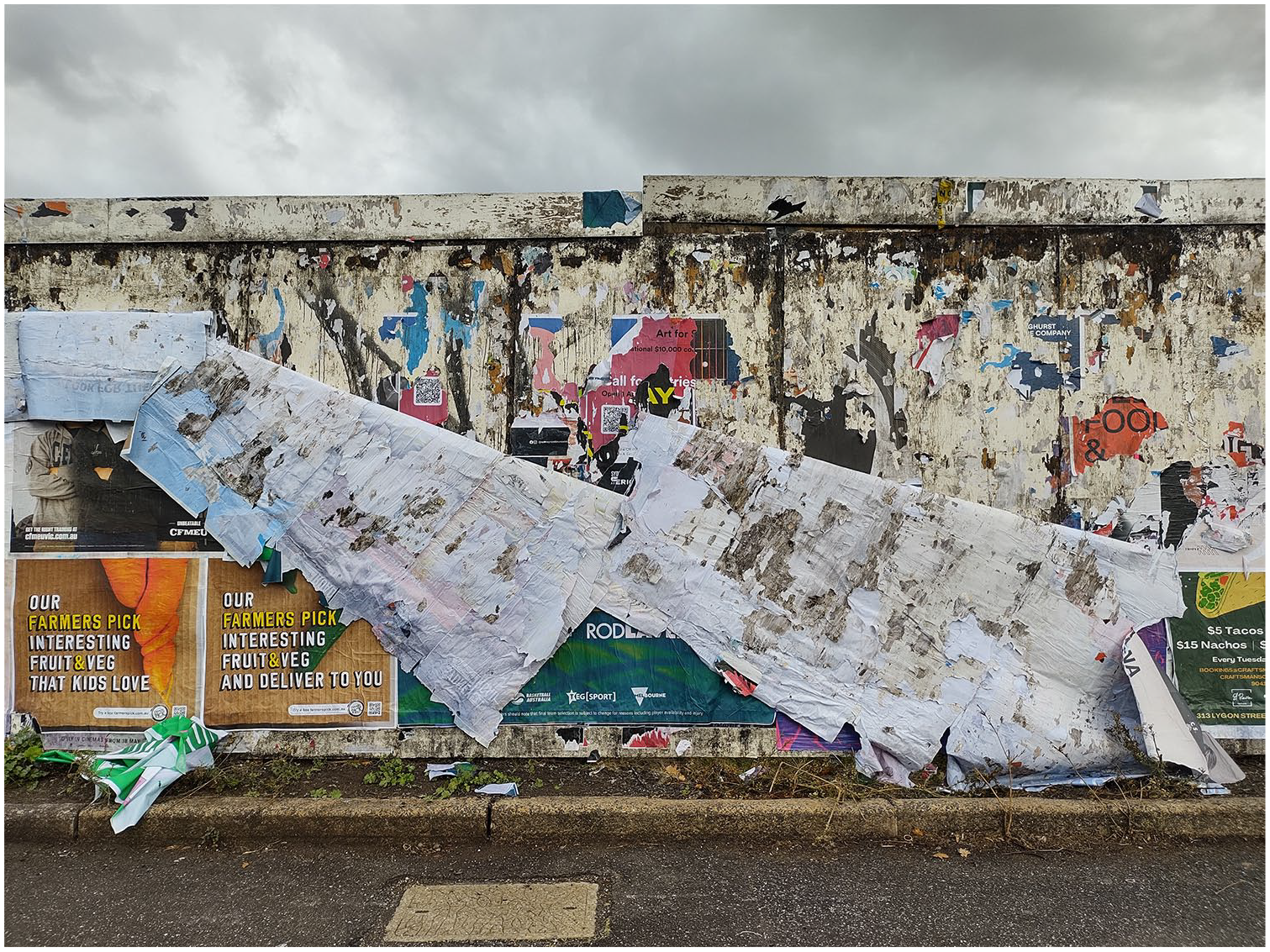
A Poster Surface Sheds Paper, Revealing the Frailty of the Medium and the Multiple Materialities It Entangles.
Ethnographic, multimodal approaches are best suited for studying signs in public spaces in a way that accounts for their objecthood and materiality, as much as their communicative function (Blommaert, 2013; Cavanaugh & Shankar, 2017; Wagner et al., 2011). They foreground the material and social specificity of signs while accounting for their territorial relations. In the case of posters, this meant capturing the textural and visual environments that posters generate on surfaces, rather than analyzing the content of the displays (Arnold, 2021). In other words, we performed a context, rather than a content analysis of street posters, focusing on their “relationalities, connections, tensions, and performances” (Cronin, 2010, p. 14). This approach is informed by surface semiotics, a methodology that centers the layered, contested, and material inscriptions archived by urban surfaces, asking how signs, images, and messages interact, how they are regulated, and what they reveal about the spatial, social, and political production of urban space (Andron, 2023; Andron et al., 2024a, 2024b, 2024c) Building on Low’s (2016) call to specialize culture, we use surfaces as an evidence base to describe urban visual culture, exploring posters “to understand the placement and entitlement of signs in the city and their always networked semiosis” (Andron, 2023, p. 14). The focus on urban surfaces distinguishes this approach from methodologies such as geosemiotics (Scollon & Wong Scollon, 2003) or semiotic landscapes (Jaworski & Thurlow, 2010; Papen, 2015), which we nevertheless remain indebted to.
The photographs that accompany our writing are tools to perform this surface semiotics. Photography is used not merely as representation, but it is a tool to document poster textures and surface territories across time (see Figure 6). Following Pink (2018) and Arnold (2019a), we understand photography as a way of moving through and learning from space, reflecting on how visual practices inform urban experience. We therefore practice photography as spatial production and navigation, an “end result of a process of seeing” (Cronin, 2010, p. 123) and experiencing urban spaces through their postered surfaces. The aim of this approach is to elucidate ways in which posters orient the visual culture and surface territories of the city and create a shared sense of urban identity and social world. We are asking what posters can tell us about how urban surfaces communicate, how they are produced and regulated, and how posters shift the types of values surfaces become productive of—financial, visual, atmospheric, and cultural.
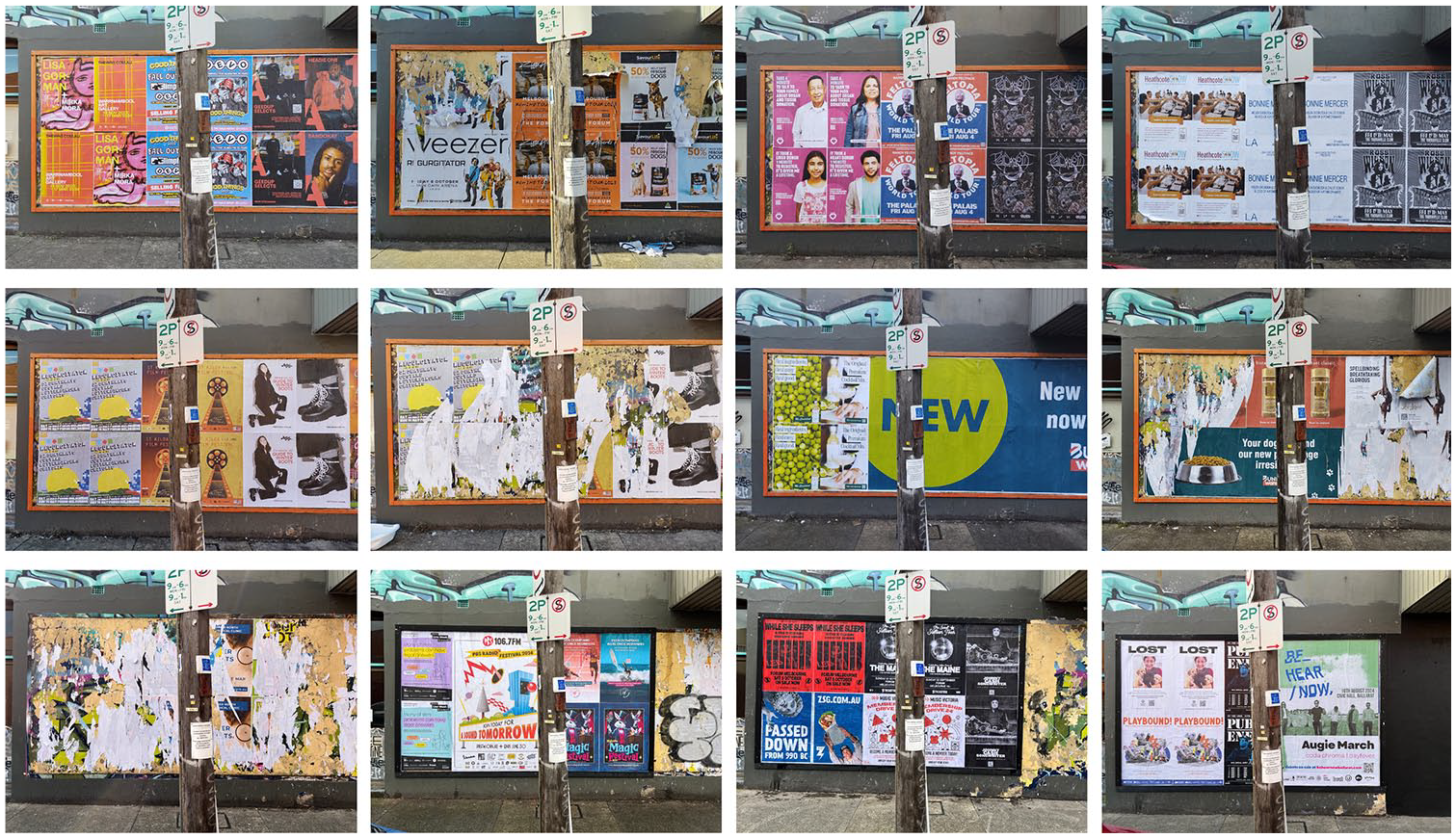
The Same Poster Location Captured Over Several Consecutive Months. Notice how the orange frame was removed in the bottom left corner and the posters stripped away, only to be replaced by a smaller black frame, with the remaining wall to its right painted black (see last image). The different color frames belong to different companies, signaling that this surface has changed ownership. 2024, digital photography collage.
Surface Maintenance and the Regulation of Posters
To understand how posters operate at the intersection of advertising, governance, and visual order, we turn to the regulatory conditions that enable their legitimacy and the informal municipal arrangements that sustain them.
A long history of civic resistance against outdoor advertising accompanies the development of the medium, with campaigns against billboards starting as early as 1907 (Gudis, 2004; Iveson, 2012). In contemporary cities, regulations of outdoor advertising mainly focus on restricting the content of displays (e.g., banning alcohol ads in the proximity of schools or sexualized representations of bodies) (Arnold, 2021; Australian Parliament & Perrett, 2011; Cronin, 2010). Some regulations restrict the form or medium (such as turning off digital billboards at nighttime), while others prescribe the size, frequency, and placement of purpose-built advertising structures. A few cities even went as far as banning outdoor advertising altogether (see the São Paulo Clean City Law of 2006), and there are currently restrictions placed on OOH in many cities around the world, including Paris, Singapore, and New Delhi. These measures are premised on creating and upholding visual order in cities, alongside similar strategies of graffiti removal, urban branding, or regulation of street signs (Arnold, 2019b; Denis & Pontille, 2024b).
Despite such restrictions and their converse allowances, there is little enforcement at the municipal level, and outdoor advertising companies often run rogue operations. For example, Sedano (2016) found that more than half of the signs surveyed by a municipal billboard inventory in Los Angeles were illegal or non-compliant (a total of more than 5,000 signs)—and similar results likely hold true for billboards in cities around the world. A 30-m non-compliant billboard killed 14 people and injured dozens after it collapsed during a storm in Mumbai in May 2024. And while this is an extreme example of the potential consequences of non-compliance in outdoor advertising, an “informal landscape of signs” describes the surfaces of many global cities (Sedano, 2016, p. 232).
Our findings on the municipal governance of street posters are consistent with Sedano’s (2016) research on billboards in Los Angeles, and Iveson and McAuliffe’s (2022) work on the governance of street art in Sydney, suggesting that similar arrangements operate in multiple cities. Here and elsewhere, the visual landscape of public signage is often managed informally, with contradictory approaches in different jurisdictions and municipal agencies—what Iveson and McAuliffe (2022) call “informality from above.” They found that graffiti and street art were often governed informally, based on whether they were deemed to make a positive contribution to neighborhood character and visual amenity. Posters operate in a similar tactical space, occupying surfaces in a way that is highly responsive to preferences for orderly, neat-presenting environments. Little more than visual amenity is needed to create a lax regulatory environment, where poster companies continuously expand their territories and maintain the appearance of legitimacy through a simple, yet misleading gesture: they frame their display sites (See Figure 7).
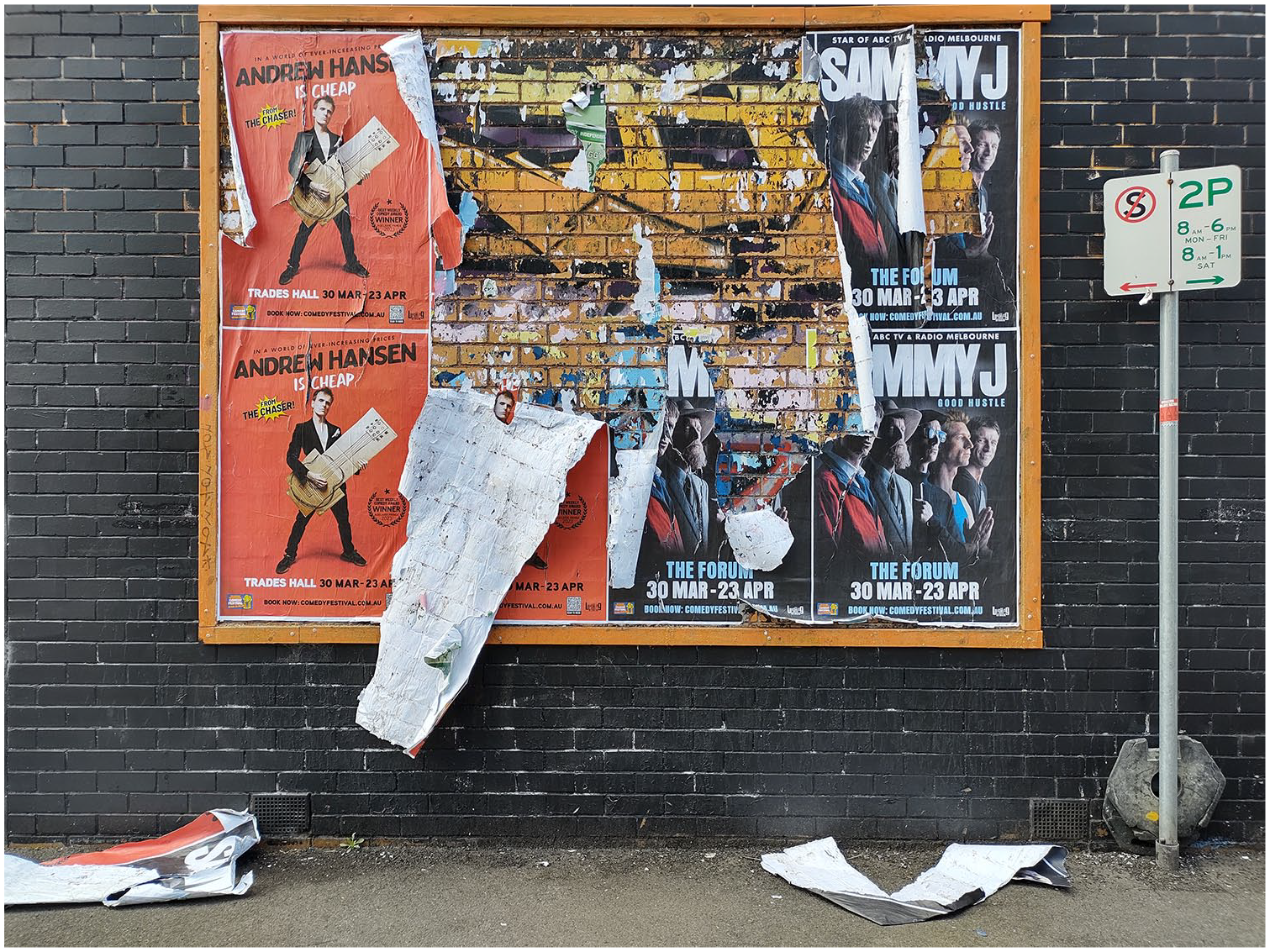
Posters Buff Surfaces. A peeling poster reveals the graffiti it is typically meant to conceal. Black paint around the poster frame maintains the desired visual amenity of this surface by obstructing the visibility of graffiti. 2023, digital photograph.
Thin wooden or metallic frames are often added to existing urban surfaces in Melbourne, creating designated locations for posters and formalizing these surfaces as display infrastructures. These frames are erected in agreement with property owners and are a common occurrence on the surfaces of the city’s inner suburbs—one of the defining features of the city’s visual landscape. Framing the poster sites aids in their perceived regulatory compliance and legitimacy in occupying surfaces, but our interviews revealed a more complex reality. All purpose-built framed sites have agreements with property owners, whereby companies pay them a yearly rental fee or commission for using the public-facing surfaces of their buildings as income-generating territories. In addition to these agreements, many of these framed display sites require planning permission from local authorities. Most of them don’t have it, yet they are still allowed to operate with minimal resistance or oversight. This example of informality from above “helps us to better understand the ways that order is produced, policed, and contested in the governance of urban landscapes through aesthetics more broadly” (Iveson & McAuliffe, 2022, p. 3).
There is an aesthetic order that determines what is accepted and tolerated, as well as a procedural order that comes from an expectation that a certain surface image is meant to be there or is in its right place. Tacitly or explicitly, Melbourne poster companies are allowed to operate because they perform a surface maintenance service: they make walls appear nice and tidy by removing older, unwanted (often competitors’) posters, and by washing or painting over graffiti around their display sites. Public body priorities for visual amenity are cleanliness and order, the removal of graffiti, and a neat presentation of the posters in their occupation of surfaces. In some cases, advertising display contracts have even been awarded to specific companies under civic asset maintenance tenders, turning visual maintenance into a vehicle to boost the legitimacy, value, and desirability of the poster business.
A hierarchy is therefore established between the advertisers, where legitimacy and market competitiveness are often defined according to who maintains the neatest sites. “That’s what we do, we say we’ll maintain the site, the landlords love it, the tenants love it, and it works well with corporate client demand as well”; “They get cleaner walls, no more illegal posters, they get paid for essentially doing nothing, [. . .] they get a cleaner environment. And they get money”; “So they’re getting their unsightly wall sorted out, they’re getting some promotion, and they’re getting an income. It’s a win-win”—these statements were each made by management in different companies, explaining the maintenance-based benefit equation at the core of their business: property owners are happy, councils are happy, and more importantly, the surplus, unsightly, illegal (ie others’) posters are out of the frame.
This strategic investment in maintaining clean sites goes beyond intra-industry competitions. Posters are also allies in municipal wars against graffiti (Iveson, 2012)—a paradoxical status that highlights their in-between nature as semiotic agents. A visual hierarchy thus emerges not just among posters but also in relation to graffiti and other components of the semiotic landscape. As one company manager put it, “We’re stopping taggers from really destroying small businesses.” The positioning of some postering businesses as legitimate in relation to others, and further in relation to other types of surface signage and displays, is key to acquiring this legitimacy. If others are dirt, then someone gets to clean it. It is the business model that Jean Claude Decaux started decades ago and which persists across the sector. It extends to street poster companies’ provision of public infrastructure in the form of street furniture, transport amenities, or simply clean walls (Australian Parliament & Perrett, 2011, pp. 33–34).
Infrastructure provision through advertising has taken place historically, but neoliberal urban governance has made it more prominent by outsourcing public services to private companies (Iveson, 2012). For example, one of the company CEOs upheld that people don’t fully understand this benefit of OOH: “so when people complain they don’t want advertising on their bus stops, the answer is okay we’ll just take the bus stops away.” Justifications like this are not new. This is how JC Decaux described his business model in the 1960s: When I created the first advertising bus shelters, free of charge to local authorities, I wanted to take on several challenges: to provide a service to public transport users; to remedy the problem of dilapidated equipment; to fight against surplus and unsightly advertising and, by revaluing it, make known the lively role that quality advertising can play. (Iveson, 2012, p. 160, with emphases added)
Neat, clean, well-kept surfaces are the main route for most companies to obtain and keep postering sites, so the cheap and messy stuff needs to go, be it graffiti, other posters, or any display that is perceived as falling outside desired visual and material orders. There is an implied hierarchy of material value, cultural significance, and legitimacy in these practices. Regulation becomes a proxy for maintenance and generates a regime of visual governance in the city.
This model suppresses the surface production of unwanted agents and restricts the semiotic span of the city to compliant, yet privatized and exclusive occupations of space. For example, low-key cultural producers often depend on distribution through informal public media, but some of their main available surfaces are given over to advertising agencies as a means of tidying them up (Treger, 2011). In Iveson’s (2012) words: “Outdoor advertisers and urban authorities have become partners in regulating and restricting the use of urban public spaces as media.” (p. 162) Municipalities support this hierarchy by delegating visual governance to OOH companies themselves, so these businesses become responsible for the removal of graffiti, posters, or stickers. Posters therefore create a hierarchy of aesthetic order whereby they help control the spread of graffiti and position themselves as a medium of greater legitimacy. But the fact remains that affording poster companies public contracts under maintenance tenders is hugely problematic, because it bypasses their visual takeover of those freshly “cleaned” surfaces. This matters because, if we consider surfaces to be civic amenities in cities, then their authorship becomes a primary concern of social production and agency in public space.
What complicates things even further is that some of the companies continue to paste outside these frames, with one company admitting to as much as 50% of their postering occurring outside their loosely designated display territories (what they call “wild postering”). On one hand, street posters are municipal allies in the upkeep of visual amenity, and on the other hand, they disrupt that visual amenity by using street-smart tactics of surface occupation. This paradoxical status highlights their in-between nature as semiotic objects of urban governance. They straddle an ambiguous regulatory space between the outdoor advertising industry and other urban media such as graffiti, leaning in either direction as required to maximize the opportunity of occupying surfaces. Much more than billboards or the more formal OOH sector, posters are removers as well as removed—an ambiguous yet agile role that paper deals with exceptionally well as a cheap, high-turnover material. Yet despite their material and regulatory agility, street posters would not maintain their commercial legitimacy and their relevance within the outdoor advertising sector without a crucial recent development—which we turn to in the final part of this paper (See Figure 8).

A Cleaning Contractor Pressure Washes Illegal Posters From a Building Surface. The paper and wheatpaste turn into a thick sludge before the remaining graffiti can be chemically removed. 2024, digital photography collage.
Paper, Wheatpaste, and Data Obscurity
Outdoor advertising has become a heavily data-driven sector, particularly with the proliferation of digital screens and billboards which allow for advanced data collection and commercial scrutiny of urban surfaces. Commercially, posters are part of this increasingly digitized landscape, which they must navigate as paper-and-wheatpaste objects. Indeed, these humble materials have carried street posters through almost 200 years of resilience and commercial success in outdoor advertising. “At best, posters flourished in areas where newer communication technologies were less effective or had not arrived” (Guffey, 2015, p, 22). In this reading, the leap between a wall and an income-generating asset is as simple as pasting a poster on that wall. A successful formula of using a cheap, perishable medium with no inherent value, to generate complex financial and semiotic economies on urban surfaces.
Or so it would seem. You wouldn’t think walking past a street poster (or at least we didn’t) that some of these sites are now heavily technologized through mobile data gathering and customer targeting, and that the paper that washes away and cracks so easily, can hold a range of different data under disguise. But the more we learned about the business operations of street poster companies in Melbourne, the clearer their technological capacity and ambition became.
Cronin (2010) described the city through the advertiser’s eyes as a rhythmic sequence of moving attention spans, which are increasingly captured through data tracking technologies in a form of neuropolitical control (Wood & Ball, 2013). For example, the sector captures engagement through measurements such as OTS (Opportunity to See), VAC (Visibility Adjusted Contacts), MOVE (Measurement of Outdoor Visibility and Exposure), NIF (Neuro Impact Factor), or Dwell Time. The Outdoor Media Association of Australia uses these to determine the number of opportunities the target audience has to see an advert; the probability of contacting the audience based on visibility research; and the time spent by the audience looking at the asset (MOVE Outdoor, n.d.). This activation and orientation of urban spaces based on the commercial viability of bodies in motion was described by Cronin as the “commercial ontology of the city” (Cronin, 2010, p. 15), the production, designation, and measurement of urban spaces according to their commercial potential for outdoor advertising.
When we started this project, we assumed (perhaps naively) that posters somehow bypassed this tech-enabled mapping of urban spaces and attention spans. Instead, they occupied surfaces by way of visible and tangible (read: touchable) matter such as paper, ink, and wheatpaste, and in dialogue with other surface semiotic components such as textures, displays, signage, graffiti, and existing advertising. However, the pressure to use technologies that maintain the relevance of posters within the OOH sector has created a prominent discourse of progress and legitimacy. There is a constant effort to come up with operational and technological innovations that enable turning surfaces into assets more efficiently, but the limitations of paper and wheatpaste are hard to overcome when compared to digital screens. As the head of sales of one company put it, “True innovation is really hard” when it comes to physical display infrastructure on city surfaces. “At the end of the day it’s still gonna be physical space”—but digital technology and innovation in commercial and market research metrics can and do increase the financial value of physical surfaces (See Figure 9).
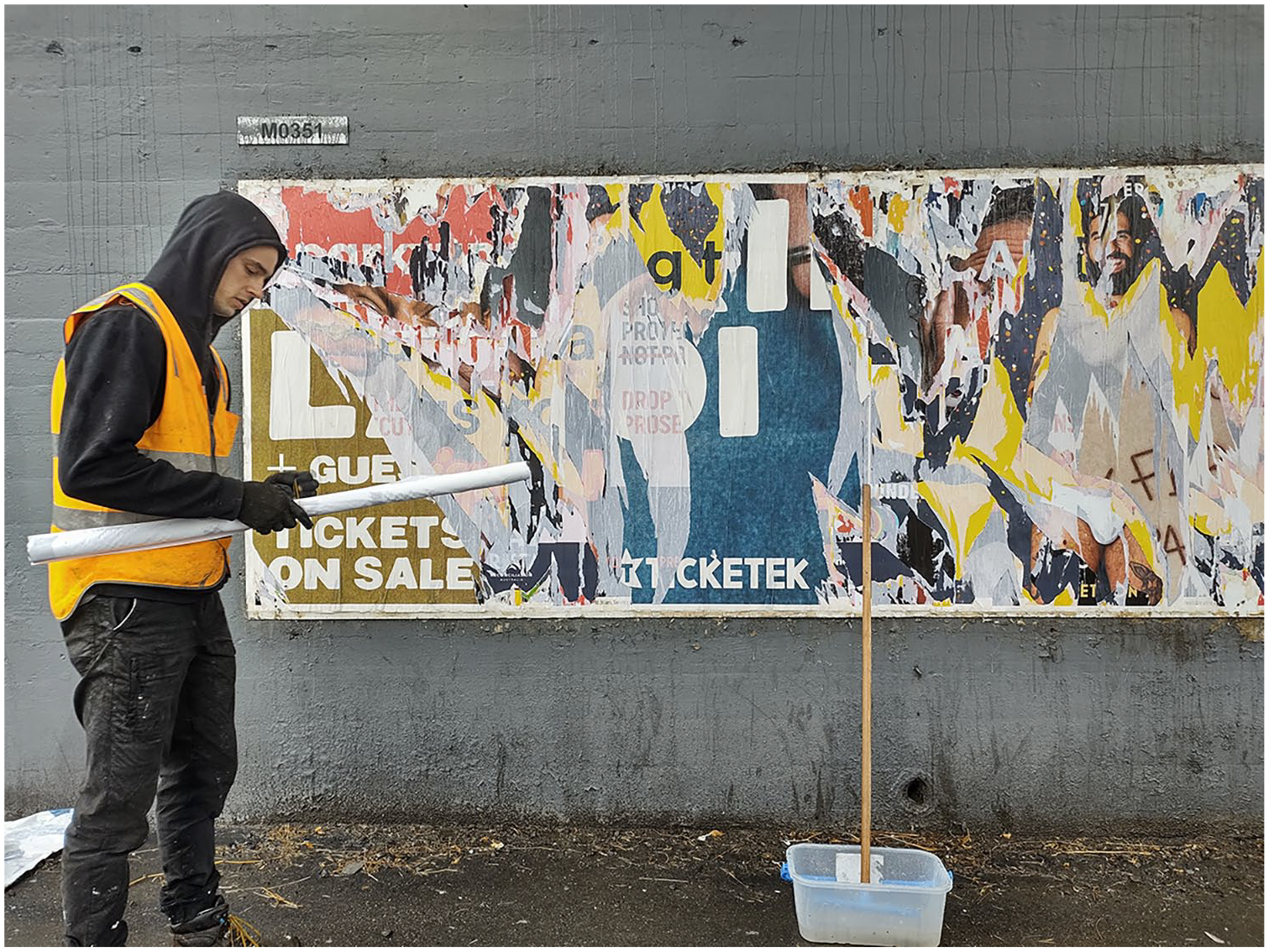
The Success of Poster Campaigns Is Measured Through Mobility Tracking Data as Soon as the Posters Are Pasted on the Surface.
During our interviews, we were presented narratives about these metrics which are very difficult to verify or cross-check. All Melbourne street poster companies have either developed in-house solutions for data analytics or are purchasing third-party data to better understand who they are reaching and better justify their poster placement strategies to their clients. “So anyone that’s got a mobile device on him [sic!], who doesn’t these days, when you walk past our sites, you actually get pinged and it lets you know how many people go past.” Most, if not all, of these data comes from tracking phones as people move through public and open spaces. In our interviews, we found that technology allows street poster companies to measure audience engagement through indicators described above such as OTS, VAC, or Dwell Time, and therefore improve service accountability by creating evidence-based client reports: “We have to present the same kind of accountability that digital does.” They can also target specific demographics (e.g., 18–34 year olds) based on human mobility data points which “can give you full detail about who goes past our sites.” “Demographics, spending habits, shops people go to, dwell times after they go outside to the shop, we can pull that data.” This can lead to a significant increase in revenue: “It was a growing business, 25–30% year on year, until we turned that data tap on. Within an 18-month period, it tripled.”
The performance of these stories has its own spectacular logic of gossip in the scene, which in turn creates the market and enables the success of the industry. This finding is strikingly similar to Cronin’s results from her 2010 research on the British OOH advertising sector. Namely, data are constantly produced and different metrics are developed all the time, but they are not necessarily true or verifiable across the sector. Cronin (2010) called this an “agreed currency,” whereby “data can be used as a decision support technology, a post-rationalization, or an alibi for commercial decisions” (pp. 24–25) but is not explicit, measurable, or accountable. The research produced by outdoor media companies is not empirically valid but is rather a tool for commercial engagement that assures flexibility and sufficient points of difference to maintain a competitive advantage (Cronin, 2010, p. 179). For example, the use of technology enables street poster companies to map their territories to ensure compliance with the placement of alcohol advertising, or electoral wards for local election campaigns. All companies we interviewed separately boasted developing “a really, really sophisticated mapping system”; using “a software which nobody else does”; and building “a really sophisticated data tool”—but the details of these platforms remain obscure. The very measures that enable each company to boast accountability to their clients are the ones that they construct as their competitive edge and therefore keep secret as proprietary assets. An industry standard would destroy the industry.
As OOH industry standards for measuring visibility and impact are increasingly common, the poster sector remains surreptitious and ambiguous and continues to eschew accountability. So much so that street posters have no place in OOH, with the industry standards for the sector not even listing posters as a type of outdoor advertisement (Out-of-Home Advertising—Australiam n.d.). This allows companies to take liberties in how they run their operations, yet the sector is worried about being left behind. Adoption of new technology continues to remain an aspiration, as a difference between an old, rudimentary way of doing things, and a new, sophisticated, and therefore more profit-generating operation. The more we advance in the future of the sector, the more it is being portrayed as something dematerialized—but material context, installation, and labor remain a major part of it. “At the end of the day, it’s hard to measure paper and glue. The best measure is ‘your megasite’s up, go have a look.’” This pervasive materiality of posters may also be their best asset, as their human-scale connection to the city makes the medium iconic and nimble and affords it a unique position in the character of city streets. “Even—perhaps especially—in a digital age, the materiality and life of a poster can maintain a powerful hold on us” (Guffey, 2015, p. 37) (See Figure 10).

“Walls Fuse With Posters” (Hoek, 2016, p. 76): A Scan Reveals the Material and Textural Composition of the Back of the Posters; and a Photo Captures the Layered Remains Which Continue to Make the Surface Long After Their Messaging Is Gone.
Conclusion: Making Space for Posters
When we started this research, we wanted to understand how postering sites were created, managed, regulated, and maintained; to put into historical context the culture of outdoor advertising and posters in Melbourne; and to integrate these reflections into broader considerations of surface values and urban visual culture. Street posters are such a common presence in the inner suburbs of Melbourne that they generate a visual identity for the city and contribute significantly to the character of its streets. At the same time, they turn urban surfaces into profit-generating territories while creating a visual hierarchy on the street. These are just some of the contradictory aspects of the world of street posters.
Our findings from Melbourne have shown that postering businesses manage walls on behalf of councils, they negotiate surface territories with graffiti writers and artists, they enter contracts with property owners and government bodies, they create urban images, and they chart surface territories. Simply put, posters produce multiple activations of urban surfaces: material, visual, semiotic, and financial.
Urban visual culture is formed by entanglements of images and their materialities in the city. There is a sense of shared publicness connected to the visual culture of the city, which mediates social interactions through public displays and captures civic values in the seemingly thin space of the urban surface (Amin, 2008; Andron, 2023). Street posters matter as a widely spread, under-researched typology of urban visual culture, whose influence far exceeds their framed locations and their place in the outdoor advertising sector.
Street poster companies operate successfully in a historical lineage of bill posting and paper-based outdoor advertising, while at the same time falling through the cracks of contemporary OOH and operating from an informal regulatory setup. Despite the abundance of client-facing impact measure acronyms such as OTSs, NIFs, and the like, we have no idea how much surface space these companies are producing and consuming. The data are simply not there, as street posters are not even accountable to the regulatory bodies of the sector, let alone to municipal governance. And they make up for this by providing an off-the-books service of surface cleaning and maintenance.
Posters densify Melbourne’s surfaces and reveal how urban governance operates through images, under the guise of order and visual amenity. Order is therefore weaved into the commercial viability of surface assets and enables the creation of prime surface real estate. This points to the interdependent nature of surface semiotics in cities: signs are connected to each other not just visually and materially but also through municipal strategies of order and maintenance and economic strategies of extracting and enclosing surfaces. And posters are right at the heart of these dense semiotic territories, swelling surfaces with paper and wheatpaste and playing multiple roles in the visual hierarchy of the city.
Alongside the interviews and field observations with street poster companies, the use of visual ethnography and surface semiotics enabled us to present an account of posters that is anchored in their everyday material lives, as we continue to observe them in Melbourne and elsewhere. These findings are relevant not only for elucidating the specific places and operations of the sector but also for texturizing our understanding of how and why urban images are afforded legitimacy in their occupation of surfaces.
To close, we suggest that the strength of street posters as urban media extends beyond their informal maintenance services or their techno-driven future-proofing aspirations. Instead, street posters offer a certain ethos of engagement and street knowledge that is distinct from their financial value and characterized by an intimate connection to the materiality of the city—through their fine-grained territorial claims, their frailty, and their semiotic synergy with surfaces. In all their ambiguity, street posters emerge as a diverse and agile cultural and visual expression, adding texture and renewal to urban surfaces and visual cultures.
Footnotes
Correction (October 2025):
This article has been updated to correct the anonymized in-text citations in the final paragraph under the heading “Seeing and Placing Posters in Melbourne.” The citations have been amended to include the appropriate author names.
Declaration of Conflicting Interests
The author(s) declared no potential conflicts of interest with respect to the research, authorship, and/or publication of this article.
Funding
The author(s) received no financial support for the research, authorship, and/or publication of this article.
