




Abstract
This article explores playgrounds in Hong Kong over a century and a half of the city’s history. Drawing on media publications, governmental resources, and past and present accounts of the history of the city, we document how the planning, design, and construction of playgrounds in Hong Kong have been fundamentally influenced by political, bureaucratic, and pedagogical practices, as well as by the class, ethnic, and cultural composition of the city. We sketch the broader political shifts in Hong Kong’s evolution under British and more recently Chinese rule bringing specific attention to how these forces have shaped spaces of play in the city. Through this text, we use playgrounds as a lens through which to explore Hong Kong’s past, politics, and urban space, as well as its cultural and socio-political consciousness.
Beginning by examining the British imperial underpinnings of Hong Kong, we frame the appearance of its children’s playgrounds in the 1920s as an attempt to improve the welfare of children, and, in turn, the perception of Britain’s colonial rule of the city. Moving to the postwar period, we examine how values of free expression and open play—conveyed by that era’s playground design—became markers of democratic liberalism over communist repression in the global Cold War context. With attention to international influence and local trends, we detail the emergence of abstract playgrounds produced in Hong Kong through the 60s and 70s, their creative ambitions and their ultimate demise in the face of safety concerns and city risk management. We then explore the unique urban development of the high-rise and high-density city and the escalating sense of spatial justice following Hong Kong’s handover to Mainland China, discussing how each fuelled sentiment to create new kinds of urban commons following the turn of the millennium. In the final section, we explore playgrounds in contemporary Hong Kong, reviewing how they cater to the diverse demographics of the city, and how they do not. Common across each of these historical moments, are tensions between philosophies of economic liberalism and a social impetus for inclusive and creative playgrounds as an expression of the city’s desire to shape its own culture and destiny. Approaching playgrounds as experimental and playful spaces at the intersection of global politics, national governance, urban planning, architecture, and art, this article excavates the momentum for playgrounds in Hong Kong as informed by shifting ideologies and schools of thought. We reveal that the changing face of Hong Kong’s playgrounds sheds light on various ambitions to balance social and economic agendas within the city, as well as to articulate its place in the world.
Foundations
In Hong Kong, children’s playgrounds are officially recognized as one of the 16 “core activities” of the city’s Planning Department (2018). Following that department, this article adopts a definition of playgrounds as public and playful spaces specifically intended and designed for young people. For the Hong Kong Planning Department, playgrounds in public housing developments should do more than facilitate children’s play but should ideally foster a sense of community. Yet, as highlighted by Lu (2022) the construction of playgrounds in Hong Kong occurs against a complex series of political, economic, and environmental tensions. These include conflicts between heritage conservation and real estate development, between community building and neighborhood gentrification, and between social and capital forces. Perhaps most saliently, throughout Hong Kong’s history, competing philosophies of welfarism and neo-liberalism have come into conflict impacting the social needs of young people and the spaces in which they play (Groves et al., 2014). Indeed, playgrounds have occurred against a larger backdrop of the city’s status as a key territory in geopolitical strategic game between competing empires over the past 150 years.
Hong Kong comes into being through a trade conflict between Britain and China in the 1830s. Battling to resist the imposition of Britain’s opium trade in its southern ports, China’s conflict beset Qing Dynasty was forced to surrender the mountainous island of Hong Kong as a British spoil of war. Over the next half century, Britain took control of more surrounding land transforming the area into a free-market capitalist experiment, a global trading hub, and new playground for imperial globalization. The freeport of Hong Kong would serve as strategic outpost in the eastern hemisphere, functioning a central piece in Britain’s imperial game in the region.
In the early 20th century, Britain’s colonial enterprise in Hong Kong was dramatically destabilized with its opium trade internationally condemned as morally indefensible (Palivos et al., 2011). The emergence of a liberal internationalist discourse following the First World War saw a virtuous shift against imperialist thinking, compelling Britain to rectify past and present wrongs to avoid future hostilities (Gorman, 2008). The rehabilitation of Britain’s colonial engagement was led by Christian, feminist and reformist entities that sought to improve conditions for colonized subjects and to end the trafficking of people and opium (Bush, 2016). While Britain supported these moral ambitions, they threatened the entire financial basis of its narco-imperialist venture in the region, forcing a tug-of-war between reformers and colonial administrators (Gorman, 2008; Paddle, 2003). The resulting set of compromises saw the welfare of children arise as a shared concern that could be vigorously addressed without significant financial detriment. Public playgrounds would play a central part in this common project.
At this time, the recognition of children as a distinctive constituency requiring time and space for nurture and leisure had taken hold in Britain (Winder, 2021). Yet in its colony of Hong Kong, a 1921 commission into child labor revealed damning evidence of children as young as seven working long hours in construction and manufacturing (Farmer, 2014). To address the problem, an Industrial Employment of Children Ordinance enacted in 1922 placed strict age limits upon child labor (Samuels, 2007). An unintended consequence of the child labor laws was an increase in street children lacking jobs, social welfare, or social activities (Pomfret, 2008). While new regulations were enacted to deal with juvenile crime and detention, in the view of British and American reformers, the recent invention of “playgrounds” would provide safe havens and cultivate good moral conduct among Hong Kong children (Anderson, 2006).
In the 1920s, the British administration began constructing the first urban playgrounds in Tsim Sha Tsui and Hong Kong Island. Built in response to a petition by the Kowloon Residents’ Association in 1928, these playgrounds were constructed and managed using donations from charities, in a collaboration between the government, civil society, and the newly established Hong Kong Playground Association (Kwok, 2003). Countering narratives of Britain’s unjust colonization of Hong Kong, these playgrounds became interactive monuments of Empires’ magnanimous spirit toward the people of China.
Playground advocates of the era saw their work beyond crime deterrence by keeping adolescents off the streets but as a greater project of social unity and nation building (Winder, 2021). The playground would serve a central role in shaping the physical and moral character of the populous. As such, these early playgrounds largely featured structures and apparatus promoting high strength exercise and gymnastic fitness (Winder, 2021). The types of child-centered playgrounds championed by later progressives that would offer freedom, pleasure, and delight to nurture the inherent playfulness of children would not arrive for some time.
Moreover, Hong Kong’s early playgrounds were not exclusively used for children’s recreation. For example, the iconic Southorn Playground (修頓遊樂場) in Wan Chai, opened in 1934, was a multi-purpose facility. While children’s playground equipment such as see-saws and swings, were tucked away in a corner, the concrete-paved open space was also used for sports days, adult football matches, night markets, Tai Chi, Chi Kung, and Kung Fu practice and other functions. A 1934 news article from South China Morning Post records the daily attendance of some 275 children at the playground, but also reports on the popularity of the space among residents for daily relaxation and socialization. The playground was, from its outset, a multipurpose public space. In Huang Guliu’s 1947 novel The Story of Shrimp Ball (XiaqiuZhuan) Southorn playground is recalled as a microcosm of Hong Kong society where people from all walks of life crowd together to meet, shop, relax, and participate in community play.
Postwar Population Boom
The second half of the 20th century brings massive waves of migrants and a new set of conditions under which playgrounds in Hong Kong are built. The devastation of Second World War combined with renewed fighting between Communists and Nationalists drove hundreds of thousands of people from Mainland China into Hong Kong. Unable to afford school education, many new immigrant children took jobs to help their families earn a living. Others became beggars and shoe-shiners on the streets (Chow & Wong, 2006).
Despite recommendations for sports fields, gymnasia, and playgrounds to promote a healthy lifestyle in the fast-growing city, the colonial government and its partners in business regarded the influx of immigrants as having no right to welfare services. In his account of poverty and affluence in Hong Kong, Goodstadt (2014) highlights the political anxieties of the ruling class fearing that welfare measures might see the city slide into socialism—a tension that would rise during the cold-war era. Governmental reticence to support new immigrants further intensified shortages of housing, education, and recreation facilities. Tenements swelled with newcomers and shantytowns crept up the hill sides (DeWolf, 2016). Scandals of overcrowded apartments and squalid conditions filtered back to London. Following a devastating fire at the Shek Kip Mei squatter area in December 1953, that left 50,000 people homeless overnight, the Hong Kong administration grudgingly began to tackle the housing problem (Public Housing Development, 2019). Resettlement estates and low-cost rental housing estates began popping up all over the city, introducing the idea of “multi-storey building” catering predominantly for immigrant populations and the local working class (Borio & Wüthrich, 2015). Although built in haste, these estates provided not just shelter, but also playgrounds with basic equipment.
In this era of scarcity, children’s play was prioritized as an essential requirement. A 1957 government’s press release on the opening of the low-cost rental North Point Estate highlights playgrounds as important ingredients of a modern, healthy residential neighborhood (Collard, 1957). However, the design of the estates and surrounding spaces were basic and utilitarian, inviting robust play, but leaving much to be desired. Play areas manifested as concrete expanses fitted with iron facilities like swings, slides, merry-go-rounds, and the occasional sandpit. Visual aesthetics were of no concern and safety matting was nonexistent (Figure 1).
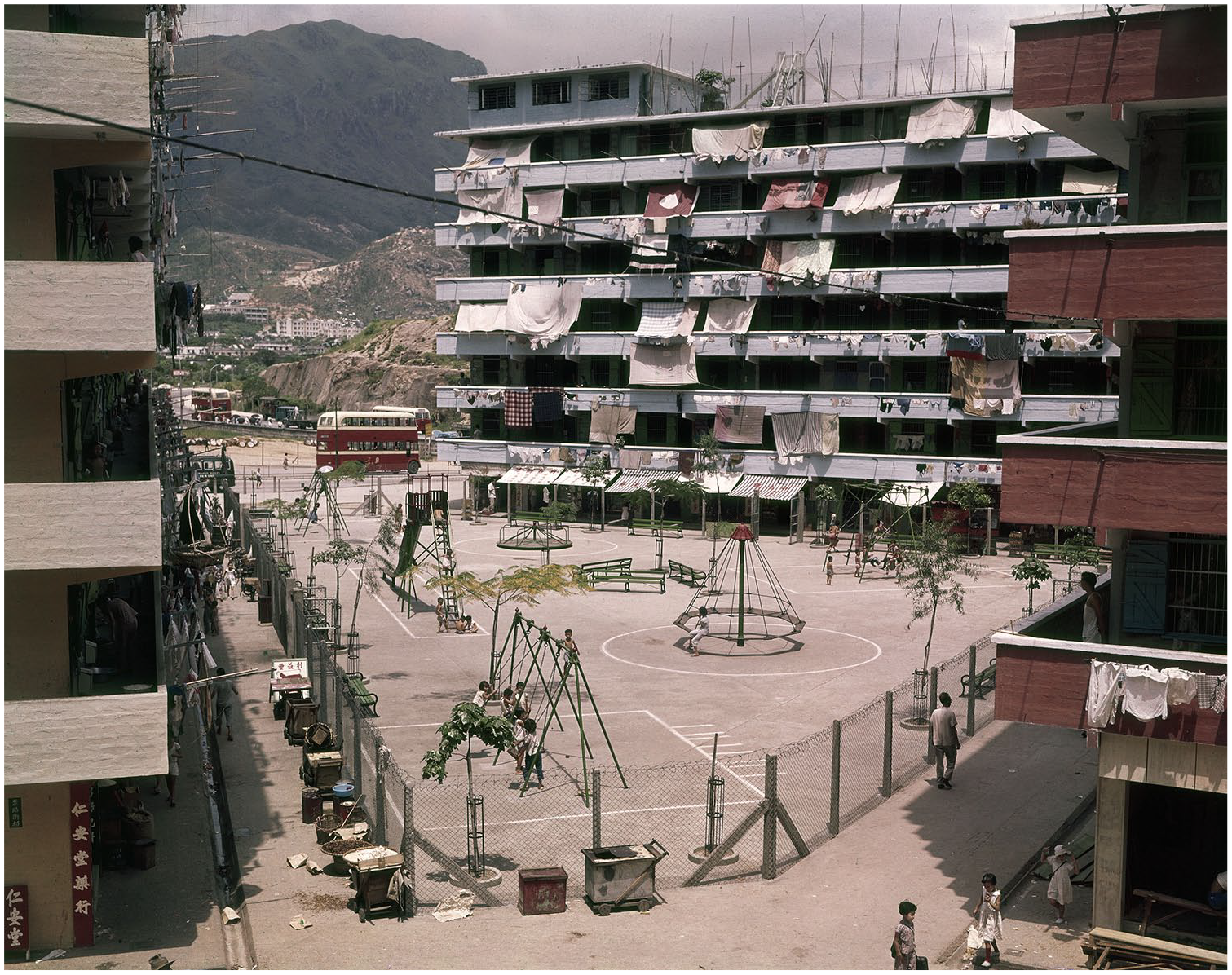
A Playground With Traditional Play Equipment in a Resettlement Estate, 1961. Information Services Department, HKSAR Government.
While Hong Kong’s few playgrounds in the early postwar era provided spaces in which children could congregate and play, pressing concerns such as education and social welfare beset the city’s predominately youthful population. In response, in 1965, the government established free and compulsory education for every child. Echoing the reasoning for the first playgrounds in Hong Kong almost fifty years earlier, the aim of mandatory schooling was to ensure that youth were not acting as a labor force but were either becoming educated toward a better future or participating in social play with other children. Crucially, this move took place against a greater backdrop of Cold War tensions both globally and nearby.
Cold War Tensions
A heightened awareness of the importance of play in the West (Huizinga, 2014) coincided with a push to establish creativity as an essential democratic value (Ogata, 2013). In Northern Europe, the United States, and Japan, playgrounds began performing a significant role within the modern democratic city as new ideas crystallized at the intersection of art, play, and public space (Burkhalter, 2014). Architects, urban planners, and activists co-designed playgrounds as new sites of experimentation. Meanwhile, the playful aesthetics of Abstract Expressionist art became ideologically linked with notions of Western freedom and unbridled creative expression, values presented as in direct contrast to totalitarian rule of the Soviet Union and the Chinese Communist Party (Guilbaut, 1983). Creativity and play operated as indexical markers of democratic liberalism over communist repression (Ogata, 2013).
With China’s Cultural Revolution convulsing and spilling into nearby Macau, the promotion of democratic values and ideologies became crucial in Hong Kong. Yet the city was not itself democratic leading some Hong Kong locals to question whether their British colonial administration was much better than the increasingly popular Maoist state. The living and working conditions of Hong Kong’s general population were very poor and corrupt officialdom was widespread. In 1966, a series of labor disputes and fare increases escalated into full scale demonstrations and violent conflicts. Then in 1967, insurrections took place between Communists sympathizers and the Hong Kong government (Dupré, 2020). Lacking democratic representation, the city’s population teetered between Chinese communist and British colonialist leanings.
Recognizing youth as the most active participants in the riots, and a key constituency in Mao’s Cultural Revolution only kilometers away, Hong Kong’s British administrators hurriedly organized youth development programs in conjunction with schools, parks and recreation bodies, urban councils, and numerous charitable organizations (Commission on Poverty Task Force on Children and Youth Summer Youth Programme, 2006). The Hong Kong government scrambled to build more playgrounds for the growing population, to placate its citizens against revolt, and to reinforce the image of Hong Kong as a modern and youthful city (Figure 2). It was against this background that the government accepted the radical abstract expressionist Shek Lei Playground proposal in 1967.
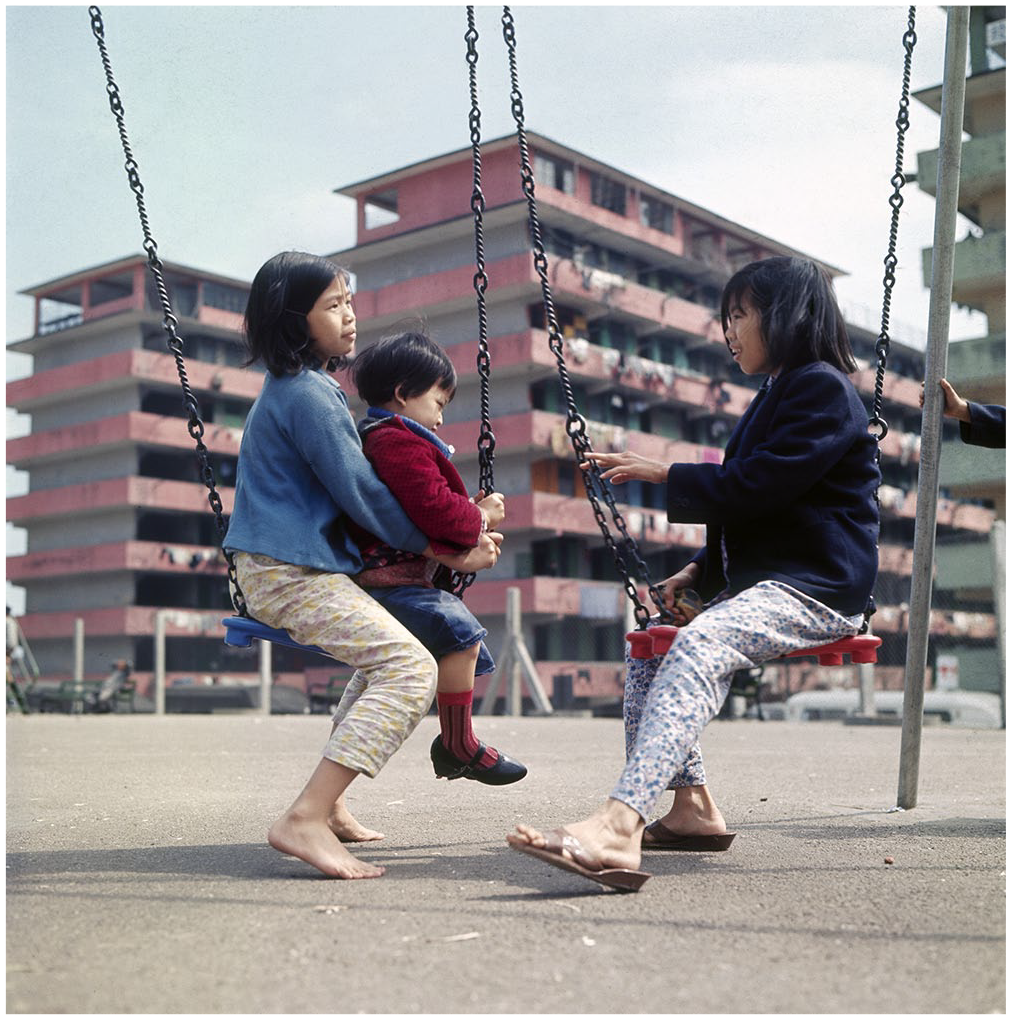
Children in Resettlement Estate. (Hong Kong Yearbook 1966) Information Services Department, HKSAR Government.
The Rise of Abstract Playgrounds
The Shek Lei Playground was a major experiment in play environments. Its creator, Paul Selinger, a fine art graduate from California had moved to Hong Kong in 1965 to teach sculpture at the University of Hong Kong. Selinger—along with New York graphic designer Henry Steiner, Italian artist Antonio Casadei, and local artist Tao Ho—were among a group of cosmopolitan creatives in Hong Kong aspiring to build a modern art scene in the city. Not content with the white cube of the art establishment, these creators sought to make public art to stimulate the minds and spirit of Hong Kong inhabitants (“40000 Children From One Man’s Vision,” 1968). Selinger specifically noticed how Hong Kong teens, who made up as much as forty percent of the population, had no access to the nature play experiences he had enjoyed as a child. Instead, they were compelled to adapt to living in modern skyscrapers in a rapidly changing society.
Selinger persuaded the Royal Hong Kong Jockey Club to financially support the construction of a modernist abstract art playground of his own design. The Urban Services Department (市政總署) (Playground with a Difference) provided a 3/4-acre site abutting Shek Lei Resettlement Estate in Kwai Chung, a complex that, although new, was already notorious for its poor hygiene, management, and insufficient recreational facilities (Sing Tao Evening News, 1969). As with many public housing estates of the era, ball courts and playgrounds were nestled between the housing blocks but were insufficient for the 80,000 residents, half of which were children.
Inspired by movements in the United States and Europe, Selinger combined abstract art with children’s play. Progressive U.S. toy manufacturer Creative Playthings had a decade earlier undertaken a series of collaborations with the New York Museum of Modern Art providing Selinger a template of the connections between conceptual art and playground design (Burkhalter, 2014). Selinger also cited peers in Abstract Expressionism including Clyfford Still, Mark Tobey, and William Stanley Hayter (Sally Jackson Gallery, 1967) as well as the ideas of left-wing intellectuals Noam Chomsky and Howard Zinn. Working in a variety of materials, recycled and new, Selinger designed and constructed a series of complex, expressive, and organic play sculptures.
On September 3, 1969, Shek Lei Playground was formally opened. More than a children’s playground, Shek Lei presented a confident statement of the city’s ideals, offering locals of all ages and backgrounds a space for a variety of purposes, at different times of the day (Figure 3).
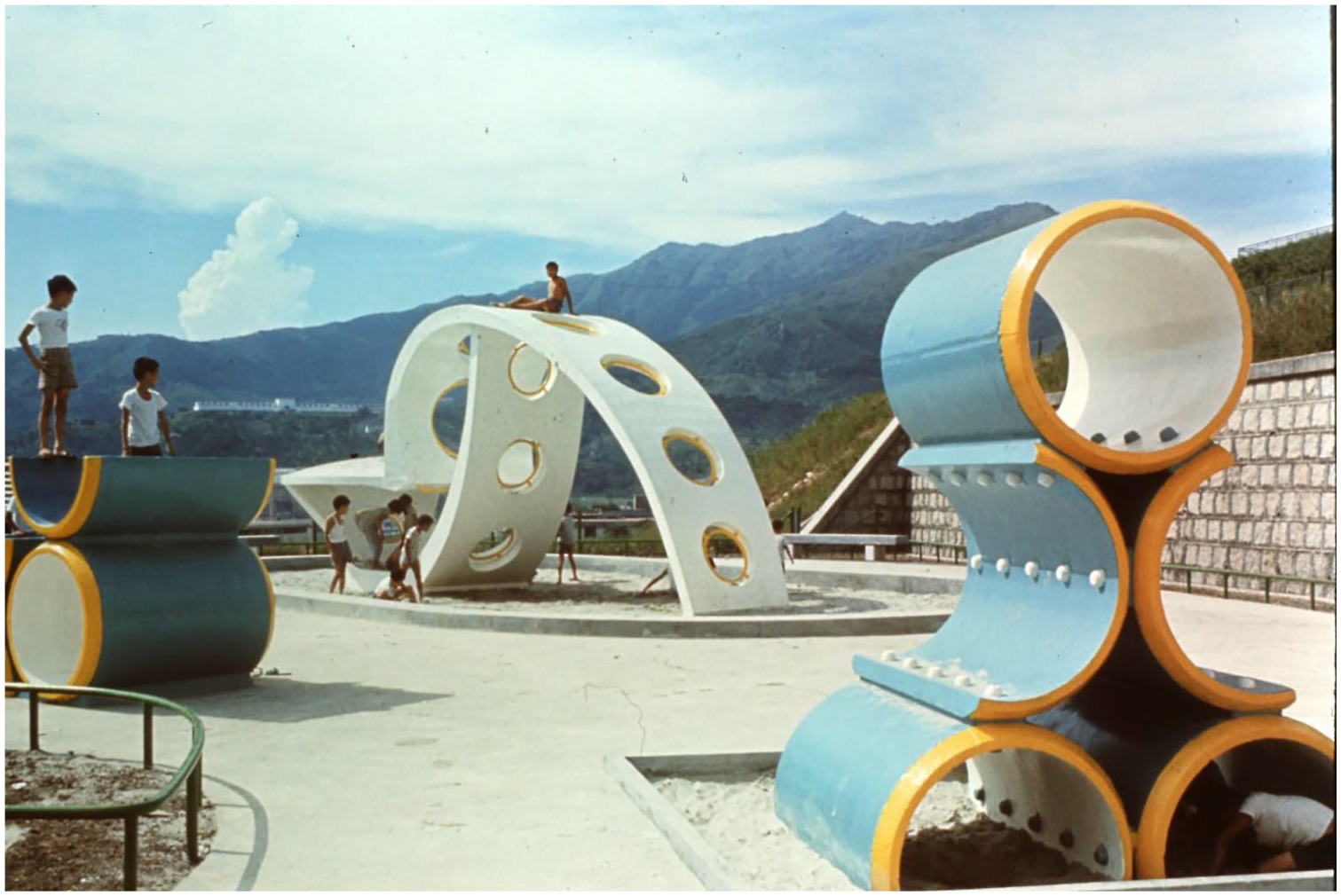
The Abstract and Colorful Sculptures of Shek Lei Playground, 1969. Courtesy of the Estate of Paul Selinger.
Shek Lei became the first in a series of distinctive abstract playscapes to appear in Hong Kong through the 1970s that confidently reflected the positive influence of play. Some featured equipment recognizable from Creative Playthings catalogs while others were custom designed, showcasing the emerging local talent for shaping the space of Hong Kong. During this era, Hong Kong designers, architects, and educators were increasingly trained within the city’s own institutions and were developing creative practice with an understanding of local materials, spaces, and aspirations. Although today largely updated or replaced altogether, this exciting era of now defunct playgrounds remain etched in the collective memory due to their joyous contribution to Hong Kong’s urban landscape (Figure 4).
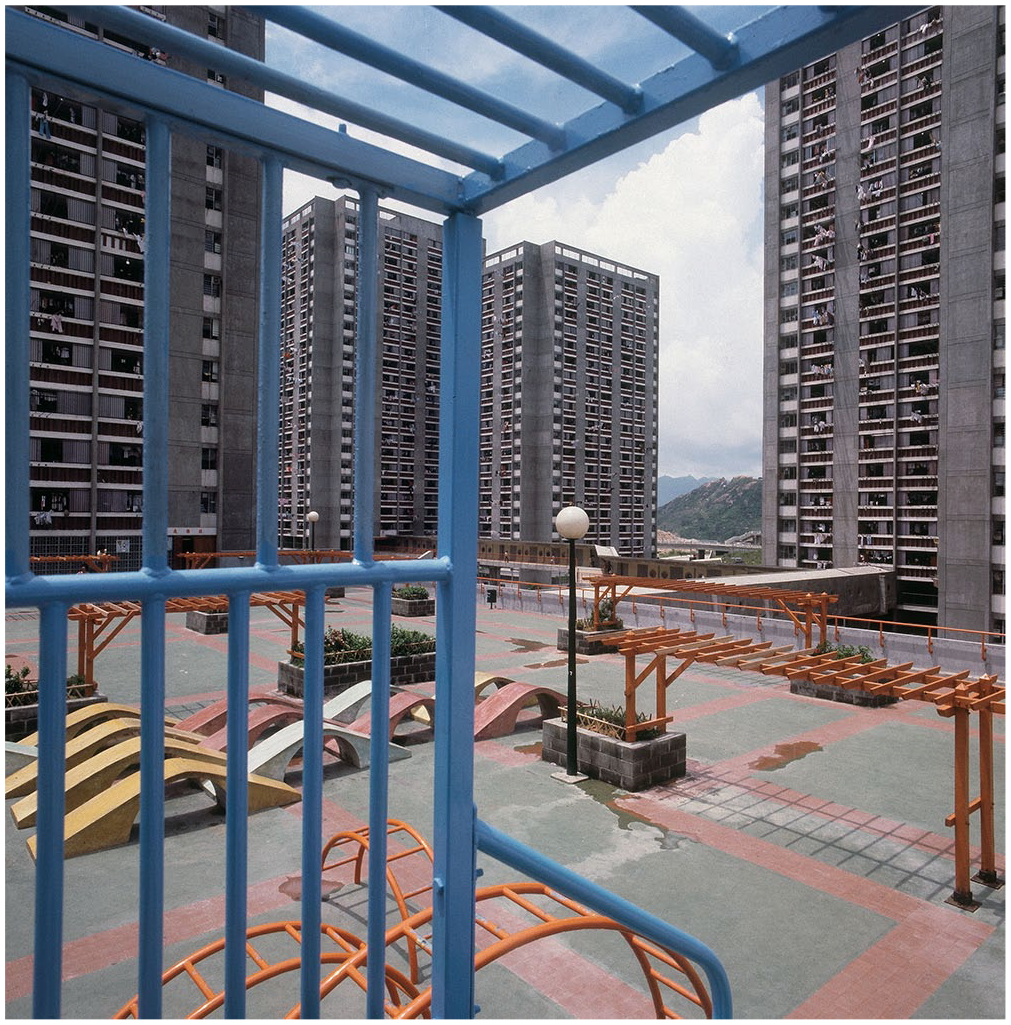
The Play Area of Shun Lee Estate. Photo Taken in 1981. Information Services Department, HKSAR Government.
Among the last of the locally designed abstract playgrounds, the Sheung Shing Street Park came into being from a ‘New Playgrounds Concepts Competition (兒童新天地遊樂場設計比賽). Organized by the Peninsula Jaycees [半島青年商會]) in 1975, the competition attracted more than 20 entries from local urban, and landscape designers, architects, and students. The winning entry from team of local architectural students proposed a number of multi-purpose structures interlinked by chain bridges, ladders, and slides (“Call for a Better Type of Playground,” 1975). Comparably modernist in appearance as Shek Lei Playground, the Sheung Shing Street Park design was mostly geometrical in contrast to the sensual curves of Selinger’s design from almost a decade earlier. The prize-winning team had deftly blended modern art and contemporary philosophies of play into the design with modular elements accommodating multiple configurations, allowing children to be masters of the space. While the playground design would ultimately be adopted in Sheung Shing Street Park, not all of the proposed elements were implemented. Nonetheless, the local governments embrace of the ambitious design evidenced a recognition of creative play in the Hong Kong imaginary.
At the competitions’ prize ceremony held at the City Hall, the Secretary for the Environment James Robson stressed the importance of playgrounds in the context of the city, elevating them as: “one of the few places where a child spends or should spend a lot of his time, and where he learns at an early age the need, in life, for both co-operation and competition within the community” (“Call for a Better Type of Playground,” 1975). For Robson, the improvement of housing and recreational facilities was central ingredients to improving the city and its quality of life. Play was recognized as a measure of the city’s success.
New Safety Landscape
Hong Kong’s wave of progressive abstract playgrounds was relatively short-lived. During the late 1970s and through the 80s, growing doubts in the United States about the promises of play sculptures began drifting abroad. Some even criticized U.S. company Creative Playthings for its expensive products and elitist approach (Ogata, 2013), while others argued that sculptural playgrounds might actually be more appealing to adults than children (Frost, 1991; S. G. Solomon, 2005). Increasing lawsuits related to playground injuries in the United States impacted Hong Kong, bringing escalating liability insurance costs, and in-turn, the removal of spiral slides, see-saws, merry-go-rounds, and other play equipment (Central Park Conservancy, 2013; S. G. Solomon, 2005). As a result, playground equipment became progressively less adventurous, standardized, and conservative. Off-the-shelf, pre-safety approved, and mass-produced equipment replaced local designs, materials, and innovations, with internationally compliant plastic “solutions” embraced as cheaper, safer, and easier to maintain material (Frost, 2010).
Accelerating these changes were the increasing demographic diversity and upward mobility in Hong Kong. Compulsory education coincided with a swelling workforce in which women had become both more highly educated and better represented in the workplace. By the mid-70s affluent Hong Kong families were hiring foreign domestic helpers to care for children. It appears likely that as mother’s became more absent from the playground, transformations toward greater safety equipment for children’s play increased.
The new culture of safety-driven playgrounds saw Hong Kong import risk adverse play equipment from Western countries and a number of major playground equipment suppliers were founded in Hong Kong to resell products from European and North American manufacturers. The advertisements of the companies emphasized compliance with safety standards, durability, and ease of maintenance, but betraying its brightly colored elements, this equipment was remarkably homogeneous and dull in terms of creative play it allowed for (Figure 5).
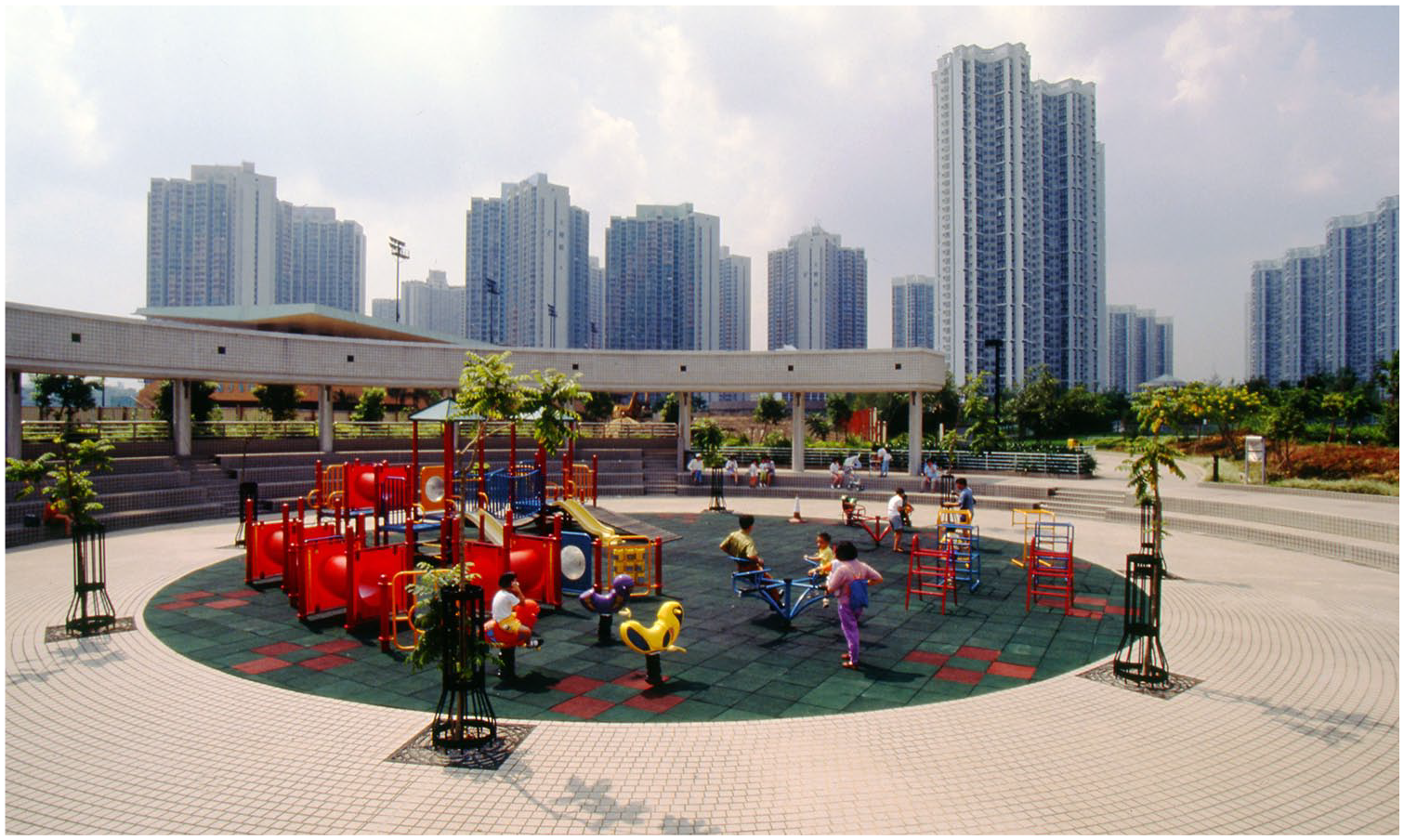
Children’s Play Area in Tin Shui Wai Park, Circa 1997. Note the Use of Modular Multi-Play Equipment on the Left of the Image. To Enable Children to Play Safely, the Playground Is Carpeted With Safety Matting.’ Information Services Department, HKSAR Government.
This standardized equipment brought yet more limitations. As noted by the newly formed Playright Children’s Play Association, the equipment did not account for the diverse accessibilities of children, such that by the early 1990s, Hong Kong had a severe shortage of inclusive playgrounds (Playright Children’s Play Association, 2018). Although the playgrounds of Shek Lei and Sheung Shing Street had presented interesting designs in their era, none had adequately addressed the diverse needs of children with different abilities or physical conditions. With playgrounds not planned according to inclusive design principles, not all children had equal access to these facilities, causing the problem of segregated experiences.
Diverse and Accessible Playscapes
Responding to issues of diverse abilities and accessibilities, the King’s Park Children’s Playground was opened in December 1989 becoming the first accessible playground in Hong Kong (Playright Children’s Play Association, 2018; Figure 6).
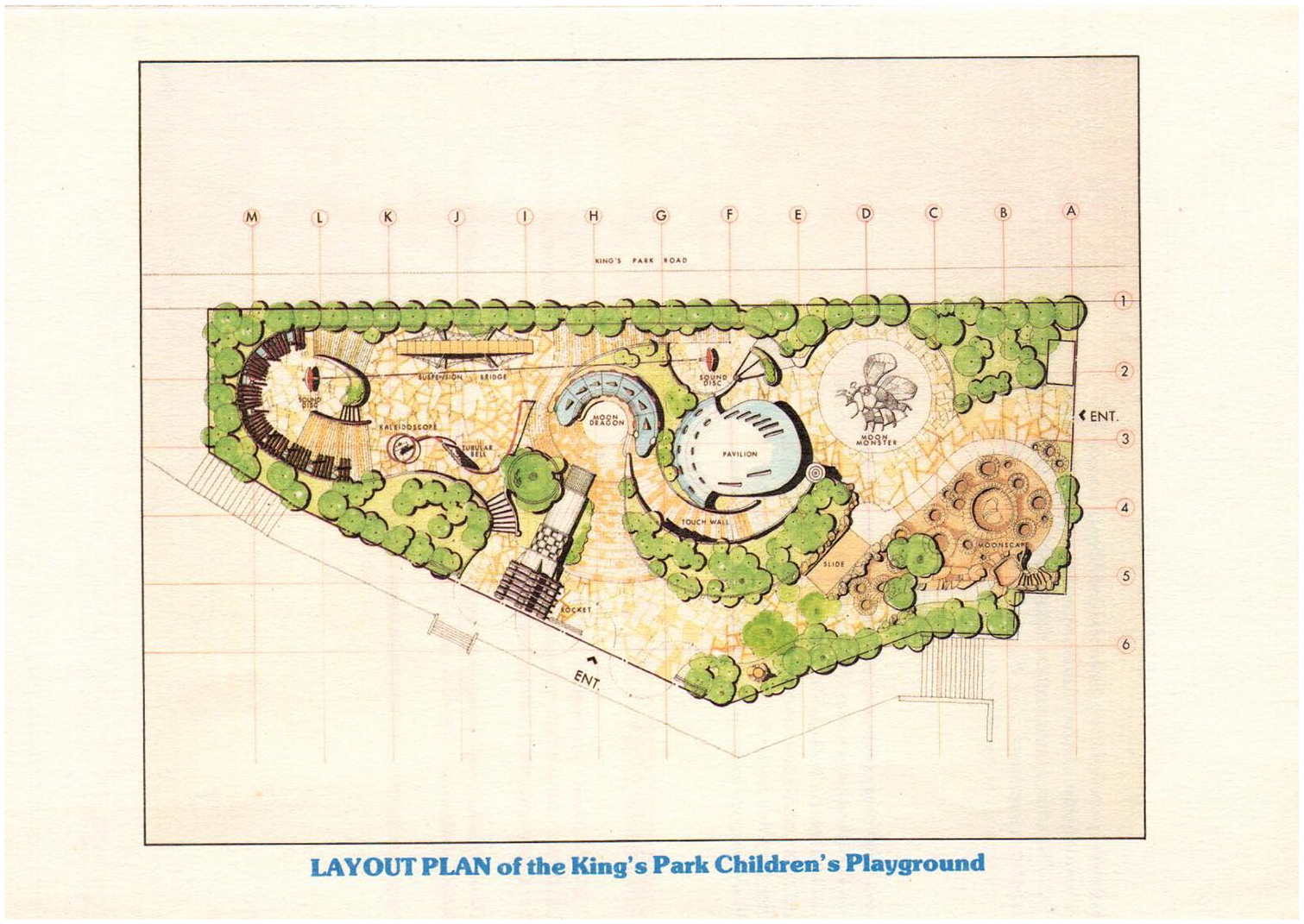
Layout Plan of King’s Park Children’s Playground, Showing Various Features of the Space-Themed Playscape. Courtesy of Playright Children’s Play Association.
While the government took charge of the financing and delivery of the project, the Playright organization developed the conceptual designs for the playground’s overarching theme: “Voyage to the Moon.” The equipment was manufactured locally by the Hong Kong Polytechnic University, with participation from its students. The aim of the play equipment was “to stimulate both the imagination and the physical energy of children” as well as to “cater for the needs of children with sensory handicaps” by presenting a variety of tactile and multisensorial elements (Urban Council, 1987). The space-themed playground combined abstract and figurative elements in its design, including a rack of tubular audio instruments (Figure 7); a tactile and sensory “Touch Wall” (Figure 8); a Moon Monster (Figure 9); and a Voyager Rocket (Figure 10). Overall, the playground presented strong sculptural qualities and a diversity of textures, merging into a continuous and magical playscape. Both literally and conceptually, the playground emphasized a reimagining of “space” as a playful environment for the enjoyment of all.
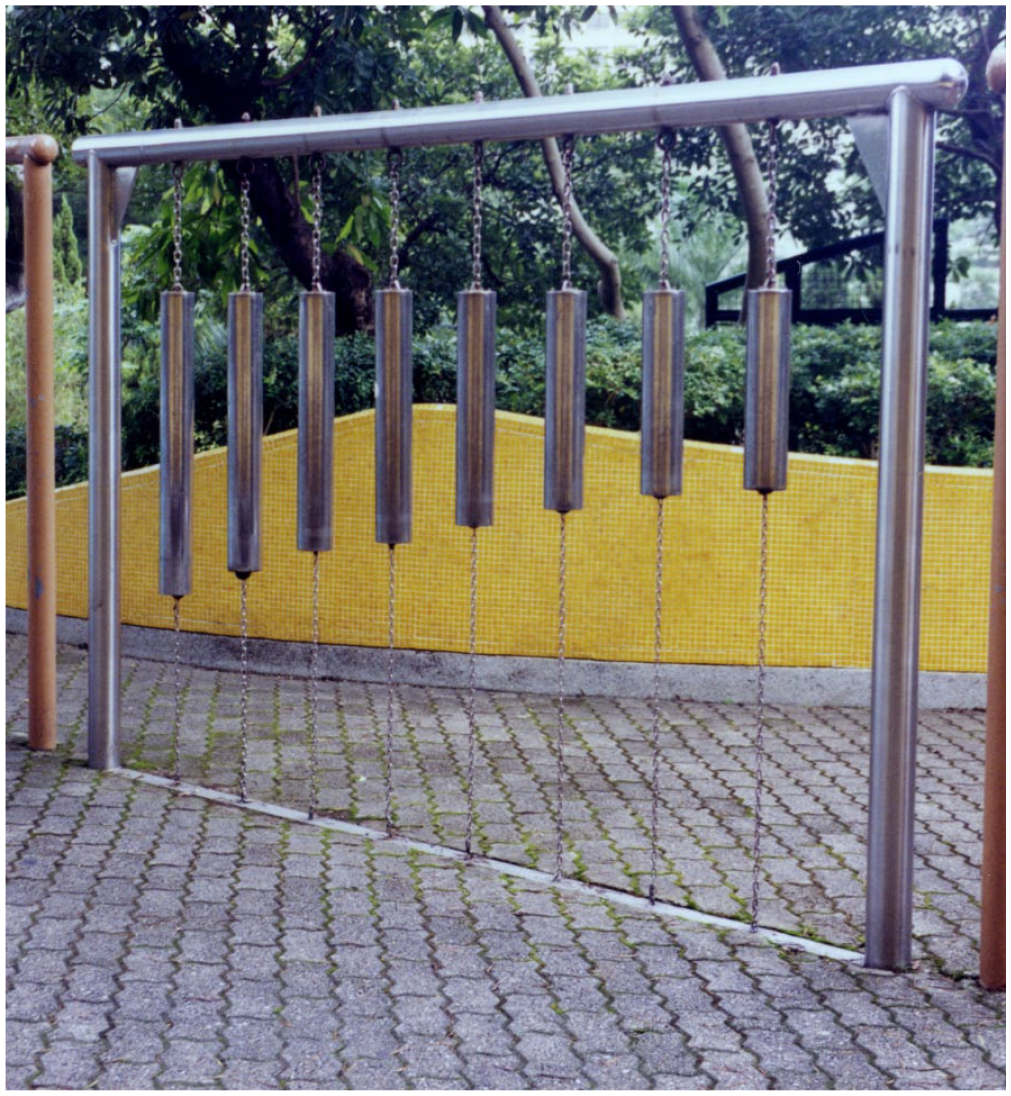
Tubular Bells to Offer Audio Stimulations, Circa 1990s. Photo by Desmond Chan.
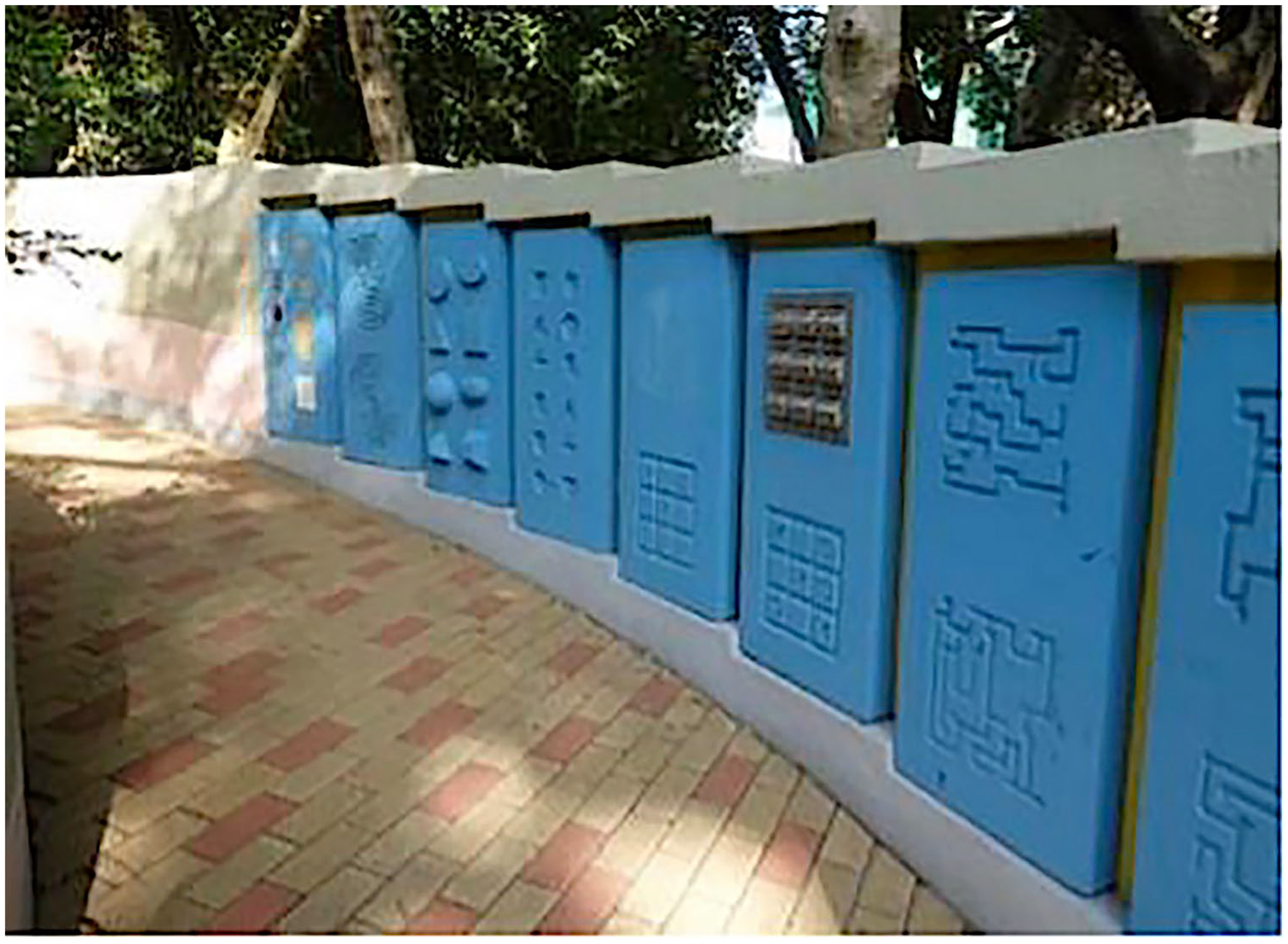
A “Touch Wall” on the Side of a Ramp Provides Tactile Play Opportunities for Children With Special Needs. Photo by Fan Lok-Yi.
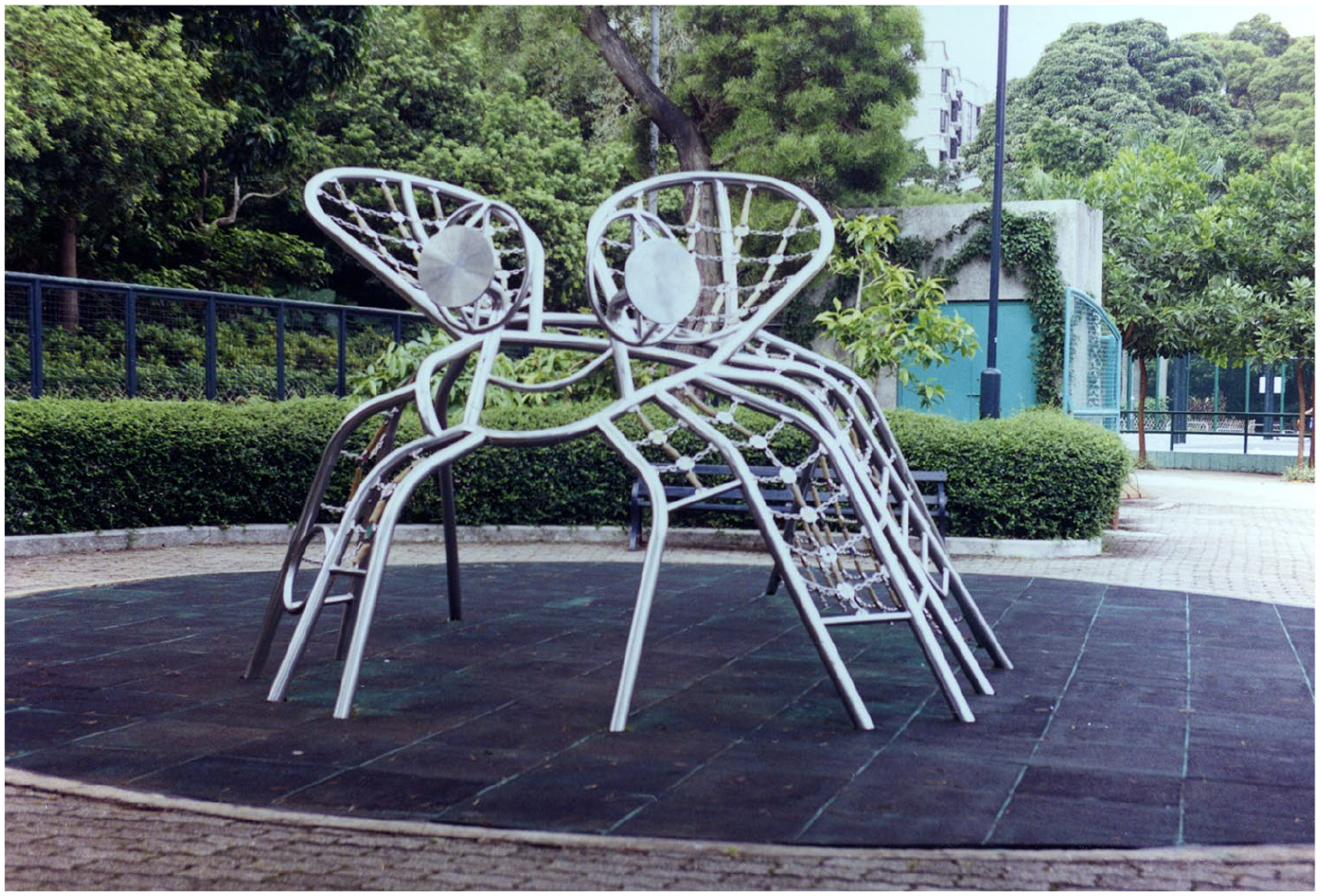
“Moon Monster,” a Large Climbing Structure That Once Stood Near the Playground Entrance, Circa 1990s. Photo by Desmond Chan.
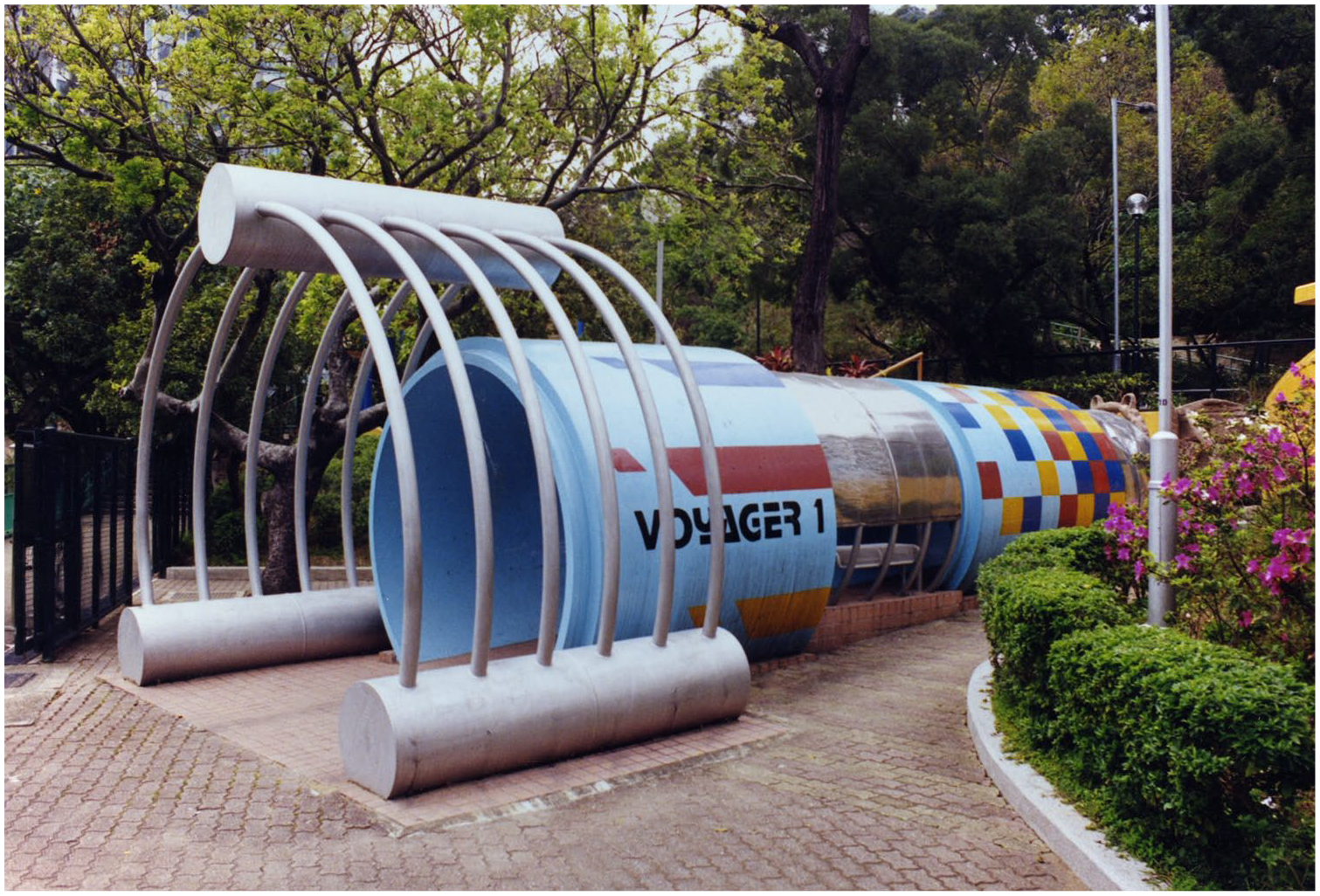
“Rocket” With the Name “VOYAGER 1” Printed on Its Exterior, Circa 1990s. Photo by Desmond Chan.
The momentum behind the design and construction of the King’s Park Children’s Playground came from The Playright Children’s Playground Association, a collective of Hong Kong philanthropists concerned with play environments and children’s right to play. Founded in 1987, the Association became a key body in Hong Kong in advocating the UN Convention on the Rights of the Child, that promised children the right to “relax and play, and to join in a wide range of cultural, artistic and other recreational activities” (UNICEF, 1989). The Playright Association continues to advocate for children’s Right to Play with their present aim of turning Hong Kong into a “Playful City” (Playright Children’s Play Association, 2018).
Handover Period and Beyond
The 1980s to the 1990s saw a tectonic shift in Hong Kong’s political and constitutional structure as it transitioned from British colonial rule to Chinese communist administration. Commencing in 1984, China’s Communist Party and the British government co-developed the “One Country Two Systems” formula whereby the city’s way of life would remain unchanged for 50 years. Within this improbable arrangement, democratic reform that had not arrived in the 150 years of British rule would be introduced by the Chinese Communist state. China was tasked with maintaining Hong Kong’s free market structure and developing democratic suffrage despite both being antithetical to party doctrine. The clear inconsistencies within the arrangement were papered over in the interests of a smooth transition. Amid excitement and uncertainty, the city’s ceremonial handover from one empire to another took place in 1997.
In the early years of the new millennium, what began as slow democratic reform in Hong Kong under Chinese rule gradually dwindled altogether as affinities developed between communist authoritarianism and capitalist tendencies (Dupré, 2020). Power once wielded by the British colonial authority was inherited by a small number of Hong Kong tycoons and proxies of Beijing. (Carroll, 2019; Davies, 2020a; Studwell, 2014). For the average Hong Konger, this was evidenced by a Beijing-led political authority that favored the development of global commercial buildings over local public spaces (Au, 2015; Cheung, 2017; Kammerer, 2016). The result saw luxury apartments towering over so-called “coffin homes,” tiny subdivides of beehive-like density. Notwithstanding repeated calls for new parks, playgrounds, and public spaces designed to fulfill local civic needs, the political and economic structures instead favored private housing developments, shopping malls, and banks (Skavicus et al., 2018). The resulting compact proportions of Hong Kong’s architectural development have uniquely shaped the city’s topography.
As explored by J. Solomon et al. (2012) the compression of space in Hong Kong has seen the emergence of distinctive needle towers—mini skyscraper-like housing developments—but more importantly, the development of a vast and multilayered pedestrian system that interconnects spaces. This elaborate network of indoor or undercover walkways, bridges, ramps, and escalators sprawls several kilometers in each direction linking shopping malls, transport interchanges, public facilities, and commercial spaces. Hong Kong’s humidity combined with concerns over the impact of pollution have seen playgrounds increasingly embedded into these largely air-conditioned structures. A key example is the emergence of so-called soft playrooms designed for young children are often attached to other services such as libraries (Happy Valley) or sports centers (Tseung Kwan O) or shopping complexes (K11) allowing parents and carers places to entertain between domestic chores. Some even offer after-school classes. All of these conveniences come at a price.
For example, at K11 MUSEA in Tsim Sha Tsui, parents can choose to shop while kids enjoy Donut Playhouse including the Happy Mega Slide designed by Danish designer, Ole Barslund Nielsen for around HK$220 for 40 minutes. Meanwhile the Japanese game center Namco in Lohas Park, Tseung Kwan offers a 5,000-square-feet area virtual reality playground where children can dig in the virtual sand to the sound of waves, slide down a waterfall and explore the lily pond for around HK$100 an hour per child. Mirroring these commercial spaces, the Hong Kong government offers free indoor playrooms for kids throughout the city for children aged 4 to 9; however, these tend to be intensified on the Hong Kong Island and wealthier areas of the city. In addition to these soft playground spaces for younger generations, local companies like PlayConcept deliver a range of specialist activity indoor and outdoor playground spaces such as skate parks, indoor sports centers, trampoline rooms, and climbing walls for the older youths who can afford them. As games scholar Sicart (2014) has observed, while play occupies an increasingly pivotal role in contemporary life, as does the potential for corporate appropriation of public spaces to commodify it (Sicart, 2014).
In contrast to the specificity of these for-profit play spaces, the freely accessible outdoor playgrounds cater to a wide variety of demographics, and modes of play. The patterns of use of these free playground spaces are age, class, and ethnicity informed with temporal rhythms that reveal much about contemporary Hong Kong society. For example, each afternoon, Filipina and Indonesian domestic workers bring their employers’ children to playgrounds, sharing information about their employers and news of family back home as the kids play on equipment (Hin-yan Chan & Latham, 2022). Evenings may see older generations assemble in playgrounds for Tai Chi, dancing, and to use low-intensity apparatus designed for the city’s aging population (K. K. Wong, 2009). The late-night draws teenagers grouping together to engage in drinking, soft drugs, and heavy petting but can also see illicit activities such as drug dealing by triad members in turn, attracting surveillance by agents of the state (Groves et al., 2014). On Sundays, many parks and playgrounds are entirely overtaken by armies of domestic workers on their day off, who sit upon an endless patchwork of overlapping blankets, chatting, eating, and napping (Law, 2001). Other ethnic minorities in Hong Kong have been more marginalized from playground spaces. For example, O’Connor (2011) documents the struggle of Pakistani children to find areas for cricket as official play spaces seldom include or legitimize this type of play. While Hong Kong is a highly contested space in which class, gender, racial and generational differences are heightened, the radical potentialities of play can work to reinforce and subvert these inequalities (Richardson et al., 2021).
The new millennium has also seen localist movements advocating for spatial justice and promoting practices and places of play. Many civil society groups born out of increased discontent with the local and central governments devised different spatial strategies and tactics that played out in creative forms. For example, creative placemaking methodologies that drew attention to the demand for local and community space appeared at the 2003 protest against a new national security law; at the 2006 protests against the demolition of Star Ferry Pier; and at the 2007 demolition of Queen’s Pier respectively. Likewise, an emphasis on preserving local and community space and place were factors in the 2009 Anti-Hong Kong Express Rail Link movement; the 2012 Anti-national education movement; and the Occupy Movement in 2014. In the 2019 anti-extradition protests, playful placemaking such as Lennon Walls were central tactics in these protest campaigns while well-known forms of play including Pokémon GO and Parkour were taken up by demonstrators as a way of evading police. Wirman and Jones (2020) document the deployment of play and game structures in the 2019 Hong Kong protest movement while Davies (2020b) has explored the intersection of Hong Kong protests and videogame activism. Play and playgrounds emerged as key sites of activist activity.
Recent efforts to promote playgrounds and other civic spaces have not been limited to activist movements. Hong Kong policy makers have also been advocating “learning through play” as a core element of pre-primary education. This play-based pedagogy (S. M. Wong et al., 2011) has motivated many bottom-up/citizen-led initiatives in collaboration with local communities and through government and organizational support to create, nurture or preserve spaces and places of play in the city. These include Playright’s inclusive play project (2012–2016) which concluded with the first inclusive playground in Tuen Mun Park; the play installation design workshops by Caritas Magic Lanes community design studio in Sai Ying Pun (in 2017); and the “Play Depot Project” that saw children and artists co-design play space using recycled materials. More recent playful transformations of urban space in collaboration with the public have included “PLAY to CHANGE” project (2018) co-organized by Oi! and the Leisure and Cultural Services Department, and the 2019 Design Trust Futures Studio “Play is for the People” co-design project that resulted in four playful micro-parks in different sites and locations around Hong Kong (Figure 11). Each of these ventures delivered more than co-created city spaces for children to play in but also affirmed local expressions of creative and playful activity.
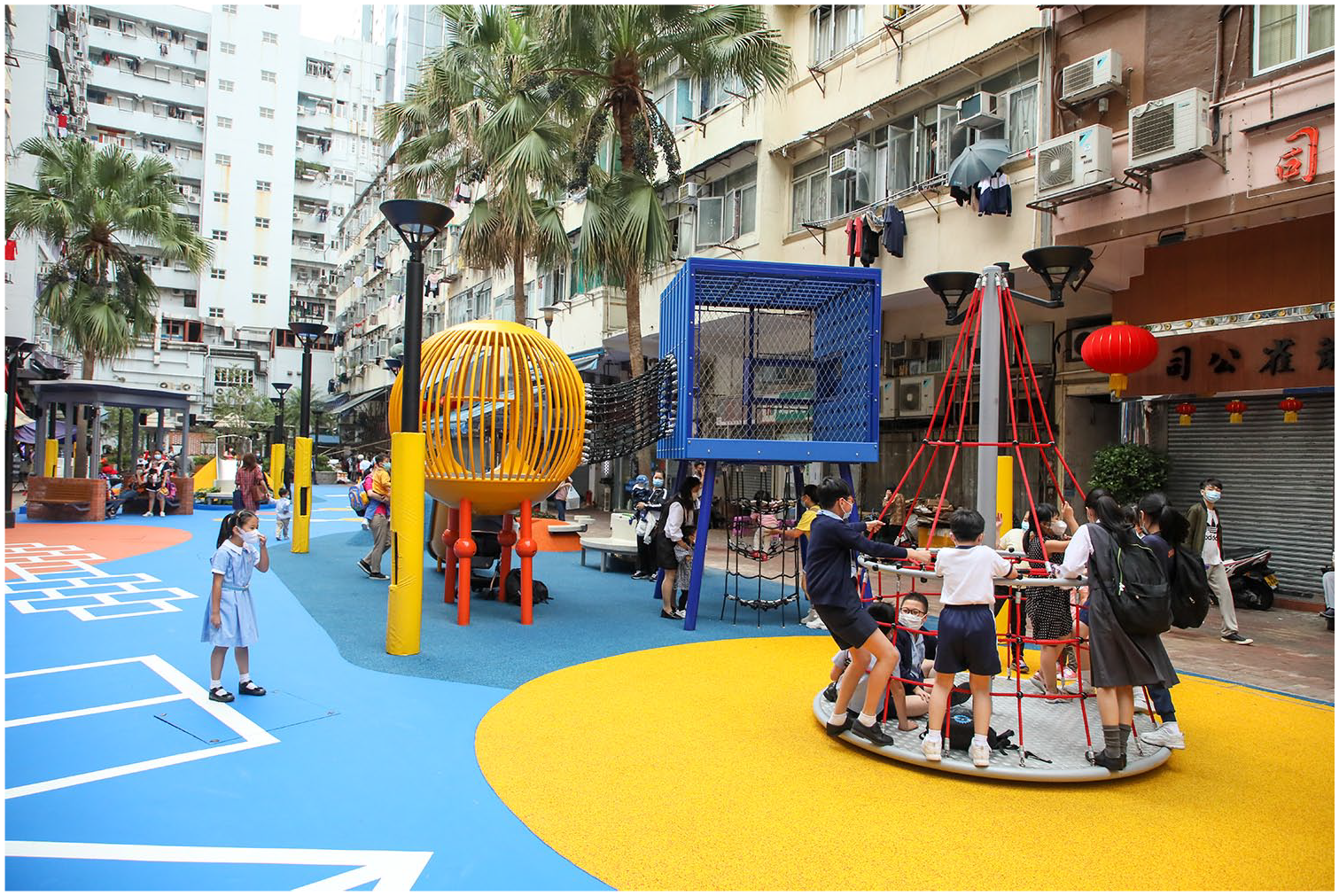
Design Trust Futures Studio Transformation of a Drab and Unused Area in Tseun Wan, Hong Kong, Into the Brightly Colored Yi Pei Square Playground. Photo: Design Trust Futures Studio.
In the present day, playgrounds in Hong Kong are plentiful and varied, ranging from publicly accessible sites to more elaborate and increasingly commercialized play areas. Yet the development of playgrounds in the city occurs on a competitive terrain between business interests and civic philanthropy. Caught between interpretations of Hong Kong as a site of laissez-faire commercial opportunity, and as model modernist city, the ever-increasing scarcity of space exacerbates conflict between these groups. Although progressive philosophies and pedagogies and play have existed in the city for a century, Hong Kong’s power dynamics continue to favor a business-first approach, often with small regard for social costs (Goodstadt, 2014). Property developers enjoy extraordinary market advantages such that process of urban renewal and gentrification have tended to leave little provision of community facilities such as playgrounds. It remains the ongoing work of social progressives in Hong Kong that equitable and accessible playgrounds continue to appear.
Conclusion
The evolution of children’s playgrounds in Hong Kong reflects ideologies, tendencies, and trends that have occurred elsewhere in the world but that have been inflected by local specificities. Although the momentum for playgrounds in Hong Kong has varied according to differing trends, international influences, and the social consciousness of the city, as explored throughout this article, a key constant has been competing ambitions to balance social and economic agendas. Hong Kong’s first playgrounds appeared in the 1920s, arising from a tri-part combination of a virtuous turn in Britain’s Imperial project; of the termination of child labor practices; and from then progressive attitudes toward childhood and children’s play. As the population of Hong Kong grew through the 20th century, the government reluctantly built playgrounds to serve as a pressure release from social and political tensions, and as places to occupy youthful energies away from the cultural revolution happening in mainland China. Gradually, playgrounds served a different role, with the creativity and play they nurtured becoming markers of democratic liberalism over communist repression in the Western geopolitical imagination. Hong Kong’s unique expressionist playgrounds became symbols of those values. Through the later part of the 20th century, new risk management concerns saw these distinctive play spaces replaced with more homogenized safety-driven apparatus to cater to a rising middle class in Hong Kong.
Since the handover from Britain to China at the turn of the millennium, yet new conditions have driven the form and impetus of playgrounds in Hong Kong. The intensifying compression of city space has seen playgrounds appear in multilevel complexes and as commercial enterprises altogether bringing into question the notion of free play. But alongside these developments, many Hong Kongers have worked to establish freely accessible play spaces for the health and wellbeing of its youth, as well as its ethnically and intergenerationally diverse citizens. For some in the city, play has emerged as a metaphor for free and relational spaces within a movement for democratic self-governance as guaranteed within the One Country Two Systems arrangement. For other, play operates as a measure through which cultural fabric of city can be emphasized and maintained. Across each of the developmental eras of playgrounds in Hong Kong, we can trace the enduring progressive spirit of the city, one that seeks to guarantee sanctioned public spaces for play, often in tune with, but sometimes against broader political and economic forces of the city.
Footnotes
Declaration of Conflicting Interests
The author(s) declared no potential conflicts of interest with respect to the research, authorship, and/or publication of this article.
Funding
The author(s) disclosed receipt of the following financial support for the research, authorship, and/or publication of this article: This article is developed based on the research project conducted by Fan Lok-Yi, Sampson Wong Yu-Hin and Hugh Davies with generous support from the M+/Design Trust Research Fellowship 