



Abstract
Urban experimentation has been identified as a key element of innovative approaches to urban sustainability and emerging practices of entrepreneurial municipalism whereby the public, private, and third sectors cooperate to address wicked problems—biophysical environmental deterioration and social inequality—brought about by neoliberalism. In contrast to vast, pan-state, top-down international programs, urban experimentation exploits interstitial niches to build relationships across sectors for mutual gain. These experiments can potentially scale up or across to shift broader ecosystem dynamics. Our article investigates the cross-sector support provided to “understorey”—a community, events, coworking and collaboration space in Ōtautahi Christchurch, Aotearoa New Zealand—and identifies crucial areas of cross-sector reliance and cross-sector responsibility. We conclude that this sort of experimentation both benefits from and is strengthened by the support of the public, private, and third sectors.
Key Policy Highlights
Urban experimentation both benefits from and is strengthened by support from the public, private, and third sectors.
Introduction
The tensions between capitalist accumulation, social inequality, and environmental degradation in cities are long-standing concerns of socio-political theory ( Campbell, 1996, 2016; Harvey, 2012; Lefebvre, 1991; Mitchell, 2003; Vallance et al., 2011) and underpin many activists’ pursuit of “urban sustainability.” This ideal has proven broadly appealing but difficult to achieve, not least because neoliberal capitalist societies have (until recently) largely ignored warnings that there are “limits to growth” (Meadows et al., 1972) in a world of finite resources. Many have instead favored sustainable development approaches which advocate for a “growth of limits” in which finite resources are framed as “limitations” to be expanded through technology (e.g., Brundtland, 1987). Yet now, in the face of climate emergency and increased evidence of environmental devastation, individuals, groups, and governments around the world have increasingly begun to engage in creative thinking and novel interventions. Cities are particularly interesting sites (Mukhtar-Landgren et al., 2019; Raven et al., 2019; Trencher et al., 2013), able to amplify innovation due to their higher concentrations of human and material resources. Within this context, “urban experimentation” is a term applied to small-scale projects which explore and test alternatives to the unsustainable practices of neoliberal capitalism (Luederitz et al., 2017).
In this article, we explore the development of an urban experiment: the “understorey” community and coworking space in the city of Ōtautahi Christchurch, Aotearoa New Zealand. Our focus is on the type of support provided to understorey by individuals and organizations from the public, private, and third sectors, as well as the reasons for this support. This support occurs within—and is constitutional of—an interdependent “urban ecosystem” created and sustained through cross-sector reliance and cross-sector responsibility. This conscious engagement in local projects for change renders understorey an example of nascent “entrepreneurial municipalism,” whereby leadership across sectors is more proactively participating in urban economies to try and address issues of socioeconomic polarization, environmental degradation, and inequity brought about by neoliberalism (Thompson et al., 2020). Our article therefore contributes to scholarship on urban sustainability by emphasizing how the pursuit of this elusive goal depends on creating and nurturing new sectoral relationships.
Literature
Urban Experimentation
Although urban experimentation is by its very nature diverse, ranging in type, duration, and scope, a recent review defined these as “an inclusive, practice-based and challenge-led initiative designed to promote system innovation through social learning under conditions of uncertainty and ambiguity” (Sengers et al., 2019, p. 161). At least two approaches to urban experimentation are increasingly well documented in the literature: grassroots-driven tactical urbanism and state-driven transition management. Tactical urbanism emphasizes short-term action for long-term change, and according to Lydon et al. (2012), works through principles which include a focus on local solutions and the development of organizational capacity and social capital between citizens. Often associated with Do-It-Yourself (DIY), temporary and guerrilla urbanism, tactical urbanism has been used to develop workable solutions to housing shortages, inner city revitalization, cycleways, disaster risk reduction, and food security. 1 Transition management (Loorbach & Rotmans, 2010) is more of a government-led approach often deployed to move cities, sectors, or economies—manufacturing, mining, and gas—toward more sustainable practices. Here, Urban Living Laboratories (Bulkeley et al., 2016), for example, are created to support scalable innovation. Both tactical urbanism and urban transitions combine innovation with tangible practices that are intended to “test” novel ideas and configurations, with the view to sharing successful models (Evans et al., 2016).
Although this type of experimentation is often small scale, the idea is to promote long-term systems change. It is therefore crucial to elicit the support of those who can scale these initiatives, to emphasize novel configurations that foster social relations, collaboration, and learning for more sustainable outcomes (Fuenfschilling et al., 2019; Van Tulder et al., 2016). There is a critical scholarship on this experimentation which warns of possible bias (Heim LaFrombois, 2017) and of its potential to contribute to gentrification and rising land prices (Schaller & Guinand, 2018), reinforce spatial inequities (Sarmiento et al., 2018), and cater to middle class consumption (Ferilli et al., 2016; Munzner & Shaw, 2015). Scholarships also highlights the risk that authorities may use these initiatives to appease citizens’ desire for political involvement (Bragaglia & Caruso, 2020; Sara et al., 2021), or that such initiatives absolve authorities from responsibility for economic and social regeneration (Munzner & Shaw, 2015). Yet there is also evidence that experimentation can indeed facilitate new and enduring institutional configurations (e.g., Beukers & Bertolini, 2021; Evans et al., 2016). For this reason, urban transition researchers are interested in both the factors underpinning “successful” urban experiments and the wider socio-spatial conditions within which these projects are anchored, as they seek to evaluate, improve, and learn from their practice and replicability (Beukers & Bertolini, 2021; Caprotti & Cowley, 2016; Sengers et al., 2019; Torrens et al., 2018; Van den Heiligenberg et al., 2017). Relevant to both these concerns are the actors who support urban experimentation and the relationships between them.
Cross-Sector Partnerships and Ecosystems
Amid a growing feeling that our contemporary complex and global problems require multi-dimensional and multi-stakeholder collaboration rather than traditional unilateral approaches (Bryson et al., 2015; Carley, 2000; Selsky & Parker, 2005), initiatives which bring together government, business, and/or civil society to “co-create sustainability” (Trencher et al., 2013) are becoming increasingly common (Raven et al., 2019; Van Tulder & Keen, 2018). These cross-sector partnerships can range in scope and duration from short-term, self-interest-focused “transactional” relations to those that endure long term and seek more common goal outcomes (Selsky & Parker, 2005). While potentially highly challenging, with each sector bringing to the collaboration its own perspectives, strengths, and weaknesses (Crosby & Bryson, 2010) as well as differences in power (Cornelius & Wallace, 2011), these partnerships are also potentially highly valuable in their ability to implement long-term, meaningful change—although measuring and evaluating impact and outcomes remains a challenge (Van Tulder et al., 2016).
Many recent studies have focused on the bilateral relationships between local government and third sector community organizations, recognizing that institutional arrangements can both enable community participation (Hult & Bradley, 2017; Smith & Beazley, 2000) and shape urban experimentation (Mukhtar-Landgren et al., 2019; Raven et al., 2019). There is also a significant body of work devoted to public–private partnerships or “PPPs.” A far more modest body of work documents cross-sector partnerships across all three sectors (see Carley, 2000; Cornelius & Wallace, 2011; Crosby & Bryson, 2010); however, an embryonic literature on entrepreneurial municipalism highlights the need to reconfigure these relationships to address “wicked” problems. In contrast to municipal entrepreneurialism where local government essentially acts as a private sector entity that uses profits to offset a rates or tax burden, entrepreneurial municipalism sees authorities working with both non-profit third sector organizations and the private sector to “harness place-based assets in ways which de-commodify land, labour and capital and re-embed markets back into society” (Thompson et al., 2020, p. 1171). This is potentially more than a policy shift; it represents a new governance orientation constituted by and through new system dynamics.
One way of envisaging partnerships is through the metaphor of “ecosystem.” For Meadows (2008, p. 27), a system “must consist of three kinds of things: elements, interconnections, and a function or purpose.” This reading of systems also emphasizes that there are properties—equality, prosperity, sustainability, or resilience—that emerge from the system working as a whole, rather than something that can be found in its individual parts. The concept of the “urban ecosystem” highlights the complex interconnectivity of biological communities—humans, animals, and plants—within city space. Urban ecosystems are influenced not only by the biophysical environment (as with natural ecosystems) but also by the socioeconomic processes, institutions, and structures associated with human intervention, such as energy and waste flows (e.g., Alberti, 2008; Golubiewski, 2012). To illustrate how the cross-sector partnerships of the urban ecosystem can support—and in turn be supported by—experimentation, we turn now to an example of urban experimentation in Aotearoa New Zealand.
The Green Lab and Understorey
Our article considers the cross-sector support which has underpinned understorey, a project set up in Ōtautahi Christchurch by tactical urbanism organization The Green Lab. Urban experimentation in the city has been shaped by the 2010–2011 earthquake sequence, which resulted in the demolition of approximately 12,000 houses and 1,500 commercial buildings in the Central Business District (Brand & Nicholson, 2016), leaving vast tracts of land vacant for several years. The earthquakes and ongoing recovery and rebuild pressures have affected the mental health and well-being of Christchurch residents, with studies determining particularly high levels of psychological distress and depressive disorder among participants, especially in the months after the events (Havell, 2012; Osborne & Sibley, 2013; Spittlehouse et al., 2014). Temporary installations and street art became one means by which innovative residents were able to instigate their own forms of coping by visually ameliorating ravaged and vacant spaces and encouraging people back into the city. This creativity was recognized by both central and local government as locally and internationally significant, prompting greater acceptance of and the establishment of specific funding for transitional projects (Adams, 2018; Wesener, 2015).
One of the most prominent post-earthquake tactical urbanism organizations was Greening the Rubble, which brought together volunteers and experts to design, build, and maintain public gardens on temporary sites around the central city. The organization rebranded in 2019 as The Green Lab (TGL); with the increasing pace of the rebuild and fewer empty sites available, the organization’s core work had been gradually shifting, from a focus on post-earthquake well-being through greening to a broader understanding of connection and connectivity—between people, and between people and nature—within the urban environment. The name change also foregrounded the organization’s emphasis on experimentation.
One of TGL’s projects is “understorey,” a “community, events, co-working and collaboration space” 2 in the central city that was opened in September 2021 and was conceived as a response to the changes brought by COVID-19 on people’s work situations, especially the increased number of people working from home who have been dislocated from a physical work environment. Understorey aims to provide a safe, welcoming, and inclusive space where people can come to work or connect with each other. Its focus on well-being is visible in its physical setup: The open-plan space contains several large wooden desks with chairs, screened corners for greater privacy, comfortable couches and bean bags, a communal eating table, and a small kitchenette. There is also a small stage for performances or seminars. Most uniquely, understorey also contains over 250 pot plants in recognition of TGL’s commitment to urban greening and belief in its benefits. Further contributing to understorey’s look is the Green Connection Pod, a large wooden pod-shaped structure hung about with plants, with benches inside to encourage people to sit and have a chat (Figure 1).
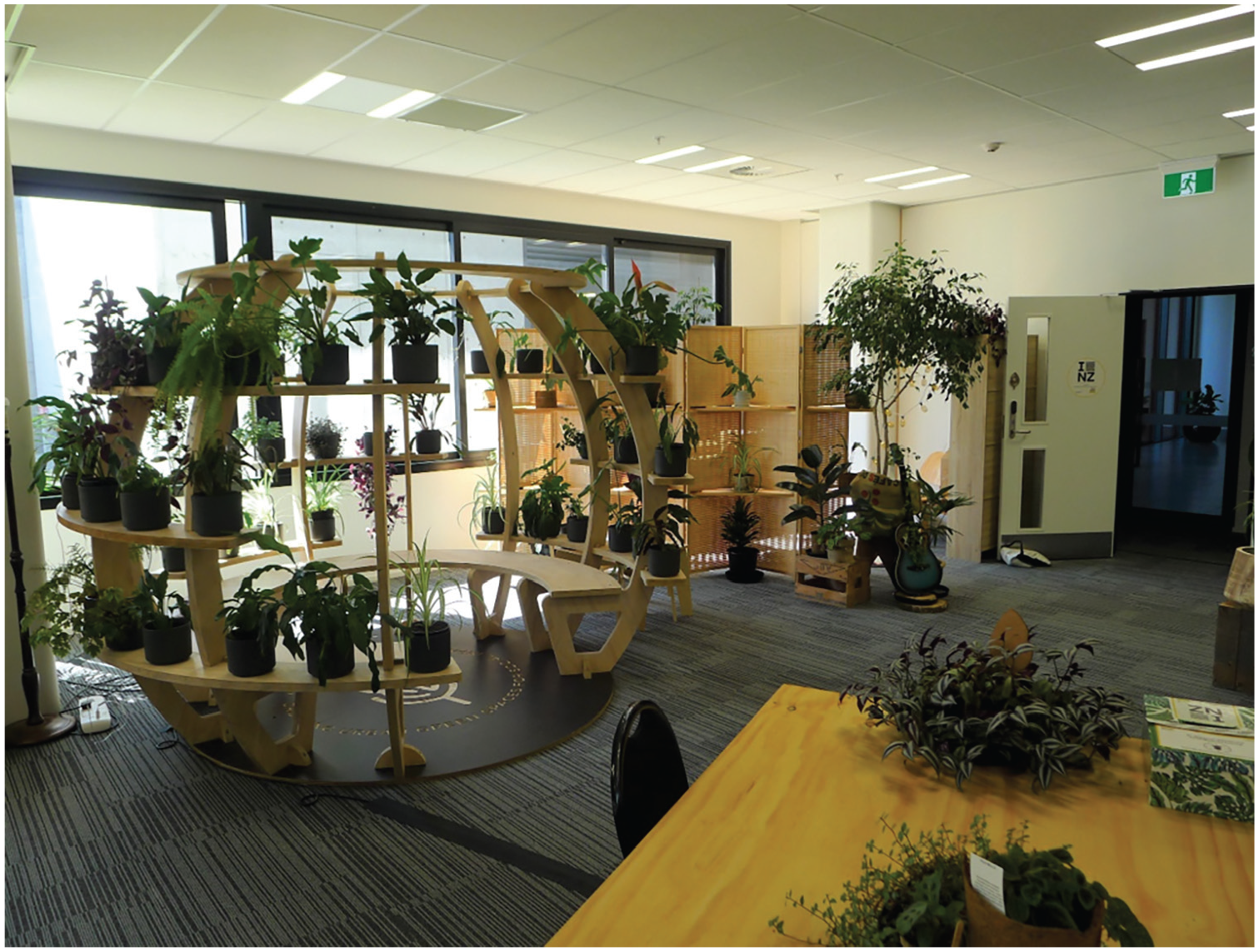
The Green Connection Pod.
Aesthetics are not the only factor that set understorey apart from most other corporate office spaces in the central city. Another critical difference is that TGL operates a self-directed sliding scale of access which enables users to pay what they can rather than adhere to a set payment rate. This unconventional approach to rent and tenancy is supported by other on-site initiatives such as the Propagation Station, a plant cutting exchange which enables people to “purchase” plant cuttings for a donation, irrespective of their current market value (Figure 2). TGL also carries out atypical workplace practices and activations within understorey, including optional weekly mental health “check-ins” for understorey users, regular sessions for aspiring writers and entrepreneurs, and one-off events. Through its work, TGL especially seeks to assist individuals and communities marginalized by structural inequalities. This aspiration, as well as the varied systems of reciprocity and exchange embodied in the understorey project, brings together a network of groups similarly interested in well-being, sustainability, and placemaking, through which material resources, time, and expertise are shared for mutual benefit.
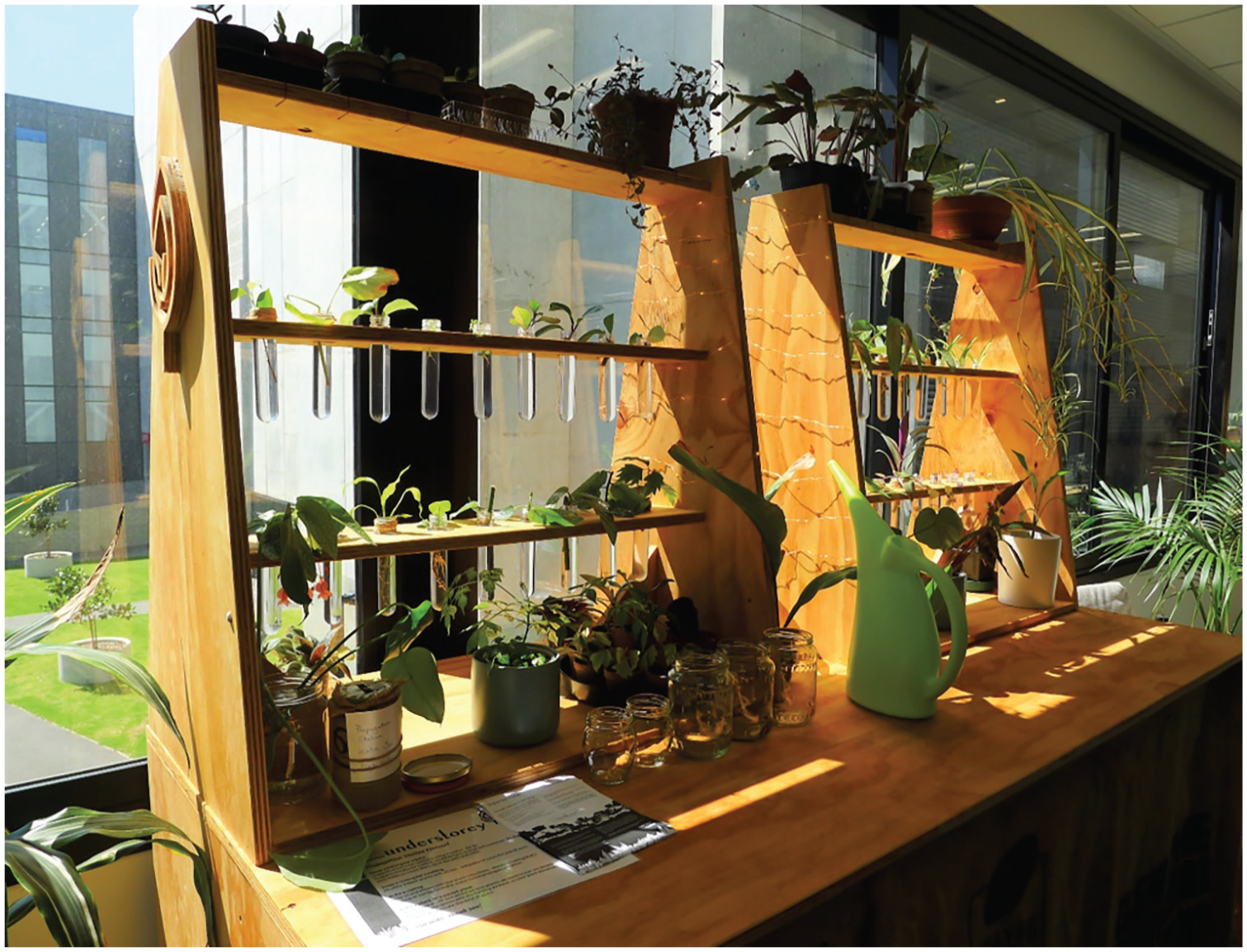
The Propagation Station.
Understorey was initially “tested” for 6 weeks at the heritage-listed Arts Centre Te Matatiki Toi Ora, a collection of 23 Gothic Revival buildings comprising one of the Christchurch’s most recognizable architectural icons. This iteration was largely funded by the local city council, with a significant and generous discount from the Arts Centre as landlord. In this space, understorey was visited by an average of 30 people per day, many of whom checked out the space as part of their general explorations of the Arts Centre’s boutique retailers, galleries, and eateries. After 6 weeks, understorey was moved to an office block within The Terrace, a post-earthquake central city development boasting a number of popular eateries and bars which has become the focal point for socializing in the city. This change was radical, partly due to the new location, but mostly because the funding and support system for understorey moved from local government to a shared “private/public/public” partnership between the business sector, the third sector, and local government. In December 2021, approximately 15 to 20 people per day visited the space, usually returning users coming expressly to work and staying for much longer periods than the casual visitors at the Arts Centre. Thus, in the space of 3 months, and despite the challenge that COVID-19 outbreaks and restrictions presented to its popularity, understorey generated some interest among the Christchurch population and developed a base of loyal supporters. Within this context, we look at the ways in which the local government, business, and third sectors provided support for understorey and the reasons which underpinned this support.
Method
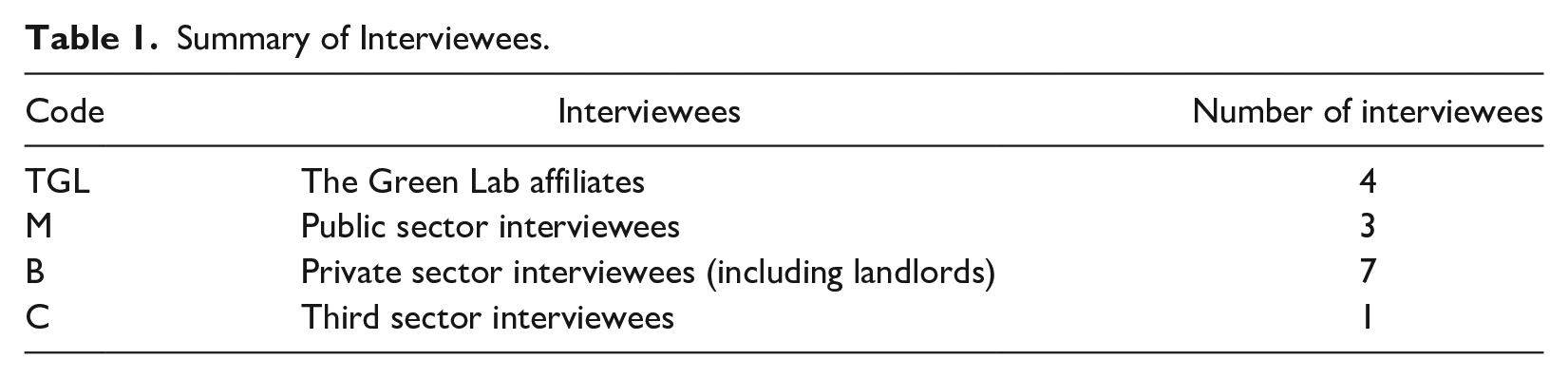
Given the complexity of the research aim, it was necessary to adopt a methodology that allowed us to engage with the case in an iterative way, asking and answering questions as we progressed, gathering rich data until we reached thematic saturation. On this basis, we used a range of qualitative methods that also allowed us to triangulate the data gathered from observations, interviews, and analysis of secondary data sources. We conducted 15 in-depth interviews between October 2021 and January 2022, adopting a purposeful sampling approach (Robinson, 2014), inviting participation from people with different types of involvement with understorey to ensure a broad cross-sector picture of the project. We were particularly interested in interviewing supporters of understorey from across all three sectors, and especially those from the private sector, to understand the types of support offered (to determine cross-sector reliance) and the reasons for this involvement (to determine cross-sector responsibility). For this reason, interviews were undertaken with supporters from the city’s local government (n = 3), business (n = 7), and third (n = 1) sectors, as well as affiliates of The Green Lab (n = 4) (Table 1). These interviews took between 15 and 60 min, lasting 45 min on average. The majority of the interviews took place in situ at understorey. The interviews were semi-structured and incorporated open-ended questions about understorey and participants’ support for the project. All interviews were transcribed, and the results inductively coded for descriptive, topic, and broad analytic insights. Subsequent rounds of coding provided more detailed and nuanced analysis related to types of support and reasons for supporters’ involvement. Numbers have been randomly assigned to respondents to ensure their anonymity.
Summary of Interviewees.
We also spoke informally with dozens of people (primarily from the third sector and also the private sector) utilizing the understorey space, as part of our more than 60 hr of observations between September and December 2021, for which we took extensive field notes to gain an understanding of who accessed understorey and how the space was being used. Secondary data sources were also analyzed to complement the interviews and included The Green Lab website, social media accounts, and newsletter mailouts.
Findings
This section considers the cross-sector support provided to understorey. To contextualize this support, we situate understorey (and urban experimentation more broadly) within the urban ecosystem, using the analogy of a forest to illustrate that these projects can play a critical role in driving change through the ecosystem. We then turn specifically to the issue of cross-sector support, considering both the support that understorey received from individuals and organizations across the public, private, and third sectors (cross-sector reliance) and the reasons why these groups were motivated to offer this support (cross-sector responsibility). This support can be grouped into two primary categories: support to enable access to the physical spaces which house understorey and support to enable the venue’s functionality and “vibe.”
Understorey in the Urban Ecosystem
The Green Lab’s conceptual framing of understorey explicitly references an ecosystem: that of a forest with its four interdependent strata of forest floor, understorey, canopy, and emergent layer of very tall trees. Transposing this analogy onto the city, urban experimentation (as represented by the understorey project) constitutes one component of a greater “whole” comprising the various ecosystem “strata”—namely, the public, private, and third sectors. Each strata is unique and contributes in different and critical ways to the ecosystem; however, it is the understorey that acts as an “ecosystem driver” (Nilsson & Wardle, 2005), providing services that are crucial to the forest’s very survival. As one TGL affiliate explained, A diverse and thriving understorey contributes to the health of the whole forest. It’s the area where the saplings, which become the future trees, figure out what they need to do within the forest where plants share nitrogen and resources between them through an interconnected network. There are bushes and shrubs that never have the intention of becoming big trees, but they provide the support those big trees need, and support bird and animal life. If you extrapolate out that metaphor: Where do we position ourselves within an ecology of Ōtautahi Christchurch? (TGL2)
TGL’s foregrounding of the understorey strata thus recognizes the capacity of urban experimentation to generate benefits for the entire ecosystem (even though these benefits may be invisible, unacknowledged, or overlooked). Furthermore, the notion of the understorey as “ecosystem driver” accentuates the aspiration of urban experimentation to propose and enact alternatives to the status quo in the hope of producing long-term change.
Understorey thus constitutes a deliberate attempt by TGL to change system dynamics in ways it judges more equitable. As part of this practice, the project fosters space for exchange across traditional sector boundaries, explicitly looking at how relationships between the ecosystem “strata” can be activated, maintained, and spatially reconfigured. As one private sector interviewee remarked, “it’s not quite the roots and it’s not quite the canopy of the forest”; instead, “it brings those two things together and creates that happy medium” (B4). In generating novel ideas and practices, understorey (and urban experimentation, generally) contributes meaningfully to the “health” of the urban ecosystem.
Cross-Sector Support for Understorey
Just as understorey contributes to the ecosystem by “driving” benefits to the other “strata,” so too do the public, private, and third sectors contribute to understorey (and urban experimentation in general). This critical support constitutes cross-sector reliance. Also stemming from the ecosystem’s interconnectedness is cross-sector responsibility, whereby groups across the other strata support understorey because they believe it advances alternatives to the status quo and want to enable this vision. The need to make space for and enable a flourishing understorey echoes a forest’s natural cycles of growth and regrowth, as was discussed by one of the private sector interviewees: What happens naturally in a forest is you get a storm or you get a lot of rain and there’s a slip or something—there’s a disturbance in the forest—and that’ll create a hole in the canopy that allows the light to come in and that allows the seedlings to thrive. (B3)
Transposed upon the urban ecosystem, this sentiment implies an obligation for “a multi-faceted approach” (B6) in which the public, private, and third sectors create space for and maximize the vision, “hard work,” and “passion” (seven respondents) generated by understorey (and urban experimentation in general). Indeed, understorey received extensive support (although the amount of support varies hugely between groups, given that “while we all need to help where we can, not everyone can help to the same degree”) (B2). This support can be grouped into two categories: support to enable access to physical space and support to enable functionality and “vibe.” We now consider these two categories of support, outlining the types of support provided (cross-sector reliance) and the reasons for the provision of this support (cross-sector responsibility).
Support to Enable Access to Physical Spaces
Understorey exists only because TGL was able to source and pay for a physical space which is adequate for its needs. To meet these conditions, TGL required significant support from both the public and private sectors (specifically, landlords).
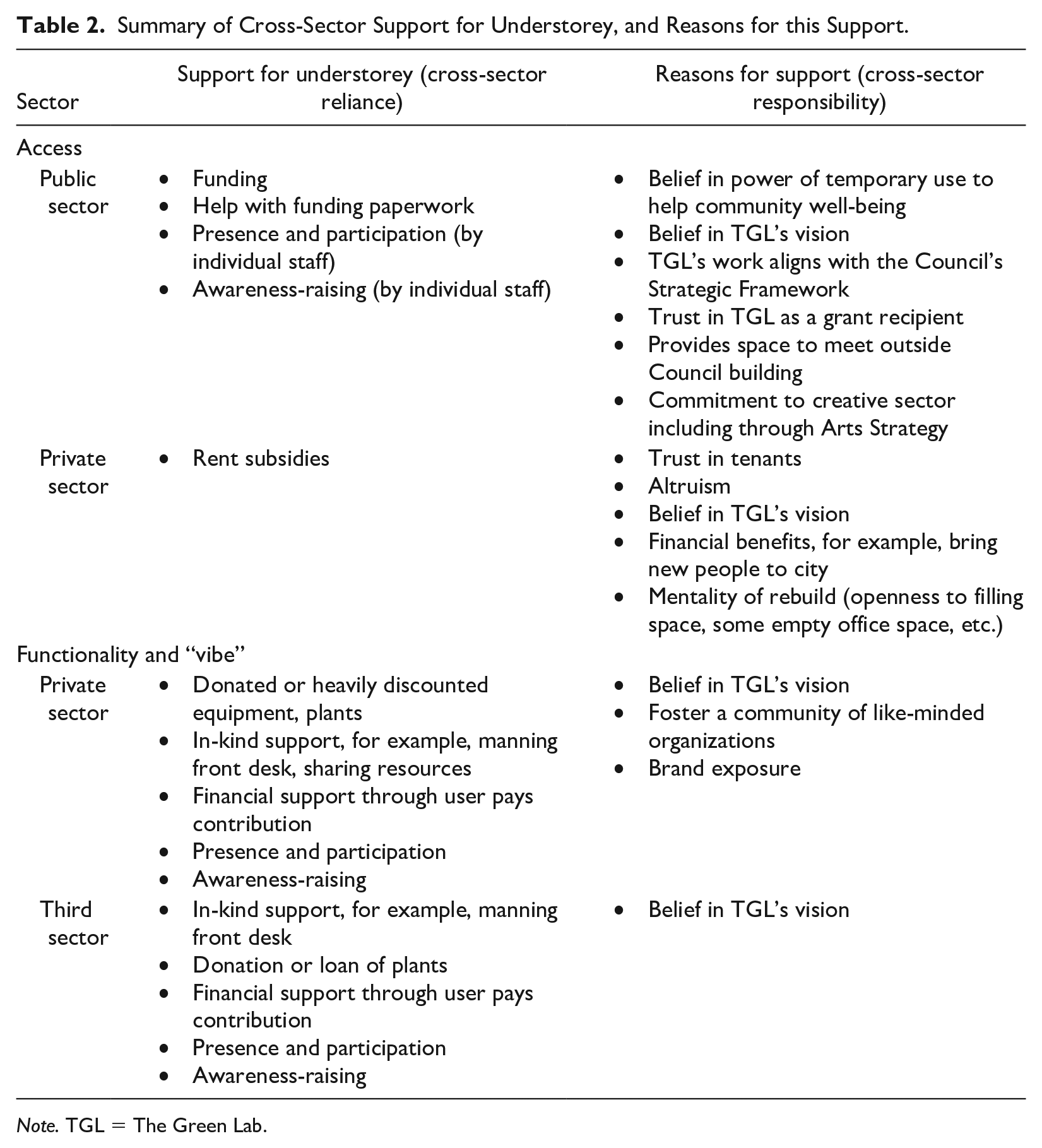
In terms of local government, TGL has a good relationship with the Christchurch City Council, which has part-funded the organization since its establishment after the 2010–2011 earthquakes. This long-term association, and the fact that TGL has proven over time that it can be “trusted” and can “pull things off” (C1), has two primary benefits: first, Council is “hands off” (M3), allowing TGL freedom to determine its directions and projects within overarching priorities and outcomes; and second, TGL has “champions” (Crosby & Bryson, 2010) within Council who “advocate” (M3) its cause. The fact that much of TGL’s work aligns with the Council’s Strategic Framework—and so helps deliver on the Framework’s Principles, Outcomes, and Priorities—is also key to the Council’s ongoing support. This support has enabled understorey. At the microlevel, recognizing that understorey provides something “really useful” (M2), individual Council staff have been using and raising awareness of the space. At the macrolevel, TGL is using its ongoing Council funding to cover understorey’s operational expenditures and was also supported to apply for—and awarded—contestable Council funding to pay the rent for its first iteration at the Arts Centre. Without the financial assistance provided by the Council, TGL would not meet the project’s costs. Recognizing this “constraint” (TGL4), interviewees considered funding especially crucial to understorey’s ongoing “longevity” (B2) (eight respondents).
The private sector—namely, landlords—has also played a key role in enabling TGL to access space. This assistance, first, has been the provision of a physical site for understorey. Finding an appropriate venue for the project proved challenging, with customary landlord reticence regarding short-term rental agreements exacerbated by the threat of further COVID-19 restrictions. The invitation for understorey to set up at The Terrace (its second site) was brokered by an existing tenant, who facilitated introductions between TGL and the landlord, enacting a trust-based “very good working relationship” (B2).
In addition to providing space, landlords have been generous with costs (eight respondents), with the Arts Centre subsidizing rental costs and waiving rent for the 3 weeks of COVID-19 lockdown, and The Terrace providing rent-free space for the project’s first 4 months (with a “subsidised-but-not-wholly-subsidised” [TGL2] model effective from February 2022). Interviewees believed this generosity at least partly stemmed from the particular environment of a rebuilding city (nine respondents), where “you’ve got a whole bunch of buildings built and no-one to fill them, and you’ve got developers [. . .] that are community minded, to an extent, and open to trying new things and taking a bit of risk” (C1). This “open mentality” (TGL4) results in multidirectional benefits. Understorey and its users benefit, and the landlord derives personal satisfaction from the altruistic “need to give back.” There is also a possible “financial argument” for the landlord in that understorey “brings new people into the precinct” (B5). Furthermore, because understorey attracts creatives, there are flow-on effects to the wider community in terms of generating “new economies,” “new identities,” and “new geographies” (Sepe, 2014, p. 24) by “bringing art in” and making the city “more cool” (B5). Interviewees believed this situation is especially significant in Christchurch, which has “hung its identity on art” (M2) after the earthquakes while simultaneously “pushing artists out” (B5) through unaffordable rent.
Support to Enable Functionality and “Vibe”
As well as enabling access to adequate and affordable space, understorey has been supported through the provision of the material and social “equipment” that enable functionality and create a special “vibe” within the space. This support has largely been in the form of donations or in-kind support from individuals and organizations in the private and third sectors that are passionate about TGL and its aspirations.
Support from the private sector has been provided by both “big business” and “smaller, local businesses who see what we do and utilise the space themselves” (TGL4). These contributions usually come in the form of donated or heavily discounted equipment. In-kind support is also readily apparent in the space, most especially through sharing responsibility for its oversight (i.e., donating time) but also through sharing facilities such as internet connectivity. Businesses have also committed to other forms of support, including being present in the space and raising awareness of it. Support from the business community is important, believed one TGL affiliate, because it demonstrates “people’s investment and belief in the space that we’ve created” (TGL4).
Private sector interviewees acknowledged the reciprocal “value” (B3) that they draw from understorey and their participation in a sharing economy (Hult & Bradley, 2017). While some registered an increase in sales directly attributable to “ongoing brand exposure” (B3), this outcome was considered a bonus; the businesses supported understorey in order to “actually make a difference over the longer term” (B4) and to foster a community of like-minded organizations that can “help each other out when it’s appropriate” (B5). Some interviewees stressed that, even if TGL had “unlimited funding” to provision the space, engaging a number of enthusiastic businesses “would still be the better way to go” because the process ensures “you’re a part of it” (B1), creating buy-in and establishing connections horizontally between different businesses and vertically between sectors. This focus on inter-business reciprocity in support of the public good is necessary for TGL to sustain understorey’s post-capitalist exchange economy, which depends on organizations choosing to “collaborate rather than compete” (TGL2). Yet there was also an awareness from some business owners that they are “not a charity” (B6): “I love to contribute but I also have to be careful that there is some sort of payoff in regard to working my own small business” (B4).
Individuals and organizations in the third sector with whom TGL shares “some sort of synergy” (TGL2) were also instrumental in enabling understorey, giving “heaps of unrecognised labour and volunteering and generosity and in-kind support” (M2). One significant contribution came from the people who donated the plants (three respondents); as one interviewee exclaimed, “it’s thousands and thousands of dollars’ worth of plants that people have just been like, ‘Here, you can babysit my plants?’ That blows my mind, that generosity” (C1). Similarly, understorey requires support for on-site kaitiakitanga [stewardship] activities such as watering the plants and “minding the space” (TGL2).
Another form of support is simply the presence and participation of understorey users (six respondents), who have “enabled it by continuing to come here and participating, giving their voice” (TGL4). This allyship is key, especially as quantifiable outputs like “how many people come in the door, how many people return” (TGL4) are integral to TGL’s funding accountability reporting. Recognizing both that “something like [understorey] takes time for people to know it exists” (B3) and that TGL has limited budget for “marketing or communication” (TGL4), supporters are also keenly promoting the space, with TGL data revealing a high uptake from “friends of friends” who know about understorey through “word of mouth” (TGL2). With their presence, people also help to pay understorey’s costs—and this “element of contribution” is shared in the “hope of it continuing” (B3). Interviewees were emphatic in their desire to see understorey become a long-term fixture in the city because it offers something “not only important, but crucial, for a lot of people’s mental health” (B5) in providing a space that facilitates both physical separation from home and connection with others. This situation is especially poignant in the current pandemic context when “everyone, no matter what sort of industry you work in, now understands isolation and understands, maybe, positive mental health and self-care a lot more” (TGL4).
Discussion and Conclusion
We began our investigation with some questions about “entrepreneurial municipalism” as an emerging governance orientation with the potential to address some perennial and persistent urban problems. Drawing on systems thinking, it became apparent that urban dynamics are shaped not only by the behavior of constituent parts—private, public, and third sector actors—but, importantly, by the relationships between them. Our research has documented that urban experimentation can reconfigure these relationships in important ways. The Green Lab’s understorey project is dependent on extensive support from the other “strata” in the urban ecosystem—namely, the public, private, and third sectors. Although the amount of support varies hugely depending on what individuals and organizations are able or willing to give, our analysis has demonstrated that what is important is that this support comes from the three sectors. Each sector brings something unique to the project, and each form of support is in some way indispensable to the project’s ability to drive change through the urban ecosystem (Figure 3).
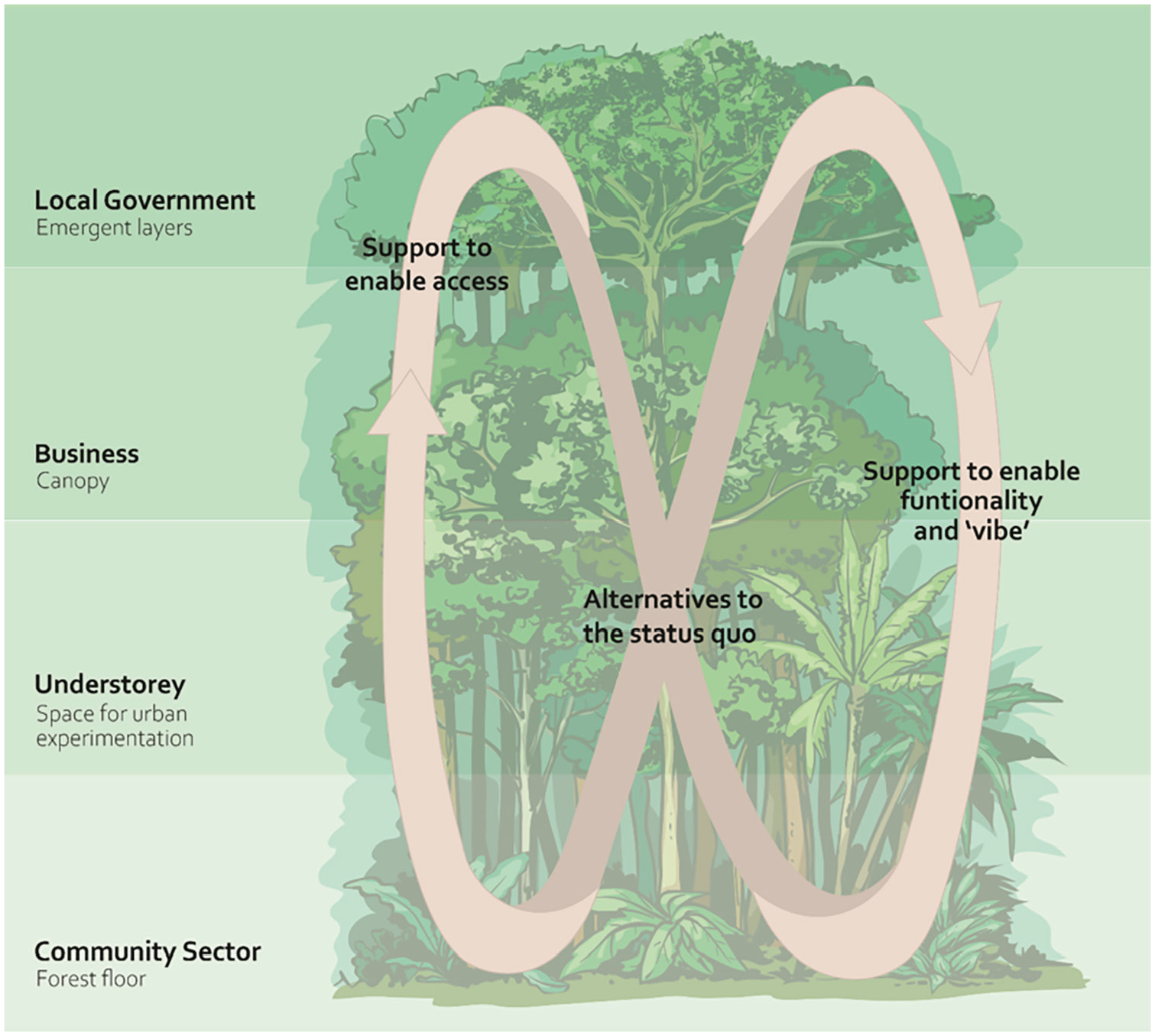
Experimentation Within the Urban Ecosystem.
This support is a matter of cross-sector reliance (i.e., it is necessary for the project to succeed) and cross-sector responsibility (i.e., it is often provided because groups want to enable and endorse projects seeking systems change) (Table 2). This motivation renders understorey an example of “entrepreneurial municipalism,” a movement whereby local leadership is seeking to address neoliberalism-induced polarization and inequity (Thompson et al., 2020). In this section, we discuss the support provided by the three sectors to urban experimentation and the implications of this support.
Summary of Cross-Sector Support for Understorey, and Reasons for this Support.
Note. TGL = The Green Lab.
Our results highlight two main ways in which the three sectors support understorey: first, by providing access to physical space; and second, by providing the means to enable functionality and vibe. This first form of support comes from the public and private sectors. As noted elsewhere (Cairns & Harris, 2011; Hult & Bradley, 2017), support from the public sector is critical to urban experimentation. While funding constitutes the most obvious and important type of support, our analysis shows that it is not the only way that local government can contribute to urban experimentation. Rather, local municipalities can support urban experimentation by developing strategies that genuinely seek to enhance citizen participation and power (Sara et al., 2021), and by putting in place provisions (e.g., funding, agreements, and liaison staff) that proactively recognize the value and contribution that urban experimentation brings to these strategies. As formal demonstrations of political will, these strategies also provide both community actors and officials with authority to embark on and support novel approaches to local sustainability and equity challenges (Hult & Bradley, 2017). The high-level recognition of municipal strategies can be furthered by staff sympathetic to urban experimentation, who advocate its value internally—acting, in this way, as change “champions” (Crosby & Bryson, 2010). These suggestions are in line with calls emphasizing how learning from urban experimentation might prompt organizational change within municipalities, and that this change may in turn fruitfully contribute to the ability of urban experimentation to implement broader systems transformation (Evans et al., 2021).
In enabling access to adequate and affordable space, our research suggests that support from the private sector (namely, landlords) is just as critical as support from the public sector. Indeed, landlord generosity was one of the most remarked-upon elements of understorey’s development: interviewees expressed deep admiration for the gesture while also pondering the potential “return on investment” in terms of altruism and economic gain (Munzner & Shaw, 2015). With both the Arts Centre and The Terrace offering to underwrite understorey—but for a finite length of time—there was some suggestion in our research that landlord generosity toward urban experimentation may at least partly stem from its assumed temporary or “trial” nature (Vallance et al., 2017). This supposition could be explicitly probed in future research on other urban experiments, as could the importance of landlord support to project viability; within the already under-researched arena of business involvement in urban experimentation, the role of landlords remains even scarcer.
This same tension—wanting to contribute to urban experimentation that benefits the greater good, but also needing “some sort of payoff” to survive as a business—was also expressed by private sector interviewees whose support contributes to understorey’s functionality and “vibe.” These interviewees donated or exchanged time and resources to support understorey because they placed greater value on The Green Lab’s vision for social, economic, and environmental change than on profit (Fenwick, 2010). This same sense of altruism has been found elsewhere among owners of small and medium-sized innovative businesses (Jurik & Bodine, 2014) and can be seen as illustrative of a general reappraisal of the role of business in pushing back against unsustainable production and consumption practices and contributing positively to society (Loorbach & Wijsman, 2013). Furthermore, echoing research showing that inter-organizational exchange fosters increased ecosystem “nestedness” (Mars et al., 2012), the private sector interviewees greatly appreciated being part of a network of similar-minded organizations. Yet, cognizant of needing to survive in a society driven by income and profits, some of these interviewees consciously curbed their level of involvement in understorey. This finding suggests two issues relevant to business support for urban experimentation, especially from small- and medium-sized businesses which tend to be more resource-poor than larger corporations (Fenwick, 2010): first, businesses can seek reciprocal benefits for their involvement; and second, their involvement can be limited by personnel and material resource constraints. This conclusion means that urban experimentation might benefit from appealing to numerous allies in the private sector, thus curtailing both the level of expectation of reciprocity and the amount of support required from each.
Support in the form of functionality and “vibe” is also provided to understorey by individuals and organizations from the third sector. These contributions take the form of donations of time and resources, and people’s presence and participation. These activities are crucial because they activate and “give voice” to both the physical space and the urban experiment within it, which would otherwise remain devoid of life and meaning. Through their involvement with understorey, these actors incidentally expose others in their personal and professional networks to the aims and practices of the experiment—helping, in this way, to upscale the project’s ability to engender systems transformation (Beukers & Bertolini, 2021).
We conclude, then, that “entrepreneurial municipalism” as a style of local governance orientated toward addressing wicked urban problems will involve modifying system dynamics by reconfiguring relationships across multiple sectors. Drawing on an analogy of an ecosystem, understorey illustrates how this reconfiguration can be seeded in urban experiments, with the potential to flourish if the broader ecosystem supports it. As in an ecosystem, a sometimes fragile distribution of mutual benefit is created through cross-sector reliance and cross-sector responsibility, whereby support for urban experimentation is provided in the hope that it might address contemporary challenges that concern and affect actors across all three sectors. Consistent with Carley’s (2000, p. 283) assessment that the absence of business in many cross-sector partnerships in the regeneration of deindustralized cities in Britain constituted a “major omission” and other research (Crosby & Bryson, 2010; Hult & Bradley, 2017) highlighting how the involvement of each sector increases buy-in and longevity, we note the importance of all three sectors in supporting urban experimentation.
There are some practical and theoretical implications of this conclusion. First, experiments that occupy the “middle” of an urban ecosystem (as an understorey does) provide a mediating space where mutual benefit can be established. This is a departure from policy initiatives that anticipate a linear rollout of change, but that rarely plays out as intended. Our case study shows this understorey might be an appropriate level or “strata” providing fertile ground for cross-sector interdependence, reliance, and responsibility for the broader system and its composite parts. It also shows that by virtue of increasing actor buy-in, cross-sector support may significantly contribute to the ability of urban experimentation to generate learning for systems change (Beukers & Bertolini, 2021).
Theoretically, we see value in further exploring entrepreneurial municipalism in the context of an urban ecosystem analogy. In harnessing the creative potential of cities to address significant urban challenges, “the whole” is more than the sum of its parts. However, the “whole” is difficult to shift and the individual parts alone provide limited influence. The relationships between parts, on the other hand, are key to dynamics that change overall system behavior. Our research suggests that more research into the dynamic relationships across all three sectors—and the experiments that enable them to flourish—is essential if we are to manage urban issues in mutually beneficial ways.
Footnotes
Declaration of Conflicting Interests
The author(s) declared no potential conflicts of interest with respect to the research, authorship, and/or publication of this article.
Funding
The author(s) received no financial support for the research, authorship, and/or publication of this article.
