




Abstract
This paper is the introduction to the Space and Culture special issue “Inside inside,” which examines the persistent use of architecture as punishment. It provides an overview of the use of architecture as punishment with specific reference to Anglo-American prison architecture. It additionally examines developments occurring in architecture and the architectural profession contemporary with the emergence of the modern prison and acknowledges the geospatial politics of Guantánamo Bay Detention Center on the year of its 20th anniversary.
Keywords
Introduction
Guantánamo Bay Detention Center opened two decades ago, on Friday 11 January 2002. The first 20 inmates arrived after a 27-hr flight from Afghanistan: “chained, gloved, ear-muffed and masked . . . soaked in their own bodily waste” (Gregory, 2006, p. 414). Descriptions of their accommodation, Camp X-Ray, stress its inhumanity as “primitive,” “kennel-like,” “steel-mesh” cages or pens on concrete, open to the harsh Caribbean climate (Higham, 2004, n.p.; Rayner, 2016; Rosenberg, 2018, n.p.; Welch, 2009, p. 5).
The architecture of Camp X-Ray contrasted the slice of “small-town America” of the naval base, with its town houses, gym, college, KFC, McDonald’s, Pizza Hut, Starbucks, and Subway franchises (Johns, 2005, p. 616; Stafford Smith, 2005, p. 14). However, characteristically American life also slipped into detention spaces. Rayner (2016, p. 95) recalled her client “leaning back in one of those white plastic chairs ubiquitous in the backyards of Americans while he looked at the ceiling of cheap Styrofoam tiles.” Similarly, there have been reports that cooperative prisoners were rewarded with McDonald’s “Happy Meals” (Corera, 2006).
The perverse juxtaposition of the foreign and the familiar permeate Guantánamo. Proximity is stretched in new directions. Camp Delta (Camps 1–3) replaced Camp X-Ray in April 2002 (Rose, 2004). Its faded green prefabricated metal boxes, with their wall-mounted steel beds, and squat toilet fronted by an open grill, where guards passed every 30 seconds, confuse alienation and intimacy. Food and books were passed to prisoners through small openings in the steel mesh walls, as guards wore protective gloves. Contrasting distance is apparent in these details which remove every possibility of humanity.
In February 2003, Camp 4 was completed. As “a showcase, pre-release detention area for . . . the most cooperative, least dangerous captives, it was designed to resemble a traditional POW lockup” (Rosenberg, 2018, n.p.). It closed in 2011, but Camp 5 had opened in 2004, Camp 6 in 2006, and Camp 7 by December 2008 (Gregory, 2006; Rosenberg, 2018).
A Space of Exception?
Guantánamo Bay is understood by many as a byproduct of the “state of exception” (Agamben, 2005), where exceptionalism has become the mundane operation of government. It is justified by
The idea that the lease of Guantánamo Bay places “Guantánamo in an ambiguous space between the “ultimate sovereignty” of Cuba and the “complete jurisdiction” of the United States” (Gregory, 2006, p. 411);
The idea that the “war on terror” is a new kind of war requiring “novel mechanisms” (Birdsall, 2010, pp. 688);
The revival of “the doctrine of the unitary executive, in which the President’s actions as commander-in-chief are supposedly beyond the law” (Birdsall, 2010; Gregory, 2006, p. 412).
The injustice caused by the political manipulation of geographic and conceptual borders, variously placing Guantánamo inside and then outside the perimeters of U.S. jurisdiction for politically expedient outcomes, facilitating unimaginable human suffering and abuse, is deeply felt. The treatment of Sanad al-Kazimi, for example, which included confinement in a dark cell the size of a grave, being bound and hooked to a mechanical lift and dropped into freezing water, 24/7 darkness for 4 months, being suspended naked from a ceiling by his arms for hours prior to interrogations, deafening music for hours at a time, and periods of 24/7 lights and solitary confinement, is gut-wretching (Rayner, 2016). These abuses occurred, following his abduction, in the United Arab Emirates, the CIA “Dark Prison” in Afghanistan, the U.S. Bagram Airfield Military Base, and Guantánamo Bay, but, the treatment al-Kazimi suffered in these geographically distinct locations has nevertheless become blurred: His ability to remember and recount was understandably compromised by the very treatment imposed on him. Cruel treatment, sleep deprivation, methods designed to cripple his mind, and use of unidentified drugs all impacted his memory. (Rayner 2016, p. 104)
As Gregory (2006, p. 407) states in his support of Agamben’s theory of exceptionalism: “[c]onceptions of space need not be limited to the container model.” In contrast, Johns (2005, p. 613) sees Guantánamo as “an instance of the norm struggling to overtake the exception.” She (p. 631) identifies “efforts to construct a series of normatively airtight spaces in which the prospect of agonizing over an impossible decision may be delimited and, wherever possible, avoided.” Her argument (p. 634) is that the legislative apparatus implemented by the Bush administration removed individual discretion and so responsibility: it is to lose or avoid the experience of deciding in circumstances where no person or rule offers assurance that the decision that one takes will be the right one or, indeed, whether one does in fact exert the decisive authority that one envisages oneself to hold. . . . the decision taken remains “independent of the correctness of its content.”
Such bureaucratic spatiality is integral to the question of why architecture as punishment persists.
Desperate Times
Johns’ (2005) identification of Guantánamo Bay as consistent with the motivation to domesticate the exception, is directed at “the political possibilities occasioned by the experience of exceptionalism” (p. 615). This special issue of Space and Culture is interested in why architecture has persisted as party to such strategies. With a specific focus on Anglo-American examples, this introduction engages with the idea of the prison underpinned by the domestication of the exception, while examining geospatial tensions where being inside results from acts of exclusion.
Two critical shifts occurred in the late 18th to mid 19th centuries that facilitated this: the American War of Independence (1775–1783) and the end of the Debtors’ Prison (1869). Up until this point, gaols performed functions which required their occupants to be central to urban life. They primarily held five groups of people:
Debtors detained to prevent them leaving town with debts unpaid;
Remand prisoners detained prior to trial and sentencing
Short-term inmates punished for minor crimes;
The condemned waiting for their execution;
Transportees waiting to be shipped to British colonies.
While the location of gaols within city walls no doubt resulted from the convenience of housing inmates close to courts, another need was the particular nature of imprisoning debtors. Serious offenders were either executed or transported.
Until the 19th century, most prisoners were debtors, both in terms of absolute numbers and as the majority of long-term inmates (Evans, 2010; McGowen, 1995). Debtors needed money to pay their creditors and various gaol fees (for food, bedding, legal services, rent, visitors, etc.) (McGowen, 1995). Evans (2010) refers to begging grates in the gaol walls that perimetered streets and public places, where money could be received from relatives, patrons, and passersby. Some debtors continued their trade to generate income (McGowen, 1995). Access to visitors (family, friends, charities, the curious public) was similarly important (McGowen, 1995). Often debtors’ families would live in gaol with them (Howse, 2012; McGowen, 1995)—but debtors could also live within three miles of the gaol walls—if they paid their gaoler for “Liberty of the Rules” (Howse, 2012). Gaolers’ reliance on this income encouraged significant permeability between gaol and society (Evans, 2010). From the late 18th to the mid 19th centuries, debtors’ impact on prison culture progressively diminished. From 1808, those with debts less than £20 were released after serving a year (48 Geo III c123), gaol fees were abolished in the 1800s (55 Geo III c50 (1815); 5 Vict c22 (1842)), and imprisonment for debt largely ended in England in 1869 (32 & 33 Vict c62).
The Debtors Prison, which prevented debtors from leaving town, contrasted the criminal punishments of execution and transportation, which removed unwanted people from society. The physical locations used to detain debtors and banish serious offenders were both important but aimed for opposite geospatial ends.
The disruption caused by the American War of Independence was of administrative magnitude. It prompted the passing of the 1776 Hulks Act (HA) (16 Geo III c43) which temporarily provided two alternative punishments, namely hard labor on river works for healthy male offenders, and hard labor in a House of Correction for women and men “unfit for so severe a labor” (HA s. I). The 1779 Penitentiary Act (PA) (19 Geo III c74), incorporated this punishment of hard labor, reserving it for “atrocious and daring Offenders” who were to be “punished by being kept on board Ships or Vessels,” known as prison hulks (PA ss. XXVII, XXVIII). This Act supplemented the sentence of hard labour in Houses of Correction with a new sentence of incarceration in one of two Penitentiary Houses (PA s.XXV). These “plain, strong, and substantial” gender-segregated institutions—one for 600 men, the other for 300 women—were to be situated outside London (PA ss.V, XIV), and to have separate rooms or cells for each prisoner, with prisoners coming together for divine service, meal times and exercise (PA s. XXXIII). The penitentiaries defined accommodation for people who would previously have been transported and now were to be retained on English soil. They were a development of an earlier idea: the Elizabethan House of Correction.
Confinement
The fifteenth and sixteenth centuries saw a transition from a medieval feudal economy to early capitalism. Land enclosures resulted in peasants leaving the land and mass unemployment. A 1572 Act (14 Eliz I c5) introduced a poor rate paid by parishioners to fund those unable to work, while, “sturdy beggars”—the able-bodied unemployed—were forced to work because they were a drain on the state-run poor relief and undermined the emerging capitalist economy (Melossi, 2018, p. 30). It was from this context that Houses of Correction originated.
A 1576 Act (18 Eliz c.3) legislated the concept of the “House of Correction.” This followed London’s system of hospitals introduced to address the “problems of poverty” (Innes, 1987, p. 52). Four of London’s hospitals were for “the mad, the sick, the old and incurable, and foundling children.” The fifth, the former Bridewell Palace, was for the idle (Innes, 1987). Foucault (1973, p. 48) described the Hôpital as replacing the use of distance (or exile) to manage unwanted people: [f]or the first time, purely negative measures of exclusion were replaced by a measure of confinement; the unemployed person was no longer driven away or punished; he was taken in charge, at the expense of the nation but at the cost of his individual liberty.
This was an innovative use of architecture.
The 1576 Act provided for a network of Houses of Correction (or bridewells) “for punishing and employing Rogues, and unsettled Poor &c.” (s. V). Under the jurisdiction of Justices of the Peace, they were distinct from sheriffs’ gaols, which detained the accused and the condemned (Innes, 1987). They were “the first and most important example of secular detention involving more than mere custody in the history of prison” (Melossi, 2018, p. 32). The frequent redeployment of existing buildings as Houses of Correction appears to have been the norm (Evans, 2010), and indicates no interest in custom-designed buildings to achieve this architecture of punishment. However, Innes (1987, pp. 102–103) notes that, because most inmates were sentenced to short terms of confinement, “it appears unlikely that the typical bridewell experience was one of exposure to vigorous and invigorating discipline.” She also states that the average parish “would probably [only] have had one of its inhabitants in bridewell for some petty offence every few years” (p. 104). She concludes that bridewells were expected “to work some of their most powerful effects at a distance. It was hoped that mere fear of commitment to bridewell would in many cases be sufficient to reduce the ‘disorderly’ to render them tractable and submissive” (p. 105). This understanding of the dual mechanisms of the House of Correction as a place of forced work and a deterrent threat, identifies a function of architecture in addition to its occupation, with its mere presence, of even an underutilized building, to effect social change.
A 1706 Act (5 Anne c6, s.II) increased the scope of bridewell inmates from petty offenders to also include “people convicted of simple felonies,” and to effect the punishment of “hard labor” (Innes, 1987, p. 88). This 1706 innovation occurred when “disruption of trade with the colonies blocked off the option of transportation” (Innes, 1987, p. 89). After the conclusion of the War of the Spanish Succession (1701–1714), and the post-demobilization increase in prosecuted crime, a 1719 Act (6 Geo I c23) broadened the use of transportation for offenders of simple larcenies seeing a reduced use of hard labour imprisonment, prompting Innes (1987, p. 90) to suggest “some dissatisfaction with the results of the bridewell experiment,” with authorities preferring to “remove offenders more permanently from the community.”
Foucault’s observation that, with Houses of Correction, confinement replaced distance, locates a new purpose for buildings. Such a purpose was reliant on the specific characteristics of the wall as solid boundary. Both Evans and Foucault have written about the use of walls to exclude. Evans (1997, pp. 45, 50) observed that: “[o]f all the means of shutting out experience, such as distance . . . the wall is clearly the most adaptable,” and he suggests that “we might well ask whether the sole function of architectural enclosure is to keep out inclement weather . . . only the inclemency is not entirely meterological.” Likewise, Foucault (1973, p. 61) wrote that [t]he walls of confinement actually enclose the negative of that moral city of which the bourgeois conscience began to dream in the seventeenth century. . . . In the shadows of the bourgeois city is born this strange republic of the good which is imposed by force on all those suspected of belonging to evil.
Barriers protect and insulate, augmenting space through artificial means, manipulating light, heat and ventilation, and social logic. All of which can be enhanced, amplified, and deprived. In this way the nature of the interior can be fickle: congenial or inhospitable (Bachelard, 1994). One side of the wall can exclude while the other includes—regardless of its interior or exterior spatiality. If the Garden of Eden created all the world an exile, the prison reversed this spatial relationship so being inside can result from an act of exclusion. The wall’s exclusion of serious offenders from society, not only removes them for the security of the public, it also removes knowledge and awareness of them, and of the conditions in which they live. In this way, the wall is a representational medium, subject and vulnerable to politics and propaganda. Evans (1997, pp. 36, 45) wrote that the wall is about controlling information. But, to do this the wall also inflicts blindness. It forces an imagination that can be tampered with.
These twin roles of exclusion and information control effect imprisonment. The Hard Labor Bill (1778, p. iii) proposed “the Terror of Example” as a benefit of imprisonment. The prison as a public deterrent requires that it proactively represent. The wall is both a filter (denying information) and a template (projecting potential punishment). It manages the difficult representation of both promoting and removing that which is offensive, and it uses the idea of process, of change—that of reformation—to mediate this.
Reforming Architecture
A new function of reformation distinguished the legislation enacted during the American War of Independence. While reformation has been linked to both the House of Correction and the Penitentiary House (McGowen, 1995), the specific threats that each of these institutions aimed to address differed (Evans, 2010). The House of Correction’s conversion of the peasant into a capitalist worker intended that the peasant work in the community. The end of transportation posed the problem of how to keep dangerous people out of the community, but within domestic borders—how to domesticate a threat. While prison could remove offenders from the community, its lack as a permanent extraction (its finite capacity), pointed to a need to change serious offenders during confinement.
The Hulks Act had incentivised behavior change with the early release of prisoners detained on hulks who, through their “industry and good behaviour, shew such signs of reformation” (HA s. IX). In contrast, the Penitentiary Act prescribed a specific regime, proposing that: “solitary Imprisonment, accompanied by well-regulated labor, and religious Instruction . . . might be the Means . . . not only of deterring others from the Commission of the like Crimes, but also of reforming the Individuals and inuring them to Habits of Industry” (PA s. V). Each sentence was to have three equal periods of reducing severity, beginning with “the most strict and severe” punitive confinement and labor, progressing to a “more moderate” second class and the “still more relaxed” third. (PA ss. XXXVIII, XXXIX). This shift to a combination of solitary imprisonment, religious instruction, hard labour, and the classification of prisoners into progressive stages of reducing severity, required particular architectures: the cell, the chapel, and a building plan that supported the regime of three distinct classes, as well as workrooms.
The Penitentiary Act was passed at a time when the idea of architecture was in a process of change. Shifts, from the power of the monarch to a bureaucratic administration of power, along with developing capitalism, the emergence of the middle classes, and industrial revolutions, formed a wider context (Steadman, 2008). Kaufmann (1955, p. 141) identifies new thinking from c1750 that buildings “should convey a moral, or stimulate sentiments. The spectator should be affected by the personality of the individual structure, but not by some impersonal “beauty.”
In 1760s France, Jacques-François Blondel (1705–1774) introduced “a completely new range of building genre, previously considered unworthy of the architect’s concern” into the architectural curriculum, including utilitarian structures, such as prisons (McLeod, 1978, p. 130). He was incredibly influential. His 12-volume Cours d’Architecture (1771–1777) became “the standard text of several generations of architectural students” (Sturges, 1952, p. 19). He “dominated the world of architectural theory” (Middleton, 1959, p. 140).
Before this time, places of detention were ordinary buildings without a specific building type (Evans, 2010). Kalman (1969, p. 57) writes, of 18th-century England, that Not until after mid-century can one speak of an emerging “prison architecture.” . . . little attempt was made to cater for the special problems posed by the prison programme.
Changes within the wider profession of architecture, favoring building specialization, and functional and moral expression, were consistent with the new needs of the penitentiaries. The Penitentiary Act reflected this new context in a number of ways. Most obviously, it prescribed a new building type in detail (Devereaux, 1999). It stipulated: the size of the institutions, gender segregation, the functional spaces to be provided, cell dimensions, and operational detail with consequences for design. It shifted the prison from an ordinary building to a specialized and recognizable idea of architecture, because the Houses of Hard Labor Bill (1776), from which the Penitentiary Act derived, had imagined a national network of custom-designed buildings (Devereaux, 1999).
The Penitentiary Act was also passed during a period when the idea of the architect changed (Evans, 2010). Crinson and Lubbock (1994, p. 2), for example, state that [b]efore the mid-eighteenth century the vast majority of buildings were erected by builders with no pretensions to being designers. Architects, so-called, were only responsible for designing major monuments such as churches and palaces.
Professional organizations originate from this time, including the Royal Academy (1768), where architecture was taught and William Chambers was treasurer (Evans, 2010). A “society of gentlemen practitioners, which first met in London in 1774 to promote the improvement of architecture,” and the Architects’ Club (1791) are other examples (Corfield, 1995, p. 182; Crook, 1969).
Professionals were understood to have an “authority [recognised] as globalised and universal,” because they were seen to be disinterested and motivated by public, rather than personal, concerns (Corfield, 1995, p. 202). Barrell (1990, p. 90) links this idea of public interest to a specific spatial form, shared with Bentham’s panopticon—the panorama (McCarthy, 2016). He writes that the “ability of the disinterested citizen to grasp the true interests of society had come to be identified as a function of his ownership of landed property” in 17th- and 18th-century Britain, and he attributes this to
The idea that an independent income ensured no vested interests related to occupation,
Property ownership indicating a permanent stake in the land,
The franchise having a property ownership qualification, and
The “panoramic” vision of the landowner.
Distinguishing the classes able to see an expansive panorama (metaphorically—and literally from their estates) from those who did not, Barrell (1990) identifies a set of binary oppositions which were argued to link independently wealthy landowners with an ability to abstract and generalize and a lack of vested interest, qualifying them to govern or work in the public interest. In contrast, the worker’s narrow view of the particulars of their work and the vested interests of their occupation, were thought to disqualify them from political, and presumably professional, roles.
An independent income removed the need to labor defining the professional by its absence (Corfield, 1995). Newly distant from the manual labor of making buildings, architects (as professionals) were able to be understood as contributing to the public good, through designing buildings. Jeremy Bentham’s 1787 Panopticon, following William Blackburn’s earlier “use of the inspection principle in prisons” (Evans, 2010, p. 211), brought the Florentine republican theory that Barrel discusses into the Penitentiary House—as a panorama of prisoners required to submit to manual labor and be subjects of Benham’s (as architect and prison governor) panorama. Tipene (2022, pp. 379–397) further examines the idea of the panopticon in his careful analysis of panoramic representations.
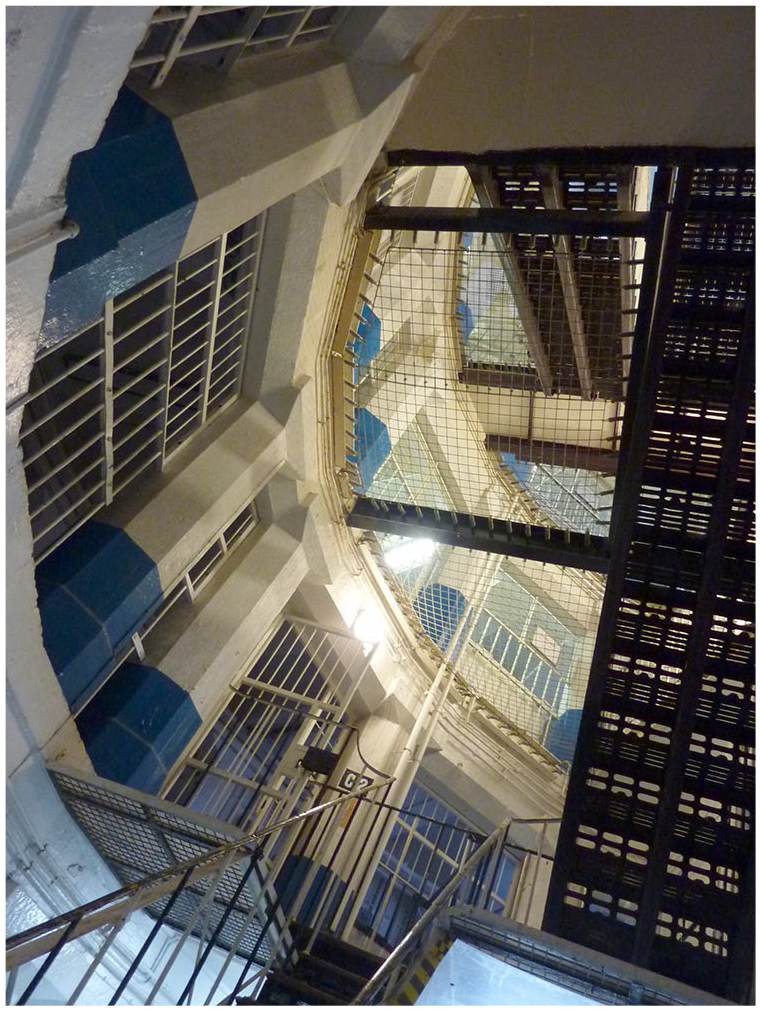
A Built Example of a Version of the Panopticon, Female Felons Wing, Lancaster Castle (Joseph Gandy, 1818–1821).
Thus, coincident with the Penitentiary Act, there was new thinking about both architects and architecture. Design appears to have given buildings additional value in aesthetics, status, moral purpose and specialization. Moral purpose could distinguish architecture from both non-descript pragmatic building and the aggrandizement of churches and palaces, creating a space within which new building types flourished. Evans (2010, p. 6) suggests that “[prison] reformers and architects alike were able to suggest an instrumental relationship between architecture and morality quite different from the familiar theory that buildings could represent virtue in their visible form.” This new work of moral reformation, at the very least, required the prison to be designed (Evans 2010 pp. 6, 46). Both prison plan and façade materialized this new focus.
The Penitentiary House marked a shift in thinking from the non-descript House of Correction to a typologically distinct building, recognizable as part of a larger network of power. Vidler (1977, p. 99) quotes Blondel (1749) writing that “each [building] should possess a character which determines the general form and which declares the building for what it is.” Blondel’s Cours d’Architecture more specifically stipulated characters suitable for specific building types: “(e.g., . . . prisons, terrible)” (Vidler, 1977, p. 101). As Kalman (1969, p. 58) noted, following the rebuilding of Newgate prison (1783–1785), “[English] architects attempted to make prisons look like prisons, no longer like palaces or hospitals.”
The late 18th-century interest in the expression of prison character was not an interest in expressing the character of a debtors’ prison. Instead it was associated with the threat of the serious offender and the prison as a place of punishment or reformation. Evans (2010, p. 255) refers to the use of medieval imagery on prisons as a melodramatic deterrent. In contrast, Pratt (2003, p. 24) identifies the use of neo-classical and Gothic revival styles to create imposing civic buildings which disconnected the prison from “its associations of squalor and disorder.” However, these prisons became understood as “sponging houses full of well-fed, well-housed, idle felons,” and intimidating prison façades were deployed to counteract such reputations (Evans, 2010, pp. 250–251).
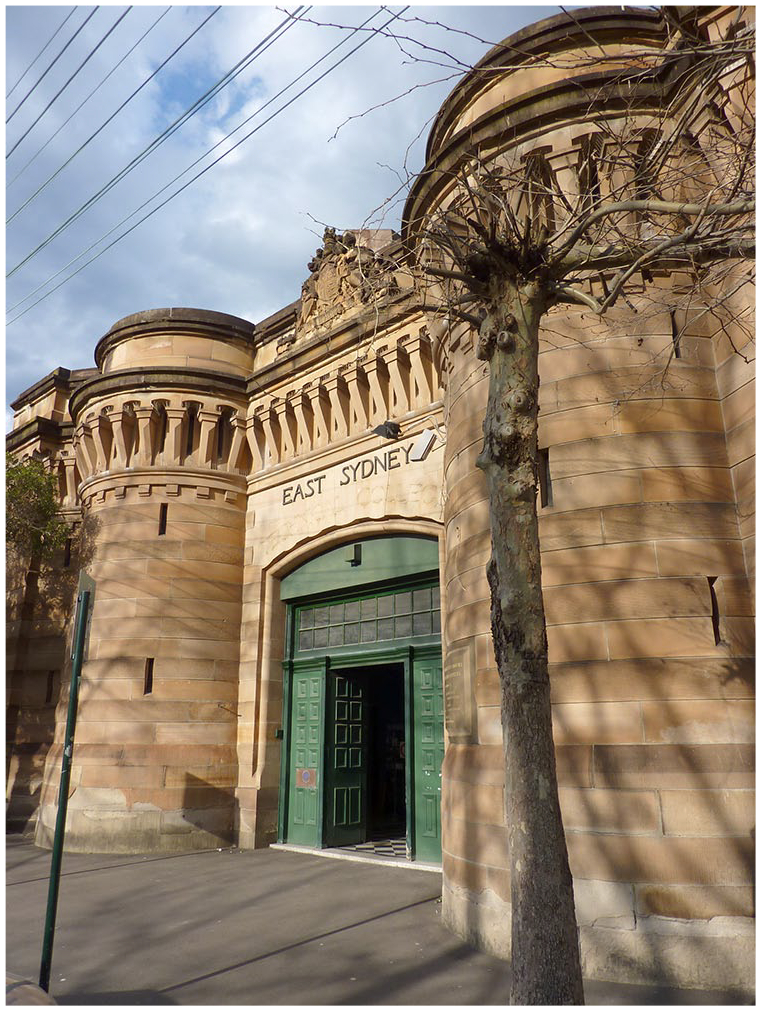
Darlinghurst Gaol, Sydney, Australia (George Barney, 1836–1840).
Consequently, the façade could represent very different ideas of the prison: an horrific place of punishment or a place of humane living conditions, but the “idea of the prison” and “the fact of the prison” did not necessarily align (Evans, 2010, pp. 250–251). The progressive removal of debtors from prisons, and limits to public access, increased the rhetorical value of the prison wall, shifting knowledge of the prison from direct experience to a reliance on representation (Evans 2010). The transparency underpinning Blondel’s theories of building type and character was replaced with misrepresenting the interior. Evans (2010, pp. 88, 384) writes that distinct roles developed for prison plans and façades: “reform [was] acknowledged in the programmatic organization of space, incarceration represented in the appearance of the building,” and he observes that from the architect’s point of view it was safer to deny the irresistible tendency for a place to represent the events that occurred within it . . . because once this fusion had taken place, once signifier and signified were one and the same, the language of architecture would be needed no more.
From the beginning architects had a vested interest in prison design.
Bureaucracy
Most attention in British prison histories is given to a lineage broadly traversing William Blackburn’s Penitentiary House design (1781/2), Jeremy Bentham’s Panopticon (1787/91), David Asher Alexander and George Byfield’s early 19th century designs, and John de Haviland’s Eastern State Penitentiary (1821–1829), all culminating in Joshua Jebb’s Pentonville Model Prison (1840–1842). While this only brings us to the mid 19th-century, as Moran et al. (2022, pp. 364–378) astutely stress, the influence of Pentonville continues “to shape the development of modern penal policy and how politicians, policy-makers, and members of the public understand what a prison is and should be.”
Hillier and Hanson (1984) alternatively identify the emergence of two types of institutional buildings in the late 18th century, where those in positions of control (such as a gaoler or doctor) are positioned in intermediate spaces, with freedom of movement. In contrast, the people controlled (e.g., prisoners or patients) are located in remote, segregated “cells,” designed “to eliminate relations . . . presumed to be dangerous and contaminating” (Hillier and Hanson, 1984, p. 185).
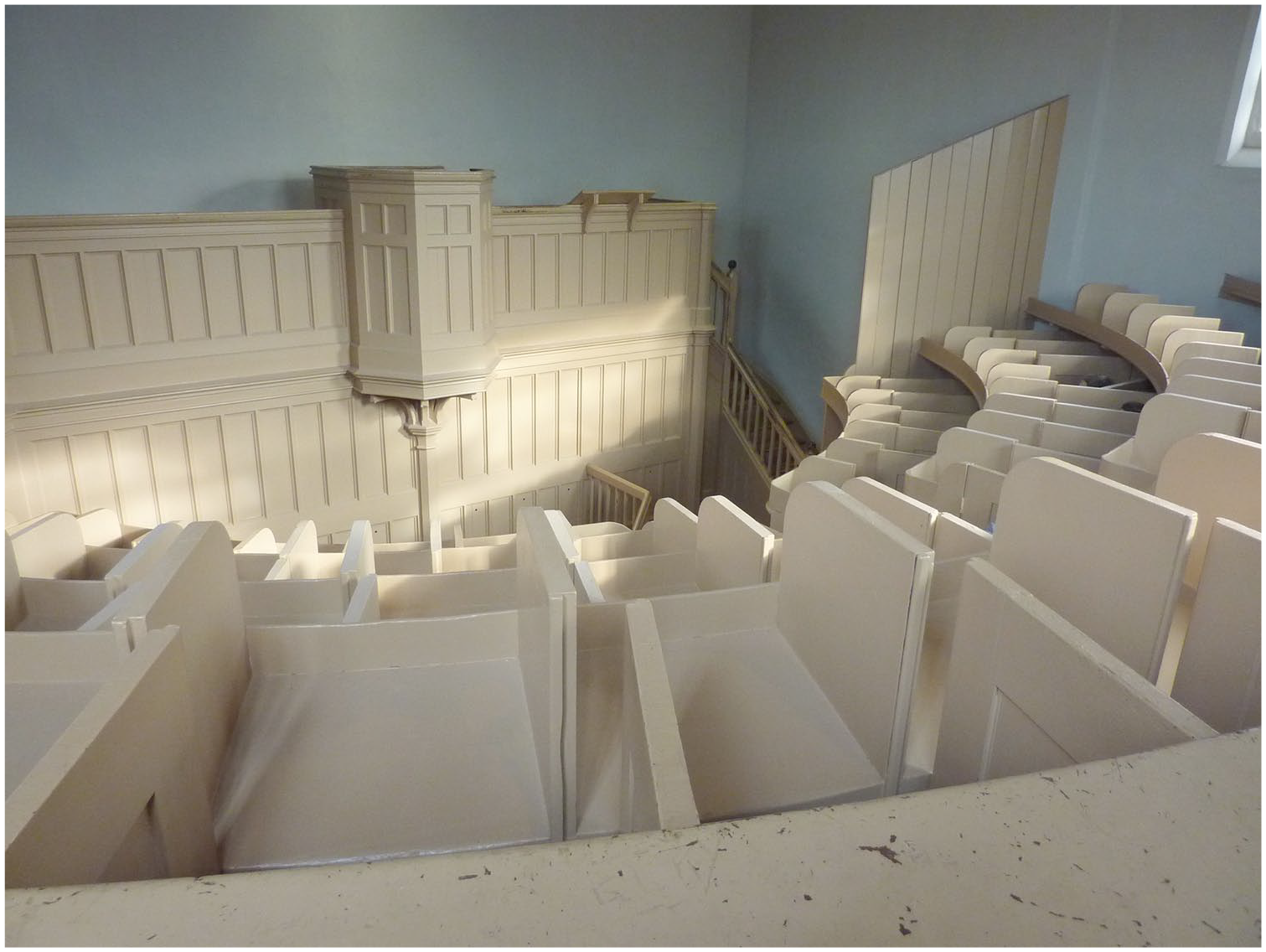
Nineteenth-Century Separate Chapel, Lincoln Castle Prison, England (c. 1848).
These buildings are concerned with either the pathology of individuals (e.g., hospitals) or the pathology of society (e.g., prisons). Buildings concerned with the pathology of society (BCPS), aim “to restore society to health by segregating from society those elements which undermine its description” (Hillier and Hanson, 1984, p. 187). Hillier and Hanson (1984) state that in BCPS there is uniform access to those who are controlled, confirming the occupants’ homogeneity. This contrasts buildings concerned with the pathology of individuals (BCPI), where professional knowledge, unable to be reduced to rules and procedures, is reliant on direct interaction with the individuals to whom professional knowledge is applied (e.g., medical diagnosis) (Hillier and Hanson, 1984, pp. 189–190). In BCPS, bureaucratic distance is created between policy makers and the occupants. Intermediaries follow procedures (as distinct from making decisions), enabling hierarchical structures to exist (Hillier and Hanson, 1984). Niedbala’s (2022, pp. 398–414) nuanced analysis of postwar incarceration comprehensively demonstrates how architecture can both facilitate and derive from such bureaucratic standardization and process. Johns’ (2005) analysis of Guantánamo also seems relevant.
Hillier and Hanson’s work thus informs the thesis that prison design was underpinned by an analogy of infectious disease to describe moral contagion (Evans, 2010) because they distinguish BCPS and BCPI. They recognize the different social logics at play when people are not considered to be individually distinct. Hillier and Hanson (1984, p. 187) state, of BCPS, that the building is about the pathology of social knowledge, but not about the reflexive knowledge that can restore it. All that can be achieved is the purification of the description of social knowledge in the society at large by the maximal segregation of those random elements that destabilise descriptions.
They suggest that, rather than the treatment of the occupant, this segregation enables society to be imagined and described as safe, indicating that security is ultimately prioritized over reformation.
Hillier and Hanson demonstrate a shift in how power is located and how it operates consistent with the 18th-century rise of the professional and the bureaucrat. Their work also suggests that isolation plays different roles in BCPS and BCPI and that distance is either mediated by the professional or exacerbated by the bureaucratic. This is constant with Foucault’s (1995) thesis mapping a shift from corporal punishment and the display of monarchical power to abstract punishments and power residing in discipline. However, Annemans et al. (2022, pp. 463–478) challenge this distinction in their work examining a context where individualized care provided by mental health professionals might shift the punitive character of incarceration, suggesting it is the distinct logic of BCPS (c.f. BCPI) that enables punitive architecture. Likewise, Engstrom and van Ginnekin (2022, pp. 479–503) review literature identifying architecture’s ability to minimize the harmful effects of incarceration, undoing an ability to crudely characterize architecture as punishment.
Architecture Triumphs
The Penitentiary Houses, which remained unbuilt, 1 were intended to complement, not to replace transportation (PA ss. I-II). In 1784, the Transportation Act (24 Geo III c56) increased transportation’s geographic scope, enabling its recommencement—this time to Australia (1787–1868). The absence of an aim of reformation in the Transportation Act indicates that reformative sentences were aimed at protecting the domestic community from the serious offender. As Edmund Burke (quoted, Devereaux, 1999, p. 416) wrote in 1776: “Transportation always seemed to me to be a good expedient for preventing . . . the danger of letting wicked people loose upon the publick.”
Transportation peaked in the 1830s, coinciding with high labor needs in Australian colonies, and English humanitarians’ condemnation of transportation as “an arbitrary and immoral mode of punishment” (Harling, 2014, p. 80). As colonial labor needs lessened, colonial support declined (Harling, 2014). Transportation was consequently repackaged as delivering reformed felons (or “assisted exiles”) to the colonies. Penitentiaries (like Pentonville Model Prison) were to do the reforming in a tripartite sentence (solitary confinement, labor on public works, and transportation) that progressively increased distance from London. As Harling (2014, p. 103) has written: “this redemptive argument was . . . a convenient one for those who were chiefly nostalgic for transportation not so much because it might reform convicts but because it most assuredly got rid of them.”
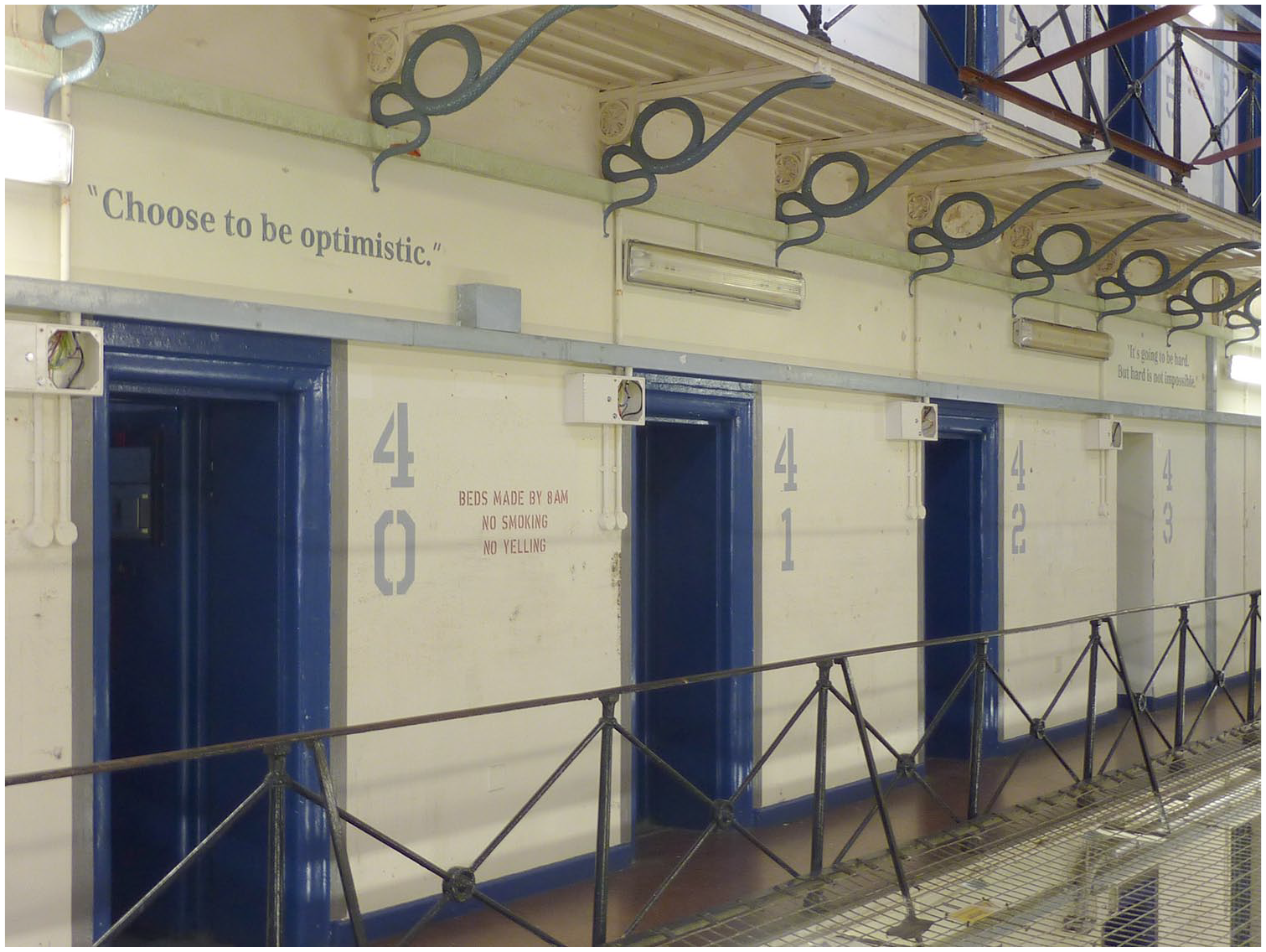
Nineteenth-Century Cell Block, Gloucester Gaol.
Eventually, the 1853 Penal Servitude Act (16 & 17 Vict c99), replaced sentences of transportation of less than 14 years with a sentence of penal servitude. In 1857 (20 & 21 Vict c3), the third (transportation) stage of the tripartite sentence was substituted with home release. However, both Acts allowed penal servitude to be served in the colonies, in practice retaining transportation (McConville, 1981), so it was not until 1868 that the last shipment of prisoners left England for Australia (McConville, 1995). The prison thus only very gradually replaced transportation and there was significant resistance to its use for serious offenders (Devereaux, 1999), who were seen as a national threat, people whose implacable criminal natures were compromised by an animalistic sexuality and profound immorality and who were therefore likely to expand a dangerous subversive class. Any alternative to transportation had to be cast in a form that would quiet public fears. (McConville, 1995, p. 135)
Harling (2014, p. 105) writes that penal servitude was met by two extremes. The first stage of 18 months solitary confinement was argued to be “mental debilitating,” by humanitarians. In contrast, others, who argued that prisoners were treated better than the working poor, promoted the idea that prisoners were “less eligible” than workhouse inmates, advocating leaner diets and harder labor conditions for prisoners.
Almost a century after the Penitentiary Act, the end of transportation finally cemented incarceration (penal servitude) as a primary punishment. The temporary expedient of confinement, which was advanced during periods when transportation was unavailable, had become a permanent edifice. No longer non-descript and adaptable, confinement represented significant capital investment and commitment to the inflexibility of function-specific design. Thus, the phenomenon that Moran et al. (2022, pp. 364–378) identify, of the intractability of Victorian prisons, might also contribute to understanding the inertia of the larger prison project.
The Domestic and the Exception
More than a century after Pentonville, HMP Blundeston (Suffolk 1961–1963, dem. 2017), was heralded as “a re-assessment of the needs and functions of a modern prison system” (Fairweather, 1961, p. 341). Its “New Wave” design accommodated 300 maximum security prisoners in four four-story T-shaped cellblocks and “assumed that for most of the time prisoners would not be in [cells]” (Fairweather, 2000, p. 21). Such commitment to movement was a fundamental driver in postwar prison design (Niedbala, 2022, pp. 398–414). An aim to shift the image of the prison was undertaken, and furniture and building design was intended to reduce any “feeling of oppression,” including the invisible incorporation of security bars into fenestration design (Home Office, 1960, cIX at [7]).
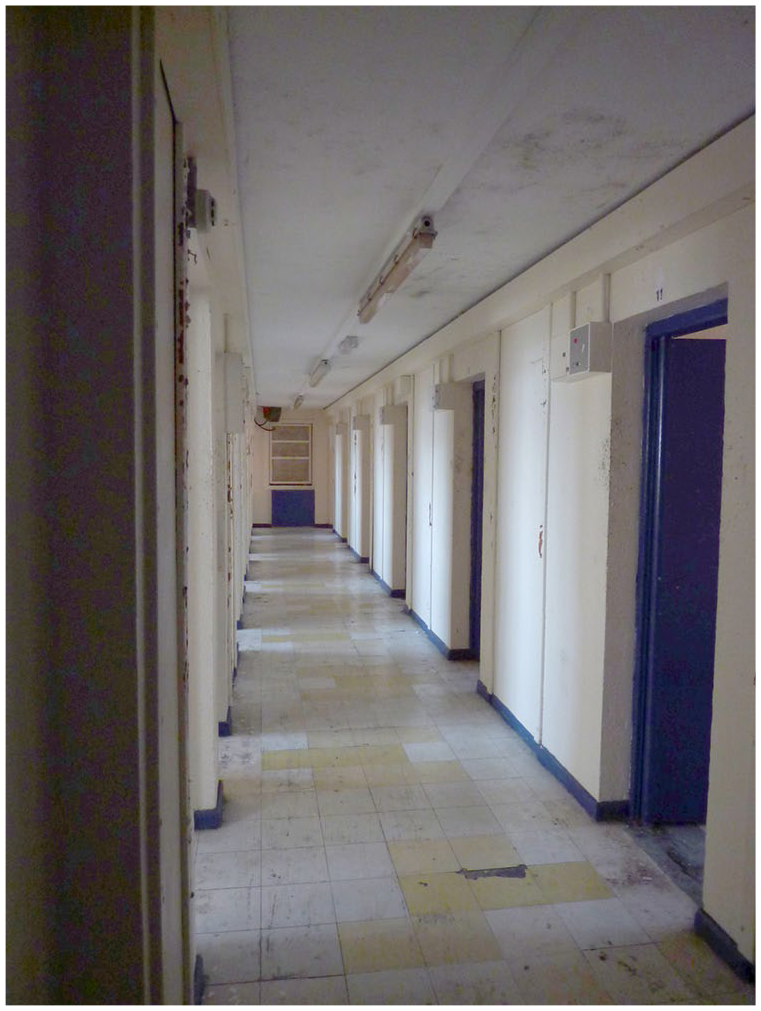
“New Wave” Prison Cell Block, Gloucester Gaol (c. 1960s).
The adoption of “New Generation” management in England c. 1985 to 1987, brought with it designs evolved from Harry Weese’s Metropolitan Correctional Center (MCC), Chicago (1971–1975). Like Blundeston, the MCC divided the prison population into smaller-sized groups, this time housed in double-height multi-purpose day rooms perimetered by two tiers of cells. Normalized environments, largely effected by furniture and interior design, were prioritized. Fairweather (1989, p. 29) described these prisons, using direct-supervision and unit management, as “small groups of inmates each in the care of multi-disciplinary teams of staff, with responsibility to run their units in their own way.”
On the 20th anniversary of Guantánamo, it is worth remembering that descendants of this well-meaning architecture of the MCC still accommodate 39 prisoners in Guantánamo (Rosenberg & Savage, 2021). Camps 5 and 6 are copies of a state prison in Bunker Hill, Indiana and a county jail in southern Michigan, respectively. Camp 7 is “similar to a SuperMax prison in the United States” (Rosenberg, 2018, n.p.; Welch, 2009). Prison architecture legitimized within the United States easily crosses the border into Guantánamo. Other carceral geographies are likewise not simply contained. As Anderson (2022, pp. 434–446) finds, in her thorough examination of the post-release of sex offenders, exclusionary policies can persist well beyond prison walls, and often disproportionally affect vulnerable communities.
The prison reaches beyond its walls, but also beyond its “use by” date. While Moran et al. (2022, pp. 364–378) note that the heritage-listing of Victorian prisons points to the contested position of their continued use, Karami (2022, pp. 415–433) evocatively examines how a former Iranian prison (now prison museum) can create degrees of temporal distance between horrors of incarceration and the present. Museums and historic buildings represent ideas of imprisonment, but so too do popular culture, news broadcasts, and social media. These take the role historically given to the prison façade as the mediator of how we should think about the prison. They exploit the “peculiar reversibility of confinement” where justifications of incarceration “in the name of good and in the name of punishment” are both available (Foucault quoted, Melossi, 2018, p. 50). As such, the public can always believe in the promise of reformation and the promise of punishment—of prisons being too soft and too tough—making the prison a particularly politically-susceptible architecture.
At Guantánamo, representation also structured an internal propaganda. The former U.S. Military Police Camp was “Freedom Heights,” JTF-160 personnel lived in “Camp America” (Reid-Henry, 2007). 2 The detachment Evans identifies between “the idea of the prison” and “the fact of the prison” sustains cruel irony. Camp Echo was used for solitary confinement (Reid-Henry, 2007). Camp Papa 3 held those force-fed (Reid-Henry, 2007; Stafford Smith, 2005). Camp Whiskey held Muslims whose religion forbids alcohol (Reid-Henry, 2007; Stafford Smith, 2005). Camp Romeo inmates were sexually humiliated (Stafford Smith, 2005).
Gaps appear between rhetoric and reality, but also in the bureaucratic distance that Hillier and Hanson (1984) find between policy makers and prisoners. Policies removing individual decision-making to avoid responsibility at Guantánamo (Johns, 2005) is nothing new. It was after all the consequences of gaoler discretion and independence that prompted John Howard’s 18th-century campaign for nationalized prison reform to eradicate injustices. As Foucault (1995, p. 234) observed, “[p]rison “reform” is virtually contemporary with the prison itself . . . From the outset, the prison was caught up in a series of accompanying mechanisms, whose purpose was apparently to correct it, but which seem to form part of its very functioning.”
Bureaucracy also becomes an architectural method (Niedbala, 2022, pp. 398–414). It legitimizes the “passive instrument” of architecture (Evans, 2010, p. 323), depersonalizing punishment and moving definitions of humanity: “What did ‘deprivation of light and auditory stimuli’ mean? Could a detainee be locked in a completely dark cell? And for how long? A month? Longer? . . . Could a detainee be held in a coffin? Could phobias be applied until madness set in?” (interrogation memo quoted, Gregory, 2006, pp. 416–417). More mundane examples can also create perverse consequences. Alameda County Juvenile Justice Center’s sustainable construction practices, for example, illustrate how government programs for “environmentally friendly . . . prison design requires capital investment in racialized mass incarceration” (Ananth, 2019, p. 155).
Architecture itself needs to be scrutinized, you cannot design carceral architecture “well” and fix the inhumanities of incarceration (Agid, 2022, pp. 447–462). Wes Janz’ obituaries for death row inmates, like Orlando Hall (post-script, 2022, pp. 504–510), likewise highlight inequities of power that architectures of punishment are complicit with. All this points to a need to understand the idea of architecture—as much as the idea of punishment—if we really want to understand why architecture plays such a dominant role in punishment.
Footnotes
Declaration of Conflicting Interests
The author(s) declared no potential conflicts of interest with respect to the research, authorship, and/or publication of this article.
Funding
The author(s) received no financial support for the research, authorship, and/or publication of this article.
