




Abstract
The design of prisons can greatly impact the lived experience of imprisonment, yet research on the relationship between the physical prison environment and wellbeing remains underexplored. Following a systematic literature review, 16 environmental domains were identified as part of “ethical architecture” in prison environments. In this context, ethical prison architecture reflects the link between prison design features and the wellbeing of building users. The concept presented here can be used to inform future research on the intersection of prison architecture, prison climate, and experienced wellbeing. Humane treatment, autonomy, and stimuli are identified as latent theoretical constructs that underpin the “ethical prison architecture” concept. The findings include literature originating from 35 countries that spans five continents to offer a thorough framework that can be used to identify potential building adjustments to improve the wellbeing of building users and increase evidence on the influence of prison design features on wellbeing.
Keywords
Introduction
More than 10.3 million people are held in penal institutions around the world (Fair & Walmsley, 2021). Even though countries differ in prison population size and demographics, many countries share similar challenges to create safe and supportive environments within their prison systems. Prisons are complex environments that are expected to deliver many, and at times conflicting, interventions and outcomes. Operating year-round, prisons are expected to provide security, jobs, accommodation, health care, food, basic needs, education, vocational training, rehabilitation programs, religious services, recreation, and visitation. Given higher security needs, some researchers designate prisons among the least adaptable buildings, still, the demands and expectations placed upon them are continually changing (Karthaus et al., 2017). Most prisons are closed facilities, and the way they are designed has a tremendous impact on how they are experienced by those who live and work within them. Yet, the linkage between individual features of the physical environment and the lived experience of imprisonment has received minimal scholarly attention (Canter, 1987; Moran & Turner, 2019).
The successes and failures of prison design require urgent attention to ensure that prison environments support the wellbeing of those who live in, work in, or visit them. We introduce the term “ethical prison architecture” to operationalize the underexplored link between the physical prison environment and the wellbeing of incarcerated individuals and staff. Wellbeing has been labeled a “somewhat nebulous term,” (Moran et al., 2021, p. 3) and its intangibility in the literature has been reinforced by many descriptions and dimensions rather than definitions (Dodge et al., 2012). For this study, wellbeing should be regarded in the broadest sense of the word, involving mental health, physical health, social health, and safety. With this starting point, it is important to identify which aspects of the physical environment are important to wellbeing because existing scholarship on prison design is limited and largely historical (Moran & Jewkes, 2015). This study builds upon research on the impacts of built environments generally, including studies in health care environments (Ulrich, 1984), workplaces (Kim & Kim, 2007), and schools (Figueiro et al., 2011). This endeavor aims to identify the design domains that are important to the “ethical architecture” of prison buildings, so that this can be comprehensively and consistently assessed for research purposes and to improve the wellbeing of all prison building users. The study intends to meet this goal by addressing the following research question: What specific design features are essential to the concept of “ethical prison architecture”?
Why Prison Architecture Matters
There is a broader question that underpins this issue, namely whether prisons can ever be ethical. There is a case to be made that the ethical standpoint for architects would be not to design any prisons at all, in which case, the question about design features is obsolete. Indeed, there is an ongoing debate regarding the ethical role of the architect in prison design, whether a building itself can have inhumane values, or if ethical agency comes from the architect’s practice of architecture and not the result (Moran et al., 2019). The professional architectural codes of conduct within the American Institute of Architects (AIA) have received particular criticism in that they do not meaningfully engage in the ethical responsibilities of the architect and thus lack the foundation to make needed moral and ethical advancements. Prison architecture needs to be recognized as a site of potential conflict between professional and social ethics (Moran et al., 2019). Nevertheless, we believe that aside from the question of whether the system itself should be changed, it is important to consider how change within the system can be achieved; architecture can be used as a vehicle for minimizing harmful effects of incarceration, improving wellbeing, and eventually decarceration (Jewkes, 2018). In fact, the very design of prisons was once seen as progress from still more inhumane forms of punishment.
Prison architecture has historically been seen and used as a tool for achieving penal aims (N. B. Johnston, 2000). The vestiges of different penal philosophies are still visible in some of today’s prison buildings. The oldest prison facilities, such as London’s Newgate Prison, which opened in 1769, were rectangular in shape, reflecting little concern for the safety and separation of incarcerated persons (Wener, 2012). At the end of the 18th century, Jeremy Bentham proposed his famous Panopticon prison design, which included vertical stacks of cells to be visible by the guard station at the center of the building. This design originated from an early belief that architecture could affect human behavior, and a building could facilitate moral reform (Moran et al., 2016). Although few were actually built, the design was intended to maximize visual surveillance, which was believed to be key to security and control. In the 20th century, penal policies shifted toward rehabilitation and reintegration supported by the new belief that crime should be treated as an illness, rather than a moral or spiritual affliction (Beijersbergen et al., 2016; Wener, 2012). During this time, telephone pole plans, small rectangular facilities, and campus-like models were constructed, as these designs were believed to be more effective for rehabilitation (N. B. Johnston, 2000). In the late 20th and early 21st centuries, aims of rehabilitation and reintegration were surpassed by priorities of security and incapacitation throughout the Western world (Beijersbergen et al., 2016). Prison systems experienced massive expansion through widespread construction projects. In the United States, in particular, immense facilities were constructed, many repeating radial designs, but with massive capacities to house thousands of incarcerated individuals (N. B. Johnston, 2000).
While the “enormous importance of the building in the treatment of the prisoner” (Davison, 1931, p. 39) may be assumed, the effect of prison design on inhabitants has still received remarkably little academic attention (Moran et al., 2016; Nadel & Mears, 2018). Carceral geography is an emerging subfield of geography, which pays attention to the impact and meaning of physical prison space (Moran, 2013b; Moran et al., 2017). Carceral geographers critically question who carceral spaces are meant for and for what purpose. What prisons are thought to be for will affect design priorities in current and new facilities (Moran & Turner, 2019). The design process thus reveals the political, affective, and material ways that prisons are intentionally built (Moran et al., 2016). Crewe et al. (2014) point to social and carceral geography to underscore that space and place matter to the emotional experience of a built environment. From these disciplines, architectural features in public spaces like lighting or signage are understood to be intentionally arranged to affect certain kinds of behavior and emotion (Adey, 2008).
Previous research has intermittently drawn connections between the environment and lived experience. Murray’s (1938) environmental press theory asserts that individual behaviors change depending on environmental conditions. Some research suggests that institutional spaces can be designed not just to mitigate harms but to also support and encourage wellbeing. In therapeutic facilities, for example, Robinson and Emmons (1984) developed an architectural checklist to measure the degree of normalization in an institutional space. Normalizing designs included decorative light fixtures with on/off switches, window frames made of wood rather than metal, and furniture in social areas that varied in color, texture, and style. In health care settings, Ulrich’s (1991) theory of supportive design finds that building design can reduce stress and support wellness when it facilitates social interaction. Access to views of nature in health care settings has also been found to reduce heart rates and create a sense of restoration (Long et al., 2011; Ulrich, 1984). Correspondingly, Lutze (1998) argues that prisons should incorporate designs that support personal growth, as the effort may support other rehabilitative aims.
There is evidence that prison design features are linked to wellbeing. For example, physical prison conditions have been connected to rates of health care utilization (Moore, 1981), perceptions of safety (Ross et al., 2011), the ability to adapt to imprisonment (Goffman, 1961; Sykes, 1958), and high levels of stress from overcrowding (Schaeffer et al., 1988). Prison architecture has also been linked to prison climate, which encompasses the perceived quality of prison conditions (Van Ginneken & Nieuwbeerta, 2020). It includes perceptions of autonomy, safety and order, in-prison activities, relationships with other incarcerated people and staff, connection to the outside world, and facilities (Van Ginneken et al., 2018). Although studies have identified important relationships between prison architecture and prison climate, researchers have called for further academic attention to better understand this link (Beijersbergen et al., 2016; Canter, 1987; Davison, 1931; Houston et al., 1988). A comprehensive understanding of multiple design features that influence wellbeing in prison environments has yet to be investigated and established. One of the difficulties troubling the field is that a holistic view of prison architecture and how it influences wellbeing is not consistently and comprehensively measured in relation to prison climate.
A majority of existing prison climate assessment tools do not include a clear environmental dimension (Moran & Jewkes, 2015). Liebling and Arnold (2004) importantly consider whether the dimensions expected to reveal prison climate are often eclipsed by what can be easily measured. Thus, it is possible that significant factors, like the complex experience of prison architecture, may contribute to the multidimensional concept of prison climate, but it has been overlooked because it is challenging to measure. Tonkin (2016) conducted a systematic review of the existing prison and social climate tools and found only one tool, the Prison Social Climate Survey (PSCS) developed by the U.S. Federal Bureau of Prisons, which aims to directly measure the quality of the physical environment. Still, the PSCS has been designed for managerial and efficiency models and the only environmental dimensions measured include safety and cleanliness, noise and crowding, visiting conditions, and food (Ross et al., 2008). From previous literature on prison design, prison climate, and wellbeing, it is apparent that many aspects of a prison’s physical environment, or “what has usually been regarded as background noise” (Ross et al., 2008, p. 453), might have a significant effect on behavior, wellbeing, and prison climate. Still, it remains unclear what and how many specific designs are important to either supporting or undermining wellbeing in prison settings. With previous studies addressing anywhere from one to five seemingly random environmental domains, it is important to systematically extract all relevant domains from the literature, so that future studies can draw on a comprehensive conceptual understanding of ethical prison architecture: the prison design features that are linked to the wellbeing of the building users.
Methodology
Step 1: Systematic Review Ethical Architecture
A systematic literature review was conducted to identify relevant literature pertaining to prison architecture and the wellbeing of prison building users. The systematic literature review began by using electronic databases including Google Scholar, Web of Science, and Leiden University’s online catalog to search for the following search terms: “prison architecture” OR “prison design” OR “prison climate” OR “environmental psychology.” Searches were not limited by study design, country, or sample size. Articles were restricted and screened in phases using the following criteria: (1) peer-reviewed articles in the English language limited to the years 1945 to May 2020; (2) excluded duplicates and assessed articles by screening titles and abstracts for design features within prison environments (e.g., lighting, nature, etc.) and their potential effect on individual and group wellbeing; (3) remaining articles were read closely and excluded if they were found to be irrelevant or unclear to this aim; (4) additional literature was included from hand-searching reference lists, some of which included electronic books or book chapters, and these were included as additional sources. Wellbeing was regarded in the broadest sense of the word, including mental health, physical health, social health, and safety. A number of studies included in the literature review were conducted outside custodial environments, such as laboratories, schools, or hospitals. The studies that specifically targeted an aspect of the built environment and wellbeing which is also relevant to prison environments, such as the impacts of noise or changes in light, were considered relevant. Studies were also not restricted by study type or country. In total, 45 publications were included from the systematic literature review. See Figure 1 for a flowchart detailing the procedure.
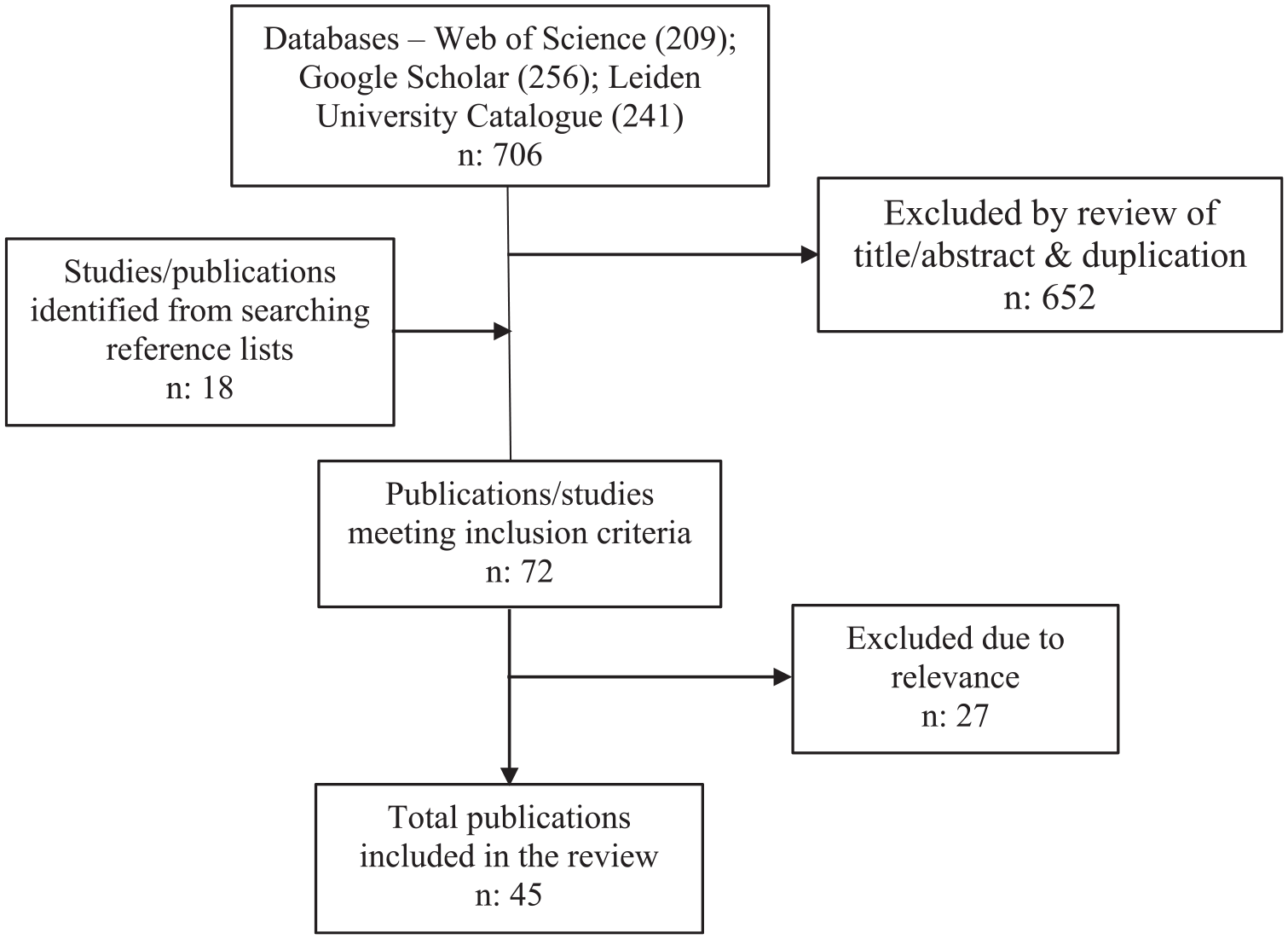
Flow Chart of Included Studies (Step 1: Systematic Review Only).
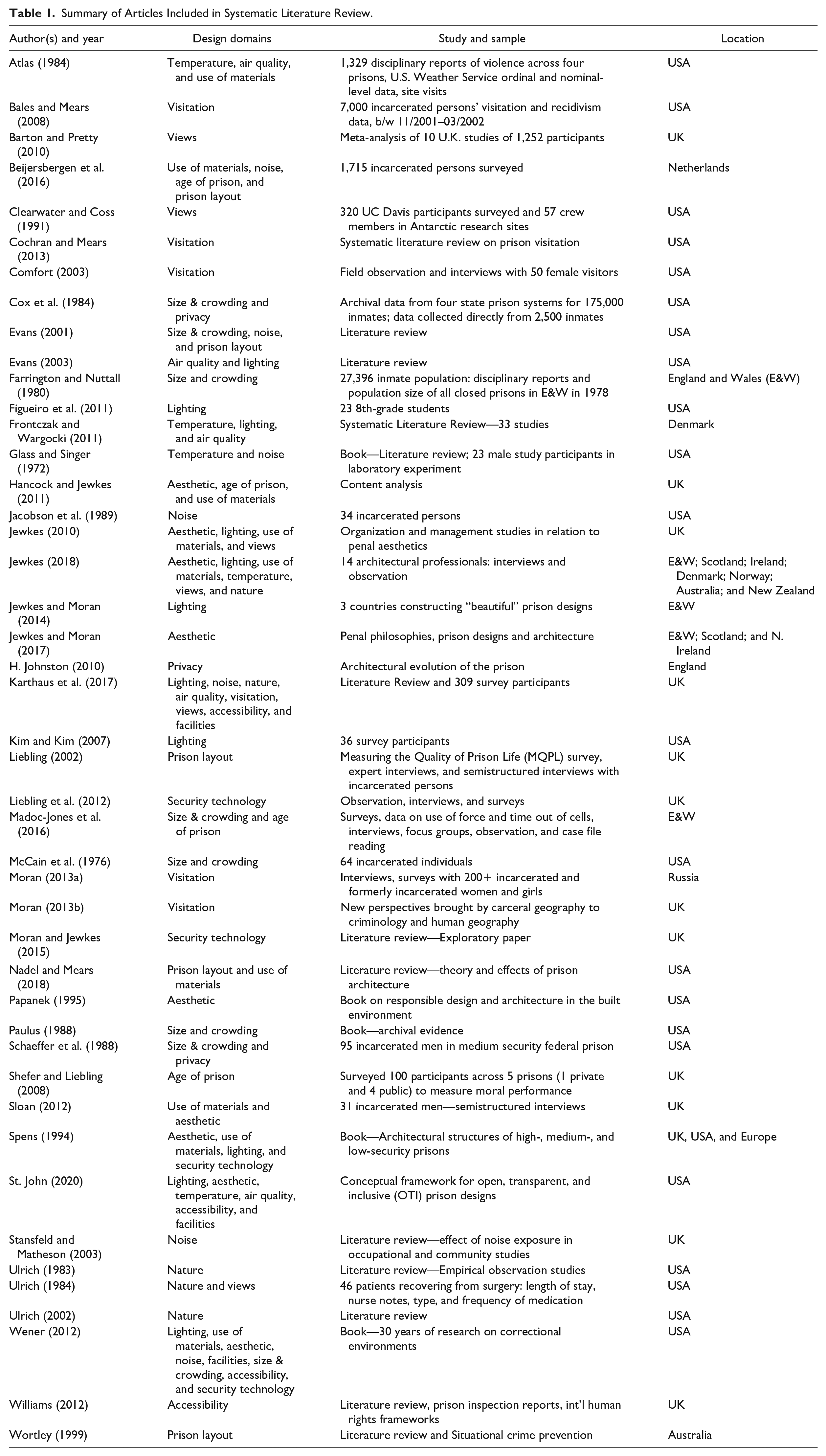
All included articles were closely read to identify the most important features of design that may influence the wellbeing of prison building users. As design features were collected, the findings were organized in a table alongside their corresponding references (see Table 1). In addition, the quality of the study in terms of methodology (e.g., sample size and type of study) and its relevance for prisons today were evaluated and taken into account in the identification of relevant findings. 1 Over time, the literature began to reveal dominant prison design categories related to individual and group wellbeing; these are reviewed in the Findings section below.
Summary of Articles Included in Systematic Literature Review.
Step 2: Scoping Review-Specific Domains
After identifying clear domains from the first systematic literature review, the authors conducted a second scoping review to target more recent studies relating to each domain and to identify any inconsistencies. Restricting searches from January 1, 2000, to January 1, 2022, the following search terms: “prison” OR “jail” AND “wellbeing” with each domain separated by OR (e.g., “lighting”) were applied in the Web of Science and Leiden University databases. An additional table in the Online Appendix shows the results of the scoping review including 66 additional studies. These results were found to be consistent with the findings from the initial systematic literature review. Where relevant, their findings are incorporated in the discussion of the corresponding domains, below. In total, Table 1 and Online Appendix B list the 35 countries spanning five continents from which the studies originated.
Findings
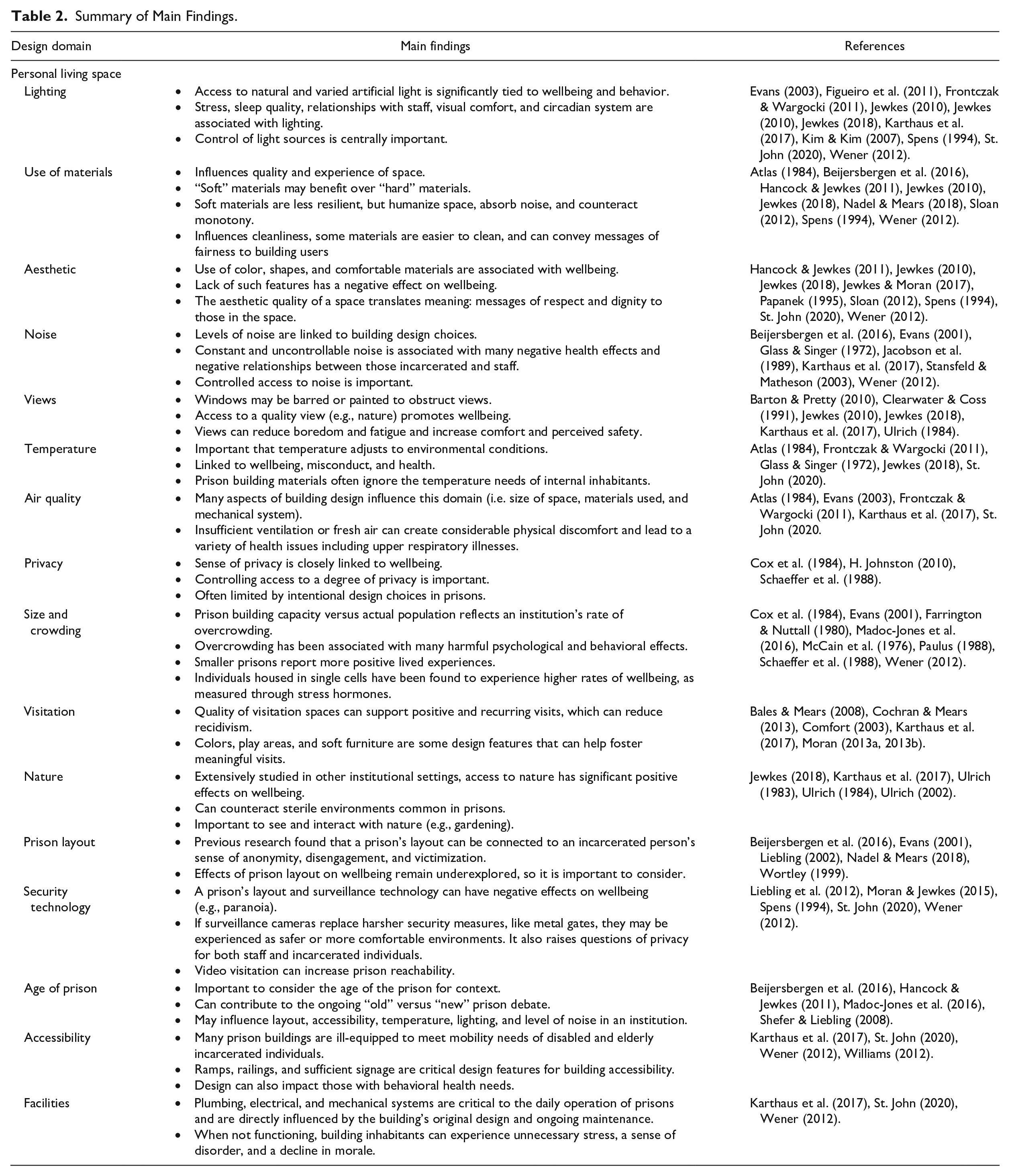
The findings give an overview of the design features that define necessary components of “ethical architecture” in prison environments, meaning the elements of the built environment that either support or undermine the mental, physical, and social health of those within them. The definition includes 16 environmental domains that were identified as the most relevant design features in prison buildings that may influence wellbeing. Table 2 gives a summary of the main findings. The findings are organized into two categories: The first category includes designs specific to “Personal Living Space” and the second category includes designs within “General Prison Space.” A description of each environmental domain and evidence supporting its inclusion within the ethical architecture concept is detailed below.
Summary of Main Findings.
Category I: Personal Living Space
The first category includes design elements that pertain to incarcerated individuals’ personal living spaces (i.e., cells or dormitories). The specific design features are presented in order of frequency, meaning the designs that arose most frequently in the literature, and thus collected the most corresponding references, are discussed first and are followed in descending order. This organization should not necessarily be interpreted as a ranking of importance, because further research is needed before any explicit conclusions can be drawn regarding the areas of prison design that may be more influential to wellbeing than others.
Lighting
Levels of natural and artificial lighting, especially one’s exposure to daylight, are important environmental features that impact psychological wellbeing (Evans, 2003). Inadequate darkness for sleeping, for example, is a common and significant issue for incarcerated individuals, which can result in major negative effects on wellbeing and behavior (Wener, 2012). Poor lighting may also adversely affect relationships between staff and incarcerated individuals, whereas a thoughtful lighting design can foster a healthier domestic atmosphere (Jewkes, 2010, 2018). Many scholars have identified the importance of natural light and sunlight in living quarters on wellbeing (Jewkes, 2010; Jewkes & Moran, 2014; Spens, 1994; St. John, 2020; Wener, 2012). Wellbeing can be enhanced by improving the lighting in a space through intensity, quality, direction, variability, and control of light sources (Kim & Kim, 2007). Frontczak and Wargocki (2011) similarly stress the importance of having some degree of control over light sources in one’s environment, as it can contribute to increased visual comfort. Dynamic and diffuse light from both natural and artificial sources can positively influence the circadian system and support visual comfort (Figueiro et al., 2011); however, further research is needed to establish an empirical link between light exposures and relevant outcome measures, like mood.
Use of Materials
Material choice can substantially influence the experienced quality of one’s personal living space (Beijersbergen et al., 2016; Wener, 2012). Custodial environments typically use hard materials that are resistant to human impact such as concrete, brick, and metal (Wener, 2012). These materials can influence experienced temperature, as bricks and metal collect and radiate heat (Atlas, 1984). Soft materials like carpet, wood, and cork are used less often, as they are less durable and more expensive. However, integrating soft materials could considerably absorb noise (Wener, 2012), minimize architectural monotony, avert boredom (Hancock & Jewkes, 2011; Spens, 1994), and increase experienced comfort (Jewkes, 2018). One study noted a prison with a direct supervision design, usually a triangular building with cells stacked on the outer edges and an accessible guard desk in the middle, had found that the inclusion of soft building materials could deter destructive acts to the environment (Nadel & Mears, 2018). If hard architecture is designed to be impenetrable, it may encourage someone to break it (Wener, 2012), but replace concrete and steel with wood and soft couches, and the motivation behind the destruction can be deterred (Nadel & Mears, 2018). The materials used to design a space will, to a degree, also impact the ease with which those materials can be kept clean. Incarcerated individuals housed in dirty and crowded conditions can further undermine not just wellbeing, but also one’s sense of identity, control of self, and self-respect while incarcerated (Sloan, 2012). Alternately, materials that support physical comfort and cleanliness in prison living spaces can contribute to healthier custodial environments generally (Jewkes, 2010) and encourage habits that support dignity and individualism (Sloan, 2012).
Aesthetic
The aesthetic qualities of prison environments, such as the use of color, materials, and shapes are gaining increasing attention within academic literature on prison design (Jewkes, 2010, 2018; Spens, 1994; St. John, 2020; Wener, 2012). St. John (2020, p. 4) recently stated that “qualities such as facility attractiveness are not only linked to a person’s willingness to remain there, but also send implicit, subconscious messages about how an agency values the individuals it detains. . . and its respect for itself.” Researchers found that a general lack of color in institutional environments can have a negative effect on wellbeing, while the integration of color and material textures within the design can positively influence wellbeing (Hancock & Jewkes, 2011). Sloan (2012) found that some incarcerated individuals may be interested in taking more ownership over the aesthetic qualities of their personal space. If given the opportunity to, for example, freshen their interior cell walls with a new coat of paint, the alteration of space could support individual wellbeing and help cultivate a healthy sense of individuality. A built environment that feels antiseptic and unstimulating can also be significantly damaging to individuals who have experienced trauma (Jewkes, 2018). Instead, environments that integrate curved shapes compared to sharp angular edges have been linked to foster a calmer atmosphere and invoke positive feelings of wellbeing (Papanek, 1995). Some prison systems in northwestern Europe, like Greenland and Norway, already devote more attention to the aesthetic qualities of prison space in an effort to encourage personal and intellectual inspiration (Jewkes & Moran, 2017). Scholars are questioning whether prisons should be designed to “make individuals feel like people again, rather than prisoners” (Jewkes, 2018, p. 324).
Noise
“The assault on your ears” will be one of the first sensory experiences during a visit to any large prison or jail and this is particularly true for institutions in the United States (Wener, 2012, p. 189). Put simply, detention environments are known to be noisy places. Noise is commonly defined as unwanted sound (Evans, 2001) and the constant presence of unwanted sound is important to the safety and wellbeing of incarcerated persons and staff in correctional buildings (Wener, 2012). Previous research in the field of environmental psychology has observed that “unpredictable, intermittent and uncontrollable noise. . . causes significant stress, with powerful and enduring negative impacts on wellbeing” (Karthaus et al., 2017, p. 56). The high exposure to noise within prison environments may also negatively affect relationships between staff and incarcerated individuals (Beijersbergen et al., 2016). Noise annoyance, in particular, meaning the degree which any noise interferes with everyday activities like having a conversation, watching tv, or sleeping can be experienced as an invasion of personal privacy and can lead to stress responses and illness (Moore, 1981; Stansfeld & Matheson, 2003). Evans (2001) noted that constant and inescapable noise can lead to an increase in diseases that are exacerbated by chronic stress, such as hypertension, vascular disorders, and asthma. Interestingly, the negative effects of noise can be reduced if individuals believe they have some degree of predictability or control over their exposure to the noise (Glass & Singer, 1972); however, correctional staff and incarcerated individuals often feel they have little ability to control their exposure to noise in their environment (Wener, 2012). Unfortunately, the acoustics of prison buildings are not typically a high priority for building planners (Wener, 2012), even though noise can severely impact the wellbeing of staff and those incarcerated.
Views
Having access to a decent view is a design feature in most spaces that can foster a sense of openness and connection (Jewkes, 2018). Previous research confirms the psychological importance of seeing a view of something other than the prison building or other incarcerated individuals (Karthaus et al., 2017). Long-distance window views in particular, including images that simulate great depths of field, have been linked to reducing boredom, fatigue, and irritability and increasing experienced comfort and perceived safety (Clearwater & Coss, 1991). Like other prison design choices, the value placed on having an engaging view in a prison environment, like a view of nature, is dependent on the context. In a comparative study between prison designs in the United Kingdom and the Nordic region, prison designers in the Nordic region described access to nature views as essential to mitigate the negative effects of confinement and to foster a connection to the outside world by viewing changing seasons. In contrast, quality views were a lower priority for U.K. prison designers, who instead spoke to the high cost of green spaces and concern that nature views would be seen as too much of a luxury by the British tax-payer (Moran & Turner, 2019). Although some prison contexts have living spaces with unobstructed window views, it is not uncommon for views or natural light to be blocked by metal bars, paint, translucent windowpanes, or windows placed too high in the wall to prevent seeing out (Jewkes, 2010; Moore, 1981). These are regrettable design interventions, because views, and specifically views of nature, have been linked to decreased sickness calls from incarcerated individuals (Moore, 1981), increased levels of happiness (Barton & Pretty, 2010), and reduced fear in stressed subjects (Ulrich, 1984).
Temperature
Adequate temperature control is a basic environmental need within any personal living space (Jewkes, 2018; St. John, 2020). Thermal comfort has been found to be one of the leading factors influencing general satisfaction with indoor environments (Frontczak & Wargocki, 2011). Many prisons are built with materials such as brick, stone, and concrete, all of which collect heat during the day and radiate it at night (Atlas, 1984). Without designs in place to control temperature, like heat-resistant building materials or operating mechanical ventilation systems, rates of misconduct and violent assaults (Atlas, 1984) can result from uncomfortable living environments (St. John, 2020). The ability to reasonably control the temperature of one’s living space can also provide a small but valuable opportunity for an increased sense of autonomy and satisfaction with the indoor environmental quality (Frontczak & Wargocki, 2011; Glass & Singer, 1972; Jewkes, 2018).
Air Quality
Ventilation and fresh air are a result of a building’s architectural design, and inadequate ventilation systems can contribute to considerable physical discomfort in indoor spaces (Karthaus et al., 2017). The mechanical system, size of space, design of space, and materials used in a space can all influence the amount of ventilation and fresh air in an environment (Atlas, 1984). The chemical properties of building materials (Evans, 2003) or the exposure to secondhand smoke in some prison environments (Semple et al., 2017) can also increase levels of toxic materials that adversely influence air quality. Similar to a space’s temperature, a personal living space with limited air ventilation can contribute to a sense of general disorder and create unnecessary discomfort (St. John, 2020). Coupled with the inability to practice social distancing in prison environments, poor ventilation and limited airflow can significantly exacerbate health issues among incarcerated populations like upper respiratory illnesses and the transmission of communicable diseases like COVID-19 (C. Ryan et al., 2020). Poor air quality has also been connected to decreased levels of productivity and increased SBS (sick building syndrome), which can include fatigue, headaches, and breathing difficulties (Karthaus et al., 2017). Having the ability to have some level of control over this aspect of the environment as well, can contribute to increased satisfaction with indoor air quality (Frontczak & Wargocki, 2011).
Privacy in Personal Space
The amount of privacy accessible to an incarcerated individual in their personal living space is immediately linked to design choices. Moore (1981) found that auditory, spatial, and visual privacy were essential to humanizing prison environments, and each is impacted by architectural choices. Recent research on privacy in correctional settings suggests that privacy can have three primary purposes: to deal with incarceration, for introspection, and to regain a sense of oneself (Toews, 2016). The use of certain materials, the design of a cell door, or the presence of a divider to conceal a toilet, for example, can influence the occupant’s privacy. H. Johnston (2010, p. 14) notes that “the cell has remained architecturally the most significant space in the prison,” and it requires targeted attention regarding the design’s impact on inhabitants’ wellbeing. Importantly, not all incarcerated individuals are housed in a similar manner, so it is essential to consider privacy designs specific to cells and dorms. Open dormitories have received significantly more negative environmental ratings related to perceived crowding, lack of privacy, and rates of illness complaints compared to single and double cells (Cox et al., 1984). Interestingly, implementing cubicles within open dormitories can provide a cost-effective design that can offset or even eliminate negative crowding effects common in open dorms by increasing one’s sense of privacy, lowering levels of stress hormones, and increasing perceptions of environmental control (Cox et al., 1984; Schaeffer et al., 1988).
Category II: General Prison Spaces
The second category contains architectural domains within general prison spaces that can influence the wellbeing of staff and the entire imprisoned population. For example, although nature could be a domain within a personal living space, most correctional facilities may have green space in shared outdoor spaces. Similar to the previous category, the designs are presented in order of frequency, meaning the designs that arose most frequently from the literature, and thus collected the most corresponding references, are discussed first and are followed in descending order.
Size and Crowding
The size of a prison population refers to the number of incarcerated people residing in an institution, and crowding relates to building occupancy and density in relation to capacity. Both size and crowding within a prison population can significantly influence the wellbeing of building users; however, a lack of consensus exists on the best way to conceptualize and measure essential elements of crowding (Simpson et al., 2019). Madoc-Jones et al. (2016) found that smaller prisons in England and Wales, particularly prisons under the size of 500 occupants, were more likely to score higher on scales of experienced safety, respect, and purposeful activity, than larger institutions. In another study in the United States, large institutions that housed over 1,400 incarcerated individuals, were found to have suicide rates 10 times as high as smaller institutions, psychiatric commitments were 78% higher, and death rates excluding suicide and homicide were three times as high compared to smaller facilities (Cox et al., 1984). The third marker reflecting death rates corresponds with other research positively associating crowded prisons with ill health (McCain et al., 1976; Paulus, 1988). Chronic crowding has been associated with increased blood pressure reactivity in adults (Evans, 2001) and harmful psychological and behavioral outcomes like social withdrawal, increased aggression, sleep disruption, and stress (Cox et al., 1984; Wener, 2012).
Social density, meaning the number of individuals sharing a cell or dorm, may be the element of prison crowding most detrimental to wellbeing. For example, a dormitory may have more physical space per person than a single or double cell, but a dormitory will have a much higher social density with many individuals sharing one room. Previous research has found that a low social density in prison living spaces, like single or double cell units, has a more positive effect on wellbeing compared to dormitories with more space (Cox et al., 1984; McCain et al., 1976). Incarcerated individuals housed in single cells have been found to experience higher rates of physical wellbeing by exhibiting lower rates of stress hormones (Schaeffer et al., 1988). Furthermore, the size of a prison’s population versus the actual building capacity will indicate whether buildings are under capacity, at normal capacity, or over capacity, which can also impact wellbeing. In England and Wales, the rate of overcrowding, rather than the size of a prison population, has been associated with increased offending and assault rates, increased recidivism rates (Farrington & Nuttall, 1980), and higher rates of staff sick leave (Moran et al., 2021). Prisons with certified normal occupancy in England and Wales reported increased scores on four healthy prison indicators including safety, respect, purposeful activity, and resettlement (Madoc-Jones et al., 2016). A prison’s design will determine the building’s capacity limits and social density, as these markers depend on the prevalence of cells or dorms included in housing units.
Visitation
Considerable empirical research exists on the spaces and effects of prison visitation, and it is generally accepted that prison visiting has a positive influence on incarcerated individuals (Cochran & Mears, 2013; Comfort, 2003; Moran, 2013a, 2013b). Prior research has also identified important outcomes that could result from the informed design of prison visitation spaces. If visitation rooms are deliberately designed to facilitate positive and recurring visits, then effectively designed visitation rooms may help reduce recidivism rates (Moran, 2013b). Comfort (2003) focused on the understudied visitor experience in liminal space, the area not yet behind prison walls but still under the carceral gaze, during prison visitation at San Quentin State Prison in California. The qualitative study found that the design of the visitation waiting area, a small space lacking heating, seating, signage, and basic amenities, sent a clear message of “contemptuous neglect” to the persons occupying the space (p. 83). Further highlighting the importance of design in liminal visitation spaces, Aiello and McCorkel (2017) investigated a “child-friendly” visitation program in a U.S. women’s prison and found the harsh design of the liminal spaces that unaccompanied young children had to pass through, including large metal detectors, loud mechanically operated metal doors, and long bleak hallways led to a secondary prisonization experience for young children visiting their mothers. Survey research suggests that child-friendly visiting and waiting areas may increase the likelihood and frequency of children visiting an incarcerated parent (Siegel & Napolitano, 2021).
More recent research identifies that prison visitation is not a binary event, and it may be shortsighted to try measuring visitation effects based on whether or not an incarcerated person was visited. Prison visitation is more complex than that according to Cochran and Mears (2013), who acknowledge the experience of visitation, whether a visit was tense, argumentative, or encouraging, as a vital component of prison visitation research. The design of visitation spaces may influence the experience of prison visitation and prior research has identified some practical designs that could support more effective visits. Comfort (2003) identified the need for visitor waiting areas to include designs that meet basic physical and hygienic needs like a water fountain, sufficient seating, and wheelchair ramps. The Wellbeing in Prison Design Guide, created by Karthaus and others (2017), suggests that simple design alterations to visitation rooms such as comfortable furniture, play areas, bright colors, and private visiting rooms could help improve visitation experiences for both sides of the visit. In England, Woodall and Kinsella (2018) explored the conditions and experiences within prison visitor’s centers, buildings often near a prison but run by third-parties, and found they provided much-needed facilities, like clean toilets, play areas, and a place to get a hot drink or snack before entering the prison. In this way, prison visitor’s centers seemed to provide a supportive liminal space that allowed visitors to ask volunteers questions about the visitation process and collect themselves before a prison visit. The potential negative impact of highly restrictive visiting spaces may even extend to life after prison, with an increased risk of recidivism (Turanovic & Tasca, 2021).
Nature
The presence of nature, which includes trees, plants, flowers, birds, insects, and other wildlife, can help to counteract sterile environments common in correctional facilities (Jewkes, 2018). Extensive research has found that seeing nature in health care settings can have a significant positive effect on patient wellbeing (Ulrich, 1984). Windows with a view of natural elements have been found to have a powerful restorative influence in institutional settings (Ulrich, 1984). In prison environments, views of nature have been found to decrease rates of sick calls made by incarcerated individuals (Moore, 1981) and contribute to “health-enabling” environments that foster a sense of psychological support (Moran & Turner, 2019). Views that involve water, can elicit positive emotional responses (Jewkes et al., 2020) and increase states of wakeful rest (Ulrich, 1983). Nadkarni and others (2017) studied the impact of indirect nature contact through regular exposure to nature videos for 1 year with 48 individuals in solitary confinement. Participants exposed to nature videos had 26% fewer disciplinary referrals than those not exposed. They also self-reported reduced stress, anxiety, and aggression, as well as improvements in communication and coping skills.
Jewkes (2018) importantly specifies that it is not only important to see nature, but it is essential to also interact with nature, “to not just be able to see a tree, but touch it” (p. 329). Accessible and open green spaces are well documented to have positive effects on wellbeing. Accessible gardens in hospital settings have been found to reduce stress, increase access to social support and privacy, and increase patient and staff satisfaction (Ulrich, 2002). Access to gardening spaces can also increase physical activity, foster rehabilitation, and encourage individual and group efficacy (Karthaus et al., 2017). A recent study explored visitation experiences in an outdoor visitor’s garden at a female prison in the United States and found the backyard-like design, equipped with cushioned furniture, bistro tables, planter boxes, a playground, and musical instruments, created a space that fostered engagement, spontaneity, and a de-institutionalized visitation environment (Toews et al., 2020). Interestingly, recent national studies from England and Wales found that in more than 80 public prisons, the mere presence of nature, defined as vegetated space within a prison’s perimeter walls, produced a significant negative effect on rates of staff sick leave and wellbeing among the incarcerated. Prisons with a greater percentage of vegetated space, regardless of prison building users’ ability to view or access it, reported lower levels of staff sick leave, self-harm among the incarcerated population, and violence both toward staff and among the incarcerated (Moran et al., 2020, 2021). Consequently, the authors call for the greening of all space within prison perimeters wherever possible.
Prison Layout
It has been noted that “every shape known to geometry [has been] tried,” in terms of prison layout (Fairweather, 2000, p. 17), and it remains unclear whether a prison’s layout has any measurable influence on wellbeing. Moore (1981) found cellblock layouts had a significant impact on rates of sick calls by incarcerated individuals. Open cellblocks drastically reduced one’s privacy as they directly faced those in cells opposite them, whereas spine cells were placed back-to-back and provided more individual privacy. Those residing in open-cell layouts were found to have much higher rates of sick calls than those in spine blocks. Previous research has tried to draw connections between prison layout and underlying goals embedded in designs (Nadel & Mears, 2018). For example, the radial prison design, commonly used in the 1800s, was designed to achieve the following aims: cut costs by reducing the number of staff on site and increasing inmate labor; increase greater security with a central hub for staff; deter future crime with an oppressive exterior design (Nadel & Mears, 2018). Prison layouts that increasingly separate officers from incarcerated persons with bars or bulletproof glass have been found to create a sense of depersonalization, disengagement (Wortley, 1996), and increase the risk of in-prison suicides (Liebling, 2002). A review of studies on crowding suggests that building layouts that encourage interaction with others in designated spaces can offset the adverse effects of residential crowding on mental health (Evans, 2001). Floor plans that foster greater interpersonal contact may also increase a shared sense of safety (Wortley, 1996). Recent research in the Netherlands suggests that incarcerated individuals residing in facilities with panoptic designs have more negative relationships with staff than those residing in campus, radial, or high-rise layouts. Furthermore, the same study found that incarcerated individuals within campus-style designs had more direct lines of sight with staff and, compared to other designs, reported higher rates of positive relationships with staff (Beijersbergen et al., 2016). Findings from a recent autoethnography study with four correctional service providers further support the use of campus-style prison layouts, noting the design’s positive influence on behavior, increased access to nature, and smaller ratios between staff and incarcerated individuals (St. John et al., 2019). While these findings may be limited to their unique contexts, it is clear from existing literature that it is important to consider a prison’s layout within the concept of ethical architecture, as overall prison designs can reflect broader institutional goals and can influence various dimensions of the lived experience for staff and those incarcerated.
Security Technology
Architecture, design, and technology (ADT) have been identified as overlooked but influential aspects of the lived experience in prison environments (Moran & Jewkes, 2015). Common technologies used in prisons include wireless cameras, listening devices, and biometric and electronic monitoring to track visitors and incarcerated persons within prisons (Moran & Jewkes, 2015). Intercom systems with many speakers are also used frequently throughout prison spaces and emit loud and unpredictable sounds (Wener, 2012). While reporting on HMP Whitemoor in England, Liebling et al. (2012) found that the combination of a prison’s layout and the overt use of surveillance cameras can contribute to a sense of self-consciousness or paranoia among incarcerated individuals. Alternatively, some evidence suggests that security technologies can replace the need for harsher security measures, like metal gates and bars, and create a perception of safer and more comfortable living environments (Spens, 1994). The use of full-body scanners, like those used at airports, could increase privacy by reducing the need to conduct regular invasive strip searches of incarcerated individuals coming to and from visitation rooms (Ingel et al., 2021). Facilities equipped with information and communications technology can also increase a prison’s reachability through video visitation, secured internet access (St. John, 2020), and telemedicine (Larsen et al., 2004). While some incarcerated individuals may appreciate the regular use of CCTV cameras, as they can contribute to a sense of safety and provide evidence of abuses, the cameras also expand power and control by increasing self-censorship and impeding any remaining sense of privacy (Moran & Jewkes, 2015). The effect of almost constant surveillance on both incarcerated individuals and correctional staff requires targeted and ongoing attention. The moral and ethical implications of such surveillance also require further exploration.
Age of Prison
It remains unclear how the age of prison buildings affects its inhabitants. The debate on whether newer prisons provide better or worse conditions than older prisons remains ongoing (Beijersbergen et al., 2016). It has been suggested from research in the United Kingdom that older public prisons, those with an “us vs. them” culture between staff and incarcerated individuals, may report more negative interactions between staff and the incarcerated population than newer privatized prisons (Shefer & Liebling, 2008). Madoc-Jones et al. (2016) and others found diverging results while assessing prison performance in England and Wales. They found that older prisons (built pre-1938) and newer prisons (built post-1978) scored much higher on safety, respect, purposeful activity, and resettlement scores, than middle-aged prisons (built between 1939–1977). Furthermore, some scholars have explored how “new” may not always mean “better” in correctional environments (Hancock & Jewkes, 2011). Still, researchers have noted how older prison buildings can have different layouts, lighting, thermal comfort, and noise compared to newer buildings (Beijersbergen et al., 2016); this is also reflected in the next domain.
Accessibility
Many prisons operating today were built in the 19th and 20th centuries or they used building plans from these eras (Wener, 2012). Older prison designs were not intended to house increasingly aging populations, so many prisons operating today are ill-equipped to meet the mobility needs of elderly and disabled incarcerated individuals (Williams, 2012). It is important to consider the degree of accessibility present throughout a prison, as evident through ramps, railings, and signage (St. John, 2020). A review of common design-related challenges facing older and disabled incarcerated individuals in the United Kingdom found inadequate prison layout designs that prevented accessibility for wheelchair users, limited access to showers and elevators, and improper assignments of elderly incarcerated persons to housing units on higher floors or higher bed bunks when lower levels would be more appropriate (Williams, 2012; on HMIP 2004 report). Beyond obvious physical accommodations, many prisons are also insufficiently designed to accommodate individuals with behavioral health issues, dementia, or social care needs (Karthaus et al., 2017; Williams, 2012).
Facilities
It is critically important for prison building users to have plumbing, electrical, and mechanical systems in good operating condition. Unreliable facilities can create unnecessary disruptions to daily life and undermine morale throughout an institution (St. John, 2020). Poorly maintained mechanical systems like heating, cooling, and ventilation also influence noise levels, as they often create a significant background noise throughout already noisy prison buildings (Wener, 2012). In one English study, staff members found that limited access to facility toilets, showers, and drinking water sources undermined morale, even when the prison was far from capacity (Karthaus et al., 2017). Turner and Moran (2018) specifically focused on the infrastructural control of water in carceral environments and found that the small amounts of shower water allotted per person, as well as the temperature of the water, serves as another form of bodily restriction because it limits a person’s ability to meet their basic human needs. Poorly designed or nonexistent utilities may also contribute to a sense of general disorder, such as in-cell showers without shelves for toiletries or a lip to prevent water from spreading across the cell floor, which can contribute to further disorder and frustration (St. John, 2020; Turner & Moran, 2018). For these reasons, it is important to acknowledge the design and reliability of utility systems, as they can significantly impact the overall operation and quality of life for both staff and incarcerated individuals.
Discussion
The findings presented here were informed by a systematic literature review on research from disciplines in prison architecture, prison climate, and environmental psychology. Driven by a gap in existing research that examines the multiple and interrelated aspects of prison design on wellbeing, this study operationalizes this underexplored link by establishing the most important dimensions of ethical architecture in prison settings. In total, the following 16 design domains were identified: lighting, use of materials, aesthetic, noise, views, temperature, air quality, privacy, size and crowding, visitation, nature, prison layout, security technology, age of prison, accessibility, and facilities. These domains were described in relation to two overarching categories: personal living space and general prison space. However, various domains, such as the use of materials, aesthetic, and temperature, are relevant across both categories. This operationalization of ethical prison architecture can equip future research with a detailed collection of prison design domains that previous research has identified as important to experienced wellbeing.
Implications for Theory and Practice
Various implications follow from these findings. First, several latent theoretical constructs were consistently identified among the 16 prison design domains: autonomy, stimuli, and humane treatment. “Autonomy” refers to the ability to make some choices to customize personal space or to change environmental conditions, like temperature; roughly, half of the ethical architecture domains were found to influence autonomy. Indeed, spatial autonomy has been identified as an important theoretical notion linking prison building features with wellbeing and even rehabilitation (Bird, 2017). The construct “stimuli” includes negative and uncontrollable prison conditions, like unwanted noise or constant light, as well as the presence of meaningful and positive stimuli like views of nature or access to sunlight. Two-thirds of the design domains were found to influence stimuli. “Humane treatment” is most central to the ethical architecture concept, as it involves designs related to a healthy and habitable environment, sufficient space and privacy, and human dignity. All 16 domains within the ethical architecture concept were found to be indicators of humane treatment.
An important question, however, is whether a standard of humane treatment is sufficient or if this falls short beyond upholding basic survival. Terwiel (2018) argues that the health-based approach of humane treatment still sanctions considerable suffering. The author, therefore, advocates for the right to be comfortable, which recognizes the human desire for play, pleasure, art, and comfort. Likewise, a commitment to ethical prison architecture should not only seek to minimize harmful outcomes of imprisonment but also promote positive ones with a central concern for human wellbeing. Arguably, the very existence of prisons conflicts with such values, which means that the concept of “ethical prison architecture” raises difficult questions. The discipline of criminology has not extensively engaged with such foundational questions, although there are and have been well-known voices in favor of prison abolition (e.g., Carlton & Russell, 2018; Christie, 1981; Mathiesen, 1974; M. Ryan & Ward, 2015; Scott, 2020; Scraton & McCulloch, 2008; Sim, 2009) and emergent discussions on critical carceral studies (Brown & Schept, 2017). Ethical prison architecture could be further exploited as a site of debate where criminologists, geographers, and architects meet to discuss criminal justice reform, considering if prisons can be spaces that promote healing (Jewkes, 2018) and if so, how.
Second, this study has important implications for prison climate research. The domains identified in the ethical architecture concept provide a framework for understanding the underexplored link between prison design and wellbeing. The prison environment may represent an important indicator of prison climate, but it has yet to be clearly incorporated into existing prison climate assessment tools (Moran & Jewkes, 2015) and may have been overlooked because it is a challenging domain to accurately measure (Liebling & Arnold, 2004). It is important to explore other potentially significant factors that may contribute to the multidimensional prison climate concept, as they may strengthen the accuracy of results from prison climate assessment tools that incorporate a clear environmental dimension. This study provides a first step in this direction by identifying the necessary designs throughout prisons that previous literature has identified may be influential to staff and incarcerated individuals’ wellbeing.
Finally, it is important to explore the practical implications of an ethically designed prison. Alongside a clear motivation to secure humane and just prison environments (St. John, 2020), ethically designed prison buildings may also productively contribute to the realization of other correctional aims like rehabilitation, safety, and successful reintegration (Nadel & Mears, 2018). Higher-quality prison designs that aim to better support the wellbeing of all prison building users do not justify the increased use of incarceration (Liebling, 2002). Rather, the call for ethically designed prisons requires increased efficiency of limited resources to make informed adjustments to existing prison buildings. Correctional staff may considerably benefit from ethically designed prisons, so they are not being asked to do “impossible work in impossible conditions” (Liebling, 2002, p. 147). Still, corrections budgets are often tight, and it is unclear whether investments in prison architecture improvements are more or less effective in achieving correctional aims than other investments, like correctional officer training or vocational programs (Nadel & Mears, 2018). Before these important questions can be addressed, it is essential to first understand which design domains might be important to the wellbeing of prison building users. The ethical architecture concept aims to move one step closer toward deeper assessments of prison architecture’s impacts on lived experiences.
Limitations
It is necessary to interpret the research findings within the context of the study’s limitations. Most importantly, a systematic literature review is limited by design, as it restricts the analysis and conclusions to existent research, and even in this respect, it is unlikely to be exhaustive. In relation to this topic, there is a risk that a literature-based definition of ethical prison architecture perpetuates the carceral status quo. The 16 design domains presented within the ethical architecture concept should therefore not be considered as the only possible important dimensions of the concept: the ethical architecture concept should adapt and incorporate new design domains as new evidence is collected and theoretical insights develop. For example, the presence of gender-appropriate designs, indoor and outdoor sports facilities, cooking areas, and spaces designed for administrative segregation may all influence the wellbeing of prison building users, but they were not identified in the present systematic literature review. Yet, these may be especially relevant features to consider if the bar for humane treatment is raised to improve wellbeing.
Another notable limitation is the generalizability of the studies that informed the ethical architecture concept. The findings presented are based on empirical research, though in many cases, due to the nature of prison-based research, the studies are far from conclusive. This is often because prison-based research is challenging to arrange access, establish necessary controls, and secure random samples that provide rigor in methodology and confidence in results (Wener, 2012). For this reason, a number of studies included in the systematic literature review were not conducted in a custodial environment. These studies, often from the field of environmental psychology, were still included if they clearly examined an aspect of the built environment’s influence on experienced wellbeing, such as the effects of constant and uncontrollable noise on wellbeing (Evans, 2001). Nevertheless, it is possible that the results from studies conducted outside of prison environments are limited in generalizability and could be strengthened if repeated in a carceral context.
As studies included in the review were sourced from a variety of countries, and several studies are older and risk being outdated, both issues raise reasonable concerns about the generalizability of the findings to other contexts. Furthermore, included studies were restricted to those published in the English language, though the data originates from 35 countries spanning five continents. The international scope of the review was a strength of the study, as it illuminated and affirmed the design domains included in the concept. The ethical architecture concept aims to identify which aspects of prison design may exert influence over prison building users’ wellbeing, but it does not try to predict exactly how each design domain will be experienced in every prison setting. For example, though prison layouts may be experienced differently in the Netherlands (Beijersbergen et al., 2016) compared to the United Kingdom (Liebling, 2002), the idea that prison layouts may have some effect in both contexts further supports this design domain’s inclusion in the ethical architecture concept. Finally, several older studies were included in the review if the research concerned a specific design domain, and it was conducted in a prison environment. Where possible, prison-based studies were prioritized, even if they were older, to increase generalizability. As health and safety measures have improved over time in some prison settings, due to guidelines laid out in international standards like the European Prison Rules and the Mandela Rules, some findings from the older studies may be less relevant today. Nevertheless, there are still concerns about the most basic health and safety conditions in prisons worldwide, as demonstrated, for example, by legal cases on cruel, inhuman, and degrading conditions of imprisonment in the United States (see www.aclu.org) and reports from prison visits from the European Committee for the Prevention of Torture and Inhuman or Degrading Treatment or Punishment (www.cpt.coe.int).
Future Research
This study may have important implications for future prison studies. The 16 environmental domains presented here could provide a framework for future empirical evaluations of the impact of prison designs on lived experience. The ethical architecture concept could serve as a starting point for an on-site assessment tool to gain insights from incarcerated individuals and staff on their experiences with aspects of prison designs. This assessment could be conducted independently or alongside an existing prison climate assessment tool. Utilizing correctional data collected in electronic databases, multilevel analyses could be conducted to evaluate the impacts of various and changing architectures. Results from either approach could provide prison administrators and law makers with valuable evidence pinpointing potential areas for improvement in specific prison buildings. Conducting on-site assessments on ethical architecture in prison environments may lead to a variety of important advances in prison studies by increasing the existing empirical evidence on the relationship between prison designs and how they are experienced by staff and incarcerated populations. Future studies could also examine specific areas of prison space that were not addressed in this study, as has been done with visitation spaces (Comfort, 2003; Moran, 2013b). Gender-appropriate designs, dedicated green spaces, or reception centers could all benefit from targeted architectural analysis.
The ethical prison architecture concept may reinvigorate interest in an aspect of incarceration that has often been regarded as background noise (Ross et al., 2008), too difficult to measure (Tonkin, 2016), or inconsequential compared to factors like social climate (Nadel & Mears, 2018). From the research reviewed in this study, it is clear that the physical prison environment and how it has been designed are related to the wellbeing of incarcerated individuals and staff.
Supplemental Material
sj-docx-1-sac-10.1177_12063312221104211 – Supplemental material for Ethical Prison Architecture: A Systematic Literature Review of Prison Design Features Related to Wellbeing
Supplemental material, sj-docx-1-sac-10.1177_12063312221104211 for Ethical Prison Architecture: A Systematic Literature Review of Prison Design Features Related to Wellbeing by Kelsey V. Engstrom and Esther F. J. C. van Ginneken in Space and Culture
Supplemental Material
sj-docx-2-sac-10.1177_12063312221104211 – Supplemental material for Ethical Prison Architecture: A Systematic Literature Review of Prison Design Features Related to Wellbeing
Supplemental material, sj-docx-2-sac-10.1177_12063312221104211 for Ethical Prison Architecture: A Systematic Literature Review of Prison Design Features Related to Wellbeing by Kelsey V. Engstrom and Esther F. J. C. van Ginneken in Space and Culture
Footnotes
Declaration of Conflicting Interests
The author(s) declared no potential conflicts of interest with respect to the research, authorship, and/or publication of this article.
Funding
The author(s) received no financial support for the research, authorship, and/or publication of this article.

Supplemental Material
Supplemental material for this article is available online.
Notes
Author Biographies
References
Supplementary Material
Please find the following supplemental material available below.
For Open Access articles published under a Creative Commons License, all supplemental material carries the same license as the article it is associated with.
For non-Open Access articles published, all supplemental material carries a non-exclusive license, and permission requests for re-use of supplemental material or any part of supplemental material shall be sent directly to the copyright owner as specified in the copyright notice associated with the article.
