




Abstract
Background
The Skin Investigation Network of Canada (SkIN Canada) is a new national skin research network. To shape the research landscape and ensure its value to patient care, research priorities that are important to patients, caregivers, and health care providers must be identified.
Objectives
To identify the Top Ten research priorities for 9 key skin conditions.
Methods
We first surveyed health care providers and researchers to select the top skin conditions for future research within the categories of inflammatory skin disease, skin cancers (other than melanoma), and wound healing. For those selected skin conditions, we conducted scoping reviews to identify previous priority setting exercises. We combined the results of those scoping reviews with a survey of patients, health care providers, and researchers to generate lists of knowledge gaps for each condition. We then surveyed patients and health care providers to create preliminary rankings to prioritize those knowledge gaps. Finally, we conducted workshops of patients and health care providers to create the final Top Ten lists of research priorities for each condition.
Results
Overall, 538 patients, health care providers, and researchers participated in at least one survey or workshop. Psoriasis, atopic dermatitis and hidradenitis suppurativa (inflammatory skin disease); chronic wounds, burns and scars (wound healing); and basal cell, squamous cell and Merkel cell carcinoma (skin cancer) were selected as priority skin conditions. Top Ten lists of knowledge gaps for inflammatory skin conditions encompassed a range of issues relevant to patient care, including questions on pathogenesis, prevention, non-pharmacologic and pharmacologic management.
Conclusions
Research priorities derived from patients and health care providers should be used to guide multidisciplinary research networks, funders, and policymakers in Canada and internationally.
Introduction
Substantial progress in skin research over recent decades has led to a better understanding of the pathogenesis, epidemiology, diagnosis, and management of a broad range of skin conditions. As knowledge and societal needs evolve, it is critical to develop up-to-date research priorities that are relevant to patient care. While historically the research agenda has been largely driven by academia, funders, and industry, there is increasing recognition that the perspectives of patients and health care providers must be incorporated in the development of research priorities. 1 -3
In response to the need for a better understanding of the key knowledge gaps relevant to patients living with skin disease and the health care providers managing them, the Skin Investigation Network of Canada (SkIN Canada) conducted a national priority setting initiative (PSI) to determine the most important skin diseases and research questions that ought to be prioritized to improve patient care. SkIN Canada is a national skin research network of researchers, patients, health care providers, and other stakeholders. It was created in 2020 to enhance and expand the skin research landscape in Canada by promoting interdisciplinary, multicentre collaboration. In this paper we present the overall PSI methods and the Top Ten lists of research priorities identified for inflammatory skin conditions psoriasis, atopic dermatitis, and hidradenitis suppurativa.
Methods
We conducted the study using the James Lind Alliance’s Guiding Principles of Priority Setting Exercises. 1 These include transparency; inclusion of balanced patient, caregiver and health care provider perspectives; exclusion of non-health care provider researchers from voting processes; and excluding stakeholders with significant competing interests (e.g., pharmaceutical companies). We used a seven step process to identify stakeholders, select priority skin conditions, identify knowledge gaps and, finally, rank knowledge gaps to create a list of priority research questions. 1,4
This project was approved by the Women’s College Hospital Research Ethics Board. Surveys were conducted in both English and French using REDCap and SOGOSurvey software.
Step 1: Stakeholder Identification
Relevant stakeholders were patients who currently live or previously lived with skin conditions; caregivers, defined as family and friends who provide support to patients; health care providers involved in the diagnosis, management, and treatment of skin conditions; and skin researchers. We limited participation to individuals aged 16 years or older and residing in Canada. Parents of individuals under 16 years of age were encouraged to participate as caregivers and consult with their children about shared concerns.
To identify individual stakeholders, we first contacted stakeholder organizations including existing professional networks of members of the SkIN Canada Executive and Steering Committees and web searches of national organizations. Stakeholder organizations were asked to disseminate information about the project to their members and affiliates.
Step 2: Determining Priority Skin Conditions (Survey 1)
Stakeholder organizations distributed an online survey to health care providers and researchers. Patients and caregivers were excluded from this step, as they may prioritize conditions with which they have personal experience.
Health care providers and researchers were asked to list up to five skin conditions in order of burden and importance to Canadians within each of three categories: inflammatory skin conditions; wound healing, skin fibrosis and regeneration; and skin cancers other than melanoma. SkIN Canada focused on these three broad categories based on previous consultations with the skin research community.
The survey did not define specific criteria for respondents to consider when ranking the importance of their selected skin conditions. Aggregate rankings across all responses were created using the Ranked-Pairs (Tideman) electoral system. 5 Ranked-Pairs is a form of Condorcet election method that ranks candidates based on voter preference in a series of head-to-head matchups; the voting system meets almost all formal voting criteria for fair and logical elections and produces an overall ranked list. 5 The three highest-ranked conditions from each category proceeded to the next step of the PSI.
Step 3: Literature Review of Prior Priority Setting Exercises
We performed a literature review of previously conducted priority setting exercises for each skin condition selected in Step 2. We searched PubMed, Embase, and Google in February 2021 for publications in English using the search terms
(Priorit* OR Uncertaint* OR Gap* OR Research Question* OR Rank*)
AND [terms for skin condition determined in Survey Round 1]
We included priority setting exercises published since 2012 to increase their relevance to current practice. We collated and deduplicated the previously identified priorities into a list of unique patient-relevant knowledge gaps.
Step 4: Identify Patient-Relevant Knowledge Gaps (Survey 2)
Stakeholder organizations disseminated an online survey to patients, caregivers, health care providers and researchers to elucidate unanswered questions on the causes, prevention, diagnosis, and management of the selected skin conditions. We provided lists of previously identified knowledge gaps from Step 3 and asked participants to suggest up to ten additional research questions. We also asked participants to suggest cross-cutting priorities applicable to multiple skin conditions or research areas.
Step 5: Create a Comprehensive Set of Patient-Relevant Knowledge Gaps
The SkIN Canada Steering Committee and Researcher Working Groups (committees of researchers with interest in the areas under study) reviewed the research questions proposed in Step 4, revised the wording for clarity where needed, combined similar questions, and removed those that were out of scope. This process produced an unranked list of patient-relevant knowledge gaps for each of the 9 skin conditions identified in Step 2.
Step 6: Ranking of Priorities (Survey 3)
A final online survey was administered to patients, caregivers, and health care providers, including those who participated in Steps 2 or 4. To mitigate potential competing interests, researchers were excluded from this survey round as they may prioritize their own areas of investigation.
Participants were shown the lists of research questions developed in Step 5 and were asked to rank the 10 most important knowledge gaps for each skin condition relevant to them. For patients and caregivers, this was limited to conditions with which they had lived experience. For health care providers, this included conditions they managed in clinical practice. We then aggregated the rankings using the Ranked-Pair (Tideman) electoral system. 5 The top ranked research questions among patients were combined with the top ranked research questions among health care providers to produce a shortlist of up to 21 research priorities for discussion and final ranking at the priority-setting workshops.
Step 7: Workshops to Discuss and Finalize Ranking of Priorities
The final stage of the PSI consisted of a virtual workshop for each skin condition. Each workshop had a balance of patients/caregivers and health care providers, with four to eight patients or caregivers and another four to eight health care providers. Workshops were professionally facilitated by James Lind Alliance certified advisors. Using a standardized workshop framework, participants systematically discussed the short lists generated from Step 6 and then voted individually for their top choices at the end of the workshop. We again applied the Ranked-Pair (Tideman) electoral system to process the individual votes and create the final Top Ten list of priority research questions for each skin condition.
Results
We identified five health care provider and nine patient stakeholder organizations (Step 1; Supplemental Table 1), all of whom agreed to disseminate the surveys to their constituent groups. Overall, 538 individuals participated in at least one survey or workshop: 333 patients/caregivers, 164 health care providers, 24 non-clinician researchers, and 17 clinician-researchers.
Ninety-one health care providers, 16 non-clinician researchers, and seven clinician-researchers participated in Survey 1 to select the priority skin conditions (Supplemental Table 2). Atopic dermatitis, psoriasis, and hidradenitis suppurativa were selected as the top three inflammatory skin conditions. Chronic wounds, scars, and burns were selected as priority conditions in the category of wound healing, skin fibrosis and regeneration. Squamous cell carcinoma, basal cell carcinoma, and Merkel cell carcinoma were selected as priority skin cancers (Figure 1). Complete results of the ranking process for Survey 1 are presented in Supplemental Table 3.
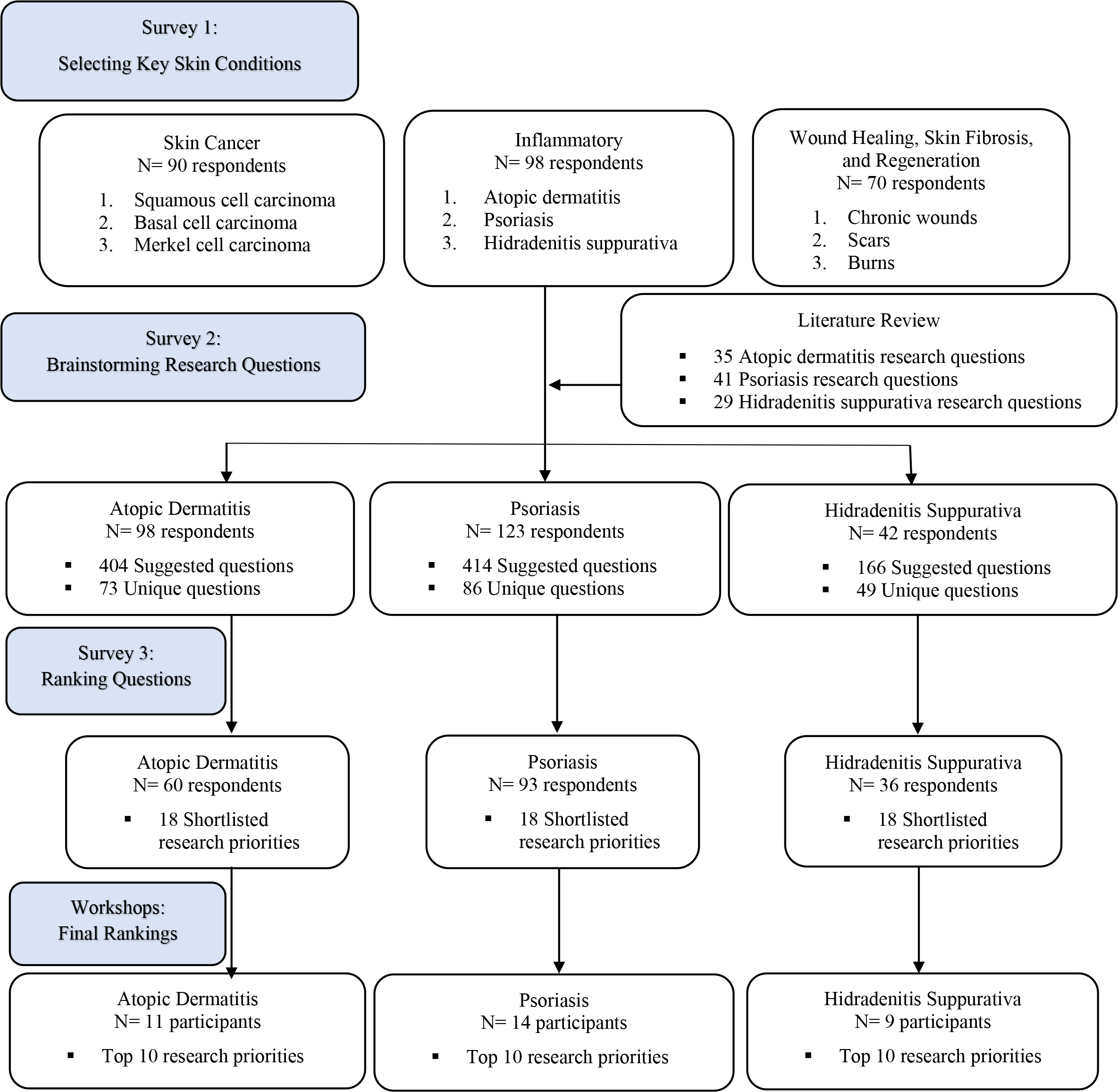
Flow of participants and research questions through each step of the priority setting initiative.
Potential research questions were identified by our literature review (Step 3; Supplemental Tables 4-6) for atopic dermatitis (N = 35 research questions), psoriasis (N = 41), and hidradenitis suppurativa (N = 29) (Figure 1). These lists were combined with a total of 414 suggested research questions from 98 respondents in Survey 2 (Step 4) for atopic dermatitis, 404 questions from 123 respondents for psoriasis, and 166 questions from 42 respondents for hidradenitis suppurativa (Figure 1). Those research questions were ranked in Survey 3 by 35 patients/caregivers and 25 health care providers for atopic dermatitis, 71 patients/caregivers and 22 health care providers (Step 6) for psoriasis, and 12 patients/caregivers and 24 health care providers for hidradenitis suppurativa. The top ranked research questions from patients and health care providers were combined to create a shortlist of 18 research priorities for each of the three inflammatory skin conditions (Figure 1) (Supplemental Table 7).
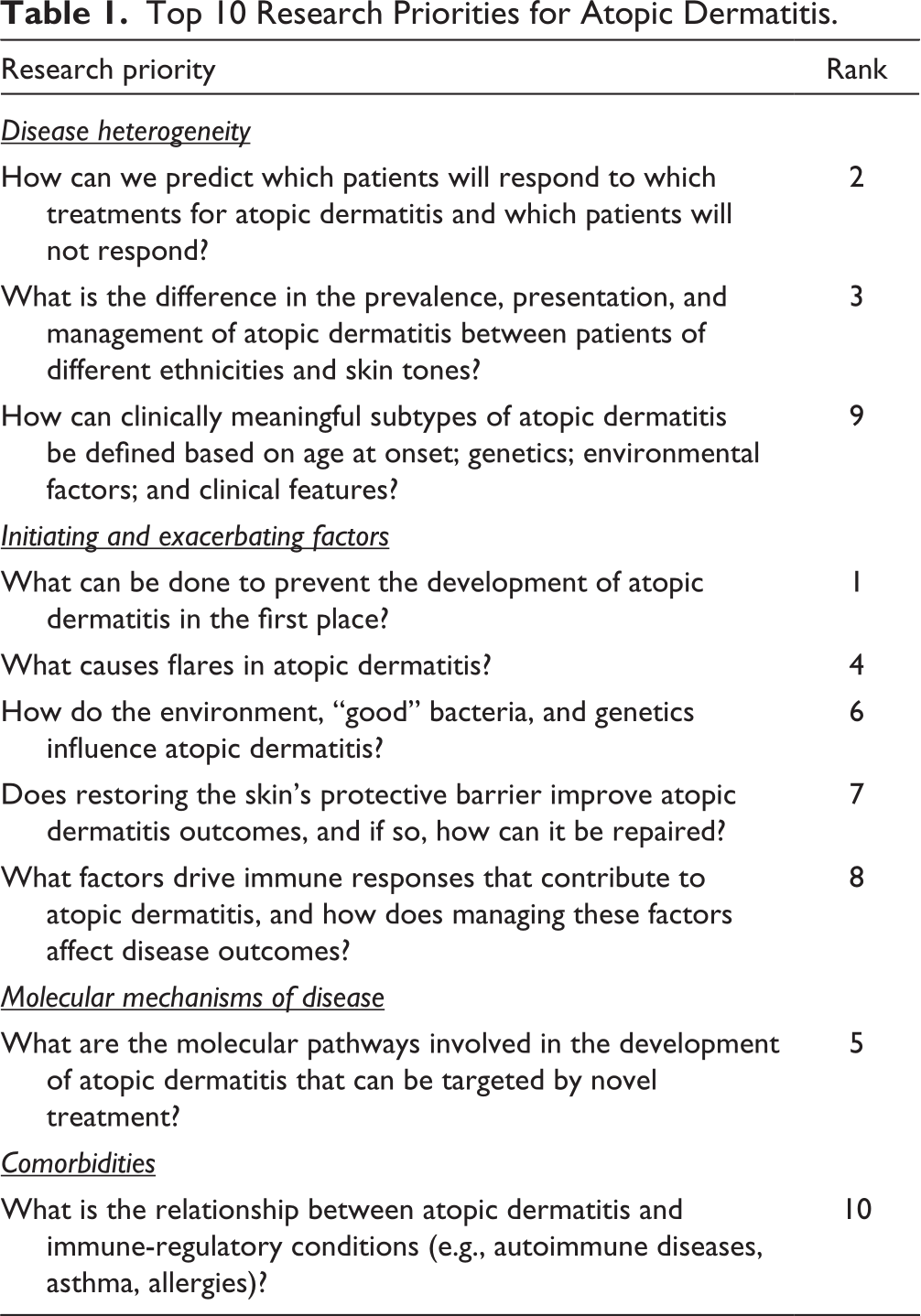
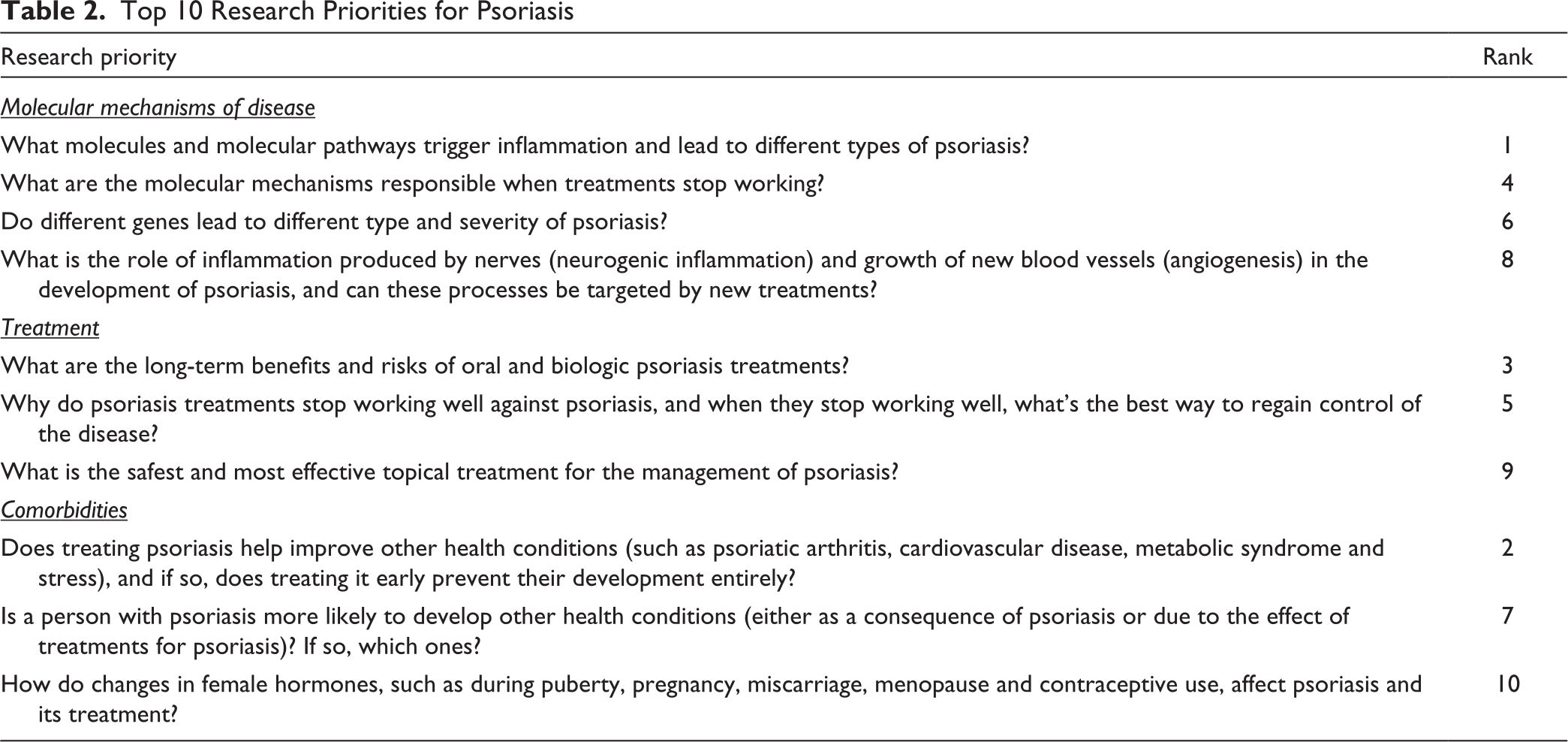
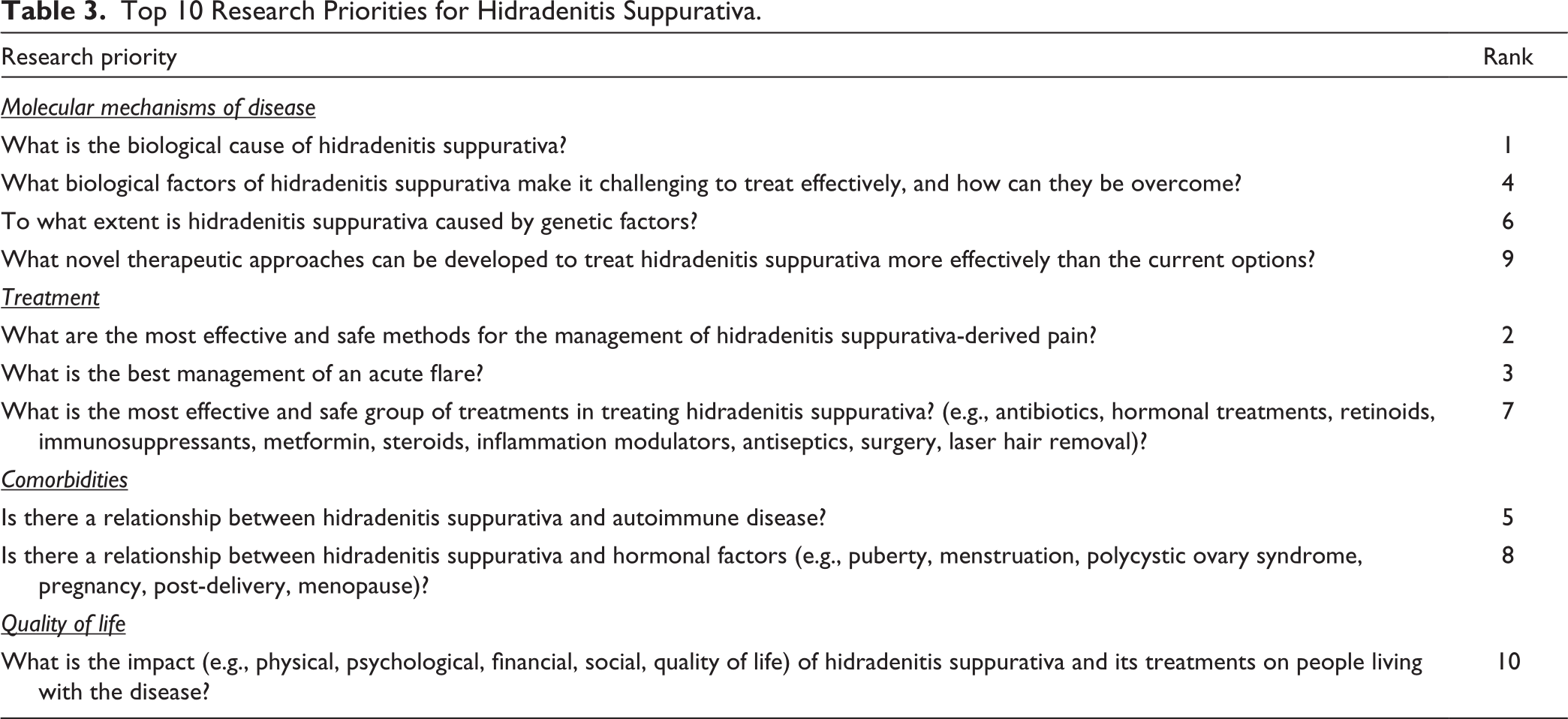
As the final step, the Top Ten lists of research priorities were generated from the stakeholder workshops for atopic dermatitis (Table 1), psoriasis (Table 2), and hidradenitis suppurativa (Table 3) (Figure 1). PSI results for the top three skin cancers, chronic wounds, scars, and burns will be published separately.
Top 10 Research Priorities for Atopic Dermatitis.
Top 10 Research Priorities for Psoriasis
Top 10 Research Priorities for Hidradenitis Suppurativa.
Discussion
With input from patients, caregivers, health care providers, and researchers, we identified SkIN Canada priority conditions under each of inflammatory, neoplastic and wound healing categories. We completed a national priority setting initiative to identify ranked lists of important patient-relevant knowledge gaps for atopic dermatitis, psoriasis, and hidradenitis suppurativa, the conditions that were identified as priorities among inflammatory skin conditions. The Top Ten research gaps for those inflammatory conditions ranged from better understanding the basic pathogenic mechanisms of disease to comorbidities and optimal management strategies.
We used the well-recognized and systematic James Lind Alliance methods to elicit and iterate on input from patients, caregivers and health care providers in addition to researchers. These methods ensure that the research questions selected are important to end-users who will ultimately put the evidence generated into practice. These priorities will now be adopted as the initial priorities of SkIN Canada, guiding its scope of activities and support. They can also be used by researchers, funding agencies, sponsors, and policymakers in Canada and internationally, helping them focus on questions that are important to patients, caregivers, and health care providers. Nevertheless, PSIs are not meant to be exhaustive or exclusive—research on other skin conditions and other research questions is still important and should be encouraged.
Questions related to molecular mechanisms of disease were prominent for the three inflammatory skin conditions, indicating a prominent role for basic and translational researchers. For psoriasis and hidradenitis suppurativa, many questions also focused on treatment strategies. Reflecting a more mature therapeutic field, questions for psoriasis focused on long term safety and optimizing strategies for existing treatments. For hidradenitis suppurativa, current treatment options and the evidence supporting them are more limited, so questions focused on developing new treatments and comparative effectiveness. For atopic dermatitis, questions were more focused on understanding the heterogeneity of different phenotypes and its waxing and waning longitudinal course.
In addition to the direct outputs of the PSI (Top Ten lists of research priorities), this project was an important step in the broader development of SkIN Canada. Part of the research network’s mission is to engage the community of skin disease patients, caregivers, health care providers and researchers to create an interdisciplinary collaboration empowered to conduct impactful research. Engaging with stakeholders, including patient and professional organizations, was crucial to the PSI process and has helped to build relationships and capacity for further engagement as the network progresses.
Supplemental Material
Table S1 - Supplemental material for Top Ten Research Priorities for Psoriasis, Atopic Dermatitis and Hidradenitis Suppurativa: The SkIN Canada Priority Setting Initiative
Supplemental material, Table S1, for Top Ten Research Priorities for Psoriasis, Atopic Dermatitis and Hidradenitis Suppurativa: The SkIN Canada Priority Setting Initiative by Aaron M. Drucker, Omer Kleiner, Rachael Manion, Anie Philip, Jan Dutz, Kathleen Barnard, Julie Fradette, Lucie Germain, Robert Gniadecki, Ivan Litvinov, Sarvesh Logsetty, Morris Manolson, P. Régine Mydlarski, Vincent Piguet, Debbie Ward, Youwen Zhou and An-Wen Chan in Journal of Cutaneous Medicine and Surgery
Footnotes
Declaration of Conflicting Interests
The author(s) declared the following potential conflicts of interest with respect to the research, authorship, and/or publication of this article: Dr. Drucker has received compensation from the British Journal of Dermatology (reviewer and Section Editor), American Academy of Dermatology (guidelines writer) and National Eczema Association (grant reviewer).
Cathryn Sibbald has participated in advisory boards for Leo, Miravo, Pfizer, Sanofi, has received honoraria from Leo, Novartis, Pfizer, Sanofi and UCB, and was an investigator for a trial with Arcutis.
Dr. Piguet has no personal financial ties with any pharmaceutical company. He has received honoraria for speaker and/or advisory board member roles from AbbVie, Celgene, Janssen, Kyowa Kirin Co. Ltd, LEO Pharma, Novartis, Pfizer, Sanofi, UCB, and Union Therapeutics. In his role as Department Division Director of Dermatology at the University of Toronto, Dr. Piguet has received departmental support in the form of unrestricted educational grants from AbbVie, Bausch Health, Celgene, Janssen, LEO Pharma, Lilly, L’Oréal, NAOS, Novartis, Pfizer, Sandoz and Sanofi in the past 36 months.
Funding
The author(s) disclosed receipt of the following financial support for the research, authorship, and/or publication of this article: Conducted by the Skin Investigation Network of Canada (SkIN Canada) and funded by the Canadian Institutes of Health Research (CIHR).

Supplemental Material
Supplemental material for this article is available online.
References
Supplementary Material
Please find the following supplemental material available below.
For Open Access articles published under a Creative Commons License, all supplemental material carries the same license as the article it is associated with.
For non-Open Access articles published, all supplemental material carries a non-exclusive license, and permission requests for re-use of supplemental material or any part of supplemental material shall be sent directly to the copyright owner as specified in the copyright notice associated with the article.
