




Abstract
Objective
This study aimed to assess tobacco and vaping habits among university students, exploring awareness of university policies, attitudes, and behaviors related to smoking and vaping.
Methods
An online questionnaire was distributed among students from various universities, including institutions in Pakistan, covering demographics, smoking and vaping behaviors, awareness of policies, and beliefs. Data was analyzed using descriptive statistics, Binomial tests, Chi-square tests, and logistic regression.
Results
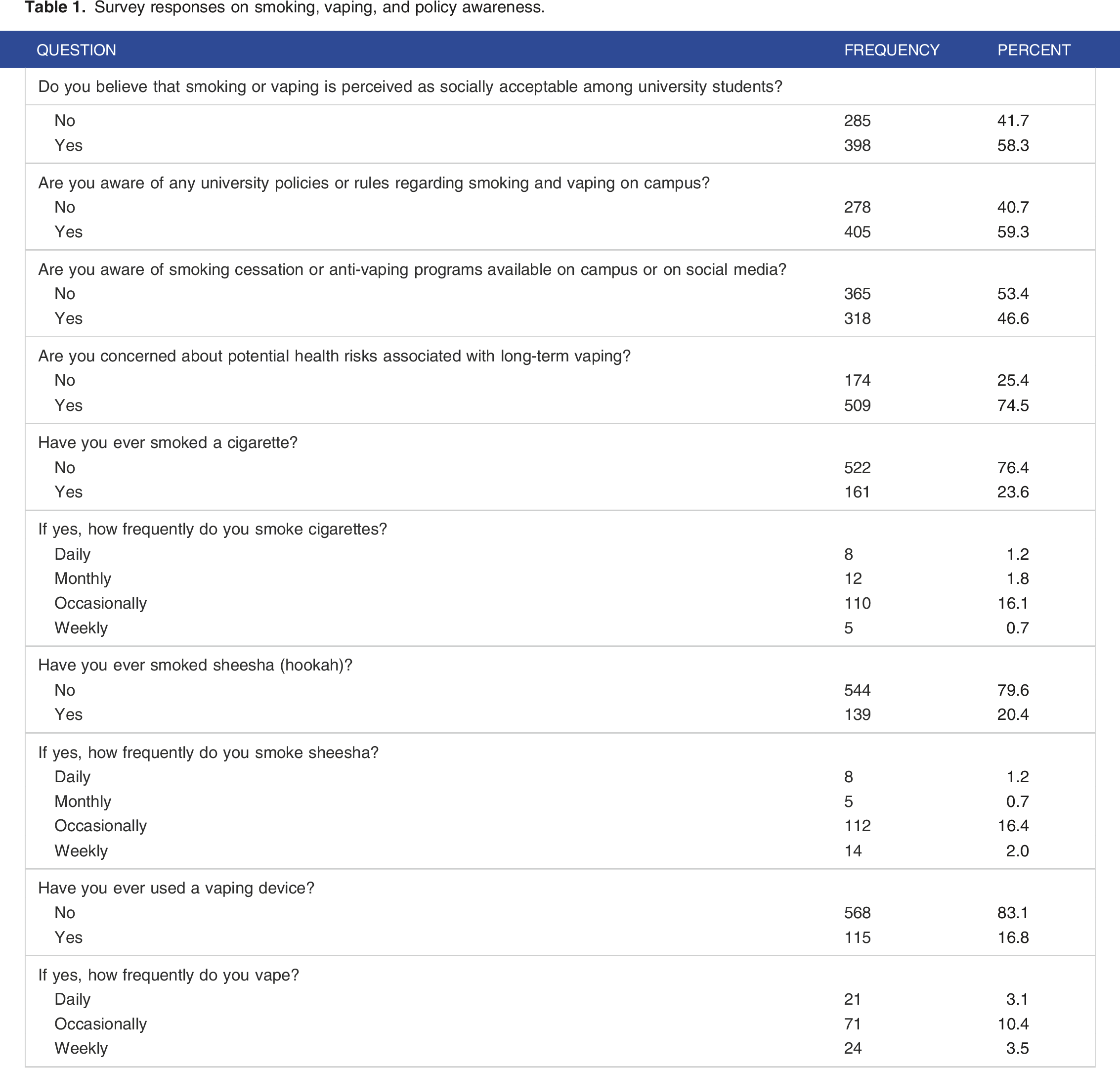
Out of the total 683 respondents, 65.02% were female, and 34.98% were male. Most participants were undergraduate students (71.31%), with Dentistry being the most represented field (50.36%). Most students perceived smoking or vaping as socially acceptable (58.3%) and were aware of university policies (59.3%). However, 46.6% were aware of cessation programs. Most of the students expressed concern about long-term vaping health risks (74.5%). Logistic regression identified gender (Male) and field of study (Dentistry) as significant predictors of policy awareness.
Conclusion
University students exhibit varied perceptions and behaviors related to smoking and vaping. The study highlights the importance of implementing effective policies and interventions to address tobacco and vaping use among them.
Keywords
Introduction
Tobacco is a leading global cause of death from chronic diseases, with around 1.3 billion smokers worldwide, of whom roughly 80% reside in developing countries. 1 Tobacco use results in approximately 5 million deaths annually, a figure projected to increase to 10 million by 2025, with about 7 million of those deaths occurring in developing nations. 2 The overall burden of tobacco-related morbidity and mortality imposes an economic cost of approximately US$200 billion each year. According to World Health Organization (WHO) estimates, about 47% of men and 12% of women smoke globally. 3 In developing countries, these figures rise to 48% for men and drop to 7% for women, while in developed nations, 42% of men smoke compared to 24% of women. 3 Additionally, the Global Youth Tobacco Survey (GYTS), which involved 750,000 students aged 13 to 15 across 131 countries, found that approximately 9% of students were current smokers, with 11% using tobacco products other than cigarettes. 4 Recent estimates indicate that tobacco use among university students in Karachi, Pakistan, stands at approximately 24%, highlighting a significant public health concern. 5
Despite continued efforts by the World Health Organization (WHO), tobacco use including cigarettes, hookah (sheesha), and electronic cigarettes (e-cigarettes) remains a major global public health issue. While smoking rates have been declining, particularly in middle-income nations, the introduction of e-cigarettes has added a new dimension to tobacco use, notably appealing to younger populations, such as university students. 6
University students are particularly vulnerable to tobacco use due to several factors. Developmentally, this age group often experiences increased independence, exploration, and risk-taking behaviors, making them susceptible to experimenting with tobacco products. 7 Cultural factors, including the normalization of smoking within social settings and peer influences, further exacerbate this vulnerability. Peer pressure plays a significant role in shaping smoking behaviors, as students may feel compelled to conform to the habits of their social circles. 8 Understanding these dynamics is crucial for developing targeted preventive and intervention strategies.
Existing literature highlights various aspects of tobacco use among university students, including peer pressure, perceived social acceptability, stress relief, and the influence of advertising and marketing strategies. For example, a systematic review by Arshad et al. (2019) focused on knowledge, attitudes, and perceptions toward waterpipe tobacco smoking among college students, emphasizing the impact of social and cultural factors. 9 A study by Bennett et al discussed how college anti-smoking policies affect student smoking behavior, revealing the complex interplay between institutional regulations and individual choices. 10 Furthermore, Lupton and Townsend et al, conducted a systematic review of the effectiveness of university smoke-free policies, reinforcing the importance of structured interventions to mitigate tobacco use in academic settings. 11
Le TT et al, indicated a concerning rise in e-cigarette usage, suggesting a shift in tobacco product preference among younger populations. 12 In a study by Wamamili et al, the smoking and vaping behaviors of New Zealand (NZ) students showed that exclusive vaping was reported by 4.9% of the students, while exclusive smoking was slightly higher at 8.6%. Additionally, dual use (both smoking and vaping) was observed in 1.9% of NZ students. 13 Although these studies provide valuable geographic insights, their focus on specific countries or regions may limit generalizability. As Joo T et al, points out, that further studies are needed to evaluate the long-term impact of tobacco policies across the globe, the effectiveness of complementary measures, adolescents’ perspectives on smoking, compensatory access strategies, and demographic variations in smoking behavior. 14 Furthermore, some studies fail to distinguish between cigarette smoking and hookah use, which may have different health consequences and cultural connections, as emphasized by Karaman NG et al in their investigation of waterpipe tobacco smoking among university students in Turkiye. 15
Current literature is deficient in comprehensively examining university students’ awareness of tobacco use policies on campus. While some studies investigate student perceptions of smoking and vaping risks, 16 others, such as Ng et al, report on their understanding of campus regulations governing these behaviors. 17 Understanding this gap is critical, as effective policy implementation depends on student awareness. Furthermore, recent studies primarily focus on prevalence rates, often neglecting the underlying factors influencing students’ tobacco use behaviors. Mao R et al, highlighted the importance of social and psychological determinants of smoking among Chinese students. 18 University students in medical fields hold a unique position in health advocacy, as their knowledge and attitudes toward smoking and vaping may influence their future role as healthcare professionals.5,7 Understanding their perspectives is essential, as they are likely to play a key role in promoting public health awareness and preventive measures in society.
We hypothesize that a significant proportion of university students across various institutions, both in Pakistan and internationally are engage in tobacco use, with varying prevalence rates for cigarettes, hookah, and e-cigarettes. Additionally, we propose that student awareness of university tobacco use policies is limited. This study aims to investigate tobacco and vaping habits among university students while evaluating their awareness of university policies and regulations regarding tobacco use on campus.
This study will contribute valuable data to the existing literature, which will inform the development of targeted interventions that address the specific needs and contexts of university students, ultimately aiming to reduce tobacco use within the studied population.
Methodology
Study design
This cross-sectional survey aimed to analyze tobacco and vaping use among various universities, including institutions in Pakistan. To ensure open responses and protect participants’ privacy, the survey was conducted anonymously. Participants were selected from various academic backgrounds and age groups.
Ethical considerations
The study was conducted in accordance with the Declaration of Helsinki and approved by the Ethical review committee of the Altamash Institute of Dental Medicine, Karachi, Pakistan (AIDM/ERC/11/2023/03). Participants were informed about the study’s purpose, assured confidentiality of their responses, and reminded of their right to withdraw at any point.
Participants selection criteria
• University students enrolled in undergraduate or graduate programs from various institutions. • Students aged 18 years and above. • Willingness to provide informed consent and complete the online questionnaire.
Sample size calculation and sampling procedure
The sample size was calculated using Open-Epi software. The calculation used a 95% confidence level, a 5% margin of error, and an estimated 29% 18 prevalence of tobacco habits among university students. The estimated sample size was 683 participants. Convenience sampling was used to recruit individuals from different institutions and colleges.
Data collection
Data was collected through an online self-administered questionnaire distributed via email and social media platforms Facebook® What’s App® and Instagram®. To select participants from the institutes, we requested the faculty members to promote the study within dentistry, medicine, and nursing programs. We utilized online platforms by sharing study links on student portals, and social media groups, that were commonly used by students. Additionally, students were informed through email invitations, which were distributed with the help of university administration, utilizing internal student databases for contact information. In-person recruitment involved members of the research team attending campus events to fill out the forms on site and orientations, to raise awareness and encourage participation. The questionnaire was designed to gather information on participants’ demographics, smoking and vaping behaviors, awareness of university policies, and perceptions of smoking and vaping.
The questionnaire comprised multiple-choice and Likert scale questions covering various aspects of tobacco and vaping habits. The items assessed participants’ gender, age group, year of study, field of study, smoking and vaping behaviors, awareness of university policies, and beliefs about smoking and vaping (Supplemental file 1). The questionnaire underwent rigorous validation procedures to ensure its reliability and validity. The face validity of the questionnaire was assessed by experts in oral pathology, prosthodontics, and dental public health from the institute. These experts ensured that the questionnaire items were relevant and appropriate for measuring smoking and vaping habits among university students. Content validity was ensured by aligning questionnaire items with established research objectives and theoretical frameworks. The reliability of the questionnaire was assessed through a pilot study conducted initially on 20% of the sample population. This pilot study aimed to identify any ambiguities or inconsistencies in the questionnaire items and refine them accordingly. Additionally, internal consistency reliability analysis, such as Cronbach’s alpha, was performed to evaluate the reliability of the questionnaire items (α = 0.82). The study is reported according to the STROBE guidelines, (Supplemental file 2).
Data analysis
In this study, data was analyzed using SPSS software to investigate university students’ awareness and behaviors about smoking and vaping. Descriptive statistics were obtained for essential variables such as gender, year of study, field of study, and smoking and vaping habits. To establish relevant statistical approaches, the normality of data distribution was tested using the Kolmogorov–Smirnov test. The Binomial test was performed to see if the proportion of “Yes” responses to awareness and behavior-related questions differed considerably from the expected value of 50%. Chi-square tests of independence were used to investigate the relationship between categorical variables including gender and awareness of university rules on smoking and vaping. Logistic regression analysis was used to find significant predictors of university policy awareness, and the strength of these connections was quantified using odds ratios and confidence intervals. A P-value of ≤0.05 was considered significant.
Results
A total of 710 responses were received from 1000 invitations, but only 683 surveys were included in the final analysis. Hence the response rate of participants was 96.1%.
Figure 1 shows the distribution of participants by gender, level of study, field of study, and type of institute. In this study, 683 responders, 239 (34.9%) were male and 444 (65.2%) were female. Most participants were undergraduate students, comprising 71.3% (488 students) of the total. Distribution of gender, level of study, field of study, and institute type.
Figure 2 describes the year of study students were currently enrolled in, the largest group, comprising 26.6% of the total students, consisting of 3rd-year students. Following them, final-year students make up 9.3%, and 1st-year students account for 6.5% of the participants. Postgraduate students, including those pursuing a master’s degree, represent 3.7%, while 4th-year students and 5th-year students make up 4.9% and 4.5%, respectively. House officers contribute 4.1% of the total sample. Distribution of students by year of study.
Dentistry was the most popular field of study, with 50.4% of students (n = 344) enrolled in this discipline. This was followed by medical students (n = 248, 36.3%), Doctor of Physical Therapy students (n = 31, 4.5%) and nursing students (n = 16, 2.3%) and (n = 44, 6.4%) from other fields. Additionally, a significant portion of students (n = 511, 74.8%) attended National Institutes, while (25.2%, n = 172) were from International Institutes. Out of the 172 international students, (40%, n = 68) were from other South Asian countries, including India, Bangladesh, Sri Lanka, Nepal, Bhutan, and the Maldives; (25%, n = 43) from Middle Eastern countries, such as Saudi Arabia, the United Arab Emirates, Oman, Qatar, Kuwait, and Bahrain; (15%, n = 26) from Southeast Asian countries (Malaysia, Indonesia, Thailand, and Vietnam); (10%, n = 17) from African countries, including Nigeria, Kenya, South Africa, and Egypt; (5%, n = 9) from European countries such as Germany and France; (3%, n = 6) from North American countries, including the United States and Canada; (2%, n = 3) from other regions; and (2%, n = 3) from the United Kingdom.
Survey responses on smoking, vaping, and policy awareness.
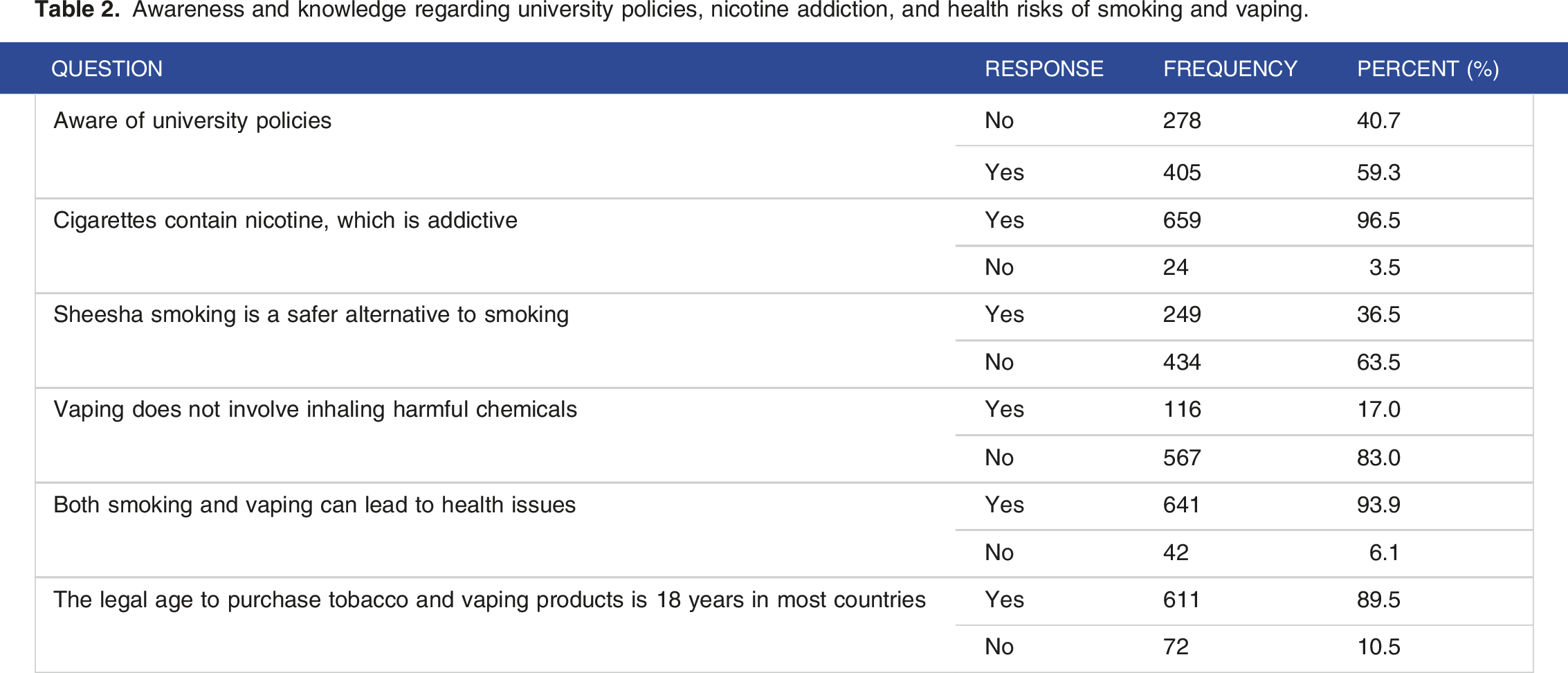
Awareness and knowledge regarding university policies, nicotine addiction, and health risks of smoking and vaping.
Binomial test results for smoking and vaping behaviors and attitudes among university students.
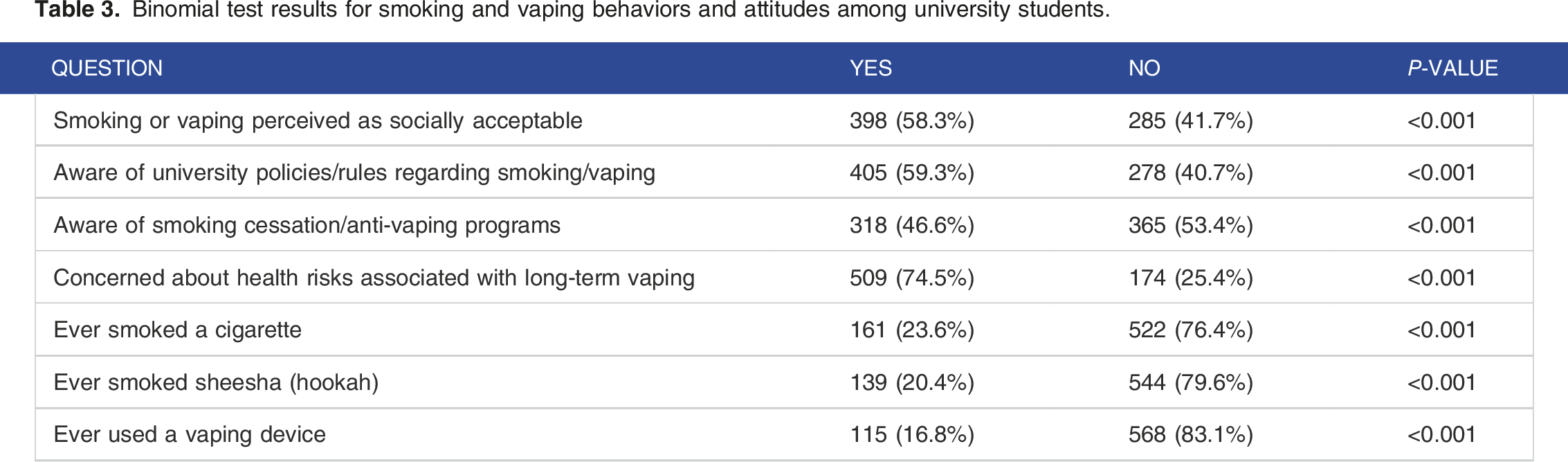
The results indicated significant deviations from random response pattern across all questions. Notably, most respondents perceived smoking or vaping as socially acceptable (58.3%, P < 0.001), were aware of university policies/rules regarding smoking/vaping (59.3%, P < 0.001), expressed concern about long-term vaping health risks associated with vaping (74.5%, P < 0.001), and reported never engaging in these behaviors. In contrast, a smaller proportion were aware of smoking cessation or anti-vaping programs (46.6%, P < 0.001).
Association between variables and awareness of university policies on smoking and vaping.

Predictors of awareness of university policies regarding smoking and vaping.

Discussion
The increasing prevalence of smoking and vaping among university students is a public health concern that necessitates a comprehensive assessment of their knowledge, attitudes, and behavior regarding their habits. This study aimed to determine students’ awareness of smoking and vaping policies, participation in these activities, and beliefs about the health risks associated with smoking and vaping. Based on the findings, the hypothesis that university students are highly aware of and engaged in smoking and vaping behaviors was accepted.
This study revealed that the majority of students (59.3%) were aware of university smoking and vaping policies, indicating a reasonable level of policy distribution. However, the actual participation in smoking and vaping habits was troubling, with 23.6% smoking cigarettes, 20.4% smoking sheesha, and 16.8% using a vaping device. Compared to other studies, our findings were largely consistent with prior research showing a high frequency of smoking and vaping among university students. In a study involving 2732 students at a U.S. urban university, it was found that male students had higher odds of being dual/poly tobacco users compared to female students (AOR = 2.00, 95% CI = 1.42, 2.82) 19 . These findings align with our observations, emphasizing the importance of addressing tobacco hazards to reduce smoking behaviors among university students. Our study highlights a notable but comparatively lower prevalence, indicating potential shifts in smoking behaviors or the impact of varying regional and institutional policies.
Furthermore, a significant number of students had misconceptions regarding the safety of vaping and sheesha smoking, with 36.5% believing sheesha is a safer alternative to cigarettes and 17.0% believing vaping contains no dangerous chemicals. These findings imply that, while students may be aware of policies, there is an urgent need for more effective educational initiatives to dispel myths and promote healthy practices. Similar misconceptions about the safety of alternative smoking methods have been described in the literature, demonstrating the widespread prevalence of these incorrect beliefs. 20 These similarities underscore the ongoing challenges in combatting smoking and vaping among young adults and emphasize the need for continuous public health efforts.
The results of this study provide substantial new insight into the attitudes and practices surrounding smoking and vaping among college students. A significant percentage 58.3% of students believe that smoking or vaping is socially acceptable, and 59.3% are aware of university policies regarding these behaviors. Additionally, 74.5% are concerned about the health risks associated with long-term vaping. These findings are consistent with other studies that demonstrate how vaping is becoming increasingly normalized in social contexts and that people are becoming more aware of the dangers of long-term vaping.21-23 A study conducted by Anwar and Senosy, 24 revealed that college students continue to smoke due to peer pressure and at cafes or home, despite the public knowledge of its harmful effects. Similarly, research by Alrufaidy et al, 25 and Monshi et al, 26 supports our findings, indicating that while there is significant awareness of anti-smoking policies, there remains a gap in awareness about cessation programs.
In contrast to previous research, our study highlights an ongoing gap between knowledge and behavior. While 83.1% of students reported not having used a vaping device, 16.8% had, suggesting a lower prevalence of vaping than in some Western contexts. A study conducted in the US shows that college students vape at higher rates than the general population which may indicate regional or cultural variations in the frequency of vaping. 27 Furthermore, our research confirms the findings of Yimsaard et al, 28 and Al-Jayyousi et al, 29 who identified gender and field of study as major determinant of policy awareness. This consistency across studies highlights the need for targeted interventions that consider demographic variables to effectively address smoking and vaping behaviors in university settings.
The strengths of this study lie in its robust methodology, including the validation and reliability testing of the questionnaire and the large sample size, which enhances the reliability of our findings. Additionally, the pilot study conducted initially helped refine the questionnaire, improving its clarity and effectiveness in capturing relevant data.
Despite these strengths, there are several limitations to consider. The reliance on self-reported data introduces potential biases, such as social desirability bias, recall bias, and response bias. Participants might underreport or overreport their smoking and vaping behaviors due to the desire to present themselves in a favorable light or difficulties in accurately recalling their habits. Another limitation of this study is the predominance of dichotomous “yes/no” responses in the questionnaire. While these responses provide clear and straightforward data, they may restrict the ability to capture more nuanced opinions and behaviors compared to using continuous variables. Future studies could benefit from incorporating Likert-scale based questions only to better understand the degree of participants’ attitudes and perceptions. Moreover, another limitation of this study is the restriction of participants to dentistry, nursing, and medical students. While this focus provides insights specific to health-related fields, it limits the application of the findings to other academic disciplines. Future research could benefit students from diverse fields to gain a broader understanding of smoking and vaping behaviors across university populations. The study’s cross-sectional nature is an additional limitation, as it captures only a snapshot of behaviors and beliefs at one point in time. This approach does not allow for the examination of how smoking and vaping behaviors and beliefs change over the course of university years. Future research could benefit significantly from a longitudinal design, which would enable the tracking of changes in students’ smoking and vaping behaviors and beliefs over time. Employing random sampling techniques and mixed methods, such as combining self-reported data with objective measures, could also enhance the reliability and validity of future studies. Moreover, further limitation of this study is the diverse cultural background of participants, which may affect the generalizability of the findings. While our sample includes students from various countries and cultures, we were unable to control for country of origin in our statistical analyses due to the lack of comprehensive regional data for each respondent. Future studies should consider including region-specific analyses to account for potential cultural influences on smoking and vaping behaviors among university students.
In terms of future recommendations, it is essential to develop more effective educational campaigns that specifically target misconceptions about the safety of sheesha and vaping. Universities should consider implementing comprehensive tobacco and vaping prevention programs that address both policy awareness and health education. Additionally, further research should explore the underlying factors that contribute to smoking and vaping among university students, such as stress, peer pressure, and social norms, to develop more tailored interventions.
The findings of this study will contribute to a growing body of literature on smoking and vaping behaviors among university students, emphasizing the need for targeted awareness and prevention programs. By highlighting the significant predictors of policy awareness and the misconceptions surrounding vaping and sheesha use, this research underscores the importance of integrating comprehensive tobacco education into university curricula, particularly in non-healthcare fields. Future research should continue to explore the cultural and regional factors influencing smoking and vaping behaviors to inform more effective public health strategies.
Conclusion
This study explored university students’ perceptions, awareness, and behaviors related to smoking and vaping. It was found that many students consider smoking or vaping socially acceptable and are aware of university policies on these behaviors, yet fewer are informed about cessation programs. Despite significant health concerns, actual smoking and vaping behaviors were relatively low. These results highlight the importance of targeted awareness and educational initiatives to address misconceptions and encourage healthier choices among students.
Supplemental Material
Supplemental Material - Social Acceptability and Health Concerns of Smoking and Vaping Among University Students: A Cross-Sectional Study
Supplemental Material for Social Acceptability and Health Concerns of Smoking and Vaping Among University Students: A Cross-Sectional Study by Afsheen Maqsood, Wan Nazatul Shima Shahidan, Daud Mirza, Naseer Ahmed and Artak Heboyan in Tobacco Use Insights.
Footnotes
Acknowledgments
The authors are grateful to all participants of the study. The School of Dental Sciences University Sains Malaysia and Bahria University Dental College for support. Also, to the research development and review cell of Altamash Institute of Dental Medicine, Karachi, for facilitation in this study.
Author contributions
AF, NA, WNSS, DM, and AH conceived the study, developed a research methodology, guided the study design, data collection process, and writing of the manuscript.AF, NA, and AH played a key role in ensuring methodological rigor, data collection and interpretation of findings. NA, GD, A.R played an important role in data collection, analysis of data, writing discussion where he helped to contextualize findings within existing literature and review of the manuscript. AF, NA, WNSS, and DM contributed to writing background, data collection, data analysis and interpretation, also critical appraisal of the manuscript. AF, NA, WNSS and DM worked on questionnaire development, data collection, overall review of the research study.
Declaration of conflicting interests
The author(s) declared no potential conflicts of interest with respect to the research, authorship, and/or publication of this article.
Funding
The author(s) received no financial support for the research, authorship, and/or publication of this article.
Ethical statement

Data availability statement
The data presented in this study are available on request from the corresponding author.
Supplemental Material
Supplemental material for this article is available online.
References
Supplementary Material
Please find the following supplemental material available below.
For Open Access articles published under a Creative Commons License, all supplemental material carries the same license as the article it is associated with.
For non-Open Access articles published, all supplemental material carries a non-exclusive license, and permission requests for re-use of supplemental material or any part of supplemental material shall be sent directly to the copyright owner as specified in the copyright notice associated with the article.
