



Abstract
Background:
Implementation of eHealth technologies has the potential to improve healthcare delivery, but is complex. Successful adoption depends on organizational readiness, effective change management and active involvement of healthcare professionals. Leadership plays a critical role in fostering a supportive climate for digital transformation. However, many managers lack the tools, knowledge and clarity needed to lead implementations effectively. This study explores how middle managers in primary care in Sweden prepare for and lead a large-scale, top-down implementation of a digital service system (1177 Direct) for symptom assessment, triage, referral and chat.
Objectives:
By examining middle managers’ experiences, the study aims to identify best practices, barriers and enabling factors that support successful digital transformation.
Methods:
Semi-structured interviews were conducted with 26 middle managers within primary healthcare. Interviews were conducted 2 weeks before each unit launched the digital service system. The data were analysed using conventional content analysis.
Results:
The analysis yielded four categories describing the managers’ experiences of preparing for implementation of the digital service at their workplace: (1) how the managers navigated their role when driving top-down organizational change, having the responsibility to lead the change no matter their thoughts about it; (2) the importance of preparing tailored strategies for the implementation; (3) important preconditions for leadership in change; (4) the ability to adjust the innovation and implementation process to the local setting.
Conclusion:
Middle managers have a pivotal role in preparing for and leading implementation. Managers’ efforts focused on supporting staff, navigating uncertainty, and applying local strategies to foster readiness and engagement. When leading change, there is a need for clear communication, contextual adaptation and bidirectional feedback to ensure sustainable implementation. Strengthening these preconditions can enhance middle managers’ capacity to lead complex digital transformations effectively and promote long-term success.
Introduction
Healthcare systems face challenges due to increasing costs, demands from an ageing population, prevalence of complex diseases and persistent workforce shortages. These factors necessitate cost-effective, sustainable and adaptive healthcare solutions 1 Advancements in medical treatments have improved survival rates, leading to a higher prevalence of long-term conditions that require continuous and integrated care.
In this context, digital transformation is reshaping healthcare, requiring systems to evolve and adapt. The WHO defines eHealth as “the use of information and communication technologies (ICT) for health,” emphasizing their role in enhancing cost-effectiveness, service delivery, public health and patient safety. 2 According to the OECD, 1 digital transformation is now recognized as a key determinant of health as digital technologies, access and literacy increasingly influence health outcomes, well-being and healthcare innovation. To ensure the sustainability of healthcare systems, digitalization must be embraced not only as a technological shift but as a fundamental transformation in how care is delivered, accessed and integrated into everyday life.
Background
The many eHealth solutions available have the potential to improve the delivery of healthcare services. However, the implementation and adoption of Health Information Technologies (HITs) are challenging, requiring significant adaptations of roles and workflow, and substantial investments in financial, time and staff resources.3,4 HITs can serve as a key solution, defined as technology “used within a healthcare organization to facilitate communication, integrate information, document healthcare interventions, perform record keeping, or otherwise support the functions of the organization,” 5 but it can also introduce complexities that place a daily burden on healthcare professionals. The challenges posed by digital environments are recognized as a pressing issue in contemporary healthcare.6-8
Large-scale implementation initiatives often occur at a regional or national level and are characterized as complex programmes or megaprojects. 9 A large-scale implementation of Electronic Health Records in Denmark and Finland showed that post-implementation dissatisfaction was common, with technical integration issues and complex workflows for patient transfers contributing to the challenges. 10 Similarly, Wosny et al 6 highlighted the crucial role of effective change management in successful implementation of an IT infrastructure in Switzerland. The active involvement of healthcare professionals from the outset, through participation in system selection, design and implementation, is vital in reducing resistance and negative perceptions towards HIT adoption. 11
Much of the focus on HIT implementation has been on activities carried out during the transition. Less attention has been given to the early stages of the implementation, particularly the opportunities for stakeholders to influence the change and the preparatory activities that facilitate a smoother transition. eHealth is increasingly recognized as a determinant of health; thus, the concept of readiness is becoming important. 1 Organizational readiness to change emphasizes that achieving readiness, defined as the collective commitment and efficacy of all staff to implement change, is a critical precursor to successful implementation.12,13 Acknowledging organizational readiness has been shown to increase healthcare professionals’ support for eHealth initiatives. 14
Leadership and Implementation
First- and second-line managers play a crucial role in the implementation of new initiatives; they directly supervise frontline clinicians and influence day-to-day clinical practice. 15 Shuman et al 16 found a strong relationship between nurse managers and the climate within their units for implementing evidence-based practice. Aarons et al 17 identified significant associations between clinicians’ positive perceptions of their middle managers’ leadership behaviours and overall organizational climate for implementation. Lack of support from leaders has been recognized as a major barrier to successful implementation.18,19
In operational management, those responsible for implementing digital solutions often have limited knowledge of implementation science.15,20,21 The rapid pace of technological advancements and the urgent need to implement digital solutions place new demands on clinical leaders as agents for change. However, leaders are not always fully aware of their roles in implementation, which can hinder the success of digital transformations in healthcare. 22
This study investigates how middle managers prepared for and led the large-scale implementation of a national digital service in primary healthcare, focusing on symptom assessment, referral and chat functions. As key agents in digital transformation, middle managers play a crucial role in fostering organizational readiness, reducing resistance and ensuring smooth transitions. Yet many report uncertainty about their roles and lack sufficient tools or support to manage these complex processes effectively.22,23 These challenges may impede adoption of digital health innovations, limiting patient access to timely, effective care and undermining the sustainability of healthcare systems. By examining managers’ experiences, the study aims to identify best practices, barriers and enabling factors that support successful digital transformation. The findings will inform policymakers and healthcare leaders, contributing to more effective implementation strategies and improved patient outcomes.
Methods
A qualitative research approach was used with content analysis to explore the complexities of implementing and adopting a national digital service system (1177 Direct) for symptom assessment, triage, referral and chat within Sweden’s primary healthcare system (Figure 1).
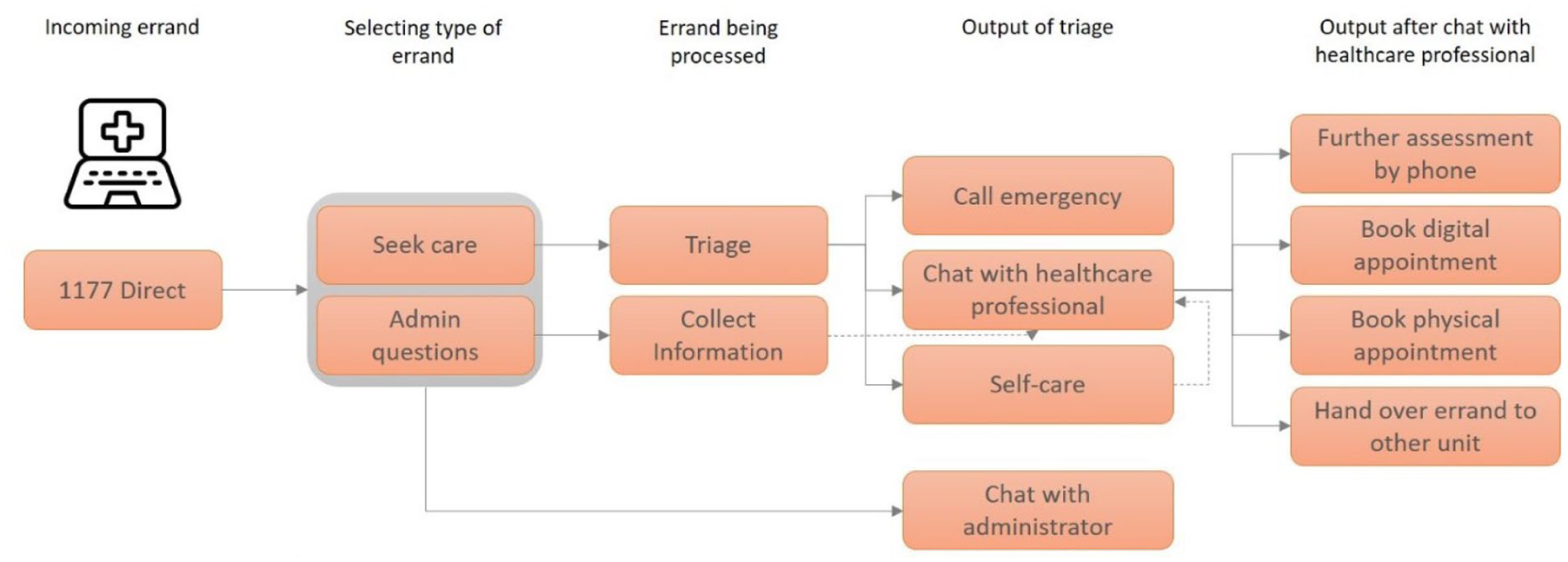
Flowchart visualizing the process of 1177 Direct.
Setting
Healthcare in Sweden is publicly funded; all residents are insured by the state and have equal access to healthcare services with fees regulated by law. The organization and financing of healthcare services are the responsibility of Sweden’s 21 regions, which oversee service provision at the regional level. 23 Primary care in Sweden encompasses outpatient services that do not require hospital resources, including health promotion, disease prevention, rehabilitation and the treatment and management of illnesses, injuries, and long-term non-severe conditions, regardless of diagnosis or patient group. Primary care is delivered by individual healthcare units, each responsible for serving the population within a designated geographic area and patients registered with them. 23
This study was conducted in Region Östergötland and Region Kalmar, located in southern Sweden. Region Östergötland comprises 50 primary healthcare and rehabilitation units, of which 13 are privately operated units, four rehabilitation centres and one digital healthcare unit. Region Kalmar consists of 37 primary care units, of which 11 are privately organized.
Implementation of 1177 Direct in Primary Care
As part of Sweden’s national digital health initiative, all primary care units in the two participating regions were required to implement 1177 Direct between March and May 2023. The service aims to reduce healthcare staff workload, streamline initial assessments and improve patient accessibility. The decision to implement 1177 Direct in the southeast region was made in 2019. A two-stage rollout was planned: an initial pilot in 2020 followed by full implementation in 2022. However, delays in training materials and demo environments led to cancellation of the pilot phase. To avoid further setbacks, a strategic decision was made to proceed directly with a full-scale launch in spring 2023. This abrupt rollout required primary care providers to adapt without the originally planned preparation, highlighting the need to understand how middle managers navigated this process to assess leadership strategies and organizational readiness.
1177 Direct is embedded within the national patient portal 1177.se, a key component of Sweden’s eHealth infrastructure. 1177.se is used nationwide, but the 1177 Direct feature is only active in selected regions. The portal provides online health information, access to medical records and appointment booking. 1177 Direct uses the national nursing decision support system Rådgivningsstödet to guide patients through symptom triage via structured questions. If self-care is deemed sufficient, patients receive tailored advice; otherwise, cases are escalated to healthcare staff for further evaluation or in-person consultation.
Participants
Purposive sampling was used to ensure selection of participants with direct experience in the implementation and adoption of 1177 Direct. 24 All managers responsible for overseeing the integration of the digital service within their healthcare units were chosen to be included in the study and asked to participate. They were identified through the 1177 Direct-project implementation documents, which outlined managerial roles in the rollout process. This included both unit managers, being in charge of the daily operations including staff management and work environment, and operations managers with overall responsibility for operations, finances and patient safety. Hereafter both categories of managers are being referred to as just mangers or middle managers. An invitation was sent by email including information on the study aim, interview process, confidentiality and voluntary participation. Of 51 managers eligible for participation, 26 agreed to participate, see Table 1 for characteristics.
Characteristics of Participants.

Data Collection
Interviews were conducted 2 weeks before each unit launched 1177 Direct, allowing researchers to capture key implementation activities and preparations. A semi-structured interview guide focused on six areas: (1) project support (eg, information, feedback, influence), (2) perceptions of 1177 Direct (eg, benefits, impact on routines, facilitators/barriers), (3) employee readiness, (4) managerial conditions for leading change, (5) implementation culture, and (6) sustainability plans post launch (Supplemental Material).
The guide was piloted in 1 interview, deemed valid, and included in the dataset. Interviews were conducted mainly via Zoom; a few interviews held in person per participant preference. The interviews were conducted by PD (development manager) and JS (research strategist), both female researchers (PhD) experienced in qualitative research. The interviews were held one-on-one. Sessions of 35 to 60 minutes were recorded and professionally transcribed verbatim. All participants provided informed consent and were informed about the aim of the study, participating researchers, confidentiality and voluntary participation. None of the interviewers had a prior relationship with participants, and no compensation was offered.
Data Analysis
The data were analysed using conventional qualitative content analysis. 25 Content analysis was used to systematically analyse the textual data, allowing for an explorative and descriptive approach based on empirical material. The analysis followed a structured process to ensure rigour, transparency and consistency in coding and interpretation. The authors individually read 6 to 8 interview transcripts, carefully examining the data. The transcripts were then coded separately by each author; coding units were identified based on key statements and thoughts relevant to the study aim. To ensure a robust and reliable interpretation, all researchers reviewed, scrutinized and discussed the coding units collaboratively. After the initial coding, all authors revisited the text multiple times to refine the coding process. The coding units were then merged into broader codes that captured recurring themes and key concepts. Through continued discussion, these codes were organized into subcategories that reflected multiple key statements or ideas. Subsequently, the subcategories were grouped into overarching categories based on thematic similarity. Discussions among the authors continued until all inconsistencies were resolved and a shared understanding was reached. This collaborative approach aimed to strengthen the internal validity of the analysis. Representative quotations were identified throughout the analytical process to further enhance the credibility of the findings and illustrate key themes.
Results
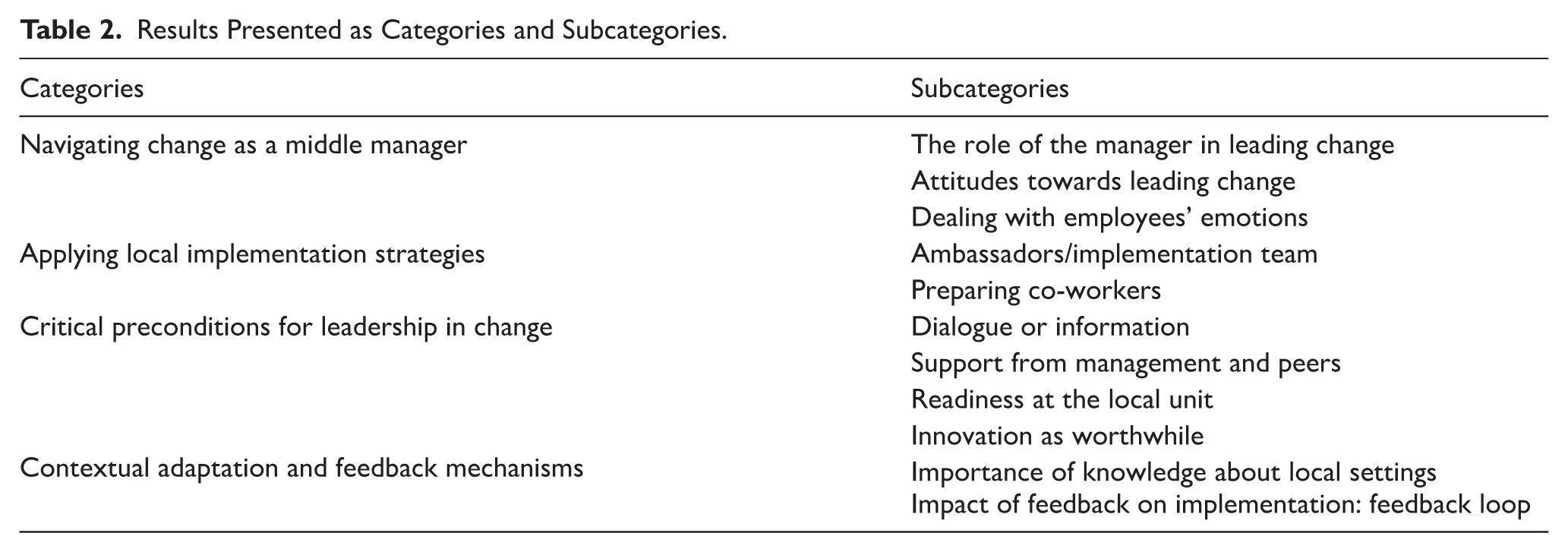
Analysis of the data yielded four categories and 11 subcategories (Table 2) describing the managers’ experiences of preparing for implementation of the digital service at their workplace.
Results Presented as Categories and Subcategories.
Navigating Change as a Middle Manager
This category captures the multifaceted role of middle managers in driving organizational change. Key aspects include the responsibilities of leading change, managing attitudes towards change and addressing employees’ emotional responses. Middle managers serve as critical agents of change, balancing strategic directives with on-the-ground realities. They have a responsibility to lead change in the workplace, considering requirements from their manager, employees and external goals.
The Role of the Manager in Leading Change
Managers agreed with their responsibility in leading change and endorsed the implementation of 1177 Direct, although their opinions regarding the process varied. They indicated that, when faced with innovations, acceptance is essential and is an inherent aspect of their role. The managers recognized that their approach influences implementation and mentioned various strategies to create an implementation-friendly environment.
It is still the case that, as a manager, you might just as well roll up your sleeves and understand that you must be involved. It won’t be easy otherwise. Because we are so careful of the . . . I am so careful of the staff I have. I can’t burden them with all this planning and implementation and everything, and information. A manager must do that. And as it is today, I can’t delegate it to anyone. (Participant E)
In politically driven organizations, although managers may not agree with all decisions made, they agreed that their responsibility was to communicate information neutrally and manage employee reactions effectively. Implementing innovations was sometimes perceived to be easier when there was a central decision, enabling managers to convey to employees that compliance with directives was necessary. Acknowledging that not all employees will embrace the change from the start and that people adapt at different paces was seen as important.
Managers struggled to balance personal values and professional responsibilities and expressed frustration over political decisions that did not always seem to be rooted in clinical practice. However, enforcing decisions was considered a professional responsibility that comes with being a manager.
It’s a politically governed organization, and I often find that they make very strange decisions which I find. . . From my perspective, it’s clear that it’s primarily to attract votes, and sometimes what they come up with has no medical relevance at all. (Participant Q)
Attitudes Towards Leading Change
The managers indicated that they were not too concerned about the implementation of 1177 Direct, anticipating and appreciating a slow start with a limited number of patients using it. Managers who were accustomed to digital tools were more at ease. Creating a work environment where it feels safe to test different innovations was seen as important. Managers who had negative thoughts about the change considered it essential to remain neutral and provide facts without judging the innovation or letting a more positive employee inform the co-workers about the innovation and process.
Some managers struggled to carry out a change that they did not personally believe in, often seeking support from other managers. Also, having to lead an additional top-down implementation while already managing other ongoing implementations was considered challenging. Some decided to pause other innovations, whereas others tried to balance multiple innovations. Both strategies could challenge managers’ attitudes towards 1177 Direct because it needed a lot of work.
This is probably the first time I’m pushing something through that I don’t actually believe in [laughs]. Before, it’s been. . . Well, we pick up a lot of improvement ideas from the staff, and then it’s. . . I mean, it’s just so much easier. But yeah. Participant N
When leading a top-down implementation, lacking full control was stressful for managers who were more used to bottom-up projects. Having the ability to navigate uncertainty, being able to play it cool and adapt to sudden changes were considered helpful qualities when managing top-down implementation.
It’s a bit like walking a dirt road. Then you look over to the next curve. Then you walk a bit, then when you get to that curve, yes, but then you see to the next curve. So, you can’t . . . You must be secure that “I can live in uncertainty”. (Participant P)
By handling their own conflicting emotions, managers could also find ways to support employees who were worried about the innovation or the implementation plan.
Dealing with Employees’ Emotions
In addition to handling their attitudes and emotions, the managers had to handle negative emotions and insecurities among their employees. When employees questioned the value of 1177 Direct, managers highlighted positive aspects such as gaining person-centeredness. Managers also reassured their employees by sharing success stories from units already using the digital service. Some employees were assured they did not have to use 1177 Direct from the start and that they would get help from experienced colleagues when it was their turn. Others were reassured by a sustainable implementation plan with good staffing and the possibility to abort or alter plans if needed. One informant expressed the importance of managers explicitly assuming responsibility for the things that go wrong because this empowered employees to engage more fully with the implementation.
I want these naysayers [. . .]. Because they make you think about maybe being even more informative to comfort and support, and reassure that we can do this together. (Participant Aa)
One strategy used to build confidence within the team was to provide clear information about the issues that worried the employees. Ensuring adequate staffing and timely adjustments to the new work routine were other strategies to support the employees, and thereby also supporting effective implementation.
Applying Local Implementation Strategies
This category highlights the importance of preparing tailored strategies for the implementation to function optimally at the local level, including the use of ambassadors or implementation teams and the preparation of co-workers. Effective local implementation relies on engaging employees and fostering ownership of an innovation at local level. The managers used different local strategies to prepare for and implement the change at their workplaces. Some of the strategies were suggested by the project management; others were based on previous experience of leading change.
Ambassadors/Implementation Team
The managers were asked to nominate two staff members to undergo training and then teach their colleagues. This was used as an opportunity to start engaging employees who were positive to the innovation and interested in trying 1177 Direct. Volunteers were often seen as ambassadors and sometimes put in charge of the change because they were more positive about the change than the managers. In some units, the ambassadors were also selected to start using the digital system at their unit; the managers expressed that they started with just a few employees who were interested in scaling up by involving more employees after a trial period.
I know that the manager who worked when [another digital innovation] came has a very positive attitude to changing working methods and finding efficiency, and she sees the positive parts of it. I think it has influenced the employees who have gone into it quite a lot; it has been twisted and turned from the perspective that we want to work with digital solutions. We have tried to involve the individuals who were motivated for it in some way. And they have also wanted to embrace 1177 Direct. (Participant C)
Contrary to letting the most positive employees be ambassadors, another strategy used by a few managers was to let insecure or negative employees join the implementation team. The idea was to provide the insecure team members with the most information and more time to process and prepare to overcome the insecurity and concerns about the innovation.
Preparing Co-workers
The managers stressed the importance of informing their employees about the implementation process. They passed on new information promptly, often at workplace meetings. Some managers invited the project management representatives to the workplace to provide direct information and address questions from staff. Preparations also involved understanding your group and assigning the right person to the appropriate tasks at the right time.
No, but I think it’s important to have an eye for the group dynamic. To really take in what’s possible within the group, and to have a good dialogue all the time. That’s something I find important when I’m making changes like this. (Participant O)
Some of the employees were considered more positive and excited; therefore, they were often chosen to be more active in the beginning; others were considered more negative or hesitant and were given the option to be more passive in the initial phase. Perceived differences in attitude between professions also had to be considered. Managers gave the ambassadors or the employees who were to use the digital system first every opportunity to read about and explore the system, utilizing any available gaps in their schedules. A demo version of the system and videos were used before going live. Engaging with the system from both patient and healthcare professional perspectives further facilitated comprehension of the system and readiness to use it.
Then today we’ve practised being patient and caregiver. Just to get them a bit comfortable with the system. So, we have brought it up on several occasions. (Participant B)
The managers adapted their support to what they perceived different employees needed. For example, to inform just those who need the information now and leave out others or to adapt the information for different groups could be a way to support both groups.
Critical Preconditions for Leadership in Change
Effective change leadership is contingent on key prerequisites, including clear and ongoing dialogue or information sharing, adequate support for managers and readiness within the local unit. Managers must perceive the innovation as worthwhile to motivate their leadership efforts and inspire their teams.
Dialogue or Information
Good dialogue with the project team was helpful in leading the change. The participants said that they received a lot of information from the implementation team. Some had received the same information, repeated several times on different channels to the extent of being annoyed. Informants expressed that the information was not always adapted for where they were in the process and that information lost its relevance due to changed conditions. Others perceived that the information from the project management was valuable and adapted to their needs. It was mentioned that it could be problematic to inform co-workers about the innovation when the managers could not give any details about, for example, the system and the time plan.
Maybe it just causes problems too, because we got a lot of information about how we should implement it in the region, and what would be the best way, and so on, based on experiences from (another region) and from other places, and then suddenly, during the implementation, a lot of things have been changed. So, I don’t know if it has been any advantage. (Participant H)
In some cases, the manager asked the project management to come to the workplace so that the employees could ask questions directly without having to go through the manager.
That the information came from those who knew it best, because I felt that I can’t answer all the questions, and then there will be uncertainty and it will not be good. So, I thought it was great that they came and gave the information. (Participant I)
To drive the change successfully, there needs to be trust between manager and employees and trust in the innovation and those behind it. One strategy used to build trust with the implementation team was to invite them to meetings with the project management so that the ambassadors got the information from the management directly and became even more involved. Further, the managers trusted their employees to solve tasks effectively. Some managers trusted their employees to lead the implementation; others demonstrated building trust by stepping in to relieve the employees of the burden of responsibility.
Support from Management and Peers
Feeling supported by management, the project group and fellow managers was important when preparing for the change. Clear directives, specific challenges and a free hand were examples of good support from management. Peer support was used to vent frustration and to get support for practical issues when planning for the innovation. A few managers made joint suggestions for improvement to the project management and were able to bring about change. More dialogue between managers was requested.
Because we decided early on in our implementation group that we can air our concerns here when we meet in the group, but then we will go out to the employees and seem reassured. But in the implementation group, we have discussed these rumours and all sorts of issues and concerns and so on. But we have decided that we will not listen to the rumours either, but if someone comes and says that “now we will call this off in a week”, then we will do so. But until then, we will work hard to make this a good thing. (Participant E) Our operations manager is also very involved. She’s part of our local implementation team, and I think that’s a key factor in making this work, she creates the conditions that allow me to create the conditions (Participant D)
Having someone in the same situation to talk to helped the managers through the situation; for example, when doubting their ability to implement the change, having a counterpart to discuss with facilitated the situation.
Readiness at the Local Unit
Although the need to work with continuous changes was confirmed by the managers, when and how to do it was called into question. One manager expressed that when she got the information about the time plan for her unit, she had already set the schedule for that period and therefore could not plan as she would otherwise have done. Some managers said they put other major projects on hold to focus on 1177 Direct, which was deemed to require much time and energy. Managers who expressed that they worked continuously on improvement projects seemed to perceive their workplace as more ready for the innovation.
I’m already in a change process that is quite provocative for my employee group, which they find quite hard, and I question quite a lot. And then 1177 Direct comes up. So, it becomes another area of concern that is challenging. You don’t really see . . . You think the workload is already too high as it is (. . .). And then you get another task. It’s clear that it’s not working. (Participant A)
Being able to engage employees in planning and preparing for the change in advance increased the perceived readiness. Having employees who had used a similar digital system before or who were positive about the innovation could affect readiness at the local level.
The Innovation as Worthwhile
Several managers agreed that the system is needed and that it is in line with ongoing digitalization. One manager within rehabilitation expressed expectations of better triaging of patients to rehabilitation centres with the new digital system. 1177 Direct was viewed as a new way to contact healthcare, for example, by not being restricted to opening hours and enabling writing instead of talking; talking by phone is difficult for certain patient groups.
I think the patients want to be offered a chat function. We must keep up. (Participant Z)
One concern that was raised was patients trying to use more than one contact route at a time. If patients choose multiple methods to access care, they may end up chatting and calling. Instead of relieving pressure on the existing contact methods, the new contact method could create an additional burden. Patients and staff need to be reassured that communication will work regardless of the contact method chosen.
Contextual Adaptation and Feedback Mechanisms
The ability to adjust the innovation to align with the specific needs of the local context emerged as a critical factor. This includes mechanisms for providing feedback about local needs and ensuring managers have a deep understanding of the local setting. Such adaptation facilitates greater acceptance and integration of the innovation. The decision to introduce the digital chat service was made by regional politicians. The service was procured in a national collaboration between 10 regions. This category reflects the managers’ descriptions of leading a large-scale change that was imposed on them.
Importance of Knowledge About Local Settings
The middle managers felt that the project managers needed to know more about the conditions in the local units to best plan the implementation. Participants highlighted the impossibility of implementing the innovation in the same way everywhere; giving more consideration to differences could have helped in leading the change. For example, the managers who worked in 24-hour services felt that the implementation plan was not adjusted to their operations. Rehabilitation units expressed that they might be better suited to trying a new way of working because they rarely have acutely ill patients. On the other hand, rehabilitation units highlighted that having patients booked months ahead made making changes difficult. One manager pointed out difficulties in managing innovation when many of the staff members were temporary (hired staff).
(. . .) I don’t know that that’s the case, that you can have a clear perspective where an average person gets to test drive or a person of foreign origin who is not fluent in Swedish. Or someone with functional variations of some kind. (Participant R)
A request was made to involve both healthcare professionals and patients in designing and testing the innovation before widespread implementation. More customized implementation plans were also requested.
Impact of Feedback on Implementation: Feedback Loop
The possibility of influencing the implementation and getting responses from feedback was considered poor. Several examples were given where the managers were frustrated that the implementation was not adjusted to their needs. However, in some cases, the project management listened to concerns and amended the plan accordingly.
I mean, I feel like the pace of implementation, it’s kind of sudden, the planning, like exactly how we’re supposed to go from start to rollout. That came really late especially considering that we’ve felt there’s not always a clear understanding of the fact that we have a scheduled operation ahead of us, and trying to fit all these tasks into that can be a bit tricky. (Participant M)
It was unfortunate that the implementation was postponed due to circumstances regarding the procurement. The managers were informed about 1177 Direct long before the procurement was finished. Disseminating information at an early stage and then not getting more information on a schedule etc. was a poor starting point. After a period of uncertainty about what was going to happen, things moved quickly, and the implementation took place largely without managers being able to influence the timing of their involvement.
Yes, kind of both. You get the feeling that it’s a bit forced, so to speak. . . When I was part of the risk analysis group, for example, I thought, ‘Wow, there are so many risks, this will never go through’ [laughs]. But then it was like, ‘No, we’re just going ahead with it.’ So yeah. . . You kind of get the feeling that it’s being pushed through, but. . . (Participant Aa)
Managers felt a lot of time was spent receiving the same information from different sources. Some managers expressed having to actively ask the implementation team to get good support and information. One manager mentioned that the implementation felt forced.
Discussion
The findings indicate that managers perceive themselves as key drivers to organizational change, often balancing central directives with operational realities. In politically governed organizations, managers may face the challenge of implementing decisions they don’t personally agree with. Despite this, they still have to communicate them neutrally and manage staff reactions constructively. Centralized decisions were sometimes seen as beneficial, offering clear directives justifying the need for compliance. However, the lack of control over timelines and implementation details contributed to feelings of uncertainty. Adaptability, emotional composure, and the ability to handle ambiguity were identified as essential traits for navigating such scenarios. The metaphor shared by one manager, “walking a dirt road and only seeing to the next curve,” illustrates the incremental and uncertain nature of top-down change, requiring confidence in one’s ability to operate without full visibility.
Participants highlighted the importance of preparing the organization for change by establishing the necessary prerequisites, a practice that aligns with core principles in implementation science emphasizing the need for structural and psychological readiness. 12 The managers’ recognition that their attitudes and behaviours significantly influence implementation outcomes reflects the concept of transformational leadership, shown to positively affect implementation climate and staff engagement. 26 This reflects the concept of implementation leadership, which includes proactive, knowledgeable, supportive and perseverant leadership behaviours that facilitate the adoption of innovations. 27 When managers doubted the innovation, they used strategies such as neutral communicating or delegating communication to more enthusiastic staff members. These actions demonstrate emotional regulation and strategic communication, fostering trust and psychological safety, which are critical for successful change implementation. 27
The Leadership and Organizational Change for Implementation (LOCI) framework emphasizes that leaders must model commitment, manage uncertainty and foster a positive climate for change. 26 Managers in this study described various strategies t including clear communication, active involvement and the creation of supportive conditions for staff. They acknowledged resistance as a natural part of the change process and that employees adapt at different rates. Patience and understanding were seen as essential qualities in managing this transition.
According to Rogers’ Diffusion of Innovations theory, opinion leaders and early adopters play a critical role in shaping perceptions of new practices. 28 Urquhart et al 29 describe middle managers as the ones who “make it happen.” Their study identified five different managerial roles in carrying out innovation: planner, coordinator, facilitator, motivator and evaluator. 29 These roles are all described in our results, but in other words. In addition, two strategies to influence employees to engage in the change were identified: leveraging enthusiastic employees as ambassadors to promote the change and engaging sceptical or hesitant employees early by including them in the implementation team to address their concerns through involvement and information. Urquhart et al 29 also revealed two important aspects in handling implementation for a middle manager: their many other roles and responsibilities in the organization and their limited decision-making power; aspects also relevant in this study. Middle managers described having multiple simultaneous tasks and concerns about their ability to affect the process.
Many of the managerial roles were characterized by a supportive function, not only to facilitate the implementation but more critically, to foster employee engagement and preparedness in adopting the changes. Being a supporter is the most common role adopted by leaders in HIT implementations according to a research review from 2019. 19 Understanding insecurity regarding new digital tools is essential for successful implementation. 30 Managers used various strategies to be supportive for a smoother implementation. For example, they addressed own insecurities by seeking support from fellow managers or delegating certain responsibilities. They emphasized the importance of adapting both the innovation and implementation plans to fit the local needs. Structured implementation strategies, such as setting clear goals and creating activity plans, were seen as helpful in breaking down the process into manageable steps.
Fostering a sense of trust in the organization’s capacity to manage change was viewed as critical for long-term success. This includes advocating for employees and patients while simultaneously supporting the goals of the digital health system. 27 Balancing these diverse roles and responsibilities places significant demands on the managers’ abilities to lead change. Change competence among managers includes the ability to inform and convince staff about the change and the capacity to adapt it to the local context. 28 In our study this was evident in the preparation stage; managers prepared their co-workers for implementation by providing information and emphasizing benefits for patients, while supporting employees who felt anxious or stressed about the transition. Managers also made efforts to tailor the change and the implementation to their units’ specific needs. In addition to adopting various implementation roles, research underscores that middle managers must navigate multiple perspectives during implementation. Gustafsson and Dannapfel 31 emphasize the need to provide leaders with the necessary skills and tools to effectively guide their teams through the adoption and integration of the intervention. Providing support and fostering a supportive organizational culture during the implementation of digital and technological services have been emphasized in previous research.29,30
Birken et al 15 identify four key activities undertaken by middle managers during the implementation of innovations: diffusing information, synthesizing information, mediating between strategic objectives and operational practices, and promoting the innovation. Applying this framework to our findings, it is evident that managers were engaged in diffusing information during the preparatory phase. The process of synthesizing information appeared less prominent; managers primarily focused on transmitting information rather than contextualizing or adapting it. Examples of mediating between strategic directives and day-to-day operations was addressing staff concerns and ensuring sufficient time for employees to get familiar with 1177 Direct before its launch. Consistent with Birken et al’s 15 emphasis on the promotional role of middle managers, our participants recognized the importance of advocating for the innovation, often choosing to highlight its benefits, minimizing personal reservations.
Successful implementation depends not only on structural capacity but also on the collective commitment and efficacy of organizational members. 12 Managers fostered readiness by creating a supportive environment, managing uncertainty and reinforcing confidence in the organization’s ability to adapt. This aligns with implementation science literature, highlighting leadership engagement, psychological safety and contextual adaptation in facilitating change. Aarons et al 26 stress the role of leadership in shaping organizational climate and readiness through their LOCI framework, supporting development of strategic, transformational leadership behaviours that align with implementation goals. Moreover, Hammerton et al 20 note that staff perceptions of digital readiness significantly influence technology uptake, underscoring the importance of managerial trust – building and engagement.
Our findings show middle managers perceived several challenges related to the implementation process and communication strategies from project management. One challenge was unclear communication; lack of timely updates undermining manager’s ability to plan and support their teams. Receiving redundant information from multiple sources and having to actively seek out support also reflects issues with information coordination and communication clarity, aspects critical for effective implementation. 32 Managers expressed frustration over being restricted in their ability to influence the implementation process and lack of response to their feedback. This reflects a breakdown in bidirectional communication, critical for adaptive implementation. According to Damschroder et al, 33 stakeholder engagement and feedback mechanisms are essential for aligning implementation strategies with local needs and contexts. Overall, the participants demonstrated commitment to the implementation process, even when it did not proceed as planned. When 1177 Direct was about to be implemented, they bridged strategy with local reality, navigated roles, feelings and attitudes while acknowledging limited influence to adapt the innovation. They also identified the need for support to prepare, share information and provide feedback.
A synthesis of the categories and subcategories suggests that middle managers play a pivotal role in bridging organizational strategies with local realities during change initiatives. Success in leading change hinges on their ability to navigate complex interpersonal dynamics, implement context-specific strategies, and ensure critical preconditions such as readiness and support are in place. The results demonstrate the middle managers’ will to make implementation successful, although they need the right preconditions to execute. Providing flexibility to adapt innovations to the local context and incorporating feedback loops are essential to build those preconditions, thereby fostering engagement and sustainability.
Methodological Discussion
There are several limitations that should be considered when interpreting the findings. The study was conducted within the Swedish healthcare system, which may limit the transferability to other contexts. As with all qualitative research, transferability is context-dependent and should be assessed by the reader based on the degree of similarity to their context. 34
The number of potential participants were limited to the amount of managers taking part in the implementation process of 1177 Direct. All managers taking part in the implementation and saying yes to participate were included in the study. As the participants provided in-depth insights the material was information-rich and the number of participants was found sufficient. Since this is a qualitative study with a purposive sample, a power analysis was not possible.
Voluntary participation may have introduced self-selection bias, a recognized limitation in qualitative research. 35 One potential reason for declining is difficulties to allocate time, why perspectives from the busiest managers may be missing. However, the participating managers represented a broad range of experiences, roles and contexts, which enriched the data and contributed to diverse insights.
The interviews were conducted in the early phase of the implementation process, just before 1177 Direct was introduced. This timing was deliberate, aiming to capture managers’ experiences and reflections in real-time as they prepared for implementation. It is possible that if the same questions were asked after the service had been implemented, the responses might have differed. Nonetheless, capturing participants’ thoughts and concerns during this preparatory phase provided valuable insights into their immediate reactions, anticipatory challenges and expectations, reflections that might otherwise be forgotten or reframed after the fact. 36
Purposive sampling and semi-structured interviews were used, with a systematic and rigorous approach to data collection and analysis, to support the credibility and dependability of the findings. 29 The interviewers had no previous relationship with the participants, contributing to a neutral and open interview environment. The various professional and academic backgrounds of the research team enhanced the trustworthiness of the analysis. All authors contributed to the analytical process, offering interpretations grounded in their respective fields of expertise. The team conducted independent analyses of the data and subsequently compared and discussed interpretations, which helped reduce potential bias and facilitated a more nuanced and comprehensive understanding of the phenomenon under study. 37
Conclusion
This study highlights the pivotal role of middle managers in preparing for and leading the implementation of a large-scale national digital service in primary healthcare. Positioned between strategic directives and frontline operations, middle managers demonstrated a strong commitment to driving change despite limited influence over timelines and system design. Their efforts focused on supporting staff, navigating uncertainty and applying local strategies to foster readiness and engagement. However, the findings also underscore the need for clear communication, contextual adaptation and bidirectional feedback to ensure sustainable implementation. Strengthening these preconditions can enhance middle managers’ capacity to lead complex digital transformations effectively and promote long-term success.
Supplemental Material
sj-docx-1-his-10.1177_11786329261419275 – Supplemental material for Bridging Strategy and Local Reality: First-Line Managers’ Experiences in Leading Large-Scale Implementation
Supplemental material, sj-docx-1-his-10.1177_11786329261419275 for Bridging Strategy and Local Reality: First-Line Managers’ Experiences in Leading Large-Scale Implementation by Lisa Viktorsson, Janna Skagerström, Christine Gustafsson and Petra Dannapfel in Health Services Insights
Footnotes
Acknowledgements
We would like to thank all participants who took the time to share their thoughts and experiences.

Ethical Considerations
As the research project does not involve any interventions on research subjects, nor does it include the processing of personal data it does not require a formal ethical approval according to Swedish law. Instead, the Swedish Ethical Review Authority has issued an advisory opinion stating that it has no ethical objections to the project (Dnr 2023-01232-01).
Consent to Participate
All participants received detailed written information in advance, explaining the purpose, procedures, confidentiality, and voluntary nature of participation. Before each interview, the participants were asked if they had read the information, were given the opportunity to ask questions, and were explicitly asked to confirm their willingness to participate. Their oral consent was documented by the researchers.
Author Contributions
PD planned and designed the study. PD recruited participants, PD and JS performed all interviews. All authors were involved in analyses. LV drafted the manuscript with input from all authors. All authors revised the manuscript and approved the final version for submission.
Funding
The authors received no financial support for the research, authorship, and/or publication of this article.
Declaration of Conflicting Interests
The authors declared no potential conflicts of interest with respect to the research, authorship, and/or publication of this article.
Data Availability Statement
The interview data used in this study are restricted to protect participant privacy. The respondents have consented to participate in studies conducted by this research group, but we do not have their consent to share the data.
Supplemental Material
Supplemental material for this article is available online.
References
Supplementary Material
Please find the following supplemental material available below.
For Open Access articles published under a Creative Commons License, all supplemental material carries the same license as the article it is associated with.
For non-Open Access articles published, all supplemental material carries a non-exclusive license, and permission requests for re-use of supplemental material or any part of supplemental material shall be sent directly to the copyright owner as specified in the copyright notice associated with the article.
