



Abstract
The evolution of our lives has forced changes to the healthcare system and consequently established healthcare marketing as an essential element of health services, including primary health care (PHC). This article aims to analyze the size, structure, and dynamics of research on primary healthcare marketing to identify the main topics and research trends in this area. The authors conducted a bibliographic analysis based on the methods of performance analysis and scientific mapping. The bibliographical analysis covered 1981 publications selected from the Scopus database and was carried out with the use of the MS Excel and VOSviewer applications. The results were supplemented with an in-depth analysis of 34 publications selected based on bibliographic coupling analysis to determine key research trends and results, which increased the understanding of the research area. The conducted research proves that the issue of marketing in primary health care is rarely addressed by researchers, which translates into very limited research results and little impact on the decision-making process in this area. This research field requires much greater commitment, especially in the areas indicated in the future research agenda recommendations.
Keywords
Introduction
In the complex landscape of healthcare services, the realm of marketing, particularly in primary care, remains a relatively unexplored area in academic research. While other branches of marketing enjoy great interest, the marketing of healthcare services, especially primary healthcare services, has not received sufficient research attention. However, the increasing burden of communicable and non-communicable diseases and the growing population are forcing a paradigm shift in our approach to healthcare delivery and highlighting the urgent need for proactive disease prevention and health promotion measures. Additionally, the emergence of new technologies offers unprecedented opportunities to revolutionize healthcare delivery, especially in primary care settings. These advances have enormous potential to improve preventive measures, empower individuals to take control of their health, and ease the burden on healthcare systems.
Despite the key role of primary healthcare marketing in shaping patient behavior and decision-making processes, there is a glaring lack of comprehensive research in this area. Understanding the complex connections between psychographics, demographics, and patient healthcare delivery is paramount in developing targeted marketing strategies tailored to diverse populations. Moreover, the dichotomy between the public and private healthcare sectors requires a differentiated approach, highlighting the need for empirical evidence to support strategic decision-making.
Therefore, the article aims to analyze the size, structure, and dynamics of research on primary healthcare marketing to identify the main research trends and topics in this area. More detailed knowledge on this subject will give a comprehensive view of the current state of the art in this area and will be the basis for developing proposals for research directions in the coming years. There are 3 key research questions (RQs) related to this aim:
RQ1. What is the structure of research on primary healthcare marketing?
RQ2. What are the dynamics of research and the most important activities carried out as part of primary healthcare marketing?
RQ3. What are the future research directions related to primary healthcare marketing?
This paper contributes significantly to the field of healthcare services marketing research focused on applying established marketing theories, methods, and tools to enhance and optimize healthcare operations, with a specific focus on primary healthcare. By leveraging these insights, it seeks to bolster both preventive and treatment activities and address the escalating public health challenges of our time. To achieve this objective, the authors employed a rigorous methodological approach. Specifically, a bibliographic analysis was conducted utilizing performance analysis and scientific mapping techniques. Furthermore, the selection and in-depth analysis of 34 seminal publications were undertaken to discern key research trends and outcomes. This comprehensive examination not only deepened our understanding of the research landscape but also facilitated the formulation of a future research agenda.
The article has the following structure: Section 2 presents the theoretical background of the study. Then Section 3 defines the methodology and datasets. Section 4 presents the main findings of the review and the results of additional analyses. Section 5 discusses the implications of the empirical results and concludes the article.
Background
The topic of marketing in health care first appeared in the 1970s, when people began to pay attention to health marketing. 1 An important element in the development of marketing in health care was the voice of Kotler and Levy, 2 who as early as 1969 stated that the concept of marketing should not be limited to organizations solely focused on profit. Therefore, organizations working for the benefit of society, including health organizations, have also started to include marketing in their activities.
Primary healthcare is healthcare whose role is to provide patients with continuous, professional, and comprehensive care to individuals in a certain community before transferring them to more advanced specialized or hospital care. 3 According to the World Health Organization (WHO), primary health care focuses more on the importance of community participation by identifying some social, economic, and environmental determinants and including basic services necessary to meet daily health needs, such as regular check-ups with a GP. 4 Thus, it is an important aspect of the country’s health care system and supports the socio-economic development of the community. Primary health care is also an important link in providing the patient with various social care services, public health prevention programs, or self-care programs initiated by interested governmental and non-governmental organizations.
It should be mentioned that the marketing of health care services is an extremely complex, broad, and, in addition, highly controversial topic in many countries of the world because of its impact on the health behavior of the public. However, it should be remembered that marketing is not only advertising, as it is often misunderstood. According to Kotler and Armstrong, 5 one of the authorities in the field of marketing, marketing is the process by which companies engage customers, build strong customer relationships, and create customer value to capture value from customers in return. Peter Drucker went in his definition even further and said that marketing is a business management philosophy. It must cover the entire company and permeate all functions. 6 Therefore, it is the whole business seen from the point of view of its final result, that is, from the point of view of the customer, which determines the whole essence of the enterprise.
The above opinions boil down to the following: marketing of healthcare services is multi-track. The traditional media (something that we could name as an advertiser) is just a small piece of the whole of marketing. Nowadays—especially in the post-COVID period—it is important that the image of healthcare facilities is of a sufficiently high level to ensure patient confidence. Therefore, examining the impact of multidirectional marketing activities aimed at increasing awareness and building a “professional image” of the clinic should increase patients’ confidence in their doctor and related compliance with the recommendations of the medical personnel. A big problem of modern medicine is the frequent failure to fulfill medical recommendations. 7 That’s why it is so important to check what elements influence the reception of a more professional image of the facility through marketing activities and how to build this image, which is supposed to improve compliance with the recommendations. In addition, we should pay particular attention to research on how to increase awareness and willingness to engage patients through marketing and information activities, so that patients would like to report for an examination or preventive advice. It is necessary to establish what is the most effective form of communication with the patient and in what conditions they feel comfortable, which would certainly be able to increase the number of patients interested in preventive care of their health, and not only in interventive care—(which, unfortunately, is a standard in many countries). For example, in the case of diabetes, which, according to the results of 2 epidemiological studies, NATPOL 8 and POLSENIOR, 9 >25% of patients in Poland are not aware of their disease, an early diagnosis enables a much easier treatment (including non-pharmacological, cost-free treatments such as changing lifestyle and diet) and prevents the development of complications resulting from the disease. 10 Many people, however, due to the lack of any noticeable symptoms do not undergo examination, and consequently, the disease is detected much too late. By placing more emphasis on the marketing of medical services and referring to the research conducted on this subject, by creating a patient-friendly environment in medical facilities, it seems likely that a much larger part of society will decide to take care of their health.
Materials and Methods
To achieve the assumed goal and answer the research questions, the authors used a 2-stage research process (Figure 1):
(1) stage 1 presents an analysis of research structure and dynamics based on bibliometric performance analysis combined with science mapping;
(2) stage 2 presents current research problems and trends based on an in-depth analysis of publications selected through bibliographic coupling of documents.
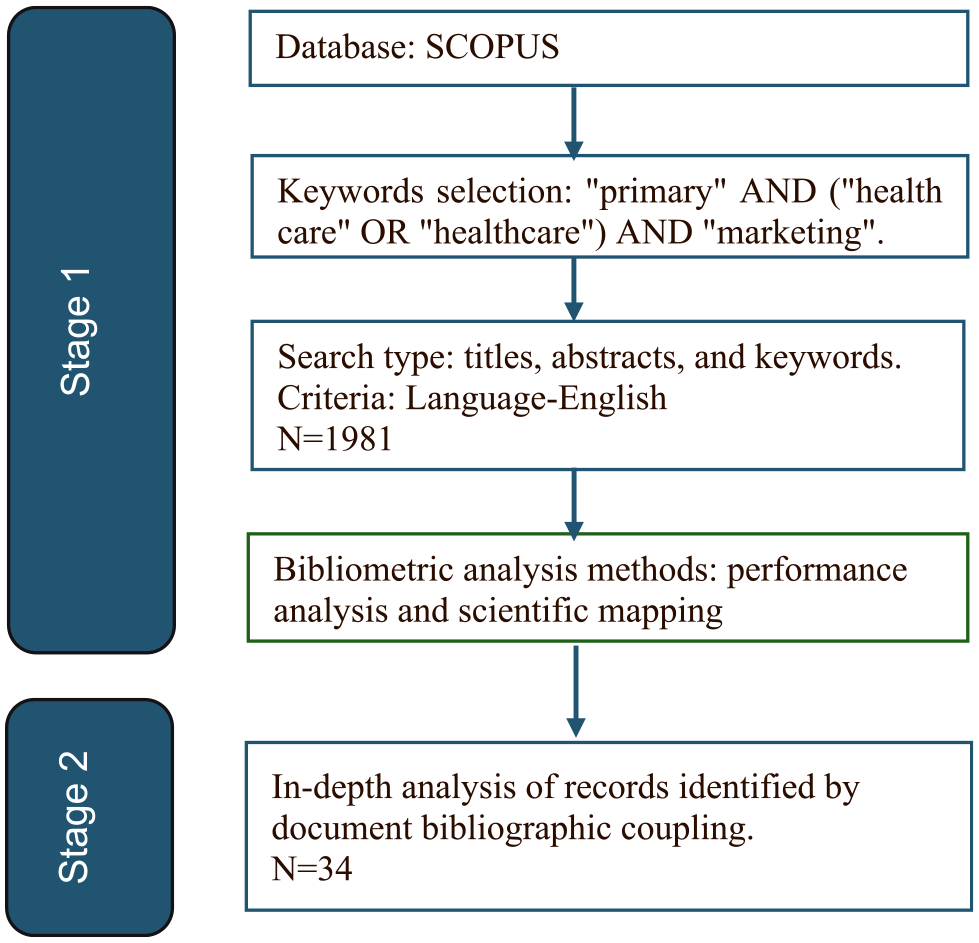
The bibliometric analysis flow chart.
This is widely considered to be an appropriate and comprehensive approach to analyzing an evolving research field.11-14
Table 1 presents basic information on the research process. The research was based on the SCOPUS database as the most suitable for bibliometric analysis,15,16 mainly due to the data export 17 and the range of available publications (Quintero-Quintero et al 15 ; Saleem et al 16 ; Rabetino et al 18 ). Since the research area under study is primary care marketing, the following keywords were defined: “primary” AND (“health care” OR “healthcare”) AND “marketing.”
Research process.
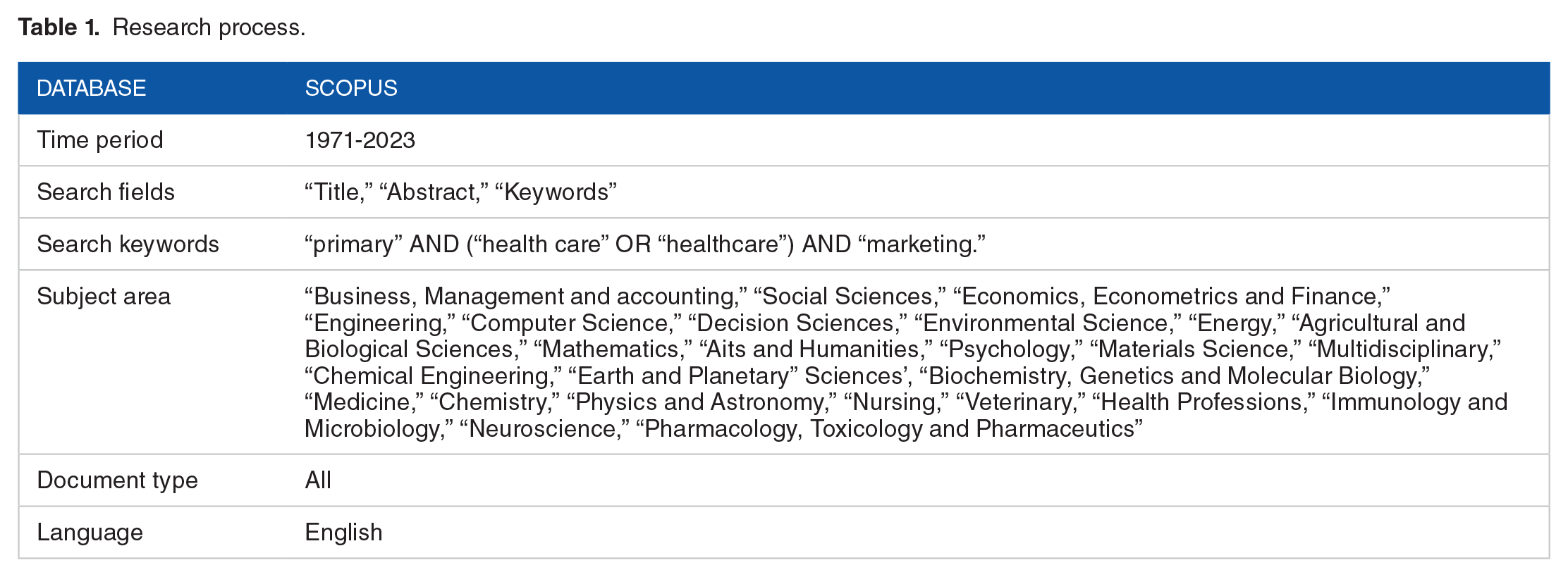
The database was searched by article titles, abstracts, and keywords. Initial search results identified 2065 documents published between 1971 and 2023. This paper aims to analyze the overall structure of the research field, and therefore authors have not limited the time span. In the next step, the database was narrowed down by language (English). As a result, the database of selected publications was limited to 1981 documents.
To analyze the selected data set, the authors downloaded full bibliographic information from the SCOPUS database in CSV format and then used Microsoft Excel for descriptive analysis. In the subsequent stages for mapping and visualization of the results, VOSviewer version 1.6.18 was used, because this program effectively compiles the literature, establishes similarities between selected publications within given parameters, and identifies prominent topics/concepts among the analyzed publications.19,20
In the first stage, the data analysis was based on 2 methods of bibliometric analysis: performance analysis and scientific mapping. Performance analysis was used to assess productivity and impact on a selected research area based on the following criteria: author countries, journals, and subject areas.
The scientific mapping process aimed to catalog information contained in the literature and to present the dynamic and structural features and connections of scientific works and their development21-24
In the second stage, the authors conducted an in-depth analysis of 34 documents selected as a result of applying bibliographic coupling analysis, which groups papers by the similarities between citing documents that reference the same set of cited documents. VOSviewer algorithmically grouped a given set of data on primary healthcare marketing into 5 clusters, which were subjected to in-depth analysis and formed the basis for defining proposals for future research directions relevant to the research problem.
Results
The basic bibliographic analysis technique determining the degree and dynamics of researchers’ interest in a given area is the analysis of the number of publications over time.25,26 Figure 2 shows the number of publications in the field of primary healthcare marketing (1981 in total). The analysis shows that the first article was published in 1971 1 and has 43 citations. Significant interest in the researched area, however, began after 2000. In the last 2 decades, the number of publications per year exceeded 45, and the most productive years are 2010 (81 publications), 2020 (78 publications), and 2007 (77 publications).
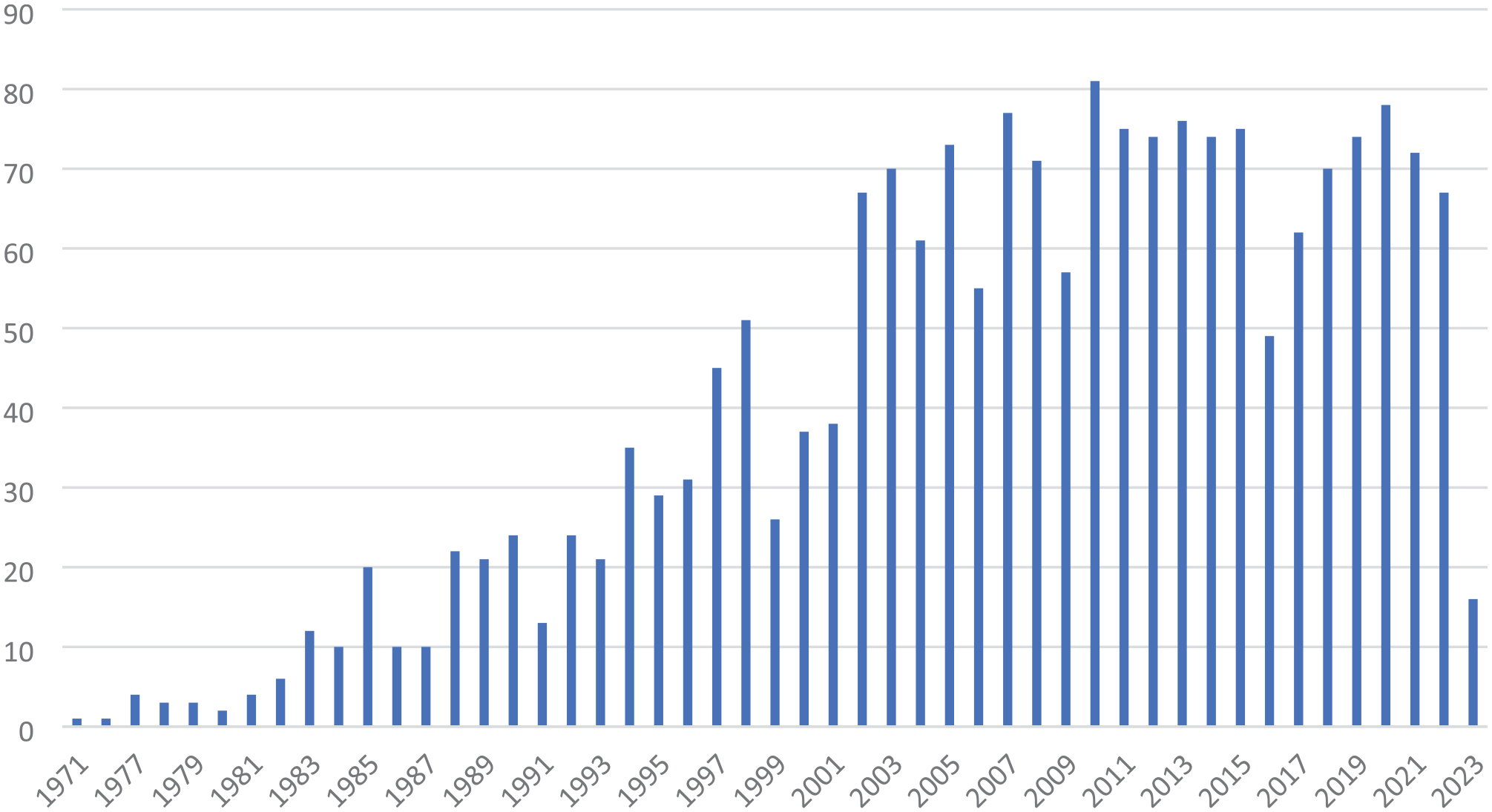
Number of published papers per year (1971-2023).
In the next step, the authors analyzed the most popular authors in the researched area. Its results show that there are no strong leaders. Figure 3 presents authors with at least 3 publications. The most numerous publications (6) are by Bauman A. E., (Faculty of Medicine and Health, Sydney Australia), whose research focuses on community-wide communication of physical activity as a key strategy to prevent non-communicable diseases, where primary health care is one of the communication channels. Most of the research is limited to the population of New Zealand. The authors with 4 publications include: Bellingham C. (Royal Pharmaceutical Society of Great Britain, London UK) who focuses on the perspective of self-care as part of primary care, which assumes that patients with the necessary skills and resources to manage their health will benefit from greater control over their lives and better outcomes; Chaloupka F. (University of Illinois in Chicago, USA), whose research focuses on policy and system perspectives on non-communicable diseases, for example the risk factors in developing countries, elementary schools or impact of taxation systems on population behavior; Mintzes B. (University of Sydney School of Health Science, Australia) with works focused on the attitude of primary care physicians to pharmaceutical sale representatives and its impact on customer safety and education as well as the risk of overdiagnosis and over-treatment; and Thomson G. W. (University of Otago, Dunedin, New Zealand) with research on public policy in the field of promotion of healthy nutrition and tobacco control. The next authors included in the chart had only 3 publications in the researched area.

Top most productive authors.
In bibliometric analysis, one of the most significant aspects is the countries that contribute the most to the field and their academic networks.27,28 In Figure 4, countries with at least 30 publications are included. The most productive countries are the United States (798 publications), the United Kingdom (288 publications), and Australia (107 publications). Next countries have less than a 100 publications. To analyze the academic cooperation of the most productive countries we applied the country co-authorship network. In the analysis, we have covered the countries with a minimum of 10 publications, and only 28 of 165 countries met this threshold. In Figure 3, countries are presented using labels and circles (size related to
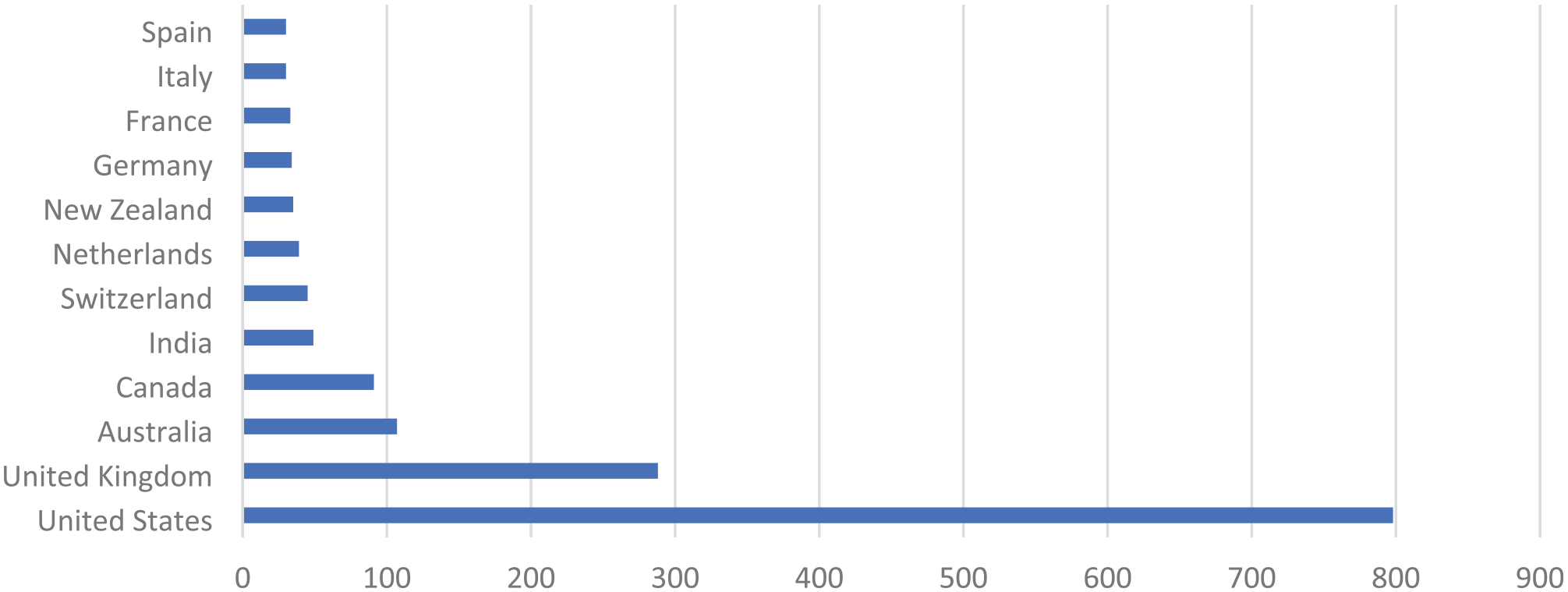
Top most productive countries.
As Figure 5 presents an analysis of the country co-authorship in chronological order, we can see that Asian countries such as India, China, Japan, and Malesia, as well as European ones—Netherlands, France, and Ireland, are currently the most active.

Country co-authorship in chronological order.
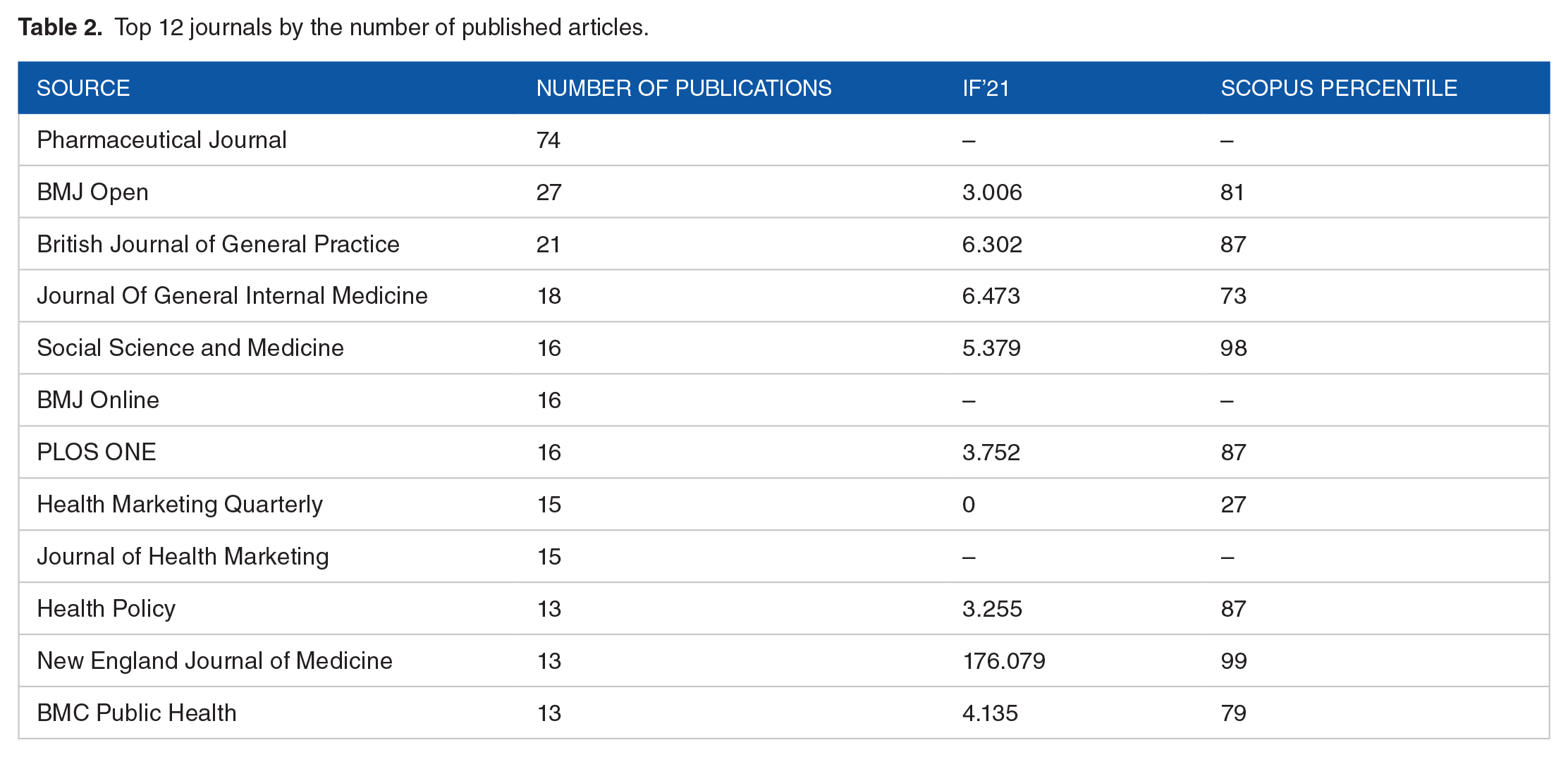
An important element of the research area structure analysis is the quantitative and qualitative review of the most important journals in which the researchers publish. Table 2 presents the most popular journals in the field of primary health care marketing. The list is very diverse, covering very high-ranking journals like the New England Journal of Medicine (IF 176.079 and SCOPUS 99), highly ranked journals like the Journal of General Internal Medicine (IF 6.437, SCOPUS 73), British Journal of General Practice (IF 6.302, SCOPUS 87) or Social Science and Medicine (IF 5.379, SCOPIS 98) as well as unranked journals like the most common Pharmaceutical Journal or BMJ Online and Journal of Health Marketing. Remarkably, our analysis revealed that the presented 12 leading journals encompass only 13% of the total publications in our dataset. This suggests a diversification of research outputs across many journals, indicative of the broad nature of the research field under scrutiny.
Top 12 journals by the number of published articles.
Consistent with the list of the most popular journals is the analysis of the subject areas presented in Figure 6, which indicates that the major subject area of primary healthcare marketing research is Medicine (1527 publications), followed by Pharmacology, Toxicology, and Pharmaceutics (251 publications) and Nursing (169 publications). Much less common are Social Sciences and Business, Management, and Accounting (137 and 113 respectively).
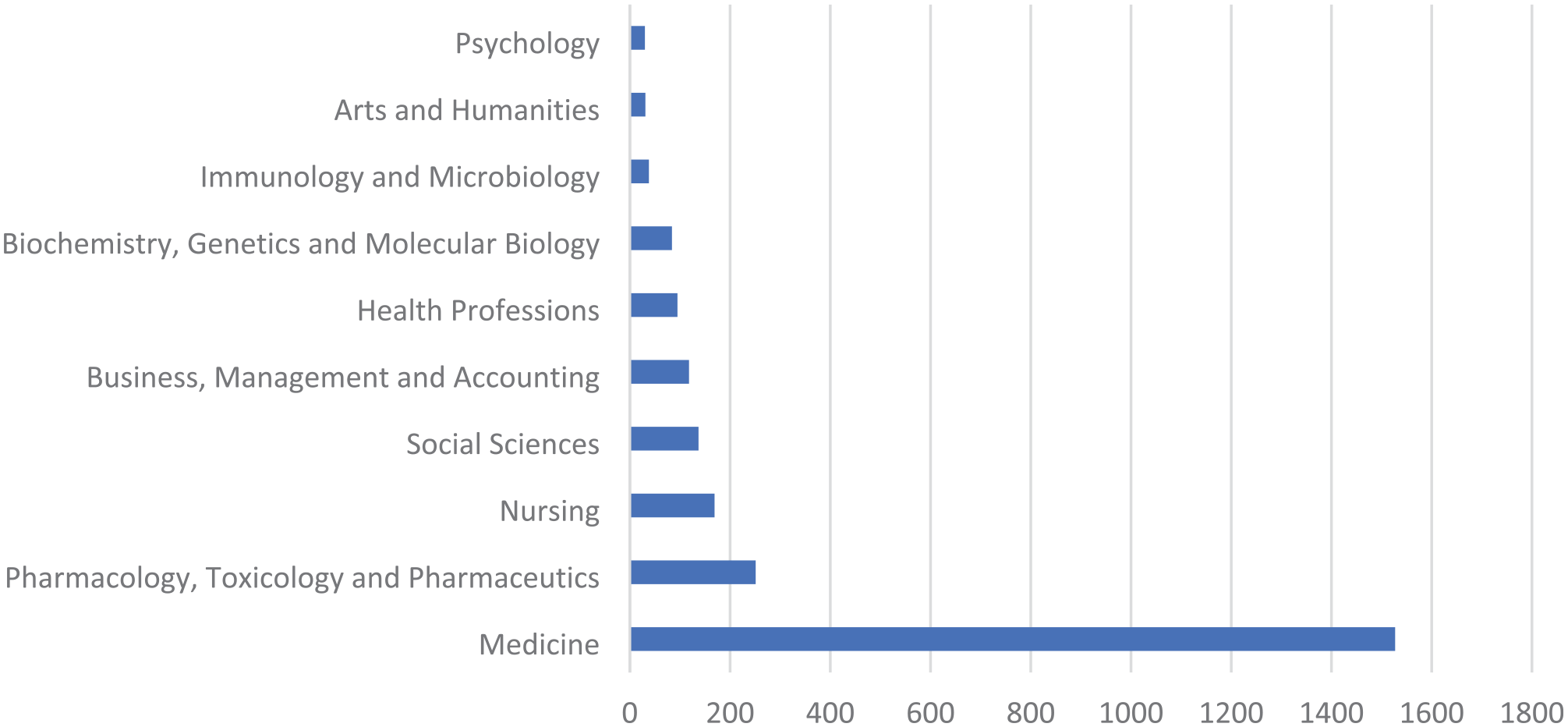
Top 10 subject areas.
Figure 7 presents a map of the co-occurrence of authors’ keywords. Keywords that of 10 co-occur are linked by clusters and distinguished by colors. The frequency of a keyword is shown with the size of the circle, while the strength of the connection is the thickness of the line. The minimum number of occurrences of a keyword is set to 7. Out of 2998 keywords, only 112 met the threshold.

Co-occurrence of authors’ keywords.
The 50 terms identified were grouped into 6 clusters. By conducting a comprehensive analysis of the terms belonging to a particular cluster, we have reached the following conclusions:
Cluster 1 (red—23 terms) is based on the term pharmacovigilance followed by asthma, attitudes, cancer, clinical trial/trials, competition, costs, drug development, drugs, economics, ethics generics, innovation, management, medicaid, medicare patient safety, pharmaceutical industry and policy, pharmaceuticals, qualitative, treatment.
Cluster 2 (green—20 terms) focuses on the concept of global health followed by addiction, adolescence, barriers, cardiovascular disease, cervical cancer, covid-19, drug utilization, global health, health disparities, patient satisfaction, pharmacoepidemiology, prescribing, referral, safety, screening, smoking cessation, type 2 diabetes, vaccination/vaccines.
Cluster 3 (blue—20 terms) is based on the term obesity, followed by adolescent, child, collaboration, community, cost-effectiveness, diabetes, diet, exercise, health, hypertension, intervention, medicines, pharmaceutical marketing, physical activity, prevention, promotion, social media, surveillance, women.
Cluster 4 (yellow—18 terms) is based on the term primary health care, followed by advertising, alcohol, communication, family medicine, health communication, health education, health policy, health promotion, health services, internet, policy, prescription drugs, prescriptions, public health, regulations, social marketing, tobacco.
Cluster 5 (violet—14 terms) revolves around the term marketing, followed by access, community pharmacy, health care, healthcare, patients, pharmaceutical, pharmaceutical care, pharmacists, pharmacy, physicians, quality, reimbursement, and strategy.
Finally, cluster 6 (azure—11 terms) is focused on the primary care term, followed by children, depression, education, evaluation, general practice, HIV/aids, managed care, mental health, quality improvement, and telemedicine.
Figure 8 shows the popularity of keywords from a chronological perspective. It can be concluded from the map that currently the most popular keywords are:
public health, global health, and telemedicine,
pharmacovigilance, pharmacoepidemiology, community pharmacy, pharmaceutical policy, generics
covid-19, asthma, type 2 diabetes, cancer, and
social media.

Co-occurrence of authors’ keywords in chronological order.
In the second stage of the research, an in-depth analysis of literature records selected based on bibliographic coupling of documents was conducted to examine the intellectual structure of the research field. Bibliographic coupling occurs when 2 documents cite the same document, which can demonstrate the strength of a specific publication concerning a set of other publications, and thus provides a view of the structure of the research front of the field. Figure 9 represents the bibliographic coupling of documents and allows us to observe and measure the intensity of the connection between them. The map reveals 5 well-defined clusters:

Bibliometric coupling of documents.
Cluster 1 (red): The red cluster consists of 9 papers that focus on understanding how patient satisfaction with medical services is achieved and the relationship between service quality, customer satisfaction, and behavioral intentions. Various marketing topics related mainly to medical services are discussed in this cluster, but in 1 case, it also pertains to drugs. The papers assigned to this cluster can be divided into 2 groups:
Studies based on patient opinions
This group includes the only research paper in this cluster that pertains to drugs, namely, “The influence of the number of presented symptoms in product-claim direct-to-consumer advertising on behavioral intentions,” 29 which examines the effect of the number of symptoms described in drug advertisements on patient behavior, including discussing specific medical conditions with healthcare personnel and deciding whether to undergo treatment. Other papers assigned to this group cove several customer satisfaction issues. The paper “Service quality: A subliminal pathway to service differentiation and competitive advantage in private healthcare marketing in Ghana” 30 describes the impact of evaluating the quality of medical services provided by healthcare facilities on patient satisfaction and demonstrates a significant positive relationship between satisfaction and patient loyalty. The paper “What attributes determine quality and satisfaction with health care delivery?” 31 also belongs to this group, and it investigates which determinants of patient quality and satisfaction are most important in choosing a healthcare provider. This paper identifies the 5 most important characteristics of healthcare delivery that determine patient perception of quality and satisfaction. Finally, “Healthcare service quality effect on patient satisfaction and behavioral intentions in corporate hospitals in India” 32 aims to investigate the impact of healthcare service quality dimensions on patient satisfaction and behavioral intentions and, as a result, indicates that market orientation strategy is positively correlated with organizational innovation.
Studies based on healthcare personnel opinions
This group includes 3 papers. The paper “How to improve service quality: Internal marketing as a determining factor” 33 describes a study where nurses were the respondents and indicates that there are significant positive relationships between internal marketing practices and service quality. There is also a paper in this group where hospital managers responded to a survey to find out about the relationship between market orientation strategy and organizational innovation—“Health care industry, customer orientation, and organizational innovation: A survey of Chinese hospital professionals,” 34 as well as “Internal Marketing Establishes the Culture of Market Orientation,” 35 which combines the concepts from these topics with internal marketing concepts to provide business administrators with an effective method of building a market-oriented culture.
Cluster 2 (blue): This cluster consists of 8 papers and pays particular attention to the patient’s behaviors, attitudes, and engagement, as well as the impact of the sources they use on the decisions they make when choosing healthcare services. This cluster is related to the emotions accompanying patients when making healthcare decisions as well as the broader field of public health and the influence of the patient’s perception as a creator of the entire healthcare system, not just a recipient. The paper “Reconceptualizing the ‘Patient’: Health Care Promotion as Increasing Citizens' Decision-Making Competencies” 36 addresses such changes and points to a path of conducting healthcare service marketing to include patients as widely as possible in shaping healthcare. Furthermore, the second cluster contains a paper indicating the influence of the patient’s attitude toward their health problems—“Avoiding Anxiety, Being in Denial, or Simply Stroking Self-Esteem: Why Self-Positivity?.” 37 Finally, a paper describing the pros and cons of medical marketing, which largely relates to how emotions arising from marketing can have both positive and negative effects on patient’s health, was also assigned here “Managed Care Positives and Negatives for Health Care Marketing.” 38 The sources that people use have a great influence on the decision-making process. This applies to virtually every aspect of life and also includes healthcare. The paper “What attributes determine quality and satisfaction with health care delivery?” 31 examines the determinants of patient quality and satisfaction that play the most important role in choosing a healthcare provider.
In this cluster, 2 papers refer to the information sources that patients use, and these are “Consumer Perceptions of Medical Information Sources: An Application of Multidimensional Scaling” 39 and “Information sources and adoption of vaccine during pandemics.” 40 Chapter 9 of the book Health Communication, 41 which focuses on medical marketing, has also been assigned to the blue cluster. This chapter comprehensively discusses the topic of Traditional Communication Techniques in healthcare. It describes communication methods with both patients and the general environment, highlighting the pros and cons of each. Throughout the chapter, the aspect of adapting communication methods to different goals in various situations is emphasized. This is an important topic because introducing any form of marketing without the ability to reach the customer, or in this case the patient seems to be missing the point and is doomed to fail. Therefore, it is crucial to tailor the message to the indicated sources and to utilize these information channels. It is worth noting that an important aspect that affects the effectiveness of marketing is identifying the target group correctly, as different social groups will use different sources of knowledge before making specific decisions related to their health or prevention.
Cluster 3 (yellow): The yellow cluster consists of 7 papers that focus on the significant impact of emotions on patients’ decision-making process. The yellow cluster, even more so than the blue cluster, is strongly related to the emotional aspects of patients. This group of papers focuses on the influence of emotions felt by the patients and generated by healthcare facilities and medical staff on trust levels and engagement in the process of treatment and self-care. The studies indicate that the impact of messages containing emotional cues is greater than those based solely on dry facts—“Understanding the power of hope and empathy in healthcare marketing.” 42 This has particular importance in attempting to build the right message for patients, thereby strengthening and designing more effective communication. Additionally, research has examined the impact of brand image and trust on patient decision-making and engagement—“Brand trust and image: effects on customer satisfaction..” 43 The study indicates that among items related to customer satisfaction, truthful interactions with medical staff, and adequate and continuous attention to patients received the highest score and had the greatest influence on brand image, which in turn has the most significant impact on patient evaluation. Another study—“What’s love got to do with it? Investigating consumer commitment in health care.” 44 indicates the significant influence of building a positive relationship with the patients on the success of healthcare organizations. This largely depends on engagement, with the authors identifying 3 types of commitment: affective, continuance, and normative commitment. Each type of commitment affects consumer purchase loyalty, attitudinal loyalty, and advocacy for a healthcare provider in different ways.
This cluster also includes a study “A holistic framework for patient experience: 5P model” 45 that addresses the concept of 5P (provider, physician, patient, personnel, and periphery) and tries to answer the question of "What are the critical dimensions for creating a well-designed patient experience?" as well as a study focused mainly on the doctor-patient relationship—“Modeling the Patient-Physician Service Encounter: Improving Patient Outcomes..” 46 Both studies emphasize the importance of correct and positively evaluated contact with the patients and how it translates into their engagement in the treatment process, willingness to comply, or their level of compliance. The last of the studies mentioned in this cluster provides an extensive overview of doctor-patient communication. Among other things, it puts forth the theses that patients who rate their contact with the doctor as more personal are more likely to (a) return and (b) recommend the physician, and that open communication between patients and their physicians will improve patient compliance with the physician’s advice and their likelihood of compliance.
Cluster 4 (violet)—The violet cluster consists of 5 papers that relate to the objectification of patients, indicating their position concerning medical facilities and personnel. It overlaps to some extent with all previously described clusters, as it touches on the topic of patient satisfaction and marketing activities aimed at directly reaching the patients. There are 2 groups of articles visible here. The first group focuses on patient empowerment (PE). The articles discuss the topic of both the development of the PE model and an attempt to answer questions such as “Does patient engagement and/or self-efficacy in health positively influence their search for information, knowledge development, and involvement in decision-making?” and “what is the impact of PE on therapy compliance?” (“Patient empowerment: A cross-disease exploration of antecedents and consequences.” 47 ). There was also an attempt to examine the association between empowerment behavior and a patient’s choice of hospital. However, in “Consumer Empowerment Behavior and Hospital Choice,” 48 enhancing empowerment behavior did not lead to greater satisfaction with the choice made.
The second group of articles relates to marketing activities which are advertisements directly targeting patients. One of the studies—“Can Viagra Advertising Make More Babies? Direct-to-Consumer Advertising on Public Health Outcomes 49 ) aimed to examine the impact of erectile dysfunction drug advertising in the US. As the authors themselves point out, although product advertisements have been widely studied and understood concerning consumer purchasing decisions, advertising may also have other unintended but important social and economic consequences—which in this context refers to an increase in fertility in the USA after 1998, when drug advertising was allowed. The second scientific study that can be attributed to this group is “The effects of DTCA on patient compliance: Exploring the impact of endorser selection and message tonality on patients with diabetes”. 50 The study aimed to examine the extent to which direct-to-consumer advertising (DTCA) affects patient compliance and which factors, such as endorser selection and message tonality, have the greatest impact on patient compliance. The study involved 1211 individuals with diabetes, and the results showed that the effectiveness of the message depends on who delivers the information and how it is presented. Therefore, the communication approach should be tailored to the specific situation. The study emphasized distinguishing between "supportive” and “threatening” messages.
Cluster 5 (green)—The green cluster consists of 5 papers and focuses on patient motivators and the decision-making process, as well as consumer decision-making psychology. The studies conducted on 330 Malaysian patients shed light on the appropriate pathways for measuring patient satisfaction—“EXQ: measurement of healthcare experience quality in Malaysian settings.” 51 and EXQ: a multiple-item scale for assessing service experience” 52 referred to a tool for measuring service quality developed from a behavioral approach to measuring customer expectations, called EXQ. The study highlighted the EXQ parts “moments of truth” and “peace of mind” as particularly highly rated by customers in the context of private hospitals in Malaysia. The second article—“A marketing mix typology for integrated care: the 10 Ps.” 53 refers to the role of the marketing mix in coordinated care. To capture the peculiarities of coordinated care, it was decided to add to the 4 basic Ps (product, price, place, and promotion from McCarthy 54 ) and then another 3 Ps (people, process, and physical evidence from Booms and Bitner 55 —making up the famous 7 Ps) another 3 additional Ps packaging, partnership, and policy perspective.
Further research papers are related to medical tourism and aim to identify the main reasons that guide people deciding on a foreign trip for medical purposes (“Preliminary look at the motivators and decision-making process of medical tourists from Nigeria to India.,” 56 and “Customization in medical tourism in the Philippines” 57 ). The study conducted in Nigeria indicates that decisions regarding medical tourism are based on personal experiences or advice from people who have previously gone to India for medical procedures. Two main reasons were indicated: inadequate medical infrastructure and poor medical service and customer service by healthcare workers in Nigeria. In the second study, 18 managers from 5 healthcare providers and supporting organizations in the Philippines responded, stating that the main reason they are competitive, and patients come to their clinics is customization. As the authors noted, customization occurs by adapting to emotional, social, and cultural needs, alleviating knowledge asymmetry, and moderating the negative impact of the unfamiliar context experienced by international patients. An important part of this cluster is also drawing attention to multilevel trust in the international marketing of healthcare. In the work of Fregidou-Malama and Hyder, 58 “Multilevel trust in international marketing of healthcare services: A 5-country comparative study.”, multilevel trust refers to individual-level trust, national-level trust, and company-level trust. Based on 5 countries, the authors point out how significant the network of dependencies is in a patient’s decision-making process and how much factors such as culture, social trust, or even language can influence these decisions.
It should also be noted that these factors may change over time and that all marketing activities should be tailored to the specific expectations of the society in a given country or region. A study “Telemedicine acceptance during the COVID-19 pandemic: User satisfaction and strategic healthcare marketing considerations” 59 has been assigned to the fifth cluster, which relates to the patient decision-making process. This study focuses on the level of acceptance of telemedicine in connection with the outbreak of the COVID-19 pandemic. This topic, which was relatively unknown before the pandemic, became crucial, especially in the first few months of 2020 when access to personal visits to medical facilities was significantly restricted in most countries around the world.
The last of the green cluster studies is an analysis of previously published works and citations. This study examines articles and research papers developed from 1987 to 2016 (“Healthcare marketing: A review of the literature based on citation analysis” 60 ). However, it is important to note the changes that have occurred in recent years, primarily due to the COVID-19 pandemic, which have influenced the need to update the study. The authors identified the most influential centers and authors, as well as determine the connections between keywords. They also pointed out how the main topics discussed in healthcare marketing have changed over the years.
Discussion and Future Research Agenda
The results of the performance analysis show that the topic of marketing in healthcare is very broad and the number of studies is dynamically growing which is in line with the results of the study of Tosun and Yıldız, 61 however, the issue of primary healthcare marketing is vastly understudied. What is more, based on the analysis of the SCOPUS database it can be concluded that there is a dominance of the research focused on the Anglo-Saxon world. The majority of work has been published in the US (798), United Kingdom (288), Australia (107), Canada (91), and predominantly in Western Europe and written by US, UK and Australian researchers. Thus, it would be an understatement to say that this topic is much less known in Central and Eastern Europe. Only 6 scientific papers related to the topic of marketing in primary healthcare were published in Poland, as found in the SCOPUS database. In other countries in this region of the world, the numbers were respectively 4 in Romania, 2 in the Czech Republic, 2 in Slovakia, etc. All of the above indicates that research on marketing in primary healthcare is still an unexplored area on the map of the scientific world. A positive sign, however, is the fact that publications in the field of primary health care marketing in the vast majority come from the medical field (56.9%) and are published in recognized medical journals such as the New England Journal of Medicine (IF 176.079 and SCOPUS 99), the Journal of General Internal Medicine (IF 6.437, SCOPUS 73) or the British Journal of General Practice (IF 6.302, SCOPUS 87).
The analysis of keywords defined by the authors of the publications included in the study shows that the scope of research is very wide and highly dispersed which also match with the Tosun and Yıldız 61 results, which translates into a lack of research teams that systematically define and research key problems in primary healthcare marketing. Current trends in research in the analyzed area are primarily inspired by the effects of the COVID-19 pandemic, as well as diseases of affluence, which are the most important from the public health perspective (type 2 diabetes, asthma, cancer). Also, the analysis of the content of articles selected in the study proves that marketing is of great importance for the perception of primary health care, which translates into the effectiveness of both health prevention and treatment (knowledge and cooperation of patients with doctors). Looking more deeply at the publication clusters defined in this analysis we can draw the following conclusions:
Papers in the red cluster contribute to a broader understanding of the complex issues that healthcare organizations face in marketing and of how providing high-quality services—resulting from both internal marketing and relying on patients’ subjective opinions—contributes to attracting and retaining patients.
Papers in the blue cluster contribute to understanding of the patients’ behaviors, attitudes, and engagement, as well as the impact of the marketing content they receive on the decisions they make when choosing healthcare services. Additionally, they contribute to understanding the emotions accompanying patients when making healthcare decisions as well as the influence of the patient’s perception as a creator of the entire healthcare system.
Papers in the yellow cluster address different aspects of patient experience in healthcare and highlight the importance of understanding patient needs, emotions, and behaviors to improve healthcare outcomes. This cluster shows how important it is for medical marketing to be taken seriously to create a patient-friendly environment, as it can have a tremendous impact on patient health.
Papers in the violet cluster dwell on the objectification of patients, indicating their position with medical facilities and personnel. The papers focus on 2 aspects: patient empowerment (PE) and advertisements directly targeting patients.
Papers in the green cluster focus on patient motivators and the decision-making process, as well as consumer decision-making psychology. It should be highlighted that factors impacting the customers’ decision-making process may change over time and that all marketing activities should be tailored to the specific expectations of the society in a given context (eg, country or culture).
Each of the above clusters intersects to a significant extent, but they indicate completely different aspects of medical marketing and of challenges facing those responsible for organizing and establishing medical facilities, including primary healthcare facilities. Our results are in line with and supplementary to the results of the bibliometric analysis conducted on the Web of Science database by Kar and Wasnik. 62 It is clear that in the context of the health sector, limiting marketing to mere advertising is an oversimplification. This misconception is especially common in countries like Poland, where the discourse around healthcare marketing is often marginalized or disregarded. Therefore, there is an urgent need to debunk this myth and foster an open dialog on the strategic application of marketing principles, methodologies, and tools in the healthcare sector, including primary healthcare.
A key element of this endeavor is understanding patient needs and preferences in the context of healthcare marketing. In Poland, as in many other regions, patient-centeredness is crucial in shaping high-quality healthcare. Therefore, it is essential to understand the key factors that influence patients’ needs, expectations, and decision-making processes regarding the choice of medical services and centers. By comprehensively identifying and analyzing these factors, healthcare providers can lay the foundation for establishing effective doctor-patient or clinic-patient communication channels.
Additionally, it is important to recognize the sociocultural dynamics and healthcare landscape in a given region or country. Tailoring marketing strategies to meet local community healthcare preferences is critical to gaining patient trust and engagement. This adaptive approach not only increases the effectiveness of marketing initiatives but also fosters a sense of importance among target audiences.
In essence, by dispelling the misconception of equating marketing solely with advertising and taking a holistic view of (primary) healthcare marketing, we can pave the way for groundbreaking progress in patient engagement, healthcare communications, and ultimately healthcare outcomes. Through rigorous research and open discourse, we can unlock the full potential of marketing strategies to improve healthcare delivery and optimize patient experiences.
Future research agenda
Based on the analysis of the available SCOPUS database and the identified gaps in existing literature, it is necessary to expand knowledge in the field of primary healthcare marketing. A particularly important topic is understanding the key factors that influence patients’ perception of primary healthcare clinics. Understanding these factors will help determine how clinics should present themselves and, more importantly, how they should communicate with patients. One branch of this subject, of course, is marketing understood as improving the clinic’s image and creating awareness of its existence, which are crucial aspects from the perspective of healthcare facility managers. However, after analyzing scientific studies and considering the perspective of practicing physicians, it can be concluded that investigating and developing further strategies aimed at increasing health awareness among patients in local communities and building lasting relationships with patients is equally, and possibly even more important.
Thus, future research in primary healthcare marketing should focus on the following issues:
Increasing awareness of access to healthcare
Primary healthcare is primarily based on early intervention and prevention. Through effective marketing, patients will be able to learn about the scope of primary healthcare services. Currently, many individuals, especially young people, are unaware of the types of assistance they can receive at their clinics, and when they should seek medical attention. Through marketing efforts for primary healthcare practices, the aforementioned information can be communicated to patients, thereby ensuring the availability of appropriate medical services. Expanding research in the area of effectively reaching patients based on the analysis of previous studies seems extremely important and undoubtedly should support healthcare facilities in achieving this goal. It should have a positive impact on acquiring new patients who are aware of this availability and should also positively affect the health of existing patients. This point is also connected to the next 1, which is related to local community prevention.
Patient health awareness (targeting specific populations and health issues)
Targeted prevention aimed at specific patient groups can have a significant impact on public health. While the field of public health, including prevention as understood in nationwide projects has been relatively well explored, the actions taken in smaller communities, such as patients of primary healthcare clinics, remain a blind spot in scientific research. This topic appears to be particularly significant because it is much easier to reach smaller groups and tailor proposed health initiatives to their specific needs. This increases the chances of patients benefiting from these initiatives and, consequently, should have a clear impact on their health. It is well known that providing patients with the necessary information and educating them about various medical services helps them make informed decisions regarding their health.
Attracting and retaining new patients
Although this point may seem controversial from a purely medical standpoint, it is undoubtedly an important aspect of developing marketing strategies. However, it is crucial because primary healthcare clinics need to attract new patients to grow. Therefore, ensuring a high level of marketing tailored to the local community should translate into patient acquisition and retention. This, in turn, increases the competitiveness of a medical facility and allows for budget expansion, enabling the clinic to better meet the needs of its patients. As a result, these clinics have a greater impact on public health.
Effective disease management
Well-executed medical marketing for primary healthcare practices should enhance trust among the patient community gathered around a particular clinic or physician. Increased trust, in turn, should significantly improve patient compliance and their willingness to seek medical attention when necessary. When trust levels are not sufficiently high, patients may avoid visits, leading to delayed diagnoses. From the perspective of medical personnel, situations like these present challenges in reducing influence and decreasing compliance, which can make visits less effective. Therefore, another important aspect of medical marketing that should be thoroughly examined is identifying factors that influence patient trust in both the clinic as a place (including determining how it should be presented and what it should offer to instill high levels of trust) and in the medical staff (including aspects that may seem insignificant but are crucial for patient interactions with doctors or nurses, such as attire and approach). Building the right perception by the patients should significantly impact disease management, particularly for chronic conditions that may not exhibit symptoms for many years, such as hypertension or diabetes. This lack of symptoms, even after a specific diagnosis, can affect patients’ motivation to adhere to appropriate treatments.
Patient engagement and empowerment
By focusing on the patients and by tailoring primary healthcare clinics to meet their expectations, patients feel a greater sense of control over their health and are more motivated to make lifestyle changes, undergo regular screenings, and seek medical help at an early stage of illness. Based on analyzed studies, it can be indicated that one of the fundamental assumptions of medical services marketing is to encourage patients to take responsibility for their health, which can be achieved by creating suitable conditions where they feel cared for. Based on the reviewed literature, there is an extremely limited number of studies (to say the least, not a single study focusing on this topic is from the Central and Eastern Europe region). Therefore, it seems necessary to conduct more thorough research to determine what influences patients and how to reach a state where they will willingly take responsibility for their health.
Resource allocation
Effective marketing can help primary healthcare providers allocate their resources more efficiently. By understanding patient needs, preferences, and behaviors, providers can customize their services and allocate resources where they are most needed, ultimately improving the overall quality of care.
Establishing trust and building lasting relationships
Effective marketing in primary healthcare should assist in building trust between healthcare providers and patients. Through consistent and reliable messaging, marketing can communicate the expertise, compassion, and quality of care provided by primary healthcare professionals. By establishing trust, marketing fosters long-term relationships with patients, ensuring continuity of care and patient loyalty. In the treatment process, this element is essential, and although listed last, it can be considered crucial for medical marketing as it integrates all the above points. Marketing in various industries, but particularly in the significant field of healthcare, should primarily aim to create conditions that facilitate the functioning, operations, and image of the entire primary healthcare structure, allowing for the establishment of a lasting bond between patients and medical personnel. Patients must be convinced that when they visit their primary care physician, they will be treated as individuals, listened to, examined, and provided with the best course of action. To achieve such an outcome, it is imperative to understand the needs of patients from specific countries and social groups. The current limitations in this area highlight the urgent need for appropriate research to be conducted so that primary healthcare can become more effective and responsive to the current needs of society.
Conclusions
To conclude, marketing in healthcare is particularly important in the context of primary healthcare. However, the issue of marketing in primary health care is not often addressed by researchers, which translates into very limited research results and little impact on the decision-making process of decision-makers in this area. Due to this very limited body of work in this field, it is crucial to expand research and raise awareness of both managers in primary healthcare clinics and medical staff. It should be noted that primary healthcare facilities are often small businesses directly managed by doctors. Actions aimed at broadening the horizons of scientific research in healthcare marketing are especially important for this group of individuals, who may not have the knowledge or resources to employ dedicated marketing personnel, but still need to learn about effective strategies for reaching patients. What is more, it seems necessary to conduct research specifically in countries where healthcare marketing is marginalized. Additionally, the issue of integrating marketing directly with the health of the targeted community should be addressed. The results presented in this paper and the formulated potential further research directions defined in it may be a significant contribution to the development of marketing in the primary healthcare field.
Research limitations
The research presented in the article has its limitations. The most important of them is the limitation to 1 SCOPUS database. Although this has its justification related to the methods, techniques, and analytical tools used in the article, in the future it is also advisable to analyze the resources of such databases as WOS, PubMed, Cochrane, or EMBAS. In addition, due to language limitations, only English-language publications were selected for the analysis. However, the authors are aware that there are probably valuable publications in other languages, for example by building an international research team with linguistic competencies enabling the analysis of resources in, for example, the 5 most popular languages of the world.
Footnotes
Acknowledgements
We thank Dr Anna Rybarczyk-Szwajkowska from the Department of Management and Logistics in Healthcare, Medical University of Lodz, for the useful comments provided on drafts.
Author Contributions
Conceptualized and designed the intervention: all authors.
Collection and assembly of data: JBW, PR.
Data analysis and interpretation: JBW, PR.
Drafted initial manuscript: all authors.
All authors critically reviewed and approved the final version of the manuscript.
Declaration of conflicting interests:
The author(s) declared no potential conflicts of interest with respect to the research, authorship, and/or publication of this article.
Funding:
The author(s) disclosed receipt of the following financial support for theresearch, authorship, and/or publication of this article: The publication of this paper was funded by the Department of Family Medicine, Internal Diseases and Social Pharmacology, Medical University of Łódź, Poland.
