



Abstract
Introduction:
Noroviruses are significant contributors to acute gastroenteritis (AGE), accounting for 16% to 18% of AGE cases globally and resulting in an estimated 685 million illnesses and 210 000 deaths annually. Most fatalities occur in low-resource countries, particularly among young children and the elderly. Despite bearing the highest burden, low-resource countries often have limited data due to underreporting and inadequate surveillance systems. This systematic review aimed to assess the prevalence and genotype distribution of norovirus in Ghana, synthesising existing research to identify gaps and inform effective prevention strategies. Understanding the impact of norovirus in Ghana is vital for targeted interventions and enhancing public health responses, especially with advancing vaccine development.
Method:
This systematic review was conducted following PRISMA guidelines. The literature search was conducted in PubMed, Web of Science, Scopus, and the Google Scholar search engine using predefined search terms. Descriptive statistics and proportional meta-analysis utilising a random-effects model with a 95% confidence interval were employed in the data analysis. The Strengthening the Reporting of Observational Studies in Epidemiology (STROBE) tool was used to evaluate the quality of reporting in the eligible studies.
Result:
This study analysed data from 7 articles, comprising a total of 3562 samples, with 722 confirmed norovirus-positive cases. Meta-analysis using a random-effects model revealed an overall prevalence of 14.8% (95% CI: 7.0%-22.6%). Genotype II was identified as the predominant genotype.
Conclusion:
This review and meta-analysis confirms that human norovirus is a significant public health burden in Ghana, particularly among children under five. However, the true burden is likely underestimated due to limited and geographically constrained surveillance. These findings emphasise the need for strengthened, systematic national surveillance and further research to fully define the epidemiology of norovirus in Ghana, which is essential for guiding effective evidence-based control interventions. It is also important to implement robust hygiene promotion measures to curb the transmission of norovirus in Ghana.
Introduction
Human noroviruses, a diverse group of single-stranded, non-enveloped, positive-sense RNA viruses, are a leading global cause of diarrhoea.1,2 They are the most common cause of acute gastroenteritis (AGE) across all age groups globally, 3 responsible for approximately 16% to 18% of AGE cases. 4 Annually, noroviruses are reported to cause an estimated 685 million illnesses, which results in approximately 210 000 deaths and the loss of 15 million disability-adjusted life years. 4 Notably, most of these fatalities occur in low-resource countries, 5 particularly among the elderly and young children, who often experience more severe symptoms. 1 The annual global costs associated with hospital care and lost productivity due to norovirus infections are estimated to be $60 billion. 6
The burden on children in developing countries is particularly severe, with norovirus-associated mortality in those under five years of age estimated to reach 212 000 deaths per year. 1 Despite the high burden of diarrhoeal disease in developing countries, the majority of human norovirus outbreaks have been reported in developed countries. 7 Multiple systematic reviews have documented varying prevalence rates of norovirus infections across specific regions, including North Africa, the Middle East, Latin America, China and some developing countries. 5 According to a recent study, estimates of the prevalence of norovirus, particularly in low- and middle-income countries—where the burden is likely the greatest—are often limited and substantially underreported. 8
Zhang et al estimated the global prevalence of norovirus to be 19.04%, based on an analysis of 70 studies. 2 In Africa, the reported prevalence is slightly higher at 20.2%, derived from 21 studies 1 ; however, only 1 study from Ghana was reported in both analyses. Kabue et al, 7 noted that although previous studies have examined regional and global prevalence estimates of human norovirus infections, they often rely on small datasets from African countries.1,2,7
The existing literature, although valuable, suffers from a significant underrepresentation of data from Ghana, a region where norovirus likely poses a substantial burden. A systematic review and meta-analysis is therefore warranted to consolidate disparate findings, fill this data gap, and produce a robust, up-to-date estimate of human norovirus prevalence in Ghana. Such estimates are essential for guiding interventions and resource allocation. This review aimed to determine the pooled prevalence of human norovirus infections in Ghana, characterise the genotype distribution of circulating strains, and identify research gaps to inform preventive strategies, including potential vaccination. Given recent advancements in norovirus vaccine development,9,10 this analysis is also crucial for identifying potential intervention strategies in Ghana. The findings will also enhance understanding of viral diarrhoea in similar sub-Saharan African settings.
Method
This systematic review and meta-analysis was conducted following the Preferred Reporting Items for Systematic Reviews and Meta-analyses (PRISMA) checklist. 11
Search Strategy
We carried out a detailed literature search in various databases including PubMed, Web of Science, Scopus, and Google Scholar search engine using both Medical Subject Headings (MeSH terms) and keywords such as “Norovirus” [MeSH] OR “Norwalk virus” [MeSH] OR “Human norovirus” OR “Norovirus infections” OR Calicivirus OR Caliciviridae OR “norovir*” OR Gastroenteritis OR “Viral gastroenteritis” AND Ghana. The literature search included all available records published in English from the inception date of each database to December 15, 2024. The citations and references of the selected articles were thoroughly examined to ensure that all related studies were included. The complete electronic search strategy for all the databases utilised is presented in Supplemental Table 1.
Inclusion and Exclusion Criteria
For this review, we included original research articles that presented primary data on the prevalence of norovirus infections in humans in Ghana. Eligible studies included studies that tested for norovirus in participants showing symptoms of acute gastroenteritis, using standardised methods such as Enzyme Immunoassay (EIA), Reverse Transcription Polymerase Chain Reaction (RT-PCR), Quantitative Reverse Transcription Polymerase Chain Reaction (qRT-PCR), and sequencing methods. Additionally, eligible studies were required to report the number of patients with acute gastroenteritis, the number of norovirus-positive cases, or percentages that allowed these raw numbers to be calculated. We excluded articles that were not published in English, non-human studies, those that did not use standardised PCR-based detection methods, and studies that were unavailable for full-text review. Furthermore, we did not include review articles, conference abstracts, unpublished reports, or case reports, especially if they failed to provide adequate data on patients with acute gastroenteritis or norovirus-positive cases.
Study Selection
The selection of studies for this review followed a 3-phase screening process. In the first phase, duplicates were identified and manually removed using the systematic review tool “Rayyan QCRI.” 12 Two independent reviewers then screened the remaining articles by examining their titles, abstracts, and keywords to include studies of interest. In the final phase, the full texts of the articles that passed the second screening were thoroughly reviewed to determine which studies met the inclusion criteria for the review. The PRISMA flow diagram below (Figure 1) illustrates this study’s selection process.
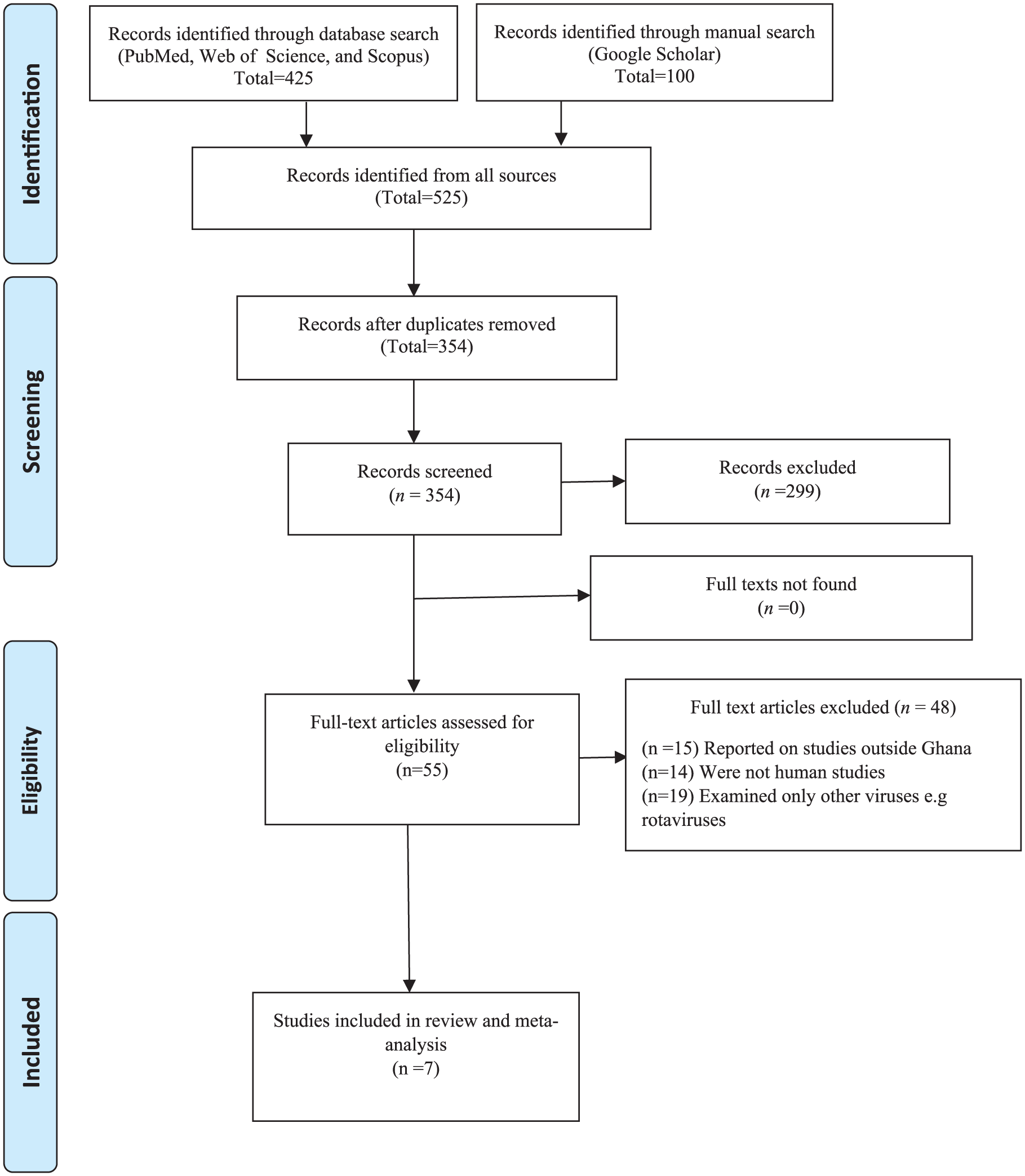
PRISMA flow diagram for the study selection process.
Quality Assessment
The Strengthening the Reporting of Observational Studies in Epidemiology (STROBE) tool was used to evaluate the quality of reporting in the eligible studies. 13 The STROBE checklist contains 22 items that cover key aspects including abstract, introduction, methods, presentation of results, discussion and other information. Adherence to each STROBE item was evaluated. It is important to note that the STROBE checklist was used solely to assess the completeness of reporting in the included studies; no studies were excluded based on it. This assessment was done independently and in duplicate by two reviewers to minimise the risk of reviewer bias. The results of the reporting quality assessment for each included study are detailed in Supplemental Tables 2 and 3.
Data Extraction and Statistical Analysis
Data from the included studies were extracted and organised using Microsoft Excel. The extracted information included author(s), publication year, study location, samples analysed, identification method, age group, number of samples, number of positive cases, and specific genotype of the virus. After verifying the consistency of the data, we conducted meta-analysis using a metaprop module in RStudio version 4.3.2. 14 We applied a logit transformation to the prevalence data from each study prior to calculating the pooled results. Homogeneity among the studies was assessed using the I² statistic, with heterogeneity classified as follows: I² = 0% to 25% indicating low heterogeneity; I² = 26% to 50% indicating moderate heterogeneity; and I² > 50% indicating high heterogeneity. A fixed-effects model was used when heterogeneity was minimal; otherwise, we utilised a random-effects model. Subgroup analyses were performed to explore potential covariates, specifically age groups. Additionally, Egger’s test was conducted to assess publication bias. To effectively present the pooled results and forest plots, we summarised the results of different subgroups along with the overall findings in a single forest plot.
Results
The initial search of the listed databases yielded a total of 525 studies from the inception date of the databases to December 15, 2024 (Figure 1). After all screening processes were completed, 7 articles were found to be eligible and included in this review and meta-analysis.
Characteristics of the Included Studies
The review and meta-analysis comprised 7 studies that were conducted between 2006 and 2020. These studies were conducted across 5 regions in Ghana: Northern Region (3/7), Greater Accra Region (3/7), Upper East Region (3/7), Ashanti Region (2/7), and Volta Region (1/7). Some studies were carried out in multiple geographical locations, hence the regional counts sum to more than seven. Figure 2 illustrates the distribution of included studies by region in Ghana. The sample sizes ranged from 82 to 1337, and the age groups targeted varied from 0 to 95 years. All studies used faecal samples, and the methods of identification included RT-PCR and EIA. Table 1 provides detailed characteristics of the studies included.

Distribution of included studies across various regions in Ghana.
Characteristics of Studies Included in This Review.
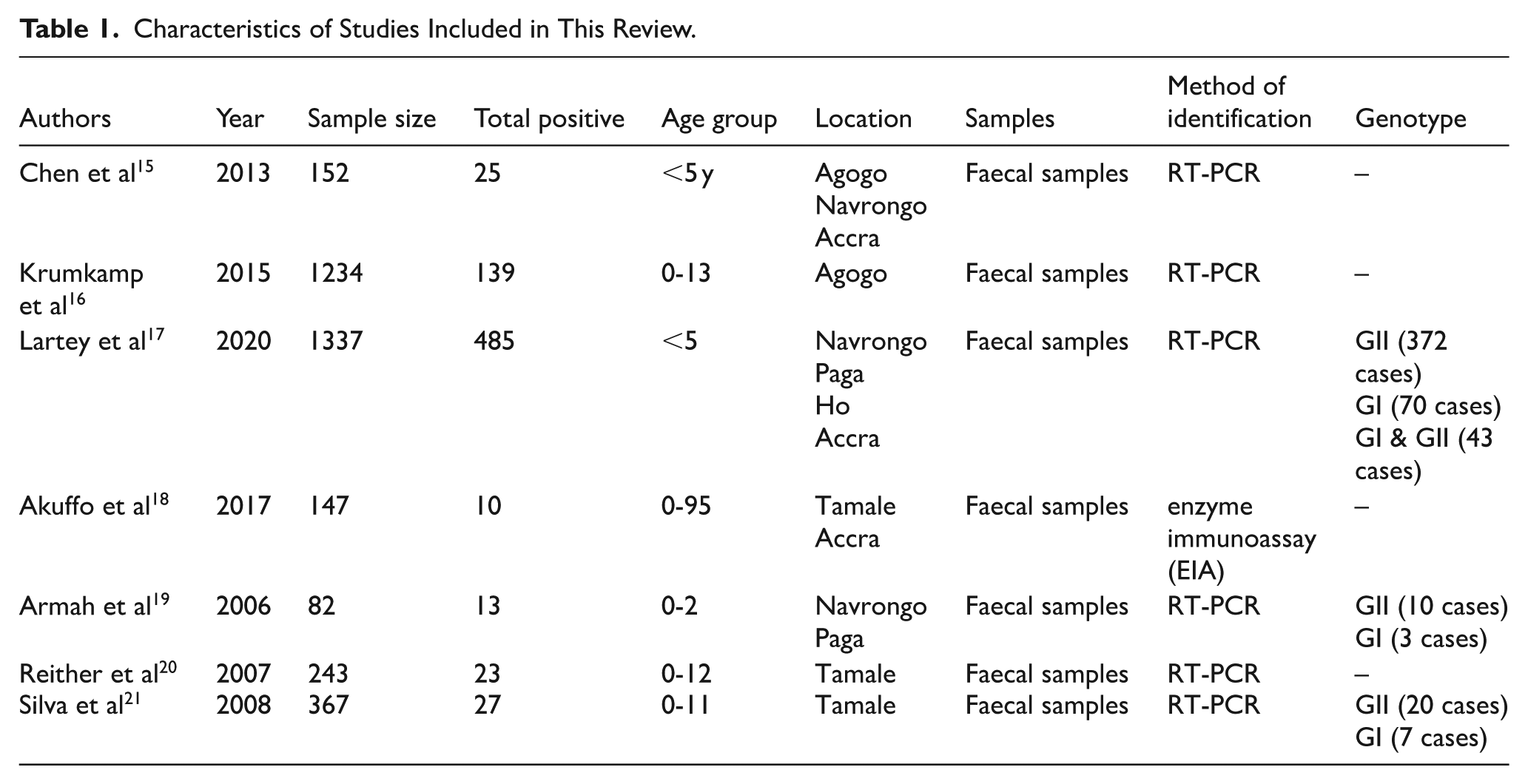
Detection, Prevalence, and Genotype Distribution of Norovirus
All 7 studies included in this analysis documented cases of norovirus infections across different age groups nationwide. Norovirus presence was confirmed through RT-PCR and EIA methods in these studies. The total sample size was 3562, with 722 cases testing positive for norovirus. The meta-analysis revealed an overall prevalence of 14.8% (95% CI: 7.0-22.6) with a random-effects model and a statistically significant p-value below 0.05, as depicted in Figure 3. A high I2 value of 98.2% indicated substantial heterogeneity among the studies. Subgroup analysis by age group revealed a higher prevalence in studies that focused on participants under 5 years of age (23.2%, 95% CI: 9.7-36.7) than in those that focussed on participants between 0 and 15 years of age (9.5%, 95% CI: 7.0-12.0) and studies that focussed on ages between 0 and 95 (6.8%, 95% CI: 3.3-12.2). Genotype distribution was reported in only three of the seven included studies, and within this subset, Genotype II was identified as the predominant strain.
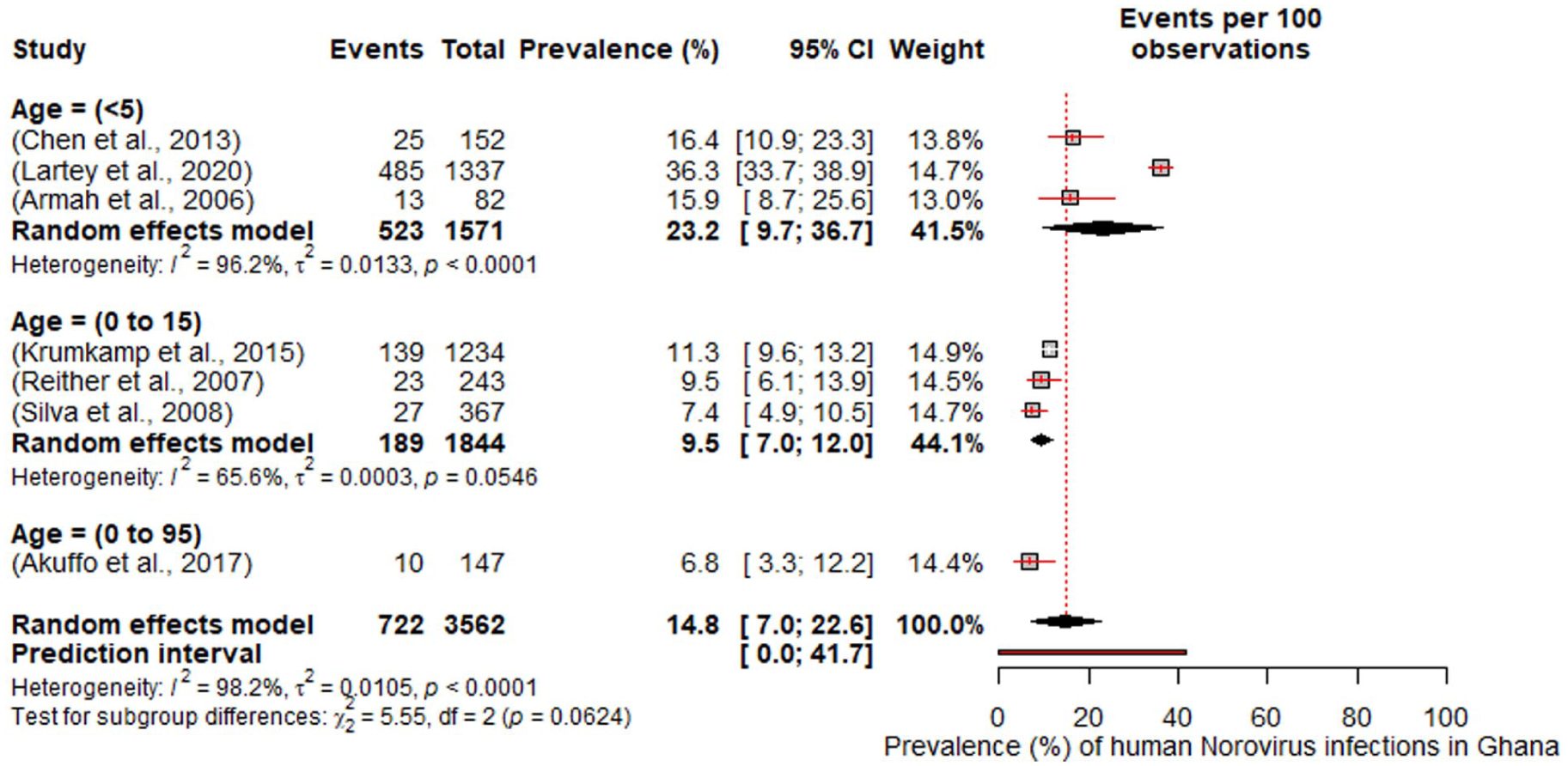
Forest plot for the pooled prevalence (%) of human Norovirus infections in Ghana.
Publication Bias
The funnel plot for this meta-analysis as shown in Figure 4, revealed potential bias and significant heterogeneity among the included studies. The asymmetrical distribution of data points around the centre line indicates variability in study results, likely stemming from differences in study design, populations, and methodologies.
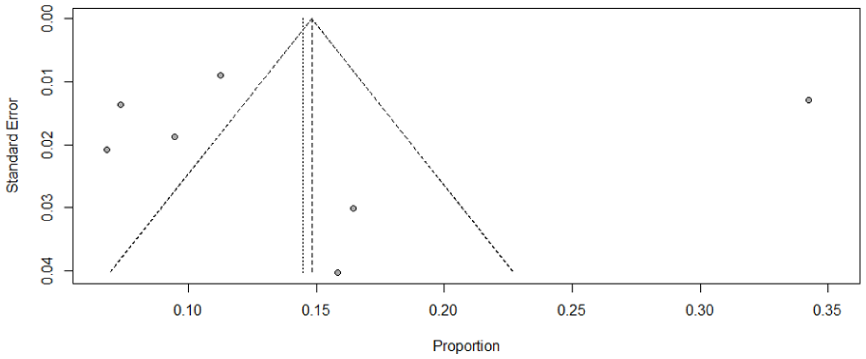
Funnel plot showing an asymmetrical distribution.
Discussion
This review aimed to investigate the prevalence of human norovirus infections in Ghana. The meta-analysis revealed an overall prevalence rate of 14.8% for norovirus infections within the country. This finding closely aligns with the result of a meta-analysis conducted in Latin America, where a pooled prevalence of 15% was reported. 22 Additionally, a meta-analysis conducted in Nigeria by Chigor et al reported a lower prevalence of human norovirus infections of 10.9%. 23 Comparing these findings to broader trends, the prevalence identified in Ghana is lower than the pooled prevalence reported for Africa in a meta-analysis by Afework et al, which was 20.2%. 1 On a global scale, a study by Wang et al (2023) reported a higher pooled prevalence of 21.8%. 4 This highlights significant regional and global variations in norovirus prevalence.
The available data suggest that human norovirus infections in Ghana are significantly understudied and underreported. This assessment is based on the limited number of studies that were available for this review. These studies were geographically constrained, focusing on specific regions within Ghana. A large portion of the country’s regions were not represented in this study. This poses a major challenge in determining the actual distribution of human norovirus infections across Ghana. According to a study by Thorne et al, epidemiological data on human noroviruses in sub-Saharan Africa are sparse. 24 Most studies have focused on small cohorts and have reported the incidence in diarrhoea cases rather than comprehensive prevalence data. 24 This lack of extensive surveillance contributes to an underestimation of the disease burden in the region.24,25
This pattern is not unique to Ghana. A similar trend was observed in Nigeria, where a systematic review reporting the prevalence of human norovirus infections included only 13 studies, of which 10 were utilised for meta-analysis. 23 This suggests that human norovirus infections may be significantly underestimated in the region. This challenge is mirrored in the broader context of Africa. A recent study investigating the pooled prevalence of human norovirus infections across the African continent included just 21 studies. 25 This limited dataset highlights the paucity of robust epidemiological research on human norovirus in many African countries, hindering efforts to develop targeted public health interventions and resource allocation strategies to address this significant health concern effectively. 25
Our study also examined the specific genotypes of noroviruses identified within the studies included. Among the 7 studies analysed, 3 detailed the specific genotypes identified.17,19,21 Notably, Lartey et al reported that out of the 485 positive cases, 372 cases were attributed to GII strains, whereas 70 cases were linked to GI strains. Additionally, 43 positive cases were found to have both GI and GII strains of norovirus in the same individuals. 17 All 3 studies consistently identified GII as the predominant norovirus strain isolated. This observation aligns with global trends where GII is widely recognised as the dominant strain.1,4,5,23,25 -27 These GII strains, according to previous studies, are commonly linked to sporadic and severe gastroenteritis, but it is crucial to acknowledge that the severity of the illness can be influenced by various host factors, including age, underlying health conditions, and previous exposure to norovirus.1,28
In our study, a subgroup analysis revealed that children under the age of 5 years presented the highest prevalence of norovirus infections, with a rate of 23.2%. This prevalence was notably higher than that reported in other age groups within the included studies. This finding is supported by studies conducted across several sub-Saharan nations in Africa.25,29 Globally, norovirus is responsible for an estimated 35 million foodborne illnesses each year in children under 5 years of age and is recognised as a leading cause of mortality from diarrhoea in developing countries. 29
This may be attributed to the highly contagious nature of norovirus, which can be transmitted by a low infectious dose of as few as 10 to 18 viral particles.30,31 The primary mode of transmission is person-to-person, occurring directly via the faecal-oral route, through the ingestion of aerosolised vomitus, or indirectly via fomites and contaminated environmental surfaces.29,30
To mitigate the spread of norovirus, key prevention and control measures should be prioritised. Effective hand hygiene, particularly thorough handwashing with soap and water, is crucial in reducing transmission.30,32 Excluding and isolating infected individuals during and after their symptomatic periods is also vital to curtail the spread of the virus.30,32 Additionally, thorough environmental disinfection of high-risk areas using approved products, such as chlorine bleach solutions, hydrogen peroxide, and 1% sodium hypochlorite, is essential, as norovirus can survive in the environment for extended periods, increasing the risk of transmission.29,31
Given the rapidly changing epidemiology of norovirus, establishing systematic surveillance at sentinel sites across the country would greatly enhance our ability to monitor circulating norovirus strains. 17 This would allow for a continuous assessment of the state of norovirus infections in Ghana, thereby strengthening public health intervention strategies aimed at addressing norovirus-associated gastroenteritis. Furthermore, studies focused on understanding norovirus evolution and adaptation to immunological pressures are critical for informing future vaccine effectiveness research. 17
Conclusion
The prevalence of human norovirus infections in Ghana is significant, and notably higher among children under 5, even though it remains slightly lower than global estimates. This observed burden is likely an underestimate due to underreporting, limited data, and constrained surveillance systems. Despite the limited number and geographical coverage of existing studies, the findings confirm norovirus as a key concern for Ghana, emphasising the need for strengthened surveillance and consistent reporting to accurately assess its impact. To effectively curb transmission, targeted public health interventions—including enhanced hygiene practices and other preventive measures—are essential. Moreover, further research across all regions of Ghana is critical to provide an extensive understanding of human norovirus prevalence and to guide evidence-based control strategies.
Limitations
Although the meta-analysis provided a valuable overview of the prevalence of human norovirus infections in Ghana, it exhibited high heterogeneity (I² up to 98.2%), indicating considerable variability between studies. This variability, along with inconsistent and non-specific age group reporting, limits the reliability of age-based subgroup analysis. Most studies reported norovirus cases using broad or inconsistent age categories, lacking detailed age-specific data. Consequently, any findings related to age groups should be interpreted with caution, as they may not accurately represent the true prevalence across different age cohorts. Additionally, the inclusion of studies from only 5 out of 16 regions in Ghana limits the generalisability of the findings.
Supplemental Material
sj-docx-1-ehi-10.1177_11786302251391293 – Supplemental material for Prevalence and genotype distribution of human norovirus infections in Ghana: A systematic review and meta-analysis
Supplemental material, sj-docx-1-ehi-10.1177_11786302251391293 for Prevalence and genotype distribution of human norovirus infections in Ghana: A systematic review and meta-analysis by Wisdom K. Ahiabor and Eric S. Donkor in Environmental Health Insights
Footnotes

Author Contribution
Conceptualisation, ESD; methodology, WKA, and ESD; validation, ESD; formal analysis, WKA, and ESD; resources, ESD; data curation, WKA, and ESD; writing—original draft preparation, WKA, and ESD; writing—review and editing, WKA, and ESD; visualisation, WKA ; supervision, ESD.
Funding
The authors disclosed receipt of the following financial support for the research, authorship, and/or publication of this article: The author(s) disclosed receipt of the following financial support for the research, authorship, and/or publication of this article: This work was funded by the National Institutes of Health, USA, through the “Application of Data Science to Build Research Capacity in Zoonoses and Food-Borne Infections in West Africa (DS-ZOOFOOD) Training Programme” hosted at the Department of Medical Microbiology, University of Ghana Medical School (Grant Number: UE5TW012566-01). The content is solely the responsibility of the authors and does not necessarily represent the official views of the National Institutes of Health.
Declaration of Conflicting Interests
The authors declared no potential conflicts of interest with respect to the research, authorship, and/or publication of this article.
Supplemental Material
Supplemental material for this article is available online.
References
Supplementary Material
Please find the following supplemental material available below.
For Open Access articles published under a Creative Commons License, all supplemental material carries the same license as the article it is associated with.
For non-Open Access articles published, all supplemental material carries a non-exclusive license, and permission requests for re-use of supplemental material or any part of supplemental material shall be sent directly to the copyright owner as specified in the copyright notice associated with the article.
