



Abstract
The Eleyele Reservoir is a critical water resource and a source of food and livelihood for Ibadan’s local fishers. However, the reservoir has faced a lot of environmental pollution. Therefore, this study investigated the radiological risk associated with fish and sediment samples from Eleyele Reservoir in Ibadan using a NaI(Tl) gamma-ray spectrometer. Sediment samples were taken from upstream and downstream locations, characterised by different levels of waste and water clarity. The average activity concentrations for40K, 226Ra and 232Th in the sediment samples were found to be 597.75 ± 27.50, 40.66 ± 5.75 and 261.84 ± 5.75 Bq kg−1, respectively, for the upstream and 114.92 ± 5.96, 16.11 ± 2.29 and 81.48 ± 2.29 Bq kg−1, for the downstream; while 0.22 mSv/year was calculated for the annual effective dose. The absorbed dose rate has an overall mean of 181 nGy/h, which is significantly higher than the global average value of 59 nGy/h. The radiological hazard indices of the sediment from Eleyele’s Reservoir (downstream) slightly exceeded the recommended limits for construction purposes. The mean activity concentrations of 244.69 ± 13.33, 21.65 ± 1.83, and 27.76 ± 1.56 Bq kg−1 for 40K, 226Ra and 232Th, respectively, were obtained for the fish samples. The highest Bioaccumulation Factor (BAF) value for 40K was found in the flesh of Oreochromis niloticus (1.64). The highest Committed Effective Ingestion Dose (CEID) of 24.13 mSv was obtained in Sanotherodon melanothron Gut, suggesting a significant long-term radiological hazard if consumed frequently, and the lowest CEID (1.98 mSv) was in Gymnarchus niloticus whole fish. Generally, the radiological indices are within safe limits, indicating no appreciable radiological threat to the local population consuming fish from the Reservoir. However, periodic monitoring of sediment and aquatic life is advised, especially downstream, to track long-term changes and mitigate potential exposure risks.
Introduction
The safety of aquatic foods for human consumption has been a concern over the years due to the rise in pollutants entering aquatic structures like lakes, rivers, reservoirs and oceans. The contaminants endanger people’s health as marine species can act as a medium for transferring radioactive materials.1,2 Understanding the quality and the composition of the sediments and the aquatic life within rivers is paramount for assessing environmental health and potential impacts on various aspects of livelihood. Since sediments and fishes are an essential part of the ecosystem, naturally occurring radionuclides are found to be trapped in the sediments, fishes and their biological compartments. Water bodies play a very crucial role in sustaining the ecosystems, agriculture and anthropogenic activities and communities; the aquatic environments are divided into an aqueous phase and a solid phase, which is essentially sediment in surface environments and the host bedrock in groundwater. 3
The past few decades have witnessed an increase in the consumption rate of fish and fish products among Nigerians, particularly in light of the widespread awareness of the adverse effects of consuming dairy products. Fish is largely consumed in this part of the world, and it remains an important part of the diet of Nigerians. Fish constitutes about 75% of animal protein consumption in rural communities where fishing is a major source of livelihood. Human radiation exposure can be in 2 forms: internal exposure and external exposure. Internal exposure occurs when radionuclides are ingested or inhaled into the tissue. Naturally occurring radioactive materials (NORMs) are present in the food chains of aquatic species and can be transferred to the human population via ingestion and absorption of seafood. For instance, fish may bioaccumulate radionuclides in their tissues, and human consumption of such fish can lead to internal exposure, where radionuclides emit radiation within the body over time, increasing the risk of cellular damage. The relationship between food intake and exposure level has raised significant concerns about internal exposure to radionuclides. Therefore, the quantity and kind of food ingested directly correlate with internal radiation exposure. 4 External exposure occurs when the radioactive source is positioned outside the body’s system. Human exposure can result from radionuclides found in rock and soil that build up in sediment and dissolve into drinking water. The Earth’s outer layer contains the primordial radionuclides and heavy elements. The concentrations of these radionuclides and components could be enhanced by various anthropogenic and natural activities, as well as the geology of the surrounding area. 5
Globally, numerous research studies have been conducted over the past few years to determine the activity concentration of radionuclides in seafood, aquatic organisms, fish, sediment, and staple food.6 -23 For instance, Taskin et al 23 studied radionuclide concentrations in soil and lifetime cancer risk due to gamma radioactivity in Kirklareli, Turkey. In their study, the average 226Ra, 238U, 232Th, 137Cs and 40K activities were 37 ± 18 Bq kg−1, 28 ± 13 Bq kg−1, 40 ± 18 Bq kg−1, 8 ± 5 Bq kg−1 and 667 ± 281 Bq kg−1, respectively. The authors reported that annual effective gamma doses and the excess lifetime risks of cancer were higher than the world’s average. Natural radioactivity in beach sand along the Mediterranean coastline in El-Arish, Egypt and its potential health effects were investigated by Awad et al 24 Various radiological hazard parameters were calculated, and the authors concluded that beach sand poses no significant risk for use in building materials. 24 Khan et al 25 determined the radioactivity concentration of NORMs in edible fin fish and shellfish and their dose in the adult population in South India’s Gulf of Mannar.
Similarly, Desideri et al, 26 after measuring activity concentrations of 209Po, 207Pb and 40K from different samples of aquatic species from the central Adriatic Sea, found the concentration of 40K to be above that of 209Po and 207Pb. Additionally, Alrefae et al 27 evaluated the radioactivity concentrations of natural radionuclides in canned seafood eaten in Kuwait. The authors’ results showed that an estimated 5 µSv/y was the annual effective dose from eating canned seafood, which was lower than the 0.29 mSv/y world average value. Abbasi et al 17 investigated the concentrations of natural radionuclides in commercially available algae-based food supplements. Using gamma spectrometry, they measured radionuclides like 226Ra, 232Th and 40K. Their study found that although the activity concentrations varied among different algae products, the average values were generally within international safety limits. They also performed a radiological risk assessment (eg, Annual Effective Dose and Hazard Index) and concluded that the ingestion of these supplements did not pose a significant radiotoxicological risk to consumers under normal consumption rates.
In Nigeria, radionuclide assessments have also been carried out to detect the level of NORMs in sediment and fish samples. For instance, Ademola and Ehiedu 28 performed a radiological determination of NORMs in sediment and fish specimens from the Igbokoda River, Ondo State, Nigeria. The authors concluded that the equivalent and effective doses were comparable to the ICRP recommended limit. The work of Jibiri and Akomolafe 29 focused on evaluating the activity concentration of NORMs and geochemical parameters in the sediments of the Awba Dam situated at the University of Ibadan, Ibadan, Nigeria. The authors concluded that the radiological parameter indices did not exceed the approved safe limits, indicating that the sediments pose no threat to the university community. In their latest research, Jibiri et al 2 assessed radionuclide analysis of seafood and sediments from Makoko Lagoon, Lagos State. The authors found that seafood and sediment from the Lagoon are free from any radiological contaminants.
The Eleyele Reservoir in Ibadan, Oyo State, Nigeria, constructed in 1942 by damming the Ona River, serves as a critical resource for both environmental sustainability and socio-economic development. The reservoir has an average depth of 6.0 m and is 125 m above sea level. It is a critical water resource for domestic, agricultural, and recreational activities. It plays a vital role in flood management by regulating water flow during heavy rainfall, thereby mitigating flood risks in Ibadan. 30 The reservoir and its surrounding wetlands support diverse aquatic and terrestrial ecosystems, providing habitats for various species and maintaining ecological balance. The reservoir is integral to Ibadan’s environmental health and socio-economic vitality, providing essential services ranging from water supply and flood control to supporting livelihoods and biodiversity. However, the rapid industrialisation and urbanisation around the reservoir have raised significant concerns about environmental pollution, particularly radiological contaminants such as NORMs, the release of chemical waste and pollutants from nearby industries, agricultural runoff from farmlands in the catchment area, and improper disposal of solid waste into the reservoir. NORMs can accumulate in sediments and aquatic life, posing potential health risks to the local population through bioaccumulation and consuming contaminated fish.
While previous studies in Nigeria have reported the presence and impact of radionuclides in various environmental components, there is a notable lack of comprehensive data on the specific radiological content in the sediments and fish of Eleyele Reservoir despite the disposal of waste from various home and industrial operations into the reservoir, as well as the economic opportunities it afforded. A few researchers have worked on the various aspects of Eleyele Reservoir, but to the utmost of our understanding, no research work has been undertaken on the radiological analysis of the sediments and fishes in the Reservoir. The few authors who worked on the other components of the Eleyele Reservoir include Ayoade et al, 30 Ojelabi et al 31 and Olokeogun et al. 32
Moreover, due to the quantity of waste migrated from various home and industrial operations into the Reservoir, as well as the economic opportunities it afforded, it becomes crucial to assess the levels of radionuclides in sediment and fish samples from this reservoir and evaluate their potential health risks to the populace. The potential health risks will be evaluated by measuring the types and activity concentrations of radionuclides present in fish and sediment samples. How do the measured concentrations compare with recommended safe limits, and do the radionuclide concentrations in sediment correlate with those detected in fish samples? In addition, no study has been undertaken to the best of our knowledge on the radioactivity levels of the sediments and fishes in Eleyele Reservoir.
Thus, this research aimed to perform a radiological analysis of the sediment and fish samples from Eleyele Reservoir and determine their health risks. The objectives of this research were to determine the activity concentration of natural radionuclides in sediment and fish samples from the Eleyele reservoir, calculate the radiological risk hazard parameters and evaluate the Bioaccumulation Factor.
Materials and Methods
The Location of the Reservoir
The Eleyele Reservoir is located upstream of the River Ona in Ibadan. The Reservoir lies on the Latitude 7°20′-7°25′N and Longitude 3°51′-3°56′E. The detailed description of the Reservoir is stated in the reports of Ayoade et al 30 and Ojelabi et al 31 The map of the study location is presented in Figure 1.

Map of Eleyele Reservoir.
Sampling and Processing of Sediments
Twenty-six sediment samples were collected, using a van Veen grab, from different locations of Eleyele Reservoir, both upstream and downstream. The sediments were transferred into Ziploc, sealed, appropriately identified and conveyed to the Laboratory of the National Institute of Radiation Protection and Research (NIRPR) at the University of Ibadan. The sediments were air-dried and oven-dried in the laboratory at 110℃ to achieve constant moisture. After drying, the samples went through a 2 mm sieve using a mortar and pestle after homogenising. Sieved samples weighing 200 g were transferred into containers and sealed to render them impermeable to radon escape. The containers were stored in a dry place for 30 days before gamma-ray spectroscopy. The sealing established a radioactive secular equilibrium among 226Ra, 232Th and their gaseous progenies.
Fish Collection and Laboratory Analyses
Fin-fishes from Eleyele Reservoir were collected by direct purchase from commissioned fisherfolk during momentary visits between January and February 2024. All the fish harvested by each fisherfolk were collected, packed in an ice chest and conveyed to the Hydrobiology and Fisheries Laboratory, Department of Zoology, University of Ibadan. Nigeria. Idodo-Umeh, 34 Olaosebikan and Raji 35 and the Department of Zoology museum collections were consulted to identify fish species. Standard Length (SL), Total Length (TL), and Total Body Weight (TBW) were determined for each individual, and species of fish samples are shown in Figure 2. Bones, flesh, gills, and Gut were dissected and separated, in addition to whole fish, for gamma-ray spectrometry analyses. Similar species’ bones, flesh, gills and Gut were pooled into biological components to achieve a significant weight for each part. They were labelled correctly to avoid mix-ups during further sample preparations. Whole and parts were oven-dried at 90°C to 100°C for 4 days at the Multidisciplinary Central Research Laboratory, University of Ibadan. The dried samples were blended to obtain a powder form of the samples. The blended samples were placed into uniformly sized cylindrical containers, about 30 ml and transferred to NIRPR for analysis. They were sealed with paper tapes to prevent the escape of radon progenies from 232Th and 238U to attain secular equilibrium and were kept for 30 days before gamma-ray spectroscopy.
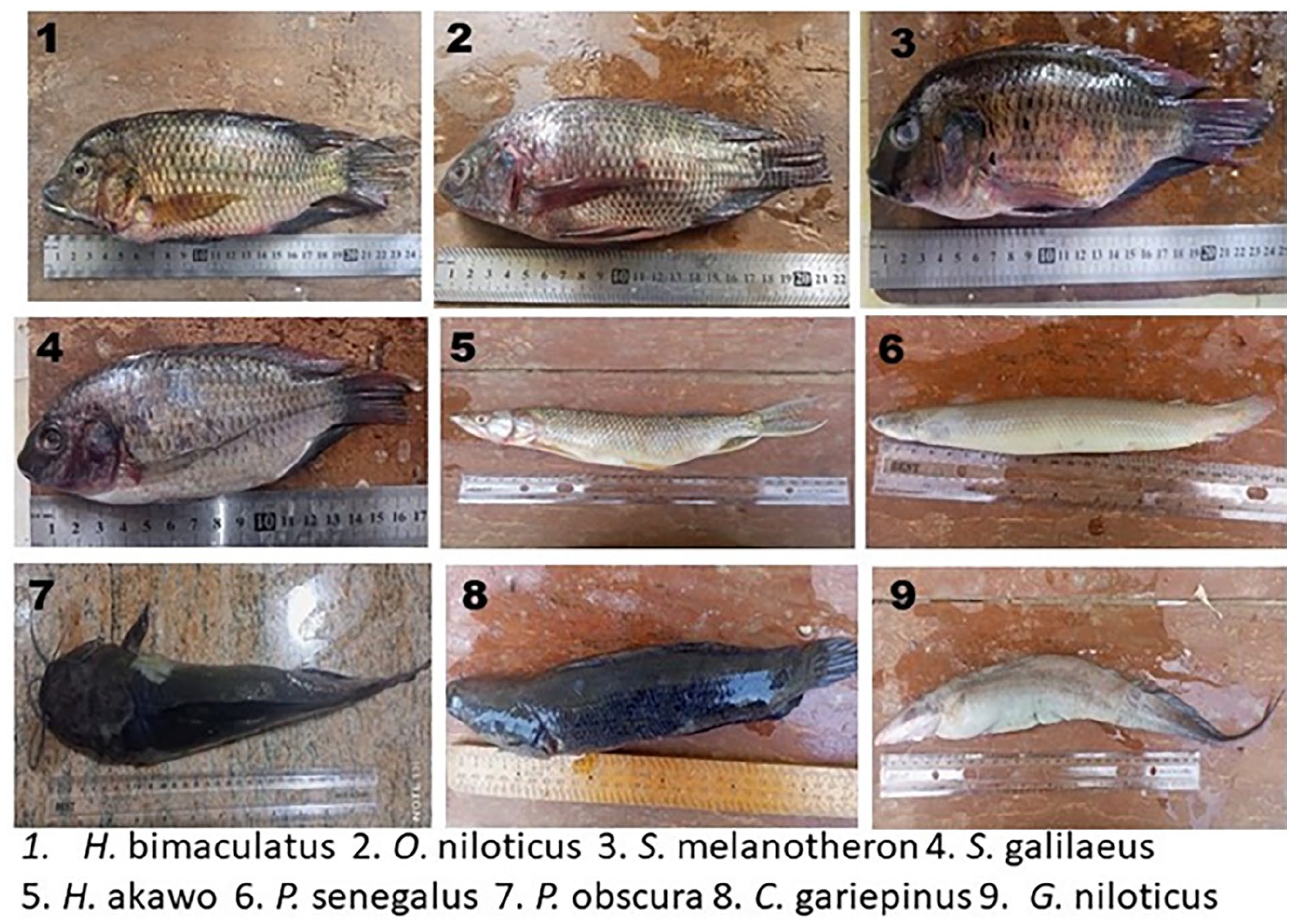
Fish samples from Eleyele Reservoir.
The Counting Assembly
Sodium Iodide doped with Thallium (NaI(Tl)) was used in gamma spectrometry for radionuclide counting at NIRPR. The NaI(Tl) detector (model no. 802, manufacturer: Canberra) system comprises the scintillation detector sealed with a photomultiplier tube and connected to a Canberra series 10+ multichannel analyser. The detector has a dimension of 7.6 cm × 7.6 cm, and it is securely mounted within a 10 cm-thick Canberra lead castle. The multichannel analyser includes all the features required for spectroscopic analysis. A 50-ohm coaxial wire connects the detector to the multichannel analyser, and the detector outputs a positive signal. An analogue-to-digital converter (ADC), spectroscopic amplifier, 4k memory, display and analysis logic, input/output devices and the screen display comprise the multichannel analyser. Additionally, the multichannel analyser features an integrated high-voltage power supply (HVPS) that provides extra stabilised high voltage. A 12 V car battery that can be recharged supports the setup in case of a power outage.
The Counting System’s Energy Calibration
The counting apparatus had to be calibrated to determine which radionuclides were present in the samples and in what quantities. For each pulse height, there is an associated channel number. Genie 2000 software was used for the spectral analysis. The gamma energy that produces a channel directly relates to its number. In the lab, common gamma sources were used to calibrate the spectrometer. The detector exhibits an energy resolution of 7.5% at the 662 keV gamma-ray peak of Cs-137. Standard sources with known radionuclide energies were inserted into the detector to determine the channel numbers. The detected pulses have channel numbers corresponding to the gamma radiation causing them. The radionuclides and their corresponding channel number are presented in Table 1. The graph in Figure 3 illustrates the link between the channel number (N) and the associated energy (MeV). The correlation between the channel numbers and the radionuclide gamma energies is linear; the Equation is shown in equation (1)

Where N = channel Number and E = Energy (MeV)
Radionuclides are listed according to their channel number (N) and energy (MeV).


Energy calibration demonstrating how energy and channel number are related.
Additionally, the 1.460 MeV photopeak was used to quantify 40K, while the 1.760 and 2.614 MeV peaks from 214Bi and 208Tl were employed to determine the activity concentrations of 226Ra and 232Th, respectively.
Efficiency of the Detector
Calculating the detection efficiency of the counting system is crucial to determining the radionuclide activity levels in the samples. This process involves using reference standard samples to establish the system’s efficiency, ensuring accurate measurements of radionuclide concentrations in the tested samples. The reference standard source with known activity and emission probabilities was used to calculate the detection efficiency according to equation (2):

Where C is the activity concentration, ϵ is the detection efficiency and M is the mass of the sample. A is the net count, t is the counting time, and γ is the gamma yield.
A standard reference food sample acquired from the International Atomic Energy Agency (Ref No IAEA-152) was utilised for fish samples, and a reference sediment sample (IAEA-315) was used for efficiency calibration as recommended by the IAEA. 36 The IAEA-315 is a certified reference material provided by the International Atomic Energy Agency (IAEA). It is a sediment sample from the Persian Gulf, and it has been used extensively for analytical method validation, quality control and efficiency calibration in environmental radioactivity studies, particularly for gamma spectrometry. As recommended in the IAEA 36 guideline, IAEA-315 is appropriate for preparing calibration curves in environmental gamma spectrometry, where sediment matrix matching improves accuracy. The detector detection efficiencies were calculated for different gamma energies at constant sample geometry and matrix. Figures 4 and 5 provide a detailed breakdown of the 3 radionuclides’ detection efficiency in sediment and food samples.

Efficiency calibration curve showing the relationship between gamma-ray energy (in MeV) and detector efficiency for the radionuclides 40K, 226Ra and 232Th present in Sediment samples.

Efficiency calibration curve showing the relationship between gamma-ray energy (in MeV) and detector efficiency for the radionuclides 40K, 226Ra and 232Th present in fish samples.
The Background Count and Sample Radioactivity Measurements
An empty cylindrical container was placed on the NaI(Tl) detector after calibrating the system. The empty container has the same dimensions as the sample’s container and was counted for 10 hours. Similarly, each sample was counted for 10 hours to estimate radionuclides with minimal activity. The allotted time is sufficient for the detector to display the high peaks of the interested radionuclides. The NaI(Tl) crystal can display a spectrum that highlights the individual peaks of interest within this counting time. Using the multichannel analyser, the area under the 40K, 226Ra and 232Th photo peaks was calculated. The computed areas show the radionuclide gross counts. Because natural radionuclides are present in the counting setup, background radiation is present. The radiation laboratory building’s radionuclides and solar radiation from space are some of the sources of this background radiation. To account for the background radiation, an empty container with dimensions similar to the one holding the samples was put on the detector and counted for the same hour. The area beneath the photopeak was measured and recorded using the multichannel analyser. The background count was subtracted from the gross count to determine the net count of the samples.
Assessment of Radionuclide Activity Levels in the Samples
The mass of the sample, net area, efficiency, counting time and gamma yield were used to calculate the activity level of each radionuclide in the samples. The activity concentration was calculated using equation (3):

A, m, ε, γ and t represent net count, sample mass, efficiency, gamma yield and counting time, respectively.
For each radionuclide, the minimum detection limit was determined using equation (4) as reported in the literature.2,18,19,21

Where lower limit detection (LLD) is given as
The MDL of radionuclides in fish samples are given as 1.43, 0.75 and 4.15 Bq kg−1 for 232Th, 226Ra and 40K, respectively. Also, the minimum detection limits of radionuclides in sediment samples were calculated as 3.95 Bq kg−1 for 232Th, 1.93 Bq kg−1 for 226Ra and 5.62 Bq kg−1 for 40K. Values less than these were assigned BDL, below the detector’s detection limit.
Analysing the Sediment Samples for Radiological Hazard Indices
Absorbed Dose Rate (
The absorbed dose is one of the metrics used to evaluate how the activity concentration in environmental samples affects radiological safety. Any radioactive material emits radiation, which is absorbed when it comes into contact with another material. Dose conversion factors can convert the observed activity concentration into the absorbed dose rate. Based on the UNSCEAR 1 report, the dose conversion factor of 0.043, 0.462 and 0.662 nGy/h per Bq kg−1 for 40K, 226Ra and 232Th, respectively, was used for the absorbed dose calculation.

Where CK = Activity concentration of 40K, CRa = Activity concentration of 226Ra and CTh = Activity concentration of 232Th.
Annual Effective Dose (AED)
Evaluating the outdoor effective dose corresponding to the population residing in the research area is crucial. The annual effective dose to the population was calculated by converting the absorbed dose rate to the human effective dose using the conversion factor (0.7 Sv/Gy) and the outdoor occupancy factor (0.2) according to the UNSCEAR 1 report. This was achieved using equation (6):

Where DR, 0.2, 0.7 represent the absorbed dose, outdoor occupancy factor and conversion factor (SvGy−1), respectively, and 8670 = 24 hours × 365 days (1 year).
Radium Equivalent (Raeq)
Radium equivalent activity offers a metric for controlling public safety radiation protection requirements. The measured activity concentrations of 40K, 226Ra and 232Th are expressed as a single entity to derive this radiation danger amount. 37 Radium equivalent, according to Beretka and Matthew, 38 is determined using the presumption that each of the following sources produces the same gamma dose rate: 370 Bqkg−1 of 226Ra, 259 Bqkg−1 of 232Th and 4810 Bqkg−1 of 40K. In addition, the safe limit of 1 mSv/yr for the general population is equivalent to the yearly effective dosage of Raeq, which is 370 Bqkg−1.
This yields the radium equivalent:

Where Ck, CTh and CRa are the activity concentrations defined in equation (5).
External Hazard Index (Hex)
The External hazard index provides the external exposure resulting from 40K, 232Th and 226Ra. The following Equation is used to calculate it, and a Hex is used to signify it. 38

Where 40K, 232Th and 226Ra are defined in equation (5). For radiation risks to be deemed tolerable by the general public, Hex must be less than unity. 38
Internal Hazard Index (Hin)
The body’s exposure to radon is indicated by the internal radiation hazard index. It is established by the formula. 38

Ck, CTh and CRa are 40K, 232Th and 226Ra activity concentrations, respectively, in Bqkg−1. For a negligible risk to the respiratory organs, the value of Hin should be less than unity. 38
The Bioaccumulation Factor (BAF)
The Bioaccumulation Factor (BAF) measures the accumulation of a substance, such as a radionuclide, in an organism from its environment. It can be described as the ratio of the radionuclide content in the organism to that of the environment (sediment, water, etc.). According to IAEA, 39 BAF values for various radionuclides are called Concentration Factors (CF). The ratio of the fish’s entire body to its water content with nutritional intake is given by:

Corganism is the activity concentration of the radionuclide in the organism (Bqkg−1), and Cenvironment is the activity concentration of the radionuclide in the environment (Bqkg−1).
Activity Concentration of Radionuclides in Fish Samples
The activity concentrations of primordial radionuclides in the fish samples were calculated using equation (3).
Annual Effective Ingestion dose (Ding) (for Fish Samples)
The ingestion dose is a parameter that estimates the amount of radionuclide intake by adult members via ingestion. It was developed in 1996 by the International Commission for Radiological Protection (ICRP). The ingestion dose is shown in equation (11)

Where A
i
is the activity concentration of radionuclide in Bqkg−1, Standard I
i
is the ingestion rate of fish and DC
i
is the dose conversion coefficient (SvBq−1) for ingestion of radionuclide i. The ingestion rate of fish consumption in Nigeria is 11.3 kg year−1.
40
Based on the ICRP report,
41
the dose conversion coefficient for the ingestion of radionuclides for members of the public is
Committed Effective Dose
The committed effective ingestion dose (CEID) is calculated using the ingestion dose, which accounts for the activity concentration of radionuclides in the consumed material, the consumption rate and the radionuclides’ dose coefficients. The CEID is calculated for the adult population based on the recommendation of the International Commission on Radiological Protection. 41 In the present work, an assumption was made that all the fish were consumed at harvesting.

Results and Discussion
Fish Assemblage of Eleyele Reservoir
The diversity and morphometrics of fin fish collected from Eleyele Reservoir are presented in Table 2. A total of 9 fin fish species, separated into 6 families, were collected during the study, with Cichlidae (n = 4) having the highest richness. The remaining families had a single species recorded for the study. The diversity abundance observed was similar to previous studies of Olaniran, 43 and Akinpelu and Hassana, 44 where cichlids dominated diversity and abundance. The sizes were also comparable to previously reported sizes from Eleyele Reservoir43,44 and other Inland Nigerian water bodies. 45
Diversity and morphometrics of fin-fishes collected from Eleyele Reservoir, Ibadan.
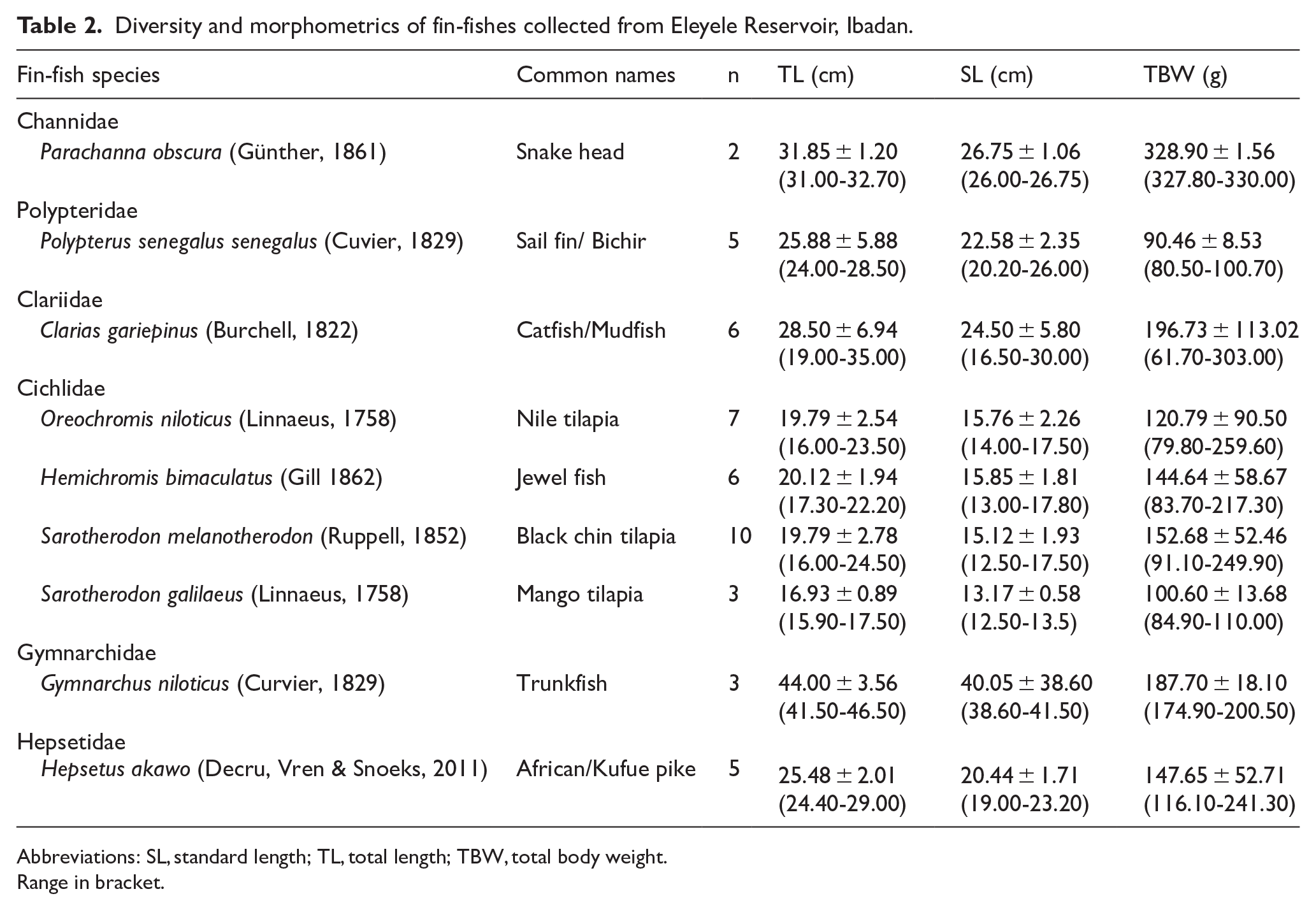
Abbreviations: SL, standard length; TL, total length; TBW, total body weight.
Range in bracket.
Sediment
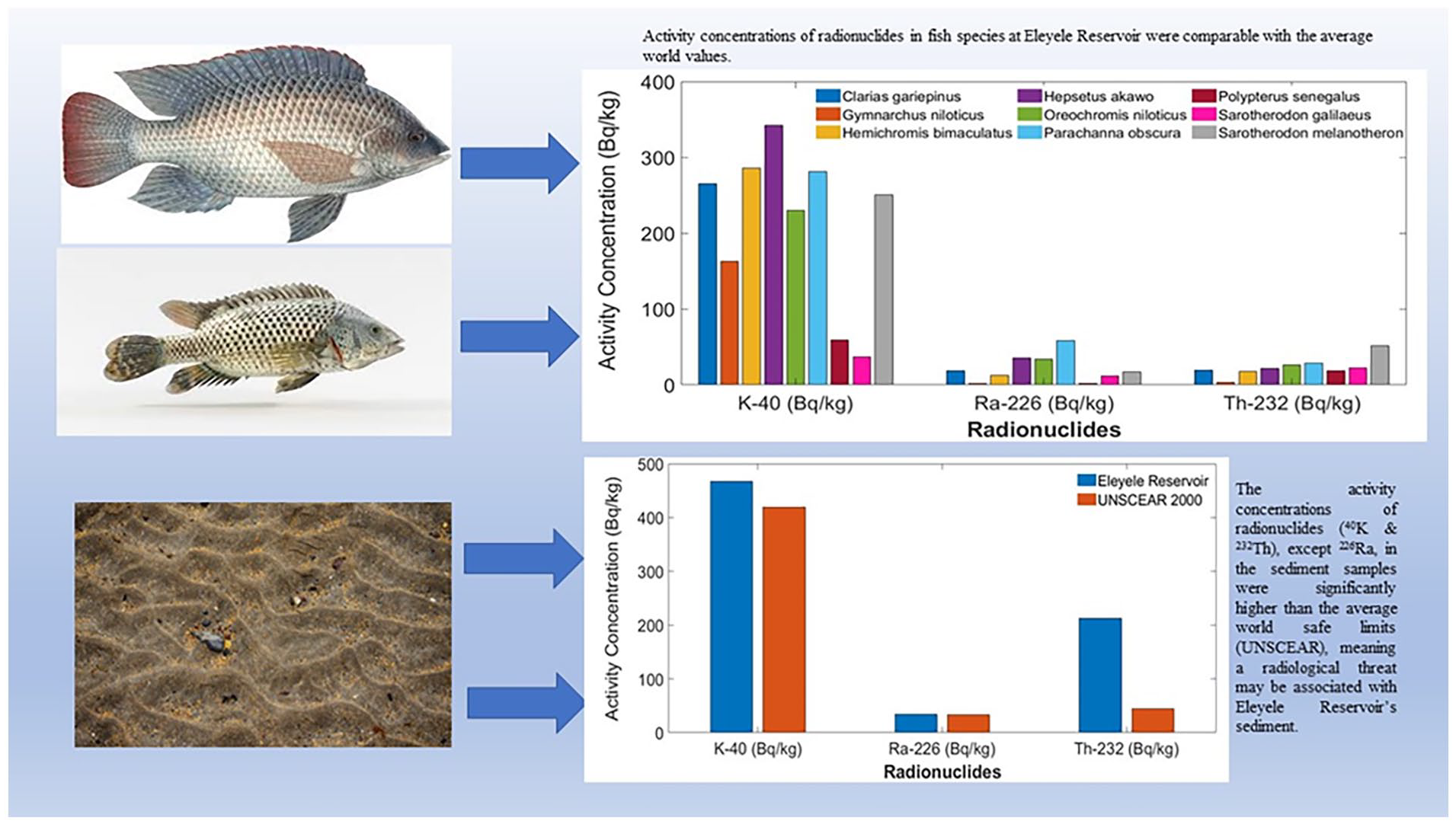
The activity concentration of 40K ranged from 6.47 ± 0.36 Bqkg−1 (4UPS 002) to 908.34 ± 41.69 Bqkg−1 (1DWS 008), with an overall mean value of 597.75 ± 27.50 Bqkg−1 (downstream) and 114.92 ± 5.96 Bqkg−1 (upstream), while that of 226Ra ranged from below detection limit (BDL) in (4UPS 003) to 77.95 ± 10.71 Bqkg−1 (1DWS 006), with an overall mean value of 40.66 ± 5.75 Bqkg−1 (downstream) and 16.11 ± 2.29 Bqkg−1 (upstream) as presented in Table 3. The activity concentration of 232Th ranged from 38.94 ± 4.94 Bqkg−1 (4UPS 002) to 485.55 ± 8.04 Bqkg−1 (2DWS 002), with an overall mean value of 261.84 ± 5.75 Bqkg−1 (downstream) and 81.48 ± 2.29 Bqkg−1 (upstream) (Table 3). The mean activity concentration of 40K in the sediment samples of Eleyele Reservoir (downstream) is significantly above the world average value of 420 Bqkg−1. 1 However, the range shows significant variability, with samples upstream of the Reservoir exhibiting much lower concentrations. Similarly, the mean activity concentration of 226Ra in the sediment of the Reservoir (downstream) is slightly above the world average value of 33 Bqkg−1, and that of 232Th at both streams is far above the world average value of 45 Bqkg−1. 1 Among the three primordial radionuclides, 40K has the highest activity concentration in all the sampling locations. The elevated level of potassium-40 in the sediments of Eleyele Reservoir may be due to its relative abundance in the Earth’s crust. The large concentration of thorium and uranium in the geological formation of the Eleyele area may be attributed to the degree of metamictisation of zircons obtained from pegmatitic aquifers of that area. Moreover, the elevated levels of 40K, 226Ra and 232Th in sediment samples of Eleyele Reservoir could also be attributed to the accumulation of these radionuclides in the sediment. Our findings showed that the sediments from Eleyele Reservoir have not been excavated since the Reservoir’s inception, and many pollutants from different sources have been entering the Reservoir. The percentage distribution of the natural radionuclides from Eleyele Reservoir’s sediment is presented in Figure 6.
Activity concentration of radionuclides in the Eleyele Reservoir’s sediment.

Abbreviations: DWS, downstream; UPS, upstream. 1,2,3,4,5,6,7 = location of sample collected.

Percentage distribution of 40K, 226Ra and 232Th in Eleyele Reservoir’s sediment.
Moreover, the Eleyele area is prone to flooding, and various industrial waste, fertiliser from farm areas, and effluents are channelled to the river, which might have resulted in the high concentration of radionuclides in the Reservoir. Besides the high pollution associated with the Reservoir, certain minerals such as potash feldspar, biotite, orthoclase and muscovite from weathered rocks around the Eleyele area could have contributed to the elevated activity concentration of 40K recorded. The pattern of activity concentration of radionuclides observed in the present study revealed that the area (Downstream of the Reservoir) characterised by excessive waste has a high activity concentration of radionuclides compared with the other part (Upstream), where the water is transparent, with low activity concentration values (Table 3).
A comparative analysis of activity concentration recorded in the present study used data from other locations worldwide, as presented in Table 4. For instance, Isinkaye and Emelue 46 recorded the activity concentration of radionuclides to be 1023.00, 47.89 and 55.37 Bqkg−1 for 40K, 226Ra and 232Th, respectively. These values are far higher than the average world value reported by UNSCEAR 1 and what was obtained from this study, except for 232Th. Other locations with a higher activity concentration of 40K than Eleyele Reservoir include the East Coast region, Cyprus 21 ; Greece, Aegean Sea 47 ; Novaya Zemlya, Russia 48 ; while the value obtained from the Mediterranean Sea coast, North Cyprus 49 is comparable with the finding from this study. The measured activity concentrations of 40K and 232Th were significantly elevated compared to those reported by,1,29,50 -53 which may be attributed to the higher granitic content in the studied area. Table 4 presents different locations where the activity concentration of radionuclides is either low, comparable or higher than the present findings. Figure 7 presents the activity concentration of primordial radionuclides from the present investigation compared to the global average. 1
Comparing the worldwide average activity concentration of primordial radionuclides in sediment.
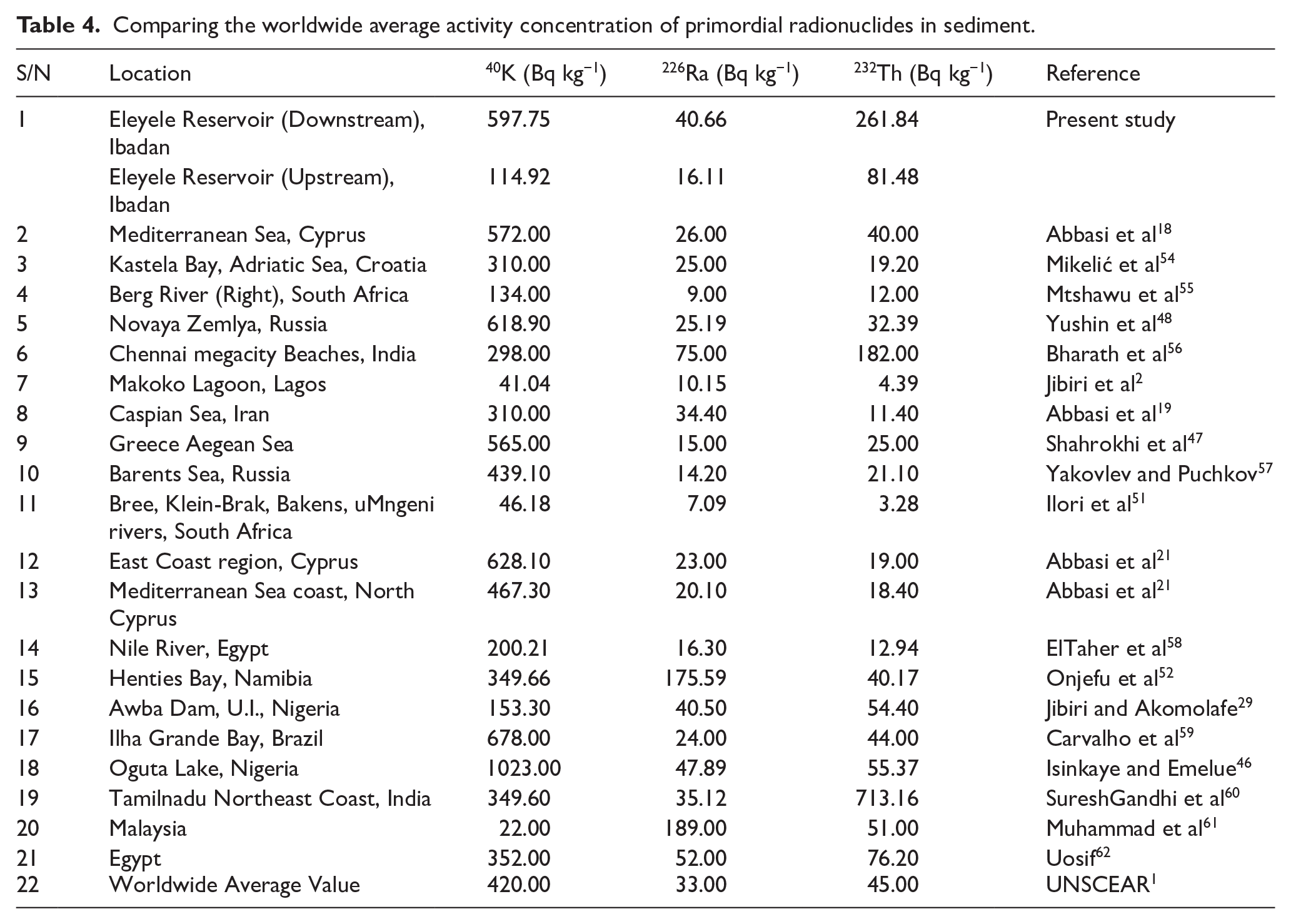

Activity concentration of 40K, 226Ra and 232Th compared with the average world value. 1
The radiological hazard analysis revealed that the absorbed dose rate in Eleyele Reservoir has an overall mean of 181 nGy/h, as presented in Table 5, which is significantly higher than the global average value of 59 nGy/h as reported in UNSCEAR. 1 The significant elevation value of the absorbed dose indicates higher radioactivity levels in Eleyele Reservoir sediments. This calls for serious concern as the sediment may pose a severe radiological threat to the Eleyele community if such sediment is used for construction purposes, and there is a high probability of radionuclides transfer from the sediment to aquatic organisms via ingestion, absorption and inhalation. The calculated average outdoor annual effective dose of sediment from the Eleyele Reservoir was 0.22 mSv/y (Table 5), significantly higher than the outdoor annual effective dose of 0.07 mSv/y as stated in the UNSCEAR report. 1 However, the calculated annual effective dose from the present investigation is less than the total annual effective dose (1.0 mSvy−1) value recommended by the International Commission on Radiological Protection 53 for the general populace. The average Radium Equivalent activity (Raeq) values for sediment from Eleyele Reservoir are 461 Bqkg−1 (downstream) and 139 Bqkg−1 (upstream). The value obtained at the downstream part is significantly higher than the safety limit of 370 Bqkg−1 recommended by UNSCEAR, 1 indicating potential radiological hazards associated with the sediment at the downstream section of the Reservoir. The Radium equivalent activity, the internal and external hazard indices of the sediment from Eleyele’s Reservoir (downstream), exceeded slightly recommended limits for construction purposes and, hence, should be used with some caution for building purposes. The external and internal hazard indexes calculated in the sediment downstream of the Reservoir were slightly above the world’s recommended value of unity (>1), as shown in Table 5. This implies that some cautions may be observed by the general populace when using sediment from Eleyele Reservoir for construction purposes. In addition, since sediment acts as a reservoir for radionuclides, high concentrations in sediment can lead to direct biological effects on aquatic organisms through prolonged exposure and bioaccumulation.
The calculated absorbed dose, Annual Effective Dose, Radium Equivalent, External Hazard Index and Internal Hazard Index in the sediment samples of Eleyele Reservoir, Ibadan.

Fish Samples
The activity concentrations of primordial radionuclides in the fish samples, as presented in Table 6, revealed that the concentration of 40K ranged from 36.67 ± 1.99 to 717.56 ± 38.92 Bqkg−1, with the highest value of 717.56 ± 38.92 Bqkg−1 found in H. bimaculatus flesh and the lowest value of 36.67 ± 1.99 Bqkg−1 found in S. galilaeus whole fish. The average value of 244.69 ± 13.33 Bqkg−1 was recorded for 40K in all the fish samples. Similarly, the activity concentration of 226Ra ranged from BDL to 70.97 Bqkg−1, with the highest activity concentration (70.97 ± 6.43 Bq kg−1) occurring in O. niloticus bones and the lowest (BDL) in P. obscura and O. niloticus whole fish. The average value recorded for 226Ra was 21.65 ± 1.83 Bqkg−1. The activity concentration of 232Th ranged from BDL to 97.83 ± 5.53 Bqkg−1, with O. niloticus flesh being the lowest with a value below the detectable limit and O. niloticus bone below the detectable limit. In comparison, S. melanotheron Gills have the highest activity concentration (97.83 ± 5.53 Bqkg−1) for 232Th. The average activity concentration of 232Th in the fish samples was 27.76 ± 1.56 Bqkg−1. The average activity concentration of 40K in the fish samples from Eleyele Reservoir is within the typical range seen globally but higher than most other locations in Nigeria except for Niger State and Ado Ekiti. As presented in Table 7, the activity concentrations of 226Ra are moderate, with some locations in Nigeria except Niger Delta and Lagos showing significantly higher values. 232Th levels in Eleyele Reservoir are within the lower end of the global range and are comparable to some other locations in Nigeria, such as Lagos.
Activity concentration of 40K, 226Ra and 232Th in the fish samples of Eleyele Reservoir, Ibadan.

Comparing the average activity concentration of primordial radionuclides in Fish from Eleyele Reservoir with other locations.
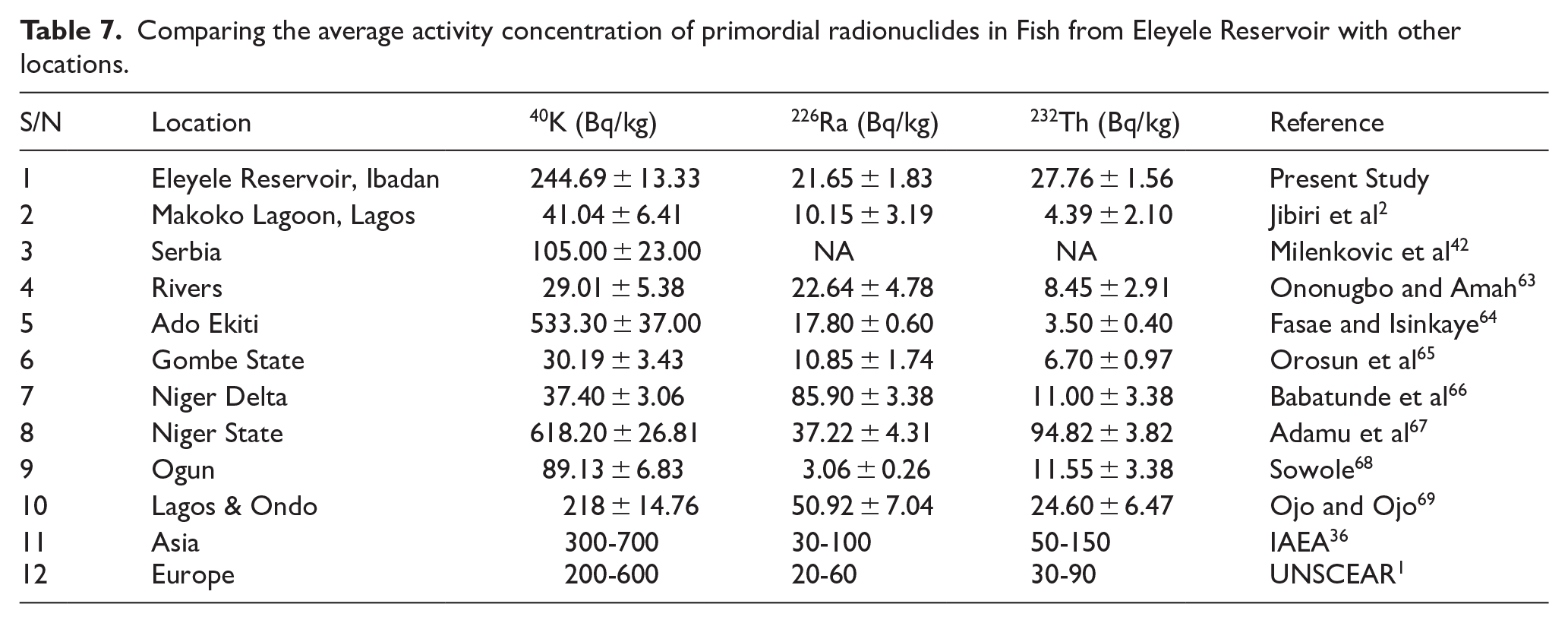
Table 8 presents the calculated radiological indices and annual ingestion doses for fish samples from the Eleyele Reservoir. The index measured includes the Annual Effective Ingestion Dose (Ding), Committed Effective Ingestion Dose (CEID) and Bioaccumulation Factor (BAF). These metrics comprehensively understand the radiological safety and potential health risks of consuming the investigated fish samples. The finding from the present study revealed that average annual effective ingestion dose (Ding) of 0.02, 0.07 and 0.07 mSvy−1 were determined for 40K, 226Ra and 232Th, respectively, from the ingestion of these radionuclides. The average committed effective ingestion dose of 0.14 mSvy−1 was calculated from ingesting the investigated radionuclides from the fish samples at Eleyele Reservoir. The calculated total Ding was less than the global average value of 0.29 mSvy−1, as reported by UNSCEAR. 1 The average committed effective ingestion dose in all the fish samples was 0.07, 0.09, 0.08, 0.15 and 0.25 mSvy−1 for bones, flesh, whole fish, gills and Gut, respectively. Snakehead, being a predator, may consume other contaminated organisms, leading to higher concentrations of radionuclides in its biological compartments, resulting in biomagnification; as a higher trophic level predator, the P. obscura can accumulate higher levels of radionuclides through its diet, leading to more significant internal radiation doses. From Table 8, the flesh of the Snakehead has a high CEID value (0.17 mSvy−1) due to its considerable accumulation of these radionuclides. The highest CEID, as indicated in Table 8, was in S. melanotheron Gills and Gut; this could be because the Gut is directly involved in the digestion and absorption of food, which can include radionuclides present in ingested materials. This process can lead to higher concentrations of radionuclides in the Gut than in other tissues. Also, Black chin tilapia may ingest sediment while feeding, primarily if it feeds on benthic organisms or detritus. In addition, natural radionuclides from the sediment samples could be transferred to the aquatic species via ingestion, leading to increased accumulation of these radionuclides in the Gut.
The annual effective ingestion dose, committed effective ingestion dose and bioaccumulation factor of the fish samples at Eleyele Reservoir, Ibadan.

The highest BAF value for 40K was found in the flesh of Black chin tilapia (34.450), suggesting significant accumulation, likely due to the fish’s diet and metabolic processes that favour potassium uptake, and the lowest was in P. senegalus whole fish (0.099). High BAF values for 238Ra are seen in the flesh of P. obscura (3.061) and the Gut of S. melanotheron (2.726), indicating these species are particularly effective at accumulating 238Ra, which may be related to their feeding habits and the geochemistry of their habitat. Different species and parts of the fish show varying BAF values, reflecting differences in feeding habits, metabolic processes and environmental conditions. For example, the flesh of Black chin tilapia showed an exceptionally high BAF for 40K due to its diet, while the Gut of Black chin tilapia showed a high BAF of 232Th due to sediment ingestion. This suggests a detritivore or omnivorous feeding habit, where ingestion of contaminated sediments and detritus significantly increases radionuclide exposure. The gut content is directly exposed to contaminated particulate matter, explaining high BAFs in non-muscular tissues. Similarly, P. obscura showed a high accumulation in flesh for the three radionuclides. Bioaccumulation may occur through biomagnification from contaminated prey, as higher trophic levels tend to accumulate more radionuclides, especially in metabolically active tissues. In contrast, P. senegalus, which has a benthic carnivorous diet, shows relatively low BAFs for all radionuclides, possibly due to reduced exposure to suspended radionuclide-bearing particles and a slower metabolism.
The environmental conditions of fish species can influence their radionuclide exposure. C. gariepinus and H. bimaculatus, which dwell near or within sediments, show moderate to high BAFs for 226Ra and 232Th in bones and flesh. Bones accumulate 226Ra due to their chemical similarity to calcium, facilitating incorporation into skeletal structures. Physiological differences such as metabolic rate, osmoregulatory capacity and gill architecture influence radionuclide uptake. For instance, species with higher metabolic rates (eg, tilapia) may take up more 40K due to its role in cellular activity. Differences in gut physiology also explain varied radionuclide retention. For instance, S. melanotheron shows a high 232Th in the gut, likely due to particulate ingestion and prolonged digestive processing. A BAF ⩾ 1 signifies that an organism accumulates the substance at a higher concentration than the environment, indicating a potential risk. Some fish species with a more excellent BAF value exhibited this characteristic. Conversely, a BAF ⩽ 1 indicates lower accumulation, suggesting a lesser risk. Radionuclide bioaccumulation in fish is governed by a synergy of feeding behaviour, habitat preference, tissue biochemistry and species physiology. Benthic and detritivore species are more susceptible to high radionuclide uptake, particularly for sediment-bound isotopes like 226Ra and 232Th. Conversely, pelagic and carnivorous species may exhibit lower accumulation unless biomagnification plays a role. Tissue-specific patterns further highlight the role of functional biology in determining radionuclide distribution, with bones, gills and guts serving as key reservoirs depending on the isotope in question.
Statistical Analysis and Pearson’s Correlation Studies
The statistical analysis of the activity concentrations and radiological hazard indices was performed using the Microsoft Excel Spreadsheet. In addition, the Pearson correlation was done using IBM SPSS-29 (Statistical Package for Social Science). The present study computed and presented statistical metrics such as skewness, kurtosis, standard deviation, mean and range. The degree of correlation between the activity concentration and the radiological hazard indices in the sediment samples was investigated using the Pearson correlation. Skewness is a measure of the symmetrical distribution of the sediment samples. A skewness of 0 indicates a fully symmetrical distribution, while a negative skewness means the distribution is to the left side. A positive skewness value suggests a right-skewed distribution with a longer right-side distribution tail. In the present study, the skewness of the activity concentration, absorbed dose and other radiological hazard indices from the sediment samples was positive except for 40K, whose skewness was negative (Table 9). The skewness findings suggest that the calculated primordial radionuclide concentrations may have comparatively greater values near the higher end of the distribution. Figure 8a to c show the frequency histograms and corresponding distribution curves for 40K, 226Ra and 232Th in sediment samples from Eleyele Reservoir.
Kurtosis and skewness of the activity concentration of primordial radionuclides and radiological hazard indices from Eleyele Reservoir’s sediment.

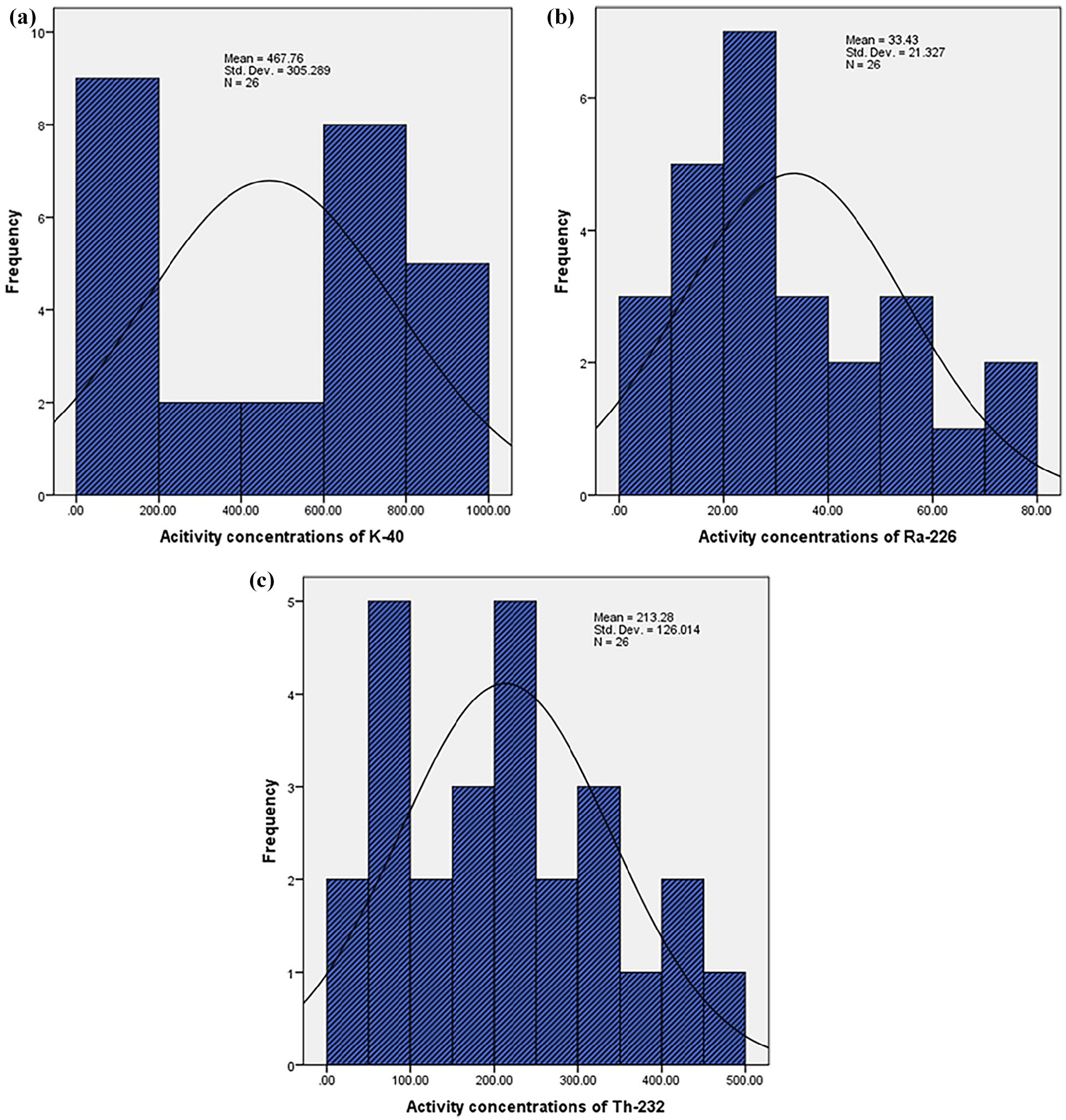
(a) Sediment samples from the Eleyele Reservoir showing the frequency distribution of the 40K activity concentration. (b) The frequency distribution of the activity concentration of 226Ra in the Eleyele Reservoir sediment samples. (c) The frequency distribution of the activity concentration of 232Th in the Eleyele Reservoir sediment samples.
Similarly, kurtosis is a distribution’s peakness metric, usually calculated by comparing it to a normal distribution. Leptokurtic distributions have a very high peak, while platykurtic distributions have a flat top. Mesokurtic refers to a normal distribution that is neither flat-topped nor excessively peaked. In the sediment samples from the present study (Table 9), the kurtosis of the activity concentrations and other radiological hazard indices was negative, producing smaller peaks than the standard curve. The Pearson correlation analysis is presented in Table 10. A statistically significant positive correlation (P < .05) was observed among the radiological hazard indices, absorbed dose, annual effective dose and activity concentrations. The strong positive Pearson correlation indicates that as the activity concentration of the radionuclides in the sediment samples increases, the radiological hazard indices also increase proportionally. In addition, the strong correlation may also indicate that radionuclides play a significant role in the gamma radiation emission at the Eleyele Reservoir area.
Pearson’s correlation of primordial radionuclides (40K, 226Ra, 232Th), annual effective dose, absorbed dose, and radiological hazards indices in the sediment samples of Eleyele Reservoir, Ibadan.

Conclusion
Sediment and fish samples from Eleyele Reservoir, Ibadan, Oyo state, have been studied using gamma-ray spectroscopy and data on radionuclides’ activity concentrations and other radiological hazard indices were calculated. In sediment, the examined primordial radionuclides (40K, 226Ra and 232Th) have average activity concentrations significantly above the global average value (downstream), as presented in the UNSCEAR report. 1 Comparison of these activity concentrations with reported global values revealed significant elevation, except for a few locations, as presented in Table 6. The Radium equivalent activity, the internal and external hazard indices of the sediment from Eleyele’s Reservoir (downstream), slightly exceeded the recommended limits for construction purposes and, hence, should be used by the general populace with some caution for building purposes. The average annual effective dose (0.22 mSvy−1) was significantly lower than the worldwide average of 0.48 mSvy−1, according to the UNSCEAR report. 1
In the fish samples, the average Committed Effective Ingestion Dose (CEID) was 0.143 mSv/y, less than that of 1 mSv/y according to IAEA 70 and ICRP 71 publications. These publications gave a dose criterion of 1 mSv/y as a reference level for ingesting natural radionuclides. Moreover, the highest CEID was obtained in the S. melanotheron Gut; this could be because the Gut is directly involved in the digestion and absorption of food, which can include radionuclides present in ingested materials. This process can lead to higher concentrations of radionuclides in the Gut compared to other tissues. In addition, the high CEID values in the fish gut suggest that internal organs may pose higher ingestion risks than flesh alone. Also, Blackchin tilapia may ingest sediment while feeding, primarily if it feeds on benthic organisms or detritus. Different species and parts of the fish show varying BAF values, reflecting differences in feeding habits, metabolic processes and environmental conditions. This study emphasises the significance of ongoing monitoring and assessment of radiological parameters in aquatic environments to ensure public health safety. While fish appears generally safe for consumption under current exposure assumptions, caution is advised regarding sediment use for construction purposes. Based on the findings of this study, it is recommended that periodic monitoring of sediment and aquatic life is advised, especially downstream, to track long-term changes and mitigate potential exposure risks. The present results could serve as reference data for future research on the Reservoir, the environment and marine life to highlight any significant changes in radiological hazard parameters. It could also contribute to generating a wider set of data that will help to ascertain the radiological risk posed by exposure to radionuclides in the sediment and aquatic organisms. This study adds to the growing body of knowledge on NORMs in freshwater systems and underscores the need for integrated aquatic ecosystem protection.
The limitation of this study, which could be addressed in future research, is that it only considered the measurement of natural radionuclides in fish and sediment of Eleyele Reservoir and not water in the study area. This current study can be viewed as a baseline investigation of radionuclide content in the sediment and fish samples of Eleyele Reservoir, Ibadan. Future research could focus on the assessment of the natural and anthropogenic radionuclides in the water of the study area. In addition, further studies across multiple seasons and incorporating water samples are recommended to validate and expand upon these findings. Moreover, the measurement of radon levels in the reservoir could also be investigated since the reservoir is a major water source for the Eleyele community.
Footnotes

Author Contributions
James Silo Sunday: Methodology, Data curation, Investigation, Project administration. Akindayo Abiodun Sowunmi: Investigation, Project administration, Resources, Validation, and editing. Idowu Richard Akomolafe: Methodology, Formal analysis, Writing – original draft, Writing – review & editing. Nnamdi Norbert Jibiri: Conceptualization, Data curation, Methodology, Supervision, Validation, Funding acquisition, Visualization, and editing.
Funding
The author(s) received no financial support for the research, authorship, and/or publication of this article.
Declaration of Conflicting Interests
The author(s) declared no potential conflicts of interest with respect to the research, authorship, and/or publication of this article.