



Abstract
Introduction:
The provision of clean drinking water and proper sanitation is essential for public health, particularly in rural areas with limited resources. The goal of Sustainable Development Goal 6 is to ensure that all people have access to clean water and adequate sanitation by 2030.
Objective:
The purpose of this study is to identify differences in the availability of basic services such as drinking water and sanitation in rural areas of 15 African countries.
Methods:
The research examines data on sanitation and clean water from 15 African countries using a well-balanced panel data technique. Key indicators such as access to drinking water, sanitation services, and healthcare coverage were analyzed using descriptive statistics.
Results:
According to the findings, there are significant differences in the availability of clean water and sanitation in rural areas. The study draws attention to several problematic issues, such as a high rate of open defecation (29.3%), inadequate sanitation services (20.1%), and limited access to safe-guarded drinking water (7.4%). The number of people who lack access to electricity, clean cooking fuel, and basic hand washing facilities is alarming (20.6%, 26.7% and 14.4%, respectively). The deficiencies cause an average mortality rate from communicable diseases of 50.3% and inadequate treatment of diarrhea in children under 5 years of age (39.3%).
Conclusions:
Rural communities in 15 African countries face serious challenges when it comes to accessing clean water and sanitation, as indicated by the study. An urgent public health crisis is posed by the unavailability of safe managed drinking water for 7.4% of the population and the high prevalence of open defecation at 29.3%. To address these problems effectively, governments must establish integrated health and sanitation policies that emphasize community participation, public health education, and infrastructure improvements.
Plain Language Summary
A comprehensive analysis of rural communities’ health indicators and water and sanitation services is presented in this paper, highlighting important issues that have an effect on public health. One of the main conclusions is that there is a significant gap in water safety, with only 7.4% of rural residents having access to safely managed drinking water services and 46.8% having at least basic access. Furthermore, just 20.1% of people have access to safely managed sanitation services, and about 29.3% of people defecate outside, which poses major public health issues. There is also a need for better hygiene practices, as only 25.5% of households have access to basic hand washing) supplies like soap and water. The health concerns are further increased by the fact that just 14.4% of rural communities have access to clean cooking fuels and only 26.7% have access to electricity. Additionally, the findings highlight the public health issue in these communities by showing that only 39.3% of children under five receive the proper treatment for diarrhea, and that rates of mortality from infectious diseases are startlingly high. Furthermore, statistical studies show a significant correlation between increased drinking water safety and better access to healthcare and sanitation. In order to improve overall living circumstances and health outcomes, these findings highlight the pressing need for integrated health and sanitation policies that address the complex issues faced by rural populations
Introduction
The Sustainable Development Goals (SDGs) act as a guiding framework designed to foster a more sustainable and improved future for all by highlighting key priorities and ambitions for 2030. 1 These goals embody a worldwide commitment to protecting the environment, addressing climate change, eradicating poverty, and ensuring that everyone can achieve a good quality of life and prosperity. 2 The concept of sustainable development has evolved through various conferences and summits, leading the United Nations to create 17 SDGs, which are linked to 169 specific targets. 3 In 2015, the United Nations launched its 2030 Agenda for Sustainable Development on an international scale.4 -6
The Sustainable Development Goals (SDGs) highlight the links between human well-being, economic advancement, and a stable environment. This approach is relevant to numerous urgent issues, such as the security of water, energy, and food supplies, the alleviation of poverty, economic progress, climate change, and public health.7 -9 The Sustainable Development Goals of the United Nations strive to improve the quality of life for people in developed, emerging and developing countries by addressing social and economic factors while prioritizing environmental sustainability.10 -12
The achievement of the Sustainable Development Goals (SDGs) established by the United Nations requires a comprehensive and balanced strategy that addresses all goals rather than focusing on just a few. 13 The newly adopted SDGs represent a major initiative to define shared global development goals for the next 2 decades. 14 Access to water, sanitation, and hygiene (ASH) is a vital public health challenge faced worldwide.15 -17 To meet its sustainability commitments, the results of the African Regional Forum on Sustainable Development require significant analytical input from an African perspective. 18
The World Health Organization (WHO) and the United Nations Children’s Fund (UNICEF) are responsible for the global oversight of the Sustainable Development Goal (SDG) targets related to drinking water, sanitation, and hygiene (WASH) through their Joint Monitoring Programme (JMP). 19 The presence of unsafe drinking water, inadequate sanitation, and poor hygiene practices plays an major role in the worsening of child health in low and middle-income countries.20 -22 As reported by the UNICEF and WHO JMP, only 3 African countries are on track to achieve universal access to at least basic water services by the year 2030. 23 Development organizations promote the establishment of WASH facilities in schools as a means of improving attendance by reducing illness.24,25
The connections between different forms of malnutrition and environmental factors, including water, sanitation and hygiene (WASH), can significantly influence ongoing health problems, growth, and cognitive development of children. 26 Diarrhea is one of the leading causes of sickness and mortality among children under 5 years of age in developing countries. 27 Inadequate water, sanitation, and hygiene (WASH) are linked to diarrheal diseases, leading to more than 1 million deaths each year. 28 Cholera, a disease transmitted through contaminated water, continues to pose serious public health problems in many developing areas. 29 Ensuring reliable access to vital water, sanitation and hygiene facilities, along with encouraging hygiene practices such as hand washing, are crucial steps to curb the spread of infectious diseases within communities.30 -32
Water, sanitation, and hygiene initiatives are essential to curb the further transmission of COVID-19.33,34 Although access to WASH services in healthcare facilities in sub-Saharan Africa has improved, many countries still do not meet the global standard of 80%. 35 Adequate access to water, sanitation, and hygiene facilities is vital to maintain a healthy lifestyle. 36 Improvements in water quality, sanitation, and hygiene have been shown to positively affect health outcomes, social welfare, and economic growth. However, the understanding of issues related to water quality, sanitation, and hygiene on a global scale remains limited. 37
Despite worldwide efforts, 80% of the Sustainable Development Goal (SD) targets have diverged, stalled, or moved backward, with only 15% making progress as of 2023. This underscores the urgent need to increase efforts to achieve these objectives by 2030. 38 The Sustainable Development Goals of the United Nations (UN) call on the global community to foster a world where everyone is included. 39 Many organizations find it challenging to incorporate the SDGs into their strategic frameworks. 40 Compounding this issue are the lack of access to clean water, inadequate infrastructure, poor sanitation, and limited community involvement in decision-making. 41
Addressing sustainable development and tackling global warming are 2 interconnected challenges that need to be prioritized to secure a prosperous future for both humanity and the Earth. 42 More than 500 million people in rural Africa do not have access to clean drinking water.43,44 Africa should use climate financing to create robust water and sanitation systems that can continue to function despite increasingly severe weather patterns, given the increased susceptibility to climate change.45,46 Many nations have struggled to effectively implement the 17 Sustainable Development Goals (SDGs), including SDG 6, which focuses on ensuring the availability and sustainable management of water and sanitation for all. 47
Sustainable Development Goal 6 (SDG6) seeks to ensure that everyone has access to safe and sustainable water and sanitation by 2030. 48 The creation of SDG 6 reflects the growing focus in global politics on the issues surrounding water and sanitation. 49 However, few countries are expected to reach universal sanitation within the next 10 years, as maintaining adequate household sanitation coverage presents a formidable challenge. 50 In Central and East Africa, rural communities face significant barriers to meet SDG 6, which demands universal access and effective management of water and sanitation by 2030. Despite the abundance of natural resources in the region, many rural areas struggle with inadequate sanitation facilities, unreliable water supply, and limited access to clean drinking water.
This study aimed to identify obstacles and suggest practical solutions to better understand how to achieve Sustainable Development Goal 6 (SDG 6) in rural regions of Central and East Africa. Research promotes participatory methods that allow local communities to participate in decision making and stresses the importance of community participation. Ultimately, the results contribute to the global discussion of the Sustainable Development Goals by providing a localized perspective on the issues and opportunities that can guide future research and policy efforts. The primary objective of this study was to explore the difficulties and pinpoint effective strategies to improve access to water and sanitation in rural areas of Central and East African countries, thus supporting the achievement of SDG 6 and addressing existing research gaps.
Questions and Hypotheses for Research
Research Question 1: What are the main factors affecting the availability of clean drinking water in rural regions of Central and East Africa?
Hypothesis 1: In rural areas, improved access to safe drinking water is positively associated with the use of safely managed sanitation services (% rural).
Research Question 2: How does access to safely managed drinking water services impact the health of rural populations in Central and East Africa?
Hypothesis 2: The rate of waterborne diseases in rural communities is connected to increased access to sanitary facilities.
Research Question 3: In rural regions of Central and East Africa, how are open defecation practices related to the usage of safely managed sanitation services (% rural)?
Hypothesis 3: There is a positive relationship between open defecation rates and the use of safely managed sanitation services (% rural).
Research Question 4: Does the growth in rural populations in Central and East Africa significantly influence access to managed sanitation services?
Hypothesis 4: An inverse relationship is found between access to managed sanitation services and the expansion of rural populations, resulting in increased sanitation challenges.
Literature Review
Previous Research Connecting SDGs With Rural Development
Rural development (RD) in the 21st century requires a fresh approach to sustainability that can tackle challenges while seizing opportunities. 51 Rural areas are fundamental to social progress and encompass the livelihoods and daily activities of their residents, making it critical to grasp the essence of rural development for both theoretical and practical reasons. 52 Rural communities rely on a mix of social, cultural, technological and natural resources to sustain their livelihoods. 53 As a strategic direction in regional economic policy, rural development depends on the effective operation of the agro-industrial complex, which aims to supply raw materials to the processing industry and ultimately ensure high-quality food production for the population. 54
Rural communities and economies face unprecedented social and economic challenges and opportunities. 55 Economic growth in rural areas promotes consistent employment for locals and is essential for facilitating investments in environmental protection. 56 One of the most complex contemporary issues is achieving sustainable development in rural regions. 57 In rural Europe, regional development is significantly influenced by globalization, which presents both benefits and challenges. 58 Consequently, economic advancement and population growth in these areas result in various problems, such as resource depletion, loss of biodiversity, environmental contamination, land degradation, declining incomes, and public health risks.59,60
The cornerstone of rural development is the continuous implementation of various programs that aim to preserve and improve the natural environment, social conditions, and cultural heritage. 61 Even with their diverse characteristics, most rural areas in East Africa face similar challenges, including widespread poverty, insufficient access to essential services and infrastructure, and marginalization from broader political and economic systems. 62
Sustainable rural development has become an essential strategy on a global scale strategy. 63 A significant challenge for many impoverished people in rural areas of developing countries is their distance from markets. 64 As the deadline for the Millennium Development Goals approaches, the member states of the United Nations have established a new universal framework called the Sustainable Development Goals (SDGs) to promote a global vision for sustainable development that balances social progress, economic growth, and environmental protection over the next 15 years. 65 Consequently, the Sustainable Development Goals now shape the global sustainability agenda. 66
The 2030 Agenda for Sustainable Development, which encompasses 17 Sustainable Development Goals (SDGs), is expected to influence national development strategies until 2030. 67 This Agenda represents an ambitious and transformative blueprint for global development. Integrates the 3 pillars of sustainable development, economic, social and environmental, into its 17 comprehensive, indivisible, and universally applicable goals. 68 To “transform the world” in the next 15 years, the member states of the United Nations (UN) endorsed this bold framework of the 17 Sustainable Development Goals (SDGs). 69 As a result, the SDGs represent the latest initiative of the UN to tackle the pressing health, environmental, and social challenges facing the world today. 70
Furthermore, the Sustainable Development Goals (SDGs) represent the key objective of the 2030 UN Agenda, which is based on the expectation that these goals will be met by 2030. 71 The advancement and well-being of communities is highly dependent on access to clean water and sanitation facilities. 72 Factors such as fluctuations in freshwater availability, water storage capabilities, and access to fundamental water and sanitation services could significantly affect global human development. 73 However, universal access to basic sanitation remains an ongoing challenge, particularly in low- and middle-income countries. 74 Achieving SDG 6 is a complex endeavor; While local solutions play a vital role, addressing root causes is where meaningful change can occur. 75 Ultimately, the successful realization of all 17 goals by 2030 will provide a measure of Africa’s efforts in implementing the Sustainable Development Goals. 76
Importance of the SDGs for Rural Development
The 2030 Agenda for Sustainable Development, endorsed by member states of the United Nations, aims to achieve the ambitious goal of eradicating poverty, protecting the planet, and ensuring prosperity for all by the year 2030. 77 Sustainable agriculture and effective governance are key components of the Sustainable Development Goals (SDGs) of the UN, which have attracted considerable attention from countries around the world. 78 Given the challenges posed by economic globalization, unequal distribution of natural resources, and environmental decline, rural areas are essential for the development and economic progress of any nation. 79 Consequently, rural development has consistently been a critical focus for the advancement of each nation, as it embodies a form of sustainable development. This approach is seen as a vital strategy for fulfilling essential needs and ensuring the optimal distribution of benefits resulting from national growth. 80 Furthermore, the Rural Access Index, which indicates the proportion of rural residents living within 2 km of all-season roads, is one of the indicators of the UN Sustainable Development Goals (SDG 9.1.1). 81
According to Ref., 82 the Sustainable Development Goals (SDGs) are interconnected and depend on each other. The historic adoption of the 2030 Agenda for Sustainable Development and the SDGs in 2015 allowed for a new understanding of development that integrates environmental, social and economic objectives as a global challenge.83,84 Consequently, the SDGs aim to impact all levels of society, permeate various sectors, and promote universality, equity, and inclusion while acting as a cohesive system. 85 Furthermore, under the principle of human right to sanitation, the SDGs call for universal access to sanitation and hygiene, the elimination of open defecation, and additional measures. 86
Local communities can discover long-lasting and effective solutions through the concept of sustainable development. 87 The Sustainable Development Goals of the United Nations, which have received significant attention from nations around the world, highlight sustainable agriculture and effective governance as key elements. 88 Additionally, the 2024 report aligns with the Sustainable Development Goals (SDG) and the theme selected for the high-level political forum on sustainable development in that year. 89 The social outcomes of achieving the SDGs could greatly contribute to sustainable development and improve well-being in coastal cities of West Africa. 90
Disparities in Access to Water and Sanitation in Rural Communities
Healthcare systems in developing countries face significant threats due to pressing inequalities, which hinder advancements toward global development goals. 91 In the context of the COVID-19 response in sub-Saharan Africa, social disparities in access to soap and clean water are particularly noteworthy. 92 Researchers, advocates, and social workers have recognized the link between gender and water, sanitation, and hygiene (WASH). 93 Although rural black women faced numerous challenges during the COVID-19 pandemic, many demonstrated remarkable strength and resilience in overcoming these obstacles. 94 For the most vulnerable populations around the world, the COVID-19 pandemic has presented significant challenges. 95 Ensuring the availability of adequate water, sanitation, and hygiene services is essential to protect public health during a pandemic. 96
The inequalities in water, sanitation and hygiene (WASH) between rural and urban regions have hindered the achievement of the Sustainable Development Goal 6. 97 In low-income countries, tracking and assessing improvements in water, sanitation, and hygiene practices is particularly challenging, especially in rural settings. 98 Despite the critical role that safe sanitation and hygiene play in public health and sustainable development, approximately half of the rural population of India does not have access to safe and managed sanitation. 99 Ensuring the availability of WASH services is vital to protecting public health during disease outbreaks, such as the COVID-19 pandemic. 100 The pandemic underscores the importance of proper sanitation, hygiene, and access to clean water in protecting human life. 101 To effectively control and prevent the spread of COVID-19, adhering to WASH practices is essential. 102
Access to clean water, sanitation, and hygiene (WASH) is crucial to public health as it reduces the occurrence of waterborne diseases, which are particularly prevalent in areas lacking these facilities. Enhanced WASH conditions lead to better health outcomes, including a decrease in diarrheal diseases and better health for children, ultimately resulting in a lower mortality rate. Consequently, these health improvements positively affect the population’s well-being, enhancing quality of life and productivity while fostering social stability. Furthermore, healthier populations often experience faster growth, since reduced mortality rates can lead to increased birth rates, especially in rural regions where access to services may be restricted. The growth of infrastructure and energy needs is shaped by this interplay; for example, improved health results increase the demand for systems that provide clean water and sanitation. Furthermore, access to clean energy, including electricity and renewable sources, is crucial for enhancing health, as using clean cooking methods can reduce indoor air pollution linked to respiratory problems. Ultimately, reliable energy sources improve the effectiveness of healthcare services by ensuring that hospitals operate smoothly and provide the necessary care for patients. This interconnection between access to WASH (water, sanitation, and hygiene), health outcomes, demographic changes, and energy requirements underscores the importance of holistic approaches to public health and infrastructure development, which are essential for the overall well-being of society (Figure 1).
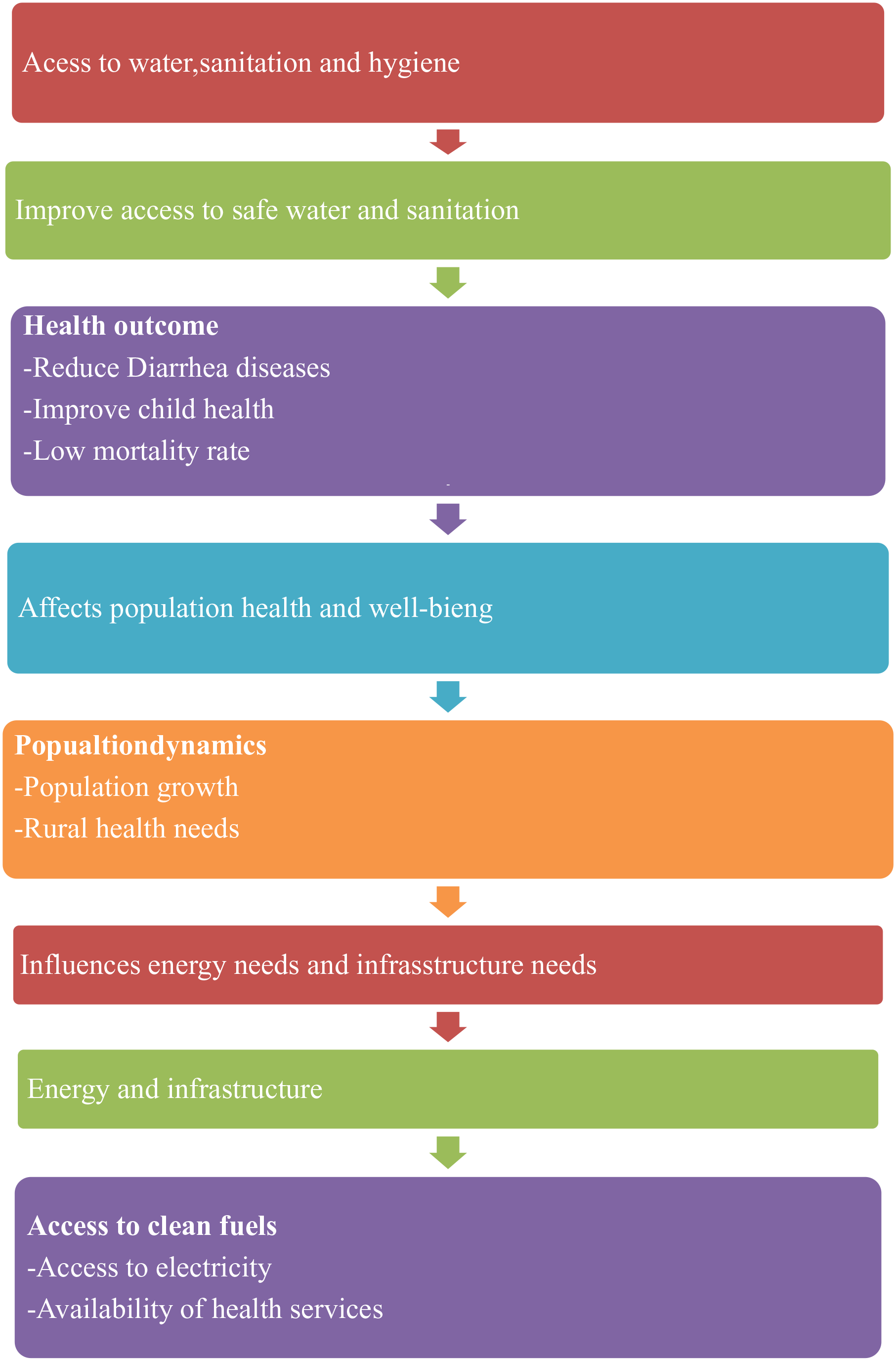
Shows the conceptual framework for the interconnections between water, sanitation, and health outcomes in rural communities (Source: Own development (2025)).
Methodology
The research is focused on countries in Central and East Africa due to the intense challenges expected to meet Sustainable Development Goal 6, which demands universal access to and sustainable management of water and sanitation by 2030. Central and East Africa faces problems that are made worse by lack of clean water, poor water infrastructure, lack of sanitary facilities, and lack of community involvement in decision-making processes.
Sample Size
The sample includes 15 diverse cross sections over a span of 10 years, from 2014 to 2023. Data were analyzed using balanced panel statistics to assess the status of rural communities in Central and East Africa, with the goal of achieving Sustainable Development Goal 6 by 2030.
Research Design
The study used longitudinal panel data, incorporating both quantitative and empirical methods. It concentrated on a panel comprising 15 nations in Central and Eastern Africa. Due to geographic and demographic differences in these areas, the research viewed each panel as unique. This diversity was evident in the differences observed in the random component of the model. The selection of this specific model was influenced by 2 considerations: the necessity to account for the varied characteristics of the panels and the application of the Hausman test to verify the model’s reliability.
Model Specification
Panel data integrate time series and cross-sectional information. 103 Panel data models illustrate how individual behavior varies over time and among different individuals. The models most commonly employed to analyze panel data include pooled regression, random effects, and fixed effects, accompanied by normality checks, multicollinearity diagnostics, and heteroskedasticity evaluations. To tackle issues such as endogeneity, autocorrelation, and dynamic effects, instrumental variable approaches were applied. The constraints of the following general model can effectively define the basic linear panel models. 104

where Yit is the dependent variable, Xit is a K dimensional vector of explanatory variables without a constant term, αi is the intercept (ie, the heterogeneity and or individual effects), β is a (K×1) vector of unknown coefficients (ie, the slopes), and εi is error terms, where εi N(0, σε 2). There are 3 models of panel data, which are the pooled regression model, the fixed effect model, and the random effect model, as described in the following:
A Pooled Regression Model
The pooled regression model assumes that αi is constant across all the individuals (αi=α, ∀i ), and given by:
The pooled regression model assumes that αi is constant across all the individuals (αi =α , ∀i), and given by:

Random Effects (RE) Model
If individual specific effects are not correlated with the explanatory variables Xit; (ie, E (αi | X1) = 0), then αi is included in the error term uit, and it is formulated as follows:

If individual specific effects are not correlated with the explanatory variables Xit; (ie, E (αi |XI) = 0), then αi is included in the error term uit, where the error term uit = αi + εit, which variance var (uit) = σ 2 + σ 2 and cor (uit, uis) = σ 2
Fixed-Effects (FE) Model
If αi is correlated with the explanatory variables Xit (ie, E (αi|X1) ≠0) then we have the fixed effect model, which treats the individual effects αi as fixed parameters (each individual has a different intercept term and the same slope parameters).
The form of this model is :

Choosing Between Fixed- and Random-Effects Models
We need to select the most suitable model for our data after evaluating the panel data models. The Hausman test helps us determine if there is a significant difference between the fixed-effects and random-effects estimators. The null and alternative hypotheses of the Hausman test are as follows. H0: The random-effects model is preferable. Ha: The fixed-effects model is preferable. If the result of the Hausman test is not significant at a given level of significance, we should use random effects; otherwise, we should opt for fixed effects. 105
Results and Discussion
As represented in Table 1 above, descriptive statistics for various indicators of water, sanitation, and health in rural areas reveal significant issues, aligning with findings by Ref. 106 The data highlight an urgent need for targeted initiatives, showing that the rural population faces major hurdles in accessing essential services such as water, sanitation, and healthcare. A standard deviation of 11.6 and a margin of error of 0.016 suggest that 46.8% of rural inhabitants have access to at least basic drinking water services, with a confidence interval of (44.94, 48.66). Meanwhile, a standard deviation of 4.5 and a margin of error of 0.7115 indicating a confidence interval of (6.64, 8.07) illustrate that only about 7.4% of the population has safely managed drinking water, reflecting a substantial gap in service quality. Furthermore, close to 25.5% of rural residents have access to basic hand washing facilities, with a standard deviation of 10.0 and a margin of error of 1.61, which gives a confidence interval of (23.85, 27.09). Furthermore, around 20.1% use safe managed sanitation services, with a standard deviation of 7.7 and a margin of error of 1.23, which shows a confidence interval of (18.84, 21.34).
Descriptive statistics of rural health and sanitation indicators.

Furthermore, the average rural population is approximately 168 937, with a standard deviation of 1.203 and a margin of error of 0.193. This equates to an annual growth rate of about 2.286%. The data indicate a confidence interval of (1.09, 1.48), revealing a positive trend. Currently, only 26.7% of this population has access to electricity, which has a notably high standard deviation of 21.676 and a margin of error of 3.45, resulting in a confidence interval of (23.20, 30.20). Access to clean cooking technologies is limited to 14.39%, with a standard deviation of 9.211 and a margin of error of 1.64, which leads to a confidence interval of (12.75, 16.03). Alarmingly, nearly 29.3% of the rural population practices open defecation, reflected by a standard deviation of 24.328 and a margin of error of 3.89, which provides a confidence interval of (25.41, 33.26), raising significant public health concerns. Additionally, approximately 39.3% of children under 5 years of age are treated for diarrhea, with a standard deviation of 2.738 and a margin of error of 0.44, indicating a confidence interval of (38.84, 39.72). Furthermore, approximately 50.3% of deaths are related to communicable diseases, which has a standard deviation of 3.827 and a margin of error of 0.612, resulting in a confidence interval of (49.72, 50.95). The average mortality rate due to household and ambient air pollution is 163.69 deaths per 100 000 people, indicated by a standard deviation of 14.97 and a margin of error of 2.39, producing a confidence interval of (161.27, 166.10). The average number of physicians is alarmingly low at just 0.173 per 1000 people, with a standard deviation of 0.098 and a margin of error of 0.016, leading to a confidence interval of (0.16, 0.19). To improve public health outcomes and improve overall quality of life in rural areas, governments must focus on service delivery in these vital sectors (Table 1).
The table above details the results of statistical assessments that analyze different water and sanitation services in rural areas. For basic drinking water services, the Harris-Tzavalis test yielded a t statistic of 6.57, along with a significantly significant P-value of .001. On the contrary, the LLC test provided a t statistic of 1.91, with a significant P-value of .025. Regarding safely managed drinking water services, the Harris-Tzavalis test indicated a t-statistic of 3.73 and a P-value of .041, while the LLC test reported a higher t-statistic of 5.11 with a P-value of .042. Basic hand washing facilities showed considerable significance in the Harris-Tzavalis test, which produced a t statistic of 4.72 and a P-value of .0032, although the LLC test returned a lower t statistic of 1.09, still significant at a P-value of .014. Furthermore, the open defecation practice study presented a t statistic of 5.93 and a P value of .043 in the Harris-Tzavalis test, alongside a t statistic of 3.22 and a highly significant P value of .006 in the LLC test. Finally, basic sanitation services had a t statistic of 3.31 and a P-value of .031 in the Harris-Tzavalis test, while the LLC test showed a t statistic of 2.51 and a P-value of .03 (Table 2).
Statistical analysis of water and sanitation services: t-statistics and significance levels.
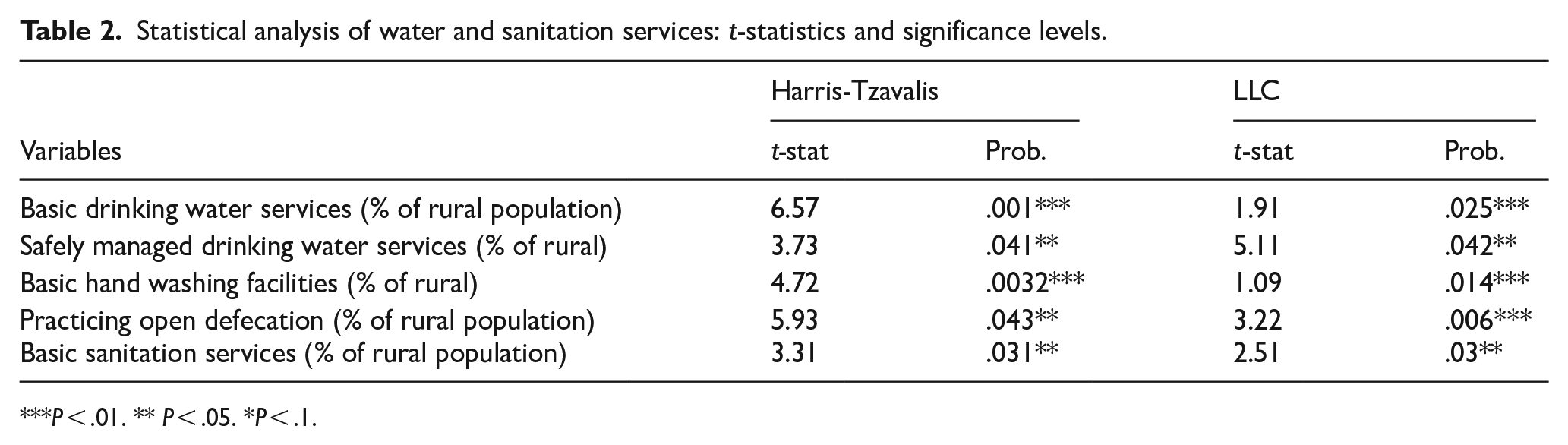
P < .01. ** P < .05. *P < .1.
The table below details the general models of specification of analyzing people using safe managed drinking water services (% of rural) can be written as:

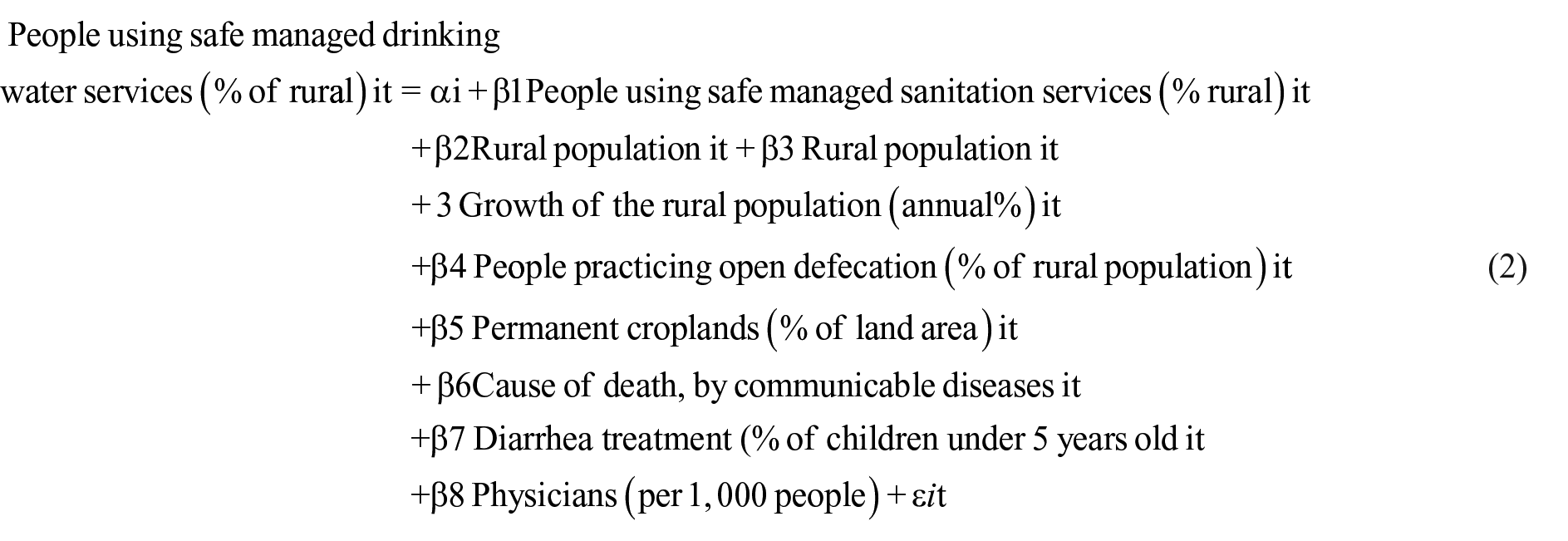

Where, People using safe managed drinking water services (% of rural) is a dependent variable, People using safe managed sanitation services (% rural),Rural population, Rural population growth (annual%), People practicing open defecation (% of rural population), Permanent cropland (% of land area), Cause of death, by communicable diseases, Diarrhea treatment (% of children under 5 years of age and physicians (per 1000 people) are independent variables; it in equations (1) and (2) represents the error term that captures the unobserved factors affecting the emissions, and it in equation (3) serves a similar purpose, but may suggest a different modeling approach.
As indicated in the table above, analysis of the factors that influence the proportion of rural residents who use safe and maintained drinking water systems reveals several key correlations. Initially, the pooled, random effects, and fixed effects models all showed statistically significant coefficients of 0.106, 0.217, and 0.196, respectively, reflecting a positive link between safe drinking water use and access to adequately managed sanitation facilities, consistent with prior studies conducted by Refs.107,108 Additionally, the fixed effects model indicates a mild positive correlation with the rural population, while the pooled model reveals an initial strong positive impact of 1.38 for increases in the rural population, which subsequently wanes in the random and fixed effects models. An examination of the factors that affect the percentage of rural residents who use safe managed drinking water services uncovers various significant associations. Firstly, access to safe managed sanitation services correlates positively with safe drinking water use, as evidenced by coefficients of 0.106, 0.217, and 0.196 in the respective pooled, random effects, and fixed effects models, all of which are statistically significant. Furthermore, the rural population exhibits a weak positive relationship in the fixed effects model, while the growth of the rural population initially shows a prominent positive effect of 1.38 in the pooled model; however, this influence decreases in the random and fixed effects models. Additionally, the occurrence of open defecation has a positive association with safe drinking water use in the pooled model, although its significance is reduced in the other models. The proportion of permanent cropland consistently shows a strong positive correlation throughout all models, with coefficients of .249, .141, and .127, all statistically significant, indicating that a larger area of permanent cropland is related to better access to safe drinking water. Regarding health outcomes, the death rate from communicable diseases shows a strong positive correlation in all models, with coefficients of .014, .032, and .025, respectively. Furthermore, the treatment of diarrhea in children under 5 years of age shows a positive effect that becomes more significant in all models, while the number of physicians per 1000 people maintains a consistent positive correlation with access to safe drinking water (Table 3). Overall, the analysis emphasizes the importance of integrated health and sanitation policies, as the findings underscore how advances in sanitation, healthcare availability, and agricultural practices can markedly improve access to safely managed drinking water services in rural communities.
Analysis of factors influencing access to safely managed drinking water services.

P < .01. **P < .05. *P < .1.
The table below details the general models of specification of analyzing people using safe managed sanitation services (% rural) can be written as:


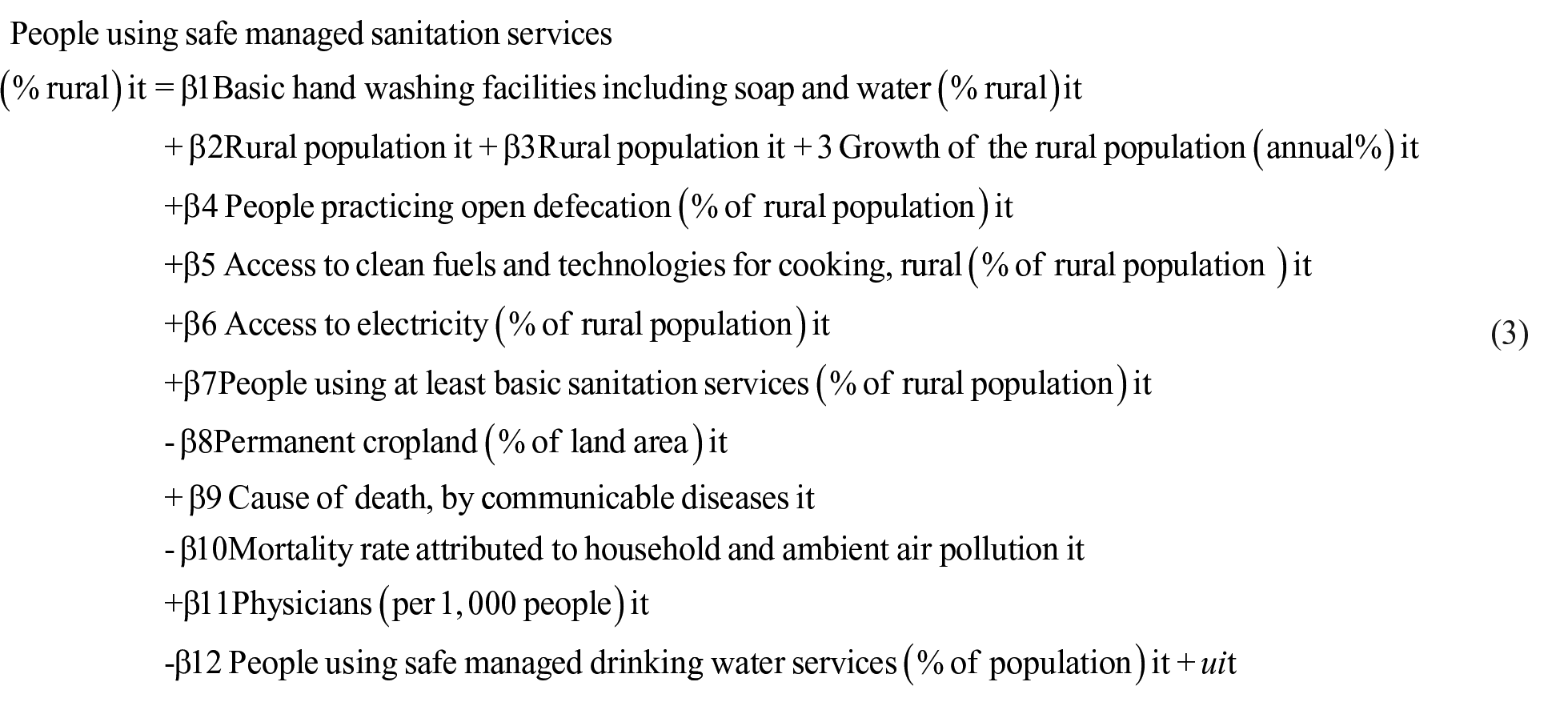
Where, People using safe managed sanitation services (% rural) is a dependent variable, Basic hand washing facilities including soap and water (% rural),Rural population, Rural population growth (annual%), People practicing open defecation (% of rural population), Access to clean fuels and technologies for cooking, rural (% of rural population), Access to electricity (% of rural population), People using at least basic sanitation services(% of rural population), Permanent cropland (% of land area), Cause of death, by communicable diseases, Mortality rate attributed to household and ambient air pollution, Physicians (per 1000 people),and People using safe managed drinking water services (% of population) are independent variables; it in equations (1) and (2) represents the error term that captures the unobserved factors affecting emissions, and uit in equation (3) serves a similar purpose, but may suggest a different modeling approach.
As represented in the table above, the analysis of factors that affect the percentage of rural populations using safe managed sanitation services reveals several important relationships that underscore the value of integrated interventions. In particular, there is a significant positive correlation between the use of sanitation services and the availability of basic hand washing facilities, with coefficients of .267, .265, and .226 in the pooled, random effects, and fixed effects models, respectively. A similar study by Ref., 109 indicates that access to sanitation is heavily influenced by the growth of the rural population, with coefficients of −1.618 and −1.473 (P < .01), implying that demand may exceed supply. Furthermore, the rural population shows a positive relationship with sanitation services, as reflected in coefficients of .42 in the pooled model and 0.36 in the random effects model, suggesting that an increasing population requires sufficient sanitation infrastructure. The significance of having access to clean cooking fuels in improving sanitation services is underscored by the notable positive correlation found in the pooled model (.318), despite its lack of significance in the fixed factors model. Furthermore, in all models, there is a positive relationship between the use of sanitation services and the access to electricity, confirming the idea that improved living conditions lead to better access to sanitation. The reduction of open defecation practices aligns with improved sanitation outcomes, as indicated by the positive link between this behavior and sanitation services. Furthermore, there is a strong correlation between the proportion of the population that uses at least basic sanitation services and those that use safe and managed sanitation solutions, indicating that foundational services are vital for overall improvements in sanitation. As access to healthcare is also positively related to the utilization of sanitary services, the ratio of doctors per 1000 people further supports this concept. Interestingly, the negative coefficients related to the percentage of individuals using securely managed drinking water services imply that improvements in drinking water quality do not always correlate with increased use of sanitation services (Table 4).
Analysis of factors influencing access to safely managed sanitary services.
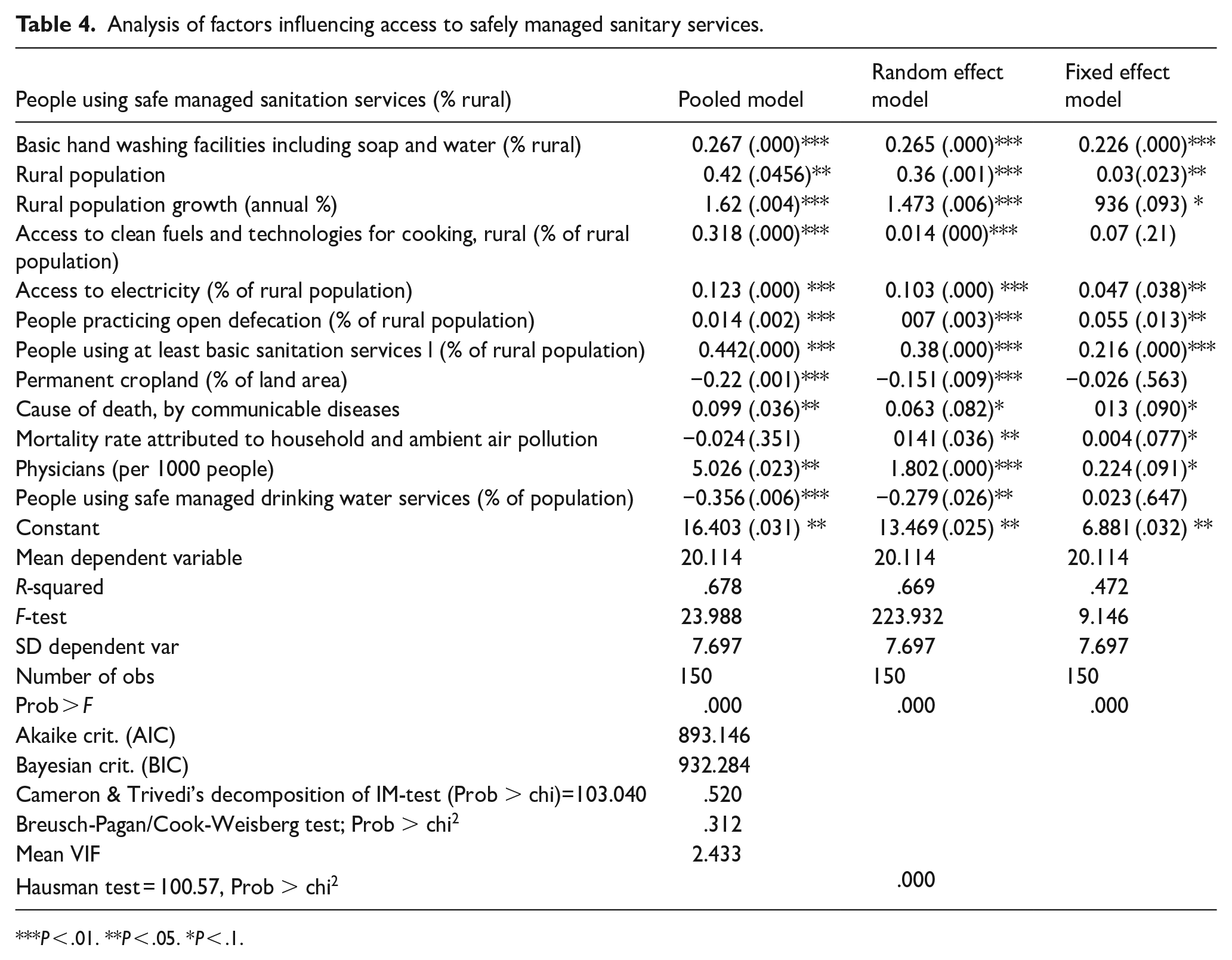
P < .01. **P < .05. *P < .1.
The graph showing the rise of the rural population from 2014 to 2023 reveals significant variations between different countries, categorizing them into high, moderate and low growth rates. For example, Burundi consistently records a high growth rate, likely exceeding 2% annually; this phenomenon is primarily due to high fertility rates combined with minimal migration to urban centers, leading to a rapidly increasing rural population. On the contrary, countries like Gabon and Equatorial Guinea exhibit low growth rates, typically remaining under 1%. This slower growth can be attributed to urban migration, as more individuals seek better economic opportunities in cities, along with falling fertility rates that reflect changing social trends. In addition, countries such as Cameroon, Ethiopia and Tanzania fall under the moderate growth category, with rates ranging from 1% to 2%. This moderate growth signifies a balance between rural development and urban migration, suggesting that while rural areas are expanding, a substantial number of people are also moving to urban locations in search of better living standards (Figure 2).
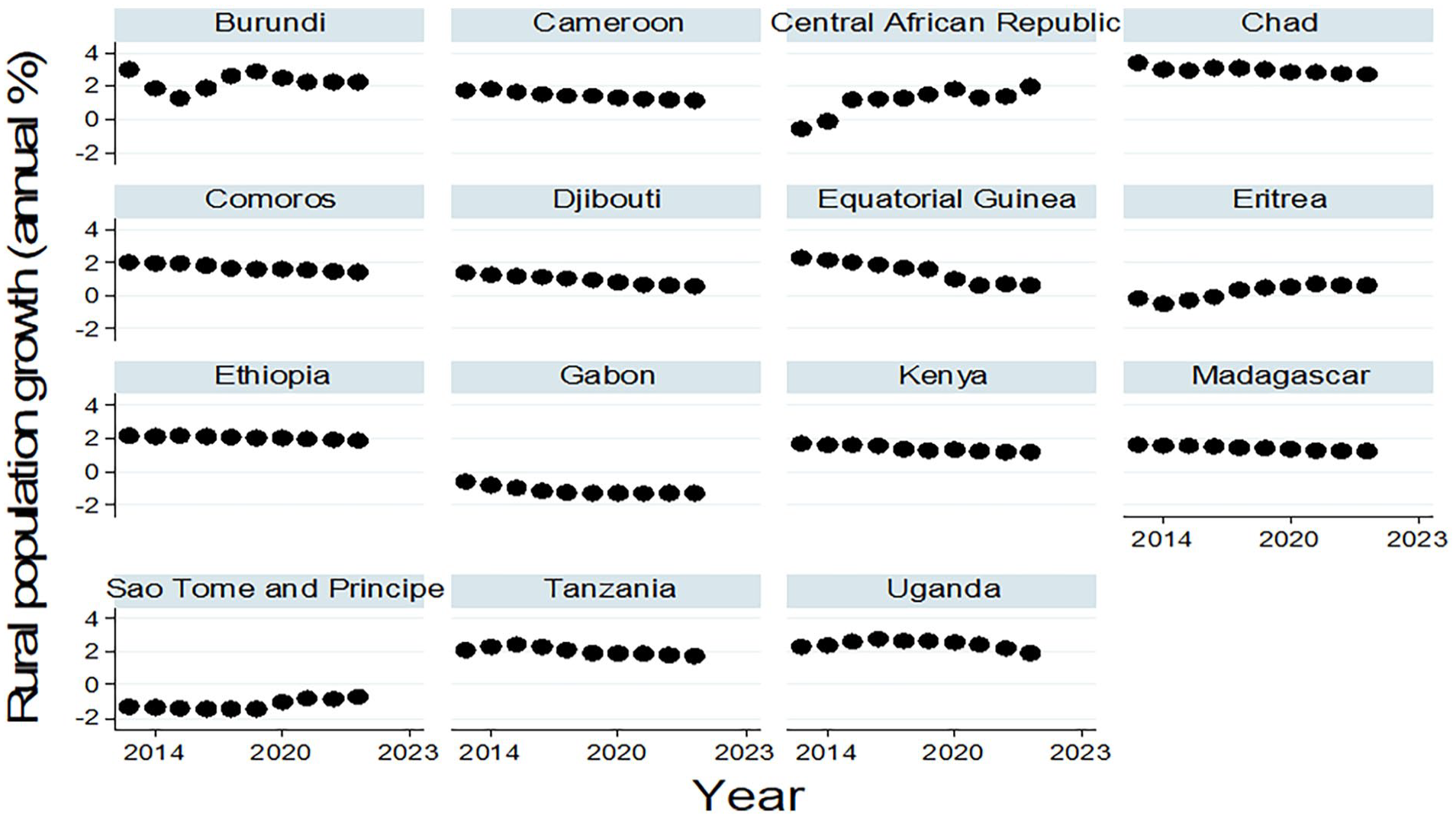
Annual growth of rural population (%): 2014 to 2023 in 15 African countries.
The evaluation of drinking water services in several Central and East African nations reveals significant variations in both accessibility and safety. Countries such as Burundi, Comoros, and Sao Tome and Principe exhibit high rates of basic and safely managed water services. This success may come from advancements in infrastructure, government support, and efficient management practices. On the contrary, nations such as the Central African Republic, Chad, Ethiopia, Madagascar, and Tanzania suffer from limited access to these essential services, likely due to challenges such as political instability, inadequate funding, and a lack of resources necessary for maintaining water systems. Moderate access is observed in countries such as Cameroon, Djibouti, Gabon, Kenya, and Uganda, which have made some headway; however, issues such as disparities between urban and rural regions, along with varying service quality, persist (Figure 3). These findings emphasize the need for focused efforts in areas with low access, as well as the need to maintain and improve services in countries that perform better, to guarantee fair access to safe drinking water for all rural populations. This aligns with research by Ref., 110 which highlighted that poor water, sanitation and hygiene practices are linked to diseases that adversely affect health.

Comparison of drinking water service access in selected African countries.
The graph categorizes countries according to the availability of basic hand washing stations for their rural residents, revealing significant disparities in access to sanitation. Countries such as Gabon, Djibouti, and Eritrea demonstrate high accessibility levels, likely exceeding 80%. This positive access rate can be attributed to successful government policies and community-led initiatives that prioritize sanitation, reflecting a commitment to public health. On the other hand, countries such as Burundi, Chad, the Central African Republic, Ethiopia, and Kenya show much lower access, with percentages below 50%. This limited availability is often due to inadequate infrastructure, economic challenges, and a lack of funding for sanitation projects, highlighting the critical need for action. Meanwhile, nations such as Cameroon, Comoros, and Equatorial Guinea fall into the moderate access category, with availability rates ranging from 50% to 80%. These nations have made some progress and have the potential for improvement, but still face challenges that prevent them from achieving higher sanitation standards (Figure 4). Other researchers have noted that hand washing is a cost-effective method for reducing the transmission of infectious diseases. 111 Earlier findings by Ref., 112 concerning the prevalence of fecal contamination on commonly touched surfaces, emphasize the importance of washing hands with soap after using toilet facilities and cleaning door handles.

Trends in basic hand washing facilities in selected African countries (2014–2023).
The evaluation of sanitation services in the 15 selected African countries shows notable disparities, which can be categorized as high, moderate, or low access. Nations such as Kenya, Sao Tome and Principe, and Djibouti have a high access to safely managed sanitation services, likely due to strong governance, significant investments in infrastructure, and effective public health initiatives. Research by Ref. 113 highlights that using safely managed sanitation services is crucial to improving health and preventing disease. On the contrary, countries such as the Central African Republic, Chad, Ethiopia, and Madagascar show low access levels, possibly due to serious obstacles such as political instability, inadequate funding, and a shortage of essential resources for developing and maintaining sanitation systems (Figure 5). Low access levels can lead to an increase in waterborne illnesses, which adversely affect public health and economic productivity. This observation supports 114 claim that the relationship between hygiene, sanitation, and health is well recognized; however, thousands of children die each year from exposure to contaminated fecal matter. Countries such as Equatorial Guinea, Cameroon, Burundi, and Tanzania show moderate access, indicating some advancement; however, problems such as inequalities between urban and rural areas and inconsistent service quality persist. This situation emphasizes the need for targeted efforts in regions with limited access and stresses the importance of sustaining and improving sanitation services in better performing countries to ensure equitable access for all communities.

Comparison of access to sanitation services in selected African countries.
The evaluation of sanitation and health indicators across 15 African countries uncovers significant variations that highlight the link between sanitation habits and health outcomes. Countries including Chad, the Central African, Djibouti Eritrea, Sao and Principe, and Madagascar demonstrate rates of open defection, frequently associated with heightened mortality from infectious diseases. Aligning with the research by Ref., 115 respiratory infections and diarrheal diseases are the main causes of death among children in low-income environments. In line with Ref., 116 52.3% of participants in the survey admitted to practicing open defecation. This correlation underscores the essential importance of proper sanitation in curbing disease transmission. In contrast, countries such as Burundi and Gabon report low rates of open defecation, which correspond to better health outcomes; these countries also show a higher percentage of children receiving treatment for diarrhea. Mixed health indicators are noted in Kenya, Cameroon, and Uganda, where moderate levels of open defecation persist (Figure 6). Although these countries face obstacles, they also have opportunities to improve through focused initiatives. Other researchers have noted that the varying degrees of open defecation high, low, and moderate highlight the urgent need for comprehensive public health frameworks that address sanitation and healthcare. 117
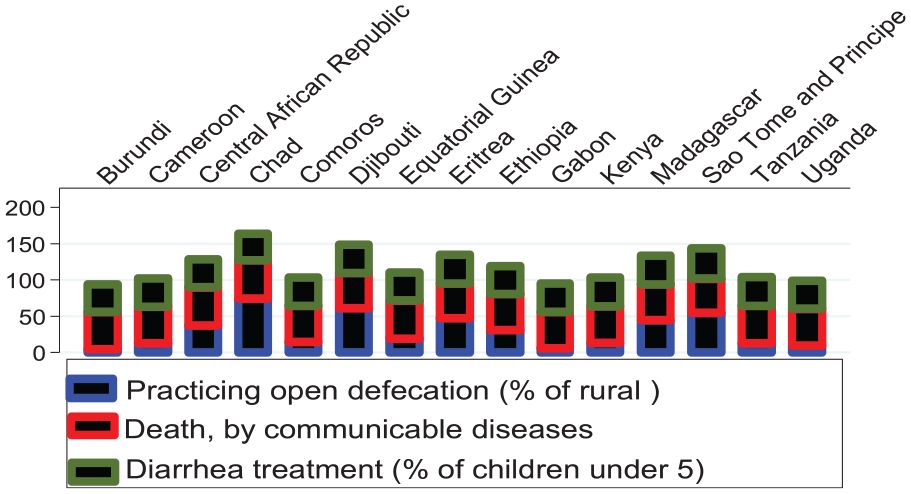
Sanitation and health indicators in 15 African countries.
The graph showing the number of physicians per 1000 people from 2014 to 2023 reveals significant variations in healthcare access in different countries, categorizing them into high, moderate, and low densities of physicians. For example, Gabon and Sao Tome and Principe exhibit high physician densities, consistently exceeding 2.5 per 1000 individuals. This high rate can be attributed to successful healthcare policies and substantial investments in medical education, which collectively increased the number of healthcare professionals. On the other hand, countries such as Chad and Eritrea have low physician densities, often below 1 per 1000 individuals. This alarming figure highlights critical issues, such as inadequate healthcare funding, poor infrastructure, and difficulties in medical training and staff retention, all of which hinder the development of a strong healthcare workforce. Moreover, nations such as Kenya, Uganda, and Ethiopia are within the moderate density spectrum, with the number of physicians typically ranging from 1 to 2.5 per 1000 individuals (Figure 7).
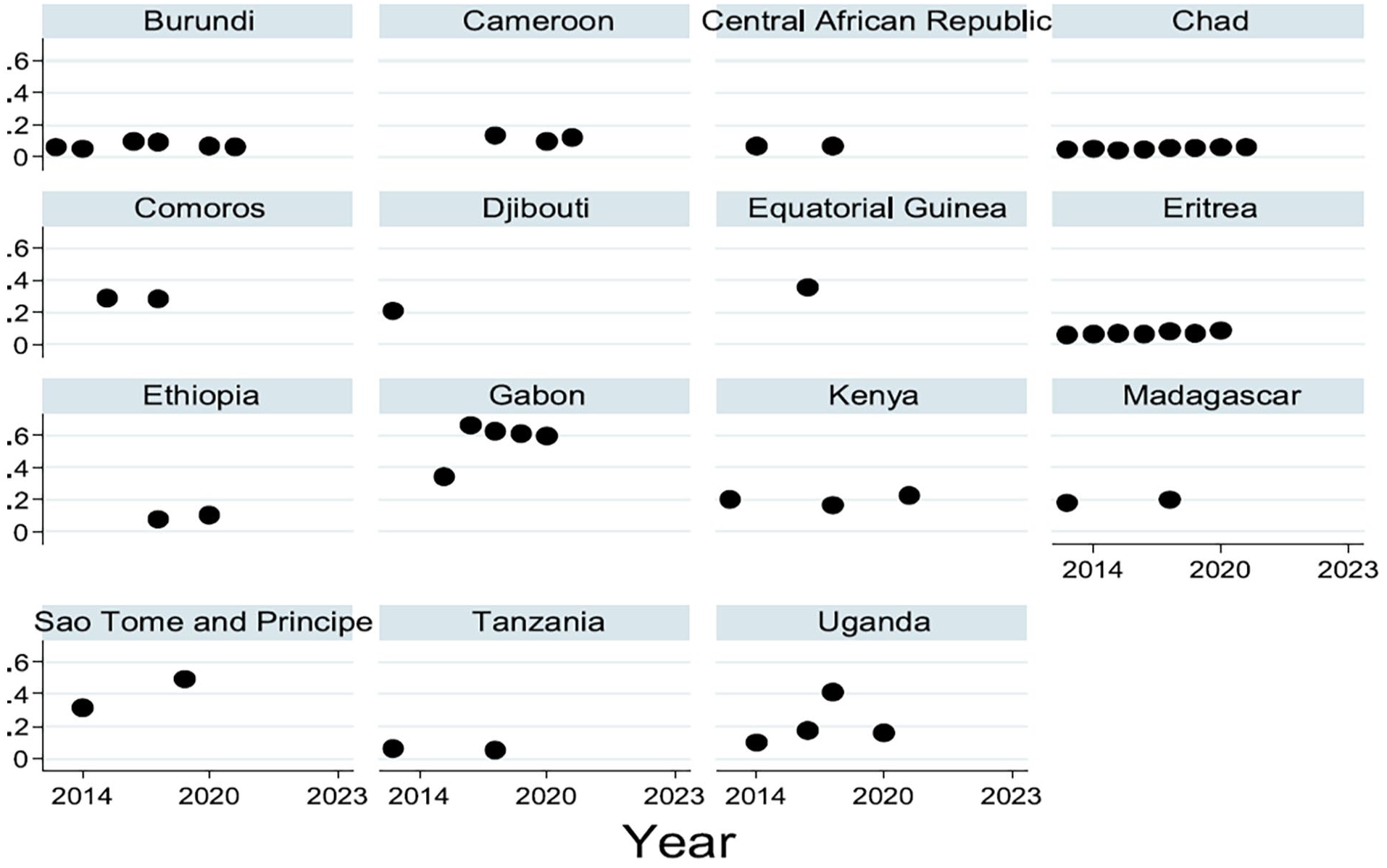
Physician density (per 1000 People) in 15 African countries: 2014 to 2023.
The graph below illustrates the disparity in access to clean fuels, technologies, and electricity in rural areas in various countries, categorizing them into high, moderate, and low access. For example, Comoros, Sao Tome and Principe, and Gabon exhibit high levels of access, with electricity availability surpassing 60%. This strong access is the result of substantial investments in infrastructure and proactive government initiatives aimed at expanding electricity distribution, which collectively improve living conditions and economic opportunities for rural residents. On the contrary, countries such as Cameroon, Djibouti, Ethiopia, and Eritrea are classified as having moderate access, with availability ranging from 30% to 60%. This classification indicates ongoing efforts to improve energy accessibility, although challenges persist due to economic constraints and different degrees of rural development. In sharp contrast, nations such as Burundi, Cameroon, the Central African Republic and Chad report low access levels, often below 30% for both clean fuels and electricity. This situation is particularly concerning, as it highlights significant infrastructure challenges, limited government funding, and, in some instances, ongoing conflicts, which all severely hinder the provision of essential services to rural communities (Figure 8).

Access to clean fuels and technologies versus electricity in rural areas.
Conclusion and Recommendation
This research provides a detailed investigation of the challenges and solutions associated with achieving Sustainable Development Goal 6 (SDG 6) in rural regions of Central and East Africa. It stresses the urgent need for better access to clean drinking water, sanitation, and hygiene facilities. The findings reveal considerable gaps in service availability, with only a small percentage of rural inhabitants having access to safely managed resources, highlighting the critical need for targeted interventions. Statistical analysis shows the links between sanitation, water access, and health outcomes, suggesting that improvements in sanitation can lead to improved water quality. Ultimately, this study underscores the importance of investing in sustainable infrastructure and involving communities as essential strategies to boost public health and promote economic growth in these underserved areas. The evidence-based recommendations of this research aim to guide policymakers in taking effective actions to improve access to essential services, thereby supporting broader sustainable development goals.
Limitations
The study has 2 significant limitations: its concentration in rural areas in Central and East Africa limits its relevance to urban settings and other locales, and its dependence on possibly inconsistent panel data, which could distort the findings. Additionally, the use of fixed and random-effects models may not adequately account for omitted variable bias, potentially overlooking crucial qualitative aspects, such as community beliefs. To improve the comprehension of access to sanitation facilities and safe drinking water in disadvantaged communities, more research is needed.
Directions for the Future
In the future, it is essential to develop strong methods for data collection that improve the reliability and quality of panel data. Future research should focus on gaining insight into long-term trends and dynamics by capturing how various initiatives, policy changes, and external factors influence water and sanitation systems. Conducting panel comparative studies that analyze differences in access to water and sanitation in different areas of Central and East Africa may prove beneficial. Furthermore, combining qualitative approaches, such as focus groups and interviews, with quantitative panel data can offer a deeper understanding of local viewpoints and cultural practices.
Footnotes
Acknowledgements
The authors express sincere gratitude to Jimma University and Wollega University for their constant assistance and resources, which were crucial to the advancement of this study. We have a strong foundation for our research because of their dedication to expanding our understanding of sanitation and public health. This study acknowledges the urgent need for more detailed contextual information about the unique difficulties faced by rural communities in Central and East Africa. Given the substantial impact that regional differences in climate, governance systems, and cultural norms have on WASH outcomes, we acknowledge the importance of comprehending these differences. The perspectives of regional experts and stakeholders have improved our understanding and brought to light the challenges associated with achieving the objective of providing clean water and sanitation by 2030.
Ethical Considerations
The ethics committee of the Department of Rural Development and Agricultural Extension, Jimma University, Ethiopia, and the Department of Rural Development, Agricultural Extension, Wollega University, Ethiopia.
Consent for Publication
All study participants gave their informed consent in writing.
Author Contributions
BCW designed the research concept, wrote the article, and revised the article. AAW revised, validated, performed data analysis, and edited the manuscript. The final article was read and approved by all authors.
Funding
The author(s) received no financial support for the research, authorship, and/or publication of this article.
Declaration of Conflicting Interests
The author(s) declared no potential conflicts of interest with respect to the research, authorship, and/or publication of this article.
Data Availability
Data used to support the findings of this study are accessible from the PI and the corresponding author upon request.