




Abstract
Objectives:
Rural women are underrepresented in cancer research. We hypothesized that providing access to a research study to rural, medically underserved women who were receiving their breast cancer screening using a mobile mammography unit would increase the representation of rural women in a cancer cohort study.
Design:
This study is a cross-sectional study using a cohort of women who have been recruited to a breast cancer study in Arkansas.
Setting:
Recruiters accompanied a mobile mammography unit, the MammoVan, to implement a novel method for reaching and recruiting underrepresented rural Arkansas women into the study. Participants include 5850 women recruited from 2010 through 2012 as part of the Arkansas Rural Community Health (ARCH) study.
Results:
Participants recruited during their mammography screening on the MammoVan tended to be more rural, less educated, and more likely to be non-Hispanic than those recruited in other venues. A significant difference was not noted for race or age.
Conclusion:
Collaboration with the MammoVan greatly aided the recruitment of rural participants. These strategies can facilitate the representation of this historically underserved and understudied rural population in future research studies.
Introduction
Previous research has indicated that rural populations are burdened with higher rates of cancer incidence and cancer mortality and tend to have limited access to preventive screening services.1-6 The literature reports that a lower percentage of rural populations are participants in cancer research,1,7-14 making it challenging to determine the influence that rurality plays in morbidity and mortality rates among these populations. There are several barriers to reaching rural populations, including geographic distance from research centers, mistrust of the medical establishment, and socioeconomic status.1,15-17 Some studies suggest that rural residents are less likely to participate in research, 18 while other studies show that rural residents will participate in research if provided the opportunity.1,19 In addition, there is limited literature regarding engagement of rural populations in human-subject health research.8,13,20-22
There has been increased usage of mammography in recent years, 23 but documentation of the rurality of women undergoing mammography is sparse. Other research indicates that women living in rural areas are less likely to receive mammograms at medically recommended time intervals.4,24-27
Arkansas is one of the most rural states in the United States, with 48% of the state considered to be rural and approximately 51% of the state’s residents living in those rural areas. Arkansas’ population is 80.1% non-Hispanic white, with a high density of African Americans in the Mississippi River Delta, and a rapidly growing Hispanic population. 28 The high percentage of rural residents in Arkansas makes it an appropriate state to test novel recruitment methods for rural populations.
The Arkansas Rural Community Health Study (ARCHS) cohort was established at the University of Arkansas for Medical Sciences (UAMS) to provide a repository of survey and demographic information, as well as DNA samples to support breast cancer research. The ARCHS cohort will conduct research related to cancer disparities in rural and minority communities. The establishment of the cohort is the described elsewhere. 29 At the time of this study, over 26,000 women from Arkansas have participated in the ARCHS.
Historically, lower percentages of rural populations participate in cancer research than their urban counterparts; one of the goals of the ARCHS cohort was to oversample populations in rural areas of Arkansas. However, initial recruitment efforts showed lower participation from rural communities. It was hypothesized that low participation was due, at least in part, to a lack of opportunity to participate in research and that rural populations would enroll in research studies if given the opportunity.1,19 In this cross-sectional study, we describe the methods and examine the efficacy of targeted recruitment strategies to increase participation of rural populations within the ARCHS through a partnership with the University of Arkansas for Medical Sciences’ (UAMS) MammoVan breast cancer screening program.
Methods
In the current study, two recruitment strategies were utilized: MammoVan recruitment and community event recruitment. The data for the current analysis were obtained from 5850 women who were recruited through the two different strategies from 2010 through 2012. Mammography has been uniformly recommended for women 40 years and older; therefore, we restricted the analysis to women 40 years and older. There are restrictions for providing mammography on the MammoVan for women who have previously had breast cancer; therefore, we excluded those with a history of breast cancer from the other forms of recruitment as well. Participants were categorized into groups of interest: race, rurality, educational status, breast cancer diagnosis, recruitment strategy, and age.
The study protocol was approved by the Institutional Review Board at the University of Arkansas for Medical Sciences in Little Rock, Arkansas (ID# 89071). Informed consent was obtained from each study participant in writing according to the University policy on human research ethics. After participants provided consent, they were asked to complete a short survey consisting of questions regarding their health status and practices, personal breast cancer history, family history of breast cancer, and personal demographic information. Participants were also asked to supply a saliva sample that would later be analyzed to assess important links between DNA and breast cancer. The average time for each participant to complete data collection was approximately 10 to 15 minutes.
For MammoVan recruitment, ARCHS recruiters collaborated with a mobile mammography unit, the UAMS MammoVan, to implement a novel method for reaching and recruiting women from underrepresented rural areas into this research study. The MammoVan program is based out of the Winthrop P. Rockefeller Cancer Institute at UAMS. The MammoVan began screening women in February 2010 as a self-contained mammography services unit. Since then, the MammoVan has targeted rural and underserved counties in Arkansas that did not have mammography services available. The MammoVan provided services to women with and without insurance. Through grant funding and the Arkansas Breast Care Program, the MammoVan was able to provide Mammography services without cost to women who met income guidelines. For those women with insurance, their insurance was filed by UAMS, but no deductible or co-pay was collected at the time of the screening. The MammoVan date and location was advertised through multiple community-based methods, including information flyers sent to the community, church, and local health care providers. Scheduled MammoVan events were also promoted on a UAMS website. The MammoVan typically spent 8 hours at a given location and screened between 10 and 30 women during each daylong screening session. Research study recruitment staff rode along with regularly scheduled MammoVan outreach sessions and approached women after they received their mammography and invited them to participate in the ARCHS. Recruitment staff provided information about the study and provided MammoVan patients the opportunity to consent for research. After participants completed the consent process, survey and saliva sample collection were completed by trained ARCHS volunteers and staff.
For community-based recruitment, participants were recruited through urban and rural community events throughout the state of Arkansas. Recruitment through community events, such as the Susan G. Komen Race for the Cure, church functions, health fairs, and workplace wellness programs were conducted by collaborating with community members and the Arkansas Affiliate of Susan G. Komen for the Cure. Recruitment staff and volunteers set up a table/booth at the events. Women were approached as they passed by the booth and invited to participate in the study. Recruitment, survey, and saliva sample collection were completed by trained ARCHS volunteers and staff.
Data analysis were conducted using SPSS software, version 19, to determine the descriptive characteristics of the participants based on recruitment strategy: MammoVan recruit compared with other community based recruit. Urban/rural classification codes at the county level from the US Census and Health Resources and Services Administration were used to classify participants as living in a rural or urban area. 30
Results
As depicted in Table 1, there was a lower proportion of Hispanics recruited through the MammoVan (P = .042). There was no significant difference with respect to race or age distribution in other groups. There was lower educational attainment for MammoVan recruited women (P < .001) and greater representation of nonmetropolitan women in the MammoVan cohort (P < .001) (see Table 1).
Sample characteristics by recruitment method.
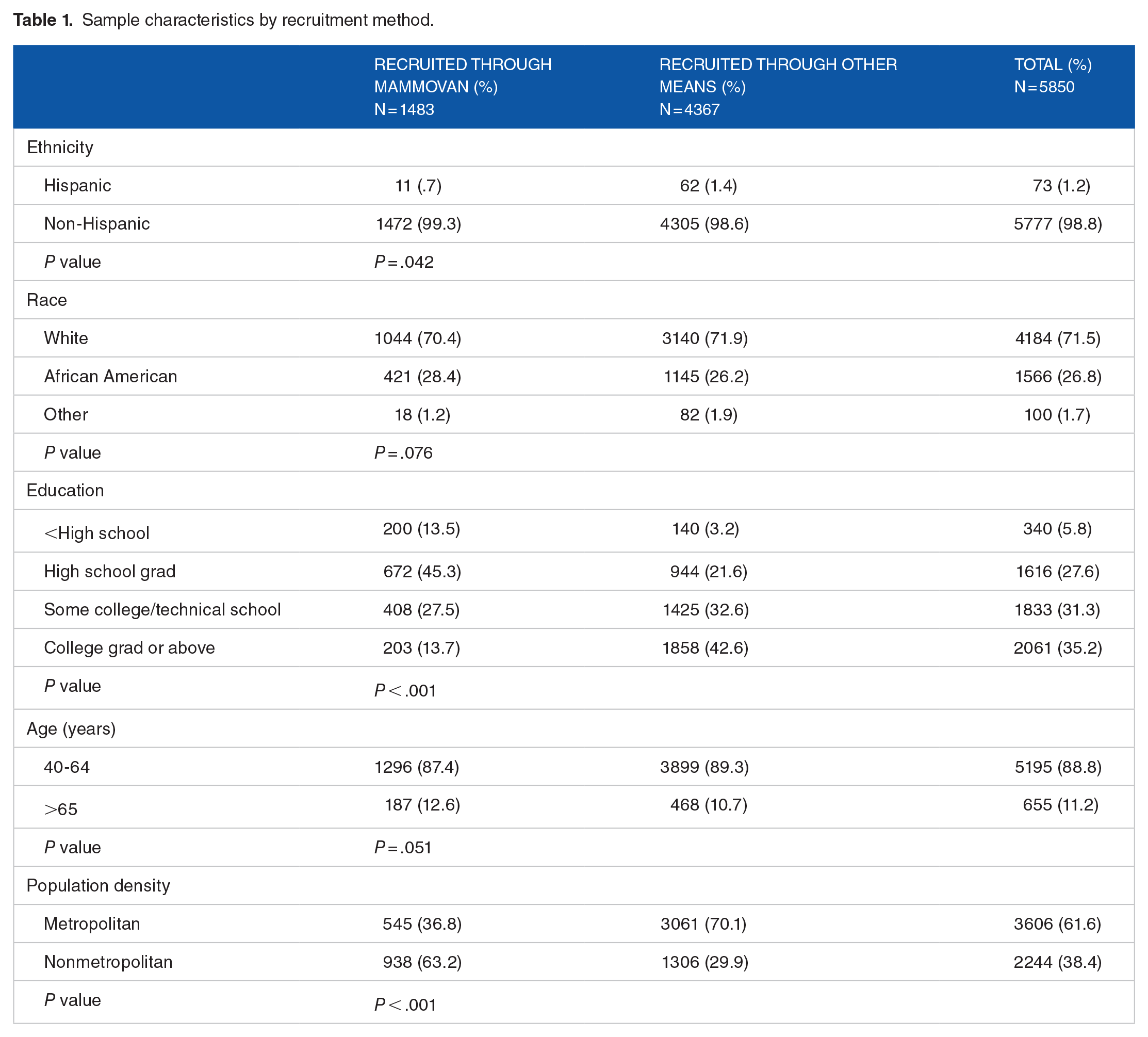
Table 2 summarizes the characteristics of the study participants and women of Arkansas, 40 years and older by event type. Demographics of the cohort closely resemble the demographics of the state of Arkansas, though our cohort is more educated and younger on average than the state’s overall female population. More than 40% of the ARCH participants have a college degree, compared with less than 18% of women in the state reporting such degrees. Approximately 61% of the participants fell between the ages of 35 and 64, compared with the 51% of women in the state overall in that age group. Oversampling of the minority populations within the state was achieved with 23.1% of study participants reporting a race other than white, compared with 19.8% of women statewide.
Sample characteristics by region. a

Arkansas data obtained from the US Census Bureau 2010. Data are for women 18 years and older. 9
Arkansas population based on women 18 years and older. 9
Arkansas data obtained from the US Census Bureau 2005-2009. Data are for women 18 years and older. 9
The overall recruitment rate through the MammoVan was 57.2%. Most participants recruited through the MammoVan were recruited in rural areas (63.2%). Those participants who were recruited through the MammoVan were also less educated, with 58.8% of the sample having a high school education or less, compared with 24.8% of those recruited by other events. In addition, the MammoVan was slightly more successful in recruiting minority participants; 29.6% of the MammoVan participants were nonwhite, compared with 28.1% of the participants recruited through community events.
Discussion
Less than 5% of studies funded through the National Institutes of Health National Cancer Institute demonstrate recruitment in rural populations. 31 The current study contributes valuable information regarding recruitment strategies for rural populations. Examining the two recruitment approaches across racial, educational, and age categories, the implemented strategies appeared to be successful at recruiting in rural counties, and allowed for recruitment of older woman and less educated women. Furthermore, the recruitment of participants in collaboration with the MammoVan greatly aided the recruitment of underrepresented rural, minority residents, thus increasing the representativeness of the sample. This study suggests that these populations are willing to participate in biorepositories and clinical research when given the opportunity, and recruitment during other screening and prevention outreach events to rural populations could enhance recruitment of hard-to-reach populations. The findings of this study are in contrast to prior research that shows that rural and minority populations are less likely to participate in research.15,17,18,32,33 However, the findings are consistent with recent research that demonstrates that rural and minority participants are willing to join studies when provided the opportunity. 19
Limitations
The primary limitation of this study is that it is a nonrandomized, cross-sectional study design. Furthermore, participants recruited while receiving a free or reduced cost mammogram might have different motivations for participating in a research study compared with those who are recruited while attending a health fair or event. Additional research is needed to understand why the two methods provided different sample demographics.
A continuing challenge in this study’s recruitment is the lack of participation among the Hispanic population. Arkansas’ female Hispanic population is 4.4%, while only 1.2% of the cohort’s participants reported Hispanic ethnicity, and the MammoVan was less successful in recruiting Hispanic women, which could be due to language barriers and the lack of sufficient Spanish-speaking recruitment staff. It is not known why some woman declined to participated. Future studies should systematically document the demographic information and reason for refusals.
Conclusion
Community event–based recruitment provided a simple, inexpensive, and rapid means of recruitment; however, these events tended to recruit women who are more educated, and lived in urban areas. Strategies such as MammoVan recruitment can facilitate the recruitment of this historically underserved and understudied rural population. The MammoVan recruitment facilitated the targeted recruitment of women who were less educated, and lived in rural areas. Through the combination of recruitment methods, the ARCHS has provided an important and cost-effective repository of biospecimens, demographic information, and survey questionnaires, which has and will continue to aid hypothesis-driven research.
Footnotes
Acknowledgements
We would like to acknowledge the hard work of the recruitment staff, Shana Fetters, Bridgette Dickerson, Daisy Pope, Dequetta Devine, and Jennifer Callicott. We also thank the UAMS MammoVan program and staff, as well as all the participants of this study.
Funding:
The author(s) disclosed receipt of the following financial support for the research, authorship, and/or publication of this article: Financial support was provided by the Winthrop P. Rockefeller Cancer Institute, the Arkansas Breast Cancer Research Fund, and the Fashion Footwear of New York Foundation.
Declaration of Conflicting Interests:
The author(s) declared no potential conflicts of interest with respect to the research, authorship, and/or publication of this article.
Author Contributions
All co-authors have contributed substantially to the manuscript and have approved the final version.
